EP4332190A1 - Adhesif autocollant a base de solvant decollable (psa) - Google Patents
Adhesif autocollant a base de solvant decollable (psa) Download PDFInfo
- Publication number
- EP4332190A1 EP4332190A1 EP22193899.6A EP22193899A EP4332190A1 EP 4332190 A1 EP4332190 A1 EP 4332190A1 EP 22193899 A EP22193899 A EP 22193899A EP 4332190 A1 EP4332190 A1 EP 4332190A1
- Authority
- EP
- European Patent Office
- Prior art keywords
- solvent
- acrylate
- debondable
- pressure sensitive
- sensitive adhesive
- Prior art date
- Legal status (The legal status is an assumption and is not a legal conclusion. Google has not performed a legal analysis and makes no representation as to the accuracy of the status listed.)
- Pending
Links
Images


Classifications
-
- C—CHEMISTRY; METALLURGY
- C09—DYES; PAINTS; POLISHES; NATURAL RESINS; ADHESIVES; COMPOSITIONS NOT OTHERWISE PROVIDED FOR; APPLICATIONS OF MATERIALS NOT OTHERWISE PROVIDED FOR
- C09J—ADHESIVES; NON-MECHANICAL ASPECTS OF ADHESIVE PROCESSES IN GENERAL; ADHESIVE PROCESSES NOT PROVIDED FOR ELSEWHERE; USE OF MATERIALS AS ADHESIVES
- C09J133/00—Adhesives based on homopolymers or copolymers of compounds having one or more unsaturated aliphatic radicals, each having only one carbon-to-carbon double bond, and at least one being terminated by only one carboxyl radical, or of salts, anhydrides, esters, amides, imides, or nitriles thereof; Adhesives based on derivatives of such polymers
- C09J133/04—Homopolymers or copolymers of esters
-
- B—PERFORMING OPERATIONS; TRANSPORTING
- B32—LAYERED PRODUCTS
- B32B—LAYERED PRODUCTS, i.e. PRODUCTS BUILT-UP OF STRATA OF FLAT OR NON-FLAT, e.g. CELLULAR OR HONEYCOMB, FORM
- B32B43/00—Operations specially adapted for layered products and not otherwise provided for, e.g. repairing; Apparatus therefor
- B32B43/006—Delaminating
-
- C—CHEMISTRY; METALLURGY
- C08—ORGANIC MACROMOLECULAR COMPOUNDS; THEIR PREPARATION OR CHEMICAL WORKING-UP; COMPOSITIONS BASED THEREON
- C08K—Use of inorganic or non-macromolecular organic substances as compounding ingredients
- C08K5/00—Use of organic ingredients
- C08K5/0008—Organic ingredients according to more than one of the "one dot" groups of C08K5/01 - C08K5/59
- C08K5/0025—Crosslinking or vulcanising agents; including accelerators
-
- C—CHEMISTRY; METALLURGY
- C08—ORGANIC MACROMOLECULAR COMPOUNDS; THEIR PREPARATION OR CHEMICAL WORKING-UP; COMPOSITIONS BASED THEREON
- C08K—Use of inorganic or non-macromolecular organic substances as compounding ingredients
- C08K5/00—Use of organic ingredients
- C08K5/01—Hydrocarbons
-
- C—CHEMISTRY; METALLURGY
- C09—DYES; PAINTS; POLISHES; NATURAL RESINS; ADHESIVES; COMPOSITIONS NOT OTHERWISE PROVIDED FOR; APPLICATIONS OF MATERIALS NOT OTHERWISE PROVIDED FOR
- C09J—ADHESIVES; NON-MECHANICAL ASPECTS OF ADHESIVE PROCESSES IN GENERAL; ADHESIVE PROCESSES NOT PROVIDED FOR ELSEWHERE; USE OF MATERIALS AS ADHESIVES
- C09J11/00—Features of adhesives not provided for in group C09J9/00, e.g. additives
- C09J11/02—Non-macromolecular additives
- C09J11/06—Non-macromolecular additives organic
-
- C—CHEMISTRY; METALLURGY
- C09—DYES; PAINTS; POLISHES; NATURAL RESINS; ADHESIVES; COMPOSITIONS NOT OTHERWISE PROVIDED FOR; APPLICATIONS OF MATERIALS NOT OTHERWISE PROVIDED FOR
- C09J—ADHESIVES; NON-MECHANICAL ASPECTS OF ADHESIVE PROCESSES IN GENERAL; ADHESIVE PROCESSES NOT PROVIDED FOR ELSEWHERE; USE OF MATERIALS AS ADHESIVES
- C09J5/00—Adhesive processes in general; Adhesive processes not provided for elsewhere, e.g. relating to primers
-
- C—CHEMISTRY; METALLURGY
- C09—DYES; PAINTS; POLISHES; NATURAL RESINS; ADHESIVES; COMPOSITIONS NOT OTHERWISE PROVIDED FOR; APPLICATIONS OF MATERIALS NOT OTHERWISE PROVIDED FOR
- C09J—ADHESIVES; NON-MECHANICAL ASPECTS OF ADHESIVE PROCESSES IN GENERAL; ADHESIVE PROCESSES NOT PROVIDED FOR ELSEWHERE; USE OF MATERIALS AS ADHESIVES
- C09J7/00—Adhesives in the form of films or foils
- C09J7/10—Adhesives in the form of films or foils without carriers
-
- C—CHEMISTRY; METALLURGY
- C09—DYES; PAINTS; POLISHES; NATURAL RESINS; ADHESIVES; COMPOSITIONS NOT OTHERWISE PROVIDED FOR; APPLICATIONS OF MATERIALS NOT OTHERWISE PROVIDED FOR
- C09J—ADHESIVES; NON-MECHANICAL ASPECTS OF ADHESIVE PROCESSES IN GENERAL; ADHESIVE PROCESSES NOT PROVIDED FOR ELSEWHERE; USE OF MATERIALS AS ADHESIVES
- C09J7/00—Adhesives in the form of films or foils
- C09J7/30—Adhesives in the form of films or foils characterised by the adhesive composition
- C09J7/38—Pressure-sensitive adhesives [PSA]
- C09J7/381—Pressure-sensitive adhesives [PSA] based on macromolecular compounds obtained by reactions involving only carbon-to-carbon unsaturated bonds
- C09J7/385—Acrylic polymers
-
- B—PERFORMING OPERATIONS; TRANSPORTING
- B32—LAYERED PRODUCTS
- B32B—LAYERED PRODUCTS, i.e. PRODUCTS BUILT-UP OF STRATA OF FLAT OR NON-FLAT, e.g. CELLULAR OR HONEYCOMB, FORM
- B32B2307/00—Properties of the layers or laminate
- B32B2307/20—Properties of the layers or laminate having particular electrical or magnetic properties, e.g. piezoelectric
- B32B2307/202—Conductive
-
- B—PERFORMING OPERATIONS; TRANSPORTING
- B32—LAYERED PRODUCTS
- B32B—LAYERED PRODUCTS, i.e. PRODUCTS BUILT-UP OF STRATA OF FLAT OR NON-FLAT, e.g. CELLULAR OR HONEYCOMB, FORM
- B32B2310/00—Treatment by energy or chemical effects
- B32B2310/021—Treatment by energy or chemical effects using electrical effects
-
- C—CHEMISTRY; METALLURGY
- C09—DYES; PAINTS; POLISHES; NATURAL RESINS; ADHESIVES; COMPOSITIONS NOT OTHERWISE PROVIDED FOR; APPLICATIONS OF MATERIALS NOT OTHERWISE PROVIDED FOR
- C09J—ADHESIVES; NON-MECHANICAL ASPECTS OF ADHESIVE PROCESSES IN GENERAL; ADHESIVE PROCESSES NOT PROVIDED FOR ELSEWHERE; USE OF MATERIALS AS ADHESIVES
- C09J2203/00—Applications of adhesives in processes or use of adhesives in the form of films or foils
- C09J2203/318—Applications of adhesives in processes or use of adhesives in the form of films or foils for the production of liquid crystal displays
-
- C—CHEMISTRY; METALLURGY
- C09—DYES; PAINTS; POLISHES; NATURAL RESINS; ADHESIVES; COMPOSITIONS NOT OTHERWISE PROVIDED FOR; APPLICATIONS OF MATERIALS NOT OTHERWISE PROVIDED FOR
- C09J—ADHESIVES; NON-MECHANICAL ASPECTS OF ADHESIVE PROCESSES IN GENERAL; ADHESIVE PROCESSES NOT PROVIDED FOR ELSEWHERE; USE OF MATERIALS AS ADHESIVES
- C09J2203/00—Applications of adhesives in processes or use of adhesives in the form of films or foils
- C09J2203/326—Applications of adhesives in processes or use of adhesives in the form of films or foils for bonding electronic components such as wafers, chips or semiconductors
-
- C—CHEMISTRY; METALLURGY
- C09—DYES; PAINTS; POLISHES; NATURAL RESINS; ADHESIVES; COMPOSITIONS NOT OTHERWISE PROVIDED FOR; APPLICATIONS OF MATERIALS NOT OTHERWISE PROVIDED FOR
- C09J—ADHESIVES; NON-MECHANICAL ASPECTS OF ADHESIVE PROCESSES IN GENERAL; ADHESIVE PROCESSES NOT PROVIDED FOR ELSEWHERE; USE OF MATERIALS AS ADHESIVES
- C09J2203/00—Applications of adhesives in processes or use of adhesives in the form of films or foils
- C09J2203/33—Applications of adhesives in processes or use of adhesives in the form of films or foils for batteries or fuel cells
-
- C—CHEMISTRY; METALLURGY
- C09—DYES; PAINTS; POLISHES; NATURAL RESINS; ADHESIVES; COMPOSITIONS NOT OTHERWISE PROVIDED FOR; APPLICATIONS OF MATERIALS NOT OTHERWISE PROVIDED FOR
- C09J—ADHESIVES; NON-MECHANICAL ASPECTS OF ADHESIVE PROCESSES IN GENERAL; ADHESIVE PROCESSES NOT PROVIDED FOR ELSEWHERE; USE OF MATERIALS AS ADHESIVES
- C09J2203/00—Applications of adhesives in processes or use of adhesives in the form of films or foils
- C09J2203/37—Applications of adhesives in processes or use of adhesives in the form of films or foils for repositionable or removable tapes
-
- C—CHEMISTRY; METALLURGY
- C09—DYES; PAINTS; POLISHES; NATURAL RESINS; ADHESIVES; COMPOSITIONS NOT OTHERWISE PROVIDED FOR; APPLICATIONS OF MATERIALS NOT OTHERWISE PROVIDED FOR
- C09J—ADHESIVES; NON-MECHANICAL ASPECTS OF ADHESIVE PROCESSES IN GENERAL; ADHESIVE PROCESSES NOT PROVIDED FOR ELSEWHERE; USE OF MATERIALS AS ADHESIVES
- C09J2301/00—Additional features of adhesives in the form of films or foils
- C09J2301/30—Additional features of adhesives in the form of films or foils characterized by the chemical, physicochemical or physical properties of the adhesive or the carrier
- C09J2301/302—Additional features of adhesives in the form of films or foils characterized by the chemical, physicochemical or physical properties of the adhesive or the carrier the adhesive being pressure-sensitive, i.e. tacky at temperatures inferior to 30°C
-
- C—CHEMISTRY; METALLURGY
- C09—DYES; PAINTS; POLISHES; NATURAL RESINS; ADHESIVES; COMPOSITIONS NOT OTHERWISE PROVIDED FOR; APPLICATIONS OF MATERIALS NOT OTHERWISE PROVIDED FOR
- C09J—ADHESIVES; NON-MECHANICAL ASPECTS OF ADHESIVE PROCESSES IN GENERAL; ADHESIVE PROCESSES NOT PROVIDED FOR ELSEWHERE; USE OF MATERIALS AS ADHESIVES
- C09J2301/00—Additional features of adhesives in the form of films or foils
- C09J2301/40—Additional features of adhesives in the form of films or foils characterized by the presence of essential components
- C09J2301/408—Additional features of adhesives in the form of films or foils characterized by the presence of essential components additives as essential feature of the adhesive layer
-
- C—CHEMISTRY; METALLURGY
- C09—DYES; PAINTS; POLISHES; NATURAL RESINS; ADHESIVES; COMPOSITIONS NOT OTHERWISE PROVIDED FOR; APPLICATIONS OF MATERIALS NOT OTHERWISE PROVIDED FOR
- C09J—ADHESIVES; NON-MECHANICAL ASPECTS OF ADHESIVE PROCESSES IN GENERAL; ADHESIVE PROCESSES NOT PROVIDED FOR ELSEWHERE; USE OF MATERIALS AS ADHESIVES
- C09J2301/00—Additional features of adhesives in the form of films or foils
- C09J2301/40—Additional features of adhesives in the form of films or foils characterized by the presence of essential components
- C09J2301/414—Additional features of adhesives in the form of films or foils characterized by the presence of essential components presence of a copolymer
-
- C—CHEMISTRY; METALLURGY
- C09—DYES; PAINTS; POLISHES; NATURAL RESINS; ADHESIVES; COMPOSITIONS NOT OTHERWISE PROVIDED FOR; APPLICATIONS OF MATERIALS NOT OTHERWISE PROVIDED FOR
- C09J—ADHESIVES; NON-MECHANICAL ASPECTS OF ADHESIVE PROCESSES IN GENERAL; ADHESIVE PROCESSES NOT PROVIDED FOR ELSEWHERE; USE OF MATERIALS AS ADHESIVES
- C09J2301/00—Additional features of adhesives in the form of films or foils
- C09J2301/50—Additional features of adhesives in the form of films or foils characterized by process specific features
- C09J2301/502—Additional features of adhesives in the form of films or foils characterized by process specific features process for debonding adherents
Definitions
- the present invention is directed to a solvent-borne pressure sensitive adhesive composition which can be debonded from particular substrates to which it is applied.
- the present invention relates to a debondable solvent-borne pressure sensitive adhesive composition comprising a) a (meth)acrylate co-polymer; b) an electrolyte; c) a cross-linker; and d) a solvent.
- Adhesive bonds and polymeric coatings are commonly used in the assembly and finishing of manufactured goods. They are used in place of mechanical fasteners, such as screws, bolts and rivets, to provide bonds with reduced machining costs and greater adaptability in the manufacturing process. Adhesive bonds distribute stresses evenly, reduce the possibility of fatigue and seal the joints from corrosive species.
- WO2007/142600 describes an electrochemically weakened adhesive composition which provides an adhesive bond to an electrically conducting surface and sufficient ion conductive properties to enable a weakening of said adhesive bond at the application of a voltage across the adhesive composition, wherein said composition comprises at least one ionic compound in an effective amount to give said ion conductive properties and wherein said ionic compound has a melting point of no more than 120°C.
- US 2007/0269659 describes an adhesive composition disbondable at two interfaces, the composition: (i) comprising a polymer and an electrolyte; (ii) facilitating joinder of two surfaces; and, (iii) in response to a voltage applied across both surfaces so as to form an anodic interface and a cathodic interface, disbonding from both the anodic and cathodic surfaces.
- US 2008/0196828 describes a hot-melt adhesive composition
- a hot-melt adhesive composition comprising: a thermoplastic component; and, an electrolyte, wherein the electrolyte provides sufficient ionic conductivity to the composition to enable a faradaic reaction at a bond formed between the composition and an electrically conductive surface and to allow the composition to disbond from the surface.
- US Patent No. 7,465,492 describes an electrochemically disbondable composition
- a matrix functionality comprising a monomer selected from the group consisting of acrylics, methacrylics and combinations thereof; a free radical initiator; and, an electrolyte, wherein the electrolyte provides sufficient ionic conductivity to said composition to support a faradaic reaction at a bond formed between the composition and an electrically conductive surface and thus allows the composition to disbond from the surface.
- the electrolyte comprises a salt which is capable of being solvated into the composition and which is a member of the group consisting of the ammonium (NH 4 + ), alkali metal, alkali earth or rare earth salts of perchlorate, tetrafluoroborate, hexafluorophosphate, triflate and triflimide anions.
- a salt which is capable of being solvated into the composition and which is a member of the group consisting of the ammonium (NH 4 + ), alkali metal, alkali earth or rare earth salts of perchlorate, tetrafluoroborate, hexafluorophosphate, triflate and triflimide anions.
- EP 3363875 provides an electrically peelable adhesive composition that forms an adhesive layer which has high adhesion and can be easily peeled off upon application of a voltage for a short time.
- the electrically peelable adhesive composition of the invention includes a polymer and from 0.5 to 30 wt.%, based on the weight of the polymer, of an ionic liquid, wherein the anion of the ionic liquid is a bis(fluorosulfonyl)imide anion.
- WO2017/133864 describes a method for reversibly bonding a first and a second substrate, wherein at least the first substrate is an electrically non-conductive substrate, the method comprising: a) coating the surface of the electrically non-conductive substrate(s) with a conductive ink; b) applying an electrically debondable hot melt adhesive composition to the conductive ink-coated surface of the first substrate and / or the second substrate; c) contacting the first and the second substrates such that the electrically debondable hot melt adhesive composition is interposed between the two substrates; d) allowing formation of an adhesive bond between the two substrates to provide bonded substrates; and, e) applying a voltage to the bonded substrates whereby adhesion at an interface between the electrically debondable hot melt adhesive composition and a substrate surface is substantially weakened.
- the present invention relates to a debondable solvent-borne pressure sensitive adhesive composition
- a debondable solvent-borne pressure sensitive adhesive composition comprising a) a (meth)acrylate co-polymer formed from the monomers selected from the group consisting of ethyl (meth)acrylate, methyl acrylate, 2-ethylhexyl (meth)acrylate, 3-epoxypropyl (meth)acrylate, 2-hydroxyethyl (meth)acrylate, hydrogenated polybutadiene(meth)acrylate, glacial acrylic acid, vinyl acetate, and mixtures thereof; b) an electrolyte selected from the group consisting of 1-butyl-3-methylimidazolium bis(trifluoromethylsulfonyl)imide, 1-ethyl-3-vinylimidazolium methanesulfonate, 1-dodecyl-3-methylimidazolium bis(trifluoromethylsulfonyl)imide, tribu
- the present invention also relates to a dry film formed from the debondable solvent-borne pressure sensitive adhesive composition according to the present invention.
- the present invention encompasses use of the debondable solvent-borne pressure sensitive adhesive composition or the dry film according to the present invention in electronic devices.
- the present invention further encompasses a bonded structure comprising a) a first substrate having an electrically conductive surface; and b) a second substrate having an electrically conductive surface; wherein the debondable pressure sensitive adhesive or a dry film according to the present invention is disposed between the electrically conductive surfaces of the first and second substrates.
- the present invention relates to a method of debonding the bonded structure according to the present invention, said method comprising the steps of: 1) applying a voltage across both surfaces to form an anodic interface and a cathodic interface, preferably voltage of from 0.5 to 200V is applied for from 1 second to 60 minutes; and 2) debonding the surfaces.
- electrochemically debondable means that, after curing of the pressure sensitive adhesive, the bond strength can be weakened by at least 50% upon application of an electrical potential of 30 V for a duration of 30 minutes.
- the pressure sensitive adhesive is applied between two aluminium foils which are bonded by said adhesive so that an electric current is running through the adhesive bond line. Bond strength is measured by peel adhesion test (180°) according to FTM-1 in FINAT Technical Handbook 9th Editi on with slight modifications, mainly the speed of 200 mm/min, the adhesive thickness being 30 ⁇ m and sample width 25mm.
- the term "clean debonding" refers to that after the debonding, the solvent-borne pressure sensitive adhesive composition is solely on a first substrate or a second substrate, meaning that one of the substrates is substantially free of adhesive.
- substantially free of adhesive is meant herein that there is 5% or less of the adhesive left in the substrate after debonding, wherein the inspection/evaluation is done visually, preferably less than 3% and more preferably less than 1%.
- monomer refers to a substance that can undergo a polymerization reaction to contribute constitutional units to the chemical structure of a polymer.
- monofunctional ' refers to the possession of one polymerizable moiety.
- polyfunctional refers to the possession of more than one polymerizable moiety.
- (meth)acryl is a shorthand term referring to “ acryl " and/or " methacryl ".
- (meth)acrylamide refers collectively to acrylamide and methacrylamide.
- PSA pressure sensitive adhesive
- the present invention relates to a debondable solvent-borne pressure sensitive adhesive composition
- a debondable solvent-borne pressure sensitive adhesive composition comprising a) a (meth)acrylate co-polymer formed from the monomers selected from the group consisting of ethyl (meth)acrylate, methyl acrylate, butyl (meth)acrylate, 2-ethylhexyl (meth)acrylate, 3-epoxypropyl (meth)acrylate, 2-hydroxyethyl (meth)acrylate, hydrogenated polybutadiene (meth)acrylate, glacial acrylic acid, vinyl acetate, and mixtures thereof; b) an electrolyte selected from the group consisting of 1-butyl-3-methylimidazolium bis(trifluoromethylsolfonyl)imide, 1-ethyl-3-vinylimidazolium methanesulfonate, 1-dodecyl-3-methylimidazolium bis(trifluoromethylsulf
- the debondable solvent-borne pressure sensitive adhesive composition according to the present invention provides high stability and high adhesion strength on metal, especially steel, and glass substrates, while enabling effective and clean debonding upon application of a voltage.
- the debondable solvent-borne pressure sensitive adhesive composition according to the present invention comprises a (meth)acrylate co-polymer.
- the (meth)acrylate co-polymer is formed from the monomers selected from the group consisting of ethyl (meth)acrylate, methyl acrylate, butyl (meth)acrylate, 2-ethylhexyl (meth)acrylate, 3-epoxypropyl (meth)acrylate, 2-hydroxyethyl (meth)acrylate, hydrogenated polybutadiene (meth)acrylate, glacial acrylic acid, vinyl acetate, and mixtures thereof.
- the (meth)acrylate co-polymer is formed from three or more monomers selected from the group consisting of ethyl (meth)acrylate, methyl acrylate, butyl (meth)acrylate, 2-ethylhexyl (meth)acrylate, 3-epoxypropyl (meth)acrylate, 2-hydroxyethyl (meth)acrylate, hydrogenated polybutadiene (meth)acrylate, glacial acrylic acid, vinyl acetate, and mixtures thereof.
- the (meth)acrylate co-polymer is formed from four or more monomers selected from the group consisting of ethyl (meth)acrylate, methyl acrylate, butyl (meth)acrylate, 2-ethylhexyl (meth)acrylate, 3-epoxypropyl (meth)acrylate, 2-hydroxyethyl (meth)acrylate, hydrogenated polybutadiene (meth)acrylate, glacial acrylic acid, vinyl acetate, and mixtures thereof.
- Suitable commercially available (meth)acrylate monomers for use in the present invention include but are not limited to ethyl acrylate and 2-ethylhexylacrylate from BASF, and 3-epoxypropylmethacrylate from ARPADIS.
- the (meth)acrylate co-polymer may be present in a debondable solvent-borne pressure sensitive adhesive composition according to the present invention in an amount of from 23 to 55% based on the total weight of the composition, preferably from 25 to 40%, and more preferably from 26 to 39%.
- the (meth)acrylate copolymer may be obtained by any known polymerization method, of which mention may be made of: solution polymerization in the presence of an organic solvent which can dissolve the obtained copolymer; suspension polymerization; bulk polymerization; emulsion polymerization; and, mini-emulsion polymerization. It is preferred herein to use solution polymerization from the standpoints of yield or productivity and the resultant performance of a coating film derived from the copolymer. In any of these methods, the polymerization temperature will usually be in the range from 30°C to 120°C: that temperature does not have to be held constant but may, for example, be raised during the polymerization.
- Suitable free radical initiators include: hydrogen peroxide; alkyl hydroperoxides, such as t-butylhydroperoxide and cumene hydroperoxide; persulphates, such as NH 4 -persulphate, K-persulphate and Na-persulphate; organic peroxides, such as acyl peroxides and including benzoyl peroxide; dialkyl peroxides, such as di-t-butyl peroxide; peroxy esters, such as t-butyl perbenzoate; and, azo-functional initiators, such as azo-bis(isobutyronitrile) (AIBN), 2,2'-azo-bis(2-methyl butane nitrile) (AMBN) and 4,4'-azobis(4-cyanovaleric acid).
- AIBN azo-bis(isobutyronitrile)
- AMBN 2,2'-azo-bis(2-methyl butane nitrile)
- the aforementioned peroxy initiator compounds may in some cases be advantageously used in combination with suitable reductors to form a redox system.
- suitable reductors there may be mentioned: sodium pyrosulphite; potassium pyrosulphite; sodium bisulphite; potassium bisulphate; acetone bisulfite; hydroxymethane sulfinic acid; and isoascorbic acid.
- Metal compounds such as Fe.EDTA may also be usefully employed as part of the redox initiator system.
- the person of skill in the art will be able to select an appropriate regimen for the addition of the initiator to the polymerization vessel in the course of the polymerization. It can be introduced both completely into the polymerization vessel or used continuously or in stages according to its consumption in the course of the free radical polymerization. Preferably, a part is initially charged and the remainder supplied according to the consumption of the polymerization.
- a chain transfer agent may also be present in the polymerization mixture, typically in an amount of from 0.01 to 1 wt.%, based on the total weight of monomers used.
- exemplary chain transfer agents mercaptans, such as n-dodecyl mercaptan; thioglycolic acid esters such as octyl thioglycolate; ⁇ -methylstyrene dimer; and terpinolene.
- the debondable solvent-borne pressure sensitive adhesive composition according to the present invention comprises an electrolyte.
- the electrolyte comprises or consists of at least one salt in accordance with Formula (I) or Formula (II): wherein: R 1 , R 2 , R 3 , R 4 and R 5 are independently selected from hydrogen, C 1 -C 18 alkyl, C 3 -C 18 cycloalkyl, C 6 -C 18 aryl, C 7 -C 24 aralkyl, C 2 -C 20 alkenyl, -C(O)R q , -C(O)OH, -CN or -NO 2 ;
- the electrolyte is selected from the group consisting of 1-butyl-3-methylimidazolium bis(trifluoromethylsulfonyl)imide, 1-ethyl-3-vinylimidazolium methanesulfonate, 1-dodecyl-3-methylimidazolium bis(trifluoromethylsulfonyl) imide, tributyl(ethyl) phosphonium diethyl phosphate, trihexyltetradecylphosphonium bis(trifluoromethylsulfonyl)amide and mixtures thereof.
- electrodes are preferred because they have good solubility to the (meth)acrylate co-polymer.
- Suitable commercially available electrolytes for use in the present invention include but are not limited to 1-butyl-3-methylimidazolium bis(trifluoromethylsulfonyl)imide (BMIM NTF) from Sigma Aldrich, Cyphos IL 109 and Cyphos IL 169 from Solvay and 1-dodecyl-3-methylimidazolium bis(trifluoromethylsulfonyl)imide from lolitec.
- BMIM NTF 1-butyl-3-methylimidazolium bis(trifluoromethylsulfonyl)imide
- Cyphos IL 109 and Cyphos IL 169 from Solvay
- 1-dodecyl-3-methylimidazolium bis(trifluoromethylsulfonyl)imide from lolitec.
- the electrolyte may be present in a debondable solvent-borne pressure sensitive adhesive composition according to the present invention in an amount of from 0.1 to 12 % based on the total weight of the composition, preferably from 0.4 to 11%, more preferably from 0.5 to 11%, and even more preferably from 0.75 to 10.75%.
- electrolyte quantities are preferred because quantity greater than 12% may lead to good debonding effect, however, the cure may be incomplete, and therefore, initial adhesive properties may be adversely affected, whereas low quantities, mainly below 0.1%, may lead to a lack of debonding effect.
- the debondable solvent-borne pressure sensitive adhesive composition according to the present invention comprises a cross linker.
- the cross linker is a metal chelate cross-linking agent.
- the suitable crosslinker for use in the present invention should be stable at temperatures from -20°C up to 100°C.
- the suitable cross linker for use in the present invention is preferably i) a complex of a metal selected from the group consisting of Al, Ti, Fe, Co, Ba, Zr, K and Zn; and ii) 1,3-dicarbonyl ligand providing organic compound.
- a 1,3-dicarbonyl-ligand providing organic compound is a compound able to take part in chelation with a metal and which has at least two carbonyl groups arranged in a 1,3 spatial arrangement with reference to the carbon atoms to which they are bonded.
- An exemplary metal chelates of this type include but are not limited to metal beta ⁇ -keto esters, such as metal acetoacetate esters including metal ethyl acetoacetates (ligand: ethyl acetoacetate); metal malonate esters, such as metal diethyl malonates; metal acetylacetonates (ligand: acetylacetone); metal formylacetonates (ligand: formylacetone); and, metal formylacetophenonates (ligand: formylacetophenone).
- metal beta ⁇ -keto esters such as metal acetoacetate esters including metal ethyl acetoacetates (ligand: ethyl acetoacetate); metal malonate esters, such as metal diethyl malonates; metal acetylacetonates (ligand: acetylacetone); metal formylacetonates (ligand: formylacetone); and, metal formylacetophenonates (lig
- cross linker is selected from the group consisting of aluminium tris-2,4-pentanedionate, titanium diisopropoxide bis(acetylacetonate), and mixtures thereof.
- cross linkers are preferred because they have positive impact on the final cohesion of the composition before voltage is applied.
- Suitable commercially available cross linkers for use in the present invention include but are not limited to aluminium tris-2,4-pentanedionate and titanium diisopropoxide bis(acetylacetonate) from Siccanor.
- the cross linker may be present in a debondable solvent-borne pressure sensitive adhesive composition according to the present invention in an amount of from 0.01 to 1.0% based on the total weight of the composition, preferably from 0.02 to 0.75%, and more preferably from 0.03 to 0.65%.
- the quantity of the crosslinker has influence on adhesion and cohesion of the composition.
- the quantity of the cross linker is low, the PSA may be too soft and not able to hold both substrates together, whereas too high quantity may lead that the PSA is not flexible enough, not able to wet out on the surface and build a good contact.
- the debondable solvent-borne pressure sensitive adhesive composition according to the present invention comprises a solvent to moderate its viscosity.
- the solvent is a mixture of two or more solvents, more preferably a mixture of three or more solvents.
- the solvent is selected from the group consisting of methylacetate, ethyl acetate, isobutylacetate, n-butylacetate, methanol, ethanol, isopropanol, pentanedione, hexane, heptane, toluene, acetone, and mixtures thereof.
- solvents are preferred because they maintain the viscosity of the PSA in a targeted range and help to shape the (meth)acrylate co-polymer.
- the solvent is a mixture of two or more solvents selected from the group consisting of methylacetate, ethyl acetate, isobutylacetate, n-butylacetate, methanol, ethanol, isopropanol, pentanedione, hexane, heptane, toluene, acetone, and mixtures thereof.
- the solvent is a mixture of three or more solvents selected from the group consisting of methylacetate, ethyl acetate, isobutylacetate, n-butylacetate, methanol, ethanol, isopropanol, pentanedione, hexane, heptane, toluene, acetone, and mixtures thereof.
- Suitable commercially available solvents for use in the present invention include but are not limited to ethyl acetate from Eastman and isopropanol from Shell.
- the solvent may be present in a debondable solvent-borne pressure sensitive adhesive composition according to the present invention in an amount of from 43 to 65% based on the total weight of the composition, preferably from 44 to 62%, and more preferably from 45 to 60%.
- the solvents influence the viscosity of the composition, and therefore, influence the processability of the composition. If the solvent quantity is too low it may lead to too high viscosity, which may cause problems on processability, whereas too high quantity may lead to too low viscosity and adversely affect to the other properties.
- Suitable commercially available (meth)acrylate co-polymers, including the solvent and the cross linker, for use in the present invention include but are not limited to: LOCTITE DURO-TAK 183A available from Henkel Corporation; DURO-TAK 195A available from Henkel Corporation; and DURO-TAK AH115 EU available from Henkel Corporation.
- the debondable solvent-borne pressure sensitive adhesive composition according to the present invention may further comprise a tackifier.
- the tackifier helps to balance adhesive and cohesive properties of the PSA by increasing its peel and tack.
- the tackifier is selected from the group consisting of aliphatic petroleum hydrocarbon resins, cycloaliphatic petroleum hydrocarbon resins, aromatic petroleum hydrocarbon resins and the hydrogenated derivatives thereof; polycyclopentadiene resins, hydrogenated polycyclopentadiene resins, aromatic modified hydrogenated polycyclopentediene resins; terpenes, aromatic terpenes, hydrogenated terpenes; polyterpenes, aromatic modified polyterpenes and terpene phenolics; copolymers of ⁇ -methylstyrene and a vinyl aromatic monomer; gum rosins, gum rosin esters, wood rosins, wood rosin esters, tall oil rosins, tall oil rosin esters and hydrogenated rosin esters; and mixtures thereof, more preferably tackifier is selected from the group consisting of glycerol ester of partially hydrogenated gum rosin, aliphatic C5 petroleum hydrocarbon resin, and mixtures thereof.
- tackifiers are preferred as they are compatible with the (meth)acrylate co-polymers, and therefore, lead to the ideal tack.
- Suitable commercially available tackifiers for use in the present invention include but are not limited to Hydrogral G from company DRT and M-110 and M-120 hydrogenated C 5 and/or C 9 hydrocarbon feed stocks available from Arakawa Chemical.
- the tackifier may be present in a debondable solvent-borne pressure sensitive adhesive composition according to the present invention in an amount of from 5 to 15% based on the total weight of the composition, preferably from 7 to 14%, and more preferably from 9 to 13%.
- the debondable solvent-borne pressure sensitive adhesive composition according to the present invention may further comprise a stabiliser.
- the stabiliser is selected from the group consisting of 1,3,5-trimethyl-2,4,6-tris(3,5-ditert-butyl-4-hydroxybenzyl)benzene, pentaerythrityl tetrakis-3(3,5-ditert-butyl-4-hydroxybenzyl)propionate, n-octadecyl-3(3,5-ditert-butyl- 4-hydroxybenzyl)propionate, 4,4'-methylene bis(2,6-tert-butylphenol), 4,4'-thiobis- (6-tert-butyl-o-cresol), 2,6-tert-butylphenol, 6-(4-hydroxyphenoxy)2,4-bis(n-octyl- thio)-1,3,5-triazine, di-n-octadecyl 3,5-ditert-butyl-4-hydroxy
- Suitable commercially available stabilisers for use in the present invention include but are not limited to Irganox 1010 and Irganox B225 from BASF.
- the stabiliser may be present in a debondable solvent-borne pressure sensitive adhesive composition according to the present invention in an amount of from 0.05 to 0.25% based on the total weight of the composition, preferably from 0.08 to 0.2%.
- the quantity of the stabiliser is less than 0,05% this may lead to inadequate stabilisation properties, whereas too high quantity may lead adversely affect to other properties of the composition.
- the solvent-borne pressure sensitive adhesive compositions according to the present invention may, of course, also contain standard additives such as: polar rubbers; pigments; fillers; plasticizers; levelling agents; foam suppressing agents; and, rheology control agents.
- standard additives such as: polar rubbers; pigments; fillers; plasticizers; levelling agents; foam suppressing agents; and, rheology control agents.
- the present invention relates to a dry film formed from the debondable solvent-borne pressure sensitive adhesive composition according to the present invention.
- Thickness of the dry film according to the present invention is preferably from 2 ⁇ m to 150 ⁇ m.
- the dry film is obtained by applying the composition on a release liner, such as a silicone foil and subsequently heating it at 110°C for three minutes. During the heating process, the solvent evaporates and leaves the dry film substantially free of solvent.
- a release liner such as a silicone foil
- the dry film comprises less than 1.5% by weight of the total weight of the dry film a solvent, preferably less than 1.0%, more preferably less than 0.1%, and even more preferably less than 0.01%.
- the present invention relates to a use of the debondable solvent-borne pressure sensitive adhesive composition or the dry film according to the present invention in electronic devices.
- Non-limiting examples of suitable electronic devices are smart phones, tablets, computers, other handheld devices and displays.
- Non-limiting examples potential uses are frame to housing (the front glass to the back glass) application, and a battery removal application.
- the present invention relates to a bonded structure comprising a) a first substrate having an electrically conductive surface; and, b) a second substrate having an electrically conductive surface; wherein the debondable solvent-borne pressure sensitive adhesive composition or a dry film according to the present invention is disposed between the electrically conductive surfaces of the first and second substrates.
- the debondable solvent-borne pressure sensitive adhesive composition When the debondable solvent-borne pressure sensitive adhesive composition is disposed between the electrically conductive surfaces of the first and second substrates, it is first disposed on an electrically conductive surface of the first substrate, and dried at 110 °C for three minutes to obtain a dry pressure sensitive adhesive film. Subsequently, an electrically conductive surface of the second substrate is placed on top of the dry sensitive pressure sensitive adhesive film, followed by an application of a pressure to form a bonded structure.
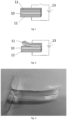
- a bonded structure in which a layer of debondable solvent-borne pressure sensitive adhesive composition (10) is disposed between two conductive substrates (11).
- Each layer of conductive substrate (11) is in electrical contact with an electrical power source (13) which may be a battery or an AC-driven source of direct current (DC).
- the positive and negative terminals of that power source (13) are shown in one fixed position, but the skilled artisan will of course recognize that the polarity of the system can be reversed.
- the two conductive substrates (11) are shown in the form of a layer which may be constituted by inter alia : a metallic film; a metallic sheet; a metallic mesh or grid; deposited metal particles; a resinous material which is rendered conductive by virtue of conductive elements disposed therein; or, a conducting oxide layer.
- exemplary conductive elements there may be mentioned silver filaments, single-walled carbon nanotubes and multi-walled carbon nanotubes.
- exemplary conducting oxides there may be mentioned: doped indium oxides, such as indium tin oxide (ITO); doped zinc oxide; antimony tin oxide; cadmium stannate; and, zinc stannate.
- the present invention relates to a method of debonding said bonded structure according to the present invention, said method comprising the steps of 1) applying a voltage across both surfaces to form an anodic interface and a cathodic interface, preferably voltage of from 0.5 to 200 V is applied for from 1 second to 60 minutes; and 2) debonding the surfaces.
- each conductive substrate (11) When an electrical voltage is applied between each conductive substrate (11), current is supplied to the debondable solvent-borne pressure sensitive adhesive composition (10) disposed there between. This induces electrochemical reactions at the interface of the substrates (11) and the adhesive composition, which electrochemical reactions are understood as oxidative at the positively charged or anodic interface and reductive at the negatively charged or cathodic interface. The reactions are considered to weaken the adhesive bond between the substrates allowing the easy removal of the debondable composition from the substrate.
- the debonding occurs at the positive interface, that interface between the debondable solvent-borne pressure sensitive adhesive composition (10) and the electrically conductive surface (11) that is in electrical contact with the positive electrode.
- the adhesive bond may be weakened at both substrate interfaces.
- the composition of the pressure sensitive adhesive layer may be moderated so that debonding occurs at either the positive or negative interface or simultaneously from both.
- a voltage applied across both surfaces so as to form an anodic interface and a cathodic interface will cause debonding to occur simultaneously at both the anodic and cathodic adhesive / substrate interfaces.
- reversed polarity may be used to simultaneously debond both substrate / adhesive interfaces if the composition does not respond at both interfaces to direct current.
- the current can be applied with any suitable waveform, provided that sufficient total time at each polarity is allowed for debonding to occur. Sinusoidal, rectangular and triangular waveforms might be appropriate in this regard and may be applied from a controlled voltage or a controlled current source.
- the debonding operation may be performed effectively where at least one and preferably both of the following conditions are instigated: a) an applied voltage of from 0.5 to 200 V; and, b) the voltage being applied for a duration of from 1 second to 60 minutes.
- a) an applied voltage of from 0.5 to 200 V the voltage being applied for a duration of from 1 second to 60 minutes.
- the potential might only need to be applied for the order of seconds.
- potential of 5V for a duration of 10 minutes is sufficient to have a debonding effect, whereas in some embodiments, potential of 3.5V for a duration of 30 minutes is sufficient.
- the pressure sensitive adhesive composition is solely on a first substrate or a second substrate, meaning that one of the substrates is substantially free of adhesive.
- compositions were prepared in accordance with 1.
- Table 1 Ingredient Example 1
- Example 2 Example 3 Compar ative example 4
- Comparative example 5 Compara tive example 6
- Duro-Tak 195A 90% 100% Duro-Tak 183 90% 100% Duro-Tak AH115 90% 100%
- BMIM NTF 1-Butyl-3-methylimidazolium bis(trifluoromethylsulfonyl) imide
- compositions were prepared by mixing the ingredients.
- the composition was formed as a pressure sensitive film by applying the composition on a release liner (silicone foil) and subsequently heated at 110°C for three minutes.
- the prepared PSA film having thickness of 120 ⁇ m was transferred to on aluminium foil (25mm by 200mm) having thickness of about 90 ⁇ m.
- Second aluminium foil was pressed against the PSA film and a bonded structure were formed ( Figure 2 ).
- T-peel test was carried out according to the ASTM D1876 with a separation speed of 200 mm/min and samples with 2,5 cm x 20 cm of active area, and the results are documented in table 2.
- Table 2 Example 1
- Example 2 Compar ative example 4
- Comparative example 5 Compara tive example 6 T-peel [N/25mm] 11.05 14 8 14.3 14 9 T-peel after electrochemical delamination 20 minutes 30V 3.45 3 0
- Figures 5, 6 and 7 all illustrate the measure of force during the measurement, when the aluminium foils were being pulled apart along the path in mm, and in a meantime the needed force was recorded in Newton.
- Figure 5 illustrates needed force to pull apart the aluminium foils adhered together with example 1 and comparative example 4.
- Figure 6 illustrates needed force to pull apart the aluminium foils adhered together with example 2 and comparative example 5.
- Figure 7 illustrates needed force to pull apart the aluminium foils adhered together with example 3 and comparative example 6.
- compositions were prepared by mixing the ingredients.
- the composition was formed as a pressure sensitive film by applying the composition on a release liner (silicone foil) and subsequently heated at 110°C for three minutes.
- the prepared PSA film having thickness of 120 ⁇ m was transferred to on aluminium foil (25mm by 200mm) having thickness of about 80 ⁇ m.
- Second aluminium foil was pressed against the PSA film and a bonded structure were formed ( Figure 2 ).
- T-peel test was carried out according to the ASTM D1876 with a separation speed of 200 mm/min and samples with 2,5 cm x 20 cm of active area.
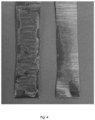
- the bonded structures of examples 7-11 came off after the electrochemical delamination as can be seen in figure 4 .
- the results are documented in table 4.
- Table 4 Example 7
- Example 10 Example 11 T-peel [N/25mm] 12.6 14.09 13.25 12.9 14.3 T-peel after electrochemical delamination 20 minutes 30V 6 4.8 5.3 5.3
- Static shear was measured according to FTM-8 in FINAT Technical Handbook 9th Editi on.
- SAFT Shear adhesion failure temperature
- Figure 8 illustrates needed force to pull apart the aluminium foils adhered together with example 7.
- test results exemplify a good stability of the pressure sensitive adhesive tape made from the composition according to the present invention.
Landscapes
- Chemical & Material Sciences (AREA)
- Organic Chemistry (AREA)
- Chemical Kinetics & Catalysis (AREA)
- Health & Medical Sciences (AREA)
- Medicinal Chemistry (AREA)
- Polymers & Plastics (AREA)
- Adhesives Or Adhesive Processes (AREA)
- Adhesive Tapes (AREA)
Priority Applications (7)
| Application Number | Priority Date | Filing Date | Title |
|---|---|---|---|
| EP22193899.6A EP4332190A1 (fr) | 2022-09-05 | 2022-09-05 | Adhesif autocollant a base de solvant decollable (psa) |
| CN202380063292.0A CN119816573A (zh) | 2022-09-05 | 2023-08-23 | 可脱粘的溶剂型压敏粘合剂(psa) |
| KR1020257006858A KR20250065601A (ko) | 2022-09-05 | 2023-08-23 | 탈착 가능한 용매계 압감성 접착제 (psa) |
| JP2025513416A JP2025529288A (ja) | 2022-09-05 | 2023-08-23 | 剥離可能な溶剤系感圧接着剤(psa) |
| PCT/EP2023/073083 WO2024052121A1 (fr) | 2022-09-05 | 2023-08-23 | Adhésif sensible à la pression (psa) à base de solvant décollable |
| TW112133419A TW202421748A (zh) | 2022-09-05 | 2023-09-04 | 可脫黏的溶劑型壓敏性黏著劑(psa) |
| US19/069,342 US20250197691A1 (en) | 2022-09-05 | 2025-03-04 | Debondable solvent-borne pressure sensitive adhesive (psa) |
Applications Claiming Priority (1)
| Application Number | Priority Date | Filing Date | Title |
|---|---|---|---|
| EP22193899.6A EP4332190A1 (fr) | 2022-09-05 | 2022-09-05 | Adhesif autocollant a base de solvant decollable (psa) |
Publications (1)
| Publication Number | Publication Date |
|---|---|
| EP4332190A1 true EP4332190A1 (fr) | 2024-03-06 |
Family
ID=83898040
Family Applications (1)
| Application Number | Title | Priority Date | Filing Date |
|---|---|---|---|
| EP22193899.6A Pending EP4332190A1 (fr) | 2022-09-05 | 2022-09-05 | Adhesif autocollant a base de solvant decollable (psa) |
Country Status (7)
| Country | Link |
|---|---|
| US (1) | US20250197691A1 (fr) |
| EP (1) | EP4332190A1 (fr) |
| JP (1) | JP2025529288A (fr) |
| KR (1) | KR20250065601A (fr) |
| CN (1) | CN119816573A (fr) |
| TW (1) | TW202421748A (fr) |
| WO (1) | WO2024052121A1 (fr) |
Families Citing this family (1)
| Publication number | Priority date | Publication date | Assignee | Title |
|---|---|---|---|---|
| CN120966398B (zh) * | 2025-10-20 | 2026-02-10 | 广东工业大学 | 一种无水乙醇触发快速脱粘的水性胶黏剂及其制备方法 |
Citations (11)
| Publication number | Priority date | Publication date | Assignee | Title |
|---|---|---|---|---|
| US20070269659A1 (en) | 2006-05-17 | 2007-11-22 | Eic Laboratories, Inc. | Electrically disbondable compositions and related methods |
| WO2007142600A1 (fr) | 2006-06-05 | 2007-12-13 | Stora Enso Ab | Composition adhésive pouvant être fragilisée de façon électrochimique |
| US20080196828A1 (en) | 1999-07-14 | 2008-08-21 | Gilbert Michael D | Electrically Disbonding Adhesive Compositions and Related Methods |
| US7465492B2 (en) | 1999-07-14 | 2008-12-16 | Eic Laboratories, Inc. | Electrically disbondable compositions and related methods |
| WO2017133864A1 (fr) | 2016-02-01 | 2017-08-10 | Henkel Ag & Co. Kgaa | Décollage électrique d'adhésifs thermofusibles au polyuréthane à l'aide d'encres conductrices |
| EP3363875A1 (fr) | 2015-10-16 | 2018-08-22 | Nitto Denko Corporation | Composition d'adhésif pour pelage électrique, feuille adhésive, et corps lié |
| EP3591020A1 (fr) * | 2017-03-03 | 2020-01-08 | Nitto Denko Corporation | Composition adhésive électriquement pelable, feuille adhésive et corps collé |
| WO2020086454A1 (fr) * | 2018-10-23 | 2020-04-30 | Nitto Denko Corporation | Composition d'adhésif décollable électrochimiquement et résistant à la corrosion destinée à être utilisée dans des environnements à humidité élevée et faible |
| EP3835381A1 (fr) * | 2019-12-13 | 2021-06-16 | Henkel AG & Co. KGaA | Composition adhésive durcissable à deux composants (2k) |
| EP3858932A1 (fr) * | 2018-09-28 | 2021-08-04 | Nitto Denko Corporation | Procédé de séparation de partie à coller et procédé d'assemblage |
| EP3498797B1 (fr) * | 2017-12-15 | 2021-08-11 | Henkel AG & Co. KGaA | Bande adhésive pour coller des matières textiles |
-
2022
- 2022-09-05 EP EP22193899.6A patent/EP4332190A1/fr active Pending
-
2023
- 2023-08-23 KR KR1020257006858A patent/KR20250065601A/ko active Pending
- 2023-08-23 JP JP2025513416A patent/JP2025529288A/ja active Pending
- 2023-08-23 CN CN202380063292.0A patent/CN119816573A/zh active Pending
- 2023-08-23 WO PCT/EP2023/073083 patent/WO2024052121A1/fr not_active Ceased
- 2023-09-04 TW TW112133419A patent/TW202421748A/zh unknown
-
2025
- 2025-03-04 US US19/069,342 patent/US20250197691A1/en active Pending
Patent Citations (11)
| Publication number | Priority date | Publication date | Assignee | Title |
|---|---|---|---|---|
| US20080196828A1 (en) | 1999-07-14 | 2008-08-21 | Gilbert Michael D | Electrically Disbonding Adhesive Compositions and Related Methods |
| US7465492B2 (en) | 1999-07-14 | 2008-12-16 | Eic Laboratories, Inc. | Electrically disbondable compositions and related methods |
| US20070269659A1 (en) | 2006-05-17 | 2007-11-22 | Eic Laboratories, Inc. | Electrically disbondable compositions and related methods |
| WO2007142600A1 (fr) | 2006-06-05 | 2007-12-13 | Stora Enso Ab | Composition adhésive pouvant être fragilisée de façon électrochimique |
| EP3363875A1 (fr) | 2015-10-16 | 2018-08-22 | Nitto Denko Corporation | Composition d'adhésif pour pelage électrique, feuille adhésive, et corps lié |
| WO2017133864A1 (fr) | 2016-02-01 | 2017-08-10 | Henkel Ag & Co. Kgaa | Décollage électrique d'adhésifs thermofusibles au polyuréthane à l'aide d'encres conductrices |
| EP3591020A1 (fr) * | 2017-03-03 | 2020-01-08 | Nitto Denko Corporation | Composition adhésive électriquement pelable, feuille adhésive et corps collé |
| EP3498797B1 (fr) * | 2017-12-15 | 2021-08-11 | Henkel AG & Co. KGaA | Bande adhésive pour coller des matières textiles |
| EP3858932A1 (fr) * | 2018-09-28 | 2021-08-04 | Nitto Denko Corporation | Procédé de séparation de partie à coller et procédé d'assemblage |
| WO2020086454A1 (fr) * | 2018-10-23 | 2020-04-30 | Nitto Denko Corporation | Composition d'adhésif décollable électrochimiquement et résistant à la corrosion destinée à être utilisée dans des environnements à humidité élevée et faible |
| EP3835381A1 (fr) * | 2019-12-13 | 2021-06-16 | Henkel AG & Co. KGaA | Composition adhésive durcissable à deux composants (2k) |
Non-Patent Citations (1)
| Title |
|---|
| "FINAT Technical Handbook" |
Also Published As
| Publication number | Publication date |
|---|---|
| KR20250065601A (ko) | 2025-05-13 |
| WO2024052121A1 (fr) | 2024-03-14 |
| US20250197691A1 (en) | 2025-06-19 |
| TW202421748A (zh) | 2024-06-01 |
| JP2025529288A (ja) | 2025-09-04 |
| CN119816573A (zh) | 2025-04-11 |
Similar Documents
| Publication | Publication Date | Title |
|---|---|---|
| TWI825341B (zh) | 電氣剝離型黏著片材、接合體、及接合體之分離方法 | |
| JP7427235B2 (ja) | 電気剥離性粘着剤組成物、電気剥離性粘着製品及びその剥離方法 | |
| JP6974170B2 (ja) | 電気剥離用粘着剤組成物、粘着シート、及び接合体 | |
| EP2275508B1 (fr) | Composition adhésive acrylique autocollante, de type dispersion aqueuse, et ruban adhésif autocollant | |
| JP6767104B2 (ja) | 被着体の接合・分離方法 | |
| JP5448409B2 (ja) | 粘着剤組成物および粘着シート | |
| CN101948663B (zh) | 双面胶粘性粘合片 | |
| JP6768281B2 (ja) | 粘着シート接合体分離方法 | |
| US20250197691A1 (en) | Debondable solvent-borne pressure sensitive adhesive (psa) | |
| WO2018159784A1 (fr) | Composition adhésive électriquement pelable, feuille adhésive et corps collé | |
| CN103635556A (zh) | 水分散型粘合剂组合物、粘合剂及粘合片 | |
| US20240409787A1 (en) | Pressure-sensitive adhesive composition, pressure-sensitive adhesive sheet, and bonded body | |
| EP4410916A1 (fr) | Composition adhésive, feuille adhésive et corps assemblé | |
| WO2022030565A1 (fr) | Feuille adhésive électriquement pelable et corps lié | |
| US20250059406A1 (en) | Pressure-sensitive adhesive composition, pressure-sensitive adhesive sheet, and bonded body | |
| KR20250087546A (ko) | 경화성이며 전기적으로 탈결합가능한 1-성분 (1k) 구조체 접착제 조성물 | |
| CN117795030A (zh) | 电剥离性粘合剂组合物、电剥离性粘合制品及其利用 | |
| TW201420716A (zh) | 黏膠帶及黏膠帶之製造方法 | |
| JP2020200481A (ja) | 被着体の接合・分離方法 | |
| EP3183311A1 (fr) | Procédé de liaison d'élastomères à basse temperature | |
| JP2019023304A (ja) | 被着体の接合・分離方法 |
Legal Events
| Date | Code | Title | Description |
|---|---|---|---|
| PUAI | Public reference made under article 153(3) epc to a published international application that has entered the european phase |
Free format text: ORIGINAL CODE: 0009012 |
|
| STAA | Information on the status of an ep patent application or granted ep patent |
Free format text: STATUS: THE APPLICATION HAS BEEN PUBLISHED |
|
| AK | Designated contracting states |
Kind code of ref document: A1 Designated state(s): AL AT BE BG CH CY CZ DE DK EE ES FI FR GB GR HR HU IE IS IT LI LT LU LV MC MK MT NL NO PL PT RO RS SE SI SK SM TR |
|
| RIN1 | Information on inventor provided before grant (corrected) |
Inventor name: SUNDERMEIER, UTA Inventor name: LIESKE, ALEXANDRA Inventor name: SCHNEIDER, ANJA Inventor name: STAPF, STEFANIE |
|
| STAA | Information on the status of an ep patent application or granted ep patent |
Free format text: STATUS: REQUEST FOR EXAMINATION WAS MADE |
|
| 17P | Request for examination filed |
Effective date: 20240827 |
|
| RBV | Designated contracting states (corrected) |
Designated state(s): AL AT BE BG CH CY CZ DE DK EE ES FI FR GB GR HR HU IE IS IT LI LT LU LV MC MK MT NL NO PL PT RO RS SE SI SK SM TR |