EP4332249A1 - Stahlblech und plattiertes stahlblech - Google Patents
Stahlblech und plattiertes stahlblech Download PDFInfo
- Publication number
- EP4332249A1 EP4332249A1 EP21939220.6A EP21939220A EP4332249A1 EP 4332249 A1 EP4332249 A1 EP 4332249A1 EP 21939220 A EP21939220 A EP 21939220A EP 4332249 A1 EP4332249 A1 EP 4332249A1
- Authority
- EP
- European Patent Office
- Prior art keywords
- steel sheet
- oxides
- less
- yes
- layer
- Prior art date
- Legal status (The legal status is an assumption and is not a legal conclusion. Google has not performed a legal analysis and makes no representation as to the accuracy of the status listed.)
- Granted
Links
Images
Classifications
-
- C—CHEMISTRY; METALLURGY
- C22—METALLURGY; FERROUS OR NON-FERROUS ALLOYS; TREATMENT OF ALLOYS OR NON-FERROUS METALS
- C22C—ALLOYS
- C22C38/00—Ferrous alloys, e.g. steel alloys
- C22C38/18—Ferrous alloys, e.g. steel alloys containing chromium
- C22C38/40—Ferrous alloys, e.g. steel alloys containing chromium with nickel
- C22C38/58—Ferrous alloys, e.g. steel alloys containing chromium with nickel with more than 1.5% by weight of manganese
-
- C—CHEMISTRY; METALLURGY
- C21—METALLURGY OF IRON
- C21D—MODIFYING THE PHYSICAL STRUCTURE OF FERROUS METALS; GENERAL DEVICES FOR HEAT TREATMENT OF FERROUS OR NON-FERROUS METALS OR ALLOYS; MAKING METAL MALLEABLE, e.g. BY DECARBURISATION OR TEMPERING
- C21D9/00—Heat treatment, e.g. annealing, hardening, quenching or tempering, adapted for particular articles; Furnaces therefor
- C21D9/46—Heat treatment, e.g. annealing, hardening, quenching or tempering, adapted for particular articles; Furnaces therefor for sheet metals
-
- C—CHEMISTRY; METALLURGY
- C21—METALLURGY OF IRON
- C21D—MODIFYING THE PHYSICAL STRUCTURE OF FERROUS METALS; GENERAL DEVICES FOR HEAT TREATMENT OF FERROUS OR NON-FERROUS METALS OR ALLOYS; MAKING METAL MALLEABLE, e.g. BY DECARBURISATION OR TEMPERING
- C21D1/00—General methods or devices for heat treatment, e.g. annealing, hardening, quenching or tempering
- C21D1/26—Methods of annealing
-
- C—CHEMISTRY; METALLURGY
- C21—METALLURGY OF IRON
- C21D—MODIFYING THE PHYSICAL STRUCTURE OF FERROUS METALS; GENERAL DEVICES FOR HEAT TREATMENT OF FERROUS OR NON-FERROUS METALS OR ALLOYS; MAKING METAL MALLEABLE, e.g. BY DECARBURISATION OR TEMPERING
- C21D1/00—General methods or devices for heat treatment, e.g. annealing, hardening, quenching or tempering
- C21D1/74—Methods of treatment in inert gas, controlled atmosphere, vacuum or pulverulent material
- C21D1/76—Adjusting the composition of the atmosphere
-
- C—CHEMISTRY; METALLURGY
- C21—METALLURGY OF IRON
- C21D—MODIFYING THE PHYSICAL STRUCTURE OF FERROUS METALS; GENERAL DEVICES FOR HEAT TREATMENT OF FERROUS OR NON-FERROUS METALS OR ALLOYS; MAKING METAL MALLEABLE, e.g. BY DECARBURISATION OR TEMPERING
- C21D8/00—Modifying the physical properties of ferrous metals or ferrous alloys by deformation combined with, or followed by, heat treatment
- C21D8/02—Modifying the physical properties of ferrous metals or ferrous alloys by deformation combined with, or followed by, heat treatment during manufacturing of plates or strips
-
- C—CHEMISTRY; METALLURGY
- C21—METALLURGY OF IRON
- C21D—MODIFYING THE PHYSICAL STRUCTURE OF FERROUS METALS; GENERAL DEVICES FOR HEAT TREATMENT OF FERROUS OR NON-FERROUS METALS OR ALLOYS; MAKING METAL MALLEABLE, e.g. BY DECARBURISATION OR TEMPERING
- C21D8/00—Modifying the physical properties of ferrous metals or ferrous alloys by deformation combined with, or followed by, heat treatment
- C21D8/02—Modifying the physical properties of ferrous metals or ferrous alloys by deformation combined with, or followed by, heat treatment during manufacturing of plates or strips
- C21D8/0247—Modifying the physical properties of ferrous metals or ferrous alloys by deformation combined with, or followed by, heat treatment during manufacturing of plates or strips characterised by the heat treatment
- C21D8/0257—Modifying the physical properties of ferrous metals or ferrous alloys by deformation combined with, or followed by, heat treatment during manufacturing of plates or strips characterised by the heat treatment with diffusion of elements, e.g. decarburising, nitriding
-
- C—CHEMISTRY; METALLURGY
- C21—METALLURGY OF IRON
- C21D—MODIFYING THE PHYSICAL STRUCTURE OF FERROUS METALS; GENERAL DEVICES FOR HEAT TREATMENT OF FERROUS OR NON-FERROUS METALS OR ALLOYS; MAKING METAL MALLEABLE, e.g. BY DECARBURISATION OR TEMPERING
- C21D8/00—Modifying the physical properties of ferrous metals or ferrous alloys by deformation combined with, or followed by, heat treatment
- C21D8/02—Modifying the physical properties of ferrous metals or ferrous alloys by deformation combined with, or followed by, heat treatment during manufacturing of plates or strips
- C21D8/0247—Modifying the physical properties of ferrous metals or ferrous alloys by deformation combined with, or followed by, heat treatment during manufacturing of plates or strips characterised by the heat treatment
- C21D8/0273—Final recrystallisation annealing
-
- C—CHEMISTRY; METALLURGY
- C21—METALLURGY OF IRON
- C21D—MODIFYING THE PHYSICAL STRUCTURE OF FERROUS METALS; GENERAL DEVICES FOR HEAT TREATMENT OF FERROUS OR NON-FERROUS METALS OR ALLOYS; MAKING METAL MALLEABLE, e.g. BY DECARBURISATION OR TEMPERING
- C21D8/00—Modifying the physical properties of ferrous metals or ferrous alloys by deformation combined with, or followed by, heat treatment
- C21D8/02—Modifying the physical properties of ferrous metals or ferrous alloys by deformation combined with, or followed by, heat treatment during manufacturing of plates or strips
- C21D8/0278—Modifying the physical properties of ferrous metals or ferrous alloys by deformation combined with, or followed by, heat treatment during manufacturing of plates or strips involving a particular surface treatment
-
- C—CHEMISTRY; METALLURGY
- C21—METALLURGY OF IRON
- C21D—MODIFYING THE PHYSICAL STRUCTURE OF FERROUS METALS; GENERAL DEVICES FOR HEAT TREATMENT OF FERROUS OR NON-FERROUS METALS OR ALLOYS; MAKING METAL MALLEABLE, e.g. BY DECARBURISATION OR TEMPERING
- C21D8/00—Modifying the physical properties of ferrous metals or ferrous alloys by deformation combined with, or followed by, heat treatment
- C21D8/12—Modifying the physical properties of ferrous metals or ferrous alloys by deformation combined with, or followed by, heat treatment during manufacturing of articles with special electromagnetic properties
- C21D8/1244—Modifying the physical properties of ferrous metals or ferrous alloys by deformation combined with, or followed by, heat treatment during manufacturing of articles with special electromagnetic properties characterised by the heat treatment
- C21D8/125—Modifying the physical properties of ferrous metals or ferrous alloys by deformation combined with, or followed by, heat treatment during manufacturing of articles with special electromagnetic properties characterised by the heat treatment with application of tension
-
- C—CHEMISTRY; METALLURGY
- C22—METALLURGY; FERROUS OR NON-FERROUS ALLOYS; TREATMENT OF ALLOYS OR NON-FERROUS METALS
- C22C—ALLOYS
- C22C38/00—Ferrous alloys, e.g. steel alloys
- C22C38/001—Ferrous alloys, e.g. steel alloys containing N
-
- C—CHEMISTRY; METALLURGY
- C22—METALLURGY; FERROUS OR NON-FERROUS ALLOYS; TREATMENT OF ALLOYS OR NON-FERROUS METALS
- C22C—ALLOYS
- C22C38/00—Ferrous alloys, e.g. steel alloys
- C22C38/002—Ferrous alloys, e.g. steel alloys containing In, Mg, or other elements not provided for in one single group C22C38/001 - C22C38/60
-
- C—CHEMISTRY; METALLURGY
- C22—METALLURGY; FERROUS OR NON-FERROUS ALLOYS; TREATMENT OF ALLOYS OR NON-FERROUS METALS
- C22C—ALLOYS
- C22C38/00—Ferrous alloys, e.g. steel alloys
- C22C38/02—Ferrous alloys, e.g. steel alloys containing silicon
-
- C—CHEMISTRY; METALLURGY
- C22—METALLURGY; FERROUS OR NON-FERROUS ALLOYS; TREATMENT OF ALLOYS OR NON-FERROUS METALS
- C22C—ALLOYS
- C22C38/00—Ferrous alloys, e.g. steel alloys
- C22C38/04—Ferrous alloys, e.g. steel alloys containing manganese
-
- C—CHEMISTRY; METALLURGY
- C22—METALLURGY; FERROUS OR NON-FERROUS ALLOYS; TREATMENT OF ALLOYS OR NON-FERROUS METALS
- C22C—ALLOYS
- C22C38/00—Ferrous alloys, e.g. steel alloys
- C22C38/18—Ferrous alloys, e.g. steel alloys containing chromium
- C22C38/40—Ferrous alloys, e.g. steel alloys containing chromium with nickel
- C22C38/42—Ferrous alloys, e.g. steel alloys containing chromium with nickel with copper
-
- C—CHEMISTRY; METALLURGY
- C22—METALLURGY; FERROUS OR NON-FERROUS ALLOYS; TREATMENT OF ALLOYS OR NON-FERROUS METALS
- C22C—ALLOYS
- C22C38/00—Ferrous alloys, e.g. steel alloys
- C22C38/18—Ferrous alloys, e.g. steel alloys containing chromium
- C22C38/40—Ferrous alloys, e.g. steel alloys containing chromium with nickel
- C22C38/44—Ferrous alloys, e.g. steel alloys containing chromium with nickel with molybdenum or tungsten
-
- C—CHEMISTRY; METALLURGY
- C22—METALLURGY; FERROUS OR NON-FERROUS ALLOYS; TREATMENT OF ALLOYS OR NON-FERROUS METALS
- C22C—ALLOYS
- C22C38/00—Ferrous alloys, e.g. steel alloys
- C22C38/18—Ferrous alloys, e.g. steel alloys containing chromium
- C22C38/40—Ferrous alloys, e.g. steel alloys containing chromium with nickel
- C22C38/46—Ferrous alloys, e.g. steel alloys containing chromium with nickel with vanadium
-
- C—CHEMISTRY; METALLURGY
- C22—METALLURGY; FERROUS OR NON-FERROUS ALLOYS; TREATMENT OF ALLOYS OR NON-FERROUS METALS
- C22C—ALLOYS
- C22C38/00—Ferrous alloys, e.g. steel alloys
- C22C38/18—Ferrous alloys, e.g. steel alloys containing chromium
- C22C38/40—Ferrous alloys, e.g. steel alloys containing chromium with nickel
- C22C38/48—Ferrous alloys, e.g. steel alloys containing chromium with nickel with niobium or tantalum
-
- C—CHEMISTRY; METALLURGY
- C22—METALLURGY; FERROUS OR NON-FERROUS ALLOYS; TREATMENT OF ALLOYS OR NON-FERROUS METALS
- C22C—ALLOYS
- C22C38/00—Ferrous alloys, e.g. steel alloys
- C22C38/18—Ferrous alloys, e.g. steel alloys containing chromium
- C22C38/40—Ferrous alloys, e.g. steel alloys containing chromium with nickel
- C22C38/54—Ferrous alloys, e.g. steel alloys containing chromium with nickel with boron
-
- C—CHEMISTRY; METALLURGY
- C23—COATING METALLIC MATERIAL; COATING MATERIAL WITH METALLIC MATERIAL; CHEMICAL SURFACE TREATMENT; DIFFUSION TREATMENT OF METALLIC MATERIAL; COATING BY VACUUM EVAPORATION, BY SPUTTERING, BY ION IMPLANTATION OR BY CHEMICAL VAPOUR DEPOSITION, IN GENERAL; INHIBITING CORROSION OF METALLIC MATERIAL OR INCRUSTATION IN GENERAL
- C23C—COATING METALLIC MATERIAL; COATING MATERIAL WITH METALLIC MATERIAL; SURFACE TREATMENT OF METALLIC MATERIAL BY DIFFUSION INTO THE SURFACE, BY CHEMICAL CONVERSION OR SUBSTITUTION; COATING BY VACUUM EVAPORATION, BY SPUTTERING, BY ION IMPLANTATION OR BY CHEMICAL VAPOUR DEPOSITION, IN GENERAL
- C23C2/00—Hot-dipping or immersion processes for applying the coating material in the molten state without affecting the shape; Apparatus therefor
- C23C2/04—Hot-dipping or immersion processes for applying the coating material in the molten state without affecting the shape; Apparatus therefor characterised by the coating material
- C23C2/06—Zinc or cadmium or alloys based thereon
-
- C—CHEMISTRY; METALLURGY
- C23—COATING METALLIC MATERIAL; COATING MATERIAL WITH METALLIC MATERIAL; CHEMICAL SURFACE TREATMENT; DIFFUSION TREATMENT OF METALLIC MATERIAL; COATING BY VACUUM EVAPORATION, BY SPUTTERING, BY ION IMPLANTATION OR BY CHEMICAL VAPOUR DEPOSITION, IN GENERAL; INHIBITING CORROSION OF METALLIC MATERIAL OR INCRUSTATION IN GENERAL
- C23C—COATING METALLIC MATERIAL; COATING MATERIAL WITH METALLIC MATERIAL; SURFACE TREATMENT OF METALLIC MATERIAL BY DIFFUSION INTO THE SURFACE, BY CHEMICAL CONVERSION OR SUBSTITUTION; COATING BY VACUUM EVAPORATION, BY SPUTTERING, BY ION IMPLANTATION OR BY CHEMICAL VAPOUR DEPOSITION, IN GENERAL
- C23C2/00—Hot-dipping or immersion processes for applying the coating material in the molten state without affecting the shape; Apparatus therefor
- C23C2/34—Hot-dipping or immersion processes for applying the coating material in the molten state without affecting the shape; Apparatus therefor characterised by the shape of the material to be treated
- C23C2/36—Elongated material
- C23C2/40—Plates; Strips
-
- C—CHEMISTRY; METALLURGY
- C23—COATING METALLIC MATERIAL; COATING MATERIAL WITH METALLIC MATERIAL; CHEMICAL SURFACE TREATMENT; DIFFUSION TREATMENT OF METALLIC MATERIAL; COATING BY VACUUM EVAPORATION, BY SPUTTERING, BY ION IMPLANTATION OR BY CHEMICAL VAPOUR DEPOSITION, IN GENERAL; INHIBITING CORROSION OF METALLIC MATERIAL OR INCRUSTATION IN GENERAL
- C23C—COATING METALLIC MATERIAL; COATING MATERIAL WITH METALLIC MATERIAL; SURFACE TREATMENT OF METALLIC MATERIAL BY DIFFUSION INTO THE SURFACE, BY CHEMICAL CONVERSION OR SUBSTITUTION; COATING BY VACUUM EVAPORATION, BY SPUTTERING, BY ION IMPLANTATION OR BY CHEMICAL VAPOUR DEPOSITION, IN GENERAL
- C23C30/00—Coating with metallic material characterised only by the composition of the metallic material, i.e. not characterised by the coating process
Definitions
- the present invention relates to a steel sheet and plated steel sheet. More specifically, the present invention relates to a high strength steel sheet and plated steel sheet having high plateability, LME resistance, and hydrogen embrittlement resistance.
- a high strength steel sheet has increased in the field of automobiles for the purpose of reducing vehicle body weight to improve fuel economy.
- a high strength steel sheet typically includes elements such as C, Si, and Mn to improve the strength of the steel.
- the easily oxidizable elements of Si and Mn may bond with the oxygen in the atmosphere during the heat treatment and sometimes form an oxide-including layer in the vicinity of the surface of the steel sheet.
- the forms that such a layer takes include a form in which oxides including Si or Mn form a film on the outside (surface) of the steel sheet (external oxidation layer) and a form in which the oxides are formed on the inside (surface layer) of the steel sheet (internal oxidation layer).
- a plating layer for example, a Zn-based plating layer
- oxides will be present as a film on the surface of the steel sheet and will therefore impede interdiffusion between the steel constituents (for example, Fe) and plating constituents (for example, Zn) thereby affecting the adhesion between the steel and the plating, sometimes resulting in insufficient plateability (for example, there will be an increase in non-plated parts). Therefore, from the viewpoint of improving plateability, a steel sheet formed with an internal oxidation layer is more preferable than a steel sheet formed with an external oxidation layer.
- PTLs 1 and 2 describe a high strength plated steel sheet with a tensile strength of 980 MPa or more comprised of a plated steel sheet having a zinc-based plating layer on a base steel sheet including C, Si, Mn, etc., and having an internal oxidation layer including an oxide of Si and/or Mn on a surface layer of the base steel sheet.
- PTL 3 proposes a method of production of high strength hot dip galvanized steel sheet of high Si content steel suitably controlling the annealing conditions, since, in the case of high Si content steel having a concentration of Si in the steel of 0.3% or more, the Si etc. in the steel diffuses to the surface layer of the steel sheet as oxides due to heating of the surface of the steel sheet and these oxides obstruct the wettability of the plating and worsen the plating adhesion.
- a high strength steel sheet used for automotive members, etc. are sometimes used in corrosive atmospheric environments in which the temperature and humidity fluctuate greatly. It is known that if the high strength steel sheet is exposed to such a corrosive atmospheric environment, hydrogen generated in the process of corrosion will penetrate into the steel. The hydrogen penetrating the steel will segregate at the martensite grain boundaries in the steel microstructure and make the grain boundaries brittle to thereby possibly cause cracks in the steel sheet. The phenomenon of cracks being caused due to this penetrated hydrogen is called "hydrogen embrittlement cracking" (delayed cracking) and often becomes a problem during working of the steel sheet. Accordingly, to prevent hydrogen embrittlement cracking, in the steel sheet used in corrosive environments, it is effective to reduce the amount of hydrogen buildup in the steel.
- the plated steel sheet is worked at a high temperature (for example, about 900°C), and therefore can possibly be worked in a state in which the Zn included in the plating layer has melted.
- the molten Zn will sometimes penetrate into the steel and cause cracks inside the steel sheet. This phenomenon is called "liquid metal embrittlement (LME)".
- LME liquid metal embrittlement
- PTLs 1 and 2 teach that by controlling the average depth of the internal oxidation layer to a thick 4 ⁇ m or more and having the internal oxidation layer function as hydrogen trap sites by the method of oxidation in the oxidation zone by a 0.9 to 1.4 air ratio or air-fuel ratio and then reduction of the oxide film in a hydrogen atmosphere in the reduction zone, it is possible to prevent penetration of hydrogen and suppress hydrogen embrittlement.
- PTL 3 similarly specifically discloses heating in the oxidation zone by a 0.95 to 1.10 air ratio.
- controlling the form of the oxides present in the internal oxidation layer has not been studied at all. There is still room for improvement of hydrogen embrittlement resistance. Furthermore, improvement of LME resistance has not been studied.
- the object of the present invention is to provide a high strength steel sheet and plated steel sheet having high plateability, LME resistance, and hydrogen embrittlement resistance.
- the inventors discovered that to solve the above problem it is important to form oxides in the surface layer of the steel sheet, i.e., on the inside of the steel sheet, and furthermore, to control the form of the oxides present in the surface layer of the steel sheet and also to control the Si-Mn depleted layer formed at the surface layer of the steel sheet due to formation of such oxides to within predetermined ranges of thickness and composition.
- high LME resistance and hydrogen embrittlement resistance could be achieved by forming internal oxides to secure high plateability and forming, as the form of oxides, granular oxides present inside the crystal grains of the metallographic structure by a sufficient fineness and large amount so that the granular oxides are made to not only function as trap sites for hydrogen which could penetrate the steel in corrosive environments but also function as trap sites for Zn which could penetrate the steel during hot stamping or welding and forming an Si-Mn depleted layer having a predetermined thickness and composition on the surface layer of the steel sheet to thereby promote hydrogen diffusion in the steel and improve the dischargeability of hydrogen from inside the steel.
- the present invention is based on the above findings and has as its gist the following:
- the granular oxides present in a fine size and large amount in the surface layer of the steel sheet can be made to function as trap sites for hydrogen penetrating the steel sheet in corrosive environments.
- the amount of hydrogen penetrating it in a corrosive environment can be greatly suppressed and the hydrogen embrittlement resistance can be greatly improved.
- the granular oxides also function as trap sites for Zn penetrating the steel during hot stamping or welding. The amount of Zn penetrating it can be greatly suppressed and the LME resistance can be greatly improved.
- the present invention by including an Si-Mn depleted layer having a predetermined thickness and composition, it becomes possible to promote the diffusion of hydrogen and improve the dischargeability of hydrogen from inside the steel. As a result, it is possible to discharge the penetrated hydrogen and reduce the amount of hydrogen built up in the steel and possible to greatly improve the hydrogen embrittlement resistance. Finally, because the granular oxides and optional grain boundary oxides are formed at the inside of the steel sheet, when forming the plating layer, the steel constituents and plating constituents sufficiently interdiffuse making it possible to achieve high plateability. Accordingly, through the present invention, it is possible to achieve high plateability, LME resistance, and hydrogen embrittlement resistance in a high strength steel sheet.
- the steel sheet according to the present invention has a chemical composition comprising, by mass%,
- a steel slab adjusted to a predetermined chemical composition is rolled (typically, hot rolled and cold rolled), then generally annealed for the purpose of obtaining the desired microstructure, etc.
- the comparatively easily oxidizable constituents in the steel sheet bond with the oxygen in the annealing atmosphere whereby a layer including oxides is formed in the vicinity of the surface of the steel sheet.
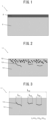
- an external oxidation layer 2 is formed as a film on the surface of the base steel 3 (i.e., the outside of the base steel 3).
- an external oxidation layer 2 is formed as a film on the surface of the base steel 3, in the case of forming a plating layer (for example, zinc-based plating layer), the external oxidation layer 2 will impede interdiffusion between the plating constituents (for example, Zn, Al) and steel constituents (for example, Fe), and therefore sometimes sufficient adhesion between the steel and plating cannot be secured and non-plated parts where no plating layer is formed will arise.
- a plating layer for example, zinc-based plating layer
- the steel sheet 11 according to the present invention does not have an external oxidation layer 2 formed on the surface of the base steel 3 like the steel sheet 1 shown in FIG. 1 , but has granular oxides 12 present at the inside of the base steel 14 and optionally has grain boundary oxides 13 present at the crystal grain boundaries of the metallographic structure. Accordingly, when forming a plating layer on the surface of the steel sheet 11, the steel sheet 11 according to the present invention in which granular oxides 12 and optional grain boundary oxides 13 are formed inside of the base steel 14 can achieve sufficient interdiffusion between the plating constituents and steel constituents and can obtain high plateability in comparison to steel sheet 1 having an external oxidation layer 2.
- high plateability when used regarding a steel sheet, means that when plating the steel sheet, it is possible to form a plating layer in a state in which there are few non-plated parts (parts where the plating layer is not formed) (for example, 5.0 area% or less) or none at all. Further, the term “high plateability”, when used regarding a plated steel sheet, means a plated steel sheet in a state with extremely few non-plated parts (for example, 5.0 area% or less) or none at all.
- a high strength steel sheet used in an atmospheric environment is repeatedly exposed and used in various environments of differing temperature and humidity.
- Such an environment is called a "corrosive atmospheric environment".
- hydrogen is generated in the process of corrosion in the corrosive atmospheric environment.
- the hydrogen penetrates deeper than the surface layer region in the steel and segregates at the martensite grain boundaries of the steel sheet microstructure thereby causing embrittlement of the grain boundaries and triggering hydrogen embrittlement cracking (delayed cracking) in the steel sheet.
- Martensite is a hard structure, and therefore has a high hydrogen susceptibility and is more vulnerable to hydrogen embrittlement cracking. Such cracking can become a problem when working steel sheet.
- the inventors discovered that by controlling the form of oxides present at the surface layer of a steel sheet, more specifically, by making the oxides inside of the steel sheet "granular oxides" having an average grain size and number density in predetermined ranges and, further, controlling the Si-Mn depleted layer formed due to the drop in the Si and Mn concentrations of the surroundings caused by the formation of such internal oxides to within predetermined ranges of thickness and composition, the granular oxides function as trap sites for hydrogen penetrating the steel sheet at the surface layer region of the steel sheet in a corrosive environment and the Si-Mn depleted layer promotes diffusion of penetrating hydrogen to improve the discharge of hydrogen from inside the steel and that as a result, the amount of hydrogen built up in the steel sheet used in a corrosive environment can be reduced not only by suppression of penetration of hydrogen, but also promotion of discharge of penetrated hydrogen to the outside of the system.
- high hydrogen embrittlement resistance means a state in which the amount of hydrogen built up in steel sheet or plated steel sheet is
- the inventors analyzed in detail the relationship between the form of the oxides and their effectiveness as trap sites for hydrogen. As a result, they discovered that, as shown in FIG. 2 , it was effective to have the granular oxides 12 dispersed as grains in the surface layer of the base steel 14 be present separated from each other in a fine size and large amouns, more specifically to have the granular oxides be present with an average grain size of 300 nm or less and a number density of 4.0/ ⁇ m 2 or more. While not being bound to any specific theory, the function of the oxides in the steel sheet of trapping penetrating hydrogen is believed to have a positive correlation with the surface area of the oxides.
- the inventors discovered that it is important, from the viewpoint of achieving high hydrogen penetration resistance and in turn to obtain high hydrogen embrittlement resistance, to control conditions at the time of production of the steel sheet, particularly at the time of annealing, so that granular oxides functioning as trap sites for hydrogen penetrating the steel in a corrosive environment are present in a fine size and large amount.
- the metallographic structure of the surface layer of the steel sheet is typically constituted by a metallographic structure softer than the inside of the steel sheet (for example, at a 1/8 position or 1/4 position of the thickness), and therefore even if there is hydrogen at the surface layer of the steel sheet, hydrogen embrittlement cracking will not particularly be a problem.
- the inventors analyzed in detail the relationship between the form of the Si-Mn depleted layer formed due to the drop in the concentrations of Si and Mn in the surroundings caused by the formation of granular oxides 12 and other internal oxides such as shown in FIG. 2 and the dischargeability of hydrogen and as a result discovered that it was effective to control the Si-Mn depleted layer to predetermined ranges of thickness and composition, more specifically make the thickness of the Si-Mn depleted layer 3.0 ⁇ m or more from the surface of the steel sheet and control the Si and Mn contents of the Si-Mn depleted layer not containing oxides at the 1/2 position of the thickness to become respectively less than 10% of the Si and Mn contents at the sheet thickness center part of the steel sheet (below, these values will also be referred to as the "Si depletion rate” and the "Mn depletion rate”).
- the Si-Mn depleted layer relatively thick, specifically by controlling the thickness of the Si-Mn depleted layer to 3.0 ⁇ m or more from the surface of the steel sheet (if there is a plating layer present on the surface of the steel sheet, the interface of the plating layer and steel sheet), it is believed possible to sufficiently secure diffusion routes for the hydrogen while by further making the Si and Mn contents of the Si-Mn depleted layer sufficiently low, specifically by controlling the Si and Mn depletion rates to respectively less than 10%, it is believed possible to sufficiently reduce the amount of dissolved Si and Mn impeding diffusion of hydrogen.
- the steel sheet according to the present invention is not necessarily limited to such a plated steel sheet and also encompasses a steel sheet which is not plated. The reason is that even a steel sheet which is not plated can suffer from LME cracking for example at the time of spot welding it with galvanized steel sheet due to zinc melting in the galvanized steel sheet penetrating the steel sheet which is not plated.
- the thickness of the steel sheet according to the present invention is not particularly limited but may be, for example, 0.1 to 3.2 mm.
- the C content is an important element for securing the strength of steel.
- the C content is 0.05% or more.
- the C content is preferably 0.07% or more, more preferably 0.10% or more, even more preferably 0.12% or more.
- the C content is 0.40% or less.
- the C content may also be 0.38% or less, 0.35% or less, 0.32% or less, or 0.30% or less.
- Si is an element effective for improving the strength of steel.
- the Si content is 0.2% or more.
- the Si content is preferably 0.3% or more, more preferably 0.5% or more, further preferably 1.0% or more.
- the Si content is 3.0% or less.
- the Si content may also be 2.8% or less, 2.5% or less, 2.3% or less, or 2.0% or less.
- Mn manganese
- Mn manganese
- the Mn content is 0.1% or more.
- the Mn content is preferably 0.5% or more, more preferably 1.0% or more, further preferably 1.5% or more.
- the Mn content is 5.0% or less.
- the Mn content may also be 4.5% or less, 4.0% or less, 3.5% or less, or 3.0% or less.
- Al is an element which acts as a deoxidizing element.
- the Al content may also be 0%, but to obtain a sufficient deoxidizing effect, the Al content is preferably 0.0010% or more.
- the Al content is more preferably 0.0050% or more, further preferably 0.0100% or more, further more preferably 0.0150% or more.
- the Al content is less than 0.4000%.
- the Al content may be 0.3900% or less, 0.3800% or less, 0.3700% or less, 0.3500% or less, 0.3400% or less, 0.3300% or less, 0.3000% or less, or 0.2000% or less.
- the Al content means the content of so-called acid-soluble Al (sol. Al).
- P phosphorus
- the P content is 0.0300% or less.
- the P content is preferably 0.0200% or less, more preferably 0.0100% or less, even more preferably 0.0050% or less.
- the lower limit of the P content is 0%, but from the viewpoint of production costs, the P content may be more than 0% or be 0.0001% or more.
- S sulfur
- S is an impurity generally contained in steel. If excessively containing S, the weldability is liable to decline and further the amount of precipitated MnS is liable to increase and the bendability or other workability is liable to fall. Accordingly, the S content is 0.0300% or less.
- the S content is preferably 0.0100% or less, more preferably 0.0050% or less, even more preferably 0.0020% or less.
- the lower limit of the S content is 0%, but from the viewpoint of desulfurization costs, the S content may be more than 0% or be 0.0001% or more.
- N nitrogen
- the N content is 0.0100% or less.
- the N content is preferably 0.0080% or less, more preferably 0.0050% or less, even more preferably 0.0030% or less.
- the lower limit of the N content is 0%, but from the viewpoint of production costs, the N content may be more than 0% or be 0.0010% or more.
- the basic chemical composition of the steel sheet according to the present invention is as explained above. Furthermore the steel sheet may contain, in accordance with need, the following optional elements. Inclusion of these elements is not essential. The lower limits of contents of these elements are 0%.
- B is an element which contributes to increasing hardenability and improving strength and further segregates at the grain boundaries to strengthen the grain boundaries and improve toughness.
- the B content may be 0%, but may be included in accordance with need so as to obtain the above effect.
- the B content may be 0.0001% or more, 0.0005% or more, or 0.001% or more.
- the B content is preferably 0.010% or less and may be 0.008% or less or 0.006% or less as well.
- Ti titanium is an element which precipitates during cooling of steel as TiC and contributes to improving strength.
- the Ti content may be 0%, but may be included in accordance with need so as to obtain the above effect.
- the Ti content may be 0.001% or more, 0.003% or more, 0.005% or more, or 0.010% or more.
- the Ti content is preferably 0.150% or less and may also be 0.100% or less or 0.050% or less.
- Nb niobium
- the Nb content may be 0%, but may be included in accordance with need so as to obtain the above effect.
- the Nb content may be 0.001% or more, 0.005% or more, 0.010% or more, or 0.015% or more.
- the Nb content is preferably 0.150% or less and may also be 0.100% or less or 0.060% or less.
- V vanadium
- the V content may be 0%, but may be included in accordance with need so as to obtain the above effect.
- the V content may be 0.001% or more, 0.010% or more, 0.020% or more, or 0.030% or more.
- the V content is preferably 0.150% or less and may be 0.100% or less or 0.060% or less.
- Cr chromium
- the Cr content may be 0%, but may be included in accordance with need so as to obtain the above effect.
- the Cr content may be 0.01% or more, 0.10% or more, 0.20% or more, 0.50% or more, or 0.80% or more.
- the Cr content is preferably 2.00% or less and may be 1.80% or less or 1.50% or less.
- Ni nickel is an element effective for increasing the hardenability of steel and increasing the strength of steel.
- the Ni content may be 0%, but may be included in accordance with need so as to obtain the above effect.
- the Ni content may be 0.01% or more, 0.10% or more, 0.20% or more, 0.50% or more, or 0.80% or more.
- the Ni content is preferably 2.00% or less and may also be 1.80% or less or 1.50% or less.
- Cu copper is an element effective for increasing the hardenability of steel and increasing the strength of steel.
- the Cu content may be 0%, but may be included in accordance with need so as to obtain the above effect.
- the Cu content may be 0.001% or more, 0.005% or more, or 0.01% or more.
- the Cu content is preferably 2.00% or less and may be 1.80% or less, 1.50% or less, or 1.00% or less.
- Mo mobdenum
- the Mo content may be 0%, but may be included in accordance with need so as to obtain the above effect.
- the Mo content may be 0.01% or more, 0.10% or more, 0.20% or more, or 0.30% or more.
- the Mo content is preferably 1.00% or less and may also be 0.90% or less or 0.80% or less.
- W tungsten
- the W content may be 0%, but may be included in accordance with need so as to obtain the above effect.
- the W content may be 0.001% or more, 0.005% or more, or 0.01% or more.
- the W content is preferably 1.00% or less and may also be 0.90% or less, 0.80% or less, 0.50% or less, or 0.10% or less.
- Ca is an element contributing to inclusion control, particularly fine dispersion of inclusions, and has the action of increasing toughness.
- the Ca content may be 0%, but may be included in accordance with need so as to obtain the above effect.
- the Ca content may also be 0.0001% or more, 0.0005% or more, or 0.001% or more.
- the Ca content is preferably 0.100% or less and may be 0.080% or less, 0.050% or less, 0.010% or less, or 0.005% or less.
- Mg manganesium
- the Mg content may be 0%, but may be included in accordance with need so as to obtain the above effect.
- the Mg content may also be 0.0001% or more, 0.0005% or more, or 0.001% or more.
- the Mg content is preferably 0.100% or less and may also be 0.090% or less, 0.080% or less, 0.050% or less, or 0.010% or less.
- Zr zirconium
- the Zr content may be 0%, but may be included in accordance with need so as to obtain the above effect.
- the Zr content may also be 0.001% or more, 0.005% or more, or 0.010% or more.
- the Zr content is preferably 0.100% or less and may be 0.050% or less, 0.040% or less, or 0.030% or less.
- Hf (hafnium) is an element contributing to inclusion control, particularly fine dispersion of inclusions, and has the action of increasing toughness.
- the Hf content may be 0%, but may be included in accordance with need so as to obtain the above effect.
- the Hf content may also be 0.0001% or more, 0.0005% or more, or 0.001% or more.
- the Hf content is preferably 0.100% or less and may be 0.050% or less, 0.030% or less, or 0.010% or less.
- a REM is an element contributing to inclusion control, particularly fine dispersion of inclusions, and has the action of increasing toughness.
- the REM content may be 0%, but may be included in accordance with need so as to obtain the above effect.
- the REM content may also be 0.0001% or more, 0.0005% or more, or 0.001% or more.
- the REM content is preferably 0.100% or less and may also be 0.050% or less, 0.030% or less, or 0.010% or less.
- REM is an acronym for rare earth metals and indicates elements belonging to the lanthanide series.
- a REM is normally added as mischmetal.
- the balance excluding the above chemical composition is comprised of Fe and impurities.
- impurities mean constituents, etc., which enter from the ore, scraps, and other raw materials and various factors in the manufacturing process when industrially producing steel sheet.
- the chemical composition of the steel sheet may be analyzed using an elemental analysis technique known to persons skilled in the art. For example, it is performed by inductively coupled plasma-mass spectroscopy (ICP-MS). However, C and S may be measured by combustion-infrared absorption, and N may be measured using inert gas fusion-thermal conductivity. These analyses may be performed on samples taken from the steel sheet by a method based on JIS G0417: 1999.
- ICP-MS inductively coupled plasma-mass spectroscopy
- the "surface layer" of the steel sheet means a region from the surface of the steel sheet (in the case of a plated steel sheet, the interface between the steel sheet and plating layer) to a predetermined depth in the thickness direction.
- the "predetermined depth” is typically 50 ⁇ m or less.
- the steel sheet 11 according to the present invention includes granular oxides 12 in the surface layer of the steel sheet 11.
- the granular oxides 12 are present only in the surface layer of the steel sheet 11.
- the steel sheet 11 By the granular oxides 12 being present inside of the base steel 14 (i.e., being present as internal oxides), it is possible for the steel sheet 11 to have high plateability compared to the case in which there is an external oxidation layer 2 on the surface of the base steel 3 shown in FIG. 1 .
- the steel sheet and plated steel sheet according to the present invention which include granular oxides in the surface layer of the steel sheet, i.e., inside of the steel sheet, have high plateability.
- the steel sheet 11 according to the present invention may also include in the surface layer of the steel sheet 11 optionally grain boundary oxides 13 in addition to the granular oxides 12.
- the grain boundary oxides 13 are present at the inside of the base steel 14 in the same way as the granular oxides 12, so steel sheet and plated steel sheet containing both granular oxides 12 and grain boundary oxides 13 also have high plateability.
- granular oxides mean oxides dispersed as grains inside the crystal grains of the steel or on the crystal grain boundaries. Furthermore, “granular” means being present away from each other mutually in the steel matrix, having, for example, a 1.0 to 5.0 aspect ratio (maximum linear length (major diameter) traversing the granular oxide/maximum linear length (minor diameter) traversing the oxide perpendicular to the major diameter). “Dispersed as grains” means that the grains of oxides are not positioned according to a specific rule (for example, linearly) but are positioned randomly.
- granular oxides are in fact typically present three-dimensionally in spherical shapes or substantially spherical shapes in the surface layer of the steel sheet, the granular oxides are typically observed to have circular shapes or substantially circular shapes when a cross-section of the surface layer of the steel sheet is observed.
- FIG. 2 as an example, granular oxides 12 appearing to be substantially circular are shown.
- the average grain size of the granular oxides is 300 nm or less. By controlling the average grain size to such a range, it is possible to make granular oxides finely disperse at the surface layer of the steel sheet.
- the granular oxides function well as trap sites for hydrogen suppressing the penetration of hydrogen in a corrosive environment and/or at the time of annealing in the production process and further function well as trap sites for Zn able to penetrate plated steel sheet comprised of steel sheet on which a plating layer is formed at the time of hot stamping or welding.
- the average grain size of the granular oxides is preferably 250 nm or less, more preferably 200 nm or less, further preferably 150 nm or less.
- the finer the granular oxides, the better, so the average grain size of the granular oxides is not particularly prescribed in lower limit, but for example is 5 nm or more, 10 nm or more, or 50 nm or more.
- the number density of granular oxides is 4.0/ ⁇ m 2 or more. By controlling the number density to such a range, it is possible to make granular oxides finely disperse at the surface layer of the steel sheet.
- the granular oxides function well as trap sites for hydrogen suppressing the penetration of hydrogen in a corrosive environment and/or at the time of annealing in the production process and further function well as trap sites for Zn able to penetrate plated steel sheet obtained by forming a plating layer on steel sheet at the time of hot stamping or welding.
- the number density of granular oxides is preferably 6.0/ ⁇ m 2 or more, more preferably 8.0/ ⁇ m 2 or more, further preferably 10.0/ ⁇ m 2 or more.
- the average grain size and number density of the fine granular oxides are measured by a scan electron microscope (SEM).
- SEM scan electron microscope
- the specific measurement is as follows: A cross-section of the surface layer of the steel sheet is examined by a SEM and a SEM image including the granular oxides is obtained. From the SEM image, as examined regions, a total of 10 regions of 1.0 ⁇ m (depth direction) ⁇ 1.0 ⁇ m (width direction) are selected. The examined position of each region is made 1.0 ⁇ m in the region from the steel sheet surface to 1.5 ⁇ m for the depth direction (direction vertical to surface of steel sheet) and is made 1.0 ⁇ m at any position of the SEM image for the width direction (direction parallel to surface of steel sheet).
- SEM images of the regions selected in the above way are extracted and digitalized to divide them into oxide parts and steel parts.
- the area of each granular oxide part is calculated. Further, the number of granular oxides in each digitalized image is counted. From the total area and number of granular oxides of the total of regions in the 10 locations found in this way, the average grain size (nm) of the granular oxides is found as the circle equivalent diameter. Further, the number density of granular oxides (/ ⁇ m 2 ) is equal to the average value of the numbers of granular oxides counted from the digitalized images.
- the lower limit counted as the number of granular oxides is 5.0 nm is more.
- the steel sheet according to the present invention may further contain grain boundary oxides at the surface layer of the steel sheet.
- grain boundary oxides means oxides present along the crystal grain boundaries of the steel. Oxides present inside the crystal grains of the steel are not included. In actuality, the grain boundary oxides are present in planar shapes so as to run along the crystal grain boundaries at the surface layer of the steel sheet, so when examining a cross-section of the surface layer of a steel sheet, such grain boundary oxides are observed in line shapes. In FIG. 2 and FIG. 3 , as examples, grain boundary oxides 13 appearing as line shapes are shown. Further, in FIG. 2 and FIG. 3 , as a typical example of the steel sheet 11, grain boundary oxides 13 are shown below the granular oxides 12, but sometimes grain boundary oxides are formed near the surface of the base steel 14.
- the Ratio A of the length of the grain boundary oxides projected on the surface of the steel sheet with respect to the length of the surface of the steel sheet may be any value of 0 to 100%.
- the Ratio A is 0% or more and less than 50%.
- the surface layer of the steel sheet need not contain grain boundary oxides, so the Ratio A may also be 0%.
- the Ratio A may for example be 1% or more, 3% or more, or 5% or more.
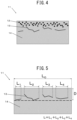
- the Ratio A is, for example, preferably less than 50% such as shown in FIGS. 2 and 3 and may also be 40% or less, 30% or less, 20% or less, 10% or less, or 0%. In another embodiment of the present invention, the Ratio A is 50% or more.
- the Ratio A is for example, as shown in FIGS. 4 and 5 , preferably 50% or more and may be 60% or more, 70% or more, 80% or more, 90% or more, or 100%.
- the Ratio A is determined by examining the cross-section of the surface layer of the steel sheet 11.
- the specific measurement method is as follows: The cross-section of the surface layer of the steel sheet 11 is examined by a SEM. The observed position is made a randomly selected location. From the observed SEM image, the length L 0 of the surface (i.e., the width of the SEM image) is measured. The length L 0 is made 100 ⁇ m or more (for example, 100 ⁇ m, 150 ⁇ m, or 200 ⁇ m) while the depth measured is made the region from the surface of the steel sheet down to 50 ⁇ m.
- FIGS. 3 and 5 are views eliminating the granular oxides 12 for explanation.
- the granular oxides and optional grain boundary oxides include one or more of the above-mentioned elements included in the steel sheet in addition to oxygen and typically have chemical compositions including Si, O, and Fe and in some cases further including Mn. More specifically, the oxides typically contain Si: 5 to 25%, Mn: 0 to 10%, O: 40 to 65%, and Fe: 10 to 30%.
- the oxides may also contain elements able to be included in the above-mentioned steel sheet (for example, Cr, etc.) in addition to these elements.
- the steel sheet according to the present invention contains an Si-Mn depleted layer having a thickness of 3.0 ⁇ m or more from the surface of the steel sheet.
- the contents of Si and Mn of the Si-Mn depleted layer not containing oxides at the 1/2 position of that thickness are respectively less than 10% of the contents of Si and Mn at the sheet thickness center part of the steel sheet.
- the thickness of the Si-Mn depleted layer is preferably 4.0 ⁇ m or more, more preferably 5.0 ⁇ m or more, most preferably 7.0 ⁇ m or more.
- the upper limit of thickness of the Si-Mn depleted layer is not particularly limited, but for example the thickness of the Si-Mn depleted layer may be 50.0 ⁇ m or less.
- the Si depletion rate of the Si-Mn depleted layer is preferably 8% or less, more preferably 6% or less, most preferably 4% or less.
- the lower limit of the Si depletion rate is not particularly prescribed, but may be 0%.
- the Mn depletion rate of the Si-Mn depleted layer is preferably 8% or less, more preferably 6% or less, most preferably 4% or less.
- the lower limit of the Mn depletion rate is not particularly prescribed, but may be 0%.
- the expression "not containing oxides” means not containing not only the above granular oxides and grain boundary oxides, but also any other oxides. Such a region not containing oxides can be identified by examination of the cross-section by a SEM and energy dispersed X-ray spectroscopy (EDS). Further, the Si-Mn depleted layer according to the present invention cannot be controlled to the desired ranges of thickness and composition just by forming granular oxides and other internal oxides. As explained in detail later, it becomes important to suitably control the progression of internal oxidation in the production process.
- the thickness of the Si-Mn depleted layer means the distance from the surface of the steel sheet 11 to the furthest position where an internal oxide (in FIG. 5 , grain boundary oxide 13) is present when proceeding from the surface of the steel sheet 11 (in the case of a plated steel sheet, the interface of the steel sheet and plating layer) in the thickness direction of the steel sheet 11 (direction vertical to surface of steel sheet).
- the thickness of the Si-Mn depleted layer means the distance from the surface of the steel sheet to the furthest position where a granular oxide is present when proceeding from the surface of the steel sheet (in the case of a plated steel sheet, the interface of the steel sheet and plating layer) in the thickness direction of the steel sheet 11 (direction vertical to surface of steel sheet).
- the thickness of the Si-Mn depleted layer may be found from the same image as the SEM image used for measuring the above-mentioned Ratio A (length L0 of surface).
- the Si and Mn contents of the region not containing oxides at the 1/2 position of thickness of the Si-Mn depleted layer are determined by analyzing points of 10 locations not containing oxides randomly selected at 1/2 position of thickness of the Si-Mn depleted layer determined from the SEM image by a transmission electron microscope with an energy dispersed X-ray spectroscope (TEM-EDS) and obtaining the arithmetic averages of the obtained measured values of the Si and Mn concentrations.
- TEM-EDS energy dispersed X-ray spectroscope
- the Si and Mn contents at the sheet thickness center part of the steel sheet are determined by examining the cross-section of the sheet thickness center part by a SEM, analyzing points of 10 locations randomly selected at the sheet thickness center part from the SEM image by a transmission electron microscope with an energy dispersed X-ray spectroscope (TEM-EDS), and obtaining the arithmetic averages of the obtained measured values of the Si and Mn concentrations. Finally, the values of the Si and Mn contents at the 1/2 position of thickness of the Si-Mn depleted layer divided by the Si and Mn contents at the sheet thickness center part of the steel sheet and expressed as percentages are determined as the Si and Mn depletion rates.
- TEM-EDS energy dispersed X-ray spectroscope
- the plated steel sheet according to the present invention has a plating layer containing Zn on the above-mentioned steel sheet according to the present invention.
- This plating layer may be formed on one side of the steel sheet or may be formed on both sides.
- As the plating layer containing Zn for example, a hot dip galvanized layer, hot dip galvannealed layer, electrogalvanized layer, electrogalvannealed layer, etc., may be mentioned.
- plating type for example, Zn-0.2%Al (GI), Zn-(0.3 to 1.5)%Al, Zn-4.5%Al, Zn-0.09%Al-10%Fe (GA), Zn-1.5%Al-1.5%Mg, Zn-11%Al-3%Mg-0.2%Si, Zn-11%Ni, Zn-15%Mg, etc., can be used.
- the Al content may be 0%.
- the Al content is 0.01% or more.
- the Al content is preferably 60.0% or less.
- the Al content is preferably 55.0% or less, 50.0% or less,40.0% or less, 30.0% or less, 20.0% or less, 10.0% or less, or 5.0% or less.
- the Al is preferably 0.4 to 1.5%.
- the Mg content may be 0%.
- the Mg content is 0.01% or more. For example, it may be 0.1% or more, 0.5% or more, 1.0% or more, or 3.0% or more.
- the Mg content is preferably 15.0% or less, for example, may be 10.0% or less or 5.0% or less.
- Fe can be included in the plating layer due to diffusion from the steel sheet when forming a plating layer containing Zn on the steel sheet, then heat treating the plated steel sheet. Therefore, Fe is not included in the plating layer in a state not treated by heat, so the Fe content may also be 0%. Further, the Fe content may be 1.0% or more, 2.0% or more, 3.0% or more, 4.0% or more, or 5.0% or more. On the other hand, the Fe content is preferably 15.0% or less, for example, may be 12.0% or less, 10.0% or less, 8.0% or less, or 6.0% or less.
- the Si is an element which further improves the corrosion resistance if included in a plating layer containing Zn, in particular a Zn-Al-Mg plating layer, so may be included in accordance with need. Therefore, the Si content may be 0%. From the viewpoint of improvement of the corrosion resistance, the Si content may for example be 0.005% or more, 0.01% or more, 0.05% or more, 0.1% or more, or 0.5% or more. Further, the Si content may be 3.0% or less, 2.5% or less, 2.0% or less, 1.5% or less, or 1.2% or less.
- the basic chemical composition of the plating layer is as explained above.
- the plating layer may contain, optionally, one or more of Sb: 0 to 0.50%, Pb: 0 to 0.50%, Cu: 0 to 1.00%, Sn: 0 to 1.00%, Ti: 0 to 1.00%, Sr: 0 to 0.50%, Cr: 0 to 1.00%, Ni: 0 to 1.00%, and Mn: 0 to 1.00%.
- the total content of these optional elements is preferably made 5.00% or less, more preferably 2.00% or less.
- the balance besides the above constituents is comprised of Zn and impurities.
- the "impurities at the plating layer” mean constituents such as the raw material entering due to various factors in the production process when producing the plating layer.
- impurities elements besides the basic constituents and optional constituents explained above may be included in trace amounts in a range not impeding the effect of the present invention.
- the chemical composition of the plating layer can be determined by dissolving the plating layer in an acid solution containing an inhibitor for inhibiting corrosion of the steel sheet and measuring the obtained solution by ICP (inductively coupled plasma) emission spectroscopy.
- the thickness of the plating layer may for example be 3 to 50 ⁇ m. Further, the amount of deposition of the plating layer is not particularly limited but for example may be 10 to 170 g/m 2 per side. In the present invention, the amount of deposition of the plating layer is determined by dissolving the plating layer in an acid solution containing an inhibitor for inhibiting corrosion of the base iron and finding the change in weight before and after pickling.
- the steel sheet and plated steel sheet according to the present invention preferably have a high strength. Specifically, they preferably have 440 MPa or more tensile strength.
- the tensile strength may be 500 MPa or more, 600 MPa or more, 700 MPa or more, or 800 MPa or more.
- the upper limit of the tensile strength is not particularly prescribed, but from the viewpoint of securing toughness, may for example be 2000 MPa or less.
- the tensile strength may be measured by taking a JIS No. 5 tensile test piece having a direction vertical to the rolling direction as its longitudinal direction and performing a test based on JIS Z 2241(2011).
- the steel sheet and plated steel sheet according to the present invention are high in strength and have a high plateability, LME resistance, and hydrogen embrittlement resistance, so can be suitably used in a broad range of fields such as automobiles, household electric appliances, and building materials, but are particularly preferably used in the automotive field.
- Steel sheet used for automobiles usually is plated (typically Zn-based plating), so if using the steel sheet according to the present invention as steel sheet for automobiles, the effect of the present invention of having a high plateability is optimally exhibited. Further, steel sheet and plated steel sheet used for automobiles are often hot stamped. In that case, hydrogen embrittlement cracking and LME cracking can become remarkable problems. Therefore, when using the steel sheet and plated steel sheet according to the present invention as steel sheet for automobiles, the effect of the present invention of having a high hydrogen embrittlement resistance and LME resistance is optimally exhibited.
- the steel sheet according to the present invention can be obtained for example by performing a casting step of casting molten steel adjusted in chemical composition to form a steel slab, a hot rolling step of hot rolling the steel slab to obtain hot rolled steel sheet, a coiling step of coiling the hot rolled steel sheet, a cold rolling step of cold rolling the coiled hot rolled steel sheet to obtain cold rolled steel sheet, a grinding step of introducing dislocations into the surface of the cold rolled steel sheet, and an annealing step of annealing the ground cold rolled steel sheet.
- the hot rolled steel sheet may not be coiled after the hot rolling step, but pickled and then cold rolled as it is.
- the conditions of the casting step are not particularly prescribed. For example, after smelting by a blast furnace or electric furnace, etc., various secondary refining operations may be performed, then the molten metal cast by the usual continuous casting, ingot casting, or other method.
- the thus cast steel slab can be hot rolled to obtain hot rolled steel sheet.
- the hot rolling step is performed by directly hot rolling the cast steel slab or by reheating after cooling once. If reheating, the heating temperature of the steel slab may for example be 1100°C to 1250°C.
- usually rough rolling and finish rolling are performed.
- the temperatures and rolling reductions of the rolling operations may be suitably changed in accordance with the desired metallographic structure and sheet thickness. For example, the end temperature of the finish rolling may be made 900 to 1050°C and the rolling reduction of the finish rolling may be made 10 to 50%.
- the hot rolled steel sheet can be coiled at a predetermined temperature.
- the coiling temperature may be suitably changed in accordance with the desired metallographic structure, etc., and may for example be 500 to 800°C.
- the hot rolled steel sheet may be heat treated under predetermined conditions before being coiled or after being coiled by being uncoiled. Alternatively, the sheet can be pickled after the hot rolling step without performing a coiling step and then subjected to a later explained cold rolling step.
- the hot rolled steel sheet After pickling the hot rolled steel sheet, the hot rolled steel sheet can be cold rolled to obtain cold rolled steel sheet.
- the rolling reduction of the cold rolling may be suitably changed in accordance with the desired metallographic structure and sheet thickness and may for example be 20 to 80%.
- the sheet After the cold rolling step, for example, the sheet may be air cooled to cool it down to room temperature.
- the grinding step is not particularly limited, but for example can be performed by using a heavy duty grinding brush to grind the surface of cold rolled steel sheet under conditions of an amount of grinding of 10 to 200 g/m 2 .
- the amount of grinding by the heavy duty grinding brush can be adjusted by any suitable method known to persons skilled in the art. While not particularly limited, for example, it can be adjusted by suitably selecting the number, speed, brushing pressure, coating solution used, etc., of the heavy duty grinding brush.
- the cold rolled steel sheet subjected to the above grinding step is annealed.
- the annealing is preferably performed in a state in which tension is applied to the cold rolled steel sheet in the rolling direction.
- the annealing temperature is 500°C or more
- the holding temperature at the annealing step is preferably 700°C to 870°C. From the viewpoint of making the granular oxides form in a fine size and large amount while keeping down the formation of the grain boundary oxides to within a range of a Ratio A of less than 50%, the holding temperature at the annealing step is preferably 700°C to 780°C, more preferably 720 to 760°C. If the holding temperature of the annealing step is less than 700°C, granular oxides are liable to not be sufficiently formed and sometimes the hydrogen penetration resistance will become insufficient.
- the holding temperature of the annealing step is preferably more than 780°C to 870°C, more preferably 800 to 850°C.
- the holding temperature of the annealing step is more than 870°C, granular oxides are liable to not be sufficiently formed and sometimes the hydrogen penetration resistance and in turn the hydrogen embrittlement resistance will become insufficient and further the LME resistance will become insufficient.
- the temperature elevation rate up to the holding temperature is not particularly limited, but may be 1 to 10°C/s. Further, the temperature elevation may be performed in two stages by a first temperature elevation rate of 1 to 10°C/s and a second temperature elevation rate of 1 to 10°C/s different from the first temperature elevation rate.
- the holding time at the holding temperature of the annealing step is preferably more than 50 seconds to 150 seconds, more preferably 80 to 120 seconds. If the holding time is 50 seconds or less, the granular oxides and optional grain boundary oxides are liable to not be sufficiently formed and sometimes the hydrogen embrittlement resistance and LME resistance will become insufficient. On the other hand, if the holding time is more than 150 seconds, the granular oxides are liable to become coarser and sometimes the hydrogen embrittlement resistance and LME resistance will become insufficient.
- the dew point of the atmosphere in the annealing step is preferably -20 to 10°C, more preferably -10 to 5°C. If the dew point is too low, an external oxidation layer is liable to be formed on the surface of the steel sheet and internal oxides liable to not be sufficiently formed. The plateability, hydrogen embrittlement resistance, and LME resistance will sometimes become insufficient. On the other hand, by raising the dew point, it is possible to promote the formation of grain boundary oxides, but if the dew point is too high, Fe oxides will form as external oxides on the steel sheet surface and sometimes the plateability will become insufficient.
- the atmosphere in the annealing step may be a reducing atmosphere, more specifically a reducing atmosphere containing nitrogen and hydrogen, for example, a reducing atmosphere of hydrogen in 1 to 10% (for example, hydrogen 4% and balance of nitrogen).
- an internal oxidation layer (typically including the grain boundary oxides) of the steel sheet when performing the annealing step.
- an internal oxidation layer is formed at the surface layer of the steel sheet.
- Such an internal oxidation layer formed in a rolling step is liable to inhibit the formation of granular oxides at the annealing step, so that internal oxidation layer is preferably removed before annealing by pickling, etc.
- the depth of the internal oxidation layer of the cold rolled steel sheet when performing an annealing step may be 0.5 ⁇ m or less, preferably 0.3 ⁇ m or less, more preferably 0.2 ⁇ m or less, still more preferably 0.1 ⁇ m or less.
- steel sheet comprised of steel sheet with a surface layer containing granular oxides in a sufficiently fine size and large amount and including an Si-Mn depleted layer having a desired thickness and composition.
- the granular oxides will excessively grow beyond the average grain size 300 nm, so the granular oxides will not sufficiently function as trap sites for hydrogen and/or trap sizes for Zn and it will become difficult to obtain good hydrogen embrittlement resistance and/or LME resistance.
- the plated steel sheet according to the present invention can be obtained by performing a plating step for forming a plating layer containing Zn on the steel sheet produced in the above way.
- the plating step may be performed according to a method known to persons skilled in the art.
- the plating step may for example be performed by hot dip coating and may be performed by electroplating.
- the plating step is performed by hot dip coating.
- the conditions of the plating step may be suitably set considering the chemical composition, thickness, amount of deposition, etc., of the desired plating layer.
- alloying may be performed.
- the conditions of the plating step may be set so as to form a plating layer containing Al: 0 to 60.0%, Mg: 0 to 15.0%, Fe: 0 to 15%, and Si: 0 to 3% and having a balance of Zn and impurities.
- the conditions of the plating step may for example be suitably set so as to form for example Zn-0.2%Al (GI), Zn-0.09%Al (GA), Zn-1.5%Al-1.5%Mg, or Zn-11 %Al-3 %Mg-0.2% Si.
- GI Zn-0.2%Al
- GA Zn-0.09%Al
- GA Zn-1.5%Al-1.5%Mg
- Zn-11 %Al-3 %Mg-0.2% Si Zn-11 %Al-3 %Mg-0.2% Si.
- Example X steel sheets having a Ratio A relating to grain boundary oxides of 0% or more and less than 50% were produced, while in Example Y, steel sheets having a Ratio A relating to grain boundary oxides of 50% or more were produced.
- the steel sheets produced in the respective example were investigated for plateability, hydrogen embrittlement resistance, and LME resistance.
- Molten steels adjusted in chemical compositions were cast to form steel slabs.
- the steel slabs were hot rolled, pickled, then cold rolled to obtain cold rolled steel sheets.
- the sheets were air-cooled down to room temperature.
- the cold rolled steel sheets were pickled, then the internal oxidation layers formed by rolling were removed down to the internal oxidation layer depth ( ⁇ m) before annealing described in Table 1.
- samples were taken from the cold rolled steel sheets by the method based on JIS G0417: 1999 and the chemical compositions of the steel sheets were analyzed by ICP-MS, etc.
- the measured chemical compositions of the steel sheets are shown in Table 1.
- the thicknesses of the steel sheets used were 1.6 mm in all cases.
- each of the cold rolled steel sheets was coated with an NaOH aqueous solution, then the surface of the cold rolled steel sheet was ground using a heavy duty grinding brush by an amount of 10 to 200 g/m 2 (Sample No. 135 no grinding).
- each was annealed by the dew point, holding temperature, and holding time shown in Table 1 (mainly holding temperature of 700 to 780°C and holding time of more than 50 seconds to 150 seconds) (annealing atmosphere: hydrogen 4% and balance of nitrogen) to prepare each steel sheet sample.
- the temperature elevation rate at the time of annealing was made 6.0°C/s up to 500°C and was made 2.0°C/s from 500°C to the holding temperature.
- the cold rolled steel sheet was annealed in the state applying 1 MPa or more of tension in the rolling direction.
- the annealing was performed in the state applying a higher tension in the rolling direction, specifically a tension of 3 to 150 MPa (in Sample No. 134, such tension not applied).
- the presence of any grinding by a heavy duty grinding brush and the conditions of the annealing (presence of application of tension of 3 to 150 MPa, dew point (°C), holding temperature (°C), and holding time (s) in region with annealing temperature of 500°C or more) are shown in Table 1.
- Each steel sheet sample prepared in the above way was cut to 25 mm ⁇ 15 mm.
- the cut sample was buried in a resin and polished to a mirror surface.
- 1.0 ⁇ m ⁇ 1.0 ⁇ m regions were examined by a SEM at 10 locations. The examined positions were made the 1.0 ⁇ m from 0.2 to 1.2 ⁇ m from the steel sheet surface for the depth direction (direction vertical to surface of steel sheet) and 1.0 ⁇ m of any position of the SEM image for the width direction (direction parallel to surface of steel sheet).
- regions regions not containing grain boundary oxides were selected.
- the SEM images of the regions of the steel sheet samples obtained were digitalized, the areas of the granular oxide parts were calculated from the digitalized images, and further the numbers of the granular oxides in the SEM images were counted. From the areas and numbers of granular oxides at the 10 digitalized images found in this way, the average grain size as the circular equivalent diameter and number density of the granular oxides were found.
- the thickness of the Si-Mn depleted layer was determined in the SEM image for which the Ratio A was measured by measuring the distance from the surface of the steel sheet to the furthest position where grain boundary oxides (granular oxides if no grain boundary oxides present) are present when proceeding from the surface of the steel sheet in the thickness direction of the steel sheet (direction vertical to surface of steel sheet).
- the Si and Mn contents of the region not containing oxides at the 1/2 position of thickness of the Si-Mn depleted layer are determined by analyzing points of 10 locations not containing oxides randomly selected at 1/2 position of thickness of the Si-Mn depleted layer determined from the SEM image by a TEM-EDS and obtaining the arithmetic averages of the obtained measured values of the Si and Mn concentrations.
- the Si and Mn contents at the sheet thickness center part of the steel sheet are determined by examining the cross-section of the sheet thickness center part by a SEM, analyzing points of 10 locations randomly selected at the sheet thickness center part from the SEM image by a TEM-EDS, and obtaining the arithmetic averages of the obtained measured values of the Si and Mn concentrations. Finally, the values of the Si and Mn contents at the 1/2 position of thickness of the Si-Mn depleted layer divided by the Si and Mn contents at the sheet thickness center part of the steel sheet and expressed as percentages are determined as the Si and Mn depletion rates.
- each steel sheet sample was analyzed for chemical compositions of the granular oxides and grain boundary oxides, whereupon each of the oxides contained Si, O, and Fe and numerous oxides further contained Mn.
- the chemical composition of each of the oxides also contained Si: 5 to 25%, Mn: 0 to 10%, O: 40 to 65%, and Fe: 10 to 30%.
- each of the samples of steel sheets of Example 1 was cut to 100 mm ⁇ 200 mm size, then was plated for forming the plating type shown in Table 1 to thereby prepare a sample of the plated steel sheet.
- the plating type A means “hot dip galvannealed steel sheet (GA)”
- the plating type B means “hot dip galvanized-0.2%Al-plated steel sheet (GI)”
- the plating type C means "hot dip galvanized-(0.3 to 1.5)%Al-plated steel sheet (Al content described in Table 1)”.
- the hot dip galvanization step the cut sample was dipped in a 440°C hot dip galvanization bath for 3 seconds. After dipping, it was pulled out at 100 mm/s. N 2 wiping gas was used to control the amount of plating deposition to 50 g/m 2 .
- alloying was performed after that at 460°C.
- each plating layer was found by dipping a sample cut to 30 mm ⁇ 30 mm in a 10% aqueous hydrochloric acid solution containing an inhibitor (Ibit made by Asahi Chemical), peeling off the plating layer by pickling, then analyzing the plating constituents dissolved in the aqueous solution by ICP.
- an inhibitor Ibit made by Asahi Chemical
- Each plated steel sheet sample was measured for area ratio of non-plated parts on the surface of that steel sheet so as to evaluate the plateability. Specifically, a 1 mm ⁇ 1 mm region of the surface of each plated steel sheet sample formed with the plating layer was examined under an optical microscope, parts at which the plating layer was formed (plated parts) and parts where the plating layer was not formed (non-plated parts) were judged from the examined image, the area ratio of the non-plated parts (area of non-plated parts/area of observed image) was calculated, and the plateability was evaluated by the following criteria. The results are shown in Table 1. A is passing and B is failing.
- Each 100 ⁇ 100 mm plated steel sheet sample was spot welded and was cut to 50 mm ⁇ 100 mm size to prepare two sheets.
- the two sheets of Zn-based plated steel sheet samples were spot welded using a dome radius type tip size 8 mm welding electrode at a weld angle of 7°, weld force of 3.0 kN, weld time 0.5 second, and weld current 7 kA to obtain a welded member.
- the welded part was polished at its cross-section, then examined under an optical microscope and measured for length of LME cracking occurring at the cross-section of the welded part and evaluated as follows. The results are shown in Table 1. AAA, AA, and A are passing and B is failing.
- Each 50 mm ⁇ 100 mm plated steel sheet sample was treated to form zinc phosphate using a zinc phosphate-based conversion coating (Surfdine SD5350 series: made by Nippon Paint Industrial Coating), then was formed with an electrodeposition coating (PN110 Powemix Grey: made by Nippon Paint Industrial Coating) to 20 ⁇ m and was baked at a 150°C baking temperature for 20 minutes to form a coating on the plated steel sheet sample.
- the sample was used for a cyclic corrosion test according to JASO(M609-91). The amount of diffused hydrogen after the elapse of 120 cycles was measured by the thermal desorption method. Specifically, the plated steel sheet sample was heated to 400°C in a heating furnace provided with a gas chromatography device.
- the holding temperature at the time of annealing was low, internal oxides were not sufficiently formed, and the desired Si-Mn depleted layer was also not formed, so high hydrogen embrittlement resistance and LME resistance were not obtained.
- the holding time at the time of annealing was short, internal oxides were not sufficiently formed, and the desired Si-Mn depleted layer was also not formed, so high hydrogen embrittlement resistance and LME resistance were not obtained.
- the holding time at the time of annealing was long, formation of grain boundary oxides was promoted, granular oxides could not be refined, and high hydrogen embrittlement resistance and LME resistance were not obtained.
- Example X Except for making the holding temperature at the annealing mainly more than 780°C to 870°C, the same procedure was performed as the case of Example X to prepare a sample of the steel sheet under the production conditions shown in Table 2.
- a JIS No. 5 tensile test piece having the direction vertical to the rolling direction as the longitudinal direction was taken and a tensile test was performed based on JIS Z 2241(2011).
- the tensile strength was less than 440 MPa. For the others, it was 440 MPa or more.
- the plating type A means “hot dip galvannealed steel sheet (GA)”
- the plating type B means “hot dip galvanized-0.2%Al-plated steel sheet (GI)”
- the plating type C means "hot dip galvanized-(0.3 to 1.5)%Al-plated steel sheet (Al content described in Table 1)”.
- the hot dip galvanization step the cut sample was dipped in a 440°C hot dip galvanization bath for 3 seconds. After dipping, it was pulled out at 100 mm/s. N 2 wiping gas was used to control the amount of plating deposition to 50 g/m 2 .
- alloying was performed after that at 460°C.
- the dew point at the time of annealing was low and not internal oxides, but an external oxidation layer was formed, and high plateability, hydrogen embrittlement resistance, and LME resistance were not obtained.
- the dew point at the time of annealing was high, an external oxidation layer was formed, granular oxides could not be refined, and high plateability, hydrogen embrittlement resistance, and LME resistance were not obtained.
- the holding temperature at the time of annealing was high, external oxides were formed, granular oxides were not sufficiently formed, and the desired Si-Mn depleted layer was also not formed, so high plateability, hydrogen embrittlement resistance, and LME resistance were not obtained.
- high strength steel sheet and plated steel sheet having a high plateability, LME resistance, and hydrogen embrittlement resistance can be provided.
- the steel sheet and plated steel can be suitably used for automobiles, home electric appliances, building materials, and other applications, in particular for automobiles.
- steel sheet for automobile use and plated steel sheet for automobile use higher collision safety and longer life can be expected. Therefore, the present invention can be said to be extremely high in value in industry.
Landscapes
- Chemical & Material Sciences (AREA)
- Engineering & Computer Science (AREA)
- Materials Engineering (AREA)
- Mechanical Engineering (AREA)
- Metallurgy (AREA)
- Organic Chemistry (AREA)
- Physics & Mathematics (AREA)
- Thermal Sciences (AREA)
- Crystallography & Structural Chemistry (AREA)
- Chemical Kinetics & Catalysis (AREA)
- Electromagnetism (AREA)
- Manufacturing & Machinery (AREA)
- Other Surface Treatments For Metallic Materials (AREA)
- Heat Treatment Of Sheet Steel (AREA)
Applications Claiming Priority (1)
| Application Number | Priority Date | Filing Date | Title |
|---|---|---|---|
| PCT/JP2021/016827 WO2022230059A1 (ja) | 2021-04-27 | 2021-04-27 | 鋼板及びめっき鋼板 |
Publications (3)
| Publication Number | Publication Date |
|---|---|
| EP4332249A1 true EP4332249A1 (de) | 2024-03-06 |
| EP4332249A4 EP4332249A4 (de) | 2024-06-26 |
| EP4332249B1 EP4332249B1 (de) | 2025-07-16 |
Family
ID=83846802
Family Applications (1)
| Application Number | Title | Priority Date | Filing Date |
|---|---|---|---|
| EP21939220.6A Active EP4332249B1 (de) | 2021-04-27 | 2021-04-27 | Stahlblech und plattiertes stahlblech |
Country Status (7)
| Country | Link |
|---|---|
| US (1) | US20240240278A1 (de) |
| EP (1) | EP4332249B1 (de) |
| JP (1) | JP7795116B2 (de) |
| CN (1) | CN117203360B (de) |
| ES (1) | ES3038136T3 (de) |
| MX (1) | MX2023012626A (de) |
| WO (1) | WO2022230059A1 (de) |
Families Citing this family (2)
| Publication number | Priority date | Publication date | Assignee | Title |
|---|---|---|---|---|
| WO2024150822A1 (ja) * | 2023-01-13 | 2024-07-18 | 日本製鉄株式会社 | 鋼板及びめっき鋼板 |
| EP4650477A4 (de) * | 2023-01-13 | 2026-03-25 | Nippon Steel Corp | Stahlblech und plattiertes stahlblech |
Family Cites Families (19)
| Publication number | Priority date | Publication date | Assignee | Title |
|---|---|---|---|---|
| JP2513532B2 (ja) | 1990-11-30 | 1996-07-03 | 新日本製鐵株式会社 | 高Si含有鋼の高張力溶融亜鉛めっき鋼板の製造方法 |
| JP4781836B2 (ja) * | 2006-02-08 | 2011-09-28 | 新日本製鐵株式会社 | 耐水素脆性に優れた超高強度鋼板とその製造方法及び超高強度溶融亜鉛めっき鋼板の製造方法並びに超高強度合金化溶融亜鉛めっき鋼板の製造方法 |
| JP5162836B2 (ja) * | 2006-03-01 | 2013-03-13 | 新日鐵住金株式会社 | 溶接部の耐水素脆性に優れる高強度冷延鋼板及びその製造方法 |
| JP5699877B2 (ja) * | 2011-09-13 | 2015-04-15 | 新日鐵住金株式会社 | 耐かじり性に優れた高強度鋼板及びその製造方法 |
| TWI499675B (zh) * | 2011-09-30 | 2015-09-11 | Nippon Steel & Sumitomo Metal Corp | High-strength hot-dip galvanized steel sheet with excellent resistance to delayed breaking characteristics and a method for manufacturing the same |
| CN103290308B (zh) * | 2012-02-27 | 2017-04-12 | 株式会社神户制钢所 | 高强度冷轧钢板及其制造方法 |
| MX373530B (es) * | 2012-12-25 | 2020-04-21 | Nippon Steel Corp Star | Lamina de acero recocida y galvanizada aleada por inmersion en caliente y metodo para fabricar el mismo. |
| JP2018193614A (ja) | 2013-07-12 | 2018-12-06 | 株式会社神戸製鋼所 | めっき性、加工性、および耐遅れ破壊特性に優れた高強度めっき鋼板、並びにその製造方法 |
| JP5713135B1 (ja) * | 2013-11-19 | 2015-05-07 | 新日鐵住金株式会社 | 鋼板 |
| KR101630976B1 (ko) * | 2014-12-08 | 2016-06-16 | 주식회사 포스코 | 표면품질 및 도금 밀착성이 우수한 초고강도 용융아연도금강판 및 그 제조방법 |
| JP6093412B2 (ja) * | 2015-01-09 | 2017-03-08 | 株式会社神戸製鋼所 | めっき性、加工性、および耐遅れ破壊特性に優れた高強度めっき鋼板、並びにその製造方法 |
| MX2017009017A (es) | 2015-01-09 | 2018-04-13 | Kobe Steel Ltd | Lamina de acero chapada de alta resistencia y metodo para su produccion. |
| JP6010144B2 (ja) * | 2015-01-09 | 2016-10-19 | 株式会社神戸製鋼所 | めっき性、加工性、および耐遅れ破壊特性に優れた高強度めっき鋼板、並びにその製造方法 |
| ES2800302T3 (es) * | 2015-03-23 | 2020-12-29 | Nippon Steel Corp | Chapa de acero laminada en caliente y método de fabricación de la misma, y método de fabricación de chapa de acero laminada en frío |
| BR112019016682A2 (pt) * | 2017-02-20 | 2020-04-14 | Nippon Steel Corporation | corpo estampado a quente |
| EP3725904B1 (de) * | 2017-12-15 | 2024-03-06 | Nippon Steel Corporation | Stahlblech, feuerverzinktes stahlblech und legiertes feuerverzinktes stahlblech |
| MX2020006763A (es) * | 2017-12-27 | 2020-08-24 | Jfe Steel Corp | Lamina de acero de alta resistencia y metodo para la produccion de la misma. |
| WO2020225936A1 (ja) * | 2019-05-09 | 2020-11-12 | 日本製鉄株式会社 | 鋼板及びその製造方法 |
| KR102330604B1 (ko) * | 2019-12-03 | 2021-11-24 | 주식회사 포스코 | 전기저항 점용접부의 피로강도가 우수한 아연도금강판 및 그 제조방법 |
-
2021
- 2021-04-27 US US18/288,201 patent/US20240240278A1/en active Pending
- 2021-04-27 JP JP2023516905A patent/JP7795116B2/ja active Active
- 2021-04-27 MX MX2023012626A patent/MX2023012626A/es unknown
- 2021-04-27 CN CN202180097462.8A patent/CN117203360B/zh active Active
- 2021-04-27 ES ES21939220T patent/ES3038136T3/es active Active
- 2021-04-27 EP EP21939220.6A patent/EP4332249B1/de active Active
- 2021-04-27 WO PCT/JP2021/016827 patent/WO2022230059A1/ja not_active Ceased
Also Published As
| Publication number | Publication date |
|---|---|
| JP7795116B2 (ja) | 2026-01-07 |
| MX2023012626A (es) | 2023-11-09 |
| KR20230160382A (ko) | 2023-11-23 |
| EP4332249A4 (de) | 2024-06-26 |
| US20240240278A1 (en) | 2024-07-18 |
| CN117203360B (zh) | 2025-12-05 |
| EP4332249B1 (de) | 2025-07-16 |
| CN117203360A (zh) | 2023-12-08 |
| ES3038136T3 (en) | 2025-10-09 |
| WO2022230059A1 (ja) | 2022-11-03 |
| JPWO2022230059A1 (de) | 2022-11-03 |
Similar Documents
| Publication | Publication Date | Title |
|---|---|---|
| EP4332262B1 (de) | Stahlblech und plattiertes stahlblech | |
| EP4332250B1 (de) | Stahlblech und plattiertes stahlblech | |
| EP4332261B1 (de) | Stahlblech und plattiertes stahlblech | |
| EP4332263A1 (de) | Stahlblech und plattiertes stahlblech | |
| EP4332249B1 (de) | Stahlblech und plattiertes stahlblech | |
| EP4332252B1 (de) | LEGIERTES SCHMELZTAUCH-GALVANISIERTES UND ANSCHLIEßEND GEGLÜHTES STAHLBLECH | |
| EP4332251B1 (de) | Geschweisstes stahlelement | |
| JP7719350B2 (ja) | 鋼板及びめっき鋼板 | |
| KR102954096B1 (ko) | 강판 및 도금 강판 |
Legal Events
| Date | Code | Title | Description |
|---|---|---|---|
| STAA | Information on the status of an ep patent application or granted ep patent |
Free format text: STATUS: THE INTERNATIONAL PUBLICATION HAS BEEN MADE |
|
| PUAI | Public reference made under article 153(3) epc to a published international application that has entered the european phase |
Free format text: ORIGINAL CODE: 0009012 |
|
| STAA | Information on the status of an ep patent application or granted ep patent |
Free format text: STATUS: REQUEST FOR EXAMINATION WAS MADE |
|
| 17P | Request for examination filed |
Effective date: 20231025 |
|
| AK | Designated contracting states |
Kind code of ref document: A1 Designated state(s): AL AT BE BG CH CY CZ DE DK EE ES FI FR GB GR HR HU IE IS IT LI LT LU LV MC MK MT NL NO PL PT RO RS SE SI SK SM TR |
|
| A4 | Supplementary search report drawn up and despatched |
Effective date: 20240528 |
|
| RIC1 | Information provided on ipc code assigned before grant |
Ipc: C23C 30/00 20060101ALI20240522BHEP Ipc: C23C 2/06 20060101ALI20240522BHEP Ipc: C21D 8/12 20060101ALI20240522BHEP Ipc: C21D 8/02 20060101ALI20240522BHEP Ipc: C21D 1/76 20060101ALI20240522BHEP Ipc: C21D 1/26 20060101ALI20240522BHEP Ipc: C22C 38/58 20060101ALI20240522BHEP Ipc: C22C 38/00 20060101ALI20240522BHEP Ipc: C21D 9/46 20060101AFI20240522BHEP |
|
| DAV | Request for validation of the european patent (deleted) | ||
| DAX | Request for extension of the european patent (deleted) | ||
| RIC1 | Information provided on ipc code assigned before grant |
Ipc: C23C 30/00 20060101ALI20241212BHEP Ipc: C23C 2/06 20060101ALI20241212BHEP Ipc: C21D 8/12 20060101ALI20241212BHEP Ipc: C21D 8/02 20060101ALI20241212BHEP Ipc: C21D 1/76 20060101ALI20241212BHEP Ipc: C21D 1/26 20060101ALI20241212BHEP Ipc: C22C 38/58 20060101ALI20241212BHEP Ipc: C22C 38/00 20060101ALI20241212BHEP Ipc: C21D 9/46 20060101AFI20241212BHEP |
|
| GRAP | Despatch of communication of intention to grant a patent |
Free format text: ORIGINAL CODE: EPIDOSNIGR1 |
|
| STAA | Information on the status of an ep patent application or granted ep patent |
Free format text: STATUS: GRANT OF PATENT IS INTENDED |
|
| INTG | Intention to grant announced |
Effective date: 20250211 |
|
| GRAS | Grant fee paid |
Free format text: ORIGINAL CODE: EPIDOSNIGR3 |
|
| GRAA | (expected) grant |
Free format text: ORIGINAL CODE: 0009210 |
|
| STAA | Information on the status of an ep patent application or granted ep patent |
Free format text: STATUS: THE PATENT HAS BEEN GRANTED |
|
| AK | Designated contracting states |
Kind code of ref document: B1 Designated state(s): AL AT BE BG CH CY CZ DE DK EE ES FI FR GB GR HR HU IE IS IT LI LT LU LV MC MK MT NL NO PL PT RO RS SE SI SK SM TR |
|
| REG | Reference to a national code |
Ref country code: GB Ref legal event code: FG4D |
|
| REG | Reference to a national code |
Ref country code: CH Ref legal event code: EP |
|
| REG | Reference to a national code |
Ref country code: DE Ref legal event code: R096 Ref document number: 602021034419 Country of ref document: DE |
|
| REG | Reference to a national code |
Ref country code: IE Ref legal event code: FG4D |
|
| REG | Reference to a national code |
Ref country code: ES Ref legal event code: FG2A Ref document number: 3038136 Country of ref document: ES Kind code of ref document: T3 Effective date: 20251009 |
|
| REG | Reference to a national code |
Ref country code: NL Ref legal event code: MP Effective date: 20250716 |
|
| PG25 | Lapsed in a contracting state [announced via postgrant information from national office to epo] |
Ref country code: PT Free format text: LAPSE BECAUSE OF FAILURE TO SUBMIT A TRANSLATION OF THE DESCRIPTION OR TO PAY THE FEE WITHIN THE PRESCRIBED TIME-LIMIT Effective date: 20251117 |
|
| PG25 | Lapsed in a contracting state [announced via postgrant information from national office to epo] |
Ref country code: NL Free format text: LAPSE BECAUSE OF FAILURE TO SUBMIT A TRANSLATION OF THE DESCRIPTION OR TO PAY THE FEE WITHIN THE PRESCRIBED TIME-LIMIT Effective date: 20250716 |
|
| REG | Reference to a national code |
Ref country code: AT Ref legal event code: MK05 Ref document number: 1814099 Country of ref document: AT Kind code of ref document: T Effective date: 20250716 |
|
| PG25 | Lapsed in a contracting state [announced via postgrant information from national office to epo] |
Ref country code: IS Free format text: LAPSE BECAUSE OF FAILURE TO SUBMIT A TRANSLATION OF THE DESCRIPTION OR TO PAY THE FEE WITHIN THE PRESCRIBED TIME-LIMIT Effective date: 20251116 |
|
| PG25 | Lapsed in a contracting state [announced via postgrant information from national office to epo] |
Ref country code: NO Free format text: LAPSE BECAUSE OF FAILURE TO SUBMIT A TRANSLATION OF THE DESCRIPTION OR TO PAY THE FEE WITHIN THE PRESCRIBED TIME-LIMIT Effective date: 20251016 |
|
| REG | Reference to a national code |
Ref country code: LT Ref legal event code: MG9D |
|
| PG25 | Lapsed in a contracting state [announced via postgrant information from national office to epo] |
Ref country code: AT Free format text: LAPSE BECAUSE OF FAILURE TO SUBMIT A TRANSLATION OF THE DESCRIPTION OR TO PAY THE FEE WITHIN THE PRESCRIBED TIME-LIMIT Effective date: 20250716 |
|
| PG25 | Lapsed in a contracting state [announced via postgrant information from national office to epo] |
Ref country code: FI Free format text: LAPSE BECAUSE OF FAILURE TO SUBMIT A TRANSLATION OF THE DESCRIPTION OR TO PAY THE FEE WITHIN THE PRESCRIBED TIME-LIMIT Effective date: 20250716 |
|
| PG25 | Lapsed in a contracting state [announced via postgrant information from national office to epo] |
Ref country code: HR Free format text: LAPSE BECAUSE OF FAILURE TO SUBMIT A TRANSLATION OF THE DESCRIPTION OR TO PAY THE FEE WITHIN THE PRESCRIBED TIME-LIMIT Effective date: 20250716 |
|
| PG25 | Lapsed in a contracting state [announced via postgrant information from national office to epo] |
Ref country code: GR Free format text: LAPSE BECAUSE OF FAILURE TO SUBMIT A TRANSLATION OF THE DESCRIPTION OR TO PAY THE FEE WITHIN THE PRESCRIBED TIME-LIMIT Effective date: 20251017 |
|
| PG25 | Lapsed in a contracting state [announced via postgrant information from national office to epo] |
Ref country code: SE Free format text: LAPSE BECAUSE OF FAILURE TO SUBMIT A TRANSLATION OF THE DESCRIPTION OR TO PAY THE FEE WITHIN THE PRESCRIBED TIME-LIMIT Effective date: 20250716 |
|
| PG25 | Lapsed in a contracting state [announced via postgrant information from national office to epo] |
Ref country code: LV Free format text: LAPSE BECAUSE OF FAILURE TO SUBMIT A TRANSLATION OF THE DESCRIPTION OR TO PAY THE FEE WITHIN THE PRESCRIBED TIME-LIMIT Effective date: 20250716 |
|
| PG25 | Lapsed in a contracting state [announced via postgrant information from national office to epo] |
Ref country code: PL Free format text: LAPSE BECAUSE OF FAILURE TO SUBMIT A TRANSLATION OF THE DESCRIPTION OR TO PAY THE FEE WITHIN THE PRESCRIBED TIME-LIMIT Effective date: 20250716 Ref country code: BG Free format text: LAPSE BECAUSE OF FAILURE TO SUBMIT A TRANSLATION OF THE DESCRIPTION OR TO PAY THE FEE WITHIN THE PRESCRIBED TIME-LIMIT Effective date: 20250716 |
|
| PG25 | Lapsed in a contracting state [announced via postgrant information from national office to epo] |
Ref country code: RS Free format text: LAPSE BECAUSE OF FAILURE TO SUBMIT A TRANSLATION OF THE DESCRIPTION OR TO PAY THE FEE WITHIN THE PRESCRIBED TIME-LIMIT Effective date: 20251016 |
|
| PG25 | Lapsed in a contracting state [announced via postgrant information from national office to epo] |
Ref country code: SM Free format text: LAPSE BECAUSE OF FAILURE TO SUBMIT A TRANSLATION OF THE DESCRIPTION OR TO PAY THE FEE WITHIN THE PRESCRIBED TIME-LIMIT Effective date: 20250716 |
|
| PG25 | Lapsed in a contracting state [announced via postgrant information from national office to epo] |
Ref country code: DK Free format text: LAPSE BECAUSE OF FAILURE TO SUBMIT A TRANSLATION OF THE DESCRIPTION OR TO PAY THE FEE WITHIN THE PRESCRIBED TIME-LIMIT Effective date: 20250716 |
|
| PG25 | Lapsed in a contracting state [announced via postgrant information from national office to epo] |
Ref country code: IT Free format text: LAPSE BECAUSE OF FAILURE TO SUBMIT A TRANSLATION OF THE DESCRIPTION OR TO PAY THE FEE WITHIN THE PRESCRIBED TIME-LIMIT Effective date: 20250716 |
|
| PGFP | Annual fee paid to national office [announced via postgrant information from national office to epo] |
Ref country code: FR Payment date: 20260227 Year of fee payment: 6 |
|
| PG25 | Lapsed in a contracting state [announced via postgrant information from national office to epo] |
Ref country code: EE Free format text: LAPSE BECAUSE OF FAILURE TO SUBMIT A TRANSLATION OF THE DESCRIPTION OR TO PAY THE FEE WITHIN THE PRESCRIBED TIME-LIMIT Effective date: 20250716 Ref country code: SK Free format text: LAPSE BECAUSE OF FAILURE TO SUBMIT A TRANSLATION OF THE DESCRIPTION OR TO PAY THE FEE WITHIN THE PRESCRIBED TIME-LIMIT Effective date: 20250716 |