EP4332760A1 - Procédé de partage de réglage variable de console d'application et système avec une pluralité de dispositifs électroniques - Google Patents
Procédé de partage de réglage variable de console d'application et système avec une pluralité de dispositifs électroniques Download PDFInfo
- Publication number
- EP4332760A1 EP4332760A1 EP23158459.0A EP23158459A EP4332760A1 EP 4332760 A1 EP4332760 A1 EP 4332760A1 EP 23158459 A EP23158459 A EP 23158459A EP 4332760 A1 EP4332760 A1 EP 4332760A1
- Authority
- EP
- European Patent Office
- Prior art keywords
- application
- setting
- electronic device
- meta file
- options
- Prior art date
- Legal status (The legal status is an assumption and is not a legal conclusion. Google has not performed a legal analysis and makes no representation as to the accuracy of the status listed.)
- Pending
Links
Images



Classifications
-
- G—PHYSICS
- G06—COMPUTING OR CALCULATING; COUNTING
- G06F—ELECTRIC DIGITAL DATA PROCESSING
- G06F9/00—Arrangements for program control, e.g. control units
- G06F9/06—Arrangements for program control, e.g. control units using stored programs, i.e. using an internal store of processing equipment to receive or retain programs
- G06F9/44—Arrangements for executing specific programs
- G06F9/445—Program loading or initiating
- G06F9/44505—Configuring for program initiating, e.g. using registry, configuration files
-
- G—PHYSICS
- G06—COMPUTING OR CALCULATING; COUNTING
- G06F—ELECTRIC DIGITAL DATA PROCESSING
- G06F3/00—Input arrangements for transferring data to be processed into a form capable of being handled by the computer; Output arrangements for transferring data from processing unit to output unit, e.g. interface arrangements
- G06F3/01—Input arrangements or combined input and output arrangements for interaction between user and computer
- G06F3/048—Interaction techniques based on graphical user interfaces [GUI]
- G06F3/0481—Interaction techniques based on graphical user interfaces [GUI] based on specific properties of the displayed interaction object or a metaphor-based environment, e.g. interaction with desktop elements like windows or icons, or assisted by a cursor's changing behaviour or appearance
- G06F3/04817—Interaction techniques based on graphical user interfaces [GUI] based on specific properties of the displayed interaction object or a metaphor-based environment, e.g. interaction with desktop elements like windows or icons, or assisted by a cursor's changing behaviour or appearance using icons
-
- G—PHYSICS
- G06—COMPUTING OR CALCULATING; COUNTING
- G06F—ELECTRIC DIGITAL DATA PROCESSING
- G06F3/00—Input arrangements for transferring data to be processed into a form capable of being handled by the computer; Output arrangements for transferring data from processing unit to output unit, e.g. interface arrangements
- G06F3/01—Input arrangements or combined input and output arrangements for interaction between user and computer
- G06F3/048—Interaction techniques based on graphical user interfaces [GUI]
- G06F3/0481—Interaction techniques based on graphical user interfaces [GUI] based on specific properties of the displayed interaction object or a metaphor-based environment, e.g. interaction with desktop elements like windows or icons, or assisted by a cursor's changing behaviour or appearance
- G06F3/0482—Interaction with lists of selectable items, e.g. menus
-
- G—PHYSICS
- G06—COMPUTING OR CALCULATING; COUNTING
- G06F—ELECTRIC DIGITAL DATA PROCESSING
- G06F3/00—Input arrangements for transferring data to be processed into a form capable of being handled by the computer; Output arrangements for transferring data from processing unit to output unit, e.g. interface arrangements
- G06F3/01—Input arrangements or combined input and output arrangements for interaction between user and computer
- G06F3/048—Interaction techniques based on graphical user interfaces [GUI]
- G06F3/0484—Interaction techniques based on graphical user interfaces [GUI] for the control of specific functions or operations, e.g. selecting or manipulating an object, an image or a displayed text element, setting a parameter value or selecting a range
- G06F3/04847—Interaction techniques to control parameter settings, e.g. interaction with sliders or dials
-
- G—PHYSICS
- G06—COMPUTING OR CALCULATING; COUNTING
- G06F—ELECTRIC DIGITAL DATA PROCESSING
- G06F3/00—Input arrangements for transferring data to be processed into a form capable of being handled by the computer; Output arrangements for transferring data from processing unit to output unit, e.g. interface arrangements
- G06F3/01—Input arrangements or combined input and output arrangements for interaction between user and computer
- G06F3/048—Interaction techniques based on graphical user interfaces [GUI]
- G06F3/0484—Interaction techniques based on graphical user interfaces [GUI] for the control of specific functions or operations, e.g. selecting or manipulating an object, an image or a displayed text element, setting a parameter value or selecting a range
- G06F3/0485—Scrolling or panning
-
- G—PHYSICS
- G06—COMPUTING OR CALCULATING; COUNTING
- G06K—GRAPHICAL DATA READING; PRESENTATION OF DATA; RECORD CARRIERS; HANDLING RECORD CARRIERS
- G06K19/00—Record carriers for use with machines and with at least a part designed to carry digital markings
- G06K19/06—Record carriers for use with machines and with at least a part designed to carry digital markings characterised by the kind of the digital marking, e.g. shape, nature, code
- G06K19/06009—Record carriers for use with machines and with at least a part designed to carry digital markings characterised by the kind of the digital marking, e.g. shape, nature, code with optically detectable marking
- G06K19/06018—Record carriers for use with machines and with at least a part designed to carry digital markings characterised by the kind of the digital marking, e.g. shape, nature, code with optically detectable marking one-dimensional coding
- G06K19/06028—Record carriers for use with machines and with at least a part designed to carry digital markings characterised by the kind of the digital marking, e.g. shape, nature, code with optically detectable marking one-dimensional coding using bar codes
-
- G—PHYSICS
- G06—COMPUTING OR CALCULATING; COUNTING
- G06K—GRAPHICAL DATA READING; PRESENTATION OF DATA; RECORD CARRIERS; HANDLING RECORD CARRIERS
- G06K19/00—Record carriers for use with machines and with at least a part designed to carry digital markings
- G06K19/06—Record carriers for use with machines and with at least a part designed to carry digital markings characterised by the kind of the digital marking, e.g. shape, nature, code
- G06K19/06009—Record carriers for use with machines and with at least a part designed to carry digital markings characterised by the kind of the digital marking, e.g. shape, nature, code with optically detectable marking
- G06K19/06037—Record carriers for use with machines and with at least a part designed to carry digital markings characterised by the kind of the digital marking, e.g. shape, nature, code with optically detectable marking multi-dimensional coding
-
- G—PHYSICS
- G06—COMPUTING OR CALCULATING; COUNTING
- G06K—GRAPHICAL DATA READING; PRESENTATION OF DATA; RECORD CARRIERS; HANDLING RECORD CARRIERS
- G06K7/00—Methods or arrangements for sensing record carriers, e.g. for reading patterns
- G06K7/10—Methods or arrangements for sensing record carriers, e.g. for reading patterns by electromagnetic radiation, e.g. optical sensing; by corpuscular radiation
- G06K7/14—Methods or arrangements for sensing record carriers, e.g. for reading patterns by electromagnetic radiation, e.g. optical sensing; by corpuscular radiation using light without selection of wavelength, e.g. sensing reflected white light
- G06K7/1404—Methods for optical code recognition
-
- G—PHYSICS
- G06—COMPUTING OR CALCULATING; COUNTING
- G06K—GRAPHICAL DATA READING; PRESENTATION OF DATA; RECORD CARRIERS; HANDLING RECORD CARRIERS
- G06K7/00—Methods or arrangements for sensing record carriers, e.g. for reading patterns
- G06K7/10—Methods or arrangements for sensing record carriers, e.g. for reading patterns by electromagnetic radiation, e.g. optical sensing; by corpuscular radiation
- G06K7/14—Methods or arrangements for sensing record carriers, e.g. for reading patterns by electromagnetic radiation, e.g. optical sensing; by corpuscular radiation using light without selection of wavelength, e.g. sensing reflected white light
- G06K7/1404—Methods for optical code recognition
- G06K7/1408—Methods for optical code recognition the method being specifically adapted for the type of code
- G06K7/1417—2D bar codes
-
- G—PHYSICS
- G06—COMPUTING OR CALCULATING; COUNTING
- G06K—GRAPHICAL DATA READING; PRESENTATION OF DATA; RECORD CARRIERS; HANDLING RECORD CARRIERS
- G06K7/00—Methods or arrangements for sensing record carriers, e.g. for reading patterns
- G06K7/10—Methods or arrangements for sensing record carriers, e.g. for reading patterns by electromagnetic radiation, e.g. optical sensing; by corpuscular radiation
- G06K7/14—Methods or arrangements for sensing record carriers, e.g. for reading patterns by electromagnetic radiation, e.g. optical sensing; by corpuscular radiation using light without selection of wavelength, e.g. sensing reflected white light
- G06K7/1404—Methods for optical code recognition
- G06K7/1439—Methods for optical code recognition including a method step for retrieval of the optical code
- G06K7/1443—Methods for optical code recognition including a method step for retrieval of the optical code locating of the code in an image
Definitions
- the present invention relates to a parameter setting method of a plurality of electronic devices, and in particular, to a method for sharing a console variable setting of an application and a system with a plurality of electronic devices.
- the electronic devices can adapt to different operating environments according to different functional combinations, for example, a point of sale information system (POS) machine of warehouse managers.
- POS point of sale information system
- each POS machine should be equipped with the same operating environment.
- the warehouse staff can use the POS machine without pressure even if a different POS machine from the previous one is obtained. Since related console variable settings of each electronic device need to be set one by one, the setting process takes a lot of labor and time.
- the present invention provides a method for sharing a console variable setting of an application and a system with a plurality of electronic devices, so as to quickly set the console variable settings of the same application of the plurality of electronic devices.
- the method for sharing a console variable setting of an application includes: generating, by a first electronic device, a meta file, where the meta file includes setting parameters for a plurality of first setting options of a first application of the first electronic device; and transforming, by the first electronic device, the meta file into a set coding image, and displaying a display frame with the set coding image.
- the sharing method further includes: capturing, by a second electronic device, the set coding image on the display frame; transforming, by the second electronic device, the captured set coding image into a meta file; and adjusting the setting parameters, by the second electronic device, settings for a plurality of second setting options of a second application according to the meta file.
- the first setting options include a checkbox, a checklist, a group of options (radio or option), a dropdown list, a toggle switch, a label, or a text field, and types and an order of the second setting options are the same as those of the first setting options.
- the meta file further includes program information of the first application.
- the adjusting step includes: selecting and enabling, by the second electronic device, the second application the same as the first application according to the program information, and setting, by the second electronic device, the second setting options of the second application according to the setting parameters in the meta file.
- locations, labels, and a setting order of the first setting options of the first application are recorded in the meta file.
- a method for sharing a console variable setting of an application includes: capturing a set coding image; transforming the captured set coding image into a meta file, where the meta file includes setting parameters for a plurality of first setting options in a first application; and setting a plurality of second setting options of a second application the same as the first application according to the meta file.
- a system with a plurality of electronic devices includes a first electronic device and a second electronic device.
- the first electronic device includes a first processing unit, a first storage unit, and a first display unit.
- the first processing unit is connected to the first storage unit and the first display unit, and the first storage unit is configured to store the first application.
- the first processing unit executes the first application.
- the first processing unit generates a meta file according to a plurality of first setting options of the first application, transform the meta file into a set coding image, and display a display frame with the set coding image on the first display unit.
- the second electronic device includes a second processing unit, a second storage unit, and a photographing unit.
- the second processing unit is connected to the second storage unit and the photographing unit, and the second storage unit is configured to store a second application.
- the second processing unit is configured to capture the display frame on the first display unit through the photographing unit to obtain the set coding image, decode the set coding image to obtain the meta file, and then execute the second application and set a plurality of second setting options of the second application according to the meta file.
- the meta file further includes program information of the first application.
- the second electronic device is configured to select and execute the second application the same as the first application according to the program information, and then set the second setting options according to the setting parameters in the meta file.
- the first setting options include a checkbox, a checklist, a group of options, a dropdown list, a toggle switch, a label, or a text field, and types and an order of the second setting options are the same as those of the first setting options.
- the first processing unit records locations, labels, and a setting order of the first setting options of the first application to the meta file.
- the setting content of the setting option of the application can be conveniently acquired, and the same applications on other electronic devices are quickly set to the same setting parameters.
- a method for sharing a console variable setting of an application is applicable to a system with a plurality of electronic devices (referred to as a processing system 100 below).
- Two electronic devices are used as an example, which are respectively referred to as a first electronic device 110 and a second electronic device 120.
- the first electronic device 110 and the second electronic device 120 may be, but are not limited to, personal computers, notebook computers, tablet computers, mobile phones, bar-code scanner, or the like.
- the first electronic device 110 includes a first processing unit 111, a first storage unit 112, and a first display unit 113.
- the first processing unit 111 is connected to the first storage unit 112 and the first display unit 113.
- the first storage unit 112 stores a plurality of applications 200.
- a user may select one of the plurality of applications 200 through a user interface (not shown) of the first electronic device 110.
- the selected application 200 in the first electronic device 110 is referred to as a first application 210.
- the first processing unit 111 executes the first application 210.
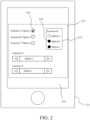
- the first application 210 has a setting panel (referred to as a first setting panel 211 below), as shown in FIG. 2 .
- the first display unit 113 displays the first setting panel 211.
- the first setting panel 211 has a plurality of sets of setting options (referred to as first setting options 212 below), as shown in FIG. 2 .
- a type of the first setting options 212 may be a checkbox, a checklist, a group of options (radio or option), a dropdown list, a toggle switch, a label, or a text field.
- Each of the first setting options 212 has a setting parameter (that is, a set value indicating whether to select and/or a content to be selected) 230.
- the setting parameter 230 of the checkbox is a Boolean variable, that is, a "true value” or a "false value”.
- the setting parameter 230 in the group of options is a group composed of a plurality of sets of Boolean variables.
- the setting parameters 230 of the dropdown list and the text field are text strings.
- the first processing unit 111 reads set values (that is, the setting parameters 230) of the first setting options 212 through the first application 210 and generates a meta file 310 according to the setting parameters 230 of the first setting options 212 (step S410).
- the meta file 310 includes a plurality of first setting options 212 in the first application 210 of the first electronic device 110 and the setting parameters 230.
- the first processing unit 111 transforms the meta file 310 into a set coding image 320 through the first application 210, and displays a display frame with the set coding image 320 on the first display unit 113 (step S420), as shown in FIG. 4 .
- the meta file 310 may be, but is not limited to, an extensible markup language (XML) or a lightweight markup language (Markdown).
- XML extensible markup language
- Markdown a lightweight markup language
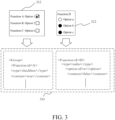
- the first processing unit 111 generates the corresponding tree text content in the XML file according to each group or option (that is, the setting parameter 230) in the first setting option 212, and then encodes the XML file into the set coding image 320.
- the content of the XML file in FIG. 3 is the setting parameter 230 corresponding to the first setting option 212 in FIG. 2 .
- the first setting option 212 and the contents of the XML file shown in FIG. 3 are only examples, and are not limited thereto.
- the first processing unit 111 may store the generated meta file 310 in the first storage unit 112.
- the first processing unit 111 may respectively transform different kinds of first setting options 212 to a plurality of set coding images 320. In some other embodiments, the first processing unit 111 may also transform all of the first setting options 212 into a single set coding image 320.
- the set coding image 320 may be a 1D barcode (for example, Code 39, Code 2 of 5 Interleaved, an EAN-13 barcode, an EAN-8 barcode, or Code 128), a 2D barcode (for example, a QR code, PDF417, a composite barcode, or Data Matrix), or a combination thereof.
- 1D barcode for example, Code 39, Code 2 of 5 Interleaved, an EAN-13 barcode, an EAN-8 barcode, or Code 128, a 2D barcode (for example, a QR code, PDF417, a composite barcode, or Data Matrix), or a combination thereof.
- the second electronic device 120 includes a second processing unit 121, a second storage unit 122, a second display unit 123, and a photographing unit 124.
- the second processing unit 121 is connected to the second storage unit 122, the second display unit 123, and the photographing unit 124.
- the second storage unit 122 stores at least one application.
- the second processing unit 121 drives the photographing unit 124, and captures the display frame with the set coding image 320 on the first display unit 113 through the photographing unit 124 to obtain the set coding image 320 (step S430). Since the applications executed by the first electronic device 110 and the second electronic device 120 are the same, in order to distinguish between the two applications, the application executed by the second electronic device 120 is referred to as a second application 220, and the first application 210 and the second application 220 are the same application.
- the second processing unit 121 After obtaining the set coding image 320 (step S430), the second processing unit 121 transforms the set coding image 320 into the meta file 310 (step S440), and adjusts setting parameters 230 of a plurality of second setting options 222 of the second application 220 according to the meta file 310 (step S450).
- the second application 220 has a second setting panel 221. Since the first application 210 and the second application 220 are the same application, a layout of the first setting panel 211 is the same as a layout of the second setting panel 221.
- the second setting panel 221 also has a plurality of setting options.
- the setting options of the second setting panel 221 are referred to as the second setting options 222.
- the items of the first setting options 212 are the same as the items of the second setting options 222.
- the setting content of the second setting options 222 (that is, the setting parameters 230) may be the same as or different from the setting content of the first setting options 212.
- the setting content of the second setting options 222 is the same as the setting content of the first setting options 212, as shown in FIG. 2 and FIG. 8 .
- the first processing unit 111 not only obtains the setting parameters 230 of the first setting options 212, but also obtains program information (for example, a software name and/or version information) of the first application 210, and then generates the meta file 310 with the corresponding text content by using the obtained setting parameters 230 and the program information.
- the first processing unit 111 of the first electronic device 110 may record the program information of the first application 210 to a header of the meta file 310 according to a tree structure of the meta file 310.
- the first processing unit 111 may sequentially generate a tree structure of the corresponding setting parameters 230 according to locations, labels, and a setting order of the first setting options 212, and record the tree structure in the meta file 310.
- the user selects the first application 210 through the user interface of the first electronic device 110 to cause the first processing unit 111 of the first electronic device 110 to run the first application 210.
- the first electronic device 110 provides and displays the first setting panel 211 with the plurality of first setting options 212 on the first display unit 113 (as shown in the upper diagram of FIG. 6 ) for the user to set the operating environment of the first application 210 through the user interface of the first electronic device 110.
- the first processing unit 111 of the first electronic device 110 reads out program data representing the types and set values (that is, the setting parameters 230) of the first setting options 212 in the first setting panel 211, collects and records the program data in the XML file (that is, the meta file 310) with the text content of the tree structure corresponding to the setting parameters 230 (as shown in FIG. 6 ), and also records the program name (that is, program information) of the first application 210 in the header of the meta file 310.
- the first processing unit 111 of the first electronic device 110 transforms the XML file into the QR code (that is, the set coding image 320) and displays the QR code on the screen (that is, the first display unit 113) (as shown in the lower diagram of FIG. 6 ).
- the first processing unit 111 of the first electronic device 110 transforms the XML file into the QR code (that is, the set coding image 320) and displays the QR code on the screen (that is, the first display unit 113) (as shown in the lower diagram of FIG. 6 ).
- all of the first setting options 212 generate a single set coding image 320 by way of example, which is not limited in this way.
- the user may capture a picture of the first electronic device 110 by using the photographing unit 124 of the second electronic device 120 (as shown in the upper left diagram of FIG. 7 ) to obtain the QR code, and then the second processing unit 121 decodes the QR code to obtain an XML file recording the text content of the tree structure corresponding to the setting parameters 230 and the header of the program name. Then, the second processing unit 121 selects the second application 220 according to the program name recorded in the header and executes the second application 220 (as shown in the upper right diagram of FIG. 7 ).
- the second processing unit 121 transforms the text content of the tree structure corresponding to the setting parameters 230 into program data, and adjusts the setting parameters 230 of the second setting options 222 in the second setting panel 221 of the second application 220 (as shown in the bottom right diagram of FIG. 7 ) to be the same as the setting parameters 230 of the first setting options 212 with the program data (as shown in the bottom left diagram of FIG. 7 ).
- the same setting options in the first setting panel 211 and the second setting panel 221 may be the same selected status or selected content.
- the first processing unit 111 may be implemented by one or more processors.
- the second processing unit 121 may also be implemented by one or more processors.
- Each of the processors may be, but is not limited to, a central processing unit (CPU), a System on Chip (SOC), a general-purpose or special-purpose microprocessor, a digital signal processor (DSP), a programmable controller, an application specific integrated circuit (ASIC), a programmable logic device (PLD), other similar processing devices, or a combination of the devices.
- CPU central processing unit
- SOC System on Chip
- DSP digital signal processor
- ASIC application specific integrated circuit
- PLD programmable logic device
- the first storage unit 112 may be implemented by one or more storage elements.
- the second storage unit 122 may also be implemented by one or more storage elements.
- Each of the storage elements may be, but is not limited to, a memory, a memory card, or a register.
- the first display unit 113 may be, but is not limited to, a touch screen or a general display screen (that is, which has no touch function).
- the second display unit 123 may also be, but is not limited to, a touch screen or a general display screen (that is, which has no touch function).
- the user interface may be the display unit, or may be an input device (a non-display unit) such as a keyboard, one or more buttons, a handwriting board, or any combination thereof that is additionally arranged.
- the photographing unit 124 may be implemented by a combination of a camera lens, a lens, and an image processor.
- the method for sharing a console variable setting of an application may be realized by a computer program product.
- the computer program product may be a readable recording medium, and the above program is stored in the readable recording medium for the electronic device to load.
- the program itself may be a computer program product, and is transmitted to the electronic device in a wired or wireless manner.
- the setting content of an application installed in an electronic device can be conveniently acquired, and the same applications on other electronic devices (such as the second electronic device 120) are quickly set to the same setting parameters.
Landscapes
- Engineering & Computer Science (AREA)
- Theoretical Computer Science (AREA)
- Physics & Mathematics (AREA)
- General Engineering & Computer Science (AREA)
- General Physics & Mathematics (AREA)
- Human Computer Interaction (AREA)
- Software Systems (AREA)
- Health & Medical Sciences (AREA)
- Artificial Intelligence (AREA)
- Computer Vision & Pattern Recognition (AREA)
- Toxicology (AREA)
- General Health & Medical Sciences (AREA)
- Electromagnetism (AREA)
- Image Analysis (AREA)
- Stored Programmes (AREA)
- Information Retrieval, Db Structures And Fs Structures Therefor (AREA)
- Closed-Circuit Television Systems (AREA)
- Character Input (AREA)
- Testing Electric Properties And Detecting Electric Faults (AREA)
Applications Claiming Priority (1)
| Application Number | Priority Date | Filing Date | Title |
|---|---|---|---|
| US202263402029P | 2022-08-29 | 2022-08-29 |
Publications (1)
| Publication Number | Publication Date |
|---|---|
| EP4332760A1 true EP4332760A1 (fr) | 2024-03-06 |
Family
ID=85384408
Family Applications (2)
| Application Number | Title | Priority Date | Filing Date |
|---|---|---|---|
| EP23158459.0A Pending EP4332760A1 (fr) | 2022-08-29 | 2023-02-24 | Procédé de partage de réglage variable de console d'application et système avec une pluralité de dispositifs électroniques |
| EP23168958.9A Active EP4332761B1 (fr) | 2022-08-29 | 2023-04-20 | Procédé de balayage, dispositif électronique et système de traitement pour de multiples codes à barres |
Family Applications After (1)
| Application Number | Title | Priority Date | Filing Date |
|---|---|---|---|
| EP23168958.9A Active EP4332761B1 (fr) | 2022-08-29 | 2023-04-20 | Procédé de balayage, dispositif électronique et système de traitement pour de multiples codes à barres |
Country Status (5)
| Country | Link |
|---|---|
| US (3) | US11842033B1 (fr) |
| EP (2) | EP4332760A1 (fr) |
| CN (2) | CN117632278A (fr) |
| AU (2) | AU2023201410B2 (fr) |
| TW (2) | TWI835468B (fr) |
Families Citing this family (1)
| Publication number | Priority date | Publication date | Assignee | Title |
|---|---|---|---|---|
| DE102023102950B3 (de) * | 2023-02-07 | 2023-11-30 | Sick Ag | Codelesevorrichtung und Verfahren zum parallelen Lesen einer Vielzahl von Codes |
Citations (4)
| Publication number | Priority date | Publication date | Assignee | Title |
|---|---|---|---|---|
| EP2894931A1 (fr) * | 2012-09-07 | 2015-07-15 | NEC CASIO Mobile Communications, Ltd. | Système de communication sans fil, procédé de communication sans fil, terminal mobile, dispositif de traitement d'informations et programme |
| US9459827B2 (en) * | 2013-03-26 | 2016-10-04 | Sony Corporation | Information processing apparatus, method for processing information, and program |
| US20170317879A1 (en) * | 2016-04-29 | 2017-11-02 | Microsoft Technology Licensing, Llc | Cart Mode Provisioning Of Shared Computing Devices |
| CN114139169A (zh) * | 2020-09-04 | 2022-03-04 | 神讯电脑(昆山)有限公司 | 二维码加、解密方法和多个电子装置共享配置信息的方法 |
Family Cites Families (16)
| Publication number | Priority date | Publication date | Assignee | Title |
|---|---|---|---|---|
| US20010030662A1 (en) * | 1999-12-20 | 2001-10-18 | Toshihiko Ohkawa | System and method for displaying index information on a computer screen |
| US7536418B2 (en) * | 2003-01-10 | 2009-05-19 | At&T Intellectual Property Ii, Lp | Preload library for transparent file transformation |
| US7528868B2 (en) * | 2003-12-18 | 2009-05-05 | Eastman Kodak Company | Image metadata attachment |
| US8596541B2 (en) * | 2008-02-22 | 2013-12-03 | Qualcomm Incorporated | Image capture device with integrated barcode scanning |
| TWI455034B (zh) | 2012-03-27 | 2014-10-01 | Visionatics Inc | 條碼辨識方法及其電腦程式產品 |
| CN106886892A (zh) * | 2016-11-18 | 2017-06-23 | 阿里巴巴集团控股有限公司 | 基于条码的通信方法和装置、支付的实现方法和装置 |
| TWI660606B (zh) * | 2018-04-17 | 2019-05-21 | 鉅康科技股份有限公司 | Intelligent monitoring system |
| CN109917667B (zh) * | 2019-03-31 | 2021-06-22 | 广东美的制冷设备有限公司 | 家电设备及其控制权限分享方法、控制终端以及存储介质 |
| CN110287162B (zh) * | 2019-06-03 | 2025-09-09 | 北京达佳互联信息技术有限公司 | 内容分享方法和装置、电子设备及存储介质 |
| CN112241639B (zh) * | 2019-07-18 | 2024-07-16 | 神讯电脑(昆山)有限公司 | 多条码扫描方法及其系统 |
| US10853611B1 (en) * | 2019-08-23 | 2020-12-01 | Getac Technology Corporation | Method for scanning multiple barcodes and system thereof |
| CN113051950B (zh) * | 2019-12-27 | 2023-07-18 | 华为技术有限公司 | 一种多条码识别方法以及相关设备 |
| JP7684321B2 (ja) * | 2020-02-13 | 2025-05-27 | マジック リープ, インコーポレイテッド | 位置特定に関するジオロケーション情報の優先順位化を伴うクロスリアリティシステム |
| US11258774B1 (en) * | 2020-08-24 | 2022-02-22 | Juniper Networks, Inc. | Adaptive control of secure sockets layer proxy |
| CN113365153B (zh) * | 2021-05-31 | 2023-01-10 | 北京小米移动软件有限公司 | 数据分享方法、装置、存储介质及电子设备 |
| CN114554131A (zh) * | 2022-01-17 | 2022-05-27 | 浪潮金融信息技术有限公司 | 一种高安全性的智慧屏会议内容分享方法、系统及介质 |
-
2022
- 2022-12-16 CN CN202211623003.1A patent/CN117632278A/zh active Pending
- 2022-12-16 TW TW111148598A patent/TWI835468B/zh active
-
2023
- 2023-02-16 US US18/170,056 patent/US11842033B1/en active Active
- 2023-02-24 EP EP23158459.0A patent/EP4332760A1/fr active Pending
- 2023-03-02 TW TW112107670A patent/TWI854516B/zh active
- 2023-03-02 CN CN202310191238.6A patent/CN117634520A/zh active Pending
- 2023-03-03 US US18/177,912 patent/US12086385B2/en active Active
- 2023-03-07 AU AU2023201410A patent/AU2023201410B2/en active Active
- 2023-04-20 EP EP23168958.9A patent/EP4332761B1/fr active Active
- 2023-04-28 AU AU2023202635A patent/AU2023202635B2/en active Active
- 2023-11-05 US US18/502,022 patent/US12086390B2/en active Active
Patent Citations (4)
| Publication number | Priority date | Publication date | Assignee | Title |
|---|---|---|---|---|
| EP2894931A1 (fr) * | 2012-09-07 | 2015-07-15 | NEC CASIO Mobile Communications, Ltd. | Système de communication sans fil, procédé de communication sans fil, terminal mobile, dispositif de traitement d'informations et programme |
| US9459827B2 (en) * | 2013-03-26 | 2016-10-04 | Sony Corporation | Information processing apparatus, method for processing information, and program |
| US20170317879A1 (en) * | 2016-04-29 | 2017-11-02 | Microsoft Technology Licensing, Llc | Cart Mode Provisioning Of Shared Computing Devices |
| CN114139169A (zh) * | 2020-09-04 | 2022-03-04 | 神讯电脑(昆山)有限公司 | 二维码加、解密方法和多个电子装置共享配置信息的方法 |
Also Published As
| Publication number | Publication date |
|---|---|
| US20240070418A1 (en) | 2024-02-29 |
| TW202409816A (zh) | 2024-03-01 |
| US12086385B2 (en) | 2024-09-10 |
| US11842033B1 (en) | 2023-12-12 |
| AU2023202635B2 (en) | 2024-09-05 |
| CN117634520A (zh) | 2024-03-01 |
| TW202409895A (zh) | 2024-03-01 |
| US20240069693A1 (en) | 2024-02-29 |
| EP4332761A3 (fr) | 2024-04-03 |
| TWI854516B (zh) | 2024-09-01 |
| TWI835468B (zh) | 2024-03-11 |
| AU2023202635A1 (en) | 2024-03-14 |
| AU2023201410B2 (en) | 2024-08-29 |
| US12086390B2 (en) | 2024-09-10 |
| EP4332761B1 (fr) | 2025-07-09 |
| CN117632278A (zh) | 2024-03-01 |
| AU2023201410A1 (en) | 2024-03-14 |
| EP4332761A2 (fr) | 2024-03-06 |
Similar Documents
| Publication | Publication Date | Title |
|---|---|---|
| US12003584B2 (en) | Mobile computing device with data cognition software | |
| US7611059B2 (en) | Code reading device and program | |
| CN100440141C (zh) | 可用户化的信息处理装置及方法 | |
| US20170293959A1 (en) | Information processing apparatus, shelf label management system, control method, and program | |
| US20170278057A1 (en) | Information processing apparatus, shelf label management system, control method, and program | |
| JP4792421B2 (ja) | 商品販売登録データ処理装置 | |
| WO2018016494A1 (fr) | Serveur de gestion d'inventaire, système de gestion d'inventaire, programme de gestion d'inventaire et procédé de gestion d'inventaire | |
| US12086390B2 (en) | Method for sharing a console variable setting of an application and the electronic device and system | |
| US20220292565A1 (en) | Processing device, and processing method | |
| JP5780219B2 (ja) | 情報端末及びプログラム | |
| US20220230514A1 (en) | Product recognition apparatus, system, and method | |
| WO2019181441A1 (fr) | Dispositif de traitement d'informations, procédé de commande et programme | |
| CN118586411A (zh) | 条码图像识别方法及其装置 | |
| US20250165323A1 (en) | Systems and methods for reporting diagnostic information in a data reading system | |
| US20250077816A1 (en) | Barcode image recognition method and device using the same | |
| US20250229989A1 (en) | Article management system, information processing device and information processing method | |
| US20090327348A1 (en) | Job support system and its method | |
| CN102110266A (zh) | 销售时点管理装置 | |
| US20260087476A1 (en) | Devices and Methods Utilizing Machine Learning for Item Identification | |
| WO2019181442A1 (fr) | Dispositif de traitement d'informations, procédé de commande et programme | |
| JP3780737B2 (ja) | 商品コード変換装置並びにその方法 | |
| JP6532114B1 (ja) | 情報処理装置、情報処理方法、およびプログラム | |
| JP2026059612A (ja) | 作業工程管理システム、作業工程管理方法、およびプログラム | |
| JP2021131658A (ja) | コード読み取り装置、コード読み取り方法、及び、プログラム | |
| JP2003067121A (ja) | 入力指示書及び情報処理装置 |
Legal Events
| Date | Code | Title | Description |
|---|---|---|---|
| PUAI | Public reference made under article 153(3) epc to a published international application that has entered the european phase |
Free format text: ORIGINAL CODE: 0009012 |
|
| STAA | Information on the status of an ep patent application or granted ep patent |
Free format text: STATUS: REQUEST FOR EXAMINATION WAS MADE |
|
| 17P | Request for examination filed |
Effective date: 20231215 |
|
| AK | Designated contracting states |
Kind code of ref document: A1 Designated state(s): AL AT BE BG CH CY CZ DE DK EE ES FI FR GB GR HR HU IE IS IT LI LT LU LV MC ME MK MT NL NO PL PT RO RS SE SI SK SM TR |
|
| STAA | Information on the status of an ep patent application or granted ep patent |
Free format text: STATUS: EXAMINATION IS IN PROGRESS |
|
| 17Q | First examination report despatched |
Effective date: 20240822 |