EP4332786A1 - Procédé de traitement de données et appareil associé - Google Patents
Procédé de traitement de données et appareil associé Download PDFInfo
- Publication number
- EP4332786A1 EP4332786A1 EP22832027.1A EP22832027A EP4332786A1 EP 4332786 A1 EP4332786 A1 EP 4332786A1 EP 22832027 A EP22832027 A EP 22832027A EP 4332786 A1 EP4332786 A1 EP 4332786A1
- Authority
- EP
- European Patent Office
- Prior art keywords
- model
- training
- trained
- sample groups
- training sample
- Prior art date
- Legal status (The legal status is an assumption and is not a legal conclusion. Google has not performed a legal analysis and makes no representation as to the accuracy of the status listed.)
- Pending
Links
Images





Classifications
-
- G—PHYSICS
- G06—COMPUTING OR CALCULATING; COUNTING
- G06F—ELECTRIC DIGITAL DATA PROCESSING
- G06F16/00—Information retrieval; Database structures therefor; File system structures therefor
- G06F16/20—Information retrieval; Database structures therefor; File system structures therefor of structured data, e.g. relational data
- G06F16/24—Querying
- G06F16/242—Query formulation
- G06F16/2433—Query languages
-
- G—PHYSICS
- G06—COMPUTING OR CALCULATING; COUNTING
- G06F—ELECTRIC DIGITAL DATA PROCESSING
- G06F16/00—Information retrieval; Database structures therefor; File system structures therefor
- G06F16/20—Information retrieval; Database structures therefor; File system structures therefor of structured data, e.g. relational data
- G06F16/23—Updating
- G06F16/2379—Updates performed during online database operations; commit processing
-
- G—PHYSICS
- G06—COMPUTING OR CALCULATING; COUNTING
- G06F—ELECTRIC DIGITAL DATA PROCESSING
- G06F16/00—Information retrieval; Database structures therefor; File system structures therefor
- G06F16/20—Information retrieval; Database structures therefor; File system structures therefor of structured data, e.g. relational data
- G06F16/24—Querying
- G06F16/245—Query processing
- G06F16/2453—Query optimisation
-
- G—PHYSICS
- G06—COMPUTING OR CALCULATING; COUNTING
- G06F—ELECTRIC DIGITAL DATA PROCESSING
- G06F16/00—Information retrieval; Database structures therefor; File system structures therefor
- G06F16/20—Information retrieval; Database structures therefor; File system structures therefor of structured data, e.g. relational data
- G06F16/24—Querying
- G06F16/245—Query processing
- G06F16/2455—Query execution
- G06F16/24564—Applying rules; Deductive queries
-
- G—PHYSICS
- G06—COMPUTING OR CALCULATING; COUNTING
- G06N—COMPUTING ARRANGEMENTS BASED ON SPECIFIC COMPUTATIONAL MODELS
- G06N20/00—Machine learning
-
- G—PHYSICS
- G06—COMPUTING OR CALCULATING; COUNTING
- G06N—COMPUTING ARRANGEMENTS BASED ON SPECIFIC COMPUTATIONAL MODELS
- G06N3/00—Computing arrangements based on biological models
- G06N3/02—Neural networks
- G06N3/04—Architecture, e.g. interconnection topology
Definitions
- This application relates to the computer field, and in particular, to a data processing method and a related apparatus.
- Artificial intelligence is a theory, a method, a technology, or an application system that simulates, extends, and expands human intelligence by using a digital computer or a machine controlled by a digital computer, to perceive an environment, obtain knowledge, and achieve an optimal result based on the knowledge.
- artificial intelligence is a branch of computer science, and is intended to understand essence of intelligence and produce a new intelligent machine that can react in a manner similar to human intelligence.
- Artificial intelligence is to study design principles and implementation methods of various intelligent machines, so that the machines have perception, inference, and decision-making functions. Research in the field of artificial intelligence includes robotics, natural language processing, computer vision, decision-making and inference, human-machine interaction, recommendation and search, AI basic theories, and the like.
- the database system provides only an SQL engine interface, and cannot perform finer-grained control on a model training process based on a capability of a database, thereby losing a computing advantage of the database system. Consequently, training efficiency during model training in the database system is low, and time overheads are high.
- an embodiment of this application provides a data processing method, applied to a database system.
- the method includes: obtaining a model training request, where the model training request includes a plurality of training samples and a model training policy, and the plurality of training samples are grouped into N training sample groups.
- a model inference request may be a structured query language (structured query language, SQL) statement
- the database system may include an SQL parser
- the SQL parser may perform syntax parsing on an SQL, and after the syntax parsing succeeds, the SQL entered by a user may be transformed into a structured abstract syntax tree (abstract syntax tree, AST).
- a leaf node of the AST represents data provided by a data source, and a non-leaf node represents an SQL calculation operation.
- the data provided by the data source may be a plurality of training samples, and the SQL calculation operation may be the model training policy.
- the plurality of training samples may be divided into N training sample groups, and each training sample group may include a plurality of training samples.
- quantities of training samples included in different training sample groups may be the same or basically equal, and a quantity of training samples included in each training sample group may be determined based on a quantity of samples input each time a to-be-trained model is trained, for example, the quantity of training samples included in each training sample group may be equal to or basically equal to the quantity of samples input each time the to-be-trained model is trained.
- An execution plan of the model training policy and an estimation execution cost of the execution plan executed by the database system are generated.
- the estimation execution cost of the execution plan may be a computing resource required for subsequently training, based on the execution plan, the to-be-trained model, and an execution cost may also be referred to as an execution overhead corresponding to the execution plan.
- the execution plan includes a plurality of AI operators, and the estimation execution cost of the execution plan is obtained based on estimation execution costs of the plurality of AI operators, for example, the estimation execution cost of the execution plan may be determined by integrating the estimation execution costs of the plurality of AI operators.
- M training sample groups in the N training sample groups are obtained based on the estimation execution cost.
- a to-be-trained model is trained in parallel by using the M training sample groups, to obtain M pieces of parameter update data.
- the M training sample groups are in a one-to-one correspondence with the M pieces of parameter update data.
- one piece of parameter update data may be obtained based on each training sample group.
- the to-be-trained model may perform feedforward processing on each training sample group to obtain a processing result, and a loss may be obtained based on the processing result and a label of the training sample, so that the parameter update data may be obtained through calculation based on the loss.
- the parameter update data may be an update gradient, the update gradient is used when gradient descent update of the model is performed, and the update gradient may be understood as a derivative vector of a parameter in a loss function.
- the estimation execution cost may indicate the computing resource required for executing the execution plan, and available computing resources in the database are limited
- a training rule may be determined based on the estimation execution cost, so that a training process of the to-be-trained model is performed more quickly with the limited available resources.
- the quantity of training samples that are input each time during training is limited, so that a large quantity of training samples need to be input for a plurality of times to complete the training process, and the time overheads is high.
- a plurality of training sample groups are input in parallel to the to-be-trained model at a same moment, and therefore, the time overheads of the model training is reduced.
- a quantity of training samples used in parallel each time may be M.
- M copies of the to-be-trained model may be obtained, and each training sample group is input into one to-be-trained model.
- the to-be-trained model is split to obtain M small models, and each training sample group is input into one small model.
- M1 copies of the to-be-trained model may be obtained, and the to-be-trained model is split to obtain M2 small models, where a sum of M1 and M2 is M, each training sample group is input into one small model or one to-be-trained model, and the feedforward processing of the model is performed to obtain the M pieces of parameter update data (one piece of parameter update data may be obtained by using each to-be-trained model or small model, and the parameter update data may be the update gradient, a variation of a model parameter, or the like), so that the to-be-trained model may be updated based on the M pieces of parameter update data.
- the to-be-trained model is updated based on the M pieces of parameter update data, to obtain a trained model.
- An embodiment of this application provides the data processing method, applied to the database system.
- the method includes: obtaining the model training request, where the model training request includes the plurality of training samples and the model training policy, and the plurality of training samples are grouped into the N training sample groups; generating the execution plan of the model training policy and the estimation execution cost of the execution plan executed by the database system; obtaining, based on the estimation execution cost, the M training sample groups in the N training sample groups; training the to-be-trained model in parallel by using the M training sample groups, to obtain the M pieces of parameter update data; and updating the to-be-trained model based on the M pieces of parameter update data, to obtain the trained model.
- the plurality of training sample groups are input in parallel to the to-be-trained model at a same moment. This reduces the time overheads of the model training.
- the execution plan includes a plurality of AI operators, and an operator type of the AI operator is preconfigured on the database system.
- the AI operator may be an algorithm used when an AI-related operation is performed.
- the AI operator may include but is not limited to a gradient descent operator gradient descent, a K-means operator, an Xgboost operator, a Bayes operator Bayes, a decision tree operator decision tree, a shuffle operator shuffle, an iteration operator iteration, and the like.
- the estimation execution cost of the execution plan is obtained based on estimation execution costs of the plurality of AI operators.
- An estimation execution cost of each AI operator may be related to at least one piece of the following information: an amount of scanned data, an iteration round iteration, an iteration batch size (batch size), or a classification category quantity categorize.
- a specific model may further involve an ensemble algorithm, a quantity of base learners, a tree algorithm, a maximum tree depth, a quantity of leaf nodes, or the like.
- the method further includes: obtaining, based on the plurality of AI operators, the estimation execution costs of the plurality of AI operators by using an execution plan query statement. Specifically, after the estimation execution costs are obtained, the estimation execution cost may be written into the execution plan (for example, an estimation execution plan of each AI operator may be written into the execution plan). The user may obtain this part of information by querying an SQL execution plan query statement. For example, in an openGauss database, an explain command may be used to query and execute an SQL estimation execution plan.
- an estimated estimation execution cost is added to the execution plan for convenient query and optimization by the user.
- a quantity M of training sample groups during parallel feedforward may be determined based on the estimation execution cost of the execution plan that is obtained through calculation.
- a value of M is negatively correlated with the estimation execution cost.
- a higher estimation execution cost may indicate more computing resources required for executing the execution plan, so that a quantity of training sample groups during the parallel feedforward cannot be excessively high. Otherwise, currently available computing resources are insufficient.
- the value of M may also be related to the currently available computing resource in the database system. Specifically, the value of M is positively correlated with the currently available computing resource. More currently available computing resources indicate a larger value of M, in other words, more available computing resources indicate a larger allowed quantity of training sample groups during the parallel feedforward.
- the value of M may be determined by integrating the estimation execution cost and the currently available computing resource, so that without exceeding the available computing resource, an amount of parallel model training is maximized, and usage of the computing resource is maximized.
- the method further includes: performing a shuffle operation on the plurality of training samples, to obtain a plurality of shuffled training samples; and grouping the plurality of shuffled training samples, to obtain the N training sample groups.
- the AI operator may be scanned in parallel, data may be loaded to a memory, and the shuffle operation is performed on the plurality of training samples indicated in the model training request, to obtain the plurality of shuffled training samples.
- the shuffle operation is used to shuffle the training samples, so that distribution of the training samples is as much as close to real distribution. This facilitates fitting of a machine learning algorithm, enhances a generalization capability, and reduces subsequent iteration rounds.
- the shuffle operation may be implemented by using the shuffle operator (or the shuffle operator). In this way, the plurality of shuffled training samples are grouped, to obtain the N training sample groups.
- the user may indicate, in the model training request, to train X to-be-trained models for implementing a same task, so that the X to-be-trained models need to be trained to obtain X trained models.
- Each to-be-trained model corresponds to one trained model (for a training manner of each of the X to-be-trained models, refer to the description in the foregoing embodiment).
- the X trained models may be different models (for example, having different model structures and different algorithms), and the X trained models are used to implement a target task, for example, an image classification task, an image segmentation task, or an image recognition task.
- model inference request entered by the user may be received.
- the model training request may be an SQL statement, and the model inference request indicates the target task.
- the SQL parser may include a processing model (for example, PREDICT BY shown in FIG. 3 ) that is used to process the model inference request related to inference.
- the SQL parser may use the processing model that is used to process the model inference request related to inference to perform the syntax parsing on an SQL, to obtain an indication of the user for the target task.
- the models (the X trained models) used to implement the target task may be obtained from the memory, and a model (namely, a target model) used to perform the model inference is selected from the X trained models.
- the method further includes: obtaining a currently available computing resource and an execution cost of each of the X trained models, and determining a target model from the X trained models.
- the target model is used to perform the model inference.
- the target model may be determined with reference to model performance of the model and the available computing resource of the current database.
- the model performance of the model may include information such as accuracy (Accuracy), precision (Precision), an F1 score, and a recall (Recall).
- the model performance may further include the estimation execution cost of the model.
- Available computing resources may indicate a current load status, and may include, for example, at least one of an input/output I/O resource, a central processing unit CPU resource, a graphics processing unit GPU resource, and a memory resource.
- the target model may be determined from the X trained models based on the model performance of the model and the available computing resource of the current database.
- a determined rule may be: When the currently available computing resource can meet a requirement of the estimation execution cost (that is, overload is avoided), the model with optimal model performance is selected as the target model for inference. This greatly improves the performance during inference.
- an evaluation score of each trained model may be obtained based on the model performance of the model and the available computing resource of the current database. The evaluation score may indicate a priority of selecting the model for inference.
- an existing resource and the execution cost in the database are introduced as evaluation criteria for evaluating the model, and a dimension for evaluating the model is added in an actual operating scenario. Therefore, availability of the model can be verified more comprehensively, and an optimal model is selected for inference.
- the computing resource includes at least one of the following: an input/output I/O resource, a central processing unit CPU resource, a graphics processing unit GPU resource, and a memory resource.
- this application provides a data processing apparatus, used in a database system.
- the apparatus includes:
- the parameter update data is an update gradient of the model.
- the execution plan includes a plurality of AI operators, and an operator type of the AI operator is preconfigured on the database system.
- the estimation execution cost of the execution plan is obtained based on estimation execution costs of the plurality of AI operators.
- the obtaining module is further configured to: obtain, based on the plurality of AI operators, the estimation execution costs of the plurality of AI operators by using an execution plan query statement.
- a value of M is negatively correlated with the estimation execution cost.
- the obtaining module is further configured to:
- the apparatus further includes a sample grouping module, configured to: perform a shuffle operation on the plurality of training samples, to obtain a plurality of shuffled training samples; and group the plurality of shuffled training samples, to obtain the N training sample groups.
- a sample grouping module configured to: perform a shuffle operation on the plurality of training samples, to obtain a plurality of shuffled training samples; and group the plurality of shuffled training samples, to obtain the N training sample groups.
- each to-be-trained model corresponds to one trained model
- the X trained models are different models
- the X trained models are used to implement a target task.
- the obtaining module is further configured to:
- the apparatus further includes: a model inference module, configured to perform model inference by using the target model.
- the computing resource includes at least one of the following: an input/output I/O resource, a central processing unit CPU resource, a graphics processing unit GPU resource, and a memory resource.
- this application provides a data processing apparatus.
- the apparatus may include a processor, the processor is coupled to a memory, the memory stores program instructions, and when the program instructions stored in the memory are executed by the processor, the method in any one of the first aspect or the implementations of the first aspect is implemented.
- the processor is coupled to a memory, the memory stores program instructions, and when the program instructions stored in the memory are executed by the processor, the method in any one of the first aspect or the implementations of the first aspect is implemented.
- this application provides a computer-readable storage medium.
- the computer-readable storage medium stores a computer program, and when the computer program is run on a computer, the computer is enabled to perform the method in the implementations of the first aspect.
- this application provides a circuit system.
- the circuit system includes a processing circuit, and the processing circuit is configured to perform the method in any one of the first aspect or the implementations of the first aspect.
- this application provides a computer program.
- the computer program When the computer program is run on a computer, the computer is enabled to perform the method in the implementations of the first aspect.
- this application provides a chip system.
- the chip system includes a processor, configured to implement functions in the foregoing aspects, for example, sending or processing data and/or information in the foregoing methods.
- the chip system further includes a memory.
- the memory is configured to store program instructions and data that are necessary for a server or a communication device.
- the chip system may include a chip, or may include a chip and another discrete device.
- An embodiment of this application provides the data processing method, applied to the database system.
- the method includes: obtaining the model training request, where the model training request includes the plurality of training samples and the model training policy, and the plurality of training samples are grouped into the N training sample groups; generating the execution plan of the model training policy and the estimation execution cost of the execution plan executed by the database system; obtaining, based on the estimation execution cost, the M training sample groups in the N training sample groups; training the to-be-trained model in parallel by using the M training sample groups, to obtain the M pieces of parameter update data; and updating the to-be-trained model based on the M pieces of parameter update data, to obtain the trained model.
- a plurality of training sample groups are input in parallel to the to-be-trained model at a same moment. This reduces time overheads of the model training.
- Naming or numbering of steps in this application does not mean that steps in a method procedure need to be performed according to a time/logical sequence indicated by the naming or the numbering.
- An execution sequence of steps in a procedure that have been named or numbered may be changed based on a technical objective to be implemented, provided that same or similar technical effect can be achieved.
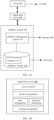
- a method provided in embodiments of this application may be applied to a database system (database system) 100 shown in FIG. 1A .
- the database system 100 is communicatively connected to an application server 300, to provide a database service for the application server 300.
- the application server 300 is communicatively connected to a client 200.
- the client 200 is usually an application deployed on user equipment.
- the client 200 initiates a service request to the application server 300 to implement a specific function, for example, downloading or uploading data.
- Data related to the client 200 is stored in the database system 100. How the application server 300 needs to operate the data related to the client 200 in a process of responding to a service request of the client 200 (for example, querying data, adding data, updating data, and deleting data), may be implemented by sending an operation request to the database system 100.
- FIG. 1A shows a typical logical architecture of the database system 100.
- the database system 100 includes a database 110 and a database management system (database management system, DBMS) 130.
- database management system database management system 130.
- the database 110 is an organized data set stored in a data storage (data storage) 120, namely, an associated data set organized, stored, and used based on a particular data model.
- the data may be divided into a plurality of types, for example, relational data (relational data), graph (graph) data, and time series (time series) data.
- the relational data is data modeled by using a relational model, and is usually represented as a table, where a row in the table represents a set of associated values of an object or entity.
- the graph data, "graph” for short is used to represent a relationship, for example, a social relationship, between objects or entities.
- the time series data, time series data for short is a data column recorded and indexed in a time sequence, and is used to describe status change information of an object in a time dimension.
- the database management system 130 is a core of a database system, and is system software used to organize, store, and maintain data.
- the client 200 can access the database 110 by using the database management system 130.
- a database administrator can also maintain a database by using the database management system.
- the database management system 130 provides various functions for the client 200 to establish, modify, and query the database.
- the client 200 may be an application or user equipment running an application.
- the functions provided by the database management system 130 may include but are not limited to the following items: (1) Data definition function:
- the database management system 130 provides a data definition language (data definition language, DDL) to define a structure of the database 110, where the DDL is used to depict a database framework, and may be stored in a data dictionary.
- DDL data definition language
- the database management system 130 provides a data manipulation language (data manipulation language, DML) to implement basic access operations on the database 110, for example, retrieval, insertion, modification, and deletion.
- DML data manipulation language
- Database operation management function The database management system 130 provides a data control function to effectively control and manage operation of the database 110, to ensure correct and effective data.
- Database establishment and maintenance functions include functions such as loading of initial data of the database, dump, restoration, and reorganization of the database, and monitoring and analysis of system performance.
- Transmission of the database The database management system provides transmission of processed data, to implement communication between the client and the database management system, and the database management system usually coordinates with an operating system to complete the transmission of the processed data.
- the database storage 120 may include but is not limited to a solid-state drive (solid-state drive, SSD), a disk array, a cloud storage, or non-transitory computer-readable storage medium of another type.
- solid-state drive solid-state drive, SSD
- disk array disk array
- cloud storage or non-transitory computer-readable storage medium of another type.
- the client 200 may initiate a service request to the application server 300.
- a data service is deployed in the application server 300, and is used to respond to the service request initiated by the client 200.
- the data service deployed in the application server 300 may verify validity of access of the client 200, record a session after verification succeeds, and convert the service request initiated by the client 200 into a data operation request for the database 110, for example, a query statement.
- the data service may perform real-time statistics collection and control on system resources occupied by different clients 200.
- FIG. 1A merely shows components more related to implementations disclosed in embodiments of the present invention.
- the following describes an embodiment of the application server 300 provided in this application with reference to FIG. 1B .
- Functions implemented by the application server 300 may include but are not limited to access control, session management, data management, resource monitoring, storage management, and the like.
- the access control may control validity of access of a client and control a bandwidth.
- the session management may be performed to manage a session of a client that successfully accesses the application server 300.
- the data management may convert a service request from a client into an operation request for a database.
- the resource monitoring may perform real-time statistics collection and control on system resources occupied by different clients.
- the storage management may convert an operation request for the database into an operation request supported by or executable in a database system, for example, a database query statement ("query" for short), and the query may be a structured query language (structured query language, SQL) query.
- the application server 300 may convert the service request into a query supported by or executable in the database system at one time or several times.
- a specific conversion process belongs to the conventional technology in the art.
- the database system provided in embodiments of this application may be a distributed database system (distributed database system, DDBS), for example, a database system with a massively parallel processing (massively parallel processing, MPP) architecture.
- DDBS distributed database system
- MPP massively parallel processing
- FIG. 1C is a schematic diagram of a distributed database system with a shared storage (shared storage) architecture, including one or more coordinator nodes (coordinator node, CN) and a plurality of data nodes (data node, DN).
- the DDBS may further include another component, for example, a global transaction manager (global transaction manager, GTM).
- GTM global transaction manager
- the CN and the DN communicate with each other through a network channel.
- the CN may generate, based on a received query, for example, a query from an application server, an execution plan corresponding to the query, and distribute, based on the execution plan, the query to a corresponding DN for execution.
- the CN may further generate a query result based on an execution result of the DN.
- the network channel may include network devices such as a switch, a router, and a gateway.
- the CN and the DN work together to perform functions of a database management system and provide services such as database retrieval, insertion, modification, and deletion for a client.
- the database management system is deployed on each CN and each DN.
- a shared data storage stores data that can be shared by a plurality of DNs, and the DN may perform, through the network channel, a read/write operation on the data in the data storage.
- the shared data storage may be a shared storage array.
- the CN and the DN in the distributed database system may be physical machines, such as database servers, or may be virtual machines (virtual machine, VM) or containers (container) running on abstract hardware resources.
- the CN and the DN are the virtual machines or the containers, the network channel is a virtual switching network, and the virtual switching network includes a virtual switch.
- the database management systems deployed on the CN and the DN are DBMS instances (instance).
- the DBMS instance may be a process or a thread. These DBMSs work together to perform functions of a database relational system.
- the CN and the DN are physical machines, and the network channel includes one or more switches.
- the switch is a storage area network (storage area network, SAN) switch, an Ethernet switch, an optical fiber switch, or another physical switching device.
- FIG. 1D is a schematic diagram of a distributed database system with a shared-nothing (shared-nothing) architecture.
- Each DN has a dedicated hardware resource (for example, a CPU, a memory, and a data storage).
- a CN and a DN communicate with each other through a network channel.
- data is distributed to each DN based on a database model and an application characteristic.
- a query task is divided by the CN into several parts, to be executed concurrently on a plurality of DNs. All DNs perform calculation coordinately and are used as a whole to provide a database service. All communication functions are implemented on a high-bandwidth network interconnection system. Similar to those in the distributed database system with the shared storage architecture described in FIG. 1C , the CN and the DN herein may be physical machines or virtual machines.
- the data storage (data storage) of the database system includes but is not limited to a solid-state drive (solid-state drive, SSD), a disk array, or a non-transitory computer-readable medium of another type.
- a database is not shown in FIG. 1C and FIG. 1D , it should be understood that the database is stored in the data storage.
- a database system may include components more or less than those shown in FIG. 1A to FIG. 1D , or include components different from those shown in FIG. 1A to FIG. 1D.
- FIG. 1A to FIG. 1D merely show components more related to implementations disclosed in embodiments of this application.
- a distributed database system may include any quantities of CNs and DNs.
- Database management system functions of CNs and DNs may be separately implemented by using an appropriate combination of software, hardware, and/or firmware on the CNs and DNs.
- the distributed database system may provide an application (APP) deployment service for an application developer.
- APP application
- an application may be deployed on a node, for example, the virtual machine, in the distributed database system.
- the virtual machine may include one or more data nodes DNs and a corresponding data storage (for example, the shared data storage in FIG. 1C or the data storage in FIG. 1D ).
- the application may send a service request to the application server, and the application server processes the service request.
- the application server converts the service request of the application into one or more data operation requests (an "operation request" for short, for example, a model training request and a model inference request in embodiments of this application) supported by or executable in the database system, and sends the data operation request to the distributed database system.
- an operation request for short, for example, a model training request and a model inference request in embodiments of this application
- a DN corresponding to the application in the distributed database system performs an operation (for example, model training and model inference in embodiments of this application) on the data in the data storage.
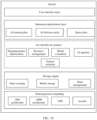
- FIG. 1E is a diagram of a system architecture according to an embodiment of this application.
- a system may include a user interface layer, for implementing syntax such as SQL-like syntax, providing syntax such as PREDICT BY or CREATE MODEL, and supporting model training, estimation, and management; a statement optimization layer, for implementing a native AI operator in a database, where an optimizer generates an execution plan and cost estimation that include the native AI operator, viewing a detailed execution overhead by using an execution plan query statement (for example, an EXPLAIN statement), and providing a possible path selection capability; and an AI controller and an executor.
- syntax such as SQL-like syntax, providing syntax such as PREDICT BY or CREATE MODEL, and supporting model training, estimation, and management
- a statement optimization layer for implementing a native AI operator in a database, where an optimizer generates an execution plan and cost estimation that include the native AI operator, viewing a detailed execution overhead by using an execution plan query statement (for example, an EXPLAIN statement), and providing a possible path
- the controller may be used to implement entireprocess AI management, for example, support model management and evaluation, support periodic and fixed-point model update and optimization, and perform incremental model reconstruction; support an AutoML capability and hyperparameter optimization; feature capabilities of feature selection, feature processing, and data cleaning, and analyze data set scale, distribution, and feature column association.
- the executor may be used to implement machine learning AI operators and parallel training of the AI operators. After the training is completed, model information is retained in a system table.
- a storage engine may be used to manage data scanning, model storage and read.
- Heterogeneous computing supports a plurality of computing platforms, including an x86 architecture, an ARM architecture, and an environment with a GPU and Ascend.
- embodiments of this application relate to application of a large quantity of neural networks, for ease of understanding, the following first describes related terms included in embodiments of this application and related concepts such as a neural network.
- the neural network may include neurons.
- the neuron may be an operation unit that uses xs (namely, input data) and an intercept of 1 as input.
- f is an activation function (activation function) of the neuron, and is used to introduce a nonlinear feature into the neural network, to convert an input signal in the neuron into an output signal.
- the output signal of the activation function may be used as input of a next convolutional layer.
- the activation function may be a sigmoid function.
- the neural network is a network formed by connecting a plurality of single neurons together. To be specific, output of a neuron may be input of another neuron. An input of each neuron may be connected to a local receptive field of a previous layer to extract a feature of the local receptive field.
- the local receptive field may be a region including several neurons.
- the deep neural network (deep neural network, DNN) is also referred to as a multilayer neural network, and may be understood as a neural network having a plurality of hidden layers. There is no special metric for "a plurality of" herein.
- the DNN is divided based on locations of different layers, and the neural network in the DNN may be divided into three types: an input layer, a hidden layer, and an output layer. Generally, a first layer is the input layer, a last layer is the output layer, and a middle layer is the hidden layer. Layers are fully connected. To be specific, any neuron at an i th layer is necessarily connected to any neuron at an (i+1) th layer.
- X is an input vector
- y is an output vector
- b is an offset vector
- W is a weight matrix (also referred to as a coefficient)
- ⁇ () is an activation function.
- the output vector y is obtained by performing such a simple operation on the input vector X . Because the DNN has the plurality of layers, there are also a plurality of coefficients W and bias vectors b .
- the coefficient W is used as an example. It is assumed that in a DNN having three layers, a linear coefficient from a fourth neuron at a second layer to a second neuron at a third layer is defined as w 13 3 .
- the superscript 3 represents a layer at which the coefficient W is located, and the subscript corresponds to an output third-layer index 2 and an input second-layer index 4. It is concluded that, a coefficient from a k th neuron at an (L-1) th layer to a j th neuron at an L th layer is defined as W jk L .
- Training the deep neural network is a process of learning a weight matrix, and a final objective of the training is to obtain a weight matrix of all layers of the trained deep neural network (a weight matrix formed by vectors W at many layers).
- a predicted value of a current network and a target value that is actually expected may be compared, and then a weight vector of each layer of the neural network is updated based on a difference between the predicted value and the target value (certainly, there is usually an initialization process before the first update, to be specific, parameters are preconfigured for all layers of the deep neural network). For example, if the predicted value of the network is large, the weight vector is adjusted to decrease the predicted value, and adjustment is continuously performed, until the deep neural network can predict the target value that is actually expected or a value that is very close to the target value that is actually expected.
- a difference between the predicted value and the target value needs to be predefined.
- This is a loss function (loss function) or an objective function (objective function).
- the loss function and the objective function are important equations that measure the difference between the predicted value and the target value.
- the loss function is used as an example. A higher output value (loss) of the loss function indicates a larger difference. Therefore, training of the deep neural network is a process of minimizing the loss as much as possible.
- the convolutional neural network may correct a value of a parameter in an initial super-resolution model in a training process according to an error back propagation (back propagation, BP) algorithm, so that an error loss of reconstructing the super-resolution model becomes smaller.
- BP back propagation
- an input signal is transferred forward until an error loss occurs at an output, and the parameter in the initial super-resolution model is updated based on back propagation error loss information, to make the error loss converge.
- the back propagation algorithm is an error-loss-centered back propagation motion intended to obtain a parameter, such as a weight matrix, of an optimal super-resolution model.
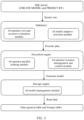
- FIG. 2 is a schematic flowchart of a data processing method according to an embodiment of this application. As shown in FIG. 2 , the data processing method provided in this embodiment of this application includes the following steps.
- model training request includes a plurality of training samples and a model training policy, and the plurality of training samples are grouped into N training sample groups.
- a model training request entered by a user may be received, and a model inference request may be a structured query language (structured query language, SQL) statement.
- structured query language structured query language, SQL
- an SQL parser may include a processing model (for example, the CREATE MODEL shown in FIG. 3 ) that is used to process the model training request related to training.
- the SQL parser may use the processing model that is used to process the model training request related to training to perform syntax parsing on an SQL, and after the syntax parsing succeeds, the SQL entered by the user may be transformed into a structured abstract syntax tree (abstract syntax tree, AST).
- a leaf node of the AST represents data provided by a data source, and a non-leaf node represents an SQL calculation operation.
- the data may be a plurality of training samples, and the SQL calculation operation may be the model training policy.
- the plurality of training samples may be divided into the N training sample groups, and each training sample group may include a plurality of training samples.
- quantities of training samples included in different training sample groups may be the same or basically equal, and a quantity of training samples included in each training sample group may be determined based on a quantity of samples input each time a to-be-trained model is trained, for example, the quantity of training samples included in each training sample group may be equal to or basically equal to the quantity of samples input each time the to-be-trained model is trained.
- an AI operator may be scanned in parallel, data may be loaded to a memory, and a shuffle operation is performed on the plurality of training samples indicated in the model training request, to obtain a plurality of shuffled training samples.
- the shuffle operation is used to shuffle the training samples, so that distribution of the training samples is as much as close to real distribution. This facilitates fitting of a machine learning algorithm, enhances a generalization capability, and reduces subsequent iteration rounds.
- the shuffle operation may be implemented by using a shuffle operator (or the shuffle operator). In this way, the plurality of shuffled training samples are grouped, to obtain the N training sample groups.
- step 201 an operation of grouping the plurality of training samples may be implemented in step 201, or between step 201 and step 202, or between step 202 and step 203, or between step 203 and step 204. This is not limited herein.
- an optimizer may generate the execution plan of the model training policy based on the AST.
- the AST is equivalent to a logical plan, and semantic analysis may be performed on the AST to determine whether the data source of the leaf node of the AST exists, and determine whether the SQL calculation operation of the non-leaf node of the AST complies with the logic.
- rule-based optimizer (rule based optimizer, RBO), for example, calculation combination, or calculation reordering, is performed on the AST on which the semantic analysis is performed, to obtain an optimized execution plan.
- the AI operator may be preconfigured on the database.
- the AI operator may be an algorithm used when an AI-related operation is performed.
- the AI operator may include but is not limited to a gradient descent operator gradient descent, a K-means operator, an Xgboost operator, a Bayes operator Bayes, a decision tree operator decision tree, a shuffle operator shuffle, an iteration operator iteration, and the like.
- the generated execution plan may include a plurality of AI operators and a connection relationship between the operators.
- the execution plan includes the plurality of AI operators, and the connection relationship between the operators may be used to implement the model training policy in the model training request.
- An operator type of the AI operator may be preconfigured on the database system. For a specific type, refer to the description in the foregoing embodiment. Details are not described herein again.
- the estimation execution cost of the execution plan may also be generated.
- the estimation execution cost of the execution plan may be a computing resource required for subsequently training, based on the execution plan, the to-be-trained model.
- An execution cost may also be referred to as an execution overhead corresponding to the execution plan.
- the execution plan includes the plurality of AI operators, and the estimation execution cost of the execution plan is obtained based on estimation execution costs of the plurality of AI operators, for example, the estimation execution cost of the execution plan may be determined by integrating the estimation execution costs of the plurality of AI operators.
- an estimation execution cost of each AI operator may be related to at least one piece of the following information: an amount of scanned data, an iteration round iteration, an iteration batch size (batch size), or a classification category quantity categorize.
- a specific model may further involve an ensemble algorithm, a quantity of base learners, a tree algorithm, a maximum tree depth, a quantity of leaf nodes, or the like.
- the method further includes: obtaining, based on the plurality of AI operators, the estimation execution costs of the plurality of AI operators by using an execution plan query statement. Specifically, after the estimation execution costs are obtained, the estimation execution cost may be written into the execution plan (for example, an estimation execution plan of each AI operator may be written into the execution plan). The user may obtain this part of information by querying an SQL execution plan query statement. For example, in an openGauss database, an explain command may be used to query and execute an SQL estimation execution plan.
- an estimated estimation execution cost is added to the execution plan for convenient query and optimization by the user.
- the estimation execution cost and the computing resource may be determined by using an AI operator cost and resource evaluation module in FIG. 3 .
- the estimation execution cost may indicate the computing resource required for executing the execution plan, and available computing resources in the database are limited
- a training rule may be determined based on the estimation execution cost, so that a training process of the to-be-trained model is performed more quickly with the limited available resources.
- the quantity of training samples that are input each time during training is limited, so that a large quantity of training samples need to be input for a plurality of times to complete the training process, and time overheads is high.
- a plurality of training sample groups are input in parallel to the to-be-trained model at a same moment, and therefore, the time overheads of the model training is reduced.
- the plurality of training sample groups may be input into a plurality of to-be-trained models.
- the plurality of to-be-trained models may be obtained by copying the to-be-trained model, or obtained by splitting the to-be-trained model, or obtained by fine tuning a structure of the to-be-trained model, or obtained after various combinations of the foregoing operations.
- the quantity of training samples included in each training sample group in the plurality of training sample groups may be equal to or basically equal to the quantity of samples input each time the to-be-trained model is trained.
- feedforward processing is performed in parallel on the plurality of training sample groups by using the to-be-trained model, so that time required for the model training can be greatly reduced, and training efficiency is improved.
- a quantity M of training sample groups during parallel feedforward may be determined based on the estimation execution cost of the execution plan that is obtained through calculation.
- a value of M is negatively correlated with the estimation execution cost.
- a higher estimation execution cost may indicate more computing resources required for executing the execution plan, so that a quantity of training sample groups during the parallel feedforward cannot be excessively high. Otherwise, currently available computing resources are insufficient.
- the value of M may also be related to the currently available computing resource in the database system. Specifically, the value of M is positively correlated with the currently available computing resource. More currently available computing resources indicate a larger value of M, in other words, more available computing resources indicate a larger allowed quantity of training sample groups during the parallel feedforward.
- the value of M may be determined by integrating the estimation execution cost and the currently available computing resource, so that without exceeding the available computing resource, an amount of parallel model training is maximized, and usage of the computing resource is maximized.
- a quantity of training samples used in parallel each time may be M.
- M copies of the to-be-trained model may be obtained, and each training sample group is input into one to-be-trained model.
- the to-be-trained model is split to obtain M small models, and each training sample group is input into one small model.
- M1 copies of the to-be-trained model may be obtained, and the to-be-trained model is split to obtain M2 small models, where a sum of M1 and M2 is M.
- Each training sample group is input into one small model or one to-be-trained model, and the feedforward processing of the model is performed to obtain the M pieces of parameter update data (one piece of parameter update data may be obtained by using each to-be-trained model or small model, and the parameter update data may be the update gradient, a variation of a model parameter, or the like), so that the to-be-trained model may be updated based on the M pieces of parameter update data.
- FIG. 4 a schematic flowchart of parallel training.
- the M pieces of parameter update data may be summarized, and a loss function is constructed based on a summation result to train the to-be-trained model, so as to generate the trained model.
- the to-be-trained model may be trained in a manner such as a back propagation algorithm.
- the detailed information and the training information of the model may be stored by using an AI model management module in FIG. 3 .
- FIG. 5 is a schematic diagram of verifying, based on an RLCP dataset, effect of training execution time of an SVM and linear regression.
- An openGauss GD operator is a DB4AI in-database newly added AI optimization algorithm.
- the openGauss GD operator supports three current algorithms of the SVM, the linear regression, and logistic regression.
- a corresponding SVM algorithm and a corresponding logistic regression algorithm are selected from an MADlib open-source library for comparison. Optimization algorithms involved in the comparison are SVM linear kernel, conjugate gradient (conjugate gradient, CG), and incremental gradient descent (incremental gradient descent, IGD).
- the upper two figures in FIG. 5 are schematic diagrams of the execution time, and the lower two figures are schematic diagrams of performance ratio improvement.
- a user may indicate, in a model training request, to train X to-be-trained models for implementing a same task, so that the X to-be-trained models need to be trained to obtain X trained models.
- Each to-be-trained model corresponds to one trained model (for a training manner of each of the X to-be-trained models, refer to the description in the foregoing embodiment).
- the X trained models may be different models (for example, having different model structures and different algorithms), and the X trained models are used to implement a target task, for example, an image classification task, an image segmentation task, or an image recognition task.
- Model information stored in a system table may include a model type.
- models that perform a same task model training by using a linear regression algorithm (linear_regression), a lasso regression algorithm (lasso_regression), and a logistic regression algorithm (logistic_regression) are identified as models of a same type.
- the models identified as the models of the same type may be considered to be used to implement a same task.
- model inference When model inference is performed, a model inference request entered by the user may be received.
- the model training request may be an SQL statement, and the model inference request indicates the target task.
- the SQL parser may include a processing model (for example, PREDICT BY shown in FIG. 3 ) that is used to process the model inference request related to inference.
- the SQL parser may use the processing model that is used to process the model inference request related to inference to perform the syntax parsing on an SQL, to obtain an indication of the user for the target task.
- the models (the X trained models) used to implement the target task may be obtained from the memory, and a model (namely, a target model) used to perform the model inference is selected from the X trained models.
- a currently available computing resource and an execution cost of each of the X trained models may be obtained, and the target model is determined from the X trained models.
- the target model is used to perform the model inference.
- the target model may be determined with reference to model performance of the model and the available computing resource of the current database.
- the model performance of the model may include information such as accuracy (accuracy), precision (precision), an F1 score, and a recall (recall).
- the model performance may further include the estimation execution cost of the model.
- Available computing resources may indicate a current load status, and may include, for example, at least one of an input/output I/O resource, a central processing unit CPU resource, a graphics processing unit GPU resource, and a memory resource.
- the target model may be determined from the X trained models based on the model performance of the model and the available computing resource of the current database.
- a determined rule may be: When the currently available computing resource can meet a requirement of the estimation execution cost (that is, overload is avoided), the model with optimal model performance is selected as the target model for inference. This greatly improves the performance during inference.
- an evaluation score of each trained model may be obtained based on the model performance of the model and the available computing resource of the current database. The evaluation score may indicate a priority of selecting the model for inference.
- an existing resource and the execution cost in the database are introduced as evaluation criteria for evaluating the model, and a dimension for evaluating the model is added in an actual operating scenario. Therefore, availability of the model can be verified more comprehensively, and an optimal model is selected for inference.
- the target model may be selected by using an AI model adaptive selection module and an AI operator resource management and control module.
- This embodiment of this application provides a data processing method, applied to the database system.
- the method includes: obtaining a model training request, where the model training request includes a plurality of training samples and a model training policy, and the plurality of training samples are grouped into N training sample groups; generating an execution plan of the model training policy and an estimation execution cost of the execution plan executed by the database system; obtaining, based on the estimation execution cost, M training sample groups in the N training sample groups; training a to-be-trained model in parallel by using the M training sample groups, to obtain M pieces of parameter update data; and updating the to-be-trained model based on the M pieces of parameter update data, to obtain the trained model.
- the plurality of training sample groups are input in parallel to the to-be-trained model at a same moment. This reduces time overheads of model training.
- FIG. 7 shows a data processing apparatus according to an embodiment of this application.
- the data processing apparatus is applied to a database system.
- the apparatus includes:
- the parameter update data is an update gradient of the model.
- the execution plan includes a plurality of AI operators, and an operator type of the AI operator is preconfigured on the database system.
- the estimation execution cost of the execution plan is obtained based on estimation execution costs of the plurality of AI operators.
- the obtaining module 701 is further configured to: obtain, based on the plurality of AI operators, the estimation execution costs of the plurality of AI operators by using an execution plan query statement.
- a value of M is negatively correlated with the estimation execution cost.
- the obtaining module 701 is further configured to:
- the apparatus further includes a sample grouping module, configured to: perform a shuffle operation on the plurality of training samples, to obtain a plurality of shuffled training samples; and group the plurality of shuffled training samples, to obtain the N training sample groups.
- a sample grouping module configured to: perform a shuffle operation on the plurality of training samples, to obtain a plurality of shuffled training samples; and group the plurality of shuffled training samples, to obtain the N training sample groups.
- each to-be-trained model corresponds to one trained model
- the X trained models are different models
- the X trained models are used to implement a target task.
- the obtaining module 701 is further configured to:
- the apparatus further includes: a model inference module, configured to perform model inference by using the target model.
- the computing resource includes at least one of the following: an input/output I/O resource, a central processing unit CPU resource, a graphics processing unit GPU resource, and a memory resource.
- FIG. 8 This application further provides a computer-readable storage medium.
- the method disclosed in FIG. 2 may be implemented as computer program instructions encoded in a machine-readable format on a computer-readable storage medium or encoded on another non-transitory medium or product.
- FIG. 8 schematically shows a conceptual partial view of an example computer program product arranged according to at least some embodiments shown herein, and the example computer program product includes a computer program for executing a computer process on a computing device.
- an example computer program product 800 is provided by using a signal carrying medium 801.
- the signal carrying medium 801 may include one or more program instructions 802.
- the program instructions 802 When the program instructions 802 are run by one or more processors, the program instructions 802 may provide functions or some functions described in FIG. 2 . Therefore, for example, refer to the embodiment shown in FIG. 2 .
- One or more features of step 201 to step 205 may be assumed by one or more instructions associated with the signal carrying medium 801.
- the program instructions 802 in FIG. 8 also describe example
- the signal carrying medium 801 may include a computer-readable medium 803, for example, including but not limited to a hard disk drive, a compact disc (CD), a digital video disc (DVD), a digital magnetic tape, a memory, a read-only memory (Read-Only Memory, ROM), or a random access memory (Random Access Memory, RAM).
- the signal carrying medium 801 may include a computer-recordable medium 804, for example, including but not limited to a memory, a read/write (R/W) CD, or an R/W DVD.
- the signal carrying medium 801 may include a communication medium 805, for example, including but not limited to a digital and/or analog communication medium (for example, an optical cable, a waveguide, a wired communication link, or a wireless communication link). Therefore, for example, the signal carrying medium 801 may be conveyed by a wireless-form communication medium 805 (for example, a wireless communication medium that complies with the IEEE 802.11 standard or another transmission protocol).
- the one or more program instructions 802 may be, for example, computer-executable instructions or logic implementation instructions.
- a computing device may be configured to provide various operations, functions, or actions in response to the program instructions 802 transmitted to the computing device by using one or more of the computer-readable medium 803, the computer-recordable medium 804, and/or the communication medium 805.
- FIG. 9 is a schematic diagram of a possible logical structure of a computer device 90 in the foregoing embodiments according to an embodiment of this application.
- the computer device 90 may be the operation request processing apparatus in FIG. 8 .
- the computer device 90 includes a processor 901, a communication interface 902, a memory 903, and a bus 904.
- the processor 901, the communication interface 902, and the memory 903 are connected to each other through the bus 904.
- the processor 901 is configured to perform the steps in step 201 to step 205 in the embodiment in FIG. 2 .
- the communication interface 902 is configured to support the computer device 90 in performing communication.
- the communication interface 902 may perform steps related to receiving or sending in the foregoing method embodiments.
- the memory 903 is configured to store program code and data of a database server.
- the processor 901 may be a central processing unit, a general-purpose processor, a digital signal processor, an application-specific integrated circuit, a field programmable gate array or another programmable logic device, a transistor logic device, a hardware component, or any combination thereof.
- the processor may implement or perform various example logical blocks, modules, and circuits described with reference to content disclosed in this application.
- the processor may be a combination of processors implementing a computing function, for example, a combination of one or more microprocessors, or a combination of a digital signal processor and a microprocessor.
- the bus 904 may be a peripheral component interconnect (Peripheral Component Interconnect, PCI) bus, an extended industry standard architecture (Extended Industry Standard Architecture, EISA) bus, or the like.
- PCI peripheral component interconnect
- EISA Extended Industry Standard Architecture
- the bus may be classified into an address bus, a data bus, a control bus, or the like. For ease of representation, only one bold line is used for representation in FIG. 9
- a chip system is further provided.
- the chip system includes a processor, configured to support a time series data injection apparatus or a time series data query apparatus in implementing the operation request processing method described in the foregoing embodiment in FIG. 2 .
- the chip system further includes a memory.
- the memory is configured to store program instructions and data that are necessary for an apparatus used to manage data of an application.
- the chip system may include a chip, or may include a chip and another discrete device.
- the disclosed system, apparatus, and method may be implemented in other manners.
- the described apparatus embodiment is merely an example.
- division into the units is merely logical function division and may be other division in actual implementation.
- a plurality of units or components may be combined or integrated into another system, or some features may be ignored or not performed.
- the displayed or discussed mutual couplings or direct couplings or communication connections may be implemented by using some interfaces.
- the indirect couplings or communication connections between the apparatuses or units may be implemented in electronic, mechanical, or other forms.
- the units described as separate parts may or may not be physically separate, and parts displayed as units may or may not be physical units, in other words, may be located in one position, or may be distributed on a plurality of network units. Some or all of the units may be selected based on actual requirements to achieve the objectives of the solutions of embodiments.
- functional units in embodiments of this application may be integrated into one processing unit, or each of the units may exist alone physically, or two or more units are integrated into one unit.
- the functions When functions are implemented in the form of a software functional unit and sold or used as an independent product, the functions may be stored in a computer-readable storage medium. Based on such an understanding, the technical solutions of embodiments of this application essentially, or the part contributing to the conventional technology, or some of the technical solutions may be implemented in a form of a software product.
- the computer software product is stored in a storage medium, and includes several instructions for instructing a computer device (which may be a personal computer, a server, or a network device, or the like) to perform all or some of the steps of the methods described in embodiments of this application.
- the foregoing storage medium includes any medium that can store program code, such as a USB flash drive, a removable hard disk, a read-only memory (Read-Only Memory, ROM), a random access memory (Random Access Memory, RAM), a magnetic disk, or an optical disc.
- program code such as a USB flash drive, a removable hard disk, a read-only memory (Read-Only Memory, ROM), a random access memory (Random Access Memory, RAM), a magnetic disk, or an optical disc.
Landscapes
- Engineering & Computer Science (AREA)
- Theoretical Computer Science (AREA)
- Physics & Mathematics (AREA)
- Data Mining & Analysis (AREA)
- General Engineering & Computer Science (AREA)
- General Physics & Mathematics (AREA)
- Databases & Information Systems (AREA)
- Software Systems (AREA)
- Computational Linguistics (AREA)
- Mathematical Physics (AREA)
- Computing Systems (AREA)
- Artificial Intelligence (AREA)
- Evolutionary Computation (AREA)
- Medical Informatics (AREA)
- Computer Vision & Pattern Recognition (AREA)
- Life Sciences & Earth Sciences (AREA)
- Molecular Biology (AREA)
- General Health & Medical Sciences (AREA)
- Biophysics (AREA)
- Biomedical Technology (AREA)
- Health & Medical Sciences (AREA)
- Information Retrieval, Db Structures And Fs Structures Therefor (AREA)
Applications Claiming Priority (2)
| Application Number | Priority Date | Filing Date | Title |
|---|---|---|---|
| CN202110729805.XA CN115544029A (zh) | 2021-06-29 | 2021-06-29 | 一种数据处理方法及相关装置 |
| PCT/CN2022/101826 WO2023274213A1 (fr) | 2021-06-29 | 2022-06-28 | Procédé de traitement de données et appareil associé |
Publications (2)
| Publication Number | Publication Date |
|---|---|
| EP4332786A1 true EP4332786A1 (fr) | 2024-03-06 |
| EP4332786A4 EP4332786A4 (fr) | 2024-10-09 |
Family
ID=84690398
Family Applications (1)
| Application Number | Title | Priority Date | Filing Date |
|---|---|---|---|
| EP22832027.1A Pending EP4332786A4 (fr) | 2021-06-29 | 2022-06-28 | Procédé de traitement de données et appareil associé |
Country Status (4)
| Country | Link |
|---|---|
| US (1) | US20240152807A1 (fr) |
| EP (1) | EP4332786A4 (fr) |
| CN (1) | CN115544029A (fr) |
| WO (1) | WO2023274213A1 (fr) |
Families Citing this family (4)
| Publication number | Priority date | Publication date | Assignee | Title |
|---|---|---|---|---|
| US11928559B2 (en) | 2019-04-08 | 2024-03-12 | Google Llc | Transformation for machine learning pre-processing |
| CN117076555B (zh) * | 2023-05-08 | 2024-03-22 | 深圳市优友网络科技有限公司 | 一种基于计算的分布式任务管理系统及方法 |
| CN116737334A (zh) * | 2023-05-31 | 2023-09-12 | 嵩山实验室 | 任务调度及数据集标签更新方法、装置和电子设备 |
| CN120353821B (zh) * | 2025-06-19 | 2025-11-04 | 支付宝(杭州)信息技术有限公司 | 一种图计算执行计划的优化方法、装置、存储介质及设备 |
Family Cites Families (12)
| Publication number | Priority date | Publication date | Assignee | Title |
|---|---|---|---|---|
| CN103971136A (zh) * | 2014-05-04 | 2014-08-06 | 南京师范大学 | 一种面向大规模数据的并行结构化支持向量机分类方法 |
| CN106611021B (zh) * | 2015-10-27 | 2020-06-02 | 阿里巴巴集团控股有限公司 | 一种数据处理方法和设备 |
| CN108509453B (zh) * | 2017-02-27 | 2021-02-09 | 华为技术有限公司 | 一种信息处理方法及装置 |
| CN110866605B (zh) * | 2018-08-27 | 2024-09-20 | 北京京东尚科信息技术有限公司 | 数据模型训练方法、装置、电子设备及可读介质 |
| EP3742344B1 (fr) * | 2019-05-21 | 2026-03-04 | Robert Bosch GmbH | Procédé mis en oeuvre par ordinateur et appareil de formation d'un réseau neuronal |
| CN110807510B (zh) * | 2019-09-24 | 2023-05-09 | 中国矿业大学 | 面向工业大数据的并行学习软测量建模方法 |
| CN110796513B (zh) * | 2019-09-25 | 2024-07-16 | 北京三快在线科技有限公司 | 多任务学习方法、装置、电子设备及存储介质 |
| CN110796270A (zh) * | 2019-10-25 | 2020-02-14 | 深圳市超算科技开发有限公司 | 一种机器学习模型选择方法 |
| US10832087B1 (en) * | 2020-02-05 | 2020-11-10 | Sas Institute Inc. | Advanced training of machine-learning models usable in control systems and other systems |
| CN112819152B (zh) * | 2020-08-14 | 2024-03-01 | 腾讯科技(深圳)有限公司 | 一种神经网络训练方法及装置 |
| CN111709533B (zh) * | 2020-08-19 | 2021-03-30 | 腾讯科技(深圳)有限公司 | 机器学习模型的分布式训练方法、装置以及计算机设备 |
| CN112329885B (zh) * | 2020-11-25 | 2021-07-09 | 江苏云从曦和人工智能有限公司 | 模型训练方法、装置以及计算机可读存储介质 |
-
2021
- 2021-06-29 CN CN202110729805.XA patent/CN115544029A/zh active Pending
-
2022
- 2022-06-28 WO PCT/CN2022/101826 patent/WO2023274213A1/fr not_active Ceased
- 2022-06-28 EP EP22832027.1A patent/EP4332786A4/fr active Pending
-
2023
- 2023-12-28 US US18/398,359 patent/US20240152807A1/en active Pending
Also Published As
| Publication number | Publication date |
|---|---|
| US20240152807A1 (en) | 2024-05-09 |
| EP4332786A4 (fr) | 2024-10-09 |
| WO2023274213A1 (fr) | 2023-01-05 |
| CN115544029A (zh) | 2022-12-30 |
Similar Documents
| Publication | Publication Date | Title |
|---|---|---|
| EP4332786A1 (fr) | Procédé de traitement de données et appareil associé | |
| US20240202600A1 (en) | Machine learning model administration and optimization | |
| US20240249170A1 (en) | Data source correlation techniques for machine learning and convolutional neural models | |
| US20190278600A1 (en) | Tiled compressed sparse matrix format | |
| EP4145308A1 (fr) | Procédé de formation de modèle de recommandation de recherche, et procédé et dispositif de tri de résultat de recherche | |
| US10169433B2 (en) | Systems and methods for an SQL-driven distributed operating system | |
| CN107169573A (zh) | 利用复合机器学习模型来执行预测的方法及系统 | |
| WO2021190597A1 (fr) | Procédé de traitement pour un modèle de réseau neuronal, et dispositif associé | |
| WO2020159890A1 (fr) | Procédé de transformation d'image en image non supervisée à partir de peu d'exemples | |
| US20160292591A1 (en) | Streamlined analytic model training and scoring system | |
| US12579378B2 (en) | Using LLM functions to evaluate and compare large text outputs of LLMs | |
| JP7473389B2 (ja) | 学習モデル生成システム、及び学習モデル生成方法 | |
| EP4339843A1 (fr) | Procédé et appareil d'optimisation de réseau neuronal | |
| WO2024055624A1 (fr) | Prédictions automatisées de sélectivité d'interrogation à l'aide de graphes d'interrogation | |
| WO2025171219A9 (fr) | Recherche d'architecture de goulot d'étranglement inversé et mécanisme d'attention efficace pour modèles à apprentissage automatique | |
| CN113821656B (zh) | 基于人工智能的图像处理方法、装置及电子设备 | |
| US20250165452A1 (en) | Relationship analysis using vector representations of database tables | |
| CN119046538B (zh) | 一种协同大模型和推荐小模型计算的方法及系统 | |
| US20250378322A1 (en) | Context recommendation for retrieval augmented generation architectures | |
| US12380135B2 (en) | Records processing based on record attribute embeddings | |
| US20240362220A1 (en) | System and method for efficient query processing | |
| WO2023104200A1 (fr) | Systèmes, appareils, procédés et dispositifs de stockage non transitoires lisibles par ordinateur pour formation de modèle d'intelligence artificielle à l'aide d'un réarrangement hybride de données de formation | |
| CN118113720B (zh) | 适配异构计算架构的查询回答方法及计算机设备 | |
| US20250378098A1 (en) | Llm-powered data filtering | |
| Dow et al. | A Comparative Effectiveness Study of Quantum Machine Learning Algorithms |
Legal Events
| Date | Code | Title | Description |
|---|---|---|---|
| STAA | Information on the status of an ep patent application or granted ep patent |
Free format text: STATUS: THE INTERNATIONAL PUBLICATION HAS BEEN MADE |
|
| PUAI | Public reference made under article 153(3) epc to a published international application that has entered the european phase |
Free format text: ORIGINAL CODE: 0009012 |
|
| STAA | Information on the status of an ep patent application or granted ep patent |
Free format text: STATUS: REQUEST FOR EXAMINATION WAS MADE |
|
| 17P | Request for examination filed |
Effective date: 20231129 |
|
| AK | Designated contracting states |
Kind code of ref document: A1 Designated state(s): AL AT BE BG CH CY CZ DE DK EE ES FI FR GB GR HR HU IE IS IT LI LT LU LV MC MK MT NL NO PL PT RO RS SE SI SK SM TR |
|
| DAV | Request for validation of the european patent (deleted) | ||
| DAX | Request for extension of the european patent (deleted) | ||
| A4 | Supplementary search report drawn up and despatched |
Effective date: 20240911 |
|
| RIC1 | Information provided on ipc code assigned before grant |
Ipc: G06N 20/00 20190101ALI20240905BHEP Ipc: G06N 3/04 20230101ALI20240905BHEP Ipc: G06F 16/2453 20190101ALI20240905BHEP Ipc: G06F 16/23 20190101AFI20240905BHEP |
|
| STAA | Information on the status of an ep patent application or granted ep patent |
Free format text: STATUS: EXAMINATION IS IN PROGRESS |
|
| 17Q | First examination report despatched |
Effective date: 20260102 |