EP4333094A1 - Batterie secondaire à électrolyte non aqueux - Google Patents
Batterie secondaire à électrolyte non aqueux Download PDFInfo
- Publication number
- EP4333094A1 EP4333094A1 EP22795568.9A EP22795568A EP4333094A1 EP 4333094 A1 EP4333094 A1 EP 4333094A1 EP 22795568 A EP22795568 A EP 22795568A EP 4333094 A1 EP4333094 A1 EP 4333094A1
- Authority
- EP
- European Patent Office
- Prior art keywords
- mixture layer
- positive electrode
- secondary battery
- active material
- current collector
- Prior art date
- Legal status (The legal status is an assumption and is not a legal conclusion. Google has not performed a legal analysis and makes no representation as to the accuracy of the status listed.)
- Pending
Links
Images


Classifications
-
- H—ELECTRICITY
- H01—ELECTRIC ELEMENTS
- H01M—PROCESSES OR MEANS, e.g. BATTERIES, FOR THE DIRECT CONVERSION OF CHEMICAL ENERGY INTO ELECTRICAL ENERGY
- H01M4/00—Electrodes
- H01M4/02—Electrodes composed of, or comprising, active material
- H01M4/36—Selection of substances as active materials, active masses, active liquids
- H01M4/362—Composites
- H01M4/366—Composites as layered products
-
- H—ELECTRICITY
- H01—ELECTRIC ELEMENTS
- H01M—PROCESSES OR MEANS, e.g. BATTERIES, FOR THE DIRECT CONVERSION OF CHEMICAL ENERGY INTO ELECTRICAL ENERGY
- H01M4/00—Electrodes
- H01M4/02—Electrodes composed of, or comprising, active material
- H01M4/04—Processes of manufacture in general
- H01M4/0402—Methods of deposition of the material
- H01M4/0404—Methods of deposition of the material by coating on electrode collectors
-
- H—ELECTRICITY
- H01—ELECTRIC ELEMENTS
- H01M—PROCESSES OR MEANS, e.g. BATTERIES, FOR THE DIRECT CONVERSION OF CHEMICAL ENERGY INTO ELECTRICAL ENERGY
- H01M4/00—Electrodes
- H01M4/02—Electrodes composed of, or comprising, active material
- H01M4/13—Electrodes for accumulators with non-aqueous electrolyte, e.g. for lithium-accumulators; Processes of manufacture thereof
-
- H—ELECTRICITY
- H01—ELECTRIC ELEMENTS
- H01M—PROCESSES OR MEANS, e.g. BATTERIES, FOR THE DIRECT CONVERSION OF CHEMICAL ENERGY INTO ELECTRICAL ENERGY
- H01M4/00—Electrodes
- H01M4/02—Electrodes composed of, or comprising, active material
- H01M4/13—Electrodes for accumulators with non-aqueous electrolyte, e.g. for lithium-accumulators; Processes of manufacture thereof
- H01M4/133—Electrodes based on carbonaceous material, e.g. graphite-intercalation compounds or CFx
-
- H—ELECTRICITY
- H01—ELECTRIC ELEMENTS
- H01M—PROCESSES OR MEANS, e.g. BATTERIES, FOR THE DIRECT CONVERSION OF CHEMICAL ENERGY INTO ELECTRICAL ENERGY
- H01M4/00—Electrodes
- H01M4/02—Electrodes composed of, or comprising, active material
- H01M4/13—Electrodes for accumulators with non-aqueous electrolyte, e.g. for lithium-accumulators; Processes of manufacture thereof
- H01M4/134—Electrodes based on metals, Si or alloys
-
- H—ELECTRICITY
- H01—ELECTRIC ELEMENTS
- H01M—PROCESSES OR MEANS, e.g. BATTERIES, FOR THE DIRECT CONVERSION OF CHEMICAL ENERGY INTO ELECTRICAL ENERGY
- H01M4/00—Electrodes
- H01M4/02—Electrodes composed of, or comprising, active material
- H01M4/13—Electrodes for accumulators with non-aqueous electrolyte, e.g. for lithium-accumulators; Processes of manufacture thereof
- H01M4/139—Processes of manufacture
- H01M4/1393—Processes of manufacture of electrodes based on carbonaceous material, e.g. graphite-intercalation compounds or CFx
-
- H—ELECTRICITY
- H01—ELECTRIC ELEMENTS
- H01M—PROCESSES OR MEANS, e.g. BATTERIES, FOR THE DIRECT CONVERSION OF CHEMICAL ENERGY INTO ELECTRICAL ENERGY
- H01M4/00—Electrodes
- H01M4/02—Electrodes composed of, or comprising, active material
- H01M4/13—Electrodes for accumulators with non-aqueous electrolyte, e.g. for lithium-accumulators; Processes of manufacture thereof
- H01M4/139—Processes of manufacture
- H01M4/1395—Processes of manufacture of electrodes based on metals, Si or alloys
-
- H—ELECTRICITY
- H01—ELECTRIC ELEMENTS
- H01M—PROCESSES OR MEANS, e.g. BATTERIES, FOR THE DIRECT CONVERSION OF CHEMICAL ENERGY INTO ELECTRICAL ENERGY
- H01M4/00—Electrodes
- H01M4/02—Electrodes composed of, or comprising, active material
- H01M4/62—Selection of inactive substances as ingredients for active masses, e.g. binders, fillers
- H01M4/621—Binders
- H01M4/622—Binders being polymers
- H01M4/623—Binders being polymers fluorinated polymers
-
- H—ELECTRICITY
- H01—ELECTRIC ELEMENTS
- H01M—PROCESSES OR MEANS, e.g. BATTERIES, FOR THE DIRECT CONVERSION OF CHEMICAL ENERGY INTO ELECTRICAL ENERGY
- H01M4/00—Electrodes
- H01M4/02—Electrodes composed of, or comprising, active material
- H01M4/62—Selection of inactive substances as ingredients for active masses, e.g. binders, fillers
- H01M4/624—Electric conductive fillers
- H01M4/625—Carbon or graphite
-
- H—ELECTRICITY
- H01—ELECTRIC ELEMENTS
- H01M—PROCESSES OR MEANS, e.g. BATTERIES, FOR THE DIRECT CONVERSION OF CHEMICAL ENERGY INTO ELECTRICAL ENERGY
- H01M10/00—Secondary cells; Manufacture thereof
- H01M10/05—Accumulators with non-aqueous electrolyte
- H01M10/052—Li-accumulators
- H01M10/0525—Rocking-chair batteries, i.e. batteries with lithium insertion or intercalation in both electrodes; Lithium-ion batteries
-
- H—ELECTRICITY
- H01—ELECTRIC ELEMENTS
- H01M—PROCESSES OR MEANS, e.g. BATTERIES, FOR THE DIRECT CONVERSION OF CHEMICAL ENERGY INTO ELECTRICAL ENERGY
- H01M4/00—Electrodes
- H01M4/02—Electrodes composed of, or comprising, active material
- H01M2004/021—Physical characteristics, e.g. porosity, surface area
-
- H—ELECTRICITY
- H01—ELECTRIC ELEMENTS
- H01M—PROCESSES OR MEANS, e.g. BATTERIES, FOR THE DIRECT CONVERSION OF CHEMICAL ENERGY INTO ELECTRICAL ENERGY
- H01M4/00—Electrodes
- H01M4/02—Electrodes composed of, or comprising, active material
- H01M2004/026—Electrodes composed of, or comprising, active material characterised by the polarity
- H01M2004/027—Negative electrodes
-
- H—ELECTRICITY
- H01—ELECTRIC ELEMENTS
- H01M—PROCESSES OR MEANS, e.g. BATTERIES, FOR THE DIRECT CONVERSION OF CHEMICAL ENERGY INTO ELECTRICAL ENERGY
- H01M4/00—Electrodes
- H01M4/02—Electrodes composed of, or comprising, active material
- H01M2004/026—Electrodes composed of, or comprising, active material characterised by the polarity
- H01M2004/028—Positive electrodes
-
- H—ELECTRICITY
- H01—ELECTRIC ELEMENTS
- H01M—PROCESSES OR MEANS, e.g. BATTERIES, FOR THE DIRECT CONVERSION OF CHEMICAL ENERGY INTO ELECTRICAL ENERGY
- H01M4/00—Electrodes
- H01M4/02—Electrodes composed of, or comprising, active material
- H01M4/13—Electrodes for accumulators with non-aqueous electrolyte, e.g. for lithium-accumulators; Processes of manufacture thereof
- H01M4/131—Electrodes based on mixed oxides or hydroxides, or on mixtures of oxides or hydroxides, e.g. LiCoOx
-
- H—ELECTRICITY
- H01—ELECTRIC ELEMENTS
- H01M—PROCESSES OR MEANS, e.g. BATTERIES, FOR THE DIRECT CONVERSION OF CHEMICAL ENERGY INTO ELECTRICAL ENERGY
- H01M4/00—Electrodes
- H01M4/02—Electrodes composed of, or comprising, active material
- H01M4/13—Electrodes for accumulators with non-aqueous electrolyte, e.g. for lithium-accumulators; Processes of manufacture thereof
- H01M4/139—Processes of manufacture
- H01M4/1391—Processes of manufacture of electrodes based on mixed oxides or hydroxides, or on mixtures of oxides or hydroxides, e.g. LiCoOx
-
- H—ELECTRICITY
- H01—ELECTRIC ELEMENTS
- H01M—PROCESSES OR MEANS, e.g. BATTERIES, FOR THE DIRECT CONVERSION OF CHEMICAL ENERGY INTO ELECTRICAL ENERGY
- H01M4/00—Electrodes
- H01M4/02—Electrodes composed of, or comprising, active material
- H01M4/62—Selection of inactive substances as ingredients for active masses, e.g. binders, fillers
- H01M4/621—Binders
- H01M4/622—Binders being polymers
-
- Y—GENERAL TAGGING OF NEW TECHNOLOGICAL DEVELOPMENTS; GENERAL TAGGING OF CROSS-SECTIONAL TECHNOLOGIES SPANNING OVER SEVERAL SECTIONS OF THE IPC; TECHNICAL SUBJECTS COVERED BY FORMER USPC CROSS-REFERENCE ART COLLECTIONS [XRACs] AND DIGESTS
- Y02—TECHNOLOGIES OR APPLICATIONS FOR MITIGATION OR ADAPTATION AGAINST CLIMATE CHANGE
- Y02E—REDUCTION OF GREENHOUSE GAS [GHG] EMISSIONS, RELATED TO ENERGY GENERATION, TRANSMISSION OR DISTRIBUTION
- Y02E60/00—Enabling technologies; Technologies with a potential or indirect contribution to GHG emissions mitigation
- Y02E60/10—Energy storage using batteries
-
- Y—GENERAL TAGGING OF NEW TECHNOLOGICAL DEVELOPMENTS; GENERAL TAGGING OF CROSS-SECTIONAL TECHNOLOGIES SPANNING OVER SEVERAL SECTIONS OF THE IPC; TECHNICAL SUBJECTS COVERED BY FORMER USPC CROSS-REFERENCE ART COLLECTIONS [XRACs] AND DIGESTS
- Y02—TECHNOLOGIES OR APPLICATIONS FOR MITIGATION OR ADAPTATION AGAINST CLIMATE CHANGE
- Y02P—CLIMATE CHANGE MITIGATION TECHNOLOGIES IN THE PRODUCTION OR PROCESSING OF GOODS
- Y02P70/00—Climate change mitigation technologies in the production process for final industrial or consumer products
- Y02P70/50—Manufacturing or production processes characterised by the final manufactured product
Definitions
- the present disclosure relates to a non-aqueous electrolyte secondary battery.
- Patent Literature 1 discloses a positive electrode in which, in order to suppress an increase in direct current resistance (DCR) due to repeated charging and discharging, a second layer composed of a metal oxide such as Al 2 O 3 and carbon is provided between the current collector and the mixture layer.
- DCR direct current resistance
- PATENT LITERATURE 1 Japanese Unexamined Patent Application Publication No. 2018-60604
- An object of the present disclosure is to provide a non-aqueous electrolyte secondary battery with improved discharge characteristics.
- a non-aqueous electrolyte secondary battery includes an electrode having: a current collector; and a mixture layer formed on a surface of the current collector and containing an active material, a conductive agent, and a binder.
- the mixture layer includes a first mixture layer facing the current collector, and a second mixture layer laminated on a surface of the first mixture layer.
- the short-circuit resistance R1 of the first mixture layer and the short-circuit resistance R2 of the second mixture layer satisfy the relationship R1 ⁇ R2.
- discharge characteristics can be improved.
- a non-aqueous electrolyte secondary battery according to the present disclosure will be described below in detail.
- the electrode assembly is not limited to being of a spiral type, and may be of a laminated type formed by alternately laminating a plurality of positive electrodes and a plurality of negative electrodes one by one via separators.
- the outer casing is not limited to being cylindrical, and may be, for example, rectangular, coin-shaped, or the like, or may be a pouch-shaped casing composed of a laminate sheet including a metal layer and a resin layer.
- FIG. 1 is an axial cross-sectional view of a cylindrical secondary battery 10 according to an example embodiment.
- an electrode assembly 14 and a non-aqueous electrolyte (not shown in drawing) are housed in an outer casing 15.
- the electrode assembly 14 has a spiral structure formed by winding a positive electrode 11 and a negative electrode 12 with an interposed separator 13.
- a side toward a sealing assembly 16 will be described as “upper”
- a side toward the bottom portion of the outer casing 15 will be described as "lower”.
- the interior of the secondary battery 10 is hermetically sealed.
- Insulation plates 17 and 18 are provided above and below the electrode assembly 14, respectively.
- a positive electrode lead 19 extends upward through a through hole in the insulation plate 17, and is welded to a lower surface of a filter 22, which is the bottom plate of the sealing assembly 16.
- a cap 26 which is the top plate of the sealing assembly 16 electrically connected to the filter 22, serves as the positive electrode terminal.
- a negative electrode lead 20 passes through a through hole in the insulation plate 18, extends toward the bottom portion of the outer casing 15, and is welded to the inner surface of the bottom portion of the outer casing 15.
- the outer casing 15 serves as the negative electrode terminal.
- the negative electrode lead 20 extends on the outside of the insulation plate 18 and toward the bottom portion of the outer casing 15, and is welded to the inner surface of the bottom portion of the outer casing 15.
- the outer casing 15 is, for example, a bottomed cylindrical metal outer can.
- a gasket 27 is provided between the outer casing 15 and the sealing assembly 16, and hermetic sealing of the interior of the secondary battery 10 is thereby ensured.
- the outer casing 15 has a grooved portion 21, which is formed, for example, by pressing a side surface portion from outside, and which supports the sealing assembly 16.
- the grooved portion 21 is preferably formed in an annular shape along the circumferential direction of the outer casing 15, and supports the sealing assembly 16 on its upper surface via the gasket 27.
- the sealing assembly 16 comprises the filter 22, a lower valve member 23, an insulation member 24, an upper valve member 25, and the cap 26, which are stacked in this order from the electrode assembly 14 side.
- Each of the members constituting the sealing assembly 16 has, for example, a disk shape or a ring shape, and the respective members other than the insulation member 24 are electrically connected to each other.
- the lower valve member 23 and the upper valve member 25 are connected to each other at their central portions, and the insulation member 24 is interposed between peripheral edge portions of these valve members.
- an electrode 30 (the positive electrode 11 and the negative electrode 12) constituting the electrode assembly 14, the separator 13, and the non-aqueous electrolyte.
- FIG. 2 is an enlarged view of a part of a cross section of the electrode according to the example embodiment.
- the electrode 30 comprises a current collector 32 and a mixture layer 34 formed on a surface of the current collector 32.
- the mixture layer 34 may be formed only on one surface of the current collector 32, but is preferably formed on both surfaces of the current collector 32.
- the electrode 30 may be either the positive electrode 11 or the negative electrode 12. That is, only the positive electrode 11 may have a configuration according to the electrode 30, or only the negative electrode 12 may have a configuration according to the electrode 30, or both the positive electrode 11 and the negative electrode 12 may have a configuration according to the electrode 30.
- the current collector 32 it is possible to use a metal foil, a film having a metal layer formed on its surface, or the like.
- the thickness of the current collector 32 is, for example, 5 to 20 ⁇ m.
- a metal foil containing aluminum as the main component can be used as the current collector 32.
- a metal foil containing copper as the main component can be used as the current collector 32.
- main component means a component with the highest mass ratio.
- the current collector 32 may be an aluminum foil that is substantially 100 % aluminum, or a copper foil that is substantially 100 % copper.
- the mixture layer 34 contains an active material, a conductive agent, and a binder.
- a lithium transition metal composite oxide is typically used as the active material for positive electrode (positive electrode active material).
- metal elements contained in the lithium transition metal composite oxide include Ni, Co, Mn, Al, B, Mg, Ti, V, Cr, Fe, Cu, Zn, Ga, Sr, Zr, Nb, In, Sn , Ta, and W. Among these, it is preferable that at least one of Ni, Co, and Mn is contained.
- a carbon-based active material is used, such as: natural graphite such as flake graphite, massive graphite, and earthy graphite; artificial graphite such as massive artificial graphite (MAG) and graphitized mesophase carbon microbeads (MCMB); and the like.
- a Si-based active material or the like that forms an alloy with lithium may be used as the negative electrode active material.
- the active material is the main component of the mixture layer 34, and the active material content in the mixture layer 34 is preferably 85 % by mass to 99 % by mass, and more preferably 90 % by mass to 99 % by mass.
- the positive electrode active material is, for example, secondary particles formed by agglomeration of a plurality of primary particles.
- the particle size of the primary particles constituting the secondary particles is, for example, 0.05 ⁇ m to 1 ⁇ m.
- the particle size of the primary particles is measured as a diameter of a circle circumscribing an image of a particle observed by a scanning electron microscope (SEM).
- the secondary particles of the positive electrode active material are particles having a volume-based median diameter (D50) of, for example, 3 ⁇ m to 30 ⁇ m, preferably 5 ⁇ m to 25 ⁇ m, and particularly preferably 7 ⁇ m to 15 ⁇ m.
- D50 means a particle size at which, in a volume-based particle size distribution, the cumulative frequency from the smaller particle size side reaches 50 %, and is also called a med-level diameter.
- the particle size distribution of the positive electrode active material can be measured using a laser diffraction particle size distribution measuring device (e.g., MT3000II manufactured by MicrotracBEL Corp.), and using water as a dispersion medium.
- Examples of the conductive agent contained in the mixture layer 34 include carbon materials such as carbon black (CB), acetylene black (AB), Ketjen black, carbon nanotubes (CNTs), and graphite. These may be used alone or by combining two or more thereof.
- the conductive agent is preferably acetylene black.
- binder contained in the mixture layer 34 examples include fluororesins such as polytetrafluoroethylene (PTFE) and polyvinylidene fluoride (PVdF), polyacrylonitrile (PAN), polyimide resins, acrylic resins, and polyolefin resins. These may be used alone or by combining two or more thereof. These resins may be used in combination with cellulose derivatives such as carboxymethyl cellulose (CMC) or salts thereof, polyethylene oxide (PEO), and the like.
- the binder is preferably polytetrafluoroethylene.
- the mixture layer 34 includes a first mixture layer 36 facing the current collector 32 and a second mixture layer 38 laminated on a surface of the first mixture layer 36.
- Both the first mixture layer 36 and the second mixture layer 38 contain the above-noted active material, conductive agent, and binder.
- the active materials, conductive agents, and binders contained in the first mixture layer 36 and the second mixture layer 38 may be identical to or different from each other.
- the thickness of the first mixture layer 36 is, for example, 5 ⁇ m to 200 ⁇ m
- the thickness of the second mixture layer 38 is, for example, 100 ⁇ m to 200 ⁇ m.
- the short-circuit resistance R1 of the first mixture layer 36 and the short-circuit resistance R2 of the second mixture layer 38 satisfy the relationship R1 ⁇ R2. According to this feature, the resistance of the electrode 30 can be decreased and discharge characteristics of the battery can be improved. Since the first mixture layer 36 contains the active material, the first mixture layer 36 has ion conductivity and contributes to increasing the battery capacity.
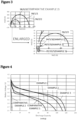
- the short-circuit resistances R1 and R2 can be measured using an AC impedance measuring device. More specifically, R1 and R2 can be determined by measuring AC impedance over a range of 7 MHz to 0.1 Hz and plotting a Nyquist plot of the measured data.
- the AC impedance measurement results for the first mixture layer 36 do not produce an arc in a part on the low frequency side of the Nyquist plot.
- the first mixture layer 36 has conductivity to the extent that no arc is produced in the part on the low frequency side, it is possible to sufficiently decrease the resistance of the electrode 30 and improve the discharge characteristics of the battery.
- the AC impedance measurement results for the second mixture layer 38 do not produce an arc in the Nyquist plot, but there may be cases where an arc is produced in association with an increase in battery capacity (that is, for example, in association with an increase in resistance caused by reducing the conductive agent).
- the content C1 of the conductive agent contained in the first mixture layer 36 and the content C2 of the conductive agent contained in the second mixture layer 38 preferably satisfy the relationship C1 > C2.
- the electrical conductivity of the first mixture layer 36 can be made higher than the electrical conductivity of the second mixture layer 38, and the discharge characteristics of the battery can be improved.
- C1 is preferably 3 % by mass to 20 % by mass, more preferably 5 % by mass to 15 % by mass, and particularly preferably 5 % by mass to 10 % by mass relative to the total mass of the first mixture layer 36.
- C2 is preferably 0 % by mass to 3 % by mass, more preferably 0.1 % by mass to 2 % by mass, and particularly preferably 0.5 % by mass to 1.5 % by mass relative to the total mass of the second mixture layer 38.
- the electron conductivity A1 of the active material contained in the first mixture layer 36 and the electron conductivity A2 of the active material contained in the second mixture layer 38 preferably satisfy the relationship A1 > A2.
- the positive electrode active material contained in the first mixture layer 36 may be an NCA-based lithium transition metal composite oxide containing Ni, Co, and Al
- the positive electrode active material contained in the second mixture layer 38 may be a NiMn-based lithium transition metal composite oxide containing Ni and Mn.
- the electron conductivity of an active material can be measured, for example, by measuring the electron resistance of a pellet obtained by compressing a powder. From the perspective of achieving a higher electron conductivity, the first mixture layer 36 preferably contains CNTs.
- the electrode 30 can be produced, for example, according to the following steps.
- the raw materials preferably include a fibrous binder such as fibrillated polytetrafluoroethylene (PTFE).
- the fibrous binder is a dry powder, and is not a powder dispersed in an aqueous or other dispersion.
- the mixture layer 34 can be produced by a dry process involving dry mixing.
- the dry process is a process in which no solvent is used in mixing the active material, the binder, the conductive agent, and the like. That is, the active material, the binder, the conductive agent, and the like are mixed in a state in which the solids concentration is substantially 100 %.
- the mixture layer 34 may contain a binder such as non-fibrillated polyvinylidene fluoride (PVdF).
- PVdF non-fibrillated polyvinylidene fluoride
- a mixture layer 34 may be produced by first mixing the active material and the fibrous binder to produce mixture particles having a solids concentration of substantially 100 %, and then rolling and forming the mixture particles into sheet form.
- the order of sequence in which the current collector 32, the first mixture layer 36, and the second mixture layer 38 are affixed to each other is not particularly limited.
- the current collector 32, the first mixture layer 36, and the second mixture layer 38 may be affixed together at the same time, or alternatively, the mixture layer 34 may first be formed by affixing the first mixture layer 36 and the second mixture layer 38 together, and then the current collector 32 and the mixture layer 34 may be affixed together. In affixing the current collector 32, the first mixture layer 36, and the second mixture layer 38 to each other, for example, these may be passed between two rolls so that a linear pressure is applied thereto.
- a porous sheet having ion permeability and insulation property is used as the separator 13.
- the porous sheet include a microporous thin film, woven fabric, and non-woven fabric.
- polyolefins such as polyethylene and polypropylene, cellulose, and the like are suitable.
- the separator 13 may have either a single-layer structure or a laminate structure. Further, on a surface of the separator 13, there may be provided a layer of highly heat-resistant resin such as aramid resin, or a filler layer containing an inorganic compound filler.
- the non-aqueous electrolyte contains a non-aqueous solvent and an electrolyte salt dissolved in the non-aqueous solvent.
- the non-aqueous solvent it is possible to use, for example, esters, ethers, nitriles such as acetonitrile, amides such as dimethylformamide, a mixed solvent containing two or more of the foregoing, and the like.
- the non-aqueous solvent may contain a halogen-substituted product obtained by substituting at least a part of hydrogens in the above solvents with halogen atoms such as fluorine.
- halogen-substituted product examples include fluorinated cyclic carbonate esters such as fluoroethylene carbonate (FEC), fluorinated chain carbonate esters, fluorinated chain carboxylate esters such as methyl fluoropropionate (FMP), and the like.
- FEC fluoroethylene carbonate
- FMP fluorinated chain carboxylate esters
- FEC fluoroethylene carbonate
- FMP fluorinated chain carboxylate esters
- esters examples include: cyclic carbonate esters such as ethylene carbonate (EC), propylene carbonate (PC), and butylene carbonate; chain carbonate esters such as dimethyl carbonate (DMC), ethyl methyl carbonate (EMC), diethyl carbonate (DEC), methyl propyl carbonate, ethyl propyl carbonate, and methyl isopropyl carbonate; cyclic carboxylate esters such as ⁇ -butyrolactone (GBL) and ⁇ -valerolactone (GVL); and chain carboxylate esters such as methyl acetate, ethyl acetate, propyl acetate, methyl propionate (MP), and ethyl propionate.
- cyclic carbonate esters such as ethylene carbonate (EC), propylene carbonate (PC), and butylene carbonate
- chain carbonate esters such as dimethyl carbonate (DMC), ethyl methyl carbonate (EMC), diethyl
- ethers examples include: cyclic ethers such as 1,3-dioxolane, 4-methyl-1,3-dioxolane, tetrahydrofuran, 2-methyltetrahydrofran, propylene oxide, 1,2-butylene oxide, 1,3-dioxane, 1,4-dioxane, 1,3,5-trioxane, furan, 2-methylfuran, 1,8-cineole, and crown ethers; and chain ethers such as 1,2-dimethoxyethane, diethyl ether, dipropyl ether, diisopropyl ether, dibutyl ether, dihexyl ether, ethyl vinyl ether, butyl vinyl ether, methyl phenyl ether, ethyl phenyl ether, butyl phenyl ether, pentyl phenyl ether, methoxy toluene, benzyl ethyl
- the electrolyte salt is preferably lithium salt.
- the lithium salt include LiBF 4 , LiClO 4 , LiPF 6 , LiAsF 6 , LiSbF 6 , LiAlCl 4 , LiSCN, LiCF 3 SO 3 , LiCF 3 CO 2 , Li(P(C 2 O 4 )F 4 ), LiPF 6-x (C n F 2n+1 ) x (where 1 ⁇ x ⁇ 6, and n is 1 or 2), LiB 10 Cl 10 , LiCl, LiBr, LiI, chloroborane lithium, lower aliphatic lithium carboxylate, borates such as Li 2 B 4 O 7 and Li(B(C 2 O 4 )F 2 ), and imide salts such as LiN(SO 2 CF 3 ) 2 and LiN(C l F 2l+1 SO 2 )(C m F 2m+1 SO 2 ) (where each of l and m is an integer of 0 or greater).
- the lithium salt a single type among the above may be used alone, or a plurality of types may be mixed and used. Among the foregoing, it is preferable to use LiPF 6 in consideration of ion conductivity, electrochemical stability, and the like.
- the concentration of the lithium salt is, for example, preferably 0.8 mol to 1.8 mol per 1 liter of the non-aqueous solvent.
- First positive electrode mixture particles were prepared by putting, into a mixer, positive electrode active material particles composed of LiNi 0.5 Co 0.2 Mn 0.3 O 2 , acetylene black (AB), and polytetrafluoroethylene (PTFE) at a mass ratio of 94:3:3, and performing thereon a mixing processing. After that, the first positive electrode mixture particles were rolled by being passed between two rolls, and a first positive electrode mixture layer having a thickness of 130 ⁇ m was produced.
- positive electrode active material particles composed of LiNi 0.5 Co 0.2 Mn 0.3 O 2 , acetylene black (AB), and polytetrafluoroethylene (PTFE) at a mass ratio of 94:3:3, and performing thereon a mixing processing.
- AB acetylene black
- PTFE polytetrafluoroethylene
- Second positive electrode mixture particles were prepared by putting, into a mixer, positive electrode active material particles composed of LiNi 0.5 Co 0.2 Mn 0.3 O 2 , acetylene black (AB), and polytetrafluoroethylene (PTFE) at a mass ratio of 98:1:1, and performing thereon a mixing processing. After that, the second positive electrode mixture particles were rolled by being passed between two rolls, and a second positive electrode mixture layer having a thickness of 110 ⁇ m was produced.
- the first positive electrode mixture layer and the second positive electrode mixture layer were laminated in this order from the positive electrode current collector side.
- the positive electrode current collector, the first positive electrode mixture layer, and the second positive electrode mixture layer were pressed and formed into one unit using two rolls. Subsequently, the product was cut into a predetermined electrode size, and a positive electrode was thereby obtained.
- a lithium foil was cut into a predetermined electrode size, and a negative electrode was thereby obtained.
- Ethylene carbonate (EC), dimethyl carbonate (DMC), and ethyl methyl carbonate (EMC) were mixed at a volume ratio of 20:75:5.
- LiPF 6 lithium hexafluorophosphate
- An electrode assembly which was formed by arranging the above positive electrode and the above negative electrode facing each other via a polypropylene separator, and the above electrolyte solution were placed in a cup-shaped battery housing.
- the battery housing was sealed by a sealing plate via a gasket provided at the opening of the battery housing, and a test cell was thereby produced.
- a test cell was produced in the same manner as in Example 1 except that, in producing the first positive electrode mixture layer, the mixing ratio of the positive electrode active material particles, AB, and PTFE was changed to 90:5:5 in mass ratio.
- a test cell was produced in the same manner as in Example 1 except that, in producing the first positive electrode mixture layer, the mixing ratio of the positive electrode active material particles, AB, and PTFE was changed to 85:10:5 in mass ratio.
- a test cell was produced in the same manner as in Example 1 except that, in producing the positive electrode, only the second positive electrode mixture layer was laminated on the one surface of the Al foil, and in that state, pressing was performed to form the positive electrode current collector and the first positive electrode mixture layer into one unit.
- a test cell was produced in the same manner as in Example 1 except that, in producing the first positive electrode mixture layer, the mixing ratio of the positive electrode active material particles, AB, and PTFE was changed to 98:0:2 in mass ratio.
- Positive electrode mixture layers were produced by varying the mixing ratio of positive electrode active material particles composed of LiNi 0.5 Co 0.2 Mn 0.3 O 2 , AB, and PTFE, and AC impedance of each of the positive electrode mixture layers was measured. More specifically, positive electrode active material particles, AB, and PTFE in each predetermined mixing ratio were subjected to a mixing processing in a mixer to thereby prepare positive electrode mixture particles, and then the positive electrode mixture particles were rolled by being passed between two rolls to produce a positive electrode mixture layer having a thickness of 130 ⁇ m.
- FIG. 3 is a Nyquist plot representing measurement data obtained by measuring alternating-current impedance of the respective mixture layers over a range of 7 MHz to 0.01 Hz using an alternating-current impedance measuring device.
- each of the test cells of the Examples and Comparative Examples was charged at a constant current of 0.05 C until the battery voltage reached 4.5 V. After that, discharging was performed at a constant current of 0.7 C until the battery voltage reached 2.5 V.
- FIG. 4 shows results of evaluation of discharge characteristics regarding the test cells of the Examples and Comparative Examples.
- 10 secondary battery 11 positive electrode; 12 negative electrode; 13 separator; 14 electrode assembly; 15 outer casing; 16 sealing assembly; 17, 18 insulation plate; 19 positive electrode lead; 20 negative electrode lead; 21 grooved portion; 22 filter; 23 lower valve member; 24 insulation member; 25 upper valve member; 26 cap; 26a opening; 27 gasket; 30 electrode; 32 current collector; 34 mixture layer; 36 first mixture layer; 38 second mixture layer.
Landscapes
- Chemical & Material Sciences (AREA)
- Chemical Kinetics & Catalysis (AREA)
- Electrochemistry (AREA)
- General Chemical & Material Sciences (AREA)
- Engineering & Computer Science (AREA)
- Materials Engineering (AREA)
- Manufacturing & Machinery (AREA)
- Composite Materials (AREA)
- Battery Electrode And Active Subsutance (AREA)
- Secondary Cells (AREA)
Applications Claiming Priority (2)
| Application Number | Priority Date | Filing Date | Title |
|---|---|---|---|
| JP2021073784 | 2021-04-26 | ||
| PCT/JP2022/017554 WO2022230654A1 (fr) | 2021-04-26 | 2022-04-12 | Batterie secondaire à électrolyte non aqueux |
Publications (2)
| Publication Number | Publication Date |
|---|---|
| EP4333094A1 true EP4333094A1 (fr) | 2024-03-06 |
| EP4333094A4 EP4333094A4 (fr) | 2024-12-18 |
Family
ID=83848119
Family Applications (1)
| Application Number | Title | Priority Date | Filing Date |
|---|---|---|---|
| EP22795568.9A Pending EP4333094A4 (fr) | 2021-04-26 | 2022-04-12 | Batterie secondaire à électrolyte non aqueux |
Country Status (5)
| Country | Link |
|---|---|
| US (1) | US20240204179A1 (fr) |
| EP (1) | EP4333094A4 (fr) |
| JP (1) | JPWO2022230654A1 (fr) |
| CN (1) | CN117203785A (fr) |
| WO (1) | WO2022230654A1 (fr) |
Family Cites Families (6)
| Publication number | Priority date | Publication date | Assignee | Title |
|---|---|---|---|---|
| KR101783445B1 (ko) * | 2015-03-17 | 2017-09-29 | 주식회사 엘지화학 | 다층 구조 전극 및 이를 포함하는 리튬 이차전지 |
| JP2018060604A (ja) | 2016-09-30 | 2018-04-12 | 日立オートモティブシステムズ株式会社 | リチウムイオン二次電池 |
| KR102062689B1 (ko) * | 2016-11-23 | 2020-01-06 | 주식회사 엘지화학 | 이차전지용 양극 및 이를 포함하는 리튬 이차전지 |
| JP6951624B2 (ja) * | 2017-05-26 | 2021-10-20 | 戸田工業株式会社 | リチウムイオン二次電池用電極、及びその製造方法 |
| EP3876332A4 (fr) * | 2018-10-30 | 2021-12-22 | Panasonic Intellectual Property Management Co., Ltd. | Batterie secondaire |
| CN110661003B (zh) * | 2018-12-29 | 2021-06-29 | 宁德时代新能源科技股份有限公司 | 一种电极极片和电化学装置 |
-
2022
- 2022-04-12 WO PCT/JP2022/017554 patent/WO2022230654A1/fr not_active Ceased
- 2022-04-12 JP JP2023517421A patent/JPWO2022230654A1/ja active Pending
- 2022-04-12 CN CN202280027428.8A patent/CN117203785A/zh active Pending
- 2022-04-12 EP EP22795568.9A patent/EP4333094A4/fr active Pending
- 2022-04-12 US US18/555,821 patent/US20240204179A1/en active Pending
Also Published As
| Publication number | Publication date |
|---|---|
| JPWO2022230654A1 (fr) | 2022-11-03 |
| EP4333094A4 (fr) | 2024-12-18 |
| WO2022230654A1 (fr) | 2022-11-03 |
| CN117203785A (zh) | 2023-12-08 |
| US20240204179A1 (en) | 2024-06-20 |
Similar Documents
| Publication | Publication Date | Title |
|---|---|---|
| EP3809492B1 (fr) | Accumulateur à électrolyte non aqueux | |
| EP3933972B1 (fr) | Batterie secondaire à électrolyte non aqueux | |
| US10910631B2 (en) | Non-aqueous electrolyte secondary battery | |
| CN114762167B (zh) | 非水电解液二次电池 | |
| CN112292772A (zh) | 非水电解质二次电池 | |
| JP2019040701A (ja) | 非水電解質二次電池 | |
| US20250260002A1 (en) | Positive electrode active material and nonaqueous electrolyte secondary battery | |
| CN113169296B (zh) | 非水电解质二次电池用负极和非水电解质二次电池 | |
| EP4411853A1 (fr) | Batterie secondaire à électrolyte non aqueux | |
| WO2021106730A1 (fr) | Batterie secondaire à électrolyte non aqueux | |
| US20240162443A1 (en) | Positive electrode for nonaqueous electrolyte secondary batteries, method for producing positive electrode for nonaqueous electrolyte secondary batteries, and nonaqueous electrolyte secondary battery | |
| CN113169295A (zh) | 非水电解质二次电池用负极及非水电解质二次电池 | |
| US12555769B2 (en) | Nonaqueous electrolyte secondary battery | |
| US20230378438A1 (en) | Nonaqueous electrolyte secondary battery | |
| EP4481845A1 (fr) | Batterie secondaire à électrolyte non aqueux | |
| EP4411861A1 (fr) | Batterie rechargeable à électrolyte non aqueux | |
| EP4333094A1 (fr) | Batterie secondaire à électrolyte non aqueux | |
| EP4160717A1 (fr) | Électrode positive de batterie secondaire à électrolyte non aqueux, et batterie secondaire à électrolyte non aqueux | |
| EP4138157A1 (fr) | Matériau actif d'électrode positive pour batteries secondaires à électrolyte non aqueux, et batterie secondaire à électrolyte non aqueux | |
| EP4333095A1 (fr) | Batterie secondaire à électrolyte non aqueux et procédé de fabrication de batterie secondaire à électrolyte non aqueux | |
| CN115917782B (zh) | 非水电解质二次电池用负极及非水电解质二次电池 | |
| EP4498465A1 (fr) | Batterie secondaire à électrolyte non aqueux | |
| EP4456165A1 (fr) | Électrode négative pour batteries secondaires à électrolyte non aqueux, et batterie secondaire à électrolyte non aqueux | |
| EP4459714A1 (fr) | Matériau actif d'électrode positive pour batterie secondaire à électrolyte non aqueux et batterie secondaire à électrolyte non aqueux | |
| WO2022092273A1 (fr) | Batterie rechargeable à électrolyte non aqueux |
Legal Events
| Date | Code | Title | Description |
|---|---|---|---|
| STAA | Information on the status of an ep patent application or granted ep patent |
Free format text: STATUS: THE INTERNATIONAL PUBLICATION HAS BEEN MADE |
|
| PUAI | Public reference made under article 153(3) epc to a published international application that has entered the european phase |
Free format text: ORIGINAL CODE: 0009012 |
|
| STAA | Information on the status of an ep patent application or granted ep patent |
Free format text: STATUS: REQUEST FOR EXAMINATION WAS MADE |
|
| 17P | Request for examination filed |
Effective date: 20231010 |
|
| AK | Designated contracting states |
Kind code of ref document: A1 Designated state(s): AL AT BE BG CH CY CZ DE DK EE ES FI FR GB GR HR HU IE IS IT LI LT LU LV MC MK MT NL NO PL PT RO RS SE SI SK SM TR |
|
| DAV | Request for validation of the european patent (deleted) | ||
| DAX | Request for extension of the european patent (deleted) | ||
| A4 | Supplementary search report drawn up and despatched |
Effective date: 20241119 |
|
| RIC1 | Information provided on ipc code assigned before grant |
Ipc: H01M 4/62 20060101ALI20241113BHEP Ipc: H01M 4/13 20100101AFI20241113BHEP |