EP4333435A2 - Procédés et dispositifs d'application sélective d'un affinement de vecteur de mouvement côté décodeur et de flux optique bidirectionnel pour codage vidéo - Google Patents
Procédés et dispositifs d'application sélective d'un affinement de vecteur de mouvement côté décodeur et de flux optique bidirectionnel pour codage vidéo Download PDFInfo
- Publication number
- EP4333435A2 EP4333435A2 EP24152518.7A EP24152518A EP4333435A2 EP 4333435 A2 EP4333435 A2 EP 4333435A2 EP 24152518 A EP24152518 A EP 24152518A EP 4333435 A2 EP4333435 A2 EP 4333435A2
- Authority
- EP
- European Patent Office
- Prior art keywords
- current block
- dmvr
- current
- prediction
- picture
- Prior art date
- Legal status (The legal status is an assumption and is not a legal conclusion. Google has not performed a legal analysis and makes no representation as to the accuracy of the status listed.)
- Pending
Links
Images




Classifications
-
- H—ELECTRICITY
- H04—ELECTRIC COMMUNICATION TECHNIQUE
- H04N—PICTORIAL COMMUNICATION, e.g. TELEVISION
- H04N19/00—Methods or arrangements for coding, decoding, compressing or decompressing digital video signals
- H04N19/10—Methods or arrangements for coding, decoding, compressing or decompressing digital video signals using adaptive coding
- H04N19/169—Methods or arrangements for coding, decoding, compressing or decompressing digital video signals using adaptive coding characterised by the coding unit, i.e. the structural portion or semantic portion of the video signal being the object or the subject of the adaptive coding
- H04N19/17—Methods or arrangements for coding, decoding, compressing or decompressing digital video signals using adaptive coding characterised by the coding unit, i.e. the structural portion or semantic portion of the video signal being the object or the subject of the adaptive coding the unit being an image region, e.g. an object
- H04N19/176—Methods or arrangements for coding, decoding, compressing or decompressing digital video signals using adaptive coding characterised by the coding unit, i.e. the structural portion or semantic portion of the video signal being the object or the subject of the adaptive coding the unit being an image region, e.g. an object the region being a block, e.g. a macroblock
-
- H—ELECTRICITY
- H04—ELECTRIC COMMUNICATION TECHNIQUE
- H04N—PICTORIAL COMMUNICATION, e.g. TELEVISION
- H04N19/00—Methods or arrangements for coding, decoding, compressing or decompressing digital video signals
- H04N19/10—Methods or arrangements for coding, decoding, compressing or decompressing digital video signals using adaptive coding
- H04N19/102—Methods or arrangements for coding, decoding, compressing or decompressing digital video signals using adaptive coding characterised by the element, parameter or selection affected or controlled by the adaptive coding
- H04N19/103—Selection of coding mode or of prediction mode
- H04N19/105—Selection of the reference unit for prediction within a chosen coding or prediction mode, e.g. adaptive choice of position and number of pixels used for prediction
-
- H—ELECTRICITY
- H04—ELECTRIC COMMUNICATION TECHNIQUE
- H04N—PICTORIAL COMMUNICATION, e.g. TELEVISION
- H04N19/00—Methods or arrangements for coding, decoding, compressing or decompressing digital video signals
- H04N19/50—Methods or arrangements for coding, decoding, compressing or decompressing digital video signals using predictive coding
- H04N19/503—Methods or arrangements for coding, decoding, compressing or decompressing digital video signals using predictive coding involving temporal prediction
- H04N19/51—Motion estimation or motion compensation
- H04N19/577—Motion compensation with bidirectional frame interpolation, i.e. using B-pictures
-
- H—ELECTRICITY
- H04—ELECTRIC COMMUNICATION TECHNIQUE
- H04N—PICTORIAL COMMUNICATION, e.g. TELEVISION
- H04N19/00—Methods or arrangements for coding, decoding, compressing or decompressing digital video signals
- H04N19/10—Methods or arrangements for coding, decoding, compressing or decompressing digital video signals using adaptive coding
- H04N19/102—Methods or arrangements for coding, decoding, compressing or decompressing digital video signals using adaptive coding characterised by the element, parameter or selection affected or controlled by the adaptive coding
- H04N19/103—Selection of coding mode or of prediction mode
- H04N19/109—Selection of coding mode or of prediction mode among a plurality of temporal predictive coding modes
-
- H—ELECTRICITY
- H04—ELECTRIC COMMUNICATION TECHNIQUE
- H04N—PICTORIAL COMMUNICATION, e.g. TELEVISION
- H04N19/00—Methods or arrangements for coding, decoding, compressing or decompressing digital video signals
- H04N19/10—Methods or arrangements for coding, decoding, compressing or decompressing digital video signals using adaptive coding
- H04N19/102—Methods or arrangements for coding, decoding, compressing or decompressing digital video signals using adaptive coding characterised by the element, parameter or selection affected or controlled by the adaptive coding
- H04N19/127—Prioritisation of hardware or computational resources
-
- H—ELECTRICITY
- H04—ELECTRIC COMMUNICATION TECHNIQUE
- H04N—PICTORIAL COMMUNICATION, e.g. TELEVISION
- H04N19/00—Methods or arrangements for coding, decoding, compressing or decompressing digital video signals
- H04N19/10—Methods or arrangements for coding, decoding, compressing or decompressing digital video signals using adaptive coding
- H04N19/102—Methods or arrangements for coding, decoding, compressing or decompressing digital video signals using adaptive coding characterised by the element, parameter or selection affected or controlled by the adaptive coding
- H04N19/132—Sampling, masking or truncation of coding units, e.g. adaptive resampling, frame skipping, frame interpolation or high-frequency transform coefficient masking
-
- H—ELECTRICITY
- H04—ELECTRIC COMMUNICATION TECHNIQUE
- H04N—PICTORIAL COMMUNICATION, e.g. TELEVISION
- H04N19/00—Methods or arrangements for coding, decoding, compressing or decompressing digital video signals
- H04N19/10—Methods or arrangements for coding, decoding, compressing or decompressing digital video signals using adaptive coding
- H04N19/134—Methods or arrangements for coding, decoding, compressing or decompressing digital video signals using adaptive coding characterised by the element, parameter or criterion affecting or controlling the adaptive coding
- H04N19/136—Incoming video signal characteristics or properties
-
- H—ELECTRICITY
- H04—ELECTRIC COMMUNICATION TECHNIQUE
- H04N—PICTORIAL COMMUNICATION, e.g. TELEVISION
- H04N19/00—Methods or arrangements for coding, decoding, compressing or decompressing digital video signals
- H04N19/10—Methods or arrangements for coding, decoding, compressing or decompressing digital video signals using adaptive coding
- H04N19/134—Methods or arrangements for coding, decoding, compressing or decompressing digital video signals using adaptive coding characterised by the element, parameter or criterion affecting or controlling the adaptive coding
- H04N19/146—Data rate or code amount at the encoder output
- H04N19/149—Data rate or code amount at the encoder output by estimating the code amount by means of a model, e.g. mathematical model or statistical model
-
- H—ELECTRICITY
- H04—ELECTRIC COMMUNICATION TECHNIQUE
- H04N—PICTORIAL COMMUNICATION, e.g. TELEVISION
- H04N19/00—Methods or arrangements for coding, decoding, compressing or decompressing digital video signals
- H04N19/10—Methods or arrangements for coding, decoding, compressing or decompressing digital video signals using adaptive coding
- H04N19/134—Methods or arrangements for coding, decoding, compressing or decompressing digital video signals using adaptive coding characterised by the element, parameter or criterion affecting or controlling the adaptive coding
- H04N19/157—Assigned coding mode, i.e. the coding mode being predefined or preselected to be further used for selection of another element or parameter
- H04N19/159—Prediction type, e.g. intra-frame, inter-frame or bidirectional frame prediction
-
- H—ELECTRICITY
- H04—ELECTRIC COMMUNICATION TECHNIQUE
- H04N—PICTORIAL COMMUNICATION, e.g. TELEVISION
- H04N19/00—Methods or arrangements for coding, decoding, compressing or decompressing digital video signals
- H04N19/20—Methods or arrangements for coding, decoding, compressing or decompressing digital video signals using video object coding
-
- H—ELECTRICITY
- H04—ELECTRIC COMMUNICATION TECHNIQUE
- H04N—PICTORIAL COMMUNICATION, e.g. TELEVISION
- H04N19/00—Methods or arrangements for coding, decoding, compressing or decompressing digital video signals
- H04N19/44—Decoders specially adapted therefor, e.g. video decoders which are asymmetric with respect to the encoder
-
- H—ELECTRICITY
- H04—ELECTRIC COMMUNICATION TECHNIQUE
- H04N—PICTORIAL COMMUNICATION, e.g. TELEVISION
- H04N19/00—Methods or arrangements for coding, decoding, compressing or decompressing digital video signals
- H04N19/50—Methods or arrangements for coding, decoding, compressing or decompressing digital video signals using predictive coding
- H04N19/503—Methods or arrangements for coding, decoding, compressing or decompressing digital video signals using predictive coding involving temporal prediction
- H04N19/51—Motion estimation or motion compensation
- H04N19/513—Processing of motion vectors
-
- H—ELECTRICITY
- H04—ELECTRIC COMMUNICATION TECHNIQUE
- H04N—PICTORIAL COMMUNICATION, e.g. TELEVISION
- H04N19/00—Methods or arrangements for coding, decoding, compressing or decompressing digital video signals
- H04N19/90—Methods or arrangements for coding, decoding, compressing or decompressing digital video signals using coding techniques not provided for in groups H04N19/10-H04N19/85, e.g. fractals
- H04N19/91—Entropy coding, e.g. variable length coding [VLC] or arithmetic coding
Definitions
- the present disclosure relates generally to video coding and compression. More specifically, this disclosure relates to systems and methods for performing video coding using selective applications of Bi-Directional Optical Flow and Decoder-side Motion Vector Refinement on inter mode coded blocks.
- Video coding can be performed according to one or more video coding standards.
- Some illustrative video coding standards include versatile video coding (VVC), joint exploration test model (JEM) coding, high-efficiency video coding (H.265/HEVC), advanced video coding (H.264/AVC), and moving picture experts group (MPEG) coding.
- Video coding generally utilizes predictive methods (e.g., inter-prediction, intra-prediction, or the like) that take advantage of redundancy inherent in video images or sequences.
- predictive methods e.g., inter-prediction, intra-prediction, or the like
- One goal of video coding techniques is to compress video data into a form that uses a lower bit rate, while avoiding or minimizing degradations to video quality.
- Predictive methods utilized in video coding typically include performing spatial (intra frame) prediction and/or temporal (inter frame) prediction to reduce or remove redundancy inherent in the video data, and are typically associated with block-based video coding.
- the input video signal is processed block by block.
- block also known as a coding unit (CU)
- spatial prediction and/or temporal prediction may be performed.
- Spatial prediction also known as "intra prediction” uses pixels from the samples of already coded neighboring blocks (which are called reference samples) in the same video picture/slice to predict the current block. Spatial prediction reduces spatial redundancy inherent in the video signal.
- the video bit-stream is first entropy decoded at entropy decoding unit.
- the coding mode and prediction information are sent to either the spatial prediction unit (when intra coded) or the temporal prediction unit (when inter coded) to form the prediction block.
- the residual transform coefficients are sent to inverse quantization unit and inverse transform unit to reconstruct the residual block.
- the prediction block and the residual block are then added together.
- the reconstructed block may further go through in-loop filtering before it is stored in reference picture store.
- the reconstructed video in reference picture store is then sent out to drive a display device, as well as used to predict future video blocks.
- new inter mode coding tools such as Bi-Directional Optical Flow (BDOF) and Decoder-side Motion Vector Refinement (DMVR) have been introduced.
- BDOF Bi-Directional Optical Flow
- DMVR Decoder-side Motion Vector Refinement
- Such new inter mode coding tools generally help increase the efficiency of motion compensated prediction and thus improve the coding gain.
- improvement may be accompanied by the cost of increased complexity and latency.
- the now-current VVC design has placed constraints on when to enable new inter mode coding tools such as DMVR and BDOF on an inter mode coded block.
- the constraints present in the now-current VVC design do not necessarily achieve the best balance between the improvement and the cost.
- the constraints present in the now-current VVC design permit DMVR and BDOF to be both applied on the same inter mode coded block, which increases latency because of the dependency between the operations of the two tools.
- the constraints present in the now-current VVC design can be over-permissive in certain cases regarding DMVR, resulting in unnecessary increase in complexity and latency, while under-permissive in certain cases regarding BDOF, resulting in missed opportunity of further coding gain.
- a video coding method is performed at a computing device having one or more processors and memory storing a plurality of programs to be executed by the one or more processors.
- the method includes classifying a current block eligible for both applications of DMVR and BDOF based on a plurality of pre-defined conditions into one of two pre-defined classes, namely, DMVR class and BDOF class, using a pre-defined criterion based on the mode information of the current block.
- the method further includes using the classification of the current block in applying either DMVR or BDOF, but not both, on the current block.
- a video coding method is performed at a computing device having one or more processors and memory storing a plurality of programs to be executed by the one or more processors.
- the method includes determining whether the weighted prediction is enabled for a current block eligible for DMVR coding based on a plurality of pre-defined conditions.
- the method further includes determining whether different weights are used when averaging list 0 predictor samples and list 1 predictor samples for the current block.
- the method further includes determining whether to disable an application of DMVR on the current block based on the two determinations.
- a video coding method is performed at a computing device having one or more processors and memory storing a plurality of programs to be executed by the one or more processors.
- the method includes enabling the application of BDOF on a current block when the current block is coded as sub-block merge mode.
- a computing device includes one or more processors, memory and a plurality of programs stored in the memory.
- the programs when executed by the one or more processors, cause the computing device to perform operations as described above in the first three aspects of the present application.
- a non-transitory computer readable storage medium stores a plurality of programs for execution by a computing device having one or more processors.
- the programs when executed by the one or more processors, cause the computing device to perform operations as described above in the first three aspects of the present application.
- first, second, third, etc. may be used herein to describe various information, the information should not be limited by these terms. These terms are only used to distinguish one category of information from another. For example, without departing from the scope of the present disclosure, first information may be termed as second information; and similarly, second information may also be termed as first information. As used herein, the term “if' may be understood to mean “when” or “upon” or “in response to,” depending on the context.
- video coding standards are similar, including those previously mentioned in the Background section.
- many video coding standards use block-based processing, and share similar video coding block diagrams to achieve video compression.
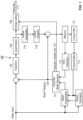
- FIG. 1 shows a block diagram of an illustrative block-based hybrid video encoder 100 which may be used in conjunction with many video coding standards.
- a video frame is partitioned into a plurality of video blocks for processing.
- a prediction is formed based on either an inter prediction approach or an intra prediction approach.
- inter prediction one or more predictors are formed through motion estimation and motion compensation, based on pixels from previously reconstructed frames.
- intra prediction predictors are formed based on reconstructed pixels in a current frame. Through mode decision, a best predictor may be chosen to predict a current block.
- a prediction residual representing the difference between a current video block and its predictor, is sent to a Transform circuitry 102.
- Transform coefficients are then sent from the Transform circuitry 102 to a Quantization circuitry 104 for entropy reduction.
- Quantized coefficients are then fed to an Entropy Coding circuitry 106 to generate a compressed video bitstream.
- prediction-related information 110 from an inter prediction circuitry and/or an Intra Prediction circuitry 112 such as video block partition info, motion vectors, reference picture index, and intra prediction mode, are also fed through the Entropy Coding circuitry 106 and saved into a compressed video bitstream 114.
- decoder-related circuitries are also needed in order to reconstruct pixels for the purpose of prediction.
- a prediction residual is reconstructed through an Inverse Quantization 116 and an Inverse Transform circuitry 118.
- This reconstructed prediction residual is combined with a Block Predictor 120 to generate un-filtered reconstructed pixels for a current video block.
- Temporal prediction (also referred to as “inter prediction” or “motion compensated prediction”) uses reconstructed pixels from already-coded video pictures to predict the current video block. Temporal prediction reduces temporal redundancy inherent in the video signal. Temporal prediction signal for a given CU is usually signaled by one or more motion vectors (MVs) which indicate the amount and the direction of motion between the current CU and its temporal reference. Also, if multiple reference pictures are supported, one reference picture index is additionally sent, which is used to identify from which reference picture in the reference picture store the temporal prediction signal comes.
- MVs motion vectors
- an intra/inter mode decision circuitry 121 in the encoder 100 chooses the best prediction mode, for example based on the rate-distortion optimization method.
- the block predictor 120 is then subtracted from the current video block; and the resulting prediction residual is de-correlated using the transform circuitry 102 and the quantization circuitry 104.
- the resulting quantized residual coefficients are inverse quantized by the inverse quantization circuitry 116 and inverse transformed by the inverse transform circuitry 118 to form the reconstructed residual, which is then added back to the prediction block to form the reconstructed signal of the CU.
- in-loop filtering 115 such as a deblocking filter, a sample adaptive offset (SAO), and/or an adaptive in-loop filter (ALF) may be applied on the reconstructed CU before it is put in the reference picture store of the picture buffer 117 and used to code future video blocks.
- coding mode inter or intra
- prediction mode information motion information
- quantized residual coefficients are all sent to the entropy coding unit 106 to be further compressed and packed to form the bit-stream.
- a deblocking filter is available in AVC, HEVC as well as the now-current version of VVC.
- SAO sample adaptive offset
- SAO sample adaptive offset
- ALF adaptive loop filter
- These in-loop filter operations are optional. Performing these operations helps to improve coding efficiency and visual quality. They may also be turned off as a decision rendered by the encoder 100 to save computational complexity.
- intra prediction is usually based on unfiltered reconstructed pixels, while inter prediction is based on filtered reconstructed pixels if these filter options are turned on by the encoder 100.
- FIG. 2 is a block diagram setting forth an illustrative video decoder 200 which may be used in conjunction with many video coding standards.
- This decoder 200 is similar to the reconstruction-related section residing in the encoder 100 of FIG. 1 .
- an incoming video bitstream 201 is first decoded through an Entropy Decoding 202 to derive quantized coefficient levels and prediction-related information.
- the quantized coefficient levels are then processed through an Inverse Quantization 204 and an Inverse Transform 206 to obtain a reconstructed prediction residual.
- a block predictor mechanism, implemented in an Intra/inter Mode Selector 212, is configured to perform either an Intra Prediction 208, or a Motion Compensation 210, based on decoded prediction information.
- a set of unfiltered reconstructed pixels are obtained by summing up the reconstructed prediction residual from the Inverse Transform 206 and a predictive output generated by the block predictor mechanism, using a summer 214.
- the reconstructed block may further go through an In-Loop Filter 209 before it is stored in a Picture Buffer 213 which functions as a reference picture store.
- the reconstructed video in the Picture Buffer 213 can then be sent out to drive a display device, as well as used to predict future video blocks.
- a filtering operation is performed on these reconstructed pixels to derive a final reconstructed Video Output 222.
- blocks may be partitioned based on quad-trees.
- CTU coding tree unit
- newer video coding standards such as the now-current VVC
- more partition methods are employed, and one coding tree unit (CTU) may be split into CUs to adapt to varying local characteristics based on quad-tree, binary-tree or ternary-tree.
- the separation of CU, prediction unit (PU) and transform unit (TU) does not exist in most coding modes in the now-current VVC, and each CU is always used as the basic unit for both prediction and transform without further partitions.
- each CU may still contain multiple TUs.
- one CTU is firstly partitioned by a quad-tree structure. Then, each quad-tree leaf node can be further partitioned by a binary and ternary tree structure.
- FIG. 3 shows the five splitting types employed in the now-current VVC, namely, quaternary partitioning 301, horizontal binary partitioning 302, vertical binary partitioning 303, horizontal ternary partitioning 304, and vertical ternary partitioning 305.
- quaternary partitioning 301 horizontal binary partitioning 302
- vertical binary partitioning 303 horizontal ternary partitioning 304
- vertical ternary partitioning 305 vertical ternary partitioning 305.
- spatial prediction and/or temporal prediction may be performed using the configuration shown in FIG. 1 .
- Spatial prediction (or "intra prediction") uses pixels from the samples of already-coded neighboring blocks (which are called reference samples) in the same video picture/slice to predict the current video block. Spatial prediction reduces spatial redundancy inherent in the video signal.
- new inter-mode coding tools have been introduced, and two examples of the new inter-mode coding tools are: Bi-Directional Optical Flow (BDOF) and Decoder-side Motion Vector Refinement (DMVR).
- BDOF Bi-Directional Optical Flow
- DMVR Decoder-side Motion Vector Refinement
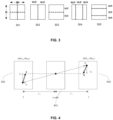
- FIG. 4 is an illustration of the BDOF process.
- the BDOF is sample-wise motion refinement that is performed on top of the block-based motion-compensated predictions when bi-prediction is used.
- the motion refinement of each 4 ⁇ 4 sub-block 401 is calculated by minimizing the difference between reference picture list 0 (L0) and reference picture list 1 (L1) prediction samples 402 and 403 after the BDOF is applied inside one 6 ⁇ 6 window around the sub-block.
- the final bi-prediction samples of the CU are calculated by interpolating the L0/L1 prediction samples along the motion trajectory based on the optical flow model.
- DMVR is a bi-prediction technique for merge blocks with two initially signaled MVs that can be further refined by using bilateral matching prediction.
- FIG. 5 is an illustration of bilateral matching used in DMVR.
- the bilateral matching is used to derive motion information of the current CU 501 by finding the closest match between two blocks 503 and 504 along the motion trajectory 502 of the current CU 501 in two different reference pictures 505 and 506.
- the cost function used in the matching process is row-subsampled sum of absolute difference (SAD).
- SAD sum of absolute difference
- the refined MVs 507 and 508 are used for motion compensation in the prediction stage, boundary strength calculation in deblock filter, temporal motion vector prediction for subsequent pictures and cross-CTU spatial motion vector prediction for subsequent CUs.
- the motion vectors MV0 507 and MV1 508 pointing to the two reference blocks 503 and 504 shall be proportional to the temporal distances, i.e., TD0 509 and TD1 510, between the current picture 511 and the two reference pictures 505 and 506.
- the bilateral matching becomes mirror based bi-directional MV.
- the now-current VVC design has applied constraints on when BDOF or DMVR may be enabled for a current block.
- the current block uses bi-directional prediction, with one MV pointing to a reference picture which is before the current picture in displaying order and another MV pointing to a reference picture which is after the current picture in displaying order. 2. Weighted prediction is not enabled. 3. The height of current block is not equal to 4. 4. The size of current block is not equal to 4x8 (i.e. a width of 4 and a height of 8). 5. The current block is not coded as symmetric Motion Vector Differences (MVD) mode which is a special MVD coding mode in VVC. 6. The current block is not coded as affine mode. 7.
- MVD symmetric Motion Vector Differences
- the current block is not coded as sub-block merge mode. 8.
- the current block is not using different weights when averaging the predictor samples from list 0 and list1 (e.g. Bi-prediction with Weighted Averaging (BWA) with unequal weights).
- BWA Weighted Averaging
- the current block uses bi-directional prediction, with one MV pointing to a reference picture which is before the current picture in displaying order and another MV pointing to a reference picture which is after the current picture in displaying order; moreover, the distance between the current picture and the forward reference picture and the distance between the current picture and the backward reference picture shall be the same.
- the current block is coded as merge mode and the selected merge candidate is a regular merge candidate (e.g. the normal non-subblock spatial merge candidate or temporal merge candidate, etc.).
- the height of current block is equal or greater than 8.
- the area of current block is equal or greater than 64.
- the current block is not coded as affine mode. 6.
- the current block is not coded as sub-block merge mode. 7.
- the current block is not coded as Merge mode with Motion Vector Differences (MMVD) mode.
- MMVD Motion Vector Differences
- a second remaining issue with the now-current VVC design is that, although several constraints are already applied to the enabling of DMVR, the constraints as a whole are still over-permissive regarding the enabling of DMVR because there are scenarios where the disabling of DMVR and the subsequent reduction in complexity and latency would strike a better balance between coding efficiency on one hand and complexity and latency on the other hand, but the now-current VVC design will enable DMVR in these scenarios.
- a third remaining issue with the now-current VVC design is that, the constraints already applied to the enabling of BDOF as a whole are under-permissive regarding the enabling of BDOF because there are scenarios where the enabling of BDOF and the subsequent increase in coding gain would strike a better balance between coding efficiency on one hand and complexity and latency on the other hand, but the now-current VVC design will not enable BDOF in these scenarios.
- the current block when a current block is eligible for both applications of DMVR and BDOF based on a plurality of pre-defined conditions, the current block will be classified into one of two pre-defined classes, namely, DMVR class and BDOF class, using a pre-defined criterion based on the mode information of the current block. Subsequently, the classification of the current block will be used in applying either DMVR or BDOF, but not both, on the current block. This method may be combined with current VVC on top of the pre-defined conditions above or may be implemented independently.
- FIG. 6 is a flow chart illustrating the operation of the first aspect of the present disclosure. While processing a current block (601), this operation of this aspect of the present disclosure may apply a plurality of pre-defined conditions on the current block (602), and determine whether the current block is eligible for both applications of DMVR and BDOF based on the plurality of pre-defined conditions (603). If the current block is determined to be not eligible for both applications of DMVR and BDOF based on the plurality of pre-defined conditions, this operation of this aspect of the present disclosure may continue with the process present in the now-current VVC design (604).
- this operation of this aspect of the present disclosure may classify the current block into one of two pre-defined classes, namely, DMVR class and BDOF class, using a pre-defined criterion based on the mode information of the current block (605). Subsequently, this operation of this aspect of the present disclosure may apply either DMVR or BDOF, but not both, on the current block using the classification result of the current block (606).
- the application of either DMVR or BDOF, but not both, on the current block using the classification result of the current block (606) may include continuing in DMVR class (applying DMVR but not BDOF) if the current block is classified into the DMVR class (607) and continuing in BDOF class (applying BDOF but not DMVR) if the current block is classified into the BDOF class (608).
- the plurality of pre-defined conditions based on which the current block is eligible for both applications of DMVR and BDOF may, but does not need to, be the plurality of pre-defined BDOF conditions and pre-defined DMVR conditions enumerated in the boxes above.
- the mode information used as basis for the pre-defined criterion includes, but is not limited to, prediction mode such as using merge mode or not, merge mode index, motion vectors, block shape, block size, predictor sample values.
- using the classification of the current block in applying either DMVR or BDOF, but not both, on the current block comprises optionally signaling a flag to indicate the classification of the current block, that is, in some examples of this embodiment, one flag is signaled to specify whether BDOF or DMVR is applied to the block, while in some other examples of this embodiment, no such flag is signaled.
- using the classification of the current block in applying either DMVR or BDOF, but not both, on the current block further comprises applying DMVR but not BDOF, either with the existing merge candidate list or with a separately generated merge candidate list, on the current block when the current block is classified into the DMVR class. That is, in some examples of this embodiment, a separate merge candidate list is generated and used exclusively when the current block is classified into the DMVR class and DMVR is applied on the current block.
- a syntax is signaled to indicate this DMVR merge mode and a merge index is also signaled if the DMVR merge candidate list size is greater than one.
- no such separate merge candidate is generated when the current block is classified into the DMVR class and DMVR is applied on the current block, and the application of DMVR on the current block uses the existing merge candidate list, and no further syntax or signaling is involved.
- using the classification of the current block in applying either DMVR or BDOF, but not both, on the current block further comprises applying BDOF but not DMVR, either with the existing merge candidate list or with a separately generated merge candidate list, on the current block when the current block is classified into the BDOF class. That is, in some examples of this embodiment, a separate merge candidate list is generated and used exclusively when the current block is classified into the BDOF class and BDOF is applied on the current block.
- a syntax is signaled to indicate this BDOF merge mode and a merge index is also signaled if the BDOF merge candidate list size is greater than one.
- no such separate merge candidate is generated when the current block is classified into the BDOF class and BDOF is applied on the current block, and the application of BDOF on the current block uses the existing merge candidate list, and no further syntax or signaling is involved.
- classifying the current block into one of two pre-defined classes namely, DMVR class and BDOF class
- using a pre-defined criterion based on the mode information of the current block comprises classifying the current block into DMVR class when the pre-defined criterion is satisfied, and classifying the current block into BDOF class when the pre-defined criterion is not satisfied.
- classifying the current block into one of two pre-defined classes namely, DMVR class and BDOF class
- using a pre-defined criterion based on the mode information of the current block comprises classifying the current block into BDOF class when the pre-defined criterion is satisfied, and classifying the current block into DMVR class when the pre-defined criterion is not satisfied.
- the pre-defined criterion comprises whether the regular mode is chosen for the current block.
- the pre-defined criterion comprises whether the coded merge index of the current block possesses a pre-defined mathematical property.
- the pre-defined mathematical property comprises the property of being equal to or greater than a pre-defined threshold number.
- the pre-defined criterion comprises whether the motion vectors of the current block satisfy a pre-defined test.
- the pre-defined test comprises whether the sum of the magnitudes of all the motion vector components is greater than a pre-defined threshold number.
- the pre-defined criterion comprises whether the current block is of a pre-defined shape.
- the pre-defined shape is the shape of a square.
- the pre-defined criterion comprises whether the block size of the current block possesses a pre-defined mathematical property.
- the pre-defined mathematical property comprises the property of being equal to or greater than a pre-defined threshold number.
- the pre-defined criterion comprises whether the sum of absolute differences or sum of squared differences (SAD or SSD) between the list 0 predictor samples and the list 1 predictor samples of the current block possesses a pre-defined mathematical property.
- the pre-defined mathematical property comprises the property of being greater than a pre-defined threshold number.
- a first determination is made regarding whether the weighted prediction is enabled for the current block, and a second determination is made regarding whether different weights are used when averaging list 0 predictor samples and list 1 predictor samples for the current block, and whether to disable an application of DMVR on the current block may be determined based on the first and second determinations.
- This method may be combined with current VVC on top of the pre-defined conditions above or may be implemented independently.
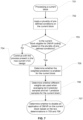
- FIG. 7 is a flow chart illustrating an example method of the second aspect of the present disclosure. While processing a current block (701), this operation of this aspect of the present disclosure may apply a plurality of pre-defined conditions on the current block (702), and determine whether the current block is eligible for DMVR coding based on the plurality of pre-defined conditions (703). If the current block is determined to be not eligible for DMVR coding based on the plurality of pre-defined conditions, this operation of this aspect of the present disclosure may continue with the process present in the now-current VVC design (704).
- this operation of this aspect of the present disclosure may determine whether the weighted prediction is enabled for the current block (705) and also determine whether different weights are used when averaging list 0 predictor samples and list 1 predictor samples for the current block (706), and subsequently determine whether to disable an application of DMVR on the current block based on the two determinations (707).
- the plurality of pre-defined conditions based on which the current block is eligible for DMVR coding may, but does not need to, be the plurality of pre-defined DMVR conditions enumerated in the box above.
- determining whether to disable the application of DMVR on the current block based on the two determinations comprises disabling the application of DMVR on the current block when the weighted prediction is determined to be enabled for the current block.
- determining whether to disable the application of DMVR on the current block based on the two determinations comprises disabling the application of DMVR on the current block when different weights are determined to be used when averaging the list 0 predictor samples and the list 1 predictor samples for the current block.
- determining whether to disable the application of DMVR on the current block based on the two determinations comprises disabling the application of DMVR on the current block when the weighted prediction is determined to be enabled for the current block and at the same time different weights are determined to be used when averaging the list 0 predictor samples and the list 1 predictor samples for the current block.
- the application of BDOF on a current block may be enabled when the current block is coded as sub-block merge mode.
- This method may be combined with current VVC on top of the pre-defined conditions above or may be implemented independently.
- FIG. 8 is a flow chart illustrating the operation of the third aspect of the present disclosure. While processing a current block (801), this operation of this aspect of the present disclosure may determine whether the current block is coded as sub-block merge mode (802). If the current block is determined to be not coded as sub-block merge mode, this operation of this aspect of the present disclosure may continue with the process present in the now-current VVC design (803). On the other hand, if the current block is determined to be coded as sub-block merge mode, this operation of this aspect of the present disclosure may enable the application of BDOF on the current block (804).
- Computer-readable media may include computer-readable storage media, which corresponds to a tangible medium such as data storage media, or communication media including any medium that facilitates transfer of a computer program from one place to another, e.g., according to a communication protocol.
- Computer-readable media generally may correspond to (1) tangible computer-readable storage media which is non-transitory or (2) a communication medium such as a signal or carrier wave.
- Data storage media may be any available media that can be accessed by one or more computers or one or more processors to retrieve instructions, code and/or data structures for implementation of the implementations described in the present application.
- a computer program product may include a computer-readable medium.
- the above methods may be implemented using an apparatus that includes one or more circuitries, which include application specific integrated circuits (ASICs), digital signal processors (DSPs), digital signal processing devices (DSPDs), programmable logic devices (PLDs), field programmable gate arrays (FPGAs), controllers, micro-controllers, microprocessors, or other electronic components.
- the apparatus may use the circuitries in combination with the other hardware or software components for performing the above described methods.
- Each module, sub-module, unit, or sub-unit disclosed above may be implemented at least partially using the one or more circuitries.
- a method for Video coding comprising: when a current block is eligible for both applications of Decoder-side Motion Vector Refinement (DMVR) and Bi-Directional Optical Flow (BDOF) based on a plurality of predefined conditions, classifying the current block into one of two pre-defined classes, namely, DMVR class and BDOF class, using a pre-defined criterion based on the mode information of the current block, and using the classification of the current block in applying either DMVR or BDOF, but not both, on the current block.
- DMVR Decoder-side Motion Vector Refinement
- BDOF Bi-Directional Optical Flow
- using the classification of the current block in applying either DMVR or BDOF, but not both, on the current block comprises: optionally signaling a flag to indicate the classification of the current block, when the current block is classified into the DMVR class, applying DMVR but not BDOF, either with the existing merge candidate list or with a separately generated merge candidate list, on the current block, and when the current block is classified into the BDOF class, applying BDOF but not DMVR, either with the existing merge candidate list or with a separately generated merge candidate list, on the current block.
- classifying the current block into one of two predefined classes namely, DMVR class and BDOF class
- using a pre-defined criterion based on the mode information of the current block comprises: when the pre-defined criterion is satisfied, classifying the current block into DMVR class, and when the pre-defined criterion is not satisfied, classifying the current block into BDOF class.
- classifying the current block into one of two predefined classes namely, DMVR class and BDOF class
- using a pre-defined criterion based on the mode information of the current block comprises: when the pre-defined criterion is satisfied, classifying the current block into BDOF class, and when the pre-defined criterion is not satisfied, classifying the current block into DMVR class.
- the pre-defined criterion comprises whether the regular mode is chosen for the current block.
- the pre-defined criterion comprises whether the coded merge index of the current block possesses a pre-defined mathematical property.
- the pre-defined mathematical property comprises the property of being equal to or greater than a pre-defined threshold number.
- the pre-defined criterion comprises whether the motion vectors of the current block satisfy a pre-defined test.
- the pre-defined test comprises whether the sum of the magnitudes of all the motion vector components is greater than a pre-defined threshold number.
- the pre-defined criterion comprises whether the current block is of a pre-defined shape.
- the pre-defined shape is the shape of a square.
- the pre-defined criterion comprises whether the block size of the current block possesses a pre-def1ned mathematical property.
- the pre-defined mathematical property comprises the property of being equal to or greater than a pre-def1ned threshold number.
- the pre-defined criterion comprises whether the sum of absolute differences or sum of squared differences (SAD or SSD) between the list 0 predictor samples and the list 1 predictor samples of the current block possesses a pre-defined mathematical property.
- the pre-defined mathematical property comprises the property of being greater than a pre-def1ned threshold number.
- a method for Video coding comprising: when a current block is eligible for Decoder-side Motion Vector Refinement (DMVR) coding based on a plurality of pre-defined conditions, determining whether the weighted prediction is enabled for the current block, and determining whether different weights are used when averaging list 0 predictor samples and list 1 predictor samples for the current block, and determining whether to disable an application of DMVR on the current block based on the two determinations.
- DMVR Decoder-side Motion Vector Refinement
- determining whether to disable the application of DMVR on the current block based on the two determinations comprises disabling the application of DMVR on the current block when the weighted prediction is determined to be enabled for the current block.
- determining whether to disable the application of DMVR on the current block based on the two determinations comprises disabling the application of DMVR on the current block when different weights are determined to be used when averaging the list 0 predictor samples and the list 1 predictor samples for the current block.
- determining whether to disable the application of DMVR on the current block based on the two determinations comprises disabling the application of DMVR on the current block when the weighted prediction is determined to be enabled for the current block and at the same time different weights are determined to be used when averaging the list 0 predictor samples and the list 1 predictor samples for the current block.
- a method for video coding comprising: enabling the application of Bi-Directional Optical Flow (BDOF) on a current block when the current block is coded as sub-block merge mode.
- BDOF Bi-Directional Optical Flow
- a computing device comprising: one or more processors; a non-transitory storage coupled to the one or more processors; and a plurality of programs stored in the non-transitory storage that, when executed by the one or more processors, cause the computing device to perform acts comprising: when a current block is eligible for both applications of Decoder-side Motion Vector Refinement (DMVR) and Bi-Directional Optical Flow (BDOF) based on a plurality of pre-defined conditions, classifying the current block into one of two pre-defined classes, namely, DMVR class and BDOF class, using a pre-defined criterion based on the mode information of the current block, and using the classification of the current block in applying either DMVR or BDOF, but not both, on the current block.
- DMVR Decoder-side Motion Vector Refinement
- BDOF Bi-Directional Optical Flow
- using the classification of the current block in applying either DMVR or BDOF, but not both, on the current block comprises: optionally signaling a flag to indicate the classification of the current block, when the current block is classified into the DMVR class, applying DMVR but not BDOF, either with the existing merge candidate list or with a separately generated merge candidate list, on the current block, and when the current block is classified into the BDOF class, applying BDOF but not DMVR, either with the existing merge candidate list or with a separately generated merge candidate list, on the current block.
- classifying the current block into one of two pre-defined classes namely, DMVR class and BDOF class
- using a pre-defined criterion based on the mode information of the current block comprises: when the pre-defined criterion is satisfied, classifying the current block into DMVR class, and when the pre-defined criterion is not satisfied, classifying the current block into BDOF class.
- classifying the current block into one of two pre-defined classes namely, DMVR class and BDOF class
- using a pre-defined criterion based on the mode information of the current block comprises: when the pre-defined criterion is satisfied, classifying the current block into BDOF class, and when the pre-defined criterion is not satisfied, classifying the current block into DMVR class.
- the pre-defined criterion comprises whether the regular mode is chosen for the current block.
- the pre-defined criterion comprises whether the coded merge index of the current block possesses a pre-defined mathematical property.
- the pre-defined mathematical property comprises the property of being equal to or greater than a pre-defined threshold number.
- the pre-defined criterion comprises whether the motion vectors of the current block satisfy a pre-defined test.
- the pre-defined test comprises whether the sum of the magnitudes of all the motion vector components is greater than a pre-defined threshold number.
- the pre-defined criterion comprises whether the current block is of a pre-defined shape.
- the pre-defined shape is the shape of a square.
- the pre-defined criterion comprises whether the block size of the current block possesses a pre-defined mathematical property.
- the pre-defined mathematical property comprises the property of being equal to or greater than a pre-defined threshold number.
- the pre-defined criterion comprises whether the sum of absolute differences or sum of squared differences (SAD or SSD) between the list 0 predictor samples and the list 1 predictor samples of the current block possesses a pre-defined mathematical property.
- the pre-defined mathematical property comprises the property of being greater than a pre-defined threshold number.
- a computing device comprising: one or more processors, a non-transitory storage coupled to the one or more processors, and a plurality of programs stored in the non-transitory storage that, when executed by the one or more processors, cause the computing device to perform acts comprising: when a current block is eligible for Decoder-side Motion Vector Refinement (DMVR) coding based on a plurality of pre-defined conditions, determining whether the weighted prediction is enabled for the current block, and determining whether different weights are used when averaging list 0 predictor samples and list 1 predictor samples for the current block; and determining whether to disable an application of DMVR on the current block based on the two determinations.
- DMVR Decoder-side Motion Vector Refinement
- determining whether to disable the application of DMVR on the current block based on the two determinations comprises disabling the application of DMVR on the current block when the weighted prediction is determined to be enabled for the current block.
- determining whether to disable the application of DMVR on the current block based on the two determinations comprises disabling the application of DMVR on the current block when different weights are determined to be used when averaging the list 0 predictor samples and the list 1 predictor samples for the current block.
- determining whether to disable the application of DMVR on the current block based on the two determinations comprises disabling the application of DMVR on the current block when the weighted prediction is determined to be enabled for the current block and at the same time different weights are determined to be used when averaging the list 0 predictor samples and the list 1 predictor samples for the current block.
- a computing device comprising: one or more processors, a non-transitory storage coupled to the one or more processors, and a plurality of programs stored in the non-transitory storage that, when executed by the one or more processors, cause the computing device to perform acts comprising: enabling the application of Bi-Directional Optical Flow (BDOF) on a current block when the current block is coded as sub-block merge mode.
- BDOF Bi-Directional Optical Flow
- a non-transitory computer readable storage medium storing a plurality of programs for execution by a computing device having one or more processors, wherein the plurality of programs, when executed by the one or more processors, cause the computing device to perform acts comprising: when a current block is eligible for both applications of Decoder-side Motion Vector Refinement (DMVR) and Bi-Directional Optical Flow (BDOF) based on a plurality of pre-defined conditions, classifying the current block into one of two pre-defined classes, namely, DMVR class and BDOF class, using a pre-defined criterion based on the mode information of the current block, and using the classification of the current block in applying either DMVR or BDOF, but not both, on the current block.
- DMVR Decoder-side Motion Vector Refinement
- BDOF Bi-Directional Optical Flow
- using the classification of the current block in applying either DMVR or BDOF, but not both, on the current block comprises: optionally signaling a flag to indicate the classification of the current block, when the current block is classified into the DMVR class, applying DMVR but not BDOF, either with the existing merge candidate list or with a separately generated merge candidate list, on the current block, and when the current block is classified into the BDOF class, applying BDOF but not DMVR, either with the existing merge candidate list or with a separately generated merge candidate list, on the current block.
- classifying the current block into one of two pre-defined classes namely, DMVR class and BDOF class
- using a pre-defined criterion based on the mode information of the current block comprises: when the pre-defined criterion is satisfied, classifying the current block into DMVR class; and when the pre-defined criterion is not satisfied, classifying the current block into BDOF class.
- classifying the current block into one of two pre-defined classes namely, DMVR class and BDOF class
- using a pre-defined criterion based on the mode information of the current block comprises: when the pre-defined criterion is satisfied, classifying the current block into BDOF class, and when the pre-defined criterion is not satisfied, classifying the current block into DMVR class.
- the pre-defined criterion comprises whether the regular mode is chosen for the current block.
- the pre-defined criterion comprises whether the coded merge index of the current block possesses a pre-defined mathematical property.
- the pre-defined mathematical property comprises the property of being equal to or greater than a pre-defined threshold number.
- the pre-defined criterion comprises whether the motion vectors of the current block satisfy a pre-defined test.
- the pre-defined test comprises whether the sum of the magnitudes of all the motion vector components is greater than a pre-defined threshold number.
- the pre-defined criterion comprises whether the current block is of a pre-defined shape.
- the pre-defined shape is the shape of a square.
- the pre-defined criterion comprises whether the block size of the current block possesses a pre-defined mathematical property.
- the pre-defined mathematical property comprises the property of being equal to or greater than a pre-defined threshold number.
- the pre-defined criterion comprises whether the sum of absolute differences or sum of squared differences (SAD or SSD) between the list 0 predictor samples and the list 1 predictor samples of the current block possesses a pre-defined mathematical property.
- the pre-defined mathematical property comprises the property of being greater than a pre-defined threshold number.
- a non-transitory computer readable storage medium storing a plurality of programs for execution by a computing device having one or more processors
- the plurality of programs when executed by the one or more processors, cause the computing device to perform acts comprising: when a current block is eligible for Decoder-side Motion Vector Refinement (DMVR) coding based on a plurality of pre-defined conditions, determining whether the weighted prediction is enabled for the current block, and determining whether different weights are used when averaging list 0 predictor samples and list 1 predictor samples for the current block, and determining whether to disable an application of DMVR on the current block based on the two determinations.
- DMVR Decoder-side Motion Vector Refinement
- determining whether to disable the application of DMVR on the current block based on the two determinations comprises disabling the application of DMVR on the current block when the weighted prediction is determined to be enabled for the current block.
- determining whether to disable the application of DMVR on the current block based on the two determinations comprises disabling the application of DMVR on the current block when different weights are determined to be used when averaging the list 0 predictor samples and the list 1 predictor samples for the current block.
- determining whether to disable the application of DMVR on the current block based on the two determinations comprises disabling the application of DMVR on the current block when the weighted prediction is determined to be enabled for the current block and at the same time different weights are determined to be used when averaging the list 0 predictor samples and the list 1 predictor samples for the current block.
- a non-transitory computer readable storage medium storing a plurality of programs for execution by a computing device having one or more processors
- the plurality of programs when executed by the one or more processors, cause the computing device to perform acts comprising: enabling the application of Bi-Directional Optical Flow (BDOF) on a current block when the current block is coded as sub-block merge mode.
- BDOF Bi-Directional Optical Flow
Landscapes
- Engineering & Computer Science (AREA)
- Multimedia (AREA)
- Signal Processing (AREA)
- Physics & Mathematics (AREA)
- Algebra (AREA)
- General Physics & Mathematics (AREA)
- Mathematical Analysis (AREA)
- Mathematical Optimization (AREA)
- Pure & Applied Mathematics (AREA)
- Computing Systems (AREA)
- Theoretical Computer Science (AREA)
- Compression Or Coding Systems Of Tv Signals (AREA)
Applications Claiming Priority (3)
| Application Number | Priority Date | Filing Date | Title |
|---|---|---|---|
| US201962803417P | 2019-02-08 | 2019-02-08 | |
| PCT/US2020/017382 WO2020163837A1 (fr) | 2019-02-08 | 2020-02-08 | Procédés et dispositifs permettant d'appliquer de manière sélective un flux optique bidirectionnel et un affinement de vecteur de mouvement côté décodeur pour un codage vidéo |
| EP20752247.5A EP3909247B1 (fr) | 2019-02-08 | 2020-02-08 | Procédé et dispositif permettant d'appliquer de manière sélective un affinement de vecteur de mouvement côté décodeur pour un codage vidéo |
Related Parent Applications (2)
| Application Number | Title | Priority Date | Filing Date |
|---|---|---|---|
| EP20752247.5A Division EP3909247B1 (fr) | 2019-02-08 | 2020-02-08 | Procédé et dispositif permettant d'appliquer de manière sélective un affinement de vecteur de mouvement côté décodeur pour un codage vidéo |
| EP20752247.5A Division-Into EP3909247B1 (fr) | 2019-02-08 | 2020-02-08 | Procédé et dispositif permettant d'appliquer de manière sélective un affinement de vecteur de mouvement côté décodeur pour un codage vidéo |
Publications (2)
| Publication Number | Publication Date |
|---|---|
| EP4333435A2 true EP4333435A2 (fr) | 2024-03-06 |
| EP4333435A3 EP4333435A3 (fr) | 2024-05-08 |
Family
ID=71029974
Family Applications (3)
| Application Number | Title | Priority Date | Filing Date |
|---|---|---|---|
| EP24152518.7A Pending EP4333435A3 (fr) | 2019-02-08 | 2020-02-08 | Procédés et dispositifs d'application sélective d'un affinement de vecteur de mouvement côté décodeur et de flux optique bidirectionnel pour codage vidéo |
| EP20752247.5A Active EP3909247B1 (fr) | 2019-02-08 | 2020-02-08 | Procédé et dispositif permettant d'appliquer de manière sélective un affinement de vecteur de mouvement côté décodeur pour un codage vidéo |
| EP24152590.6A Pending EP4333436A3 (fr) | 2019-02-08 | 2020-02-08 | Procédés et dispositifs d'application sélective d'un affinement de vecteur de mouvement côté décodeur et de flux optique bidirectionnel pour codage vidéo |
Family Applications After (2)
| Application Number | Title | Priority Date | Filing Date |
|---|---|---|---|
| EP20752247.5A Active EP3909247B1 (fr) | 2019-02-08 | 2020-02-08 | Procédé et dispositif permettant d'appliquer de manière sélective un affinement de vecteur de mouvement côté décodeur pour un codage vidéo |
| EP24152590.6A Pending EP4333436A3 (fr) | 2019-02-08 | 2020-02-08 | Procédés et dispositifs d'application sélective d'un affinement de vecteur de mouvement côté décodeur et de flux optique bidirectionnel pour codage vidéo |
Country Status (13)
| Country | Link |
|---|---|
| US (6) | US12108030B2 (fr) |
| EP (3) | EP4333435A3 (fr) |
| JP (6) | JP7232345B2 (fr) |
| KR (4) | KR102384240B1 (fr) |
| CN (7) | CN116886925B (fr) |
| DK (1) | DK3909247T3 (fr) |
| ES (1) | ES2981908T3 (fr) |
| FI (1) | FI3909247T3 (fr) |
| HU (1) | HUE067106T2 (fr) |
| MX (4) | MX2021009529A (fr) |
| PL (1) | PL3909247T3 (fr) |
| PT (1) | PT3909247T (fr) |
| WO (1) | WO2020163837A1 (fr) |
Families Citing this family (16)
| Publication number | Priority date | Publication date | Assignee | Title |
|---|---|---|---|---|
| CN116886925B (zh) * | 2019-02-08 | 2024-11-08 | 北京达佳互联信息技术有限公司 | 一种用于视频编码的方法、计算设备和介质 |
| CN118612453A (zh) * | 2019-02-14 | 2024-09-06 | Lg 电子株式会社 | 基于dmvr的帧间预测方法和设备 |
| KR102783514B1 (ko) | 2019-02-24 | 2025-03-19 | 엘지전자 주식회사 | Dmvr 기반의 인터 예측 방법 및 장치 |
| JP7555328B2 (ja) * | 2019-03-08 | 2024-09-24 | シャープ株式会社 | 動画像復号装置、動画像符号化装置、および動画像復号方法 |
| CN112004091B (zh) * | 2020-07-31 | 2021-08-03 | 浙江大华技术股份有限公司 | 帧间预测方法及其相关装置 |
| CN112132915B (zh) * | 2020-08-10 | 2022-04-26 | 浙江大学 | 一种基于生成对抗机制的多样化动态延时视频生成方法 |
| CN112055222B (zh) * | 2020-08-21 | 2024-05-07 | 浙江大华技术股份有限公司 | 视频编解码方法、电子设备及计算机可读存储介质 |
| CN112218075B (zh) * | 2020-10-17 | 2022-10-28 | 浙江大华技术股份有限公司 | 候选列表的填充方法、电子设备、计算机可读存储介质 |
| US11917165B2 (en) * | 2021-08-16 | 2024-02-27 | Tencent America LLC | MMVD signaling improvement |
| WO2023044247A1 (fr) * | 2021-09-16 | 2023-03-23 | Qualcomm Incorporated | Prédicteurs inter multiples avec dérivation de vecteur de mouvement côté décodeur pour codage vidéo |
| US12132885B2 (en) | 2021-09-16 | 2024-10-29 | Qualcomm Incorporated | Multiple inter predictors with decoder side motion vector derivation for video coding |
| US20250106381A1 (en) * | 2022-01-09 | 2025-03-27 | Lg Electronics Inc. | Image encoding/decoding method and device, and recording medium having bitstream stored thereon |
| US12368879B2 (en) * | 2022-03-25 | 2025-07-22 | Tencent America LLC | Method and apparatus adaptive constraint on bi-prediction for out-of-boundary conditions |
| CN120569971A (zh) * | 2022-12-01 | 2025-08-29 | 现代自动车株式会社 | 使用基于模板匹配的帧间预测的视频编码方法及设备 |
| WO2024226428A2 (fr) * | 2023-04-24 | 2024-10-31 | Tencent America LLC | Flux optique basé sur un échantillon bidirectionnel adaptatif sur gpm avec vecteur de mouvement biprédictif |
| WO2026061542A1 (fr) * | 2024-09-23 | 2026-03-26 | Beijing Dajia Internet Information Technology Co., Ltd. | Procédés, appareil, support et produit-programme informatique pour codage vidéo |
Family Cites Families (24)
| Publication number | Priority date | Publication date | Assignee | Title |
|---|---|---|---|---|
| WO2011129672A2 (fr) * | 2010-04-16 | 2011-10-20 | 에스케이텔레콤 주식회사 | Appareil et procédé de codage/décodage vidéo |
| GB2512829B (en) * | 2013-04-05 | 2015-05-27 | Canon Kk | Method and apparatus for encoding or decoding an image with inter layer motion information prediction according to motion information compression scheme |
| CN103561263B (zh) * | 2013-11-06 | 2016-08-24 | 北京牡丹电子集团有限责任公司数字电视技术中心 | 基于运动矢量约束和加权运动矢量的运动补偿预测方法 |
| CN108293131B (zh) * | 2015-11-20 | 2021-08-31 | 联发科技股份有限公司 | 基于优先级运动矢量预测子推导的方法及装置 |
| EP3435673A4 (fr) * | 2016-03-24 | 2019-12-25 | Intellectual Discovery Co., Ltd. | Procédé et appareil de codage/décodage de signal vidéo |
| WO2017205703A1 (fr) * | 2016-05-25 | 2017-11-30 | Arris Enterprises Llc | Codage par prédiction angulaire pondérée améliorée pour codage intra |
| US11638027B2 (en) * | 2016-08-08 | 2023-04-25 | Hfi Innovation, Inc. | Pattern-based motion vector derivation for video coding |
| CN116320498A (zh) * | 2016-11-28 | 2023-06-23 | 韩国电子通信研究院 | 用于滤波的方法和装置 |
| US10750203B2 (en) * | 2016-12-22 | 2020-08-18 | Mediatek Inc. | Method and apparatus of adaptive bi-prediction for video coding |
| WO2018113658A1 (fr) * | 2016-12-22 | 2018-06-28 | Mediatek Inc. | Procédé et appareil d'affinement de mouvement pour codage vidéo |
| JP2018107580A (ja) | 2016-12-26 | 2018-07-05 | 富士通株式会社 | 動画像符号化装置、動画像符号化方法、動画像符号化用コンピュータプログラム、動画像復号装置及び動画像復号方法ならびに動画像復号用コンピュータプログラム |
| US20180199057A1 (en) * | 2017-01-12 | 2018-07-12 | Mediatek Inc. | Method and Apparatus of Candidate Skipping for Predictor Refinement in Video Coding |
| US10523964B2 (en) * | 2017-03-13 | 2019-12-31 | Qualcomm Incorporated | Inter prediction refinement based on bi-directional optical flow (BIO) |
| US10595035B2 (en) * | 2017-03-22 | 2020-03-17 | Qualcomm Incorporated | Constraining motion vector information derived by decoder-side motion vector derivation |
| US10477237B2 (en) * | 2017-06-28 | 2019-11-12 | Futurewei Technologies, Inc. | Decoder side motion vector refinement in video coding |
| AU2017421655B2 (en) * | 2017-06-30 | 2022-12-22 | Huawei Technologies Co., Ltd. | Search region for motion vector refinement |
| US11750832B2 (en) * | 2017-11-02 | 2023-09-05 | Hfi Innovation Inc. | Method and apparatus for video coding |
| WO2020061082A1 (fr) * | 2018-09-21 | 2020-03-26 | Vid Scale, Inc. | Réduction de complexité et commande de largeur de bit pour flux optique bidirectionnel |
| US11146810B2 (en) * | 2018-11-27 | 2021-10-12 | Qualcomm Incorporated | Decoder-side motion vector refinement |
| JP7414008B2 (ja) | 2018-12-28 | 2024-01-16 | ソニーグループ株式会社 | 画像処理装置および方法 |
| KR20210094664A (ko) | 2019-01-02 | 2021-07-29 | 텔레폰악티에볼라겟엘엠에릭슨(펍) | 비디오 인코딩/디코딩 시스템의 사이드 모션 정교화 |
| US11153590B2 (en) * | 2019-01-11 | 2021-10-19 | Tencent America LLC | Method and apparatus for video coding |
| CN116886925B (zh) | 2019-02-08 | 2024-11-08 | 北京达佳互联信息技术有限公司 | 一种用于视频编码的方法、计算设备和介质 |
| CN111989925B (zh) * | 2019-03-22 | 2024-04-26 | 罗斯德尔动力有限责任公司 | 基于dmvr和bdof的帧间预测方法及其设备 |
-
2020
- 2020-02-08 CN CN202310971968.8A patent/CN116886925B/zh active Active
- 2020-02-08 CN CN202111233781.5A patent/CN113965746B/zh active Active
- 2020-02-08 CN CN202310894965.9A patent/CN116828185B/zh active Active
- 2020-02-08 MX MX2021009529A patent/MX2021009529A/es unknown
- 2020-02-08 EP EP24152518.7A patent/EP4333435A3/fr active Pending
- 2020-02-08 CN CN202080013232.4A patent/CN113424537A/zh active Pending
- 2020-02-08 ES ES20752247T patent/ES2981908T3/es active Active
- 2020-02-08 KR KR1020217025204A patent/KR102384240B1/ko active Active
- 2020-02-08 KR KR1020227011121A patent/KR102856737B1/ko active Active
- 2020-02-08 KR KR1020227019687A patent/KR102856738B1/ko active Active
- 2020-02-08 WO PCT/US2020/017382 patent/WO2020163837A1/fr not_active Ceased
- 2020-02-08 EP EP20752247.5A patent/EP3909247B1/fr active Active
- 2020-02-08 DK DK20752247.5T patent/DK3909247T3/da active
- 2020-02-08 HU HUE20752247A patent/HUE067106T2/hu unknown
- 2020-02-08 CN CN202210827077.0A patent/CN115209159B/zh active Active
- 2020-02-08 FI FIEP20752247.5T patent/FI3909247T3/fi active
- 2020-02-08 PT PT207522475T patent/PT3909247T/pt unknown
- 2020-02-08 PL PL20752247.5T patent/PL3909247T3/pl unknown
- 2020-02-08 KR KR1020217035265A patent/KR102409275B1/ko active Active
- 2020-02-08 JP JP2021546307A patent/JP7232345B2/ja active Active
- 2020-02-08 EP EP24152590.6A patent/EP4333436A3/fr active Pending
- 2020-02-10 CN CN202111667192.8A patent/CN114286101B/zh active Active
- 2020-02-10 CN CN202010085186.0A patent/CN111294598B/zh active Active
-
2021
- 2021-08-06 MX MX2024014826A patent/MX2024014826A/es unknown
- 2021-08-06 US US17/396,648 patent/US12108030B2/en active Active
- 2021-08-06 MX MX2024014825A patent/MX2024014825A/es unknown
- 2021-08-06 US US17/396,641 patent/US12155818B2/en active Active
- 2021-08-06 MX MX2024014827A patent/MX2024014827A/es unknown
-
2022
- 2022-05-23 JP JP2022084108A patent/JP7339395B2/ja active Active
-
2023
- 2023-05-01 JP JP2023075405A patent/JP7546721B2/ja active Active
- 2023-11-16 JP JP2023194974A patent/JP7696412B2/ja active Active
-
2024
- 2024-05-10 JP JP2024076928A patent/JP7776572B2/ja active Active
- 2024-05-15 US US18/665,512 patent/US12407815B2/en active Active
- 2024-06-26 JP JP2024102550A patent/JP7735489B2/ja active Active
- 2024-07-26 US US18/785,375 patent/US20240388695A1/en active Pending
- 2024-10-17 US US18/919,384 patent/US20250047835A1/en active Pending
-
2025
- 2025-07-02 US US19/257,807 patent/US20250330585A1/en active Pending
Also Published As
Similar Documents
| Publication | Publication Date | Title |
|---|---|---|
| US12407815B2 (en) | Methods and devices for selectively applying bi-directional optical flow and decoder-side motion vector refinement for video coding | |
| US12219125B2 (en) | Constrained motion vector derivation for long-term reference pictures in video coding | |
| US12177467B2 (en) | Constrained and adjusted applications of combined inter- and intra-prediction mode |
Legal Events
| Date | Code | Title | Description |
|---|---|---|---|
| PUAI | Public reference made under article 153(3) epc to a published international application that has entered the european phase |
Free format text: ORIGINAL CODE: 0009012 |
|
| STAA | Information on the status of an ep patent application or granted ep patent |
Free format text: STATUS: REQUEST FOR EXAMINATION WAS MADE |
|
| 17P | Request for examination filed |
Effective date: 20240118 |
|
| AC | Divisional application: reference to earlier application |
Ref document number: 3909247 Country of ref document: EP Kind code of ref document: P |
|
| AK | Designated contracting states |
Kind code of ref document: A2 Designated state(s): AL AT BE BG CH CY CZ DE DK EE ES FI FR GB GR HR HU IE IS IT LI LT LU LV MC MK MT NL NO PL PT RO RS SE SI SK SM TR |
|
| PUAL | Search report despatched |
Free format text: ORIGINAL CODE: 0009013 |
|
| AK | Designated contracting states |
Kind code of ref document: A3 Designated state(s): AL AT BE BG CH CY CZ DE DK EE ES FI FR GB GR HR HU IE IS IT LI LT LU LV MC MK MT NL NO PL PT RO RS SE SI SK SM TR |
|
| RIC1 | Information provided on ipc code assigned before grant |
Ipc: H04N 19/44 20140101ALI20240402BHEP Ipc: H04N 19/176 20140101ALI20240402BHEP Ipc: H04N 19/149 20140101ALI20240402BHEP Ipc: H04N 19/109 20140101ALI20240402BHEP Ipc: H04N 19/513 20140101AFI20240402BHEP |