EP4333480A1 - Verfahren und vorrichtung zum senden von anfrageinformationen, vorrichtung und speichermedium - Google Patents
Verfahren und vorrichtung zum senden von anfrageinformationen, vorrichtung und speichermedium Download PDFInfo
- Publication number
- EP4333480A1 EP4333480A1 EP22803844.4A EP22803844A EP4333480A1 EP 4333480 A1 EP4333480 A1 EP 4333480A1 EP 22803844 A EP22803844 A EP 22803844A EP 4333480 A1 EP4333480 A1 EP 4333480A1
- Authority
- EP
- European Patent Office
- Prior art keywords
- request information
- configuration
- network side
- side device
- expected
- Prior art date
- Legal status (The legal status is an assumption and is not a legal conclusion. Google has not performed a legal analysis and makes no representation as to the accuracy of the status listed.)
- Pending
Links
Images


Classifications
-
- H—ELECTRICITY
- H04—ELECTRIC COMMUNICATION TECHNIQUE
- H04W—WIRELESS COMMUNICATION NETWORKS
- H04W72/00—Local resource management
- H04W72/50—Allocation or scheduling criteria for wireless resources
- H04W72/54—Allocation or scheduling criteria for wireless resources based on quality criteria
- H04W72/541—Allocation or scheduling criteria for wireless resources based on quality criteria using the level of interference
-
- H—ELECTRICITY
- H04—ELECTRIC COMMUNICATION TECHNIQUE
- H04W—WIRELESS COMMUNICATION NETWORKS
- H04W8/00—Network data management
- H04W8/22—Processing or transfer of terminal data, e.g. status or physical capabilities
- H04W8/24—Transfer of terminal data
-
- H—ELECTRICITY
- H04—ELECTRIC COMMUNICATION TECHNIQUE
- H04L—TRANSMISSION OF DIGITAL INFORMATION, e.g. TELEGRAPHIC COMMUNICATION
- H04L5/00—Arrangements affording multiple use of the transmission path
- H04L5/0091—Signalling for the administration of the divided path, e.g. signalling of configuration information
- H04L5/0096—Indication of changes in allocation
- H04L5/0098—Signalling of the activation or deactivation of component carriers, subcarriers or frequency bands
-
- H—ELECTRICITY
- H04—ELECTRIC COMMUNICATION TECHNIQUE
- H04W—WIRELESS COMMUNICATION NETWORKS
- H04W24/00—Supervisory, monitoring or testing arrangements
- H04W24/02—Arrangements for optimising operational condition
-
- H—ELECTRICITY
- H04—ELECTRIC COMMUNICATION TECHNIQUE
- H04W—WIRELESS COMMUNICATION NETWORKS
- H04W72/00—Local resource management
- H04W72/04—Wireless resource allocation
-
- H—ELECTRICITY
- H04—ELECTRIC COMMUNICATION TECHNIQUE
- H04W—WIRELESS COMMUNICATION NETWORKS
- H04W72/00—Local resource management
- H04W72/04—Wireless resource allocation
- H04W72/044—Wireless resource allocation based on the type of the allocated resource
- H04W72/0453—Resources in frequency domain, e.g. a carrier in FDMA
-
- H—ELECTRICITY
- H04—ELECTRIC COMMUNICATION TECHNIQUE
- H04W—WIRELESS COMMUNICATION NETWORKS
- H04W88/00—Devices specially adapted for wireless communication networks, e.g. terminals, base stations or access point devices
- H04W88/02—Terminal devices
- H04W88/06—Terminal devices adapted for operation in multiple networks or having at least two operational modes, e.g. multi-mode terminals
Definitions
- This application relates to the technical field of communications, and specifically, to a request information sending method and apparatus, a device, and a storage medium.
- a UE User Equipment, user equipment
- resources used by a UE are directly configured by a network side device.
- a probability that a resource configured by the network side device for the UE does not match the UE is relatively high.
- a plurality of UEs in a multi-SIM terminal supports cooperative work in a particular band combination, but a band configured by the network side device for a UE in the multi-SIM terminal may not fall in a band combination supported by the UE.
- Embodiments of this application provide a request information sending method and apparatus, a device, and a storage medium, which can resolve a problem of relatively poor data transmission performance of a UE.
- a request information sending method including: sending, by a first user equipment UE, configuration request information to a network side device, where the configuration request information is used to indicate a configuration resource expected by the first UE.
- a request information sending method including: receiving, by a network side device, configuration request information sent by a first user equipment UE, where the configuration request information is used to indicate a configuration resource expected by the first UE.
- a request information sending apparatus including: a sending module, configured to send configuration request information to a network side device, where the configuration request information is used to indicate a configuration resource expected by a first UE.
- a request information sending apparatus including: a receiving module, configured to receive configuration request information sent by a first user equipment UE, where the configuration request information is used to indicate a configuration resource expected by the first UE.
- a UE is provided, where the UE is a first UE, and includes a processor, a memory, and a program or an instruction stored in the memory and executable on the processor, where when the program or the instruction is executed by the processor, steps of the request information sending method according to the first aspect are implemented.
- a UE is provided, where the UE is a first UE, and includes a processor and a communication interface, where the processor or the communication interface is configured to send configuration request information to a network side device, and the configuration request information is used to indicate a configuration resource expected by the first UE.
- a network side device including a processor, a memory, and a program or an instruction stored in the memory and executable on the processor, where when the program or the instruction is executed by the processor, steps of the request information sending method according to the second aspect are implemented.
- a network side device including a processor and a communication interface, where the communication interface is configured to receive configuration request information sent by a first user equipment UE, where the configuration request information is used to indicate a configuration resource expected by the first UE.
- a readable storage medium storing a program or an instruction, where when the program or the instruction is executed by a processor, steps of the request information sending method according to the first aspect are implemented; or when the program or the instruction is executed by a processor, steps of the request information sending method according to the second aspect are implemented.
- a chip including a processor and a communication interface, where the communication interface is coupled to the processor, and the processor is configured to run a program or an instruction to implement steps of the request information sending method according to the first aspect; or to implement steps of the request information sending method according to the second aspect.
- a computer program product is provided, stored in a non-volatile storage medium, where the program product is executed by at least one processor to implement steps of the request information sending method according to the first aspect or the second aspect.
- a communication device configured to perform steps of the request information sending method according to the first aspect or the second aspect.
- a first user equipment UE sends configuration request information to a network side device, where the configuration request information is used to indicate a configuration resource expected by the first UE.
- the network side device can provide a configuration for the first UE based on the configuration request information sent by the first UE, so that data transmission performance of a UE can be improved.
- the network side device can configure, for the first UE based on the configuration request information sent by the first UE, a band within a band combination supported by the first UE, so that a plurality of UEs of a multi-SIM terminal can transmit and receive data simultaneously, thereby improving data transmission performance of the UEs of the multi-SIM terminal.
- first, second, and so on are intended to distinguish similar objects, but do not necessarily indicate a specific order or sequence. It should be understood that the terms used in such a way are interchangeable in proper circumstances, so that the embodiments of this application can be implemented in other sequences than the sequence illustrated or described herein.
- the objects distinguished by “first” and “second” are usually of one type, and there is no limitation on quantities of the objects. For example, there may be one or more first objects.
- “and/or” in this specification and the claims indicate at least one of the connected objects, and the character “/" usually indicates an "or” relationship between the associated objects.
- LTE Long Term Evolution
- LTE-Advanced LTE-Advanced
- LTE-A Long Term Evolution-Advanced
- CDMA Code Division Multiple Address
- TDMA Time Division Multiple Access
- FDMA Frequency Division Multiple Access
- OFDMA Orthogonal Frequency Division Multiple Access
- SC-FDMA single-carrier Frequency-Division Multiple Access
- system and “network” in the embodiments of this application are often used interchangeably, and the described technologies can be used not only for the above-mentioned systems and radio technologies, but also for other systems and radio technologies.
- the following description describes a New Radio (New Radio, NR) system for exemplary purposes, and uses NR terms in most of the following descriptions, but these technologies are also applicable to applications other than the NR system application, such as a 6 th generation (6 th Generation, 6G) communication system.
- NR New Radio
- 6G 6 th Generation
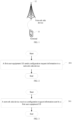
- FIG. 1 is a block diagram of a wireless communication system to which an embodiment of this application is applicable.
- the wireless communication system includes a terminal 11 and a network side device 12.
- the terminal 11 is a single-SIM terminal or a multi-SIM terminal.
- the terminal includes one UE.
- the terminal includes a plurality of UEs. It should be noted that, in this embodiment of this application, one UE corresponds to one subscriber identity module (Subscriber Identity Module, SIM) card.
- SIM Subscriber Identity Module
- the terminal 11 may be a mobile phone, a tablet computer (Tablet Personal Computer), a laptop computer (Laptop Computer) or referred to as a notebook computer, a personal digital assistant (Personal Digital Assistant, PDA), a palmtop computer, a netbook, an ultra-mobile personal computer (ultra-mobile personal computer, UMPC), a mobile Internet device (Mobile Internet Device, MID), a wearable device (Wearable Device), or a vehicular user equipment (Vehicle User Equipment, VUE), a pedestrian user equipment (Pedestrian User Equipment, PUE), and other terminal-side devices.
- the wearable device includes smart watches, bands, headsets, glasses, or the like.
- the network side device 12 may be a base station or a core network.
- the base station may be referred to as a Node B, an evolved Node B, an access point, a base transceiver station (Base Transceiver Station, BTS), a radio base station, a radio transceiver, a basic service set (Basic Service Set, BSS), an extended service set (Extended Service Set, ESS), a node B, an evolved node B (eNB), a home node B, a home evolved node B, a wireless local area network (Wireless Local Area Networks, WLAN) access point, a Wireless Fidelity (Wireless Fidelity, WiFi) node, a transmitting/receiving point (Transmitting Receiving Point, TRP), or some other suitable term in the field, provided that a same technical effect is achieved.
- the base station is not limited to a specific technical term. It should be noted
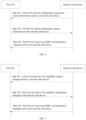
- FIG. 2 is a first flowchart of a request information sending method according to an embodiment of this application. As shown in FIG. 2 , the request information sending method includes the following steps:
- Step 201 A first user equipment (User Equipment, UE) sends configuration request information to a network side device, where the configuration request information is used to indicate a configuration resource expected by the first UE.
- UE User Equipment
- the first UE may be a UE in a multi-SIM terminal. It should be noted that, the UE may be considered as a signing subject. A plurality of signing subjects can be configured on one terminal device.
- the signing subject may be represented through a subscriber identity module (Subscriber Identity Module, SIM) card.
- SIM Subscriber Identity Module
- One SIM card corresponds to one signing subject of a network.
- the SIM card stores an identifier of the signing subject, that is, an identifier of the UE, such as a user identity (Subscription Permanent Identifier, SUPI) or an international mobile subscriber identity (International Mobile Subscription Identity, IMSI). Therefore, when a plurality of SIM cards are inserted into one terminal or information about a plurality of electronic SIM cards is configured on one terminal, the terminal and different signing subjects may constitute different UEs.
- SUPI Subscriber Identity
- IMSI International Mobile Subscription Identity
- a capability of the multi-SIM terminal may be single transmit and single receive, single transmit and dual receive, dual transmit and dual receive, and the like.
- the multi-SIM terminal supporting single transmit and single receive can send and receive data on one network through one UE.
- the multi-SIM terminal supporting single transmit and dual receive can send and receive data through one UE at the same time, and can send data through another UE.
- the multi-SIM terminal supporting dual transmit and dual receive can simultaneously send and receive data through one UE, and send and receive data through another UE.
- the multi-SIM terminal supporting dual transmit and dual receive can simultaneously send and receive in a plurality of networks in some bands without mutual interference.
- the first UE can support different band capabilities, and the band capabilities supported by the first UE may include: a band supported by the first UE and a band combination supported by the first UE.
- the band supported by the first UE may include a band (Band) 1
- the band combination supported by the first UE may include: Band 1 + Band 2.
- the first UE sends the configuration request information to the network side device, and the network side device can configure, for the first UE based on the configuration request information, a band within a band combination supported by the first UE, so that a network side device corresponding to each UE of a multi-SIM terminal can configure, for each UE, a band within a band combination supported by the UE, thereby implementing simultaneous data sending and receiving of a plurality of UEs in the multi-SIM terminal.
- the band combination supported by the first UE may include a synchronous band combination supported by the first UE and an asynchronous band combination supported by the first UE.
- the synchronous band combination when the UE works in a plurality of cells or frequencies at the same time, the plurality of cells or frequencies need to be in a synchronous state.
- the asynchronous band combination when the UE works in a plurality of cells or frequencies at the same time, the plurality of cells or frequencies may be in an asynchronous state.
- the asynchronous band combination it may be considered by default that the UE also supports a synchronous working state, that is, for the asynchronous band combination, the plurality of cells in which the UE works at the same time in the band combination may also be in the synchronous state.
- the configuration resource expected by the first UE may also be referred to as a configuration preference of the first UE.
- the first user equipment UE sends the configuration request information to the network side device, where the configuration request information is used to indicate the configuration resource expected by the first UE.
- the network side device can provide a configuration for the first UE based on the configuration request information sent by the first UE, so that data transmission performance of a UE can be improved.
- the network side device can configure, for the first UE based on the configuration request information sent by the first UE, a band within a band combination supported by the first UE, so that a plurality of UEs of a multi-SIM terminal can transmit and receive data simultaneously, thereby improving data transmission performance of the UEs of the multi-SIM terminal.
- the configuration request information includes at least one of the following: an expected band configuration, a UE type, an expected measurement configuration, and an unexpected band configuration.
- the configuration request information includes at least one of an expected band configuration, a UE type, an expected measurement configuration, and an unexpected band configuration
- the configuration request information may indicate a configuration preference of the first UE, so that the network side device can provide a configuration for the first UE based on the configuration preference of the first UE.
- the expected band configuration includes at least one of the following: an expected band, an expected band combination, an expected carrier aggregation (Carrier Aggregation, CA) band, an expected multi-radio access technology dual connectivity (Multi-RAT Dual Connectivity, MR-DC) band combination, and an expected time-division multiplexing pattern (Time-Division Multiplexing pattern, TDM pattern), where the expected TDM pattern includes at least one of the following: a band combination identifier and a carrier aggregation identifier.
- CA Carrier Aggregation
- MR-DC multi-radio access technology dual connectivity
- TDM pattern Time-Division Multiplexing pattern
- the expected band may also be referred to as a band preference (band preference), and may be used to indicate an expected band list, that is, a preferred band list.
- the expected band may be identified by using at least one preferred band identifier.
- the expected band may include Band 1 and Band 2.
- the expected band combination may also be referred to as a band combination preference (Band Combination Preference), and may be used to indicate a preferred band combination.
- the expected band combination may be identified by using at least one preferred band combination identifier.
- the expected band combination may include band combination 1 and band combination 2.
- the expected CA band may also be referred to as a carrier aggregation band preference (CA Bands Preference), and may be used to indicate a preferred band that supports carrier aggregation.
- CA Bands Preference carrier aggregation band preference
- the expected CA band may include Band 1 and Band 2.
- the expected MR-DC band combination may also be referred to as an MR-DC band combination preference (MR-DC Band Preference), and may be used to indicate a preferred band combination that supports MR-DC.
- MR-DC Band Preference MR-DC Band Preference
- the expected TDM pattern may also be referred to as a TDM pattern preference (TDM pattern Preference).
- the expected TDM pattern may include: a TDM pattern 1 UE preference, and/or a TDM pattern 2 UE preference.
- the TDM pattern 1 UE preference corresponds to Band Combination 1, CA1.
- the TDM pattern 2 UE preference corresponds to Band Combination 2, CA2.
- the expected band configuration includes at least one of an expected band, an expected band combination, an expected CA band, an expected MR-DC band combination, and an expected TDM pattern, so that the network side device can provide a band configuration for the first UE based on the band preference of the first UE.
- the UE type includes the following item: a multi-SIM (Multi-SIM) UE type.
- Multi-SIM multi-SIM
- the Multi-SIM UE type may indicate that a terminal is a multi-SIM UE.
- the network side device can provide a preferred configuration for the first UE based on the UE type.
- the Multi-SIM UE type is further used to indicate at least one of the following:
- the network side device can provide a preferred configuration for the first UE based on the dual SIM dual active type, the dual transmit capability, and/or the dual receive capability of the first UE.
- the expected measurement configuration includes at least one of the following: a measurement object, a measurement frequency, and a measurement band.
- the expected measurement configuration includes at least one of a measurement object, a measurement frequency, and a measurement band, so that the network side device can obtain a measurement object, a measurement frequency, and a measurement band that are preferred by the first UE, and provide a configuration for the first UE based on the measurement object, the measurement frequency, and the measurement band that are preferred by the first UE.
- the unexpected band configuration includes at least one of the following: an unexpected band, an unexpected band combination, an unexpected carrier, and an unexpected carrier combination.
- the network side device can provide the first UE with no unexpected band configuration based on at least one of the unexpected band, the unexpected band combination, the unexpected carrier, and the unexpected carrier combination of the first UE, thereby providing a preferred configuration for the first UE.
- the configuration request information is sent through at least one of the following: a UE assistance information message, a radio resource control (Radio Resource Control, RRC) reconfiguration complete message (RRC Reconfiguration Complete), a UE capability information (UE Capability Information) message, an RRC setup request (RRC Setup Request) message, an RRC setup complete (RRC Setup Complete) message, a registration request (Registration Request) message, and a service request (Service Request) message.
- RRC Radio Resource Control
- RRC Reconfiguration Complete RRC Reconfiguration Complete
- UE Capability Information UE capability information
- RRC setup request RRC Setup Request
- RRC setup complete RRC Setup Complete
- Registration Request Registration Request
- Service Request service request
- the UE assistance information message may include at least one of the following: a multi-SIM assistance information message and an in-device co-existence (In-device Co-existence, IDC) interference assistance (idc-Assistance) information message.
- IDC in-device Co-existence
- the IDC assistance information message may indicate at least one of the following: an affected band, an affected band combination, an affected carrier, and an affected carrier combination.
- the IDC assistance information message may further indicate: that an affected system is a multi-SIM terminal, or a third generation partnership project (3rd Generation Partnership Project, 3GPP) or radio access technology (Radio Access Technology, RAT) type.
- the RAT type may include a second generation mobile communication technology (2rd-Generation, 2G), a third generation mobile communication technology (3rd-Generation, 3G), LTE, or NR.
- the configuration request information may be sent through the UE capability information message, and may indicate at least one of the following in the UE capability information message based on band combination information: a band preference, a carrier aggregation preference, and an MR-DC carrier aggregation preference.
- the configuration request information may be sent through at least one of the UE assistance information message, the radio resource control RRC reconfiguration complete message, the UE capability information message, the RRC setup request message, the RRC setup complete message, the registration request message, and the service request message, so that the first UE can send the configuration request information in a plurality of ways, which is relatively flexible.
- the sending, by a first UE, configuration request information to a network side device includes:
- the first UE may send the configuration request information to the network side device when the first UE is configured to be allowed to send the configuration request information and has not sent the configuration request information.
- the first UE when the first UE is connected to the network side, the first UE sends the configuration request information to the network side device, so that the first UE can report a configuration preference to the network side device in a timely manner.
- the second UE establishes a connection to the network side, the first UE sends the configuration request information to the network side device, so that a plurality of UEs can send and receive data at the same time.
- the first UE detects that there is IDC interference
- the first UE sends the configuration request information to the network side device, so that the network side device can provide a preferred configuration for the first UE based on the configuration request information to alleviate the problem of IDC.
- the configuration resource expected by the first UE changes, the first UE sends the configuration request information to the network side device, so that the first UE can report a changed configuration preference to the network side device in a timely manner.
- the method before the sending, by a first UE, configuration request information to a network side device, the method further includes: receiving, by the first UE, configuration negotiation control information sent by the network side device, where the configuration negotiation control information is used to indicate whether the network side device supports processing the configuration request information of the first UE.
- the sending, by a first UE, configuration request information to a network side device includes: sending, by the first UE, the configuration request information to the network side device in a case that the configuration negotiation control information indicates that the network side device supports processing the configuration request information of the first UE.
- the configuration negotiation control information may include at least one of the following: an indication enabling configuration preference (Preference Reporting Setup) and an indication enabling band combination preference (Band Combination Preference Setup).
- the indication enabling configuration preference and/or the indication enabling band combination preference both can be used to indicate that the network side device supports processing the configuration request information of the first UE.
- the configuration negotiation control information is used to indicate whether the network side device supports processing the configuration request information of the first UE, so that the first UE is prevented from sending the configuration request information to a network side device that does not support processing the configuration request information.
- the configuration negotiation control information is obtained through at least one of the following: a UE capability enquiry (UE Capability Enquiry) message, an RRC reconfiguration (RRC Reconfiguration) message, and system information.
- UE Capability Enquiry UE Capability Enquiry
- RRC reconfiguration RRC Reconfiguration
- the system information may include at least one of the following: a system information block (System Information Blocks, SIB) 1, a SIB 2, a SIB 3, a SIB 4, a SIB 5, and another SIB message.
- SIB System Information Blocks
- the another SIB message may be a SIB message other than the SIB 1, the SIB 2, the SIB 3, the SIB 4, and the SIB 5.
- the configuration negotiation control information may be obtained through at least one of the UE capability enquiry message, the RRC reconfiguration message, and the system information, so that the first UE can obtain the configuration negotiation control information in a plurality of ways, which is relatively flexible.
- the configuration negotiation control information includes at least one of the following: duration of a prohibit timer and configuration request indication information.
- the prohibit timer is used to prohibit the first UE from sending the configuration request information to the network side device.
- the configuration request indication information is used to indicate whether the first UE is allowed to send the configuration request information.
- the first UE may send the configuration request information when the prohibit timer is not running.
- the configuration request information includes duration of a prohibit timer, and it may indicate that a time interval between two transmissions of the configuration request information by the first UE needs to be greater than or equal to the duration of the prohibit timer.
- the configuration request indication information may include establishment, release, support, non-support, enable, disable, and so on.
- the configuration request indication information may include establishment or release. Establishment is used to indicate that the first UE is allowed to send the configuration request information. Release is used to indicate that the first UE is not allowed to send the configuration request information.
- the configuration request indication information may include support or non-support. Support is used to indicate that the first UE is allowed to send the configuration request information. Non-support is used to indicate that the first UE is not allowed to send the configuration request information.
- the configuration request indication information may include enable or disable. Enable is used to indicate that the first UE is allowed to send the configuration request information.
- Disable is used to indicate that the first UE is not allowed to send the configuration request information.
- it may indicate, through at least one of the duration of the prohibit timer and the configuration request indication information, whether the first UE is allowed to send the configuration request information, so that the first UE is prevented from sending the configuration request information to a network side device that does not support processing the configuration request information.
- the prohibit timer is started when the first UE has sent the configuration request information to the network side device; and the first UE is prohibited from sending the configuration request information to the network side device when the prohibit timer is running.
- the prohibit timer runs within a valid time.
- the duration of the prohibit timer is 5s, and within 5s after the prohibit timer is started, the first UE is prohibited from sending the configuration request information to the network side device.
- the first UE is prohibited from sending the configuration request information to the network side device when the prohibit timer is running, so that the first UE is prevented from frequently sending the configuration request information to the network side device and affecting normal operation of the network side device.
- the method further includes: receiving, by the first UE, configuration information sent by the network side device, where the configuration information is determined by the network side device based on the configuration request information.
- the network side device may provide a configuration for the first UE by partially or completely referring to the configuration request information sent by the first UE, so that a plurality of UEs in a multi-SIM terminal can send and receive data at the same time, thereby improving data transmission performance of the UEs of the multi-SIM terminal.
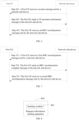
- FIG. 3 is a second flowchart of a request information sending method according to an embodiment of this application. As shown in FIG. 3 , the request information sending method includes the following steps:
- Step 301 A network side device receives configuration request information sent by a first user equipment UE, where the configuration request information is used to indicate a configuration resource expected by the first UE.
- the configuration request information includes at least one of the following: an expected band configuration, a UE type, an expected measurement configuration, and an unexpected band configuration.
- the expected band configuration includes at least one of the following: an expected band, an expected band combination, an expected carrier aggregation CA band, an expected multi-radio access technology dual connectivity MR-DC band combination, and an expected time-division multiplexing pattern TDM pattern, where the expected TDM pattern includes at least one of the following: a band combination identifier and a carrier aggregation identifier.
- the UE type includes the following item: a multi-SIM UE type.
- the Multi-SIM UE type is further used to indicate at least one of the following:
- the expected measurement configuration includes at least one of the following: a measurement object, a measurement frequency, and a measurement band.
- the unexpected band configuration includes at least one of the following: an unexpected band, an unexpected band combination, an unexpected carrier, and an unexpected carrier combination.
- the configuration request information is obtained through at least one of the following: a UE assistance information message, a radio resource control RRC reconfiguration complete message, a UE capability information message, an RRC setup request message, an RRC setup complete message, a registration request message, and a service request message.
- the receiving, by a network side device, configuration request information sent by a first UE includes:
- the method before the receiving, by a network side device, configuration request information sent by a first UE, the method further includes: sending, by the network side device, configuration negotiation control information to the first UE, where the configuration negotiation control information is used to indicate whether the network side device supports processing the configuration request information of the first UE.
- the configuration negotiation control information is sent through at least one of the following: a UE capability enquiry message, an RRC reconfiguration message, and system information.
- the configuration negotiation control information includes at least one of the following: duration of a prohibit timer and configuration request indication information.
- the prohibit timer is used to prohibit the first UE from sending the configuration request information to the network side device.
- the configuration request indication information is used to indicate whether the first UE is allowed to send the configuration request information.
- the prohibit timer is started when the first UE has sent the configuration request information to the network side device; and the first UE is prohibited from sending the configuration request information to the network side device when the prohibit timer is running.
- the method further includes: sending, by the network side device, configuration information to the first UE, where the configuration information is determined by the network side device based on the configuration request information.
- this embodiment serves as an implementation of a corresponding network side device in the embodiment shown in FIG. 2 .
- this embodiment refer to related descriptions in the embodiment shown in FIG. 2 . To avoid repeated descriptions, details are not described again in this embodiment.
- data transmission performance of a UE can be improved.
- the request information sending method may include the following steps:
- step 401 to step 403 may be performed a plurality of times or cyclically.
- step 401 to step 403 may be performed in the following order: step 401-step 402-step 403-step 402-step 403.
- the request information sending method may include the following steps:
- the configuration request information includes at least one of the following: a band preference, a band combination preference, a TDM pattern preference, and preference information based on band combination capability information.
- the band combination capability information is capability information reported by the first UE in the UE capability information message.
- Step 503 The first UE receives an RRC reconfiguration message sent by the network side device, where the RRC reconfiguration message includes configuration information, the configuration information is determined by the network side device based on the configuration request information, and the configuration information can partially or completely meet a request of the first UE in the configuration request information.
- the request information sending method may include the following steps: Step 601: A first UE receives a system message sent by a network side device, where the system message includes configuration negotiation control information, and the configuration negotiation control information is used to indicate whether the network side device supports processing configuration request information of the first UE.
- the configuration negotiation control information may include the following information: information indicating that sending the configuration request information by the first UE is supported; and duration of a prohibit timer.
- Step 602 The first UE sends a UE assistance information message to the network side device, where the UE assistance information message includes the configuration request information.
- the first UE may send the UE assistance information message to the network side device in a case that a prohibit timer is not running. During running of the prohibit timer, the first UE is not allowed to send the configuration request information. The first UE can send the configuration request information again only after the prohibit timer expires.
- the first UE after the first UE sends the configuration request information to the network side device, that is, after the first UE sends the UE assistance information message to the network side device, the first UE starts the prohibit timer.
- the configuration request information includes at least one of the following: a band preference, a band combination preference, a CA band preference, and a TDM pattern preference.
- Step 603 The first UE receives an RRC reconfiguration message sent by the network side device, where the RRC reconfiguration message includes configuration information, the configuration information is determined by the network side device based on the configuration request information, and the configuration information can partially or completely meet a request of the first UE in the configuration request information.
- the request information sending method may include the following steps:
- the first UE receives the first RRC reconfiguration message, parses the first RRC reconfiguration message, and in a case that the first RRC reconfiguration message does not meet a configuration resource expected by the first UE, the first UE may send the RRC reconfiguration complete message carrying the configuration request information to the network side device.
- the first UE may send the RRC reconfiguration complete message to the network side device in a case that a prohibit timer is not running. After the first UE sends the configuration request information to the network side device, that is, after the first UE sends the RRC reconfiguration complete message to the network side device, the first UE starts the prohibit timer.
- the configuration request information includes at least one of the following: a band preference, a band combination preference, a CA band preference, and a TDM pattern preference.
- Step 703 The first UE receives a second RRC reconfiguration message sent by the network side device, where the second RRC reconfiguration message includes configuration information, the configuration information is determined by the network side device based on the configuration request information, and the configuration information can partially or completely meet a request of the first UE in the configuration request information.
- the first UE receives the configuration negotiation control information, and the configuration negotiation control information indicates whether the network side device supports processing the configuration request information of the first UE.
- the first UE reports the configuration request information, and the configuration request information indicates the configuration resource expected by the first UE.
- the first UE receives the reconfiguration message.
- the network side device can provide a configuration for the first UE based on the configuration request information, which is beneficial for UEs of a multi-SIM terminal to perform dual transmit and dual receive operations, so that data transmission performance of the UEs of the multi-SIM terminal can be improved.
- the request information sending method provided in this embodiment of this application may be performed by a request information sending apparatus or a control module in the request information sending apparatus for performing a request information sending method.
- a request information sending apparatus performs the request information sending method is used as an example to describe the request information sending apparatus provided in the embodiments of this application.
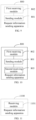
- FIG. 8 is a first structural diagram of a request information sending apparatus according to an embodiment of this application.
- a request information sending apparatus 800 includes: a sending module 801, configured to send configuration request information to a network side device, where the configuration request information is used to indicate a configuration resource expected by a first UE.
- the configuration request information includes at least one of the following: an expected band configuration, a UE type, an expected measurement configuration, and an unexpected band configuration.
- the expected band configuration includes at least one of the following: an expected band, an expected band combination, an expected carrier aggregation CA band, an expected multi-radio access technology dual connectivity MR-DC band combination, and an expected time-division multiplexing pattern TDM pattern, where the expected TDM pattern includes at least one of the following: a band combination identifier and a carrier aggregation identifier.
- the UE type includes the following item: a multi-SIM UE type.
- the Multi-SIM UE type is further used to indicate at least one of the following:
- the expected measurement configuration includes at least one of the following: a measurement object, a measurement frequency, and a measurement band.
- the unexpected band configuration includes at least one of the following: an unexpected band, an unexpected band combination, an unexpected carrier, and an unexpected carrier combination.
- the configuration request information is sent through at least one of the following: a UE assistance information message, a radio resource control RRC reconfiguration complete message, a UE capability information message, an RRC setup request message, an RRC setup complete message, a registration request message, and a service request message.
- the sending module 801 is specifically configured to:
- the apparatus 800 further includes: a first receiving module 802, configured to receive configuration negotiation control information sent by the network side device, where the configuration negotiation control information is used to indicate whether the network side device supports processing the configuration request information of the first UE.
- a first receiving module 802 configured to receive configuration negotiation control information sent by the network side device, where the configuration negotiation control information is used to indicate whether the network side device supports processing the configuration request information of the first UE.
- the sending module 801 is specifically configured to: send the configuration request information to the network side device in a case that the configuration negotiation control information indicates that the network side device supports processing the configuration request information of the first UE.
- the configuration negotiation control information is obtained through at least one of the following: a UE capability enquiry message, an RRC reconfiguration message, and system information.
- the configuration negotiation control information includes at least one of the following: duration of a prohibit timer and configuration request indication information.
- the prohibit timer is used to prohibit the first UE from sending the configuration request information to the network side device.
- the configuration request indication information is used to indicate whether the first UE is allowed to send the configuration request information.
- the prohibit timer is started when the first UE has sent the configuration request information to the network side device; and the first UE is prohibited from sending the configuration request information to the network side device when the prohibit timer is running.
- the apparatus 800 further includes: a second receiving module 803, configured to receive configuration information sent by the network side device, where the configuration information is determined by the network side device based on the configuration request information.
- the request information sending apparatus 800 in this embodiment of this application can improve data transmission performance of a UE.
- the request information sending apparatus in this embodiment of this application may be an apparatus, or may be an apparatus or an electronic device having an operating system, or may be a component, an integrated circuit, or a chip in a terminal.
- the apparatus or the electronic device may be a mobile terminal, or may be a non-mobile terminal.
- the mobile terminal may include, but is not limited to the types of terminals 11 listed above.
- the non-mobile terminal may be a server, a network attached storage (Network Attached Storage, NAS), a personal computer (personal computer, PC), a television (television, TV), a teller machine, a self-service machine, or the like. This is not specifically limited in this embodiment of this application.
- the request information sending apparatus provided in this embodiment of this application can implement the processes implemented in the method embodiment of FIG. 2 and achieve the same technical effect. To avoid repetition, details are not described herein again.
- FIG. 11 is a fourth structural diagram of a request information sending apparatus according to an embodiment of this application.
- a request information sending apparatus 1100 includes: a receiving module 1101, configured to receive configuration request information sent by a first user equipment UE, where the configuration request information is used to indicate a configuration resource expected by the first UE.
- the configuration request information includes at least one of the following: an expected band configuration, a UE type, an expected measurement configuration, and an unexpected band configuration.
- the expected band configuration includes at least one of the following: an expected band, an expected band combination, an expected carrier aggregation CA band, an expected multi-radio access technology dual connectivity MR-DC band combination, and an expected time-division multiplexing pattern TDM pattern, where the expected TDM pattern includes at least one of the following: a band combination identifier and a carrier aggregation identifier.
- the UE type includes the following item: a multi-SIM E type.
- the Multi-SIM UE type is further used to indicate at least one of the following:
- the expected measurement configuration includes at least one of the following: a measurement object, a measurement frequency, and a measurement band.
- the unexpected band configuration includes at least one of the following: an unexpected band, an unexpected band combination, an unexpected carrier, and an unexpected carrier combination.
- the configuration request information is obtained through at least one of the following: a UE assistance information message, a radio resource control RRC reconfiguration complete message, a UE capability information message, an RRC setup request message, an RRC setup complete message, a registration request message, and a service request message.
- the receiving module 1101 is specifically configured to:
- the apparatus 1100 further includes: a first sending module 1102, configured to send configuration negotiation control information to the first UE, where the configuration negotiation control information is used to indicate whether the network side device supports processing the configuration request information of the first UE.
- a first sending module 1102 configured to send configuration negotiation control information to the first UE, where the configuration negotiation control information is used to indicate whether the network side device supports processing the configuration request information of the first UE.
- the configuration negotiation control information is sent through at least one of the following: a UE capability enquiry message, an RRC reconfiguration message, and system information.
- the configuration negotiation control information includes at least one of the following: duration of a prohibit timer and configuration request indication information.
- the prohibit timer is used to prohibit the first UE from sending the configuration request information to the network side device.
- the configuration request indication information is used to indicate whether the first UE is allowed to send the configuration request information.
- the prohibit timer is started when the first UE has sent the configuration request information to the network side device; and the first UE is prohibited from sending the configuration request information to the network side device when the prohibit timer is running.
- the apparatus 1100 further includes: a second sending module 1103, configured to send configuration information to the first UE, where the configuration information is determined by the network side device based on the configuration request information.
- a second sending module 1103 configured to send configuration information to the first UE, where the configuration information is determined by the network side device based on the configuration request information.
- the request information sending apparatus 1100 in this embodiment of this application can improve data transmission performance of a UE.
- the request information sending apparatus in this embodiment of this application may be an apparatus, or may be an apparatus or an electronic device having an operating system, or may be a component, an integrated circuit, or a chip in a terminal.
- the apparatus or the electronic device may be a mobile terminal, or may be a non-mobile terminal.
- the mobile terminal may include, but is not limited to the types of terminals 11 listed above.
- the non-mobile terminal may be a server, a network attached storage (Network Attached Storage, NAS), a personal computer (personal computer, PC), a television (television, TV), a teller machine, a self-service machine, or the like. This is not specifically limited in this embodiment of this application.
- the request information sending apparatus provided in this embodiment of this application can implement the processes implemented in the method embodiment of FIG. 3 and achieve the same technical effect. To avoid repetition, details are not described herein again.
- an embodiment of this application further provides a communication device 1400, including a processor 1401, a memory 1402, and a program or an instruction stored in the memory 1402 and executable on the processor 1401.
- a communication device 1400 including a processor 1401, a memory 1402, and a program or an instruction stored in the memory 1402 and executable on the processor 1401.
- the communication device 1400 is a terminal, and when the program or the instruction is executed by the processor 1401, the processes of the foregoing embodiment of the request information sending method on the side of the first UE are implemented, and the same technical effects can be achieved.
- the communication device 1400 is a network side device, and when the program or the instruction is executed by the processor 1401, the processes of the foregoing embodiment of the request information sending method on the side of the network side are implemented, and the same technical effects can be achieved. To avoid repetition, details are not described herein again.
- An embodiment of this application further provides a UE.
- the UE is a first UE, and includes a processor and a communication interface.
- the processor or the communication interface is configured to send configuration request information to a network side device.
- the configuration request information is used to indicate a configuration resource expected by the first UE.
- the embodiment of the UE corresponds to the method embodiment on the side of the UE.
- the implementation processes and implementations of the method embodiment are all applicable to the embodiment of the UE, and the same technical effects can be achieved.
- FIG. 15 is a schematic diagram of a hardware structure of a UE that implements an embodiment of this application.
- the UE 1500 includes, but is not limited to: at least some components in a radio frequency unit 1501, a network module 1502, an audio output unit 1503, an input unit 1504, a sensor 1505, a display unit 1506, a user input unit 1507, an interface unit 1508, a memory 1509, and a processor 1510.
- the UE 1500 may further include a power supply (such as a battery) for supplying power to each component.
- the power supply may be logically connected to the processor 1510 by using a power management system, thereby implementing functions, such as charging, discharging, and power consumption management, by using the power management system.
- the structure of the UE shown in FIG. 15 does not constitute any limitation on the UE.
- the UE may include more or fewer components than those shown in the figure, or some components may be combined, or different component deployments may be used. Details are not described herein again.
- the input unit 1504 may include a graphics processing unit (Graphics Processing Unit, GPU) 15041 and a microphone 15042.
- the graphics processing unit 15041 processes image data from static pictures or videos captured by an image capture apparatus (such as a camera) in a video capture mode or an image capture mode.
- the display unit 1506 may include a display panel 15061.
- the display panel 15061 may be configured in a form of a liquid crystal display, an organic light-emitting diode, or the like.
- the user input unit 1507 includes a touch panel 15071 and another input device 15072.
- the touch panel 15071 is also referred to as a touchscreen.
- the touch panel 15071 may include two parts: a touch detection apparatus and a touch controller.
- the another input device 15072 may include, but is not limited to, a physical keyboard, a functional button (such as a sound volume control button or a power button), a trackball, a mouse, or a joystick. Details are not described herein.
- the radio frequency unit 1501 receives downlink data from the network side device and then sends the data to the processor 1510 for processing; and additionally, sends uplink data to the network side device.
- the radio frequency unit 1501 includes, but is not limited to, an antenna, at least one amplifier, a transceiver, a coupler, a low noise amplifier, a duplexer, and the like.
- the memory 1509 may be configured to store a software program or instruction and various data.
- the memory 1509 may mainly include a program or instruction storage area and a data storage area.
- the program or instruction storage area may store an operating system, an application or instruction required by at least one function (for example, a sound playing function and an image playing function), and the like.
- the memory 1509 may include a high speed random access memory, and may also include a non-volatile memory.
- the non-volatile memory may be a read-only memory (Read-Only Memory, ROM), a programmable read-only memory (Programmable ROM, PROM), an erasable programmable read-only memory (Erasable PROM, EPROM), an electrically erasable programmable read-only memory (Electrically EPROM, EEPROM), or a flash memory, such as at least one magnetic disk storage device, a flash memory device, or another non-volatile solid-state storage device.
- ROM Read-Only Memory
- PROM programmable read-only memory
- Erasable PROM Erasable PROM
- EPROM electrically erasable programmable read-only memory
- EEPROM electrically erasable programmable read-only memory
- flash memory such as at least one magnetic disk storage device, a flash memory device, or another non-volatile solid-state storage device.
- the processor 1510 may include one or more processing units.
- the processor 1510 may integrate an application processor and a modem processor.
- the application processor mainly processes the operating system, a user interface, the application program or instruction, and the like.
- the modem processor mainly processes wireless communication and is, for example, a baseband processor. It may be understood that, the modem processor may alternatively not be integrated into the processor 1510.
- the radio frequency unit 1501 is configured to send the configuration request information to the network side device.
- the configuration request information is used to indicate the configuration resource expected by the first UE.
- the configuration request information includes at least one of the following: an expected band configuration, a UE type, an expected measurement configuration, and an unexpected band configuration.
- the expected band configuration includes at least one of the following: an expected band, an expected band combination, an expected carrier aggregation CA band, an expected multi-radio access technology dual connectivity MR-DC band combination, and an expected time-division multiplexing pattern TDM pattern, where the expected TDM pattern includes at least one of the following: a band combination identifier and a carrier aggregation identifier.
- the UE type includes the following item: a multi-SIM UE type.
- the Multi-SIM UE type is further used to indicate at least one of the following:
- the expected measurement configuration includes at least one of the following: a measurement object, a measurement frequency, and a measurement band.
- the unexpected band configuration includes at least one of the following: an unexpected band, an unexpected band combination, an unexpected carrier, and an unexpected carrier combination.
- the configuration request information is sent through at least one of the following: a UE assistance information message, a radio resource control RRC reconfiguration complete message, a UE capability information message, an RRC setup request message, an RRC setup complete message, a registration request message, and a service request message.
- the radio frequency unit 1501 is further configured to:
- the radio frequency unit 1501 is further configured to:
- the configuration negotiation control information is obtained through at least one of the following: a UE capability enquiry message, an RRC reconfiguration message, and system information.
- the configuration negotiation control information includes at least one of the following: duration of a prohibit timer and configuration request indication information.
- the prohibit timer is used to prohibit the first UE from sending the configuration request information to the network side device.
- the configuration request indication information is used to indicate whether the first UE is allowed to send the configuration request information.
- the prohibit timer is started when the first UE has sent the configuration request information to the network side device; and the first UE is prohibited from sending the configuration request information to the network side device when the prohibit timer is running.
- the radio frequency unit 1501 is further configured to: a second receiving module, configured to receive configuration information sent by the network side device, where the configuration information is determined by the network side device based on the configuration request information.
- the UE in this embodiment of this application can improve data transmission performance of the UE.
- the UE of this embodiment of this application further includes: an instruction or a program stored in the memory 1509 and executable on the processor 1510.
- the processor 1510 calls the instruction or the program in the memory 1509 to perform the method performed by each module shown in FIG. 8 , and achieve the same technical effect. To avoid repetition, details are not described herein again.
- An embodiment of this application further provides a network side device, including a processor and a communication interface.
- the communication interface is configured to receive configuration request information sent by a first user equipment UE.
- the configuration request information is used to indicate a configuration resource expected by the first UE.
- the embodiment of the network side device corresponds to the method embodiment of the network side device.
- the implementation processes and implementations of the method embodiment are all applicable to the embodiment of the network side device, and the same technical effects can be achieved.
- the network device 1600 includes: an antenna 1601, a radio frequency apparatus 1602, and a baseband apparatus 1603.
- the antenna 1601 is connected to the radio frequency apparatus 1602.
- the radio frequency apparatus 1602 receives information through the antenna 1601, and sends the received information to the baseband apparatus 1603 for processing.
- the baseband apparatus 1603 processes information to be sent, and sends the processed information to the radio frequency apparatus 1602.
- the radio frequency apparatus 1602 processes the received information, and then sends out the processed information through the antenna 1601.
- the foregoing frequency band processing apparatus may be located in the baseband apparatus 1603.
- the method performed by the network side device may be implemented in the baseband apparatus 1603.
- the baseband apparatus 1603 includes a processor 1604 and a memory 1605.
- the baseband apparatus 1603 may include, for example, at least one baseband board, and the baseband board is provided with a plurality of chips. As shown in FIG. 16 , one of the chips is, for example, the processor 1604, connected to the memory 1605 to call a program in the memory 1605, to perform the operations of the network device shown in the foregoing method embodiment.
- the baseband apparatus 1603 may further include a network interface 1606, configured to exchange information with the radio frequency apparatus 1602.
- the interface is, for example, a common public radio interface (common public radio interface, CPRI for short).
- the radio frequency apparatus 1602 is configured to receive configuration request information sent by a first user equipment UE, where the configuration request information is used to indicate a configuration resource expected by the first UE.
- the configuration request information includes at least one of the following: an expected band configuration, a UE type, an expected measurement configuration, and an unexpected band configuration.
- the expected band configuration includes at least one of the following: an expected band, an expected band combination, an expected carrier aggregation CA band, an expected multi-radio access technology dual connectivity MR-DC band combination, and an expected time-division multiplexing pattern TDM pattern, where the expected TDM pattern includes at least one of the following: a band combination identifier and a carrier aggregation identifier.
- the UE type includes the following item: a multi-SIM UE type.
- the Multi-SIM UE type is further used to indicate at least one of the following:
- the expected measurement configuration includes at least one of the following: a measurement object, a measurement frequency, and a measurement band.
- the unexpected band configuration includes at least one of the following: an unexpected band, an unexpected band combination, an unexpected carrier, and an unexpected carrier combination.
- the configuration request information is obtained through at least one of the following: a UE assistance information message, a radio resource control RRC reconfiguration complete message, a UE capability information message, an RRC setup request message, an RRC setup complete message, a registration request message, and a service request message.
- the radio frequency apparatus 1602 is further configured to:
- the radio frequency apparatus 1602 is further configured to: send configuration negotiation control information to the first UE, where the configuration negotiation control information is used to indicate whether the network side device supports processing the configuration request information of the first UE.
- the configuration negotiation control information is sent through at least one of the following: a UE capability enquiry message, an RRC reconfiguration message, and system information.
- the configuration negotiation control information includes at least one of the following: duration of a prohibit timer and configuration request indication information.
- the prohibit timer is used to prohibit the first UE from sending the configuration request information to the network side device.
- the configuration request indication information is used to indicate whether the first UE is allowed to send the configuration request information.
- the prohibit timer is started when the first UE has sent the configuration request information to the network side device; and the first UE is prohibited from sending the configuration request information to the network side device when the prohibit timer is running.
- the radio frequency apparatus 1602 is further configured to: send configuration information to the first UE, where the configuration information is determined by the network side device based on the configuration request information.
- the network side device in this embodiment of this application can improve data transmission performance of a UE.
- the network side device in this embodiment of the present invention further includes: an instruction or a program stored in the memory 1605 and executable on the processor 1604.
- the processor 1604 calls the instruction or the program in the memory 1605 to perform the method performed by each module shown in FIG. 11 , and achieve the same technical effect. To avoid repetition, details are not described herein again.
- An embodiment of this application further provides a readable storage medium.
- the readable storage medium may be non-volatile or volatile.
- the readable storage medium stores a program or an instruction.
- the program or the instruction is executed by a processor, the processes of the foregoing embodiment of the request information sending method are implemented, and the same technical effects can be achieved. To avoid repetition, details are not described herein again.
- the processor may be the processor in the terminal described in the foregoing embodiment.
- the readable storage medium includes a computer-readable storage medium, such as a computer read-only memory (Read-Only Memory, ROM), a random access memory (Random Access Memory, RAM), a magnetic disk, an optical disc, and the like.
- An embodiment of this application further provides a chip, including a processor and a communication interface.
- the communication interface is coupled to the processor.
- the processor is configured to run a program or an instruction to implement the processes of the foregoing embodiment of the request information sending method, and the same technical effects can be achieved. To avoid repetition, details are not described herein again.
- the chip mentioned in this embodiment of this application may also be referred to as a system on a chip, a system chip, a chip system, a system-on-chip, or the like.
- An embodiment of this application further provide a computer program product.
- the computer program product is stored in a non-transitory readable storage medium.
- the computer program product is executed by at least one processor to implement the processes of the foregoing embodiment of the request information sending method, and the same technical effects can be achieved. To avoid repetition, details are not described herein again.
- the method according to the foregoing embodiment may be implemented by software plus a necessary universal hardware platform, or by using hardware, but in many cases, the former is a preferred implementation.
- the technical solutions of this application essentially or the part contributing to the related art may be implemented in the form of a computer software product.
- the computer software product is stored in a storage medium (such as a ROM/RAM, a magnetic disk, or an optical disc), and includes several instructions for instructing a terminal (which may be a mobile phone, a computer, a server, an air conditioner, a network device, or the like) to perform the method described in the embodiments of this application.
Landscapes
- Engineering & Computer Science (AREA)
- Signal Processing (AREA)
- Computer Networks & Wireless Communication (AREA)
- Quality & Reliability (AREA)
- Databases & Information Systems (AREA)
- Mobile Radio Communication Systems (AREA)
Applications Claiming Priority (2)
| Application Number | Priority Date | Filing Date | Title |
|---|---|---|---|
| CN202110539761.4A CN115379438A (zh) | 2021-05-18 | 2021-05-18 | 一种请求信息发送方法、装置、设备和存储介质 |
| PCT/CN2022/092204 WO2022242522A1 (zh) | 2021-05-18 | 2022-05-11 | 一种请求信息发送方法、装置、设备和存储介质 |
Publications (2)
| Publication Number | Publication Date |
|---|---|
| EP4333480A1 true EP4333480A1 (de) | 2024-03-06 |
| EP4333480A4 EP4333480A4 (de) | 2024-10-16 |
Family
ID=84059701
Family Applications (1)
| Application Number | Title | Priority Date | Filing Date |
|---|---|---|---|
| EP22803844.4A Pending EP4333480A4 (de) | 2021-05-18 | 2022-05-11 | Verfahren und vorrichtung zum senden von anfrageinformationen, vorrichtung und speichermedium |
Country Status (5)
| Country | Link |
|---|---|
| US (1) | US20240098771A1 (de) |
| EP (1) | EP4333480A4 (de) |
| JP (1) | JP7780542B2 (de) |
| CN (1) | CN115379438A (de) |
| WO (1) | WO2022242522A1 (de) |
Families Citing this family (4)
| Publication number | Priority date | Publication date | Assignee | Title |
|---|---|---|---|---|
| US12219540B2 (en) * | 2022-04-28 | 2025-02-04 | Qualcomm Incorporated | Systems and methods to include demodulation reference signal bundling in multi-subscriber identity module devices |
| US12369022B2 (en) * | 2022-08-04 | 2025-07-22 | Qualcomm Incorporated | Network assistant information for user equipment troubleshooting |
| CN119497071A (zh) * | 2023-08-18 | 2025-02-21 | 中国电信股份有限公司技术创新中心 | 终端能力通知方法、装置、通信设备和存储介质 |
| WO2026051047A1 (zh) * | 2024-09-06 | 2026-03-12 | Oppo广东移动通信有限公司 | 通信方法、装置、设备、介质和程序产品 |
Family Cites Families (21)
| Publication number | Priority date | Publication date | Assignee | Title |
|---|---|---|---|---|
| US7873384B2 (en) * | 2005-09-01 | 2011-01-18 | Broadcom Corporation | Multimode mobile communication device with configuration update capability |
| CN101959251A (zh) * | 2009-07-21 | 2011-01-26 | 鼎桥通信技术有限公司 | 一种支持多载波频段能力的上报方法 |
| KR101513048B1 (ko) * | 2010-07-26 | 2015-04-17 | 엘지전자 주식회사 | WLAN(Wireless Local Area Network) 시스템에서 TV 채널을 WLAN 채널로 변환하는 방법 및 장치 |
| KR20120079901A (ko) * | 2011-01-06 | 2012-07-16 | 삼성전자주식회사 | 듀얼 심카드 단말기의 통신 운용 방법 및 이를 지원하는 듀얼 심카드 단말기와 네트웍 시스템 |
| US9173124B2 (en) * | 2012-09-28 | 2015-10-27 | Intel Corporation | Systems and methods for wireless signal measurement and reporting for device to-device communication |
| CN103858500B (zh) * | 2012-09-29 | 2018-02-06 | 华为技术有限公司 | 控制信息发送方法、接收方法和设备 |
| CN104168616A (zh) * | 2013-05-20 | 2014-11-26 | 华为技术有限公司 | 重定向方法及设备 |
| CN105519167B (zh) * | 2013-07-04 | 2020-01-14 | 韩国电子通信研究院 | 移动通信系统中用于支持多连接的控制方法和用于支持多连接的设备 |
| KR102275288B1 (ko) * | 2017-01-03 | 2021-07-09 | 삼성전자 주식회사 | V2X 통신을 위한 inter-carrier 방법 |
| CN109392006B (zh) * | 2017-08-02 | 2021-01-08 | 维沃移动通信有限公司 | 信息的接入控制方法、设备及计算机可读存储介质 |
| CN110708761B (zh) * | 2018-07-10 | 2023-04-07 | 中国移动通信有限公司研究院 | 资源调度方法、网络侧设备及用户终端 |
| KR102797521B1 (ko) * | 2018-10-22 | 2025-04-18 | 삼성전자주식회사 | 기지국 탐색기에 대한 스케쥴링을 수행하는 멀티 sim 장치 및 이의 기지국탐색 스케쥴링 방법 |
| CN111278042B (zh) * | 2019-01-04 | 2021-11-16 | 维沃移动通信有限公司 | 一种信息上报方法及终端 |
| CN111278001B (zh) * | 2019-01-18 | 2022-04-12 | 维沃移动通信有限公司 | 一种终端能力协商方法、终端设备和网络侧设备 |
| CN111277998B (zh) * | 2019-01-18 | 2021-08-10 | 维沃移动通信有限公司 | 一种无线通信方法及终端设备 |
| US11013054B2 (en) * | 2019-04-12 | 2021-05-18 | Ofinno, Llc | UE-assistance to support multiple systems based on frequency band combinations |
| CN111817736B (zh) | 2019-07-04 | 2021-12-28 | 维沃移动通信有限公司 | 干扰处理方法、终端及网络侧设备 |
| CN112469032A (zh) * | 2019-09-06 | 2021-03-09 | 中国移动通信有限公司研究院 | 终端的调度方法、装置、终端及网络设备 |
| CN110719620B (zh) * | 2019-10-18 | 2021-10-22 | 中国联合网络通信集团有限公司 | 一种终端的接入方法及系统 |
| CN112770316A (zh) * | 2019-11-05 | 2021-05-07 | 中国移动通信有限公司研究院 | 信息上报方法、调度方法、装置、终端及网络侧设备 |
| US12615509B2 (en) * | 2020-03-25 | 2026-04-28 | Beijing Xiaomi Mobile Software Co., Ltd. | Method for information transmission, communication device and storage medium |
-
2021
- 2021-05-18 CN CN202110539761.4A patent/CN115379438A/zh active Pending
-
2022
- 2022-05-11 EP EP22803844.4A patent/EP4333480A4/de active Pending
- 2022-05-11 WO PCT/CN2022/092204 patent/WO2022242522A1/zh not_active Ceased
- 2022-05-11 JP JP2023570068A patent/JP7780542B2/ja active Active
-
2023
- 2023-11-17 US US18/512,696 patent/US20240098771A1/en active Pending
Also Published As
| Publication number | Publication date |
|---|---|
| WO2022242522A1 (zh) | 2022-11-24 |
| CN115379438A (zh) | 2022-11-22 |
| EP4333480A4 (de) | 2024-10-16 |
| JP2024516908A (ja) | 2024-04-17 |
| US20240098771A1 (en) | 2024-03-21 |
| JP7780542B2 (ja) | 2025-12-04 |
Similar Documents
| Publication | Publication Date | Title |
|---|---|---|
| US20240098771A1 (en) | Request Information Sending Method Device and Non-Transitory Readable Storage Medium | |
| US20220151013A1 (en) | Communication method and apparatus | |
| US20240244423A1 (en) | Ue capability change method, terminal, and network-side device | |
| EP4054253A1 (de) | Kommunikationsverfahren und kommunikationsvorrichtung | |
| US20230075568A1 (en) | Carrier allocation in wireless network | |
| EP4319350A1 (de) | Informationsverarbeitungsverfahren und -vorrichtung, vorrichtung und speichermedium | |
| US20230171743A1 (en) | Initial access method and apparatus, terminal, and network-side device | |
| CN110611954B (zh) | 一种带宽部分的处理方法、终端及网络设备 | |
| EP4369777A1 (de) | Verfahren und vorrichtung zur bestimmung eines anfangsbandbreitenteils und zugehörige vorrichtung | |
| CN116709449A (zh) | 一种通信方法及装置 | |
| EP4422222A1 (de) | Uai-sendeverfahren, uai-empfangsverfahren, vorrichtung und lesbares speichermedium | |
| EP4247025A1 (de) | Verfahren zur steuerung einer sekundärzellengruppe, endgerät und netzwerkseitige vorrichtung | |
| KR102836989B1 (ko) | 모드 전환 방법, 단말 및 네트워크 측 기기 | |
| EP4195756A1 (de) | Messverfahren, messvorrichtung, endgerät und netzwerkvorrichtung | |
| JP2025111475A (ja) | 無線通信における非アクティブ状態での後続送信のための基地局の方法及び装置 | |
| WO2022061845A1 (en) | Methods and apparatus for inactive state initial uplink transmission using pre-configured grant at a base station in wireless communication | |
| EP4568307A1 (de) | Verfahren und vorrichtung zur steuerung der kapazität eines benutzergeräts sowie endgerät und netzwerkseitige vorrichtung | |
| CN110611955B (zh) | 一种带宽部分处理方法及终端 | |
| CN115038097B (zh) | 间隙配置方法、装置、设备及存储介质 | |
| CN116155460B (zh) | Gap配置方法、装置、设备及介质 | |
| EP4598105A1 (de) | Verfahren und vorrichtung zur meldung von lückeninformationen sowie kommunikationsvorrichtung, system und speichermedium | |
| CN114339713B (zh) | 传输处理方法、终端及网络侧设备 | |
| EP4333500A1 (de) | Verfahren und vorrichtung zur verarbeitung von funkverbindungsfehlern sowie vorrichtung und lesbares speichermedium | |
| KR20260048344A (ko) | 갭 처리 방법, 장치, 사용자 기기 및 네트워크측 기기 | |
| CN119012346A (zh) | 信息处理方法及通信设备 |
Legal Events
| Date | Code | Title | Description |
|---|---|---|---|
| STAA | Information on the status of an ep patent application or granted ep patent |
Free format text: STATUS: THE INTERNATIONAL PUBLICATION HAS BEEN MADE |
|
| PUAI | Public reference made under article 153(3) epc to a published international application that has entered the european phase |
Free format text: ORIGINAL CODE: 0009012 |
|
| STAA | Information on the status of an ep patent application or granted ep patent |
Free format text: STATUS: REQUEST FOR EXAMINATION WAS MADE |
|
| 17P | Request for examination filed |
Effective date: 20231130 |
|
| AK | Designated contracting states |
Kind code of ref document: A1 Designated state(s): AL AT BE BG CH CY CZ DE DK EE ES FI FR GB GR HR HU IE IS IT LI LT LU LV MC MK MT NL NO PL PT RO RS SE SI SK SM TR |
|
| DAV | Request for validation of the european patent (deleted) | ||
| DAX | Request for extension of the european patent (deleted) | ||
| A4 | Supplementary search report drawn up and despatched |
Effective date: 20240916 |
|
| RIC1 | Information provided on ipc code assigned before grant |
Ipc: H04W 88/06 20090101ALI20240910BHEP Ipc: H04W 24/02 20090101ALI20240910BHEP Ipc: H04L 5/00 20060101ALI20240910BHEP Ipc: H04W 24/00 20090101ALI20240910BHEP Ipc: H04W 8/24 20090101AFI20240910BHEP |