EP4333533A1 - Verfahren zur planung von berechnungsleistungsressourcen und zugehörige vorrichtung - Google Patents
Verfahren zur planung von berechnungsleistungsressourcen und zugehörige vorrichtung Download PDFInfo
- Publication number
- EP4333533A1 EP4333533A1 EP22814906.8A EP22814906A EP4333533A1 EP 4333533 A1 EP4333533 A1 EP 4333533A1 EP 22814906 A EP22814906 A EP 22814906A EP 4333533 A1 EP4333533 A1 EP 4333533A1
- Authority
- EP
- European Patent Office
- Prior art keywords
- computing power
- computing
- indication information
- base station
- request message
- Prior art date
- Legal status (The legal status is an assumption and is not a legal conclusion. Google has not performed a legal analysis and makes no representation as to the accuracy of the status listed.)
- Pending
Links
Images






Classifications
-
- H—ELECTRICITY
- H04—ELECTRIC COMMUNICATION TECHNIQUE
- H04L—TRANSMISSION OF DIGITAL INFORMATION, e.g. TELEGRAPHIC COMMUNICATION
- H04L41/00—Arrangements for maintenance, administration or management of data switching networks, e.g. of packet switching networks
- H04L41/08—Configuration management of networks or network elements
- H04L41/0803—Configuration setting
- H04L41/0806—Configuration setting for initial configuration or provisioning, e.g. plug-and-play
-
- H—ELECTRICITY
- H04—ELECTRIC COMMUNICATION TECHNIQUE
- H04L—TRANSMISSION OF DIGITAL INFORMATION, e.g. TELEGRAPHIC COMMUNICATION
- H04L47/00—Traffic control in data switching networks
- H04L47/70—Admission control; Resource allocation
- H04L47/82—Miscellaneous aspects
-
- H—ELECTRICITY
- H04—ELECTRIC COMMUNICATION TECHNIQUE
- H04W—WIRELESS COMMUNICATION NETWORKS
- H04W24/00—Supervisory, monitoring or testing arrangements
- H04W24/02—Arrangements for optimising operational condition
-
- G—PHYSICS
- G06—COMPUTING OR CALCULATING; COUNTING
- G06F—ELECTRIC DIGITAL DATA PROCESSING
- G06F9/00—Arrangements for program control, e.g. control units
- G06F9/06—Arrangements for program control, e.g. control units using stored programs, i.e. using an internal store of processing equipment to receive or retain programs
- G06F9/46—Multiprogramming arrangements
- G06F9/50—Allocation of resources, e.g. of the central processing unit [CPU]
- G06F9/5094—Allocation of resources, e.g. of the central processing unit [CPU] where the allocation takes into account power or heat criteria
-
- H—ELECTRICITY
- H04—ELECTRIC COMMUNICATION TECHNIQUE
- H04L—TRANSMISSION OF DIGITAL INFORMATION, e.g. TELEGRAPHIC COMMUNICATION
- H04L41/00—Arrangements for maintenance, administration or management of data switching networks, e.g. of packet switching networks
- H04L41/50—Network service management, e.g. ensuring proper service fulfilment according to agreements
- H04L41/5041—Network service management, e.g. ensuring proper service fulfilment according to agreements characterised by the time relationship between creation and deployment of a service
- H04L41/5051—Service on demand, e.g. definition and deployment of services in real time
-
- G—PHYSICS
- G06—COMPUTING OR CALCULATING; COUNTING
- G06F—ELECTRIC DIGITAL DATA PROCESSING
- G06F1/00—Details not covered by groups G06F3/00 - G06F13/00 and G06F21/00
- G06F1/26—Power supply means, e.g. regulation thereof
- G06F1/32—Means for saving power
- G06F1/3203—Power management, i.e. event-based initiation of a power-saving mode
-
- G—PHYSICS
- G06—COMPUTING OR CALCULATING; COUNTING
- G06N—COMPUTING ARRANGEMENTS BASED ON SPECIFIC COMPUTATIONAL MODELS
- G06N20/00—Machine learning
-
- H—ELECTRICITY
- H04—ELECTRIC COMMUNICATION TECHNIQUE
- H04L—TRANSMISSION OF DIGITAL INFORMATION, e.g. TELEGRAPHIC COMMUNICATION
- H04L41/00—Arrangements for maintenance, administration or management of data switching networks, e.g. of packet switching networks
- H04L41/08—Configuration management of networks or network elements
- H04L41/0803—Configuration setting
- H04L41/0823—Configuration setting characterised by the purposes of a change of settings, e.g. optimising configuration for enhancing reliability
-
- H—ELECTRICITY
- H04—ELECTRIC COMMUNICATION TECHNIQUE
- H04L—TRANSMISSION OF DIGITAL INFORMATION, e.g. TELEGRAPHIC COMMUNICATION
- H04L41/00—Arrangements for maintenance, administration or management of data switching networks, e.g. of packet switching networks
- H04L41/14—Network analysis or design
-
- H—ELECTRICITY
- H04—ELECTRIC COMMUNICATION TECHNIQUE
- H04L—TRANSMISSION OF DIGITAL INFORMATION, e.g. TELEGRAPHIC COMMUNICATION
- H04L41/00—Arrangements for maintenance, administration or management of data switching networks, e.g. of packet switching networks
- H04L41/16—Arrangements for maintenance, administration or management of data switching networks, e.g. of packet switching networks using machine learning or artificial intelligence
Definitions
- Embodiments of this application relate to the field of communication technologies, and specifically, to a computing power resource scheduling method and a related apparatus.
- An existing wireless network mainly provides a connection service
- a wireless network architecture mainly resolves a connection service problem between terminals or between a terminal and a server.
- AI artificial intelligence
- the wireless network architecture needs to support a direct Al collaboration mechanism between devices natively.
- a corresponding network data analytics function network data analytics function
- NWDAF network data analytics function
- a corresponding network data analytics function NWDAF network element mainly collects data from a terminal, an NF network element, a base station, and the like, learns a model through data analysis, and provides an AI optimization service such as data analysis for the NF network element, the base station, and the like.
- AI capabilities of network functions such as the terminal and the base station are not fully used, and AI collaboration between devices such as a network device and a terminal device in a wireless network cannot be well supported.
- a low-latency AI service cannot be quickly and timely responded.
- NWDAF network element collects data from the terminal or another network function, data privacy may be affected.
- an existing NWDAF network element cannot well support AI collaboration between devices such as the network device and the terminal device in the wireless network.
- Embodiments of this application provide a computing power resource scheduling method and a related apparatus, so that the first terminal device requests a corresponding computing power resource from a first device when a computing power resource of a first terminal device is insufficient to support AI collaboration with another network device, so that the first terminal device can have a sufficient computing power resource to support the AI collaboration with the another network device.
- an embodiment of this application provides a computing power resource scheduling method, where the method may be applied to a first terminal device, and the method may include: sending a computing power request message to a first device, where the computing power request message includes computing plane resource indication information, and the computing plane resource indication information indicates a computing power requirement of the first terminal device; and receiving computing power configuration information sent by the first device, where the computing power configuration information includes first indication information and/or second indication information, the first indication information indicates a first computing power resource provided by the first device, the second indication information indicates a second computing power resource provided by a second device, and the first device is different from the second device.
- the first terminal device may send the computing power request message to the first device, so that the first device determines the first computing power resource based on the computing plane resource indication information in the computing power request message and the computing plane remaining computing resource of the first device. Then, the first device sends corresponding computing power configuration information to the first terminal device, where the computing power configuration information includes the first indication information and/or the second indication information. In this way, the first terminal device may obtain support of the first computing power resource from the first device based on the first indication information, and/or obtain support of the second computing power resource from the second device based on the second indication information, to support the AI collaboration with the another network device.
- the first device is a first base station
- the sending a computing power request message to a first device may include: sending the computing power request message to the first device by using air interface RRC signaling.
- the first device is a core network device
- the sending a computing power request message to a first device may include: sending the computing power request message to the first device by using NAS signaling.
- the first device is a first base station
- the receiving computing power configuration information sent by the first device may include: receiving the computing power configuration information sent by the first device by using the air interface RRC signaling.
- the first device is a core network device
- the receiving computing power configuration information sent by the first device may include: receiving the computing power configuration information sent by the first device by using the NAS signaling.
- the computing plane resource indication information includes one or more of a computing power size, an execution time, a computing power task type, a computing model, a computing algorithm, an execution result transmission trigger type, and a trigger type.
- an embodiment of this application provides another computing power resource scheduling method, where the method may be applied to a first device, the first device may include a first base station or a core network device, and the method may include: receiving a computing power request message sent by a first terminal device, where the computing power request message includes computing plane resource indication information, and the computing plane resource indication information indicates a computing power requirement of the first terminal device; determining a first computing power resource based on the computing plane resource indication information and a computing plane remaining computing resource of the first device; and sending computing power configuration information to the first terminal device, where the computing power configuration information includes first indication information and/or second indication information, the first indication information indicates the first computing power resource provided by the first device, the second indication information indicates a second computing power resource provided by a second device, and the first device is different from the second device.
- the method may further include: sending a computing power transfer request message to the second device, to indicate the computing power requirement of the first terminal device or a computing power requirement of the first device; and receiving a computing power transfer acknowledgment message sent by the second device, where the computing power transfer acknowledgment message includes the second indication information.
- the first device includes a first base station
- the second device includes a second base station
- the sending a computing power transfer request message to the second device includes: sending the computing power transfer request message to the second device by using X2 interface signaling.
- the first device includes a first base station
- the second device includes a second base station
- the receiving a computing power transfer acknowledgment message sent by the second device includes: receiving the computing power transfer acknowledgment message sent by the second device by using the X2 interface signaling.
- the first device includes a first base station
- the second device includes a core network device
- the sending a computing power transfer request message to the second device includes: sending the computing power transfer request message to the second device by using N2 interface signaling.
- the first device includes a first base station
- the second device includes a core network device
- the receiving a computing power transfer acknowledgment message sent by the second device may include: receiving the computing power transfer acknowledgment message sent by the second device by using the N2 interface signaling.
- the first device is the first base station
- the receiving a computing power request message sent by a first terminal device includes: receiving the computing power request message sent by the first terminal device by using air interface RRC signaling.
- the first device is the first base station
- the sending computing power configuration information to the first terminal device includes: sending the computing power configuration information to the first terminal device by using the air interface RRC signaling.
- the first device is a core network device
- the second device includes a first base station
- the receiving a computing power request message sent by the first terminal device includes: receiving the computing power request message sent by the first terminal device by using NAS signaling.
- the first device is a core network device
- the second device includes a first base station
- the sending computing power configuration information to the first terminal device includes: sending the computing power configuration information to the first terminal device by using the NAS signaling.
- the first device includes a first base station
- the second device includes a second terminal device
- the sending a computing power transfer request message to the second device includes: sending the computing power transfer request message to the second device by using the air interface RRC signaling.
- the first device includes a first base station
- the second device includes a second terminal device
- the receiving a computing power transfer acknowledgment message sent by the second device may include: receiving the computing power transfer acknowledgment message sent by the second device by using the air interface RRC signaling.
- the computing plane resource indication information includes one or more of a computing power size, an execution time, a computing power task type, a computing model, a computing algorithm, an execution result transmission trigger type, and a trigger type.
- an embodiment of this application provides another computing power resource scheduling method, where the method may be applied to a second device, and the method may include: receiving a computing power transfer request message sent by a first device; determining a second computing power resource based on the computing power transfer request message and a computing plane remaining computing resource of the second device; and sending a computing power transfer acknowledgment message to the first device, where the computing power transfer acknowledgment message includes second indication information, and the second indication information indicates the second computing power resource provided by the second device.
- the first device includes a first base station
- the second device includes a second base station
- the receiving a computing power transfer request message sent by a first device includes: receiving the computing power transfer request message sent by the first device by using X2 interface signaling.
- the first device includes a first base station, and the second device includes a second base station; and the sending a computing power transfer acknowledgment message to the first device includes: sending the computing power transfer acknowledgment message to the first device by using X2 interface signaling.
- the first device includes a first base station, and the second device includes a core network device; and the receiving a computing power transfer request message sent by a first device includes: receiving the computing power transfer request message sent by the first device by using N2 interface signaling.
- the first device includes a first base station, and the second device includes a core network device; and the sending a computing power transfer acknowledgment message to the first device includes: sending the computing power transfer acknowledgment message to the first device by using N2 interface signaling.
- the first device includes a first base station, and the second device includes a second terminal device; and the receiving a computing power transfer request message sent by a first device includes: receiving the computing power transfer request message sent by the first device by using air interface RRC signaling.
- the first device includes a first base station, and the second device includes a second terminal device; and the sending a computing power transfer acknowledgment message to the first device may include: sending the computing power transfer acknowledgment message to the first device by using the air interface RRC signaling.
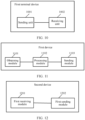
- an embodiment of this application provides a first terminal device, where the first terminal device may include: a sending unit, configured to send a computing power request message to a first device, where the computing power request message includes computing plane resource indication information, and the computing plane resource indication information indicates a computing power requirement of the first terminal device; and a receiving unit, configured to receive computing power configuration information sent by the first device, where the computing power configuration information includes first indication information and/or second indication information, the first indication information indicates a first computing power resource provided by the first device, the second indication information indicates a second computing power resource provided by a second device, and the first device is different from the second device.
- the first device is a first base station; and the sending unit is configured to send the computing power request message to the first device by using air interface RRC signaling.
- the first device is a first base station; and the receiving unit is configured to receive the computing power configuration information sent by the first device by using the air interface RRC signaling.
- the first device is a core network device; and the sending unit is configured to send the computing power request message to the first device by using NAS signaling.
- the first device is a core network device; and the receiving unit is configured to receive the computing power configuration information sent by the first device by using the NAS signaling.
- the computing plane resource indication information includes one or more of a computing power size, an execution time, a computing power task type, a computing model, a computing algorithm, an execution result transmission trigger type, and a trigger type.
- an embodiment of this application provides a first device, where the first device may include: an obtaining module, configured to receive a computing power request message sent by a first terminal device, where the computing power request message includes computing plane resource indication information, and the computing plane resource indication information indicates a computing power requirement of the first terminal device; a processing module, configured to determine a first computing power resource based on the computing plane resource indication information and a computing plane remaining computing resource of the first device; and a sending module, configured to send computing power configuration information to the first terminal device, where the computing power configuration information includes first indication information and/or second indication information, the first indication information indicates the first computing power resource provided by the first device, the second indication information indicates a second computing power resource provided by a second device, and the first device is different from the second device.
- the sending module is configured to send a computing power transfer request message to the second device, to indicate the computing power requirement of the first terminal device or a computing power requirement of the first device; and the obtaining module is configured to receive a computing power transfer acknowledgment message sent by the second device, where the computing power transfer acknowledgment message includes the second indication information.
- the first device includes a first base station
- the second device includes a second base station
- the sending module is configured to send the computing power transfer request message to the second device by using X2 interface signaling.
- the first device includes a first base station
- the second device includes a second base station
- the obtaining module is configured to receive the computing power transfer acknowledgment message sent by the second device by using the X2 interface signaling.
- the first device includes a first base station
- the second device includes a core network device
- the sending module is configured to send the computing power transfer request message to the second device by using N2 interface signaling.
- the first device includes a first base station
- the second device includes a core network device
- the obtaining module is configured to receive the computing power transfer acknowledgment message sent by the second device by using the N2 interface signaling.
- the first device is the first base station; and the obtaining module is configured to receive the computing power request message sent by the first terminal device by using air interface RRC signaling.
- the first device is the first base station; and the sending module is configured to send the computing power configuration information to the first terminal device by using the air interface RRC signaling.
- the first device is a core network device
- the second device includes a first base station and/or a second base station
- the obtaining module is configured to receive the computing power request message sent by the first terminal device by using NAS signaling.
- the first device is a core network device
- the second device includes a first base station
- the sending module is configured to send the computing power configuration information to the first terminal device by using the NAS signaling.
- the first device includes a first base station
- the second device includes a second terminal device
- the sending module is configured to send the computing power transfer request message to the second device by using the air interface RRC signaling.
- the first device includes a first base station
- the second device includes a second terminal device
- the obtaining module is configured to receive the computing power transfer acknowledgment message sent by the second device by using the air interface RRC signaling.
- the computing plane resource indication information includes one or more of a computing power size, an execution time, a computing power task type, a computing model, a computing algorithm, an execution result transmission trigger type, and a trigger type.
- an embodiment of this application provides a second device, where the second device may include: a first receiving module, configured to receive a computing power transfer request message sent by a first device; a first processing module, configured to determine a second computing power resource based on the computing power transfer request message and a computing plane remaining computing resource of the second device; and a first sending module, configured to send a computing power transfer acknowledgment message to the first device, where the computing power transfer acknowledgment message includes second indication information, and the second indication information indicates the second computing power resource provided by the second device.
- the first receiving module is configured to receive the computing power transfer request message sent by the first device by using X2 interface signaling.
- the first device includes a first base station, and the second device includes a second base station; and the first sending module is configured to send the computing power transfer acknowledgment message to the first device by using the X2 interface signaling.
- the first receiving module is configured to receive the computing power transfer request message sent by the first device by using N2 interface signaling.
- the first device includes a first base station, and the second device includes a core network device; and the first sending module is configured to send the computing power transfer acknowledgment message to the first device by using the N2 interface signaling.
- the first device includes a first base station, and the second device includes a second terminal device; and the first receiving module is configured to receive the computing power transfer request message sent by the first device by using air interface RRC signaling.
- the first device includes a first base station, and the second device includes a second terminal device; and the first sending module is configured to send the computing power transfer acknowledgment message to the first device by using the air interface RRC signaling.
- an embodiment of this application provides a first terminal device, where the first terminal device may include a memory, configured to store computer-readable instructions.
- the first terminal device may further include a processor coupled to the memory, and configured to execute the computer-readable instructions in the memory, to perform the method described in any one of the first aspect or the possible implementations of the first aspect.
- an embodiment of this application provides a first device, where the first device may include a memory, configured to store computer-readable instructions.
- the first device may further include a processor coupled to the memory, and configured to execute the computer-readable instructions in the memory, to perform the method described in any one of the second aspect or the possible implementations of the second aspect.
- an embodiment of this application provides a second device, where the second device may include a memory, configured to store computer-readable instructions.
- the second device may further include a processor coupled to the memory, and configured to execute the computer-readable instructions in the memory, to perform the method described in any one of the third aspect or the possible implementations of the third aspect.
- an embodiment of this application provides a computer-readable storage medium, including instructions.
- the instructions When the instructions are run on a computer, the computer is enabled to perform the method according to the first aspect, the second aspect, or the third aspect, or any one of the possible implementations of the first aspect, the second aspect, or the third aspect.
- an embodiment of this application provides a computer program product including instructions.
- the computer program product runs on a computer, the computer is enabled to perform the method according to the first aspect, the second aspect, or the third aspect, or any one of the possible implementations of the first aspect, the second aspect, or the third aspect.
- a twelfth aspect of this application provides a chip system.
- the chip system may include a processor, configured to support a first terminal device in implementing functions in the method described in the first aspect or any one of the possible implementations of the first aspect, or support a first device in implementing functions in the method described in the second aspect or any one of the possible implementations of the second aspect, or support a second device in implementing functions in the method described in the third aspect or any one of the possible implementations of the third aspect.
- the chip system may further include a memory, and the memory is configured to store program instructions and data that are necessary for the first terminal device, the first device, and the second device.
- the chip system may include a chip, or may include a chip and another discrete component.
- the chip system may include an application-specific integrated circuit (application-specific integrated circuit, ASIC), a field programmable gate array (field programmable gate array, FPGA), another programmable logic device, or the like. Further, the chip system may further include an interface circuit and the like.
- the first terminal device may send the computing power request message to the first device, so that the first device determines the first computing power resource based on the computing plane resource indication information in the computing power request message and the computing plane remaining computing resource of the first device. Then, the first device sends corresponding computing power configuration information to the first terminal device, where the computing power configuration information includes the first indication information and/or the second indication information. In this way, the first terminal device may obtain support of the first computing power resource from the first device based on the first indication information, and/or obtain support of the second computing power resource from the second device based on the second indication information, to support the AI collaboration with the another network device.
- Embodiments of this application provide a computing power resource scheduling method and a related apparatus, so that the first terminal device requests a corresponding computing power resource from a first device and/or a second device when a computing power resource of a first terminal device is insufficient to support AI collaboration with another network device, so that the first terminal device can have a sufficient computing power resource to support the AI collaboration with the another network device.
- a and/or B may represent the following cases: Only A exists, both A and B exist, and only B exists, where A and B may be singular or plural.
- the character "/" generally indicates an "or" relationship between the associated objects. At least one of the following items (pieces) or a similar expression thereof indicates any combination of these items, including a single item (piece) or any combination of a plurality of items (pieces). For example, at least one of a, b, or c may represent: a, b, c, a and b, a and c, b and c, or a, b, and c, where a, b, and c may be singular or plural. It should be noted that "at least one item (piece)” may also be explained as “one item (piece) or more items (pieces)”.
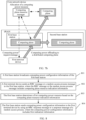
- FIG. 1a is a schematic diagram of a system architecture according to an embodiment. As shown in FIG. 1a , the system architecture is a schematic diagram of a system architecture of a 5G network.
- the system architecture not only supports access to a core network side by using a radio technology defined in a 3GPP standard group, but also supports access to a core network side by using a non-3GPP access technology by using a non-3GPP interworking function (non-3GPP interworking function, N3IWF), a next generation packet data gateway (next generation packet data gateway, ngPDG), a fixed network access gateway, or a trusted non-3 GPP access gateway.
- non-3GPP interworking function non-3GPP interworking function, N3IWF
- N3IWF next generation packet data gateway
- ngPDG next generation packet data gateway
- fixed network access gateway or a trusted non-3 GPP access gateway.
- a user equipment (user equipment, UE), a (radio) access network ((radio) access network, (R)AN), a user plane function (user plane function, UPF) network element, and a data network (data network, DN) in FIG. 1a are generally referred to as user layer network functions or entities, and data traffic of a user may be transmitted through a data transmission channel established between the UE and the DN.
- the UE may include: a handheld terminal, an in-vehicle device, a wearable device, a notebook computer, a subscriber unit (subscriber unit), a cellular phone (cellular phone), a smartphone (smartphone), a wireless data card, a personal digital assistant (personal digital assistant, PDA) computer, a tablet computer, a wireless modem (modem), a handheld device (handheld), a laptop computer (laptop computer), a cordless telephone (cordless phone) or a wireless local loop (wireless local loop, WLL), a machine type communication (machine type communication, MTC) terminal, a customer-premises equipment (customer-premises equipment, CPE), or other devices that can access the network.
- the UE and an access network device communicate with each other by using a radio technology.
- An access network may also be referred to as a radio access network (radio access network, RAN) in specific application.
- the RAN includes access network devices and is responsible for access of a user equipment.
- the RAN device in the 5G network may be a next generation (next generation, NG) RAN device, or may be an evolved universal terrestrial radio access network (evolved universal terrestrial radio access network, E-UTRAN) device.
- the 5G network may be connected to both the foregoing two access network devices.
- the RAN may be a next generation NodeB (next generation NodeB, gNB) or a next generation-evolved NodeB (next generation-evolved NodeB, ng-eNB).
- the gNB provides a user plane function and a control plane function of new radio (new radio, NR) for the UE
- the ng-eNB provides a user plane function and a control plane function of evolved universal terrestrial radio access (evolved universal terrestrial radio access, E-UTRA) for the UE.
- new radio new radio
- ng-eNB provides a user plane function and a control plane function of evolved universal terrestrial radio access (evolved universal terrestrial radio access, E-UTRA) for the UE.
- E-UTRA evolved universal terrestrial radio access
- a data network may be an external network of an operator, or may be a network controlled by an operator, and is used to provide a service for a user.
- the UE may access the operator network so as to access the DN, and use a service provided by the operator or a third party on the DN.
- a control layer network function or entity is mainly responsible for user registration authentication, mobility management, delivering a data packet forwarding policy, a QoS control policy, or the like to a user plane function (user plane function, UPF) network element.
- a session management function (session management function, SMF) network element is mainly configured to be responsible for user plane network element selection, user plane network element redirection, internet protocol (internet protocol, IP) address assignment, bearer establishment, modification, and release, and the like.
- An access and mobility management function (access and mobility management function, AMF) network element is responsible for signaling processing, such as access control, mobility management, attach and detach, and network element selection.
- a user equipment UE may be connected to an AMF network element by using a RAN, the AMF network element is separately connected to network elements such as an SMF network element and a unified data management function (unified data management, UDM), the SMF network element is connected to a UPF network element, and the UPF network element is connected to a DN.
- Interfaces and connections in the system architecture may include N1, N2, N3, N4, and N6.
- N1 is a control plane connection between the UE and the AMF network element, and is used to transmit control signaling between the user equipment and a core network control plane.
- a message in the N1 connection may be transmitted by using a connection between the UE and the RAN and an N2 connection between the RAN and the AMF network element.
- N2 is a control plane connection between the RAN and the AMF network element.
- N3 is a connection between the RAN and the UPF network element.
- N4 is a connection between the SMF network element and the UPF network element, and is used to transmit control signaling between the SMF network element and the UPF network element.
- N6 is a connection between the UPF network element and the DN.
- control layer network function or entity may further include a policy control function (policy control function, PCF) network element, which mainly supports to provide a unified policy framework to control a network behavior, provides a policy rule for the control layer network function, and is responsible for obtaining user subscription information related to a policy decision.
- Policy control function Policy control function
- An application function Application Function, AF
- AF Application Function
- 3rd generation partner project 3rd generation partner project
- 3GPP 3rd generation partner project
- a network slice selection function network slice selection function, NSSF network element is mainly configured to perform network slice selection.
- An AUSF (authentication server function) network element mainly provides identification and authorization functions.
- a unified data management (unified data management, UDM) network element may be configured to perform location management and subscription management.
- a network exposure function (network exposure function, NEF) network element mainly supports secure interaction between a 3GPP network and a third-party application.
- the NEF can securely expose a network capability and an event to a third party, to enhance or improve application service quality.
- the 3GPP network can also securely obtain related data from the third party, to enhance intelligent decision-making of the network.
- the network element supports restoration of structured data from a unified database or storage of the structured data in the unified database.
- the NWDAF network element is not reflected in the system architecture shown in FIG. 1a , it may be understood that there may be direct interfaces between the NWDAF network element and all the functional network elements shown in FIG. 1a , and the direct interfaces are specifically represented as an Nnf interface and an Nnwdaf interface, as shown in a schematic diagram of an interface in FIG. 1b . It can be learned from part (a) in FIG. 1b that the NWDAF network element is connected to another functional network element by using an Nnf interface.
- the Nnf interface is mainly used by the NWDAF network element to request, from another functional network element (for example, an AMF network element or an SMF network element), subscription to data transmission in a specific context, cancel subscription to data transmission, request a specific report of data in a specific context, and the like.
- the system architecture shown in FIG. 1a further allows the NWDAF network element to obtain management data from OAM by invoking an OAM (Operations, Administration and Maintenance) operation and maintenance system service.
- OAM Operations, Administration and Maintenance
- the Nnwdaf interface is used by the NWDAF network element to provide service for another functional network element, and is used by another network function to request, from the NWDAF, subscription to a network analysis transfer in a specific context, cancel subscription to a network analysis transfer, and request a specific report of a network analysis in a specific context.
- a corresponding NWDAF network element mainly collects data from a terminal, another functional network element, a base station, and the like, learns a model through data analysis, and provides an Al optimization service such as data analysis for the another functional network element, the base station, and the like.
- AI capabilities of network functions such as the terminal and the base station are not fully used, and AI collaboration between devices such as a network device and a first terminal device in a wireless network cannot be well supported.
- a low-latency AI service cannot be quickly and timely responded.
- an NWDAF network element collects data from the terminal or another network function, data privacy may be affected.
- an existing NWDAF network element cannot well support AI collaboration between devices such as the network device and the first terminal device in the wireless network.
- an embodiment of this application provides a computing power resource scheduling method.
- the computing power resource scheduling method may be applied to a wireless communication system such as 5G or satellite communication.
- a computing power resource of a first terminal device is insufficient, a computing power resource may be requested from a base station, a core network device, or the like, to better support AI collaboration between devices such as a network device and a first terminal device in a wireless network.
- FIG. 2a is a schematic diagram of an architecture of a communication system according to an embodiment of this application. It can be learned from FIG. 2a that the communication system architecture usually includes cells.
- Each cell includes a base station (base station, BS) and at least one terminal device (for example, a terminal device 1 to a terminal device 6).
- the base station may provide a base station that provides a communication service for the at least one terminal device. Therefore, when a computing power resource of the first terminal device is insufficient, the first terminal device may request a computing power resource from the base station that provides the communication service, so that the first terminal device can support AI collaboration between devices such as a network device and a first terminal device in a wireless network when the computing power resource is sufficient.
- the first terminal device may be understood as one of the at least one terminal device. This is not limited herein.
- FIG. 2b is a schematic diagram of another communication architecture according to an embodiment of this application. It can be learned from FIG.
- the communication architecture may include at least one terminal device, at least one first base station, at least one second base station, and a core network device.
- the first base station may be understood as a base station that can currently directly provide a service for the first terminal device
- the second base station may be understood as a base station that currently does not directly provide a service for the first terminal device.
- an independent computing plane may be added to the first base station, the second base station, the second terminal device, and/or the core network device, to provide an independent AI computing power resource, and there is a logical interface between the independent computing plane and a radio control plane and a data plane of the first base station and the second base station, so as to provide a real-time AI service or an extended (xF) service for the first terminal device, and also serve an AI service or a perception service of the first base station and the second base station.
- xF extended
- the first terminal device may request a computing power resource from the first base station and the core network device that provide the communication service; or when the computing power resource of the first base station is insufficient, the first base station may request a computing power resource from the second base station or the second terminal device, or request a computing power resource from the core network device, so that the first terminal device can support AI collaboration between devices such as the network device and the first terminal device in a wireless network when the computing power resource is sufficient.
- the base station described in FIG. 2a may be understood as the first base station in FIG. 2b .
- the first base station and the second base station may include a central unit (central unit, CU) and a distributed unit (distributed unit, DU).
- the CU and the DU may be placed in different places.
- the DU is placed remotely in a high-traffic area, and the CU is placed in a central equipment room.
- the CU and the DU may be placed in a same equipment room.
- the CU and the DU may be different components in a rack.
- first base station and the second base station may be presented in different forms, for example, a macro base station, a micro base station (also referred to as a small station), a pico (Pico, pico base station), a relay station, and an access point.
- names of devices having a base station function may be different.
- the device in an LTE system, the device is referred to as an evolved NodeB (evolved NodeB, eNB or eNodeB); and in a 3rd generation (3rd Generation, 3G) system, the device is referred to as a NodeB (NodeB).
- eNB evolved NodeB
- 3rd Generation, 3G 3rd Generation
- the computing plane of the first base station and the computing plane of the second base station may be understood as being constructed based on a general-purpose CPU (for example, X86 or ARM), an AI chip, a GPU chip, an FPGA, or the like, and providing a computing-related task service for another logical function in the base station or a third party outside the base station.
- the task provisioning is to virtually cut computing resources based on different forms and granularities, including a cluster Cluster, a host, a virtual machine (VM), a virtual node (POD, which may include a plurality of containers), a container (Container), and other fine-grained resources that can run a segment of logic code or functions (such as cloud native serverless serverless).
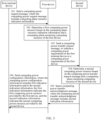
- FIG. 3 is a schematic flowchart of a computing power resource scheduling method according to an embodiment of this application. It can be learned from FIG. 3 that the computing power resource scheduling method may include the following steps.
- a first terminal device sends a computing power request message to a first device, where the computing power request message includes computing plane resource indication information.
- the first terminal device may request a corresponding computing power resource from the first device by using the computing power request message.
- the computing power request message includes the computing plane resource indication information, and the computing plane resource indication information indicates a computing power requirement of the first terminal device.
- the first device obtains the computing plane resource indication information by parsing the computing power request message, and then may learn of a quantity of computing power resources that need to be provided to the first terminal device.
- the described computing plane resource indication information includes one or more of a computing power size, an execution time, a computing power task type, a computing model, a computing algorithm, an execution result transmission trigger type, and a trigger type.
- the computing power size may include but is not limited to a hash computing speed (hash/second) or a floating-point computing speed (floating-point operations per second, FLOPS). This is not limited herein.
- the execution time may include start time information and end time information.
- the computing model may be understood as a protocol-predefined model, and model information or download address information of the model is indicated by using a model identifier, for example, a uniform resource locator (uniform resource locator, URL) or IP address information.
- a model identifier for example, a uniform resource locator (uniform resource locator, URL) or IP address information.
- the computing algorithm may be supervised learning, unsupervised learning, a neural network, reinforcement learning, or the like. This is not limited herein.
- the supervised learning may include one or more of the following specific algorithms: a support vector machine (support vector machine, SVM), a decision tree (decision tree), naive Bayesian classification (naive Bayesian classification), and k-nearest neighbor (k-nearest neighbor, KNN) algorithm.
- the unsupervised learning may include one or more of the following specific algorithms: principal component analysis (principal component analysis, PCA), singular value decomposition (singular value decomposition, SVD), and k-means clustering.
- the reinforcement learning may include one or more of the following specific algorithms: a Q-learning algorithm, a state-action-reward-state-action (state-action-reward-state-action, SARSA) algorithm, a deep Q network (Deep Q Network, DQN) algorithm, a deep deterministic policy gradient (deep deterministic policy gradient, DDPG) algorithm, and the like.
- the execution result transmission trigger type may be periodically transmitting an execution result, for example, 1 ms, 2 ms, 5 ms, 10 ms, 20 ms, 50 ms, or 100 ms; or may be an execution result of an RRM event, for example, various RRM events such as A1 and A2, or the terminal changes from an RRC idle state or an RRC inactive state to an RRC connected state.
- the trigger type may be periodic execution (for example, 1 ms, 2 ms, 5 ms, 10 ms, 20 ms, 50 ms, or 100 ms), or may be execution of an RRM event (for example, various RRM events such as A1 and A2, or the terminal changes from the RRC connected state to the RRC idle state or the RRC inactive state).
- periodic execution for example, 1 ms, 2 ms, 5 ms, 10 ms, 20 ms, 50 ms, or 100 ms
- RRM event for example, various RRM events such as A1 and A2, or the terminal changes from the RRC connected state to the RRC idle state or the RRC inactive state.
- the first device determines a first computing power resource based on the computing plane resource indication information and a computing plane remaining computing resource of the first device.
- the computing plane remaining computing resource of the first device indicates a remaining computing plane resource of the first device.
- the first device may also determine, based on the computing plane remaining computing resource of the first device, whether to respond to the computing power request message of the first terminal device.
- the first device may determine the first computing power resource based on the computing plane indication information and the computing plane remaining computing resource.
- the first device may also refuse to respond to the computing power request message of the first terminal device.
- the first terminal device needs to obtain indication information of a corresponding computing power resource from another device such as a network device or a base station, and then obtain support of the corresponding computing power resource from the another device such as the network device or the base station based on the indication information of the corresponding computing power resource.
- the first device sends a computing power transfer request message to a second device, to indicate a computing power requirement of the first terminal device or a computing power requirement of the first device.
- the first device when the first device determines to respond to the computing power request message of the first terminal device, the first device may provide indication information (referred to as first indication information subsequently) of the determined first computing power resource to the first terminal device, or may send a computing power transfer request message to the second device, to obtain indication information (referred to as second indication information subsequently) of a second computing power resource from another second device.
- the first indication information may indicate the first computing power resource provided by the first device
- the second indication information may indicate the second computing power resource provided by the second device.
- the first device when the computing plane remaining computing resource of the first device is less than the computing plane resource requested in the computing plane resource indication information, the first device sends the computing power transfer request message to the second device, to indicate the second device to determine the second computing power resource.
- the first device may send the computing power transfer request message to another second device having the computing plane resource, so as to indicate the second device to provide the corresponding second indication information to the first terminal device after determining the corresponding second computing power resource.
- the first device may also send a computing power transfer request message to the second device, to indicate the second device to determine a corresponding second computing power resource.
- the second device needs to directly provide the corresponding second indication information for the first terminal device.
- the second device determines a second computing power resource based on the computing power transfer request message and a computing plane remaining computing resource of the second device.
- the second device may determine the second computing power resource based on the computing power transfer request message and the computing plane remaining computing resource of the second device.
- the second device sends a computing power transfer acknowledgment message, where the computing power transfer acknowledgment message includes the second indication information.
- the second device can include the second indication information corresponding to the second computing power resource in the computing power transfer acknowledgment message, and send the computing power transfer acknowledgment message to the first terminal device or the first device.
- the second indication information indicates the second computing power resource provided by the second device, that is, indicating a specific computing power resource status of the second computing power resource that can be provided by the second device.
- the first device sends computing power configuration information to the first terminal device, where the computing power configuration information includes the first indication information and/or the second indication information, the first indication information indicates the first computing power resource provided by the first device, and the second indication information indicates the second computing power resource provided by the second device.
- the computing power configuration information may be sent to the first terminal device, that is, the computing power configuration information includes the first indication information and/or the second indication information.
- the first terminal device may obtain the first indication information and/or the second indication information, to obtain support of the first computing power resource in the first device based on the first indication information, and/or obtain support of the second computing power resource in the second device based on the second indication information.
- the first indication information may indicate the first computing power resource provided by the first device, that is, indicating a specific computing power resource status of the first computing power resource that can be provided by the first device.
- the first computing power resource may be a computing resource that needs to be used in a data processing process, and includes but is not limited to a software resource and/or a hardware resource, for example, a CPU, a GPU, and an I/O, or may be a neural network algorithm model resource used for image processing, or may be a memory, or the like. This is not limited herein.
- the second computing power resource may also be understood with reference to content of the first computing power resource. Details are not described herein again.
- the first device may be a first base station, or may be a core network device
- the second device may be a second base station, or may be a core network device.
- the first terminal device may request a computing power resource from different provisioning devices, for example, the first base station, the core network device, and the second base station.
- provisioning devices for example, the first base station, the core network device, and the second base station.
- the first terminal device may send the computing power request message to the first device, so that the first device determines the first computing power resource based on the computing plane resource indication information in the computing power request message and the computing plane remaining computing resource of the first device. Then, the first device sends corresponding computing power configuration information to the first terminal device, where the computing power configuration information includes the first indication information and/or the second indication information. In this way, the first terminal device may obtain support of the first computing power resource in the first device based on the first indication information, and/or obtain support of the second computing power resource in the second device based on the second indication information, to support the AI collaboration with the another network device.
- a network benefit is improved, and energy consumption of the first terminal device and a configuration requirement of the computing power resource are reduced, so that a reuse degree of the computing power resource can be effectively improved, thereby achieving an effect of energy saving and emission reduction.
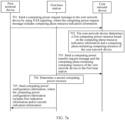
- FIG. 4a is a flowchart of another computing power resource scheduling method according to an embodiment of this application. As shown in FIG. 4a , the computing power resource scheduling method may include the following steps.
- a first terminal device sends a computing power request message to a first base station by using air interface RRC signaling, where the computing power request message includes computing plane resource indication information.
- the first terminal device may send the computing power request message to the first base station by using the air interface RRC signaling, to request the first base station to provide a corresponding computing power resource.
- the computing power request message includes the computing plane resource indication information, and the computing plane resource indication information indicates a computing power requirement of the first terminal device.
- the first base station obtains the computing plane resource indication information by parsing the computing power request message, and then may learn of a quantity of computing power resources that need to be provided to the first terminal device.
- the first terminal device may notify, in a radio resource control (radio resource control, RRC) connection establishment request, the first base station of a reason for establishing an RRC connection, that is, adding a computing request access reason value to an Establishment Cause information element, that is, carry the foregoing computing plane resource indication information.
- RRC radio resource control
- the first terminal device may define an uplink computing power request message in an uplink-dedicated control channel-message type (uplink-dedicate control channel-message Type, UL-DCCH-Message Type), and the uplink computing power request message carries the computing plane resource indication information.
- the radio may be understood as an interaction interface between the first terminal device and the base station.
- computing plane resource indication information may be specifically understood with reference to content described in step 301 in FIG. 3 . Details are not described herein again.
- the first base station determines a first computing power resource based on the computing plane resource indication information and a computing plane remaining computing resource of the first base station.
- the computing plane remaining computing resource of the first base station indicates a remaining computing plane resource of the first base station.
- the first base station may also determine, based on the computing plane remaining computing resource of the first base station, whether to respond to the computing power request message of the first terminal device.
- the first base station may determine the first computing power resource based on the computing plane indication information and the computing plane remaining computing resource.
- the first base station may also refuse to respond to the computing power request message of the first terminal device. In this way, the first terminal device needs to obtain the computing power resource from another provisioning device such as a network device or a base station.
- the first base station sends computing power configuration information to the first terminal device, where the computing power configuration information includes first indication information, and the first indication information indicates the first computing power resource provided by the first base station.
- the first base station when the first base station determines to respond to the computing power request message of the first terminal device, if the computing plane remaining computing resource of the first base station is greater than or equal to the computing power resource requested in the computing plane resource indication information, the first base station may directly determine the first computing power resource from the computing plane remaining computing resource of the first base station. In this way, after determining the first computing power resource, the first base station may include the first indication information in the computing power configuration information, and then send the computing power configuration information to the first terminal device. In this way, the first terminal device may obtain the computing power configuration information, and further obtain the first indication information included in the computing power configuration information.
- the first base station may send a computing power establishment message to the first terminal device by using air interface RRC signaling, where the computing power establishment message may include the foregoing computing power configuration information.
- the computing power establishment message may further include computing radio bearer (computing radio bearer, CRB) configuration information, where the CRB configuration information is used by the first terminal device to determine a CRB resource, and the CRB resource is used for exchanging data input and output, computing model data, or computing algorithm data between the first terminal device and the first base station during computing power offloading.
- computing radio bearer computing radio bearer
- the data or the model or the algorithm carried in the CRB is mapped to a protocol data unit (data protocol data unit, data PDU) of a computing class in a packet data convergence protocol (packet data convergence protocol, PDCP) layer.
- protocol data unit data protocol data unit, data PDU
- PDCP packet data convergence protocol
- the CRB is a subset of a user data radio bearer (user data radio bearer, DRB) or a signaling radio bearer (signaling radio bearer, SRB).
- DRB user data radio bearer
- SRB signaling radio bearer
- FIG. 4b is a schematic diagram of computing power transfer according to an embodiment of this application. It can be learned from FIG. 4b that, the first terminal device sends the computing power request message to the control plane of the first base station, and completes allocation and confirmation of the first computing power resource on the control plane of the first base station and the computing plane of the first base station, so that the control plane of the first base station sends the first indication information to the first terminal device, to complete the request for the computing power resource. Finally, the first terminal device offloads the computing power to the computing plane of the first base station. By using the CRB, the first terminal device and the first base station may exchange data input and output, computing model data, or computing algorithm data during computing power offloading.
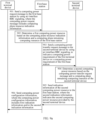
- FIG. 5a is a flowchart of another computing power resource scheduling method according to an embodiment of this application. As shown in FIG. 5a , the computing power resource scheduling method may include the following steps.
- a first terminal device sends a computing power request message to a first base station by using air interface RRC signaling, where the computing power request message includes computing plane resource indication information.
- step 501 in this embodiment may be specifically understood with reference to content described in step 401 in FIG. 4a . Details are not described herein again.
- the first base station determines a first computing power resource based on the computing plane resource indication information and a computing plane remaining computing resource.
- steps 501 and 502 in this embodiment may be specifically understood with reference to content described in steps 401 and 402 in FIG. 4a . Details are not described herein again.
- the first base station sends a computing power transfer request message to a second base station by using X2 interface signaling, to indicate a computing power requirement of the first terminal device or a computing power requirement of the first base station.
- the first base station may send the computing power transfer request message to the second base station, to indicate the second base station to provide the second computing power resource, so as to meet the request of the first terminal device.
- the first base station may send the computing power transfer request message to the second base station by using X2 interface signaling.
- computing power transfer request message may also be understood with reference to the computing power request message described in step 301 in FIG. 3 . Details are not described herein again.
- the second base station determines a second computing power resource based on the computing power transfer request message and a computing plane remaining computing resource of the second base station.
- the second base station may determine the second computing power resource based on the computing plane remaining computing resource of the second base station and the computing power transfer request message.
- the first base station may send a computing power transfer request message to another second base station having a computing plane resource, to indicate the second base station to provide a corresponding second computing power resource for the first terminal device.
- the second base station sends a computing power transfer acknowledgment message to the first base station, where the computing power transfer acknowledgment message includes second indication information, and the second indication information indicates the second computing power resource provided by the second base station.
- the first base station is a base station that directly serves the first terminal device, therefore after determining the second computing power resource, the second base station may send the second indication information to the first base station in a manner of a computing power transfer acknowledgment message.
- the second base station may also send a computing power transfer acknowledgment message to the first base station by using X2 interface signaling, so as to send the second indication information included in the computing power transfer acknowledgment message to the first base station.
- the X2 interface may be understood as an interaction interface between base stations.
- the second base station may directly send the second indication information to the first terminal device. Details are not described herein.
- the computing power transfer acknowledgment message may further include computing radio bearer CRB configuration information, where the computing radio bearer CRB configuration information is used by the first terminal device to determine a CRB resource, and the describe CRB resource is used for exchanging data input and output, computing model data, or computing algorithm data between the first terminal device and the first base station during computing power offloading.
- the CRB may be understood with reference to the CRB described in step 403 in FIG. 4a , and details are not described herein again.
- the first base station sends computing power configuration information to the first terminal device, where the computing power configuration information includes first indication information and/or the second indication information.
- the first base station may also send the computing power configuration information to the first terminal device by using air interface RRC signaling.
- the first base station when the first base station determines that the computing plane remaining computing resource is insufficient to meet the computing resource requested by the first terminal device, the first base station sends the computing power transfer request message to the second base station by using X2 interface signaling, and the second base station determines the corresponding second computing power resource.
- the first base station may send the computing power configuration information to the first terminal device with reference to the first indication information, that is, the computing power configuration information includes the first indication information and/or the second indication information.
- the first terminal device may obtain support of the first computing power resource in the first base station based on the first indication information, and/or obtain support of the second computing power resource in the second base station based on the second indication information, to support AI collaboration with another network device.
- FIG. 5b is a schematic diagram of computing power transfer according to an embodiment of this application. It can be learned from FIG. 5b that, the first terminal device sends the computing power request message to the control plane of the first base station, and completes allocation and confirmation of the first computing power resource on the control plane of the first base station and the computing plane of the first base station. In addition, allocation and confirmation of the cross-base station second computing power resource are completed on the control plane of the first base station and the control plane of the second base station, so that the control plane of the first base station sends the first indication information and the second indication information to the first terminal device, to complete the request for the computing power resource.
- the first terminal device offloads the computing power to the computing plane of the first base station.
- the first terminal device and the first base station may exchange data input and output, computing model data, or computing algorithm data during computing power offloading.
- the first base station If the computing power resource of the first base station is insufficient to support the computing power request of the first terminal device, the first base station also offloads a part of the computing power to the computing plane of the second base station, and exchanges data input and output, computing model data, or computing algorithm data during computing power offloading by using the X2 interface.
- the first terminal device needs to offload the computing power from the first base station to the second base station due to mobility of the first terminal device, the first terminal device offloads the computing power to the computing plane of the second base station.
- the first terminal device and the second base station may exchange data input and output, computing model data, or computing algorithm data during computing power offloading.
- FIG. 6a is a flowchart of another computing power resource scheduling method according to an embodiment of this application. As shown in FIG. 6a , the computing power resource scheduling method may include the following steps.
- a first terminal device sends a computing power request message to a first base station by using air interface RRC signaling, where the computing power request message includes computing plane resource indication information.
- the first base station determines a first computing power resource based on the computing plane resource indication information and a computing plane remaining computing resource of the first base station.
- steps 601 and 602 in this embodiment may be specifically understood with reference to content described in steps 401 and 402 in FIG. 4a . Details are not described herein again.
- the first base station sends a computing power transfer request message to a core network device by using N2 interface signaling.
- the first base station may obtain the computing power resource from the core network device, to meet the request of the first terminal device.
- the first base station may send the computing power transfer request message to the core network device by using the N2 interface signaling.
- the N2 interface may be understood as an interaction interface between the base station and an AMF network element.
- computing power transfer request message may also be understood with reference to the computing power request message described in step 301 in FIG. 3 . Details are not described herein again.
- the core network device determines a second computing power resource.
- the core network device may determine the second computing power resource based on the computing plane remaining computing resource of the core network device and the computing power transfer request message.
- the core network device sends a computing power transfer acknowledgment message to the first base station, where the computing power transfer acknowledgment message includes second indication information, and the second indication information indicates the second computing power resource provided by the core network device.
- the first base station is a base station that directly serves the first terminal device, therefore after determining the second computing power resource, the core network device may send a computing power transfer acknowledgment message to the first base station by using N2 interface signaling.
- the computing power transfer acknowledgment message includes the second indication information.
- the computing power transfer acknowledgment message may be understood with reference to step 505 in FIG. 5a . Details are not described herein again.
- the first base station sends computing power configuration information to the first terminal device, where the computing power configuration information includes first indication information and/or the second indication information.
- step 606 in this embodiment may be specifically understood with reference to content described in step 506 in FIG. 5a . Details are not described herein again.
- the first base station when the first base station determines that the computing plane remaining computing resource is insufficient to meet the computing resource requested by the first terminal device, the first base station sends the computing power transfer request message to the core network device by using N2 interface signaling, and the core network device determines the corresponding second computing power resource.
- the first base station may send the computing power configuration information to the first terminal device with reference to the first indication information, that is, the computing power configuration information includes the first indication information and/or the second indication information.
- the first terminal device may obtain support of the first computing power resource from the first device based on the first indication information, and/or obtain support of the second computing power resource from the second device based on the second indication information, to support the AI collaboration with the another network device.
- FIG. 6b is a schematic diagram of computing power transfer according to an embodiment of this application. It can be learned from FIG. 6b that, the first terminal device sends the computing power request message to the control plane of the first base station, so as to complete allocation and confirmation of the first computing power resource on the control plane of the first base station and the computing plane of the first base station. In addition, allocation and confirmation of the second computing power resource are completed on the computing plane of the core network device and the control plane of the core network device. In this way, the control plane of the first base station sends the first indication information and the second indication information to the first terminal device, to complete the request for the computing power resource.
- the first terminal device offloads the computing power to the computing plane of the first base station.
- the first terminal device and the first base station may exchange data input and output, computing model data, or computing algorithm data during computing power offloading.
- the first base station If the computing power resource of the first base station is insufficient to support the computing power request of the first terminal device, the first base station also offloads a part of the computing power to the computing plane of the core network device, and exchanges data input and output, computing model data, or computing algorithm data during computing power offloading by using the N2 interface.
- FIG. 7a is a flowchart of another computing power resource scheduling method according to an embodiment of this application. As shown in FIG. 7a , the computing power resource scheduling method may include the following steps.
- a first terminal device sends a computing power request message to a core network device by using NAS signaling, where the computing power request message includes computing plane resource indication information.
- the NAS interface may be understood as an interaction interface between the first terminal device and an AMF network element.
- the core network device determines a first computing power resource based on the computing plane resource indication information and a computing plane remaining computing resource of the core network.
- the core network device may determine a first task with reference to the computing plane resource indication information and the computing plane remaining computing resource of the core network device.
- the foregoing computing plane resource indication information may be understood with reference to content described in step 301 in FIG. 3 . Details are not described herein again.
- the core network device sends a computing power transfer request message and the computing plane remaining computing resource of the core network device to a first base station.
- the core network device may request the first base station to provide a second computing power resource, so as to meet the request of the first terminal device. Specifically, when the computing plane remaining computing resource is less than the computing plane resource requested in the computing plane resource indication information, the core network device sends the computing power transfer request message to the first base station, and sends the computing plane remaining computing resource of the core network device to the first base station.
- computing power transfer request message may also be understood with reference to the computing power request message described in step 301 in FIG. 3 . Details are not described herein again.
- the first base station determines a second computing power resource.
- the first base station may determine the second computing power resource based on the computing plane remaining computing resource of the first base station and the computing power transfer request message.
- the core network device may send a computing power transfer request message to another first base station having a computing plane resource, so that the first base station can provide corresponding indication information of the computing power transfer resource to the first terminal device.
- the first base station may further request a corresponding second computing power resource from the second base station.
- the first base station is a base station that directly provides a service for the first terminal device
- the second base station may be understood as a base station that does not directly provide a service for the first terminal device.
- the first base station sends computing power configuration information to the first terminal device, where the computing power configuration information includes first indication information and/or second indication information.
- the core network device when the core network device determines that the computing plane remaining computing resource is insufficient to meet the computing resource requested by the first terminal device, the core network device sends the computing power transfer request message to the first base station, so that the first base station determines the corresponding second computing power resource.
- the first base station may send the computing power configuration information to the first terminal device, that is, the computing power configuration information includes the first indication information and/or the second indication information.
- the first terminal device may obtain support of the first computing power resource from the first device based on the first indication information, and/or obtain support of the second computing power resource from the second device based on the second indication information, to support the AI collaboration with the another network device.
- FIG. 7b is a schematic diagram of computing power transfer according to an embodiment of this application. It can be learned from FIG. 7b that, the first terminal device sends the computing power request message to a computing plane resource manager of the core network device, so as to complete allocation and confirmation of the first computing power resource in the computing plane resource manager of the core network device and the computing plane of the core network. In addition, allocation and confirmation of the second computing power resource are completed in the computing plane resource manager of the core network device, the computing plane of the first base station, and the computing plane of the second base station. In this way, the first base station sends the first indication information and the second indication information to the first terminal device, to complete the request for the computing power resource.
- the first terminal device offloads the computing power to the computing plane of the first base station.
- the first terminal device and the first base station may exchange data input and output, computing model data, or computing algorithm data during computing power offloading.
- the first base station If the computing power resource of the first base station is insufficient to support the computing power request of the first terminal device, the first base station also offloads a part of the computing power to the computing plane of the core network device, and exchanges data input and output, computing model data, or computing algorithm data during computing power offloading by using the N2 interface; and/or the first base station may also offload a part of the computing power to the computing plane of the second base station, and exchange data input and output, computing model data, or computing algorithm data during computing power offloading by using an X2 interface.
- FIG. 8 is a flowchart of another computing power resource scheduling method according to an embodiment of this application. As shown in FIG. 8 , the computing power resource scheduling method may include the following steps.
- a first base station broadcasts computing power configuration information of the first base station.
- a first terminal device sends an RRC message or a random access process message to the first base station, where the RRC message or the random access process message includes computing plane resource indication information.
- the first terminal device may send an RRC message or a random access process message to the first base station after the first base station has broadcast the computing power resource of the first base station in a broadcast manner, to request the first base station to provide a corresponding computing power resource.
- the RRC message or the random access process message includes the computing plane resource indication information.
- the first base station obtains the computing plane resource indication information by parsing the RRC message or the random access process message, and then may learn of a quantity of computing power resources that need to be provided to the first terminal device.
- the first base station determines a first computing power resource based on the computing plane resource indication information.
- the first base station sends computing power configuration information to the first terminal device by using an RRC response message or a response message of a random access process, where the computing power configuration information includes first indication information.
- the first base station may send the computing power configuration information to the first terminal device.
- the first terminal device may obtain the computing power configuration information, and further obtain the first indication information included in the computing power configuration information.
- an update period of the foregoing computing power configuration information is the same as a transmission period of a system broadcast message, and the computing power configuration information collects statistics on an average computing power in a system broadcast message period, a supported computing model or algorithm, and the like.
- the RRC response message or the response message of the random access process transmits instant computing power statistics information of the computing plane of the first base station.
- the computing power configuration information broadcast by the first base station may further include computing capability information of the core network device and/or computing capability information of the second base station.
- the first base station may obtain the computing capability information of the second base station by using an interface between base stations, for example, an X2/Xn interface.
- the first base station may also obtain the computing capability information of the core network device by using an interface between the first base station and the core network device. This is not specifically limited herein.
- FIG. 9a is a flowchart of another computing power resource scheduling method according to an embodiment of this application. As shown in FIG. 9a , the computing power resource scheduling method may include the following steps.
- a first terminal device sends a computing power request message to a first base station by using air interface RRC signaling, where the computing power request message includes computing plane resource indication information.
- the first base station determines a first computing power resource based on the computing plane resource indication information and a computing plane remaining computing resource.
- steps 901 and 902 in this embodiment may be specifically understood with reference to content described in steps 501 and 502 in FIG. 5a . Details are not described herein again.
- the first base station sends a computing power transfer request message to a second terminal device, to indicate a computing power requirement of the first terminal device or a computing power requirement of the first base station.
- the first base station may send the computing power transfer request message to the second terminal device, to indicate the second terminal device to provide the second computing power resource, so as to meet the request of the first terminal device.
- the first base station may send the computing power transfer request message to the second terminal device by using air interface RRC signaling.
- computing power transfer request message may also be understood with reference to the computing power request message described in step 301 in FIG. 3 . Details are not described herein again.
- the computing power transfer request message may further include computing radio bearer CRB configuration information, where the computing radio bearer CRB configuration information is used by the second terminal device to determine a CRB resource, and the described CRB resource is used for exchanging data input and output, computing model data, or computing algorithm data between the second terminal device and the first base station during computing power offloading.
- the CRB may be understood with reference to the CRB described in step 403 in FIG. 4a , and details are not described herein again.
- the computing power transfer request message may further include computing radio bearer CRB configuration information, where the computing radio bearer CRB configuration information is used by the second terminal device to determine a CRB resource, and the CRB resource is used for exchanging data input and output, computing model data, or computing algorithm data between the second terminal device and the first terminal device during computing power offloading.
- the second terminal device determines a second computing power resource based on the computing power transfer request message and a computing plane remaining computing resource of the second terminal device.
- the second terminal device may determine the second computing power resource based on the computing plane remaining computing resource of the second terminal device and the computing power transfer request message.
- the first base station may send a computing power transfer request message to another second terminal device having a computing plane resource, to indicate that the second terminal device can provide a corresponding second computing power resource to the first terminal device.
- the second terminal device sends a computing power transfer acknowledgment message to the first base station, where the computing power transfer acknowledgment message includes second indication information, and the second indication information indicates the second computing power resource provided by the second terminal device.
- the first base station is a base station that directly serves the first terminal device, therefore after determining the second computing power resource, the second terminal device may send the second indication information to the first base station in a manner of a computing power transfer acknowledgment message.
- the second terminal device may also send a computing power transfer acknowledgment message to the first base station by using air interface RRC signaling, so as to send the second indication information included in the computing power transfer acknowledgment message to the first base station.
- the first base station sends computing power configuration information to the first terminal device, where the computing power configuration information includes first indication information and/or second indication information.
- the first base station may also send the computing power configuration information to the first terminal device by using air interface RRC signaling.
- the first base station when the first base station determines that the computing plane remaining computing resource is insufficient to meet the computing resource requested by the first terminal device, the first base station sends the computing power transfer request message to the second terminal device by using air interface RRC signaling, so that the second terminal device determines the corresponding second computing power resource.
- the first base station may send the computing power configuration information to the first terminal device with reference to the first indication information, that is, the computing power configuration information includes the first indication information and/or the second indication information.
- the first terminal device may obtain support of the first computing power resource in the first base station based on the first indication information, and/or obtain support of the second computing power resource in the second terminal device based on the second indication information, to support AI collaboration with another network device.
- FIG. 9b is a schematic diagram of computing power transfer according to an embodiment of this application. It can be learned from FIG. 9b that, the first terminal device sends the computing power request message to the control plane of the first base station, and completes allocation and confirmation of the cross-base station second computing power resource on the control plane of the first base station and the control plane of the second terminal device, so that the control plane of the first base station sends the first indication information and the second indication information to the first terminal device, to complete the request for the computing power resource.
- the first terminal device offloads the computing power to the computing plane of the first base station.
- the first terminal device and the first base station may exchange data input and output, computing model data, or computing algorithm data during computing power offloading.
- the first base station If the computing power resource of the first base station is insufficient to support the computing power request of the first terminal device, the first base station also offloads a part of the computing power to the computing plane of the second terminal device, and exchanges data input and output, computing model data, or computing algorithm data during computing power offloading by using air interface or CRB.
- the first terminal device and the second terminal device may further directly exchange data input and output, computing model data, or computing algorithm data during computing power offloading by using a vehicle to everything (vehicle to everything, V2X) or a device-to-device communication (device-to-device communication, D2D) interface.
- V2X vehicle to everything
- D2D device-to-device communication
- the first terminal device may send the computing power request message to the first device, so that the first device determines the first computing power resource based on the computing plane resource indication information in the computing power request message and the computing plane remaining computing resource of the first device. Then, the first device sends corresponding computing power configuration information to the first terminal device, where the computing power configuration information includes the first indication information and/or the second indication information. In this way, the first terminal device may obtain support of the first computing power resource from the first device based on the first indication information, and/or obtain support of the second computing power resource from the second device based on the second indication information, to support the AI collaboration with the another network device.
- the first terminal device and the first device include corresponding hardware structures and/or software modules for performing the functions.
- a person skilled in the art should be easily aware that, in combination with the functions described in embodiments disclosed in this specification, this application can be implemented by hardware or a combination of hardware and computer software. Whether a function is performed by hardware or hardware driven by computer software depends on particular applications and design constraints of the technical solutions. A person skilled in the art may use different methods to implement the described functions for each particular application, but it should not be considered that the implementation goes beyond the scope of this application.
- the first terminal device and the first device may be divided into functional units based on the foregoing method embodiments.
- various functional units may correspond to various functions, or two or more functions may be integrated into one functional unit.
- the integrated functional unit may be implemented in a form of hardware, or may be implemented in a form of a software functional unit.
- FIG. 10 is a schematic structural diagram of a first terminal device according to an embodiment of this application.
- the first terminal device may include:
- the first device is a first base station; and the sending unit 1001 is configured to send the computing power request message to the first device by using air interface RRC signaling.
- the first device is a first base station; and the receiving unit 1002 is configured to receive the computing power configuration information sent by the first device by using the air interface RRC signaling.
- the first device is a core network device; and the sending unit 1001 is configured to send the computing power request message to the first device by using NAS signaling.
- the first device is a core network device; and the receiving unit 1002 is configured to receive the computing power configuration information sent by the first device by using the NAS signaling.
- the computing plane resource indication information includes one or more of a computing power size, an execution time, a computing power task type, a computing model, a computing algorithm, an execution result transmission trigger type, and a trigger type.
- FIG. 11 is a schematic structural diagram of a first device according to an embodiment of this application.
- the first device may include:
- the sending module 1103 is configured to send a computing power transfer request message to the second device, to indicate the computing power requirement of the first terminal device or a computing power requirement of the first device; and the obtaining module 1101 is configured to receive a computing power transfer acknowledgment message sent by the second device, where the computing power transfer acknowledgment message includes the second indication information.
- the first device includes a first base station
- the second device includes a second base station
- the sending module 1103 is configured to send the computing power transfer request message to the second device by using X2 interface signaling.
- the first device includes a first base station
- the second device includes a second base station
- the obtaining module 1101 is configured to receive the computing power transfer acknowledgment message sent by the second device by using the X2 interface signaling.
- the first device includes a first base station
- the second device includes a core network device
- the sending module 1103 is configured to send the computing power transfer request message to the second device by using N2 interface signaling.
- the first device includes a first base station
- the second device includes a core network device
- the obtaining module 1101 is configured to receive the computing power transfer acknowledgment message sent by the second device by using the N2 interface signaling.
- the first device is a first base station; and the sending module 1103 is configured to receive the computing power request message sent by the first terminal device by using air interface RRC signaling.
- the first device is the first base station; and the sending module 1103 is configured to send the computing power configuration information to the first terminal device by using the air interface RRC signaling.
- the first device is a core network device
- the second device includes a first base station and/or a second base station
- the sending module 1103 is configured to receive the computing power request message sent by the first terminal device by using NAS signaling.
- the first device is a core network device, and the second device includes a first base station; and the sending module 1103 is configured to send the computing power configuration information to the first terminal device by using the NAS signaling.
- the first device includes a first base station
- the second device includes a second terminal device
- the sending module 1103 is configured to send the computing power transfer request message to the second device by using the air interface RRC signaling.
- the first device includes a first base station
- the second device includes a second terminal device
- the obtaining module 1101 is configured to receive the computing power transfer acknowledgment message sent by the second device by using the air interface RRC signaling.
- the computing plane resource indication information includes one or more of a computing power size, an execution time, a computing power task type, a computing model, a computing algorithm, an execution result transmission trigger type, and a trigger type.
- FIG. 12 is a schematic structural diagram of a second device according to an embodiment of this application.
- the second device may include:
- the first receiving module 1201 is configured to receive the computing power transfer request message sent by the first device by using X2 interface signaling.
- the first device includes a first base station, and the second device includes a second base station; and the first sending module 1202 is configured to send the computing power transfer acknowledgment message to the first device by using the X2 interface signaling.
- the first receiving module 1202 is configured to receive the computing power transfer request message sent by the first device by using N2 interface signaling.
- the first device includes a first base station, and the second device includes a core network device; and the first sending module 1202 is configured to send the computing power transfer acknowledgment message to the first device by using the N2 interface signaling.
- the first device includes a first base station, and the second device includes a second terminal device; and the first receiving module 1201 is configured to receive the computing power transfer request message sent by the first device by using air interface RRC signaling.
- the first device includes a first base station, and the second device includes a second terminal device; and the first sending module 1202 is configured to send the computing power transfer acknowledgment message to the first device by using the air interface RRC signaling.
- the first terminal device, the first device, and the second device in embodiments of this application from a perspective of a modular functional entity. From a perspective of physical devices, the first terminal device, the first device, and the second device may be implemented by one physical device, or may be jointly implemented by a plurality of physical devices, or may be a logical function unit in one physical device. This is not specifically limited in this embodiment of this application.
- FIG. 13 is a schematic diagram of a hardware structure of a communication device according to an embodiment of this application.
- the communication device includes at least one processor 1301, a communication line 1307, a memory 1303, and at least one communication interface 1304.
- the processor 1301 may be a general-purpose central processing unit (central processing unit, CPU), a microprocessor, an application-specific integrated circuit (application-specific integrated circuit, ASIC), or one or more integrated circuits configured to control program execution of the solutions in this application.
- CPU central processing unit
- ASIC application-specific integrated circuit
- the communication line 1307 may include a channel, to transmit information between the foregoing components.
- the communication interface 1304 is an apparatus such as any transceiver, and is configured to communicate with another apparatus or a communication network, for example, the Ethernet.
- the memory 1303 may be a read-only memory (read-only memory, ROM) or another type of static storage apparatus that can store static information and instructions, or a random access memory (random access memory, RAM) or another type of dynamic storage apparatus that can store information and instructions, or may be an electrically erasable programmable read-only memory (electrically erasable programmable read-only memory, EEPROM), a compact disc read-only memory (compact disc read-only memory, CD-ROM) or another compact disc storage, an optical disc storage (including a compact disc, a laser disc, an optical disc, a digital versatile disc, a Blu-ray disc, or the like), a magnetic disk storage medium, another magnetic storage device, or any other medium that can be configured to carry or store expected program code in a form of an instruction or a data structure and that can be accessed by a computer.
- the memory may exist independently, and is connected to the processor through the communication line 1307.
- the memory 1303 may alternatively be integrated into the processor 1301.
- the memory 1303 is configured to store computer-executable instructions for performing the solutions in this application, and the computer-executable instructions are executed under control of the processor 1301.
- the processor 1301 is configured to execute the computer-executable instructions stored in the memory 1303, to implement the computing power resource scheduling method provided in the foregoing embodiment of this application.
- the computer-executable instructions in this embodiment of this application may also be referred to as application program code. This is not specifically limited in this embodiment of this application.
- the processor 1301 may include one or more CPUs, for example, a CPU 0 and a CPU 1 in FIG. 13 .
- the communication apparatus may include a plurality of processors, for example, a processor 1301 and a processor 1302 in FIG. 13 .
- Each of the processors may be a single-core (single-CPU) processor, or may be a multi-core (multi-CPU) processor.
- the processor herein may be one or more apparatuses, circuits, and/or processing cores configured to process data (such as a computer program instruction).
- the communication apparatus may further include an output apparatus 1305 and an input apparatus 1306.
- the output apparatus 1305 communicates with the processor 1301, and may display information in a plurality of manners.
- the input apparatus 1306 communicates with the processor 1301, and may receive user input in a plurality of manners.
- the input apparatus 1306 may be a mouse, a touchscreen apparatus, a sensing apparatus, or the like.
- the communication apparatus may be a general-purpose apparatus or a dedicated apparatus.
- the communication apparatus may be a portable computer, a mobile terminal, or the like, or an apparatus having a structure similar to that in FIG. 13 .
- a type of the communication apparatus is not limited in this embodiment of this application.
- the processor 1301 in FIG. 13 may invoke the computer-executable instructions stored in the memory 1303, so that the first terminal device performs the method performed by the first terminal device in the method embodiments corresponding to FIG. 3 to FIG. 9a .
- the processor 1301 in FIG. 13 may invoke the computer-executable instructions stored in the memory 1303, so that the first device performs the method performed by the first device in the method embodiments corresponding to FIG. 3 to FIG. 9a .
- the processor 1301 in FIG. 13 may invoke the computer-executable instructions stored in the memory 1303, so that the second device performs the method performed by the second device in the method embodiments corresponding to FIG. 3 to FIG. 9a .
- a function/implementation process of the processing module 1102 in FIG. 11 may be implemented by the processor 1301 in FIG. 13 by invoking the computer-executable instructions stored in the memory 1303.
- a function/implementation process of the sending unit 1001 and the receiving unit 1002 inFIG. 10, the obtaining module 1101 and the sending module 1103 in FIG. 11 , and the first receiving module 1201 and the first sending module 1202 in FIG. 12 may be implemented by the communication interface 1304 in FIG. 13 .
- the disclosed system, apparatus, and method may be implemented in other manners.
- the described apparatus embodiment is merely an example.
- division into the units is merely logical function division and may be other division in actual implementation.
- a plurality of units or components may be combined or integrated into another system, or some features may be ignored or not performed.
- the displayed or discussed mutual couplings or direct couplings or communication connections may be implemented by using some interfaces.
- the indirect couplings or communication connections between the apparatuses or units may be implemented in electronic, mechanical, or other forms.
- the units described as separate parts may or may not be physically separate, and parts displayed as units may or may not be physical units, may be located in one position, or may be distributed on a plurality of network units. Some or all of the units may be selected based on actual requirements to achieve the objectives of the solutions of embodiments.
- functional units in embodiments of this application may be integrated into one processing unit, each of the units may exist alone physically, or two or more units are integrated into one unit.
- the integrated unit may be implemented in a form of hardware, or may be implemented in a form of a software functional unit.
- the integrated unit When the integrated unit is implemented in the form of a software functional unit and sold or used as an independent product, the integrated unit may be stored in a computer-readable storage medium. Based on such an understanding, the technical solutions of this application essentially, or the part contributing to the conventional technology, or all or some of the technical solutions may be implemented in the form of a software product.
- the computer software product is stored in a storage medium and includes several instructions for instructing a computer device (which may be a personal computer, a server, a network device, or the like) to perform all or some of the steps of the methods described in embodiments of this application.
- the foregoing storage medium includes any medium that can store program code, such as a USB flash drive, a removable hard disk, a read-only memory (read-only memory, ROM), a random access memory (random access memory, RAM), a magnetic disk, or an optical disc.
- program code such as a USB flash drive, a removable hard disk, a read-only memory (read-only memory, ROM), a random access memory (random access memory, RAM), a magnetic disk, or an optical disc.
- All or some of the foregoing embodiments may be implemented by using software, hardware, firmware, or any combination thereof.
- the software is used for implementation, all or some of embodiments may be implemented in a form of a computer program product.
- the computer program product includes one or more computer instructions.
- the computer may be a general-purpose computer, a dedicated computer, a computer network, or other programmable apparatuses.
- the computer instructions may be stored in a computer-readable storage medium or may be transmitted from a computer-readable storage medium to another computer-readable storage medium.
- the computer instructions may be transmitted from a website, computer, server, or data center to another website, computer, server, or data center in a wired (for example, a coaxial cable, an optical fiber, or a digital subscriber line (DSL)) or wireless (for example, infrared, radio, or microwave) manner.
- a wired for example, a coaxial cable, an optical fiber, or a digital subscriber line (DSL)
- wireless for example, infrared, radio, or microwave
- the computer-readable storage medium may be any usable medium accessible by a computer, or a data storage device, such as a server or a data center, integrating one or more usable media.
- the usable medium may be a magnetic medium (for example, a floppy disk, a hard disk, or a magnetic tape), an optical medium (for example, a DVD), a semiconductor medium (for example, an SSD), or the like.
Landscapes
- Engineering & Computer Science (AREA)
- Computer Networks & Wireless Communication (AREA)
- Signal Processing (AREA)
- Software Systems (AREA)
- Theoretical Computer Science (AREA)
- Physics & Mathematics (AREA)
- General Engineering & Computer Science (AREA)
- General Physics & Mathematics (AREA)
- Mobile Radio Communication Systems (AREA)
- Management, Administration, Business Operations System, And Electronic Commerce (AREA)
Applications Claiming Priority (2)
| Application Number | Priority Date | Filing Date | Title |
|---|---|---|---|
| CN202110602003.2A CN115484620A (zh) | 2021-05-31 | 2021-05-31 | 一种算力资源调度的方法以及相关装置 |
| PCT/CN2022/088070 WO2022252859A1 (zh) | 2021-05-31 | 2022-04-21 | 一种算力资源调度的方法以及相关装置 |
Publications (2)
| Publication Number | Publication Date |
|---|---|
| EP4333533A1 true EP4333533A1 (de) | 2024-03-06 |
| EP4333533A4 EP4333533A4 (de) | 2024-10-16 |
Family
ID=84322751
Family Applications (1)
| Application Number | Title | Priority Date | Filing Date |
|---|---|---|---|
| EP22814906.8A Pending EP4333533A4 (de) | 2021-05-31 | 2022-04-21 | Verfahren zur planung von berechnungsleistungsressourcen und zugehörige vorrichtung |
Country Status (5)
| Country | Link |
|---|---|
| US (1) | US12574337B2 (de) |
| EP (1) | EP4333533A4 (de) |
| CN (1) | CN115484620A (de) |
| TW (1) | TWI848291B (de) |
| WO (1) | WO2022252859A1 (de) |
Families Citing this family (19)
| Publication number | Priority date | Publication date | Assignee | Title |
|---|---|---|---|---|
| CN120051974A (zh) * | 2022-12-26 | 2025-05-27 | 北京小米移动软件有限公司 | 一种服务调用方法/装置/设备及存储介质 |
| CN120814272A (zh) * | 2023-03-08 | 2025-10-17 | 华为技术有限公司 | 算力重配置方法及相关装置 |
| EP4654012A4 (de) * | 2023-03-16 | 2026-03-04 | Huawei Tech Co Ltd | Verfahren und vorrichtung zur planung von berechnungsleistungsressourcen |
| EP4683380A4 (de) * | 2023-03-31 | 2026-04-29 | Huawei Tech Co Ltd | Verfahren zur implementierung eines dienstes und kommunikationsvorrichtung |
| CN118804223A (zh) * | 2023-04-13 | 2024-10-18 | 大唐移动通信设备有限公司 | 网络接入方法及装置 |
| CN118972388A (zh) * | 2023-05-15 | 2024-11-15 | 华为技术有限公司 | 通信方法、通信设备、介质及程序产品 |
| WO2025035366A1 (zh) * | 2023-08-14 | 2025-02-20 | 华为技术有限公司 | 一种资源调度方法和装置 |
| CN120872513A (zh) * | 2024-04-29 | 2025-10-31 | 华为技术有限公司 | 一种任务通知的方法与装置 |
| WO2025060462A1 (en) * | 2024-05-16 | 2025-03-27 | Lenovo (Beijing) Limited | Support continuity of an ai task initiated by a ran node during mobility |
| CN121444407A (zh) * | 2024-05-28 | 2026-01-30 | 北京小米移动软件有限公司 | 通信方法、第一终端、第二终端、通信装置、通信系统及介质 |
| CN121444489A (zh) * | 2024-05-30 | 2026-01-30 | 北京小米移动软件有限公司 | 一种通信方法及设备、通信系统、通信设备、存储介质 |
| CN121605662A (zh) * | 2024-06-26 | 2026-03-03 | 北京小米移动软件有限公司 | 通信方法、设备、通信系统、存储介质及程序产品 |
| WO2026006976A1 (zh) * | 2024-07-02 | 2026-01-08 | 北京小米移动软件有限公司 | 通信方法、第一设备、第二设备、通信装置、系统及介质 |
| WO2026007088A1 (zh) * | 2024-07-04 | 2026-01-08 | 北京小米移动软件有限公司 | 通信方法及装置、存储介质 |
| WO2026007078A1 (zh) * | 2024-07-04 | 2026-01-08 | 北京小米移动软件有限公司 | 算力请求方法及装置、通信设备、通信系统、存储介质 |
| CN121647006A (zh) * | 2024-07-10 | 2026-03-10 | 北京小米移动软件有限公司 | 信息的传输方法及装置 |
| CN121890119A (zh) * | 2024-08-06 | 2026-04-17 | 北京小米移动软件有限公司 | 通信方法、第一终端、网络设备、通信装置及存储介质 |
| CN121866815A (zh) * | 2024-08-13 | 2026-04-14 | 北京小米移动软件有限公司 | 一种通信方法、通信设备及通信系统 |
| CN121890156A (zh) * | 2024-08-15 | 2026-04-17 | 北京小米移动软件有限公司 | 一种通信方法及设备、通信系统、通信设备、存储介质 |
Family Cites Families (18)
| Publication number | Priority date | Publication date | Assignee | Title |
|---|---|---|---|---|
| US8286006B2 (en) * | 2008-01-29 | 2012-10-09 | At&T Intellectual Property I, Lp | Packetized power |
| WO2011144965A1 (en) * | 2010-05-18 | 2011-11-24 | Freescale Semiconductor, Inc. | Integrated circuit device, signal processing system and method for managing power resources of a signal processing system |
| US9357503B2 (en) * | 2012-09-25 | 2016-05-31 | Nec (China) Co., Ltd. | Methods and apparatuses for determining transmission power and providing information for power determination |
| PL2953304T3 (pl) * | 2013-03-22 | 2017-07-31 | Huawei Technologies Co., Ltd. | Sposób sterowania mocą, urządzenie i system |
| EP3024290B1 (de) * | 2013-08-20 | 2018-05-23 | Huawei Technologies Co., Ltd. | Verfahren zur sendeleistungsregelung in einem mehrkanalsystem, empfangsende und übertragungsende |
| TWI700948B (zh) * | 2015-04-03 | 2020-08-01 | 美商內數位專利控股公司 | 無線傳輸/接收單元及由其實施的方法 |
| EP3282777A4 (de) * | 2015-04-30 | 2018-05-23 | Huawei Technologies Co., Ltd. | Leistungsinformationsinteraktionsverfahren und -vorrichtung |
| US20160343416A1 (en) * | 2015-05-21 | 2016-11-24 | Mediatek Inc. | Method of Dynamic Random Access Memory Resource Control |
| EP3306946B1 (de) * | 2015-06-04 | 2020-01-08 | LG Electronics Inc. | Verfahren zum senden und empfangen von strom mittels hdmi und zugehörige vorrichtung |
| CN105589506B (zh) | 2016-02-29 | 2017-10-17 | 华为技术有限公司 | 功率跟踪方法、装置及光伏发电系统 |
| CN108243216B (zh) * | 2016-12-26 | 2020-02-14 | 华为技术有限公司 | 数据处理的方法、端侧设备、云侧设备与端云协同系统 |
| US10440096B2 (en) * | 2016-12-28 | 2019-10-08 | Intel IP Corporation | Application computation offloading for mobile edge computing |
| CN110221913A (zh) * | 2019-04-26 | 2019-09-10 | 深圳市致宸信息科技有限公司 | 监控服务器的云算力的方法、终端、设备及存储介质 |
| CN110851529B (zh) * | 2019-11-01 | 2024-05-28 | 腾讯科技(深圳)有限公司 | 算力调度方法及相关设备 |
| WO2021243618A1 (zh) * | 2020-06-03 | 2021-12-09 | 北京小米移动软件有限公司 | 一种资源调度的方法、装置、通信设备及存储介质 |
| CN112188547B (zh) * | 2020-09-09 | 2022-03-15 | 中国联合网络通信集团有限公司 | 一种业务处理方法及装置 |
| EP4344159A4 (de) * | 2021-10-22 | 2024-10-23 | Samsung Electronics Co., Ltd. | Multiport-adapter zur unterstützung der stromversorgung und damit verbundene tragbare elektronische vorrichtung |
| US20250091459A1 (en) * | 2023-09-20 | 2025-03-20 | Hyundai Mobis Co., Ltd. | Vehicle for wireless charging and method for the same |
-
2021
- 2021-05-31 CN CN202110602003.2A patent/CN115484620A/zh active Pending
-
2022
- 2022-04-21 EP EP22814906.8A patent/EP4333533A4/de active Pending
- 2022-04-21 WO PCT/CN2022/088070 patent/WO2022252859A1/zh not_active Ceased
- 2022-05-17 TW TW111118350A patent/TWI848291B/zh active
-
2023
- 2023-11-29 US US18/522,367 patent/US12574337B2/en active Active
Also Published As
| Publication number | Publication date |
|---|---|
| US12574337B2 (en) | 2026-03-10 |
| WO2022252859A1 (zh) | 2022-12-08 |
| CN115484620A (zh) | 2022-12-16 |
| US20240106764A1 (en) | 2024-03-28 |
| TWI848291B (zh) | 2024-07-11 |
| EP4333533A4 (de) | 2024-10-16 |
| TW202249505A (zh) | 2022-12-16 |
Similar Documents
| Publication | Publication Date | Title |
|---|---|---|
| US12574337B2 (en) | Computing power resource scheduling method and related apparatus | |
| US20230247418A1 (en) | Network edge computing method and communication apparatus | |
| US20250168693A1 (en) | Communications Method and Apparatus | |
| US12034821B2 (en) | Computing aware-session management method and communication apparatus | |
| EP3860176B1 (de) | Verfahren, vorrichtung und system zur gewinnung von kapazitätsinformationen eines endgerätes | |
| US20240015534A1 (en) | Model processing method, communication apparatus, and system | |
| WO2024139985A1 (zh) | 通信方法和装置 | |
| WO2025026191A1 (zh) | Ai业务连接建立方法、装置、终端及网络侧设备 | |
| WO2024198987A1 (zh) | 通信方法和通信装置 | |
| CN118283842A (zh) | 通信方法及装置 | |
| US20250227797A1 (en) | Communication method and apparatus | |
| US20220039018A1 (en) | Terminal device management method and apparatus | |
| WO2023272670A1 (zh) | 一种网络连接的方法、装置及系统 | |
| US20260032517A1 (en) | Task-based communication method and communication apparatus | |
| US20240244465A1 (en) | Communication method and related device | |
| US20250240708A1 (en) | Capability invocation method and communication apparatus | |
| US20260052595A1 (en) | Communication method and corresponding apparatus | |
| US20240276310A1 (en) | Indication information transmission method, message transmission method, and related apparatus | |
| WO2025130506A1 (zh) | 一种识别方法、装置和无线通信系统 | |
| WO2026026158A1 (zh) | 一种通信方法及相关装置 | |
| WO2026045827A1 (zh) | 一种通信方法及装置 | |
| WO2025086050A1 (zh) | 一种提供网络服务的方法、装置以及系统 | |
| CN115767483A (zh) | 无线网络服务的配置方法、终端及网络侧设备 | |
| CN120568301A (zh) | 一种通信方法及相关装置 | |
| CN121773688A (zh) | 数据传输的方法和装置 |
Legal Events
| Date | Code | Title | Description |
|---|---|---|---|
| STAA | Information on the status of an ep patent application or granted ep patent |
Free format text: STATUS: THE INTERNATIONAL PUBLICATION HAS BEEN MADE |
|
| PUAI | Public reference made under article 153(3) epc to a published international application that has entered the european phase |
Free format text: ORIGINAL CODE: 0009012 |
|
| STAA | Information on the status of an ep patent application or granted ep patent |
Free format text: STATUS: REQUEST FOR EXAMINATION WAS MADE |
|
| 17P | Request for examination filed |
Effective date: 20231201 |
|
| AK | Designated contracting states |
Kind code of ref document: A1 Designated state(s): AL AT BE BG CH CY CZ DE DK EE ES FI FR GB GR HR HU IE IS IT LI LT LU LV MC MK MT NL NO PL PT RO RS SE SI SK SM TR |
|
| DAV | Request for validation of the european patent (deleted) | ||
| DAX | Request for extension of the european patent (deleted) | ||
| REG | Reference to a national code |
Ref country code: DE Ref legal event code: R079 Free format text: PREVIOUS MAIN CLASS: H04W0072120000 Ipc: H04L0041505100 |
|
| A4 | Supplementary search report drawn up and despatched |
Effective date: 20240918 |
|
| RIC1 | Information provided on ipc code assigned before grant |
Ipc: G06N 20/00 20190101ALN20240912BHEP Ipc: H04L 41/0823 20220101ALN20240912BHEP Ipc: H04L 41/14 20220101ALN20240912BHEP Ipc: H04L 41/16 20220101ALN20240912BHEP Ipc: H04L 41/0806 20220101ALI20240912BHEP Ipc: H04L 41/5051 20220101AFI20240912BHEP |
|
| STAA | Information on the status of an ep patent application or granted ep patent |
Free format text: STATUS: EXAMINATION IS IN PROGRESS |
|
| 17Q | First examination report despatched |
Effective date: 20260224 |