EP4334423B1 - Procédé d'éthoxylation d'un mélange d'alcool gras à chaîne droite et alcool gras à chaîne ramifiée dans une réaction en une seule étape - Google Patents
Procédé d'éthoxylation d'un mélange d'alcool gras à chaîne droite et alcool gras à chaîne ramifiée dans une réaction en une seule étape Download PDFInfo
- Publication number
- EP4334423B1 EP4334423B1 EP22723796.3A EP22723796A EP4334423B1 EP 4334423 B1 EP4334423 B1 EP 4334423B1 EP 22723796 A EP22723796 A EP 22723796A EP 4334423 B1 EP4334423 B1 EP 4334423B1
- Authority
- EP
- European Patent Office
- Prior art keywords
- wfk
- alcohol
- ethoxylated
- mixture
- moles
- Prior art date
- Legal status (The legal status is an assumption and is not a legal conclusion. Google has not performed a legal analysis and makes no representation as to the accuracy of the status listed.)
- Active
Links
Images

Classifications
-
- C—CHEMISTRY; METALLURGY
- C11—ANIMAL OR VEGETABLE OILS, FATS, FATTY SUBSTANCES OR WAXES; FATTY ACIDS THEREFROM; DETERGENTS; CANDLES
- C11D—DETERGENT COMPOSITIONS; USE OF SINGLE SUBSTANCES AS DETERGENTS; SOAP OR SOAP-MAKING; RESIN SOAPS; RECOVERY OF GLYCEROL
- C11D1/00—Detergent compositions based essentially on surface-active compounds; Use of these compounds as a detergent
- C11D1/66—Non-ionic compounds
- C11D1/72—Ethers of polyoxyalkylene glycols
-
- C—CHEMISTRY; METALLURGY
- C07—ORGANIC CHEMISTRY
- C07C—ACYCLIC OR CARBOCYCLIC COMPOUNDS
- C07C41/00—Preparation of ethers; Preparation of compounds having groups, groups or groups
- C07C41/01—Preparation of ethers
- C07C41/02—Preparation of ethers from oxiranes
- C07C41/03—Preparation of ethers from oxiranes by reaction of oxirane rings with hydroxy groups
-
- C—CHEMISTRY; METALLURGY
- C11—ANIMAL OR VEGETABLE OILS, FATS, FATTY SUBSTANCES OR WAXES; FATTY ACIDS THEREFROM; DETERGENTS; CANDLES
- C11D—DETERGENT COMPOSITIONS; USE OF SINGLE SUBSTANCES AS DETERGENTS; SOAP OR SOAP-MAKING; RESIN SOAPS; RECOVERY OF GLYCEROL
- C11D11/00—Special methods for preparing compositions containing mixtures of detergents
- C11D11/04—Special methods for preparing compositions containing mixtures of detergents by chemical means, e.g. by sulfonating in the presence of other compounding ingredients followed by neutralising
-
- D—TEXTILES; PAPER
- D06—TREATMENT OF TEXTILES OR THE LIKE; LAUNDERING; FLEXIBLE MATERIALS NOT OTHERWISE PROVIDED FOR
- D06L—DRY-CLEANING, WASHING OR BLEACHING FIBRES, FILAMENTS, THREADS, YARNS, FABRICS, FEATHERS OR MADE-UP FIBROUS GOODS; BLEACHING LEATHER OR FURS
- D06L1/00—Dry-cleaning or washing fibres, filaments, threads, yarns, fabrics, feathers or made-up fibrous goods
- D06L1/12—Dry-cleaning or washing fibres, filaments, threads, yarns, fabrics, feathers or made-up fibrous goods using aqueous solvents
Definitions
- the disclosure concerns methods of ethoxylating combinations of alcohols to provide desired effectiveness as a detergent.
- Alcohol alkoxylates are conventionally prepared via the condensation reaction of an alcohol and an alkylene oxide in the presence of a suitable catalyst.
- the obtained alcohol alkoxylate is more precisely described as a mixture comprising a number of alcohol derivatives with a varying alkoxylate content, or more specifically as a mixture of alcohol derivatives having a variety of alkylene oxide or ethylene oxide units present.
- the number of ethylene oxide units present per molecule defines the average number of ethylene oxide units present per molecule, which may be referred to as an average number of ethoxylation.
- Such alcohol alkoxylates have been widely known as surfactants.
- the average EO content of the alcohol ethoxylate may vary the properties of the given surfactant. Industrial methods to prepare these alcohol ethoxylates, especially for mass production as surfactants, may require a number of discrete processes to form the desired alkoxylated alcohols.
- the present disclosure relates to methods of forming ethoxylated alcohol composition as defined in the claims.
- the method may comprise combining, in a single reaction vessel, a C 12-14 alcohol, isodecyl alcohol, and a catalyst to provide an isodecyl- C 12-14 alcohol mixture.
- the C 12-14 alcohol and isodecyl alcohol are combined in a weight ratio of from about 0.81:1 to 1.4:1 of C 12-14 alcohol to isodecyl alcohol.
- the isodecyl- C 12-14 alcohol mixture may be dehydrated, and ethylene oxide may be added in an amount of about 2 moles to about 12 moles of ethylene oxide per total mole of alcohol to provide an ethoxylated alcohol composition.
- the ethoxylated alcohol composition effects a detergency measured as a reflectance at 460 nm of a stained fabric at which the ethoxylated alcohol composition has been applied that is within 5% of a reflectance observed at 460 nm at the stained fabric at which a reference composition has been applied, wherein the reference composition comprises a 1:1 by weight mixture of isodecyl alcohol ethoxylate and lauryl alcohol ethoxylate.
- United Kingdom Patent Publication No. 1542696 discloses liquid detergent compositions produced by the condensation of alcohols.
- the primary and secondary alcohols disclosed are condensed; the ethoxylated alcohols formed are subsequently mixed to provide the liquid detergent compositions.
- US Patent No. 7,906,474 discloses surfactants derived from a mixture of straight chain alcohols that have been propoxylated and ethoxylated.
- US Patent No. 9,334,213 discloses alkoxylation of perfluoropolyether alcohols rather than hydrocarbon-based alcohols.
- US 2008/188396 A1 discloses a method of ethoxylating an alcohol mixture.
- Alkoxylated alcohols represent an industrially important class of nonionic surfactants.
- Detergents often include mixed ethoxylates as non-ionic surfactants in addition to other common detergent components such as, for example, anionic surfactants, cationic surfactants, enzymes, polycarbonates, optical brighteners.
- the disclosed methods provide ethoxylated blends of alcohols exhibiting comparable detergency and anti-re-deposition properties to physical mixtures of analogous ethoxylated alcohols. The means of obtaining a detergent composition may thus be simplified but may maintain efficiency as a detergent formulation when compared to a physical mixture of ethoxylated alcohols.
- the methods disclosed herein provide detergent compositions comprising an ethoxylated combination of alcohols obtained according to a single stage process.
- Precursor alcohols may be combined in a single reactor vessel and subsequently ethoxylated in the presence of a suitable catalyst under conditions effective to provide the ethoxylated alcohol compositions of the present disclosure. These conditions are characterized according to a particular ratio of the precursor alcohols, temperature, pressure, and an in-situ hydroxyl value, among other factors.
- a C 12-14 alcohol and isodecyl alcohol are combined in a single reaction vessel in a ratio of from about 0.8:1 to 1.4:1 of C 12-14 alcohol to isodecyl alcohol with a suitable catalyst to provide an isodecyl- C 12-14 alcohol mixture.
- the isodecyl- C 12-14 alcohol mixture may be subjected to dehydration prior to the addition of ethylene oxide in an amount of about 2 moles to about 12 moles of ethylene oxide per mole of alcohol to provide the disclosed ethoxylated alcohol composition,
- the alcohol mixture may comprise at least a first precursor alcohol and a second precursor alcohol.
- the precursor alcohols may feature a combination of straight (or linear) and branched primary alcohols.
- a linear or straight chain primary alcohol may correspond to formula 1.
- R-[CH 2 ] m -OH (1) wherein R is a linear hydrocarbyl or alkyl group, wherein m is an integer between, for example 8 and 20, and wherein each carbon atom is bound to its two neighbors and to two hydrogen atoms and wherein the terminal carbon atom is bound to one carbon atom and three hydrogen atoms.
- the linear hydrocarbyl group may contain between 7 and 16 carbon atoms.
- a linear alcohol may include lauryl alcohol ethoxylate.
- a first precursor alcohol may comprise about 75% C 12 straight chain alcohol and 25% C 14 straight chain alcohol, referred to herein as a C 12-14 aliphatic straight chain alcohol.
- a branched chain primary alcohol may be represented as in formula 1 wherein R includes a branched hydrocarbyl moiety.
- the branched hydrocarbyl moiety (R) may contain between 5 and 16 carbon atoms.
- a second precursor alcohol may comprise a C 10 aliphatic branched chain alcohol such as isodecyl alcohol.
- the precursor alcohols are combined in the single reaction vessel in a particular ratio
- the first precursor alcohol and second precursor alcohol are combined in a particular weight ratio of from about 0.8:1 to 1.4:1.
- Precursor alcohols are combined in a single reaction vessel with a suitable catalyst.
- Suitable catalysts may include alkali metal hydroxides, including, but not limited to, potassium hydroxide, sodium hydroxide, sodium methoxide or a combination thereof.
- the catalyst may be combined with the precursor alcohols in an amount of from about 0.05 % to about 0.6 %. For example, the catalyst may be used in an amount of 0.2 %.
- the mixture of precursor alcohols and catalyst may be dehydrated.
- the mixture may be dried, as by vapor phase removal of any water present.
- methods for vapor-phase removal of the light components of the initial ethoxylation product mixture may be employed. These methods for vapor-phase removal of the light components conventionally include distillation and evaporation conducted at pressures which are at or below atmospheric.
- dehydration may proceed in the same reaction vessel and may comprise purging the vessel with nitrogen, heating to 120 °C, and applying a vacuum. This may allow for a single stage process.
- the hydroxyl value may also be used to control the molecular weight and achieve the desired hydrophilic-lipophilic balance (HLB) value.
- HLB number may be defined as the ratio of hydrophile group to lipophile group and generally indicates whether a surfactant will promote water-in-oil or oil-in-water emulsion.
- An HLB values less than 6 may be considered lipophilic and favors stabilization of water-in-oil emulsification, while values from 10 to 18 may be hydrophilic and can favor oil-in-water emulsification.
- the ethoxylation reaction may be conducted at an elevated temperature and pressure. Suitable reaction temperatures are from about 120 °C to about 220 °C, or from about 140 °C to about 160 °C, or from about 150 °C to about 170 °C.
- a suitable reaction pressure may be achieved by introducing to the reaction vessel the required amount of ethylene oxide which has a high vapor pressure at the desired reaction temperature.
- the ethoxylation reaction may proceed at a particular pressure in the single reactor vessel. More specifically, the ethoxylating may proceed at a pressure of about 2 bar to about 3.5 bar. The pressure may serve as a measure of the degree of reaction and the reaction is considered to be substantially complete when the pressure no longer decreases with time.
- An ethoxylated mixture of alcohols is obtained following digestion, a process control check, and cooling and neutralization.
- Digestion may be performed in the same reaction vessel at 160-180 °C.
- a process control check may be performed to ensure completion of reaction by checking the available hydroxyl in the reaction vessel. Once the desired hydroxyl number is achieved, the obtained product is cooled and then neutralized (for example, using acetic acid) to a desired pH (4-10).
- an alkoxylated alcohol or alcohol alkoxylate may refer to and may be characterized by the structure as in formula 2.
- R comprises a hydrocarbyl or alkyl moiety and wherein n corresponds to the number of moles of ethylene oxide (or ethyleneoxy, EO) present per mole of alcohol.
- EO ethyleneoxy
- the EO units correspond to the hydrophilic or water-soluble portions of the surfactant molecule.
- the numbers referred to are molar average numbers, essentially corresponding to the reaction of the indicated number of moles of alkylene (or ethylene) oxide with one mole of alcohol.
- Branched chain ethoxylated alcohols may be represented as in formula 1 where R includes a branched hydrocarbyl moiety.
- R includes a branched hydrocarbyl moiety.
- the branched hydrocarbyl moiety (R) may contain between 5 and 16 carbon atoms.
- a branched ethoxylated alcohol may be characterized by formula 3.
- a linear or straight chain ethoxylated alcohol may correspond to formula 1 where R is a linear hydrocarbyl or alkyl group wherein each carbon atom is bound to its two neighbors and to two hydrogen atoms and wherein the terminal carbon atom is bound to one carbon atom and three hydrogen atoms.
- the linear hydrocarbyl group may contain between 7 and 16 carbon atoms.
- An example of a linear ethoxylated alcohol may include lauryl alcohol ethoxylate.
- a linear ethoxylated alcohol may include a compound having the structure according to formula 4. wherein m is an integer between, for example, 8 and 14 and n corresponds to units of ethylene oxide EO.
- a stained fabric treated with an application of the disclosed composition may exhibit higher reflectance values than a fabric treated with an individual alcohol ethoxylate or other combinations of alcohol ethoxylates.
- a white fabric included with the stained fabrics in an application of the disclosed solution may also exhibit higher reflection values.
- the stained fabric may be laundered, or treated, with the reference composition, which is a physical mixture of isodecyl alcohol ethoxylate and lauryl alcohol ethoxylate.
- This combination may be in the presence of a builder for a laundry wash trial to assess detergency.
- An example of a laundry wash trial may include the laundering of soiled fabrics in deionized water at 40 °C with a dosage of 0.4 % of the disclosed detergent composition in a 25 grams per liter load.
- the wash trial may proceed in a tergotometer for example.
- the tergotometer may operate at 200 revolutions per minute (rpm) for a duration of 30 minutes.
- rpm revolutions per minute
- the ethoxylated alcohol compositions formed according to the methods described herein also exhibited comparable detergency to common nonionic surfactant nonyl phenol ethoxylate (NP9).
- NP9 nonyl phenol ethoxylate
- Surfactant formulations formed according to the methods of the present disclosure may be particularly useful as NP9 and NP9-based surfactants face increasing environment scrutiny.
- the disclosed surfactant compositions may exhibit a detergency and storage stability comparable to conventional surfactant NP9.
- the methods of the present disclosure does yield surfactant or detergent compositions that provide a detergency measured according to the relevant performance of the surfactant composition when applied to soiled fabric in a laundry wash trial.
- a stained fabric subjected to a laundry wash trial with the surfactant composition does exhibit a reflectance at 460 nm that is within 5% of a reflectance observed at 460 nm on a stained fabric subjected to a laundry wash trial with a reference composition, wherein the reference composition comprises a 1:1 physical mixture of ethoxylated C 10 aliphatic branched chain alcohol having 5 moles ethoxylate and ethoxylated C 12-14 aliphatic straight chain alcohol having 7 moles ethoxylate.
- the laundry wash trial may comprise laundering of the soiled fabric at 40 °C with a dosage of 0.2 % of the surfactant or reference composition in accordance with ASTM-3050-70.
- a stained fabric subjected to a laundry wash trial with the surfactant composition may exhibit a reflectance at 460 nm that is within 1% of the reflectance observed at 460 nm on a stained fabric subjected to a laundry wash trial with a reference composition, wherein the reference composition comprises an ethoxylated mixture of C 10 aliphatic branched chain alcohol having 5 moles ethoxylate and ethoxylated C 12-14 aliphatic straight chain alcohol having 7 moles ethoxylates, or wherein the reference composition comprises an ethoxylated mixture of C 10 aliphatic branched chain alcohol having 3 moles ethoxylate and C 12-14 aliphatic straight chain alcohol having 7 moles ethoxylates, wherein the laundry wash trial comprises laundering of the fabric in deion
- the surfactant composition may exceed the performance of a reference composition comprising a physical mixture of ethoxylated alcohols in a laundry wash trial with respect to certain stain types.
- a stained fabric subjected to a laundry wash trial with the surfactant composition may exhibit a reflectance at 460 nm that is greater than the reflectance observed at 460 nm on a stained fabric subjected to a laundry wash trial with a reference composition, wherein the reference composition comprises an ethoxylated mixture of C 10 aliphatic branched chain alcohol having 5 moles ethoxylate and ethoxylated C 12-14 aliphatic straight chain alcohol having 7 moles ethoxylates, or wherein the reference composition comprises an ethoxylated mixture of C 10 aliphatic branched chain alcohol having 3 moles ethoxylate and C 12-14 aliphatic straight chain alcohol having 7 moles ethoxylates, wherein the laundry wash trial comprises laundering of the fabric in deionized
- the methods of the present disclosure provide surfactant compositions that may exhibit comparable storage stability to NP9 surfactant because the surfactant compositions formed have a cloud point similar to that of NP9.
- Cloud point may refer to the temperature above which an aqueous solution of a water-soluble surfactant becomes turbid.
- nonionic surfactants show optimal effectiveness when used near or below their cloud point.
- Surfactant compositions formed according to the methods disclosed herein may have a cloud point within 5 %, within 3%, within 2 %, or within 1% of the cloud point of NP9 at the same given temperature.
- the detergent efficacy of the compositions prepared according to the methods described herein may be evaluated against a number of stain types.
- the soiled or stained fabric may be a fabric having a stain type according to any one of a number of WFK Testgewebe GmbH stain types or an EMPA of Switzerland standard stain type.
- the stain may comprise one or more of one of the following stain types soy sauce pigment; olive oil WFK 20B, pigment lanolin WFK 20C, pigment sebum WFK 20D, egg yolk WFK 20EG, used motor oil WFK 20GM, Coca Cola TM WFK 20H, coffee WFK 20K, red grape WFK 20LIU, lip stick WFK 20LS, makeup WFK 20MU, pigment egg WFK 20N, pigment vegetable fat WFK 20PF, soot mineral oil WFK 20RM, tomato bf sauce WFK 20SG, spinach WFK 20SP, ketchup WFK 20T, curry WFK 20U, soy sauce WFK 20V, chocolate WFK 20Z, blood-milk-C EMPA 117, for stained or soiled fabric according to WFK Testgewebe GmbH or blood-milk C EMPA 117 according to EMPA of Switzerland standard stain type.
- the stain may comprise one or more of the following stain types so
- the white fabric may be a white fabric according to WFK Testgewebe GmbH WFK 20A.
- the white fabric used may be a cotton-polyester blend, such as a 70% cotton, 30 % polyester blend.
- Surfactant compositions of the present disclosure may also perform comparably or better than surfactant compositions comprising merely a physical mixture of individually ethoxylated alcohols.
- a stained fabric subjected to a laundry wash trial with the surfactant composition may exhibit a reflectance at 460 nm that is within 1% of a reflectance observed at 460 nm on a stained fabric subjected to a laundry wash trial with a reference composition.
- the reference composition does comprise an ethoxylated mixture of C10 aliphatic branched chain alcohol having 5 moles ethoxylate and ethoxylated C12-14 aliphatic straight chain alcohol having 7 moles ethoxylates.
- a white fabric may be added along with the stained fabrics during a treatment of the stained fabric with a given detergent.
- Treatment may comprise a laundry wash trial comprising the detergent. Reflectance of the unwashed, non-stained white fabric may be observed prior to a laundering and then observed after the wash trial with a given stained fabric. Reflectance values closer to that observed for the unwashed fabric may indicate that the detergent formulation is a suitable anti-redeposition agent.
- a white fabric included with the stained fabrics during a treatment of the disclosed solution may also exhibit higher reflection values than a white fabric included with the stained fabrics during a treatment with an alternate solution.
- compositions disclosed herein may be provided in liquid form or can be provided in solid or powdered form.
- the provided cleansing compositions are formulated as a heavy-duty detergent powder, heavy-duty detergent liquid, dishwashing liquid, machine dishwashing detergents, institutional detergents, detergent liquids, laundry aid, pretreatment aid, after-treatment aids, presoaking product, hard surface cleaner, or carpet cleaner.
- a builder may be included with disclosed composition comprising the ethoxylated mixture of alcohols.
- Builders have a number of functions including softening, buffering, emulsifying, and removal of multivalent cations from water. Builders may accomplish these functions by, for example, sequestration, holding metal ions in solution; or by precipitation, removing ions from solution as insoluble material (precipitate).
- the builder may be an organic compound or an inorganic compound.
- Organic builders may be used in minor amounts as supplements to inorganic builders such as phosphates and zeolites.
- Builders whether inorganic or organic may be present as an alkali metal salt, such as sodium salt.
- Suitable builders may be used in amounts of from 1 wt. % to 30 wt. %, more specifically from 10 wt. % to 25 wt. %.
- An example of a suitable builder is sodium tripolyphosphate, which may be used in combination with sodium orthophosphate, and/or sodium pyrophosphate.
- the pH of the compositions provided herein, as measured by a conventional pH meter at room temperature (RT) is from about 4 to about 10, more specifically from 4 to 9, or from 4 to 7.
- a laundry wash trial as described herein may be performed at a desired temperature.
- the laundry wash trial may be performed at greater than 30 °C, for example at 40 °C (or about 40 °C) or at 50 °C (or about 50 °C).
- Ranges can be expressed herein as from “about” one particular value, and/or to "about” another particular value. When such a range is expressed, another aspect includes from the one particular value and/or to the other particular value. Similarly, when values are expressed as approximations, by use of the antecedent "about,” it will be understood that the particular value forms another aspect. It will be further understood that the endpoints of each of the ranges are significant both in relation to the other endpoint, and independently of the other endpoint. It is also understood that there are a number of values disclosed herein, and that each value is also herein disclosed as "about” that particular value in addition to the value itself. For example, if the value “10” is disclosed, then “about 10" is also disclosed. It is also understood that each unit between two particular units are also disclosed. For example, if 10 and 15 are disclosed, then 11, 12, 13, and 14 are also disclosed.
- anti-redeposition may refer to the capability of a composition or detergent formulation to facilitate sustained suspension of soils throughout the detergent solution and preventing removed soils/stains from being redeposited onto the substrate being cleaned. Anti-redeposition properties may be evaluated according to a number of standards known in the art including, for example, ASTM D4008 - 95.
- the disclosed ratio of alcohols in the mixture altered certain physical and chemical properties of the surfactant composition.
- Inventive formulation LDB1 was carried out at a 1:1 ratio of the alcohols for ethoxylation.
- DA5 L7 surfactant samples were also prepared at 7:3 and 3:7 at 0.1 % concentration and evaluated for cloud point and wettability. Table 5 summarizes these results. Table 5. Physical and Chemical Properties for DA5 L7 at varying ratios. Test Conc.
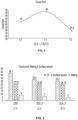
- FIG. 1 is a graphical representation of the cloud point plotted as a function of the ratios and indicated a critical cloud point value correlating to the 1:1 ratio.
- isodecyl alcohol (IDA) and lauryl alcohol (C 12-14 alcohol) were combined in a single reaction vessel and the mixture was then ethoxylated in the pilot plant of 30L capacity to provide formulations with varying amounts of the ethoxylated alcohol mixtures, namely 5DA L7 (5:1) and 3DA L7 (3:1), prepared according to methods of the present disclosure.
- Ethoxylation conditions proceeded as in Table 1 above.
- the reaction sequence comprised the combination of alcohol precursors IDS and C 12-14 alcohol with a catalyst (potassium hydroxide as a 50% aqueous solution, in an amount of 0.2%), dehydration, addition of ethylene oxide, digestion, a process control check, and cooling and neutralization.
- Table 6 provides the cloud point, surface tension, and wettings values for 5DA L7 (5:1) and 3DA L7 (3:1) compared to the 1:1 sample (LDB1).
- FIG. 2 provides a graphical representation of these values.
- Table 6. Cloud point, surface tension, and wetting values.
- the cloud point of 1:1 ratio (L7:DA5, as LDB1) was greater than that of the formulations at ratios 3:1 and 5:1, while maintaining a comparable surface tension (within 3%) and wetting.
- the higher cloud point suggested that the disclosed laundry formulation exhibited better storage stability than the comparative samples at different ratios.
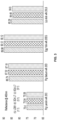
- LDB1, 3DA L7 (3:1), and 5DA L7 (5:1) were measured using a Tergotometer and Konica Minolta spectrophotometer. Values for reflectance at 460 nm are presented as a graphical representation in FIG. 2 .
- Laundry wash trials were conducted using a tergotometer and deionized water at 40 °C and at 50 °C. The wash trials were performed at 200 revolutions per minute (rpm) for 30 minutes with a load of 25 grams per liter (g/L) for the varying samples. The wash trial included a dosage of 0.2% ethoxy and 0.05% sodium triphosphate STP builder. The laundered samples were rinsed and dried at room temperature.
- Reflectance was obtained at 460 nm for each sample of laundered fabric according to the stain types.
- the reflectance measurements were performed on a Konica Minolta Spectrophotometer 3610A. All measurements are made after calibrating the instrument against a black standard and white standard of known reflectance. Measurements were made according to the reference standard ASTM D 3050 - 07. Reflectance values of all the fabrics were obtained before and after washing.
- the reference stains were Pigment Lanolin wfk 20 C, Pigment Sebum wfk 20 D, Egg Yolk wfk 20 EG, and Lip stick wfk 20 LS. Results at 40 °C are presented in Table 7. Table 7.
- FIG. 3 provides a graphical representation of the reflectance observed at 460 nm for LDB1, 3DA L7 (3:1), and 5DA L7 (5:1) at 40 °C.
- the 1:1 LDB1 sample provided reflectance results comparable to those achieved using 3DA L7 (3:1) and 5DA L7 (5:1).
- the results were comparable in that the LDB1 values were within 3%, and more specifically, within 1% of the reflectance values for 3DA L7 (3:1) and 5DA L7 (5:1).
- Results observed at 50 °C demonstrate the improvement observed with inventive formulation LDB1 (1:1).
- Table 8 presents the reflectance values obtained for the 50 °C wash trial. Table 8.
- the LDB1 formulation exhibited the highest observed reflectance for trials performed at 50 °C as demonstrated in FIG. 4 .
- the 1:1 ratio of surfactant (DA5 L7, LDB1) exhibited higher reflectance and thus a better detergency performance at the higher temperature compared to the other ratios (3:1 and 5:1) for the down selected standard stains.
- the higher cloud point of LDB1 may have led to or may have contributed to detergency enhancement.
Landscapes
- Chemical & Material Sciences (AREA)
- Organic Chemistry (AREA)
- Engineering & Computer Science (AREA)
- Chemical Kinetics & Catalysis (AREA)
- Life Sciences & Earth Sciences (AREA)
- Oil, Petroleum & Natural Gas (AREA)
- Wood Science & Technology (AREA)
- Textile Engineering (AREA)
- Detergent Compositions (AREA)
Claims (14)
- Procédé de formation d'une composition de tensioactif, le procédé comprenant :a. la combinaisoni. d'un alcool aliphatique à chaîne droite en C12 à C14, etii. d'un alcool aliphatique à chaîne ramifiée en C10 dans un seul récipient réactionnel pour former un mélange d'alcools dans lequel l'alcool aliphatique à chaîne droite en C12 à C14 et l'alcool aliphatique à chaîne ramifiée en C10 sont combinés en un rapport en poids d'environ 0,8/1 à 1,4/1 ; etb. l'éthoxylation du mélange d'alcools pour former une composition de tensioactif,dans lequel :une étoffe salie soumise à un essai de lavage du linge avec la composition de tensioactif présente un coefficient de réflexion à 460 nm qui est dans les 5 % du coefficient de réflexion observé à 460 nm sur une étoffe tachée soumise à un essai de lavage du linge avec une composition de référence,la composition de référence comprend un mélange physique d'alcool aliphatique à chaîne ramifiée en C10 éthoxylé ayant 5 moles d'éthoxylate et d'alcool aliphatique à chaîne droite en C12 à C14 éthoxylé ayant 7 moles d'éthoxylate, en un rapport en poids de 1/1,l'essai de lavage du linge comprend le lavage de l'étoffe dans de l'eau désionisée à 40°C avec une dose de 0,2 % du tensioactif ou de la composition de référence conformément à la norme ASTM-3050-70, etl'étoffe salie est en un mélange de coton et de polyester.
- Procédé selon la revendication 1, dans lequel l'éthoxylation se déroule jusqu'à ce qu'un indice d'hydroxyle de 122 à 132 dans le mélange d'alcools éthoxylés soit obtenu, quand il est déterminé conformément à la norme ASTM E1899-08.
- Procédé selon la revendication 1, dans lequel l'alcool aliphatique à chaîne ramifiée en C10 et l'alcool aliphatique à chaîne droite en C12 à C14 sont combinés en un rapport en poids de 1/1.
- Procédé selon l'une quelconque des revendications 1 à 3, dans lequel l'éthoxylation comprend la combinaison du mélange d'alcools avec un catalyseur et la réaction du mélange résultant avec environ 2 moles d'oxyde d'éthylène à environ 12 moles d'oxyde d'éthylène par mole d'alcool.
- Procédé selon l'une quelconque des revendications 1 à 4, dans lequel l'éthoxylation comprend la combinaison du mélange d'alcools avec un catalyseur et la réaction du mélange résultant avec environ 6 moles d'oxyde d'éthylène par mole d'alcool.
- Procédé selon l'une quelconque des revendications 1 à 5, dans lequel l'éthoxylation se déroule à une température d'environ 150°C à environ 170°C.
- Procédé selon l'une quelconque des revendications 1 à 6, dans lequel l'éthoxylation se déroule sous une pression d'environ 2 bar à environ 3,5 bar.
- Procédé selon l'une quelconque des revendications 1 à 7, dans lequel la composition de tensioactif présente un point de trouble dans une solution aqueuse à 1 % qui est dans les 5 % du point de trouble observé pour une composition de référence dans une solution aqueuse à 1 %, dans lequel la composition de référence comprend un mélange physique d'alcool aliphatique à chaîne ramifiée en C10 éthoxylé et d'alcool aliphatique à chaîne droite en C12 à C14 éthoxylé en un rapport en poids de 1/1, quand il est mesuré conformément à la norme ASTM D 2024-09.
- Procédé selon l'une quelconque des revendications 1 à 8, dans lequel la composition de tensioactif a une valeur de pH qui est dans les 3 % du pH observé pour une composition de référence, dans lequel la composition de référence comprend un mélange physique d'alcool aliphatique à chaîne ramifiée en C10 éthoxylé et d'alcool aliphatique à chaîne droite en C12 éthoxylé en un rapport en poids de 1/1, quand elle est mesurée conformément à la norme ASTM D1293-12.
- Procédé selon l'une quelconque des revendications 1 à 8, dans lequel la composition de tensioactif présente une tension de surface qui est dans les 3 % de la tension de surface mesurée pour une composition de référence, dans lequel la composition de référence comprend un mélange physique d'alcool aliphatique à chaîne ramifiée en C10 éthoxylé et d'alcool aliphatique à chaîne droite en C12 éthoxylé en un rapport en poids de 1/1, quand elle est mesurée conformément à la norme ASTM D1331-4.
- Procédé selon l'une quelconque des revendications 1 à 8, dans lequel l'étoffe salie soumise à un essai de lavage du linge avec la composition de tensioactif présente un coefficient de réflexion à 460 nm qui est dans les 3 % du coefficient de réflexion observé à 460 nm sur une étoffe tachée soumise à un essai de lavage du linge avec la composition de référence.
- Procédé selon l'une quelconque des revendications 1 à 8, dans lequel l'étoffe salie soumise à un essai de lavage du linge avec la composition de tensioactif présente un coefficient de réflexion à 460 nm qui est supérieur au coefficient de réflexion observé à 460 nm sur une étoffe salie soumise à un essai de lavage du linge avec une composition de référence, dans lequel la composition de référence comprend un mélange éthoxylé d'alcool aliphatique à chaîne ramifiée en C10 ayant 5 moles d'éthoxylate et d'alcool aliphatique à chaîne droite en C12 à C14 éthoxylé ayant 7 moles d'éthoxylate, ou dans lequel la composition de référence comprend un mélange éthoxylé d'alcool aliphatique à chaîne ramifiée en C10 ayant 3 moles d'éthoxylate et d'alcool aliphatique à chaîne droite en C12 à C14 ayant 7 moles d'éthoxylate, dans lequel l'essai de lavage du linge comprend le lavage de l'étoffe dans de l'eau désionisée à 50°C avec une dose de 0,4 % du tensioactif ou de la composition de référence, et dans lequel l'étoffe salie comprend du pigment lanoline wfk 20C, du pigment sébum wfk 20D, du jaune d'œuf 20EG, ou du rouge à lèvres wfk 20 LS.
- Procédé selon l'une quelconque des revendications 1 à 12, lequel procédé est exempt de distillation.
- Procédé selon l'une quelconque des revendications 1 à 13, dans lequel l'étoffe salie comprend une tache parmi n'importe lesquelles des types de taches suivants : pigment de sauce soja ; huile d'olive WFK 20B ; pigment lanoline WFK 20C ; pigment sébum WFK 20D ; jaune d'œuf WFK 20EG ; huile moteur usagée WFK 20GM ; café WFK 20K ; raisin rouge WFK 20LIU ; rouge à lèvres WFK 20LS ; maquillage WFK 20MU ; pigment œuf WFK 20N ; pigment graisse végétale WFK 20PF ; huile minérale avec suie WFK 20RM ; sauce tomate au bœuf WFK 20SG ; épinard WFK 20SP ; ketchup WFK 20T ; curry WFK 2U ; sauce soja WFK 20V ; chocolat WFK 20Z ; sang-lait-C EMPA 117 ; ou une de leurs combinaisons, pour étoffes de test salies conformément à WFK Testgewebe GmbH ou le type de tache normalisé sang-lait C EMPA 117 conformément à l'EMPA en Suisse.
Applications Claiming Priority (2)
| Application Number | Priority Date | Filing Date | Title |
|---|---|---|---|
| EP21172275 | 2021-05-05 | ||
| PCT/IB2022/054183 WO2022234523A1 (fr) | 2021-05-05 | 2022-05-05 | Procédé pour l'éthoxylation d'un mélange d'alcool gras à chaîne droite et d'alcool gras à chaîne ramifiée dans une réaction en une seule étape |
Publications (2)
| Publication Number | Publication Date |
|---|---|
| EP4334423A1 EP4334423A1 (fr) | 2024-03-13 |
| EP4334423B1 true EP4334423B1 (fr) | 2025-07-02 |
Family
ID=75825536
Family Applications (1)
| Application Number | Title | Priority Date | Filing Date |
|---|---|---|---|
| EP22723796.3A Active EP4334423B1 (fr) | 2021-05-05 | 2022-05-05 | Procédé d'éthoxylation d'un mélange d'alcool gras à chaîne droite et alcool gras à chaîne ramifiée dans une réaction en une seule étape |
Country Status (5)
| Country | Link |
|---|---|
| US (1) | US20250075149A1 (fr) |
| EP (1) | EP4334423B1 (fr) |
| CN (1) | CN117597423A (fr) |
| SA (1) | SA523451422B1 (fr) |
| WO (1) | WO2022234523A1 (fr) |
Family Cites Families (10)
| Publication number | Priority date | Publication date | Assignee | Title |
|---|---|---|---|---|
| ES377675A1 (es) * | 1969-06-18 | 1972-07-16 | Continental Oil Co | Perfeccionamientos en los procedimientos de obtencion de esteres poliglicolicos de alcanoles primarios monohidricos saturados. |
| US3682849A (en) | 1970-10-08 | 1972-08-08 | Shell Oil Co | Alcohol ethoxylates |
| CA1071055A (fr) | 1975-06-30 | 1980-02-05 | The Procter And Gamble Company | Detergents liquides |
| DE4004379A1 (de) * | 1990-02-13 | 1991-08-14 | Henkel Kgaa | Verwendung von erdalkalisalzen von acylcyanamiden als katalysatoren fuer die ethoxylierung bzw. propoxylierung von verbindungen mit aktiven h-atomen |
| DE4105602A1 (de) * | 1991-02-22 | 1992-08-27 | Basf Ag | Verwendung einer mischung aus mindestens zwei alkoxylierten alkoholen als schaumdaempfender tensidzusatz in reinigungsmitteln fuer maschinell ablaufende reinigungsprozesse |
| CN101389398B (zh) * | 2006-02-22 | 2012-03-21 | 巴斯夫欧洲公司 | 含有短链和长链组分的表面活性剂混合物 |
| CN101578130A (zh) | 2007-01-11 | 2009-11-11 | 陶氏环球技术公司 | 烷氧基化物混合物表面活性剂 |
| US7671004B2 (en) * | 2007-02-01 | 2010-03-02 | Basf Aktiengeselschaft | Cleaning composition and method of forming the same |
| KR102121906B1 (ko) | 2012-12-11 | 2020-06-12 | 솔베이 스페셜티 폴리머스 이태리 에스.피.에이. | (퍼)플루오로폴리에테르 알코올의 알콕실화 공정 |
| ES2878286T3 (es) * | 2016-10-31 | 2021-11-18 | Sabic Global Technologies Bv | Fórmula para una detergencia y un beneficio antirredeposición superiores |
-
2022
- 2022-05-05 WO PCT/IB2022/054183 patent/WO2022234523A1/fr not_active Ceased
- 2022-05-05 EP EP22723796.3A patent/EP4334423B1/fr active Active
- 2022-05-05 US US18/558,889 patent/US20250075149A1/en active Pending
- 2022-05-05 CN CN202280046984.XA patent/CN117597423A/zh active Pending
-
2023
- 2023-11-05 SA SA523451422A patent/SA523451422B1/ar unknown
Also Published As
| Publication number | Publication date |
|---|---|
| SA523451422B1 (ar) | 2025-06-29 |
| CN117597423A (zh) | 2024-02-23 |
| US20250075149A1 (en) | 2025-03-06 |
| WO2022234523A1 (fr) | 2022-11-10 |
| EP4334423A1 (fr) | 2024-03-13 |
Similar Documents
| Publication | Publication Date | Title |
|---|---|---|
| US7503333B2 (en) | Method of washing a surface with a surfactant composition | |
| US9732308B2 (en) | Polyesters | |
| KR101673275B1 (ko) | 알콕시화 2-프로필헵탄올을 포함하는 소포제 조성물 | |
| CA2135148C (fr) | Composition aqueuse alcaline | |
| JPS59207997A (ja) | 洗浄剤用の抑泡添加剤 | |
| US4438014A (en) | Nonionic surfactants for automatic dishwasher detergents | |
| US20060148664A1 (en) | Alkoxylate mixture and its use as a cleaning agent for hard surfaces | |
| US20190023635A1 (en) | Narrow range alcohol alkoxylates and derivatives thereof | |
| JP2025060893A (ja) | 消泡剤及び非イオン性界面活性剤を含む低粘度液体洗剤組成物 | |
| US20230087990A1 (en) | Liquid laundry composition | |
| EP4334423B1 (fr) | Procédé d'éthoxylation d'un mélange d'alcool gras à chaîne droite et alcool gras à chaîne ramifiée dans une réaction en une seule étape | |
| EP3532589B1 (fr) | Formule pour un pouvoir détergent et un bénéfice anti-dépôt supérieurs | |
| CA1083910A (fr) | Production de detergents | |
| US20250382549A1 (en) | Multifunctional n-oxide hydrotropes, cleaning formulations containing them and use thereof | |
| CA2348652A1 (fr) | Preparation de tensioactifs a base d'alcools poly(oxyalkyles) a protections ether | |
| CA2297831A1 (fr) | Procede utile pour preparer des tensioactifs a base d'alcool poly(alcoxyle) a coiffe d'ether | |
| US12559700B2 (en) | Method of making liquid laundry detergent formulation | |
| JP7763067B2 (ja) | 疎水基を有するアルキレンオキシド重合体、組成物、その製造方法、及び、洗剤組成物 | |
| EP0815188A1 (fr) | Detergent alcalin a haute teneur en tensioactif non-ionique et agent complexant et utilisation d'un composant amphotere comme agent de solubilisation |
Legal Events
| Date | Code | Title | Description |
|---|---|---|---|
| STAA | Information on the status of an ep patent application or granted ep patent |
Free format text: STATUS: UNKNOWN |
|
| STAA | Information on the status of an ep patent application or granted ep patent |
Free format text: STATUS: THE INTERNATIONAL PUBLICATION HAS BEEN MADE |
|
| PUAI | Public reference made under article 153(3) epc to a published international application that has entered the european phase |
Free format text: ORIGINAL CODE: 0009012 |
|
| STAA | Information on the status of an ep patent application or granted ep patent |
Free format text: STATUS: REQUEST FOR EXAMINATION WAS MADE |
|
| 17P | Request for examination filed |
Effective date: 20231116 |
|
| AK | Designated contracting states |
Kind code of ref document: A1 Designated state(s): AL AT BE BG CH CY CZ DE DK EE ES FI FR GB GR HR HU IE IS IT LI LT LU LV MC MK MT NL NO PL PT RO RS SE SI SK SM TR |
|
| DAV | Request for validation of the european patent (deleted) | ||
| DAX | Request for extension of the european patent (deleted) | ||
| GRAP | Despatch of communication of intention to grant a patent |
Free format text: ORIGINAL CODE: EPIDOSNIGR1 |
|
| STAA | Information on the status of an ep patent application or granted ep patent |
Free format text: STATUS: GRANT OF PATENT IS INTENDED |
|
| INTG | Intention to grant announced |
Effective date: 20250102 |
|
| GRAS | Grant fee paid |
Free format text: ORIGINAL CODE: EPIDOSNIGR3 |
|
| GRAA | (expected) grant |
Free format text: ORIGINAL CODE: 0009210 |
|
| STAA | Information on the status of an ep patent application or granted ep patent |
Free format text: STATUS: THE PATENT HAS BEEN GRANTED |
|
| AK | Designated contracting states |
Kind code of ref document: B1 Designated state(s): AL AT BE BG CH CY CZ DE DK EE ES FI FR GB GR HR HU IE IS IT LI LT LU LV MC MK MT NL NO PL PT RO RS SE SI SK SM TR |
|
| REG | Reference to a national code |
Ref country code: GB Ref legal event code: FG4D |
|
| REG | Reference to a national code |
Ref country code: CH Ref legal event code: EP |
|
| REG | Reference to a national code |
Ref country code: DE Ref legal event code: R096 Ref document number: 602022016893 Country of ref document: DE |
|
| P01 | Opt-out of the competence of the unified patent court (upc) registered |
Free format text: CASE NUMBER: APP_30479/2025 Effective date: 20250625 |
|
| REG | Reference to a national code |
Ref country code: IE Ref legal event code: FG4D |
|
| REG | Reference to a national code |
Ref country code: NL Ref legal event code: FP |
|
| PG25 | Lapsed in a contracting state [announced via postgrant information from national office to epo] |
Ref country code: PT Free format text: LAPSE BECAUSE OF FAILURE TO SUBMIT A TRANSLATION OF THE DESCRIPTION OR TO PAY THE FEE WITHIN THE PRESCRIBED TIME-LIMIT Effective date: 20251103 |
|
| REG | Reference to a national code |
Ref country code: AT Ref legal event code: MK05 Ref document number: 1809288 Country of ref document: AT Kind code of ref document: T Effective date: 20250702 |
|
| PG25 | Lapsed in a contracting state [announced via postgrant information from national office to epo] |
Ref country code: IS Free format text: LAPSE BECAUSE OF FAILURE TO SUBMIT A TRANSLATION OF THE DESCRIPTION OR TO PAY THE FEE WITHIN THE PRESCRIBED TIME-LIMIT Effective date: 20251102 |
|
| PG25 | Lapsed in a contracting state [announced via postgrant information from national office to epo] |
Ref country code: NO Free format text: LAPSE BECAUSE OF FAILURE TO SUBMIT A TRANSLATION OF THE DESCRIPTION OR TO PAY THE FEE WITHIN THE PRESCRIBED TIME-LIMIT Effective date: 20251002 |
|
| REG | Reference to a national code |
Ref country code: LT Ref legal event code: MG9D |
|
| PG25 | Lapsed in a contracting state [announced via postgrant information from national office to epo] |
Ref country code: AT Free format text: LAPSE BECAUSE OF FAILURE TO SUBMIT A TRANSLATION OF THE DESCRIPTION OR TO PAY THE FEE WITHIN THE PRESCRIBED TIME-LIMIT Effective date: 20250702 |
|
| PG25 | Lapsed in a contracting state [announced via postgrant information from national office to epo] |
Ref country code: FI Free format text: LAPSE BECAUSE OF FAILURE TO SUBMIT A TRANSLATION OF THE DESCRIPTION OR TO PAY THE FEE WITHIN THE PRESCRIBED TIME-LIMIT Effective date: 20250702 |
|
| PG25 | Lapsed in a contracting state [announced via postgrant information from national office to epo] |
Ref country code: HR Free format text: LAPSE BECAUSE OF FAILURE TO SUBMIT A TRANSLATION OF THE DESCRIPTION OR TO PAY THE FEE WITHIN THE PRESCRIBED TIME-LIMIT Effective date: 20250702 |
|
| PG25 | Lapsed in a contracting state [announced via postgrant information from national office to epo] |
Ref country code: GR Free format text: LAPSE BECAUSE OF FAILURE TO SUBMIT A TRANSLATION OF THE DESCRIPTION OR TO PAY THE FEE WITHIN THE PRESCRIBED TIME-LIMIT Effective date: 20251003 |
|
| PG25 | Lapsed in a contracting state [announced via postgrant information from national office to epo] |
Ref country code: CZ Free format text: LAPSE BECAUSE OF FAILURE TO SUBMIT A TRANSLATION OF THE DESCRIPTION OR TO PAY THE FEE WITHIN THE PRESCRIBED TIME-LIMIT Effective date: 20250702 Ref country code: SE Free format text: LAPSE BECAUSE OF FAILURE TO SUBMIT A TRANSLATION OF THE DESCRIPTION OR TO PAY THE FEE WITHIN THE PRESCRIBED TIME-LIMIT Effective date: 20250702 |
|
| PG25 | Lapsed in a contracting state [announced via postgrant information from national office to epo] |
Ref country code: LV Free format text: LAPSE BECAUSE OF FAILURE TO SUBMIT A TRANSLATION OF THE DESCRIPTION OR TO PAY THE FEE WITHIN THE PRESCRIBED TIME-LIMIT Effective date: 20250702 |
|
| PG25 | Lapsed in a contracting state [announced via postgrant information from national office to epo] |
Ref country code: PL Free format text: LAPSE BECAUSE OF FAILURE TO SUBMIT A TRANSLATION OF THE DESCRIPTION OR TO PAY THE FEE WITHIN THE PRESCRIBED TIME-LIMIT Effective date: 20250702 Ref country code: BG Free format text: LAPSE BECAUSE OF FAILURE TO SUBMIT A TRANSLATION OF THE DESCRIPTION OR TO PAY THE FEE WITHIN THE PRESCRIBED TIME-LIMIT Effective date: 20250702 |
|
| PG25 | Lapsed in a contracting state [announced via postgrant information from national office to epo] |
Ref country code: RS Free format text: LAPSE BECAUSE OF FAILURE TO SUBMIT A TRANSLATION OF THE DESCRIPTION OR TO PAY THE FEE WITHIN THE PRESCRIBED TIME-LIMIT Effective date: 20251002 |
|
| PG25 | Lapsed in a contracting state [announced via postgrant information from national office to epo] |
Ref country code: ES Free format text: LAPSE BECAUSE OF FAILURE TO SUBMIT A TRANSLATION OF THE DESCRIPTION OR TO PAY THE FEE WITHIN THE PRESCRIBED TIME-LIMIT Effective date: 20250702 |
|
| PG25 | Lapsed in a contracting state [announced via postgrant information from national office to epo] |
Ref country code: SM Free format text: LAPSE BECAUSE OF FAILURE TO SUBMIT A TRANSLATION OF THE DESCRIPTION OR TO PAY THE FEE WITHIN THE PRESCRIBED TIME-LIMIT Effective date: 20250702 |
|
| PG25 | Lapsed in a contracting state [announced via postgrant information from national office to epo] |
Ref country code: DK Free format text: LAPSE BECAUSE OF FAILURE TO SUBMIT A TRANSLATION OF THE DESCRIPTION OR TO PAY THE FEE WITHIN THE PRESCRIBED TIME-LIMIT Effective date: 20250702 |
|
| PG25 | Lapsed in a contracting state [announced via postgrant information from national office to epo] |
Ref country code: IT Free format text: LAPSE BECAUSE OF FAILURE TO SUBMIT A TRANSLATION OF THE DESCRIPTION OR TO PAY THE FEE WITHIN THE PRESCRIBED TIME-LIMIT Effective date: 20250702 |
|
| PG25 | Lapsed in a contracting state [announced via postgrant information from national office to epo] |
Ref country code: SK Free format text: LAPSE BECAUSE OF FAILURE TO SUBMIT A TRANSLATION OF THE DESCRIPTION OR TO PAY THE FEE WITHIN THE PRESCRIBED TIME-LIMIT Effective date: 20250702 Ref country code: EE Free format text: LAPSE BECAUSE OF FAILURE TO SUBMIT A TRANSLATION OF THE DESCRIPTION OR TO PAY THE FEE WITHIN THE PRESCRIBED TIME-LIMIT Effective date: 20250702 |