EP4335480A1 - Ballonnet à impulsions et application associée - Google Patents
Ballonnet à impulsions et application associée Download PDFInfo
- Publication number
- EP4335480A1 EP4335480A1 EP21865360.8A EP21865360A EP4335480A1 EP 4335480 A1 EP4335480 A1 EP 4335480A1 EP 21865360 A EP21865360 A EP 21865360A EP 4335480 A1 EP4335480 A1 EP 4335480A1
- Authority
- EP
- European Patent Office
- Prior art keywords
- balloon
- insulating layer
- pulse
- wall
- blow molding
- Prior art date
- Legal status (The legal status is an assumption and is not a legal conclusion. Google has not performed a legal analysis and makes no representation as to the accuracy of the status listed.)
- Pending
Links
- 239000000463 material Substances 0.000 claims description 47
- 238000000071 blow moulding Methods 0.000 claims description 43
- 239000006185 dispersion Substances 0.000 claims description 21
- 238000010101 extrusion blow moulding Methods 0.000 claims description 18
- 238000000034 method Methods 0.000 claims description 14
- 238000005119 centrifugation Methods 0.000 claims description 10
- 239000011248 coating agent Substances 0.000 claims description 10
- 238000000576 coating method Methods 0.000 claims description 10
- 238000000465 moulding Methods 0.000 claims description 10
- 230000008569 process Effects 0.000 claims description 10
- 238000010438 heat treatment Methods 0.000 claims description 8
- 238000007664 blowing Methods 0.000 claims description 6
- 238000001035 drying Methods 0.000 claims description 6
- 229920001971 elastomer Polymers 0.000 claims description 5
- QJGQUHMNIGDVPM-UHFFFAOYSA-N nitrogen group Chemical group [N] QJGQUHMNIGDVPM-UHFFFAOYSA-N 0.000 claims description 5
- 239000004033 plastic Substances 0.000 claims description 5
- 229920003023 plastic Polymers 0.000 claims description 5
- 229920000728 polyester Polymers 0.000 claims description 5
- 229920000642 polymer Polymers 0.000 claims description 5
- 239000005060 rubber Substances 0.000 claims description 5
- 239000003822 epoxy resin Substances 0.000 claims description 4
- 239000000835 fiber Substances 0.000 claims description 4
- 229910010272 inorganic material Inorganic materials 0.000 claims description 4
- 239000011147 inorganic material Substances 0.000 claims description 4
- 229920000647 polyepoxide Polymers 0.000 claims description 4
- 208000005475 Vascular calcification Diseases 0.000 claims description 3
- LNEPOXFFQSENCJ-UHFFFAOYSA-N haloperidol Chemical compound C1CC(O)(C=2C=CC(Cl)=CC=2)CCN1CCCC(=O)C1=CC=C(F)C=C1 LNEPOXFFQSENCJ-UHFFFAOYSA-N 0.000 claims description 3
- 238000007599 discharging Methods 0.000 abstract description 18
- 230000005611 electricity Effects 0.000 abstract description 10
- 239000003792 electrolyte Substances 0.000 abstract description 6
- 210000004204 blood vessel Anatomy 0.000 abstract description 4
- 230000002308 calcification Effects 0.000 abstract description 4
- 238000001356 surgical procedure Methods 0.000 abstract description 3
- 230000001737 promoting effect Effects 0.000 abstract description 2
- 230000019491 signal transduction Effects 0.000 abstract 1
- 238000005507 spraying Methods 0.000 description 15
- 229920002873 Polyethylenimine Polymers 0.000 description 12
- 239000004809 Teflon Substances 0.000 description 10
- 229920006362 Teflon® Polymers 0.000 description 10
- 238000005336 cracking Methods 0.000 description 9
- -1 polymetaphenylene isophthalamide Polymers 0.000 description 9
- 238000007598 dipping method Methods 0.000 description 8
- 208000004434 Calcinosis Diseases 0.000 description 7
- 230000001680 brushing effect Effects 0.000 description 7
- 238000001816 cooling Methods 0.000 description 5
- 229920001343 polytetrafluoroethylene Polymers 0.000 description 5
- 239000004810 polytetrafluoroethylene Substances 0.000 description 5
- CSCPPACGZOOCGX-UHFFFAOYSA-N Acetone Chemical compound CC(C)=O CSCPPACGZOOCGX-UHFFFAOYSA-N 0.000 description 4
- LFQSCWFLJHTTHZ-UHFFFAOYSA-N Ethanol Chemical compound CCO LFQSCWFLJHTTHZ-UHFFFAOYSA-N 0.000 description 4
- 239000000853 adhesive Substances 0.000 description 4
- 230000001070 adhesive effect Effects 0.000 description 4
- 238000004513 sizing Methods 0.000 description 4
- 230000009286 beneficial effect Effects 0.000 description 3
- 238000005238 degreasing Methods 0.000 description 3
- 238000010586 diagram Methods 0.000 description 3
- 229920000098 polyolefin Polymers 0.000 description 3
- 239000000843 powder Substances 0.000 description 3
- 238000011282 treatment Methods 0.000 description 3
- 208000037411 Aortic calcification Diseases 0.000 description 2
- 230000009471 action Effects 0.000 description 2
- 238000004026 adhesive bonding Methods 0.000 description 2
- 210000000709 aorta Anatomy 0.000 description 2
- 230000000694 effects Effects 0.000 description 2
- 239000003292 glue Substances 0.000 description 2
- 238000007654 immersion Methods 0.000 description 2
- 229920002312 polyamide-imide Polymers 0.000 description 2
- 238000000926 separation method Methods 0.000 description 2
- 239000004953 Aliphatic polyamide Substances 0.000 description 1
- 206010003210 Arteriosclerosis Diseases 0.000 description 1
- 206010008479 Chest Pain Diseases 0.000 description 1
- 239000004593 Epoxy Substances 0.000 description 1
- YCKRFDGAMUMZLT-UHFFFAOYSA-N Fluorine atom Chemical compound [F] YCKRFDGAMUMZLT-UHFFFAOYSA-N 0.000 description 1
- 208000035211 Heart Murmurs Diseases 0.000 description 1
- 229920002292 Nylon 6 Polymers 0.000 description 1
- 229920002302 Nylon 6,6 Polymers 0.000 description 1
- 239000002033 PVDF binder Substances 0.000 description 1
- 208000031481 Pathologic Constriction Diseases 0.000 description 1
- 239000004952 Polyamide Substances 0.000 description 1
- 239000004962 Polyamide-imide Substances 0.000 description 1
- 239000004698 Polyethylene Substances 0.000 description 1
- 239000004642 Polyimide Substances 0.000 description 1
- 239000004743 Polypropylene Substances 0.000 description 1
- 238000009825 accumulation Methods 0.000 description 1
- 229920003231 aliphatic polyamide Polymers 0.000 description 1
- 206010002906 aortic stenosis Diseases 0.000 description 1
- 239000004760 aramid Substances 0.000 description 1
- 229920003235 aromatic polyamide Polymers 0.000 description 1
- 208000011775 arteriosclerosis disease Diseases 0.000 description 1
- 230000017531 blood circulation Effects 0.000 description 1
- 239000000919 ceramic Substances 0.000 description 1
- 238000004140 cleaning Methods 0.000 description 1
- 238000004891 communication Methods 0.000 description 1
- 238000009826 distribution Methods 0.000 description 1
- 229910052731 fluorine Inorganic materials 0.000 description 1
- 239000011737 fluorine Substances 0.000 description 1
- 239000003365 glass fiber Substances 0.000 description 1
- 239000004519 grease Substances 0.000 description 1
- 238000000227 grinding Methods 0.000 description 1
- 238000007731 hot pressing Methods 0.000 description 1
- 150000003949 imides Chemical class 0.000 description 1
- 238000009434 installation Methods 0.000 description 1
- 230000003993 interaction Effects 0.000 description 1
- 239000007788 liquid Substances 0.000 description 1
- 208000010125 myocardial infarction Diseases 0.000 description 1
- 239000003960 organic solvent Substances 0.000 description 1
- 229920002647 polyamide Polymers 0.000 description 1
- 229920000573 polyethylene Polymers 0.000 description 1
- 229920001721 polyimide Polymers 0.000 description 1
- 229920001155 polypropylene Polymers 0.000 description 1
- 229920000915 polyvinyl chloride Polymers 0.000 description 1
- 239000004800 polyvinyl chloride Substances 0.000 description 1
- 229920002981 polyvinylidene fluoride Polymers 0.000 description 1
- 238000002360 preparation method Methods 0.000 description 1
- 238000005488 sandblasting Methods 0.000 description 1
- 230000035939 shock Effects 0.000 description 1
- 239000002904 solvent Substances 0.000 description 1
- 238000003892 spreading Methods 0.000 description 1
- 230000007480 spreading Effects 0.000 description 1
- 230000036262 stenosis Effects 0.000 description 1
- 208000037804 stenosis Diseases 0.000 description 1
- 239000000375 suspending agent Substances 0.000 description 1
- XLYOFNOQVPJJNP-UHFFFAOYSA-N water Substances O XLYOFNOQVPJJNP-UHFFFAOYSA-N 0.000 description 1
Images
Classifications
-
- A—HUMAN NECESSITIES
- A61—MEDICAL OR VETERINARY SCIENCE; HYGIENE
- A61B—DIAGNOSIS; SURGERY; IDENTIFICATION
- A61B17/00—Surgical instruments, devices or methods
- A61B17/22—Implements for squeezing-off ulcers or the like on inner organs of the body; Implements for scraping-out cavities of body organs, e.g. bones; for invasive removal or destruction of calculus using mechanical vibrations; for removing obstructions in blood vessels, not otherwise provided for
- A61B17/22004—Implements for squeezing-off ulcers or the like on inner organs of the body; Implements for scraping-out cavities of body organs, e.g. bones; for invasive removal or destruction of calculus using mechanical vibrations; for removing obstructions in blood vessels, not otherwise provided for using mechanical vibrations, e.g. ultrasonic shock waves
- A61B17/22012—Implements for squeezing-off ulcers or the like on inner organs of the body; Implements for scraping-out cavities of body organs, e.g. bones; for invasive removal or destruction of calculus using mechanical vibrations; for removing obstructions in blood vessels, not otherwise provided for using mechanical vibrations, e.g. ultrasonic shock waves in direct contact with, or very close to, the obstruction or concrement
- A61B17/22022—Implements for squeezing-off ulcers or the like on inner organs of the body; Implements for scraping-out cavities of body organs, e.g. bones; for invasive removal or destruction of calculus using mechanical vibrations; for removing obstructions in blood vessels, not otherwise provided for using mechanical vibrations, e.g. ultrasonic shock waves in direct contact with, or very close to, the obstruction or concrement using electric discharge
-
- A—HUMAN NECESSITIES
- A61—MEDICAL OR VETERINARY SCIENCE; HYGIENE
- A61B—DIAGNOSIS; SURGERY; IDENTIFICATION
- A61B17/00—Surgical instruments, devices or methods
- A61B17/22—Implements for squeezing-off ulcers or the like on inner organs of the body; Implements for scraping-out cavities of body organs, e.g. bones; for invasive removal or destruction of calculus using mechanical vibrations; for removing obstructions in blood vessels, not otherwise provided for
- A61B17/22004—Implements for squeezing-off ulcers or the like on inner organs of the body; Implements for scraping-out cavities of body organs, e.g. bones; for invasive removal or destruction of calculus using mechanical vibrations; for removing obstructions in blood vessels, not otherwise provided for using mechanical vibrations, e.g. ultrasonic shock waves
-
- A—HUMAN NECESSITIES
- A61—MEDICAL OR VETERINARY SCIENCE; HYGIENE
- A61B—DIAGNOSIS; SURGERY; IDENTIFICATION
- A61B17/00—Surgical instruments, devices or methods
- A61B17/22—Implements for squeezing-off ulcers or the like on inner organs of the body; Implements for scraping-out cavities of body organs, e.g. bones; for invasive removal or destruction of calculus using mechanical vibrations; for removing obstructions in blood vessels, not otherwise provided for
- A61B17/22004—Implements for squeezing-off ulcers or the like on inner organs of the body; Implements for scraping-out cavities of body organs, e.g. bones; for invasive removal or destruction of calculus using mechanical vibrations; for removing obstructions in blood vessels, not otherwise provided for using mechanical vibrations, e.g. ultrasonic shock waves
- A61B17/22012—Implements for squeezing-off ulcers or the like on inner organs of the body; Implements for scraping-out cavities of body organs, e.g. bones; for invasive removal or destruction of calculus using mechanical vibrations; for removing obstructions in blood vessels, not otherwise provided for using mechanical vibrations, e.g. ultrasonic shock waves in direct contact with, or very close to, the obstruction or concrement
-
- B—PERFORMING OPERATIONS; TRANSPORTING
- B29—WORKING OF PLASTICS; WORKING OF SUBSTANCES IN A PLASTIC STATE IN GENERAL
- B29C—SHAPING OR JOINING OF PLASTICS; SHAPING OF MATERIAL IN A PLASTIC STATE, NOT OTHERWISE PROVIDED FOR; AFTER-TREATMENT OF THE SHAPED PRODUCTS, e.g. REPAIRING
- B29C49/00—Blow-moulding, i.e. blowing a preform or parison to a desired shape within a mould; Apparatus therefor
- B29C49/02—Combined blow-moulding and manufacture of the preform or the parison
- B29C49/04—Extrusion blow-moulding
-
- B—PERFORMING OPERATIONS; TRANSPORTING
- B29—WORKING OF PLASTICS; WORKING OF SUBSTANCES IN A PLASTIC STATE IN GENERAL
- B29C—SHAPING OR JOINING OF PLASTICS; SHAPING OF MATERIAL IN A PLASTIC STATE, NOT OTHERWISE PROVIDED FOR; AFTER-TREATMENT OF THE SHAPED PRODUCTS, e.g. REPAIRING
- B29C49/00—Blow-moulding, i.e. blowing a preform or parison to a desired shape within a mould; Apparatus therefor
- B29C49/42—Component parts, details or accessories; Auxiliary operations
- B29C49/78—Measuring, controlling or regulating
-
- B—PERFORMING OPERATIONS; TRANSPORTING
- B29—WORKING OF PLASTICS; WORKING OF SUBSTANCES IN A PLASTIC STATE IN GENERAL
- B29D—PRODUCING PARTICULAR ARTICLES FROM PLASTICS OR FROM SUBSTANCES IN A PLASTIC STATE
- B29D22/00—Producing hollow articles
- B29D22/02—Inflatable articles
-
- A—HUMAN NECESSITIES
- A61—MEDICAL OR VETERINARY SCIENCE; HYGIENE
- A61B—DIAGNOSIS; SURGERY; IDENTIFICATION
- A61B17/00—Surgical instruments, devices or methods
- A61B2017/00526—Methods of manufacturing
-
- A—HUMAN NECESSITIES
- A61—MEDICAL OR VETERINARY SCIENCE; HYGIENE
- A61B—DIAGNOSIS; SURGERY; IDENTIFICATION
- A61B17/00—Surgical instruments, devices or methods
- A61B2017/00743—Type of operation; Specification of treatment sites
- A61B2017/00778—Operations on blood vessels
-
- A—HUMAN NECESSITIES
- A61—MEDICAL OR VETERINARY SCIENCE; HYGIENE
- A61B—DIAGNOSIS; SURGERY; IDENTIFICATION
- A61B17/00—Surgical instruments, devices or methods
- A61B2017/00831—Material properties
- A61B2017/00929—Material properties isolating electrical current
-
- A—HUMAN NECESSITIES
- A61—MEDICAL OR VETERINARY SCIENCE; HYGIENE
- A61B—DIAGNOSIS; SURGERY; IDENTIFICATION
- A61B17/00—Surgical instruments, devices or methods
- A61B17/22—Implements for squeezing-off ulcers or the like on inner organs of the body; Implements for scraping-out cavities of body organs, e.g. bones; for invasive removal or destruction of calculus using mechanical vibrations; for removing obstructions in blood vessels, not otherwise provided for
- A61B17/22004—Implements for squeezing-off ulcers or the like on inner organs of the body; Implements for scraping-out cavities of body organs, e.g. bones; for invasive removal or destruction of calculus using mechanical vibrations; for removing obstructions in blood vessels, not otherwise provided for using mechanical vibrations, e.g. ultrasonic shock waves
- A61B17/22012—Implements for squeezing-off ulcers or the like on inner organs of the body; Implements for scraping-out cavities of body organs, e.g. bones; for invasive removal or destruction of calculus using mechanical vibrations; for removing obstructions in blood vessels, not otherwise provided for using mechanical vibrations, e.g. ultrasonic shock waves in direct contact with, or very close to, the obstruction or concrement
- A61B2017/22025—Implements for squeezing-off ulcers or the like on inner organs of the body; Implements for scraping-out cavities of body organs, e.g. bones; for invasive removal or destruction of calculus using mechanical vibrations; for removing obstructions in blood vessels, not otherwise provided for using mechanical vibrations, e.g. ultrasonic shock waves in direct contact with, or very close to, the obstruction or concrement applying a shock wave
-
- A—HUMAN NECESSITIES
- A61—MEDICAL OR VETERINARY SCIENCE; HYGIENE
- A61B—DIAGNOSIS; SURGERY; IDENTIFICATION
- A61B17/00—Surgical instruments, devices or methods
- A61B17/22—Implements for squeezing-off ulcers or the like on inner organs of the body; Implements for scraping-out cavities of body organs, e.g. bones; for invasive removal or destruction of calculus using mechanical vibrations; for removing obstructions in blood vessels, not otherwise provided for
- A61B2017/22051—Implements for squeezing-off ulcers or the like on inner organs of the body; Implements for scraping-out cavities of body organs, e.g. bones; for invasive removal or destruction of calculus using mechanical vibrations; for removing obstructions in blood vessels, not otherwise provided for with an inflatable part, e.g. balloon, for positioning, blocking, or immobilisation
-
- A—HUMAN NECESSITIES
- A61—MEDICAL OR VETERINARY SCIENCE; HYGIENE
- A61B—DIAGNOSIS; SURGERY; IDENTIFICATION
- A61B17/00—Surgical instruments, devices or methods
- A61B17/22—Implements for squeezing-off ulcers or the like on inner organs of the body; Implements for scraping-out cavities of body organs, e.g. bones; for invasive removal or destruction of calculus using mechanical vibrations; for removing obstructions in blood vessels, not otherwise provided for
- A61B2017/22051—Implements for squeezing-off ulcers or the like on inner organs of the body; Implements for scraping-out cavities of body organs, e.g. bones; for invasive removal or destruction of calculus using mechanical vibrations; for removing obstructions in blood vessels, not otherwise provided for with an inflatable part, e.g. balloon, for positioning, blocking, or immobilisation
- A61B2017/22062—Implements for squeezing-off ulcers or the like on inner organs of the body; Implements for scraping-out cavities of body organs, e.g. bones; for invasive removal or destruction of calculus using mechanical vibrations; for removing obstructions in blood vessels, not otherwise provided for with an inflatable part, e.g. balloon, for positioning, blocking, or immobilisation to be filled with liquid
-
- A—HUMAN NECESSITIES
- A61—MEDICAL OR VETERINARY SCIENCE; HYGIENE
- A61B—DIAGNOSIS; SURGERY; IDENTIFICATION
- A61B17/00—Surgical instruments, devices or methods
- A61B17/22—Implements for squeezing-off ulcers or the like on inner organs of the body; Implements for scraping-out cavities of body organs, e.g. bones; for invasive removal or destruction of calculus using mechanical vibrations; for removing obstructions in blood vessels, not otherwise provided for
- A61B2017/22051—Implements for squeezing-off ulcers or the like on inner organs of the body; Implements for scraping-out cavities of body organs, e.g. bones; for invasive removal or destruction of calculus using mechanical vibrations; for removing obstructions in blood vessels, not otherwise provided for with an inflatable part, e.g. balloon, for positioning, blocking, or immobilisation
- A61B2017/22065—Functions of balloons
-
- A—HUMAN NECESSITIES
- A61—MEDICAL OR VETERINARY SCIENCE; HYGIENE
- A61B—DIAGNOSIS; SURGERY; IDENTIFICATION
- A61B18/00—Surgical instruments, devices or methods for transferring non-mechanical forms of energy to or from the body
- A61B2018/00053—Mechanical features of the instrument of device
- A61B2018/00059—Material properties
- A61B2018/00071—Electrical conductivity
-
- A—HUMAN NECESSITIES
- A61—MEDICAL OR VETERINARY SCIENCE; HYGIENE
- A61B—DIAGNOSIS; SURGERY; IDENTIFICATION
- A61B18/00—Surgical instruments, devices or methods for transferring non-mechanical forms of energy to or from the body
- A61B2018/00053—Mechanical features of the instrument of device
- A61B2018/00059—Material properties
- A61B2018/00071—Electrical conductivity
- A61B2018/00077—Electrical conductivity high, i.e. electrically conducting
-
- A—HUMAN NECESSITIES
- A61—MEDICAL OR VETERINARY SCIENCE; HYGIENE
- A61B—DIAGNOSIS; SURGERY; IDENTIFICATION
- A61B18/00—Surgical instruments, devices or methods for transferring non-mechanical forms of energy to or from the body
- A61B2018/00053—Mechanical features of the instrument of device
- A61B2018/00059—Material properties
- A61B2018/00071—Electrical conductivity
- A61B2018/00083—Electrical conductivity low, i.e. electrically insulating
-
- A—HUMAN NECESSITIES
- A61—MEDICAL OR VETERINARY SCIENCE; HYGIENE
- A61B—DIAGNOSIS; SURGERY; IDENTIFICATION
- A61B18/00—Surgical instruments, devices or methods for transferring non-mechanical forms of energy to or from the body
- A61B2018/00053—Mechanical features of the instrument of device
- A61B2018/00214—Expandable means emitting energy, e.g. by elements carried thereon
-
- A—HUMAN NECESSITIES
- A61—MEDICAL OR VETERINARY SCIENCE; HYGIENE
- A61B—DIAGNOSIS; SURGERY; IDENTIFICATION
- A61B18/00—Surgical instruments, devices or methods for transferring non-mechanical forms of energy to or from the body
- A61B2018/00053—Mechanical features of the instrument of device
- A61B2018/00214—Expandable means emitting energy, e.g. by elements carried thereon
- A61B2018/0022—Balloons
-
- A—HUMAN NECESSITIES
- A61—MEDICAL OR VETERINARY SCIENCE; HYGIENE
- A61B—DIAGNOSIS; SURGERY; IDENTIFICATION
- A61B18/00—Surgical instruments, devices or methods for transferring non-mechanical forms of energy to or from the body
- A61B2018/00315—Surgical instruments, devices or methods for transferring non-mechanical forms of energy to or from the body for treatment of particular body parts
- A61B2018/00345—Vascular system
-
- A—HUMAN NECESSITIES
- A61—MEDICAL OR VETERINARY SCIENCE; HYGIENE
- A61B—DIAGNOSIS; SURGERY; IDENTIFICATION
- A61B18/00—Surgical instruments, devices or methods for transferring non-mechanical forms of energy to or from the body
- A61B2018/00315—Surgical instruments, devices or methods for transferring non-mechanical forms of energy to or from the body for treatment of particular body parts
- A61B2018/00345—Vascular system
- A61B2018/00404—Blood vessels other than those in or around the heart
-
- A—HUMAN NECESSITIES
- A61—MEDICAL OR VETERINARY SCIENCE; HYGIENE
- A61B—DIAGNOSIS; SURGERY; IDENTIFICATION
- A61B18/00—Surgical instruments, devices or methods for transferring non-mechanical forms of energy to or from the body
- A61B2018/00315—Surgical instruments, devices or methods for transferring non-mechanical forms of energy to or from the body for treatment of particular body parts
- A61B2018/00345—Vascular system
- A61B2018/00404—Blood vessels other than those in or around the heart
- A61B2018/0041—Removal of thrombosis
-
- A—HUMAN NECESSITIES
- A61—MEDICAL OR VETERINARY SCIENCE; HYGIENE
- A61M—DEVICES FOR INTRODUCING MEDIA INTO, OR ONTO, THE BODY; DEVICES FOR TRANSDUCING BODY MEDIA OR FOR TAKING MEDIA FROM THE BODY; DEVICES FOR PRODUCING OR ENDING SLEEP OR STUPOR
- A61M25/00—Catheters; Hollow probes
- A61M25/10—Balloon catheters
- A61M2025/1043—Balloon catheters with special features or adapted for special applications
- A61M2025/1075—Balloon catheters with special features or adapted for special applications having a balloon composed of several layers, e.g. by coating or embedding
-
- A—HUMAN NECESSITIES
- A61—MEDICAL OR VETERINARY SCIENCE; HYGIENE
- A61M—DEVICES FOR INTRODUCING MEDIA INTO, OR ONTO, THE BODY; DEVICES FOR TRANSDUCING BODY MEDIA OR FOR TAKING MEDIA FROM THE BODY; DEVICES FOR PRODUCING OR ENDING SLEEP OR STUPOR
- A61M25/00—Catheters; Hollow probes
- A61M25/10—Balloon catheters
- A61M25/1027—Making of balloon catheters
- A61M25/1029—Production methods of the balloon members, e.g. blow-moulding, extruding, deposition or by wrapping a plurality of layers of balloon material around a mandril
Definitions
- the present invention relates to the field of medical instruments, more particularly to a pulse balloon and use thereof.
- Aortic calcification also known as arteriosclerosis, is accumulation of calcium deposits on heart. This often causes heart murmur which can be readily heard by a stethoscope putting over the heart.
- aortic calcification often does not distinctly affect the function of aorta valves. But, in some cases, the calcium deposits become thick and allow an opening on the aorta valve to become narrow. This reduces a blood flow volume passing through the valve so as to cause chest pain or heart attack, and such stenosis is called aortic stenosis.
- a way to reduce calcification is to apply shock waves to the calcified area of the valve to promote and/or crack calcium deposits, so as to soften and/or loosen and/or remove the calcium deposits of the mechanical properties of the hardened valve.
- CN104582597A , CN 109223100 A , CN 111184553 A and CN 104519809A and the like all disclose a pulse balloon structure by which the use of pulses drives the vibration of the electrolyte so that the inner wall of the balloon undergoes physical vibration, and the generated physical vibration is opposed to the calcified area of the blood vessel to achieve the purpose of breaking down or shocking the calcified area.
- the pulse spreading through liquid is generated by discharging via a cathode and an anode in the balloon.
- the cathode and the anode generate high voltage electricity, and the wall thickness of the balloon is particularly small.
- the conduction through the electrolyte a part of high voltage electricity can break down the thin wall, and a part of high voltage electricity will appear on the outermost side of the balloon, the high voltage electricity acts on the patient's blood vessels so as to cause the heart rate to be disturbed.
- the first aspect of the present invention provides a pulse balloon, the pulse balloon comprising a balloon body and an inner tube, wherein the inner tube penetrates through the balloon body; the balloon body comprises an insulating layer and an inner tube; the insulating layer is located at one side and/or interior of the balloon wall; the balloon wall has a thickness of 10-30 ⁇ m, and the insulating layer has a thickness of 1-5 ⁇ m;
- the balloon body comprises the insulating layer and the balloon wall from outside to inside.
- the balloon body comprises the balloon wall and the insulating layer from outside to inside.
- the insulating layer is located inside the balloon wall.
- the inner tube is in seal connection with the balloon body.
- the inner tube is located on the symmetry axis of the balloon body.
- the inner tube is provided with an electrode.
- the material of the balloon wall is selected from one or more of nitrogenous polymers, polyesters and epoxy resins.
- the material of the insulating layer is selected from one or more of plastics, rubbers, fibers and inorganic materials.
- the second aspect of the present invention provides use of the pulse balloon for shielding electrical interference in a vascular calcification area.
- the present invention has the beneficial effects:
- the first aspect of the present invention provides a pulse balloon, the pulse balloon comprising a balloon body and an inner tube, wherein the inner tube penetrates through the balloon body; the balloon body comprises an insulating layer and an inner tube, and the insulating layer is located at one side or the interior of the balloon wall.
- the balloon body comprises the insulating layer and the balloon wall from outside or inside. In one embodiment, the balloon body comprises the balloon wall and the insulating layer from outside to inside. In one embodiment, the insulating layer is located inside the balloon wall.
- the inner tube is in seal connection with the balloon body. In one embodiment, the inner tube is located on the symmetry axis of the balloon body. In one embodiment, the inner tube is provided with an electrode.
- the balloon wall has a thickness of 10-30 ⁇ m, for example, 10 ⁇ m, 15 ⁇ m, 20 ⁇ m, 25 ⁇ m and 30 ⁇ m.
- the insulating layer has a thickness of 1-5 ⁇ m, for example, 1 ⁇ m, 2 ⁇ m, 3 ⁇ m, 4 ⁇ m and 5 ⁇ m.
- a high-fit balloon can be prepared by using preparation methods such as spraying, sleeve, gluing and blow molding and selecting proper insulating layer and balloon wall material, cannot be cracked and fallen off even though at high discharging voltage and discharging times, can be used for serious calcified areas, thereby improving the effectiveness of surgery and avoiding damage to a human body.
- the thicknesses of the insulating layer and the balloon wall are all needed to be controlled within an appropriate range. It is not that the higher the thickness of the insulating layer is, the better is. When the thickness is high, it is easy to cause problems such as cracking. When the thicknesses of the insulating layer and the balloon wall are reasonable, it is also conducive to the smooth progress of the blow molding process to avoid the problem of inconsistent blow molding degree caused by different materials, so it can be used for pulse impact under high voltage and discharging times.
- the material of the balloon wall is one or more selected from the group consisting of nitrogenous polymers, polyesters and epoxy resins, preferably nitrogenous polymers.
- nitrogenous polymers polyethyleneimine, polyamide, aromatic polyamide such as polyparabenzamide and polymetaphenylene isophthalamide, aliphatic polyamide such as polyamide 6 and polyamide 66, and imide such as polyamideimides, polymaleimides are listed; preferably polyvinylamide and polyimide.
- the material of the insulating layer is selected from one or more of plastics, rubbers, fibers and inorganic materials.
- plastics polyolefin such as polypropylene, polyethylene, polyvinyl chloride, polyester, fluorine-containing polyolefin such as polytetrafluoroethylene, polyvinylidene fluoride and polyperfluoroethylene propylene are listed; as an example of rubbers, epoxy resin glue and epoxy polyester glue are listed; as an example of fibers, insulating paper is listed; as an example of inorganic materials, ceramics and glass fibers are listed; preferably plastic or rubber; more preferably fluorinated polyolefin.
- the balloon body is prepared by at least one of coating, centrifugation, sleeve blow molding, and extrusion blow molding.
- the coating comprises spraying, brushing, and dipping.
- the balloon body is prepared by coating, sleeve blow molding and extrusion blow molding.
- the balloon body is prepared by at least one of spraying, brushing, dipping and sleeve blow molding.
- the balloon body is prepared by at least one of spraying, brushing, dipping, centrifugation and extrusion blow molding.
- the balloon body is prepared by extrusion blow molding when the insulating layer is located inside the balloon wall or when the insulating layer is located at one side and the interior of the balloon.
- the coating comprises: after the balloon wall is subjected to blow molding, the insulating layer material dispersion is coated on one side of the balloon wall, and dried at 150-200°C.
- Arranging the insulating layer is arranged on the inner surface or outer surface of the balloon wall by spraying or brushing includes: after the balloon wall is subjected to blow molding, spraying or brushing the insulating layer material dispersion on the outer surface and/or outer surface of the balloon wall, and drying at 150-200°C.
- the outer surface/or inner surface of the balloon wall can be subjected to degreasing and tackifying treatments.
- the degreasing refers to using a cleaning method adopting a solvent such as ethanol and acetone to remove the grease on the outer surface of the balloon wall.
- the tackifying is mainly to improve the roughness or adhesion performance of the surface of the balloon wall, which can be achieved by sandblasting, sandpaper grinding or spraying an adhesive.
- the insulating layer material dispersion is a dispersion solution containing insulating layer materials, and can be prepared into a suspending agent by dispersing the insulating layer material into an organic solvent such as ethanol and acetone or water.
- the insulating layer material dispersion of the present invention, such as polytetrafluoroethylene dispersion, can be self-made or purchased.
- powder spraying can be used for spraying, including: insulating layer material powder is sprayed onto the outer surface and/or inner surface of the balloon wall, and then cured by heating, wherein prior to powder spraying, the outer surface of the balloon wall can also be subjected to degreasing and tackifying treatments.
- Arranging the insulating layer on the inner surface or outer surface of the balloon wall by dipping includes: after blow molding of the balloon wall, immersing the outer surface/or inner surface of the balloon wall into the insulating layer material dispersion, then taking out and drying at 150-200°C.
- adhesive treatment can be performed, for example, the outer surface/or inner surface zion of the balloon wall is dipped into the adhesive, the balloon wall is taken out or the adhesive is discharged, and then immersion is performed in the insulating layer material dispersion; the balloon wall is taken out or the insulating layer material dispersion, and then drying is performed at 150-200°C.
- the immersion in the insulating layer material dispersion can be performed for 15-30 min.
- Arranging the insulating layer on the inner surface of the balloon wall by centrifugation includes: after blow molding of the balloon wall, introducing the insulating layer material dispersion into the interior of the balloon wall, performing centrifugal rotation at 150-200°C so that the dispersion is evenly distributed on the inner wall around the balloon under the action of a centrifugal force, stopping the rotation after complete drying, and removing.
- the centrifugal rate is 800-10000 rpm, preferably 800-5000 rpm, more preferably 800-2000 rpm.
- the inventors find that the insulating layer dispersion is dispersed onto the surface of the balloon wall by spraying, brushing, dipping, centrifugation and other manners and dried at a certain temperature, so as to form an even insulating layer for use in the pulse balloon.
- Fixing the insulating layer material onto the outer surface of the balloon wall by sleeve blow molding includes: sleeving the insulating layer film on the outer layer of the balloon tube, and putting into a mold of a balloon molding machine for blow molding.
- Fixing the insulating layer material onto the outer or inner surface or the interior of the balloon wall by extrusion blow molding includes: extruding the insulating layer and the balloon wall into a complex tube with a tube extruder by outer diameter sizing, and putting the complex tube into the mold of the balloon molding machine for blow molding.
- the inventors find that, for sleeve blow molding or extrusion blow molding, a method of forming the tube and then blow molding is adopted, which is beneficial to the bonding between the insulating layer and the balloon wall.
- the process parameters for blow molding are: the blow molding temperature is 110-250°C, preferably 110-200°C, more preferably 110-150°C; the heating time is 10-150s, preferably 10 -100s, more preferably 10-50s, more preferably 10-25s, more preferably 10-15s; the pressure is 50-1000psi, preferably 50-500psi, more preferably 50-300psi, more preferably 50- 100 psi, more preferably 50-70 psi.
- the tensile speed of the left and right sides of the mold is 120-250 mm/s, preferably 120-200 mm/s, more preferably 120-180 mm/s, more preferably 120-170 mm/s;
- the cooling time of the left and right sides is 5-100s, preferably 5-80s, more preferably 5-50s, more preferably 5-20s, more preferably 5-10s.
- the left and right sides of the mold correspond to the two sides connecting the balloon with the inner tube.
- the second aspect of the present invention provides use of the above-mentioned pulse balloon for shielding electrical interference in a vascular calcification area.
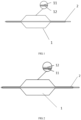
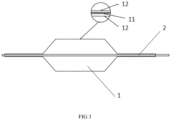
- the pulse balloon includes a balloon body 1 and an inner tube 2; the inner tube 2 penetrates through the balloon body 1; the inner tube 2 is located on the symmetry axis of the balloon body 1; the inner tube 2 is provided with an electrode; the balloon body 1 includes an insulating layer 11 and a balloon wall 12 from outside to inside; the balloon wall has a thickness of 20 ⁇ m, and the insulating layer has a thickness of 3 ⁇ m; the material of the balloon wall is polyethyleneimine, and the material of the insulating layer is Teflon.
- the pulse balloon includes a balloon body 1 and an inner tube 2; the inner tube 2 penetrates through the balloon body 1; the inner tube 2 is located on the symmetry axis of the balloon body 1; the inner tube 2 is provided with an electrode; the balloon body 1 includes an insulating layer 11 and a balloon wall 12 from outside to inside; the balloon body 1 is prepared by spraying; the balloon wall has a thickness of 15 ⁇ m, and the insulating layer has a thickness of 4 ⁇ m; the material of the balloon wall is polyethyleneimine, and the material of the insulating layer is Teflon.
- the spraying includes: after the balloon wall is subjected to blow molding, a polyethyleneimine dispersion is sprayed onto the outer surface of the balloon wall, and dried at 190°C.
- the pulse voltage is set to 5000V, and the discharging is started for 100 times at 1HZ. After repetition for 5 times, it is observed that no peeling, cracking, shrinkage and others occur between the insulating layer and the balloon wall.
- the pulse balloon includes a balloon body 1 and an inner tube 2; the inner tube 2 penetrates through the balloon body 1; the inner tube 2 is located on the symmetry axis of the balloon body 1; the inner tube 2 is provided with an electrode; the balloon body 1 includes an insulating layer 11 and a balloon wall 12 from outside to inside; the balloon body 1 is prepared by sleeve blow molding; the balloon wall has a thickness of 25 ⁇ m, and the insulating layer has a thickness of 2 ⁇ m; the material of the balloon wall is polyethyleneimine, and the material of the insulating layer is Teflon.
- the sleeve blow molding includes: a PTFE film is sleeved on the outer layer of the balloon tube, put in the mold of the balloon molding machine for blow molding.
- the process parameters of blow molding are as follows: the blow molding temperature is 140°C, the heating time is 15s, the pressure of the left and right sides of the mold is 60 psi, the tensile speed is 130 min/s, and the cooling time of the left and right sides is 6s.
- the pulse voltage is set to 5000V, and the discharging is started for 100 times at 1HZ. After repetition for 5 times, it is observed that no peeling, cracking, shrinkage and others occur between the insulating layer and the balloon wall.
- the pulse balloon includes a balloon body 1 and an inner tube 2; the inner tube 2 penetrates through the balloon body 1; the inner tube 2 is located on the symmetry axis of the balloon body 1; the inner tube 2 is provided with an electrode; the balloon body 1 includes an insulating layer 11 and a balloon wall 12 from outside to inside; the balloon body 1 is prepared by extrusion blow molding; the balloon wall has a thickness of 30 ⁇ m, and the insulating layer has a thickness of 2 ⁇ m; the material of the balloon wall is polyethyleneimine, and the material of the insulating layer is Teflon.
- the extrusion blow molding includes: the insulating layer and the balloon wall are extruded into a complex tube with a tube extruder by outer diameter sizing, and putting the complex tube into the mold of the balloon molding machine for blow molding.
- the process parameters of blow molding are as follows: the blow molding temperature is 150°C, the heating time is 15s, the pressure of the left and right sides of the mold is 70 psi, the tensile speed is 150 mm/s, and the cooling time of the left and right sides is 10s.
- the pulse voltage is set to 5000V, and the discharging is started for 100 times at 1HZ. After repetition for 5 times, it is observed that no peeling, cracking, shrinkage and others occur between the insulating layer and the balloon wall.
- the pulse balloon includes a balloon body 1 and an inner tube 2; the inner tube 2 penetrates through the balloon body 1; the inner tube 2 is located on the symmetry axis of the balloon body 1; the inner tube 2 is provided with an electrode; the balloon body 1 includes an insulating layer 11 and a balloon wall 12 from outside to inside; the balloon wall has a thickness of 20 ⁇ m, and the insulating layer has a thickness of 3 ⁇ m; the material of the balloon wall is polyethyleneimine, and the material of the insulating layer is Teflon.
- the pulse balloon includes a balloon body 1 and an inner tube 2; the inner tube 2 penetrates through the balloon body 1; the inner tube 2 is located on the symmetry axis of the balloon body 1; the inner tube 2 is provided with an electrode; the balloon body 1 includes an insulating layer 11 and a balloon wall 12 from outside to inside; the balloon body 1 is prepared by dipping; the balloon wall has a thickness of 25 ⁇ m, and the insulating layer has a thickness of 2 ⁇ m; the material of the balloon wall is polyethyleneimine, and the material of the insulating layer is Teflon.
- the dipping includes: after blow molding of the balloon wall, the inner surface of the balloon wall is immersed into a polytetrafluoroethylene dispersion and then dried at 200°C after the polytetrafluoroethylene dispersion is discharged.
- the pulse voltage is set to 5000V, and the discharging is started for 100 times at 1HZ. After repetition for 5 times, it is observed that no peeling, cracking, shrinkage and others occur between the insulating layer and the balloon wall.
- the pulse balloon includes a balloon body 1 and an inner tube 2; the inner tube 2 penetrates through the balloon body 1; the inner tube 2 is located on the symmetry axis of the balloon body 1; the inner tube 2 is provided with an electrode; the balloon body 1 includes an insulating layer 11 and a balloon wall 12 from outside to inside; the balloon body 1 is prepared by extrusion blow molding; the balloon wall has a thickness of 25 ⁇ m, and the insulating layer has a thickness of 2 ⁇ m; the material of the balloon wall is polyethyleneimine, and the material of the insulating layer is Teflon.
- the extrusion blow molding includes: the insulating layer and the balloon wall are extruded into a complex tube with a tube extruder by outer diameter sizing, and then put in the mold of the balloon molding machine for blow molding.
- the process parameters of blow molding are as follows: the blowing temperature is 150°C, the heating time is 13s, the pressure of the left and right sides of the mold is 70psi, the tensile speed is 140 mm/s, and the cooling time of the left and right sides is 20s.
- the pulse voltage is set to 5000V, and the discharging is started for 100 times at 1HZ. After repetition for 5 times, it is observed that no peeling, cracking, shrinkage and others occur between the insulating layer and the balloon wall.
- the pulse balloon includes a balloon body 1 and an inner tube 2; the inner tube 2 penetrates through the balloon body 1; the inner tube 2 is located on the symmetry axis of the balloon body 1; the inner tube 2 is provided with an electrode; the balloon body 1 includes an insulating layer 11 and a balloon wall 12 from outside to inside; the balloon body 1 is prepared by centrifugation; the balloon wall has a thickness of 20 ⁇ m, and the insulating layer has a thickness of 3 ⁇ m; the material of the balloon wall is polyethyleneimine, and the material of the insulating layer is Teflon.
- the centrifugation includes: after blow molding of the balloon wall, the insulating layer material dispersion is introduced into the interior of the balloon wall, and subjected to centrifugal rotation at 170°C and 1500 rpm until the balloon wall is dried; when the pressure of the balloon reaches 14ATM, the pulse voltage is set to 5000V, and the discharging is started for 100 times at 1HZ. After repetition for 5 times, it is observed that no peeling, cracking, shrinkage and others occur between the insulating layer and the balloon wall.
- the pulse balloon includes a balloon body 1 and an inner tube 2; the inner tube 2 penetrates through the balloon body 1; the inner tube 2 is located on the symmetry axis of the balloon body 1; the inner tube 2 is provided with an electrode; the balloon body 1 includes an insulating layer 11 and a balloon wall 12; the insulating layer 11 is located inside the balloon wall 12; the balloon wall has a thickness of 20 ⁇ m (excluding the thickness of the insulating layer), and the insulating layer has a thickness of 3 ⁇ m; the material of the balloon wall is polyethyleneimine, and the material of the insulating layer is Teflon.
- the pulse balloon includes a balloon body 1 and an inner tube 2; the inner tube 2 penetrates through the balloon body 1; the inner tube 2 is located on the symmetry axis of the balloon body 1; the inner tube 2 is provided with an electrode; the balloon body 1 includes an insulating layer 11 and a balloon wall 12; the insulating layer 11 is located inside the balloon wall 12; the balloon body 1 is prepared by extrusion blow molding; the balloon wall has a thickness of 20 ⁇ m (excluding the thickness of the insulating layer), and the insulating layer has a thickness of 3 ⁇ m; the material of the balloon wall is polyethyleneimine, and the material of the insulating layer is Teflon.
- the extrusion blow molding includes: the insulating layer and the balloon wall are extruded into a complex tube with a tube extruder by outer diameter sizing, and then put in the mold of the balloon molding machine for blow molding.
- the process parameters of blow molding are as follows: the blowing temperature is 140°C, the heating time is 13s, the pressure of the left and right sides of the mold is 70psi, the tensile speed is 150mm/s, and the cooling time of the left and right sides is 20s.
- the pulse voltage is set to 5000V, and the discharging is started for 100 times at 1HZ. After repetition for 5 times, it is observed that no peeling, cracking, shrinkage and others occur between the insulating layer and the balloon wall.
- Examples 1-10 provide a pulse balloon, which can limit excess high voltage electricity at the pulse source, and prevent excess electricity from being conducted to the pacemaker, the signal conduction area and the like in the process of using the balloon, so that the patient's heart rate can maintained at a relatively stable state. Furthermore, the pulse balloon used in the present invention can be used under high voltage and discharging times, and has a high cracking effect on severe calcification.
Landscapes
- Health & Medical Sciences (AREA)
- Engineering & Computer Science (AREA)
- Surgery (AREA)
- Life Sciences & Earth Sciences (AREA)
- Mechanical Engineering (AREA)
- Biomedical Technology (AREA)
- Nuclear Medicine, Radiotherapy & Molecular Imaging (AREA)
- Vascular Medicine (AREA)
- Orthopedic Medicine & Surgery (AREA)
- Heart & Thoracic Surgery (AREA)
- Medical Informatics (AREA)
- Molecular Biology (AREA)
- Animal Behavior & Ethology (AREA)
- General Health & Medical Sciences (AREA)
- Public Health (AREA)
- Veterinary Medicine (AREA)
- Manufacturing & Machinery (AREA)
- Media Introduction/Drainage Providing Device (AREA)
Applications Claiming Priority (2)
| Application Number | Priority Date | Filing Date | Title |
|---|---|---|---|
| CN202110498081.2A CN112971915B (zh) | 2021-05-08 | 2021-05-08 | 一种脉冲球囊及其应用 |
| PCT/CN2021/112371 WO2022236989A1 (fr) | 2021-05-08 | 2021-08-13 | Ballonnet à impulsions et application associée |
Publications (2)
| Publication Number | Publication Date |
|---|---|
| EP4335480A1 true EP4335480A1 (fr) | 2024-03-13 |
| EP4335480A4 EP4335480A4 (fr) | 2025-03-19 |
Family
ID=76337263
Family Applications (1)
| Application Number | Title | Priority Date | Filing Date |
|---|---|---|---|
| EP21865360.8A Pending EP4335480A4 (fr) | 2021-05-08 | 2021-08-13 | Ballonnet à impulsions et application associée |
Country Status (4)
| Country | Link |
|---|---|
| US (1) | US20240041482A1 (fr) |
| EP (1) | EP4335480A4 (fr) |
| CN (1) | CN112971915B (fr) |
| WO (1) | WO2022236989A1 (fr) |
Families Citing this family (3)
| Publication number | Priority date | Publication date | Assignee | Title |
|---|---|---|---|---|
| AU2015343272B2 (en) | 2014-11-03 | 2020-07-16 | Cagent Vascular, Inc. | Serration balloon |
| CN112971915B (zh) * | 2021-05-08 | 2021-08-20 | 上海百心安生物技术股份有限公司 | 一种脉冲球囊及其应用 |
| CN114587500A (zh) * | 2022-04-06 | 2022-06-07 | 上海百心安生物技术股份有限公司 | 一种换能脉冲球囊扩张导管 |
Family Cites Families (25)
| Publication number | Priority date | Publication date | Assignee | Title |
|---|---|---|---|---|
| US5779698A (en) * | 1989-01-18 | 1998-07-14 | Applied Medical Resources Corporation | Angioplasty catheter system and method for making same |
| EP0623360B1 (fr) * | 1993-02-05 | 1999-03-31 | The Joe W. And Dorothy Dorsett Brown Foundation | Cathéter à ballon ultrasonique pour angioplastie |
| EP2300094B1 (fr) * | 2008-06-02 | 2013-07-24 | Loma Vista Medical, Inc., | Dispositifs médicaux gonflables |
| US9265918B2 (en) * | 2008-09-03 | 2016-02-23 | Boston Scientific Scimed, Inc. | Multilayer medical balloon |
| US20120203255A1 (en) * | 2011-02-04 | 2012-08-09 | Daniel Hawkins | High pressure balloon shockwave catheter and method |
| CA2852029A1 (fr) * | 2011-11-23 | 2013-05-30 | Occlutech Holding Ag | Dispositif d'occlusion a usage medical |
| WO2013101452A1 (fr) * | 2011-12-28 | 2013-07-04 | Boston Scientific Scimed, Inc. | Dispositif et procédés pour la modulation nerveuse à l'aide d'un nouveau cathéter d'ablation doté d'éléments ablatifs polymères |
| IN2014DN07123A (fr) * | 2012-03-09 | 2015-04-24 | Clearstream Tech Ltd | |
| JPWO2013145479A1 (ja) * | 2012-03-28 | 2015-12-10 | テルモ株式会社 | カテーテル用バルーンおよびバルーンカテーテル |
| US9642673B2 (en) | 2012-06-27 | 2017-05-09 | Shockwave Medical, Inc. | Shock wave balloon catheter with multiple shock wave sources |
| US8888788B2 (en) * | 2012-08-06 | 2014-11-18 | Shockwave Medical, Inc. | Low profile electrodes for an angioplasty shock wave catheter |
| EP2882357A1 (fr) | 2012-08-08 | 2015-06-17 | Shockwave Medical, Inc. | Valvuloplastie à ondes de choc ayant de multiples ballonnets |
| CN104955515A (zh) * | 2012-11-19 | 2015-09-30 | 雅培心血管系统有限公司 | 用于导管的多层球囊 |
| US9956033B2 (en) * | 2013-03-11 | 2018-05-01 | Boston Scientific Scimed, Inc. | Medical devices for modulating nerves |
| CN106178231A (zh) * | 2016-08-03 | 2016-12-07 | 武汉福脉医疗科技有限公司 | 医用双层耐高压球囊及其制备方法 |
| EP3777723B1 (fr) * | 2016-10-06 | 2024-01-17 | Shockwave Medical, Inc. | Réparation de feuillet aortique à l'aide d'applicateurs d'ondes de choc |
| WO2018176064A2 (fr) * | 2017-03-24 | 2018-09-27 | Metactive Medical, Inc. | Dispositifs médicaux comprenant des ballonnets détachables et procédés de fabrication et d'utilisation |
| US11071557B2 (en) * | 2017-10-19 | 2021-07-27 | Medtronic Vascular, Inc. | Catheter for creating pulse wave within vasculature |
| CN108452426A (zh) * | 2018-03-16 | 2018-08-28 | 上海心至医疗科技有限公司 | 一种基于液电效应的球囊导管 |
| CN109223100A (zh) * | 2018-09-03 | 2019-01-18 | 沛嘉医疗科技(苏州)有限公司 | 一种用于治疗心脏瓣膜和血管钙化的装置及其使用方法 |
| CN111184553B (zh) * | 2019-04-29 | 2023-05-09 | 谱创医疗科技(上海)有限公司 | 用于血管成形术冲击波导管的高覆盖率低剖面电极组件 |
| CN110604607A (zh) * | 2019-08-06 | 2019-12-24 | 沛嘉医疗科技(苏州)有限公司 | 一种治疗心脏瓣膜钙化的冲击波装置 |
| CN111214749B (zh) * | 2019-12-18 | 2024-04-23 | 四川扬子江医疗器械有限公司 | 一种高压球囊导管及其制造方法 |
| CN112220526B (zh) * | 2020-12-10 | 2021-04-02 | 上海百心安生物技术股份有限公司 | 一种脉冲球囊及使用方法 |
| CN112971915B (zh) * | 2021-05-08 | 2021-08-20 | 上海百心安生物技术股份有限公司 | 一种脉冲球囊及其应用 |
-
2021
- 2021-05-08 CN CN202110498081.2A patent/CN112971915B/zh active Active
- 2021-08-13 WO PCT/CN2021/112371 patent/WO2022236989A1/fr not_active Ceased
- 2021-08-13 US US17/761,198 patent/US20240041482A1/en active Pending
- 2021-08-13 EP EP21865360.8A patent/EP4335480A4/fr active Pending
Also Published As
| Publication number | Publication date |
|---|---|
| US20240041482A1 (en) | 2024-02-08 |
| EP4335480A4 (fr) | 2025-03-19 |
| CN112971915A (zh) | 2021-06-18 |
| CN112971915B (zh) | 2021-08-20 |
| WO2022236989A1 (fr) | 2022-11-17 |
Similar Documents
| Publication | Publication Date | Title |
|---|---|---|
| EP4335480A1 (fr) | Ballonnet à impulsions et application associée | |
| EP1259183B1 (fr) | Lame d'electrochirurgie comprenant un revetement a base de silicone directement applique | |
| US20150351791A1 (en) | Surgical instrument | |
| JPH08501262A (ja) | ポリマーコーティングのための金属の前処理方法 | |
| AU6013596A (en) | Coated electrosurgical electrode and method of manufacture | |
| CN107619818B (zh) | 培养基的制造方法、培养基的制造装置 | |
| JP2017504405A (ja) | 潤滑性および耐久性に優れた医療装置のハイブリッドポリマー構造およびコーティング | |
| CN1242730C (zh) | 表面活性坚强内固定钛接骨板及其制造方法 | |
| CN115583017B (zh) | 一种微纳3d打印表面涂覆导电生物支架及其制备方法 | |
| EP1793938B1 (fr) | Gaine pour uriner en silicone a adhesif integre | |
| CN114010368A (zh) | 螺旋型多层复合人工血管及其制备方法 | |
| CN104152921B (zh) | 一种提高医用钛合金血液相容性的方法 | |
| CN108517546A (zh) | 微孔聚四氟乙烯薄膜镀银的方法 | |
| WO2023288194A1 (fr) | Revêtement hydrophobe pour dispositifs médicaux | |
| CN116370803B (zh) | 一种药物涂层输送装置 | |
| JP2021138987A (ja) | 内面被覆チューブ | |
| JPH04133732A (ja) | 複層チューブ | |
| JP2006130796A (ja) | ポリメチルペンテン系樹脂層を含む積層体及びその製造方法 | |
| JP3256380B2 (ja) | ポリイミドフィルムの接着性改善方法及び接着性を改善したポリイミドフィルム | |
| JP3292421B2 (ja) | ポリイミドフィルムの接着性改善方法及び接着性を改善したポリイミドフィルム | |
| CN119733117A (zh) | 抗凝血膜材结构及医疗器械 | |
| CN105983144B (zh) | 一种药物涂层支架的涂覆装置及应用该装置的涂覆方法 | |
| CN116672506A (zh) | 双层结构壁厚均匀人造血管的制备方法 | |
| Schorr et al. | Investigation on adhesion strength of Parylene-C coatings with different adhesion promotion methods | |
| CN106937779B (zh) | 一种玻璃珍珠的制造方法 |
Legal Events
| Date | Code | Title | Description |
|---|---|---|---|
| STAA | Information on the status of an ep patent application or granted ep patent |
Free format text: STATUS: UNKNOWN |
|
| STAA | Information on the status of an ep patent application or granted ep patent |
Free format text: STATUS: THE INTERNATIONAL PUBLICATION HAS BEEN MADE |
|
| PUAI | Public reference made under article 153(3) epc to a published international application that has entered the european phase |
Free format text: ORIGINAL CODE: 0009012 |
|
| STAA | Information on the status of an ep patent application or granted ep patent |
Free format text: STATUS: REQUEST FOR EXAMINATION WAS MADE |
|
| 17P | Request for examination filed |
Effective date: 20220318 |
|
| AK | Designated contracting states |
Kind code of ref document: A1 Designated state(s): AL AT BE BG CH CY CZ DE DK EE ES FI FR GB GR HR HU IE IS IT LI LT LU LV MC MK MT NL NO PL PT RO RS SE SI SK SM TR |
|
| DAV | Request for validation of the european patent (deleted) | ||
| DAX | Request for extension of the european patent (deleted) | ||
| A4 | Supplementary search report drawn up and despatched |
Effective date: 20250219 |
|
| RIC1 | Information provided on ipc code assigned before grant |
Ipc: B29D 22/02 20060101ALI20250213BHEP Ipc: A61B 18/00 20060101ALI20250213BHEP Ipc: A61B 17/00 20060101ALI20250213BHEP Ipc: A61B 17/22 20060101ALI20250213BHEP Ipc: A61M 25/10 20130101AFI20250213BHEP |