EP4336367A1 - Procédé de vérification de fonction de conduite autonome basé sur un système vil - Google Patents
Procédé de vérification de fonction de conduite autonome basé sur un système vil Download PDFInfo
- Publication number
- EP4336367A1 EP4336367A1 EP23168629.6A EP23168629A EP4336367A1 EP 4336367 A1 EP4336367 A1 EP 4336367A1 EP 23168629 A EP23168629 A EP 23168629A EP 4336367 A1 EP4336367 A1 EP 4336367A1
- Authority
- EP
- European Patent Office
- Prior art keywords
- virtual
- autonomous vehicle
- posture
- road
- autonomous
- Prior art date
- Legal status (The legal status is an assumption and is not a legal conclusion. Google has not performed a legal analysis and makes no representation as to the accuracy of the status listed.)
- Pending
Links
Images


Classifications
-
- B—PERFORMING OPERATIONS; TRANSPORTING
- B60—VEHICLES IN GENERAL
- B60W—CONJOINT CONTROL OF VEHICLE SUB-UNITS OF DIFFERENT TYPE OR DIFFERENT FUNCTION; CONTROL SYSTEMS SPECIALLY ADAPTED FOR HYBRID VEHICLES; ROAD VEHICLE DRIVE CONTROL SYSTEMS FOR PURPOSES NOT RELATED TO THE CONTROL OF A PARTICULAR SUB-UNIT
- B60W60/00—Drive control systems specially adapted for autonomous road vehicles
- B60W60/001—Planning or execution of driving tasks
-
- G—PHYSICS
- G06—COMPUTING OR CALCULATING; COUNTING
- G06F—ELECTRIC DIGITAL DATA PROCESSING
- G06F11/00—Error detection; Error correction; Monitoring
- G06F11/36—Prevention of errors by analysis, debugging or testing of software
- G06F11/3668—Testing of software
- G06F11/3696—Methods or tools to render software testable
-
- G—PHYSICS
- G06—COMPUTING OR CALCULATING; COUNTING
- G06F—ELECTRIC DIGITAL DATA PROCESSING
- G06F11/00—Error detection; Error correction; Monitoring
- G06F11/36—Prevention of errors by analysis, debugging or testing of software
- G06F11/3668—Testing of software
- G06F11/3672—Test management
-
- G—PHYSICS
- G06—COMPUTING OR CALCULATING; COUNTING
- G06F—ELECTRIC DIGITAL DATA PROCESSING
- G06F11/00—Error detection; Error correction; Monitoring
- G06F11/36—Prevention of errors by analysis, debugging or testing of software
- G06F11/3668—Testing of software
- G06F11/3672—Test management
- G06F11/3688—Test management for test execution, e.g. scheduling of test suites
-
- B—PERFORMING OPERATIONS; TRANSPORTING
- B60—VEHICLES IN GENERAL
- B60W—CONJOINT CONTROL OF VEHICLE SUB-UNITS OF DIFFERENT TYPE OR DIFFERENT FUNCTION; CONTROL SYSTEMS SPECIALLY ADAPTED FOR HYBRID VEHICLES; ROAD VEHICLE DRIVE CONTROL SYSTEMS FOR PURPOSES NOT RELATED TO THE CONTROL OF A PARTICULAR SUB-UNIT
- B60W2554/00—Input parameters relating to objects
- B60W2554/40—Dynamic objects, e.g. animals, windblown objects
- B60W2554/404—Characteristics
- B60W2554/4041—Position
Definitions
- the disclosure relates to a method for verifying a function of an autonomous vehicle, and more particularly, to a vehicle-in-the-loop (VIL)-based autonomous driving function verification system and method which interlocks an autonomous vehicle and a simulator.
- VIL vehicle-in-the-loop
- Real vehicle-based verification may be used for verifying an advanced driver assistance system (ADAS) or an autonomous driving function.
- ADAS advanced driver assistance system
- this method has a limit to verifying all road situations and may be used in parallel with simulator-based verification.
- An autonomous driving simulator verifies a function of a recognition/determination/control algorithm for autonomous driving through a simulation in which a virtual autonomous vehicle travels in a virtual road environment.
- this method has a limit to completely simulating performance or a state of an autonomous vehicle really running. Accordingly, a VIL system-based autonomous driving function verification method which verifies in combination of a simulator and a really running autonomous vehicle may be used.
- a virtual road environment which is utilized for related-art VIL system-based autonomous driving function verification is a simulated environment of a test road environment in which an autonomous vehicle will really travel, such as a proving ground (PG). Accordingly, in the related-art VIL system, a real position/posture of the autonomous vehicle may be used as a virtual position/posture of a virtual autonomous vehicle in the virtual road environment.
- PG proving ground
- the related-art VIL system-based autonomous driving function verification may have a great limit on the virtual road environment. That is, it is very inconvenient to verify in various virtual road environments. This is because the autonomous vehicle should be driven only on the real road corresponding to the simulated virtual road.
- the related-art VIL system should newly establish a test road or should change the test road every time a different road environment for verification is required, and accordingly, there may be huge temporal and financial burdens.
- the disclosure has been developed in order to solve the above-described problems, and an object of the disclosure is to provide a VIL system-based autonomous driving performance verification method by which an autonomous vehicle can verify autonomous driving performance even when a virtual road environment is created based on a certain target area without simulating a real test road such as a PG.
- an autonomous driving simulator may include: a road environment DB configured to store information on a road environment; a simulation engine configured to create a simulation scenario for verifying autonomous driving performance, by creating a virtual road environment by using the information stored in the road environment DB, specifying a position and posture of a virtual autonomous vehicle, and generating a virtual NPC object; a rendering module configured to render a virtual road environment according to the scenario created by the simulation engine; an emulation module to generate virtual sensor data by emulating sensors mounted in the virtual autonomous vehicle in the virtual road environment rendered by the rendering module; a calculation module configured to convert a real position and posture of an autonomous vehicle into a position and posture of the virtual autonomous vehicle in the virtual road environment, and to transmit the converted position and posture to the simulation engine; and an interlocking module configured to transmit the virtual sensor data generated by the emulation module to the autonomous vehicle, to receive a real position and posture of the autonomous vehicle from the autonomous vehicle, and to transmit the real position and posture to
- the real position and posture of the autonomous vehicle may be different from a virtual position and posture of the virtual autonomous vehicle.
- a road on which the autonomous vehicle travels may be different from a road information of which is stored in the road environment DB.
- the road the information of which is stored in the road environment DB may be changeable.
- the road the information of which is stored in the road environment DB may include a virtual road and an existent road.
- the existent road may be a road on which the autonomous vehicle really travels to verify a function, and may include a proving ground (PG), a normal road, and a highway.
- PG proving ground
- the calculation module may convert a real position and direction of the autonomous vehicle into a virtual position and direction of the virtual autonomous vehicle in the virtual road environment.
- the calculation module may calculate a virtual posture of the virtual autonomous vehicle, based on the virtual position and direction, with reference to information on a road shape which is stored in the road environment DB.
- the calculation module may initialize the real position and posture of the autonomous vehicle and the position and posture of the virtual autonomous vehicle, and may initiate conversion.
- an autonomous driving simulation method may include: creating, by an autonomous driving simulator, a simulation scenario for verifying autonomous driving performance, by creating a virtual road environment, specifying a position and posture of a virtual autonomous vehicle, and generating a virtual NPC object; rendering, by the autonomous driving simulator, a virtual road environment according to the generated scenario; generating, by the autonomous driving simulator, virtual sensor data by emulating sensors mounted in the virtual autonomous vehicle in the rendered virtual road environment; transmitting, by the autonomous driving simulator, the generated virtual sensor data to the autonomous vehicle, and receiving a real position and posture of the autonomous vehicle from the autonomous vehicle; and converting, by the autonomous driving simulator, the real position and posture of the autonomous vehicle received into a position and posture of the virtual autonomous vehicle in the virtual road environment.
- an autonomous driving simulator may include: a simulation engine configured to create a simulation scenario for verifying autonomous driving performance, by creating a virtual road environment and specifying a position and posture of a virtual autonomous vehicle; a calculation module configured to convert a real position and posture of an autonomous vehicle into a position and posture of the virtual autonomous vehicle in the virtual road environment, and to transmit the converted position and posture to the simulation engine; and an interlocking module configured to receive a real position and posture of the autonomous vehicle from the autonomous vehicle, and to transmit the real position and posture to the calculation module.
- an autonomous driving simulation method may include: transmitting, by an autonomous driving simulator, virtual sensor data to an autonomous vehicle, and receiving a real position and posture of the autonomous vehicle from the autonomous vehicle; converting, by the autonomous driving simulator, the real position and posture of the autonomous vehicle into a position and posture of a virtual autonomous vehicle in a virtual road environment; and creating, by the autonomous driving simulator, a simulation scenario for verifying autonomous driving performance in the virtual road environment, based on the converted position and posture of the virtual autonomous vehicle.
- an autonomous vehicle can verify an autonomous driving function by interlocking with a virtual road environment in any other place, without having to go to a real test road corresponding to a simulated virtual road environment.
- an autonomous driving function can be rapidly verified based on a VIL system with respect to various virtual road environments without changing a driving place, so that speed and convenience in development of autonomous driving technology can be enhanced.
- An embodiment of the disclosure proposes a VIL system-based autonomous driving function verification method. Specifically, the disclosure relates to a method which enables autonomous driving function verification based on a VIL system even when an autonomous vehicle is on a road or in a place other than a real road corresponding to a simulated virtual road environment.
- VIL system-based autonomous driving function verification is possible without limitation to a real road on which an autonomous vehicle travels, that is, regardless of where an autonomous vehicle travels.
- the method according to an embodiment may include: establishing a virtual road simulating a road where an autonomous vehicle will travel as a digital twin, converting a real position/posture of the autonomous vehicle into a virtual position/posture in the virtual road environment and synchronizing a position/posture of the autonomous vehicle on the real road and a position/posture of a virtual autonomous vehicle on the virtual road.
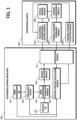
- FIG. 1 is a view illustrating a configuration of a VIL system according to an embodiment of the disclosure.
- the VIL system may include an autonomous driving simulator 100 and an autonomous vehicle 200.
- the autonomous driving simulator 100 may refer to a computing system that creates a virtual road environment simulating an existent road environment as a digital twin in order to provide a virtual road environment for verifying a function of the autonomous vehicle 200.
- the autonomous vehicle 200 may travel while controlling according to the virtual road environment created in the autonomous driving simulator 100.
- a place where the autonomous vehicle 200 really travels may be a road or place other than the existent road corresponding to the simulated virtual road environment, that is, a road or a wide empty lot where vehicles do not travel.
- the autonomous driving simulator 100 may convert the real position/posture of the autonomous vehicle 200 into the virtual position/posture of the virtual autonomous vehicle.
- the autonomous driving simulator 100 may include a road environment database (DB) 110, a simulation engine 120, a content DB 130, a road environment rendering module 140, a sensor simulation module 150, a position/posture calculation module 160, and an interlocking module 170, as shown in FIG. 1 .
- DB road environment database
- the autonomous driving simulator 100 may include a road environment database (DB) 110, a simulation engine 120, a content DB 130, a road environment rendering module 140, a sensor simulation module 150, a position/posture calculation module 160, and an interlocking module 170, as shown in FIG. 1 .
- the road environment DB 110 may store, as information on an environment of an existent road, information on a road (road shape, road width, the number of lanes), traffic lights, static objects (street trees, streetlamps, buildings, etc.).
- the road the information of which is stored in the road environment DB 110 may be a road where the autonomous vehicle 200 performs function verification while really traveling, and for example, may be a proving ground (PG) or a real road. If the road is a real road, the real road includes all types of roads including a normal road and a highway.
- PG proving ground
- the road the information of which is stored in the road environment DB 110 may be a road on which the autonomous vehicle 200 really travels, but it should be noted that the autonomous vehicle 200 in an embodiment of the disclosure does not travel on this road and travels on any other road or place.
- the road the information of which is stored in the road environment DB 110 may be determined according to needs or purposes and may be changeable, correctable, editable.
- the simulation engine 120 may create a simulation scenario for autonomous driving performance verification by creating a virtual road environment by using the road environment DB 110, specifying a position/posture of the virtual autonomous vehicle, and generating a non-player character (NPC) object.
- NPC non-player character
- the NPC object may refer to a dynamic object other than the virtual autonomous vehicle in the virtual road environment, such as other vehicles, a person, an animal. In the simulation scenario, the NPC object moves and may cause an accident not only by a normal movement but also by an abnormal movement.
- the content DB 130 may store contents that are needed to construct a road environment stored in the road environment DB 110 as a virtual environment, that is, a digital twin of a real rod, and to add NPCs to the virtual environment.
- the road environment rendering module 140 may render the virtual road environment according to the scenario created by the simulation engine 120, by using the contents stored in the content DB 130.
- the sensor emulation module 150 may generate virtual sensor data by emulating a camera, a light detection and ranging (LiDAR), a radio detecting and ranging (RADAR), a global navigation satellite systems (GNSS)/inertial navigation system (INS), vehicle-to-everything (V2X), which are sensors mounted in the virtual autonomous vehicle, in the virtual road environment rendered by the road environment rendering module 140.
- LiDAR light detection and ranging
- RADAR radio detecting and ranging
- GNSS global navigation satellite systems
- INS intial navigation system
- V2X vehicle-to-everything
- the sensors mounted in the virtual autonomous vehicle in which virtual sensor data is generated by the sensor emulation module 150 may be implemented in the same way as sensors really mounted in the autonomous vehicle 200.
- the position/posture calculation module 160 may convert a real position/posture of the autonomous vehicle 200 into a position/posture in the virtual road environment.
- a real position/posture of the autonomous vehicle 200 and a virtual position/posture of the virtual autonomous vehicle in the virtual road environment are consistent with each other.
- both positions/postures are not consistent with each other in the embodiment of the disclosure, it is necessary for the position/posture calculation module 160 to convert the position/posture.
- the interlocking module 170 transmits the virtual sensor data generated by the sensor emulation module 150 and the virtual position/posture information calculated by the position/posture calculation module 160 to the autonomous vehicle 200.
- the autonomous vehicle 200 may include a recognition/determination/control module 210, a vehicle control module 220, a position/posture generation module 230, a position monitoring module 240, and a position/posture reception module 250 as shown in FIG. 1 .
- the position/posture generation module 230 may measure a real position/posture of the autonomous vehicle 200 by using a sensor such as a GNSS sensor, an inertial measurement unit (IMU), an INS, etc., or may estimate through a recognition algorithm.
- a sensor such as a GNSS sensor, an inertial measurement unit (IMU), an INS, etc., or may estimate through a recognition algorithm.
- IMU inertial measurement unit
- INS INS
- the real position/posture information generated through measurement/estimation by the position/posture generation module 230 may be transmitted to the position/posture calculation module 160 through the interlocking module 170 of the autonomous driving simulator 100, and may be converted into virtual position/posture information of the autonomous vehicle in the virtual road environment.
- the position/posture reception module 250 may receive virtual position/posture information which is calculated by the position/posture calculation module 160 of the autonomous driving simulator 100, and may transmit the same to the recognition/determination/control module 210.
- the recognition/determination/control module 210 may recognize/determine a vehicle state and a road situation according to an autonomous driving algorithm, based on the virtual sensor data received through the interlocking module 170 and the virtual position/posture information transmitted through the position/posture reception module 250, and may generate a control command for the autonomous vehicle 200.
- the vehicle control module 220 may control real driving of the autonomous vehicle 200 according to the control command generated in the autonomous vehicle 200.
- the position monitoring module 240 may detect whether the real position of the autonomous vehicle 200 measured/estimated by the position/posture generation module 230 deviates from a drivable place. To achieve this, the position monitoring module 240 may retain/utilize an electronic map.
- Autonomous driving control by the recognition/determination/control module 210 may be performed with reference to a virtual position in the virtual road environment. Accordingly, a position in the virtual road environment may be a position where the virtual autonomous vehicle is able to travel, but a corresponding real position in the real driving place may be a position where driving is impossible.
- the position monitoring module 240 may stop the autonomous vehicle 200 through the vehicle control module 220.
- position initialization may be required as will be described below.
- the position/posture calculation module 160 may initialize a position and direction of the autonomous vehicle 200 and a virtual position and direction of the virtual autonomous vehicle.
- a position and posture may be initialized and conversion may be initiated.
- the initialization refers to setting a current position and direction of the autonomous vehicle 200 to an initial real position and direction at the time of initialization, and setting a current position and direction of the virtual autonomous vehicle to an initial virtual position and direction.
- the initialization may be performed after the autonomous vehicle 200 moves to a drivable place.
- a position and direction in which the autonomous vehicle 200 moves may be set to an initial real position and direction
- a final position and direction of the virtual autonomous vehicle may be set to an initial virtual position and direction. Since the virtual autonomous vehicle does not move, the final position and direction of the virtual autonomous vehicle is set to the initial virtual position and direction.
- a direction to be initialized refers to yaw among the postures (roll, pitch, yaw) of a vehicle.
- Yaw refers to rotation around a z-axis which is perpendicular to a plane of a road.
- the position/posture calculation module 160 may calculate an initial virtual posture, based on the initial virtual position and direction of the virtual autonomous vehicle, with reference to information on a road shape in the information on the road environment, which is stored in the road environment DB 110. Since a shape of a real road on which the autonomous vehicle 200 travels is unrelated to a shape of a virtual road on which the virtual autonomous vehicle travels, it is impossible to directly convert/calculate a virtual posture from a real posture without referring to the road environment DB 110.
- the position/posture calculation module 160 may calculate a virtual position and direction of the virtual autonomous vehicle, based on a change in the real position and direction of the autonomous vehicle 200.
- FIG. 2 illustrates an initial real position ( P R . org G ) on a coordinate system ⁇ R ⁇ of a real road environment, and a real position ( P R , t k G ) to which the autonomous vehicle 200 moves through driving, and illustrates an initial virtual position ( P V . org G ) on a coordinate system ⁇ V ⁇ of a virtual road environment, and a virtual position ( P V , t k G ) to which the autonomous vehicle 200 moves through driving.
- FIG. 2 illustrates a result of calculating a virtual direction of the autonomous vehicle based on a change in the direction of the autonomous vehicle 200.
- the virtual direction of the virtual autonomous vehicle may be calculated.
- the position/posture calculation module 160 may calculate a virtual posture based on the virtual position and direction of the virtual autonomous vehicle, with reference to the information on the road shape in the information on the road environment, which is stored in the road environment DB 110.
- FIG. 3 is a view provided to explain a method for synchronizing position/posture information in a VIL mode.
- the VIL mode is a mode in which an autonomous driving function is verified based on a VIL system, and the above-described contents have been described on the assumption of the VIL mode.
- the position/posture generation module 230 of the autonomous vehicle 200 may measure/estimate a real position/posture of the autonomous vehicle 200 (S210), and may transmit the measured/estimated real position/posture to the position/posture calculation module 160 through the interlocking module 170 of the autonomous driving simulator 100 (S220).
- the position/posture calculation module 160 may convert the real position/posture of the autonomous vehicle 200, received at step S220, into a virtual position/posture of the virtual autonomous vehicle on the virtual road environment (S230). Since the real position/posture is converted into the virtual position/posture in the VIL mode, dynamic characteristics of the autonomous vehicle 200 are not reflected.
- the position/posture calculation module 160 may set the real position/posture of the autonomous vehicle 200, received at step S220, to an initial position/posture of the autonomous driving simulator 100, and may set the virtual position/posture converted at step S230 to an initial position/posture of the virtual autonomous vehicle (S250).
- step S250 may not be performed.
- the position/posture calculation module 160 may transmit the virtual position/posture information converted at step S230 to the position/posture reception module 250 of the autonomous vehicle 200 through the interlocking module 170 (S260).
- FIG. 4 is a view provided to explain a method for synchronizing position/posture information in a mode other than the VIL mode.
- the recognition/determination/control module 210 of the autonomous vehicle 200 may transmits a vehicle control command to the position/posture calculation module 160 through the interlocking module 170 of the autonomous driving simulator 100 (S310).
- the position/posture calculation module 160 of the autonomous driving simulator 100 may calculate a position/posture by analyzing dynamic characteristics of the autonomous vehicle based on the vehicle control command received at step S310, and estimating a movement of the vehicle (S320).
- the position/posture calculation module 160 may transmit the position/posture information calculated at step S320 to the position/posture reception module 250 of the autonomous vehicle 200 through the interlocking module 170 (S330).
- VIL system-based autonomous driving function verification function has been described with reference to preferred embodiments.
- Embodiments of the disclosure propose a method whereby an autonomous vehicle can verify autonomous driving performance based on a VIL system in any other place, without having to go to a real test road such as a PG corresponding to a simulated virtual road environment.
- an autonomous driving function can be rapidly verified based on the VIL system with respect to various virtual road environments without changing a driving place, so that speed and convenience in development of autonomous driving technology can be enhanced.
- the road the information of which is stored in the road environment DB 110 may be changed even when a road on which the autonomous vehicle travels is not changed, and accordingly, autonomous driving performance verification on various virtual roads may be performed easily and rapidly.
- the road the information of which is stored in the road environment DB 110 is an existent road.
- information on a virtual road may be stored in the road environment DB 110 and may be used for verifying autonomous driving performance.
- the technical concept of the present disclosure may be applied to a computer-readable recording medium which records a computer program for performing the functions of the apparatus and the method according to the present embodiments.
- the technical idea according to various embodiments of the present disclosure may be implemented in the form of a computer readable code recorded on the computer-readable recording medium.
- the computer-readable recording medium may be any data storage device that can be read by a computer and can store data.
- the computer-readable recording medium may be a read only memory (ROM), a random access memory (RAM), a CD-ROM, a magnetic tape, a floppy disk, an optical disk, a hard disk drive, or the like.
- a computer readable code or program that is stored in the computer readable recording medium may be transmitted via a network connected between computers.
Landscapes
- Engineering & Computer Science (AREA)
- Theoretical Computer Science (AREA)
- Physics & Mathematics (AREA)
- General Physics & Mathematics (AREA)
- Computer Hardware Design (AREA)
- General Engineering & Computer Science (AREA)
- Quality & Reliability (AREA)
- Human Computer Interaction (AREA)
- Automation & Control Theory (AREA)
- Transportation (AREA)
- Mechanical Engineering (AREA)
- Traffic Control Systems (AREA)
- Software Systems (AREA)
- Control Of Driving Devices And Active Controlling Of Vehicle (AREA)
- Evolutionary Computation (AREA)
- Geometry (AREA)
- Radar, Positioning & Navigation (AREA)
- Remote Sensing (AREA)
- Computer Graphics (AREA)
Applications Claiming Priority (1)
| Application Number | Priority Date | Filing Date | Title |
|---|---|---|---|
| KR1020220109732A KR102578324B1 (ko) | 2022-08-31 | 2022-08-31 | Vil 시스템 기반 자율주행 기능 검증 방법 |
Publications (1)
| Publication Number | Publication Date |
|---|---|
| EP4336367A1 true EP4336367A1 (fr) | 2024-03-13 |
Family
ID=86095728
Family Applications (1)
| Application Number | Title | Priority Date | Filing Date |
|---|---|---|---|
| EP23168629.6A Pending EP4336367A1 (fr) | 2022-08-31 | 2023-04-19 | Procédé de vérification de fonction de conduite autonome basé sur un système vil |
Country Status (4)
| Country | Link |
|---|---|
| US (1) | US20240067208A1 (fr) |
| EP (1) | EP4336367A1 (fr) |
| JP (1) | JP7596432B2 (fr) |
| KR (1) | KR102578324B1 (fr) |
Families Citing this family (10)
| Publication number | Priority date | Publication date | Assignee | Title |
|---|---|---|---|---|
| WO2022006418A1 (fr) | 2020-07-01 | 2022-01-06 | May Mobility, Inc. | Procédé et système de gestion dynamique d'interventions de véhicule autonome |
| WO2023102098A1 (fr) | 2021-12-01 | 2023-06-08 | May Mobility, Inc. | Procédé et système pour le fonctionnement basé sur l'impact d'un agent autonome |
| JP2026500243A (ja) * | 2022-12-13 | 2026-01-06 | メイ モビリティー,インコーポレイテッド | 自律車両が遭遇し得るリスクを評価し軽減するための方法およびシステム |
| KR102582497B1 (ko) * | 2023-08-22 | 2023-09-26 | 주식회사 셀플러스코리아 | 자율주행 차량의 주행성능 검증장치 및 주행성능 검증방법 |
| KR102951282B1 (ko) | 2023-11-22 | 2026-04-13 | 아이피지오토모티브코리아(유) | 자율주행차량의 vil 시뮬레이션 고도화를 위한 증강현실 구현 방법 및 장치 |
| US20250356070A1 (en) * | 2024-05-17 | 2025-11-20 | KIAPI (Korea Intelligent Automotive Parts Promotion Institute) | Autonomous driving verification system through real-virtual information convergence |
| JP2025176340A (ja) * | 2024-05-21 | 2025-12-04 | 財団法人 知能型自動車部品振興院 | 現実-仮想情報の融合による自律走行検証システム |
| KR102762616B1 (ko) * | 2024-06-07 | 2025-02-06 | 주식회사 모라이 | 디지털 트윈 환경에서의 gnss rf 신호 모사를 위한 hils 기반의 디지털 트윈 시뮬레이션 방법 및 시스템 |
| JP2026024175A (ja) * | 2024-08-02 | 2026-02-13 | ソフトバンク株式会社 | 観測対象の現実位置の特定方法及びプログラム |
| KR102929484B1 (ko) * | 2024-10-24 | 2026-02-20 | 주식회사 테크웨이즈 | 가상환경과 현실환경이 결합된 복합현실을 적용한 자율주행차용 환경인지센서의 검사 시스템 |
Citations (3)
| Publication number | Priority date | Publication date | Assignee | Title |
|---|---|---|---|---|
| WO2018204544A1 (fr) * | 2017-05-02 | 2018-11-08 | The Regents Of The University Of Michigan | Trafic de véhicule simulé pour véhicules autonomes |
| KR20200094593A (ko) * | 2019-01-30 | 2020-08-07 | 한국자동차연구원 | 자율주행차량의 고장 안전성 시험 평가 시스템 및 방법 |
| KR102139513B1 (ko) * | 2019-11-28 | 2020-08-12 | 국민대학교산학협력단 | 인공지능 vils 기반의 자율주행 제어 장치 및 방법 |
Family Cites Families (7)
| Publication number | Priority date | Publication date | Assignee | Title |
|---|---|---|---|---|
| JP6548690B2 (ja) * | 2016-10-06 | 2019-07-24 | 株式会社アドバンスド・データ・コントロールズ | シミュレーションシステム、シミュレーションプログラム及びシミュレーション方法 |
| JP6811335B2 (ja) * | 2017-09-29 | 2021-01-13 | 日立オートモティブシステムズ株式会社 | 自動運転シミュレータ及び自動運転シミュレータ用地図生成方法 |
| KR101984762B1 (ko) * | 2018-10-31 | 2019-06-03 | 주식회사 모라이 | 네트워크 플랫폼을 적용한 자율주행차량 시뮬레이터 |
| JP7213704B2 (ja) * | 2019-01-31 | 2023-01-27 | 株式会社日立ソリューションズ | 自動運転プログラム評価システム、及び自動運転プログラム評価方法 |
| WO2020226071A1 (fr) * | 2019-05-08 | 2020-11-12 | 日立オートモティブシステムズ株式会社 | Dispositif de détection de position de véhicule, et dispositif de création d'ensemble de paramètres permettant la détection de position de véhicule |
| KR102391668B1 (ko) * | 2019-11-27 | 2022-04-28 | 한국전자기술연구원 | 가상현실을 이용한 자율주행 ai 시뮬레이션 시스템 및 방법 |
| AT521992B1 (de) * | 2020-02-20 | 2021-11-15 | Avl List Gmbh | System und Verfahren zum Testen eines Fahrerassistenzsystems eines Kraftfahrzeugs |
-
2022
- 2022-08-31 KR KR1020220109732A patent/KR102578324B1/ko active Active
-
2023
- 2023-04-17 JP JP2023067390A patent/JP7596432B2/ja active Active
- 2023-04-19 EP EP23168629.6A patent/EP4336367A1/fr active Pending
- 2023-04-21 US US18/137,990 patent/US20240067208A1/en active Pending
Patent Citations (3)
| Publication number | Priority date | Publication date | Assignee | Title |
|---|---|---|---|---|
| WO2018204544A1 (fr) * | 2017-05-02 | 2018-11-08 | The Regents Of The University Of Michigan | Trafic de véhicule simulé pour véhicules autonomes |
| KR20200094593A (ko) * | 2019-01-30 | 2020-08-07 | 한국자동차연구원 | 자율주행차량의 고장 안전성 시험 평가 시스템 및 방법 |
| KR102139513B1 (ko) * | 2019-11-28 | 2020-08-12 | 국민대학교산학협력단 | 인공지능 vils 기반의 자율주행 제어 장치 및 방법 |
Non-Patent Citations (1)
| Title |
|---|
| SCOTT SCHNELLE ET AL: "Review of Simulation Frameworks and Standards Related to Driving Scenarios - DOT HS 812 815", REPORTS OF US DEPARTMENT OF TRANSPORTATION - NATIONAL HIGHWAY TRAFFIC SAFETY ADMINISTRATION, 1 December 2019 (2019-12-01), Washington, DC, US, pages 1 - 40, XP055703689, Retrieved from the Internet <URL:https://rosap.ntl.bts.gov/view/dot/43621> [retrieved on 20200610] * |
Also Published As
| Publication number | Publication date |
|---|---|
| JP7596432B2 (ja) | 2024-12-09 |
| KR102578324B1 (ko) | 2023-09-14 |
| US20240067208A1 (en) | 2024-02-29 |
| JP2024035047A (ja) | 2024-03-13 |
Similar Documents
| Publication | Publication Date | Title |
|---|---|---|
| EP4336367A1 (fr) | Procédé de vérification de fonction de conduite autonome basé sur un système vil | |
| US11709069B2 (en) | Method and device for displaying 3D augmented reality navigation information | |
| CN112286206B (zh) | 自动驾驶的模拟方法、系统、设备、可读存储介质及平台 | |
| EP3620959B1 (fr) | Logique d'acquisition de données d'image d'un véhicule autonome pour capture de données d'image à l'aide de caméras | |
| CN114111775B (zh) | 一种多传感器融合定位方法、装置、存储介质及电子设备 | |
| CN110567475B (zh) | 导航方法、装置、计算机可读存储介质及电子设备 | |
| CN110968094B (zh) | 用于运行车辆的方法和设备 | |
| US11126763B1 (en) | Realism metric for testing software for controlling autonomous vehicles | |
| EP3789797B1 (fr) | Procédé et appareil d'évaluation de données, dispositif et support d'enregistrement lisible par ordinateur | |
| CN116105712B (zh) | 道路地图的生成方法、回注方法、计算机设备及介质 | |
| US11288373B2 (en) | Boot failure recovery scheme for hardware-based system of autonomous driving vehicles | |
| CN118627201A (zh) | 一种智能驾驶控制器的传感器仿真建模方法及装置 | |
| CN117387644A (zh) | 定位方法、装置、电子设备、存储介质及程序产品 | |
| Weiguo et al. | An augmented reality-based proving ground vehicle-in-the-loop test platform | |
| US11610504B2 (en) | Systems and methods for scenario marker infrastructure | |
| CN113822124A (zh) | 车道级定位方法、装置、设备以及存储介质 | |
| US20240194005A1 (en) | Method for verifying accuracy of virtual sensor model for simulation based on reality information data | |
| CN113665577A (zh) | 操作机动车辆的方法 | |
| CN114777800B (zh) | 定位方法、装置、电子设备和存储介质 | |
| KR20230094504A (ko) | 시뮬레이터 및 실제 차량 간 연동을 위한 vil 시스템 및 방법 | |
| EP3862916A1 (fr) | Modèle routier déterminé par la confiance pour un véhicule | |
| CN118687564B (zh) | 车辆位姿优化和修正方法、装置、服务器、车辆及介质 | |
| US12539865B2 (en) | Vehicle guidance device | |
| US20250356070A1 (en) | Autonomous driving verification system through real-virtual information convergence | |
| US20250313212A1 (en) | Object based vehicle localization |
Legal Events
| Date | Code | Title | Description |
|---|---|---|---|
| PUAI | Public reference made under article 153(3) epc to a published international application that has entered the european phase |
Free format text: ORIGINAL CODE: 0009012 |
|
| STAA | Information on the status of an ep patent application or granted ep patent |
Free format text: STATUS: REQUEST FOR EXAMINATION WAS MADE |
|
| 17P | Request for examination filed |
Effective date: 20230419 |
|
| AK | Designated contracting states |
Kind code of ref document: A1 Designated state(s): AL AT BE BG CH CY CZ DE DK EE ES FI FR GB GR HR HU IE IS IT LI LT LU LV MC ME MK MT NL NO PL PT RO RS SE SI SK SM TR |
|
| RBV | Designated contracting states (corrected) |
Designated state(s): AL AT BE BG CH CY CZ DE DK EE ES FI FR GB GR HR HU IE IS IT LI LT LU LV MC ME MK MT NL NO PL PT RO RS SE SI SK SM TR |