EP4336432A1 - Procédé pour fournir à un utilisateur une commande par l'intermédiaire d'une carte de paiement - Google Patents
Procédé pour fournir à un utilisateur une commande par l'intermédiaire d'une carte de paiement Download PDFInfo
- Publication number
- EP4336432A1 EP4336432A1 EP22306343.9A EP22306343A EP4336432A1 EP 4336432 A1 EP4336432 A1 EP 4336432A1 EP 22306343 A EP22306343 A EP 22306343A EP 4336432 A1 EP4336432 A1 EP 4336432A1
- Authority
- EP
- European Patent Office
- Prior art keywords
- payment instrument
- financial
- payload
- enciphered
- transaction
- Prior art date
- Legal status (The legal status is an assumption and is not a legal conclusion. Google has not performed a legal analysis and makes no representation as to the accuracy of the status listed.)
- Withdrawn
Links
Images

Classifications
-
- G—PHYSICS
- G06—COMPUTING OR CALCULATING; COUNTING
- G06Q—INFORMATION AND COMMUNICATION TECHNOLOGY [ICT] SPECIALLY ADAPTED FOR ADMINISTRATIVE, COMMERCIAL, FINANCIAL, MANAGERIAL OR SUPERVISORY PURPOSES; SYSTEMS OR METHODS SPECIALLY ADAPTED FOR ADMINISTRATIVE, COMMERCIAL, FINANCIAL, MANAGERIAL OR SUPERVISORY PURPOSES, NOT OTHERWISE PROVIDED FOR
- G06Q20/00—Payment architectures, schemes or protocols
- G06Q20/30—Payment architectures, schemes or protocols characterised by the use of specific devices or networks
- G06Q20/32—Payment architectures, schemes or protocols characterised by the use of specific devices or networks using wireless devices
- G06Q20/322—Aspects of commerce using mobile devices [M-devices]
-
- G—PHYSICS
- G06—COMPUTING OR CALCULATING; COUNTING
- G06Q—INFORMATION AND COMMUNICATION TECHNOLOGY [ICT] SPECIALLY ADAPTED FOR ADMINISTRATIVE, COMMERCIAL, FINANCIAL, MANAGERIAL OR SUPERVISORY PURPOSES; SYSTEMS OR METHODS SPECIALLY ADAPTED FOR ADMINISTRATIVE, COMMERCIAL, FINANCIAL, MANAGERIAL OR SUPERVISORY PURPOSES, NOT OTHERWISE PROVIDED FOR
- G06Q20/00—Payment architectures, schemes or protocols
- G06Q20/30—Payment architectures, schemes or protocols characterised by the use of specific devices or networks
- G06Q20/32—Payment architectures, schemes or protocols characterised by the use of specific devices or networks using wireless devices
- G06Q20/327—Short range or proximity payments by means of M-devices
-
- G—PHYSICS
- G06—COMPUTING OR CALCULATING; COUNTING
- G06Q—INFORMATION AND COMMUNICATION TECHNOLOGY [ICT] SPECIALLY ADAPTED FOR ADMINISTRATIVE, COMMERCIAL, FINANCIAL, MANAGERIAL OR SUPERVISORY PURPOSES; SYSTEMS OR METHODS SPECIALLY ADAPTED FOR ADMINISTRATIVE, COMMERCIAL, FINANCIAL, MANAGERIAL OR SUPERVISORY PURPOSES, NOT OTHERWISE PROVIDED FOR
- G06Q20/00—Payment architectures, schemes or protocols
- G06Q20/30—Payment architectures, schemes or protocols characterised by the use of specific devices or networks
- G06Q20/32—Payment architectures, schemes or protocols characterised by the use of specific devices or networks using wireless devices
-
- G—PHYSICS
- G06—COMPUTING OR CALCULATING; COUNTING
- G06Q—INFORMATION AND COMMUNICATION TECHNOLOGY [ICT] SPECIALLY ADAPTED FOR ADMINISTRATIVE, COMMERCIAL, FINANCIAL, MANAGERIAL OR SUPERVISORY PURPOSES; SYSTEMS OR METHODS SPECIALLY ADAPTED FOR ADMINISTRATIVE, COMMERCIAL, FINANCIAL, MANAGERIAL OR SUPERVISORY PURPOSES, NOT OTHERWISE PROVIDED FOR
- G06Q20/00—Payment architectures, schemes or protocols
- G06Q20/30—Payment architectures, schemes or protocols characterised by the use of specific devices or networks
- G06Q20/32—Payment architectures, schemes or protocols characterised by the use of specific devices or networks using wireless devices
- G06Q20/321—Payment architectures, schemes or protocols characterised by the use of specific devices or networks using wireless devices using wearable devices
-
- G—PHYSICS
- G06—COMPUTING OR CALCULATING; COUNTING
- G06Q—INFORMATION AND COMMUNICATION TECHNOLOGY [ICT] SPECIALLY ADAPTED FOR ADMINISTRATIVE, COMMERCIAL, FINANCIAL, MANAGERIAL OR SUPERVISORY PURPOSES; SYSTEMS OR METHODS SPECIALLY ADAPTED FOR ADMINISTRATIVE, COMMERCIAL, FINANCIAL, MANAGERIAL OR SUPERVISORY PURPOSES, NOT OTHERWISE PROVIDED FOR
- G06Q20/00—Payment architectures, schemes or protocols
- G06Q20/30—Payment architectures, schemes or protocols characterised by the use of specific devices or networks
- G06Q20/32—Payment architectures, schemes or protocols characterised by the use of specific devices or networks using wireless devices
- G06Q20/322—Aspects of commerce using mobile devices [M-devices]
- G06Q20/3224—Transactions dependent on location of M-devices
-
- G—PHYSICS
- G06—COMPUTING OR CALCULATING; COUNTING
- G06Q—INFORMATION AND COMMUNICATION TECHNOLOGY [ICT] SPECIALLY ADAPTED FOR ADMINISTRATIVE, COMMERCIAL, FINANCIAL, MANAGERIAL OR SUPERVISORY PURPOSES; SYSTEMS OR METHODS SPECIALLY ADAPTED FOR ADMINISTRATIVE, COMMERCIAL, FINANCIAL, MANAGERIAL OR SUPERVISORY PURPOSES, NOT OTHERWISE PROVIDED FOR
- G06Q20/00—Payment architectures, schemes or protocols
- G06Q20/30—Payment architectures, schemes or protocols characterised by the use of specific devices or networks
- G06Q20/32—Payment architectures, schemes or protocols characterised by the use of specific devices or networks using wireless devices
- G06Q20/322—Aspects of commerce using mobile devices [M-devices]
- G06Q20/3226—Use of secure elements separate from M-devices
-
- G—PHYSICS
- G06—COMPUTING OR CALCULATING; COUNTING
- G06Q—INFORMATION AND COMMUNICATION TECHNOLOGY [ICT] SPECIALLY ADAPTED FOR ADMINISTRATIVE, COMMERCIAL, FINANCIAL, MANAGERIAL OR SUPERVISORY PURPOSES; SYSTEMS OR METHODS SPECIALLY ADAPTED FOR ADMINISTRATIVE, COMMERCIAL, FINANCIAL, MANAGERIAL OR SUPERVISORY PURPOSES, NOT OTHERWISE PROVIDED FOR
- G06Q20/00—Payment architectures, schemes or protocols
- G06Q20/30—Payment architectures, schemes or protocols characterised by the use of specific devices or networks
- G06Q20/32—Payment architectures, schemes or protocols characterised by the use of specific devices or networks using wireless devices
- G06Q20/325—Payment architectures, schemes or protocols characterised by the use of specific devices or networks using wireless devices using wireless networks
-
- H—ELECTRICITY
- H04—ELECTRIC COMMUNICATION TECHNIQUE
- H04W—WIRELESS COMMUNICATION NETWORKS
- H04W4/00—Services specially adapted for wireless communication networks; Facilities therefor
- H04W4/80—Services using short range communication, e.g. near-field communication [NFC], radio-frequency identification [RFID] or low energy communication
-
- G—PHYSICS
- G06—COMPUTING OR CALCULATING; COUNTING
- G06Q—INFORMATION AND COMMUNICATION TECHNOLOGY [ICT] SPECIALLY ADAPTED FOR ADMINISTRATIVE, COMMERCIAL, FINANCIAL, MANAGERIAL OR SUPERVISORY PURPOSES; SYSTEMS OR METHODS SPECIALLY ADAPTED FOR ADMINISTRATIVE, COMMERCIAL, FINANCIAL, MANAGERIAL OR SUPERVISORY PURPOSES, NOT OTHERWISE PROVIDED FOR
- G06Q20/00—Payment architectures, schemes or protocols
- G06Q20/30—Payment architectures, schemes or protocols characterised by the use of specific devices or networks
- G06Q20/34—Payment architectures, schemes or protocols characterised by the use of specific devices or networks using cards, e.g. integrated circuit [IC] cards or magnetic cards
- G06Q20/352—Contactless payments by cards
Definitions
- the present invention relates to methods for managing a payment instrument. It relates particularly to methods for operating a payment instrument to perform a financial transaction in conjunction with a financial terminal.
- Smart cards are portable small devices comprising a memory, a microprocessor and an operating system for computing treatments. They may comprise services applications like Payment, Access control or Telecom applications. Such smart cards may comprise a plurality of memories of different types, like non-volatile memory and volatile memory. They are considered as tamper-resistant (or "secure") because they are able to control the access to the data they contain and to authorize or not the use of data by other machines.
- a smartcard may also provide computation services based on cryptographic components. In general, smartcards have limited computing resources and limited memory resources and they are intended to connect a host machine which provides them with electric power either in contact mode or contactless mode.
- Contactless smart cards are designed to communicate according to at least one contactless protocol like a protocol defined by ISO/IEC 14443 standard.
- Contactless payment cards are convenient since they allow fast payments. However, the security may be reduced compare to contact cards when the payment system requests no user authentication. Such a case may happen for small amounts for instance. In the event that a contactless payment card is stolen, a person who is not authorized to use the contactless payment card can use it to perform a transaction without consent of the genuine user (if the financial system does not require explicit user authentication).
- the invention aims at solving the above mentioned technical problem.
- An object of the present invention is a computer-implemented method for providing a user with control over a payment instrument.
- the method comprises the steps of:
- the financial application may provide a broadcast manager of the mobile apparatus with a duration and the broadcast manager may force the mobile apparatus to broadcast BLE advertising data for said duration.
- the user may select the duration through the financial application.
- the enciphered payload may comprise a counter that is updated by the financial application with each transaction and the payment instrument may contribute to the financial transaction if said counter is synchronized with an internal reference that is updated by the payment instrument with each transaction.
- the enciphered payload may further comprises a financial parameter applicable to the payment instrument and selected by the user via the financial application, the payment instrument may retrieve said financial parameter by deciphering the enciphered payload and update a configuration stored in the payment instrument with said financial parameter, then the payment instrument may use the configuration to contribute to the financial transaction.
- the configuration may specify the type of financial service (e.g. VISA, local scheme) that must be enabled in the payment instrument for processing the financial transaction, an amount for the financial transaction (e.g. cash withdrawing) or an authentication rule defining how the payment instrument authenticates the user.
- VISA wide area network
- an amount for the financial transaction e.g. cash withdrawing
- an authentication rule defining how the payment instrument authenticates the user.
- the payment instrument may set the configuration with a default parameter when powered, the enciphered payload may comprise a value indicating whether the default parameter should be modified with the financial parameter and the payment instrument may update the default parameter if required by said value.
- the payment instrument may be a smart card, a payment ring or an electronic watch.
- a hardware terminal participating to the financial transaction may supply power to the payment instrument through a contact communication interface or through a contactless communication interface.
- the financial transaction may be a payment transaction or a cash withdrawal.
- Another object of the present invention is a payment instrument comprising a hardware processor and a memory storing a rule.
- the payment instrument When engaged in a financial transaction, the payment instrument is configured to automatically check the rule and to start scanning for BLE advertising data if said rule requires a control based on the proximate presence of a mobile apparatus.
- the payment instrument is configured to:
- the financial application may be configured to provide a broadcast manager of the mobile apparatus with a duration and the broadcast manager may be configured to force the mobile apparatus to broadcast BLE advertising data for said duration.
- the enciphered payload may comprise a counter that is updated by the financial application with each transaction
- the payment instrument may be configured to contribute to the financial transaction if said counter is synchronized with an internal reference stored in said memory and the payment instrument may be configured to update the internal reference with each transaction.
- the enciphered payload may further comprises a financial parameter applicable to the payment instrument
- the payment instrument may be configured to retrieve said financial parameter by deciphering the enciphered payload and to update a configuration stored in said memory with said financial parameter, then to use the configuration to contribute to the financial transaction.
- the payment instrument may be configured to set the configuration with a default parameter when powered, the financial application may be configured to generate an enciphered payload comprising a value indicating whether the default parameter should be modified with the financial parameter and the payment instrument may be configured to update the default parameter if required by said value.
- the invention may apply to any type of payment instrument.
- the invention is well suited for contactless payment instruments and may also apply to payment instruments connected to a financial terminal in contact mode.
- the invention may apply to contactless payment cards, connected-watches, payment rings and contact payment cards for instance.
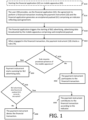
- Figure 1 depicts a first exemplary flow diagram for providing the genuine user with control over a payment instrument according to an example of the invention.
- the payment instrument 10 is a contactless card associated with a user (i.e. bank customer) for payment or cash withdrawal.
- the payment instrument may be a contact smart card, a payment ring or an electronic watch for instance.
- the genuine user is assumed to wear the payment instrument 10 and a mobile apparatus 60 previously paired with the payment instrument so that the payment instrument is able to decrypt data enciphered by the mobile apparatus.
- the mobile apparatus may be a phone, a personal digital assistant (PDA) or a connected-watch for instance.
- a financial application 62 installed on the mobile apparatus 60 is started.
- the financial application 62 gets the agreement of the user to perform a financial transaction involving the payment instrument 10.
- the financial application 62 gets the agreement of the user to authorize the payment instrument 10 to contribute to a financial transaction.
- the financial application 62 generates an enciphered payload 61 that comprises an indicator reflecting the user's agreement.
- the financial application 62 triggers the starting of Bluetooth Low Energy ⁇ (BLE) advertising by the mobile apparatus 60.
- Advertising data broadcasted by the mobile apparatus comprise the generated enciphered payload 61.
- the payment instrument 10 checks a rule 74 stored in a memory of the payment instrument.
- the rule 74 specifies a risk management policy that has been previously recorded in the payment instrument during a personalization phase.
- the payment instrument knows if the rule 74 requires the presence of the mobile apparatus proximate the payment instrument.
- the payment instrument starts scanning for BLE advertising data at step S30 else it participates to the financial transaction at step S42.
- the payment instrument checks if BLE advertising data have been found then decrypts the payload 61 conveyed in the BLE advertising data to retrieve the indicator reflecting the user's agreement at step S34.
- the payment instrument denies the financial transaction at step S38.
- the payment instrument successfully retrieved the indicator reflecting the user's agreement, it contributes to the financial transaction according to the indicator.
- the indicator may specify the agreement of the user to perform the financial transaction in which the payment instrument is engaged.
- the indicator may specify the agreement of the user to perform a cash withdrawal for a limited or unlimited amount.
- the indicator may specify the agreement of the user to perform a payment for a limited or unlimited amount.
- the indicator may specify the agreement of the user to perform all financial transactions within a limited time (like one hour or until the end of the day) or to perform a number of financial transactions.
- the payment instrument may be configured to automatically consider that operations of steps S22 to S34 are successful for further financial transactions, without searching for BLE advertising signal.
- the payment instrument may act as a conventional payment instrument at step S42.
- the payment instrument can contribute to the successful completion of the financial transaction or refuse the transaction to be completed depending on the context (e.g. amount, type of terminal) or data collected (PIN code or biometric fingerprint for instance) from the user.
- the mobile apparatus 60 comprises a broadcast manager 64 and the financial application 62 provides the broadcast manager 64 with a selected duration.
- the broadcast manager forces the mobile apparatus 60 to broadcast BLE advertising data for the selected duration.
- the duration may be automatically selected by the financial application 62 or specified by the user through a user interface of the financial application 62.
- the selected duration may be from 10 seconds up to 5 minutes for instance. Other value may be used according to time of the booting phase of hardware components of the payment instrument or convenience for the user.
- the enciphered payload 61 may further comprise a counter 65 that is updated by the financial application 62 with each transaction.
- the payment instrument may be configured to contribute to the financial transaction only if the received counter 65 is synchronized with an internal reference 76 which is updated by the payment instrument with each transaction. Such a synchronization mechanism allow to defeat replay attack attempts.
- the payment instrument 10 is a contactless payment card having a rule 74 requiring the proximate presence of the mobile apparatus and the user wants to do a payment transaction for an amount of 40 Euros.
- the BLE-enabled smartphone of the user may be used to provide control over the payment card. Before doing the actual payment (I.e.: a tap on the POS terminal), the user launches the financial application on the smartphone and confirm their agreement to do the payment with their payment card.
- the actual payment I.e.: a tap on the POS terminal
- the user launches the financial application on the smartphone and confirm their agreement to do the payment with their payment card.
- the smartphone advertises in BLE and may display information on the screen so the user know he/she can continue with the payment on the POS terminal. Then the user taps the payment card on POS terminal and the payment card automatically scan for searching BLE advertising data. If the card finds BLE advertising data broadcasted by the smartphone, the payment card processed the treatment to contribute to the payment transaction. If the card does no find BLE advertising data, then the payment card rejects the payment transaction.
- Figure 2 depicts a second exemplary flow diagram for providing the genuine user with control over a payment instrument according to an example of the invention.
- the payment instrument 10 is a contactless card assigned to a user.
- the payment instrument comprises a configuration 71 stored in a non-volatile memory of the payment instrument.
- the configuration 71 is a set of parameter(s) specifying how the payment instrument must behave for contributing to a financial transaction.
- the configuration 71 may specify the type of financial service (e.g. VISA TM or local payment scheme) that should be enabled by the payment instrument 10 for processing the financial transaction.
- the configuration 71 may specify an authentication rule (e.g. PIN code authentication, biometric authentication or threshold without user authentication) defining how the payment instrument authenticates the cardholder.
- a financial application 62 starts on the mobile apparatus 60.
- the financial application 62 gets both the agreement of the user to perform a financial transaction involving the payment instrument 10 and a financial parameter 63 applicable to the payment instrument for contributing to the financial transaction.
- the financial application 62 gets both the agreement of the user to authorize the payment instrument 10 to contribute to a financial transaction and a financial parameter 63 selected by the user via the financial application.
- the financial application 62 generates an enciphered payload 61 that comprises both the financial parameter 63 and an indicator reflecting the user's agreement.
- the payment instrument may successfully retrieve both the financial parameter 63 and the indicator reflecting the user's agreement.
- the payment instrument may update its configuration 71 with the financial parameter 63 at step S47.
- step S48 the payment instrument uses the updated configuration 71 to contribute to the financial transaction according to the indicator.
- the configuration 71 may specify the type of financial service to be used by the payment instrument for contributing to the financial transaction, an amount for the financial transaction (e.g. for cash withdrawing) or an authentication rule defining how the payment instrument authenticates the user.
- the payment instrument sets the configuration 71 with a default parameter 72 when it is powered (e.g. as part of the boot phase for example).
- the enciphered payload 61 may comprise a value indicating whether the default parameter should be modified with the financial parameter and the payment instrument may update the default parameter 72 if required by this value. In such a case, the payment instrument updates with the received financial parameter 63 both the default parameter 72 and the configuration 71.
- two or more financial parameters may be selected and included in the enciphered payload 61 so that the payment instrument may apply more than one financial parameter for contributing to the financial transaction.
- the rule 74 may not require the presence of the mobile apparatus proximate the payment instrument (step S26).
- the payment instrument may still start scanning for BLE advertising data (like at step S30), retrieve a financial parameter 63 from the detected BLE advertising data and update the configuration 71 before participating to the financial transaction (step S42).
- the financial application 62 has generated an enciphered payload 61 comprising the financial parameter 63 selected by the cardholder.
- the financial parameter 63 may specify which payment application is to be enabled into the payment instrument before contributing to the financial transaction.
- the financial parameter 63 may specify whether the payment transaction should be conducted according to a debit or a credit.
- the financial parameter 63 may specify an amount for a cash withdrawal transaction.
- the payment instrument if the payment instrument does not detect any BLE advertising data after a preset time or does not manage to retrieve a financial parameter from a detected BLE advertising data, then the payment instrument participates to the financial transaction with a configuration 71 set to default value(s).
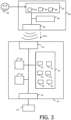
- Figure 3 depicts a diagram of architecture of system comprising a payment instrument 10 according to an example of the invention.
- the payment instrument 10 is a payment smart card assigned to a user.
- the payment instrument 10 comprises a secure chip (also called secure element) and a communication interface 19 which is designed to exchange data with outside in wireless mode.
- the communication interface 19 is compliant with Bluetooth Low Energy ⁇ (BLE).
- BLE Bluetooth Low Energy ⁇
- the communication interface 19 is linked to the secure element through a wired link.
- the payment instrument 10 comprises a physical communication interface 15 able to communicate and operate according to ISO/IEC 7816 standard.
- the physical communication interface 15 may be configured to communicate and operate according a contactless protocol complying with ISO/IEC 14443 standard for example.
- the secure chip comprises a hardware processor 50, a working memory 52 (which may be a RAM) and a non-volatile memory 70.
- the non-volatile memory stores an operating system 73 that includes software instructions that are executed by the processor 50 to perform the features of the secure chip.
- the secure element may be based on a conventional smart card chip with additional features.
- the secure element may be able to contribute to a banking transaction with an external machine. For instance, the transaction may be a payment transaction or cash withdrawal.
- the payment instrument 10 may be communicably coupled to a portable device 60 that may be a smartphone or a laptop for instance.
- the portable device 60 comprises a financial application 62, a BLE interface 66 compliant with Bluetooth Low Energy ⁇ (BLE) and a broadcast manager 64 in charge of managing BLE advertising operations of the BLE interface 66.
- BLE Bluetooth Low Energy ⁇
- the financial application 62 is configured to get an agreement of a user 30 to perform a financial transaction with the payment instrument 10 and to generate an enciphered payload 61 comprising an indicator reflecting the agreement of the user.
- the financial application 62 may rely on conventional encrypting algorithms to encrypt the payload.
- the financial application 62 comprises a key 68 and is configured to use the key 68 for encrypting the payload.
- the key 68 is assumed to have been identified during a previous phase of pairing of the portable device 60 with the payment instrument 10 so that a key 78 - corresponding to the key 68 - is stored in the non-volatile memory 70 of the payment instrument.
- These keys 68, 78 may have been generated as symmetric keys or as a pair of public/private keys.
- the portable device 60 is configured to broadcast - according to the BLE advertising mode - advertising data that comprise the enciphered payload 61.
- the financial application 62 is configured to send a duration (time or date) to the broadcast manager 64 and the broadcast manager is adapted to force the BLE interface 66 to broadcast BLE advertising data for the received duration.
- the duration is predefined in the financial application 62.
- the financial application 62 may allow the user 30 to choose the duration of the BLE advertising.
- the user may select a duration through a user interface of the financial application 62 that sends the selected duration to the broadcast manager 64.
- the predefined/selected duration can range from a few seconds to several hours. In some cases, the duration may be defined by specifying a stop time, for example 8:00 p.m. or midnight.
- the user may choose an appropriate duration of the BLE advertising signal emitted by the portable device 60.
- the user can adjust the duration according to their own assessment of the balance between convenience and exposure to risks in the event of loss of the payment instrument.
- the payment instrument 10 is communicably coupled to a conventional Point-Of-Sale (POS) terminal 20 through the physical communication interface 15.
- POS terminal 20 is a hardware terminal that is intended to participate to financial transactions. It supplies power to the payment instrument through a contactless communication interface.
- the secure element comprises program instructions intended to be executed by the processor 50 of the secure element to perform treatments required by the invention.
- the non-volatile memory 70 stores a rule 74 that specifies a risk management policy.
- the rule 74 may have been previously recorded in the payment instrument during an initial personalization phase.
- the payment instrument When engaged in a financial transaction, the payment instrument may be configured to automatically check the rule 74 and to start scanning for BLE advertising data if said rule requires a control based on the proximate presence of the mobile apparatus 60.
- the payment instrument may be configured to search for BLE advertising data during a preset duration which may be set in the range from a 10 seconds to 70 seconds for instance.
- the payment instrument may be configured to get advertising data broadcasted by the mobile apparatus and to decrypt the enciphered payload 61 to retrieve the indicator reflecting an agreement of the user 30 to perform a financial transaction with the payment instrument.
- the payment instrument may be configured contribute to the financial transaction (with the terminal 20) according to the retrieved indicator.
- the payment instrument does not need to establish a Bluetooth Low Energy ⁇ (BLE) point-to-point communication channel with the mobile apparatus 60.
- BLE Bluetooth Low Energy ⁇
- Such a BLE channel establishment requires a handshake phase whose duration is longer than detecting advertising data broadcasted via the BLE advertising mechanism.
- the payment instrument only scans for BLE advertising data.
- Such a search may be done in a short time with low power consumption.
- This mechanism is well suited to the usual constraints of payment instruments that may have limited energy and limited time slots to try to detect the broadcasted advertising data.
- Such a search may be performed during a financial transaction engaged between the payment instrument and the terminal 20.
- the financial application 62 may be configured to include a counter 65 into the generated enciphered payload 61 and to update the counter 65 with each transaction.
- the payment instrument 10 may be configured to contribute to the financial transaction only if the received counter 65 (retrieved after deciphering the received payload 61) is synchronized with an internal reference 76 that is stored in the memory 70 of the payment instrument.
- the payment instrument may be configured to update its internal reference 76 with each transaction.
- the synchronicity check may consist of a comparison of the values of the received counter 65 and the internal reference 76 to check that these values are equal or close to each other. Such a synchronization mechanism allow preventing replay attack attempts.
- the financial application 62 may be configured to allow the user 30 to select a financial parameter 63 applicable to the payment instrument and to include the financial parameter 63 in the generated enciphered payload 61.
- the payment instrument may be configured to retrieve the financial parameter 63 by deciphering the enciphered payload 61 and to update a configuration 71 stored in the memory 70 of the payment instrument with the received financial parameter 63. In such a case, the payment instrument can be configured to use the updated configuration 71 to contribute to the financial transaction with the terminal 20.
- the configuration 71 may specify the type of financial service/scheme that must be enabled in (and by) the payment instrument 10 for processing the financial transaction, an amount for the financial transaction (like the amount of a cash withdrawing transaction) or an authentication rule defining how the payment instrument authenticates the user before authorizing the financial transaction.
- the financial parameter 63 may specify the type of financial service/scheme to use, an amount or an authentication rule.
- the financial application 62 may allow the user 30 to select two or more financial parameters and include the selected financial parameters in the payload 61.
- the payment instrument may be configured to take into account all received financial parameters.
- the payment instrument may set its configuration 71 with a default parameter 72 when powered.
- the financial application 62 may further include in the enciphered payload 61 a value indicating whether the default parameter should be modified with the financial parameter and the payment instrument may be configured to update its default parameter 72 (stored in the NVM memory 70) if required by the received value.
- Such mechanism allow to permanently update the default parameter 72 which can be used for subsequent financial transactions.
- the configuration 71 may comprise the rule 74.
- the configuration 71 used by the payment instrument allows to quickly and smoothly adapt the behavior of the payment instrument according to preference previously defined in the financial application 62 or selected on-the-fly by the cardholder (i.e. the user). It is to be noted that the dynamic update of the configuration 71 into the payment instrument can be done without needing the deployment of new hardware devices (or software updates) at Point-Of-Sale side. In addition, the payment instrument knows which configuration was used for the transaction and can log it for further analysis or security reasons.
Landscapes
- Engineering & Computer Science (AREA)
- Business, Economics & Management (AREA)
- Computer Networks & Wireless Communication (AREA)
- Accounting & Taxation (AREA)
- Strategic Management (AREA)
- Physics & Mathematics (AREA)
- General Business, Economics & Management (AREA)
- General Physics & Mathematics (AREA)
- Theoretical Computer Science (AREA)
- Signal Processing (AREA)
- Cash Registers Or Receiving Machines (AREA)
- Financial Or Insurance-Related Operations Such As Payment And Settlement (AREA)
Priority Applications (4)
| Application Number | Priority Date | Filing Date | Title |
|---|---|---|---|
| EP22306343.9A EP4336432A1 (fr) | 2022-09-12 | 2022-09-12 | Procédé pour fournir à un utilisateur une commande par l'intermédiaire d'une carte de paiement |
| US19/110,513 US20260094145A1 (en) | 2022-09-12 | 2023-08-29 | Method for providing a user with control over a payment card |
| PCT/EP2023/073729 WO2024056376A1 (fr) | 2022-09-12 | 2023-08-29 | Procédé pour fournir à un utilisateur un contrôle sur une carte de paiement |
| EP23758687.0A EP4587988A1 (fr) | 2022-09-12 | 2023-08-29 | Procédé pour fournir à un utilisateur un contrôle sur une carte de paiement |
Applications Claiming Priority (1)
| Application Number | Priority Date | Filing Date | Title |
|---|---|---|---|
| EP22306343.9A EP4336432A1 (fr) | 2022-09-12 | 2022-09-12 | Procédé pour fournir à un utilisateur une commande par l'intermédiaire d'une carte de paiement |
Publications (1)
| Publication Number | Publication Date |
|---|---|
| EP4336432A1 true EP4336432A1 (fr) | 2024-03-13 |
Family
ID=84044131
Family Applications (2)
| Application Number | Title | Priority Date | Filing Date |
|---|---|---|---|
| EP22306343.9A Withdrawn EP4336432A1 (fr) | 2022-09-12 | 2022-09-12 | Procédé pour fournir à un utilisateur une commande par l'intermédiaire d'une carte de paiement |
| EP23758687.0A Pending EP4587988A1 (fr) | 2022-09-12 | 2023-08-29 | Procédé pour fournir à un utilisateur un contrôle sur une carte de paiement |
Family Applications After (1)
| Application Number | Title | Priority Date | Filing Date |
|---|---|---|---|
| EP23758687.0A Pending EP4587988A1 (fr) | 2022-09-12 | 2023-08-29 | Procédé pour fournir à un utilisateur un contrôle sur une carte de paiement |
Country Status (3)
| Country | Link |
|---|---|
| US (1) | US20260094145A1 (fr) |
| EP (2) | EP4336432A1 (fr) |
| WO (1) | WO2024056376A1 (fr) |
Citations (3)
| Publication number | Priority date | Publication date | Assignee | Title |
|---|---|---|---|---|
| EP2811445A1 (fr) * | 2013-06-04 | 2014-12-10 | NCR Corporation | Traitement de carte de crédit |
| WO2017033118A1 (fr) * | 2015-08-25 | 2017-03-02 | Comviva Technologies Limited | Procédé et système permettant d'améliorer la sécurité d'une carte sans contact |
| US9881305B1 (en) * | 2014-05-06 | 2018-01-30 | Square, Inc. | Context-based restrictions on payment cards |
-
2022
- 2022-09-12 EP EP22306343.9A patent/EP4336432A1/fr not_active Withdrawn
-
2023
- 2023-08-29 EP EP23758687.0A patent/EP4587988A1/fr active Pending
- 2023-08-29 US US19/110,513 patent/US20260094145A1/en active Pending
- 2023-08-29 WO PCT/EP2023/073729 patent/WO2024056376A1/fr not_active Ceased
Patent Citations (3)
| Publication number | Priority date | Publication date | Assignee | Title |
|---|---|---|---|---|
| EP2811445A1 (fr) * | 2013-06-04 | 2014-12-10 | NCR Corporation | Traitement de carte de crédit |
| US9881305B1 (en) * | 2014-05-06 | 2018-01-30 | Square, Inc. | Context-based restrictions on payment cards |
| WO2017033118A1 (fr) * | 2015-08-25 | 2017-03-02 | Comviva Technologies Limited | Procédé et système permettant d'améliorer la sécurité d'une carte sans contact |
Also Published As
| Publication number | Publication date |
|---|---|
| EP4587988A1 (fr) | 2025-07-23 |
| US20260094145A1 (en) | 2026-04-02 |
| WO2024056376A1 (fr) | 2024-03-21 |
Similar Documents
| Publication | Publication Date | Title |
|---|---|---|
| US10929519B2 (en) | Reliable timestamp credential | |
| EP2332092B1 (fr) | Appareil et procédé pour empêcher un accès non autorisé à une application de paiement installée dans un dispositif de paiement sans contact | |
| AU2008346319B2 (en) | Contactless biometric authentication system and authentication method | |
| US20170046714A1 (en) | Biometric verification method and system | |
| US20190392427A1 (en) | Digital transaction system and method with a virtual companion card | |
| CN111742314B (zh) | 便携式装置上的生物计量传感器 | |
| CN110447213B (zh) | 用于中继攻击检测的方法和系统 | |
| US12205103B2 (en) | Contactless card with multiple rotating security keys | |
| EP4120165A1 (fr) | Procédé de gestion d'une carte intelligente | |
| US20260094145A1 (en) | Method for providing a user with control over a payment card | |
| EP4075360A1 (fr) | Procédé de commande d'une carte intelligente | |
| EP4407547A1 (fr) | Procede de gestion d'une transaction financiere | |
| EP4518388A1 (fr) | Procédé de protection contre les attaques par relais de transactions monétaires | |
| EP4575960A1 (fr) | Procede permettant d'obtenir l'accord de l'utilisateur de poursuivre une transaction financiere sans contact | |
| AU2015202512B2 (en) | Apparatus and method for preventing unauthorized access to application installed in mobile device | |
| EP4670323A1 (fr) | Procédé de renforcement de la sécurité d'une transaction | |
| AU2016253607A1 (en) | Apparatus and method for preventing unauthorized access to application installed in a device | |
| KR20170007601A (ko) | 복합금융단말기, 복합금융단말기를 이용한 복합금융서비스 시스템 및 그 방법 |
Legal Events
| Date | Code | Title | Description |
|---|---|---|---|
| PUAI | Public reference made under article 153(3) epc to a published international application that has entered the european phase |
Free format text: ORIGINAL CODE: 0009012 |
|
| STAA | Information on the status of an ep patent application or granted ep patent |
Free format text: STATUS: THE APPLICATION HAS BEEN PUBLISHED |
|
| AK | Designated contracting states |
Kind code of ref document: A1 Designated state(s): AL AT BE BG CH CY CZ DE DK EE ES FI FR GB GR HR HU IE IS IT LI LT LU LV MC MK MT NL NO PL PT RO RS SE SI SK SM TR |
|
| STAA | Information on the status of an ep patent application or granted ep patent |
Free format text: STATUS: THE APPLICATION IS DEEMED TO BE WITHDRAWN |
|
| 18D | Application deemed to be withdrawn |
Effective date: 20240914 |