EP4336494A1 - Kodierungsverfahren und -vorrichtung für mehrkanalige audiosignale - Google Patents
Kodierungsverfahren und -vorrichtung für mehrkanalige audiosignale Download PDFInfo
- Publication number
- EP4336494A1 EP4336494A1 EP22810378.4A EP22810378A EP4336494A1 EP 4336494 A1 EP4336494 A1 EP 4336494A1 EP 22810378 A EP22810378 A EP 22810378A EP 4336494 A1 EP4336494 A1 EP 4336494A1
- Authority
- EP
- European Patent Office
- Prior art keywords
- channel
- channel signals
- energy
- energy equalization
- fluctuation interval
- Prior art date
- Legal status (The legal status is an assumption and is not a legal conclusion. Google has not performed a legal analysis and makes no representation as to the accuracy of the status listed.)
- Pending
Links
Images




Classifications
-
- G—PHYSICS
- G10—MUSICAL INSTRUMENTS; ACOUSTICS
- G10L—SPEECH ANALYSIS TECHNIQUES OR SPEECH SYNTHESIS; SPEECH RECOGNITION; SPEECH OR VOICE PROCESSING TECHNIQUES; SPEECH OR AUDIO CODING OR DECODING
- G10L19/00—Speech or audio signals analysis-synthesis techniques for redundancy reduction, e.g. in vocoders; Coding or decoding of speech or audio signals, using source filter models or psychoacoustic analysis
- G10L19/008—Multichannel audio signal coding or decoding using interchannel correlation to reduce redundancy, e.g. joint-stereo, intensity-coding or matrixing
-
- H—ELECTRICITY
- H04—ELECTRIC COMMUNICATION TECHNIQUE
- H04S—STEREOPHONIC SYSTEMS
- H04S3/00—Systems employing more than two channels, e.g. quadraphonic
- H04S3/008—Systems employing more than two channels, e.g. quadraphonic in which the audio signals are in digital form, i.e. employing more than two discrete digital channels
-
- G—PHYSICS
- G10—MUSICAL INSTRUMENTS; ACOUSTICS
- G10L—SPEECH ANALYSIS TECHNIQUES OR SPEECH SYNTHESIS; SPEECH RECOGNITION; SPEECH OR VOICE PROCESSING TECHNIQUES; SPEECH OR AUDIO CODING OR DECODING
- G10L19/00—Speech or audio signals analysis-synthesis techniques for redundancy reduction, e.g. in vocoders; Coding or decoding of speech or audio signals, using source filter models or psychoacoustic analysis
- G10L19/04—Speech or audio signals analysis-synthesis techniques for redundancy reduction, e.g. in vocoders; Coding or decoding of speech or audio signals, using source filter models or psychoacoustic analysis using predictive techniques
- G10L19/16—Vocoder architecture
- G10L19/18—Vocoders using multiple modes
Definitions
- This application relates to audio processing technologies, and in particular, to a multi-channel audio signal encoding method and an apparatus.
- Multi-channel audio encoding and decoding is a technology of encoding or decoding audio that includes at least two channels.
- Common multi-channel audio includes 5.1 channel audio, 7.1 channel audio, 7.1.4 channel audio, 22.2 channel audio, and the like.
- MPEG Surround MPS
- MPS MPEG Surround
- This application provides a multi-channel audio signal encoding method and an apparatus, to improve encoding efficiency of an audio frame.
- this application provides a multi-channel audio signal encoding method.
- the method includes: obtaining a to-be-encoded first audio frame, where the first audio frame includes at least five channel signals; obtaining a sum of correlation values of all channel pairs in a target channel pair set, where the target channel pair set includes at least one channel pair, one channel pair includes two of the at least five channel signals, the one channel pair has one correlation value, and the correlation value indicates correlation between the two channel signals in the one channel pair; when the sum of the correlation values is greater than a preset threshold, performing energy equalization processing on at least two of the at least five channel signals to obtain at least two equalized channel signals; and encoding the at least two equalized channel signals to obtain an encoded bitstream.
- the at least five channel signals included in the audio frame are paired to obtain a target channel pair set.
- the energy equalization processing is performed on the at least two of the at least five channel signals, to perform encoding, to improve encoding efficiency of the audio frame.
- the method further includes: when the sum of the correlation values is less than or equal to the preset threshold, encoding the at least five channel signals to obtain an encoded bitstream.
- an encoded object is the at least five channel signals rather than an equalized channel signal.
- the performing energy equalization processing on at least two of the at least five channel signals to obtain at least two equalized channel signals includes: obtaining a fluctuation interval value of the at least five channel signals; determining an energy equalization mode based on the fluctuation interval value of the at least five channel signals; and separately performing energy equalization processing on the at least two channel signals based on the energy equalization mode to obtain the at least two equalized channel signals.
- the fluctuation interval value indicates a difference between energy or amplitude of the at least five channel signals.
- the energy equalization mode includes a first energy equalization mode and a second energy equalization mode. In the first energy equalization mode, two channel signals of a channel pair are used to obtain two equalized channel signals corresponding to the channel pair. In the second energy equalization mode, two channel signals in one channel pair and at least one channel signal that is not in the channel pair are used to obtain two equalized channel signals corresponding to the channel pair.
- the determining an energy equalization mode based on the fluctuation interval value of the at least five channel signals includes: determining the energy equalization mode as the first energy equalization mode when the fluctuation interval value meets a preset condition; or determining the energy equalization mode as the second energy equalization mode when the fluctuation interval value does not meet the preset condition.
- the fluctuation interval value includes energy flatness of the first audio frame, and that the fluctuation interval value meets a preset condition indicates that the energy flatness is less than a first threshold; or the fluctuation interval value includes amplitude flatness of the first audio frame, and that the fluctuation interval value meets a preset condition indicates that the amplitude flatness is less than a second threshold; or the fluctuation interval value includes energy deviation of the first audio frame, and that the fluctuation interval value meets a preset condition indicates that the energy deviation is not within a first preset range; or the fluctuation interval value includes amplitude deviation of the first audio frame, and that the fluctuation interval value meets a preset condition indicates that the amplitude deviation is not within a second preset range.
- the performing energy equalization processing on at least two of the at least five channel signals to obtain at least two equalized channel signals includes: performing energy equalization processing on channel signals corresponding to the target channel pair set to obtain the at least two equalized channel signals.
- the performing energy equalization processing on channel signals corresponding to the target channel pair set to obtain the at least two equalized channel signals includes: calculating, for a current channel pair in the target channel pair set, an average value of energy values or amplitude values of two channel signals included in the current channel pair, and separately performing, based on the average value, energy equalization processing on the two channel signals included in the current channel pair to obtain two corresponding equalized channel signals.
- the performing energy equalization processing on at least two of the at least five channel signals to obtain at least two equalized channel signals includes: calculating an average value of energy values or amplitude values of the at least five channel signals, and separately performing energy equalization processing on the at least five channel signals based on the average value to obtain at least five equalized channel signals.
- the method before the determining an energy equalization mode based on the fluctuation interval value of the at least five channel signals, the method further includes: determining whether an encoding bit rate corresponding to the first audio frame is greater than a bit rate threshold; and determining the energy equalization mode as the second energy equalization mode when the encoding bit rate is greater than the bit rate threshold; or determining the energy equalization mode based on the fluctuation interval value when the encoding bit rate is less than or equal to the bit rate threshold.
- the method further includes: encoding a channel signal on which energy equalization processing is not performed in the at least five channel signals.
- this application provides an encoding apparatus.
- the apparatus includes: an obtaining module, configured to: obtain a to-be-encoded first audio frame, where the first audio frame includes at least five channel signals; and obtain a sum of correlation values of all channel pairs in a target channel pair set, where the target channel pair set includes at least one channel pair, one channel pair includes two of the at least five channel signals, the one channel pair has one correlation value, and the correlation value indicates correlation between the two channel signals in the one channel pair; a processing module, configured to perform energy equalization processing on at least two of the at least five channel signals to obtain at least two equalized channel signals when the sum of the correlation values is greater than a preset threshold; and an encoding module, configured to encode the at least two equalized channel signals to obtain an encoded bitstream.
- the encoding module is further configured to: when the sum of the correlation values is less than or equal to the preset threshold, encode the at least five channel signals to obtain an encoded bitstream.
- the processing module is specifically configured to: obtain a fluctuation interval value of the at least five channel signals; determine an energy equalization mode based on the fluctuation interval value of the at least five channel signals; and separately perform energy equalization processing on the at least two channel signals based on the energy equalization mode to obtain the at least two equalized channel signals.
- the processing module is specifically configured to: determine the energy equalization mode as a first energy equalization mode when the fluctuation interval value meets a preset condition; or determine the energy equalization mode as a second energy equalization mode when the fluctuation interval value does not meet a preset condition.
- the fluctuation interval value includes energy flatness of the first audio frame, and that the fluctuation interval value meets a preset condition indicates that the energy flatness is less than a first threshold; or the fluctuation interval value includes amplitude flatness of the first audio frame, and that the fluctuation interval value meets a preset condition indicates that the amplitude flatness is less than a second threshold; or the fluctuation interval value includes energy deviation of the first audio frame, and that the fluctuation interval value meets a preset condition indicates that the energy deviation is not within a first preset range; or the fluctuation interval value includes amplitude deviation of the first audio frame, and that the fluctuation interval value meets a preset condition indicates that the amplitude deviation is not within a second preset range.
- the processing module is specifically configured to perform energy equalization processing on channel signals corresponding to the target channel pair set to obtain the at least two equalized channel signals.
- the processing module is specifically configured to calculate, for a current channel pair in the target channel pair set, an average value of energy values or amplitude values of two channel signals included in the current channel pair, and separately perform, based on the average value, energy equalization processing on the two channel signals included in the current channel pair to obtain two corresponding equalized channel signals.
- the processing module when the energy equalization mode is the second energy equalization mode, is specifically configured to: calculate an average value of energy values or amplitude values of the at least five channel signals; and separately perform energy equalization processing on the at least five channel signals based on the average value to obtain at least five equalized channel signals.
- the processing module is further configured to: determine whether an encoding bit rate corresponding to the first audio frame is greater than a bit rate threshold; and determine the energy equalization mode as the second energy equalization mode when the encoding bit rate is greater than the bit rate threshold; or determine the energy equalization mode based on the fluctuation interval value when the encoding bit rate is less than or equal to the bit rate threshold.
- the encoding module is further configured to encode a channel signal on which energy equalization processing is not performed in the at least five channel signals.
- this application provides a device.
- the device includes: one or more processors; and a memory, configured to store one or more programs.
- the one or more processors are enabled to implement the method according to any possible implementation of the first aspect.
- this application provides a computer-readable storage medium.
- the computer-readable storage medium includes a computer program.
- the computer program When the computer program is executed by a computer, the computer is enabled to perform the method according to any one of the possible implementations of the first aspect.
- an embodiment of this application provides a computer-readable storage medium.
- the computer-readable storage medium includes an encoded bitstream obtained by using the multi-channel audio signal encoding method according to any possible implementation of the first aspect.
- At least one of a, b, or c may indicate a, b, c, a and b, a and c, b and c, or a and b and c, where a, b, and c may be singular or plural.
- Audio frame Audio data is in a stream form.
- an audio data amount within one duration is usually selected as a frame of audio.
- the duration is referred to as a "sampling time period", and a value of the duration may be determined based on a requirement of a codec and a specific application, for example, the duration ranges from 2.5 ms to 60 ms, where ms is millisecond.
- Audio signal is a frequency and amplitude change information carrier of a regular sound wave with voice, music, and sound effect. Audio is a continuously changing analog signal, and can be represented by a continuous curve and referred to as a sound wave. A digital signal generated from the audio through analog-to-digital conversion or by using a computer is an audio signal.
- the sound wave has three important parameters: frequency, amplitude, and phase, which determine characteristics of the audio signal.
- Channel signals are independent audio signals that are collected or played in different spatial positions during sound recording or playing. Therefore, a quantity of channels is a quantity of audio sources used during audio recording, or a quantity of loudspeakers used for audio playing.
- FIG. 1 is an example of a schematic block diagram of an audio transcoding system 10 to which this application is applied.
- the audio transcoding system 10 may include a source device 12 and a destination device 14.
- the source device 12 generates an encoded bitstream. Therefore, the source device 12 may be referred to as an audio encoding apparatus.
- the destination device 14 may decode the encoded bitstream generated by the source device 12. Therefore, the destination device 14 may be referred to as an audio decoding apparatus.
- the source device 12 includes a coder 20, and optionally, may include an audio source 16, an audio preprocessor 18, and a communication interface 22.
- the audio source 16 may include or may be any type of audio capture device configured to capture real-world speech, music, sound effect, and the like; and/or any type of audio generation device, for example, an audio processor or device configured to generate speech, music, and sound effect.
- the audio source may be any type of memory or storage that stores the foregoing audio.
- the audio preprocessor 18 is configured to receive (original) audio data 17, and preprocess the audio data 17 to obtain preprocessed audio data 19.
- preprocessing performed by the audio preprocessor 18 may include pruning or noise reduction. It may be understood that the audio preprocessor 18 may be an optional component.
- the coder 20 is configured to receive the preprocessed audio data 19 and provide encoded audio data 21.
- the communication interface 22 in the source device 12 may be configured to receive the encoded audio data 21 and send the encoded audio data 21 to the destination device 14 through a communication channel 13, to store or directly reconstruct the encoded audio data 21.
- the destination device 14 includes a decoder 30, and optionally, may include a communication interface 28, an audio postprocessor 32, and a playing device 34.
- the communication interface 28 in the destination device 14 is configured to directly receive the encoded audio data 21 from the source device 12, and provide the encoded audio data 21 to the decoder 30.
- the communication interface 22 and the communication interface 28 may be configured to use a direct communication link between the source device 12 and the destination device 14, for example, a direct wired or wireless connection; or use any type of network, for example, a wired network, a wireless network, or any combination thereof, any type of private network and public network, or any type of combination thereof, to send or receive the encoded audio data 21.
- the communication interface 22 may be configured to encapsulate the encoded audio data 21 into a suitable format such as a packet, and/or process the encoded audio data 21 through any type of transmission encoding or processing, to be transmitted over a communication link or a communication network.
- the communication interface 28 corresponds to the communication interface 22.
- the communication interface 28 may be configured to receive transmitted data, and process the transmitted data through any type of corresponding transmission decoding or processing and/or decapsulation, to obtain the encoded audio data 21.
- the communication interface 22 and the communication interface 28 each may be configured as a unidirectional communication interface indicated by an arrow that is of the corresponding communication channel 13 and that points from the source device 12 to the destination device 14 in FIG. 1 or a bidirectional communication interface; and may be configured to send and receive a message, or the like, to establish a connection, confirm and exchange any other information related to data transmission, such as a communication link and/or encoded audio data.
- the decoder 30 is configured to receive the encoded audio data 21 and provide decoded audio data 31.
- the audio postprocessor 32 is configured to perform postprocessing on the decoded audio data 31 to obtain postprocessed audio data 33.
- Post-processing performed by the audio postprocessor 32 may include, for example, pruning or resampling.
- the playing device 34 is configured to receive the postprocessed audio data 33, to play audio to a user or a listener.
- the playing device 34 may be or include any type of player configured to play reconstructed audio, for example, an integrated or external loudspeaker.
- the loudspeaker may include a horn, a speaker, and the like.
- FIG. 2 is an example of a schematic block diagram of an audio transcoding device 200 to which this application is applied.
- the audio transcoding device 200 may be an audio decoder (for example, the decoder 30 in FIG. 1 ) or an audio coder (for example, the coder 20 in FIG. 1 ).
- the audio transcoding device 200 includes an ingress port 210 and a receiving unit (Rx) 220 for receiving data; a processor, a logic unit, or a central processing unit 230 for processing data; a transmitting unit (Tx) 240 and an egress port 250 for transmitting data; and a memory 260 for storing data.
- the audio transcoding device 200 may further include an optical-to-electrical conversion component and an electrical-to-optical (EO) component coupled to the ingress port 210, the receiving unit 220, the transmitting unit 240, and the egress port 250.
- the components are configured as ingress ports or egress ports of an optical signal or an electrical signal.
- the processor 230 is implemented through hardware and software.
- the processor 230 may be implemented as one or more CPU chips, cores (for example, a multi-core processor), FPGAs, ASICs, and DSPs.
- the processor 230 communicates with the ingress port 210, the receiving unit 220, the transmitting unit 240, the egress port 250, and the memory 260.
- the processor 230 includes a transcoding module 270 (for example, an encoding module or a decoding module).
- the transcoding module 270 implements the embodiments disclosed in this application, to implement the multi-channel audio signal encoding method provided in this application.
- the transcoding module 270 implements, processes, or provides various encoding operations. Therefore, the transcoding module 270 substantially improves functions of the audio transcoding device 200, and affects conversion of the audio transcoding device 200 to different states.
- the transcoding module 270 is implemented by using instructions stored in the memory 260 and executed by the processor 230.
- the memory 260 includes one or more disks, tape drives, and solid state drives, and may be used as an overflow data storage device, to store programs when such programs are selected for execution, and to store instructions and data that are read during program execution.
- the memory 260 may be volatile and/or non-volatile, and may be a read-only memory (ROM), a random access memory (RAM), a random access memory (ternary content-addressable memory, TCAM), and/or a static random access memory (SRAM).
- this application provides a multi-channel audio signal encoding method.
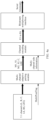
- FIG. 3 is a flowchart of an example embodiment of a multi-channel audio signal encoding method according to this application.
- a process 300 may be executed by the source device 12 in the audio transcoding system 10 or the audio transcoding device 200.
- the process 300 includes a series of steps or operations. It should be understood that steps in the process 300 may be performed in various sequences and/or simultaneously, and is not limited to an execution sequence shown in FIG. 3 .
- the method includes the following steps.
- Step 301 Obtain a to-be-encoded first audio frame.
- the first audio frame in this embodiment may be any frame of to-be-encoded multi-channel audio, and the first audio frame includes five or more channel signals.
- 5.1 channels include six channel signals: a center (C) channel signal, a front left (left, L) channel signal, a front right (right, R) channel signal, a back left surround (left surround, LS) channel signal, a back right surround (right surround, RS) channel signal, and a 0.1 channel low frequency effects (low frequency effects, LFE) channel signal.
- 7.1 channels include eight channel signals: a C channel signal, an L channel signal, an R channel signal, an LS channel signal, an RS channel signal, an LB channel signal, an RB channel signal, and an LFE channel signal.
- An LFE channel is an audio channel ranging from 3 Hz to 120 Hz, which is usually sent to a loudspeaker specially designed for low tones.
- Step 302 Obtain a sum of correlation values of all channel pairs in a target channel pair set.
- the target channel pair set is obtained to obtain a maximum sum of correlation values.
- the target channel pair set includes at least one channel pair, and the channel pair includes two channel signals in at least five channel signals.
- One channel pair has one correlation value, and the correlation value indicates correlation between two channel signals of one channel pair.
- pairing is determined based on a correlation value of the two channel signals.
- a correlation value between every two of the at least five channel signals in the first audio frame may be first calculated to obtain a correlation value set of the first audio frame. For example, 10 channel pairs in total may be formed for the five channel signals; and correspondingly, the correlation value set may include 10 correlation values.
- the correlation values may be normalized.
- the correlation values of all channel pairs are limited within a specific range, to set a unified determining standard, for example, a pairing threshold, for the correlation value.
- the pairing threshold may be set to a value greater than or equal to 0.2 and less than or equal to 1, for example, 0.3. In this way, as long as a normalized correlation value of two channel signals is smaller than the pairing threshold, it is considered that the two channel signals have low correlation and pairing the two channel signals for encoding is not needed.
- the obtaining a pairing manner of the target channel pair set includes: to obtain a maximum sum of correlation values, selecting a channel pair from channel pairs corresponding to at least five channel signals, and adding the channel pair to the target channel pair set.
- the sum of correlation values of the target channel pair set is a sum of correlation values of all channel pairs of the target channel pair set that are obtained by performing pairing on the at least five channel signals based on the foregoing pairing manner.
- the pairing manner in this embodiment may include the following two implementations.
- N may be an integer greater than or equal to 2, and a maximum value of N cannot exceed a quantity of all channel pairs corresponding to all channel signals of the first audio frame. A larger value of N indicates an increase in a calculation amount. A smaller value of N indicates that a channel pair set may be lost, and encoding efficiency is reduced.
- Each channel pair set includes at least one of M channel pairs corresponding to the M correlation values, and when the channel pair set includes at least two channel pairs, the at least two channel pairs do not include a same channel signal.
- M channel pair sets For example, for the 5.1 channels, three channel pairs (L, R), (R, C), and (LS, RS) corresponding to the maximum correlation value are selected based on the correlation value set. A correlation value of (LS, RS) is less than the pairing threshold, and therefore the channel pair is excluded.
- two channel pair sets may be obtained by using the two channel pairs (L, R) and (R, C). One of the two channel pair sets includes (L, R), and the other includes (R, C).
- a method for obtaining the M channel pair sets in this embodiment may include: adding the first channel pair to the target channel pair set, where the M channel pair sets include the target channel pair set; and when other channel pairs other than an associated channel pair in the plurality of channel pairs include a channel pair with a correlation value greater than the pairing threshold, selecting a channel pair with a maximum correlation value from the other channel pairs and adding the channel pair to the target channel pair set, where the associated channel pair includes any channel signal included in a channel pair included in the target channel pair set.
- step b may be performed iteratively.
- a correlation value less than the pairing threshold may be deleted from the correlation value set.
- a quantity of channel pairs may be reduced, and a quantity of iterations may be further reduced.
- the correlation value set includes correlation values of a plurality of channel pairs of at least five channel signals in the first audio frame, and the plurality of channel pairs are regularly combined (in other words, a plurality of channel pairs in a same channel pair set cannot include a same channel signal) to obtain the plurality of channel pair sets corresponding to the at least five channel signals.
- Pair num indicates the quantity of all channel pair sets; and CH indicates a quantity of channel signals for multi-channel processing in the first audio frame, and is a result obtained through multi-channel mask screening.
- the plurality of channel pair sets may be obtained based on channel pairs other than an uncorrelated channel pair in the plurality of channel pairs.
- a correlation value of the uncorrelated channel pair is less than the pairing threshold.
- Step 303 When the sum of the correlation values is greater than the preset threshold, perform energy equalization processing on at least two of the at least five channel signals to obtain at least two equalized channel signals.
- a fluctuation interval value of the at least five channel signals may be first obtained, an energy equalization mode is determined based on the fluctuation interval value of the at least five channel signals, and then energy equalization processing is separately performed on the at least five channel signals based on the energy equalization mode to obtain at least five equalized channel signals.
- the fluctuation interval value indicates a difference between energy or amplitude of the at least five channel signals.
- the energy equalization mode includes a first energy equalization mode and a second energy equalization mode.
- first energy equalization mode two channel signals of a channel pair are used to obtain two equalized channel signals corresponding to the channel pair.
- second energy equalization mode two channel signals in one channel pair and at least one channel signal that is not in the channel pair are used to obtain two equalized channel signals corresponding to the channel pair.
- the determining an energy equalization mode based on the fluctuation interval value of the at least five channel signals may include: determining the energy equalization mode as the first energy equalization mode when the fluctuation interval value meets a preset condition; or determining the energy equalization mode as the second energy equalization mode when the fluctuation interval value does not meet the preset condition.
- the fluctuation interval value includes energy flatness of the first audio frame, and that the fluctuation interval value meets a preset condition indicates that the energy flatness is less than a first threshold; or the fluctuation interval value includes amplitude flatness of the first audio frame, and that the fluctuation interval value meets a preset condition indicates that the amplitude flatness is less than a second threshold; or the fluctuation interval value includes energy deviation of the first audio frame, and that the fluctuation interval value meets a preset condition indicates that the energy deviation is not within a first preset range; or the fluctuation interval value includes amplitude deviation of the first audio frame, and that the fluctuation interval value meets a preset condition indicates that the amplitude deviation is not within a second preset range.
- the energy flatness represents fluctuation of frame energy that is obtained after energy normalization with a current frame frequency domain coefficient is performed on a plurality of channels screened by a multi-channel screening unit, and may be measured based on a flatness calculation formula.
- the energy flatness of the current frame is 1.
- the energy flatness of the current frame is 0. Therefore, a value range of inter-channel energy flatness is [0, 1]. Larger fluctuation of inter-channel energy indicates a smaller value of energy flatness.
- a unified first threshold for example, 0.483, 0.492, or 0.504, may be set for all channel formats (for example, 5.1, 7.1, 9.1, and 11.1).
- different first thresholds are set for different channel formats. For example, a first threshold for the 5.1 channel format is 0.511, a first threshold for the 7.1 channel format is 0.563, a first threshold for the 9.1 channel format is 0.608, and a first threshold for the 11.1 channel format is 0.654.
- the amplitude flatness represents fluctuation of frame amplitude obtained after amplitude normalization with a current frame frequency domain coefficient is performed on a plurality of channels screened by a multi-channel screening unit, and may be measured based on a flatness calculation formula.
- frame amplitude of all channels is the same, the flatness is 1.
- frame amplitude of a specific channel is 0, the flatness is 0. Therefore, a range of the amplitude flatness is [0, 1]. Larger fluctuation of inter-channel amplitude indicates a smaller value of the flatness.
- a unified second threshold for example, 0.695, 0.701, or 0.710, may be set for all channel formats (for example, 5.1, 7.1, 9.1, and 11.1).
- different second thresholds may be provided for different channel formats.
- a second threshold for the 5.1 channel format may be 0.715
- a second threshold for the 7.1 channel format may be 0.753
- a second threshold for the 9.1 channel format may be 0.784
- a second threshold for the 11.1 channel format may be 0.809.
- the energy equalization mode may be determined based on the foregoing plurality of types of information indicating a fluctuation interval value of the at least five channel signals, and the information includes energy flatness, amplitude flatness, energy deviation, or amplitude deviation.
- the energy equalization mode may be first determined based on an encoding bit rate corresponding to the first audio frame, that is, whether the encoding bit rate is greater than a bit rate threshold is determined.
- the energy equalization mode is determined as the second energy equalization mode when the encoding bit rate is greater than the bit rate threshold; or the energy equalization mode is determined based on the fluctuation interval value of the at least five channel signals when the encoding bit rate is less than or equal to the bit rate threshold.
- the energy equalization mode is the first energy equalization mode
- an average value of energy values or amplitude values of two channel signals included in the current channel pair may be calculated; and energy equalization processing is separately performed on the two channel signals based on the average value to obtain two corresponding equalized channel signals.
- an average value of energy values or amplitude values of the at least five channel signals may be calculated, and energy equalization processing is separately performed on the at least five channel signals based on the average value to obtain at least five equalized channel signals.
- step 303 energy equalization processing is mainly performed on at least two of the at least five channel signals to obtain at least two equalized channel signals, and the at least two channel signals are channel signals that are paired in the target channel pair set, and remaining channel signals that are not paired in the target channel pair set are directly encoded.
- Step 304 Encode the at least two equalized channel signals to obtain an encoded bitstream.
- Step 305 When the sum of the correlation values is less than or equal to the preset threshold, encode the at least five channel signals to obtain an encoded bitstream.
- an encoded object is the at least five channel signals rather than an equalized channel signal.
- the at least five channel signals included in the audio frame are paired to obtain a target channel pair set.
- the energy equalization processing is performed on the at least five channel signals, to perform encoding, to improve encoding efficiency of the audio frame.
- a 5.1 channel is used as an example.
- the 5.1 channel includes a central channel (C), a front left channel (left, L), a front right channel (right, R), a back left surround channel (left surround, LS), a back right surround channel (right surround, RS), and 0.1 channel low frequency effects (low frequency effects, LFE).
- C central channel
- L front left channel
- R front right channel
- R back left surround channel
- LFE back right surround channel
- LFE low frequency effects
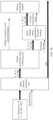
- FIG. 4a is an example diagram depicting a structure of an encoding apparatus to which a multi-channel audio signal encoding method is applied according to this application.
- the encoding apparatus may be the coder 20 of the source device 12 in the audio transcoding system 10, or may be the transcoding module 270 in the audio transcoding device 200.
- the encoding apparatus may include a multi-channel adaptive pairing module, a channel encoding module, and a bitstream multiplexing interface.
- Input of the multi-channel adaptive pairing module includes six channel signals (L, R, C, LS, RS, LFE) of 5.1 channels and a multi-channel processing indicator (MultiProcFlag), and outputs six channel signals (M1, S1, M2, S2, C, LFE) after pairing, where M1 and S1 are a channel pair obtained by pairing, M2 and S2 are a channel pair obtained by pairing, and outputs multi-channel side information (sidelnfoMc), the multi-channel side information includes a channel pair set.
- the channel encoding module uses mono channel encoding units (or mono-channel channel boxes or mono-channel tools) to encode the channel signals (M1, S1, M2, S2, C and LFE) output by the multi-channel adaptive pairing module, and outputs corresponding encoded channel signals (E1 to E6).
- mono channel encoding units or mono-channel channel boxes or mono-channel tools
- E1 to E6 encoded channel signals
- the channel encoding module may alternatively use a stereo encoding unit, for example, a parametric stereo coder or a lossy stereo encoder, to encode the processed channel signals output by the multi-channel processing module.
- unpaired channel signals may be directly input into the channel encoding module to obtain the encoded channel signals E5 and E6.
- the bitstream multiplexing interface generates encoded multi-channel signals.
- the encoded multi-channel signals include the encoded channel signals (E1 to E6) output by the channel encoding module and side information (including the multi-channel side information).
- the bitstream multiplexing interface may process the encoded multi-channel signals into serial signals or serial bitstreams.
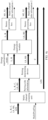
- FIG. 4b is an example diagram depicting a structure of a multi-channel adaptive pairing module.
- the multi-channel adaptive pairing module includes: a multi-channel screening unit, a global correlation value collecting unit, a multi-channel energy equalization selection module, and a pairing processing module.
- the multi-channel screening unit screens five channel signals participating in multi-channel processing, namely, L, R, C, LS, and RS, from the six channel signals (L, R, C, LS, RS and LFE) based on the multi-channel processing indicator (MultiProcFlag).
- the global correlation value statistics unit first calculates a normalized correlation value between any two of the channel signals L, R, C, LS, and RS that participate in multi-channel processing.
- corr(ch1, ch2) is a normalized correlation value between the channel signal ch1 and the channel signal ch2
- spec_ch1(i) is a frequency domain coefficient of an i th frequency of the channel signal ch1
- spec_ch2(i) is a frequency domain coefficient of an i th frequency of the channel signal ch2
- N indicates an integer value that does not exceed a total frequency quantity of one audio frame.
- a maximum sum of correlation values of channel pair sets corresponding to all channel signals participated in multi-channel processing that is, a sum of correlation values of all channel pairs included in a channel pair set
- a channel pair set which is considered as a target channel pair set
- the global correlation value statistics unit may screen the correlation values based on a pairing threshold. That is, a correlation value greater than or equal to the pairing threshold is retained, and a correlation value less than the pairing threshold is deleted or set to 0. In this way, a calculation amount can be reduced.
- the multi-channel energy equalization selection module determines, based on an encoding bit rate and the five channel signals, whether energy equalization processing needs to be performed for the five channel signals.
- a pairing manner of the five channel signals is a global pairing manner. This manner aims to obtain a maximum sum of correlation values. For details, refer to Step 302. When the sum of the correlation values of the target channel pair set is greater than a preset threshold, it is determined that energy equalization needs to be performed on the five channel signals, or when the sum of the correlation values of the target channel pair set is less than or equal to the preset threshold, it is determined that energy equalization does not need to be performed on the five channel signals. When it is determined that energy equalization processing needs to be performed on the five channel signals, an energy equalization mode is determined.
- FIG. 4c is an example diagram depicting a structure of a pairing processing module.
- the pairing processing module includes a pairing determining device, an energy equalization unit, and a stereo processing box.
- the pairing determining device first calculates an energy value or an amplitude value of each channel signal.
- a normalized energy value or amplitude value of each channel signal is calculated.
- the fluctuation interval value of the five channel signals is calculated.
- the fluctuation interval value may be the energy flatness.
- the fluctuation interval value may alternatively be energy deviation.
- a channel index of L, R, C, LS, and RS refer to Table 1.
- the fluctuation interval value may alternatively be an amplitude value or amplitude deviation.
- a principle of the fluctuation interval value is similar to the foregoing energy-related value, and details are not described herein again.
- the energy equalization mode in this application includes two implementations.
- a Pair energy equalization mode is to use a channel pair in the target channel pair set corresponding to the pairing manner determined by the module selection unit, so that two channel signals in one channel pair are used to obtain two equalized channel signals corresponding to the channel pair.
- An overall energy equalization mode is to use two channel signals in one channel pair and one channel signal that is not in the channel pair to obtain two equalized channel signals corresponding to the channel pair. For a channel signal that is not paired, a corresponding equalized channel signal is the channel signal itself.
- the pairing determining device determines the energy equalization mode based on the fluctuation interval value in the following two determining manners:
- deviation may represent a ratio of frequency domain amplitude of each channel in a current frame to an average value of frequency domain amplitude of all channels in the current frame, that is, the amplitude deviation.
- the frequency domain amplitude of the current channel is less than or equal to the average value of the frequency domain amplitude of all channels in the current frame, and "the frequency domain amplitude of the current channel/the average value of the frequency domain amplitude of all channels in the current frame" that meets the condition is between (0.2, 1], that is, between (threshold, 1]. 2.
- the frequency domain amplitude of the current channel is greater than the average value of the frequency domain amplitude of all channels in the current frame, and "the frequency domain amplitude of the current channel/the average value of the frequency domain amplitude of all channels in the current frame" that meets the condition is between (1, 5).
- a range of "the frequency domain amplitude of the current channel/the average value of the frequency domain amplitude of all channels in the current frame” that meets the condition is between (0.2, 5), that is, between (threshold, 1/threshold), and (threshold, 1/threshold) is the second preset range.
- the value of threshold may be between (0, 1).
- a smaller value of threshold indicates larger fluctuation of the frequency domain amplitude of the current channel relative to the average value of the frequency domain amplitude of all channels in the current frame, and a larger value of threshold indicates smaller fluctuation of the frequency domain amplitude of the current channel relative to the average value of the frequency domain amplitude of all channels in the current frame.
- the value of threshold may be 0.2, 0.15, 0.125, 0.11, 0.1, or the like.
- deviation may represent a ratio of frequency domain energy of each channel to an average value of frequency domain energy of all channels, that is, energy deviation.
- the frequency domain energy of the current channel is less than or equal to the average value of the frequency domain energy of all channels in the current frame, and "the frequency domain energy of the current channel/the average value of the frequency domain energy of all channels in the current frame" that meets the condition is between (0.04, 1], that is, between (threshold, 1]. 2.
- the frequency domain energy of the current channel is greater than the average value of the frequency domain energy of all channels in the current frame, and "the frequency domain energy of the current channel/the average value of the frequency domain energy of all channels in the current frame" that meets the condition is between (1, 25).
- the range of "the frequency domain energy of the current channel/the average value of the frequency domain energy of all channels in the current frame” that meets the condition is between (0.04, 25), that is, between (threshold, 1/threshold), and (threshold, 1/threshold) is the first preset range.
- threshold may be between (0, 1).
- a smaller value of threshold indicates larger fluctuation of the frequency domain energy of the current channel relative to the average value of the frequency domain energy of all channels in the current frame, and a larger value of threshold indicates smaller fluctuation of the frequency domain energy of the current channel relative to the average value of the frequency domain energy of all channels in the current frame.
- the value of threshold may be 0.04, 0.0225, 0.015625, 0.0121, 0.01 or the like.
- the first preset range may alternatively be expanded to (0, 1/threshold).
- a range of Pair energy equalization is [1/threshold, + ⁇ ), indicating that Pair energy equalization is performed when the frequency domain energy of the current channel is greater than the average value of the frequency domain energy of all channels in the current frame, and "the frequency domain energy of the current channel/the average value of the frequency domain energy of all channels in the current frame" is greater than 1/threshold.
- the second preset range may alternatively be expanded to (0, 1/threshold).
- a range of Pair amplitude equalization is [1/threshold, + ⁇ ), indicating that Pair amplitude equalization is performed when the frequency domain amplitude of the current channel is greater than the average value of the frequency domain amplitude of all channels in the current frame, and "the frequency domain amplitude of the current channel/the average value of the frequency domain amplitude of all channels in the current frame" is greater than 1/threshold.
- the pairing determining device may calculate normalized energy values or amplitude values based on the five channel signals to obtain the energy flatness or energy deviation, or calculate normalized energy values or amplitude values only based on successfully paired channel signals to obtain the energy flatness or energy deviation, or calculate normalized energy values or amplitude values based on some of the five channel signals to obtain the energy flatness or energy deviation. This is not specifically limited in this application.
- a stereo processing unit may use prediction-based or Karhunen-Loeve transform (Karhunen-Loeve Transform, KLT)-based processing, that is, two input channel signals are rotated (for example, by using a 2 ⁇ 2 rotation matrix) to maximize energy compression, to concentrate signal energy in one channel.
- KLT Karhunen-Loeve Transform
- the stereo processing unit After processing the two input channel signals, the stereo processing unit outputs processed channel signals (P1 to P4) corresponding to the two channel signals and multi-channel side information, and the multi-channel side information includes a sum of correlation values and a target channel pair set.
- FIG. 5 is an example diagram depicting a structure of a decoding apparatus to which a multi-channel audio decoding method is applied according to this application.
- the decoding apparatus may be the decoder 30 of the destination device 14 in the audio transcoding system 10, or may be the transcoding module 270 in the audio transcoding device 200.
- the decoding apparatus may include a bitstream de-multiplexing interface, a channel decoding module, and a multi-channel processing module.
- the bitstream de-multiplexing interface receives an encoded multi-channel signal (for example, a serial bitstream bitstream) from an encoding apparatus, and obtains encoded channel signals (E) and multi-channel parameters (SIDE_PAIR) after de-multiplexing, for example, E1, E2, E3, E4, ..., Ei1, and Ei; and SIDE_PAIR1, SIDE PAIR2, ..., and SIDE_PAIRm.
- E encoded channel signals
- SIDE_PAIR multi-channel parameters
- the channel decoding module uses mono-channel decoding units (or mono-channel channel boxes or mono-channel tools) to decode the encoded channel signals output by the bitstream de-multiplexing interface, and output decoded channel signals (D). For example, E1, E2, E3, E4, ..., Ei1, and Ei are decoded by the mono-channel decoding units to obtain D1, D2, D3, D4, ..., Di1, and Di.
- mono-channel decoding units or mono-channel channel boxes or mono-channel tools
- the multi-channel processing module includes a plurality of stereo processing units.
- the stereo processing unit may use prediction-based or KLT-based processing, that is, two input channel signals are reversely rotated (for example, by using a 2 ⁇ 2 rotation matrix), to convert the signals to an original signal direction.
- the stereo processing unit After processing the two input decoded channel signals, the stereo processing unit outputs channel signals(ch) corresponding to the two decoded channel signals. For example, a stereo processing unit 1 processes D1 and D2 based on SIDE_PAIR1 to obtain CH1 and CH2, a stereo processing unit 2 processes D3 and D4 based on SIDE_PAIR2 to obtain CH3 and CH4, ..., and a stereo processing unit m processes Di-1 and Di based on SIDE_PAIRm to obtain CHi-1 and CHi.
- a channel signal (for example, CHj) that is not paired does not need to be processed by a stereo processing unit in the multi-channel processing module, and may be directly output after being decoded.
- FIG. 6 is a schematic diagram depicting a structure of an encoding apparatus according to an embodiment of this application. As shown in FIG. 6 , the apparatus may be applied to the source device 12 or the audio transcoding device 200 in the foregoing embodiments.
- the encoding apparatus in this embodiment may include: an obtaining module 601, a processing module 602, and an encoding module 603.
- the obtaining module 601 is configured to: obtain a to-be-encoded first audio frame, where the first audio frame includes at least five channel signals; and obtain a sum of correlation values of a target channel pair set, where the target channel pair set is obtained for a purpose of obtaining a maximum sum of correlation values, the target channel pair set includes at least one channel pair, one channel pair includes two channel signals in the at least five channel signals, the one channel pair has one correlation value, and the correlation value indicates correlation between the two channel signals in the one channel pair.
- the processing module 602 is configured to: when the sum of the correlation values is greater than a preset threshold, perform energy equalization processing on the at least five channel signals to obtain at least five equalized channel signals.
- the encoding module 603 is configured to encode the at least five equalized channel signals.
- the encoding module 603 is further configured to encode the at least five channel signals when the sum of the correlation values is less than or equal to the preset threshold.
- the processing module 602 is specifically configured to obtain a fluctuation interval value of the at least five channel signals; determine an energy equalization mode based on the fluctuation interval value of the at least five channel signals; and separately perform energy equalization processing on the at least five channel signals based on the energy equalization mode to obtain at least five equalized channel signals.
- the processing module 602 is specifically configured to: determine the energy equalization mode as a first energy equalization mode when the fluctuation interval value meets a preset condition; or determine the energy equalization mode as a second energy equalization mode when the fluctuation interval value does not meet a preset condition.
- the fluctuation interval value includes energy flatness of the first audio frame, and that the fluctuation interval value meets a preset condition indicates that the energy flatness is less than a first threshold; or the fluctuation interval value includes amplitude flatness of the first audio frame, and that the fluctuation interval value meets a preset condition indicates that the amplitude flatness is less than a second threshold; or the fluctuation interval value includes energy deviation of the first audio frame, and that the fluctuation interval value meets a preset condition indicates that the energy deviation is not within a first preset range; or the fluctuation interval value includes amplitude deviation of the first audio frame, and that the fluctuation interval value meets a preset condition indicates that the amplitude deviation is not within a second preset range.
- the processing module 602 is specifically configured to: calculate, for a current channel pair in the target channel pair set, an average value of energy values or amplitude values of two channel signals included in the current channel pair; and separately perform energy equalization processing on the two channel signals based on the average value to obtain two corresponding equalized channel signals.
- the processing module 602 is specifically configured to: calculate an average value of energy values or amplitude values of the at least five channel signals; and separately perform energy equalization processing on the at least five channel signals based on the average value to obtain at least five equalized channel signals.
- the processing module 602 is further configured to: determine whether an encoding bit rate corresponding to the first audio frame is greater than a bit rate threshold; and determine the energy equalization mode as the second energy equalization mode when the encoding bit rate is greater than the bit rate threshold; or determine the energy equalization mode based on the fluctuation interval value when the encoding bit rate is less than or equal to the bit rate threshold.
- the apparatus in this embodiment may be configured to execute the technical solution of the method embodiment shown in FIG. 3 , implementation principles and technical effects of the apparatus and the method embodiment are similar, and details are not described herein.
- FIG. 7 is a schematic diagram depicting a structure of a device according to an embodiment of this application.
- the device may be the encoding device in the foregoing embodiments.
- the device in this embodiment may include a processor 701 and a memory 702, and the memory 702 is configured to store one or more programs.
- the processor 701 is enabled to implement the technical solution of the method embodiment shown in FIG. 3 .
- steps in the foregoing method embodiments may be implemented by using a hardware integrated logical circuit in the processor, or by using instructions in a form of software.
- the processor may be a general-purpose processor, a digital signal processor (digital signal processor, DSP), an application-specific integrated circuit (application-specific integrated circuit, ASIC), a field-programmable gate array (field-programmable gate array, FPGA) or another programmable logic device, a discrete gate or transistor logic device, or a discrete hardware component.
- a general purpose processor may be a microprocessor, or the processor may also be any conventional processor, or the like.
- the steps of the methods disclosed in this application may be directly performed by a hardware encoding processor, or may be performed by a combination of hardware and a software module in an encoding processor.
- the software module may be located in a mature storage medium in the art, such as a random access memory, a flash memory, a read-only memory, a programmable read-only memory, an electrically erasable programmable memory, or a register.
- the storage medium is located in the memory, and the processor reads information in the memory and completes the steps in the foregoing methods in combination with hardware of the processor.
- the memory in the foregoing embodiments may be a volatile memory or a non-volatile memory, or may include both a volatile memory and a non-volatile memory.
- the non-volatile memory may be a read-only memory (read-only memory, ROM), a programmable read-only memory (programmable ROM, PROM), an erasable programmable read-only memory (erasable PROM, EPROM), an electrically erasable programmable read-only memory (electrically EPROM, EEPROM), or a flash memory.
- the volatile memory may be a random access memory (random access memory, RAM), used as an external cache.
- RAMs may be used, for example, a static random access memory (static RAM, SRAM), a dynamic random access memory (dynamic RAM, DRAM), a synchronous dynamic random access memory (synchronous DRAM, SDRAM), a double data rate synchronous dynamic random access memory (double data rate SDRAM, DDR SDRAM), an enhanced synchronous dynamic random access memory (enhanced SDRAM, ESDRAM), a synchronous link dynamic random access memory (synchlink DRAM, SLDRAM), and a direct rambus dynamic random access memory (direct rambus RAM, DR RAM).
- static random access memory static random access memory
- DRAM dynamic random access memory
- DRAM dynamic random access memory
- SDRAM synchronous dynamic random access memory
- double data rate SDRAM double data rate SDRAM
- DDR SDRAM double data rate SDRAM
- ESDRAM enhanced synchronous dynamic random access memory
- SLDRAM synchronous link dynamic random access memory
- direct rambus RAM direct rambus RAM
- the units described as separate parts may or may not be physically separate, and parts displayed as units may or may not be physical units, may be located at one position, or may be distributed on a plurality of network units. Some or all of the units may be selected depending on actual requirements to achieve the objectives of the solutions in the embodiments.
- functional units in embodiments of this application may be integrated into one processing unit, or each of the units may exist alone physically, or two or more units are integrated into one unit.
- the functions When the functions are implemented in the form of a software functional unit and sold or used as an independent product, the functions may be stored in a computer-readable storage medium. Based on such an understanding, the technical solutions in this application essentially, or the part contributing to the conventional technology, or a part of the technical solutions may be implemented in a form of a software product.
- the computer software product is stored in a storage medium and includes several instructions for instructing a computer device (a personal computer, a server, a network device, or the like) to perform all or a part of the steps of the methods in embodiments of this application.
- the foregoing storage medium includes any medium that can store program encode, such as a USB flash drive, a removable hard disk, a read-only memory (read-only memory, ROM), a random access memory (random access memory, RAM), a magnetic disk, or an optical disc.
- program encode such as a USB flash drive, a removable hard disk, a read-only memory (read-only memory, ROM), a random access memory (random access memory, RAM), a magnetic disk, or an optical disc.
Landscapes
- Engineering & Computer Science (AREA)
- Physics & Mathematics (AREA)
- Multimedia (AREA)
- Acoustics & Sound (AREA)
- Signal Processing (AREA)
- Mathematical Physics (AREA)
- Computational Linguistics (AREA)
- Health & Medical Sciences (AREA)
- Audiology, Speech & Language Pathology (AREA)
- Human Computer Interaction (AREA)
- Compression, Expansion, Code Conversion, And Decoders (AREA)
Applications Claiming Priority (2)
| Application Number | Priority Date | Filing Date | Title |
|---|---|---|---|
| CN202110595367.2A CN115410584A (zh) | 2021-05-28 | 2021-05-28 | 多声道音频信号的编码方法和装置 |
| PCT/CN2022/092518 WO2022247651A1 (zh) | 2021-05-28 | 2022-05-12 | 多声道音频信号的编码方法和装置 |
Publications (2)
| Publication Number | Publication Date |
|---|---|
| EP4336494A1 true EP4336494A1 (de) | 2024-03-13 |
| EP4336494A4 EP4336494A4 (de) | 2024-10-02 |
Family
ID=84155844
Family Applications (1)
| Application Number | Title | Priority Date | Filing Date |
|---|---|---|---|
| EP22810378.4A Pending EP4336494A4 (de) | 2021-05-28 | 2022-05-12 | Kodierungsverfahren und -vorrichtung für mehrkanalige audiosignale |
Country Status (3)
| Country | Link |
|---|---|
| EP (1) | EP4336494A4 (de) |
| CN (1) | CN115410584A (de) |
| WO (1) | WO2022247651A1 (de) |
Families Citing this family (1)
| Publication number | Priority date | Publication date | Assignee | Title |
|---|---|---|---|---|
| WO2025222466A1 (zh) * | 2024-04-25 | 2025-10-30 | 北京小米移动软件有限公司 | 音频数据编码方法、设备、系统及存储介质 |
Family Cites Families (13)
| Publication number | Priority date | Publication date | Assignee | Title |
|---|---|---|---|---|
| JP3342996B2 (ja) * | 1995-08-21 | 2002-11-11 | 三星電子株式会社 | 多チャネルオーディオ符号化器及び符号化方法 |
| EP1175030B1 (de) * | 2000-07-07 | 2008-02-20 | Nokia Siemens Networks Oy | Verfahren und Vorrichtung für die perzeptuelle Tonkodierung von einem mehrkanal Tonsignal mit Verwendung der kaskadierten diskreten Cosinustransformation oder der modifizierten diskreten Cosinustransformation |
| SE519981C2 (sv) * | 2000-09-15 | 2003-05-06 | Ericsson Telefon Ab L M | Kodning och avkodning av signaler från flera kanaler |
| US7983922B2 (en) * | 2005-04-15 | 2011-07-19 | Fraunhofer-Gesellschaft Zur Foerderung Der Angewandten Forschung E.V. | Apparatus and method for generating multi-channel synthesizer control signal and apparatus and method for multi-channel synthesizing |
| US7831434B2 (en) * | 2006-01-20 | 2010-11-09 | Microsoft Corporation | Complex-transform channel coding with extended-band frequency coding |
| WO2009146734A1 (en) * | 2008-06-03 | 2009-12-10 | Nokia Corporation | Multi-channel audio coding |
| US9064499B2 (en) * | 2009-02-13 | 2015-06-23 | Nec Corporation | Method for processing multichannel acoustic signal, system therefor, and program |
| EP3023984A4 (de) * | 2013-07-15 | 2017-03-08 | Electronics and Telecommunications Research Institute | Codierer und codierungsverfahren für mehrkanalsignal sowie decoder und decodierungsverfahren für mehrkanalsignal |
| EP3067885A1 (de) * | 2015-03-09 | 2016-09-14 | Fraunhofer-Gesellschaft zur Förderung der angewandten Forschung e.V. | Vorrichtung und verfahren zur verschlüsselung oder entschlüsselung eines mehrkanalsignals |
| CN107731238B (zh) * | 2016-08-10 | 2021-07-16 | 华为技术有限公司 | 多声道信号的编码方法和编码器 |
| JP6790251B2 (ja) * | 2016-09-28 | 2020-11-25 | 華為技術有限公司Huawei Technologies Co.,Ltd. | マルチチャネルオーディオ信号処理方法、装置、およびシステム |
| US11145316B2 (en) * | 2017-06-01 | 2021-10-12 | Panasonic Intellectual Property Corporation Of America | Encoder and encoding method for selecting coding mode for audio channels based on interchannel correlation |
| ES3059239T3 (en) * | 2018-07-04 | 2026-03-19 | Fraunhofer Ges Forschung | Multisignal encoder, multisignal decoder, and related methods using signal whitening or signal post processing |
-
2021
- 2021-05-28 CN CN202110595367.2A patent/CN115410584A/zh active Pending
-
2022
- 2022-05-12 WO PCT/CN2022/092518 patent/WO2022247651A1/zh not_active Ceased
- 2022-05-12 EP EP22810378.4A patent/EP4336494A4/de active Pending
Also Published As
| Publication number | Publication date |
|---|---|
| WO2022247651A1 (zh) | 2022-12-01 |
| CN115410584A (zh) | 2022-11-29 |
| EP4336494A4 (de) | 2024-10-02 |
Similar Documents
| Publication | Publication Date | Title |
|---|---|---|
| US12165656B2 (en) | Encoding of a multi-channel audio signal to generate binaural signal and decoding of an encoded binauralsignal | |
| US12437767B2 (en) | Multi-channel audio signal encoding and decoding method and apparatus | |
| KR100928311B1 (ko) | 오디오 피스 또는 오디오 데이터스트림의 인코딩된스테레오 신호를 생성하는 장치 및 방법 | |
| US11096002B2 (en) | Energy-ratio signalling and synthesis | |
| EP3762923B1 (de) | Audiosignalkodierung | |
| KR20210146980A (ko) | 공간 오디오 파라미터의 유의성의 결정 및 관련 인코딩 | |
| GB2578715A (en) | Controlling audio focus for spatial audio processing | |
| KR20240032117A (ko) | 다중 채널 신호 인코딩 및 디코딩 방법 그리고 장치 | |
| CN115497485A (zh) | 三维音频信号编码方法、装置、编码器和系统 | |
| US11696075B2 (en) | Optimized audio forwarding | |
| EP4336494A1 (de) | Kodierungsverfahren und -vorrichtung für mehrkanalige audiosignale | |
| US12165660B2 (en) | Multi-channel audio signal coding method and apparatus | |
| TW202403728A (zh) | 一種多聲道信號的編解碼方法和編解碼設備以及終端設備 | |
| RU2020130054A (ru) | Представление пространственного звука посредством звукового сигнала и ассоциированных с ним метаданных |
Legal Events
| Date | Code | Title | Description |
|---|---|---|---|
| STAA | Information on the status of an ep patent application or granted ep patent |
Free format text: STATUS: THE INTERNATIONAL PUBLICATION HAS BEEN MADE |
|
| PUAI | Public reference made under article 153(3) epc to a published international application that has entered the european phase |
Free format text: ORIGINAL CODE: 0009012 |
|
| STAA | Information on the status of an ep patent application or granted ep patent |
Free format text: STATUS: REQUEST FOR EXAMINATION WAS MADE |
|
| 17P | Request for examination filed |
Effective date: 20231205 |
|
| AK | Designated contracting states |
Kind code of ref document: A1 Designated state(s): AL AT BE BG CH CY CZ DE DK EE ES FI FR GB GR HR HU IE IS IT LI LT LU LV MC MK MT NL NO PL PT RO RS SE SI SK SM TR |
|
| DAV | Request for validation of the european patent (deleted) | ||
| DAX | Request for extension of the european patent (deleted) | ||
| A4 | Supplementary search report drawn up and despatched |
Effective date: 20240830 |
|
| RIC1 | Information provided on ipc code assigned before grant |
Ipc: G10L 19/18 20130101ALN20240826BHEP Ipc: H04S 3/00 20060101ALI20240826BHEP Ipc: G10L 19/00 20130101ALI20240826BHEP Ipc: G10L 19/008 20130101AFI20240826BHEP |
|
| STAA | Information on the status of an ep patent application or granted ep patent |
Free format text: STATUS: EXAMINATION IS IN PROGRESS |
|
| 17Q | First examination report despatched |
Effective date: 20251107 |
|
| GRAP | Despatch of communication of intention to grant a patent |
Free format text: ORIGINAL CODE: EPIDOSNIGR1 |
|
| STAA | Information on the status of an ep patent application or granted ep patent |
Free format text: STATUS: GRANT OF PATENT IS INTENDED |
|
| RIC1 | Information provided on ipc code assigned before grant |
Ipc: G10L 19/008 20130101AFI20260303BHEP Ipc: G10L 19/00 20130101ALI20260303BHEP Ipc: H04S 3/00 20060101ALI20260303BHEP Ipc: G10L 19/18 20130101ALN20260303BHEP |
|
| INTG | Intention to grant announced |
Effective date: 20260316 |
|
| RIC1 | Information provided on ipc code assigned before grant |
Ipc: G10L 19/008 20130101AFI20260306BHEP Ipc: G10L 19/00 20130101ALI20260306BHEP Ipc: H04S 3/00 20060101ALI20260306BHEP Ipc: G10L 19/18 20130101ALN20260306BHEP |