EP4336747A1 - Procédé et appareils de communication par satellite - Google Patents
Procédé et appareils de communication par satellite Download PDFInfo
- Publication number
- EP4336747A1 EP4336747A1 EP22798556.1A EP22798556A EP4336747A1 EP 4336747 A1 EP4336747 A1 EP 4336747A1 EP 22798556 A EP22798556 A EP 22798556A EP 4336747 A1 EP4336747 A1 EP 4336747A1
- Authority
- EP
- European Patent Office
- Prior art keywords
- information
- communication apparatus
- device group
- switch
- group
- Prior art date
- Legal status (The legal status is an assumption and is not a legal conclusion. Google has not performed a legal analysis and makes no representation as to the accuracy of the status listed.)
- Pending
Links
Images


Classifications
-
- H—ELECTRICITY
- H04—ELECTRIC COMMUNICATION TECHNIQUE
- H04B—TRANSMISSION
- H04B7/00—Radio transmission systems, i.e. using radiation field
- H04B7/02—Diversity systems; Multi-antenna system, i.e. transmission or reception using multiple antennas
- H04B7/04—Diversity systems; Multi-antenna system, i.e. transmission or reception using multiple antennas using two or more spaced independent antennas
- H04B7/06—Diversity systems; Multi-antenna system, i.e. transmission or reception using multiple antennas using two or more spaced independent antennas at the transmitting station
- H04B7/0686—Hybrid systems, i.e. switching and simultaneous transmission
- H04B7/0695—Hybrid systems, i.e. switching and simultaneous transmission using beam selection
- H04B7/06952—Selecting one or more beams from a plurality of beams, e.g. beam training, management or sweeping
-
- H—ELECTRICITY
- H04—ELECTRIC COMMUNICATION TECHNIQUE
- H04W—WIRELESS COMMUNICATION NETWORKS
- H04W72/00—Local resource management
- H04W72/20—Control channels or signalling for resource management
- H04W72/23—Control channels or signalling for resource management in the downlink direction of a wireless link, i.e. towards a terminal
- H04W72/232—Control channels or signalling for resource management in the downlink direction of a wireless link, i.e. towards a terminal the control data signalling from the physical layer, e.g. DCI signalling
-
- H—ELECTRICITY
- H04—ELECTRIC COMMUNICATION TECHNIQUE
- H04B—TRANSMISSION
- H04B7/00—Radio transmission systems, i.e. using radiation field
- H04B7/02—Diversity systems; Multi-antenna system, i.e. transmission or reception using multiple antennas
- H04B7/04—Diversity systems; Multi-antenna system, i.e. transmission or reception using multiple antennas using two or more spaced independent antennas
- H04B7/08—Diversity systems; Multi-antenna system, i.e. transmission or reception using multiple antennas using two or more spaced independent antennas at the receiving station
- H04B7/0868—Hybrid systems, i.e. switching and combining
- H04B7/088—Hybrid systems, i.e. switching and combining using beam selection
-
- H—ELECTRICITY
- H04—ELECTRIC COMMUNICATION TECHNIQUE
- H04B—TRANSMISSION
- H04B7/00—Radio transmission systems, i.e. using radiation field
- H04B7/14—Relay systems
- H04B7/15—Active relay systems
- H04B7/185—Space-based or airborne stations; Stations for satellite systems
- H04B7/1851—Systems using a satellite or space-based relay
- H04B7/18513—Transmission in a satellite or space-based system
-
- H—ELECTRICITY
- H04—ELECTRIC COMMUNICATION TECHNIQUE
- H04B—TRANSMISSION
- H04B7/00—Radio transmission systems, i.e. using radiation field
- H04B7/14—Relay systems
- H04B7/15—Active relay systems
- H04B7/185—Space-based or airborne stations; Stations for satellite systems
- H04B7/1853—Satellite systems for providing telephony service to a mobile station, i.e. mobile satellite service
- H04B7/18539—Arrangements for managing radio, resources, i.e. for establishing or releasing a connection
- H04B7/18541—Arrangements for managing radio, resources, i.e. for establishing or releasing a connection for handover of resources
-
- H—ELECTRICITY
- H04—ELECTRIC COMMUNICATION TECHNIQUE
- H04B—TRANSMISSION
- H04B7/00—Radio transmission systems, i.e. using radiation field
- H04B7/14—Relay systems
- H04B7/15—Active relay systems
- H04B7/185—Space-based or airborne stations; Stations for satellite systems
- H04B7/1853—Satellite systems for providing telephony service to a mobile station, i.e. mobile satellite service
- H04B7/18545—Arrangements for managing station mobility, i.e. for station registration or localisation
- H04B7/18547—Arrangements for managing station mobility, i.e. for station registration or localisation for geolocalisation of a station
-
- H—ELECTRICITY
- H04—ELECTRIC COMMUNICATION TECHNIQUE
- H04B—TRANSMISSION
- H04B7/00—Radio transmission systems, i.e. using radiation field
- H04B7/14—Relay systems
- H04B7/15—Active relay systems
- H04B7/204—Multiple access
- H04B7/2041—Spot beam multiple access
-
- H—ELECTRICITY
- H04—ELECTRIC COMMUNICATION TECHNIQUE
- H04W—WIRELESS COMMUNICATION NETWORKS
- H04W72/00—Local resource management
- H04W72/04—Wireless resource allocation
- H04W72/044—Wireless resource allocation based on the type of the allocated resource
- H04W72/046—Wireless resource allocation based on the type of the allocated resource the resource being in the space domain, e.g. beams
-
- H—ELECTRICITY
- H04—ELECTRIC COMMUNICATION TECHNIQUE
- H04W—WIRELESS COMMUNICATION NETWORKS
- H04W72/00—Local resource management
- H04W72/20—Control channels or signalling for resource management
- H04W72/23—Control channels or signalling for resource management in the downlink direction of a wireless link, i.e. towards a terminal
- H04W72/231—Control channels or signalling for resource management in the downlink direction of a wireless link, i.e. towards a terminal the control data signalling from the layers above the physical layer, e.g. RRC or MAC-CE signalling
-
- H—ELECTRICITY
- H04—ELECTRIC COMMUNICATION TECHNIQUE
- H04W—WIRELESS COMMUNICATION NETWORKS
- H04W84/00—Network topologies
- H04W84/02—Hierarchically pre-organised networks, e.g. paging networks, cellular networks, WLAN [Wireless Local Area Network] or WLL [Wireless Local Loop]
- H04W84/04—Large scale networks; Deep hierarchical networks
- H04W84/06—Airborne or Satellite Networks
Definitions
- This application relates to the communication field, and more specifically, to a satellite communication method and apparatus.
- a current terrestrial mobile communication network has a limited coverage capability, and cannot meet a requirement of a person for obtaining information anytime and anywhere.
- providing ultra-wide coverage based on a current coverage mode of a base station poses great challenges in terms of costs and feasibility in scenarios, for example, in a remote area, in a desert, in an ocean, and in the air.
- satellite communication has a wider coverage area and supports asymmetric transmission links. Communication costs of the satellite communication are irrelevant to a transmission distance.
- the satellite communication can overcome natural geographical obstacles such as oceans, deserts, and mountains.
- the satellite communication can be used as an effective supplement to the conventional communication system.
- a non-terrestrial network (non-terrestrial networks, NTN) introduced into a 5G system provides seamless coverage for a terminal device by deploying a base station or some base station functions on a high-altitude platform or a satellite, and the high-altitude platform or the satellite is less affected by a natural disaster. This can improve reliability of the 5G system.
- NTN non-terrestrial networks
- DCI downlink control information
- This application provides a satellite communication method and apparatus, to reduce signaling overheads of DCI that is delivered by a satellite and that indicates beam switch when a plurality of communication apparatuses need to perform simultaneous beam switch.
- this application provides a communication method for a second communication apparatus.
- the method includes: A first communication apparatus sends first information, where the first information indicates a geographical location of the first communication apparatus; the first communication apparatus receives second information, where the second information indicates that the first communication apparatus belongs to a first device group, the first device group corresponds to the geographical location of the first communication apparatus, and the second information includes a group identifier of the first device group; the first communication apparatus receives third information, where the third information includes a group identifier of a second device group and an identifier of a first beam, and the third information indicates a communication apparatus in a device group indicated by the group identifier of the second device group to switch to the first beam; and if the group identifier of the first device group is the same as the group identifier of the second device group, the first communication apparatus switches to the first beam.
- the first communication apparatus may report the geographical location of the first communication apparatus (for example, a terminal device) at an interval of a period of time, and a second communication apparatus (for example, a satellite) may update, in real time, a group identifier of a device group to which the first communication apparatus belongs.
- a second communication apparatus for example, a satellite
- the plurality of communication apparatuses are grouped based on geographical location information, and the second communication apparatus is enabled to indicate, based on a device group, communication apparatuses that belong to a same device group to perform same beam switch, to reduce signaling overheads for indicating beam switch of the plurality of communication apparatuses.
- that the first communication apparatus receives third information includes: The first communication apparatus receives the third information on a first resource, where the first resource is indicated by fourth information, and a resource occupied for transmission of the fourth information is determined based on at least one of the following manners: semi-static allocation, or calculation based on the group identifier of the first device group.
- a time domain and frequency domain resource occupied for the transmission of the fourth information may be semi-statically allocated.
- the resource occupied for the transmission of the fourth information may be flexibly allocated by the second communication apparatus to communication apparatuses in different device groups.
- the third information further includes at least one of the following parameters: time at which the communication apparatus in the second device group starts to perform beam switch and a first time offset, where the first time offset is a time interval between time at which the communication apparatus in the second device group receives fifth information and time at which the communication apparatus in the second device group receives the fourth information, and the fifth information is updated information of the fourth information.
- the first time offset may also be understood as time indicating that the communication apparatus in the second device group reads the fifth information on a semi-statically allocated resource.
- the fifth information being updated information of the fourth information may be understood as information that corresponds to beam switch performed by the communication apparatus in the second device group next time and that has a same function as the fourth information.
- the time at which the communication apparatus in the second device group performs beam switch and the time at which the fifth information is read can be more accurately indicated.
- the fourth information and the fifth information are scrambled by using a cell-level or beam-level radio network temporary identifier RNTI.
- the communication apparatus in the second device group is enabled to more accurately recognize the fourth information and the fifth information based on information scrambled by using the cell-level or beam-level RNTI
- the cell-level or beam-level RNTI may be one of currently reserved RNTIs.
- the third information is included in downlink control information DCI.
- the third information is carried on a first media access control control element MAC CE, and a type of the third information is indicated by a logical channel identifier LCID value in a first MAC protocol data unit PDU.
- the first information further indicates a movement state of the first communication apparatus.
- the movement state may include a movement speed and a movement direction.
- the second communication apparatus is enabled to more accurately group a communication apparatus in the movement state.
- the method further includes: If the group identifier of the first device group is different from the group identifier of the second device group, the first communication apparatus performs no beam switch.
- this application provides a communication method for a second communication apparatus.
- the method includes: receiving a plurality of pieces of first information, where the plurality of pieces of first information are in one-to-one correspondence with a plurality of communication apparatuses, and each piece of first information indicates a geographical location of a corresponding communication apparatus; sending a group identifier of a first device group to which a first communication apparatus belongs, where the first communication apparatus is one of the plurality of communication apparatuses, and the first device group belongs to one of at least one device group determined by grouping, based on the plurality of pieces of first information, the plurality of communication apparatuses; and sending second information, where the second information includes the group identifier of the first device group, and the second information indicates a communication apparatus in the first device group to perform beam switch, to switch to a first beam.
- the first communication apparatus may report geographical location information of the first communication apparatus at an interval of a period of time, and the second communication apparatus may update, in real time, a group identifier of a device group to which a communication apparatus belongs.
- the plurality of communication apparatuses are grouped based on the geographical location information, and the second communication apparatus is enabled to indicate, based on the device group, communication apparatuses that belong to a same device group to perform same beam switch, to reduce signaling overheads for indicating beam switch of the plurality of communication apparatuses.
- the second information further includes information about the first beam.
- the information about the first beam may include an identifier of the first beam.
- the second communication apparatus is enabled to more accurately indicate the communication apparatus in the first device group to perform beam switch based on the information about the first beam.
- the sending second information includes: sending the second information on a first resource, where the first resource is indicated by third information, and a resource occupied for transmission of the third information is determined based on at least one of the following manners: semi-static allocation, or calculation based on the group identifier of the first device group.
- the second communication apparatus may perform semi-static allocation for a time domain and frequency domain resource occupied for the transmission of the third information.
- the second communication apparatus may flexibly allocate, to communication apparatuses in different device groups, the resource occupied for the transmission of the third information.
- the second information further includes at least one of the following parameters: time at which the communication apparatus in the first device group starts to perform beam switch and a first time offset, where the first time offset is a time interval between time at which the communication apparatus in the first device group receives fourth information and time at which the communication apparatus in the first device group receives the third information, and the fourth information is updated information of the third information.
- the first time offset may also be understood as indicating time at which the communication apparatus in the first device group reads the fourth information on a semi-statically allocated resource.
- the fourth information being updated information of the third information may be understood as information that corresponds to beam switch performed by the communication apparatus in the first device group next time and that has a same function as the third information.
- the time at which the communication apparatus in the first device group performs beam switch and the time at which the fourth information is read can be more accurately indicated.
- the third information and the fourth information are scrambled by using a cell-level or beam-level radio network temporary identifier RNTI.
- the communication apparatus in the first device group is enabled to more accurately recognize the third information and the fourth information based on information scrambled by using the cell-level or beam-level RNTI.
- the cell-level or beam-level RNTI may be one of currently reserved RNTIs.
- the second information is included in downlink control information DCI.
- the second information includes a first list, where the first list includes the group identifier of the first device group and a group identifier of a second device group.
- a communication apparatus in a device group is enabled to determine, based on on whether the first list includes an identifier of the device group to which the communication apparatus belongs, whether beam switch needs to be performed.
- the second information is carried on a first media access control control element MAC CE, and a type of the second information is indicated by a logical channel identifier LCID value in a first MAC protocol data unit PDU.
- each piece of first information further indicates a movement state of the corresponding communication apparatus.
- the movement state may include a movement speed and a movement direction.
- the second communication apparatus is enabled to more accurately group a communication apparatus in movement.
- this application provides a communication method for a second communication apparatus.
- the method includes: A first communication apparatus sends first information, where the first information indicates a geographical location of the first communication apparatus, and the first information is used by the second communication apparatus to determine information about a candidate switch beam set of the first communication apparatus; receiving the information about the candidate switch beam set; and; and receiving second information, where the second information indicates the first communication apparatus to switch to a first beam in the candidate switch beam set, and the first beam is one of beams supported by the second communication apparatus.
- the candidate switch beam set may be a subset of one switch beam set.
- the candidate switch beam set may be indicated based on the first information, and the second information indicates one first beam from the candidate switch beam set. In this way, one first beam is selected from a larger switch beam set without increasing signaling overheads of the second information.
- the second information includes an identifier of the first beam or an index corresponding to the candidate switch beam set, and is included in first downlink control information DCI.
- the first DCI may be scrambled by using a cell-level or beam-level radio network temporary identifier RNTI, or a frequency domain resource assignment (frequency domain resource assignment) field may be set to all 0s, representing that the first DCI indicates beam switch.
- RNTI cell-level or beam-level radio network temporary identifier
- a frequency domain resource assignment (frequency domain resource assignment) field may be set to all 0s, representing that the first DCI indicates beam switch.
- the first DCI is reused for indicating a communication apparatus to perform beam switch.
- the first DCI may be DCI that indicates the first communication apparatus to change from an idle (idle) state to a connected (connected) state.
- the first information further indicates a movement state of the first communication apparatus.
- the movement state may include a movement speed and a movement direction.
- the second communication apparatus is enabled to more accurately determine the information about the candidate switch beam set of the first communication apparatus.
- the information about the candidate switch beam set is carried in a first media access control control element MAC CE.
- a communication method for a second communication apparatus includes: The second communication apparatus receives first information, where the first information indicates a geographical location of a first communication apparatus; the second communication apparatus sends information about a candidate switch beam set, where the information about the candidate switch beam set is determined based on the first information; and sending second information, where the second information indicates the first communication apparatus to switch to a first beam in the candidate switch beam set, and the first beam is one of beams supported by the second communication apparatus.
- the candidate switch beam set may be a subset of one switch beam set.
- the candidate switch beam set may be indicated based on the first information, and the second information indicates one first beam from the candidate switch beam set. In this way, one first beam is selected from a larger switch beam set without increasing signaling overheads of the second information.
- the second information includes an identifier of the first beam or an index corresponding to the candidate switch beam set, and is included in first downlink control information DCI.
- the first DCI may be scrambled by using a cell-level or beam-level radio network temporary identifier RNTI, or a frequency domain resource assignment (frequency domain resource assignment) field may be set to all 0s, representing that the first DCI indicates beam switch.
- RNTI cell-level or beam-level radio network temporary identifier
- a frequency domain resource assignment (frequency domain resource assignment) field may be set to all 0s, representing that the first DCI indicates beam switch.
- the first DCI is reused for indicating a communication apparatus to perform beam switch.
- the first DCI may be DCI that indicates the communication apparatus to change from an idle (idle) state to a connected (connected) state.
- the first information further indicates a movement state of the first communication apparatus.
- the movement state may include a movement speed and a movement direction.
- the second communication apparatus is enabled to more accurately determine the information about the candidate switch beam set of the first communication apparatus.
- the information about the candidate switch beam set is carried in a first media access control control element MAC CE.
- a communication apparatus has a function of implementing behavior in the method example in the first aspect.
- the function may be implemented by hardware, or may be implemented by hardware executing corresponding software.
- the hardware or software includes one or more modules corresponding to the function.
- the communication apparatus includes: A transceiver module is configured to send first information, where the first information indicates a geographical location of a first communication apparatus, the transceiver module is further configured to receive second information, where the second information indicates that the first communication apparatus belongs to a first device group, the first device group corresponds to the geographical location of the first communication apparatus, and the second information includes a group identifier of the first device group, and the transceiver module is further configured to receive third information, where the third information includes a group identifier of a second device group and an identifier of a first beam, and the third information indicates a communication apparatus in a device group indicated by the group identifier of the second device group to switch to the first beam; and a processing module is configured to: if the group identifier of the first device group is the same as the group identifier of the second device group, switch, by the first communication apparatus, to the first beam.
- the first communication apparatus may report the geographical location of the first communication apparatus at an interval of a period of time, and the second communication apparatus may update, in real time, a group identifier of a device group to which the first communication apparatus belongs.
- a plurality of communication apparatuses are grouped based on geographical location information, and the second communication apparatus is enabled to indicate, based on a device group, communication apparatuses that belong to a same device group to perform same beam switch, to reduce signaling overheads for indicating beam switch of the plurality of communication apparatuses.
- that the first communication apparatus receives the third information includes: the first communication apparatus receives the third information on a first resource, where the first resource is indicated by fourth information, and a resource occupied for transmission of the fourth information is determined based on at least one of the following manners: semi-static allocation, or calculation based on the group identifier of the first device group.
- a time domain and frequency domain resource occupied for the transmission of the fourth information may be semi-statically allocated.
- the resource occupied for the transmission of the fourth information may be flexibly allocated by the second communication apparatus to communication apparatuses in different device groups.
- the third information further includes at least one of the following parameters: time at which the communication apparatus in the second device group starts to perform beam switch and a first time offset, where the first time offset is a time interval between time at which the communication apparatus in the second device group receives fifth information and time at which the communication apparatus in the second device group receives the fourth information, and the fifth information is updated information of the fourth information.
- the first time offset may also be understood as time indicating that the communication apparatus in the second device group reads the fifth information on a semi-statically allocated resource.
- the fifth information being updated information of the fourth information may be understood as information that corresponds to beam switch performed by the communication apparatus in the second device group next time and that has a same function as the fourth information.
- the time at which the communication apparatus in the second device group performs beam switch and the time at which the fifth information is read can be more accurately indicated.
- the fourth information and the fifth information are scrambled by using a cell-level or beam-level radio network temporary identifier RNTI.
- the communication apparatus in the second device group is enabled to more accurately recognize the fourth information and the fifth information based on information scrambled by using the cell-level or beam-level RNTI
- the cell-level or beam-level RNTI may be one of currently reserved RNTIs.
- the third information is included in downlink control information DCI.
- the third information is carried on a first media access control control element MAC CE, and a type of the third information is indicated by a logical channel identifier LCID value in a first MAC protocol data unit PDU.
- the first information further indicates a movement state.
- the movement state may include a movement speed and a movement direction.
- the second communication apparatus is enabled to more accurately group a communication apparatus in the movement state.
- the method further includes: If the group identifier of the first device group is different from the group identifier of the second device group, the first communication apparatus performs no beam switch.
- a communication apparatus has a function of implementing behavior in the method example in the second aspect.
- the function may be implemented by hardware, or may be implemented by hardware executing corresponding software.
- the hardware or software includes one or more modules corresponding to the function.
- the communication apparatus includes: A transceiver module is configured to receive a plurality of pieces of first information, where the plurality of pieces of first information are in one-to-one correspondence with a plurality of communication apparatuses, each piece of first information indicates a geographical location of a corresponding communication apparatus, the transceiver module is further configured to send a group identifier of a first device group to which a first communication apparatus belongs, where the first communication apparatus is one of the plurality of communication apparatuses, and the first device group belongs to one of at least one device group determined by grouping, based on the plurality of pieces of first information, the plurality of communication apparatuses, and the transceiver module is further configured to send second information, where the second information includes the group identifier of the first device group, and the second information indicates a communication apparatus in the first device group to perform beam switch, to switch to a first beam.
- the first communication apparatus may report geographical location information of the first communication apparatus at an interval of a period of time, and the second communication apparatus may update, in real time, a group identifier of a device group to which a communication apparatus belongs.
- the plurality of communication apparatuses are grouped based on the geographical location information, and the second communication apparatus is enabled to indicate, based on the device group, communication apparatuses that belong to a same device group to perform same beam switch, to reduce signaling overheads for indicating beam switch of the plurality of communication apparatuses.
- the second information further includes information about the first beam.
- the information about the first beam may include an identifier of the first beam.
- the second communication apparatus is enabled to more accurately indicate the communication apparatus in the first device group to perform beam switch based on the information about the first beam.
- the sending second information includes: sending the second information on a first resource, where the first resource is indicated by third information, and a resource occupied for transmission of the third information is determined based on at least one of the following manners: semi-static allocation, or calculation based on the group identifier of the first device group.
- the second communication apparatus may perform semi-static allocation for a time domain and frequency domain resource occupied for the transmission of the third information.
- the second communication apparatus may flexibly allocate, to communication apparatuses in different device groups, the resource occupied for the transmission of the third information.
- the second information further includes at least one of the following parameters: time at which the communication apparatus in the first device group starts to perform beam switch and a first time offset, where the first time offset is a time interval between time at which the communication apparatus in the first device group receives fourth information and time at which the communication apparatus in the first device group receives the third information, and the fourth information is updated information of the third information.
- the first time offset may also be understood as indicating time at which the communication apparatus in the first device group reads the fourth information on a semi-statically allocated resource.
- the fourth information being updated information of the third information may be understood as information that corresponds to beam switch performed by the communication apparatus in the first device group next time and that has a same function as the third information.
- the time at which the communication apparatus in the first device group performs beam switch and the time at which the fourth information is read can be more accurately indicated.
- the third information and the fourth information are scrambled by using a cell-level or beam-level radio network temporary identifier RNTI.
- the communication apparatus in the first device group is enabled to more accurately recognize the third information and the fourth information based on information scrambled by using the cell-level or beam-level RNTI.
- the cell-level or beam-level RNTI may be one of currently reserved RNTIs.
- the second information is included in downlink control information DCI.
- the second information includes a first list, where the first list includes the group identifier of the first device group and a group identifier of a second device group.
- the first communication apparatus in a device group is enabled to determine, based on whether the first list includes an identifier of the device group to which the first communication apparatus belongs, whether beam switch needs to be performed.
- the second information is carried on a first media access control control element MAC CE, and a type of the second information is indicated by a logical channel identifier LCID value in a first MAC protocol data unit PDU.
- each piece of first information further indicates a movement state of the corresponding communication apparatus.
- the movement state may include a movement speed and a movement direction.
- the second communication apparatus is enabled to more accurately group a communication apparatus in movement.
- a communication apparatus has a function of implementing behavior in the method example in the third aspect.
- the function may be implemented by hardware, or may be implemented by hardware executing corresponding software.
- the hardware or software includes one or more modules corresponding to the function.
- the communication apparatus includes: A transceiver module is configured to send first information, where the first information indicates geographical location information of a first communication apparatus, and the first information is used by a second communication apparatus to determine information about a candidate switch beam set of the first communication apparatus, the transceiver module is further configured to receive the information about the candidate switch beam set, and the transceiver module is further configured to receive second information, where the second information indicates the first communication apparatus to switch to a first beam in the candidate switch beam set, and the first beam is one of beams supported by the second communication apparatus.
- the candidate switch beam set may be a subset of one switch beam set.
- the candidate switch beam set may be indicated based on the first information, and the second information indicates one first beam from the candidate switch beam set. In this way, one first beam is selected from a larger switch beam set without increasing signaling overheads of the second information.
- the second information includes an identifier of the first beam or an index corresponding to the candidate switch beam set, and is included in first downlink control information DCI.
- the first DCI may be scrambled by using a cell-level or beam-level radio network temporary identifier RNTI, or a frequency domain resource assignment (frequency domain resource assignment) field may be set to all 0s, representing that the first DCI indicates beam switch.
- RNTI cell-level or beam-level radio network temporary identifier
- a frequency domain resource assignment (frequency domain resource assignment) field may be set to all 0s, representing that the first DCI indicates beam switch.
- the first DCI is reused for indicating a communication apparatus to perform beam switch.
- the first DCI may be DCI that indicates the communication apparatus to change from an idle (idle) state to a connected (connected) state.
- the first information further indicates a movement state of the first communication apparatus.
- the movement state may include a movement speed and a movement direction.
- the second communication apparatus is enabled to more accurately determine the information about the candidate switch beam set of the first communication apparatus.
- the information about the candidate switch beam set is carried in a first media access control control element MAC CE.
- a communication apparatus is provided.
- the communication apparatus has a function of implementing behavior in the method example in the fourth aspect.
- the function may be implemented by hardware, or may be implemented by hardware executing corresponding software.
- the hardware or software includes one or more modules corresponding to the function.
- the communication apparatus includes: A transceiver module is configured to receive first information, where the first information indicates geographical location information of a first communication apparatus, the transceiver module is further configured to send information about a candidate switch beam set, where the information about the candidate switch beam set is determined based on the first information, and the transceiver module is further configured to send second information, where the second information indicates the first communication apparatus to switch to a first beam in the candidate switch beam set, and the first beam is one of beams supported by the second communication apparatus.
- the candidate switch beam set may be a subset of one switch beam set.
- the candidate switch beam set may be indicated based on the first information, and the second information indicates one first beam from the candidate switch beam set. In this way, one first beam is selected from a larger switch beam set without increasing signaling overheads of the second information.
- the second information includes an identifier of the first beam or an index corresponding to the candidate switch beam set, and is included in first downlink control information DCI.
- the first DCI may be scrambled by using a cell-level or beam-level radio network temporary identifier RNTI, or a frequency domain resource assignment (frequency domain resource assignment) field may be set to all 0s, representing that the first DCI indicates beam switch.
- RNTI cell-level or beam-level radio network temporary identifier
- a frequency domain resource assignment (frequency domain resource assignment) field may be set to all 0s, representing that the first DCI indicates beam switch.
- the first DCI is reused for indicating a communication apparatus to perform beam switch.
- the first DCI may be DCI that indicates the communication apparatus to change from an idle (idle) state to a connected (connected) state.
- the first information further indicates a movement state of the first communication apparatus.
- the movement state may include a movement direction and a movement speed.
- the second communication apparatus is enabled to more accurately determine the information about the candidate switch beam set of the first communication apparatus.
- the information about the candidate switch beam set is carried in a first media access control control element MAC CE.
- a communication apparatus may be the first communication apparatus in the method embodiments, or may be a chip disposed in the communication apparatus.
- the communication apparatus includes a communication interface and a processor, and optionally, further includes a memory.
- the memory is configured to store a computer program or instructions.
- the processor is coupled to the memory and the communication interface. When the processor executes the computer program or the instructions, the communication apparatus is enabled to perform the method performed by the communication apparatus in the method embodiments.
- the memory and the processor may be integrated together, or may be independent components.
- a communication apparatus may be the second communication apparatus (for example, the second communication apparatus) in the method embodiments, or a chip disposed in a second communication apparatus.
- the communication apparatus includes a communication interface and a processor, and optionally, further includes a memory.
- the memory is configured to store a computer program or instructions.
- the processor is coupled to the memory and the communication interface. When the processor executes the computer program or the instructions, the communication apparatus is enabled to perform the method performed by the second communication apparatus in the method embodiments.
- the memory and the processor may be integrated together, or may be independent components.
- a computer program product includes computer program code.
- the computer program product includes computer program code.
- a computer program product includes computer program code.
- the computer program product includes computer program code.
- this application provides a chip system.
- the chip system includes a processor, configured to implement the functions of the first communication apparatus in the methods of the aspects.
- the chip system further includes a memory, configured to store program instructions and/or data.
- the chip system may include a chip, or may include a chip and another discrete component.
- this application provides a chip system.
- the chip system includes a processor, configured to implement the functions of the second communication apparatus in the methods of the aspects.
- the chip system further includes a memory, configured to store program instructions and/or data.
- the chip system may include a chip, or may include a chip and another discrete component.
- this application provides a computer-readable storage medium.
- the computer-readable storage medium stores a computer program.
- the computer program is run, the methods performed by the first communication apparatus in the aspects are implemented.
- this application provides a computer-readable storage medium.
- the computer-readable storage medium stores a computer program.
- the computer program is run, the methods performed by the second communication apparatus in the aspects are implemented.
- the plurality of communication apparatuses are grouped by using the second communication apparatus, and the plurality of communication apparatuses are grouped into at least one device group, so that when the plurality of communication apparatuses need to perform simultaneous switch, the second communication apparatus can send, based on the device group, the DCI that indicates beam switch, to reduce signaling overheads of the DCI.
- GSM Global System for Mobile communications
- CDMA code division multiple access
- WCDMA wideband code division multiple access
- GPRS General Packet Radio System
- LTE Long Term Evolution
- FDD Frequency Division Duplex
- TDD Time Division Duplex
- Universal Mobile Telecommunications System Universal Mobile Telecommunications System
- WiMAX worldwide interoperability for microwave access
- a terminal device in embodiments of this application may alternatively be referred to as user equipment (user equipment, UE), an access terminal, a subscriber unit (subscriber unit), a terminal device station, a mobile console, a mobile station (mobile station, MS), a remote station, a remote terminal, a mobile device, a user terminal, a terminal (terminal), a wireless communication device, a terminal device agent, or a terminal device apparatus.
- the terminal device may include various handheld devices, vehicle-mounted devices, wearable devices, or computing devices that have a wireless communication function, or other processing devices connected to a wireless modem.
- the terminal device may further include a user unit, a cellular phone (cellular phone), a smartphone (smartphone), a wireless data card, a personal digital assistant (personal digital assistant, PDA) computer, a tablet computer, a wireless modem (modem), a handset (handset), a laptop computer (laptop computer), a machine type communication (machine type Communication, MTC) terminal, or a station (station, ST) in a wireless local area network (wireless local area network, WLAN).
- a cellular phone cellular phone
- smartphone smart phone
- PDA personal digital assistant
- modem wireless modem
- handset handset
- laptop computer laptop computer
- MTC machine type Communication
- station station, ST in a wireless local area network
- WLAN wireless local area network
- the terminal device may be a cellular phone, a cordless telephone, a session initiation protocol (Session Initiation Protocol, SIP) telephone, a wireless local loop (wireless local loop, WLL) station, a terminal device in a next generation communication system such as a 5G network or a future evolved PLMN network, or the like.
- SIP Session Initiation Protocol
- WLL wireless local loop
- a network device in embodiments of this application may be a device configured to communicate with the terminal device.
- the network device may be a base transceiver station (base transceiver station, BTS) in a global system for mobile communications (global system for mobile communications, GSM) system or a code division multiple access (code division multiple access, CDMA) system, may be a NodeB (NodeB, NB) in a wideband code division multiple access (wideband code division multiple access, WCDMA) system, may be an evolved NodeB (evolved NodeB, eNB or eNodeB) in an LTE system, may be a radio controller in a cloud radio access network (cloud radio access network, CRAN) scenario, or may be a satellite in a satellite communication system.
- BTS base transceiver station
- GSM global system for mobile communications
- CDMA code division multiple access
- NodeB NodeB
- WCDMA wideband code division multiple access
- eNodeB evolved NodeB
- the network device may be a relay station, an access point, a vehicle-mounted device, a wearable device, a network device in a 5G network or in a future evolved PLMN, or the like. This is not limited in embodiments of this application.
- Beam division Beams are divided based on a frequency domain range. For example, to reduce an inter-beam (beam) interference level, a main method provided in a current proposal related to a non-terrestrial network (non-terrestrial network, NTN) is beam division of multi-color frequency division multiplexing. Based on an NR standard, a terminal supports a maximum of four bandwidth parts (bandwidth parts, BWPs). In the current proposal, the beam division using four-color multiplexing is mainly considered.
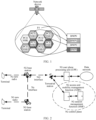
- FIG. 1 is a schematic diagram of four-color frequency division multiplexing applicable to an embodiment of this application.
- a BWP0 serves as a synchronization frequency band of a BWP1, a BWP2, and a BWP3, a synchronization signal block (synchronization signal block, SSB) is sent in the BWP0, and service communication is mainly performed in frequency bands of the BWP1, the BWP2, and the BWP3, where a PCI is a physical cell identifier (physical cell identifier, PCI).
- Beam switch When a terminal device is at an edge of a beam, because a signal capability of a used beam is weak, the terminal device needs to switch to a coverage area of a beam with a strong signal to perform data transmission.
- FIG. 2 is a diagram of an example of an application scenario applicable to an embodiment of this application.
- a terrestrial mobile terminal accesses a network by using a 5G new radio, and a 5G base station is deployed on a satellite, and is connected to a terrestrial core network over a radio link.
- the radio link exists between satellites, to implement signaling exchange and user data transmission between base stations.
- Network elements and interfaces thereof in FIG. 2 are described as follows: Terminal: Refer to descriptions related to the foregoing terminal device, and the terminal may access a satellite network through an air interface, and initiate services such as a call and an internet access.
- the 5G base station In a 5G system, the 5G base station mainly provides wireless access services, for example, schedules a radio resource to an access terminal, and provides a reliable wireless transmission protocol and a data encryption protocol.
- the 5G core network includes services such as user access control, mobility management, session management, user security authentication, and charging.
- the 5G core network includes a plurality of functional units, and may be divided into a control-plane functional entity and a data-plane functional entity.
- An access and mobility management unit (AMF) is responsible for user access management, security authentication, and the mobility management.
- a user plane unit (UPF) is responsible for managing user-plane data transmission, traffic statistics collection, and another function.
- Terrestrial station The terrestrial station is responsible for forwarding signaling and service data between a satellite and a 5G core network.
- the 5G new radio is a radio link between a terminal and a base station.
- the Xn interface is an interface between 5G base stations, and is mainly for signaling exchange such as switch.
- the NG interface is an interface between a 5G base station and a 5G core network, and is mainly for exchanging signaling, for example, non-access stratum (non-access stratum, NAS) of a core network, and exchanging service data of a user.
- NAS non-access stratum
- a solution applied to beam switch includes mapping a BWP to a beam, converting the beam switch into BWP switch, and performing BWP activation based on downlink control information (Downlink Control Information, DCI) and radio resource control (radio resource control, RRC) signaling, to implement the beam switch of the terminal device.
- DCI Downlink Control Information
- RRC radio resource control
- a satellite triggers beam switch based on UE grouping, to reduce signaling overheads of DCI.
- the following describes specific embodiments of a satellite communication method in this application.
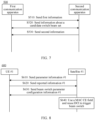
- FIG. 3 is a schematic flowchart of an example of a satellite communication method according to an embodiment of this application.
- S110 A plurality of first communication apparatuses including a first communication apparatus send a plurality of pieces of first information to a second communication apparatus.
- the plurality of pieces of first information are in one-to-one correspondence with the plurality of first communication apparatuses, and each piece of first information indicates a geographical location of a corresponding communication apparatus.
- the first communication apparatus may be a terminal device, and the second communication apparatus may be a satellite.
- the first information further indicates a movement state of the corresponding communication apparatus, where the movement state may include a movement speed and a movement direction.
- the second communication apparatus groups the plurality of first communication apparatuses based on the plurality of pieces of first information, to determine at least one device group.
- the following uses an example in which a group identifier #1 of a device group to which the first communication apparatus belongs is determined based on the first information sent by the first communication apparatus for description. There are two manners as follows:
- the second communication apparatus determines the group identifier #1 based on geographical location information of the first communication apparatus. For example, if the first communication apparatus is located in an area A (where a longitude is Aj, a latitude is Aw, and a height above the ground is Ah), the group identifier #1 is a. If the first communication apparatus is located in an area B (where a longitude is Bj, a latitude is Bw, and a height above the ground is Bh), the group identifier #1 is b.
- the first communication apparatus may be a communication apparatus at a fixed location, for example, a sensor.
- the second communication apparatus determines the group identifier #1 based on movement state information and geographical location information of the first communication apparatus. For example, if the first communication apparatus is located in an area A, a speed is v1, and the movement direction is a direction N, the group identifier #1 is av1N. If the first communication apparatus is located in an area A, a speed is v2, and the movement direction is a direction S, the group identifier #1 is av2S. If the first communication apparatus is located in an area B, a speed is v3, and the movement direction is a direction S, the group identifier #1 is bv3S.
- the first communication apparatus may report the geographical location information of the first communication apparatus at an interval of a period of time, and the second communication apparatus may update, in real time, the group identifier of the device group to which the first communication apparatus belongs.
- the second communication apparatus sends group identifiers corresponding to the plurality of communication apparatuses, and the plurality of communication apparatuses receive the group identifiers corresponding to the plurality of communication apparatuses.
- the second communication apparatus sends the group identifier #1 of a first device group to which the first communication apparatus belongs, and the first communication apparatus receives the group identifier #1.
- S140 The second communication apparatus determines second information.
- the second information includes the group identifier #1 of the first device group, and the second information indicates a communication apparatus in the first device group to perform beam switch, to switch to a first beam.
- the second information further includes information about the first beam.
- the information about the first beam may include an identifier of the first beam.
- the second communication apparatus sends the second information on a first resource, where the first resource is indicated by third information, and a first time-frequency resource occupied for transmission of the third information may be determined in the following manners.
- the second communication apparatus uses a part of or all of reserved time-frequency resources as the first time-frequency resource (where the first time-frequency resource is a time domain and frequency domain resource).
- An allocation manner may be semi-static allocation.
- the second communication apparatus may perform semi-static allocation on the first time-frequency resource occupied for the transmission of the third information.
- time-frequency resource allocation is performed by using a device group as a granularity. For example, at an interval of a period of time (which may be a periodicity), a part of or all of reserved time-frequency resources allocated to the device group to which the first communication apparatus belongs serve as the first time-frequency resource, and the third information is sent to the device group to which the first communication apparatus belongs on the first time-frequency resource. Communication apparatuses in the device group to which the first communication apparatus belongs can receive the third information on the first time-frequency resource. In other words, time-frequency resources on which communication apparatuses in a same device group receive the third information are the same.
- time-frequency resource allocation is performed by using a communication apparatus as a granularity. For example, at an interval of a period of time (which may be a periodicity), a part of or all of reserved time-frequency resources allocated to the first communication apparatus serve as the first time-frequency resource, and the third information is sent to the first communication apparatus on the first time-frequency resource.
- time-frequency resources on which communication apparatuses in a same device group receive the third information may be different.
- the second communication apparatus may notify, based on a system information block (system information block, SIB) message or a communication apparatus-specific RRC message, the first time-frequency resource that is semi-statically allocated to the first communication apparatus.
- SIB system information block
- the second communication apparatus calculates an ID of the first time-frequency resource based on the group identifier (group identifier #1) of the device group to which the first communication apparatus belongs.
- the ID of the first time-frequency resource is calculated based on the group identifier #1 by using a first function.
- the first function is a modulo function (mod).
- the second communication apparatus uses, in a semi-static allocation manner, a part of or all of reserved time-frequency resources as a resource #1, for sending the third information to all communication apparatuses that need to perform beam switch, where all the communication apparatuses that need to perform beam switch include the first communication apparatus.
- the first time-frequency resource occupied by the third information sent to the first communication apparatus is a part of the resource #1, and then the first time-frequency resource is calculated, based on the group identifier #1 corresponding to the first communication apparatus, by using a first function.
- resources allocated for sending the third information by the second communication apparatus to all the communication apparatuses that need to perform beam switch are a time-frequency resource #A.
- the time-frequency resource #A includes five parts, and a resource ID set of the five parts is ⁇ 0, 1, 2, 3, 4 ⁇ .
- the first function may be a modulo function (mod).
- y (x) mod (a), where a is a positive integer, and a may be a size of the ID set of the time-frequency resource.
- Correspondences between group identifiers of different device groups and different resource IDs are preconfigured in the second communication apparatus and the first communication apparatus. After the second communication apparatus notifies the group identifier #1 of the first communication apparatus, the first communication apparatus and the second communication apparatus may learn of the ID of the first time-frequency resource based on the correspondences. For example, the correspondences are configured in the second communication apparatus and the first communication apparatus in a table form, as shown in Table 1. Table 1 Group ID (group ID) Time-frequency resource ID 1 s1 2 s3 3 s2 4 s4 5 s5
- the ID of the first time-frequency resource is s1.
- the ID of the first time-frequency resource is s2.
- the second information further includes at least one of the following parameters: time at which the communication apparatus in the first device group starts to perform beam switch and a first time offset, where the first time offset is a time interval between time at which the communication apparatus in the first device group receives fourth information and time at which the communication apparatus in the first device group receives the third information, and the fourth information is updated information of the third information.
- the first time offset may also be understood as indicating time at which the communication apparatus in the first device group reads the fourth information on a semi-statically allocated resource.
- the fourth information being updated information of the third information may be understood as information that corresponds to beam switch performed by the communication apparatus in the first device group next time and that has a same function as the third information.
- the third information and the fourth information are scrambled by using a cell-level or beam-level radio network temporary identifier RNTI.
- the cell-level or beam-level RNTI may be one of currently reserved RNTIs.
- the second information is included in downlink control information DCI.
- the second information includes a first list, where the first list may include the group identifier of the first device group and a group identifier of a second device group.
- the second information is carried on a first media access control control element MAC CE, and a type of the second information is indicated by a logical channel identifier LCID value in a first MAC protocol data unit PDU.
- the second communication apparatus sends the second information.
- the second communication apparatus may further send the third information to the first communication apparatus.
- the first communication apparatus receives the second information, and determines, based on the second information, whether beam switch needs to be performed.
- the first communication apparatus may determine, based on whether the first list includes the identifier of the first device group, whether beam switch needs to be performed. If the first list includes the identifier of the first device group, beam switch is performed. If the first list does not include the identifier of the first device group, beam switch is not performed.
- the first communication apparatus may further receive the second information on a resource indicated by the third information.
- the first communication apparatus is a terminal device #1 (UE #1)
- the second communication apparatus is a satellite #1.
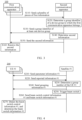
- FIG. 4 is a schematic flowchart of another example of a satellite communication method according to an embodiment of this application.
- S210 A satellite #1 sends parameter information #1, and a plurality of UEs including UE #1 receive the parameter information #1.
- the parameter information #1 includes parameter configuration information of one or more beams.
- the parameter configuration information corresponding to each beam may include one or more of the following information:
- the parameter information #1 may be carried in a broadcast message.
- S220 The plurality of UEs including the UE #1 send a plurality of pieces of reported information to the satellite #1.
- the following uses reported information #1 sent by the UE #1 as an example for description.
- the reported information #1 includes geographical location information and/or movement state information of the UE #1.
- the geographical location information of the UE #1 may be information about an area in which the UE #1 is located, for example, an area A.
- the movement state information of the UE #1 may be a movement speed and/or a movement direction of the UE #1.
- the movement direction is a direction of the UE when the UE moves, and may be an absolute direction on the earth, or may be a relative direction relative to a reference point.
- a unit of the movement speed may be a kilometer per hour (km/h).
- the reported information #1 may be carried in RRC signaling.
- the UE #1 may send the reported information #1 to the satellite #1 during the random access or after the random access is completed.
- the satellite #1 determines group identifiers (group IDs) of device groups to which the plurality of UEs including the UE #1 belong.
- the satellite #1 may determine, based on the plurality of pieces of reported information, the group identifiers of the device groups to which the plurality of UEs belong. For determining, based on the reported information #1, a group identifier #1 of the device group to which the UE #1 belongs, refer to Manner a and Manner b in the method 120.
- the group identifier (which may also be referred to as a group identifier corresponding to the UE #1) of the device group to which the UE #1 belongs may be updated based on a geographical location and/or a movement state of the UE#1.
- the group identifier corresponding to the UE#1 may be periodically or non-periodically redetermined at an interval of a period of time based on the geographical location and/or the movement state reported by the UE #1.
- Manner a and Manner b Details are not described herein again in this application.
- S240 The satellite #1 sends grouping information #1, and the plurality of UEs including the UE #1 receive the grouping information #1.
- the grouping information #1 includes group identifiers corresponding to the plurality of UEs.
- the following uses the UE #1 as an example for description.
- the grouping information #1 may be carried in a random access message 4 (message 4, Msg4).
- the grouping information #1 may further be carried in a UE-specific radio resource control (UE-specific radio resource control, UE-specific RRC) message.
- UE-specific radio resource control UE-specific radio resource control, UE-specific RRC
- the satellite #1 triggers the beam switch based on a grouping status of the plurality of UEs including the UE #1.
- Step a The satellite #1 selects one of reserved (reserved) radio network temporary identifiers (radio network temporary identifiers, RNTIs) as a scrambling ID of beam switch control information.
- radio network temporary identifiers radio network temporary identifiers, RNTIs
- the reserved RNTIs include FFF0 to FFFD, and FFFD may serve as the scrambling ID of the beam switch control information.
- FFFD may serve as the scrambling ID of the beam switch control information. The following uses FFFD as the scrambling ID of the beam switch control information for description.
- Step b The satellite #1 sends, on a time-frequency resource #1, a trigger message #1 to UE in the device group to which the UE #1 belongs.
- the following uses the UE #1 as an example for description.
- the trigger message #1 includes beam switch control information #1 (where the beam switch control information #1 represents a specific piece of beam switch control information, and "#" in other parts of this application is similar to that in this description).
- the beam switch control information #1 is used to schedule transmission of beam switch information #1, and the beam switch control information #1 may include time-frequency resource information of the beam switch information #1.
- the trigger message #1 may be scrambled by using FFFD.
- the beam switch information #1 indicates the plurality of UEs including the UE #1 to perform beam switch.
- Each beam switch parameter group in the beam switch information #1 corresponds to one device group, and each beam switch parameter group may include one or more of the following parameters:
- the target beam ID and the beam switch time in a beam switch parameter group are determined by the satellite based on a geographical location and/or a movement state of the device group to which the UE belongs. There may be the following manners.
- the satellite determines, based on the geographical location of the device group to which the UE belongs, the target beam ID and the beam switch time for performing beam switch by the group to which the UE belongs. For example, after moving from another area to the area A, the UE group reports a geographical location to the satellite. After determining a group identifier based on the geographical location of the UE group, the satellite determines, based on beam coverage quality of the geographical location, a target beam ID to which the UE group needs to switch to.
- the time at which the UE group performs beam switch may be time at which the UE group receives the beam switch information #1, or the satellite may specify a specific moment as the beam switch time.
- UE in the group to which the UE belongs is UE at a fixed location, and due to movement of the satellite #1, a beam covering the UE group is changed into a beam coverage area of a satellite #2.
- the satellite #1 determines that the target beam ID for the UE group to perform beam switch is a beam ID in the beam coverage area of the satellite #2.
- the time at which the UE group performs beam switch may be a moment at which the satellite #2 moves until the beam ID can cover the UE group.
- the satellite determines, based on the movement state and the geographical location of the device group to which the UE belongs, the target beam ID and the beam switch time for performing beam switch by the group to which the UE belongs.
- beams in the coverage area A include the beam #1 and the beam #2.
- the group of UEs is currently in a coverage area of the beam #1. It is determined, based on a movement speed and a movement direction of the group of UEs, that the group of UEs moves to a coverage area of the beam #2 in the area A after time A elapses.
- an ID of the beam #2 may serve as the target beam ID
- the time A may serve as the beam switch time.
- content of the beam switch information #1 may be shown as follows:
- Beam-switch-info in the beam switch information #1 represents beam switch information
- Group-switch-List included in the beam switch information #1 represents a group identifier list of the device group to which the UE that needs to perform beam switch belongs.
- maxGroupNumber in the beam switch information #1 represents a quantity of device groups that need to perform beam switch.
- ENUMERATED ⁇ ⁇ in the beam switch information #1 represents that a value in the list is used, and "ms" represents a millisecond, for example, "2 ms” represents 2 milliseconds. It should be noted that the value in the ENUMERATED ⁇ ⁇ list is merely an example for description. This is not limited in this application. For example, the value in the ENUMERATED ⁇ list may be less than "2 ms", or may be greater than "2560 ms”.
- OPTIONAL in the beam switch information #1 represents another parameter that may be obtained from Group-switch-Info.
- the Group-switch-Info in the beam switch information #1 represents a beam switch parameter group corresponding to one device group.
- the device group to which the UE #1 belongs is used as an example.
- a beam switch parameter group corresponding to the device group to which the UE #1 belongs includes the following parameters:
- the time-frequency resource #1 may be a trigger occasion (trigger occasion, TO).
- the time-frequency resource #1 may be determined in the following three manners.
- the satellite #1 uses a part of or all of reserved time-frequency resources as the time-frequency resource #1.
- An allocation manner may be semi-static allocation.
- time-frequency resource allocation is performed by using a device group as a granularity. For example, at an interval of a period of time (which may be a periodicity), a part of or all of the reserved time-frequency resources allocated to the device group to which the UE #1 belongs serve as the time-frequency resource #1.
- the trigger message #1 is sent on the time-frequency resource #1 to the device group to which the UE #1 belongs.
- the UE in the device group to which the UE #1 belongs can receive the trigger message #1 on the time-frequency resource #1. In other words, time-frequency resources on which UEs in a same group receive a trigger message are the same.
- time-frequency resource allocation is performed by using UE as a granularity. For example, at an interval of a period of time (which may be a periodicity), a part of or all of the reserved time-frequency resources allocated to the UE #1 serve as the time-frequency resource #1, and the trigger message #1 is sent on the time-frequency resource #1 to the UE #1.
- time-frequency resources on which UEs in a same group receive a trigger message may be different.
- the satellite #1 may notify, based on a system information block (system information block, SIB) message or a UE-specific RRC message, the time-frequency resource #1 that is semi-statically allocated to the UE #1.
- SIB system information block
- the satellite #1 calculates an ID of the time-frequency resource #1 based on the group identifier (group identifier #1) of the device group to which the UE #1 belongs.
- the ID of the time-frequency resource #1 is calculated based on the group identifier #1 by using a first function.
- the first function is a modulo function (mod).
- y [x/a]
- a is a positive integer
- a may be a size of the ID set of the time-frequency resources.
- the satellite #1 uses, in a semi-static allocation manner, a part of or all of the reserved time-frequency resources as a resource #1, for sending the trigger message to all UEs that need to perform beam switch, where all the UEs that need to perform beam switch include the UE #1.
- the time-frequency resource #1 occupied by the trigger message #1 sent to the UE #1 is a part of the resource #1, and then the time-frequency resource #1 is calculated, based on the group identifier #1 corresponding to the UE #1, by using the first function.
- resources allocated for sending the trigger message by the satellite #1 to all the UEs that need to perform beam switch are a time-frequency resource #A
- the time-frequency resource #A includes five parts
- a resource ID set of the five parts is ⁇ 0, 1, 2, 3, 4 ⁇ .
- the first function may be a modulo function (mod).
- y (x) mod (a)
- a is a positive integer
- a may be a size of the ID set of the time-frequency resource.
- Correspondences between group identifiers of different device groups and different resource IDs are preconfigured in the satellite #1 and the UE #1. After the satellite #1 notifies the group identifier #1 of the UE #1, the satellite #1 and the UE #1 may learn of the ID of the time-frequency resource #1 based on the correspondences. For example, the correspondences are configured in the satellite #1 and the UE #1 in a table form, as shown in Table 2.
- the ID of the time-frequency resource #1 is s1.
- the ID of the time-frequency resource #1 is s2.
- the satellite #1 when needing to trigger the beam switch, the satellite #1 occupies the time-frequency resource #1 for sending the trigger message #1. If the beam switch does not need to be triggered, the time-frequency resource #1 may be used for transmission of another service.
- the satellite #1 sends the beam switch control information #1 and the beam switch information #1, and the plurality of UEs including the UE #1 receive the beam switch control information #1 and the beam switch information #1.
- the beam switch control information #1 is carried in DCI.
- the beam switch control information #1 is carried in the RRC signaling.
- the UE #1 is used as an example.
- the UE #1 determines the beam switch information #1 based on the beam switch control information #1.
- the UE #1 detects, on the time-frequency resource #1, the beam switch control information #1 by using FFFD, and reads the beam switch information #1 on a resource on which the beam switch information #1 included in the beam switch control information #1 is located.
- Group-switch-List in the beam switch information #1 includes the group identifier of the device group to which the UE #1 belongs, the UE #1 performs beam switch based on the beam switch parameter group corresponding to the device group to which the UE #1 belongs.
- Group-switch-List in the beam switch information #1 does not include the group identifier of the device group to which the UE #1 belongs, the UE #1 does not perform beam switch.
- the beam switch is triggered by the satellite based on UE grouping.
- grouping the UEs can reduce signaling overheads of DCI consumed when a batch of UEs performs simultaneous switch.
- FIG. 5 is a schematic flowchart of another example of a satellite communication method according to an embodiment of this application.
- S310 A satellite #1 sends parameter information #1, and UE #1 receives the parameter information #1.
- S320 The UE #1 sends reported information #1 to the satellite #1.
- the satellite #1 triggers the beam switch based on a geographical location and/or a movement state of the UE #1. For example, when a movement range of the satellite #1 needs to go beyond an area A, the UE #1 in the area A needs to perform beam switch. Alternatively, when the movement state of the UE #1 changes, beam switch needs to be performed. For example, it is determined, based on the movement state of the UE #1, that a beam range of the UE #1 changes after a specific period of time, and beam switch needs to be performed. Alternatively, when the geographical location of the UE #1 changes, another beam range needs to be switched to. Specific steps are as follows: Step a: The satellite #1 selects one of reserved (reserved) RNTIs as a scrambling ID of beam switch control information.
- the reserved RNTIs include FFF0 to FFFD, and FFFD may serve as the scrambling ID of the beam switch control information.
- FFFD may serve as the scrambling ID of the beam switch control information. The following uses FFFD as the scrambling ID of the beam switch control information for description.
- Step b The satellite #1 sends, on a time-frequency resource #1a, a trigger message #1a, where the trigger message #1a is used to trigger the beam switch of the UE #1.
- the trigger message #1a includes beam switch control information #1a, where the beam switch control information #1a is used to schedule transmission of beam switch information #1a, and may include time-frequency resource information of the beam switch information #1a.
- the trigger message #1a may be scrambled by using FFFD.
- the beam switch information #1a indicates one or more UEs including the UE #1 to perform beam switch.
- Each beam switch parameter group in the beam switch information #1a may include one or more of the following parameters:
- content of the beam switch information #1a may be shown as follows:
- Beam-switch-info in the beam switch information #1a represents beam switch information
- UE-switch-List included in the beam switch information #1a represents an ID list of the UE that needs to perform beam switch.
- UE-switch-List in the beam switch information #1a represents a list of the UE that needs to perform beam switch. For other parameters, refer to descriptions in the beam switch information #1 in the method 200. Details are not described herein again.
- UE-switch-Info in the beam switch information #1a represents a beam switch parameter group corresponding to one UE.
- the UE #1 is used as an example.
- a beam switch parameter group corresponding to the UE #1 includes the following parameters:
- the time-frequency resource #1a may be a TO.
- the time-frequency resource #1a may be determined in the following three manners.
- the satellite #1 allocates a part of or all of reserved time-frequency resources that serve as the time-frequency resource #1a to the UE #1.
- An allocation manner may be semi-static allocation.
- time-frequency resource allocation is performed by using UE as a granularity. For example, at an interval of a period of time (which may be a periodicity), a part of or all of the reserved time-frequency resources allocated to the UE #1 serve as the time-frequency resource #1a, and the trigger message #1a is sent on the time-frequency resource #1a to the UE #1.
- time-frequency resources on which UEs with different IDs receive a trigger message may be different.
- the satellite #1 may notify, based on a UE-specific RRC message, the time-frequency resource #1a that is semi-statically allocated to the UE #1.
- the satellite #1 calculates an ID of the time-frequency resource #1a based on the ID of the UE #1.
- the ID of the time-frequency resource #1a is calculated based on the ID of the UE #1 by using the first function.
- the ID of the time-frequency resource #1a is calculated based on the ID of the UE #1 by using the first function.
- the first function For a specific manner, refer to descriptions of calculating the ID of the time-frequency resource #1 based on the group identifier of the UE #1 by using the first function in the manner e in S250. Details are not described herein again in this application.
- the satellite #1 uses, in a semi-static allocation manner, a part of or all of reserved time-frequency resources as a resource #1a, for sending the trigger message to all UEs that need to perform beam switch, where all the UEs that need to perform beam switch include the UE #1.
- the time-frequency resource #1a occupied by the trigger message #1a sent to the UE #1 is a part of the resource #1a, and then the time-frequency resource #1a is calculated based on the ID of the UE #1 by using the first function.
- the first function For a specific manner, refer to descriptions of calculating the ID of the time-frequency resource #1 based on the group identifier of the UE #1 by using the first function in the manner f in S250. Details are not described again in this application.
- Correspondences between different UE IDs and different resource IDs are preconfigured in the satellite #1 and the UE #1.
- the satellite #1 and the UE #1 may learn of the ID of the time-frequency resource #1a based on the correspondences.
- the correspondences are configured in the satellite #1 and the UE #1 in a table form, as shown in Table 3.
- the ID of the UE #1 is 1, the ID of the time-frequency resource #1a obtained by the UE based on Table 3 is s1.
- the satellite #1 when needing to trigger the beam switch, the satellite #1 occupies the time-frequency resource #1a for sending the trigger message #1a. If the beam switch does not need to be triggered, the time-frequency resource #1a may be used for transmission of another service.
- the satellite #1 sends the beam switch control information #1a and the beam switch information #1a, and the UE #1 receives the beam switch control information #1a and the beam switch information #1a.
- the beam switch control information #1a may be carried in RRC signaling.
- the beam switch control information #1a may be carried in DCI.
- the UE #1 determines the beam switch information #1a based on the beam switch control information #1a.
- the UE #1 detects, on the time-frequency resource #1a, the beam switch control information #1a by using FFFD, and reads the beam switch information #1a on a resource on which the beam switch information #1a included in the beam switch control information #1a is located.
- UE-switch-List in the beam switch information #1a includes the ID of the UE #1, the UE #1 performs beam switch based on the beam switch parameter group corresponding to the UE #1.
- UE-switch-List in the beam switch information #1a does not include the ID of the UE #1, the UE #1 does not perform beam switch.
- the satellite may communicate the beam switch information at an RRC layer, or may send the beam switch information by using a media access control protocol data unit (media access control protocol data unit, MAC PDU).
- a media access control protocol data unit media access control protocol data unit, MAC PDU.
- FIG. 6 is a schematic flowchart of another example of a satellite communication method according to an embodiment of this application.
- S410 A satellite #1 sends parameter information #1, and a plurality of UEs including UE #1 receive the parameter information #1.
- S420 The plurality of UEs including the UE #1 send a plurality of pieces of reported information to the satellite #1.
- the following uses reported information #1 sent by UE #1 as an example for description.
- S430 The satellite #1 triggers beam switch.
- the satellite #1 triggers the beam switch based on a grouping status of the plurality of UEs including the UE #1.
- Step a The satellite #1 selects a logical channel identifier (logical channel identifier, LCID) that is not used currently, as an indication for the beam switch.
- a logical channel identifier logical channel identifier, LCID
- LCID values 33 to 46 are not used, and one value may be selected as the indication.
- LCID 33 indicates the beam switch.
- Table 4 Index (index) LCID value (LCID value) 0 Common control channel (common control channel, CCCH) 1 to 32 Logical channel identifier (logical channel identifier) 33 to 46 Reserved (reserved) 47 Recommended bit rate (recommended bit rate) ... ... 63 Padding (padding)
- Step b Use a MAC control element (MAC control element, MAC CE) to carry beam switch information #1b.
- MAC control element MAC control element, MAC CE
- a MAC CE with a variable header may be used in one MAC PDU to carry the beam switch information #1b.
- a beam switch parameter group in the beam switch information #1b includes a group identifier of a device group and a target beam ID (where a quantity of bits of different parameters may be determined based on a protocol design).
- R represents "empty”.
- the satellite #1 sends the beam switch information #1b, and the plurality of UEs including the UE #1 receive the beam switch information #1b.
- the UE #1 is used as an example.
- the UE #1 determines the beam switch information #1b.
- the UE #1 performs beam switch. If the beam switch information #1b does not include a group identifier of a device group to which the UE #1 belongs, the UE #1 does not perform beam switch.
- the method 400 an example in which a satellite triggers the beam switch based on UE grouping (where a UE group is used as a granularity) is used to describe use of the MAC PDU for indicating the beam switch.
- the beam switch may alternatively be triggered by using UE as a granularity, and the MAC PDU indicates the beam switch. In this way, an effect of improving beam switch accuracy can also be achieved.
- the method 400 For a specific manner, refer to the method 400. Details are not described herein again in this application.
- FIG. 7 is a schematic flowchart of another example of a satellite communication method according to an embodiment of this application.
- S510 A first communication apparatus sends first information to a second communication apparatus, and the second communication apparatus receives the first information.
- the first information may indicate a geographical location of the first communication apparatus.
- the first information may further indicate a movement state of the first communication apparatus, where the movement state may include a movement speed and a movement direction.
- S520 The second communication apparatus sends information about a candidate switch beam set, and the first communication apparatus receives the information about the candidate switch beam set.
- the information about the candidate switch beam set is determined by the second communication apparatus based on the first information.
- the candidate switch beam set may be a subset of one switch beam set.
- the candidate switch beam set may be indicated based on the first information, and second information indicates one first beam from the candidate switch beam set. In this way, one first beam is selected from a larger switch beam set without increasing signaling overheads of the second information.
- the information about the candidate switch beam set is carried in a first media access control control element MAC CE.
- S530 The second communication apparatus sends the second information, and the first communication apparatus receives the second information.
- the second information indicates the first communication apparatus to switch to the first beam in the candidate switch beam set, where the first beam is one of beams supported by the second communication apparatus.
- the second information includes an identifier of the first beam or an index corresponding to the candidate switch beam set, and is included in first downlink control information DCI.
- the first DCI may be scrambled by using a cell-level or beam-level radio network temporary identifier RNTI, or a frequency domain resource assignment (frequency domain resource assignment) field may be set to all 0s, representing that the first DCI indicates beam switch.
- RNTI cell-level or beam-level radio network temporary identifier
- a frequency domain resource assignment (frequency domain resource assignment) field may be set to all 0s, representing that the first DCI indicates beam switch.
- the first DCI is reused for indicating the communication apparatus to perform beam switch.
- the first DCI may be DCI that indicates the first communication apparatus to change from an idle (idle) state to a connected (connected) state.
- the following describes the method 500 in detail by using an example in which the first communication apparatus is UE #1, and the second communication apparatus is a satellite #1.
- FIG. 8 is a schematic flowchart of another example of a satellite communication method according to an embodiment of this application. As shown in the method 600 in FIG. 8 , details are as follows: S610: A satellite #1 sends parameter information #1, and UE #1 receives the parameter information #1.
- S620 The UE #1 sends reported information #1 to the satellite #1.
- the satellite #1 sends beam switch parameter configuration information #1, and the UE #1 receives the beam switch parameter configuration information #1.
- the beam switch parameter configuration information #1 includes a plurality of beam switch parameter groups.
- Each beam switch parameter group includes at least one of the following parameters:
- an example format of the beam switch parameter configuration information #1 is as follows:
- Beam-switch-list represents a beam switch list, that is, an index set of beam switch parameter groups.
- maxNumber represents a maximum quantity of beam switch parameter groups.
- Beam-switch-Info represents one beam switch parameter group.
- Other parameters refer to the beam switch information #1 in the method 200 or the beam switch information #1a in the method 300. Details are not described herein again.
- the beam parameter configuration information #1 may be carried in UE-specific RRC signaling.
- S640 The satellite #1 triggers beam switch.
- the satellite #1 triggers the beam switch based on a geographical location and/or a movement state of the UE #1. For example, when a movement range of the satellite #1 needs to go beyond an area A, the UE #1 in the area A needs to perform beam switch. Alternatively, when the movement state of the UE #1 changes, beam switch needs to be performed. For example, it is determined, based on the movement state of the UE #1, that a beam range of the UE #1 changes after a specific period of time, and beam switch needs to be performed. Alternatively, when the geographical location of the UE #1 changes, another beam range needs to be switched to.
- Step a The satellite #1 indicates, by setting a field in a MAC CE #1, a set of candidate switch beam parameter groups (which may also be referred to as a set of candidate switch beams) used by the UE #1 for performing beam switch.
- a set of candidate switch beam parameter groups (which may also be referred to as a set of candidate switch beams) used by the UE #1 for performing beam switch.
- the satellite configures 8 pieces of Beam-switch-Info (where there may alternatively be 4 pieces of Beam-switch-Info, a quantity of Beam-switch-Info is not limited in this application, and each piece of Beam-switch-Info corresponds to one beam switch parameter group) for the UE #1 based on the beam parameter configuration information #1.
- the 8 pieces of Beam-switch-Info correspond to 8 bits in the field in the MAC CE #1, as shown in Table 6.
- Table 6 R LCID 33 Switch 1 Switch 2 Switch 3 Switch 4 Switch 5 Switch 6 Switch 7 Switch 8
- R represents "empty", and an LCID value being 33 indicates that the MAC CE indicates the beam switch.
- Switch 1 to switch 8 correspond to the 8 pieces of Beam-switch-info.
- This may also be understood as: 8 beam switch parameter groups correspond to 8 bits.
- a value of a bit being 0 may represent that a beam switch manner corresponding to the bit is not activated.
- a value of a bit being 1 may represent that a beam switch manner corresponding to the bit is activated.
- the field in the MAC CE #1 being 01010101 represents that second, fourth, sixth, and eighth pieces of Beam-switch-info corresponding to the field are activated.
- the second, fourth, sixth, and eighth pieces of Beam-switch-info corresponding to the field serve as the set of candidate switch beam parameter groups.
- Step b The satellite #1 reuses DCI, indicating to select one beam switch parameter group from the set of candidate switch beam parameter groups for the UE #1 to perform beam switch.
- the satellite #1 may reuse a bandwidth part indicator (bandwidth part indicator) field in DCI #1, and a maximum length of the field is 2 bits.
- a value 00 of the field may correspond to the second piece of Beam-switch-info
- a value 01 of the field may correspond to the fourth piece of Beam-switch-info
- a value 10 of the field may correspond to the sixth piece of Beam-switch-info
- a value 11 of the field may correspond to the eighth piece of Beam-switch-info.
- the value 11 of the field indicates the UE #1 to perform beam switch based on a configuration of Beam-switch-info corresponding to switch 8.
- the field in the MAC CE #1 indicates that the second and fourth pieces of Beam-switch-info serve as the set of candidate switch beam parameter groups, only 1 bit in the field may be reused.
- a value 0 of the bit corresponds to the second piece of Beam-switch-info
- a value 1 of the bit corresponds to the fourth piece of Beam-switch-info.
- the field in the MAC CE indicates one piece or three pieces of Beam-switch-info to be activated, a manner of reusing a field in the DCI is similar to the foregoing manner. Details are not described herein again in this application.
- the method 200, the method 300, the method 400, the method 500, and the method 600 are embodiments in which when the UE is in the connected (connected) state, the satellite triggers the beam switch.
- This application further provides a manner in which a satellite triggers beam switch by reusing DCI, when UE is in an idle (idle) state, has no data to be scheduled, and needs to perform beam switch.
- FIG. 8 is a schematic flowchart of another example of a satellite communication method according to an embodiment of this application.
- S710 A satellite #1 sends parameter information #1, and UE #1 receives the parameter information #1.
- S720 The UE #1 sends reported information #1 to the satellite #1.
- S730 The satellite #1 triggers beam switch.
- the satellite #1 determines, based on a geographical location and/or a movement state of the UE #1, an occasion for triggering the UE #1 to perform beam switch. For example, when a movement range of the satellite #1 needs to go beyond an area A, the UE #1 in the area A needs to perform beam switch. Alternatively, when the movement state of the UE #1 changes, beam switch needs to be performed. For example, it is determined, based on the movement state of the UE #1, that a beam range of the UE #1 changes after a specific period of time, and beam switch needs to be performed. Alternatively, when the geographical location of the UE #1 changes, another beam range needs to be switched to. The following uses the UE #1 as an example for description. Specific steps are as follows: Step a: Determine a beam switch parameter group #1.
- Step b Reuse a field in DCI #1 for waking up the UE #1 to send the beam switch parameter group #1.
- a frequency domain resource assignment (frequency domain resource assignment) field in the DCI #1 may be set to all 0s, representing that the DCI #1 indicates the beam switch.
- a remaining field in the DCI #1 is interpreted in the following manners.
- 5 bits indicate a target beam ID, and 5 bits indicate a time offset.
- the time offset is an offset between a moment at which the UE #1 receives the DCI #1 and a moment at which the UE #1 starts to perform beam switch.
- a unit may be a slot (slot), an SFN, a millisecond, or the like. Remaining 17 bits are reserved.
- 5 bits indicate an index (for example, the index of Beam-switch-info in the beam switch parameter configuration information in the method 530) corresponding to a beam switch parameter group. Remaining 22 bits are reserved.
- 5 bits indicate an index (for example, the index of Beam-switch-info in the beam switch parameter configuration information in the method 530) corresponding to a beam switch parameter group, and 5 bits indicate a time offset.
- the time offset may be an offset between a moment at which the UE #1 receives the DCI #1 and a moment at which the UE #1 starts to perform beam switch.
- a unit may be a slot (slot), an SFN, a millisecond, or the like. Remaining 17 bits are reserved.
- the DCI #1 refers to the bandwidth part indicator (bandwidth part indicator) field reused in the DCI #1 in step b in S640, to indicate to select one beam switch parameter group from a set of candidate switch beam parameter groups for the UE #1 to perform beam switch.
- bandwidth part indicator bandwidth part indicator
- Step c Scramble the DCI #1 by using a cell radio network temporary identifier (cell radio network temporary identifier, C-RNTI).
- a cell radio network temporary identifier cell radio network temporary identifier, C-RNTI
- the satellite #1 sends the DCI #1, and the UE #1 receives the DCI #1.
- the UE #1 interprets the DCI #1 based on one of the manner 1, the manner 2, the manner 3, and the manner 4, determines the beam switch parameter group #1, and performs beam switch based on the beam switch parameter group #1.
- FIG. 10 and FIG. 11 are possible schematic diagrams of structures of communication apparatuses according to embodiments of this application. These communication apparatuses can implement a function of the terminal device or the satellite (which may also be referred to as the network device) in the foregoing method embodiments, and therefore can also achieve beneficial effects of the foregoing method embodiments.
- the communication apparatuses may be the first communication apparatus in the method 100, may be the second communication apparatus in the method 100, or may be a module (such as a chip) used in a first communication apparatus or a second communication apparatus.
- a communication apparatus 800 includes a transceiver module 801 and a processing module 802.
- the communication apparatus 800 may be configured to implement a function of the first communication apparatus or the second communication apparatus in the method embodiment shown in FIG. 3 .
- the transceiver module 801 is configured to send first information, where the first information indicates a geographical location of the first communication apparatus.
- the transceiver module 801 is further configured to receive second information, where the second information indicates that the first communication apparatus belongs to a first device group, the first device group corresponds to the geographical location of the first communication apparatus, and the second information includes a group identifier of the first device group.
- the transceiver module 801 is further configured to receive third information, where the third information includes a group identifier of a second device group and an identifier of a first beam, and the third information indicates a communication apparatus in a device group indicated by the group identifier of the second device group to switch to the first beam.
- the processing module 802 is configured to: if the group identifier of the first device group is the same as the group identifier of the second device group, switch, by the first communication apparatus, to the first beam.
- the transceiver module 801 is configured to receive a plurality of pieces of first information, where the plurality of pieces of first information are in one-to-one correspondence with a plurality of first communication apparatuses, and each piece of first information includes geographical location information of a corresponding first communication apparatus.
- the transceiver module 801 is further configured to send a group identifier of a first device group to which a first communication apparatus belongs, where the first communication apparatus is one of the plurality of communication apparatuses, and the first device group belongs to one of at least one device group determined by the processing module 802 by grouping, based on the plurality of pieces of first information, the plurality of communication apparatuses.
- the transceiver module 801 is further configured to send second information, where the second information includes the group identifier of the first device group, and the second information indicates a communication apparatus in the first device group to perform beam switch, to switch to a first beam.
- the transceiver module 801 is configured to send first information, where the first information includes geographical location information of the first communication apparatus, and the first information is used by a second communication apparatus to determine information about a candidate switch beam set of first UEs.
- the transceiver module 801 is further configured to receive the information about the candidate switch beam set.
- the transceiver module 801 is further configured to receive second information, where the second information indicates the first communication apparatus to switch to a first beam in the candidate switch beam set, and the first beam is one of beams supported by the second communication apparatus.
- the processing module 802 is configured to perform beam switch based on the second information, to switch to the first beam.
- the transceiver module 801 is configured to receive first information, where the first information includes geographical location information of a first communication apparatus.
- the transceiver module 801 is further configured to send information about a candidate switch beam set, where the information about the candidate switch beam set is determined based on the first information.
- the transceiver module 801 is further configured to send second information, where the second information indicates the first communication apparatus to switch to a first beam in the candidate switch beam set, and the first beam is one of beams supported by the second communication apparatus.
- the processing module 802 is configured to determine the information about the candidate switch beam set based on the first information.
- transceiver module 801 and the processing module 802 refer to related descriptions in the foregoing method embodiments. Details are not described herein again.
- a communication apparatus 900 includes a processor 910 and an interface circuit 920.
- the processor 910 and the interface circuit 920 are coupled to each other.
- the interface circuit 920 may be a transceiver or an input/output interface.
- the communication apparatus 900 may further include a memory 930, configured to store instructions executed by the processor 910, or store input data for the processor 910 to run instructions, or store data generated after the processor 910 runs instructions.
- the memory 930 and the processor 910 may be integrated together, or may be independent components.
- the processor 910 is configured to perform functions of the processing module 802 and the interface circuit 920 is configured to perform functions of the transceiver module 801.
- the chip in the first communication apparatus implements a function of the first communication apparatus in the foregoing method embodiments.
- the chip in the first communication apparatus receives information from another module (for example, a radio frequency module or an antenna) in the first communication apparatus, where the information is sent by a second communication apparatus (for example, a satellite) to the first communication apparatus.
- the chip in the first communication apparatus sends information to another module (for example, a radio frequency module or an antenna) in the first communication apparatus, where the information is sent by the first communication apparatus to a second communication apparatus.
- the chip in the second communication apparatus implements a function of the second communication apparatus in the foregoing method embodiments.
- the chip in the second communication apparatus receives information from another module (for example, a radio frequency module or an antenna) in the second communication apparatus, where the information is sent by a first communication apparatus (for example, a satellite) to the second communication apparatus.
- the chip in the second communication apparatus sends information to another module (for example, a radio frequency module or an antenna) in the second communication apparatus, where the information is sent by the second communication apparatus to a first communication apparatus.
- the processor in this embodiment of this application may be a central processing unit (central processing unit, CPU), or may be another general-purpose processor, a digital signal processor (digital signal processor, DSP), an application-specific integrated circuit (application-specific integrated circuit, ASIC), a field programmable gate array (field programmable gate array, FPGA) or another programmable logic device, a transistor logic device, a hardware component, or any combination thereof.
- the general-purpose processor may be a microprocessor, or may be any regular processor.
- Method steps in embodiments of this application may be implemented in a hardware manner, or may be implemented in a manner of executing software instructions by the processor.
- the software instructions may include a corresponding software module.
- a software module may be stored in a random access memory (random access memory, RAM), a flash memory, a read-only memory (read-only memory, ROM), a programmable read-only memory (programmable ROM, PROM), an erasable programmable read-only memory (erasable PROM, EPROM), an electrically erasable programmable read-only memory (electrically EPROM, EEPROM), a register, a hard disk drive, a removable hard disk drive, a CD-ROM, or any other form of storage medium well-known in the art.
- RAM random access memory
- ROM read-only memory
- PROM programmable read-only memory
- EPROM erasable programmable read-only memory
- electrically erasable programmable read-only memory electrically EPROM, EEPROM
- a storage medium is coupled to a processor, to enable the processor to read information from the storage medium and write information into the storage medium.
- the storage medium may be a component of the processor.
- the processor and the storage medium may be disposed in the ASIC.
- the ASIC may be disposed in an access network device or a terminal device.
- the processor and the storage medium may exist, as discrete components, in the access network device or the terminal device.
- All or a part of the foregoing embodiments may be implemented by using software, hardware, firmware, or any combination thereof.
- the software is used to implement the embodiments, all or a part of the embodiments may be implemented in a form of a computer program product.
- the computer program product includes one or more computer programs or instructions. When the one or more computer programs or the instructions is/are loaded and executed on a computer, all or a part of the procedures or functions in embodiments of this application are performed.
- the computer may be a general-purpose computer, a special-purpose computer, a computer network, or another programmable apparatus.
- the one or more computer programs or the instructions may be stored in a computer-readable storage medium, or may be communicated by using the computer-readable storage medium.
- the computer-readable storage medium may be any usable medium accessible by the computer, or a data storage device such as a server integrating one or more usable media.
- the usable medium may be a magnetic medium, for example, a floppy disk, a hard disk drive, or a magnetic tape, may be an optical medium, for example, a DVD, or may be a semiconductor medium, for example, a solid state drive (solid state drive, SSD).
- "at least one” means one or more, and "a plurality of” means two or more than two.
- "And/or” describes an association relationship between associated objects, and represents that three relationships may exist. For example, A and/or B may represent the following cases: Only A exists, both A and B exist, and only B exists, where A and B may be singular or plural.
- the character “/” usually represents an “or” relationship between the associated objects. In a formula in this application, the character “/” represents a "division" relationship between the associated objects.
Landscapes
- Engineering & Computer Science (AREA)
- Computer Networks & Wireless Communication (AREA)
- Signal Processing (AREA)
- Physics & Mathematics (AREA)
- Astronomy & Astrophysics (AREA)
- Aviation & Aerospace Engineering (AREA)
- General Physics & Mathematics (AREA)
- Mobile Radio Communication Systems (AREA)
Applications Claiming Priority (2)
| Application Number | Priority Date | Filing Date | Title |
|---|---|---|---|
| CN202110496068.3A CN115314098A (zh) | 2021-05-07 | 2021-05-07 | 一种卫星通信方法和装置 |
| PCT/CN2022/085738 WO2022233215A1 (fr) | 2021-05-07 | 2022-04-08 | Procédé et appareils de communication par satellite |
Publications (2)
| Publication Number | Publication Date |
|---|---|
| EP4336747A1 true EP4336747A1 (fr) | 2024-03-13 |
| EP4336747A4 EP4336747A4 (fr) | 2024-12-11 |
Family
ID=83853587
Family Applications (1)
| Application Number | Title | Priority Date | Filing Date |
|---|---|---|---|
| EP22798556.1A Pending EP4336747A4 (fr) | 2021-05-07 | 2022-04-08 | Procédé et appareils de communication par satellite |
Country Status (4)
| Country | Link |
|---|---|
| US (1) | US12581507B2 (fr) |
| EP (1) | EP4336747A4 (fr) |
| CN (1) | CN115314098A (fr) |
| WO (1) | WO2022233215A1 (fr) |
Families Citing this family (5)
| Publication number | Priority date | Publication date | Assignee | Title |
|---|---|---|---|---|
| US20250047372A1 (en) * | 2021-11-08 | 2025-02-06 | Google Llc | Assisted beam tracking for user equipment |
| CN118102399A (zh) * | 2022-11-28 | 2024-05-28 | 中国移动通信有限公司研究院 | 一种切换方法及装置、网络设备、ue |
| US20240405852A1 (en) * | 2023-06-01 | 2024-12-05 | Qualcomm Incorporated | Beam management for non-terrestrial network communication |
| EP4732552A1 (fr) * | 2023-10-05 | 2026-04-29 | Huawei Technologies Co., Ltd. | Procédés, dispositifs, support lisible par ordinateur, appareil et produit de programme d'ordinateur pour communication basée sur l'emplacement |
| CN119892196A (zh) * | 2024-08-02 | 2025-04-25 | 荣耀终端股份有限公司 | 波束切换方法及通信装置 |
Family Cites Families (11)
| Publication number | Priority date | Publication date | Assignee | Title |
|---|---|---|---|---|
| CN104335636B (zh) * | 2012-11-27 | 2019-04-19 | 华为技术有限公司 | 数据传输方法和设备及系统 |
| US9762314B2 (en) * | 2015-05-01 | 2017-09-12 | Qualcomm Incorporated | Handoff for non-geosynchronous satellite communication |
| US9888426B2 (en) * | 2015-05-01 | 2018-02-06 | Qualcomm Incorporated | Handoff for satellite communication |
| EP4340251A3 (fr) * | 2016-11-02 | 2024-05-22 | InterDigital Patent Holdings, Inc. | Gestion de faisceau basée sur un groupe |
| CN114666904B (zh) * | 2017-08-11 | 2026-02-13 | 华为技术有限公司 | 通信方法及装置 |
| US11146327B2 (en) * | 2017-12-29 | 2021-10-12 | Hughes Network Systems, Llc | Machine learning models for adjusting communication parameters |
| WO2020062092A1 (fr) * | 2018-09-28 | 2020-04-02 | Nokia Shanghai Bell Co., Ltd. | Procédé, dispositif, et support lisible par ordinateur destiné à prendre en charge un accès satellite |
| KR20200086623A (ko) * | 2019-01-08 | 2020-07-17 | 주식회사 케이티 | 비지상 네트워크를 이용하여 통신을 수행하는 방법 및 그 장치 |
| US12035189B2 (en) * | 2019-01-11 | 2024-07-09 | Telefonaktiebolaget Lm Ericsson (Publ) | System and method for facilitating index-based positioning in a non-terrestrial network |
| CN110636609A (zh) * | 2019-10-23 | 2019-12-31 | 广州爱浦路网络技术有限公司 | 基于卫星网络终端寻呼优化的方法 |
| US11330668B2 (en) * | 2019-11-22 | 2022-05-10 | Apple Inc. | 5G NR FR2 beam management enhancements |
-
2021
- 2021-05-07 CN CN202110496068.3A patent/CN115314098A/zh active Pending
-
2022
- 2022-04-08 EP EP22798556.1A patent/EP4336747A4/fr active Pending
- 2022-04-08 WO PCT/CN2022/085738 patent/WO2022233215A1/fr not_active Ceased
-
2023
- 2023-11-06 US US18/502,608 patent/US12581507B2/en active Active
Also Published As
| Publication number | Publication date |
|---|---|
| CN115314098A (zh) | 2022-11-08 |
| WO2022233215A1 (fr) | 2022-11-10 |
| US20240073926A1 (en) | 2024-02-29 |
| US12581507B2 (en) | 2026-03-17 |
| EP4336747A4 (fr) | 2024-12-11 |
Similar Documents
| Publication | Publication Date | Title |
|---|---|---|
| EP4336747A1 (fr) | Procédé et appareils de communication par satellite | |
| US11452069B2 (en) | Communication method and communications device | |
| US11064456B2 (en) | Wireless communication method, device, chip and system | |
| EP3043607B1 (fr) | Procédé et dispositif pour téléavertir un équipement utilisateur | |
| US11233558B2 (en) | Beam tracking method, terminal device, and network-side device | |
| CN113491159B (zh) | 无线通信方法、终端设备和网络设备 | |
| EP4192150A1 (fr) | Procédé de transmission de canal, dispositif terminal et dispositif de réseau | |
| US20140120926A1 (en) | Method of operating base station and terminal in cellular telecommunication system for operating multiple beams | |
| US11076379B2 (en) | Paging method and apparatus | |
| TWI423715B (zh) | 處理接收系統資訊功能的方法及其相關通訊裝置 | |
| CN112584412B (zh) | 一种波束切换的方法、装置及通信设备 | |
| EP4568354A1 (fr) | Procédé et appareil de communication | |
| CN115103393B (zh) | 物理信道监测方法和终端设备 | |
| EP3876620A1 (fr) | Procédé et appareil d'indication de ressource ainsi que système de communication | |
| EP3507914A1 (fr) | Procédés de signalisation ou de réception d'identité de cellule, d'identité de réseau et de motifs de saut de fréquence | |
| CN116234038B (zh) | 一种状态转换方法及装置、通信设备 | |
| CN115334662B (zh) | 数据传输方法、装置及设备 | |
| US20240298256A1 (en) | Communication method and communication apparatus | |
| CN118338366A (zh) | 通信系统及通信终端装置 | |
| US20240243848A1 (en) | Communication method and apparatus | |
| WO2026060656A1 (fr) | Procédé et appareil de détermination de ressource de domaine fréquentiel, terminal, dispositif de réseau et support de stockage | |
| CN117834099A (zh) | 资源配置方法及装置 | |
| CN118695320A (zh) | 通信方法和通信装置 | |
| CN121645269A (zh) | 终端的带宽部分bwp配置方法、装置及设备 | |
| CN118804181A (zh) | 小区异常的处理方法及装置、芯片、终端设备、存储介质 |
Legal Events
| Date | Code | Title | Description |
|---|---|---|---|
| STAA | Information on the status of an ep patent application or granted ep patent |
Free format text: STATUS: THE INTERNATIONAL PUBLICATION HAS BEEN MADE |
|
| PUAI | Public reference made under article 153(3) epc to a published international application that has entered the european phase |
Free format text: ORIGINAL CODE: 0009012 |
|
| STAA | Information on the status of an ep patent application or granted ep patent |
Free format text: STATUS: REQUEST FOR EXAMINATION WAS MADE |
|
| 17P | Request for examination filed |
Effective date: 20231205 |
|
| AK | Designated contracting states |
Kind code of ref document: A1 Designated state(s): AL AT BE BG CH CY CZ DE DK EE ES FI FR GB GR HR HU IE IS IT LI LT LU LV MC MK MT NL NO PL PT RO RS SE SI SK SM TR |
|
| DAV | Request for validation of the european patent (deleted) | ||
| DAX | Request for extension of the european patent (deleted) | ||
| A4 | Supplementary search report drawn up and despatched |
Effective date: 20241111 |
|
| RIC1 | Information provided on ipc code assigned before grant |
Ipc: H04W 84/06 20090101ALN20241105BHEP Ipc: H04B 7/204 20060101ALI20241105BHEP Ipc: H04B 7/06 20060101ALI20241105BHEP Ipc: H04B 7/185 20060101AFI20241105BHEP |