EP4336796A1 - Verfahren und vorrichtung zur deterministischen verkehrsübertragung - Google Patents
Verfahren und vorrichtung zur deterministischen verkehrsübertragung Download PDFInfo
- Publication number
- EP4336796A1 EP4336796A1 EP21967616.0A EP21967616A EP4336796A1 EP 4336796 A1 EP4336796 A1 EP 4336796A1 EP 21967616 A EP21967616 A EP 21967616A EP 4336796 A1 EP4336796 A1 EP 4336796A1
- Authority
- EP
- European Patent Office
- Prior art keywords
- packet
- current
- cft
- dbq
- queue
- Prior art date
- Legal status (The legal status is an assumption and is not a legal conclusion. Google has not performed a legal analysis and makes no representation as to the accuracy of the status listed.)
- Pending
Links
Images




Classifications
-
- H—ELECTRICITY
- H04—ELECTRIC COMMUNICATION TECHNIQUE
- H04L—TRANSMISSION OF DIGITAL INFORMATION, e.g. TELEGRAPHIC COMMUNICATION
- H04L47/00—Traffic control in data switching networks
- H04L47/10—Flow control; Congestion control
- H04L47/24—Traffic characterised by specific attributes, e.g. priority or QoS
- H04L47/2441—Traffic characterised by specific attributes, e.g. priority or QoS relying on flow classification, e.g. using integrated services [IntServ]
-
- H—ELECTRICITY
- H04—ELECTRIC COMMUNICATION TECHNIQUE
- H04L—TRANSMISSION OF DIGITAL INFORMATION, e.g. TELEGRAPHIC COMMUNICATION
- H04L45/00—Routing or path finding of packets in data switching networks
- H04L45/34—Source routing
-
- H—ELECTRICITY
- H04—ELECTRIC COMMUNICATION TECHNIQUE
- H04L—TRANSMISSION OF DIGITAL INFORMATION, e.g. TELEGRAPHIC COMMUNICATION
- H04L47/00—Traffic control in data switching networks
- H04L47/10—Flow control; Congestion control
- H04L47/34—Flow control; Congestion control ensuring sequence integrity, e.g. using sequence numbers
-
- H—ELECTRICITY
- H04—ELECTRIC COMMUNICATION TECHNIQUE
- H04L—TRANSMISSION OF DIGITAL INFORMATION, e.g. TELEGRAPHIC COMMUNICATION
- H04L47/00—Traffic control in data switching networks
- H04L47/50—Queue scheduling
- H04L47/62—Queue scheduling characterised by scheduling criteria
- H04L47/621—Individual queue per connection or flow, e.g. per VC
Definitions
- the present application relates to the field of network communication technology, and in particular, to a method and an apparatus for transmitting DetNet (Deterministic Networking) flow.
- DetNet Deterministic Networking
- Deterministic networking can provide a capability to carry specified data flows for real-time applications with extremely low data loss rates and bounded latency within a network domain.
- DetNet Deterministic networking
- TSN Time-Sensitive Networking
- CQF Cyclic Queuing and Forwarding
- DetNet flow service flow with DetNet service demands such as delay, packet loss rate, etc. transmitted in a DetNet is referred to as DetNet flow.
- DetNet flow service flow with DetNet service demands such as delay, packet loss rate, etc. transmitted in a DetNet
- DetNet flow can be forwarded according to a best-effort forwarding method in combination with existing forwarding devices such as software forwarding devices or hardware forwarding devices based on switching chips or NPs, and can be referred to as best-effort flow.
- the present disclosure provides a method and an apparatus for transmitting DetNet flow, in order to realize transmitting DetNet flow of specific cyclic queuing and forwarding based on Segment Routing SR.
- Embodiments of the present disclosure provided a method for transmitting DetNet flow DT, the method being applied to a network device, and the method includes:
- Embodiments of the present disclosure provided an electronic device, including: a processor and a machine-readable storage medium;
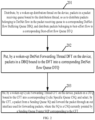
- packets are usually forwarded according to the best-effort forwarding method shown in FIG. 1 .
- a hardware-based controller upon receiving a packet, a hardware-based controller (such as a controller on an interface board) will first store the packet in a corresponding packet receiving queue (RcvQueue) in a memory according to a characteristic parameter of the packet.
- a Hash operation can be performed on the packet quintuple to obtain an operation result
- packet receiving queues in the memory can be searched for a packet receiving queue with a sequence number of a queue being the operation result, and the packet is stored in the found packet receiving queue. It should be noted that, here is only an example to describe how to store the packet in the corresponding packet receiving queue in the memory according to the packet characteristic parameter of the packet, and is not intended to be limiting.
- the hardware-based controller upon receiving a packet, will also trigger an interrupt controller to generate an interrupt, so as to wake up at least one Best-effort Forwarding Thread (BFT) through an interrupt handler in interrupt call driver software which is generated by the interrupt controller (such as CPU).
- BFT Best-effort Forwarding Thread
- the woken-up BFT fetches the packet from the bound packet receiving queue, converts the fetched packet into a packet of a specified form and sends it to the platform software (also known as a platform interface).
- platform software also known as a platform interface
- the platform software queries a FIB table to determine an out interface for forwarding the packet, and calls a transmitting interface (Transmod) of driver software to send the packet to a hardware queue corresponding to the out interface for transmission.
- a hardware queue set with a high priority has packets therein to be transmitted preferentially. After the packet is transmitted, storage resources occupied by the packet which has been transmitted can be further released by calling resource release software (Free Buffer Pool).
- an embodiment of the present application provides a method for transmitting DetNet flow, which superimposes DetNet flow forwarding on the basis of best-effort flow forwarding, providing compatibility of best-effort flow forwarding and DetNet flow forwarding, while ensuring that DetNet flow forwarding is not affected by best-effort flow forwarding.
- the method for transmitting DetNet flow provided by the embodiment of the present application will be described below.
- FIG. 2 is a flowchart illustrating a method for transmitting DetNet flow provided by an embodiment of the present application.
- This process applies to a network device.
- the embodiment of the present application does not specifically limit the specific structural form of the network device, for example, it can be a mid-to-low-end router, or it can be a high-end router that has high performance requirements and supports more CPU cores, and so on, which is not specifically limited by the embodiment, so that the embodiment of the present application can have wide applicability and expansibility.
- the embodiment of the present application superimposes DetNet flow forwarding on the basis of best-effort flow forwarding.
- the following modification is first made in order to superimpose DetNet flow forwarding on the basis of best-effort flow forwarding.
- the number of distribution threads is set according to the number of packet receiving queues, and one distribution thread is bound to at least one packet receiving queue.
- the distribution thread is used to distribute packets in the bound packet receiving queue, so as to distribute packets belonging to the DetNet flow in the packet receiving queue to the corresponding DetNet-flow Buffering queue (DBQ), and distribute packets belonging to best-effort flow to the corresponding Best-effort flow Queue (BTQ).
- DBQ DetNet-flow Buffering queue
- BTQ Best-effort flow Queue
- the DBQs and the packet receiving queues are in one-to-one correspondence.
- packets belonging to DetNet flow in packet receiving queue 1 are distributed to DBQ1
- packets belonging to DetNet flow in packet receiving queue 2 are distributed to DBQ2, and so on...
- DBQ is used to buffer the packets distributed by the distribution thread and belonging to DetNet flow.
- the distribution thread distributing packets is decoupled from the platform processing packets belonging to DetNet flow, so that the processing of the distribution thread can be simplified, which is efficient and non-blocking, and the processing of packets belonging to DetNet flow can be independent.
- the BTQs and the packet receiving queues are in one-to-one correspondence.
- packets belonging to best-effort flow in packet receiving queue 1 are distributed to BTQ1
- packets belonging to best-effort flow in packet receiving queue 2 are distributed to BTQ2, and so on...
- BTQ is used to buffer the packets distributed by the distribution thread and belonging to best-effort flow.
- the distribution thread distributing packets is decoupled from the platform processing packets belonging to best-effort flow, so that the processing of the distribution thread can be simplified, which is efficient and non-blocking, and the processing of packets belonging to best-effort flow can be independent.
- the process of distributing packets by the distribution thread is a non-blocking process. Even if the platform can process the DetNet flow, the distribution thread can still ensure that packets, such as those belonging to DetNet flows, can be distributed in a timely manner.
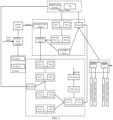
- a DetNet forwarding core module can be provided to the driver software of the network device.
- the DetNet forwarding core module at least includes: a DetNet forwarding thread (DFT) and a cycle forwarding thread (CFT).
- DFT DetNet forwarding thread
- CFT cycle forwarding thread
- the number of DFTs is set according to the number of DBQs and the DetNet flow load.
- one DFT is bound to at least one DBQ.
- the DFT is used to put packets in the bound DBQ into the corresponding DetNet flow queue (DTQ).
- the number of CFTs is set according to the number of DTQs and the DetNet flow load.
- one DFT is bound to at least one DTQ.
- the CFT is used to put packets in the bound DTQ into the corresponding Cycle Specified Queue (CSQ).
- the CFT is also bound to at least one CSQ of at least one interface, and is used to fetch a packet from the specified CSQ within a specified cycle and forward the packet through an out interface used for forwarding the packet.
- TransMod Modifying the transmitting module so that the transmitting module provides DetNet flow forwarding (such as providing hardware adaptation for DetNet flow forwarding, and the like).
- DetNet flow forwarding such as providing hardware adaptation for DetNet flow forwarding, and the like.
- FIG. 3 shows an example of a frame structure diagram after modification on the basis of the frame shown in FIG. 1 .
- the process can include the following steps.
- a woken-up distribution thread on the device distributes packets in a packet receiving queue bound to the distribution thread, so as to distribute packets belonging to DetNet flow in the packet receiving queue to a corresponding DBQ, and distribute packets belonging to best-effort flow to a corresponding BTQ.
- the packet receiving queue here is as described above, and stores external packets received by the network device through the local interface.
- the distribution thread distributes the packets in the bound packet receiving queue
- the distribution thread can be woken up through an interrupt, and can also be woken up through other methods, such as a polling method, which is not specifically limited in the embodiment.
- a woken-up DFT on the device puts packets in a DBQ bound to the DFT into a corresponding DTQ.
- the DFT can be woken up by the distribution thread at an appropriate time, which will be described with examples below.
- the DFT can also be woken up in other ways, which is not specifically limited in the embodiment.
- a woken-up cycle forwarding thread CFT on the device puts packets in a DTQ bound to the CFT into a corresponding cyclic specific queue (CSQ), and the CFT selects a packet from a sending queue SQ and forwards the packet through an out interface used for forwarding packets, where the SQ is a CSQ currently pointed by a sending queue pointer SQP corresponding to the CFT.
- CSQ cyclic specific queue
- the CFT can be woken up by the DFT at an appropriate time, which will be described with an example below.
- the CFT can also be woken up in other ways, for example, the CFT is woken up by default after the CFT is newly created, or if the CFT detects a specified event after the CFT is newly created, the CFT is also woken up by default, and so on, which will not be specifically limited by the embodiment.
- the specified event here refers to an event under which a packet needs to be forwarded in time in the CSQ. An example of this event will be described below, and will not be repeated here.
- each interface corresponds to a plurality of CSQs, for example, three CSQs.
- each CSQ includes at least:
- each cyclic specific queue descriptor can include at least:
- the CFT manages a structure of Cyclic Specific Queue Pointer (CSQP).
- CSQP Cyclic Specific Queue Pointer
- FIG. 8 illustrates a schematic diagram of the relationship between the CSQP and the CSQ.
- the embodiment realizes providing DetNet flow forwarding on the basis of the existing best-effort flow forwarding.
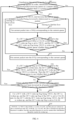
- FIG. 4 is a flowchart for implementing a distribution thread provided by an embodiment of the present application.
- a corresponding thread polling flag (denoted as bPoll_1) is set for the distribution thread, and initially, bPoll_1 is set to FALSE.
- bPoll_1 is also FALSE at this time.
- the distribution thread can be woken up through an interrupt or other means.
- the woken-up distribution thread can perform the following steps.
- step 401 the distribution thread traverses the bound packet receiving queues in order, determines a currently traversed packet receiving queue as a current queue, and checks whether there is a packet in the current queue, if so, step 402 is performed, if no, the process proceeds to step 407.
- step 402 bPoll_1 is set to TRUE, and the current queue is traversed, a packet being traversed is determined as a current packet, when it is identified that the current packet belongs to DetNet flow, then step 403 is performed, when it is identified that the current packet belongs to best-effort flow, step 405 is performed.
- This step 402 is performed when it is found that there is a packet in the current queue.
- bPoll_1 is set to TRUE, which means that the distribution thread is currently entering a polling process.
- disabling the specified function is used to instruct to prevent the distribution thread from entering a sleep state.
- step 403 the current packet is put into a DBQ corresponding to the current queue. Then step 404 is performed.
- the packet will carry a DetNet property (DetProperty).
- the DetNet property is not fixed, and the current specification does not provide specific designation, but is set according to actual needs, for example, the value of a field such as DSCP can be set to represent the DetNet property.
- the embodiment does not specifically limit the DetNet property.
- the DetNet property is set, it is applied to this step 403 to identify whether the current packet carries the DetNet property. If so, it is identified that the current packet belongs to the DetNet flow, and the current packet is put into the DBQ corresponding to the current queue. Finally, the packets belonging to the DetNet flow are distributed to the DBQ.
- the DBQs and the packet receiving queues are in one-to-one correspondence, for example, a packet in the packet receiving queue numbered 1 is placed in the DBQ numbered 1, and a packet in the packet receiving queue numbered 2 is placed in the DBQ numbered 2, and so on.
- the current packet identified as belonging to the DetNet flow can be put into the DBQ corresponding to the current queue.
- step 404 if a DFT wake-up flag set for the DFT bound to the above-mentioned DBQ is FALSE at this time, the DFT wake-up flag is set to TRUE, and the DFT with the DFT wake-up flag being TRUE is woken up. Then the current queue is checked whether there is still an untraversed packet. If so, the process continues to traverse untraversed packets and return to the step of determining a packet being traversed as a current packet in step 402; and if not, the process goes to step 407.
- the distribution thread will set one corresponding DFT wake-up flag for each DFT. Initially, the DFT wake-up flag corresponding to each DFT is set to FALSE.
- the corresponding DFT can be woken up in time, so that the wake-up DFT can put the packet in the bound DBQ into the corresponding DTQ in time.
- the wake-up DFT can put the packet in the bound DBQ into the corresponding DTQ in time.
- step 404 the untraversed packet can be directly traversed when there is still an untraversed packet in the current queue.
- the process returns to the step of determining a packet being traversed as a current packet in step 402, and if there is no untraversed packet in the current queue, step 407 is performed.
- step 405 the current packet is put into the BTQ corresponding to the current queue. Then step 406 is performed.
- the BTQs and the packet receiving queues are in one-to-one correspondence, for example, a packet in the packet receiving queue numbered 1 is placed in the BTQ numbered 1, and a packet in the packet receiving queue numbered 2 is placed in the BTQ numbered 2, and so on.
- the current packet identified as belonging to the best-effort flow can be put into the DBQ corresponding to the current queue.
- step 406 if a BFT wake-up flag set for the BFT bound to the BTQ is FALSE at this time, the BFT wake-up flag is set to TRUE, and the BFT with the BFT wake-up flag being TRUE is woken up. Then the BFT checks the current queue to see whether there is still an untraversed packet. If so, the process continues to traverse untraversed packets and return to the step of determining a packet being traversed as a current packet in step 401; and if not, step 407 is performed.
- the BTQ bound to the above-mentioned BFT can be woken up in time, so that the woken-up BFT can forward the packets in the BTQ in time.
- step 407 if there is no packet in the current queue or there is no packet that has not been traversed in the current queue, it is detected whether there is still a packet receiving queue that has not been traversed in all packet receiving queues bound to the distribution thread. If so, the process continues to traverse other packet receiving queues bound to the distribution thread that have not been traversed, and return to the step of determining a currently traversed packet receiving queue as a current queue in step 401, otherwise, the process goes to step 408.
- step 408 for a DFT with a DFT wake-up flag being TRUE, the DFT is woken up, and the DFT wake-up flag of the DFT is set to FALSE; and, for the BFT with the BFT wake-up flag being TRUE, the BFT is woken up, and the BFT wake-up flag is set to FALSE. Then step 409 is performed.
- the step 408 is performed in order to wake up the DFT and BFT that have been woken up before but has entered sleep during the process of traversing the packet receiving queues by the distribution thread, to ensure that both the DetNet flow and the best-effort flow are forwarded in time.
- the DFT with the DFT wake-up flag being TRUE is not currently sleeping (for example, it is still running)
- the DFT wake-up flag of the DFT can be directly set to FALSE.
- the operation for the BFT with the BFT wake-up flag being TRUE is similar and will not be described again.
- step 409 if bPoll_1 is TRUE, then bPoll_1 is set to FALSE, and the process returns to above-mentioned step 401, if bPoll_1 is FALSE, the above-mentioned specified function is enabled, and the specified function is used to instruct the distribution thread to wait to be woken up.
- the DFT implementation process will be described below with the process shown in FIG. 5 .
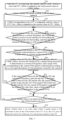
- FIG. 5 is a flowchart of DFT implementation provided by the embodiment of the present application.
- the DFT can be woken up by the distribution thread (for details, see the process shown in FIG. 4 above).
- the DFT can also be woken up in other ways, which are not specifically limited here.
- the woken-up DFT is set with a corresponding thread polling flag (referred to as a DFT polling flag), and when the DFT is woken up, the DFT polling flag is FALSE at this time.
- a DFT polling flag a thread polling flag
- the woken-up DFT can perform the following steps.
- step 501 the DFT traverses the bound DBQs in order, determines a currently traversed DBQ as a current DBQ, and checks whether there is a packet in the current queue, if so, step 502 is performed, if no, the process proceeds to step 505.
- a DFT polling flag is set to TRUE, and the current DBQ is traversed, a packet being traversed is determined as a current DBQ packet.
- PREOF Packet Replication, Elimination, and Ordering Functions
- This step 502 is performed when it is detected that there is a packet in the current DBQ.
- the DFT polling flag is set to TRUE, which means that the DFT is currently entering a polling process.
- disabling the specified function is used to instruct to prevent the DFT from entering a sleep state.
- the DFT is set with the PREOF function. Based on the PREOF function, it can be identified whether the current DBQ packet is a duplicate packet.
- the PREOF function can be used to identify whether the current DBQ packet and the packet processed by the PREOF function invoked are duplicate packets.
- the current DBQ packet is identified as a duplicate packet, the current DBQ packet is discarded, and when there is still an untraversed packet in the current DBQ, the process continues to traverse an untraversed packet, and return to the step of determining a packet being traversed as a current DBQ packet in step 502.
- the current DBQ packet is a duplicate packet based on the PREOF function, for example, to identify whether the packet sequence number of the current DBQ packet is smaller than a recorded maximum sequence corresponding to the flow to which the current DBQ packet belongs. If so, the current DBQ packet is identified as a duplicate packet, and other methods, which is not specifically limited in the embodiment.
- the PREOF function can be invoked to generate a packet output chain.
- the PREOF function can be invoked to generate a packet output chain.
- each packet in the packet output chain can be encapsulated as a packet and put into the DTQ corresponding to the out interface used for forwarding the packet. Details can be referred to step 503.
- step 503 packets in the packet output chain are traversed, a packet being traversed is recorded as a target packet.
- the target packet is encapsulated, and the encapsulated target packet is put into a DTQ corresponding to an out interface used for forwarding the target packet. It is checked whether the target packet is the last untraversed packet in the packet output chain. If so, the process goes to step 504. If not, the untraversed packets in the packet output chain are traversed, and the process returns to the step of recording the packet being traversed as the target packet.
- one DTQ is set corresponding to each out interface.
- a DTQ corresponding to the out interface 1 is denoted as DTQ1
- a DTQ corresponding to the out interface 2 is denoted as DTQ2, and so on.
- the target packet is encapsulated and the encapsulated target packet is put into the DTQ corresponding to the out interface used for forwarding the target packet. If the out interface used for forwarding the target packet is out interface 1, the encapsulated target packet is put into the DTQ corresponding to the out interface used for forwarding the target packet, namely DTQ 1.
- the packet in the DBQ can be put into the DTQ.
- step 504 if a CFT wake-up flag set for the CFT bound to the above-mentioned DTQ is FALSE at this time, the CFT wake-up flag is set to TRUE, and the CFT with the CFT wake-up flag being TRUE is woken up. Then the current DBQ is checked whether there is still an untraversed packet. If so, the process continues to traverse untraversed packets and return to the step of determining a packet being traversed as a current packet in step 502; and if not, the process goes to step 505.
- the DFT will set one corresponding CFT wake-up flag for each CFT. Initially, the CFT wake-up flag corresponding to each CFT is set to FALSE.
- the CFT bound to the above-mentioned DTQ can be woken up in time, so that the wake-up CFT can put the packet in the bound DTQ into the corresponding CSQ in time, and select the packet from the SQ and forward the packet through the out interface for forwarding the packet, as shown in FIG. 7 below for details.
- step 504 the untraversed packet can be directly traversed when there is an untraversed packet in the current DBQ and the process returns to the step of determining a packet being traversed as a current DBQ packet in step 502, and when there is no untraversed packet in the current DBQ, step 505 is performed.
- step 505 if there is no packet in the current DBQ or there is no packet that has not been traversed in the current DBQ, it is checked whether there is still a DBQ that has not been traversed in all DBQs bound to the DFT. If so, the process continues to traverse the DBQ that has not been traversed and the process returns to the step of determining the currently traversed DBQ as a current DBQ in step 501; otherwise, step 506 is performed.
- step 506 for the CFT with the CFT wake-up flag being TRUE, the CFT is woken up, and the CFT wake-up flag of the CFT is set to FALSE. Then step 507 is performed.
- the step 506 is performed in order to wake up the CFT that has been woken up before but has entered sleep during the process of traversing the DBQ by the DFT, so as to ensure the reliability of DetNet flow forwarding.
- step 507 if the CFT polling flag is TRUE, set the CFT polling flag to FALSE, and return to the above-mentioned step 501, if the CFT polling flag is FALSE, then open the above-mentioned specified function to indicate that the DFT is waiting to be woken up.
- the example of invoking the PREOF function to generate a packet output chain can include the following steps.
- step a11 it is identified whether the current DBQ packet is an out-of-order packet, if not, the process goes to step a12, and if so, the process goes to step a13.
- identifying whether the current DBQ packet is an out-of-order packet has many implementations. For example, when identifying the service flow to which the current DBQ packet belongs, if the packet sequence number of the current DBQ packet is larger than a recorded maximum sequence number of packets belonging to the above-mentioned service flow processed by invoking the PREOF function, the current DBQ packet is determined to be an out-of-order packet when the packet sequence number of the current DBQ packet is not adjacent to the above-mentioned maximum sequence number, otherwise, it is determined that the current DBQ packet is not an out-of-order packet.
- step a12 the current DBQ packet is put into the above packet output chain.
- This step a12 is performed on the premise that the current DBQ packet is not identified as an out-of-order packet. Once it is identified that the current DBQ packet is not an out-of-order packet, the current DBQ packet can be directly put into the above packet output chain, and the recorded maximum sequence number is further updated to the packet sequence number of the current DBQ packet, for determining whether a subsequent DBQ packet is an out-of-order packets.
- a service flow to which the current DBQ packet belongs is determined, if the current DBQ packet satisfies a condition which refers to that the current DBQ packet has been successfully sequenced with at least one recorded packet which belongs to the service flow and has been processed by invoking the PREOF function within a preset time window, the current DBQ packet, at least one recorded packet which has been successfully sequenced with the current DBQ packet, recorded packets which belong to the service flow and have been processed by invoking the PREOF function outside the preset time window but have not yet been put into the packet output chain are put into the packet output chain; and if the current DBQ packet does not satisfy the above condition, recorded packets which belong to the service flow and have been processed by invoking the PREOF function outside the preset time window but have not yet been put into the packet output chain are put into the above-mentioned packet output chain.
- This step a13 is performed on the premise that the current DBQ packet is identified as an out-of-order packet.
- the service flow to which the current DBQ packet belongs (the specific service flow information can be carried in the packet) is identified, and then it is checked whether the at least one recorded packet which belongs to the service flow and has been processed by invoking the PREOF function within a preset time window can be successfully sequenced with the current DBQ packet (that is, whether the sequence number of the at least one packet is continuous with the sequence number of the current DBQ packet).
- the packet sequence number of the current DBQ packet is 8, and the packet sequence number of a recorded packet belonging to the above service flow and processed by invoking the PREOF function within the preset time window is 7, which means that at least one recorded packet which belongs to the service flow and has been processed by invoking the PREOF function within the preset time window has been successfully sequenced with the current DBQ packet.
- the above-mentioned preset time window can be set according to actual requirements, for example, 10us since the current time, etc., which is not specifically limited in the embodiment.
- the current DBQ packet and the at least one recorded packet which belongs to the service flow and has been processed by invoking the PREOF function within the preset time window have been successfully sequenced
- the current DBQ packet, at least one recorded packet which has been successfully sequenced with the current DBQ packet, recorded packets which belong to the service flow and have been processed by invoking the PREOF function outside the preset time window but have not yet been put into the packet output chain are put into the packet output chain.
- the packet output chain is finally generated.
- the current DBQ packet and the at least one recorded packet which belongs to the service flow and has been processed by invoking the PREOF function within the preset time window cannot be successfully sequenced
- the recorded packets which belong to the service flow and have been processed by invoking the PREOF function outside the preset time window but have not yet been put into the packet output chain are put into the packet output chain.
- the packet output chain is finally generated.
- the current DBQ packet and the at least recorded one packet belonging to the above-mentioned service flow and processed by invoking the PREOF function within the preset time window cannot be successfully sequenced, then optionally, the current DBQ packet can be further recorded.
- DBQ packet, and the PREOF function is invoked to process a time stamp of the current DBQ packet.
- encapsulating the target packet in the above step 503 can include the following steps.
- step b 11 it is determined whether the target packet is an edge access packet, if so, step b12 is performed, otherwise, step b 13 is performed.
- step b12 a first type of encapsulation is performed on the target packet.
- This step b12 is performed on the premise that the target packet is an edge access packet.
- the first type of encapsulation can be performed on the target packet.
- the embodiment introduces a new concept: fast forwarding table (FastFwdTbl).
- the fast forwarding table can be obtained by transforming routing information in a DetNet. DFT can quickly obtain the out interface for the target packet by querying the fast forwarding table, so as to find the relevant DTQ (that is, the DTQ corresponding to the out interface).
- the DetNet flow is forwarded based on the fast forwarding table, and its purpose is to separate it from the best-effort forwarding process, so as to avoid the DetNet flow being affected by the best-effort flow forwarding, and shorten the DetNet flow forwarding process, to speed up DetNet flow forwarding and provide guarantee for DetNet flow forwarding.
- the fast forwarding table has a smaller capacity and faster lookup, and the overhead of the lookup table is not much different, thereby reducing the uncertainty factor.
- the fast forwarding table can at least include: Destination IP (destination IP address), Source IP (source IP address), Destination Port (destination port), Source Port (source port), Proto (Protocol), Differentiated Services Code Point (DSCP), Out Interface (OutIf), Tunnel Index (LIndex).
- step b12 can be: based on the packet feature information carried by the target packet such as source IP address, destination IP address, etc., finding OutIf and LIndex in the fast forwarding table; finding OutIfInfo corresponding to OutIf in all created out interface information (OutIfInfo); where OutIfInfo at least includes out interface information such as MAC address, pointer to segment route list (SRLists) based on out interface (here, segment route SR is used as an example for description); then, obtaining the corresponding SRList according to the LIndex and the SRLists pointer, and encapsulating the target packet based on the MAD address in the SRList and OutIfInfo, and finally implementing the first type of encapsulation on the target packet.
- FIG. 6 illustrates a schematic diagram of the association relationship between the fast forwarding table and OutIfInfo and SRLists.
- step b13 a second type of encapsulation is performed on the target packet.
- This step b13 is performed on the premise that it is determined that the target packet is not an edge access packet.
- it means that the above-mentioned first type of encapsulation has been performed on the target packet.
- the OutIf can be determined according to the SID in the SRLists in which the target packet is encapsulated, and the corresponding OutIfInfo (for example, including at least the MAC address) can be searched out based on the OutIf etc.; encapsulation is replaced on the target packet according to the obtained OutIfInfo (such as including at least the MAC address, etc.), such as replacing the source MAC address in the encapsulated Layer 2 header with the MAC address of the out interface in the OutIfInfo, etc. which is not particularly limited in the embodiment.
- FIG. 7 is a flowchart of CFT implementation provided by the embodiment of the present application.
- the CFT can be woken up by the DFT according to the description of step 504 or step 506 in the process shown in FIG. 5 above.
- the CFT can also be woken up directly. For example, when a CFT is newly created on a network device, if it is detected that there is a packet in the CSQ bound to the CFT that need to be forwarded in time, the CFT can be woken up directly.
- CFT _Jiffies CFT_prev_Jiffies
- CFT_Rcv_Jiffies CFT_Rcv_Jiffies
- CFT _Jiffies can indicate a current processing cycle, which can be recorded as a current processing cycle variable.
- CFT_prev_Jiffies is used to indicate a historical cycle and can be recorded as a historical cycle variable.
- CFT Rcv_Jiffies is used to record a current processing and receiving cycle, which can be recorded as a packet receiving cycle variable.
- the process can include the following steps.
- step 701 after the CFT is woken up, the current value of CSQF _Jiffies is read, and CFT _Jiffies is updated to the read current value of CSQF _Jiffies. Then step 702 is performed.
- step 702 it is checked whether the packet sending cycle has been updated, if so, the process goes to step 703, if not, the process goes to step 704.
- CFT _Jiffies represents a current processing cycle variable
- CFT_Prev_Jiffies represents a historical cycle variable. Therefore, based on CFT_Jiffies and CFT_Prev_Jiffies, it can be determined whether the packet sending cycle has been updated. For example, when CFT _Jiffies is not equal to CFT_Prev_Jiffies, it indicates that the cycle has been performed, and the packet sending cycle has been updated, for example, the cycle proceeds from the first cycle to the second cycle; and when CFT _Jiffies is equal to CFT_Prev_Jiffies, it means that the packet sending cycle has not been updated.
- step 703 a CSQP corresponding to the CFT is readjusted, and the value of CFT_Prev_Jiffies is updated to the current value of CFT _Jiffies. Then step 704 is performed.
- CSQP at least includes: SQP, RQP, TQP, then optionally, as an embodiment, the sequence number of the CSQ pointed by the readjusted SQP is determined by a remainder from a modulo operation on a total number d of CSQs bound to CFT according to CFT _Jiffies.
- the remainder can be denoted as Rem.
- the sequence number of the CSQ pointed by the readjusted RQP is determined according to the result by performing a modulo operation on the number d based on the sum of Rem and the specified jitter cycle number Jitter.
- the sequence number of the CSQ pointed by the readjusted RQP is obtained by the following formula: (Rem+Jitter) mod d.
- sequence number of the CSQ pointed by the readjusted TQP can be determined according to the following formula: (d-1+Rem-Jitter) mod d.
- step 704 the packets in the SQ are traversed, a packet being traversed is determined as a current SQ packet, the current SQ packet is sent to an out interface for forwarding the current SQ packet for forwarding, and then the SQ is checked whether there is still an untraversed packet. If so, the process continues to traverse an untraversed packet and returns to the step of determining a packet being traversed as a current SQ packet in step 704; if not, the process goes to step 705
- step 705 DTQs bound to the CFT are traversed, a DTQ being traversed is determined as a current DTQ. It is checked whether there is a packet in the current DTQ, if so, the process goes to step 706, if not, the process goes to step 708.
- This step 705 is performed when there is no untraversed packet in the SQ (that is, the SQ is empty).
- step 706 the value of CFT Rcv_Jiffies is updated to the current value of CSQF _Jiffies, the current DTQ is traversed, a packet being traversed is determined as a current DTQ packet, and a target CSQ corresponding to the current DTQ packet is determined according to a cycle specified queue (Cycle) parameter carried by the current DTQ packet. Then step 707 is performed.
- Cycle cycle specified queue
- CFT_Rcv_Jiffies is updated to the current value of CSQF _Jiffies, in order to control the timely execution of the CFT thread and reduce the scheduling delay.
- the cycle specified queue (Cycle) parameter carried by the current DTQ packet the Cycle parameter indicates the target CSQ, based on this, it is easy to determine the target CSQ corresponding to the current DTQ packet based on the indication of the Cycle parameter.
- step 707 if the target CSQ is between the SQ and the RQ, the current DTQ packet is put into the RQ, if the target CSQ is between the TQ and the SQ, the current DTQ packet is put into the TQ, if the target CSQ is between the RQ and the TQ, the current DTQ packet is put into the target CSQ; after that, it is checked whether there is an untraversed packet in the current DTQ. If so, the process continues to traverse an untraversed packet and returns to the step of determining a packet being traversed as a current DTQ packet in step 706, if not, the process goes to step 708.
- the target CSQ when the target CSQ is between the SQ and the RQ, it indicates that the current DTQ packet may have arrived with a delay. In order to ensure that the current DTQ packet that has arrived with a delay can be forwarded in a short time, the current DTQ packet can be put into the RQ.
- the target CSQ when the target CSQ is between the TQ and the SQ, it indicates that the current DTQ packet may have arrived ahead of time. In order to ensure that other packets can be forwarded in time, the current DTQ packet that has arrived ahead of time can be forwarded after waiting for a relatively long time, so the current DTQ packet is put into the TQ.
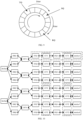
- FIG. 9 shows an example of the structure among SQ, RQ, and TQ.
- step 708 it is checked whether there is an untraversed DTQ among all the DTQs bound to the CFT, if so, the process continues to traverse the DTQs that have not been traversed and returns to step 705 of determining the DTQ being traversed as a current DTQ, otherwise, and step 709 is performed.
- step 709 it is detected whether there is an event under which a packet needs to be forwarded in time in the CSQ bound to the CFT.
- the event under which the packet needs to be forwarded in time is determined according to the above-mentioned CFT_Jiffies and CFT Rcv_Jiffies.
- a difference between the value of CFT _Jiffies and the value of CFT RcvJiffies is less than or equal to a specified difference, it is determined that there is an event under which the packet needs to be forwarded in time, otherwise, it is determined that there is no event under which the packet needs to be forwarded in time.
- the specified difference is preset, for example, can be preset as 10 cycles (a cycle in which the above-mentioned timer generates an interrupt), etc., which is not specifically limited in the embodiment.
- reliability can be guaranteed, and the following constraints can be optionally provided.
- FIG. 10 illustrates operations between threads based on the above constraints.
- FIG. 10 exemplifies that one interface is associated with one CFT, and the packets output via each interface are scheduled by the CFT associated with the interface.
- DBQ and DTQ are designed as circular queues to realize lock-free operation and improve concurrency.
- DisThr, DFT, and CFT are real-time priority scheduling threads; DFT and CFT threads do not share CPU cores with other real-time priority threads, nor do they share CPU cores with threads that occupy CPU resources for a long time without releasing the CPU resources.
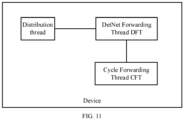
- FIG. 11 is a structural diagram illustrating an apparatus provided by an embodiment of the present application.
- the apparatus is applied to a network device, and the apparatus can include:
- distributing packets in the bound packet receiving queue by the distribution thread includes:
- the distribution thread is set with a corresponding thread polling flag, and the thread polling flag has been set to FALSE when the distribution thread is woken up;
- the distribution thread distributes the packets belonging to the DetNet flow in the packet receiving queue to the corresponding DBQ, further: if a DFT wake-up flag of the DFT bound to the DBQ is set to FALSE, setting the DFT wake-up flag to TRUE, and waking up the DFT with the DFT wake-up flag being TRUE; and/or, after all the packet receiving queues bound to the distribution thread have been traversed, further: for a DFT with a DFT wake-up flag being TRUE, wakening up the DFT, and setting the DFT wake-up flag of the DFT to FALSE.
- the DFT putting the packet in the bound DBQ into the corresponding DTQ includes:
- the packet output chain is generated by the following steps:
- the DFT is set with a corresponding DFT polling flag, and the DFT polling flag has been set to FALSE when the DFT is woken up;
- a CFT wake-up flag set for the CFT bound to the DTQ is FALSE, setting the CFT wake-up flag to TRUE, and waking up the CFT with the CFT wake-up flag being TRUE; and after all the DBQs bound to the DFT have been traversed, further: for a CFT with a CFT wake-up flag being TRUE, waking up the CFT, and setting the CFT wake-up flag of the CFT to FALSE.
- putting, by a CFT, packets DTQ bound to the CFT into a corresponding cyclic specific queue CSQ includes:
- putting, by a woken-up cycle forwarding thread CFT on the device, packets in a DTQ bound to the CFT into a corresponding cyclic specific queue CSQ is performed when the SQ is empty.
- selecting, by the CFT, a packet from a sending queue SQ and forwarding the packet through an out interface used for forwarding packets includes:
- the CSQP further comprises a receiving queue pointer RQP and a tolerating queue pointer TQP; the RQP points to a CSQ which is a receiving queue RQ, and the TQP points to a CSQ which is a tolerating queue TQ;
- the CFT further detects an event under which a packet needs to be forwarded in time in the CSQ bound to the CFT; if so, returning to the step of selecting, by the CFT, a packet from a sending queue SQ and forwarding the packet through an out interface used for forwarding packets; and if not, waiting to be woken up again.
- the event under which a packet needs to be forwarded in time is determined according to the current processing cycle variable CFT _Jiffies set for the CFT and a current packet receiving cycle variable CFT_Rcv_Jiffies, when a difference between a value of CFT_Jiffies and a value of CFT Rcv_Jiffies is less than or equal to a specified difference, determining that there is an event under which the packet needs to be forwarded in time, otherwise, determining that there is no event under which the packet needs to be forwarded in time;
- whether the packet sending cycle is updated is determined by:
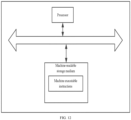
- FIG. 12 is a structural diagram of an electronic device provided by an embodiment of the present application.
- the hardware structure can include: a processor and a machine-readable storage medium, where the machine-readable storage medium stores machine-executable instructions that can be executed by the processor; the processor is configured to execute machine-executable instructions to implement the methods disclosed in the above examples of the present application.
- the embodiments of the present application also provide a machine-readable storage medium, where several computer instructions are stored on the machine-readable storage medium, and when the computer instructions are executed by the processor, the methods disclosed in the above examples of the present application can be implemented.
- the above-mentioned machine-readable storage medium can be any electronic, magnetic, optical, or other physical storage device that can contain or store information, such as executable instructions, data, and the like.
- the machine-readable storage medium can be: RAM (Radom Access Memory), volatile memory, non-volatile memory, flash memory, storage drives (such as hard disk drives), solid state drives, any type of storage disks (such as CD-ROM, DVD, etc.), or similar storage media, or a combination thereof.
- a typical implementing device is a computer, which can be in the form of a personal computer, a laptop computer, a cellular phone, a camera phone, a smart phone, a personal digital assistant, a media player, a navigation device, an email sending and receiving device, a game control desktop, a tablet, a wearable device, or a combination of any of these devices.
- embodiments of the present application can be provided as methods, systems, or computer program products. Accordingly, the present application can take the form of a pure hardware embodiment, a pure software embodiment, or an embodiment combining software and hardware aspects. Furthermore, embodiments of the present application can take the form of a computer program product implemented on one or more computer-usable storage media having computer-usable program code embodied therein, including but not limited to disk storage, CD-ROM, optical storage, and the like.
- these computer program instructions can also be stored in a computer-readable memory capable of directing a computer or other programmable data processing device to operate in a particular manner, such that the instructions stored in the computer-readable memory produce an article of manufacture containing instruction means implementing the functions specified in the flow or flows of the flowchart and/or the block or blocks of the block diagram.
- These computer program instructions can also be loaded on a computer or other programmable data processing device, such that a series of operational steps are performed on the computer or other programmable device to produce a computer-implemented process, such that instructions executed on the computer or other programmable device provide steps for implementing the functions specified in the flowchart or blocks and/or the block or blocks of the block diagrams.
Landscapes
- Engineering & Computer Science (AREA)
- Computer Networks & Wireless Communication (AREA)
- Signal Processing (AREA)
- Computer Security & Cryptography (AREA)
- Data Exchanges In Wide-Area Networks (AREA)
Applications Claiming Priority (1)
| Application Number | Priority Date | Filing Date | Title |
|---|---|---|---|
| PCT/CN2021/138338 WO2023108479A1 (zh) | 2021-12-15 | 2021-12-15 | 确定性流传输方法及装置 |
Publications (2)
| Publication Number | Publication Date |
|---|---|
| EP4336796A1 true EP4336796A1 (de) | 2024-03-13 |
| EP4336796A4 EP4336796A4 (de) | 2024-06-26 |
Family
ID=86775009
Family Applications (1)
| Application Number | Title | Priority Date | Filing Date |
|---|---|---|---|
| EP21967616.0A Pending EP4336796A4 (de) | 2021-12-15 | 2021-12-15 | Verfahren und vorrichtung zur deterministischen verkehrsübertragung |
Country Status (5)
| Country | Link |
|---|---|
| US (1) | US20240275728A1 (de) |
| EP (1) | EP4336796A4 (de) |
| JP (1) | JP7752189B2 (de) |
| CN (1) | CN116615899A (de) |
| WO (1) | WO2023108479A1 (de) |
Families Citing this family (5)
| Publication number | Priority date | Publication date | Assignee | Title |
|---|---|---|---|---|
| US20240160468A1 (en) * | 2021-03-18 | 2024-05-16 | Nippon Telegraph And Telephone Corporation | Server delay control device, server delay control method, and program |
| US20230116614A1 (en) * | 2022-11-09 | 2023-04-13 | Intel Corporation | Deterministic networking node |
| CN119948850B (zh) * | 2023-09-05 | 2025-09-23 | 新华三技术有限公司 | 一种数据包传输方法及网络设备 |
| CN119948843B (zh) * | 2023-09-05 | 2025-11-25 | 新华三技术有限公司 | 确定性流传输方法、装置及网络节点 |
| CN117155883B (zh) * | 2023-10-31 | 2024-01-30 | 国网湖北省电力有限公司电力科学研究院 | 一种实现报文定时发送的tsn网卡装置、方法及介质 |
Family Cites Families (13)
| Publication number | Priority date | Publication date | Assignee | Title |
|---|---|---|---|---|
| CN100490421C (zh) * | 2004-10-20 | 2009-05-20 | 华为技术有限公司 | Mpls环网中实现流量公平传送的方法 |
| US9641351B2 (en) * | 2014-12-18 | 2017-05-02 | Cisco Technology, Inc. | Jitter removal in deterministic networks |
| CN106612236B (zh) * | 2015-10-21 | 2020-02-07 | 深圳市中兴微电子技术有限公司 | 众核网络处理器及其微引擎的报文调度方法、系统 |
| WO2019084970A1 (zh) * | 2017-11-06 | 2019-05-09 | 华为技术有限公司 | 报文转发方法、转发设备和网络设备 |
| KR102748588B1 (ko) * | 2018-09-21 | 2025-01-02 | 텔레호낙티에볼라게트 엘엠 에릭슨(피유비엘) | 무선 액세스 네트워크들에서 리소스들을 스케줄링하기 위한 방법들 및 장치들 |
| US11743174B2 (en) * | 2019-01-29 | 2023-08-29 | Cisco Technology, Inc. | Supporting asynchronous packet operations in a deterministic network |
| US11398925B2 (en) * | 2019-05-03 | 2022-07-26 | Microchip Technology Incorporated | Media access for time-sensitive and best efforts data packets, and related systems, methods and devices |
| EP3981133B1 (de) * | 2019-07-22 | 2024-09-25 | Huawei Technologies Co., Ltd. | Steuervorrichtung, schaltvorrichtung, verfahren und computerlesbares speichermedium |
| US11463370B2 (en) * | 2020-02-12 | 2022-10-04 | Nokia Solutions And Networks Oy | Scalable deterministic services in packet networks |
| CN113382442B (zh) * | 2020-03-09 | 2023-01-13 | 中国移动通信有限公司研究院 | 报文传输方法、装置、网络节点及存储介质 |
| US12255973B2 (en) * | 2020-09-10 | 2025-03-18 | Fisher-Rosemount Systems, Inc. | Highly-versatile field devices and communication networks for use in control and automation systems |
| US12250163B2 (en) * | 2020-09-26 | 2025-03-11 | Intel Corporation | Deterministic packet scheduling and DMA for time sensitive networking |
| CN113411270B (zh) * | 2021-06-07 | 2023-04-07 | 中国人民解放军国防科技大学 | 一种面向时间敏感网络的报文缓冲区管理方法 |
-
2021
- 2021-12-15 US US18/569,822 patent/US20240275728A1/en active Pending
- 2021-12-15 EP EP21967616.0A patent/EP4336796A4/de active Pending
- 2021-12-15 JP JP2023574657A patent/JP7752189B2/ja active Active
- 2021-12-15 WO PCT/CN2021/138338 patent/WO2023108479A1/zh not_active Ceased
- 2021-12-15 CN CN202180003976.2A patent/CN116615899A/zh active Pending
Also Published As
| Publication number | Publication date |
|---|---|
| CN116615899A (zh) | 2023-08-18 |
| US20240275728A1 (en) | 2024-08-15 |
| EP4336796A4 (de) | 2024-06-26 |
| WO2023108479A1 (zh) | 2023-06-22 |
| JP2024520146A (ja) | 2024-05-21 |
| JP7752189B2 (ja) | 2025-10-09 |
Similar Documents
| Publication | Publication Date | Title |
|---|---|---|
| EP4336796A1 (de) | Verfahren und vorrichtung zur deterministischen verkehrsübertragung | |
| US8565092B2 (en) | Dynamic flow redistribution for head of line blocking avoidance | |
| US8831025B2 (en) | Parallel processing using multi-core processor | |
| US9894013B2 (en) | Early queueing network device | |
| CN116686272B (zh) | 一种报文传输方法及网络设备 | |
| US20140098818A1 (en) | Internal Cut-Through For Distributed Switches | |
| US10419370B2 (en) | Hierarchical packet buffer system | |
| US8953625B2 (en) | Applying backpressure to a subset of nodes in a deficit weighted round robin scheduler | |
| EP3588880A1 (de) | Warteschlangensystem zur vorhersage der paketlebensdauer in einer datenverarbeitungsvorrichtung | |
| US11516145B2 (en) | Packet control method, flow table update method, and node device | |
| WO2017206587A1 (zh) | 一种优先级队列调度的方法及装置 | |
| US9336006B2 (en) | High-performance parallel traffic management for multi-core platforms | |
| US8879578B2 (en) | Reducing store and forward delay in distributed systems | |
| CN103685062A (zh) | 缓存管理方法及装置 | |
| CN115086238A (zh) | 一种tsn网络端口输出调度装置 | |
| CA2697994C (en) | Method and apparatus for data processing using queuing | |
| US6973036B2 (en) | QoS scheduler and method for implementing peak service distance using next peak service time violated indication | |
| US8705552B1 (en) | Controlling latency variations in a packet node | |
| WO2022174444A1 (zh) | 一种数据流传输方法、装置及网络设备 | |
| CN117749726A (zh) | Tsn交换机输出端口优先级队列混合调度方法和装置 | |
| CN117793583A (zh) | 报文转发方法、装置、电子设备及计算机可读存储介质 | |
| US20260039606A1 (en) | Scalable Output Queued Architecture with Decoupled Packet and Cell Queueing | |
| CN119484418A (zh) | 基于时间基准的同步和异步融合的流量整形方法和装置 |
Legal Events
| Date | Code | Title | Description |
|---|---|---|---|
| STAA | Information on the status of an ep patent application or granted ep patent |
Free format text: STATUS: THE INTERNATIONAL PUBLICATION HAS BEEN MADE |
|
| PUAI | Public reference made under article 153(3) epc to a published international application that has entered the european phase |
Free format text: ORIGINAL CODE: 0009012 |
|
| STAA | Information on the status of an ep patent application or granted ep patent |
Free format text: STATUS: REQUEST FOR EXAMINATION WAS MADE |
|
| 17P | Request for examination filed |
Effective date: 20231205 |
|
| AK | Designated contracting states |
Kind code of ref document: A1 Designated state(s): AL AT BE BG CH CY CZ DE DK EE ES FI FR GB GR HR HU IE IS IT LI LT LU LV MC MK MT NL NO PL PT RO RS SE SI SK SM TR |
|
| A4 | Supplementary search report drawn up and despatched |
Effective date: 20240524 |
|
| RIC1 | Information provided on ipc code assigned before grant |
Ipc: H04L 47/2441 20220101AFI20240517BHEP |
|
| DAV | Request for validation of the european patent (deleted) | ||
| DAX | Request for extension of the european patent (deleted) |