EP4336854A2 - Procédé et appareil de traitement multimédia, dispositif électronique et support de stockage - Google Patents
Procédé et appareil de traitement multimédia, dispositif électronique et support de stockage Download PDFInfo
- Publication number
- EP4336854A2 EP4336854A2 EP22842574.0A EP22842574A EP4336854A2 EP 4336854 A2 EP4336854 A2 EP 4336854A2 EP 22842574 A EP22842574 A EP 22842574A EP 4336854 A2 EP4336854 A2 EP 4336854A2
- Authority
- EP
- European Patent Office
- Prior art keywords
- text content
- multimedia resource
- invalid
- speech
- content
- Prior art date
- Legal status (The legal status is an assumption and is not a legal conclusion. Google has not performed a legal analysis and makes no representation as to the accuracy of the status listed.)
- Granted
Links
Images






Classifications
-
- H—ELECTRICITY
- H04—ELECTRIC COMMUNICATION TECHNIQUE
- H04N—PICTORIAL COMMUNICATION, e.g. TELEVISION
- H04N21/00—Selective content distribution, e.g. interactive television or video on demand [VOD]
- H04N21/40—Client devices specifically adapted for the reception of or interaction with content, e.g. set-top-box [STB]; Operations thereof
- H04N21/43—Processing of content or additional data, e.g. demultiplexing additional data from a digital video stream; Elementary client operations, e.g. monitoring of home network or synchronising decoder's clock; Client middleware
- H04N21/439—Processing of audio elementary streams
- H04N21/4394—Processing of audio elementary streams involving operations for analysing the audio stream, e.g. detecting features or characteristics in audio streams
-
- G—PHYSICS
- G06—COMPUTING OR CALCULATING; COUNTING
- G06F—ELECTRIC DIGITAL DATA PROCESSING
- G06F16/00—Information retrieval; Database structures therefor; File system structures therefor
- G06F16/40—Information retrieval; Database structures therefor; File system structures therefor of multimedia data, e.g. slideshows comprising image and additional audio data
- G06F16/43—Querying
- G06F16/432—Query formulation
-
- G—PHYSICS
- G06—COMPUTING OR CALCULATING; COUNTING
- G06F—ELECTRIC DIGITAL DATA PROCESSING
- G06F16/00—Information retrieval; Database structures therefor; File system structures therefor
- G06F16/40—Information retrieval; Database structures therefor; File system structures therefor of multimedia data, e.g. slideshows comprising image and additional audio data
- G06F16/43—Querying
- G06F16/432—Query formulation
- G06F16/433—Query formulation using audio data
-
- G—PHYSICS
- G06—COMPUTING OR CALCULATING; COUNTING
- G06F—ELECTRIC DIGITAL DATA PROCESSING
- G06F16/00—Information retrieval; Database structures therefor; File system structures therefor
- G06F16/40—Information retrieval; Database structures therefor; File system structures therefor of multimedia data, e.g. slideshows comprising image and additional audio data
- G06F16/48—Retrieval characterised by using metadata, e.g. metadata not derived from the content or metadata generated manually
- G06F16/483—Retrieval characterised by using metadata, e.g. metadata not derived from the content or metadata generated manually using metadata automatically derived from the content
-
- G—PHYSICS
- G06—COMPUTING OR CALCULATING; COUNTING
- G06F—ELECTRIC DIGITAL DATA PROCESSING
- G06F40/00—Handling natural language data
- G06F40/20—Natural language analysis
- G06F40/205—Parsing
- G06F40/216—Parsing using statistical methods
-
- G—PHYSICS
- G06—COMPUTING OR CALCULATING; COUNTING
- G06F—ELECTRIC DIGITAL DATA PROCESSING
- G06F40/00—Handling natural language data
- G06F40/20—Natural language analysis
- G06F40/253—Grammatical analysis; Style critique
-
- G—PHYSICS
- G06—COMPUTING OR CALCULATING; COUNTING
- G06F—ELECTRIC DIGITAL DATA PROCESSING
- G06F40/00—Handling natural language data
- G06F40/30—Semantic analysis
-
- G—PHYSICS
- G10—MUSICAL INSTRUMENTS; ACOUSTICS
- G10L—SPEECH ANALYSIS TECHNIQUES OR SPEECH SYNTHESIS; SPEECH RECOGNITION; SPEECH OR VOICE PROCESSING TECHNIQUES; SPEECH OR AUDIO CODING OR DECODING
- G10L15/00—Speech recognition
- G10L15/04—Segmentation; Word boundary detection
- G10L15/05—Word boundary detection
-
- G—PHYSICS
- G10—MUSICAL INSTRUMENTS; ACOUSTICS
- G10L—SPEECH ANALYSIS TECHNIQUES OR SPEECH SYNTHESIS; SPEECH RECOGNITION; SPEECH OR VOICE PROCESSING TECHNIQUES; SPEECH OR AUDIO CODING OR DECODING
- G10L15/00—Speech recognition
- G10L15/08—Speech classification or search
- G10L15/18—Speech classification or search using natural language modelling
- G10L15/1815—Semantic context, e.g. disambiguation of the recognition hypotheses based on word meaning
-
- G—PHYSICS
- G10—MUSICAL INSTRUMENTS; ACOUSTICS
- G10L—SPEECH ANALYSIS TECHNIQUES OR SPEECH SYNTHESIS; SPEECH RECOGNITION; SPEECH OR VOICE PROCESSING TECHNIQUES; SPEECH OR AUDIO CODING OR DECODING
- G10L15/00—Speech recognition
- G10L15/26—Speech to text systems
-
- G—PHYSICS
- G10—MUSICAL INSTRUMENTS; ACOUSTICS
- G10L—SPEECH ANALYSIS TECHNIQUES OR SPEECH SYNTHESIS; SPEECH RECOGNITION; SPEECH OR VOICE PROCESSING TECHNIQUES; SPEECH OR AUDIO CODING OR DECODING
- G10L25/00—Speech or voice analysis techniques not restricted to a single one of groups G10L15/00 - G10L21/00
- G10L25/48—Speech or voice analysis techniques not restricted to a single one of groups G10L15/00 - G10L21/00 specially adapted for particular use
- G10L25/51—Speech or voice analysis techniques not restricted to a single one of groups G10L15/00 - G10L21/00 specially adapted for particular use for comparison or discrimination
- G10L25/57—Speech or voice analysis techniques not restricted to a single one of groups G10L15/00 - G10L21/00 specially adapted for particular use for comparison or discrimination for processing of video signals
-
- G—PHYSICS
- G11—INFORMATION STORAGE
- G11B—INFORMATION STORAGE BASED ON RELATIVE MOVEMENT BETWEEN RECORD CARRIER AND TRANSDUCER
- G11B27/00—Editing; Indexing; Addressing; Timing or synchronising; Monitoring; Measuring tape travel
- G11B27/02—Editing, e.g. varying the order of information signals recorded on, or reproduced from, record carriers
- G11B27/031—Electronic editing of digitised analogue information signals, e.g. audio or video signals
-
- H—ELECTRICITY
- H04—ELECTRIC COMMUNICATION TECHNIQUE
- H04N—PICTORIAL COMMUNICATION, e.g. TELEVISION
- H04N21/00—Selective content distribution, e.g. interactive television or video on demand [VOD]
- H04N21/40—Client devices specifically adapted for the reception of or interaction with content, e.g. set-top-box [STB]; Operations thereof
- H04N21/47—End-user applications
- H04N21/472—End-user interface for requesting content, additional data or services; End-user interface for interacting with content, e.g. for content reservation or setting reminders, for requesting event notification, for manipulating displayed content
- H04N21/47217—End-user interface for requesting content, additional data or services; End-user interface for interacting with content, e.g. for content reservation or setting reminders, for requesting event notification, for manipulating displayed content for controlling playback functions for recorded or on-demand content, e.g. using progress bars, mode or play-point indicators or bookmarks
-
- H—ELECTRICITY
- H04—ELECTRIC COMMUNICATION TECHNIQUE
- H04N—PICTORIAL COMMUNICATION, e.g. TELEVISION
- H04N21/00—Selective content distribution, e.g. interactive television or video on demand [VOD]
- H04N21/80—Generation or processing of content or additional data by content creator independently of the distribution process; Content per se
- H04N21/85—Assembly of content; Generation of multimedia applications
- H04N21/854—Content authoring
-
- G—PHYSICS
- G10—MUSICAL INSTRUMENTS; ACOUSTICS
- G10L—SPEECH ANALYSIS TECHNIQUES OR SPEECH SYNTHESIS; SPEECH RECOGNITION; SPEECH OR VOICE PROCESSING TECHNIQUES; SPEECH OR AUDIO CODING OR DECODING
- G10L25/00—Speech or voice analysis techniques not restricted to a single one of groups G10L15/00 - G10L21/00
- G10L25/78—Detection of presence or absence of voice signals
Definitions
- Embodiments of the present disclosure generally relate to the field of computer technology and in particular, to a multimedia processing method, device, electronic device, and storage medium.
- multimedia resources production in order to make the multimedia resources better expressive, it is often necessary for the author to post-crop the multimedia resources after recording and remove the audio or video segments that are not smooth or incorrect, such as speech errors, pauses, etc., so as to improve overall playing fluency of the multimedia resources.
- a multimedia processing method, device, electronic device, and storage medium are provided to overcome the problems of low efficiency and poor effectiveness in the cropping process of multimedia resources, as well as low playing smoothness of the cropped multimedia resources.
- a multimedia processing method comprises: obtaining a first multimedia resource; determining an initial text content corresponding to the first multimedia resource by performing speech recognition on audio data of the first multimedia resource, wherein the audio data of the first multimedia resource comprises speech data of the initial text content; determining an invalid text content in the initial text content, wherein the invalid text content is semantically non-informative; determining a first playing position of the speech data of the invalid text content in the first multimedia resource; cropping the first multimedia resource based on the first playing position to obtain a second multimedia resource, wherein audio data of the second multimedia resource comprises speech data of a target text content but does not comprise speech data of the invalid text content, wherein the target text content is other text content in the initial text content than the invalid text content.
- a multimedia processing apparatus in embodiments of the present disclosure.
- the multimedia processing apparatus comprises:
- an electronic device comprises: at least one processor and memory;
- a computer-readable storage medium in embodiments of the present disclosure, wherein the computer-readable storage medium stores computer-executable instructions, that, when executed by a processor, implements the multimedia processing method according to the first aspect and various possible designs of the first aspect.
- a computer program product in embodiments of the present disclosure, comprising a computer program, which, when executed by a processor, implements the method according to the first aspect and various possible designs of the first aspect.
- a computer program in embodiments of the present disclosure, wherein the computer program, when executed by a processor, implements the method according to the first aspect and various possible designs of the first aspect.
- a multimedia processing method, device, electronic device, and storage medium are provided, by obtaining a first multimedia resource; determining an initial text content corresponding to the first multimedia resource by performing speech recognition on audio data of the first multimedia resource, wherein the audio data of the first multimedia resource comprises speech data of the initial text content; determining an invalid text content in the initial text content, wherein the invalid text content is semantically non-informative; determining a first playing position of the speech data of the invalid text content in the first multimedia resource; and cropping the first multimedia resource based on the first playing position to obtain a second multimedia resource, wherein audio data of the second multimedia resource comprises speech data of a target text content but does not comprise speech data of the invalid text content, wherein the target text content is other text content in the initial text content than the invalid text content.
- the automatic positioning and cropping of the invalid text content in the first multimedia resource is implemented, and the efficiency and the effect of cropping the invalid content in the multimedia resource are improved, as well as the playing fluency of the cropped multimedia resources.
- FIG. 1 illustrates a diagram of one application scenario of multimedia processing method provided by embodiments of the present disclosure.
- the multimedia processing method provided by the present embodiment can be applied to the application scenario of post-cropping processing of multimedia video resources after recording.
- the multimedia video resources are videos containing audio tracks.
- the method provided by the present embodiment can be applied to terminal devices, as shown in FIG. 1 , After the user records a multimedia initial video through terminal device 11, the terminal device 11 processes the multimedia initial video by executing the multimedia processing method provided in this embodiment, automatically removing the video and audio segments corresponding to meaningless content such as verbal errors, pauses, and verbal language in the multimedia initial video, and generating a multimedia cropped video.
- the terminal device 11 sends the multimedia cropped video to video platform server 12, which posts the multimedia cropped video as a multimedia video resource on the video platform.
- Other terminal devices 13 can achieve viewing of the multimedia video resource through communication with the video platform server 12.
- FIG. 2 illustrates a diagram of another application scenario of multimedia processing method provided by embodiments of the present disclosure.
- the method provided In this embodiment of the present disclosure can also be applied to a video platform server, wherein a user records a multimedia initial video through a terminal device and sends the multimedia initial video to the video platform server, which executes the multimedia processing method provided by the present embodiment to generate a multimedia cropped video, as shown in FIG. 1 , and post the multimedia cropped video as a multimedia video resource on the video platform.
- Other terminal devices can realize the viewing of the multimedia video resource by communicating with the video platform server.
- a multimedia processing method is provided in embodiments of the present disclosure to solve the above problems.
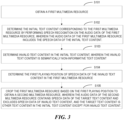
- FIG. 3 illustrates a schematic flow diagram of a multimedia processing method provided by an embodiment of the present disclosure.
- the method of this embodiment can be applied to a server or terminal device.
- the terminal device is exemplarily described as the execution subject of the method of this embodiment, and the multimedia processing method includes: S101: obtain a first multimedia resource.
- multimedia typically refers to a combination of a plurality of media forms, including text, speech, and images.
- multimedia refers to a human-machine interactive information exchange and dissemination medium that combines two or more media.
- the first multimedia resource can be an audio video with audio tracks, and more specifically, the first multimedia resource can be multimedia resources or files that protect video and audio data.
- the first multimedia resource may be an audio video recorded by a user through a terminal device, such as a video recording function of a smartphone.
- the audio video is a video containing a human voice, such as commentary videos teaching videos, product introduction videos, etc.
- the first multimedia resource may also be obtained by the terminal device by receiving data transmitted by other electronic devices, and the examples are not given here.
- S102 determine the initial text content corresponding to the first multimedia resource by performing speech recognition on the audio data of the first multimedia resource, wherein the audio data of the first multimedia resource includes the speech data of the initial text content.
- the first multimedia resource includes at least audio data.
- speech recognition is performed on the audio data of the first multimedia resource according to a preset algorithm to determine the first multimedia resource.
- the text corresponding to the content expressed by the audio data in the media resource i.e. the initial text content.
- the audio data may include only speech data, or both speech data and non-speech data, and the speech data is the audio data corresponding to the human voice recorded in the video; correspondingly, the non-speech data refers to the audio data corresponding to non-human voice recorded in the video.
- the first multimedia resource is a product introduction video, wherein the audio data corresponding to the voice of the person introducing the product in the video is speech data.
- the obtained text is the initial text content, which is the text converted from human voice to speech in the video introducing the product.
- S 103 determine invalid text content in the initial text content, wherein the invalid text content is semantically non-informative text content.
- the initial text content is recognized based on words, terms, sentences, and paragraphs in the initial text content, and the invalid text content and the target text content therein can be determined.
- the invalid text content is semantically non-informative, more specifically, such as abnormal pauses, repetitions, redundant modal particles, and other non-informative in the process of speaking, but which will affect the fluency of language expression.
- the invalid text content library includes preset elements such as words, terms, and short sentences corresponding to the invalid text content. Based on the words, terms, and short sentences in the invalid text content library, detect whether the initial text content contains words, terms, and short sentences in the aforementioned invalid text content library, and then determine the invalid text content in the initial text content.
- the semantic meaning of each word and word element in the initial text content can be determined by performing semantic analysis on the initial text content.
- the invalid text content is also a classification of the semantic meaning. Therefore, through semantic analysis of the initial text content, the invalid text content in the initial text content can be determined.
- semantic analysis of the initial text content can be implemented through pre-trained language processing models. Using and training the language processing models for semantic analysis are known skills in the art and will not be traced here.
- S 104 determine the first playing position of speech data of the invalid text content in the first multimedia resource.
- each word or word in the initial text content corresponds to an audio segment and an audio data segment.
- the audio data contains a playing timestamp.
- the audio data corresponding to each word or word is determined according to the words or words contained in the invalid text content, and the playing timestamp of the audio data is obtained.
- the first playing position of speech data with invalid text content in the first multimedia resource may be determined according to the playing timestamp of the audio data.
- the invalid text content corresponds to continuous audio data segments in the first multimedia resource.
- the first playing position may only include a set of playing timestamps containing start points and end points.
- the invalid text content corresponds to a plurality of discontinuous audio data segments in the first multimedia resource.
- the first playing position can include a plurality of sets of playing timestamps containing start points and end points.
- S105 crop the first multimedia resource based on the first playing position to obtain a second multimedia resource.
- the audio data of the second multimedia resource contains speech data of the target text content and excludes speech data of invalid text content.
- the target text content is other text content in the initial text content except for invalid text content.
- the invalid text content corresponding to the speech data is deleted from all audio data of the first multimedia resource, and the speech data corresponding to the target text content is retained, thereby reducing the impact on the expression of the multimedia video content due to words and phrases that are non-informative, such as pauses, repetitions, redundant modal particles.
- the start points and end points of the speech data corresponding to the invalid text content are determined based on the description of the playing position of the speech data corresponding to the invalid text content in the first multimedia resource by the first playing position. Further, the data in the middle of the start points and the end points are deleted, and the speech data of the target text content before the start point and after the end point are spliced to generate the cropped audio data.
- the first multimedia resource also includes video data. Therefore, similarly, based on the first playing position, the video data in the first multimedia resource is processed accordingly, the video data corresponding to invalid text content is cropped, and the cropped video data corresponding to the cropped audio data on the playing timeline is generated. Further, the second multimedia resource is obtained.
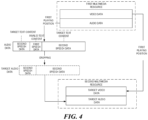
- FIG. 4 illustrates a schematic diagram of a process of obtaining a second multimedia resource through a first multimedia resource according to an embodiment of the present disclosure.
- the first multimedia resource includes audio data and video data.
- the audio data includes speech data
- the speech data includes first and second speech data.
- the first speech data is the speech data corresponding to invalid text content
- the second speech data is the speech data corresponding to the target text content.
- After determining the positions of the first speech data and second speech data in the speech data based on the first playing position crop the first speech data, retain the second speech data, and re-splice to generate target audio data; correspondingly, the corresponding video data is cropped and concatenated to generate the target video data according to the first playing position.
- the second multimedia resource is generated according to the target audio data and target video data.
- obtaining a first multimedia resource determining an initial text content corresponding to the first multimedia resource by performing speech recognition on audio data of the first multimedia resource, wherein the audio data of the first multimedia resource comprises speech data of the initial text content; determining an invalid text content in the initial text content, wherein the invalid text content is semantically non-informative; determining a first playing position of the speech data of the invalid text content in the first multimedia resource; and cropping the first multimedia resource based on the first playing position to obtain a second multimedia resource, wherein audio data of the second multimedia resource comprises speech data of a target text content but does not comprise speech data of the invalid text content, wherein the target text content is other text content in the initial text content than the invalid text content.
- the automatic positioning and cropping of the invalid text content in the first multimedia resource is implemented, and the efficiency and the effect of cropping the invalid content in the multimedia resource are improved, as well as the playing fluency of the cropped multimedia resources.
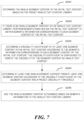
- FIG. 5 illustrates a schematic flow diagram 2 of the flow of a multimedia processing method provided by an embodiment of the disclosure.
- steps S102-S105 are further refined on the basis of the embodiment shown in FIG. 3 , and the multimedia processing method includes:
- Voice Endpoint Detection aims to identify silent periods (i.e., non-human voice signals) from a stream of speech signals.
- the audio data of the first multimedia resource is processed to identify the speech data corresponding to the human voice and the non-speech data corresponding to the non-human voice, so as to realize the subsequent processing process based on the speech data.
- the specific implementation method of the voice activity detection algorithm is an existing technology known to those skill in the art, and will not be repeated here.
- S203 determine the initial text content corresponding to the first multimedia resource by performing speech recognition on the audio data of the first multimedia resource, wherein the initial text content includes a plurality of segment content.
- S203 includes two specific implementation steps: S2031 and S2032.
- S2031 according to automatic speech recognition technology, perform speech recognition on audio data of the first multimedia resource to obtain a plurality of speech words and their corresponding timestamps.
- the timestamps represent the playing position of the audio data corresponding to the speech words in the first multimedia resource.
- S2032 generate the initial text content according to a plurality of speech words.
- ASR Automatic Speech Recognition
- ASR Automatic Speech Recognition
- the audio signal is preprocessed, feature extraction, post-processing, feature recognition, and other links to realize the conversion from speech to text.
- ASR Automatic Speech Recognition
- the specific algorithms involved in each processing link can be configured according to specific needs, and we will not illustrate them one by one here.
- a word-level recognition result which is a speech word, wherein each speech word corresponds to a segment of audio data, i.e. an audio segment.
- the speech words corresponding to each audio segment are sequentially arranged, and the generated text containing a plurality of speech words is the initial text content.
- the timestamp corresponding to each speech word will be determined to represent the playing position of the audio data corresponding to the speech word (i.e., the aforementioned speech segment) in the first multimedia resource. This process is implemented through a preset automatic speech recognition algorithm, which will not be repeated here.
- each or more speech words can form a segment of content to represent specific semantics.
- the invalid text content in the initial text content it can appear in the form of one single speech word, such as "um”, or it can also appear in the form of two speech words, such as "that".
- the above examples are only for semantically non-informative content that often appears in Chinese speech and are similar to other languages. We will not provide one-by-one examples here.
- S204 determine at least one invalid segment content from the plurality of segment contents of the initial text content.
- S204 includes five specific implementation steps S2041, S2042, S2043, S2044, and S2045.
- S2041 determine the invalid segment content in the initial text content based on the preset invalid text content library.
- a plurality of semantically non-informative speech words or combinations of speech words are preset in the invalid text content library.
- the semantically non-informative speech terms and/or combinations are preset.
- the combination of speech words and consistency detection in the initial text content can determine the same semantically non-informative speech words and/or the combination of speech words in the initial text content, i.e. the invalid segment content.
- step S204 can be implemented.
- the invalid segment content is determined through the invalid text content library, because the step of semantic analysis is omitted, the efficiency is higher, the computing resources are less occupied, and the efficiency of locating and cropping invalid text content can be improved.
- S2043 determine a credibility coefficient of at least one segment content in the initial text content according to the semantic information corresponding to each segment content of the initial text content.
- the credibility coefficient is configured to denote the credibility of the segment content as invalid text content.
- S2044 determine at least one invalid segment content from at least one segment of content according to the credibility coefficient of the segment content and a preset credibility threshold.
- the output speech information includes confidence of the semantic type corresponding to the content of the segment, and the confidence represents the semantics
- the analysis model evaluates the credibility of the semantic classification results of the segment content, i.e. the confidence is the credibility coefficient. The higher the credibility coefficient, the more credible the semantic type corresponding to the segment content.
- “Invalid content” also corresponds to a semantic classification. In the process of determining the semantic classification of "invalid content", through the credibility coefficient of the segment content and the preset credibility threshold, the segment content corresponding to the credibility coefficient which is larger than the credibility threshold is determined to be the semantic classification of the "invalid content", i.e. invalid segment content.
- the credibility coefficient of each segment content is configured to determine the invalid segment content, which can improve the recognition accuracy of invalid segment content and reduce misjudgment.
- S2045 add the invalid segment content determined based on semantic information to the invalid text content library.
- the invalid segment content is added to the invalid text content library because the invalid text library does not include the words or combinations of words corresponding to the above invalid segment content, so as to expand the content of the invalid text content library and improve the accuracy and effectiveness of the invalid text content judgment by using the invalid text content library.
- S205 determine the invalid text content in the initial text content according to at least one invalid segment content.
- the invalid text content may include one or more invalid segment contents. After determining each invalid segment content in the initial text content, the corresponding invalid text content can be determined.
- the speech words in the invalid segment content are generated by converting the speech data, which corresponds to the human voice.
- the duration of human voice pronunciation i.e. human voices are different in the dimension of pronunciation duration.
- Different pronunciation durations can express different semantics, which in turn determines whether speech words can express semantic information. For example, if a user utters a "um" speech for two seconds, the speech word "um” is a tone-pausing word with no specific meaning and should belong to the invalid segment content in this context; in the context of a user's conversation: "Did you have breakfast?" "Hmm. Yes.” At this point, the 0.2-second speech "Hmm" represents specific semantics, so it is not an invalid segment content.
- each speech word has a preset standard duration based on the above example, for example, 0.2 seconds.
- the playing time of the determined speech word is much longer than the standard duration or much less than the standard duration, according to the timestamp corresponding to the speech word, it means that the speech word is likely to be a tone pause word and is semantically non-informative, so it can be determined as the invalid text content.
- the standard duration of the speech word is compared with the playing duration of the speech word to detect whether the speech word in the invalid segment content is an invalid word generated due to a pause in the tone or other reasons, thereby reducing the need for the type in different contexts. Under the misjudgment of speech words with different meanings, the recognition accuracy of the invalid text content is improved.
- S206 determine the start point and end point of the speech data of each invalid segment content in the invalid text content in the audio data of the first multimedia resource.
- S207 determine the first playing position of the speech data of invalid text content in the first multimedia resource according to the corresponding the start points and end points of each invalid segment content in the invalid text content.
- the invalid segment content includes at least one speech word, and determine the first playing position of the speech data of the invalid text content in the first multimedia resource according to the timestamp corresponding to each speech word in the invalid text content.
- S209 play the audio segment corresponding to the invalid text content in response to operation instruction of the invalid text content.
- the terminal device to which the method provided in this embodiment is applied has a touchable display screen, an application (APP) for editing the first multimedia resource runs in the terminal device, and the terminal device can touch the screen to display the interactive interface of the APP.
- FIG. 8 illustrates a schematic diagram of an interactive interface provided by an embodiment of the disclosure.
- the interactive interface of the terminal device displays the initial text content ( FIG. 8 exemplarily shows part of "Uh, it's the latest mechanical keyboard released on the 16th of this month”), in a way of highlighting (indicated by the font in black in FIG. 8 ), and the invalid text content is displayed in the initial text content (i.e., "um” and "that one").
- the terminal device plays the audio and or video segments corresponding to the invalid text content so that the user can determine whether the audio segments corresponding to the invalid text content is indeed meaningless content, such as pauses and repetitions, that is semantically non-informative.
- S210 determine a second playing position of the non-speech data in the first multimedia resource according to its start points and end points.
- S211 obtain other text content in the initial text content, except for the invalid segment content based on the first playing position and second playing position, wherein the other text content includes at least one target segment content.
- the non-speech data refers to the audio data corresponding to the non-voice part in the first multimedia resource, such as the blank part before the introduction and the blank part after the introduction in the product introduction video.
- the non-speech data is obtained through the voice activity detection algorithm in step S202 and will not be repeated here.
- the corresponding playing position of the non-speech data in the first multimedia resource i.e. the second playing position, can be obtained.
- non-speech data can be located according to the second playing position. Crop the first multimedia resource based on the first playing position and second playing position, to remove the speech data corresponding to invalid segment content and non-speech data in the first multimedia resource, leaving audio data corresponding to other text content, i.e. the audio data corresponding to the target segment content.
- S212 add a fade-in effect at the start point of the speech data corresponding to at least one target segment content, and/or add a fade-out effect at the end of the speech data corresponding to at least one target segment content, generating transitional speech data corresponding to the target segment content.
- S213 splice the transitional speech data according to the first playing position and second playing position to generate the second multimedia resource.
- a fade-in and fade-out effect is added to the corresponding speech data of the target segment content. Specifically, for example, adding a fade-in effect at the start point of the speech data corresponding to at least one target segment content, and adding a fade-out effect at the speech data corresponding to at least one target segment content.
- the fade-in effect and fade-out effect refer to adding temporal windowings at the start points and end points of the speech data, so that the corresponding speech data of a target segment begins to play, and the volume gradually increases from small to large (fade-in) or decreases from large to small (fade-out), reducing abruptness of the cropped audio data.
- the specific method of adding a fade-in and fade-out to an audio segment is prior art in this field and will not be repeated here.
- the second multimedia resource includes only the multimedia video corresponding to the target text content composed of the target segment content and does not include the multimedia video corresponding to the invalid text content and the multimedia video corresponding to the non-voice data. Since the second multimedia resource removes verbal errors, pauses, verbal language and other non-informative content, the content playing fluency of the second multimedia resource can be improved.
- FIG. 9 illustrates another schematic diagram of the process of obtaining a second multimedia resource through a first multimedia resource according to an embodiment of the present disclosure.
- determine the speech data and non-speech data after performing the voice activity detection on the audio data of the first multimedia resource.
- determine a plurality of invalid segment contents after processing steps such as speech recognition and semantic analysis on the speech data, wherein the invalid segment content corresponds to the first speech data, and the target segment content other than the invalid segment content corresponds to the second speech data.
- the audio frequency data to remove the first speech data and non-speech data, and generate the target audio data corresponding to the target text content.
- crop the video data according to the first playing position and second playing position to generate the target video data. Then merge the target audio data and target video data to generate the second multimedia resource.
- step S201 is the same as that of step S 101 in this embodiment shown in FIG. 3 of the present disclosure, and will not be repeated here.
- FIG. 10 illustrates a structural block diagram of a multimedia processing apparatus provided by an embodiment of the disclosure.
- the multimedia processing apparatus 3 includes:
- the first confirmation module 32 is specifically configured to: perform semantic analysis on the initial text content to obtain semantic information corresponding to the initial text content; and determine the invalid text content in the initial text content according to the semantic information.
- the initial text content includes a plurality of segments of content.
- the first confirmation module 32 is specifically configured to: determine a credibility coefficient of at least one segment content in the initial text content according to the semantic information corresponding to each segment content of the initial text content.
- the credibility coefficient is configured to denote the credibility of the segment content as invalid text content; determine at least one invalid segment content from the at least one segment of content according to the credibility coefficient of the segment content and a preset credibility threshold; determine the invalid text content in the initial text content according to the at least one invalid segment content.
- the second confirmation module 33 is specifically configured to: determine the start point and end point of the speech data of each invalid segment content in the audio data of the first multimedia resource; determine the first playing position of the speech data of the invalid text content in the first multimedia resource according to the content of each invalid segment corresponding to the start point and end point.
- the generation module 34 is specifically configured to: obtain other text content in the initial text content except for the invalid segment content based on the first playing position, wherein the other text content includes at least one target segment content; add a fade-in effect at the start point of the speech data corresponding to at least one target segment content, and/or add a fade-out effect at the end of the speech data corresponding to at least one target segment content, generating transitional speech data corresponding to the target segment content; splice the transitional speech data according to the first playing position to generate the second multimedia resource.
- the first confirmation module 32 before semantic analysis is performed on the initial text content to obtain semantic information corresponding to the initial text content, the first confirmation module 32 is also configured to: determine the initial invalid text content in the text content based on preset invalid text content library; when the first confirmation module 32 performs semantic analysis on the initial text content to obtain semantic information corresponding to the initial text content, it is specifically configured to: if there is no invalid text content in the invalid text content database, then the initial text content is subjected to semantic analysis to obtain semantic information corresponding to the initial text content; after determining the invalid text content in the initial text content according to the semantic information, the first confirmation module 32 is also cconfigured to: adding the invalid text content, determined based on the semantic information, to the invalid text content library.
- the generation module 34 before cropping the first multimedia resource based on the first playing position to obtain the second multimedia resource, is further configured to: display the invalid text content in the initial text content; play the audio segment corresponding to the invalid text content in response to operation instruction of the invalid text content.
- the speech recognition module 31 determines an initial text content corresponding to the first multimedia resource by performing speech recognition on audio data of the first multimedia resource, it is specifically configured to: recognize speech data and non-speech data in the audio data of the first multimedia resource through a voice activity detection VAD algorithm; determine the initial text content corresponding to the first multimedia resource by performing a speech recognition on the speech data in the audio data of the first multimedia resource.
- the second confirmation module 33 is further configured to: determine a second playing position of the non-speech data in the first multimedia resource according to its start points and end points; the generation module 34, is specifically configured to: crop the first multimedia resource based on the first playing position and second playing position to obtain the second multimedia resource, wherein the second multimedia resource does not include non-voice data.
- the speech recognition module 31 determines an initial text content corresponding to the first multimedia resource by performing speech recognition on audio data of the first multimedia resource, it is specifically configured to: perform speech recognition on audio data of the first multimedia resource to obtain a plurality of speech words and their corresponding timestamps according to automatic speech recognition (ASR) technology.
- the timestamps represent the playing position of the audio data corresponding to the speech words in the first multimedia resource; generate the initial text content according to a plurality of speech words;
- the second confirmation module 33 is specifically configured to: determine the first playing position of the speech data of the invalid text content in the first multimedia resource according to the timestamp corresponding to each speech word in the invalid text content.
- the first confirmation module 32 is specifically configured to: obtain the playing duration of each speech word according to the corresponding timestamp of the speech word; determine speech words with a playing duration greater than a standard duration first duration threshold, or, speech words with a playing duration less than a standard duration second duration threshold, according to the preset standard duration and the playing duration of speech words, as the invalid text content in the initial text content.
- the first multimedia resource further includes the video data
- the generation module 34 is specifically configured to: crop the audio data and video data of the first multimedia resource based on the first playing position to obtain the second multimedia resource.
- the multimedia processing apparatus 3 provided in this embodiment can be configured to execute the technical solution of the above method embodiment, and its implementation principle and technical effect are similar, and will not be repeated here in this embodiment.
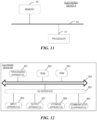
- FIG. 11 illustrates a structural schematic diagram of an electronic device provided by an embodiment of the disclosure.
- the electronic device 4 includes at least one processor 41 and memory 42;
- processor 41 and the memory 42 are connected by a bus 43.
- FIG. 12 it illustrates a schematic structural diagram of an electronic device 900 suitable for implementing embodiments of the present disclosure
- the electronic device 900 may be a terminal device or a server.
- terminal devices can include but are not limited to mobile phones, laptops, digital broadcasting receivers, Personal Digital Assistant (PDA), Portable Android Device (PAD), Portable Media Player (PMP), Mobile terminals such as car navigation terminals, as well as fixed terminals such as digital television (TV) and desktop computers.
- PDA Personal Digital Assistant
- PDA Portable Android Device
- PMP Portable Media Player
- Mobile terminals such as car navigation terminals
- TV digital television
- the electronic device shown in FIG. 12 is only an example and should not bring any limitation to the function and scope of use of the embodiments of the present disclosure.
- the electronic device 900 can include a processing apparatus (such as a central processing unit, graphics processor, etc.) 901, which can perform various appropriate actions and processes according to a program stored in a read-only memory (Read Only Memory, ROM for short) 902 or loaded from a storage apparatus 908 into a random access memory (Random Access Memory, RAM for short) 903.
- a processing apparatus such as a central processing unit, graphics processor, etc.
- RAM random access memory
- various programs and data required for the operation of the electronic device 900 are also stored.
- the processing apparatus 901, the ROM 902, and the RAM 903 are connected to each other through the bus 904.
- An Input/Output (I/O) interface 905 is also connected to bus 904.
- the following apparatuses can be connected to the I/O interface 905: including an input apparatus 906 such as touch screens, touch pads, keyboards, mice, cameras, microphones, accelerometers, gyroscopes, etc.; including, for example, liquid crystal displays (Liquid Crystal Display, LCD for short), an output apparatus 907 such as a speaker, a vibrator, etc.; a storage apparatus 908 such as a magnetic tape, a hard disk, etc.; and a communication apparatus 909.
- the communication apparatus 909 may allow the electronic device 900 to perform wireless or wired communication with other devices to exchange data.
- FIG. 12 illustrates the electronic device 900 with various apparatuses, it should be understood that it is not required to implement or have all of the illustrated apparatuses. Alternatively, more or fewer apparatuses may be implemented or provided.
- an embodiment of the present disclosure includes a computer program product, which includes a computer program carried on a computer-readable medium, and the computer program includes a program code for executing the method shown in the flowchart.
- the computer program can be downloaded and installed from the network through the communication apparatus 909, installed from the storage apparatus 908, or installed from the ROM 902.
- the processing apparatus 901 the above functions defined in the embodiment of the present disclosure are executed.
- the computer-readable medium mentioned in the present disclosure can be a computer-readable signal medium, a computer-readable storage medium, or any combination of the two.
- the computer-readable storage medium can be, for example, but not limited to, an electrical, magnetic, optical, electromagnetic, infrared, or semiconductor system, apparatus, or device, or a combination of any of the above. More specific examples of the computer-readable storage medium may include but are not limited to electrical connections with one or more wires, portable computer disks, hard disks, random access memory (RAM), read-only memory (ROM), erasable programmable read-only memory (EPROM or flash memory), optical fiber, portable compact disc read-only memory (CD-ROM), optical storage devices, magnetic storage devices, or any suitable combination of the above.
- a computer-readable storage medium may be any tangible medium that contains or stores a program, which may be used by or in combination with an instruction execution system, apparatus, or device.
- the computer-readable signal medium may include data signals propagated in the baseband/or as part of the carrier, wherein a computer-readable program code is carried. The propagation of data signals can adopt various forms, including but not limited to electromagnetic signals, optical signals, or any suitable combination of the above.
- the computer-readable signal medium can also be any computer-readable medium other than a computer-readable storage medium.
- the computer-readable signal medium may send, propagate, or transmit programs for use by or in combination with instruction execution systems, apparatuses, or devices.
- the program code contained on the computer-readable medium can be transmitted by any suitable medium, including but not limited to wire, optical cable, RF (Radio Frequency), etc., or any suitable combination of the above.
- the computer-readable medium may be included in the electronic device, or it may exist alone without being assembled into the electronic device.
- the computer-readable medium carries one or more programs, and when one or more programs are executed by the electronic device, the electronic device is caused to execute the method shown in the embodiment.
- the computer program code used to perform the operations of the present disclosure may be written in one or more programming languages or a combination thereof.
- the programming languages include object-oriented programming languages - such as Java, Smalltalk, and C++, and also conventional procedural programming languages - such as "C" language or similar programming languages.
- the program code can be executed entirely on the user's computer, partly on the user's computer, executed as an independent software package, partly on the user's computer, partly executed on a remote computer, or entirely executed on the remote computer or server.
- the remote computer can be connected to the user's computer through any kind of network-including a Local Area Network (LAN) or a Wide Area Network (WAN) - or, it can be connected to an external computer (for example, using an Internet service provider to connect via the Internet).
- LAN Local Area Network
- WAN Wide Area Network
- each block in a flow diagram or block diagram can represent a module, program segment, or part of code that contains one or more executable instructions for implementing specified logical functions.
- the functions indicated in the blocks can also occur in a different order than those indicated in the accompanying drawings. For example, two consecutive blocks can actually be executed in parallel, and sometimes they can also be executed in the opposite order, depending on the function involved.
- each block in the block diagram and/or flow diagram, as well as the combination of blocks in the block diagram and/or flow diagram, can be implemented using dedicated hardware-based systems that perform specified functions or operations or can be implemented using a combination of dedicated hardware and computer instructions.
- a first obtaining unit can also be described as "a unit for obtaining at least two Internet Protocol addresses.”
- FPGA Field Programmable Gate Array
- ASIC Application Specific Integrated Circuit
- ASSP Application Specific Standard Product
- SOC System on Chip
- CPLD Complex Programmable Logical device
- a machine-readable medium may be a tangible medium, which may contain or store a program for use by the instruction execution system, apparatus, or device or in combination with the instruction execution system, apparatus, or device.
- the machine-readable medium may be a machine-readable signal medium or a machine-readable storage medium.
- the machine-readable medium may include but is not limited to, an electronic, magnetic, optical, electromagnetic, infrared, or semiconductor system, apparatus, or device, or any suitable combination of the foregoing.
- machine-readable storage media would include electrical connections based on one or more wires, portable computer disks, hard disks, random access memory (RAM), read-only memory (ROM), erasable programmable read-only memory (EPROM or flash memory), optical fiber, portable compact disk read-only memory (CD-ROM), optical storage device, magnetic storage device, or any suitable combination of the foregoing.
- RAM random access memory
- ROM read-only memory
- EPROM or flash memory erasable programmable read-only memory
- CD-ROM compact disk read-only memory
- magnetic storage device or any suitable combination of the foregoing.
- a multimedia processing method comprises: obtaining a first multimedia resource; determining an initial text content corresponding to the first multimedia resource by performing speech recognition on audio data of the first multimedia resource, wherein the audio data of the first multimedia resource comprises speech data of the initial text content; determining an invalid text content in the initial text content, wherein the invalid text content is semantically non-informative; determining a first playing position of the speech data of the invalid text content in the first multimedia resource; cropping the first multimedia resource based on the first playing position to obtain a second multimedia resource, wherein audio data of the second multimedia resource comprises speech data of a target text content but does not comprise speech data of the invalid text content, wherein the target text content is other text content in the initial text content than the invalid text content.
- determining an invalid text content in the initial text content comprises: performing a semantic analysis on the initial text content to obtain semantic information corresponding to the initial text content; determining the invalid text content in the initial text content according to the semantic information.
- the initial text content comprises a plurality of segment content
- determining the invalid text content in the initial text content according to the semantic information comprises: determining a credibility coefficient of at least one segment content of the initial text content according to the semantic information corresponding to the initial text content, wherein the credibility coefficient is used for denoting credibility that the segment content is the invalid text content; determining at least one invalid segment content from the at least one segment content according to the credibility coefficient of the segment content and a preset credibility threshold; determining the invalid text content in the initial text content according to the at least one invalid segment content.
- determining a first playing position of the speech data of the invalid text content in the first multimedia resource comprises: determining a start point and an end point of the speech data of each invalid segment content in the audio data of the first multimedia resource; determining the first playing position of the speech data of the invalid text content in the first multimedia resource based on the start point and the end point corresponding to each invalid segment content.
- cropping the first multimedia resource based on the first playing position to obtain a second multimedia resource comprises: obtaining other text content in the initial text content than the invalid segment content based on the first playing position, wherein the other text content comprises at least one target segment content; adding a fade-in effect at a start point of speech data corresponding to the at least one target segment content, and/or adding a fade-out effect at an end point of the speech data corresponding to the at least one target segment content, to generate transition speech data corresponding to the target segment content; splicing the transition speech data according to the first playing position to generate the second multimedia resource.
- the method before performing the semantic analysis on the initial text content to obtain the semantic information corresponding to the initial text content, the method further comprises: determining the invalid text content in the initial text content based on a preset invalid text content library; performing semantic analysis on the initial text content to obtain semantic information corresponding to the initial text content comprises: performing semantic analysis on the initial text content to obtain the semantic information corresponding to the initial text content if the invalid text content does not exist in the invalid text content library; after determining the invalid text content in the initial text content based on the semantic information, the method further comprises: adding the invalid text content determined based on the semantic information to the invalid text content library.
- before cropping the first multimedia resource based on the first playing position to obtain the second multimedia resource further comprises: displaying the invalid text content in the initial text content; playing an audio segment corresponding to the invalid text content in response to an action instruction for the invalid text content.
- determining an initial text content corresponding to the first multimedia resource by performing speech recognition on audio data of the first multimedia resource comprises: recognizing speech data and non-speech data in the audio data of the first multimedia resource through a voice activity detection VAD algorithm; determining the initial text content corresponding to the first multimedia resource by performing a speech recognition on the speech data in the audio data of the first multimedia resource.
- the method further comprises: determining a second playing position of the non-speech data in the first multimedia resource according to a start point and end point of the non-speech data; cropping the first multimedia resource based on the first playing position to obtain a second multimedia resource comprises: cropping the first multimedia resource based on the first playing position and the second playing position to obtain the second multimedia resource, wherein the second multimedia resource does not comprise the non-speech data.
- determining the invalid text content in the initial text content comprises: obtaining a duration of each of the speech words according to a timestamp corresponding to the speech word; determining, according to a preset standard duration and a duration of the speech word, a speech word with a duration greater than the standard duration by a first duration threshold or a speech word with a duration less than the standard duration by a second duration threshold as the invalid text content in the initial text content.
- the first multimedia resource further comprises video data
- cropping the first multimedia resource based on the first playing position to obtain a second multimedia resource comprises: cropping the audio data and the video data of the first multimedia resource based on the first playing position to obtain the second multimedia resource.
- a multimedia processing apparatus comprising:
- the first confirmation module is specifically configured to: perform a semantic analysis on the initial text content to obtain semantic information corresponding to the initial text content; determine the invalid text content in the initial text content according to the semantic information.
- the initial text content comprises a plurality of segment content.
- the first confirmation module when determining the invalid text content in the initial text content according to the semantic information, is specifically configured to: determine a credibility coefficient of at least one segment content of the initial text content according to the semantic information corresponding to the initial text content, wherein the credibility coefficient is used for denoting credibility that the segment content is the invalid text content; determine at least one invalid segment content from the at least one segment content according to the credibility coefficient of the segment content and a preset credibility threshold; determine the invalid text content in the initial text content according to the at least one invalid segment content.
- the second confirmation module is specifically configured to: determine a start point and an end point of the speech data of each invalid segment content in the audio data of the first multimedia resource; determine the first playing position of the speech data of the invalid text content in the first multimedia resource based on the start point and the end point corresponding to each invalid segment content.
- the generation module is specifically configured to: obtain other text content in the initial text content than the invalid segment content based on the first playing position, wherein the other text content comprises at least one target segment content; add a fade-in effect at a start point of speech data corresponding to the at least one target segment content, and/or adding a fade-out effect at an end point of the speech data corresponding to the at least one target segment content, to generate transition speech data corresponding to the target segment content; splice the transition speech data according to the first playing position to generate the second multimedia resource.
- the first confirmation module before performing the semantic analysis on the initial text content to obtain the semantic information corresponding to the initial text content, is further configured to: determine the invalid text content in the initial text content based on a preset invalid text content library; when the first confirmation module performs a semantic analysis on the initial text content to obtain semantic information corresponding to the initial text content, it is specifically configured to: perform a semantic analysis on the initial text content to obtain the semantic information corresponding to the initial text content if the invalid text content does not exist in the invalid text content library; after the first confirmation module determines the invalid text content in the initial text content based on the semantic information, it is further configured to: add the invalid text content determined based on the semantic information to the invalid text content library.
- the generation module before cropping the first multimedia resource based on the first playing position to obtain the second multimedia resource, is further configured to: display the invalid text content in the initial text content; play an audio segment corresponding to the invalid text content in response to an action instruction for the invalid text content.
- the speech recognition module determines an initial text content corresponding to the first multimedia resource by performing speech recognition on audio data of the first multimedia resource, it is specifically configured to: recognize speech data and non-speech data in the audio data of the first multimedia resource through a voice activity detection VAD algorithm; determine the initial text content corresponding to the first multimedia resource by performing a speech recognition on the speech data in the audio data of the first multimedia resource.
- the second confirmation module is further configured to: determine a second playing position of the non-speech data in the first multimedia resource according to a start point and end point of the non-speech data; and crop the first multimedia resource based on the first playing position to obtain a second multimedia resource comprises: cropping the first multimedia resource based on the first playing position and the second playing position to obtain the second multimedia resource, wherein the second multimedia resource does not comprise the non-speech data.
- the speech recognition module determines an initial text content corresponding to the first multimedia resource by performing speech recognition on audio data of the first multimedia resource, it is specifically configured to: perform, according to an automatic speech recognition ASR technique, a speech recognition on the audio data of the first multimedia resource to obtain a plurality of speech words and a timestamp corresponding to each of the speech words, the timestamp denoting a playing position of audio data corresponding to the speech word in the first multimedia resource; generate the initial text content according to the plurality of speech words; the second module is specifically configured to: determine the first playing position of the speech data of the invalid text content in the first multimedia resource according to a timestamp corresponding to each of the speech words in the invalid text content.
- the first confirmation module is specifically configured to: obtain a duration of each of the speech words according to a timestamp corresponding to the speech word; determine, according to a preset standard duration and a duration of the speech word, a speech word with a duration greater than the standard duration by a first duration threshold or a speech word with a duration less than the standard duration by a second duration threshold as the invalid text content in the initial text content.
- the first multimedia resource further comprises video data
- the generation module is specifically configured to: crop the audio data and the video data of the first multimedia resource based on the first playing position to obtain the second multimedia resource.
- an electronic device comprising: at least one processor and memory; the memory storing computer-executable instructions; the at least one processor executing the computer-executable instructions stored in the memory to cause the at least one processor to implement the multimedia processing method according to the above first aspect and various possible designs of the first aspect.
- a computer-readable storage medium stores computer-executable instructions, that, when executed by a processor, implement the multimedia processing method according to the first aspect and various possible designs of the first aspect.
- a computer program product in embodiments of the present disclosure, comprising a computer program, which, when executed by a processor, implements the method according to the first aspect and various possible designs of the first aspect.
- a computer program in embodiments of the present disclosure, wherein the computer program, when executed by a processor, implements the method according to the first aspect and various possible designs of the first aspect.
Landscapes
- Engineering & Computer Science (AREA)
- Multimedia (AREA)
- Physics & Mathematics (AREA)
- Theoretical Computer Science (AREA)
- Computational Linguistics (AREA)
- Health & Medical Sciences (AREA)
- Audiology, Speech & Language Pathology (AREA)
- Signal Processing (AREA)
- General Engineering & Computer Science (AREA)
- General Physics & Mathematics (AREA)
- Human Computer Interaction (AREA)
- Databases & Information Systems (AREA)
- Acoustics & Sound (AREA)
- Artificial Intelligence (AREA)
- General Health & Medical Sciences (AREA)
- Library & Information Science (AREA)
- Data Mining & Analysis (AREA)
- Mathematical Physics (AREA)
- Computer Security & Cryptography (AREA)
- Probability & Statistics with Applications (AREA)
- Two-Way Televisions, Distribution Of Moving Picture Or The Like (AREA)
- Information Retrieval, Db Structures And Fs Structures Therefor (AREA)
- Management Or Editing Of Information On Record Carriers (AREA)
Applications Claiming Priority (2)
| Application Number | Priority Date | Filing Date | Title |
|---|---|---|---|
| CN202110802038.0A CN115623279B (zh) | 2021-07-15 | 2021-07-15 | 多媒体处理方法、装置、电子设备及存储介质 |
| PCT/SG2022/050494 WO2023287360A2 (fr) | 2021-07-15 | 2022-07-14 | Procédé et appareil de traitement multimédia, dispositif électronique et support de stockage |
Publications (4)
| Publication Number | Publication Date |
|---|---|
| EP4336854A2 true EP4336854A2 (fr) | 2024-03-13 |
| EP4336854A4 EP4336854A4 (fr) | 2024-09-25 |
| EP4336854C0 EP4336854C0 (fr) | 2025-11-05 |
| EP4336854B1 EP4336854B1 (fr) | 2025-11-05 |
Family
ID=84855225
Family Applications (1)
| Application Number | Title | Priority Date | Filing Date |
|---|---|---|---|
| EP22842574.0A Active EP4336854B1 (fr) | 2021-07-15 | 2022-07-14 | Procédé et appareil de traitement multimédia, dispositif électronique et support de stockage |
Country Status (6)
| Country | Link |
|---|---|
| US (1) | US12159649B2 (fr) |
| EP (1) | EP4336854B1 (fr) |
| JP (1) | JP7826343B2 (fr) |
| CN (1) | CN115623279B (fr) |
| BR (1) | BR112023026041A2 (fr) |
| WO (1) | WO2023287360A2 (fr) |
Families Citing this family (5)
| Publication number | Priority date | Publication date | Assignee | Title |
|---|---|---|---|---|
| CN114970666B (zh) * | 2022-03-29 | 2023-08-29 | 北京百度网讯科技有限公司 | 一种口语处理方法、装置、电子设备及存储介质 |
| CN118368478A (zh) * | 2023-01-19 | 2024-07-19 | 北京字跳网络技术有限公司 | 视频的编辑方法、装置、电子设备和存储介质 |
| US12051445B1 (en) | 2023-01-19 | 2024-07-30 | Beijing Zitiao Network Technology Co., Ltd. | Method and apparatus of video editing, and electronic device and storage medium |
| CN116935895A (zh) * | 2023-07-24 | 2023-10-24 | 百度在线网络技术(北京)有限公司 | 信息处理方法、装置、电子设备以及存储介质 |
| CN119094859B (zh) * | 2024-08-14 | 2025-04-18 | 深圳智慧保业科技有限公司 | 基于海量素材库的多媒体内容智能生成方法及系统 |
Family Cites Families (22)
| Publication number | Priority date | Publication date | Assignee | Title |
|---|---|---|---|---|
| JP3816901B2 (ja) * | 2003-05-30 | 2006-08-30 | 株式会社東芝 | ストリームデータの編集方法と編集システム及びプログラム |
| EP1754221A1 (fr) * | 2004-05-27 | 2007-02-21 | Koninklijke Philips Electronics N.V. | Procede et systeme pour modifier des messages |
| US20070219778A1 (en) * | 2006-03-17 | 2007-09-20 | University Of Sheffield | Speech processing system |
| JP5237174B2 (ja) * | 2009-04-09 | 2013-07-17 | Kddi株式会社 | 携帯端末によって原コンテンツを編集するコンテンツ編集方法、コンテンツサーバ、システム及びプログラム |
| WO2010146869A1 (fr) * | 2009-06-18 | 2010-12-23 | 日本電気株式会社 | Système de support d'édition, procédé de support d'édition et programme de support d'édition |
| CN202502737U (zh) * | 2012-03-12 | 2012-10-24 | 中国人民解放军济南军区司令部第二部 | 一种视音频信息的智能编辑系统 |
| CN102685151A (zh) | 2012-06-05 | 2012-09-19 | 陈云昊 | 语音过滤及转发的方法 |
| US9020817B2 (en) * | 2013-01-18 | 2015-04-28 | Ramp Holdings, Inc. | Using speech to text for detecting commercials and aligning edited episodes with transcripts |
| US11861906B2 (en) * | 2014-02-28 | 2024-01-02 | Genius Sports Ss, Llc | Data processing systems and methods for enhanced augmentation of interactive video content |
| US10225621B1 (en) * | 2017-12-20 | 2019-03-05 | Dish Network L.L.C. | Eyes free entertainment |
| US20190215464A1 (en) * | 2018-01-11 | 2019-07-11 | Blue Jeans Network, Inc. | Systems and methods for decomposing a video stream into face streams |
| CN108259965B (zh) * | 2018-03-31 | 2020-05-12 | 湖南广播电视台广播传媒中心 | 一种视频剪辑方法和剪辑系统 |
| CN109241332B (zh) * | 2018-10-19 | 2021-09-24 | 广东小天才科技有限公司 | 一种通过语音确定语义的方法及系统 |
| CN110297907B (zh) * | 2019-06-28 | 2022-03-08 | 谭浩 | 生成访谈报告的方法、计算机可读存储介质和终端设备 |
| CN110853621B (zh) * | 2019-10-09 | 2024-02-13 | 科大讯飞股份有限公司 | 语音顺滑方法、装置、电子设备及计算机存储介质 |
| CN111462741B (zh) * | 2020-03-02 | 2024-02-02 | 北京声智科技有限公司 | 语音数据处理方法、装置及存储介质 |
| CN111556254B (zh) * | 2020-04-10 | 2021-04-02 | 早安科技(广州)有限公司 | 利用视频内容进行视频切割的方法、系统、介质及智能设备 |
| CN111885313A (zh) * | 2020-07-17 | 2020-11-03 | 北京来也网络科技有限公司 | 一种音视频的修正方法、装置、介质及计算设备 |
| US11875781B2 (en) * | 2020-08-31 | 2024-01-16 | Adobe Inc. | Audio-based media edit point selection |
| CN112256836A (zh) | 2020-11-04 | 2021-01-22 | 中国建设银行股份有限公司 | 记录数据的处理方法、装置和服务器 |
| CN112700766B (zh) * | 2020-12-23 | 2024-03-19 | 北京猿力未来科技有限公司 | 语音识别模型的训练方法及装置、语音识别方法及装置 |
| CN112733654B (zh) * | 2020-12-31 | 2022-05-24 | 蚂蚁胜信(上海)信息技术有限公司 | 一种视频拆条的方法和装置 |
-
2021
- 2021-07-15 CN CN202110802038.0A patent/CN115623279B/zh active Active
-
2022
- 2022-07-14 EP EP22842574.0A patent/EP4336854B1/fr active Active
- 2022-07-14 BR BR112023026041A patent/BR112023026041A2/pt unknown
- 2022-07-14 JP JP2023576228A patent/JP7826343B2/ja active Active
- 2022-07-14 WO PCT/SG2022/050494 patent/WO2023287360A2/fr not_active Ceased
-
2023
- 2023-12-11 US US18/535,891 patent/US12159649B2/en active Active
Also Published As
| Publication number | Publication date |
|---|---|
| US20240105234A1 (en) | 2024-03-28 |
| US12159649B2 (en) | 2024-12-03 |
| WO2023287360A3 (fr) | 2023-04-13 |
| CN115623279A (zh) | 2023-01-17 |
| EP4336854A4 (fr) | 2024-09-25 |
| BR112023026041A2 (pt) | 2024-03-05 |
| CN115623279B (zh) | 2026-03-20 |
| JP7826343B2 (ja) | 2026-03-09 |
| EP4336854C0 (fr) | 2025-11-05 |
| JP2024527483A (ja) | 2024-07-25 |
| EP4336854B1 (fr) | 2025-11-05 |
| WO2023287360A2 (fr) | 2023-01-19 |
Similar Documents
| Publication | Publication Date | Title |
|---|---|---|
| EP4336854B1 (fr) | Procédé et appareil de traitement multimédia, dispositif électronique et support de stockage | |
| CN112908292B (zh) | 文本的语音合成方法、装置、电子设备及存储介质 | |
| US20240021202A1 (en) | Method and apparatus for recognizing voice, electronic device and medium | |
| US10614803B2 (en) | Wake-on-voice method, terminal and storage medium | |
| CN111711834B (zh) | 录播互动课的生成方法、装置、存储介质以及终端 | |
| US20240079002A1 (en) | Minutes of meeting processing method and apparatus, device, and medium | |
| WO2020098115A1 (fr) | Procédé d'ajout de sous-titres, appareil, dispositif électronique et support de stockage lisible par ordinateur | |
| CN115955585B (zh) | 视频生成方法、装置、电子设备及存储介质 | |
| CN111986655B (zh) | 音频内容识别方法、装置、设备和计算机可读介质 | |
| US11393458B2 (en) | Method and apparatus for speech recognition | |
| CN113421550A (zh) | 语音合成方法、装置、可读介质及电子设备 | |
| CN112785667B (zh) | 视频生成方法、装置、介质及电子设备 | |
| CN113761865A (zh) | 声文重对齐及信息呈现方法、装置、电子设备和存储介质 | |
| CN112818657A (zh) | 多音字读音的确定方法、装置、电子设备及存储介质 | |
| JP7717822B2 (ja) | 音声類似度決定方法及び装置、プログラム製品 | |
| CN115619897A (zh) | 图像处理方法、装置、电子设备及存储介质 | |
| CN114360535B (zh) | 语音对话的生成方法、装置、电子设备及存储介质 | |
| CN113763921B (zh) | 用于纠正文本的方法和装置 | |
| CN116805490A (zh) | 语音识别方法、装置、设备及计算机可读存储介质 | |
| WO2025067304A1 (fr) | Procédé et appareil de génération de contenu multimédia en continu, et équipement terminal | |
| WO2024183571A1 (fr) | Procédé et appareil de traitement de paroles, et dispositif électronique | |
| CN112542157A (zh) | 语音处理方法、装置、电子设备及计算机可读存储介质 | |
| CN112151073A (zh) | 一种语音处理方法、系统、设备及介质 | |
| CN116052635A (zh) | 一种音频敏感信息自动屏蔽方法、装置、设备及存储介质 | |
| CN113221514A (zh) | 文本处理方法、装置、电子设备和存储介质 |
Legal Events
| Date | Code | Title | Description |
|---|---|---|---|
| STAA | Information on the status of an ep patent application or granted ep patent |
Free format text: STATUS: THE INTERNATIONAL PUBLICATION HAS BEEN MADE |
|
| PUAI | Public reference made under article 153(3) epc to a published international application that has entered the european phase |
Free format text: ORIGINAL CODE: 0009012 |
|
| STAA | Information on the status of an ep patent application or granted ep patent |
Free format text: STATUS: REQUEST FOR EXAMINATION WAS MADE |
|
| 17P | Request for examination filed |
Effective date: 20231207 |
|
| AK | Designated contracting states |
Kind code of ref document: A2 Designated state(s): AL AT BE BG CH CY CZ DE DK EE ES FI FR GB GR HR HU IE IS IT LI LT LU LV MC MK MT NL NO PL PT RO RS SE SI SK SM TR |
|
| A4 | Supplementary search report drawn up and despatched |
Effective date: 20240827 |
|
| RIC1 | Information provided on ipc code assigned before grant |
Ipc: G10L 25/78 20130101ALN20240821BHEP Ipc: H04N 21/472 20110101ALI20240821BHEP Ipc: H04N 21/439 20110101ALI20240821BHEP Ipc: G11B 27/031 20060101ALI20240821BHEP Ipc: G06F 40/30 20200101ALI20240821BHEP Ipc: G06F 40/253 20200101ALI20240821BHEP Ipc: G06F 40/216 20200101ALI20240821BHEP Ipc: G06F 16/483 20190101ALI20240821BHEP Ipc: G06F 16/432 20190101ALI20240821BHEP Ipc: H04N 21/43 20110101ALI20240821BHEP Ipc: G10L 15/26 20060101ALI20240821BHEP Ipc: H04N 21/854 20110101AFI20240821BHEP |
|
| DAV | Request for validation of the european patent (deleted) | ||
| DAX | Request for extension of the european patent (deleted) | ||
| GRAP | Despatch of communication of intention to grant a patent |
Free format text: ORIGINAL CODE: EPIDOSNIGR1 |
|
| STAA | Information on the status of an ep patent application or granted ep patent |
Free format text: STATUS: GRANT OF PATENT IS INTENDED |
|
| RIC1 | Information provided on ipc code assigned before grant |
Ipc: G10L 25/78 20130101ALN20250507BHEP Ipc: H04N 21/472 20110101ALI20250507BHEP Ipc: H04N 21/439 20110101ALI20250507BHEP Ipc: G11B 27/031 20060101ALI20250507BHEP Ipc: G06F 40/30 20200101ALI20250507BHEP Ipc: G06F 40/253 20200101ALI20250507BHEP Ipc: G06F 40/216 20200101ALI20250507BHEP Ipc: G06F 16/483 20190101ALI20250507BHEP Ipc: G06F 16/432 20190101ALI20250507BHEP Ipc: H04N 21/43 20110101ALI20250507BHEP Ipc: G10L 15/26 20060101ALI20250507BHEP Ipc: H04N 21/854 20110101AFI20250507BHEP |
|
| INTG | Intention to grant announced |
Effective date: 20250526 |
|
| GRAS | Grant fee paid |
Free format text: ORIGINAL CODE: EPIDOSNIGR3 |
|
| GRAA | (expected) grant |
Free format text: ORIGINAL CODE: 0009210 |
|
| STAA | Information on the status of an ep patent application or granted ep patent |
Free format text: STATUS: THE PATENT HAS BEEN GRANTED |
|
| AK | Designated contracting states |
Kind code of ref document: B1 Designated state(s): AL AT BE BG CH CY CZ DE DK EE ES FI FR GB GR HR HU IE IS IT LI LT LU LV MC MK MT NL NO PL PT RO RS SE SI SK SM TR |
|
| REG | Reference to a national code |
Ref country code: CH Ref legal event code: F10 Free format text: ST27 STATUS EVENT CODE: U-0-0-F10-F00 (AS PROVIDED BY THE NATIONAL OFFICE) Effective date: 20251105 Ref country code: GB Ref legal event code: FG4D |
|
| REG | Reference to a national code |
Ref country code: DE Ref legal event code: R096 Ref document number: 602022024618 Country of ref document: DE |
|
| REG | Reference to a national code |
Ref country code: IE Ref legal event code: FG4D |
|
| U01 | Request for unitary effect filed |
Effective date: 20251202 |
|
| U07 | Unitary effect registered |
Designated state(s): AT BE BG DE DK EE FI FR IT LT LU LV MT NL PT RO SE SI Effective date: 20251210 |
|
| PG25 | Lapsed in a contracting state [announced via postgrant information from national office to epo] |
Ref country code: ES Free format text: LAPSE BECAUSE OF FAILURE TO SUBMIT A TRANSLATION OF THE DESCRIPTION OR TO PAY THE FEE WITHIN THE PRESCRIBED TIME-LIMIT Effective date: 20251105 |
|
| PG25 | Lapsed in a contracting state [announced via postgrant information from national office to epo] |
Ref country code: NO Free format text: LAPSE BECAUSE OF FAILURE TO SUBMIT A TRANSLATION OF THE DESCRIPTION OR TO PAY THE FEE WITHIN THE PRESCRIBED TIME-LIMIT Effective date: 20260205 |
|
| PG25 | Lapsed in a contracting state [announced via postgrant information from national office to epo] |
Ref country code: HR Free format text: LAPSE BECAUSE OF FAILURE TO SUBMIT A TRANSLATION OF THE DESCRIPTION OR TO PAY THE FEE WITHIN THE PRESCRIBED TIME-LIMIT Effective date: 20251105 |
|
| PG25 | Lapsed in a contracting state [announced via postgrant information from national office to epo] |
Ref country code: RS Free format text: LAPSE BECAUSE OF FAILURE TO SUBMIT A TRANSLATION OF THE DESCRIPTION OR TO PAY THE FEE WITHIN THE PRESCRIBED TIME-LIMIT Effective date: 20260205 |
|
| PG25 | Lapsed in a contracting state [announced via postgrant information from national office to epo] |
Ref country code: IS Free format text: LAPSE BECAUSE OF FAILURE TO SUBMIT A TRANSLATION OF THE DESCRIPTION OR TO PAY THE FEE WITHIN THE PRESCRIBED TIME-LIMIT Effective date: 20260305 |
|
| PG25 | Lapsed in a contracting state [announced via postgrant information from national office to epo] |
Ref country code: PL Free format text: LAPSE BECAUSE OF FAILURE TO SUBMIT A TRANSLATION OF THE DESCRIPTION OR TO PAY THE FEE WITHIN THE PRESCRIBED TIME-LIMIT Effective date: 20251105 |
|
| U1N | Appointed representative for the unitary patent procedure changed after the registration of the unitary effect |
Representative=s name: MARKS & CLERK LLP; GB |
|
| PG25 | Lapsed in a contracting state [announced via postgrant information from national office to epo] |
Ref country code: SM Free format text: LAPSE BECAUSE OF FAILURE TO SUBMIT A TRANSLATION OF THE DESCRIPTION OR TO PAY THE FEE WITHIN THE PRESCRIBED TIME-LIMIT Effective date: 20251105 |
|
| PGFP | Annual fee paid to national office [announced via postgrant information from national office to epo] |
Ref country code: GB Payment date: 20260518 Year of fee payment: 5 |
|
| PG25 | Lapsed in a contracting state [announced via postgrant information from national office to epo] |
Ref country code: CZ Free format text: LAPSE BECAUSE OF FAILURE TO SUBMIT A TRANSLATION OF THE DESCRIPTION OR TO PAY THE FEE WITHIN THE PRESCRIBED TIME-LIMIT Effective date: 20251105 |
|
| PG25 | Lapsed in a contracting state [announced via postgrant information from national office to epo] |
Ref country code: SK Free format text: LAPSE BECAUSE OF FAILURE TO SUBMIT A TRANSLATION OF THE DESCRIPTION OR TO PAY THE FEE WITHIN THE PRESCRIBED TIME-LIMIT Effective date: 20251105 |
|
| U20 | Renewal fee for the european patent with unitary effect paid |
Year of fee payment: 5 Effective date: 20260629 |