EP4336879A1 - Verfahren zur authentifizierung eines nswo-dienstes sowie vorrichtung und speichermedium - Google Patents
Verfahren zur authentifizierung eines nswo-dienstes sowie vorrichtung und speichermedium Download PDFInfo
- Publication number
- EP4336879A1 EP4336879A1 EP22806659.3A EP22806659A EP4336879A1 EP 4336879 A1 EP4336879 A1 EP 4336879A1 EP 22806659 A EP22806659 A EP 22806659A EP 4336879 A1 EP4336879 A1 EP 4336879A1
- Authority
- EP
- European Patent Office
- Prior art keywords
- authentication
- nswo
- service
- key
- request message
- Prior art date
- Legal status (The legal status is an assumption and is not a legal conclusion. Google has not performed a legal analysis and makes no representation as to the accuracy of the status listed.)
- Granted
Links
Images





Classifications
-
- H—ELECTRICITY
- H04—ELECTRIC COMMUNICATION TECHNIQUE
- H04L—TRANSMISSION OF DIGITAL INFORMATION, e.g. TELEGRAPHIC COMMUNICATION
- H04L63/00—Network architectures or network communication protocols for network security
- H04L63/08—Network architectures or network communication protocols for network security for authentication of entities
- H04L63/0876—Network architectures or network communication protocols for network security for authentication of entities based on the identity of the terminal or configuration, e.g. MAC address, hardware or software configuration or device fingerprint
-
- H—ELECTRICITY
- H04—ELECTRIC COMMUNICATION TECHNIQUE
- H04W—WIRELESS COMMUNICATION NETWORKS
- H04W12/00—Security arrangements; Authentication; Protecting privacy or anonymity
- H04W12/06—Authentication
- H04W12/069—Authentication using certificates or pre-shared keys
-
- H—ELECTRICITY
- H04—ELECTRIC COMMUNICATION TECHNIQUE
- H04L—TRANSMISSION OF DIGITAL INFORMATION, e.g. TELEGRAPHIC COMMUNICATION
- H04L63/00—Network architectures or network communication protocols for network security
- H04L63/08—Network architectures or network communication protocols for network security for authentication of entities
- H04L63/083—Network architectures or network communication protocols for network security for authentication of entities using passwords
-
- H—ELECTRICITY
- H04—ELECTRIC COMMUNICATION TECHNIQUE
- H04L—TRANSMISSION OF DIGITAL INFORMATION, e.g. TELEGRAPHIC COMMUNICATION
- H04L63/00—Network architectures or network communication protocols for network security
- H04L63/08—Network architectures or network communication protocols for network security for authentication of entities
- H04L63/0884—Network architectures or network communication protocols for network security for authentication of entities by delegation of authentication, e.g. a proxy authenticates an entity to be authenticated on behalf of this entity vis-à-vis an authentication entity
-
- H—ELECTRICITY
- H04—ELECTRIC COMMUNICATION TECHNIQUE
- H04L—TRANSMISSION OF DIGITAL INFORMATION, e.g. TELEGRAPHIC COMMUNICATION
- H04L9/00—Cryptographic mechanisms or cryptographic arrangements for secret or secure communications; Network security protocols
- H04L9/08—Key distribution or management, e.g. generation, sharing or updating, of cryptographic keys or passwords
- H04L9/0816—Key establishment, i.e. cryptographic processes or cryptographic protocols whereby a shared secret becomes available to two or more parties, for subsequent use
- H04L9/0838—Key agreement, i.e. key establishment technique in which a shared key is derived by parties as a function of information contributed by, or associated with, each of these
- H04L9/0841—Key agreement, i.e. key establishment technique in which a shared key is derived by parties as a function of information contributed by, or associated with, each of these involving Diffie-Hellman or related key agreement protocols
- H04L9/0844—Key agreement, i.e. key establishment technique in which a shared key is derived by parties as a function of information contributed by, or associated with, each of these involving Diffie-Hellman or related key agreement protocols with user authentication or key authentication, e.g. ElGamal, MTI, MQV-Menezes-Qu-Vanstone protocol or Diffie-Hellman protocols using implicitly-certified keys
-
- H—ELECTRICITY
- H04—ELECTRIC COMMUNICATION TECHNIQUE
- H04L—TRANSMISSION OF DIGITAL INFORMATION, e.g. TELEGRAPHIC COMMUNICATION
- H04L9/00—Cryptographic mechanisms or cryptographic arrangements for secret or secure communications; Network security protocols
- H04L9/08—Key distribution or management, e.g. generation, sharing or updating, of cryptographic keys or passwords
- H04L9/0861—Generation of secret information including derivation or calculation of cryptographic keys or passwords
-
- H—ELECTRICITY
- H04—ELECTRIC COMMUNICATION TECHNIQUE
- H04L—TRANSMISSION OF DIGITAL INFORMATION, e.g. TELEGRAPHIC COMMUNICATION
- H04L9/00—Cryptographic mechanisms or cryptographic arrangements for secret or secure communications; Network security protocols
- H04L9/08—Key distribution or management, e.g. generation, sharing or updating, of cryptographic keys or passwords
- H04L9/0891—Revocation or update of secret information, e.g. encryption key update or rekeying
-
- H—ELECTRICITY
- H04—ELECTRIC COMMUNICATION TECHNIQUE
- H04L—TRANSMISSION OF DIGITAL INFORMATION, e.g. TELEGRAPHIC COMMUNICATION
- H04L9/00—Cryptographic mechanisms or cryptographic arrangements for secret or secure communications; Network security protocols
- H04L9/32—Cryptographic mechanisms or cryptographic arrangements for secret or secure communications; Network security protocols including means for verifying the identity or authority of a user of the system or for message authentication, e.g. authorization, entity authentication, data integrity or data verification, non-repudiation, key authentication or verification of credentials
- H04L9/3271—Cryptographic mechanisms or cryptographic arrangements for secret or secure communications; Network security protocols including means for verifying the identity or authority of a user of the system or for message authentication, e.g. authorization, entity authentication, data integrity or data verification, non-repudiation, key authentication or verification of credentials using challenge-response
-
- H—ELECTRICITY
- H04—ELECTRIC COMMUNICATION TECHNIQUE
- H04L—TRANSMISSION OF DIGITAL INFORMATION, e.g. TELEGRAPHIC COMMUNICATION
- H04L9/00—Cryptographic mechanisms or cryptographic arrangements for secret or secure communications; Network security protocols
- H04L9/40—Network security protocols
-
- H—ELECTRICITY
- H04—ELECTRIC COMMUNICATION TECHNIQUE
- H04W—WIRELESS COMMUNICATION NETWORKS
- H04W12/00—Security arrangements; Authentication; Protecting privacy or anonymity
- H04W12/04—Key management, e.g. using generic bootstrapping architecture [GBA]
- H04W12/043—Key management, e.g. using generic bootstrapping architecture [GBA] using a trusted network node as an anchor
- H04W12/0433—Key management protocols
-
- H—ELECTRICITY
- H04—ELECTRIC COMMUNICATION TECHNIQUE
- H04L—TRANSMISSION OF DIGITAL INFORMATION, e.g. TELEGRAPHIC COMMUNICATION
- H04L2209/00—Additional information or applications relating to cryptographic mechanisms or cryptographic arrangements for secret or secure communication H04L9/00
- H04L2209/80—Wireless
-
- H—ELECTRICITY
- H04—ELECTRIC COMMUNICATION TECHNIQUE
- H04L—TRANSMISSION OF DIGITAL INFORMATION, e.g. TELEGRAPHIC COMMUNICATION
- H04L63/00—Network architectures or network communication protocols for network security
- H04L63/08—Network architectures or network communication protocols for network security for authentication of entities
- H04L63/0892—Network architectures or network communication protocols for network security for authentication of entities by using authentication-authorization-accounting [AAA] servers or protocols
-
- H—ELECTRICITY
- H04—ELECTRIC COMMUNICATION TECHNIQUE
- H04W—WIRELESS COMMUNICATION NETWORKS
- H04W12/00—Security arrangements; Authentication; Protecting privacy or anonymity
- H04W12/04—Key management, e.g. using generic bootstrapping architecture [GBA]
- H04W12/041—Key generation or derivation
-
- H—ELECTRICITY
- H04—ELECTRIC COMMUNICATION TECHNIQUE
- H04W—WIRELESS COMMUNICATION NETWORKS
- H04W12/00—Security arrangements; Authentication; Protecting privacy or anonymity
- H04W12/06—Authentication
-
- H—ELECTRICITY
- H04—ELECTRIC COMMUNICATION TECHNIQUE
- H04W—WIRELESS COMMUNICATION NETWORKS
- H04W12/00—Security arrangements; Authentication; Protecting privacy or anonymity
- H04W12/40—Security arrangements using identity modules
-
- H—ELECTRICITY
- H04—ELECTRIC COMMUNICATION TECHNIQUE
- H04W—WIRELESS COMMUNICATION NETWORKS
- H04W12/00—Security arrangements; Authentication; Protecting privacy or anonymity
- H04W12/60—Context-dependent security
- H04W12/69—Identity-dependent
- H04W12/72—Subscriber identity
-
- H—ELECTRICITY
- H04—ELECTRIC COMMUNICATION TECHNIQUE
- H04W—WIRELESS COMMUNICATION NETWORKS
- H04W12/00—Security arrangements; Authentication; Protecting privacy or anonymity
- H04W12/60—Context-dependent security
- H04W12/69—Identity-dependent
- H04W12/75—Temporary identity
Definitions
- Embodiments of this application relate to the field of communication technologies, and in particular, to a method for authentication for an NSWO service, a device, and a storage medium.
- the 3rd generation partnership project 3rd generation partnership project, 3GPP introduces a non-seamless wireless local area network offload (non-seamless WLAN offload, NSWO) service.
- NSWO non-seamless wireless local area network offload
- service data may be offloaded by using an access network (access network, AN) device, to directly access the internet.
- access network access network, AN
- the AN device Before the terminal device performs the NSWO service, the AN device, a 3GPP authentication, authorization and accounting (authentication, authorization and accounting, AAA) server, and a home subscriber server (home subscriber server, HSS) need to complete authentication on the terminal device. It may be understood that the AN device completes authentication on the terminal device by using an operator. The AN device provides the NSWO service for the terminal device only after the operator performs authentication on the terminal device successfully.
- 3GPP authentication, authorization and accounting authentication, authorization and accounting, AAA
- HSS home subscriber server
- a 5th generation (5G) communication system network also supports the NSWO service.
- the 5G network and the 4G network may include different devices.
- the 5G network may not include a 3GPP AAA server.
- the 5G network and the 4G network support different authentication algorithms. Therefore, how to implement authentication on the terminal device for the NSWO service in the 5G network needs to be urgently resolved.
- Embodiments of this application provide a method for authentication for an NSWO service, a device, and a storage medium, to implement authentication on a terminal device for the NSWO service in a 5G network or the like.
- a method for authentication for an NSWO service including: after a terminal device determines to perform the NSWO service, sending a SUCI to an access network device; receiving a third authentication request message that is sent by an NSWO network element via the access network device, where the third authentication request message is an authentication request message corresponding to an EAP-AKA' authentication algorithm; performing authentication verification on a network by using the EAP-AKA' authentication algorithm; and after the authentication verification succeeds, sending a fourth authentication request message to the NSWO network element via the access network device.
- the method for authentication for an NSWO service may be applied to a terminal device or UE.
- Related network elements in a complete authentication procedure for the NSWO service include UE, an AN device, an NSWO network element, an AUSF, and a UDM.
- the UE After determining to perform the NSWO service, the UE starts an authentication procedure for the NSWO service. In the authentication process, it is determined to use an EAP-AKA' authentication method, thereby avoiding an authentication failure caused by selecting a 5G AKA authentication method, and implementing authentication for the NSWO service in a 5G network or the like.
- a type of a SUPI included in the SUCI indicates to perform authentication for the NSWO service; and/or the SUCI includes service indication information, and the service indication information indicates to perform authentication for the NSWO service.
- the AN device, the NSWO network element, the AUSF, or the UDM may directly determine, based on the SUCI, to perform authentication for the NSWO service.
- the method before the receiving a third authentication request message that is sent by an NSWO network element via the access network device, the method further includes: sending first NSWO indication information to the access network device.
- the first NSWO indication information indicates to perform authentication for the NSWO service.
- the AN device, the NSWO network element, the AUSF, or the UDM may directly determine, based on the first NSWO indication information, to perform authentication for the NSWO service.
- the first NSWO indication information and the SUCI are in one message.
- the first NSWO indication information and the SUCI are carried in one message, thereby reducing a quantity of air interface messages.
- the method further includes one of the following: calculating a key CK' and a key IK', and then deleting the key CK' and the key IK'; calculating the key CK' and the key IK', and forgoing calculating a key K AUSF , wherein the key K AUSF is calculated based on the key CK' and the key IK', and then deleting the key CK' and the key IK'; calculating the key CK' and the key IK', and calculating the key K AUSF based on the key CK' and the key IK', and then deleting the key CK' and the key IK', and deleting the key K AUSF , or forgoing replacing a key K AUSF stored locally in the terminal device; or after the authentication verification succeeds, forgoing calculating the key CK' and the key IK'.
- the UE may not calculate the key CK' or the key IK', or delete the calculated key CK' and key IK' or key K AUSF , or after the key K AUSF is calculated, the newly generated key K AUSF is not used to replace the locally existing key K AUSF , thereby avoiding impact on an existing key architecture of the UE.
- the method before the terminal device determines to perform the NSWO service, the method further includes: receiving second NSWO indication information sent by the access network device, where the second NSWO indication information indicates that the access network device supports the NSWO service; and determining, based on the second NSWO indication information, to perform authentication based on a 5G key, or perform authentication based on a SIM, or perform authentication based on a key used for initial user authentication.
- the AN device sends the second NSWO indication information to the UE, to notify the UE that the AN device supports the NSWO service, so that authentication for the NSWO service can be implemented.
- the sending a SUCI to an access network device may include: sending a connection establishment request message to the access network device.
- the connection establishment request message includes the SUCI and the first NSWO indication information.
- the UE accesses the AN to establish a connection.
- the connection establishment request message carries both the SUCI and the first NSWO indication information, to start an authentication procedure for the NSWO service, thereby reducing a quantity of air interface messages.
- the sending a SUCI to an access network device may include: receiving a first request message sent by the access network device; and sending a first response message to the access network device.
- the first response message includes the first NSWO indication information and the SUCI.
- the AN device sends the first request message to the UE, to trigger the UE to perform EAP authentication.
- the UE receives the first request message, determines to perform EAP authentication, and determines to perform authentication for the NSWO service.
- a method for authentication for an NSWO service including: receiving a SUCI sent by a terminal device; determining an address of an NSWO network element based on the SUCI; sending a second request message to the NSWO network element based on the address of the NSWO network element, where the second request message includes the SUCI; receiving a third authentication request message sent by the NSWO network element, where the third authentication request message is an authentication request message corresponding to an EAP-AKA' authentication algorithm; sending the third authentication request message to the terminal device; receiving a fourth authentication request message sent by the terminal device; and sending the fourth authentication request message to the NSWO network element.
- the method for authentication for an NSWO service that is provided in the second aspect may be applied to an AN device.
- Related network elements in a complete authentication procedure for the NSWO service include UE, an AN device, an NSWO network element, an AUSF, and a UDM.
- the authentication procedure for the NSWO service it is determined to use an EAP-AKA' authentication method, thereby avoiding an authentication failure caused by selecting a 5G AKA authentication method, and implementing authentication for the NSWO service in a 5G network or the like.
- a type of a SUPI included in the SUCI indicates to perform authentication for the NSWO service; and/or the SUCI includes service indication information, and the service indication information indicates to perform authentication for the NSWO service.
- the method before the determining an address of an NSWO network element based on the SUCI, the method further includes: receiving first NSWO indication information sent by the terminal device.
- the first NSWO indication information indicates to perform authentication for the NSWO service.
- the first NSWO indication information and the SUCI are in one message.
- the second request message further includes the first NSWO indication information.
- the NSWO network element, the AUSF, or the UDM may directly determine, based on the first NSWO indication information, to perform authentication for the NSWO service.
- the second request message further includes third NSWO indication information, and the third NSWO indication information indicates to perform authentication for the NSWO service.
- the NSWO network element, the AUSF, or the UDM may directly determine, based on the third NSWO indication information, to perform authentication for the NSWO service.
- the method before the receiving a SUCI sent by a terminal device, the method further includes: sending second NSWO indication information to the terminal device.
- the second NSWO indication information indicates that the access network device supports the NSWO service.
- the second request message further includes an access network identity of the access network device.
- the access network identity may be used by the NSWO network element to send first identification information of the AN device to the AUSF, so that the UDM finally uses the first identification information when calculating an EAP-AKA' authentication vector.
- the determining an address of an NSWO network element based on the SUCI includes: obtaining a target network identifier and/or a target routing identifier from the SUCI; and obtaining an address, corresponding to the target network identifier and/or the target routing identifier, of an NSWO network element based on a mapping relationship between a network identifier and/or a routing identifier and an NSWO network element address.
- the determining an address of an NSWO network element based on the SUCI includes: obtaining a target network identifier and/or a target routing identifier from the SUCI; sending the target network identifier and/or the target routing identifier to a first address management network element; and receiving an address of an NSWO network element sent by the first address management network element.
- the receiving a SUCI sent by a terminal device includes: receiving a connection establishment request message sent by the terminal device.
- the connection establishment request message includes the SUCI and the first NSWO indication information.
- the receiving a SUCI sent by a terminal device includes: sending a first request message to the terminal device, and receiving a first response message sent by the terminal device.
- the first response message includes the first NSWO indication information and the SUCI.
- a method for authentication for an NSWO service including: receiving a second request message sent by an access network device, where the second request message includes a SUCI of a terminal device; determining, based on the second request message, to perform authentication for the NSWO service; sending a first authentication request message to an AUSF, where the first authentication request message includes the SUCI; receiving a first authentication response message sent by the AUSF, where the first authentication response message is an authentication response message corresponding to an EAP-AKA' authentication algorithm; sending a third authentication request message to the access network device based on the first authentication response message, where the third authentication request message is an authentication request message corresponding to the EAP-AKA' authentication algorithm; receiving a fourth authentication request message sent by the access network device; and sending a fifth authentication request message to the AUSF based on the fourth authentication request message.
- the method for authentication for an NSWO service that is provided in the third aspect may be applied to an NSWO network element.
- Related network elements in a complete authentication procedure for the NSWO service include UE, an AN device, an NSWO network element, an AUSF, and a UDM.
- the authentication procedure for the NSWO service it is determined to use an EAP-AKA' authentication method, thereby avoiding an authentication failure caused by selecting a 5G AKA authentication method, and implementing authentication for the NSWO service in a 5G network or the like.
- the determining, based on the second request message, to perform authentication for the NSWO service includes at least one of the following cases: determining, based on NSWO indication information included in the second request message, to perform authentication for the NSWO service; determining, based on the SUCI, to perform authentication for the NSWO service; or determining an address or an access network identity of the access network device based on the second request message, and after determining, based on the address or the access network identity of the access network device, that the access network device supports the NSWO service, determining to perform authentication for the NSWO service.
- a type of a SUPI included in the SUCI indicates to perform authentication for the NSWO service; and/or the SUCI includes service indication information, and the service indication information indicates to perform authentication for the NSWO service.
- the first authentication request message further includes fourth NSWO indication information, and the fourth NSWO indication information indicates to perform authentication for the NSWO service.
- the AUSF or the UDM may directly determine, based on the fourth NSWO indication information, to perform authentication for the NSWO service.
- the first authentication request message further includes one of the following: an access network identity of the access network device carried in the second request message; a serving network name corresponding to the access network identity of the access network device; an access network identity determined based on related information of the access network device; a preset access network identity indicating to perform authentication for the NSWO service; or a preset serving network name indicating to perform authentication for the NSWO service.
- the second authentication request message further includes second identification information of the access network device, and the access network device is an access network device connected to the terminal device.
- the second identification information includes: first information or first identification information carried in the first authentication request message. If the first identification information carried in the first authentication request message is the access network identity of the access network device, the first information is the serving network name corresponding to the access network identity. If the first authentication request message does not carry the first identification information, the first information is the preset access network identity or the preset serving network name. Both the preset access network identity and the preset serving network name indicate to perform authentication for the NSWO service.
- the first authentication request message is an authentication service request message for UE authentication
- the first authentication response message is an authentication service response message for UE authentication
- both the first authentication request message and the first authentication response message are messages corresponding to a newly added AUSF service, and the newly added AUSF service indicates to perform authentication for the NSWO service.
- the AUSF may directly determine, based on the newly added AUSF service, to perform authentication for the NSWO service.
- a method for authentication for an NSWO service including: receiving a first authentication request message sent by an NSWO network element, where the first authentication request message includes a SUCI; determining, based on the first authentication request message, to perform authentication for the NSWO service; sending a second authentication request message to a UDM, where the second authentication request message includes the SUCI; receiving a second authentication response message sent by the UDM, where the second authentication response message includes a second EAP-AKA' authentication vector; sending a first authentication response message to the NSWO network element based on the second authentication response message, where the first authentication response message is an authentication response message corresponding to an EAP-AKA' authentication algorithm; receiving a fifth authentication request message sent by the NSWO network element; and performing authentication on a terminal device based on the fifth authentication request message.
- the method for authentication for an NSWO service may be applied to an AUSF.
- Related network elements in a complete authentication procedure for the NSWO service include UE, an AN device, an NSWO network element, an AUSF, and a UDM.
- the authentication procedure for the NSWO service it is determined to use an EAP-AKA' authentication method, thereby avoiding an authentication failure caused by selecting a 5G AKA authentication method, and implementing authentication for the NSWO service in a 5G network or the like.
- the determining, based on the first authentication request message, to perform authentication for the NSWO service includes at least one of the following cases: determining, based on NSWO indication information included in the first authentication request message, to perform authentication for the NSWO service, where the NSWO indication information indicates to perform authentication for the NSWO service; when determining that the first authentication request message is a request message corresponding to a newly added authentication server function AUSF service, determining to perform authentication for the NSWO service, where the newly added AUSF service indicates to perform authentication for the NSWO service; determining, based on the SUCI, to perform authentication for the NSWO service; or determining a type or an address of the NSWO network element based on the first authentication request message, and after determining, based on the type or the address of the NSWO network element, that the NSWO network element supports the NSWO service, determining to perform authentication for the NSWO service.
- a type of a SUPI included in the SUCI indicates to perform authentication for the NSWO service; and/or the SUCI includes service indication information, and the service indication information indicates to perform authentication for the NSWO service.
- the second authentication request message further includes fifth NSWO indication information, and the fifth NSWO indication information indicates to perform authentication for the NSWO service.
- the second authentication request message carries the fifth NSWO indication information, so that the UDM may directly determine to perform authentication for the NSWO service.
- the method further includes: determining to use the EAP-AKA' authentication algorithm.
- the second authentication request message further includes algorithm indication information, and the algorithm indication information indicates to perform EAP-AKA' authentication.
- the second authentication request message carries the algorithm indication information, so that the UDM may directly determine to use the EAP-AKA' authentication algorithm, thereby simplifying processing of the UDM.
- the first authentication request message further includes first identification information of an access network device, and the access network device is an access network device connected to the terminal device.
- the first identification information includes one of the following: an access network identity of the access network device; a serving network name corresponding to the access network identity of the access network device; a preset access network identity indicating to perform authentication for the NSWO service; or a preset serving network name indicating to perform authentication for the NSWO service.
- the first identification information may be used by the AUSF to send second identification information of the AN device to the UDM, so that the UDM finally uses the second identification information when calculating an EAP-AKA' authentication vector.
- the second authentication request message further includes second identification information of the access network device, and the access network device is an access network device connected to the terminal device.
- the second identification information includes: first information or first identification information carried in the first authentication request message. If the first identification information carried in the first authentication request message is the access network identity of the access network device, the first information is the serving network name corresponding to the access network identity. If the first authentication request message does not carry the first identification information, the first information is a preset access network identity or a preset serving network name. Both the preset access network identity and the preset serving network name indicate to perform authentication for the NSWO service.
- the second identification information may be used when the UDM subsequently calculates an EAP-AKA' authentication vector.
- the first authentication request message is an authentication service request message for UE authentication
- the first authentication response message is an authentication service response message for UE authentication
- both the first authentication request message and the first authentication response message are messages corresponding to a newly added AUSF service, and the newly added AUSF service indicates to perform authentication for the NSWO service.
- the second authentication request message is a get service request message for UE authentication
- the second authentication response message is a get service response message for UE authentication
- both the second authentication request message and the second authentication response message are messages corresponding to a newly added UDM service, and the newly added UDM service indicates to perform authentication for the NSWO service.
- the UDM may directly determine, based on the newly added UDM service, to perform authentication for the NSWO service.
- the second authentication response message further includes the SUPI of the terminal device.
- the method further includes: after the authentication performed on the terminal device based on the fifth authentication request message succeeds, sending a first NSWO authentication result to the UDM.
- the first NSWO authentication result includes the SUPI, and/or the access network identity of the access network device, and/or the serving network name corresponding to the access network identity, and the access network device is an access network device connected to the terminal device.
- the AUSF may notify the UDM of the successfully authenticated UE and/or the AN device accessed by the successfully authenticated UE, so that the UDM may record the successfully authenticated UE and/or the AN device accessed by the successfully authenticated UE, to subsequently complete charging for the UE or the AN device.
- the first NSWO authentication result further includes authentication indication information, and the authentication indication information indicates that the authentication performed on the terminal device for the NSWO service succeeds.
- the first NSWO authentication result is included in a UE authentication result confirmation message.
- the second EAP-AKA' authentication vector does not include a key CK' or a key IK', and the first authentication response message includes the second EAP-AKA' authentication vector.
- the second EAP-AKA' authentication vector includes a key CK' and a key IK'
- the first authentication response message includes the second EAP-AKA' authentication vector
- the second EAP-AKA' authentication vector includes a key CK' and a key IK'
- the sending a first authentication response message to the NSWO network element based on the second authentication response message includes: deleting the key CK' and the key IK' from the second EAP-AKA' authentication vector; and sending the first authentication response message to the NSWO network element.
- the first authentication response message includes the second EAP-AKA' authentication vector with the keys deleted.
- the AUSF deletes the key CK' and the key IK' from the second EAP-AKA' authentication vector, thereby preventing the key CK' and the key IK' that are newly generated in the authentication process for the NSWO service from affecting a related key already generated in an existing authentication procedure.
- the method further includes: forgoing calculating a key K AUSF , wherein the key K AUSF is calculated based on the key CK' and the key IK'; or calculating the key K AUSF based on the key CK' and the key IK', and forgoing replacing a key K AUSF stored locally in the AUSF.
- the AUSF does not calculate the new key K AUSF or does not perform replacement after calculating the new key K AUSF , so that the newly generated key K AUSF does not affect a related key generated by the AUSF in an existing authentication procedure.
- the method further includes: deleting the key CK' and the key IK'; and/or deleting the key K AUSF .
- the AUSF deletes the keys newly generated in the authentication process for the NSWO service, thereby preventing the newly generated keys from affecting a related key generated by the AUSF in an existing authentication procedure.
- the method further includes: if the authentication on the terminal device based on the fifth authentication request message succeeds, sending a second NSWO authentication result to a charging NF.
- the second NSWO authentication result includes the SUPI of the terminal device, and/or the access network identity of the access network device, and/or the serving network name corresponding to the access network identity, the SUPI is included in the second authentication response message, and the access network device is an access network device connected to the terminal device.
- the AUSF may notify the charging NF of the successfully authenticated UE and/or the AN device accessed by the successfully authenticated UE, so that the charging NF subsequently completes charging for the UE or the AN device.
- a method for authentication for an NSWO service including: receiving a second authentication request message sent by an AUSF, where the second authentication request message includes a SUCI; calculating a SUPI based on the SUCI; determining, based on the second authentication request message, to use an EAP-AKA' authentication method; obtaining a first EAP-AKA' authentication vector based on the SUPI; and sending a second authentication response message to the AUSF.
- the second authentication response message includes a second EAP-AKA' authentication vector.
- the method for authentication for an NSWO service may be applied to a UDM.
- Related network elements in a complete authentication procedure for the NSWO service include UE, an AN device, an NSWO network element, an AUSF, and a UDM.
- the UDM determines to use the EAP-AKA' authentication method, thereby avoiding an authentication failure caused by selecting a 5G AKA authentication method, and implementing authentication for the NSWO service in a 5G network or the like.
- the determining, based on the second authentication request message, to use an EAP-AKA' authentication method includes at least one of the following cases: when determining that the second authentication request message is a request message corresponding to a newly added UDM service, determining to perform authentication for the NSWO service, where the newly added UDM service indicates to perform authentication for the NSWO service; or determining, based on second information in the second authentication request message, to use the EAP-AKA' authentication method.
- the second information includes at least one of the following: the second information is NSWO indication information, and the NSWO indication information indicates to perform authentication for the NSWO service; the second information is the SUCI, and the SUCI indicates to perform authentication for the NSWO service; or the second information is algorithm indication information, and the algorithm indication information indicates to perform EAP-AKA' authentication.
- a type of the SUPI included in the SUCI indicates to perform authentication for the NSWO service; and/or the SUCI includes service indication information, and the service indication information indicates to perform authentication for the NSWO service.
- the second EAP-AKA' authentication vector does not include a key CK' or a key IK'.
- the key CK' and the key IK' are removed and not sent to the AUSF, thereby preventing the key CK' and the key IK' that are newly generated in the authentication process for the NSWO service from affecting a related key already generated by the UE or the AUSF in an existing authentication procedure.
- the second authentication request message further includes second identification information of an access network device, and the access network device is an access network device connected to a terminal device.
- the second identification information includes: first information or first identification information carried in a first authentication request message.
- the first authentication request message is a message sent by an NSWO network element to the AUSF. If the first identification information carried in the first authentication request message is an access network identity of the access network device, the first information is a serving network name corresponding to the access network identity. If the first authentication request message does not carry the first identification information, the first information is a preset access network identity or a preset serving network name. Both the preset access network identity and the preset serving network name indicate to perform authentication for the NSWO service.
- the second authentication request message is a get service request message for UE authentication
- the second authentication response message is a get service response message for UE authentication
- both the second authentication request message and the second authentication response message are messages corresponding to a newly added UDM service, and the newly added UDM service indicates to perform authentication for the NSWO service.
- the UDM may directly determine, based on the newly added UDM service, to perform authentication for the NSWO service.
- the method further includes: receiving a first NSWO authentication result sent by the AUSF.
- the first NSWO authentication result includes the SUPI, and/or the access network identity of the access network device, and/or the serving network name corresponding to the access network identity, the access network device is an access network device connected to the terminal device, and the first NSWO authentication result indicates that authentication performed on the terminal device for the NSWO service succeeds.
- the first NSWO authentication result further includes authentication indication information, and the authentication indication information indicates that the authentication performed on the terminal device for the NSWO service succeeds.
- the first NSWO authentication result is included in a UE authentication result confirmation message.
- an apparatus including units or means (means) configured to perform steps in any one of the foregoing aspects.
- a communication apparatus includes a processor, a memory, and a transceiver.
- the transceiver is configured to communicate with another device, and the processor is configured to read instructions in the memory, and enable, according to the instructions, the communication apparatus to perform the method provided in any one of the foregoing aspects.
- a program When executed by a processor, the program is configured to perform the method provided in any one of the foregoing aspects.
- a computer-readable storage medium stores instructions, and when the instructions are run on a computer or a processor, the method provided in any one of the foregoing aspects is implemented.
- a program product includes a computer program, the computer program is stored in a readable storage medium, at least one processor of a device may read the computer program from the readable storage medium, and the at least one processor executes the computer program to enable the device to implement the method provided in any one of the foregoing aspects.
- Embodiments of this application may be combined with each other, and same or similar concepts or processes may not be repeatedly described in some embodiments.
- Terms “first”, “second”, “third”, “fourth”, and the like (if any) in embodiments of this application are used to distinguish between similar objects, but not necessarily describe a specific order or sequence.
- a method for authentication for an NSWO service that is provided in embodiments of this application is applicable to an authentication procedure performed when a terminal device performs the NSWO service in a 5G network.
- the NSWO service, a 4G network architecture, and a 5G network architecture are described.
- the 3GPP organization defines a series of standard documents and network architectures.
- a 3GPP AAA-related device is introduced without changing existing architectures of a 3GPP network and a WLAN network, to implement access control and authentication based on the 3GPP network, so that user equipment (user equipment, UE) may access a packet switched domain (packet switching domain, PS) service through the WLAN network.
- UE user equipment
- PS packet switching domain
- FIG. 1 is a diagram of an architecture of a 4G network according to an embodiment of this application.
- the 4G network includes a non-3GPP network (non-3GPP network), a visited public land mobile network (visited public land mobile network, VPLMN), and a home public land mobile network (home public land mobile network, HPLMN).
- the non-3GPP network includes UE, a trusted non-3GPP access network (trusted non-3GPP access network) device, and an untrusted non-3GPP access network (untrusted non-3GPP access network) device.
- the VPLMN includes a 3GPP AAA proxy (3GPP AAA proxy).
- the HPLMN includes a 3GPP AAA server and a home subscriber server (home subscriber server, HSS).
- HSS home subscriber server
- Table 1 Network element name Functional description UE It is also referred to as a terminal device or a terminal, and a name is not limited.
- the UE can provide a PS service for a user.
- Some examples of the terminal device are: a mobile phone, a tablet computer, a notebook computer, a palmtop computer, an internet of things (internet of things, IoT) device, a wearable device, a mobile internet device (mobile internet device, MID), and the like. This is not limited.
- Trusted non-3GPP access network device or untrusted non-3GPP access network device It is an access point that enables the UE to access a network.
- the trusted non-3GPP access network device and/or the untrusted non-3GPP access network device may be referred to as an access network (access network, AN) device.
- 3GPP AAA proxy It is a network function proxy node of an authentication service, and is connected to the AN device and the 3GPP AAA server.
- 3GPP AAA server It is a functional network element for authentication.
- HSS It is configured to store subscription information of the UE, a root key for authentication, and the like.
- the 4G network supports the NSWO service.
- the NSWO service means that data used when the UE performs the PS service may be offloaded by using the AN device, to directly access the internet (internet).
- the UE and a network side need to complete authentication for the NSWO service.
- authentication on the UE may be completed by using the trusted non-3GPP access network device, the 3GPP AAA proxy, the 3GPP AAA server, and the HSS.
- authentication on the UE may be completed by using the untrusted non-3GPP access network device, the 3GPP AAA proxy, the 3GPP AAA server, and the HSS. If the authentication on the UE succeeds, the HSS and the 3GPP AAA server send, to the AN device, an authentication result indicating that the authentication succeeds, so that the AN device performs the NSWO service for the UE.
- the AN device allocates an internet protocol (internet protocol, IP) address of an external network to the UE, so that the UE can connect to the internet.
- IP internet protocol
- the foregoing authentication process may be understood as follows: The AN device completes authentication on the UE by using an operator. The AN device provides the NSWO service for the UE only after the operator performs authentication on the UE successfully and determines that the UE is an authorized user of the operator.
- a key based on which the authentication process is performed is a key used during authentication on the UE for 3GPP network access, for example, a key stored in a universal subscriber identity module (universal subscriber identity module, USIM).
- Authentication algorithms include an extensible authentication protocol-authentication and key agreement (extensible authentication protocol-authentication and key agreement, EAP-AKA) authentication algorithm and an EAP-AKA' authentication algorithm.
- FIG. 2 is a diagram of an architecture of a 5G network according to an embodiment of this application.
- the 5G network includes UE, an AN device, an NSWO network element, an authentication server function (authentication server function, AUSF), and a unified data management (unified data management, UDM).
- UE For a functional description of each device, refer to Table 2.
- Table 2 Network element name Functional description UE Refer to the description of the UE in Table 1.
- AN device It is an access point that enables the UE to access a network, for example, the trusted non-3GPP access network device or the trusted non-3GPP access network device in FIG. 1 , and is not limited.
- NSWO network element It is a network function node of the NSWO service, and is connected to the AN device, and may also be connected to the AUSF or an AAA-related device.
- the NSWO network element may be deployed in an existing network function network element, or may be independently deployed, for example, deployed in an access and mobility management function (access and mobility management function, AMF), a security edge protection proxy (security edge protection proxy, SEPP), a network slice-specific and SNPN authentication and authorization function (network slice-specific and SNPN authentication and authorization function, NSSAAF) network element, or a service communication proxy (service communication proxy, SCP), the AUSF, or the like.
- AMF access and mobility management function
- SEPP security edge protection proxy
- SEPP security edge protection proxy
- NSSAAF network slice-specific and SNPN authentication and authorization function
- SCP service communication proxy
- the NSWO network element may be an AAA authentication-related network element, for example, the 3GPP AAA proxy.
- AUSF It is a functional network element for authentication.
- the AUSF may be the AAA server that supports authentication for the NSWO service in the existing 4G network, or an AUSF that supports UE authentication in the 5G network.
- UDM It is configured to store subscription information of the UE, a root key for authentication, and the like.
- the 5G network and the 4G network may include different devices.
- the 5G network may not include a 3GPP AAA server.
- the 5G network and the 4G network support different authentication algorithms.
- the 4G network supports the EAP-AKA authentication algorithm and the EAP-AKA' authentication algorithm, while the 5G network supports the EAP-AKA' authentication algorithm and a 5G AKA authentication algorithm.
- the 5G AKA authentication algorithm is not applicable to existing access authentication of an AN device in an NSWO service scenario. Therefore, an embodiment of this application provides an authentication procedure applicable to a case in which the UE performs the NSWO service in the 5G network.
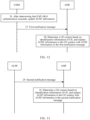
- FIG. 3 is a diagram of message exchange of a method for authentication for an NSWO service according to an embodiment of this application. It should be noted that FIG. 3 does not limit names of exchanged messages. As shown in FIG. 3 , related messages include:
- the UE and the AN device need to determine that both support the NSWO service.
- the UE may start authentication for the NSWO service.
- the UE may initiate authentication for the NSWO service.
- the AN device may trigger the UE to start authentication for the NSWO service.
- the message in the phase in which the UE starts authentication may include at least one of a connection establishment request message, a first request message, a first response message, or a broadcast message. Detailed descriptions are provided below with reference to FIG. 6 to FIG. 9 .
- subscription concealed identifier subscription concealed identifier, SUCI
- the second request message may be an AAA message.
- the first authentication request message and the first authentication response message are a pair of exchanged messages between the NSWO network element and the AUSF.
- the first authentication request message and the first authentication response message are respectively a request message and a response message that correspond to an AUSF service.
- the AUSF service is an existing service.
- the existing AUSF service is an authentication service for UE authentication (Nausf_UEAuthentication_Authenticate).
- the first authentication request message is an authentication service request message for UE authentication (Nausf_UEAuthentication_Authenticate request)
- the first authentication response message is an authentication service response message for UE authentication (Nausf_UEAuthentication_Authenticate response).
- the AUSF service may be a newly added service, and the newly added AUSF service indicates to perform authentication for the NSWO service.
- a name of the newly added AUSF service, and names of a request message and a response message in the newly added AUSF service are not limited in this embodiment of this application.
- the name of the newly added AUSF service may be an NSWO authentication service for UE authentication (Nausf_UEAuthentication_NSWO_Authenticate).
- the first authentication request message may be referred to as an NSWO authentication service request message for UE authentication (Nausf_UEAuthentication_NSWO_Authenticate request)
- the first authentication response message may be referred to as an NSWO authentication service response message for UE authentication (Nausf_UEAuthentication_NSWO_Authenticate response).
- the second authentication request message and the second authentication response message are a pair of exchanged messages between the AUSF and the UDM.
- the second authentication request message and the second authentication response message are respectively a request message and a response message that correspond to a UDM service.
- the UDM service is an existing service.
- the existing UDM service is a get service for UE authentication (Nudm_UEAuthentication_Get).
- the second authentication request message is a get service request message for UE authentication (Nudm _UEAuthentication_Get request)
- the second authentication response message is a get service response message for UE authentication (Nudm _UEAuthentication_Get response).
- the UDM service may be a newly added service, and the newly added UDM service indicates to perform authentication for the NSWO service.
- a name of the newly added UDM service, and names of a request message and a response message in the newly added UDM service are not limited in this embodiment of this application.
- the name of the newly added UDM service may be an NSWO authentication service for UE authentication (Nudm_UEAuthentication_NSWO_Authenticate).
- the second authentication request message may be referred to as an NSWO authentication service request message for UE authentication (Nudm_UEAuthentication_NSWO_Authenticate request), and the second authentication response message may be referred to as an NSWO authentication service response message for UE authentication (Nudm_UE Authentication_NSWO_Authenticate response).
- the third authentication request message and the fourth authentication request message are authentication-related messages transmitted between the UE and the NSWO network element by using the AN device, and are used by the UE to perform authentication verification on a network.
- the AUSF sends the first message to the NSWO network element, which carries an EAP authentication result.
- the NSWO network element sends the second message to the AN device, which carries the EAP authentication result.
- the EAP authentication result notifies the AN device of an authentication success or an authentication failure.
- content included in the first message and the second message is not limited, and an implementation of the EAP authentication result is not limited, which may be a related message in an existing EAP-AKA' authentication procedure.
- the AN device may perform an operation of the NSWO service, for example, allocating an IP address for accessing an external network to the UE.
- the AN device sends the NSWO service indication message to the UE.
- the NSWO service indication message may include at least one of the following: the IP address, an NSWO authorization indicator, or an authentication success indicator.
- the AN device sends the reject message to the UE, to indicate that the request of the UE to use the NSWO service is rejected.
- content included in the NSWO service indication message and the reject message is not limited in this embodiment of this application, and may be related messages in an existing EAP-AKA' authentication procedure.
- Subscription permanent identifier (subscription permanent identifier, SUPI)
- a real identity of the UE may be referred to as a SUPI, which is similar to an international mobile subscriber identity (international mobile subscriber identity, IMSI).
- IMSI international mobile subscriber identity
- the SUPI does not appear on an air interface.
- the air interface refers to a radio interface between the UE and a network device.
- the SUCI is a ciphertext obtained after the UE encrypts and encapsulates the SUPI by using a key, and may be transmitted over an air interface.
- a network device may decrypt the SUCI to obtain the SUPI, so as to determine the identity of the UE.
- the SUCI is in a network access identifier (network access identifier, NAI) format.
- NAI network access identifier
- the SUCI may be an existing SUCI generated based on a SUPI, for example, a SUCI used in a 5G network.
- the SUCI indicates to perform authentication for the NSWO service.
- the AN device, the NSWO network element, the AUSF, or the UDM may determine, based on the SUCI, to perform authentication for the NSWO service.
- a type of the SUPI included in the SUCI indicates to perform authentication for the NSWO service.
- Type values 4 to 7 of the SUPI indicate reserved types.
- a new type of the SUPI may be defined for the NSWO service, and the newly defined type of the SUPI indicates to perform authentication for the NSWO service.
- a value of the newly defined type of the SUPI may be any value from 4 to 7.
- typeX is defined to indicate the NSWO service.
- An example of the SUCI in the NAI form is: typeX. rid678.schid1.hnkey27.ecckey ⁇ ECC ephemeral public key>.cip ⁇ encryption of user17>.mac ⁇ MAC tag value>@example.com.
- a value of X may be any value from 4 to 7.
- the SUCI includes service indication information, and the service indication information indicates to perform authentication for the NSWO service.
- an example is used for description.
- an example of the SUCI in the NAI form is: type0.
- the NSWO indicator is service indication information.
- the NSWO indication information indicates to perform authentication for the NSWO service.
- the NSWO indication information may be carried in at least one of the following messages in FIG. 3 : the message in the phase in which the UE starts authentication, the second request message, the first authentication request message, or the second authentication request message.
- a device A may send the message to a device B.
- the device A may not process the message, and transparently transmit the message to the device B.
- the device A may process the message, and send a processed message to the device B.
- the NSWO indication information may be further refined, including:
- the UDM After receiving the second authentication request message, if determining to use the EAP-AKA' authentication algorithm, the UDM calculates an EAP-AKA' authentication vector, which is referred to as a first EAP-AKA' authentication vector (RAND, AUTN, XRES, CK', IK').
- the first EAP-AKA' authentication vector includes a key CK' and a key IK'.
- the UDM sends the second authentication response message to the AUSF.
- the second authentication response message includes a second EAP-AKA' authentication vector.
- the second EAP-AKA' authentication vector is the first EAP-AKA' authentication vector.
- the second EAP-AKA' authentication vector is a part obtained after the key CK' and the key IK' are deleted from the first EAP-AKA' authentication vector, that is, (RAND, AUTN, XRES).
- an AN device has a same meaning as an AN.
- an access network identity may be equivalent to a serving network name (serving network name).
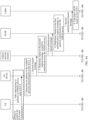
- FIG. 4A and FIG. 4B are a diagram of message exchange of a method for authentication for an NSWO service according to an embodiment of this application.
- the method for authentication for an NSWO service that is provided in this embodiment is performed by UE, an AN device, an NSWO network element, an AUSF, and a UDM.
- the method for authentication for an NSWO service that is provided in this embodiment may include the following steps: Step 1: After the UE determines to perform the NSWO service, the UE sends a SUCI to the AN device. Correspondingly, the AN device receives the SUCI sent by the UE.
- This step relates to the phase in which the UE starts authentication in FIG. 3 .
- the UE sends the SUCI to the AN device, thereby starting an authentication procedure for the NSWO service.
- the UE may further send first NSWO indication information to the AN device.
- the first NSWO indication information indicates to perform authentication for the NSWO service.
- the AN device may further receive the first NSWO indication information sent by the UE.
- the first NSWO indication information is sent, so that the AN device determines, based on the first NSWO indication information, that authentication for the NSWO service needs to be performed, thereby helping distinguish between different authentication procedures.
- the first NSWO indication information and the SUCI may be separately in different messages.
- the first NSWO indication information and the SUCI may be in one message.
- the first NSWO indication information and the SUCI are sent by using one message, or the first NSWO indication information and the SUCI are separately sent by using different messages, thereby improving diversity of message procedures.
- the first NSWO indication information and the SUCI are sent by using one message, a quantity of air interface messages is reduced.
- a message type and a message name of a message that carries the SUCI and/or the first NSWO indication information are not limited in this embodiment.
- the message type may be an EAP message.
- Step 2 The AN device determines an address of the NSWO network element based on the SUCI.
- the AN device determines the address of the NSWO network element based on the SUCI.
- the AN device determines that authentication for the NSWO service needs to be performed when the AN device receives the SUCI sent by the UE.
- the AN device determines to perform authentication for the NSWO service.
- the AN device determines, based on the first NSWO indication information, to perform authentication for the NSWO service.
- that the AN device determines an address of the NSWO network element based on the SUCI may include:
- the AN device obtains a target network identifier and/or a target routing identifier from the SUCI.
- the target network identifier is an identifier of a home network of the UE, for example, a mobile country code (mobile country code, MCC) and a mobile network code (mobile network code, MNC).
- the target routing identifier (routing ID) is used to further select a network element related to UE authentication, for example, select the AUSF and/or the UDM.
- the AN device obtains the address, corresponding to the target network identifier and/or the target routing identifier, of the NSWO network element based on a mapping relationship between a network identifier and/or a routing identifier and an NSWO network element address.
- the AN device may locally store the mapping relationship between a network identifier and/or a routing identifier and an NSWO network element address.
- the mapping relationship between a network identifier and/or a routing identifier and an NSWO network element address may include at least one of the following: a mapping relationship between a network identifier and an NSWO network element address, a mapping relationship between a routing identifier and an NSWO network element address, or a mapping relationship between a network identifier, a routing identifier, and an NSWO network element address.
- that the AN device determines an address of the NSWO network element based on the SUCI may include:
- the AN device obtains a target network identifier and/or a target routing identifier from the SUCI.
- the AN device sends the target network identifier and/or the target routing identifier to a first address management network element.
- the AN device receives the address of the NSWO network element sent by the first address management network element.
- the AN device may not locally store a mapping relationship between a network identifier and/or a routing identifier and an NSWO network element address.
- the address of the NSWO network element is obtained from the first address management network element by sending the target network identifier and/or the target routing identifier to the first address management network element.
- a name of the first address management network element is not limited in this embodiment.
- the first address management network element may locally store the mapping relationship between a network identifier and/or a routing identifier and an NSWO network element address.
- Step 3 The AN device sends a second request message to the NSWO network element based on the address of the NSWO network element.
- the second request message includes the SUCI.
- the NSWO network element receives the second request message sent by the AN device.
- the second request message may further include NSWO indication information.
- the NSWO indication information may include at least one of the following: the first NSWO indication information or third NSWO indication information. That is, the NSWO indication information is the first NSWO indication information, or the NSWO indication information is the third NSWO indication information, or the NSWO indication information includes the first NSWO indication information and the third NSWO indication information.
- the first NSWO indication information and the third NSWO indication information refer to the foregoing descriptions in this application. Details are not described herein again.
- the UE sends an EAP-RSP message to the AN device.
- the EAP-RSP message carries the SUCI.
- the EAP-RSP message may include the first NSWO indication information, or may not include the first NSWO indication information.
- the AN device may add the third NSWO indication information outside the EAP-RSP message.
- the second request message carries the NSWO indication information, so that the NSWO network element determines, based on the NSWO indication information, that authentication for the NSWO service needs to be performed, thereby helping distinguish between different authentication procedures.
- the second request message may further include an access network identity (AN ID) of the AN device.
- AN ID is used by the NSWO network element to subsequently send first identification information of the AN device to the AUSF. For details, refer to step 5.
- Step 4 The NSWO network element determines, based on the second request message, to perform authentication for the NSWO service.
- the AN device supports the NSWO service by default, and when the second request message is received from the AN device, it may be determined to perform authentication for the NSWO service.
- the NSWO network element supports the NSWO service by default, and when the second request message is received from the AN device, it may be determined to perform authentication for the NSWO service.
- the NSWO indication information included in the second request message refer to the related description in step 3. Details are not described herein again.
- it may be determined, based on the SUCI, to perform authentication for the NSWO service.
- the SUCI indicates to perform authentication for the NSWO service.
- an address or the access network identity of the AN device may be determined based on the second request message, and after it is determined, based on the address or the access network identity of the AN device, that the AN device supports the NSWO service, it is determined to perform authentication for the NSWO service.
- the NSWO network element transparently transmits the second request message, and when the second request message is received from the AN device, it may be determined to perform authentication for the NSWO service.
- Step 5 The NSWO network element sends a first authentication request message to the AUSF.
- the first authentication request message includes the SUCI.
- the AUSF receives the first authentication request message sent by the NSWO network element.
- the NSWO network element may determine an address of the AUSF based on the SUCI, and the NSWO network element sends the first authentication request message to the AUSF based on the address of the AUSF.
- that the NSWO network element determines an address of the AUSF based on the SUCI may include: The NSWO network element obtains a target network identifier and/or a target routing identifier from the SUCI.
- the target network identifier refer to the related description in step 2.
- the target routing identifier (routing ID) is used to determine the address of the AUSF or the UDM.
- the NSWO network element obtains the address, corresponding to the target network identifier and/or the target routing identifier, of the AUSF based on a mapping relationship between a network identifier and/or a routing identifier and an AUSF address.
- the NSWO network element may locally store the mapping relationship between a network identifier and/or a routing identifier and an AUSF address.
- the mapping relationship between a network identifier and/or a routing identifier and an AUSF address may include at least one of the following: a mapping relationship between a network identifier and an AUSF address, a mapping relationship between a routing identifier and an AUSF address, or a mapping between a network identifier, a routing identifier, and an AUSF address.
- that the NSWO network element determines an address of the AUSF based on the SUCI may include: The NSWO network element obtains a target network identifier and/or a target routing identifier from the SUCI.
- the NSWO network element sends the target network identifier and/or the target routing identifier to a second address management network element.
- the NSWO network element receives the address of the AUSF sent by the second address management network element.
- the NSWO network element may not locally store a mapping relationship between a network identifier and/or a routing identifier and an AUSF address.
- the address of the AUSF is obtained from the second address management network element by sending the target network identifier and/or the target routing identifier to the second address management network element.
- a name of the second address management network element is not limited in this embodiment.
- the second address management network element may locally store the mapping relationship between a network identifier and/or a routing identifier and an AUSF address.
- the first authentication request message may further include NSWO indication information.
- the NSWO indication information may include at least one of the following: the first NSWO indication information or fourth NSWO indication information. That is, the NSWO indication information is the first NSWO indication information, or the NSWO indication information is the fourth NSWO indication information, or the NSWO indication information includes the first NSWO indication information and the fourth NSWO indication information.
- the first NSWO indication information and the fourth NSWO indication information refer to the foregoing descriptions in this application. Details are not described herein again.
- the first authentication request message carries the NSWO indication information, so that the AUSF determines, based on the NSWO indication information, that authentication for the NSWO service needs to be performed, thereby helping distinguish between different authentication procedures.
- the first authentication request message may further include first identification information of the AN device.
- the first identification information is used by the AUSF to subsequently send second identification information of the AN device to the UDM.
- step 7 refers to step 7.
- the first identification information may be one of the following:
- the first authentication request message may be a request message corresponding to an existing AUSF service.
- the first authentication request message includes information that indicates the AUSF to perform authentication for the NSWO service.
- the information may include at least one of the SUCI or the NSWO indication information.
- the first authentication request message may be a request message corresponding to a newly added AUSF service.
- the newly added AUSF service directly indicates the AUSF to perform authentication for the NSWO service.
- the first authentication request message may not include the information that indicates the AUSF to perform authentication for the NSWO service.
- the first authentication request message does not include the NSWO indication information
- the SUCI may be a SUCI used in an existing 5G network.
- the first authentication request message may alternatively include the information that indicates the AUSF to perform authentication for the NSWO service.
- the information may include at least one of the SUCI or the NSWO indication information.
- Step 6 The AUSF determines, based on the first authentication request message, to perform authentication for the NSWO service.
- the NSWO network element supports the NSWO service by default, and when the first authentication request message is received from the NSWO network element, it may be determined to perform authentication for the NSWO service.
- the AUSF supports the NSWO service by default, and when the first authentication request message is received from the NSWO network element, it may be determined to perform authentication for the NSWO service.
- the NSWO indication information included in the first authentication request message refer to the related description in step 5. Details are not described herein again.
- it may be determined, based on the SUCI, to perform authentication for the NSWO service.
- the SUCI indicates to perform authentication for the NSWO service.
- the AUSF determines to perform authentication for the NSWO service.
- a type or the address of the NSWO network element may be determined based on the first authentication request message, and after it is determined, based on the type or the address of the NSWO network element, that the NSWO network element supports the NSWO service, it is determined to perform authentication for the NSWO service.
- Step 7 The AUSF sends a second authentication request message to the UDM.
- the second authentication request message includes the SUCI.
- the UDM receives the second authentication request message sent by the AUSF.
- the AUSF may send the second authentication request message to the UDM.
- the second authentication request message may further include NSWO indication information.
- the NSWO indication information may include at least one of the following: the first NSWO indication information or fifth NSWO indication information. That is, the NSWO indication information is the first NSWO indication information, or the NSWO indication information is the fifth NSWO indication information, or the NSWO indication information includes the first NSWO indication information and the fifth NSWO indication information.
- the first NSWO indication information and the fifth NSWO indication information refer to the foregoing descriptions in this application. Details are not described herein again.
- the second authentication request message carries the NSWO indication information, so that the UDM determines, based on the NSWO indication information, that authentication for the NSWO service needs to be performed, thereby helping distinguish between different authentication procedures.
- the second authentication request message may further include second identification information of the AN device.
- the AN device is an AN device connected to the UE.
- the second identification information may be used by the UDM to subsequently calculate a first EAP-AKA' authentication vector. For details, refer to step 10.
- the second identification information may be one of the following:
- the first identification information carried in the first authentication request message is the access network identity of the AN device
- the first information is the serving network name (serving network name) corresponding to the access network identity.
- the first identification information sent by the NSWO network element to the AUSF is the access network identity (AN ID), and the AUSF may convert the obtained AN ID into the serving network name and then send the serving network name to the UDM.
- the first information is the preset access network identity or the preset serving network name. Both the preset access network identity and the preset serving network name indicate to perform authentication for the NSWO service.
- the second authentication request message may be a request message corresponding to an existing UDM service.
- the second authentication request message includes information that indicates the UDM to perform authentication for the NSWO service.
- the information may include at least one of the SUCI or the NSWO indication information.
- the second authentication request message may be a request message corresponding to a newly added UDM service.
- the newly added UDM service directly indicates the UDM to perform authentication for the NSWO service.
- the second authentication request message may not include the information that indicates the UDM to perform authentication for the NSWO service.
- the second authentication request message does not include the NSWO indication information
- the SUCI may be a SUCI used in an existing 5G network.
- the second authentication request message may alternatively include the information that indicates the UDM to perform authentication for the NSWO service.
- the information may include at least one of the SUCI or the NSWO indication information.
- Step 8 The UDM calculates a SUPI based on the SUCI.
- This step may be implemented in an existing manner, and is not specifically described.
- Step 9 The UDM determines, based on the second authentication request message, to use an EAP-AKA' authentication method.
- the AUSF supports the NSWO service by default, and when the second authentication request message is received from the AUSF, it may be determined to perform authentication for the NSWO service.
- the second authentication request message when it is determined that the second authentication request message is a request message corresponding to a newly added UDM service, it is determined to perform authentication for the NSWO service.
- the newly added UDM service indicates to perform authentication for the NSWO service.
- the second authentication request message is a Nudm_UEAuthentication_NSWO_Authenticate request
- the UDM determines to perform authentication for the NSWO service.
- the UDM may determine, based on second information in the second authentication request message, to use the EAP-AKA' authentication method.
- the second information includes at least one of the following:
- the UDM determines that the UE expects to use the NSWO service, and the UDM determines subscription data of the UE based on the SUPI, and checks, based on the subscription data, whether the UE is allowed to use the NSWO service. If the UE is allowed to use the NSWO service, a further step is performed. Otherwise, the UDM sends a reject message to the AUSF, then the AUSF sends the reject message to the NSWO network element, and then the NSWO network element sends the reject message to the AN device.
- the reject message carries an indicator indicating that the UE is not authorized to use the NSWO service.
- the AN device rejects the NSWO service request of the UE, or notifies the UE that the UE is not allowed to use the NSWO service, or the UE is not allowed to use the NSWO service in a network corresponding to the AN ID or the serving network name.
- the UDM determines that the UE expects to use the NSWO service, and the UDM determines subscription data of the UE based on the SUPI, and checks, based on the subscription data and the AN ID or the serving network name, whether the UE is allowed to use the NSWO service in a network corresponding to the AN ID or the serving network name. If the UE is allowed to use the NSWO service, a further step is performed. Otherwise, the UDM sends a reject message to the AUSF, then the AUSF sends the reject message to the NSWO network element, and then the NSWO network element sends the reject message to the AN device.
- the reject message carries an indicator indicating that the UE is not authorized to use the NSWO service in the network corresponding to the AN ID or the serving network name. Based on the reject message, the AN device rejects the NSWO service request of the UE, or notifies the UE that the UE is not allowed to use the NSWO service, or the UE is not allowed to use the NSWO service in the network corresponding to the AN ID or the serving network name.
- Step 10 The UDM obtains a first EAP-AKA' authentication vector (RAND, AUTN, XRES, CK', IK') based on the SUPI.
- the UDM may obtain, based on the SUPI and identification information of the AN device, an EAP-AKA' authentication vector, referred to as a first EAP-AKA' authentication vector.
- the AN device is specifically an AN device accessed by the UE.
- the first EAP-AKA' authentication vector includes a key CK' and a key IK'.
- the identification information of the AN device used by the UDM to calculate the first EAP-AKA' authentication vector may be one of the following:
- Step 11 The UDM sends a second authentication response message to the AUSF.
- the second authentication response message includes a second EAP-AKA' authentication vector.
- the AUSF receives the second authentication response message sent by the UDM.
- the second EAP-AKA' authentication vector is a part obtained after the key CK' and the key IK' are deleted from the first EAP-AKA' authentication vector, that is, (RAND, AUTN, XRES). In other words, the second EAP-AKA' authentication vector does not include the key CK' or the key IK'.
- the UE when performing the NSWO service, the UE needs to perform authentication for the NSWO service.
- the UE may perform another authentication procedure, for example, an authentication procedure based on a SIM card.
- the key CK' and the key IK' are removed from the first EAP-AKA' authentication vector, thereby preventing the key CK' and the key IK' that are newly generated in the authentication process for the NSWO service from affecting a related key already generated by the UE or the AUSF in an existing authentication procedure, and ensuring that the authentication procedure provided in this embodiment is applicable to authentication for the NSWO service.
- the second authentication response message may further include the SUPI.
- Step 12 The AUSF sends a first authentication response message to the NSWO network element based on the second authentication response message.
- the first authentication response message is an authentication response message corresponding to an EAP-AKA' authentication algorithm.
- the NSWO network element receives the first authentication response message sent by the AUSF.
- the AUSF may perform an existing EAP-AKA' authentication procedure, and send the first authentication response message to the NSWO network element.
- the first authentication response message may include RAND and AUTN. This is not specifically described in this embodiment.
- the first authentication response message does not include the key CK' or the key IK'.
- the first authentication response message may include an extensible authentication protocol/authentication and key agreement-challenge (EAP/AKA-challenge).
- EAP/AKA-challenge extensible authentication protocol/authentication and key agreement-challenge
- Step 13 The NSWO network element sends a third authentication request message to the UE based on the first authentication response message by using the AN device.
- the third authentication request message is an authentication request message corresponding to the EAP-AKA' authentication algorithm, and may include RAND and AUTN.
- the UE receives, by using the AN device, the third authentication request message sent by the NSWO network element.
- the NSWO network element may perform an existing EAP-AKA' authentication procedure, and send the third authentication request message to the UE. This is not specifically described in this embodiment.
- the third authentication request message may include the EAP/AKA-challenge (RAND, AUTN) sent by the AUSF.
- RAND EAP/AKA-challenge
- AUTN EAP/AKA-challenge
- Step 14 The UE performs authentication verification on a network by using the EAP-AKA' authentication algorithm. For example, whether a MAC in AUTN is correct is verified based on RAND, and it is verified whether freshness of an SQN calculated based on RAND and AUTN meets a requirement. Verification on RAND and AUTN belongs to a conventional technology, and is not limited.
- the UE may perform an existing EAP-AKA' authentication procedure, to perform authentication verification on the network by using the EAP-AKA' authentication algorithm. This is not specifically described in this embodiment.
- Step 15 After the authentication verification succeeds, the UE calculates RES, and sends a fourth authentication request message to the NSWO network element by using the AN device.
- the fourth authentication request message includes RES.
- the NSWO network element receives, by using the AN device, the fourth authentication request message sent by the UE.
- the UE is internally divided into two parts: a USIM and an ME.
- the ME may be understood as a part of the UE other than the USIM.
- the USIM performs security verification on RAND and AUTN. After the USIM performs the verification successfully, the USIM calculates CK, IK, and RES, and sends CK, IK, and RES to the ME. Then, the ME performs an operation corresponding to CK, IK, and RES, for example, calculating CK' and IK' based on CK and IK.
- the UE may perform an existing EAP-AKA' authentication procedure, and send the fourth authentication request message to the NSWO network element.
- the fourth authentication request message includes RES. This is not specifically described in this embodiment.
- the fourth authentication request message may include an EAP/AKA-challenge.
- the method may further include one of the following:
- Step 16 The NSWO network element sends a fifth authentication request message to the AUSF based on the fourth authentication request message.
- the AUSF receives the fifth authentication request message sent by the NSWO network element.
- the NSWO network element may perform an existing EAP-AKA' authentication procedure, and send the fifth authentication request message to the AUSF. This is not specifically described in this embodiment.
- the fifth authentication request message may include the EAP/AKA-challenge sent by the UE.
- the fifth authentication request message may be a Nausf_UEAuthentication_Authenticate request.
- Step 17 The AUSF performs authentication on the UE based on the fifth authentication request message. For example, it is verified whether RES and XRES are equal. If they are equal, the verification succeeds. Otherwise, the verification fails.
- the AUSF may perform an existing EAP-AKA' authentication procedure, to perform authentication on the UE. This is not specifically described in this embodiment.
- Step 18 After the authentication verification, the AUSF sends a first message to the NSWO network element.
- the NSWO network element receives the first message sent by the AUSF.
- the first message includes an authentication verification result.
- Step 19 The NSWO network element sends a second message to the AN device based on the first message.
- the AN device receives the second message sent by the NSWO network element.
- Step 20 Optionally, if the authentication verification succeeds, the AN device sends an NSWO service indication message to the UE. Alternatively, the AN device may perform an operation corresponding to the NSWO service after determining that the authentication succeeds.
- Step 21 If the authentication verification fails, the AN device sends a reject message to the UE.
- Step 17 to step 21 are steps in an existing EAP-AKA' authentication procedure.
- EAP-AKA' authentication procedure For related messages, refer to the foregoing descriptions in this application. Details are not described herein again.
- this embodiment provides an authentication procedure applicable to a case in which UE performs an NSWO service in a 5G network
- related network elements include the UE, an AN device, an NSWO network element, an AUSF, and a UDM.
- the UDM determines to use an EAP-AKA' authentication method, thereby avoiding an authentication failure caused by selecting a 5G AKA authentication method.
- the UDM deletes a key CK' and a key IK' from the EAP-AKA' authentication vector, and then sends the EAP-AKA' authentication vector to the AUSF, thereby preventing the key CK' and the key IK' that are newly generated in the authentication process for the NSWO service from affecting a related key already generated by the UE or the AUSF in an existing authentication procedure, and avoiding impact on an existing key architecture of the UE or the AUSF.
- the UE may not calculate the key CK' or the key IK', or delete the calculated key CK' and key IK' or key K AUSF , or after the key K AUSF is calculated, the newly generated key K AUSF is not used to replace a locally existing key K AUSF , thereby avoiding impact on an existing key architecture of the UE.
- FIG. 5A and FIG. 5B are another diagram of message exchange of a method for authentication for an NSWO service according to an embodiment of this application.
- the method for authentication for an NSWO service that is provided in this embodiment is performed by UE, an AN device, an NSWO network element, an AUSF, and a UDM.
- a difference between this embodiment and the embodiment shown in FIG. 4A and FIG. 4B lies in that, the UDM sends a complete EAP-AKA' authentication vector to the AUSF after calculating the EAP-AKA' authentication vector by using an EAP-AKA' authentication method.
- the AUSF or the UE may use a key CK', a key IK', or a key K AUSF that is newly generated in an authentication process for the NSWO service.
- the AUSF or the UE may alternatively not use the newly generated key CK', key IK', or key K AUSF .
- the method for authentication for an NSWO service may include the following steps.
- Step 1 After the UE determines to perform the NSWO service, the UE sends a SUCI to the AN device.
- the AN device receives the SUCI sent by the UE.
- Step 2 The AN device determines an address of the NSWO network element based on the SUCI.
- Step 3 The AN device sends a second request message to the NSWO network element based on the address of the NSWO network element.
- the second request message includes the SUCI.
- the NSWO network element receives the second request message sent by the AN device.
- Step 4 The NSWO network element determines, based on the second request message, to perform authentication for the NSWO service.
- Step 5 The NSWO network element sends a first authentication request message to the AUSF.
- the first authentication request message includes the SUCI.
- the AUSF receives the first authentication request message sent by the NSWO network element.
- Step 6 The AUSF determines, based on the first authentication request message, to perform authentication for the NSWO service.
- step 1 to step 6 refer to the embodiment shown in FIG. 4A and FIG. 4B . Details are not described herein again.
- Step 107 The AUSF sends a second authentication request message to the UDM.
- the second authentication request message includes the SUCI.
- the UDM receives the second authentication request message sent by the AUSF.
- the AUSF may send the second authentication request message to the UDM.
- the second authentication request message may further include NSWO indication information.
- the NSWO indication information may include at least one of the following: first NSWO indication information or fifth NSWO indication information. That is, the NSWO indication information is the first NSWO indication information, or the NSWO indication information is the fifth NSWO indication information, or the NSWO indication information includes the first NSWO indication information and the fifth NSWO indication information.
- first NSWO indication information and the fifth NSWO indication information refer to the foregoing descriptions in this application. Details are not described herein again.
- the second authentication request message carries the NSWO indication information, so that the UDM determines, based on the NSWO indication information, that authentication for the NSWO service needs to be performed, thereby helping distinguish between different authentication procedures.
- the second authentication request message may further include second identification information of the AN device.
- the AN device is an AN device connected to the UE.
- the second identification information may be used by the UDM to subsequently calculate a first EAP-AKA' authentication vector.
- the second identification information may be one of the following:
- the first identification information carried in the first authentication request message is an access network identity of the AN device
- the first information is a serving network name (serving network name) corresponding to the access network identity.
- the first identification information sent by the NSWO network element to the AUSF is the access network identity (AN ID), and the AUSF may convert the obtained AN ID into the serving network name and send the serving network name to the UDM.
- the first authentication request message does not carry the first identification information
- the first information is a preset access network identity or a preset serving network name. Both the preset access network identity and the preset serving network name indicate to perform authentication for the NSWO service.
- the second authentication request message may be a request message corresponding to an existing UDM service.
- the second authentication request message includes information that indicates the UDM to perform authentication for the NSWO service.
- the information may include at least one of the SUCI or the NSWO indication information.
- the AUSF after determining to perform authentication for the NSWO service, the AUSF further determines to use an EAP-AKA' authentication algorithm.
- the second authentication request message further includes algorithm indication information, to indicate to perform EAP-AKA' authentication.
- the algorithm indication information is carried, so that the UDM can directly determine to use an EAP-AKA' authentication method, thereby simplifying processing complexity of selecting an authentication algorithm by the UDM.
- the second authentication request message may be a request message corresponding to a newly added UDM service.
- the newly added UDM service directly indicates the UDM to perform authentication for the NSWO service.
- the second authentication request message may not include the information that indicates the UDM to perform authentication for the NSWO service.
- the second authentication request message does not include the NSWO indication information
- the SUCI may be a SUCI used in an existing 5G network.
- the second authentication request message may alternatively include the information that indicates the UDM to perform authentication for the NSWO service.
- the information may include at least one of the SUCI or the NSWO indication information.
- the AUSF further determines to use the EAP-AKA' authentication algorithm.
- the second authentication request message may include the algorithm indication information, or may not include the algorithm indication information.
- Step 8 The UDM calculates a SUPI based on the SUCI.
- Step 109 The UDM determines, based on the second authentication request message, to use the EAP-AKA' authentication method.
- the AUSF supports the NSWO service by default, and when the second authentication request message is received from the AUSF, it may be determined to perform authentication for the NSWO service.
- the second authentication request message when it is determined that the second authentication request message is a request message corresponding to a newly added UDM service, it is determined to perform authentication for the NSWO service.
- the newly added UDM service indicates to perform authentication for the NSWO service.
- the second authentication request message is a Nudm_UEAuthentication_NSWO_Authenticate request
- the UDM determines to perform authentication for the NSWO service.
- the UDM may determine, based on second information in the second authentication request message, to use the EAP-AKA' authentication method.
- the second information includes at least one of the following:
- the UDM determines that the UE expects to use the NSWO service, and the UDM determines subscription data of the UE based on the SUPI, and checks, based on the subscription data, whether the UE is allowed to use the NSWO service. If the UE is allowed to use the NSWO service, a further step is performed. Otherwise, the UDM sends a reject message to the AUSF, then the AUSF sends the reject message to the NSWO network element, and then the NSWO network element sends the reject message to the AN device.
- the reject message carries an indicator indicating that the UE is not authorized to use the NSWO service.
- the AN device rejects the NSWO service request of the UE, or notifies the UE that the UE is not allowed to use the NSWO service, or the UE is not allowed to use the NSWO service in a network corresponding to the AN ID or the serving network name.
- the UDM determines that the UE expects to use the NSWO service, and the UDM determines subscription data of the UE based on the SUPI, and checks, based on the subscription data and the AN ID or the serving network name, whether the UE is allowed to use the NSWO service in a network corresponding to the AN ID or the serving network name. If the UE is allowed to use the NSWO service, a further step is performed. Otherwise, the UDM sends a reject message to the AUSF, then the AUSF sends the reject message to the NSWO network element, and then the NSWO network element sends the reject message to the AN device.
- the reject message carries an indicator indicating that the UE is not authorized to use the NSWO service in the network corresponding to the AN ID or the serving network name. Based on the reject message, the AN device rejects the NSWO service request of the UE, or notifies the UE that the UE is not allowed to use the NSWO service, or the UE is not allowed to use the NSWO service in the network corresponding to the AN ID or the serving network name.
- Step 10 The UDM obtains a first EAP-AKA' authentication vector (RAND, AUTN, XRES, CK', IK') based on the SUPI.
- Step 111 The UDM sends a second authentication response message to the AUSF.
- the second authentication response message includes a second EAP-AKA' authentication vector.
- the AUSF receives the second authentication response message sent by the UDM.
- the second EAP-AKA' authentication vector is the first EAP-AKA' authentication vector, and the second EAP-AKA' authentication vector includes a key CK' and a key IK'.
- the complete EAP-AKA' authentication vector is carried in the second authentication response message and sent to the AUSF, so that the AUSF can use the key CK' and the key IK' that are newly generated in the authentication process for the NSWO service, thereby improving flexibility of a key use manner.
- the second authentication response message may further include the SUPI.
- Step 112 The AUSF sends a first authentication response message to the NSWO network element based on the second authentication response message.
- the first authentication response message is an authentication response message corresponding to the EAP-AKA' authentication algorithm.
- the NSWO network element receives the first authentication response message sent by the AUSF.
- the AUSF may perform an existing EAP-AKA' authentication procedure, and send the first authentication response message to the NSWO network element. This is not specifically described in this embodiment.
- the second EAP-AKA' authentication vector carried in the second authentication response message received by the AUSF is a complete EAP-AKA' authentication vector, and includes the key CK' and the key IK'.
- the sending the first authentication response message to the NSWO network element based on the second authentication response message may include: sending the first authentication response message to the NSWO network element, where the first authentication response message includes the RAND and the AUTN.
- the AUSF deletes the key CK' and the key IK' from the second EAP-AKA' authentication vector, thereby preventing the key CK' and the key IK' that are newly generated in the authentication process for the NSWO service from affecting a related key already generated by the UE in an existing authentication procedure.
- the first authentication response message may include an EAP/AKA-challenge (RAND, AUTN).
- RAND EAP/AKA-challenge
- AUTN EAP/AKA-challenge
- Step 13 The NSWO network element sends a third authentication request message to the UE based on the first authentication response message by using the AN device.
- the third authentication request message is an authentication request message corresponding to the EAP-AKA' authentication algorithm.
- the UE receives, by using the AN device, the third authentication request message sent by the NSWO network element.
- Step 14 The UE performs authentication verification on a network by using the EAP-AKA' authentication algorithm. For example, whether a MAC in AUTN is correct is verified based on RAND, and it is verified whether freshness of an SQN calculated based on RAND and AUTN meets a requirement. Verification on RAND and AUTN belongs to a conventional technology, and is not limited.
- Step 15 After the authentication verification succeeds, the UE calculates RES, and sends a fourth authentication request message to the NSWO network element by using the AN device.
- the fourth authentication request message includes RES.
- the NSWO network element receives, by using the AN device, the fourth authentication request message sent by the UE.
- the UE is internally divided into two parts: a USIM and an ME.
- the ME may be understood as a part of the UE other than the USIM.
- the USIM performs security verification on RAND and AUTN. After the USIM performs the verification successfully, the USIM calculates CK, IK, and RES, and sends CK, IK, and RES to the ME. Then, the ME performs an operation corresponding to CK, IK, and RES, for example, calculating CK' and IK' based on CK and IK.
- step 13 to step 15 refer to the embodiment shown in FIG. 4A and FIG. 4B . Details are not described herein again.
- the method may further include one of the following:
- Step 16 The NSWO network element sends a fifth authentication request message to the AUSF based on the fourth authentication request message.
- the AUSF receives the fifth authentication request message sent by the NSWO network element.
- Step 17 The AUSF performs authentication on the UE based on the fifth authentication request message. For example, it is verified whether RES and XRES are equal. If they are equal, the verification succeeds. Otherwise, the verification fails.
- Step 18 After the authentication verification, the AUSF sends a first message to the NSWO network element.
- the NSWO network element receives the first message sent by the AUSF.
- the first message includes an authentication verification result.
- step 16 to step 18 refer to the embodiment shown in FIG. 4A and FIG. 4B . Details are not described herein again.
- the method may further include one of the following:
- the method may further include at least one of the following:
- Step 19 The NSWO network element sends a second message to the AN device based on the first message.
- the AN device receives the second message sent by the NSWO network element.
- Step 20 Optionally, if the authentication verification succeeds, the AN device sends an NSWO service indication message to the UE. Alternatively, the AN may perform an operation corresponding to the NSWO service after determining that the authentication succeeds.
- Step 21 If the authentication verification fails, the AN device sends a reject message to the UE.
- step 19 to step 21 refer to the embodiment shown in FIG. 4A and FIG. 4B . Details are not described herein again.
- this embodiment provides an authentication procedure applicable to a case in which UE performs an NSWO service in a 5G network
- related network elements include the UE, an AN device, an NSWO network element, an AUSF, and a UDM.
- the UDM determines to use an EAP-AKA' authentication method, thereby avoiding an authentication failure caused by selecting a 5G AKA authentication method.
- the UDM sends the complete EAP-AKA' authentication vector to the AUSF, thereby reducing changes to a processing manner of the UDM, reducing impact on the UDM, and making it possible for the AUSF or the UE to subsequently use a key CK', a key IK', or a key K AUSF that is newly generated in the authentication process for the NSWO service.
- the UE may not calculate a key CK' or a key IK', or delete the calculated key CK' and key IK' or key K AUSF , or after the key K AUSF is calculated, the newly generated key K AUSF is not used to replace a locally existing key K AUSF , thereby avoiding impact on an existing key architecture of the UE.
- the UE calculates the key K AUSF and replaces the locally existing key K AUSF , so that the new key K AUSF can be used.
- the AUSF may delete a calculated key K AUSF , or after the key K AUSF is calculated, the newly generated key K AUSF is not used to replace a locally existing key K AUSF , thereby avoiding impact on an existing key architecture of the AUSF.
- the AUSF calculates the key K AUSF and replaces the locally existing key K AUSF , so that the new key K AUSF can be used.
- another embodiment of this application provides a specific implementation of the phase in which the UE starts authentication in FIG. 3 to FIG. 5A and FIG. 5B .
- FIG. 6 is still another diagram of message exchange of a method for authentication for an NSWO service according to an embodiment of this application.
- step 1 that the UE sends a SUCI to the AN device may include the following step:
- the UE sends a first connection establishment request message to the AN device.
- the first connection establishment request message includes a SUCI and first NSWO indication information.
- the AN device receives the first connection establishment request message sent by the UE.
- the first connection establishment request message may be an EAP message.
- the SUCI may be an existing SUCI generated based on a SUPI, for example, a SUCI used in a 5G network.
- the SUCI may indicate to perform authentication for the NSWO service.
- the first NSWO indication information may be carried in the EAP message, or may be carried outside the EAP message.
- the UE accesses the AN to establish a connection.
- the first connection establishment request message carries both the SUCI and the first NSWO indication information, to start an authentication procedure for the NSWO service, thereby reducing a quantity of air interface messages.
- FIG. 7 is still another diagram of message exchange of a method for authentication for an NSWO service according to an embodiment of this application.
- step 1 that the UE sends a SUCI to the AN device may include the following steps:
- the AN device sends the first request message to the UE, to trigger the UE to perform EAP authentication.
- the UE receives the first request message, determines to perform EAP authentication, and determines to perform authentication for the NSWO service.
- the first request message and the first response message may be EAP messages.
- the first request message is an extensible authentication protocol-request/identity message (EAP-REQ/Identity).
- the first response message is an extensible authentication protocol-response message (EAP-RSP).
- the SUCI may be an existing SUCI generated based on a SUPI, for example, a SUCI used in a 5G network.
- the SUCI may indicate to perform authentication for the NSWO service.
- the first NSWO indication information may be carried in the EAP message, or may be carried outside the EAP message.
- the method may further include: S703: The UE sends a second connection establishment request message to the AN device.
- the AN device receives the second connection establishment request message sent by the UE.
- the second connection establishment request message may be an EAP message.
- the second connection establishment request message may include the first NSWO indication information.
- the UE adds the first NSWO indication information to the second connection establishment request message, so that the AN device determines that authentication for the NSWO service needs to be performed, and the AN device triggers the UE to perform EAP authentication.
- FIG. 8 is still another diagram of message exchange of a method for authentication for an NSWO service according to an embodiment of this application.
- step 1 that the UE sends a SUCI to the AN device may include the following step: S801:
- the UE sends a third connection establishment request message to the AN device.
- the third connection establishment request message includes a SUCI, and the SUCI indicates to perform authentication for the NSWO service.
- the AN device receives the third connection establishment request message sent by the UE.
- the third connection establishment request message may be an EAP message.
- the UE accesses the AN to establish a connection.
- the third connection establishment request message carries the SUCI indicating to perform authentication for the NSWO service, to start an authentication procedure for the NSWO service, thereby reducing a quantity of air interface messages.
- FIG. 9 is still another diagram of message exchange of a method for authentication for an NSWO service according to an embodiment of this application.
- the method for authentication for an NSWO service may further include the following steps:
- the AN device sends the second NSWO indication information to the UE, to notify the UE that the AN device supports the NSWO service, so that authentication for the NSWO service can be implemented.
- the second NSWO indication information may be carried in a message sent by the AN device to the UE.
- Atype and a name of the message are not limited in this embodiment.
- the message may be a broadcast message sent by the AN device.
- the message may be the first request message in S701.
- FIG. 10 is still another diagram of message exchange of a method for authentication for an NSWO service according to an embodiment of this application.
- the method for authentication for an NSWO service may further include the following steps: Step 22: After the authentication performed on the UE based on the fifth authentication request message succeeds, the AUSF sends a first NSWO authentication result to the UDM.
- the SUPI, and/or the access network identity of the access network device, and/or the serving network name corresponding to the access network identity may be sent at the same time.
- the SUPI is included in the second authentication response message, and the access network device is an access network device connected to the terminal.
- the SUPI may not be sent, but information for identifying the UE, such as a correlation ID or a URI, is sent.
- the UDM receives the first NSWO authentication result sent by the AUSF.
- Step 23 The UDM determines and records that the authentication performed on the UE corresponding to the SUPI for the NSWO service succeeds.
- the first NSWO authentication result indicates that the authentication performed on the UE for the NSWO service succeeds.
- different UEs may be distinguished by using SUPIs, correlation IDs, or URIs, and different access network devices may be distinguished by using access network identitys or serving network names of the access network devices.
- the AUSF may send the first NSWO authentication result to the UDM, to notify the UDM of the successfully authenticated UE and/or the AN device accessed by the successfully authenticated UE.
- the UDM records the successfully authenticated UE and/or the AN device accessed by the successfully authenticated UE, to subsequently complete charging for the UE or the AN device.
- the first NSWO authentication result may further include authentication indication information, and the authentication indication information indicates that the authentication performed on the terminal for the NSWO service succeeds.
- the UDM can explicitly determine that the authentication performed on the UE corresponding to the SUPI for the NSWO service succeeds.
- the first NSWO authentication result may be carried in a message sent by the AUSF to the UDM.
- a type and a name of the message are not limited in this embodiment.
- the message may be a message corresponding to a newly added UDM service.
- a name of the newly added UDM service and a name of the message corresponding to the newly added UDM service are not limited in this embodiment.
- the UDM may directly determine, based on the newly added UDM service, that this is a service that notifies a SUPI authentication success, and determine that the authentication performed on the UE corresponding to the SUPI for the NSWO service succeeds.
- the message may be a message corresponding to an existing UDM service.
- the message corresponding to the existing UDM service is a UE authentication result confirmation message (Nudm _UEAuthentication_ResultConfirmation).
- FIG. 11 is still another diagram of message exchange of a method for authentication for an NSWO service according to an embodiment of this application.
- the method for authentication for an NSWO service may further include the following steps: Step 24: After the authentication performed on the UE based on the fifth authentication request message succeeds, the AUSF sends a second NSWO authentication result to a charging network function (network function, NF).
- the second NSWO authentication result includes the SUPI, and/or the access network identity of the access network device, and/or the serving network name corresponding to the access network identity, the SUPI is included in the second authentication response message, and the access network device is an access network device connected to the terminal.
- the SUPI may not be sent, but information for identifying the UE, such as a correlation ID or a URI, is sent.
- the charging NF receives the second NSWO authentication result sent by the AUSF.
- Step 25 The charging NF determines and records that the authentication performed on the UE corresponding to the SUPI for the NSWO service succeeds.
- a principle of the second NSWO authentication result is similar to that of the first NSWO authentication result in the embodiment shown in FIG. 10 . Refer to the related description. Details are not described herein again.
- a difference between this embodiment and the embodiment shown in FIG. 10 lies in that a message that carries the second NSWO authentication result and that is sent by the AUSF to the charging NF may be different.
- Atype and a name of the message that carries the second NSWO authentication result are not limited in this embodiment.
- another embodiment of this application provides a method for authentication for an NSWO service.
- an AUSF and UE do not delete a key K AUSF that is newly generated in an authentication procedure for the NSWO service, so that the newly generated key K AUSF can be used.
- AUSF information is updated, that is, a related network element (for example, a UDM or an AMF) needs to update locally stored AUSF information to AUSF information corresponding to NSWO service-related authentication.
- a related network element for example, a UDM or an AMF
- FIG. 12 is still another diagram of message exchange of a method for authentication for an NSWO service according to an embodiment of this application.
- the method for authentication for an NSWO service that is provided in this embodiment is performed by a UDM and an AMF.
- the method may further include the following steps: Step 26: After determining that the EAP-AKA' authentication succeeds, the UDM updates AUSF information.
- the AUSF information may include information for identifying the AUSF, such as AUSF group (AUSF group) information or an AUSF instance ID (AUSF instance ID).
- AUSF group AUSF group
- AUSF instance ID AUSF instance ID
- Step 27 The UDM sends a first notification message to the AMF.
- the first notification message includes the AUSF information and identification information of the UE.
- the AMF receives the first notification message sent by the UDM.
- Step 28 The AMF determines a UE context (UE context) based on the identification information of the UE, and replaces AUSF information in the UE context with the AUSF information in the first notification message.
- UE context UE context
- the identification information of the UE is used to uniquely distinguish between different UEs.
- the identification information of the UE may include one of the following:
- the first notification message is a message corresponding to an existing UDM service.
- a name of the existing UDM service and a name of the message corresponding to the existing UDM service are not limited in this embodiment.
- the first notification message is an SDM notification message (Numd_SDM_notification).
- the UDM notifies the AMF to update the locally stored AUSF information, to complete update of the AUSF information.
- FIG. 13 is still another diagram of message exchange of a method for authentication for an NSWO service according to an embodiment of this application.
- the method for authentication for an NSWO service that is provided in this embodiment is performed by an AUSF and an AMF.
- the method may further include the following steps:
- Step 29 The AUSF sends a second notification message to the AMF.
- the second notification message includes AUSF information and identification information of the UE.
- the AMF receives the second notification message sent by the AUSF.
- Step 30 The AMF determines a UE context (UE context) based on the identification information of the UE, and replaces AUSF information in the UE context with the AUSF information in the second notification message.
- UE context UE context
- the identification information of the UE is used to uniquely distinguish between different UEs.
- the identification information of the UE may include one of the following:
- the second notification message is a message corresponding to an existing AUSF service.
- a name of the existing AUSF service and a name of the message corresponding to the existing AUSF service are not limited in this embodiment.
- the second notification message is an SDM notification message (Nausf_SDM_notification).
- the AUSF notifies the AMF to update the locally stored AUSF information, to complete update of the AUSF information.
- An embodiment of this application further provides a method for authentication for an NSWO service, which is applied to a scenario in which after UE completes authentication for the NSWO service for the first time, authentication for the NSWO service needs to be performed again, for example, a scenario in which after the UE registers with a 5G network, the UE and an AUSF share a key.
- the UE and an AUSF share a key K AUSF
- the method for authentication for an NSWO service may include the following steps: 201: The UE calculates, based on the key K AUSF , a message authentication code (message authentication code, MAC), which is HMAC-SHA256(the key K AUSF , a fresh parameter, an NSWO indicator).
- MAC message authentication code
- the HMAC represents a hash-based message authentication code (hashed-based message authentication), and HMAC-SHA256() represents an encryption function.
- the fresh parameter may be a counter, a sequence number, or the like for reflecting freshness of a message.
- the NSWO indicator indicates to perform authentication for the NSWO service.
- the UE sends a SUCI, the NSWO indicator, the MAC, and the fresh parameter to an AN device.
- the AN device determines an NSWO network element based on the SUCI, and sends the SUCI, the NSWO indicator, the MAC, and the fresh parameter to the NSWO network element.
- the NSWO network element determines a UDM based on the SUCI, and sends the SUCI, the NSWO indicator, the MAC, and the fresh parameter to the UDM.
- the UDM decrypts the SUCI to obtain a SUPI, and obtains corresponding AUSF information and a corresponding AUSF address based on the SUPI.
- the UDM verifies whether the MAC is correct, and obtains a verification result.
- that the UDM verifies whether the MAC is correct may include: The UDM sends the SUPI, the NSWO indicator, the MAC, and the fresh parameter to the AUSF.
- the AUSF determines the key K AUSF based on the SUPI, and verifies, by using the key K AUSF , the NSWO indicator, and the fresh parameter, whether the received MAC is correct.
- that the UDM verifies whether the MAC is correct may include: The UDM sends the SUPI, the NSWO indicator, and the fresh parameter to the AUSF.
- the AUSF calculates a MAC' in the same manner and sends the MAC' to the UDM.
- the UDM verifies whether the MAC and the MAC' are equal.
- the UDM sends the verification result to the NSWO network element.
- the UE and an AMF share a key Knasint
- the method for authentication for an NSWO service may include the following steps: 301: The UE calculates, based on the key Knasint, a MAC, which is HMAC-SHA256(Knasint, a fresh parameter, an NSWO indicator).
- the UE sends a SUCI, the NSWO indicator, the MAC, and the fresh parameter to an AN device.
- a 5G globally unique temporary UE identity (5G globally unique temporary UE identity, 5G-GUTI) may be further sent.
- the AN device determines an NSWO network element based on the SUCI, and sends the SUCI, the NSWO indicator, the MAC, and the fresh parameter to the NSWO network element.
- step 307 is performed.
- the NSWO network element determines a UDM based on the SUCI, and sends the SUCI, the NSWO indicator, the MAC, and the fresh parameter to the UDM.
- step 308 is performed.
- the UDM decrypts the SUCI to obtain a SUPI, and obtains corresponding AMF information and a corresponding AMF address based on the SUPI.
- the UDM verifies whether the MAC is correct, and obtains a verification result.
- that the UDM verifies whether the MAC is correct may include: The UDM sends the SUPI (or a callback uri and/or a correlation id), the NSWO indicator, the MAC, and the fresh parameter to the AMF.
- the AMF determines Knasint based on the SUPI (or the callback uri and/or the correlation id), and verifies, by using Knasint, the NSWO indicator, and the fresh parameter, whether the received MAC is correct.
- that the UDM verifies whether the MAC is correct may include: The UDM sends the SUPI (or a callback uri and/or a correlation id), the NSWO indicator, and the fresh parameter to the AMF.
- the AMF calculates a MAC' in the same manner and sends the MAC' to the UDM.
- the UDM verifies whether the MAC and the MAC' are equal.
- the UDM sends the verification result to the NSWO network element.
- step 19 For subsequent actions, refer to step 19 to step 21 in the foregoing embodiment of this application.
- the AN device sends the 5G-GUTI, the NSWO indicator, the MAC, and the fresh parameter to the AMF.
- the AMF determines Knasint based on the SUPI (or the callback uri and/or the correlation id), and verifies, by using Knasint, the NSWO indicator, and the fresh parameter, whether the received MAC is correct.
- the AMF sends a verification result to the AN. For a subsequent action of the AN, refer to the foregoing embodiment.
- the NSWO network element sends the 5G-GUTI, the NSWO indicator, the MAC, and the fresh parameter to the AMF.
- the AMF determines Knasint based on the SUPI (or the callback uri and/or the correlation id), and verifies, by using Knasint, the NSWO indicator, and the fresh parameter, whether the received MAC is correct.
- the AMF sends a verification result to the NSWO network element. For a subsequent action of the NSWO network element, refer to the foregoing embodiment.
- An embodiment of this application further provides a method for authentication for an NSWO service, which is applied to a scenario in which a 5G network includes UE, an AN device, a AAA network element, an AUSF, and a UDM.
- the embodiment shown in FIG. 4A and FIG. 4B may be reused.
- the UDM directly removes CK' and IK', and sends, to the AUSF, an authentication vector with CK' and IK' removed.
- the AUSF then sends, to the AAA network element, the authentication vector with CK' and IK' removed.
- the UE and the AAA network element perform two-way authentication.
- a subsequent action of the AAA network element is consistent with an operation of the AUSF in the embodiment shown in FIG. 4A and FIG. 4B .
- the AAA network element sends an authentication result to the AN.
- For a subsequent action of the AN refer to the foregoing embodiment.
- the embodiment shown in FIG. 5A and FIG. 5B may be reused.
- the UDM sends a complete authentication vector to the AUSF.
- the AUSF deletes CK' and IK', and then sends the authentication vector to the AAA network element.
- the UE and the AAA network element perform two-way authentication.
- a subsequent action of the AAA network element is consistent with an operation of the AUSF in the embodiment shown in FIG. 5A and FIG. 5B .
- the AAA network element sends an authentication result to the AN.
- a subsequent action of the AN refer to the foregoing embodiment.
- An embodiment of this application further provides a method for authentication for an NSWO service, which is applied to a scenario in which a 5G network includes UE, an AN device, a AAA network element, and a UDM.
- the AN device may directly connect to the AAA network element, or first connect to a AAA proxy, and then connect to the AAA network element by using the AAA proxy. Then, the AAA network element may obtain an authentication vector from the UDM. In this case, functions of both an NSWO network element and an AUSF may be implemented by the AAA network element.
- the AAA network element may obtain, from the UDM, an authentication vector that does not include a key CK' or IK', and perform an operation corresponding to the AUSF. Alternatively, after the keys CK' and IK' are obtained, the keys may be deleted, or another operation is performed. For a specific operation, an action of processing the keys by the AUSF in the foregoing embodiment of this application may be reused.
- the method for authentication for an NSWO service that is provided in embodiments of this application is not limited to authentication for the NSWO service, and is also applicable to authentication for another service. It may be understood that an authentication method and procedure are described by using the NSWO service as an example in this application.
- the NSWO network element may be replaced with a service authentication network element, and the service authentication network element participates in authentication on UE. If the authentication succeeds, the service authentication network element receives the authentication result from the AUSF, and sends the result to the AN.
- An operation on another key is similar to the foregoing operation on CK', IK', K AUSF , or the like.
- an operation performed by the AN based on the authentication result is not limited, either.
- devices in this application include corresponding hardware and/or software modules for performing the functions.
- this application can be implemented by hardware or a combination of hardware and computer software. Whether a function is performed by hardware or hardware driven by computer software depends on specific applications and design constraints of the technical solutions. Persons skilled in the art may use different methods to implement the described functions for each specific application with reference to embodiments. However, it should not be considered that the implementation goes beyond the scope of this application.
- each device may be divided into functional modules based on the foregoing method example.
- the functional modules may be divided corresponding to the functions, or two or more functions may be integrated into one processing module.
- division of the modules in embodiments of this application is an example, and is merely division of logical functions. During actual implementation, another division manner may be used.
- a name of a module in embodiments of this application is an example, and the name of the module is not limited during actual implementation.
- FIG. 14 is a schematic diagram of a structure of a communication apparatus according to an embodiment of this application.
- the communication apparatus may include a sending module 1402, a receiving module 1403, and a processing module 1401.
- the sending module 1402 is configured to send data.
- the receiving module 1403 is configured to receive data.
- the processing module 1401 is configured to perform other steps to implement the method for authentication for an NSWO service that is provided in the foregoing method embodiment.
- FIG. 15 is a schematic diagram of another structure of a communication device according to an embodiment of this application.
- the communication device may be a terminal device, an AN device, an NSWO network element, an AUSF, or a UDM.
- the communication device may include a processor 1501, a receiver 1502, a transmitter 1503, a memory 1504, and a bus 1505.
- the processor 1501 includes one or more processing cores.
- the processor 1501 runs a software program and a module to perform various functional applications and information processing.
- the receiver 1502 and the transmitter 1503 may be implemented as a communication component, and the communication component may be a baseband chip.
- the memory 1504 is connected to the processor 1501 by using the bus 1505.
- the memory 1504 may be configured to store at least one program instruction, and the processor 1501 is configured to execute the at least one program instruction, to implement the technical solution in the foregoing embodiment.
- An implementation principle and a technical effect thereof are similar to those of the foregoing method-related embodiment, and details are not described herein again.
- the processor may be a general-purpose processor, a digital signal processor, an application-specific integrated circuit, a field programmable gate array or another programmable logic device, a discrete gate or a transistor logic device, or a discrete hardware component, and may implement or perform methods, steps, and logical block diagrams disclosed in embodiments of this application.
- the general-purpose processor may be a microprocessor or any conventional processor or the like. Steps of the method disclosed with reference to embodiments of this application may be directly performed by a hardware processor, or may be performed by using a combination of hardware in the processor and a software module.
- the memory may be a non-volatile memory, such as a hard disk drive (hard disk drive, HDD) or a solid-state drive (solid-state drive, SSD), or may be a volatile memory (volatile memory), such as a random-access memory (random-access memory, RAM).
- the memory may be but not limited to any medium that can be used to carry or store expected program code in a form of instructions or a data structure and that can be accessed by a computer.
- the memory in this embodiment of this application may be a circuit or any other apparatus that can implement a storage function, and is configured to store program instructions and/or data.
- An embodiment of this application provides a computer program product.
- the computer program product runs on a device, the device is enabled to perform the technical solution in the foregoing embodiment.
- An implementation principle and a technical effect thereof are similar to those of the foregoing related embodiment, and details are not described herein again.
- An embodiment of this application provides a computer-readable storage medium.
- the computer-readable storage medium stores program instructions.
- the program instructions When the program instructions are executed by a device, the device is enabled to perform the technical solution in the foregoing embodiment.
- An implementation principle and a technical effect thereof are similar to those of the foregoing related embodiment, and details are not described herein again.
Landscapes
- Engineering & Computer Science (AREA)
- Computer Security & Cryptography (AREA)
- Computer Networks & Wireless Communication (AREA)
- Signal Processing (AREA)
- Computer Hardware Design (AREA)
- Computing Systems (AREA)
- General Engineering & Computer Science (AREA)
- Business, Economics & Management (AREA)
- Accounting & Taxation (AREA)
- Power Engineering (AREA)
- Mobile Radio Communication Systems (AREA)
Applications Claiming Priority (2)
| Application Number | Priority Date | Filing Date | Title |
|---|---|---|---|
| CN202110502550.3A CN115396126A (zh) | 2021-05-08 | 2021-05-08 | Nswo业务的认证方法、设备和存储介质 |
| PCT/CN2022/091523 WO2022237693A1 (zh) | 2021-05-08 | 2022-05-07 | Nswo业务的认证方法、设备和存储介质 |
Publications (3)
| Publication Number | Publication Date |
|---|---|
| EP4336879A1 true EP4336879A1 (de) | 2024-03-13 |
| EP4336879A4 EP4336879A4 (de) | 2024-10-23 |
| EP4336879B1 EP4336879B1 (de) | 2026-02-25 |
Family
ID=84028818
Family Applications (1)
| Application Number | Title | Priority Date | Filing Date |
|---|---|---|---|
| EP22806659.3A Active EP4336879B1 (de) | 2021-05-08 | 2022-05-07 | Verfahren zur authentifizierung eines nswo-dienstes sowie vorrichtung und speichermedium |
Country Status (5)
| Country | Link |
|---|---|
| US (1) | US12593206B2 (de) |
| EP (1) | EP4336879B1 (de) |
| JP (1) | JP7681725B2 (de) |
| CN (1) | CN115396126A (de) |
| WO (1) | WO2022237693A1 (de) |
Cited By (1)
| Publication number | Priority date | Publication date | Assignee | Title |
|---|---|---|---|---|
| WO2025144580A1 (en) * | 2023-12-28 | 2025-07-03 | T-Mobile Usa, Inc. | Subscriber service validation using suci cleartext |
Families Citing this family (6)
| Publication number | Priority date | Publication date | Assignee | Title |
|---|---|---|---|---|
| WO2023193214A1 (en) * | 2022-04-08 | 2023-10-12 | Zte Corporation | Network relay security |
| CN119547475A (zh) * | 2022-07-19 | 2025-02-28 | 联想(新加坡)私人有限公司 | 用于非无缝wlan卸载的隧道建立 |
| CN117580038A (zh) * | 2022-08-08 | 2024-02-20 | 中国电信股份有限公司 | 终端设备认证方法、系统及相关设备 |
| CN118785156A (zh) * | 2023-04-07 | 2024-10-15 | 华为技术有限公司 | 一种认证方法及装置 |
| CN119605203A (zh) * | 2023-07-05 | 2025-03-11 | 北京小米移动软件有限公司 | 通信方法和装置、通信设备、通信系统及存储介质 |
| CN120935566A (zh) * | 2024-05-09 | 2025-11-11 | 中国电信股份有限公司技术创新中心 | 认证方法、装置、通信设备、存储介质和计算机程序产品 |
Family Cites Families (9)
| Publication number | Priority date | Publication date | Assignee | Title |
|---|---|---|---|---|
| US6950521B1 (en) * | 2000-06-13 | 2005-09-27 | Lucent Technologies Inc. | Method for repeated authentication of a user subscription identity module |
| CN101946455B (zh) * | 2008-02-21 | 2012-09-05 | 上海贝尔股份有限公司 | 用于异构网络的一次通过认证机制和系统 |
| CN103517370B (zh) * | 2012-06-29 | 2019-06-11 | 中兴通讯股份有限公司 | 消息处理方法及装置 |
| CN103796281A (zh) * | 2012-11-05 | 2014-05-14 | 中兴通讯股份有限公司 | 分组数据网络类型的管理方法、装置及系统 |
| CN104541547B (zh) * | 2013-08-19 | 2018-06-15 | 华为技术有限公司 | 控制接入无线局域网的方法、装置、设备和系统 |
| EP3523997B1 (de) * | 2016-10-05 | 2024-07-03 | Motorola Mobility LLC | Kernnetzwerkbefestigung durch eigenständige nicht-3gpp-zugriffsnetzwerke |
| BR102020017767A2 (pt) * | 2019-08-29 | 2021-03-09 | Reliance Jio Infocomm Ltd | método e sistema para automaticamente descarregar um dispositivo de usuário para pelo menos um ponto de acesso (ap) sem fio |
| WO2022127791A1 (en) * | 2020-12-15 | 2022-06-23 | Telefonaktiebolaget Lm Ericsson (Publ) | Methods, entities and computer readable media for non-3gpp access authentication |
| WO2022146034A1 (en) * | 2020-12-31 | 2022-07-07 | Samsung Electronics Co., Ltd. | Method and systems for authenticating ue for accessing non-3gpp service |
-
2021
- 2021-05-08 CN CN202110502550.3A patent/CN115396126A/zh active Pending
-
2022
- 2022-05-07 WO PCT/CN2022/091523 patent/WO2022237693A1/zh not_active Ceased
- 2022-05-07 EP EP22806659.3A patent/EP4336879B1/de active Active
- 2022-05-07 JP JP2023568581A patent/JP7681725B2/ja active Active
-
2023
- 2023-11-06 US US18/502,799 patent/US12593206B2/en active Active
Cited By (1)
| Publication number | Priority date | Publication date | Assignee | Title |
|---|---|---|---|---|
| WO2025144580A1 (en) * | 2023-12-28 | 2025-07-03 | T-Mobile Usa, Inc. | Subscriber service validation using suci cleartext |
Also Published As
| Publication number | Publication date |
|---|---|
| US20240073685A1 (en) | 2024-02-29 |
| CN115396126A (zh) | 2022-11-25 |
| EP4336879B1 (de) | 2026-02-25 |
| US12593206B2 (en) | 2026-03-31 |
| WO2022237693A1 (zh) | 2022-11-17 |
| JP2024517897A (ja) | 2024-04-23 |
| JP7681725B2 (ja) | 2025-05-22 |
| EP4336879A4 (de) | 2024-10-23 |
Similar Documents
| Publication | Publication Date | Title |
|---|---|---|
| EP4336879B1 (de) | Verfahren zur authentifizierung eines nswo-dienstes sowie vorrichtung und speichermedium | |
| CN112219415B (zh) | 在第一网络中使用用于第二旧网络的订户标识模块的用户认证 | |
| CN112586047B9 (zh) | 用于通过异构接入网络来安全实现连接的方法和装置 | |
| US11271779B2 (en) | VXLAN implementation method, network device, and communications system | |
| EP3777021B1 (de) | Datenschutz der teilnehmeridentität gegen gefälschte basisstationen | |
| US12445837B2 (en) | Key obtaining method and communication apparatus | |
| US9949118B2 (en) | Access through non-3GPP access networks | |
| US20250106625A1 (en) | Establishment of network connection for a communication device | |
| US20200305001A1 (en) | Routing method, apparatus, and system | |
| EP3777266A1 (de) | Teilnehmeridentitätsdatenschutz und netzwerkschlüsselverwaltung | |
| US20240179525A1 (en) | Secure communication method and apparatus | |
| US12149945B2 (en) | Subscription data update method and apparatus, node, and storage medium | |
| JP2022530955A (ja) | マルチsim装置及びサブスクリプション情報を検証する方法及びプロセス | |
| WO2025092712A1 (zh) | 通信方法、装置及可读存储介质 | |
| US20220030428A1 (en) | Communication Method and Communications Device | |
| WO2021195816A1 (zh) | 一种通信方法、装置及系统 | |
| EP4395393A1 (de) | Wiederauthentifikation und widerruf in nicht-nahtloser auslagerungszugangsumgebung für drahtlose lokale netzwerke | |
| US20100169954A1 (en) | Wireless Access System and Wireless Access Method | |
| US20250260979A1 (en) | Communication method and communication apparatus | |
| CN102232313B (zh) | 通知漫游限制的方法、设备、系统、相关的计算机程序产品和数据结构 | |
| US20230354028A1 (en) | Method, system, and apparatus for generating key for inter-device communication | |
| US20260032439A1 (en) | Authentication method and apparatus | |
| WO2025059958A1 (en) | A method for registration through dual radio network | |
| WO2025157092A1 (zh) | 信息处理方法及装置、系统 | |
| WO2024165058A1 (zh) | 通信方法及装置 |
Legal Events
| Date | Code | Title | Description |
|---|---|---|---|
| STAA | Information on the status of an ep patent application or granted ep patent |
Free format text: STATUS: THE INTERNATIONAL PUBLICATION HAS BEEN MADE |
|
| PUAI | Public reference made under article 153(3) epc to a published international application that has entered the european phase |
Free format text: ORIGINAL CODE: 0009012 |
|
| STAA | Information on the status of an ep patent application or granted ep patent |
Free format text: STATUS: REQUEST FOR EXAMINATION WAS MADE |
|
| 17P | Request for examination filed |
Effective date: 20231202 |
|
| AK | Designated contracting states |
Kind code of ref document: A1 Designated state(s): AL AT BE BG CH CY CZ DE DK EE ES FI FR GB GR HR HU IE IS IT LI LT LU LV MC MK MT NL NO PL PT RO RS SE SI SK SM TR |
|
| DAV | Request for validation of the european patent (deleted) | ||
| DAX | Request for extension of the european patent (deleted) | ||
| A4 | Supplementary search report drawn up and despatched |
Effective date: 20240920 |
|
| RIC1 | Information provided on ipc code assigned before grant |
Ipc: H04W 12/06 20210101AFI20240916BHEP |
|
| GRAP | Despatch of communication of intention to grant a patent |
Free format text: ORIGINAL CODE: EPIDOSNIGR1 |
|
| STAA | Information on the status of an ep patent application or granted ep patent |
Free format text: STATUS: GRANT OF PATENT IS INTENDED |
|
| INTG | Intention to grant announced |
Effective date: 20250618 |
|
| GRAJ | Information related to disapproval of communication of intention to grant by the applicant or resumption of examination proceedings by the epo deleted |
Free format text: ORIGINAL CODE: EPIDOSDIGR1 |
|
| STAA | Information on the status of an ep patent application or granted ep patent |
Free format text: STATUS: REQUEST FOR EXAMINATION WAS MADE |
|
| GRAS | Grant fee paid |
Free format text: ORIGINAL CODE: EPIDOSNIGR3 |
|
| STAA | Information on the status of an ep patent application or granted ep patent |
Free format text: STATUS: GRANT OF PATENT IS INTENDED |
|
| GRAP | Despatch of communication of intention to grant a patent |
Free format text: ORIGINAL CODE: EPIDOSNIGR1 |
|
| INTG | Intention to grant announced |
Effective date: 20250923 |
|
| GRAA | (expected) grant |
Free format text: ORIGINAL CODE: 0009210 |
|
| STAA | Information on the status of an ep patent application or granted ep patent |
Free format text: STATUS: THE PATENT HAS BEEN GRANTED |
|
| AK | Designated contracting states |
Kind code of ref document: B1 Designated state(s): AL AT BE BG CH CY CZ DE DK EE ES FI FR GB GR HR HU IE IS IT LI LT LU LV MC MK MT NL NO PL PT RO RS SE SI SK SM TR |
|
| REG | Reference to a national code |
Ref country code: CH Ref legal event code: F10 Free format text: ST27 STATUS EVENT CODE: U-0-0-F10-F00 (AS PROVIDED BY THE NATIONAL OFFICE) Effective date: 20260225 Ref country code: GB Ref legal event code: FG4D |
|
| REG | Reference to a national code |
Ref country code: DE Ref legal event code: R096 Ref document number: 602022031233 Country of ref document: DE |
|
| REG | Reference to a national code |
Ref country code: IE Ref legal event code: FG4D |
|
| PGFP | Annual fee paid to national office [announced via postgrant information from national office to epo] |
Ref country code: GB Payment date: 20260325 Year of fee payment: 5 |