EP4336945A1 - Direktzugriffsverarbeitungsverfahren und -vorrichtung sowie endgerät - Google Patents
Direktzugriffsverarbeitungsverfahren und -vorrichtung sowie endgerät Download PDFInfo
- Publication number
- EP4336945A1 EP4336945A1 EP22806643.7A EP22806643A EP4336945A1 EP 4336945 A1 EP4336945 A1 EP 4336945A1 EP 22806643 A EP22806643 A EP 22806643A EP 4336945 A1 EP4336945 A1 EP 4336945A1
- Authority
- EP
- European Patent Office
- Prior art keywords
- random access
- scg
- terminal
- triggered
- configuration information
- Prior art date
- Legal status (The legal status is an assumption and is not a legal conclusion. Google has not performed a legal analysis and makes no representation as to the accuracy of the status listed.)
- Pending
Links
Images


Classifications
-
- H—ELECTRICITY
- H04—ELECTRIC COMMUNICATION TECHNIQUE
- H04W—WIRELESS COMMUNICATION NETWORKS
- H04W74/00—Wireless channel access
- H04W74/08—Non-scheduled access, e.g. ALOHA
- H04W74/0833—Random access procedures, e.g. with 4-step access
-
- H—ELECTRICITY
- H04—ELECTRIC COMMUNICATION TECHNIQUE
- H04L—TRANSMISSION OF DIGITAL INFORMATION, e.g. TELEGRAPHIC COMMUNICATION
- H04L5/00—Arrangements affording multiple use of the transmission path
- H04L5/003—Arrangements for allocating sub-channels of the transmission path
- H04L5/0058—Allocation criteria
-
- H—ELECTRICITY
- H04—ELECTRIC COMMUNICATION TECHNIQUE
- H04L—TRANSMISSION OF DIGITAL INFORMATION, e.g. TELEGRAPHIC COMMUNICATION
- H04L5/00—Arrangements affording multiple use of the transmission path
- H04L5/003—Arrangements for allocating sub-channels of the transmission path
- H04L5/0058—Allocation criteria
- H04L5/0064—Rate requirement of the data, e.g. scalable bandwidth, data priority
-
- H—ELECTRICITY
- H04—ELECTRIC COMMUNICATION TECHNIQUE
- H04L—TRANSMISSION OF DIGITAL INFORMATION, e.g. TELEGRAPHIC COMMUNICATION
- H04L5/00—Arrangements affording multiple use of the transmission path
- H04L5/0091—Signalling for the administration of the divided path, e.g. signalling of configuration information
- H04L5/0096—Indication of changes in allocation
- H04L5/0098—Signalling of the activation or deactivation of component carriers, subcarriers or frequency bands
-
- H—ELECTRICITY
- H04—ELECTRIC COMMUNICATION TECHNIQUE
- H04W—WIRELESS COMMUNICATION NETWORKS
- H04W72/00—Local resource management
- H04W72/04—Wireless resource allocation
- H04W72/044—Wireless resource allocation based on the type of the allocated resource
- H04W72/0457—Variable allocation of band or rate
-
- H—ELECTRICITY
- H04—ELECTRIC COMMUNICATION TECHNIQUE
- H04W—WIRELESS COMMUNICATION NETWORKS
- H04W76/00—Connection management
- H04W76/10—Connection setup
- H04W76/15—Setup of multiple wireless link connections
-
- H—ELECTRICITY
- H04—ELECTRIC COMMUNICATION TECHNIQUE
- H04W—WIRELESS COMMUNICATION NETWORKS
- H04W74/00—Wireless channel access
- H04W74/08—Non-scheduled access, e.g. ALOHA
-
- H—ELECTRICITY
- H04—ELECTRIC COMMUNICATION TECHNIQUE
- H04W—WIRELESS COMMUNICATION NETWORKS
- H04W76/00—Connection management
- H04W76/10—Connection setup
- H04W76/19—Connection re-establishment
-
- Y—GENERAL TAGGING OF NEW TECHNOLOGICAL DEVELOPMENTS; GENERAL TAGGING OF CROSS-SECTIONAL TECHNOLOGIES SPANNING OVER SEVERAL SECTIONS OF THE IPC; TECHNICAL SUBJECTS COVERED BY FORMER USPC CROSS-REFERENCE ART COLLECTIONS [XRACs] AND DIGESTS
- Y02—TECHNOLOGIES OR APPLICATIONS FOR MITIGATION OR ADAPTATION AGAINST CLIMATE CHANGE
- Y02D—CLIMATE CHANGE MITIGATION TECHNOLOGIES IN INFORMATION AND COMMUNICATION TECHNOLOGIES [ICT], I.E. INFORMATION AND COMMUNICATION TECHNOLOGIES AIMING AT THE REDUCTION OF THEIR OWN ENERGY USE
- Y02D30/00—Reducing energy consumption in communication networks
- Y02D30/70—Reducing energy consumption in communication networks in wireless communication networks
Definitions
- This application pertains to the field of communication technologies and specifically relates to a processing method and apparatus for random access and a terminal.
- Dual connectivity refers to providing a terminal with resources from two network nodes (access network elements).
- One of these network nodes is called the master node (Master Node, MN) and the other the secondary node (Secondary Node, SN).
- carrier aggregation Carrier Aggregation, CA
- CA Carrier Aggregation
- Each cell group includes one special cell (Special Cell, SpCell) and a series of secondary cells (Secondary Cell, Scell).
- the special cell in the MCG is called a primary cell (Primary Cell, PCell), and the special cell in the SCG is called the primary secondary cell (Primary Secondary Cell, PSCell).
- the SpCell uses the primary carrier, and other secondary cells use secondary carriers.
- SCG deactivation SCG deactivation
- SCG deactivation SCG deactivation
- the terminal does not monitor the physical downlink control channel (Physical Downlink Control Channel, PDCCH) on the SCG or transmit the physical uplink shared channel (Physical Uplink Shared Channel, PUSCH) or sounding reference signal (Sounding Reference Signal, SRS).
- PDCCH Physical Downlink Control Channel
- PUSCH Physical Uplink Shared Channel
- SRS Sounding Reference Signal
- the foregoing two scenarios may cause the terminal to perform unnecessary random access, resulting in unnecessary power consumption; or, the terminal may perform unnecessary SCG deactivation operations, which does not meet the current requirements of the terminal for the SCG state.
- Embodiments of this application provide a processing method and apparatus for random access and a terminal, which can solve the problem of unnecessary random access initiation or unnecessary SCG deactivation operations performed by a terminal.
- a processing method for random access including:
- a processing apparatus for random access applied to a terminal, including:
- a terminal includes a processor, a memory, and a program or instructions stored in the memory and capable of running on the processor, where when the program or instructions are executed by the processor, the steps of the method according to the first aspect are implemented.
- a terminal including a processor and a communication interface.
- the communication interface is configured to initiate a second random access, receive first configuration information, or receive an SCG deactivation command; and the processor is configured to perform a first operation in a case that a first condition is satisfied, during a process of performing a first random access on a secondary cell group SCG by the terminal.
- the first condition includes at least one of the following: the terminal initiates the second random access, the terminal receives first configuration information, and the terminal receives the SCG deactivation command, where the first configuration information is used for triggering BWP switching and/or a third random access; where the first operation is one of the following:
- a readable storage medium stores a program or instructions, and when the program or instructions are executed by a processor, the steps of the method according to the first aspect are implemented.
- a chip is provided, where the chip includes a processor and a communication interface, the communication interface is coupled to the processor, and the processor is configured to run a program or instructions to implement the method according to the first aspect.
- a computer program/program product is provided.
- the computer program/program product is stored in a non-volatile storage medium, and the program/program product is executed by at least one processor to implement steps of the method according to the first aspect.
- the terminal during the process of performing the first random access on the secondary cell group SCG by the terminal, if the first condition is satisfied, the terminal continues performing the first random access or stops performing the first random access. This can avoid the terminal performing unnecessary random access that leads to increased power consumption and longer SCG activation delay; or avoid the terminal performing unnecessary SCG deactivation, meeting SCG activation/deactivation requirements of the terminal itself.
- first, second, and the like in this specification and claims of this application are used to distinguish between similar objects rather than to describe a specific order or sequence. It should be understood that terminologies used in this way is interchangeable in appropriate circumstances such that the embodiments of this application can be implemented in other orders than the order illustrated or described herein.
- objects distinguished by “first” and “second” are generally of a same type, and the quantities of the objects are not limited. For example, there may be one or more first objects.
- “and/or” in the specification and claims represents at least one of connected objects, and the character “/" generally indicates that the contextually associated objects have an "or” relationship.
- LTE Long Term Evolution
- LTE-A Long Term Evolution-Advanced
- LTE-A Long Term Evolution-Advanced
- CDMA code division multiple access
- TDMA time division multiple access
- FDMA frequency division multiple access
- OFDMA Orthogonal Frequency Division Multiple Access
- SC-FDMA single-carrier Frequency-Division Multiple Access
- system and “network” in the embodiments of this application are often used interchangeably.
- the described technology may be used in the foregoing systems and radio technologies, or may be used in other systems and radio technologies.
- New Radio, NR New Radio
- NR terms are used in most of the following descriptions.
- these technologies may also be applied to other applications than the NR system application, such as 6th Generation (6th Generation, 6G) communications systems.
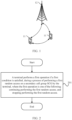
- FIG. 1 shows a block diagram of a wireless communications system applicable to an embodiment of this application.
- the wireless communications system includes a terminal 11 and a network-side device 12.
- the terminal 11 may also be referred to as user equipment.
- the terminal 11 may be a terminal device such as a mobile phone, a tablet personal computer (Tablet Personal Computer), a laptop computer (Laptop Computer), or referred to as a notebook computer, a personal digital assistant (Personal Digital Assistant, PDA), a palmtop computer, a netbook, an ultra-mobile personal computer (ultra-mobile personal computer, UMPC), a mobile Internet device (Mobile Internet Device, MID), a wearable device (Wearable Device), a vehicle user equipment (Vehicle User Equipment, VUE), or a pedestrian user equipment (Pedestrian User Equipment, PUE).
- a terminal device such as a mobile phone, a tablet personal computer (Tablet Personal Computer), a laptop computer (Laptop Computer), or referred to as a notebook computer, a personal digital
- the wearable device includes: a smartwatch, a band, a headset, glasses, and the like. It should be noted that a specific type of the terminal 11 is not limited in the embodiments of this application.
- the network-side device 12 may be a base station or a core network.
- the base station may be referred to as a node B, an evolved Node B, an access point, a base transceiver station (Base Transceiver Station, BTS), a radio base station, a basic service set (Basic Service Set, BSS), an extended service set (Extended Service Set, ESS), a node B, an evolved node B (Evolved Node B eNB), a home node B, a home evolved node B, a WLAN (Wireless Local Area Network, WLAN) access point, a wireless fidelity (Wireless Fidelity, Wi-Fi) node, a transmission and reception point (Transmitting Receiving Point, TRP), or another suitable term in the field.
- a node B an evolved Node B
- an access point a base transceiver station (Base Transceiver Station, BTS), a radio base station, a basic service set (Basic Service Set, BSS), an extended service set (Extended Service Set, ESS), a node B,
- the base station is not limited to a specific technical word. It should be noted that in the embodiments of this application, only the base station in an NR system is used as an example, although the specific type of the base station is not limited.
- this application provides a processing method for random access, including:
- Step 101 A terminal performs a first operation in a case that a first condition is satisfied, during a process of performing a first random access on a secondary cell group SCG by the terminal, where the first condition includes at least one of the following: the terminal initiates a second random access, the terminal receives first configuration information, and the terminal receives an SCG deactivation command, where the first configuration information is used for triggering bandwidth part BWP switching and/or a third random access; where the first operation is one of the following:
- whether the terminal continues or stops performing the first random access in the case that the first condition is satisfied can be determined by network configuration or a preset condition.
- Relevant conditions can be set by the network, defined by a protocol, or prearranged between the terminal and the network, which is not specifically limited herein.
- the SCG when the terminal is performing the first random access on the SCG, the SCG can be in activated state or deactivated state, which is not specifically limited herein.
- the SCG is in activated state, and the terminal initiates the first random access in a primary secondary cell PSCell or a SCG secondary cell.
- the SCG is in deactivated state, there is uplink data arriving at the SCG, and the terminal requests activation of the SCG, and the terminal initiates the first random access on the PSCell.
- At least one of the first random access and the second random access is triggered when the SCG is in deactivated state.
- a second random access can be triggered when the SCG is in activated state. If the first random access is triggered when the SCG is in deactivated state, the second random access can also be triggered when the SCG is in deactivated state.
- step 201 during the process of performing the first random access on the secondary cell group SCG by the terminal, in a case that the terminal initiates the second random access, the terminal stops performing the first random access, including: the terminal stops performing the first random access in a case that a second condition is satisfied, if the second random access is triggered by execution of a conditional primary secondary cell change (Conditional PSCell Change, CPC); and optionally, after stopping performing the first random access, the terminal can continue performing the second random access.
- a conditional primary secondary cell change Conditional PSCell Change, CPC
- the second condition includes at least one of the following:
- the terminal when the SCG is in deactivated state, the terminal initiates the first random access on the SCG due to the arrival of uplink data, requesting the activation of the SCG. During this process, the terminal continuously evaluates and executes conditional PSCell change, triggering the second random access when a condition for performing CPC is met. Because the execution of CPC results in the terminal being handed over to a new target PSCell, there is no need for the terminal to initiate random access on the original source PSCell. Therefore, the terminal stops performing the first random access and initiates the second random access.
- step 201 during the process of performing the first random access on the secondary cell group SCG by the terminal, if the terminal receives an SCG deactivation command, the terminal performs the first operation, including: the terminal performs the first operation in a case that a third condition is satisfied, where the third condition includes at least one of the following:
- the terminal continues performing the first random access in a case that the third condition includes at least one of the following:
- the terminal stops performing the first random access in a case that the third condition includes at least one of the following:
- the terminal continues performing the first random access. If the third condition is triggered in the case that the SCG is in deactivated state, the terminal stops performing the first random access.
- the terminal when the SCG is in activated state, the terminal has uplink data to send. In the absence of available physical uplink control channel (Physical Uplink Control Channel, PUCCH)/PUSCH resources, the terminal needs to initiate random access to request uplink transmission resources. During this process, the network-side may possibly send an SCG deactivation command to the terminal due to resource constraints. Therefore, the terminal can stop initiating random access to avoid the network-side sending the SCG deactivation command after random access initiation.
- PUCCH Physical Uplink Control Channel
- the terminal when the SCG is in deactivated state, the terminal initiates random access on the SCG due to the arrival of uplink data. During this process, the terminal undergoes a handover. Because the target master and secondary base stations are unaware of whether the terminal has uplink data to send, the target master base station may possibly send an SCG deactivation command to the terminal to keep the SCG in deactivated state. Therefore, the terminal can continue to initiate random access to notify the network-side terminal that there is uplink data to be transmitted.
- the terminal initiates random access.
- Such random access may be initiated on dedicated random access resources configured for the UE by the target PSCell. If the terminal receives an SCG deactivation command during this random access, the terminal should complete the first random access in priority, and optionally deactivate the SCG, or keep the SCG activated and wait for the target PSCell to determine whether to deactivate the SCG.
- the terminal if CPC execution is triggered when the SCG is in deactivated state, the terminal initiates random access.
- Such random access may be contention-based random access, which is random access not initiated on dedicated random access resources. In this case, the terminal may not initiate random access immediately but wait until the SCG is activated before initiating random access.
- the method further includes:
- step 201 during the process of performing the first random access on the secondary cell group SCG by the terminal, if the terminal receives the first configuration information, the terminal stops performing the first random access, including:
- That terminal receives the first configuration information includes: the terminal receives the first configuration information in a case that the SCG is in deactivated state.
- the method further includes at least one of the following:
- the method further includes:
- the terminal during the process of performing the first random access on the secondary cell group SCG by the terminal, if the first condition is satisfied, the terminal continues performing the first random access or stops performing the first random access. This can avoid the terminal performing unnecessary random access that leads to increased power consumption and longer SCG activation delay; or avoid the terminal performing unnecessary SCG deactivation, meeting SCG activation/deactivation requirements of the terminal itself.
- Example 1 The SCG is activated, the terminal has an ongoing first random access on the SCG and receives an SCG deactivation command.
- Step s1 With the SCG in activated state, the terminal initiates the first random access on a PSCell or an SCell of the SCG.
- Step s2 When the first random access is being performed, the terminal receives the SCG deactivation command and performs one of the following operations:
- A1 Continue with the first random access being performed.
- the terminal ignores the SCG deactivation command.
- the terminal performs the operation in a case that the following conditions are met, where the conditions include:
- B 1 Stop the first random access being performed.
- the terminal performs the operation in a case that the following conditions are met, where the conditions include:
- Example 2 The SCG is deactivated, the terminal has an ongoing first random access on the SCG and receives first configuration information, where the first configuration information triggers BWP switching and/or a new random access (a third random access).
- Step s1 With the SCG in deactivated state, the terminal initiates the first random access on the PSCell. For example, when uplink data arrives at the SCG, the terminal requests SCG activation.
- Step s2 When the first random access is being performed, the terminal receives the first configuration information sent by the network side, the first configuration information having triggered BWP switching or a new random access on the PSCell (for example, when downlink data arrives at the SCG, the network side activates the SCG and configures random access channel (Random Access Channel, RACH) resources and/or suitable BWP for the terminal), and the terminal performs one of the following operations:
- A2 Stop the first random access being performed. Further, the terminal performs BWP switching or initiate a new random access based on the first configuration information. Optionally, the terminal initiates random access on the switched-to BWP after BWP switching is completed. Optionally, the terminal stops the first random access being performed only when at least one of the following conditions is met:
- B2 Continue with the first random access being performed. Optionally, the terminal proceeds without performing BWP switching or performs BWP switching after the random access is completed.
- Example 3 The SCG is activated, the terminal has an ongoing first random access on the SCG, and the terminal receives an SCG deactivation command
- Step s1 With the SCG in deactivated state, the terminal initiates the first random access on the PSCell. For example, when uplink data arrives at the SCG, the terminal requests SCG activation.
- Step s2 When the first random access is being performed, the terminal receives the SCG deactivation command (for example, the terminal has undergone a handover without PSCell change, and the target master node decides to keep the SCG in deactivated state), and the terminal performs one of the following operations:
- the SCG deactivation command for example, the terminal has undergone a handover without PSCell change, and the target master node decides to keep the SCG in deactivated state
- A3 Stop the first random access being performed. Further, the terminal executes the SCG deactivation command to deactivate the SCG.
- B3 Continue with the first random access being performed.
- the terminal ignores the SCG deactivation command or deactivates the SCG after the first random access is completed.
- the processing method for random access can be performed by a processing apparatus for random access or a control module within the processing apparatus configured to perform the processing method for random access.
- the processing apparatus for random access performing the processing method for random access is used as an example to illustrate the processing apparatus for random apparatus provided in the embodiments of this application.
- the embodiments of this application further provide a processing apparatus 300 for random access, applied to a terminal, including:
- the apparatus 300 further includes at least one of the following:
- the terminal initiates a second random access at least one of the first random access and the second random access is triggered when the SCG is in deactivated state.
- the processing module includes: a first stop submodule configured to stop performing the first random access in a case that a second condition is satisfied, if the second random access is triggered by execution of a conditional primary secondary cell change CPC.
- the second condition includes at least one of the following:
- the processing module includes: a first processing submodule configured to perform the first operation in a case that a third condition is satisfied, where the third condition includes at least one of the following:
- the apparatus further includes:
- the processing module includes:
- the processing module is further configured to: receive the first configuration information in a case that the SCG is in deactivated state.
- the apparatus further includes at least one of the following:
- the apparatus further includes:
- the terminal during the process of performing the first random access on the secondary cell group SCG by the terminal, if the first condition is satisfied, the terminal continues performing the first random access or stops performing the first random access. This can avoid the terminal performing unnecessary random access that leads to increased power consumption and longer SCG activation delay; or avoid the terminal performing unnecessary SCG deactivation, meeting SCG activation/deactivation requirements of the terminal itself.
- processing apparatus for random access provided in this embodiment of this application is capable of performing the processing method for random access described above. Therefore, all embodiments of the processing method for random access are applicable to the apparatus and can achieve same or similar beneficial effects.
- the processing apparatus for random access in this embodiment of this application may be an apparatus or an apparatus or electronic device having an operating system, or may be a component, an integrated circuit, or a chip in a terminal.
- the apparatus or electronic device may be a mobile terminal or a non-mobile terminal.
- the mobile terminal may include but is not limited to the type of the terminal 11 listed above.
- the non-mobile terminal may be a server, a network attached storage (Network Attached Storage, NAS), a personal computer (personal computer, PC), a television (television, TV), a teller machine, or a self-service computer. This is not specifically limited in this embodiment of this application.
- the processing apparatus for random access provided in this embodiment of this application is capable of implementing the processes implemented in the method embodiments in FIG. 2 , with the same technical effects achieved. To avoid repetition, details are not described herein again.
- an embodiment of this application further provides a terminal 400, including a processor 401, a memory 402, and a program or instructions stored in the memory 402 and capable of running on the processor 401.
- a terminal 400 including a processor 401, a memory 402, and a program or instructions stored in the memory 402 and capable of running on the processor 401.
- the program or instructions are executed by the processor 401, the processes of the foregoing embodiments of the processing method for random access are implemented, and a same technical effect can be achieved. To avoid repetition, details are not described herein again.
- the embodiments of this application further provide a terminal including a processor and a communication interface.
- the communication interface is used to initiate a second random access, receive first configuration information, or receive an SCG deactivation command; and the processor is configured to perform a first operation in a case that a first condition is satisfied, during a process of performing a first random access on a secondary cell group SCG by the terminal.
- the first condition includes at least one of the following: the terminal initiates the second random access, the terminal receives the first configuration information, and the terminal receives the SCG deactivation command.
- the first configuration information is used for triggering bandwidth part BWP switching and/or a third random access.
- the first operation is one of the following:
- FIG. 5 is a schematic diagram of a hardware structure of a terminal implementing an embodiment of this application.
- the terminal 500 includes but is not limited to at least some of components such as a radio frequency unit 501, a network module 502, an audio output unit 503, an input unit 504, a sensor 505, a display unit 506, a user input unit 507, an interface unit 508, a memory 509, and a processor 510.
- components such as a radio frequency unit 501, a network module 502, an audio output unit 503, an input unit 504, a sensor 505, a display unit 506, a user input unit 507, an interface unit 508, a memory 509, and a processor 510.
- the terminal 500 may further include a power supply (for example, a battery) supplying power to the components.
- the power supply may be logically connected to the processor 510 via a power management system, so that functions such as charge management, discharge management, and power consumption management are implemented by using the power management system.
- the structure of the terminal shown in FIG. 5 does not constitute any limitation on the terminal, and the terminal may include more or fewer components than shown in the figure, or combine some of the components, or have different arrangements of the components. Details are not described herein.
- the input unit 504 may include a graphics processing unit (Graphics Processing Unit, GPU) 5041 and a microphone 5042.
- the graphics processing unit 5041 processes image data of a static picture or a video that is obtained by an image capture apparatus (for example, a camera) in a video capture mode or an image capture mode.
- the display unit 506 may include a display panel 5061.
- the display panel 5061 may be configured in a form of a liquid crystal display, an organic light-emitting diode display, or the like.
- the user input unit 507 includes a touch panel 5071 and other input devices 5072.
- the touch panel 5071 is also referred to as a touchscreen.
- the touch panel 5071 may include two parts: a touch detection apparatus and a touch controller.
- the other input devices 5072 may include but are not limited to a physical keyboard, a functional button (such as a volume control button or a power on/off button), a trackball, a mouse, and a joystick. Details are not described herein.
- the radio frequency unit 501 after receiving downlink data from a network-side device, the radio frequency unit 501 sends the downlink data to the processor 510 for processing, and in addition, sends uplink data to the network-side device.
- the radio frequency unit 501 includes but is not limited to an antenna, at least one amplifier, a transceiver, a coupler, a low noise amplifier, and a duplexer.
- the memory 509 may be configured to store software programs or instructions and various data.
- the memory 509 may include a program or instruction storage area and a data storage area.
- the program or instruction storage area may store an operating system, an application program or instruction required by at least one function (for example, a sound playback function or an image playback function), and the like.
- the memory 509 may include a high-speed random access memory, and may further include a non-volatile memory, where the non-volatile memory may be a read-only memory (Read-Only Memory, ROM), a programmable read-only memory (Programmable ROM, PROM), an erasable programmable read-only memory (Erasable PROM, EPROM), an electrically erasable programmable read-only memory (Electrically EPROM, EEPROM), or a flash memory, for example, at least one disk storage device, flash memory device, or other volatile solid-state storage device.
- ROM Read-Only Memory
- PROM programmable read-only memory
- Erasable PROM Erasable PROM
- EPROM electrically erasable programmable read-only memory
- EEPROM electrically erasable programmable read-only memory
- flash memory for example, at least one disk storage device, flash memory device, or other volatile solid-state storage device.
- the processor 510 may include one or more processing units.
- an application processor and a modem processor may be integrated in the processor 510.
- the application processor primarily processes an operating system, user interfaces, application programs or instructions, and the like.
- the modem processor primarily processes radio communication, for example, being a baseband processor. It can be understood that the modem processor may alternatively be not integrated in the processor 510.
- the radio frequency unit 501 is configured to receive first configuration information or receive SCG deactivation command; and the processor 510 is configured to initiate a second random access; the processor 510 is further configured to perform a first operation in a case that a first condition is satisfied, during a process of performing a first random access on a secondary cell group SCG, where the first operation is one of the following:
- the terminal during the process of performing the first random access on the secondary cell group SCG by the terminal, if the first condition is satisfied, the terminal continues performing the first random access or stops performing the first random access. This can avoid the terminal performing unnecessary random access that leads to increased power consumption and longer SCG activation delay; or avoid the terminal performing unnecessary SCG deactivation, meeting SCG activation/deactivation requirements of the terminal itself.
- the terminal provided in this embodiment of this application is a terminal capable of performing the processing method for random access described above. Therefore, all embodiments of the processing method for random access are applicable to the terminal and can achieve same or similar beneficial effects.
- An embodiment of this application further provides a readable storage medium, where the readable storage medium may be non-volatile or volatile.
- the readable storage medium stores a program or instructions, and when the program or instructions are executed by a processor, the processes of the foregoing embodiments of the processing method for random access are implemented, with the same technical effects achieved. To avoid repetition, details are not described herein again.
- the processor is a processor in the terminal described in the foregoing embodiment.
- the readable storage medium includes a computer-readable storage medium such as a computer read-only memory (Read-Only Memory, ROM), a random access memory (Random Access Memory, RAM), a magnetic disk, or an optical disc.
- An embodiment of this application further provides a chip, where the chip includes a processor and a communication interface, the communication interface is coupled to the processor, and the processor is configured to run a program or instructions to implement processes in the foregoing embodiments of the processing method for random access, and a same technical effect can be achieved. To avoid repetition, details are not described herein again.
- the chip mentioned in this embodiment of this application may also be referred to as a system-level chip, a system chip, a chip system, a system-on-chip, or the like.
- the method in the foregoing embodiment may be implemented by software with a necessary general hardware platform.
- the method in the foregoing embodiment may also be implemented by hardware.
- the former is a preferred implementation.
- the technical solutions of this application essentially or the part contributing to the prior art may be implemented in a form of a computer software product.
- the software product is stored in a storage medium (such as a ROM/RAM, a magnetic disk, or an optical disc), and includes several instructions for instructing a terminal (which may be a mobile phone, a computer, a server, an air conditioner, a network device, or the like) to perform the methods described in the embodiments of this application.
Landscapes
- Engineering & Computer Science (AREA)
- Signal Processing (AREA)
- Computer Networks & Wireless Communication (AREA)
- Mobile Radio Communication Systems (AREA)
Applications Claiming Priority (2)
| Application Number | Priority Date | Filing Date | Title |
|---|---|---|---|
| CN202110502356.5A CN115315018B (zh) | 2021-05-08 | 2021-05-08 | 随机接入的处理方法、装置及终端 |
| PCT/CN2022/091434 WO2022237677A1 (zh) | 2021-05-08 | 2022-05-07 | 随机接入的处理方法、装置及终端 |
Publications (2)
| Publication Number | Publication Date |
|---|---|
| EP4336945A1 true EP4336945A1 (de) | 2024-03-13 |
| EP4336945A4 EP4336945A4 (de) | 2024-10-30 |
Family
ID=83853878
Family Applications (1)
| Application Number | Title | Priority Date | Filing Date |
|---|---|---|---|
| EP22806643.7A Pending EP4336945A4 (de) | 2021-05-08 | 2022-05-07 | Direktzugriffsverarbeitungsverfahren und -vorrichtung sowie endgerät |
Country Status (5)
| Country | Link |
|---|---|
| US (1) | US20240064821A1 (de) |
| EP (1) | EP4336945A4 (de) |
| JP (1) | JP7664420B2 (de) |
| CN (1) | CN115315018B (de) |
| WO (1) | WO2022237677A1 (de) |
Families Citing this family (2)
| Publication number | Priority date | Publication date | Assignee | Title |
|---|---|---|---|---|
| EP4287755B1 (de) * | 2021-05-14 | 2026-01-07 | Guangdong Oppo Mobile Telecommunications Corp., Ltd. | Verfahren zur bestimmung des verhaltens einer endgerätevorrichtung sowie endgerätevorrichtung und netzwerkvorrichtung |
| CN118524472A (zh) * | 2023-02-17 | 2024-08-20 | 维沃移动通信有限公司 | Bwp切换处理方法、配置发送方法、装置及设备 |
Family Cites Families (16)
| Publication number | Priority date | Publication date | Assignee | Title |
|---|---|---|---|---|
| JP5970489B2 (ja) | 2014-01-30 | 2016-08-17 | 株式会社Nttドコモ | 移動通信システム及び移動局装置 |
| US10187907B2 (en) * | 2015-07-05 | 2019-01-22 | Ofinno Technologies, Llc | Preamble transmission in a wireless device |
| CN109429360B (zh) * | 2017-07-11 | 2020-10-16 | 华为技术有限公司 | 一种连接建立的方法、装置及系统 |
| CN108684219B (zh) * | 2017-09-29 | 2022-04-22 | 北京小米移动软件有限公司 | 随机接入配置方法及装置 |
| CN109802781B (zh) * | 2017-11-16 | 2023-01-06 | 夏普株式会社 | 用于处理载波激活的方法及其设备 |
| US11678374B2 (en) | 2017-12-21 | 2023-06-13 | Samsung Electronics Co., Ltd. | System and method of handling bandwidth part inactivity timer |
| CN110635878B (zh) * | 2018-06-22 | 2020-09-01 | 维沃移动通信有限公司 | 一种命令处理方法及终端设备 |
| EP4531298A3 (de) | 2018-09-27 | 2025-06-04 | Nokia Technologies Oy | Strahlausfallwiederherstellung für eine versorgende zelle |
| EP3837789B1 (de) | 2019-03-25 | 2022-05-04 | Beijing Xiaomi Mobile Software Co., Ltd. | Übertragung und empfang von energiesparbefehlen |
| CN116963242A (zh) * | 2019-08-15 | 2023-10-27 | 华为技术有限公司 | 基于双连接配置的通信方法、装置、设备及存储介质 |
| KR102904108B1 (ko) * | 2019-08-15 | 2025-12-24 | 애플 인크. | 이중-연결 모드에서의 ue 전력 효율을 위한 트래픽 레이트 기반 브랜치 비활성화 |
| CN112566273B (zh) * | 2019-09-26 | 2022-12-23 | 维沃移动通信有限公司 | 一种数据接收、发送方法、终端及网络侧设备 |
| WO2021063394A1 (en) * | 2019-10-03 | 2021-04-08 | FG Innovation Company Limited | Methods and apparatuses for handling retransmission on configured uplink grant resources |
| US10979128B1 (en) * | 2019-12-07 | 2021-04-13 | PanPsy Technologies, LLC | Beam failure and consistent listen before talk failure recovery |
| US11082116B1 (en) * | 2020-01-14 | 2021-08-03 | Asustek Computer Inc. | Method and apparatus for handling beam failure recovery regarding medium access control reset in a wireless communication system |
| US11985519B2 (en) * | 2020-10-22 | 2024-05-14 | Samsung Electronics Co., Ltd. | Method and system for UE actions upon SCG activation and deactivation |
-
2021
- 2021-05-08 CN CN202110502356.5A patent/CN115315018B/zh active Active
-
2022
- 2022-05-07 EP EP22806643.7A patent/EP4336945A4/de active Pending
- 2022-05-07 WO PCT/CN2022/091434 patent/WO2022237677A1/zh not_active Ceased
- 2022-05-07 JP JP2023568115A patent/JP7664420B2/ja active Active
-
2023
- 2023-11-03 US US18/501,919 patent/US20240064821A1/en active Pending
Also Published As
| Publication number | Publication date |
|---|---|
| US20240064821A1 (en) | 2024-02-22 |
| CN115315018A (zh) | 2022-11-08 |
| JP2024516310A (ja) | 2024-04-12 |
| EP4336945A4 (de) | 2024-10-30 |
| CN115315018B (zh) | 2025-02-11 |
| JP7664420B2 (ja) | 2025-04-17 |
| WO2022237677A1 (zh) | 2022-11-17 |
Similar Documents
| Publication | Publication Date | Title |
|---|---|---|
| US20230217332A1 (en) | Method and apparatus for executing target operation, and terminal device | |
| US20230189356A1 (en) | System message transmission method, terminal device, and network device | |
| US20240023189A1 (en) | Communication Path Switching Method and Terminal | |
| US20240064821A1 (en) | Processing method and apparatus for random access and terminal | |
| WO2023093709A1 (zh) | 激活或去激活Gap的方法、终端及网络侧设备 | |
| US20240023131A1 (en) | Pdcch monitoring method, terminal, and network side device | |
| WO2023217007A1 (zh) | 切换方法、终端及网络侧设备 | |
| EP4199630A1 (de) | Datenübertragungsverarbeitungsverfahren, ressourcenkonfigurationsverfahren und zugehörige vorrichtung | |
| WO2022206959A1 (zh) | 主辅小区配置方法、装置、ue、网络侧设备及可读存储介质 | |
| US20230336968A1 (en) | Method for controlling secondary cell group, terminal, and network-side device | |
| US20230337074A1 (en) | Cell handover method, terminal device, and network device | |
| WO2024093900A1 (zh) | Ue辅助信息上报的触发方法、装置及用户设备 | |
| WO2022262865A1 (zh) | Gap处理方法、装置、终端及可读存储介质 | |
| US20240365203A1 (en) | Conditional Handover Method, Terminal, and Network-Side Device | |
| US20240008129A1 (en) | Method for controlling status of scg, device, and non-transitory computer-readable storage medium | |
| EP4429379A1 (de) | Informationsverarbeitungsverfahren und -vorrichtung, kommunikationsvorrichtung und lesbares speichermedium | |
| EP4336764A1 (de) | Verfahren und vorrichtung zur verarbeitung von bandbreitenteilen und endgerät | |
| CN120640367A (zh) | 无线通信方法、装置及设备 | |
| WO2022184101A1 (zh) | 间隙gap处理方法、装置、设备及存储介质 | |
| WO2022188836A1 (zh) | Cot确定方法、上行传输方法和设备 | |
| US12634059B2 (en) | Method and apparatus for processing bandwidth parts and terminal | |
| WO2025213337A1 (en) | Cell activation triggered layer 3 reporting | |
| WO2023138587A1 (zh) | Bwp上的波形确定方法及终端方法 | |
| WO2023093629A1 (zh) | 终端行为控制方法、终端及网络侧设备 | |
| WO2022152240A1 (zh) | 非周期srs的传输方法和设备 |
Legal Events
| Date | Code | Title | Description |
|---|---|---|---|
| STAA | Information on the status of an ep patent application or granted ep patent |
Free format text: STATUS: THE INTERNATIONAL PUBLICATION HAS BEEN MADE |
|
| PUAI | Public reference made under article 153(3) epc to a published international application that has entered the european phase |
Free format text: ORIGINAL CODE: 0009012 |
|
| STAA | Information on the status of an ep patent application or granted ep patent |
Free format text: STATUS: REQUEST FOR EXAMINATION WAS MADE |
|
| 17P | Request for examination filed |
Effective date: 20231025 |
|
| AK | Designated contracting states |
Kind code of ref document: A1 Designated state(s): AL AT BE BG CH CY CZ DE DK EE ES FI FR GB GR HR HU IE IS IT LI LT LU LV MC MK MT NL NO PL PT RO RS SE SI SK SM TR |
|
| DAV | Request for validation of the european patent (deleted) | ||
| DAX | Request for extension of the european patent (deleted) | ||
| A4 | Supplementary search report drawn up and despatched |
Effective date: 20241002 |
|
| RIC1 | Information provided on ipc code assigned before grant |
Ipc: H04W 74/0833 20240101ALI20240926BHEP Ipc: H04L 5/00 20060101ALI20240926BHEP Ipc: H04W 74/08 20240101AFI20240926BHEP |