EP4336949A1 - Verarbeitungsverfahren für relaisbenutzergerät und benutzergerät - Google Patents
Verarbeitungsverfahren für relaisbenutzergerät und benutzergerät Download PDFInfo
- Publication number
- EP4336949A1 EP4336949A1 EP22798636.1A EP22798636A EP4336949A1 EP 4336949 A1 EP4336949 A1 EP 4336949A1 EP 22798636 A EP22798636 A EP 22798636A EP 4336949 A1 EP4336949 A1 EP 4336949A1
- Authority
- EP
- European Patent Office
- Prior art keywords
- relay
- rrc
- remote
- message
- rrc connection
- Prior art date
- Legal status (The legal status is an assumption and is not a legal conclusion. Google has not performed a legal analysis and makes no representation as to the accuracy of the status listed.)
- Pending
Links
- 238000003672 processing method Methods 0.000 title claims abstract description 22
- 238000000034 method Methods 0.000 claims abstract description 54
- 230000000977 initiatory effect Effects 0.000 claims abstract description 15
- 238000004891 communication Methods 0.000 description 9
- 238000005516 engineering process Methods 0.000 description 5
- 238000010586 diagram Methods 0.000 description 4
- 230000006870 function Effects 0.000 description 4
- 206010000210 abortion Diseases 0.000 description 3
- 238000012986 modification Methods 0.000 description 3
- 230000004048 modification Effects 0.000 description 3
- 230000011664 signaling Effects 0.000 description 3
- 108091005487 SCARB1 Proteins 0.000 description 2
- 102100037118 Scavenger receptor class B member 1 Human genes 0.000 description 2
- 230000007774 longterm Effects 0.000 description 2
- 238000012545 processing Methods 0.000 description 2
- 230000004044 response Effects 0.000 description 2
- 239000004065 semiconductor Substances 0.000 description 2
- 101100150273 Caenorhabditis elegans srb-1 gene Proteins 0.000 description 1
- 230000004075 alteration Effects 0.000 description 1
- 238000003491 array Methods 0.000 description 1
- 230000006399 behavior Effects 0.000 description 1
- 238000004140 cleaning Methods 0.000 description 1
- 238000013461 design Methods 0.000 description 1
- 230000000694 effects Effects 0.000 description 1
- 230000003993 interaction Effects 0.000 description 1
- 238000010295 mobile communication Methods 0.000 description 1
- 230000003287 optical effect Effects 0.000 description 1
- 230000002093 peripheral effect Effects 0.000 description 1
- 230000008569 process Effects 0.000 description 1
Images

Classifications
-
- H—ELECTRICITY
- H04—ELECTRIC COMMUNICATION TECHNIQUE
- H04W—WIRELESS COMMUNICATION NETWORKS
- H04W76/00—Connection management
- H04W76/10—Connection setup
- H04W76/18—Management of setup rejection or failure
-
- H—ELECTRICITY
- H04—ELECTRIC COMMUNICATION TECHNIQUE
- H04W—WIRELESS COMMUNICATION NETWORKS
- H04W40/00—Communication routing or communication path finding
- H04W40/02—Communication route or path selection, e.g. power-based or shortest path routing
- H04W40/22—Communication route or path selection, e.g. power-based or shortest path routing using selective relaying for reaching a BTS [Base Transceiver Station] or an access point
-
- H—ELECTRICITY
- H04—ELECTRIC COMMUNICATION TECHNIQUE
- H04W—WIRELESS COMMUNICATION NETWORKS
- H04W76/00—Connection management
- H04W76/10—Connection setup
-
- H—ELECTRICITY
- H04—ELECTRIC COMMUNICATION TECHNIQUE
- H04W—WIRELESS COMMUNICATION NETWORKS
- H04W76/00—Connection management
- H04W76/10—Connection setup
- H04W76/14—Direct-mode setup
-
- H—ELECTRICITY
- H04—ELECTRIC COMMUNICATION TECHNIQUE
- H04W—WIRELESS COMMUNICATION NETWORKS
- H04W76/00—Connection management
- H04W76/10—Connection setup
- H04W76/19—Connection re-establishment
-
- H—ELECTRICITY
- H04—ELECTRIC COMMUNICATION TECHNIQUE
- H04W—WIRELESS COMMUNICATION NETWORKS
- H04W76/00—Connection management
- H04W76/20—Manipulation of established connections
-
- H—ELECTRICITY
- H04—ELECTRIC COMMUNICATION TECHNIQUE
- H04W—WIRELESS COMMUNICATION NETWORKS
- H04W76/00—Connection management
- H04W76/20—Manipulation of established connections
- H04W76/27—Transitions between radio resource control [RRC] states
-
- H—ELECTRICITY
- H04—ELECTRIC COMMUNICATION TECHNIQUE
- H04W—WIRELESS COMMUNICATION NETWORKS
- H04W76/00—Connection management
- H04W76/30—Connection release
-
- H—ELECTRICITY
- H04—ELECTRIC COMMUNICATION TECHNIQUE
- H04W—WIRELESS COMMUNICATION NETWORKS
- H04W88/00—Devices specially adapted for wireless communication networks, e.g. terminals, base stations or access point devices
- H04W88/02—Terminal devices
- H04W88/04—Terminal devices adapted for relaying to or from another terminal or user
-
- H—ELECTRICITY
- H04—ELECTRIC COMMUNICATION TECHNIQUE
- H04W—WIRELESS COMMUNICATION NETWORKS
- H04W76/00—Connection management
- H04W76/20—Manipulation of established connections
- H04W76/23—Manipulation of direct-mode connections
-
- H—ELECTRICITY
- H04—ELECTRIC COMMUNICATION TECHNIQUE
- H04W—WIRELESS COMMUNICATION NETWORKS
- H04W92/00—Interfaces specially adapted for wireless communication networks
- H04W92/04—Interfaces between hierarchically different network devices
- H04W92/10—Interfaces between hierarchically different network devices between terminal device and access point, i.e. wireless air interface
-
- H—ELECTRICITY
- H04—ELECTRIC COMMUNICATION TECHNIQUE
- H04W—WIRELESS COMMUNICATION NETWORKS
- H04W92/00—Interfaces specially adapted for wireless communication networks
- H04W92/16—Interfaces between hierarchically similar devices
- H04W92/18—Interfaces between hierarchically similar devices between terminal devices
Definitions
- the present invention relates to the technical field of wireless communications. More specifically, the present invention relates to a processing method for relay UE, and a corresponding base station and corresponding user equipment.
- Remote UE can perform communication connection with a base station by means of relay UE.
- the remote UE In order to transmit an RRC connection establishment request to the base station, the remote UE encapsulates the RRC connection establishment request message, and transmits the RRC connection establishment request message to the relay UE by means of a PC5 RRC connection between the remote UE and the relay UE.
- the relay UE After the relay UE receives the PC5 RRC message carrying the RRC connection establishment request of the remote UE, in order to forward the PC5 RRC message to the base station, the relay UE initiates an RRC connection establishment request to the base station.
- the above situations mean that the relay UE cannot forward the RRC connection establishment request of the remote UE to the base station.
- the remote UE can go to an idle state only after waiting for a timer related to RRC connection establishment control to expire, and then re-trigger connection establishment again.
- the foregoing results in unnecessary latency of the RRC connection establishment of the remote UE.
- the present invention provides a processing method of relay UE and user equipment, which are intended to solve the problem of unnecessary latency of RRC connection establishment of remote UE because the remote UE can go to an idle state only after waiting for an RRC connection establishment control timer to expire.
- a processing method for relay UE comprising the following steps:
- the following steps are further comprised: carrying, by the relay UE when considering that the RRC connection establishment failure has occurred, the indication information of the RRC connection establishment failure in the PC5-RRC message, and transmitting the PC5-RRC message carrying the indication information to the remote UE, such that the remote UE, upon receiving the indication information or the PC5-RRC message, or when the remote UE considers, on the basis of the indication information or the PC5-RRC message, that the current PC5-RRC connection is released, performs the following operation on the basis of the RRC state of the remote UE:
- UE user equipment
- UE user equipment
- a plurality of embodiments according to the present invention are specifically described below, with an NR mobile communications system and the subsequent evolved version thereof serving as exemplary application environments, and with a base station and UE that support NR serving as examples.
- the present invention is not limited to the following embodiments, but is applicable to more other wireless communications systems, such as an eLTE communication system, or an NB-Iot system, or an LTE-M system.
- the present invention may be applicable to other base stations and user equipment, such as base stations and user equipment supporting eLTE/NB-IoT/LTE-M.
- UE and a base station are connected by means of a Uu interface.
- the states of the UE can be divided into an RRC idle state (IDLE), an RRC connected state, and an RRC inactive state (INACTIVE).
- an access stratum context (AS context) of the UE is reserved on the base station side and the UE side, and the UE is assigned an I-RNTI, which is used by the UE to resume an RRC connection.
- This intermediate state can be considered as a connection suspended state, or it can be considered as a connection inactive state.
- the left side is remote UE
- the middle is relay UE
- the right side is a network (also referred to as a base station, a network, or an NW in the present specification).
- the two sides are networks, and the middle, sequentially from left to right, is respectively remote UE and relay UE.
- the remote UE and the relay UE are connected to each other by means of a PC5 interface, and the relay UE is connected to the network by means of a Uu interface. Because the remote UE is far from the network or because the communication environment is poor, the relay UE is needed to relay and forward signaling and data between the remote UE and the network.
- An interface of the UE-to-network relay architecture is as shown in FIG. 2 , and the remote UE and the relay UE are connected by means of a PC5 (ProSe protocol 5) interface.
- a PC5 interface is an interface for performing control plane and user plane sidelink communication between UE and UE.
- a PC5-RRC connection is an access stratum (AS) logical connection between a pair of a source layer-2 ID and a target layer-2 ID.
- AS access stratum
- Setup of one PC5 unicast link corresponds to setup of one PC5-RRC connection.
- the PC5-RRC message refers to a message transmitted on the PC5-RRC connection, which is mainly generated and processed by a PC5 RRC layer of the UE.
- the PC5-S connection is a non-access stratum (NAS) logical connection between a pair of a source layer-2 ID and a target layer-2 ID, or may be considered as a logical connection at a sidelink communication higher layer.
- the PC5-S message (also referred to as PC5-S signaling) refers to a message or signaling transmitted on the PC5 non-access stratum, and is mainly generated or processed by the non-access stratum of the PC5 interface.
- the UE in the idle state needs to establish an RRC connection.
- the UE performs an RRC connection establishment procedure.
- the UE starts a timer T300 for management of the connection establishment procedure.
- the UE in the inactive state needs to resume the RRC connection.
- the UE performs an RRC connection resumption procedure.
- the UE starts a timer T319 for management of the connection resumption procedure.
- the UE in the connected state needs to re-establish the RRC connection.
- the UE performs an RRC connection re-establishment procedure.
- the UE starts a timer T311 for management of the connection resumption procedure.
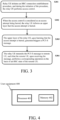
- the present embodiment provides a processing method for relay UE, which, as shown in FIG. 3 , includes the following steps:
- the above PC5-S message may trigger the remote UE to perform cell reselection.
- Relay UE initiates an RRC connection establishment procedure.
- the relay UE transmits an RRC connection establishment request message (RRCSetupRequest message) to a network or to a base station, and the relay UE receives an RRC reject message (RRCReject message) transmitted by the network as a response to the RRC connection establishment request message.
- RRCSetupRequest message an RRC connection establishment request message
- RRCReject message an RRC reject message
- the relay UE initiates an RRC connection resumption procedure.
- the relay UE transmits an RRC connection resume request message (RRCResumeRequest message) to the network or to the base station.
- the relay UE receives an RRC reject message (RRCReject message) transmitted by the network as a response to the RRC connection resume request message.
- the relay UE upon receiving the RRC reject message, informs an upper layer that access barring is applicable for all access categories, and optionally ends the RRC connection establishment/resume procedure.
- the relay UE may generate the PC5-S message in Embodiment 1, or generate a PC5-S message carrying information that the access of the relay UE is barred, and perform the operation as described in Embodiment 1.
- Relay UE initiates an RRC connection establishment procedure.
- the relay UE transmits an RRC connection establishment request message (RRCSetupRequest message) to a network or to a base station. Then the relay UE receives an RRC reject message (RRCReject message) transmitted by the network.
- RRCSetupRequest message an RRC connection establishment request message
- RRCReject message an RRC reject message
- the relay UE upon receiving the RRC reject message, informs an upper layer that the RRC connection establishment has failed (the failure to setup the RRC connection), and optionally, ends the RRC connection establishment procedure.
- the relay UE may generate the PC5-S message in Embodiment 1, or generate a PC5-S message carrying RRC connection establishment failure information, and perform the operation as described in Embodiment 1.
- the generated PC5-S message carries the RRC connection establishment failure information of the relay UE.
- Relay UE initiates an RRC connection resumption procedure.
- the relay UE transmits an RRC connection resume request message (RRCResumeRequest message) to a network or to a base station. Then the relay UE receives an RRC reject message (RRCReject message) transmitted by the network.
- RRCResumeRequest message an RRC connection resume request message
- RRCReject message an RRC reject message
- the relay UE upon receiving the RRC reject message, informs an upper layer that the RRC connection resume has failed (the failure to resume the RRC connection), and optionally, ends the RRC connection resumption procedure (end the RRC establishment).
- the relay UE can generate the PC5-S message in Embodiment 1, or generate a PC5-S message carrying RRC connection resume failure information, and perform the operation as described in Embodiment 1.
- the generated PC5-S message carries the RRC connection resume failure information of the relay UE.
- Relay UE initiates an RRC connection establishment procedure.
- the relay UE starts a timer T300.
- T300 expires, the relay UE informs an upper layer that the RRC connection establishment has failed (the failure to establish the RRC connection).
- the relay UE can generate the PC5-S message in Embodiment 1, or generate a PC5-S message carrying the connection establishment failure, and perform the operation as described in Embodiment 1.
- Relay UE initiates an RRC connection establishment procedure.
- the relay UE starts a timer T300.
- the relay UE initiates an RRC connection resumption procedure.
- the relay UE starts a timer T319.
- the relay UE undergoes cell reselection, and the relay UE proceeds to perform a related operation upon going to an idle state (going to RRC_IDLE), such as informing an upper layer that the RRC connection establishment has failed (the failure to establish the RRC connection).
- the relay UE may generate the PC5-S message in Embodiment 1, or generate a PC5-S message carrying RRC connection establishment failure information, and perform the operation as described in Embodiment 1.
- the generated PC5-S message carries the RRC connection establishment failure information of the relay UE.
- T319 may expire, and the relay UE may proceed to perform a related operation upon going to an idle state (going to RRC_IDLE), such as informing the upper layer that the RRC connection establishment has failed (the failure to establish the RRC connection).
- the relay UE can generate the PC5-S message in Embodiment 1, or generate a PC5-S message carrying the connection establishment failure, and perform the operation as described in Embodiment 1.
- the generated PC5-S message carries the RRC connection establishment failure information of the relay UE.
- relay UE may consider that an RRC connection establishment failure has occurred (the failure to setup an RRC connection).
- the relay UE receives an RRC reject message transmitted by a network side, and informs an upper layer that access barring is applicable for all access categories.
- the relay UE informs the upper layer that RRC connection establishment has failed (the failure to establish the RRC connection). The foregoing may occur when the UE receives an RRC reject message transmitted by the network side, or T300 of the relay UE expires.
- the relay UE informs the upper layer of the UE of an RRC connection release (indicates the release of the RRC connection to the upper layer).
- the foregoing situation may occur when T319 of the relay UE expires, or may occur when the relay UE undergoes cell reselection during the running of T300 or T319 of the relay UE.
- the UE When the UE considers that the RRC connection establishment has failed, the UE can generate the PC5-S message in Embodiment 1, or generate a PC5-S message carrying RRC connection establishment failure information, and the relay UE performs the operation as described in Embodiment 1. Specifically, the relay UE considers that the RRC connection establishment failure has occurred in the above situations, and then informs the upper layer of the relay UE. The upper layer of the relay UE generates the PC5-S message, and the relay UE performs the operation as described in Embodiment 1. Preferably, the generated PC5-S message carries the RRC connection establishment failure information of the relay UE.
- the relay UE when the relay UE considers that the RRC connection establishment has failed, the relay UE can inform the remote UE.
- the PC5-RRC message may carry indication information indicating the RRC connection establishment failure, and the relay UE transmits the PC5-RRC message carrying the indication information to the remote UE.
- the indication information indicating the RRC connection establishment failure may also be carried in a MAC CE, and the MAC CE is transmitted by the relay UE to the remote UE.
- the remote UE may consider that the PC5-RRC connection is released.
- the remote UE When the remote UE receives the indication information or the PC5-RRC message, or when the remote UE considers that the current PC5-RRC connection is released, if T300/T319 is running, then the remote UE stops T300/T319, and optionally, aborts the RRC connection establishment, which may specifically include re-establishing RLC for all radio bearers. Preferably, if the remote UE is in the INACTIVE state, the RRC connection resume may be aborted, which specifically may include suspending SRB 1 and discarding a current key. In addition, preferably, the remote UE, upon receiving the indication information or the PC5-RRC message, may trigger relay reselection.
- the remote UE upon receiving the MAC CE carrying the indication information, indicates to an upper layer of the remote UE, which herein mainly refers to a PC5 RRC layer.
- the relay UE may consider/determine that a radio link failure (RLF) has occurred.
- RLF radio link failure
- the relay UE When the relay UE considers that the RLF has occurred, the relay UE can generate the PC5-S message in Embodiment 1, or generate a PC5-S message carrying RLF indication information and perform the operation as described in Embodiment 1. Specifically, the relay UE considers that the RLF has occurred in the above situations, and then informs the upper layer of the relay UE. The upper layer of the relay UE generates the PC5-S message, and the relay UE performs the operation as described in Embodiment 1. Preferably, the generated PC5-S message carries the RLF indication information of the relay UE.
- the relay UE when the relay UE considers that the RLF has occurred, the relay UE can inform the remote UE.
- the RLF indication information may be carried in the PC5-RRC message, and the relay UE may transmit the PC5-RRC message carrying the RLF indication information to the remote UE.
- the relay UE may also carry the RLF indication information in a MAC CE and transmits the MAC CE to the remote UE.
- the remote UE upon receiving the indication information or the PC5-RRC message/MAC CE carrying the indication information, may consider that a PC5-RRC connection is released.
- the remote UE upon receiving the indication information or the PC5-RRC message, or when the remote UE considers that the current PC5-RRC connection is released, may perform the following operation on the basis of an RRC state of the remote UE:
- the remote UE upon receiving the indication information or the PC5-RRC message, can trigger relay reselection.
- the remote UE upon receiving the MAC CE carrying the indication information, indicates to the upper layer of the remote UE, which herein mainly refers to a PC5 RRC layer.
- the relay UE transmits the generated PC5-S message to the remote UE and triggers the remote UE to perform relay reselection.
- Yet another implementation of the foregoing procedure may be as follows: the remote UE, upon receiving the PC5-S message, instructs/triggers the remote UE to perform relay reselection to a lower layer of the remote UE, i.e., the PC5-RRC layer.
- the remote UE When the remote UE performs relay reselection and reselects relay UE, which, preferably, is different from the previous relay UE, the remote UE can perform the following operation:
- the timer T319 of the remote UE is running.
- the remote UE stops T319 and goes to the idle state, and optionally, performs a related operation upon going to the idle state (going to RRC_IDLE), such as releasing a configuration, which may be releasing a suspendConfig configuration, and indicating the release of the RRC connection to the upper layer together with a release cause, wherein the release cause is set to "RRC resume failure".
- FIG. 4 is a simplified structural block diagram of user equipment relating to the present invention.
- the user equipment 400 at least includes a processor 401 and a memory 402.
- the processor 401 may include, for example, a microprocessor, a microcontroller, an embedded processor, and the like.
- the memory 402 may include, for example, a volatile memory (for example, a random access memory (RAM)), a hard disk drive (HDD), a non-volatile memory (for example, a flash memory), or other memory systems.
- the memory 402 stores program instructions. When the instructions are run by the processor 401, one or several steps in the processing method for relay UE described above in FIG. 3 of the present disclosure can be performed.
- the user equipment shown above may include more modules, for example, may also include modules that can be developed or developed in the future and can be used for base stations, MMEs, or UE, and so on.
- modules for example, may also include modules that can be developed or developed in the future and can be used for base stations, MMEs, or UE, and so on.
- Various identifiers shown above are only exemplary, not for limitation, and the present disclosure is not limited to specific information elements serving as examples of these identifiers. A person skilled in the art could make various alterations and modifications according to the teachings of the illustrated embodiments.
- various components of the base station and user equipment in the above embodiments can be implemented by multiple devices, and these devices include, but are not limited to: an analog circuit device, a digital circuit device, a digital signal processing (DSP) circuit, a programmable processor, an application-specific integrated circuit (ASIC), a field-programmable gate array (FPGA), a complex programmable logic device (CPLD), and the like.
- DSP digital signal processing
- ASIC application-specific integrated circuit
- FPGA field-programmable gate array
- CPLD complex programmable logic device
- the program running on the device according to the present invention may be a program that enables the computer to implement the functions of the embodiments of the present invention by controlling a central processing unit (CPU).
- the program or information processed by the program may be temporarily stored in a volatile memory (for example, a random access memory (RAM)), a hard disk drive (HDD), a non-volatile memory (for example, a flash memory), or other memory systems.
- a volatile memory for example, a random access memory (RAM)
- HDD hard disk drive
- non-volatile memory for example, a flash memory
- the program for implementing the functions of the embodiments of the present invention may be recorded on a computer-readable recording medium.
- the corresponding functions may be achieved by reading programs recorded on the recording medium and executing them by the computer system.
- the phrase "computer system” herein may be a computer system embedded in the device, which may include operating systems or hardware (e.g., peripherals).
- the phrase "computer-readable recording medium” may refer to a semiconductor recording medium, an optical recording medium, a magnetic recording medium, a recording medium for programs that are dynamically stored for a short time, or any other recording medium readable by a computer.
- circuits for example, monolithic or multi-chip integrated circuits.
- Circuits designed to execute the functions described in the present description may include general-purpose processors, digital signal processors (DSPs), application-specific integrated circuits (ASICs), field-programmable gate arrays (FPGAs) or other programmable logic devices, discrete gates or transistor logic, discrete hardware components, or any combination of the above.
- the general-purpose processor may be a microprocessor, or may be any existing processor, controller, microcontroller, or state machine.
- the circuit may be a digital circuit or an analog circuit.
- the present invention is not limited to the embodiments described above. Although various examples of the embodiments have been described, the present invention is not limited thereto.
- Fixed or non-mobile electronic devices installed indoors or outdoors such as AV equipment, kitchen equipment, cleaning equipment, air conditioners, office equipment, vending machines, and other household appliances, may be used as terminal devices or communications devices.
Landscapes
- Engineering & Computer Science (AREA)
- Computer Networks & Wireless Communication (AREA)
- Signal Processing (AREA)
- Mobile Radio Communication Systems (AREA)
Applications Claiming Priority (2)
| Application Number | Priority Date | Filing Date | Title |
|---|---|---|---|
| CN202110492872.4A CN115315023A (zh) | 2021-05-06 | 2021-05-06 | 中继用户设备的处理方法及用户设备 |
| PCT/CN2022/090910 WO2022233296A1 (zh) | 2021-05-06 | 2022-05-05 | 中继用户设备的处理方法及用户设备 |
Publications (2)
| Publication Number | Publication Date |
|---|---|
| EP4336949A1 true EP4336949A1 (de) | 2024-03-13 |
| EP4336949A4 EP4336949A4 (de) | 2025-01-08 |
Family
ID=83853245
Family Applications (1)
| Application Number | Title | Priority Date | Filing Date |
|---|---|---|---|
| EP22798636.1A Pending EP4336949A4 (de) | 2021-05-06 | 2022-05-05 | Verarbeitungsverfahren für relaisbenutzergerät und benutzergerät |
Country Status (4)
| Country | Link |
|---|---|
| US (1) | US20240215082A1 (de) |
| EP (1) | EP4336949A4 (de) |
| CN (1) | CN115315023A (de) |
| WO (1) | WO2022233296A1 (de) |
Cited By (1)
| Publication number | Priority date | Publication date | Assignee | Title |
|---|---|---|---|---|
| WO2023141905A1 (en) | 2022-01-27 | 2023-08-03 | Lenovo (Beijing) Limited | Methods and apparatuses for timers and behavior in l2 u2n relay case |
Families Citing this family (4)
| Publication number | Priority date | Publication date | Assignee | Title |
|---|---|---|---|---|
| WO2022187184A1 (en) * | 2021-03-01 | 2022-09-09 | Kyocera Corporation | Rrc state transitions in l2 relaying |
| CN115696629B (zh) * | 2021-07-27 | 2025-09-16 | 维沃移动通信有限公司 | Rrc连接方法、设备及可读存储介质 |
| US12452935B2 (en) | 2022-11-25 | 2025-10-21 | Asus Technology Licensing Inc. | Method and apparatus for supporting discovery integrated into direct link establishment procedure in a wireless communication system |
| CN121367880A (zh) * | 2024-07-19 | 2026-01-20 | 夏普株式会社 | 由用户设备执行的方法以及用户设备 |
Family Cites Families (7)
| Publication number | Priority date | Publication date | Assignee | Title |
|---|---|---|---|---|
| CN113316167B (zh) * | 2017-03-24 | 2024-05-17 | 华为技术有限公司 | 信息指示的方法和装置 |
| CN115460720B (zh) * | 2019-08-13 | 2025-07-15 | 苹果公司 | 远程无线设备的无线电资源控制连接过程 |
| EP4042825B1 (de) * | 2019-11-07 | 2024-06-19 | LG Electronics Inc. | Verfahren und vorrichtung zur auswahl einer sidelink-ressource für eine sidelink-csi-meldung in einem drahtlosen kommunikationssystem |
| WO2022086226A1 (en) * | 2020-10-21 | 2022-04-28 | Samsung Electronics Co., Ltd. | Method and apparatus for relaying system information on sidelink in wireless communication system |
| WO2022187184A1 (en) * | 2021-03-01 | 2022-09-09 | Kyocera Corporation | Rrc state transitions in l2 relaying |
| WO2022233063A1 (zh) * | 2021-05-07 | 2022-11-10 | 北京小米移动软件有限公司 | 接入失败处理方法、装置、终端设备和存储介质 |
| CN119111081A (zh) * | 2022-04-24 | 2024-12-10 | Lg电子株式会社 | 在无线通信系统中操作已接收到rrc拒绝的中继ue的方法 |
-
2021
- 2021-05-06 CN CN202110492872.4A patent/CN115315023A/zh active Pending
-
2022
- 2022-05-05 US US18/289,016 patent/US20240215082A1/en active Pending
- 2022-05-05 WO PCT/CN2022/090910 patent/WO2022233296A1/zh not_active Ceased
- 2022-05-05 EP EP22798636.1A patent/EP4336949A4/de active Pending
Cited By (2)
| Publication number | Priority date | Publication date | Assignee | Title |
|---|---|---|---|---|
| WO2023141905A1 (en) | 2022-01-27 | 2023-08-03 | Lenovo (Beijing) Limited | Methods and apparatuses for timers and behavior in l2 u2n relay case |
| EP4470268A4 (de) * | 2022-01-27 | 2025-10-15 | Lenovo Beijing Ltd | Verfahren und vorrichtungen für timer und verhalten in l2u2n-relaisgehäuse |
Also Published As
| Publication number | Publication date |
|---|---|
| US20240215082A1 (en) | 2024-06-27 |
| WO2022233296A1 (zh) | 2022-11-10 |
| EP4336949A4 (de) | 2025-01-08 |
| CN115315023A (zh) | 2022-11-08 |
Similar Documents
| Publication | Publication Date | Title |
|---|---|---|
| EP4336949A1 (de) | Verarbeitungsverfahren für relaisbenutzergerät und benutzergerät | |
| EP4354963A1 (de) | Von benutzergerät ausgeführtes verfahren und benutzergerät | |
| JP6700475B2 (ja) | 端末状態の切り替え方法及び装置 | |
| US20250106923A1 (en) | Method performed by user equipment and user equipment | |
| US20240224366A1 (en) | Processing method for remote user equipment and user equipment | |
| CN107635258B (zh) | 一种数据或者信令发送、传输方法及装置 | |
| EP3952519B1 (de) | Benutzergerät und dadurch ausgeführtes verfahren zum senden mittels vorkonfigurierter uplink-ressource | |
| US20250063622A1 (en) | Method performed by user equipment and user equipment | |
| EP3817501B1 (de) | Steuerungsverfahren in benutzergerät sowie benutzergerät | |
| US20190007991A1 (en) | Method and device for monitoring radio resource control procedure | |
| WO2018137459A1 (zh) | 通信的方法、终端和接入网设备 | |
| EP4366460A1 (de) | Von einem benutzergerät ausgeführtes verfahren und benutzergerät | |
| US20250056649A1 (en) | Method performed by user equipment, and user equipment | |
| EP4383929A1 (de) | Verarbeitungsverfahren für remote-benutzergeräte und benutzergerät | |
| US20250294626A1 (en) | Method performed by user equipment and user equipment | |
| WO2016184157A1 (zh) | 一种移动通信系统中程序的处理方法和装置 | |
| EP4535919A1 (de) | Von einem benutzergerät ausgeführtes verfahren und benutzergerät | |
| WO2023093818A1 (zh) | 由用户设备执行的方法及用户设备 | |
| WO2022135517A1 (zh) | 由用户设备执行的方法以及用户设备 | |
| US20250220755A1 (en) | Method performed by user equipment, and user equipment | |
| EP4586738A1 (de) | Von einem benutzergerät ausgeführtes verfahren und benutzergerät | |
| WO2025119324A1 (zh) | 由用户设备执行的方法以及用户设备 | |
| CN121665375A (zh) | 对非sdt数据传输的控制 | |
| WO2024160061A1 (zh) | 一种通信方法及装置 | |
| WO2024067623A1 (zh) | 由用户设备执行的方法以及用户设备 |
Legal Events
| Date | Code | Title | Description |
|---|---|---|---|
| STAA | Information on the status of an ep patent application or granted ep patent |
Free format text: STATUS: THE INTERNATIONAL PUBLICATION HAS BEEN MADE |
|
| PUAI | Public reference made under article 153(3) epc to a published international application that has entered the european phase |
Free format text: ORIGINAL CODE: 0009012 |
|
| STAA | Information on the status of an ep patent application or granted ep patent |
Free format text: STATUS: REQUEST FOR EXAMINATION WAS MADE |
|
| 17P | Request for examination filed |
Effective date: 20231116 |
|
| AK | Designated contracting states |
Kind code of ref document: A1 Designated state(s): AL AT BE BG CH CY CZ DE DK EE ES FI FR GB GR HR HU IE IS IT LI LT LU LV MC MK MT NL NO PL PT RO RS SE SI SK SM TR |
|
| DAV | Request for validation of the european patent (deleted) | ||
| DAX | Request for extension of the european patent (deleted) | ||
| REG | Reference to a national code |
Ref country code: DE Ref legal event code: R079 Free format text: PREVIOUS MAIN CLASS: H04W0076100000 Ipc: H04W0076180000 |
|
| A4 | Supplementary search report drawn up and despatched |
Effective date: 20241209 |
|
| RIC1 | Information provided on ipc code assigned before grant |
Ipc: H04W 92/18 20090101ALN20241203BHEP Ipc: H04W 92/10 20090101ALN20241203BHEP Ipc: H04W 76/23 20180101ALN20241203BHEP Ipc: H04W 40/22 20090101ALN20241203BHEP Ipc: H04W 88/04 20090101ALI20241203BHEP Ipc: H04W 76/14 20180101ALI20241203BHEP Ipc: H04W 76/18 20180101AFI20241203BHEP |