EP4336953A1 - Verfahren und vorrichtung zur verarbeitung von zugriffsfehlern, endgerätevorrichtung und speichermedium - Google Patents
Verfahren und vorrichtung zur verarbeitung von zugriffsfehlern, endgerätevorrichtung und speichermedium Download PDFInfo
- Publication number
- EP4336953A1 EP4336953A1 EP21939709.8A EP21939709A EP4336953A1 EP 4336953 A1 EP4336953 A1 EP 4336953A1 EP 21939709 A EP21939709 A EP 21939709A EP 4336953 A1 EP4336953 A1 EP 4336953A1
- Authority
- EP
- European Patent Office
- Prior art keywords
- terminal device
- relay terminal
- access
- timer
- rrc
- Prior art date
- Legal status (The legal status is an assumption and is not a legal conclusion. Google has not performed a legal analysis and makes no representation as to the accuracy of the status listed.)
- Pending
Links
Images



Classifications
-
- H—ELECTRICITY
- H04—ELECTRIC COMMUNICATION TECHNIQUE
- H04W—WIRELESS COMMUNICATION NETWORKS
- H04W76/00—Connection management
- H04W76/10—Connection setup
- H04W76/18—Management of setup rejection or failure
-
- H—ELECTRICITY
- H04—ELECTRIC COMMUNICATION TECHNIQUE
- H04W—WIRELESS COMMUNICATION NETWORKS
- H04W48/00—Access restriction; Network selection; Access point selection
- H04W48/02—Access restriction performed under specific conditions
-
- H—ELECTRICITY
- H04—ELECTRIC COMMUNICATION TECHNIQUE
- H04W—WIRELESS COMMUNICATION NETWORKS
- H04W48/00—Access restriction; Network selection; Access point selection
- H04W48/08—Access restriction or access information delivery, e.g. discovery data delivery
-
- H—ELECTRICITY
- H04—ELECTRIC COMMUNICATION TECHNIQUE
- H04W—WIRELESS COMMUNICATION NETWORKS
- H04W76/00—Connection management
- H04W76/20—Manipulation of established connections
- H04W76/27—Transitions between radio resource control [RRC] states
-
- H—ELECTRICITY
- H04—ELECTRIC COMMUNICATION TECHNIQUE
- H04W—WIRELESS COMMUNICATION NETWORKS
- H04W76/00—Connection management
- H04W76/30—Connection release
- H04W76/38—Connection release triggered by timers
-
- H—ELECTRICITY
- H04—ELECTRIC COMMUNICATION TECHNIQUE
- H04W—WIRELESS COMMUNICATION NETWORKS
- H04W76/00—Connection management
- H04W76/10—Connection setup
- H04W76/19—Connection re-establishment
-
- H—ELECTRICITY
- H04—ELECTRIC COMMUNICATION TECHNIQUE
- H04W—WIRELESS COMMUNICATION NETWORKS
- H04W88/00—Devices specially adapted for wireless communication networks, e.g. terminals, base stations or access point devices
- H04W88/02—Terminal devices
- H04W88/04—Terminal devices adapted for relaying to or from another terminal or user
Definitions
- the present disclosure relates to the field of communication technologies, and in particular to an access failure processing method and apparatus, a terminal device and a storage medium.
- a sidelink communication mode has been introduced, and an interface between the UE and the another UE is a PC5 port.
- three transmission modes are supported on the sidelink, and the three transmission modes are unicast, multicast, and broadcast.
- a UE may communicate with a base station via a relay of another UE without directly connecting to the base station.
- the UE that is not connected to the base station is called a remote UE, and the UE that provides a relay function is called a relay UE.
- the communication between the remote UE and the relay UE is achieved through the sidelink.
- the relay UE communicates with the remote UE, if an access failure occurs to the relay UE, the connection establishment request of the remote UE cannot be sent, and the remote UE cannot establish a connection through this relay, resulting in the remote UE being unable to communicate with the base station.
- Embodiments of the present disclosure provide an access failure processing method and apparatus, a terminal device and a storage medium, which can be applied to a 5G system or a new radio (NR) system.
- NR new radio
- the remote terminal device can perform corresponding operations to cope with the access failure of the relay terminal device, for example, the remote terminal device is prohibited from accessing the relay terminal device for a certain period of time after receiving the notification, for example, the remote terminal device no longer repeatedly sends an access request to the relay terminal device within the period of time, so that unnecessary access attempts may be avoided, thereby contributing to saving resources and avoiding waste of resources.
- the embodiments of the present disclosure provide an access failure processing method that is applied to a relay terminal device.
- the access failure processing method includes sending a notification message to a remote terminal device in response to an access failure of the relay terminal device.
- access operation of the relay terminal device is performed in response to a trigger of a radio resource control (RRC) connection establishment of the remote terminal device, an RRC connection resume of the remote terminal device, or an RRC connection reestablishment of the remote terminal device.
- RRC radio resource control
- the access failure includes:
- the sending the notification message to the remote terminal device in response to the access failure of the relay terminal device includes: in response to the access failure of the relay terminal device, starting a timer and sending the notification message to the remote terminal device.
- the notification message carries a duration of the timer.
- the access failure is failing to pass a UAC verification, and the timer is a prohibit timer; or the access failure is receiving an RRC reject message or an RRC release message sent by a network device, and the timer is a T302 timer.
- the access failure processing method further includes:
- the determining whether the connection request sent by the another remote terminal device is received during the operation of the timer includes:
- the embodiments of the present disclosure provide another access failure processing method that is applied to a remote terminal device.
- the access failure processing method includes receiving a notification message sent by a relay terminal device.
- the notification message is sent by the relay terminal device when the relay terminal device performs access operation and an access failure occurs to the relay terminal device, or the notification message is sent by the relay terminal device when the relay terminal device receives during operation of a timer a connection request sent by the remote terminal device.
- the method before the receiving the notification message sent by the relay terminal device, the method further includes sending to the relay terminal device an RRC establishment request message, an RRC resume request message, or an RRC reestablishment request message.
- the access failure processing method further includes performing, after receiving the notification message, one or more of:
- the notifying the higher layer that the access is prohibited includes notifying the higher layer that access of all access categories is prohibited, or notifying the higher layer that access of all access categories other than access categories 0 and 2 is prohibited.
- the access failure processing method further includes determining, after receiving the notification message, whether configuration for a duration of a timer exists, and starting the timer in response to the configuration for the duration of the timer existing.
- the remote terminal device after starting the timer, performs one or more of
- the prohibiting the access to the cell via the relay terminal device during the operation time of the timer includes:
- the duration of the timer is carried in the notification message, or is configured by a network device, or is configured by the relay terminal device, or is specified by a protocol.
- the embodiments of the present disclosure provide an access failure processing apparatus.
- the access failure processing apparatus has some or all of the functions of the relay terminal device in the method described in the first aspect above.
- the access failure processing apparatus may have the function in some or all of the embodiments of the present disclosure, or may have the function of implementing any one of the embodiments of the present disclosure separately.
- the described functions may be implemented by hardware or by executing corresponding software through hardware.
- the hardware or software includes one or more units or modules corresponding to the above functions.
- the access failure processing apparatus may include a transceiver module and a processing module.
- the processing module is configured to support the access failure processing apparatus in executing the corresponding functions in the above method.
- the transceiver module is configured to support communication between the access failure processing apparatus and other devices.
- the access failure processing apparatus may further include a storage module.
- the storage module is configured to couple with the transceiver module and processing module, and stores necessary computer programs and data of the access failure processing apparatus.
- the processing module may be a processor
- the transceiver module may be a transceiver or communication interface
- the storage module may be a memory
- the embodiments of the present disclosure provide another access failure processing apparatus.
- the access failure processing apparatus has some or all of the functions of the remote terminal device in the method embodiments described in the second aspect above.
- the access failure processing apparatus may have the function in some or all of the embodiments of the present disclosure, or may have the function of implementing any one of the embodiments of the present disclosure separately.
- the functions described may be implemented by hardware or by executing corresponding software through hardware.
- the hardware or software includes one or more units or modules corresponding to the above functions.
- the access failure processing apparatus may include a transceiver module and a processing module.
- the processing module is configured to support the access failure processing apparatus in executing the corresponding functions in the above method.
- the transceiver module is configured to support communication between the access failure processing apparatus and other devices.
- the access failure processing apparatus may further include a storage module.
- the storage module is configured to couple with the transceiver module and processing module, and stores necessary computer programs and data of the access failure processing apparatus.
- the processing module may be a processor
- the transceiver module may be a transceiver or communication interface
- the storage module may be a memory
- the embodiments of the present disclosure provide a terminal device.
- the terminal device includes a processor.
- the method described in the first aspect above is executed when the processor invokes a computer program in a memory.
- the embodiments of the present disclosure provide a terminal device.
- the terminal device includes a processor.
- the method described in the second aspect above is executed when the processor invokes a computer program in a memory.
- the embodiments of the present disclosure provide a terminal device.
- the terminal device includes a processor and a memory.
- the memory stores a computer program.
- the processor executes the computer program stored in the memory to cause the terminal device to perform the method described in the first aspect above.
- the embodiments of the present disclosure provide a terminal device.
- the terminal device includes a processor and a memory.
- the memory stores a computer program.
- the processor executes the computer program stored in the memory to cause the terminal device to perform the method described in the second aspect above.
- the embodiments of the present disclosure provide a terminal device.
- the terminal device includes a processor and an interface circuit.
- the interface circuit is used for receiving a code instruction and transmitting the code instruction to the processor.
- the processor is configured to run the code instruction to cause the terminal device to perform the method described in the first aspect above.
- the embodiments of the present disclosure provide a terminal device.
- the terminal device includes a processor and an interface circuit.
- the interface circuit is used for receiving a code instruction and transmitting the code instruction to the processor.
- the processor is configured to run the code instruction to cause the terminal device to perform the method described in the second aspect above.
- the embodiments of the present disclosure provide a communication system.
- the communication system includes an access failure processing apparatus described in the third aspect and an access failure processing apparatus described in the fourth aspect, or the communication system includes a terminal device described in the fifth aspect and a terminal device described in the sixth aspect, or the communication system includes a terminal device described in the seventh aspect and a terminal device described in the eighth aspect, or the communication system includes a terminal device described in the ninth aspect and a terminal device described in the tenth aspect.
- the embodiments of the present disclosure provide a computer-readable storage medium.
- the computer-readable storage medium is used for storing an instruction for use by the relay terminal device described above.
- the relay terminal device is caused to perform the method described in the first aspect above.
- the embodiments of the present disclosure provide a readable storage medium.
- the readable storage medium is used for storing an instruction for use by the remote terminal device.
- the remote terminal device is caused to perform the method described in the second aspect above.
- the present disclosure further provides a computer program product that includes a computer program.
- the computer program When the computer program is run on a computer, the computer is caused to perform the method described in the first aspect above.
- the present disclosure further provides a computer program product that includes a computer program.
- the computer program When the computer program is run on a computer, the computer is caused to perform the method described in the second aspect above.
- the present disclosure provides a computer program.
- the computer program When the computer program is run on a computer, the computer is caused to perform the method described in the first aspect above.
- the present disclosure provides a computer program.
- the computer program When the computer program is run on a computer, the computer is caused to perform the method described in the second aspect above.
- the technical solutions of the embodiments of the present disclosure include at least the following beneficial effect.
- the remote terminal device can know, based on the notification sent by the relay terminal device, that an access failure has occurred to the corresponding relay terminal device. Based on the notification, the remote terminal device can perform corresponding operations to cope with the access failure of the relay terminal device, for example, the remote terminal device is prohibited from accessing the relay terminal device for a certain period of time after receiving the notification, for example, the remote terminal device no longer repeatedly sends an access request to the relay terminal device within the period of time, so that unnecessary access attempts may be avoided, thereby contributing to saving resources and avoiding waste of resources.
- the notification message can be directly sent to the another remote terminal device to inform the another remote terminal device that the relay terminal device has failed to access at this time, thereby shortening the wait time of the another remote terminal device and improving the access efficiency.
- a sidelink communication mode has been introduced, and an interface between the UE and the another UE is a PC5 port.
- three transmission modes are supported on the sidelink, and the three transmission modes are unicast, multicast, and broadcast.
- a UE may communicate with a base station via a relay of another UE without directly connecting to the base station.
- the UE that is not connected to the base station is called a remote UE, and the UE that provides a relay function is called a relay UE.
- the communication between the remote UE and the relay UE is achieved through the sidelink.
- the relay UE and the remote UE may be in a radio resource control (RRC) idle or inactive state.
- RRC radio resource control
- a unified access control (UAC) verification needs to be performed.
- the verification method is to select an access probability based on the access category and access identity corresponding to this access request service, and generate a random number between 0 and 1. If the random number is lower than the access probability, the verification is passed and an access attempt may be initiated. If the random number is higher than the access probability, the verification is not passed and the UE starts a prohibit timer. During operation of the inhibit timer, access is prohibited. The UE may find, based on the access category and access identifier, the corresponding access probability and duration of the prohibit timer, and this configuration is sent by broadcasting. It should be noted that, if there is a new access request, the UE in all states needs to perform the UAC verification.
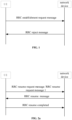
- the UE in the idle state may establish an RRC connection through a connection establishment process, thus entering the connection state.
- the process is shown in FIG. 1 .
- the UE needs to send an RRC establishment request message to the base station, and the RRC establishment request message carries a cause for the connection establishment.
- This cause may include an emergency call, high priority access, user initiated data, user initiated voice, a user initiated video call, user initiated signaling, paging, etc.
- the base station determines, based on the cause for the initiation, whether to allow the UE to establish a connection. If the UE is allowed to establish the connection, the base station sends an RRC connection message to the UE, allowing the UE to enter the connection state. If the UE is not allowed to establish the connection, the base station sends an RRC reject message to the UE, keeping the UE in the idle state.
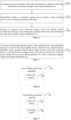
- the UE in the inactive state may resume an RRC connection through a connection resume process, thus entering the connection state.
- the process is shown in FIGS. 2a-2c .
- the UE needs to send an RRC resume request message to the base station.
- the RRC resume request message carries a cause for the connection resume.
- the base station determines, based on the cause for the initiation, whether to allow the UE to resume a connection. If the UE is allowed to resume the connection, the base station sends an RRC resume message to the UE, allowing the UE to enter the connection state. If the UE is not allowed to resume the connection, the base station sends an RRC reject message to the UE, keeping the UE in the inactive state.
- the base station may also send an RRC release message to the UE, causing the UE to enter the idle state.
- the RRC reject message may carry a wait time. After receiving the RRC reject message, the UE starts a T302 timer and prohibits access during the operation of the timer.
- the wait time may be carried in the RRC release message. After receiving the RRC release message, the UE starts the T302 timer and prohibits access during the operation of the timer.
- connection establishment or connection resume of the relay UE When the connection establishment or connection resume of the relay UE is triggered by a connection establishment of the remote UE, a connection resume of the remote UE or a connection reestablishment of the remote UE, the relay UE needs to first perform a connection establishment or connection resume, and then forward the request of the remote UE.
- the connection establishment request of the remote UE cannot be sent, and the remote UE cannot establish a connection via this relay, resulting in the remote UE being unable to communicate with the base station.
- the embodiments of the present disclosure provide an access failure processing method and apparatus, a terminal device, and a storage medium, which can be applied to a 5G system or a new radio (NR) system.
- a 5G system or a new radio (NR) system Through notifying the remote terminal device by the relay terminal device when an access failure occurs to the relay terminal device, the remote terminal device can know based on the notification that the access failure has occurred to the corresponding relay terminal device.
- NR new radio
- the remote terminal device can perform corresponding operations to cope with the access failure of the relay terminal device, for example, the remote terminal device is prohibited from accessing the relay terminal device for a certain period of time after receiving the notification, for example, the remote terminal device no longer repeatedly sends an access request to the relay terminal device within the period of time, so that unnecessary access attempts may be avoided, thereby contributing to saving resources and avoiding waste of resources.
- FIG. 3 is a schematic diagram of an architecture of a communication system provided by an embodiment of the present disclosure.
- the communication system may include, but is not limited to, a network device and a plurality of terminal devices.
- a terminal device, among the plurality of terminal devices, that is not connected to the network device is called a remote terminal device, and a terminal device that provides a relay function is called a relay terminal device.
- the remote terminal device communicates with the relay terminal device through the side link.
- the number and form of devices shown in FIG. 3 are for example purposes only and do not constitute a limitation to the embodiments of the present disclosure.
- the communication system may include two or more network devices and two or more terminal devices.
- the communication system shown in FIG. 3 includes a network device 101, a relay terminal device 102, and a remote terminal device 103 as an example.
- LTE long term evolution
- 5G 5th generation
- NR 5th generation new radio
- the network device 101 in the embodiments of the present disclosure is an entity at the network side used for transmitting or receiving signals.
- the network device 101 may be an evolved NodeB (eNB), a transmission reception point (TRP), a next generation NodeB (gNB) in NR systems, a base station in other future mobile communication systems, or an access node in wireless fidelity (WiFi) systems.
- eNB evolved NodeB
- TRP transmission reception point
- gNB next generation NodeB
- WiFi wireless fidelity
- the embodiments of the present disclosure do not limit the specific technology and device form adopted by the network device.
- the network device provided by the embodiments of the present disclosure may be composed of a central unit (CU) and a distributed unit (DU), where the CU may also be referred to as a control unit.
- CU central unit
- DU distributed unit
- the CU-DU structure may be used to separate the protocol layer of the network device such as the base station, with some protocol layer functions placed under centralized control in the CU, and the remaining or all protocol layer functions distributed in the DU, and the DU being centrally controlled by the CU.
- the terminal device in the embodiments of the present disclosure is an entity at the user side used for receiving or transmitting signals, such as a mobile phone.
- the terminal device may also be referred to as a terminal, a user equipment (UE), a mobile station (MS), a mobile terminal device (MT), etc.
- the terminal devices may be a device with communication capabilities such as a car, a smart car, a mobile phone, a wearable device, or a pad; or the terminal device may be a computer with wireless transceiver capabilities, a virtual reality (VR) terminal device, an augmented reality (AR) terminal device, a wireless terminal device in industrial control, a wireless terminal device in self-driving, a wireless terminal device in remote medical surgery, a wireless terminal device in smart grid, a wireless terminal device in transportation safety, a wireless terminal device in smart city, or a wireless terminal device in smart home.
- the embodiments of the present disclosure do not limit the specific technology and device form adopted by the terminal device.
- FIG. 4 is a flowchart of an access failure processing method provided by an embodiment of the present disclosure. It should be illustrated that the access failure processing method of the embodiment of the present disclosure may be applied to a relay terminal device. As shown in FIG. 4 , the access failure processing method may include but is not limited to the following step S401.
- a notification message is sent to a remote terminal device in response to an access failure of the relay terminal device.
- the access operation of the relay terminal device is performed in response to a trigger of an RRC connection establishment of the remote terminal device, an RRC connection resume of the remote terminal device, or an RRC connection reestablishment of the remote terminal device. That is to say, when the connection establishment or connection resume of the relay terminal device is triggered by the connection establishment, connection resume or connection reestablishment of the remote terminal device, the relay terminal device needs to first perform a connection establishment or resume, and then forward the request of the remote terminal device.
- the above access failure may include, but is not limited to, failing to pass a unified access control (UAC) verification, receiving an RRC reject message sent by a network device, or receiving an RRC release message sent by the network device, etc.
- UAC unified access control
- the RRC release message carries a wait timer.
- the verification method is to select an access probability based on the access category and access identity corresponding to this access request service, and generate a random number between 0 and 1. If the random number is lower than the access probability, the verification is passed and an access attempt may be initiated to the network device. If the random number is higher than the access probability, the verification is not passed and the relay terminal device starts a prohibit timer. During operation of the inhibit timer, access is prohibited, and at this time it can be determined that an access failure occurs to the relay terminal device. The relay terminal device may find, based on the access category and access identifier, the corresponding access probability and duration of the prohibit timer, and this configuration is sent by broadcasting.
- the relay terminal device in the idle state may enter the connection state through receiving an RRC connection establishment sent by the remote terminal device.
- the relay terminal device in the idle state needs to send an RRC establishment request message to the network device (e.g., the base station), and the RRC establishment request message carries a cause for the connection establishment.
- This cause may include an emergency call, high priority access, user initiated data, user initiated voice, a user initiated video call, user initiated signaling, paging, etc.
- the network device determines, based on the cause for the initiation, whether to allow the relay terminal device to establish a connection. If the relay terminal device is allowed to establish the connection, the network device sends an RRC connection message to the relay terminal device, allowing the relay terminal device to enter the connection state. If the relay terminal device is not allowed to establish the connection, the network device sends an RRC reject message to the relay terminal device, keeping the relay terminal device in the idle state, and at this time it can be determined that an access failure occurs to the relay terminal device.
- the relay terminal device in the inactive state may resume an RRC connection through a connection resume process, thus entering the connection state.
- the relay terminal device needs to send an RRC resume request message to the network device.
- the RRC resume request message carries a cause for the connection resume.
- the network device determines, based on the cause for the initiation, whether to allow the relay terminal device to resume a connection. If the relay terminal device is allowed to resume the connection, the network device sends an RRC resume message to the relay terminal device, allowing the relay terminal device to enter the connection state.
- the network device sends an RRC reject message to the relay terminal device, keeping the relay terminal device in the inactive state, and at this time it can be determined that an access failure occurs to the relay terminal device.
- the network device may also send an RRC release message to the relay terminal device, causing the relay terminal device to enter the idle state, and at this time it can be determined that an access failure occurs to the relay terminal device.
- the RRC reject message may carry a wait time. After receiving the RRC reject message, the UE starts a T302 timer and prohibits access during the operation of the timer. The wait time may be carried in the RRC release message. After receiving the RRC release message, the UE starts the T302 timer and prohibits access during the operation of the timer.
- the remote terminal device can know, based on the notification sent by the relay terminal device, that an access failure has occurred to the corresponding relay terminal device. Based on the notification, the remote terminal device can perform corresponding operations to cope with the access failure of the relay terminal device, for example, the remote terminal device is prohibited from accessing the relay terminal device for a certain period of time after receiving the notification, for example, the remote terminal device no longer repeatedly sends an access request to the relay terminal device within the period of time, so that unnecessary access attempts may be avoided, thereby contributing to saving resources and avoiding waste of resources.
- FIG. 5 is a flowchart of another access failure processing method provided by an embodiment of the present disclosure. It should be illustrated that the access failure processing method of the embodiment of the present disclosure may be applied to the relay terminal device. As shown in FIG. 5 , the access failure processing method may include but is not limited to the following step S501.
- step S501 in response to the access failure of the relay terminal device, a timer is started and the notification message is sent to the remote terminal device.
- the access operation of the relay terminal device is performed in response to a trigger of an RRC connection establishment of the remote terminal device, an RRC connection resume of the remote terminal device, or an RRC connection reestablishment of the remote terminal device. That is to say, when the connection establishment or connection resume of the relay terminal device is triggered by the connection establishment, connection resume or connection reestablishment of the remote terminal device, the relay terminal device needs to first perform a connection establishment or resume, and then forward the request of the remote UE.
- the above access failure may include, but is not limited to, failing to pass a UAC verification, receiving an RRC reject message sent by a network device, or receiving an RRC release message sent by the network device, etc.
- the RRC release message carries a wait timer.
- the verification method is to select an access probability based on the access category and access identity corresponding to this access request service, and generate a random number between 0 and 1. If the random number is lower than the access probability, the verification is passed and an access attempt may be initiated to the network device. If the random number is higher than the access probability, the verification is not passed and the relay terminal device starts a prohibit timer. During operation of the inhibit timer, access is prohibited, and at this time it can be determined that an access failure occurs to the relay terminal device. The relay terminal device may find, based on the access category and access identifier, the corresponding access probability and duration of the prohibit timer, and this configuration is sent by broadcasting.
- the relay terminal device in the idle state may enter the connection state through receiving an RRC connection establishment sent by the remote terminal device.
- the relay terminal device in the idle state needs to send an RRC establishment request message to the network device (e.g., the base station), and the RRC establishment request message carries a cause for the connection establishment.
- This cause may include an emergency call, high priority access, user initiated data, user initiated voice, a user initiated video call, user initiated signaling, paging, etc.
- the network device determines, based on the cause for the initiation, whether to allow the relay terminal device to establish a connection. If the relay terminal device is allowed to establish the connection, the network device sends an RRC connection message to the relay terminal device, allowing the relay terminal device to enter the connection state. If the relay terminal device is not allowed to establish the connection, the network device sends an RRC reject message to the relay terminal device, keeping the relay terminal device in the idle state, and at this time it can be determined that an access failure occurs to the relay terminal device.
- the relay terminal device in the inactive state may resume an RRC connection through a connection resume process, thus entering the connection state.
- the relay terminal device needs to send an RRC resume request message to the network device.
- the RRC resume request message carries a cause for the connection resume.
- the network device determines, based on the cause for the initiation, whether to allow the relay terminal device to resume a connection. If the relay terminal device is allowed to resume the connection, the network device sends an RRC resume message to the relay terminal device, allowing the relay terminal device to enter the connection state.
- the network device sends an RRC reject message to the relay terminal device, keeping the relay terminal device in the inactive state, and at this time it can be determined that an access failure occurs to the relay terminal device.
- the network device may also send an RRC release message to the relay terminal device, causing the relay terminal device to enter the idle state, and at this time it can be determined that an access failure occurs to the relay terminal device.
- the RRC reject message may carry a wait time. After receiving the RRC reject message, the relay terminal device starts a T302 timer and prohibits access during the operation of the timer. The wait time may be carried in the RRC release message. After receiving the RRC release message, the relay terminal device starts the T302 timer and prohibits access during the operation of the timer.
- the relay terminal device may start the timer and send the notification message to the remote terminal device, and the notification message carries a duration of the timer.
- timers started by the relay terminal device may also be different.
- the timer may be a prohibit timer, or the timer may be a T302 timer.
- the timer is a prohibit timer.
- the access failure is receiving an RRC reject message or an RRC release message sent by a network device, the timer is a T302 timer.
- the relay terminal device when the relay terminal device has a new access request and has not passed the UAC verification, the relay terminal device starts the prohibit timer and sends the notification message to the remote terminal device.
- the notification message carries the duration of the prohibit timer.
- the relay terminal device is prohibited to be accessed during the operation of the prohibit timer.
- the T302 timer may be started and the notification message may be sent to the remote terminal device, and the notification message carries the duration of the T302 timer.
- the relay terminal device is prohibited to be accessed during the operation of the T302 timer.
- FIG. 6 is a flowchart of yet another access failure processing method provided by an embodiment of the present disclosure. It should be illustrated that the access failure processing method of the embodiment of the present disclosure may be applied to the relay terminal device. As shown in FIG. 6 , the access failure processing method may include but is not limited to the following steps S601 to S603.
- a timer is started and the notification message is sent to the remote terminal device.
- the notification message carries a duration of the timer.
- the step S601 may be implemented in any manner in various embodiments of the present disclosure, and the embodiments of the present disclosure do not limit or elaborate on this.
- step S602 it is determined whether a connection request sent by another remote terminal device is received during operation of the timer.
- the relay terminal device needs to determine whether the connection request sent by another remote terminal device is received during the operation of the prohibit timer or T302 timer.
- the operation of the prohibit timer is triggered by the UAC access verification failure.
- the operation of the T302 timer is triggered by receiving the RRC reject message or RRC release message.
- the relay terminal device determines whether the data sent by the another remote terminal device is from the specific carrier.
- the relay terminal device determines that it receives the connection request sent from another remote terminal device during the operation of the timer.
- the specific bearer may be understood as used for carrying the RRC message, which means that the RRC message needs to be sent on the specific bearer. Therefore, it can be determined whether the data sent by another remote terminal device is the connection request by determining whether the data sent by the another remote terminal device is from the specific bearer.
- the relay remote terminal device determines that the data sent by another remote terminal device is not from the specific carrier, it can be determined that the data sent by the remote terminal device is not the connection request.
- step S603 in response to the connection request sent by the another remote terminal device being received during the operation of the timer, the notification message is sent to the another remote terminal device.
- the relay terminal device when the relay terminal device receives the connection request sent by another remote terminal device during the operation of the prohibit timer or T302 timer, as the relay terminal device is currently in an access failure state, the relay terminal device does not need to perform another access control, but may directly send the notification message to the another remote terminal device, directly informing the another remote terminal device that the relay terminal device has failed to access at this time.
- the notification message can be directly sent to the another remote terminal device to inform the another remote terminal device that the relay terminal device has failed to access at this time, thereby shortening the wait time of the another remote terminal device and improving the access efficiency.
- FIG. 7 is a flowchart of another access failure processing method provided by an embodiment of the present disclosure. It should be illustrated that the access failure processing method of the embodiments of the present disclosure may be applied to a remote terminal device. As shown in FIG. 7 , the access failure processing method may include but is not limited to the following step S701.
- a notification message sent by a relay terminal device is received.
- the notification message is sent by the relay terminal device when the relay terminal device performs access operation and an access failure occurs to the relay terminal device, or the notification message is sent by the relay terminal device when the relay terminal device receives during operation of a timer a connection request sent by the remote terminal device.
- the access operation of the relay terminal device is performed in response to a trigger of an RRC connection establishment of the remote terminal device, an RRC connection resume of the remote terminal device, or an RRC connection reestablishment of the remote terminal device. That is to say, when the connection establishment or connection resume of the relay terminal device is triggered by the connection establishment, connection resume or connection reestablishment of the remote terminal device, the relay terminal device needs to first perform a connection establishment or resume, and then forward the request of the remote terminal device.
- the above access failure may include, but is not limited to, failing to pass a UAC verification, receiving an RRC reject message sent by a network device, or receiving an RRC release message sent by the network device, etc.
- the RRC release message carries a wait timer.
- the verification method is to select an access probability based on the access category and access identity corresponding to this access request service, and generate a random number between 0 and 1. If the random number is lower than the access probability, the verification is passed and an access attempt may be initiated to the network device. If the random number is higher than the access probability, the verification is not passed and the relay terminal device starts a prohibit timer. During operation of the inhibit timer, access is prohibited, and at this time it can be determined that an access failure occurs to the relay terminal device. The relay terminal device may find, based on the access category and access identifier, the corresponding access probability and duration of the prohibit timer, and this configuration is sent by broadcasting.
- the relay terminal device in the idle state may enter the connection state through receiving an RRC connection establishment sent by the remote terminal device.
- the relay terminal device in the idle state needs to send an RRC establishment request message to the network device (e.g., the base station), and the RRC establishment request message carries a cause for the connection establishment.
- This cause may include an emergency call, high priority access, user initiated data, user initiated voice, a user initiated video call, user initiated signaling, paging, etc.
- the network device determines, based on the cause for the initiation, whether to allow the relay terminal device to establish a connection. If the relay terminal device is allowed to establish the connection, the network device sends an RRC connection message to the relay terminal device, allowing the relay terminal device to enter the connection state. If the relay terminal device is not allowed to establish the connection, the network device sends an RRC reject message to the relay terminal device, keeping the relay terminal device in the idle state, and at this time it can be determined that an access failure occurs to the relay terminal device.
- the relay terminal device in the inactive state may resume an RRC connection through a connection resume process, thus entering the connection state.
- the relay terminal device needs to send an RRC resume request message to the network device.
- the RRC resume request message carries a cause for the connection resume.
- the network device determines, based on the cause for the initiation, whether to allow the relay terminal device to resume a connection. If the relay terminal device is allowed to resume the connection, the network device sends an RRC resume message to the relay terminal device, allowing the relay terminal device to enter the connection state.
- the network device sends an RRC reject message to the relay terminal device, keeping the relay terminal device in the inactive state, and at this time it can be determined that an access failure occurs to the relay terminal device.
- the network device may also send an RRC release message to the relay terminal device, causing the relay terminal device to enter the idle state, and at this time it can be determined that an access failure occurs to the relay terminal device.
- the RRC reject message may carry a wait time. After receiving the RRC reject message, the UE starts a T302 timer and prohibits access during the operation of the timer. The wait time may be carried in the RRC release message. After receiving the RRC release message, the UE starts the T302 timer and prohibits access during the operation of the timer.
- the relay terminal device may send the notification message to the remote terminal device.
- the remote terminal device receives the notification message sent by the relay terminal device, and may know, based on the notification message, that an access failure has occurred to the corresponding relay terminal device.
- the relay terminal device when the relay terminal device receives the connection request sent by another remote terminal device during the operation of the prohibit timer or T302 timer, as the relay terminal device is currently in an access failure state, the relay terminal device does not need to perform another access control, but may directly send the notification message to the another remote terminal device. Therefore, it is also possible that the notification message sent by the remote terminal device in the embodiments of the present disclosure may be sent by the relay terminal device upon receiving the connection request sent by the remote terminal device during the operation of the timer.
- the remote terminal device may send an RRC establishment request message, RRC resume request message, or RRC reestablishment request message to the relay terminal device before receiving the notification message sent by the relay terminal device.
- the connection establishment or connection resume of the relay terminal device may be triggered, that is, the relay terminal device performs the access operation.
- the notification message is sent to the remote terminal device.
- the remote terminal device after receiving the notification message sent by the relay terminal device, performs one or more of:
- the remote terminal device in response to a message sent by the remote terminal device being the RRC establishment request message, the remote terminal device enters into RRC establishment failure processing after receiving the notification message sent by the relay terminal device. For example, in response to a message sent by the remote terminal device being the RRC resume request message, the remote terminal device enters into RRC resume failure processing after receiving the notification message sent by the relay terminal device.
- the remote terminal device reestablishes all established bearer RLC after receiving the notification message sent by the relay terminal device.
- the remote terminal device when the RRC connection establishment is requested by the higher layer, the remote terminal device, after receiving the notification message sent by the relay terminal device, notifies the higher layer that access is prohibited.
- the notifying the higher layer that the access is prohibited may include notifying the higher layer that access of all access categories is prohibited, or notifying the higher layer that access of all access categories other than access categories 0 and 2 is prohibited.
- the RRC connection establishment may be an RRC connection establishment, an RRC connection reestablishment, or an RRC connection resume.
- the remote terminal device in response to a process initiated by the remote terminal device being the RRC establishment process, notifies the higher layer of the connection establishment failure.
- the determination of the RRC establishment process may be based on the sending of the RRC establishment request message.
- the remote terminal device in response to a process initiated by the remote terminal device being the RRC resume process, may discard all secret keys for communication with a network device.
- the remote terminal device in response to a process initiated by the remote terminal device being an RRC resume process and the resume being triggered by the higher layer, the remote terminal device, after receiving the notification message sent by the relay terminal device, notifies the higher layer of the connection resume failure.
- the remote terminal device in response to a process initiated by the remote terminal device being an RRC resume process and the resume being triggered by updating of an RNA, the remote terminal device, after receiving the notification message sent by the relay terminal device, sets a delay for updating the RNA to be true.
- the remote terminal device performs relay terminal device reselection after receiving the notification message sent by the relay terminal device. That is to say, the remote terminal device performs the relay terminal device reselection immediately after receiving the notification message sent by the relay terminal device, without waiting for the access failure attempt of this relay terminal device, shortening the wait time.
- the remote terminal device may determine whether configuration for a duration of a timer exists, and starts the timer in response to the configuration for the duration of the timer existing.
- the remote terminal device after receiving the notification message sent by the relay terminal device, determines that no configuration for the duration of the timer exists, for example, the notification message does not carry the duration of the timer, the network device or the relay terminal device does not configure the duration of the timer, and the protocol does not specify the duration of the timer, the remote terminal device does not start the timer.
- the above duration of the timer may be carried in the above notification message, or configured by a network device, or configured by the relay terminal device, or specified by a protocol, which is not specifically limited by the present disclosure.
- the remote terminal device after receiving the notification message sent by the relay terminal device, the remote terminal device needs to determine whether the configuration for the duration of the timer exists, and the duration of the timer may be carried in the above notification message, or configured by the network device, or configured by the relay terminal device, or specified by the protocol.
- the remote terminal device needs to start the timer based on the duration of the timer.
- the remote terminal device after receiving the notification message sent by the relay terminal device and starting the timer, performs one or more of prohibiting access during operation time of the timer, prohibiting access to a cell via this relay terminal device during the operation time of the timer, or prohibiting selecting this relay terminal device during the operation time of the timer.
- the notification message carries the duration of the timer
- the remote terminal device after receiving the notification message sent by the relay terminal device, may start the timer and prohibit access or prohibit access to the cell via this relay terminal device or prohibit selecting this relay terminal device during the operation time of the timer.
- the above implementation of prohibiting access to the cell via this relay terminal device during the operation time of the timer may include but is not limited to:
- the remote terminal device after receiving the notification message sent by the relay terminal device and staring the timer, performs one or more of:
- the remote terminal device can know, based on the notification sent by the relay terminal device, that an access failure has occurred to the corresponding relay terminal device. Based on the notification, the remote terminal device can perform corresponding operations to cope with the access failure of the relay terminal device, for example, the remote terminal device is prohibited from accessing the relay terminal device for a certain period of time after receiving the notification, for example, the remote terminal device no longer repeatedly sends an access request to the relay terminal device within the period of time, so that unnecessary access attempts may be avoided, thereby contributing to saving resources and avoiding waste of resources. For another example, the remote terminal device performs the relay terminal device reselection after receiving the notification, without waiting for the access failure attempt of this relay terminal device, shortening the wait time, and improving the access efficiency.
- the methods provided by the embodiments of the present disclosure are introduced from the perspectives of relay terminal device and remote terminal device respectively.
- the relay terminal device and the remote terminal device may include hardware structures, software modules, or hardware structures plus software modules to achieve the various functions described above.
- One of the above various functions may be executed in the form of hardware structure, software module, or hardware structure plus software module.
- FIG. 8 is a schematic structural diagram of an access failure processing apparatus 80 provided by an embodiment of the present disclosure. It should be illustrated that the access failure processing apparatus 80 may be a terminal device (such as a relay terminal device in the aforementioned method embodiments), an apparatus in a terminal device, or an apparatus capable of being used in conjunction with a terminal device.
- a terminal device such as a relay terminal device in the aforementioned method embodiments
- an apparatus in a terminal device such as a relay terminal device in the aforementioned method embodiments
- an apparatus capable of being used in conjunction with a terminal device such as a relay terminal device in the aforementioned method embodiments
- the access failure processing apparatus 80 shown in FIG. 8 may include a transceiver module 801.
- the transceiver module 801 may include a sending module and/or a receiving module.
- the sending module is configured for implementing a sending function
- the receiving module is configured for implementing a receiving function.
- the transceiver module 801 may implement the sending function and/or the receiving function.
- the transceiver module 801 is configured to send a notification message to a remote terminal device in response to an access failure of the relay terminal device.
- access operation of the relay terminal device is performed in response to a trigger of an RRC connection establishment of the remote terminal device, an RRC connection resume of the remote terminal device, or an RRC connection reestablishment of the remote terminal device.
- the above access failure may include, but is not limited to, failing to pass a UAC verification, receiving an RRC reject message sent by a network device, or receiving an RRC release message sent by the network device, etc.
- the RRC release message carries a wait timer.
- the transceiver module 801 is configured to in response to the access failure of the relay terminal device, start a timer and send the notification message to the remote terminal device.
- the above notification message carries a duration of the timer.
- the access failure is failing to pass a UAC verification, and the timer is a prohibit timer.
- the access failure is receiving an RRC reject message or an RRC release message sent by a network device, and the timer is a T302 timer.
- the access failure processing apparatus 90 may further include a processing module 902.
- the processing module 902 is configured to determine whether a connection request sent by another remote terminal device is received during operation of the timer.
- the transceiver module 901 is further configured to send, in response to the connection request sent by the another remote terminal device being received during the operation of the timer, the notification message to the another remote terminal device.
- 901 in FIG. 9 and 801 in FIG. 8 have the same function and structure.
- an implementation process for the transceiver module 901 to determine whether the connection request sent by the another remote terminal device is received during the operation of the timer may be as follows: determining, in response to receiving data sent by the another remote terminal device during the operation of the timer, whether the data sent by the another remote terminal device is from a specific bearer; and determining, in response to the data sent by the another remote terminal device being from the specific bearer, that the connection request sent by the another remote terminal device is received during the operation of the timer.
- FIG. 10 is a schematic structural diagram of another access failure processing apparatus 100 provided by an embodiment of the present disclosure. It should be illustrated that the access failure processing apparatus 100 may be a terminal device (such as a remote terminal device in the aforementioned method embodiments), an apparatus in a terminal device, or an apparatus capable of being used in conjunction with a terminal device.
- a terminal device such as a remote terminal device in the aforementioned method embodiments
- an apparatus in a terminal device such as a remote terminal device in the aforementioned method embodiments
- an apparatus capable of being used in conjunction with a terminal device such as a remote terminal device in the aforementioned method embodiments
- the access failure processing apparatus 100 shown in FIG. 10 may include a transceiver module 1001.
- the transceiver module 1001 may include a sending module and/or a receiving module.
- the sending module is configured for implementing a sending function
- the receiving module is configured for implementing a receiving function.
- the transceiver module 901 may implement the transmitting function and/or the receiving function.
- the transceiver module 1001 is configured to receive a notification message sent by a relay terminal device.
- the notification message is sent by the relay terminal device when the relay terminal device performs access operation and an access failure occurs to the relay terminal device, or the notification message is sent by the relay terminal device when the relay terminal device receives during operation of atimer a connection request sent by the remote terminal device.
- the access failure processing apparatus 110 may further include a processing module 1102.
- the processing module 1102 is configured to determine, after receiving the notification message sent by the remote terminal device, whether configuration for a duration of a timer exists, and start the timer in response to the configuration for the duration of the timer existing.
- the processing module 1102 is further configured to perform, after starting the timer, one or more of prohibiting access during operation time of the timer, prohibiting access to a cell via the relay terminal device during the operation time of the timer, or prohibiting selecting the relay terminal device during the operation time of the timer.
- an implementation process for the processing module 1102 to prohibit the access to the cell via the relay terminal device during the operation time of the timer may be as follows: prohibiting sending, to the relay terminal device during the operation time of the timer, an RRC establishment request message and/or an RRC resume request message; or prohibiting sending, to the relay terminal device during the operation time of the timer, a message of a specific bearer.
- the above duration of the timer is carried in the notification message, or is configured by a network device, or is configured by the relay terminal device, or is specified by a protocol.
- the transceiver module is further configured to send, to the relay terminal device before receiving the notification message sent by the relay terminal device, an RRC establishment request message, an RRC resume request message, or an RRC reestablishment request message.
- processing module is further configured to perform, after the transceiver module receives the notification message sent by the remote terminal device, one or more of:
- the processing module notifying the higher layer that the access is prohibited is implemented as follows: notifying the higher layer that access of all access categories is prohibited, or notifying the higher layer that access of all access categories other than access categories 0 and 2 is prohibited.
- FIG. 12 is a schematic structural diagram of a terminal device 1200 provided by an embodiment of the present disclosure.
- the terminal device 1200 may be a terminal device (e.g., a relay terminal device in the aforementioned method embodiments), a remote terminal device in the aforementioned method embodiments, or a chip, a chip system, or a processor, etc., that supports the terminal device to implement the methods described above.
- the terminal device may be configured to implement the method described in the aforementioned method embodiments. For details, please refer to the illustration in the above method embodiments.
- the terminal device 1200 may include one or more processors 1201.
- the processors 1201 may be a general purpose processor or specialized processor, etc.
- the processors 1201 may be a baseband processor or central processor.
- the baseband processor may be configured to process communication protocols and communication data.
- the central processor may be configured to control a communication device (e.g., a base station, baseband chip, terminal device, terminal device chip, DU or CU, etc.), execute a computer program, and process data of the computer program.
- the terminal device 1200 may further include one or more memories 1202.
- the one or more memories 1202 may store a computer program 1204.
- the processor 1201 executes the computer program 1204 to cause the terminal device 1200 to perform the method described in the above method embodiments.
- the memory 1202 may also store data.
- the terminal device 1200 and the memory 1202 may be provided separately or may be integrated together.
- the terminal device 1200 may further include a transceiver 1205 and an antenna 1206.
- the transceiver 1205 may be referred to as a transceiver unit, a transceiver device, or a transceiver circuit, etc., and is configured to implement the receiving and sending functions.
- the transceiver 1205 may include a receiver and a sender.
- the receiver may be referred to as a receiving device or a receiving circuit, etc., and is configured to implement a receiving function.
- the sender may be referred to as a sending device or a sending circuit, etc., and is configured to implement a sending function.
- the terminal device 1200 may further include one or more interface circuits 1207.
- the interface circuit 1207 is configured to receive a code instruction and transmit the code instruction to the processor 1201.
- the processor 1201 runs the code instruction to cause the terminal device 1200 to perform the method described in the above method embodiments.
- the terminal device 1200 is a relay terminal device in the aforementioned method embodiments.
- the transceiver 1205 is configured to perform the step S401 in FIG. 4 , step S501 in FIG. 5 , and steps S601 and S603 in FIG. 6 .
- the processor 1201 is configured to perform the step S602 in FIG. 6 .
- the terminal device 1200 is a remote terminal device in the aforementioned method embodiments.
- the transceiver 1205 is configured to perform the step S701 in FIG. 7 , perform the step of sending to the relay terminal device, before receiving the notification message sent by the relay terminal device, an RRC establishment request message, an RRC resume request message, or an RRC reestablishment request message.
- the processor 1201 is configured to perform the step of determining, after receiving the notification message, whether configuration for a duration of a timer exists, and starting the timer in response to the configuration for the duration of the timer existing.
- the processor 1201 is configured to perform the step of performing, after starting the timer, one or more of prohibiting access during operation time of the timer, prohibiting access to a cell via the relay terminal device during the operation time of the timer, or prohibiting selecting the relay terminal device during the operation time of the timer.
- the processor 1201 is configured to perform the step of prohibiting sending, to the relay terminal device during the operation time of the timer, an RRC establishment request message and/or an RRC resume request message, or prohibiting sending, to the relay terminal device during the operation time of the timer, a message of a specific bearer.
- the processor 1201 is configured to perform the step of performing, after the transceiver 1205 receives the notification message, one or more of:
- the processor 1201 is configured to perform the step of notifying the higher layer that access of all access categories is prohibited, or notifying the higher layer that access of all access categories other than access categories 0 and 2 is prohibited.
- the processor 1201 may include a transceiver used for implementing the receiving and sending functions.
- the transceiver may be a transceiver circuit, an interface, or an interface circuit.
- the transceiver circuit, interface, or interface circuit used for implementing the receiving and sending functions may be separate or may be integrated together.
- the transceiver circuit, interface, or interface circuit described above may be used for code/data reading and writing, or the transceiver circuit, interface, or interface circuit described above may be used for signal transmission or delivery.
- the processor 1201 may store a computer program.
- the computer program is run on the processor 1201 and may cause the terminal device 1200 to perform the method described in the above method embodiments.
- the computer program may be solidified in the processor 1201, in which case the processor 1201 may be implemented by hardware.
- the terminal device 1200 may include a circuit.
- the circuit may implement the functions of sending, receiving, or communicating in the aforementioned method embodiments.
- the processor and transceiver described in the present disclosure may be implemented in an integrated circuit (IC), analog IC, radio frequency integrated circuit (RFIC), mixed signal IC, application specific integrated circuit (ASIC), printed circuit board (PCB), electronic device, etc.
- IC integrated circuit
- RFIC radio frequency integrated circuit
- ASIC application specific integrated circuit
- PCB printed circuit board
- the processor and transceiver may also be manufactured by using various IC process technologies, such as complementary metal oxide semiconductor (CMOS), nMetal-oxide-semiconductor (NMOS), positive channel metal oxide semiconductor (PMOS), bipolar junction transistor (BJT), bipolar CMOS (BiCMOS), silicon germanium (SiGe), gallium arsenide (GaAs), etc.
- CMOS complementary metal oxide semiconductor
- NMOS nMetal-oxide-semiconductor
- PMOS positive channel metal oxide semiconductor
- BJT bipolar junction transistor
- BiCMOS bipolar CMOS
- SiGe silicon germanium
- GaAs gallium arsenide
- the terminal device in the description of the above embodiments may be a network device or a terminal device (such as a relay terminal device or a remote terminal device in the aforementioned method embodiments), but the scope of the terminal device described in the present disclosure is not limited thereto.
- the structure of the terminal device may not be limited by FIG. 12 .
- the terminal device may be an independent device or may be part of a larger device.
- the described terminal device may be:
- the embodiments of the present disclosure also provide an access failure processing system.
- the access failure processing system includes an access failure processing apparatus, in the above embodiments of FIGS. 8 and 9 , as a relay terminal device in the above method embodiments, and an access failure processing apparatus, in the above embodiments of FIGS. 10 and 11 , as a remote terminal device in the above method embodiments.
- the access failure processing system includes a terminal device, in the above embodiments of FIG. 12 , as a relay terminal device in the above method embodiments, and a terminal device as a remote terminal device in the above method embodiments.
- the present disclosure also provides a readable storage medium.
- the readable storage medium stores an instruction.
- the instruction when executed by a computer, implements the function of any of the method embodiments described above.
- the present disclosure also provides a computer program product.
- the computer program product when executed by a computer, implements the function of any of the method embodiments described above.
- the above embodiments may be implemented in whole or in part by software, hardware, firmware, or any combination thereof.
- the above embodiments may be implemented in whole or in part in the form of a computer program product.
- the computer program product includes one or more computer programs. When the computer program is loaded and executed on a computer, a process or function is produced in whole or in part in accordance with the embodiments of the present disclosure.
- the computer may be a general purpose computer, a specialized computer, a computer network, or other programmable devices.
- the computer program may be stored in a computer-readable storage medium or transmitted from one computer-readable storage medium to another computer-readable storage medium, e.g., the computer program may be transmitted from a web site, computer, server, or data center via a wired (e.g., coaxial cable, fiber optic, digital subscriber line (DSL)) or wireless (e.g., infrared, wireless, microwave, etc.) manner to another website site, computer, server, or data center.
- the computer-readable storage medium may be any usable medium to which a computer has access, or a data storage device such as a server, data center, etc. containing one or more usable media integration.
- the usable medium may be a magnetic medium (e.g., floppy disk, hard disk, tape), an optical medium (e.g., a high-density digital video disc (DVD)), or a semiconductor medium (e.g., a solid state disk (SSD)), etc.
- a magnetic medium e.g., floppy disk, hard disk, tape
- an optical medium e.g., a high-density digital video disc (DVD)
- DVD high-density digital video disc
- SSD solid state disk
- the “at least one” in the present disclosure may also be described as one or more, and the “plurality” may be two, three, four, or more, without limitation in the present disclosure.
- the technical features are distinguished by “first”, “second”, “third”, “A”, “B”, “C”, and “D”, etc.
- the technical features described by “first”, “second”, “third”, “A”, “B”, “C”, and “D”, etc. are in no order of sequence or size.
- pre-define in the present disclosure may be understood as “define”, “define in advance”, “store”, “pre-store”, “pre-negotiate”, “pre-configure”, “solidified”, or “pre-fired”.
Landscapes
- Engineering & Computer Science (AREA)
- Computer Networks & Wireless Communication (AREA)
- Signal Processing (AREA)
- Computer Security & Cryptography (AREA)
- Mobile Radio Communication Systems (AREA)
Applications Claiming Priority (1)
| Application Number | Priority Date | Filing Date | Title |
|---|---|---|---|
| PCT/CN2021/092236 WO2022233063A1 (zh) | 2021-05-07 | 2021-05-07 | 接入失败处理方法、装置、终端设备和存储介质 |
Publications (2)
| Publication Number | Publication Date |
|---|---|
| EP4336953A1 true EP4336953A1 (de) | 2024-03-13 |
| EP4336953A4 EP4336953A4 (de) | 2025-06-04 |
Family
ID=77623004
Family Applications (1)
| Application Number | Title | Priority Date | Filing Date |
|---|---|---|---|
| EP21939709.8A Pending EP4336953A4 (de) | 2021-05-07 | 2021-05-07 | Verfahren und vorrichtung zur verarbeitung von zugriffsfehlern, endgerätevorrichtung und speichermedium |
Country Status (4)
| Country | Link |
|---|---|
| US (1) | US20240244696A1 (de) |
| EP (1) | EP4336953A4 (de) |
| CN (1) | CN113396611B (de) |
| WO (1) | WO2022233063A1 (de) |
Families Citing this family (14)
| Publication number | Priority date | Publication date | Assignee | Title |
|---|---|---|---|---|
| CN119342552A (zh) * | 2021-03-31 | 2025-01-21 | 展讯通信(上海)有限公司 | 中继通信方法及装置、存储介质、中继设备 |
| CN115315023A (zh) * | 2021-05-06 | 2022-11-08 | 夏普株式会社 | 中继用户设备的处理方法及用户设备 |
| US12581551B2 (en) * | 2021-07-28 | 2026-03-17 | Lg Electronics Inc. | Operation method and apparatus related to RRC connection and timer of a remote UE in a wireless communication system |
| CN116367262A (zh) * | 2021-12-27 | 2023-06-30 | 夏普株式会社 | 由用户设备执行的方法以及用户设备 |
| JP7799846B2 (ja) * | 2022-01-10 | 2026-01-15 | ホアウェイ・テクノロジーズ・カンパニー・リミテッド | 通信方法、通信装置及び通信システム |
| EP4472289A4 (de) * | 2022-01-28 | 2025-03-12 | Fujitsu Limited | Zugangseinschränkungsverfahren und -vorrichtung und kommunikationssystem |
| CN118805443A (zh) * | 2022-02-10 | 2024-10-18 | 富士通株式会社 | 路径切换方法及装置 |
| CN116939553A (zh) * | 2022-03-29 | 2023-10-24 | 维沃移动通信有限公司 | 中继终端的选择方法、装置、终端及存储介质 |
| CN114710822B (zh) * | 2022-04-24 | 2024-11-19 | 维沃移动通信有限公司 | 无线接入处理方法、信息传输方法及设备 |
| CN118511593A (zh) * | 2022-04-24 | 2024-08-16 | 联想(北京)有限公司 | 用于无线通信的方法及设备 |
| CN115004852A (zh) * | 2022-04-25 | 2022-09-02 | 北京小米移动软件有限公司 | 发送通知消息的方法及装置 |
| CN115280888B (zh) * | 2022-06-13 | 2026-01-23 | 北京小米移动软件有限公司 | 一种接入控制的方法及装置 |
| CN121153329A (zh) * | 2023-10-17 | 2025-12-16 | 北京小米移动软件有限公司 | 通信方法、终端、通信系统及存储介质 |
| WO2026096274A1 (en) * | 2024-10-30 | 2026-05-07 | Kyocera Corporation | Intermediate relay terminal relay reselection for multi-hop relay communication links |
Family Cites Families (28)
| Publication number | Priority date | Publication date | Assignee | Title |
|---|---|---|---|---|
| CN107432049A (zh) * | 2015-03-31 | 2017-12-01 | 株式会社Ntt都科摩 | 用户装置 |
| CN106162929B (zh) * | 2015-04-07 | 2021-08-06 | 中兴通讯股份有限公司 | 在设备直通系统中用户终端与中继节点的通信方法和装置 |
| KR20260003367A (ko) * | 2015-04-08 | 2026-01-06 | 인터디지탈 패튼 홀딩스, 인크 | 디바이스 대 디바이스간(d2d) 통신을 위한 모바일 릴레이 구현 |
| KR101724232B1 (ko) * | 2015-05-26 | 2017-04-06 | 엘지전자 주식회사 | 무선 통신 시스템에서 단말에 의해 수행되는 링크 해제 방법 및 상기 방법을 이용하는 단말 |
| CN105307234A (zh) * | 2015-11-05 | 2016-02-03 | 东莞酷派软件技术有限公司 | 远端终端的准入控制方法及装置、终端和基站 |
| EP3567924B1 (de) * | 2017-02-10 | 2023-08-23 | LG Electronics Inc. | Verfahren, durch das ein fernendgerät in situationen mit zugangskontrolle aufgrund von netzwerküberlastung ein relaisendgerät auswählt, und fernendgerät zur durchführung des verfahrens |
| US10932175B2 (en) * | 2017-03-21 | 2021-02-23 | Lg Electronics Inc. | Method for relay terminal to select remote terminal where access control is applied due to network congestion and relay terminal performing method |
| CN113316167B (zh) * | 2017-03-24 | 2024-05-17 | 华为技术有限公司 | 信息指示的方法和装置 |
| WO2020061940A1 (en) * | 2018-09-27 | 2020-04-02 | Lenovo (Beijing) Limited | Method and apparatus for unicast connection establishment |
| KR102751100B1 (ko) * | 2019-01-16 | 2025-01-08 | 삼성전자 주식회사 | 차세대 이동 통신 시스템에서 차량 통신을 지원하기 위한 라디오 링크 모니터링 수행 방법 및 장치 |
| CN115460719B (zh) * | 2019-08-13 | 2026-05-12 | 苹果公司 | 远程无线设备的无线电资源控制连接过程 |
| CN111800837B (zh) * | 2019-08-15 | 2023-01-06 | 维沃移动通信有限公司 | 中继重选方法、设备及介质 |
| WO2021138868A1 (en) * | 2020-01-09 | 2021-07-15 | Mediatek Singapore Pte. Ltd. | Methods and apparatus of sidelink configuration and traffic forwarding for layer-2 ue-to-ue relay |
| WO2021201524A1 (en) * | 2020-04-01 | 2021-10-07 | Samsung Electronics Co., Ltd. | Method and apparatus for idle mode operation in wireless communication system |
| EP4133763A4 (de) * | 2020-04-08 | 2023-12-20 | Qualcomm Incorporated | Relaisentdeckungspool für sidelink |
| EP4133900A1 (de) * | 2020-04-08 | 2023-02-15 | IDAC Holdings, Inc. | Einrichtung-zu-einrichtung-relaisverbindungsherstellung und -konfiguration |
| US12058783B2 (en) * | 2020-05-11 | 2024-08-06 | Qualcomm Incorporated | Relay adaptation protocol layer configuration |
| WO2021256908A1 (ko) * | 2020-06-19 | 2021-12-23 | 엘지전자 주식회사 | 무선통신시스템에서 릴레이에 관련된 ue의 동작 방법 |
| US12538375B2 (en) * | 2020-08-17 | 2026-01-27 | Qualcomm Incorporated | RRC re-establishment and radio link failure reporting in sidelink relay systems |
| WO2022074121A1 (en) * | 2020-10-07 | 2022-04-14 | Telefonaktiebolaget Lm Ericsson (Publ) | Methods, apparatuses, computer program product and system for handling radio link failure in relayed radio communications |
| CN116325588B (zh) * | 2020-10-12 | 2025-11-28 | 丰田自动车株式会社 | 用于组播广播服务的反馈增强 |
| IL302001B2 (en) * | 2020-10-14 | 2026-03-01 | Interdigital Patent Holdings Inc | Determining whether an inactive WTRU relay may indeed serve a network-initiated connection on a WTRU from a remote server |
| WO2022077432A1 (en) * | 2020-10-16 | 2022-04-21 | Qualcomm Incorporated | Relay reselection and link release messaging in relay reselection procedures |
| US20220124573A1 (en) * | 2020-10-20 | 2022-04-21 | Mediatek Inc. | Apparatuses and methods for recovering from sidelink relay failure |
| US20240008058A1 (en) * | 2020-12-04 | 2024-01-04 | Kyocera Corporation | Pc5 groupcast messages with selected system information |
| CN114641089B (zh) * | 2020-12-15 | 2025-02-28 | 华为技术有限公司 | 一种通信方法、装置及系统 |
| CN115315022A (zh) * | 2021-05-06 | 2022-11-08 | 夏普株式会社 | 远端用户设备的处理方法及用户设备 |
| KR20230173204A (ko) * | 2021-05-07 | 2023-12-26 | 베이징 시아오미 모바일 소프트웨어 컴퍼니 리미티드 | 링크 실패 처리 방법, 장치, 단말 기기 및 저장 매체 |
-
2021
- 2021-05-07 CN CN202180001454.9A patent/CN113396611B/zh active Active
- 2021-05-07 EP EP21939709.8A patent/EP4336953A4/de active Pending
- 2021-05-07 WO PCT/CN2021/092236 patent/WO2022233063A1/zh not_active Ceased
- 2021-05-07 US US18/559,447 patent/US20240244696A1/en active Pending
Also Published As
| Publication number | Publication date |
|---|---|
| CN113396611A (zh) | 2021-09-14 |
| CN113396611B (zh) | 2024-01-30 |
| EP4336953A4 (de) | 2025-06-04 |
| WO2022233063A1 (zh) | 2022-11-10 |
| US20240244696A1 (en) | 2024-07-18 |
Similar Documents
| Publication | Publication Date | Title |
|---|---|---|
| US20240244696A1 (en) | Access failure processing method and apparatus, terminal device and storage medium | |
| CN113412632B (zh) | 链路失败处理方法、装置、终端设备和存储介质 | |
| US12256365B2 (en) | Communication method and apparatus | |
| WO2022233064A1 (zh) | 一种释放远端终端设备的方法及其装置 | |
| WO2024164354A1 (zh) | 一种协商方法及其装置 | |
| CN115669181A (zh) | 一种确定触发连续lbt失败的方法及装置 | |
| EP4451786A1 (de) | Verfahren und vorrichtung zur bestimmung einer konfiguration für diskontinuierlichen empfang bei sidelink | |
| WO2024065128A1 (zh) | 一种控制终端设备连接的方法及其装置 | |
| WO2024092577A1 (zh) | 一种组定位方法、装置、设备及存储介质 | |
| KR20240001256A (ko) | 단말 활성화 상태 결정 방법 및 장치(method and apparatus for determining activation state of terminal) | |
| WO2024060143A1 (zh) | 一种上报方法/装置/设备及存储介质 | |
| WO2024092828A1 (zh) | 一种连接建立的方法及装置 | |
| WO2024045042A1 (zh) | 一种能力交互触发方法/装置/设备及存储介质 | |
| WO2024065127A1 (zh) | 控制中继设备信息发送的方法及其装置 | |
| US12598584B2 (en) | Paging processing method, communication apparatus, and storage medium | |
| WO2022222012A1 (zh) | 寻呼处理方法及其装置 | |
| CN115280847B (zh) | 一种消息传输方法/装置/设备及存储介质 | |
| RU2825017C2 (ru) | Способ и устройство для обработки отказа линии связи, а также терминальное устройство и носитель данных | |
| US20250220688A1 (en) | Sidelink communication method, apparatus, and storage medium | |
| WO2024092427A1 (zh) | 一种激活状态确定方法/装置/设备及存储介质 | |
| WO2024065844A1 (zh) | 一种路径切换能力的交互方法及其装置 | |
| WO2024000205A1 (zh) | 传输控制方法及其装置 | |
| WO2022193078A1 (zh) | 一种上行数据的处理方法及其装置 | |
| CN118786748A (zh) | 一种信息发送方法及通信装置 | |
| CN120076033A (zh) | 一种通信方法、装置、存储介质、通信设备及芯片 |
Legal Events
| Date | Code | Title | Description |
|---|---|---|---|
| STAA | Information on the status of an ep patent application or granted ep patent |
Free format text: STATUS: THE INTERNATIONAL PUBLICATION HAS BEEN MADE |
|
| PUAI | Public reference made under article 153(3) epc to a published international application that has entered the european phase |
Free format text: ORIGINAL CODE: 0009012 |
|
| STAA | Information on the status of an ep patent application or granted ep patent |
Free format text: STATUS: REQUEST FOR EXAMINATION WAS MADE |
|
| 17P | Request for examination filed |
Effective date: 20231206 |
|
| AK | Designated contracting states |
Kind code of ref document: A1 Designated state(s): AL AT BE BG CH CY CZ DE DK EE ES FI FR GB GR HR HU IE IS IT LI LT LU LV MC MK MT NL NO PL PT RO RS SE SI SK SM TR |
|
| DAV | Request for validation of the european patent (deleted) | ||
| DAX | Request for extension of the european patent (deleted) | ||
| RIC1 | Information provided on ipc code assigned before grant |
Ipc: H04W 48/08 20090101ALI20250207BHEP Ipc: H04W 48/02 20090101ALI20250207BHEP Ipc: H04W 88/04 20090101ALI20250207BHEP Ipc: H04W 76/18 20180101AFI20250207BHEP |
|
| A4 | Supplementary search report drawn up and despatched |
Effective date: 20250507 |
|
| RIC1 | Information provided on ipc code assigned before grant |
Ipc: H04W 48/08 20090101ALI20250429BHEP Ipc: H04W 48/02 20090101ALI20250429BHEP Ipc: H04W 88/04 20090101ALI20250429BHEP Ipc: H04W 76/18 20180101AFI20250429BHEP |