EP4337309B1 - Source de rayonnement et dispositif d'irradiation de la peau - Google Patents
Source de rayonnement et dispositif d'irradiation de la peau Download PDFInfo
- Publication number
- EP4337309B1 EP4337309B1 EP22723457.2A EP22723457A EP4337309B1 EP 4337309 B1 EP4337309 B1 EP 4337309B1 EP 22723457 A EP22723457 A EP 22723457A EP 4337309 B1 EP4337309 B1 EP 4337309B1
- Authority
- EP
- European Patent Office
- Prior art keywords
- irradiance
- nmsc
- radiation
- radiation source
- effective
- Prior art date
- Legal status (The legal status is an assumption and is not a legal conclusion. Google has not performed a legal analysis and makes no representation as to the accuracy of the status listed.)
- Active
Links
Images



Classifications
-
- A—HUMAN NECESSITIES
- A61—MEDICAL OR VETERINARY SCIENCE; HYGIENE
- A61N—ELECTROTHERAPY; MAGNETOTHERAPY; RADIATION THERAPY; ULTRASOUND THERAPY
- A61N5/00—Radiation therapy
- A61N5/06—Radiation therapy using light
- A61N5/0613—Apparatus adapted for a specific treatment
- A61N5/0614—Tanning
-
- A—HUMAN NECESSITIES
- A61—MEDICAL OR VETERINARY SCIENCE; HYGIENE
- A61N—ELECTROTHERAPY; MAGNETOTHERAPY; RADIATION THERAPY; ULTRASOUND THERAPY
- A61N5/00—Radiation therapy
- A61N5/06—Radiation therapy using light
- A61N5/0613—Apparatus adapted for a specific treatment
- A61N5/0614—Tanning
- A61N2005/0615—Tanning using UV light sources having a specific spectrum
-
- A—HUMAN NECESSITIES
- A61—MEDICAL OR VETERINARY SCIENCE; HYGIENE
- A61N—ELECTROTHERAPY; MAGNETOTHERAPY; RADIATION THERAPY; ULTRASOUND THERAPY
- A61N5/00—Radiation therapy
- A61N5/06—Radiation therapy using light
- A61N2005/0635—Radiation therapy using light characterised by the body area to be irradiated
- A61N2005/0636—Irradiating the whole body
- A61N2005/0637—Irradiating the whole body in a horizontal position
- A61N2005/0638—Irradiating the whole body in a horizontal position with a specially adapted support surface
-
- A—HUMAN NECESSITIES
- A61—MEDICAL OR VETERINARY SCIENCE; HYGIENE
- A61N—ELECTROTHERAPY; MAGNETOTHERAPY; RADIATION THERAPY; ULTRASOUND THERAPY
- A61N5/00—Radiation therapy
- A61N5/06—Radiation therapy using light
- A61N2005/0635—Radiation therapy using light characterised by the body area to be irradiated
- A61N2005/0636—Irradiating the whole body
- A61N2005/064—Irradiating the whole body in a vertical position
-
- A—HUMAN NECESSITIES
- A61—MEDICAL OR VETERINARY SCIENCE; HYGIENE
- A61N—ELECTROTHERAPY; MAGNETOTHERAPY; RADIATION THERAPY; ULTRASOUND THERAPY
- A61N5/00—Radiation therapy
- A61N5/06—Radiation therapy using light
- A61N2005/065—Light sources therefor
- A61N2005/0651—Diodes
-
- A—HUMAN NECESSITIES
- A61—MEDICAL OR VETERINARY SCIENCE; HYGIENE
- A61N—ELECTROTHERAPY; MAGNETOTHERAPY; RADIATION THERAPY; ULTRASOUND THERAPY
- A61N5/00—Radiation therapy
- A61N5/06—Radiation therapy using light
- A61N2005/0658—Radiation therapy using light characterised by the wavelength of light used
- A61N2005/0661—Radiation therapy using light characterised by the wavelength of light used ultraviolet
Definitions
- the invention relates to a radiation source for emitting UV radiation for tanning the skin and to a skin irradiation device comprising such a radiation source.
- Low-pressure UV tubes or high-pressure UV burners with filter discs are usually used as radiation sources for skin irradiation devices for tanning the skin, i.e. for solariums.
- only low-pressure UV tubes or high-pressure UV burners can be used as radiation sources.
- a combination of low-pressure UV tubes and high-pressure UV burners with filter discs can also be used, with the low-pressure tubes usually being used to irradiate the body area and the high-pressure burners to irradiate the face area.
- LED lamps can also be used for the face area or even for whole-body irradiation.
- Radiation sources for tanning the skin usually emit UV radiation in a range between 280 nm and 400 nm wavelength or in sub-ranges thereof. Radiation in the UVA range between 315 nm and 400 nm wavelength penetrates biological tissue more deeply and essentially contributes to direct pigmentation, i.e. to the development of a short-term tan.
- UVB radiation in the wavelength range from 280 nm to 315 nm, penetrates biological tissue less deeply and thus causes a delayed formation of melanin and thus indirect pigmentation, i.e. a delayed, longer-term tan.
- a balanced ratio of UVA to UVB radiation and a defined irradiance are important.
- the wavelength-dependent effects of UV radiation, especially on the skin, are the subject of extensive research. Important definitions can be found, for example, in the DIN 5031-10:2018-03 standard.
- the radiation hitting the skin is characterized by its spectral irradiance E ⁇ ( ⁇ ).
- the spectral irradiance E ⁇ ( ⁇ ) indicates the radiation power hitting the skin in a certain wavelength range, usually in watts per square meter. It corresponds to the radiation power coming from a radiation source.
- the integration must be carried out over the entire relevant wavelength range.
- the relative spectral sensitivity A biol ( ⁇ ) is also referred to as the spectral response factor or response spectrum.
- Radiation sources for tanning the skin are used in private and commercial settings. In both cases, strict conditions apply to operation, which must be observed in order to comply with all applicable health protection limits. For example, depending on the skin type, a maximum exposure time can be set so that no UV erythema occurs. Limits can also be set and monitored for the radiation dose received over the course of a year, for example to exclude a significant increase in the risk of developing non-melanoma skin cancer. This means that all the desired and undesirable effects of the radiation can be very well controlled and monitored, usually better than when the skin is exposed to the sun. This is why tanning the skin in a solarium is considered very safe these days.
- UVB radiation source has become known that is not intended to tan the skin, but to promote the synthesis of vitamin D. It emits narrow-band UV radiation in a wavelength range around 297 nm, particularly in the range from 292 nm to 302 nm.
- the object of the invention is to provide a solarium which, while providing sufficient tanning effect, represents a further reduced NMSC cancer risk.
- the radiation source is intended for a skin irradiation device for tanning the skin and is designed to emit UV light with a spectral irradiance E ⁇ ( ⁇ ), wherein the spectral irradiance E ⁇ ( ⁇ ) is selected such that the ratio of the NMSC-effective, biological irradiance E NMSC to the erythema-effective, biological irradiance E er is 0.9 or less.
- the radiation source is designed to emit UV light in a wavelength range of 280 nm to 400 nm or parts thereof.
- radiation can be emitted in other wavelength ranges, in particular visible light.
- the emitted wavelength spectrum corresponds to a spectral irradiance E ⁇ ( ⁇ ).
- This irradiance describes the irradiated power per area and can be specified in W/m 2. It depends on the distance between the radiation source and the irradiated area. In practice, this distance is determined by the structural conditions of a solarium and corresponds in particular to the distance between the radiation source and the area of skin to be irradiated.
- the spectral irradiance E ⁇ ( ⁇ ) can basically have any distribution, for example a largely continuous spectrum that extends over the entire UV range or a combination of individual more or less pronounced peaks.
- the spectral irradiance E ⁇ ( ⁇ ) can have a maximum value, ie a global maximum or a local maximum that lies in a wavelength range from 330 nm to 390 nm.
- the NMSC-effective, biological irradiance E NMSC and the erythema-effective, biological irradiance E er can be calculated from this spectral irradiance E ⁇ ( ⁇ ).
- the spectral effect factors to be used for this purpose are generally known in specialist circles and can, if required, be taken from the standard DIN 5031-10:2018-03 cited at the beginning, in particular Table A.3 contained therein, which contains information on the spectral effect factor A er ( ⁇ ) for UV erythema, and Table A.6, which contains information on the spectral effect factor A nmsc ( ⁇ ) for NMSC photocarcinogenesis.
- a special feature of the invention is that the wavelength spectrum of the radiation source and thus the spectral irradiance E ⁇ ( ⁇ ) of the radiation source is selected such that the ratio between E NMSC and E er is 0.9 or less.
- the ratio can also be kept even smaller and be, for example, 0.8 or less, 0.7 or less, 0.6 or less or 0.5 or less.
- Various measures are available to the expert for this selection of the spectral irradiance E ⁇ ( ⁇ ).
- the spectral irradiance E ⁇ ( ⁇ ) can be influenced by concentrating the generation of UV radiation on certain wavelength ranges. The measures available for this depend on the type of radiation source and are explained in more detail below.
- proportions of the generated Radiation can be filtered out, e.g. by placing an appropriate filter between the location of the radiation generation and the skin.
- filters e.g., filter discs that are used in conjunction with UV high-pressure burners, but also special glass or plastic materials that can be installed as part of the housing of the radiation source.
- the inventor recognized that the effect spectra for UV erythema and NMSC photocarcinogenesis overlap strongly, but differ sufficiently from one another so that with a suitable choice of the spectral irradiance E ⁇ ( ⁇ ) of the radiation source, it is possible to always keep the NMSC-effective irradiance noticeably lower than the erythema-effective irradiance. This means that an excessively high radiation dose will become noticeable in the form of sunburn due to the relatively high erythema effectiveness before a high NMSC risk arises. With moderate irradiation that does not lead to UV erythema, the NMSC-effective biological irradiation also remains relatively low.
- the NMSC risk can be kept particularly low by the targeted choice of the spectral irradiance E ⁇ ( ⁇ ) of the radiation source.
- E ⁇ spectral irradiance
- the radiation sources in this case low-pressure tubes, are provided with a so-called UV key, which includes two numerical values called X and Y.
- the X value indicates the erythema-effective radiation intensity with a free-burning lamp at a distance of 25 cm in mW/m 2.
- the maximum radiation duration is determined taking into account the actual distance between the skin and the radiation source and the respective skin type.
- the spectral irradiance E ⁇ ( ⁇ ) has a maximum value in the wavelength range from 330 nm to 390 nm and values that do not exceed 5% of this maximum value in the wavelength range from 299 nm to 311 nm and in the wavelength range from 315 nm to 329 nm.
- the wavelength range in which the limit of 5% of the maximum value is not exceeded can also start at 296 nm, i.e. include the ranges from 296 nm to 311 nm and from 315 nm to 329 nm.
- the limit of 5% can optionally also be selected lower, for example at 3.5% of the maximum value, at 2% of the maximum value or even at 1% of the maximum value.
- the wavelength range between 311 nm and 315 nm which is exempt from the limitation in this embodiment, also has an unfavourable ratio between the two spectral impact factors, but for some radiation sources whose emission spectrum has a mercury peak at 313 nm, it has a higher spectral irradiance E ⁇ ( ⁇ ), the suppression of which would require additional measures and can be accepted as long as the desired ratio between E NMSC and E er is respected.
- the spectral irradiance E ⁇ ( ⁇ ) has a maximum value in the wavelength range from 330 nm to 390 nm and values in the wavelength range from 299 nm to 329 nm which do not exceed 5% of this maximum value.
- the wavelength range in which the limit of 5% of the maximum value is not exceeded can alternatively start at 296 nm, i.e. cover the range from 296 nm to 329 nm.
- the limit of 5% can optionally also be chosen lower, for example at 3.5% of the maximum value, at 2% of the maximum value or even at 1% of the maximum value.
- the spectral irradiance E ⁇ ( ⁇ ) has a maximum value in the wavelength range from 330 nm to 364 nm and, for wavelengths greater than 364 nm, values that do not exceed 5% of this maximum value.
- the limit of 5% can optionally be selected to be lower, for example at 3.5% of the maximum value, at 2% of the maximum value or even at 1% of the maximum value.
- the radiation source can have any type and number of radiation bodies, including combinations of different types.
- the radiation source has a low-pressure UV lamp.
- the spectrum of the resulting radiation can be influenced by the composition of the phosphor contained.
- the phosphor composition can, for example, contain phosphor in different chemical compounds.
- a glass of the low-pressure UV lamp that encloses the phosphor composition can also be used as a filter, for example by applying a suitable coating. It is therefore easily possible to achieve the desired ratio between E NMSC and E er by using the proven technology of fluorescent lamps.
- the radiation source has a UV high-pressure burner.
- UV high-pressure burners With UV high-pressure burners, the emitted spectrum also results from the properties of the luminous medium, which can be influenced by doping, usually in combination with a filter disk. It is therefore possible, similar to a UV low-pressure lamp, to easily select the spectral irradiance E ⁇ ( ⁇ ) so that the desired ratio between E NMSC and E er is achieved.
- a glass of the UV low-pressure lamp that encloses the phosphor composition can also be used as a filter, since the composition of the glass allows differentiated emission of the radiation, so that in combination with the phosphor composition the desired ratio between E NMSC and E er is achieved. Proven technology can be used for this.
- the radiation source has a UV LED.
- LED stands for light emitting diode .
- UV LEDs UV radiation is generated by the recombination of electrons and holes as a result of electron transitions from the conduction band into the valence band.
- the band gap between the conduction and valence bands determines the wavelength.
- the width of the conduction and valence bands and their distance can be influenced in a targeted manner by selecting and doping the semiconductor materials used.
- the radiation source can have a large number of UV LEDs, in particular a large number of UV LEDs with different wavelengths.
- the spectral irradiance E ⁇ ( ⁇ ) can be selected so that the desired ratio between E NMSC and E er is achieved.
- the radiation source has a filter disk. This allows specific wavelength ranges to be filtered out of the radiation generated.
- the material of the filter disk can be matched to the wavelength range to be filtered out and several filter disks can also be combined.
- the design with a filter disk is particularly useful in combination with a UV high-pressure burner, but is not limited to this.
- the biologically effective irradiance for direct pigmentation E pi is at least 180 W/m 2 , preferably at least 200 W/m 2 .
- This information refers to a distance between the skin and the radiation source that is maintained during operation of the skin irradiation device.
- the specified irradiance achieves a good tanning effect.
- the erythema-effective, biologically effective radiation intensity E er does not exceed 1.0 W/m 2 , preferably 0.3 W/m 2 .
- This information also refers to a distance between the skin and the radiation source that is maintained when the skin irradiation device is in operation. Excessive radiation is avoided.
- the solarium is a sunbed or a sun shower.
- Fig.1 are the relative spectral sensitivities S ⁇ for UV erythema and for NMSC plotted against the wavelength ⁇ in nanometers.
- a biol ( ⁇ ) was used above.
- the relative spectral sensitivity S ⁇ is standardized and unitless and in Figure 1 plotted logarithmically.
- the dashed curve shows the relative spectral sensitivity for NMSC, the solid line that for UV erythema. It is clear that, particularly in the wavelength range marked A between approx. 296 nm and 333 nm, the effect functions for erythema and NMSC are very close to each other, with NMSC even exceeding erythema.
- the two effect functions are given in tabular form in the DIN 5031-10:2018-03 standard.
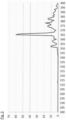
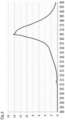
- the Figures 2 to 5 each show a diagram of a spectral irradiance E ⁇ ( ⁇ ) of a UV radiation source, specified or measured at the distance intended for tanning the skin.
- the power in W/m 2 incident in a wavelength interval ⁇ of 1 nm is plotted against the wavelength ⁇ in nm.
- the respective spectral sensitivity was multiplied by the spectral irradiance for each wavelength interval and the products were summed.
- the spectral irradiance E ⁇ ( ⁇ ) from Fig. 2 was measured with a double monochromator on a Blue Vision LED shoulder tanner.
- the determined NMSC-effective irradiance E NMSC is 0.139 W/m 2
- the Erythema-effective irradiance E er is 0.126 W/m 2
- the ratio E NMSC to E er is 1.10.
- the spectral irradiance E ⁇ ( ⁇ ) from Fig.3 was measured with a double monochromator on a UV high-pressure lamp with a filter disc (Prestige 1400, filter disc type 3).
- the determined NMSC-effective irradiance E NMSC is 0.464 W/m 2
- the erythema-effective irradiance E er is 0.299 W/m 2 .
- the ratio E NMSC to E er is 1.55
- the spectral irradiance E ⁇ ( ⁇ ) from Fig.4 was measured with a double monochromator on UV low-pressure lamps (Ergo 1400 New Technology x-Tend plus with top part).
- the determined NMSC-effective irradiance E NMSC is 0.408 W/m 2
- the erythema-effective irradiance E er is 0.291 W/m 2
- the ratio E NMSC to E er is 1.40.
- Fig.5 shows the spectral irradiance E ⁇ ( ⁇ ) of a radiation source according to the invention, which has a UV LED.
- the emitted radiation extends over a wavelength range from about 325 nm to about 372 nm and has a maximum value of 20.8 W/m 2 at 340 nm.
- the determined NMSC-effective irradiance E NMSC is 0.170 W/m 2
- the erythema-effective irradiance E er is 0.292 W/m 2
- the ratio E NMSC to E er is 0.59.
Landscapes
- Health & Medical Sciences (AREA)
- Engineering & Computer Science (AREA)
- Biomedical Technology (AREA)
- Pathology (AREA)
- Nuclear Medicine, Radiotherapy & Molecular Imaging (AREA)
- Radiology & Medical Imaging (AREA)
- Life Sciences & Earth Sciences (AREA)
- Animal Behavior & Ethology (AREA)
- General Health & Medical Sciences (AREA)
- Public Health (AREA)
- Veterinary Medicine (AREA)
- Radiation-Therapy Devices (AREA)
Claims (11)
- Solarium destiné au bronzage de la peau avec une source de rayonnement conçue pour l'émission de lumière UV avec une intensité d'irradiation spectrale Eλ(λ), dans lequel l'intensité d'irradiation biologiquement active pour la pigmentation directe Epi mesure au moins 180 W/m2, caractérisé en ce que l'intensité d'irradiation spectrale Eλ(λ) est sélectionnée de telle façon que le rapport de l'intensité d'irradiation biologique à action NMSC ENMSC à l'intensité d'irradiation biologique à action éryhtémateuse Eer s'élève à 0,9 ou moins.
- Solarium selon la revendication 1, caractérisé en ce que l'intensité d'irradiation spectrale Eλ(λ) présente une valeur maximale dans la plage de longueur d'onde de 330 nm à 390 nm et présente des valeurs ne dépassant pas 5 % de cette valeur maximale dans la plage de longueur d'onde de 299 nm à 311 nm et dans la plage de longueur d'onde de 315 nm à 329 nm.
- Solarium selon la revendication 1, caractérisé en ce que l'intensité d'irradiation spectrale Eλ(λ) présente une valeur maximale dans la plage de longueur d'onde de 330 nm à 390 nm et présente des valeurs ne dépassant pas 5 % de cette valeur maximale dans la plage de longueur d'onde de 299 nm à 329 nm.
- Solarium selon l'une des revendications 1 à 3, caractérisé en ce que l'intensité d'irradiation spectrale Eλ(λ) présente une valeur maximale dans la plage de longueur d'onde de 330 nm à 364 nm et présente des valeurs ne dépassant pas 5 % de cette valeur maximale pour des longueurs d'onde supérieures à 364 nm.
- Solarium selon l'une des revendications 1 à 4, caractérisé en ce que la source de rayonnement présente une lampe basse pression UV.
- Solarium selon l'une des revendications 1 à 5, caractérisé en ce que la source de rayonnement présente un brûleur haute pression UV.
- Solarium selon l'une des revendications 1 à 6, caractérisé en ce que la source de rayonnement présente une DEL UV.
- Solarium selon l'une des revendications 1 à 7, caractérisé en ce que la source de rayonnement présente une vitre filtrante.
- Solarium selon l'une des revendications 1 à 8, caractérisé en ce que l'intensité d'irradiation biologiquement active pour la pigmentation directe Epi mesure au moins 200 W/m2.
- Solarium selon l'une des revendications 1 à 9, caractérisé en ce que l'intensité d'irradiation biologique à action éryhtémateuse Eer ne dépasse pas 1,0 W/m2, de préférence pas 0,3 W/m2.
- Solarium selon l'une des revendications 1 à 10, caractérisé en ce que le solarium est un banc solaire ou une douche solaire.
Applications Claiming Priority (2)
| Application Number | Priority Date | Filing Date | Title |
|---|---|---|---|
| EP21173008.0A EP4088779A1 (fr) | 2021-05-10 | 2021-05-10 | Source de rayonnement et appareil de rayonnement de la peau |
| PCT/EP2022/061348 WO2022238134A1 (fr) | 2021-05-10 | 2022-04-28 | Source de rayonnement et dispositif d'irradiation de la peau |
Publications (3)
| Publication Number | Publication Date |
|---|---|
| EP4337309A1 EP4337309A1 (fr) | 2024-03-20 |
| EP4337309B1 true EP4337309B1 (fr) | 2024-08-07 |
| EP4337309C0 EP4337309C0 (fr) | 2024-08-07 |
Family
ID=75904753
Family Applications (2)
| Application Number | Title | Priority Date | Filing Date |
|---|---|---|---|
| EP21173008.0A Withdrawn EP4088779A1 (fr) | 2021-05-10 | 2021-05-10 | Source de rayonnement et appareil de rayonnement de la peau |
| EP22723457.2A Active EP4337309B1 (fr) | 2021-05-10 | 2022-04-28 | Source de rayonnement et dispositif d'irradiation de la peau |
Family Applications Before (1)
| Application Number | Title | Priority Date | Filing Date |
|---|---|---|---|
| EP21173008.0A Withdrawn EP4088779A1 (fr) | 2021-05-10 | 2021-05-10 | Source de rayonnement et appareil de rayonnement de la peau |
Country Status (4)
| Country | Link |
|---|---|
| US (1) | US20240359028A1 (fr) |
| EP (2) | EP4088779A1 (fr) |
| HU (1) | HUE068735T2 (fr) |
| WO (1) | WO2022238134A1 (fr) |
Citations (1)
| Publication number | Priority date | Publication date | Assignee | Title |
|---|---|---|---|---|
| FR2764813A1 (fr) * | 1997-06-24 | 1998-12-24 | Jean Daniel Mondin | Nouveaux equipements d'eclairage a fibres optiques pour applications de cosmetologie et phototherapie |
Family Cites Families (2)
| Publication number | Priority date | Publication date | Assignee | Title |
|---|---|---|---|---|
| DE19611763A1 (de) * | 1996-03-26 | 1997-10-02 | Uwe Unterwasser Electric Gmbh | Bestrahlungsgerät |
| EP2800605B2 (fr) * | 2012-01-03 | 2022-11-09 | BeneSol, Inc. | Appareil de photothérapie pour rayonnement uvb concentré et synthèse de vitamine d et systèmes associés |
-
2021
- 2021-05-10 EP EP21173008.0A patent/EP4088779A1/fr not_active Withdrawn
-
2022
- 2022-04-28 WO PCT/EP2022/061348 patent/WO2022238134A1/fr not_active Ceased
- 2022-04-28 HU HUE22723457A patent/HUE068735T2/hu unknown
- 2022-04-28 EP EP22723457.2A patent/EP4337309B1/fr active Active
- 2022-04-28 US US18/289,275 patent/US20240359028A1/en active Pending
Patent Citations (1)
| Publication number | Priority date | Publication date | Assignee | Title |
|---|---|---|---|---|
| FR2764813A1 (fr) * | 1997-06-24 | 1998-12-24 | Jean Daniel Mondin | Nouveaux equipements d'eclairage a fibres optiques pour applications de cosmetologie et phototherapie |
Non-Patent Citations (1)
| Title |
|---|
| ANONYMOUS: "DIN 5031-10:2018-03 Strahlungsphysik im optischen Bereich und Lichttechnik - Teil 10: Photobiologisch wirksame Strahlung, Größen, Kurzzeichen und Wirkungsspektren", DIN NORM,, vol. 5031-10, 1 March 2018 (2018-03-01), pages 1 - 102, XP009545400 * |
Also Published As
| Publication number | Publication date |
|---|---|
| EP4337309C0 (fr) | 2024-08-07 |
| WO2022238134A1 (fr) | 2022-11-17 |
| US20240359028A1 (en) | 2024-10-31 |
| EP4088779A1 (fr) | 2022-11-16 |
| EP4337309A1 (fr) | 2024-03-20 |
| HUE068735T2 (hu) | 2025-01-28 |
Similar Documents
| Publication | Publication Date | Title |
|---|---|---|
| DE102007052108A1 (de) | Bestrahlungsgerät mit Einrichtungen zur Vermeidung schädlicher Strahlung | |
| DE2707920C2 (de) | Gerät zur UV-Photobehandlung der Psoriasis und ähnlicher Krankheiten | |
| EP1638464A1 (fr) | Dispositif et procede pour determiner un niveau autorise d'exposition de la peau d'un sujet a un rayonnement uv | |
| EP2032970A1 (fr) | Procédé de mesure locale pour la détection de mélanine dans des mélanges de fluorophore dans un prélèvement de solide | |
| EP0173859A1 (fr) | Lampe fluorescente | |
| WO2004067088A1 (fr) | Implant retinien destine a stimuler une retine en fonction de la lumiere incidente | |
| EP1135791A1 (fr) | Dispositif d'irradiation destine a des fins therapeutique et cosmetique | |
| DE3729711A1 (de) | Quecksilberniederdruckentladungslampe zur uv-bestrahlung | |
| EP4337309B1 (fr) | Source de rayonnement et dispositif d'irradiation de la peau | |
| EP0023311B1 (fr) | Appareil d'irradiation médical | |
| EP0592794A2 (fr) | Dispositif pour engendrer et émettre un rayonnement électro-magnétique | |
| DE102017121889B3 (de) | Breitbandige halbleiterbasierte UV-Lichtquelle für eine Spektralanalysevorrichtung | |
| DE3121689C2 (de) | Leuchtstofflampe, deren Strahlungsmaximum im UVA-Bereich liegt | |
| EP3434327B1 (fr) | Dispositif d'irradiation destiné à irradier la peau humaine | |
| DE19611763A1 (de) | Bestrahlungsgerät | |
| DE19836464C1 (de) | Verfahren und Hilfsmittel zum frühzeitigen Erkennen von Sonnenbrand sowie Verfahren zum Ermitteln eines geeigneten Transmissions-, Reflexions- oder Emissionsspektrums eines erfindungsgemäßen Hilfsmittels | |
| DE7701153U1 (fr) | ||
| DE102013007129B3 (de) | LED-Lampe für Schönheitsanwendungen | |
| DE202021104364U1 (de) | Körperbestrahlungsvorrichtung für eine Anwendung von gerichteter aktinischer Strahlung an einem Lebewesen | |
| DE202009004449U1 (de) | Ganzkörperbestrahlungsgerät | |
| EP1967227B1 (fr) | Dispositif d'irradiation destiné à l'irradiation d'un corps humain | |
| EP0427917B1 (fr) | Lampe d'irradiation pour augmenter le niveau de vitamin D3 d'une personne | |
| EP0606897A2 (fr) | Filtre pour rayonnement Ultraviolet | |
| DE10259535A1 (de) | UV-Leuchtstoffröhre | |
| DE102017128582A1 (de) | Vorrichtung zur Bestrahlung eines Körpers mit einer elektromagnetischen Strahlung, welche das Spektrum des natürlichen Sonnenlichts zumindest teilweise abdeckt |
Legal Events
| Date | Code | Title | Description |
|---|---|---|---|
| STAA | Information on the status of an ep patent application or granted ep patent |
Free format text: STATUS: UNKNOWN |
|
| STAA | Information on the status of an ep patent application or granted ep patent |
Free format text: STATUS: THE INTERNATIONAL PUBLICATION HAS BEEN MADE |
|
| PUAI | Public reference made under article 153(3) epc to a published international application that has entered the european phase |
Free format text: ORIGINAL CODE: 0009012 |
|
| STAA | Information on the status of an ep patent application or granted ep patent |
Free format text: STATUS: REQUEST FOR EXAMINATION WAS MADE |
|
| 17P | Request for examination filed |
Effective date: 20230816 |
|
| AK | Designated contracting states |
Kind code of ref document: A1 Designated state(s): AL AT BE BG CH CY CZ DE DK EE ES FI FR GB GR HR HU IE IS IT LI LT LU LV MC MK MT NL NO PL PT RO RS SE SI SK SM TR |
|
| GRAP | Despatch of communication of intention to grant a patent |
Free format text: ORIGINAL CODE: EPIDOSNIGR1 |
|
| STAA | Information on the status of an ep patent application or granted ep patent |
Free format text: STATUS: GRANT OF PATENT IS INTENDED |
|
| GRAS | Grant fee paid |
Free format text: ORIGINAL CODE: EPIDOSNIGR3 |
|
| GRAA | (expected) grant |
Free format text: ORIGINAL CODE: 0009210 |
|
| STAA | Information on the status of an ep patent application or granted ep patent |
Free format text: STATUS: THE PATENT HAS BEEN GRANTED |
|
| DAV | Request for validation of the european patent (deleted) | ||
| DAX | Request for extension of the european patent (deleted) | ||
| INTG | Intention to grant announced |
Effective date: 20240621 |
|
| AK | Designated contracting states |
Kind code of ref document: B1 Designated state(s): AL AT BE BG CH CY CZ DE DK EE ES FI FR GB GR HR HU IE IS IT LI LT LU LV MC MK MT NL NO PL PT RO RS SE SI SK SM TR |
|
| REG | Reference to a national code |
Ref country code: GB Ref legal event code: FG4D Free format text: NOT ENGLISH |
|
| REG | Reference to a national code |
Ref country code: CH Ref legal event code: EP |
|
| REG | Reference to a national code |
Ref country code: DE Ref legal event code: R096 Ref document number: 502022001414 Country of ref document: DE |
|
| REG | Reference to a national code |
Ref country code: IE Ref legal event code: FG4D Free format text: LANGUAGE OF EP DOCUMENT: GERMAN |
|
| U01 | Request for unitary effect filed |
Effective date: 20240807 |
|
| U07 | Unitary effect registered |
Designated state(s): AT BE BG DE DK EE FI FR IT LT LU LV MT NL PT SE SI Effective date: 20240814 |
|
| PG25 | Lapsed in a contracting state [announced via postgrant information from national office to epo] |
Ref country code: NO Free format text: LAPSE BECAUSE OF FAILURE TO SUBMIT A TRANSLATION OF THE DESCRIPTION OR TO PAY THE FEE WITHIN THE PRESCRIBED TIME-LIMIT Effective date: 20241107 |
|
| PG25 | Lapsed in a contracting state [announced via postgrant information from national office to epo] |
Ref country code: PL Free format text: LAPSE BECAUSE OF FAILURE TO SUBMIT A TRANSLATION OF THE DESCRIPTION OR TO PAY THE FEE WITHIN THE PRESCRIBED TIME-LIMIT Effective date: 20240807 Ref country code: GR Free format text: LAPSE BECAUSE OF FAILURE TO SUBMIT A TRANSLATION OF THE DESCRIPTION OR TO PAY THE FEE WITHIN THE PRESCRIBED TIME-LIMIT Effective date: 20241108 |
|
| PG25 | Lapsed in a contracting state [announced via postgrant information from national office to epo] |
Ref country code: IS Free format text: LAPSE BECAUSE OF FAILURE TO SUBMIT A TRANSLATION OF THE DESCRIPTION OR TO PAY THE FEE WITHIN THE PRESCRIBED TIME-LIMIT Effective date: 20241207 |
|
| PG25 | Lapsed in a contracting state [announced via postgrant information from national office to epo] |
Ref country code: HR Free format text: LAPSE BECAUSE OF FAILURE TO SUBMIT A TRANSLATION OF THE DESCRIPTION OR TO PAY THE FEE WITHIN THE PRESCRIBED TIME-LIMIT Effective date: 20240807 |
|
| PG25 | Lapsed in a contracting state [announced via postgrant information from national office to epo] |
Ref country code: RS Free format text: LAPSE BECAUSE OF FAILURE TO SUBMIT A TRANSLATION OF THE DESCRIPTION OR TO PAY THE FEE WITHIN THE PRESCRIBED TIME-LIMIT Effective date: 20241107 Ref country code: ES Free format text: LAPSE BECAUSE OF FAILURE TO SUBMIT A TRANSLATION OF THE DESCRIPTION OR TO PAY THE FEE WITHIN THE PRESCRIBED TIME-LIMIT Effective date: 20240807 |
|
| REG | Reference to a national code |
Ref country code: HU Ref legal event code: AG4A Ref document number: E068735 Country of ref document: HU |
|
| PG25 | Lapsed in a contracting state [announced via postgrant information from national office to epo] |
Ref country code: RS Free format text: LAPSE BECAUSE OF FAILURE TO SUBMIT A TRANSLATION OF THE DESCRIPTION OR TO PAY THE FEE WITHIN THE PRESCRIBED TIME-LIMIT Effective date: 20241107 Ref country code: PL Free format text: LAPSE BECAUSE OF FAILURE TO SUBMIT A TRANSLATION OF THE DESCRIPTION OR TO PAY THE FEE WITHIN THE PRESCRIBED TIME-LIMIT Effective date: 20240807 Ref country code: NO Free format text: LAPSE BECAUSE OF FAILURE TO SUBMIT A TRANSLATION OF THE DESCRIPTION OR TO PAY THE FEE WITHIN THE PRESCRIBED TIME-LIMIT Effective date: 20241107 Ref country code: IS Free format text: LAPSE BECAUSE OF FAILURE TO SUBMIT A TRANSLATION OF THE DESCRIPTION OR TO PAY THE FEE WITHIN THE PRESCRIBED TIME-LIMIT Effective date: 20241207 Ref country code: HR Free format text: LAPSE BECAUSE OF FAILURE TO SUBMIT A TRANSLATION OF THE DESCRIPTION OR TO PAY THE FEE WITHIN THE PRESCRIBED TIME-LIMIT Effective date: 20240807 Ref country code: GR Free format text: LAPSE BECAUSE OF FAILURE TO SUBMIT A TRANSLATION OF THE DESCRIPTION OR TO PAY THE FEE WITHIN THE PRESCRIBED TIME-LIMIT Effective date: 20241108 Ref country code: ES Free format text: LAPSE BECAUSE OF FAILURE TO SUBMIT A TRANSLATION OF THE DESCRIPTION OR TO PAY THE FEE WITHIN THE PRESCRIBED TIME-LIMIT Effective date: 20240807 |
|
| PG25 | Lapsed in a contracting state [announced via postgrant information from national office to epo] |
Ref country code: SM Free format text: LAPSE BECAUSE OF FAILURE TO SUBMIT A TRANSLATION OF THE DESCRIPTION OR TO PAY THE FEE WITHIN THE PRESCRIBED TIME-LIMIT Effective date: 20240807 |
|
| PG25 | Lapsed in a contracting state [announced via postgrant information from national office to epo] |
Ref country code: CZ Free format text: LAPSE BECAUSE OF FAILURE TO SUBMIT A TRANSLATION OF THE DESCRIPTION OR TO PAY THE FEE WITHIN THE PRESCRIBED TIME-LIMIT Effective date: 20240807 |
|
| PG25 | Lapsed in a contracting state [announced via postgrant information from national office to epo] |
Ref country code: SK Free format text: LAPSE BECAUSE OF FAILURE TO SUBMIT A TRANSLATION OF THE DESCRIPTION OR TO PAY THE FEE WITHIN THE PRESCRIBED TIME-LIMIT Effective date: 20240807 |
|
| U20 | Renewal fee for the european patent with unitary effect paid |
Year of fee payment: 4 Effective date: 20250414 |
|
| PLBE | No opposition filed within time limit |
Free format text: ORIGINAL CODE: 0009261 |
|
| STAA | Information on the status of an ep patent application or granted ep patent |
Free format text: STATUS: NO OPPOSITION FILED WITHIN TIME LIMIT |
|
| PGFP | Annual fee paid to national office [announced via postgrant information from national office to epo] |
Ref country code: HU Payment date: 20250429 Year of fee payment: 4 |
|
| 26N | No opposition filed |
Effective date: 20250508 |
|
| REG | Reference to a national code |
Ref country code: CH Ref legal event code: H13 Free format text: ST27 STATUS EVENT CODE: U-0-0-H10-H13 (AS PROVIDED BY THE NATIONAL OFFICE) Effective date: 20251125 |
|
| PG25 | Lapsed in a contracting state [announced via postgrant information from national office to epo] |
Ref country code: MC Free format text: LAPSE BECAUSE OF FAILURE TO SUBMIT A TRANSLATION OF THE DESCRIPTION OR TO PAY THE FEE WITHIN THE PRESCRIBED TIME-LIMIT Effective date: 20240807 |
|
| PG25 | Lapsed in a contracting state [announced via postgrant information from national office to epo] |
Ref country code: CH Free format text: LAPSE BECAUSE OF NON-PAYMENT OF DUE FEES Effective date: 20250430 |
|
| PG25 | Lapsed in a contracting state [announced via postgrant information from national office to epo] |
Ref country code: IE Free format text: LAPSE BECAUSE OF NON-PAYMENT OF DUE FEES Effective date: 20250428 |
|
| PG25 | Lapsed in a contracting state [announced via postgrant information from national office to epo] |
Ref country code: RO Free format text: LAPSE BECAUSE OF FAILURE TO SUBMIT A TRANSLATION OF THE DESCRIPTION OR TO PAY THE FEE WITHIN THE PRESCRIBED TIME-LIMIT Effective date: 20240807 |