EP4339155A1 - Radical peroxyde de chlore et procédé de production, composition, procédé de quantification et utilisation de ce radical - Google Patents
Radical peroxyde de chlore et procédé de production, composition, procédé de quantification et utilisation de ce radical Download PDFInfo
- Publication number
- EP4339155A1 EP4339155A1 EP22807500.8A EP22807500A EP4339155A1 EP 4339155 A1 EP4339155 A1 EP 4339155A1 EP 22807500 A EP22807500 A EP 22807500A EP 4339155 A1 EP4339155 A1 EP 4339155A1
- Authority
- EP
- European Patent Office
- Prior art keywords
- chlorine
- acid
- peroxide radical
- radical
- chlorine peroxide
- Prior art date
- Legal status (The legal status is an assumption and is not a legal conclusion. Google has not performed a legal analysis and makes no representation as to the accuracy of the status listed.)
- Pending
Links
Images

Classifications
-
- C—CHEMISTRY; METALLURGY
- C01—INORGANIC CHEMISTRY
- C01B—NON-METALLIC ELEMENTS; COMPOUNDS THEREOF; METALLOIDS OR COMPOUNDS THEREOF NOT COVERED BY SUBCLASS C01C
- C01B11/00—Oxides or oxyacids of halogens; Salts thereof
- C01B11/02—Oxides of chlorine
-
- A—HUMAN NECESSITIES
- A01—AGRICULTURE; FORESTRY; ANIMAL HUSBANDRY; HUNTING; TRAPPING; FISHING
- A01N—PRESERVATION OF BODIES OF HUMANS OR ANIMALS OR PLANTS OR PARTS THEREOF; BIOCIDES, e.g. AS DISINFECTANTS, AS PESTICIDES OR AS HERBICIDES; PEST REPELLANTS OR ATTRACTANTS; PLANT GROWTH REGULATORS
- A01N59/00—Biocides, pest repellants or attractants, or plant growth regulators containing elements or inorganic compounds
-
- A—HUMAN NECESSITIES
- A01—AGRICULTURE; FORESTRY; ANIMAL HUSBANDRY; HUNTING; TRAPPING; FISHING
- A01P—BIOCIDAL, PEST REPELLANT, PEST ATTRACTANT OR PLANT GROWTH REGULATORY ACTIVITY OF CHEMICAL COMPOUNDS OR PREPARATIONS
- A01P1/00—Disinfectants; Antimicrobial compounds or mixtures thereof
-
- A—HUMAN NECESSITIES
- A01—AGRICULTURE; FORESTRY; ANIMAL HUSBANDRY; HUNTING; TRAPPING; FISHING
- A01P—BIOCIDAL, PEST REPELLANT, PEST ATTRACTANT OR PLANT GROWTH REGULATORY ACTIVITY OF CHEMICAL COMPOUNDS OR PREPARATIONS
- A01P3/00—Fungicides
-
- C—CHEMISTRY; METALLURGY
- C01—INORGANIC CHEMISTRY
- C01B—NON-METALLIC ELEMENTS; COMPOUNDS THEREOF; METALLOIDS OR COMPOUNDS THEREOF NOT COVERED BY SUBCLASS C01C
- C01B11/00—Oxides or oxyacids of halogens; Salts thereof
- C01B11/08—Chlorous acid
-
- C—CHEMISTRY; METALLURGY
- C02—TREATMENT OF WATER, WASTE WATER, SEWAGE, OR SLUDGE
- C02F—TREATMENT OF WATER, WASTE WATER, SEWAGE, OR SLUDGE
- C02F1/00—Treatment of water, waste water, or sewage
- C02F1/50—Treatment of water, waste water, or sewage by addition or application of a germicide or by oligodynamic treatment
Definitions
- the present disclosure relates to a chlorine peroxide radical, and a manufacturing method, a composition, a quantification method, and use thereof.
- the present disclosure has found a method of manufacturing a chlorine peroxide radical, comprising a step of contacting a solution comprising a chlorine oxide comprising two or more oxygen atoms to one chlorine atom with an excessive amount of hydrogen ions relative to the chlorine oxide. It was also found that such a chlorine peroxide radical is stably present. This is described briefly as follows.
- ESR electron spin resonance spectrometer
- UV spectrophotometer
- the present disclosure has elucidated active molecular species from both ion chemistry and radical chemistry approaches by observing a solution prepared by mixing an excessive amount of a GRAS acid (e.g., hydrochloric acid) with chlorite (NaClO 2 ) by using a spectrophotometer and an electron spin resonance spectrometer.
- a GRAS acid e.g., hydrochloric acid
- chlorite NaClO 2
- the present disclosure provides the following items.
- a method of manufacturing a chlorine peroxide radical comprising a step of contacting an excessive amount of hydrogen ions with a chlorine oxide having a portion comprising two or more oxygen atoms to one chlorine atom.
- chlorine oxide is chlorine dioxide, chlorine dioxide gas, aqueous chlorine dioxide, stabilized chlorine dioxide (hydrogenic chlorine dioxide), chlorous acid, chlorite, chlorite ion, chloric acid, chlorate, chlorate ion, perchloric acid, perchlorate, and/or perchlorate ion.
- a composition comprising a chlorine peroxide radical.
- composition of item 11 wherein the composition is an aqueous solution.
- composition of item 11 or 12, wherein the chlorine peroxide radical is present as an active ingredient of a sterilizing agent is present as an active ingredient of a sterilizing agent.
- a method of killing a virus, a bacterium, and/or a fungus comprising a step of contacting a chlorine peroxide radical with a virus, a bacterium, and/or a fungus.
- a method of confirming and/or quantifying the presence of a chlorine peroxide radical in a liquid comprising a step of detecting a chlorine peroxide radical and/or measuring an amount of a chlorine peroxide radical by ESR.
- a method of measuring a sterilizing power of an agent for killing a virus, a bacterium, and/or a fungus comprising a step of measuring a concentration of a chlorine peroxide radical in the agent.
- a novel substance i.e., chlorine peroxide radical
- a method for sterilizing microorganisms with a chlorine peroxide radical is obtained.
- a method of measuring a chlorine peroxide radical is obtained, so that a required and sufficient sterilization can be suitably administered.
- a chlorine peroxide radical being different from a chlorine dioxide radical can be confirmed by ESR measurement.
- a chlorine peroxide radical has absorbance of maximum absorbance wavelength at 350 to 360 nm.
- a chlorine peroxide radical has low reactivity as a radical and can be stable for a long period of time.
- chlorine oxide refers to any oxide of chlorine. Examples thereof include hypochlorous acid, chlorous acid, chloric acid, perchloric acid, salts thereof, esters of these acids (alkyl ester, etc.), dichlorine heptoxide, dichlorine hexoxide, dichlorine trioxide, chlorine dioxide, dichlorine monoxide, etc. sodium hypochlorite, calcium hypochlorite (bleaching powder), sodium chlorite, sodium chlorate, sodium perchlorate, etc. A chlorine oxide comprising two or more oxygen atoms to one chlorine atom is preferred herein.
- chlorine oxide comprising two or more oxygen atoms to one chlorine atom refers to a chlorine oxide, which comprises two or more oxygen atoms to one chlorine atom. Examples thereof include chlorous acid (HClO 2 ), chloric acid (HClO 3 ), perchloric acid (HClO 4 ), etc.
- Dichlorine heptoxide has a structure of OCl(O) 2 -O-Cl(O) 2 O and comprises two or more oxygen atoms to one chlorine atom, thus falling under a "chlorine oxide comprising two or more oxygen atoms to one chlorine atom".
- dichlorine trioxide has a structure of OCl-ClO 2 or Cl-O-ClO 2 and comprises a "ClO 2 " moiety, thus falling under a "chlorine oxide comprising two or more oxygen atoms to one chlorine atom".
- “Equivalent” of hydrogen ions is an amount considering the number of hydrogen atoms that can be substituted for hydrogen ions contained in a molecule.
- hydrochloric acid is used as a proton donating acid
- a hydrogen ion per 1 mol of hydrochloric acid is 1 equivalent (eq)
- sulfuric acid a hydrogen ion per mol is 2 equivalents (eq) .
- an "excessive amount" of hydrogen ions refers to an amount of hydrogen ions greater than the minimum value at which a chlorine peroxide radical is generated in the manufacture of a chlorine peroxide radical. This can be determined by finding the minimum value at which a chlorine peroxide radical is generated. The amount can be measured by a method of measuring the absorbance at 350 nm, a method of measuring ESR, etc. An excessive amount can be represented by hydrogen ion equivalent (e.g., 0.07 meq/g or 0.15 meq/g) per 1g of mass in terms of sodium chlorite.
- H+ ion exchange resin refers to one type of synthetic resin which has a structure that ionizes as an ion exchange group in a part of the molecular structure. Those that release a hydrogen ion are preferred. Examples thereof include Amberlight IR120B.
- GRAS acid refers to acids that are generally recognized as safe substances. GRAS acids can be used as, but not limited to, food ingredients. It is understood that any GRAS acid used as a food ingredient is readily sold as a food product, etc. after disinfection, etc. using a formulation manufactured by the manufacturing method herein. Classification of GRAS acids used herein is shown below.
- 21CFR 186 GRAS acids that can only be used indirectly 186.1093 Sulfamic acid. 186.1316 Formic acid.
- a GRAS acid is selected from the group consisting of glutamic acid, hydrochloric acid, phosphoric acid, ascorbic acid, erythorbic acid, thiodipropionic acid, acetic acid, aconitic acid, adipic acid, alginic acid, benzoic acid, caprylic acid, citric acid, lactic acid, linolenic acid, malic acid, stearic acid, succinic acid, sulfuric acid, tannic acid, tartaric acid, sulfamic acid, and formic acid.
- a GRAS acid is selected from the group consisting of glutamic acid, hydrochloric acid, phosphoric acid, ascorbic acid, erythorbic acid, thiodipropionic acid, acetic acid, aconitic acid, adipic acid, alginic acid, benzoic acid, caprylic acid, citric acid, lactic acid, linolenic acid, malic acid, stearic acid, succinic acid, sulfuric acid, tannic acid, and tartaric acid.
- FDA US Food and Drug Administration
- a GRAS acid is selected from the group consisting of sulfuric acid, phosphoric acid, citric acid, lactic acid, acetic acid, and hydrochloric acid because the Examples have confirmed that double peaks are maintained when these GRAS acids are used, i.e., there are special absorbent sections at wavelengths of 354 nm and 260 nm, and it is understood that a stable sterilizing power is maintained over a long period of time.
- free chlorine As used herein, “free chlorine”, “free chlorine concentration”, or “free residual chlorine concentration” is a value measured via the Appended Table 3 in "Method of testing free residue chlorine and bound chlorine determined by the Minister of Health, Labour and Welfare based on the provision of Sec. 17(2) of the Regulation of Waterworks Act” (hereinafter, colorimetry (DPD indicator)) and is a value obtained by oxidation of a DPD indicator.
- DPD indicator colorimetry
- microorganisms refer to small organisms that cannot be seen by the naked eye such as viruses, bacteria, and fungi. Rickettsia, spirochaete, etc., are bacteria. As used herein, “microorganisms” do not include parasites (protozoa, flukes, tapeworms, nematodes, etc.). As used herein, “pathogenic microorganisms” refer to microorganisms that infect through humans or the environment. An infected individual can spread microorganisms through diarrhea, vomit, coughing, etc., to cause secondary infections.
- Aqueous chlorine dioxide refers to an aqueous solution of chlorine dioxide.
- Haldrogenic chlorine dioxide “stabilized chlorine dioxide”, and “stabilized chlorine dioxide water” are each used in the same meaning, referring to a chlorine oxide with chlorine dioxide gas stabilized in an aqueous solution. Examples thereof include those commercialized by Bio-Cide International, Inc.
- the present disclosure describes various aspects of a chlorine peroxide radical, manufacturing method, measuring method, and other applications thereof hereinafter.
- a chlorine peroxide radical is provided.
- a chlorine peroxide radical is preferably present in water.
- a chlorine peroxide radical can be stably present and preferably can be present for a longer period of time when stored in a container that does not eliminate radicals such as a glass bottle at a cool and dark location.
- long term stability can be achieved when prepared at a yield of 10% or less in molar ratio.
- the radical maintains properties as a radical, can be taken into microorganisms that would take up radicals such as bacteria, and can kill the microorganisms.
- a chlorine peroxide radical has absorbance at the maximum absorbance wavelength of 350 to 360 nm. The change in the amount thereof over time can be readily confirmed by UV measurement.
- the chlorine peroxide radical of the present disclosure can be manufactured by a step of contacting an excessive amount of hydrogen ions with a solution comprising a chlorine oxide having a portion comprising two or more oxygen atoms to one chlorine atom.
- the excessive amount can be determined by an increase in a maximum absorbance section at 354 nm in a UV spectrum.
- the concentration at which an increase in absorbance at wavelength of 354 nm is first observed can be determined as the minimum value at which a chlorine peroxide radical is generated. It is important that the amount of hydrogen ions is an excessive amount with respect to a chorine oxide. It was found that a chlorine peroxide radical, which is a peroxide radical, is generated from a chlorine oxide by adding an excessive amount of hydrogen ions.
- pH can be less than 3, such as less than 2.5, less than 2.3, 2.0 or less, 1.5 or less, 10 or less, etc.
- the reaction may take place at room temperature in the atmosphere.
- a chlorine oxide comprising two or more (e.g., 2.5, 3, 3.5, 4, etc.) oxygen atoms to one chlorine atom such as chloric acid or perchloric acid is the raw material, a chlorine peroxide radical can be generated by setting the amount of hydrogen ions to be at an excessive amount with respect to the chlorine oxide.
- the excessive amount can be an amount of hydrogen ions greater than 0.07 milliequivalent per 1 g of mass in terms of sodium chlorite of the chlorine oxide.
- the excessive amount can be an amount of hydrogen ions that is 0.08 milliequivalent, 0.09 milliequivalent, 0.10 milliequivalent, 0.11 milliequivalent, 0.12 milliequivalent, 0.13 milliequivalent, 0.14 milliequivalent, 0.15 milliequivalent, 0.2 milliequivalent, 0.25 milliequivalent, 0.3 milliequivalent, 0.35 milliequivalent, 0.4 milliequivalent, 0.45 milliequivalent, 0.5 milliequivalent, 0.55 milliequivalent, 0.6 milliequivalent, 0.7 milliequivalent, 0.8 milliequivalent, 0.85 milliequivalent, 0.9 milliequivalent, 1 milliequivalent, 1.5 milliequivalent, 2 milliequivalent, 2.5 milliequivalent, 2.75 millie
- a chlorine oxide comprising two or more oxygen atoms to one chlorine atom that an oxygen atom binds to a hydrogen ion and leaves the chlorine oxide as "OH". It is understood, for chloric acid (HClO 3 ), that one oxygen leaves by binding with a hydrogen ion to generate a chlorine peroxide radical (Cl-O-O ⁇ ) comprising two oxygens to one chlorine.
- a method of manufacturing a chlorine peroxide radical comprising a step of contacting an excessive amount of hydrogen ions with a chlorine oxide comprising two or more oxygen atoms to one chlorine atom is provided.
- the chlorine oxide is chlorine dioxide, chlorine dioxide gas, aqueous chlorine dioxide, stabilized chlorine dioxide (hydrogenic chlorine dioxide), chlorous acid, chlorite, chlorite ion, chloric acid, chlorate, chlorate ion, perchloric acid, perchlorate, and/or perchlorate ion.
- the chlorine oxide is an aqueous solution.
- An aqueous solution can be a desired form because such a form can be readily handled, and a chlorine peroxide radical is relatively easily generated.
- the step of contacting hydrogen ions comprises adding an acid.
- the acid is a GRAS acid.
- GRAS acids are generally recognized as safe substances and can be instrumental in the safe manufacture and use of a chlorine peroxide radical.
- the step of contacting hydrogen ions comprises using H+ ion exchange resin.
- H+ ion exchange resin may be used, as long as a hydrogen ion is provided.
- H+ ion exchange resin may be directly added as powder to the chlorine oxygen.
- the chlorine oxide may be passed through a column comprising ion exchange resin.
- the chlorine peroxide radical is present in an aqueous solution.
- a chlorine peroxide radical can be stable in an aqueous solution.
- a composition comprising a chlorine peroxide radical is provided, and preferably, the present disclosure provides an aqueous solution comprising a chlorine peroxide radical.
- a chlorine peroxide radical can be stably present for a long period of time such as 24 hours, 7 days, or 1 month or longer in the chlorine peroxide radical-containing aqueous solution of the present disclosure.
- the chlorine peroxide radical is present as an active ingredient of a sterilizing agent.
- a chlorine peroxide radical can be stably present for a long period of time such as 24 hours, 7 days, or 1 month or longer in an aqueous solution.
- the composition of the present disclosure can be provided as a sterilizing agent that is effective for a long period of time in the present disclosure.
- a method of killing microorganisms comprising a step of contacting a chlorine peroxide radical with microorganisms.
- microorganisms include viruses, bacteria, and/or fungi.
- the method of the present disclosure can exclude use for treating humans.
- a method of preventing or treating a disease or disorder due to microorganisms comprising a step of contacting an effective amount of chlorine peroxide radical with the microorganisms is provided.
- a chlorine peroxide radical in the manufacture of a sterilizing agent for killing microorganisms.
- microorganisms include viruses, bacteria, and/or fungi.
- a method of confirming and/or quantifying the presence of a chlorine peroxide radical in a liquid comprising a step of detecting a chlorine peroxide radical and/or measuring an amount of a chlorine peroxide radical by ESR is provided.
- a chlorine peroxide radical for killing a virus, a bacterium, and/or a fungus is provided.
- a free radical in a liquid can be measured by ESR.
- the ESR signal intensity of a chlorine peroxide radical exhibits a linear relationship with absorbance at 354 nm of UV-Vis absorption spectra and can be quantified by measuring the UV absorption spectra.
- Absorbance at 354 nm exhibits a linear relationship with the free chlorine concentration according to the DPD method.
- a chlorine peroxide radical can also be quantified by measuring the free chlorine concentration through the DPD method.
- a method of measuring a sterilizing power of an agent for killing microorganisms comprises a step of measuring a concentration of a chlorine peroxide radical (Cl-O-O ⁇ ) in the agent.
- a concentration of a chlorine peroxide radical (Cl-O-O ⁇ ) can be measured by electron spin resonance.
- Measurement of the concentration of a chlorine peroxide radical (Cl-O-O ⁇ ) can include measuring the absorbance at the maximum absorbance wavelength of 350 to 360 nm by ultraviolet visible spectrometry.
- the concentration of a chlorine peroxide radical can be measured by measuring the free chlorine concentration and calculating the concentration of the chlorine peroxide radical (Cl-O-O ⁇ ).
- the concentration of a chlorine peroxide radical can be measured by colorimetry or potassium iodide titration.
- the concentration of a chlorine peroxide radical (Cl-O-O ⁇ ) can be measured by the DPD or TMB method.
- a kit for preparing a chlorine peroxide radical comprising a chlorite, an acid, and an instruction for contacting the chlorite with the acid can be provided.
- Oxidation power of a chlorine oxide agent is generally found through a measurement method utilizing colorimetry such as a TMB method or DPD method.
- a measurement method utilizing colorimetry
- calibration curves are created by using 1 mg/L of free chlorine (as Cl) of sodium hypochlorite as 1 oxidation power.
- Oxidation power can be represented by free chlorine (as Cl) .
- free chlorine (as Cl) of sodium hypochlorite is generated from Cl radicals, but comparison would be difficult when evaluating with respect to a standard in accordance with free chlorine of chlorine peroxide radical.
- it is compared and evaluated with sodium hypochlorite on a level field by using the same standard through calculation at oxidation power 1 1 mg/L of free chlorine (as Cl) in the same manner as sodium hypochlorite.
- a buffer and a DPD indicator are added to a sample, and a wavelength of 510 nm is measured with an absorption spectrophotometer, and for measurement of free chlorine (as Cl) in the presence of an organic matter, measurement is taken at a wavelength of 655 nm using a TMB reagent to deduce the concentration from the measurement values.
- a method of conducting a test for studying a sterilization effect includes preparing free chlorine (as Cl) of a test agent by the DPD method, contacting each agent with an organic matter-containing bacterial solution, neutralizing the solution with sodium thiosulfate after a certain period of time has passed, and checking the viable bacteria count in the neutral solution.
- the signals are deemed to be from chlorine peroxide radicals (Cl-O-O ⁇ ).
- Quantum chemical calculations revealed that the optimal structure of a chlorine peroxide radical is far more thermodynamically stable than the structure of a chlorine dioxide radical.
- the UV-visible spectra of chlorine peroxide radicals exhibited maximum absorbance at 354 nm.
- the absorbance had a linear relationship with ESR signal intensity of chlorine peroxide radicals.
- Quantification of the free chlorine concentration by the DPD method also revealed a linear relationship with maximum absorbance at 354 nm, thus demonstrating a linear relationship with the ESR signal intensity of chlorine peroxide radicals.
- Chlorine dioxide based elemental chlorine free (ECF) technique was a dominant process for a long period of time in the pulp and paper industry for the manufacture of bleached chemical pulp. Chlorine dioxide is generally generated when sodium chlorate or sodium chlorite is reduced using hydrochloric acid, sulfuric acid, and hydrogen peroxide under strongly acidic conditions. It is demonstrated that chlorous acid (HClO 2 ) is a reaction intermediate and becomes unbalanced upon generation of chlorine dioxide under various conditions in this process.
- ClO 2 is formed by the following reaction in an acidic solution of NaClO 2 .
- Formula (2) is stoichiometry of disproportionation of chlorous acid reported by several researchers. This reaction under acidic conditions forms chlorate ions, chlorine dioxide, and chloride ions. It has been reported that disproportionation of chlorous acid has progressed through phased reactions under strongly acidic conditions (Ni Y, Yin G. Disproportionation of chlorous acid at a strong acidity. Ind Eng Chem Res.275 1998; 37: 2367-2372 ).
- hypochlorous acid that is simultaneously generated from disproportionation of one or two chlorous acid molecules and one chlorite ion.
- Hypochlorous acid subsequently reacts with a chlorite ion to form an intermediate of dichlorine dioxide Cl-ClO 2 .
- Dichlorine dioxide then reacts with chlorous acid to generate two molecules of chlorine dioxide.
- An ASC solution which is an aqueous solution obtained by adding an acid to sodium chlorite and adjusting the pH to 2.3 to 2.9, has recently drawn significant attention as a disinfectant in the food industry. While there are several studies that have elucidated the sterilizing effect and sterilizing effect of chlorous acid which is the primary active ingredient of such an aqueous ASC solution, there is no evidence showing which active molecule yields such a sterilizing effect and sanitizing effect. Thus, the objective of the study was to use ESR spectroscopy while targeting aqueous solutions obtained by adding an acid to sodium chlorite having only a maximum absorbance section at a wavelength of 354 m to identify the primary active species of chlorous acid and quantify the species by using DPD method.
- Sodium thiosulfate, anhydrous sodium sulfate, sodium chlorite (purity: 80%), sodium hypochlorite, hydrochloric acid, sulfuric acid, potassium iodide, and N,N-diethyl-p-phenylenediamine (DPD) were purchased from FUJIFILM Wako Pure Chemical Corporation. Starch was purchased from Kanto Chemical Co., Inc. 4-hydroxy-2,2,6,6-tetramethylpiperidine-1-oxyl (TEMPOL) was purchased from Sigma-Aldrich.
- An aqueous solution obtained by adding an acid to sodium chlorite was prepared by mixing 0.1 M sodium chlorite with 2.5 M hydrochloric acid to achieve a desired concentration by using ion exchange water.
- the concentration of sodium chlorite was measured by standard iodometry.
- the free chlorine concentration was measured by a previously reported DPD method ( Goda H, Yamaoka H, Nakayama-Imaohji H, Kawata H, Horiuchi I, Fujita Y, et al. Microbicidal effects of weakly acidified chlorous acid water against feline calicivirus and Clostridium difficile spores under protein-rich conditions. PLoS One. 2017; 12: e0176718 ).
- a component exhibiting a wavelength of 354 nm is an active radical species through thiosulfate titration.
- An aqueous solution obtained by adding an acid to sodium chlorite was prepared by mixing an aqueous 0.1 M sodium chlorite solution with 0.62 M hydrochloric acid at a ratio of 1:1 for 20 minutes. Absorption at 354 nm was measured 10 minutes after adding sodium thiosulfate. A decrease in mean absorption at 354 nm was plotted against the final concentration of sodium thiosulfate to elucidate the relationship between active radical species and absorbance at 354 nm.
- UV-vis absorption spectra were recorded with a U-5100 ratio beam spectrophotometer (HITACHI). When the absorbance exceeded 1.5, the sample was diluted suitably with ion exchange water. Such absorbance of samples was calculated by multiplying the absorbance at 354 nm by a dilution factor.
- aqueous solution obtained by adding an acid to sodium chlorite was placed in a glass capillary tube with a length of 100 mm and inner diameter of 2 mm.
- the glass capillary was transferred to a capillary cell attached to an ESR cavity, and ESR measurement was taken by using an X band spectrometer (JEOL FA-100ESR) operated at 9.43 GHz at room temperature.
- the magnetic field was modulated at 100 kHz.
- the signal intensity was normalized with respect to an MnO marker, and the concentration of stable radical products was determined based on signal height by using an external standard TEMPOL. Radical species found in an aqueous solution obtained by adding an acid to sodium chlorite was quantified by using an integrated software for determining a spectral region mounted onto an ESR device.
- a model of a chlorine peroxide radical (Cl-O-O ⁇ ) was created by drawing the molecular structure with GaussView 6.0, and the compound was optimized through density functional theory (DFT).
- the long-range corrected density functional ⁇ B97X-B was studied using the basis set 6-311G(d,p) with Gaussian 16 ( Frisch MJ, Trucks GW, Schlegel HB, Scuseria GE, Robb MA, Cheeseman JR, et al. Gaussian 16, Revision A.03. Wallingford CT: Gaussian, Inc.; 2016 .).
- the solvation effect of the model was calculated by using a conductor-like polarizable continuum model (CPCM). Water was used as the solvent.
- the optimized molecular structure was studied by vibration analysis. It was confirmed that there was no imaginary number frequency in the balanced structure, and the total energy was corrected with zero-point motion energy.
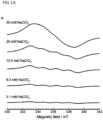
- Figure 1A shows ESR spectra of radical species in an aqueous solution obtained by adding an acid to sodium chlorite.
- Figure 1A shows ESR spectra of radical species seen in an aqueous solution after mixing an aqueous HCl solution to achieve a final HCl concentration of 1.25 M in 240 seconds. The figure shows the concentration of sodium chlorite.
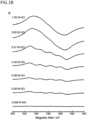
- Figure 1B shows dependency of the ESR spectra of the aqueous solution obtained by adding an acid to sodium chlorite on the HCl concentration. The final HCl concentrations are shown in the figure.
- the ESR spectra were recorded 240 seconds after mixing an aqueous 0.1 M sodium chlorite solution with an aqueous HCl solution.
- ESR spectra were divided into four lines of the intensity ratio 1:1:1:1.
- Hashimoto et al. Hashimoto M, Nakai Y, Kohno M, Tajima K, Kanaori K, Endo N, et al. DMPO spin trapping of superoxide anion in strong alkaline DMSO solution. Chem Lett. 1997; 26: 71-72 ) performed spin trapping of superoxide anion (O 2 ⁇ - ) in a strongly alkaline DMSO solution comprising 5,5-dimethyl-1-pyrroline-N-oxide (DMPO) in a low temperature and solid state (77K).
- DMPO 5,5-dimethyl-1-pyrroline-N-oxide
- the resulting ESR spectra are comprised of only lines with broad widths of and exhibit the formation of "O 2 ⁇ - ".
- the g 0 value obtained with an isotropic superoxide solution was The g value of O 2 ⁇ - adduct matched the value for radicals seen in the aqueous solution obtained by adding an acid to sodium chlorite in Figure 1A .
- Figure 1B shows the ESR spectra after mixing an aqueous 0.1 M sodium chlorite solution with an aqueous HCl solution in the range of 2.5 M to 0.008 M at a ratio of 1:1. ESR signals intensified with an increase in the HCl concentration. This result indicates that a chloroperoxy radical was formed only under acidic conditions.
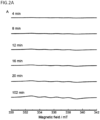
- FIG. 2A shows the time dependent change of chlorine peroxide radical signals after addition of HCl.
- the ESR signal intensity of chlorine peroxide radicals gradually increased with a relatively low concentration of HCl, and the ESR signals remained stable for one week or longer when stored in a dark location.
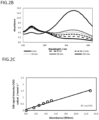
- Figure 2B shows the UV-Vis absorption spectra of an aqueous solution obtained by adding an acid to sodium chlorite. The absorption spectra were measured under the same conditions as Figure 2A .
- the absorption band of 354 nm also increased with longer time after mixture.
- Figure 2C shows the relationship between absorbance at 354 nm and ESR signal intensity obtained from Figures 2A and 2B .
- Figures 2A to 2C show UV-Vis absorption spectra and ESR signal intensity of an aqueous solution obtained by adding an acid to sodium chlorite.
- Figure 2A shows time dependent change of ESR spectra after mixing a 0.1 M sodium chlorite solution with 0.08 M hydrochloric acid at a ratio of 1:1.
- Figure 2B shows the absorption spectra of an aqueous solution obtained by adding an acid to sodium chlorite under the same conditions as Figure 2A .
- Figure 2C shows the relationship between absorbance at 354 nm and ESR signal intensity of chlorine peroxide radicals obtained from Figures 2A and 2B .
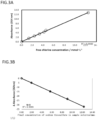
- Figure 3A shows the relationship between the free chlorine concentration and absorbance at 354 nm of an aqueous solution after mixing an aqueous sodium chlorite solution with HCl.
- the absorbance at 354 nm increased in a time dependent manner.
- the free chlorine (free, non-bound, total chlorine) concentration was measured by the DPD method at the same time as UV absorption spectra.
- the free chlorine concentration also increased in a time dependent manner and exhibited an excellent linear relationship with absorbance at 354 nm, which indicates that there is a strong correlation therebetween.
- Figure 3B shows a quenching experiment of free chlorine by adding thiosulfate.
- the absorbance at 354 nm linearly decreases with an increase in the concentration of thiosulfate in an aqueous solution obtained by adding an acid to sodium chlorite. This indicates that absorbance at 354 nm is closely associated with active chlorine species. These data indicate that absorbance at 354 nm originates from active chlorine which has reacted with thiosulfate. The active chlorine species was detected by DPD.
- a chlorine peroxide radical exhibited maximum absorbance at 354 nm, which is closely correlated with active chlorine species reacting with thiosulfate. This discovery shows the possibility that a chlorine peroxide radical is an active species of an aqueous solution obtained by adding an acid to sodium chlorite.
- Absorbance at 354 nm also had longevity. An absorption band at about 354 nm was measured three months after preparation of an aqueous solution obtained by adding an acid to sodium chlorite.
- Figure 3A shows the relationship between consumption of active chlorine and the active chlorine concentration in an aqueous solution obtained by adding an acid to sodium chlorite and absorbance at 354 nm.
- Figure 3A shows the relationship between absorbance at 354 nm and the free chlorine concentration obtained by the DPD method under the same reaction condition as Figure 2A .
- Figure 3B shows a phenomenon where absorbance at a wavelength of 354 nm exhibited by an aqueous solution obtained by adding an acid to sodium chlorite upon addition of thiosulfate gradually decreases.
- the total chlorine concentration includes both inactive species such as chlorite and active free radicals such as chlorine peroxide radicals.
- concentration of an aqueous ASC solution obtained by adding an acid to sodium chlorite and adjusting the pH to 2.3 to 2.9 is determined by standard iodometric titration, the concentration of active species in the aqueous ASC solution is overestimated, despite being insufficient to induce a sanitizing effect.
- absorbance at 354 nm and DPD method exhibits a linear relationship with a radical which is the primary active species of chlorous acid, i.e., the primary active ingredient of an aqueous ASC solution, through ESR analysis.
- a radical which is the primary active species of chlorous acid, i.e., the primary active ingredient of an aqueous ASC solution
- ESR analysis indicates that a chlorine peroxide in an aqueous ASC solution obtained by adding an acid to sodium chlorite and adjusting the pH to 2.3 to 2.9, as an active free radical, can be quantified by using measurement of absorbance at 354 nm or DPD.
- aqueous phase chlorine peroxide radical (Cl-O-O ⁇ ) molecule model is created by constructing a molecular structure with GaussView 6.0 and optimized by using DFT.
- the stability of a chlorine peroxide radical was quantified in an aqueous solution via a conductor-like polarizable continuum model (CPCM) using water as the solvent.
- CPCM conductor-like polarizable continuum model
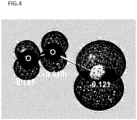
- Figure 4 shows an optimized structure and singly occupied molecular orbital (SOMO) for a chlorine peroxide radical. While the bond length of Cl-O was 0.245 nm, the bond length of O-O was 0.119 nm. An O-O bond is shorter than a bond of molecular oxygen (O 2 , 0.121 nm), and is longer or similar to a bond of a dioxygenyl salt (O 2 + ; 0.091 to 0.121 nm at room temperature) ( Mazej Z, Goreshnik E.
- SOMO singly occupied molecular orbital
- Figure 4 shows an optimized structure, charge distribution, and SOMO for a chlorine peroxide radical.
- Cl atoms and oxygen atoms are each represented as a sphere. Values indicate the Mulliken charge distribution of each atom, and the meshed surfaces indicate the spin density of SOMO.
- the NaClO 2 concentration was 50 mM.
- the final concentration of HCl is shown in the figure.
- Figure 5 shows ESR signals from spin trapping using DMPO of an aqueous solution obtained by adding an acid to sodium chlorite. The intensities of these signals were estimated by comparison of a manganese oxide marker signal and standard TEMPOL solution observed on both sides of a DMPO spin trapping signal.
- DMPO-X ESR signal intensities increased due to acidification of NaClO 2 by addition of an HCl solution
- a DMPO-OH signal originating from spin trapping of a hydroxyl radical using DMPO was not detected.
- Observed DMPO-X signals were within the range of 5 to 8 ⁇ M.
- Total energy calculation through DFT indicated that a chlorine peroxide radical is more stable than a chlorine dioxide radical.
- An active chlorine peroxide radical in an aqueous solution obtained by adding an acid to sodium chlorite can be quantified by using the DPD method or measurement of absorbance at 354 nm. Thus, oxidation power of chlorous acid obtained by adding an acid to sodium chlorite may be dependent on highly stable chlorine peroxide radicals.
- Active molecular species involved in sterilization of microorganisms were radical species, i.e., chlorine peroxide radical (Cl-O-O ⁇ ), rather than the primary active ingredient chlorous acid (HClO 2 ).
- the amount of chlorine peroxide radical (Cl-O-O ⁇ ) produced can be found by ESR measurement or spectroscopic measurement.
- the ability to control the amount of GRAS also enables controlling the sterilizing power.
- the amount of active molecular species chlorine peroxide radical (Cl-O-O ⁇ ) can be controlled and stabilized to commercialize a product as a new sterilizing agent.
- Campylobacter stains including 15 C. jejuri stains (6 clinical, 5 bovine, and 4 chicken) and 15 C. Coli strains (8 clinical and 7 swine) are used in this study. Each strain is isolated from different hosts and individuals, and the species are identified by cdt gene-based speciesspecific multiplex PCR ( Asaura et al., 2008, FEMS Immunology and Medical Microbiology, 52, 260-266 ). Campylobacters are grown in blood agar (blood agar base No. 2 (Oxoid Ltd., Basingstoke, United Kingdom)) supplemented with 5% (v/v) defibrinated horse blood (Nippon Bio Supp. Center, Tokyo, Japan) at 37°C for 48 hours or longer under anaerobic conditions (10% CO 2 , 10% H2, 80% N 2 ).
- C. jejuri strains 81-176, ATCC 33560, and Chi2, and C. Coli strains ATCC33559 and Cc4 are cultured in the blood agar described above.
- a bacteria colony is suspended in PBS(-) at pH 7.4, and the bacterial concentration is adjusted to about 10 4 CFU/mL. 100 ⁇ L of the bacterial suspension is then seeded in 5 mL of Bolton broth (Oxoid Ltd.) and cultured at 37°C for 48 hours under anaerobic conditions as described above.
- 200 50 ⁇ L bacteria cultures are transferred to a 1.5 mL tube and mixed with an equal volume of PBS(-) at a pH of 7.4, or with 400 ppm, 2,000 ppm, or 4,000 ppm of chlorine peroxide radical. The mixture is then maintained for 3 minutes at room temperature. 250 ⁇ L of 50 mM sodium thiosulfate (Nacalai Tesque, Inc. Kyoto, Japan) is then added to inactivate the compounds. The remaining viable bacteria are investigated by using a blood agar plate and counting colonies.
- Campylobacter strains are treated with PBS(-) at pH of 7.4 or 400 ppm of chlorine peroxide radical. 100 ⁇ L of each of the treated bacterial cultures is then seeded in 5 mL of Bolton broth and the cells are allowed to grow at 37°C for 48 hours under anaerobic conditions. A loopful of culture is then arranged in a stripe pattern on a blood agar plate, and the plate is incubated as previously described.
- sterilizer can be provided.
Landscapes
- Life Sciences & Earth Sciences (AREA)
- Chemical & Material Sciences (AREA)
- Engineering & Computer Science (AREA)
- Zoology (AREA)
- Pest Control & Pesticides (AREA)
- Plant Pathology (AREA)
- Environmental Sciences (AREA)
- Wood Science & Technology (AREA)
- Organic Chemistry (AREA)
- Inorganic Chemistry (AREA)
- General Chemical & Material Sciences (AREA)
- Chemical Kinetics & Catalysis (AREA)
- Dentistry (AREA)
- General Health & Medical Sciences (AREA)
- Agronomy & Crop Science (AREA)
- Health & Medical Sciences (AREA)
- Microbiology (AREA)
- Mycology (AREA)
- Hydrology & Water Resources (AREA)
- Environmental & Geological Engineering (AREA)
- Water Supply & Treatment (AREA)
- Agricultural Chemicals And Associated Chemicals (AREA)
- Pharmaceuticals Containing Other Organic And Inorganic Compounds (AREA)
- Organic Low-Molecular-Weight Compounds And Preparation Thereof (AREA)
Applications Claiming Priority (2)
| Application Number | Priority Date | Filing Date | Title |
|---|---|---|---|
| JP2021081185 | 2021-05-12 | ||
| PCT/JP2022/019945 WO2022239801A1 (fr) | 2021-05-12 | 2022-05-11 | Radical peroxyde de chlore et procédé de production, composition, procédé de quantification et utilisation de ce radical |
Publications (2)
| Publication Number | Publication Date |
|---|---|
| EP4339155A1 true EP4339155A1 (fr) | 2024-03-20 |
| EP4339155A4 EP4339155A4 (fr) | 2025-05-28 |
Family
ID=84029195
Family Applications (1)
| Application Number | Title | Priority Date | Filing Date |
|---|---|---|---|
| EP22807500.8A Pending EP4339155A4 (fr) | 2021-05-12 | 2022-05-11 | Radical peroxyde de chlore et procédé de production, composition, procédé de quantification et utilisation de ce radical |
Country Status (7)
| Country | Link |
|---|---|
| US (1) | US20240246815A1 (fr) |
| EP (1) | EP4339155A4 (fr) |
| JP (1) | JPWO2022239801A1 (fr) |
| KR (1) | KR20240005833A (fr) |
| CN (1) | CN117295682A (fr) |
| AU (1) | AU2022271648A1 (fr) |
| WO (1) | WO2022239801A1 (fr) |
Families Citing this family (1)
| Publication number | Priority date | Publication date | Assignee | Title |
|---|---|---|---|---|
| DE102022129226A1 (de) * | 2022-11-04 | 2024-05-08 | Endress+Hauser Conducta Gmbh+Co. Kg | Amperometrischer Sensor zur Bestimmung einer Messgröße, die den Gehalt von an Analyt-Verbindungen gebundenen Halogenen in einer Messflüssigkeit repräsentiert |
Family Cites Families (8)
| Publication number | Priority date | Publication date | Assignee | Title |
|---|---|---|---|---|
| US5185161A (en) * | 1984-03-21 | 1993-02-09 | Alcide Corporation | Disinfection method and composition therefor |
| US4986990A (en) * | 1984-03-21 | 1991-01-22 | Alcide Corporation | Disinfection method and composition therefor |
| US7976725B2 (en) * | 2005-06-22 | 2011-07-12 | Truox, Inc. | Cyclic process for the efficient generation of chlorine dioxide in dilute solutions |
| WO2012115314A1 (fr) * | 2011-02-25 | 2012-08-30 | (주)케모피아 | Composition pour désinfection et désodorisation et désinfectant pour produits alimentaires pour le bétail la comprenant |
| EP3164359A4 (fr) * | 2014-07-01 | 2018-01-03 | Adva Bar-On | Systèmes et procédés permettant la libération de dioxyde de chlore |
| US10947190B2 (en) * | 2015-12-18 | 2021-03-16 | Acenet Inc. | Method for producing oxidation reaction product of hydrocarbon or derivative thereof, and method for producing oxidation reaction product of olefin |
| WO2018230743A1 (fr) * | 2017-06-17 | 2018-12-20 | 株式会社エースネット | Catalyseur de génération de radicaux, procédé de production de radicaux, procédé de production de produit de réaction d'oxydation, médicament, et médecine de l'agriculture et du bétail |
| JP7376807B2 (ja) | 2019-03-19 | 2023-11-09 | ダイキン工業株式会社 | 装置評価システム及び装置評価方法 |
-
2022
- 2022-05-11 CN CN202280034625.2A patent/CN117295682A/zh active Pending
- 2022-05-11 AU AU2022271648A patent/AU2022271648A1/en active Pending
- 2022-05-11 KR KR1020237041441A patent/KR20240005833A/ko active Pending
- 2022-05-11 WO PCT/JP2022/019945 patent/WO2022239801A1/fr not_active Ceased
- 2022-05-11 EP EP22807500.8A patent/EP4339155A4/fr active Pending
- 2022-05-11 JP JP2023521223A patent/JPWO2022239801A1/ja active Pending
- 2022-05-11 US US18/560,094 patent/US20240246815A1/en active Pending
Also Published As
| Publication number | Publication date |
|---|---|
| JPWO2022239801A1 (fr) | 2022-11-17 |
| AU2022271648A1 (en) | 2023-12-21 |
| US20240246815A1 (en) | 2024-07-25 |
| CN117295682A (zh) | 2023-12-26 |
| KR20240005833A (ko) | 2024-01-12 |
| EP4339155A4 (fr) | 2025-05-28 |
| WO2022239801A1 (fr) | 2022-11-17 |
Similar Documents
| Publication | Publication Date | Title |
|---|---|---|
| JP7265871B2 (ja) | 殺菌剤として使用する亜塩素酸を含む水溶液の製造方法 | |
| US20190313672A1 (en) | Method for producing chlorous acid aqueous solution by adsorption of chlorine dioxide | |
| AU2017245046A1 (en) | Method for manufacturing chlorous acid water using raw material obtained by salt electrolysis | |
| CN110367275A (zh) | 一种消毒液及其制备方法 | |
| EP4339155A1 (fr) | Radical peroxyde de chlore et procédé de production, composition, procédé de quantification et utilisation de ce radical | |
| AU2015201401B2 (en) | Process for producing aqueous chlorous acid solution for use as disinfectant | |
| Rouf | The Effect of Sulfuric Acid, Persulfate and Acetic Anhydride on the Preparation of Chlorine Dioxide from Chlorite Solution | |
| HK1184638A (en) | Process for producing aqueous chlorous acid solution for use as bactericide | |
| AU2013205834A1 (en) | Process for producing aqueous chlorous acid solution for use as disinfectant | |
| HK1184638B (en) | Process for producing aqueous chlorous acid solution for use as bactericide | |
| HK1134220B (en) | Process for producing aqueous chlorous acid solution for use as bactericide |
Legal Events
| Date | Code | Title | Description |
|---|---|---|---|
| STAA | Information on the status of an ep patent application or granted ep patent |
Free format text: STATUS: THE INTERNATIONAL PUBLICATION HAS BEEN MADE |
|
| PUAI | Public reference made under article 153(3) epc to a published international application that has entered the european phase |
Free format text: ORIGINAL CODE: 0009012 |
|
| STAA | Information on the status of an ep patent application or granted ep patent |
Free format text: STATUS: REQUEST FOR EXAMINATION WAS MADE |
|
| 17P | Request for examination filed |
Effective date: 20231116 |
|
| AK | Designated contracting states |
Kind code of ref document: A1 Designated state(s): AL AT BE BG CH CY CZ DE DK EE ES FI FR GB GR HR HU IE IS IT LI LT LU LV MC MK MT NL NO PL PT RO RS SE SI SK SM TR |
|
| DAV | Request for validation of the european patent (deleted) | ||
| DAX | Request for extension of the european patent (deleted) | ||
| A4 | Supplementary search report drawn up and despatched |
Effective date: 20250429 |
|
| RIC1 | Information provided on ipc code assigned before grant |
Ipc: C01B 11/08 20060101ALI20250424BHEP Ipc: A01N 59/08 20060101ALI20250424BHEP Ipc: A01N 59/00 20060101ALI20250424BHEP Ipc: C02F 1/50 20230101ALI20250424BHEP Ipc: A01P 3/00 20060101ALI20250424BHEP Ipc: A01P 1/00 20060101ALI20250424BHEP Ipc: C01B 11/02 20060101AFI20250424BHEP |