EP4339316A1 - Alliage d'aluminium, son procédé de fabrication et pièces l'utilisant - Google Patents
Alliage d'aluminium, son procédé de fabrication et pièces l'utilisant Download PDFInfo
- Publication number
- EP4339316A1 EP4339316A1 EP22807671.7A EP22807671A EP4339316A1 EP 4339316 A1 EP4339316 A1 EP 4339316A1 EP 22807671 A EP22807671 A EP 22807671A EP 4339316 A1 EP4339316 A1 EP 4339316A1
- Authority
- EP
- European Patent Office
- Prior art keywords
- aluminum alloy
- weight
- present disclosure
- composition
- range
- Prior art date
- Legal status (The legal status is an assumption and is not a legal conclusion. Google has not performed a legal analysis and makes no representation as to the accuracy of the status listed.)
- Pending
Links
- 229910000838 Al alloy Inorganic materials 0.000 title claims abstract description 130
- 238000000034 method Methods 0.000 title claims abstract description 40
- 238000004519 manufacturing process Methods 0.000 title claims abstract description 27
- 239000011572 manganese Substances 0.000 claims abstract description 36
- XUIMIQQOPSSXEZ-UHFFFAOYSA-N Silicon Chemical compound [Si] XUIMIQQOPSSXEZ-UHFFFAOYSA-N 0.000 claims abstract description 34
- 229910052710 silicon Inorganic materials 0.000 claims abstract description 34
- 239000010703 silicon Substances 0.000 claims abstract description 34
- 238000004512 die casting Methods 0.000 claims abstract description 32
- 239000011575 calcium Substances 0.000 claims abstract description 28
- XEEYBQQBJWHFJM-UHFFFAOYSA-N Iron Chemical compound [Fe] XEEYBQQBJWHFJM-UHFFFAOYSA-N 0.000 claims abstract description 25
- PWHULOQIROXLJO-UHFFFAOYSA-N Manganese Chemical compound [Mn] PWHULOQIROXLJO-UHFFFAOYSA-N 0.000 claims abstract description 17
- 229910052748 manganese Inorganic materials 0.000 claims abstract description 17
- OYPRJOBELJOOCE-UHFFFAOYSA-N Calcium Chemical compound [Ca] OYPRJOBELJOOCE-UHFFFAOYSA-N 0.000 claims abstract description 12
- 229910052782 aluminium Inorganic materials 0.000 claims abstract description 12
- XAGFODPZIPBFFR-UHFFFAOYSA-N aluminium Chemical compound [Al] XAGFODPZIPBFFR-UHFFFAOYSA-N 0.000 claims abstract description 12
- 229910052791 calcium Inorganic materials 0.000 claims abstract description 12
- 239000012535 impurity Substances 0.000 claims abstract description 11
- 239000000203 mixture Substances 0.000 claims description 47
- 229910052804 chromium Inorganic materials 0.000 claims description 21
- 229910052719 titanium Inorganic materials 0.000 claims description 21
- 229910052726 zirconium Inorganic materials 0.000 claims description 18
- 230000008569 process Effects 0.000 claims description 17
- 239000000956 alloy Substances 0.000 claims description 12
- 229910045601 alloy Inorganic materials 0.000 claims description 11
- 239000011777 magnesium Substances 0.000 claims description 8
- 229910052751 metal Inorganic materials 0.000 claims description 8
- 239000002184 metal Substances 0.000 claims description 8
- FYYHWMGAXLPEAU-UHFFFAOYSA-N Magnesium Chemical compound [Mg] FYYHWMGAXLPEAU-UHFFFAOYSA-N 0.000 claims description 6
- 229910052749 magnesium Inorganic materials 0.000 claims description 6
- 239000000463 material Substances 0.000 claims description 6
- 238000002844 melting Methods 0.000 claims description 5
- 230000008018 melting Effects 0.000 claims description 5
- JBQYATWDVHIOAR-UHFFFAOYSA-N tellanylidenegermanium Chemical compound [Te]=[Ge] JBQYATWDVHIOAR-UHFFFAOYSA-N 0.000 claims description 5
- 238000004140 cleaning Methods 0.000 claims description 4
- 238000005260 corrosion Methods 0.000 description 25
- 230000007797 corrosion Effects 0.000 description 25
- 239000000047 product Substances 0.000 description 18
- 241000239290 Araneae Species 0.000 description 16
- 230000000052 comparative effect Effects 0.000 description 16
- 238000011156 evaluation Methods 0.000 description 10
- 238000005406 washing Methods 0.000 description 10
- 238000005266 casting Methods 0.000 description 9
- 229910000765 intermetallic Inorganic materials 0.000 description 9
- 238000001816 cooling Methods 0.000 description 8
- 239000000523 sample Substances 0.000 description 8
- 239000000654 additive Substances 0.000 description 6
- 238000007743 anodising Methods 0.000 description 6
- 239000010949 copper Substances 0.000 description 6
- 239000003599 detergent Substances 0.000 description 6
- 238000010586 diagram Methods 0.000 description 6
- 239000002244 precipitate Substances 0.000 description 6
- 230000000694 effects Effects 0.000 description 5
- 239000000843 powder Substances 0.000 description 5
- 239000002994 raw material Substances 0.000 description 5
- 150000003839 salts Chemical class 0.000 description 5
- 239000007921 spray Substances 0.000 description 5
- RYGMFSIKBFXOCR-UHFFFAOYSA-N Copper Chemical compound [Cu] RYGMFSIKBFXOCR-UHFFFAOYSA-N 0.000 description 4
- 230000000996 additive effect Effects 0.000 description 4
- 229910052802 copper Inorganic materials 0.000 description 4
- 230000005484 gravity Effects 0.000 description 4
- 230000004907 flux Effects 0.000 description 3
- 238000002347 injection Methods 0.000 description 3
- 239000007924 injection Substances 0.000 description 3
- 238000007591 painting process Methods 0.000 description 3
- 230000009467 reduction Effects 0.000 description 3
- 239000011701 zinc Substances 0.000 description 3
- 238000002474 experimental method Methods 0.000 description 2
- ZLMJMSJWJFRBEC-UHFFFAOYSA-N Potassium Chemical compound [K] ZLMJMSJWJFRBEC-UHFFFAOYSA-N 0.000 description 1
- 230000002730 additional effect Effects 0.000 description 1
- 230000008859 change Effects 0.000 description 1
- 239000003795 chemical substances by application Substances 0.000 description 1
- 238000007872 degassing Methods 0.000 description 1
- 238000005516 engineering process Methods 0.000 description 1
- 229910052742 iron Inorganic materials 0.000 description 1
- 238000010309 melting process Methods 0.000 description 1
- 150000002739 metals Chemical class 0.000 description 1
- 238000012986 modification Methods 0.000 description 1
- 230000004048 modification Effects 0.000 description 1
- 238000000465 moulding Methods 0.000 description 1
- 238000002161 passivation Methods 0.000 description 1
- 229920001296 polysiloxane Polymers 0.000 description 1
- 239000011148 porous material Substances 0.000 description 1
- 239000011591 potassium Substances 0.000 description 1
- 229910052700 potassium Inorganic materials 0.000 description 1
- 238000001556 precipitation Methods 0.000 description 1
- 238000002360 preparation method Methods 0.000 description 1
- 238000007711 solidification Methods 0.000 description 1
- 230000008023 solidification Effects 0.000 description 1
- 239000000243 solution Substances 0.000 description 1
- 238000004381 surface treatment Methods 0.000 description 1
- XLYOFNOQVPJJNP-UHFFFAOYSA-N water Substances O XLYOFNOQVPJJNP-UHFFFAOYSA-N 0.000 description 1
Images




Classifications
-
- C—CHEMISTRY; METALLURGY
- C22—METALLURGY; FERROUS OR NON-FERROUS ALLOYS; TREATMENT OF ALLOYS OR NON-FERROUS METALS
- C22C—ALLOYS
- C22C21/00—Alloys based on aluminium
-
- B—PERFORMING OPERATIONS; TRANSPORTING
- B22—CASTING; POWDER METALLURGY
- B22D—CASTING OF METALS; CASTING OF OTHER SUBSTANCES BY THE SAME PROCESSES OR DEVICES
- B22D17/00—Pressure die casting or injection die casting, i.e. casting in which the metal is forced into a mould under high pressure
-
- B—PERFORMING OPERATIONS; TRANSPORTING
- B22—CASTING; POWDER METALLURGY
- B22D—CASTING OF METALS; CASTING OF OTHER SUBSTANCES BY THE SAME PROCESSES OR DEVICES
- B22D17/00—Pressure die casting or injection die casting, i.e. casting in which the metal is forced into a mould under high pressure
- B22D17/08—Cold chamber machines, i.e. with unheated press chamber into which molten metal is ladled
-
- B—PERFORMING OPERATIONS; TRANSPORTING
- B22—CASTING; POWDER METALLURGY
- B22D—CASTING OF METALS; CASTING OF OTHER SUBSTANCES BY THE SAME PROCESSES OR DEVICES
- B22D21/00—Casting non-ferrous metals or metallic compounds so far as their metallurgical properties are of importance for the casting procedure; Selection of compositions therefor
- B22D21/002—Castings of light metals
- B22D21/007—Castings of light metals with low melting point, e.g. Al 659 degrees C, Mg 650 degrees C
-
- B—PERFORMING OPERATIONS; TRANSPORTING
- B22—CASTING; POWDER METALLURGY
- B22D—CASTING OF METALS; CASTING OF OTHER SUBSTANCES BY THE SAME PROCESSES OR DEVICES
- B22D21/00—Casting non-ferrous metals or metallic compounds so far as their metallurgical properties are of importance for the casting procedure; Selection of compositions therefor
- B22D21/02—Casting exceedingly oxidisable non-ferrous metals, e.g. in inert atmosphere
- B22D21/04—Casting aluminium or magnesium
-
- C—CHEMISTRY; METALLURGY
- C22—METALLURGY; FERROUS OR NON-FERROUS ALLOYS; TREATMENT OF ALLOYS OR NON-FERROUS METALS
- C22F—CHANGING THE PHYSICAL STRUCTURE OF NON-FERROUS METALS AND NON-FERROUS ALLOYS
- C22F1/00—Changing the physical structure of non-ferrous metals or alloys by heat treatment or by hot or cold working
- C22F1/04—Changing the physical structure of non-ferrous metals or alloys by heat treatment or by hot or cold working of aluminium or alloys based thereon
Definitions
- the present disclosure is applicable to various devices such as home appliances, and relates to an aluminum alloy, a method for producing the same, and a part using the same.
- Die casting is a precise casting method that manufactures a part or the like of the same shape as a mold by injecting molten metal into the mold that has been precisely processed to match a shape of a component of a device, such as the required part, that is, a casting shape.
- the parts or products manufactured by such die casting are also referred to as die castings.
- the die casting may be said to be a casting method suitable for mass-production.
- an aluminum alloy is widely used as a material for the die casting. Castings made of the aluminum alloy are used in a wide variety of fields, and various types of aluminum alloys are used depending on main purposes.
- Such aluminum alloy may be used in various parts.
- a sturdy external product such as a TV stand and various parts used inside home appliances such as a washing machine and a refrigerator may be made of the aluminum alloy.
- the aluminum alloy to be used in such external product or various parts various mechanical properties may be required. For example, corrosion resistance, castability, mechanical strength, and the like at a certain level or higher may be required for the aluminum alloy.
- mass-producibility may be required to manufacture the various parts with such aluminum alloy.
- a gravity die-casting (GDC) method is not capable of the mass-production.
- GDC gravity die-casting
- an element such as Ti, Cr, or Zr is used as an additive to achieve grain refinement to improve the corrosion resistance of the aluminum alloy.
- the present disclosure is to provide an aluminum alloy with improved corrosion resistance and castability, a method for producing the same, and a part using the same.
- the present disclosure is to provide an aluminum alloy that does not require an additional painting process to enhance corrosion resistance thereof, a method for producing the same, and a part using the same.
- the present disclosure is to provide an aluminum alloy with intermetallic compounds evenly distributed and dispersed, a method for producing the same, and a part using the same.
- a fist aspect for achieving the above purpose provides an aluminum alloy for die casting including a composition of 2.0 to 6.0 % by weight of calcium (Ca), 1.0 to 3.0 % by weight of manganese (Mn), 0.1 to 1.0 % by weight of silicon (Si), 0.1 to 0.5 % by weight of iron (Fe), balance aluminum (Al), and inevitable impurities, wherein a size of grains of the aluminum alloy is in a range of 10 to 50 ⁇ m.
- the composition may further contain 1.0 to 1.5 % by weight of zinc (Zn).
- the composition may further contain 0.01 to 0.1 % by weight of magnesium.
- the content of manganese may be in a range of 0.8 to 1.5 % by weight.
- the content of iron (Fe) may be in a range of 0.1 to 0.3 % by weight.
- the composition may not contain at least one of Ti, Zr, and Cr.
- Ti, Zr, and Cr may be materials used for grain refinement during the die casting process.
- the content of silicon may be in a range of 0.1 to 0.2 % by weight.
- a second aspect for achieving the above purpose provides a part manufactured via die casting with an aluminum alloy includes the aluminum alloy with a composition of 2.0 to 6.0 % by weight of calcium (Ca), 1.0 to 3.0 % by weight of manganese (Mn), 0.1 to 1.0 % by weight of silicon (Si), 0.1 to 0.5 % by weight of iron (Fe), balance aluminum (Al), and inevitable impurities, wherein a size of grains of the aluminum alloy is in a range of 10 to 50 ⁇ m.
- a third aspect for achieving the above purpose provides a method for producing an aluminum alloy using die casting including melting an ingot, cleaning molten metal, injecting the molten alloy into a mold, performing injecting by applying a pressure, and opening the mold and extruding a product, wherein the aluminum alloy has a composition of 2.0 to 6.0 % by weight of calcium (Ca), 1.0 to 3.0 % by weight of manganese (Mn), 0.1 to 1.0 % by weight of silicon (Si), 0.1 to 0.5 % by weight of iron (Fe), balance aluminum (Al), and inevitable impurities.
- Ca calcium
- Mn manganese
- Si silicon
- Fe iron
- Al balance aluminum
- the pressure may be in a range of 125 to 130 kgf/cm 2 .
- the mechanical properties including the corrosion resistance and the castability of the aluminum alloy may be improved.
- the aluminum alloy with the intermetallic compounds evenly distributed and dispersed.
- an aluminum alloy for die casting may be produced with a composition of 2.0 to 6.0 % by weight of calcium (Ca), 1.0 to 3.0 % by weight of manganese (Mn), 0.1 to 1.0 % by weight of silicon (Si), 0.1 to 0.5 % by weight of iron (Fe), balance aluminum (Al), and inevitable impurities.
- the content of manganese in the above composition may be in a range of 0.8 to 1.5 % by weight. Additionally, more specifically, the content of iron (Fe) in the above composition may be in a range of 0.1 to 0.3 % by weight.
- the aluminum alloy with improved corrosion resistance and castability may be obtained using the composition presented above, but the corrosion resistance and the castability of the aluminum alloy may be further improved via the more specifically limited contents of manganese and/or iron as described above.
- such composition of the aluminum alloy for the die casting may further contain 1.0 to 1.5 % by weight of zinc (Zn).
- magnesium may be further contained.
- the aluminum alloy for the die casting may be produced with the composition of 2.0 to 6.0 % by weight of calcium (Ca), 0.8 to 1.5 % by weight of manganese (Mn), 1.0 to 1.5 % by weight of zinc (Zn), 0.1 to 1.0 % by weight of silicon (Si), 0.1 to 0.3 % by weight of iron (Fe), balance aluminum (Al), and inevitable impurities.
- Such composition of the aluminum alloy for the die casting may not contain at least one of Ti, Zr, and Cr.
- composition of the aluminum alloy for the die casting may not contain Ti, Zr, and Cr.
- Such Ti, Zr, and Cr may be materials used for grain refinement during an aluminum die casting process.
- an element such as Ti, Cr, or Zr, which is an additive, may be added to achieve the grain refinement to improve the corrosion resistance.
- the aluminum alloy may be produced using a high pressure die-casting (HPDC) method.
- HPDC high pressure die-casting
- the HPDC method used in the present disclosure has a fast cooling speed, so that the grain refinement is achieved without adding the specific element (Ti, Cr, Zr, or the like).
- Such aluminum alloy according to the present disclosure may exhibit equivalent corrosion resistance when compared to the aluminum alloy produced by the GDC method with the specific element added as the additive.
- the aluminum alloy with the excellent corrosion resistance may be realized without adding the specific element (Ti, Cr, Zr, or the like) for the grain refinement. This has a cost reduction effect of an expensive raw material and shortens a production time as an additional flux treatment process is omitted.
- FIG. 1 is a diagram showing examples of a product and a part that may be manufactured using an aluminum alloy according to an embodiment of the present disclosure.
- the aluminum alloy according to one embodiment of the present disclosure may be used in a part of a washing machine 10.
- the aluminum alloy may be used in various cast products or parts that may be manufactured via a die casting process.
- a spider 11 which is a part that may be used in the washing machine as in (A) in FIG. 1 .
- a hub 12 which is a part that may be used in the washing machine as in (A) in FIG. 1 , is shown.
- the spider 11 may be mounted on a driver of the washing machine 10 in a type including a drum type and a top loading type, and the hub 12 may be mounted on a portion of connection with a motor of the washing machine 10.
- the spider 11 and the hub 12 are parts that are continuously driven when the washing machine 10 is in operation and require durability and also corrosion resistance because they may always be in contact with water, a detergent, and the like. Furthermore, glossiness may be important because the spider 11 and the hub 12 are able to be visible from the outside when the washing machine 10 is in operation and are likely to come into contact with laundry.
- the durability, the corrosion resistance, the glossiness, as well as castability are very important properties for the part made of such aluminum alloy. Therefore, the composition of the aluminum alloy is required to satisfy a certain level of durability, corrosion resistance, glossiness, and castability.
- the aluminum alloy according to one embodiment of the present disclosure may be used in an external product for an electronic product such as a TV stand, in addition to the washing machine described above.
- the aluminum alloy may be applied to various parts, such as a base, a bracket, and a cover, constituting the TV stand.
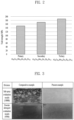
- FIG. 2 is a graph showing a yield strength of a sample produced using an aluminum alloy according to Present Example of the present disclosure.
- the yield strength was approximately 150 MPa.
- the yield strength was approximately 170 MPa, which is higher than that of the primarily manufactured sample.
- the secondary sample may be produced based on Present Example 1 of the present disclosure.
- the spider when the spider was manufactured with a tertiary sample with a composition of Al 91 Ca 4.8 Mn 1.0 Zn 1.5 Si 0.75 Fe 0.2 by adjusting the content of silicon (Si), it may be seen that the yield strength was increased to 190 MPa.
- the tertiary sample may be produced based on Present Example 2 of the present disclosure.
- Present Example of the present disclosure may correspond to one or more of Present Example 1 and Present Example 2.
- the contents of potassium (Ca) and silicon (Si), which are some of main components, may be changed in the composition, and the changed composition may be applied to the product such as the spider, depending on a required performance.
- the content of silicon (Si) is related to the glossiness of the aluminum alloy product, the content of silicon may be reduced even when the yield strength is reduced to a certain extent within an allowable limit range of the product.
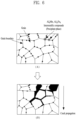
- FIG. 3 is a photograph of salt spray evaluation and powder detergent evaluation results of spiders manufactured via aluminum alloys according to Present Example and Comparative Example.
- compositions of the aluminum alloys according to Comparative Example and Present Example of the present disclosure are as shown in Table 1 below.
- Table 1 Al Si Mg Ca Mn Fe Comparative Example Equal to or lower than 90.0 9.6 ⁇ 10.6 2.5 ⁇ 3.0 - 0.5 ⁇ 0.6 0.6 ⁇ 0.7 Present disclosure Equal to or higher than 90.0 Equal to or lower than 1.0 Equal to or lower than 0.1 2.0 ⁇ 6.0 1.0 ⁇ 3.0 Equal to or lower than 0.5
- composition of the aluminum alloy according to Present Example of the present disclosure summarized in Table 1 is roughly including the composition of the aluminum alloy for the die casting described above.
- composition of Present Example of the present disclosure summarized in Table 1 may fall within the range of the composition with 2.0 to 6.0 % by weight of calcium (Ca), 1.0 to 3.0 % by weight of manganese (Mn), 0.1 to 1.0 % by weight of silicon (Si), 0.1 to 0.5 % by weight of iron (Fe), balance aluminum (Al), and inevitable impurities.
- the composition of Comparative Example contains 2.5 to 3.0 % by weight of magnesium (Mg) and 9.6 to 10.5 % by weight of silicon (Si) as main components, and trace amounts of manganese (Mn) and iron (Fe) are added to the composition.
- the salt spray evaluation in FIG. 3 was conducted over 1000 hours. Additionally, the powder detergent evaluation was conducted over 456 hours.
- the salt spray evaluation and powder detergent evaluation results show that little change in a surface occurred in Present Example of the present disclosure, compared to Comparative Example. In other words, it may be seen that the salt spray evaluation and powder detergent evaluation results were greatly improved compared to the results in the comparative example.
- FIG. 4 shows photographs of a surface of a spider manufactured via an aluminum alloy according to Comparative Example. Additionally, FIG. 5 shows photographs of a surface of a spider manufactured via an aluminum alloy according to Present Example of the present disclosure.
- FIG. 4 shows results of an anodizing experiment of the spider manufactured via the aluminum alloy according to Comparative Example.
- FIG. 5 shows results of an anodizing experiment of the spider manufactured via the aluminum alloy according to Present Example of the present disclosure.
- FIGS. 4 and 5 show a scanning electron microscope (SEM) photograph and an electron probe X-ray microanalyzer (EPMA) photograph, respectively.
- a deep color may be rendered and a clear color expression may be achieved by adjusting a component ratio of silicon (Si), excluding copper (Cu), and minimizing magnesium (Mg).
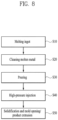
- FIG. 6 is a conceptual diagram showing propagation of grains and cracks in an aluminum alloy according to Comparative Example
- FIG. 7 is a conceptual diagram showing propagation of grains and cracks in an aluminum alloy according to Present Example of the present disclosure.
- FIG. 6 schematically shows a surface shape of the aluminum alloy according to Comparative Example. Grains and grain boundaries exist on the surface of such aluminum alloy.
- intermetallic compounds such as Al 6 Mn and Al 13 Fe 4 are mainly distributed on the grain boundaries, which have an unstable structure.
- FIG. 7 schematically shows a surface shape of the aluminum alloy according to Present Example of the present disclosure. It may be seen that the intermetallic compounds are evenly distributed or dispersed across the entire surface in the aluminum alloy according to Present Example of the present disclosure.
- Such aluminum alloy with the intermetallic compounds evenly distributed or dispersed across the entire surface may be achieved by the grain refinement.
- a grain size may be approximately 100 ⁇ m.
- a grain size may be smaller than the grain size described above. Referring to (A) in FIG. 7 , it may be seen that the grain size has been greatly reduced compared to that in FIG. 6 .
- the crack when the cracks occur along the grain boundaries, as shown in (B) in FIG. 7 , the crack may not continue to propagate along the grain boundaries and may stop at a certain level. As a result, the fracture strength of the aluminum alloy may be improved.
- the grain size of such aluminum alloy according to Present Example of the present disclosure may be in a range of 10 to 50 ⁇ m. Additionally, because the intermetallic compounds are evenly distributed or dispersed across the entire surface of the aluminum alloy, the intermetallic compounds may be located inside such grains. That is, according to Present Example of the present disclosure, mechanical properties of the aluminum alloy may be improved based on the size of the refined grain.
- corrosion of metals may occur via a process of pitting ⁇ propagation ⁇ re-passivation. Additionally, the pitting may mainly occur at the grain boundaries.
- the grain boundaries may become unclear (the boundaries may be broken intermittently) and the propagation may stop after the pitting occurs.
- Such aluminum alloy according to Present Example of the present disclosure may not contain at least one of Ti, Zr, and Cr. Characteristically, the aluminum alloy according to Present Example of the present disclosure may not contain all of Ti, Zr, and Cr.
- Ti, Zr, and Cr may be materials related to the grain refinement, but according to Present Example of the present disclosure, a desired level of the grain refinement may be achieved without containing Ti, Zr, and Cr.
- the grain size of the aluminum alloy according to Present Example of the present disclosure may be in the range of 10 to 50 ⁇ m.
- the content of silicon (Si) in the aluminum alloy may be 0.2 % by weight or smaller.
- the content of silicone may be in a range of 0.1 to 0.2 % by weight.
- Silicon (Si) is a unique raw material and has a color (dark gray). Therefore, as the content of silicon increases, the unique color of the silicon element may appear on the alloy surface. For example, as the content of silicon increases, stains resulted from silicon or the precipitates thereof may occur on the alloy surface.
- the aluminum alloy when the aluminum alloy has the composition described above and the content of silicon is in the range of 0.1 to 0.2 % by weight, such aluminum alloy may be used in a product or a part that has sufficient mechanical properties and high gloss.
- the aluminum alloy according to Present Example of the present disclosure as described above may be produced to have the composition described above.
- the aluminum alloy according to Present Example of the present disclosure having the above characteristics may be produced with the composition described above and a production method to be described below. Characteristics of such production method will be described in detail below.
- FIG. 8 is a flowchart showing a method for producing an aluminum alloy according to Present Example of the present disclosure.
- the method for producing the aluminum alloy using the die casting according to Present Example of the present disclosure may include melting an ingot (S10), cleaning the molten metal (S20), injecting (pouring) the molten alloy into a mold (S30), performing injection by applying a pressure (a high-pressure injection) (S40), and opening the mold and extruding the product after solidification (S50).
- the aluminum alloy with the composition of 2.0 to 6.0 % by weight of calcium (Ca), 1.0 to 3.0 % by weight of manganese (Mn), 0.1 to 1.0 % by weight of silicon (Si), 0.1 to 0.5 % by weight of iron (Fe), the remaining aluminum (Al), and inevitable impurities as described above may be produced.
- Such aluminum alloy production method may use the high pressure die-casting (HPDC) method. As a result, the aluminum alloy with the particularly excellent corrosion resistance may be produced.
- HPDC high pressure die-casting
- the HPDC method used in the present disclosure has the fast cooling speed, so that the grain refinement is achieved without adding the specific element (Ti, Cr, Zr, or the like).
- the aluminum alloy according to Present Example of the present disclosure may exhibit the equivalent corrosion resistance when compared to the aluminum alloy produced by the GDC method with the specific element added as the additive.
- the aluminum alloy with the excellent corrosion resistance may be realized without adding the specific element (Ti, Cr, Zr, or the like) for the grain refinement. This has the cost reduction effect of the expensive raw material and shortens the production time as the additional flux treatment process is omitted.
- the melting of the ingot (S10) may correspond to a process of melting the raw materials to achieve the composition described above. Such melting process may occur at approximately 700 °C.
- the cleaning of the molten metal (S20) may include a process of removing dross after adding a degassing agent to the ingot.
- the molten alloy is injected into the mold.
- the performing of the injection (S40) may be performed by applying the pressure to push the molten alloy into the mold at the high-pressure.
- Present Example of the present disclosure is characterized in that a pressure in a range of 125 to 130 kgf/cm 2 is used for the grain refinement.
- the pressure in the range of 125 to 130 kgf/cm 2 may be used during the molding process to achieve the desired level of grain refinement without adding the specific element (Ti, Cr, Zr, or the like). Additionally, such pressure condition may be related to the alloy composition described above.
- a target fracture strength may be achieved using such alloy composition and/or pressure condition.
- the grain refinement may be achieved using such alloy composition and/or pressure condition, so that the intermetallic compounds (Al 3 Fe/Al 4 Mn or Al 6 Mn and Al 13 Fe 4 ) are evenly dispersed, thereby improving the strength of the aluminum alloy.
- a cooling time of the aluminum alloy may be shorter than that (usually about 10 seconds) of an existing production method. Because of such fast cooling speed, a grain growth may be completed in a short time. Therefore, the grain size may be reduced to the desired level.
- the cooling time of such aluminum alloy may be 3 to 5 seconds.
- a metal nucleus For the grain to be created during the production process of the aluminum alloy, a metal nucleus must be created and grow and the grain boundary must be formed at a boundary of the growth where the growth meets a growth of another nucleus.
- a total amount of specific material that may become grains is 100, for example, even with 5 nuclei, the total amount may be reached via the grain growth when the cooling speed is slow. However, when the cooling speed is fast, the grain growth is suppressed and the total amount is not able to be reached. In this case, more than 5 nuclei are needed to achieve thermodynamic equilibrium, and the total amount may be reached with more than 5 nuclei. In other words, the grains may be refined.
- the grain may be refined because the grain growth is completed in a short time. Additionally, the mechanical properties of the aluminum alloy may be improved with such grain refinement.
- the aluminum alloy with the excellent corrosion resistance may be realized without adding the specific element (Ti, Cr, or Zr) for the grain refinement.
- the process such as the additional flux treatment may be omitted, so that the production time is shortened.
- the aluminum alloy with the improved corrosion resistance and castability may be provided.
- the aluminum alloy with the improved corrosion resistance while maintaining the strength and the castability of the existing aluminum alloy may be provided.
- the additional painting process may not be required to enhance the corrosion resistance.
- the aluminum alloy casting with high corrosion resistance, castability, and strength may be provided.
- the spider, a door hinge, or the like of the washing machine may be manufactured.
- the high-gloss anodizing casting that may be manufactured via the die casting may be provided.
- Such casting may be used to manufacture various appliances (the TV stand or the like) and the external product for the home appliances.
- the present disclosure may be applied to various devices such as the home appliances, and may provide the aluminum alloy, the method for producing the same, and the part using the same.
Landscapes
- Chemical & Material Sciences (AREA)
- Engineering & Computer Science (AREA)
- Mechanical Engineering (AREA)
- Materials Engineering (AREA)
- Metallurgy (AREA)
- Organic Chemistry (AREA)
- Physics & Mathematics (AREA)
- Thermal Sciences (AREA)
- Crystallography & Structural Chemistry (AREA)
- Molds, Cores, And Manufacturing Methods Thereof (AREA)
- Forging (AREA)
- Cleaning And De-Greasing Of Metallic Materials By Chemical Methods (AREA)
Applications Claiming Priority (2)
| Application Number | Priority Date | Filing Date | Title |
|---|---|---|---|
| KR20210062469 | 2021-05-14 | ||
| PCT/KR2022/006090 WO2022240023A1 (fr) | 2021-05-14 | 2022-04-28 | Alliage d'aluminium, son procédé de fabrication et pièces l'utilisant |
Publications (2)
| Publication Number | Publication Date |
|---|---|
| EP4339316A1 true EP4339316A1 (fr) | 2024-03-20 |
| EP4339316A4 EP4339316A4 (fr) | 2025-04-23 |
Family
ID=84029248
Family Applications (1)
| Application Number | Title | Priority Date | Filing Date |
|---|---|---|---|
| EP22807671.7A Pending EP4339316A4 (fr) | 2021-05-14 | 2022-04-28 | Alliage d'aluminium, son procédé de fabrication et pièces l'utilisant |
Country Status (4)
| Country | Link |
|---|---|
| US (1) | US20240254594A1 (fr) |
| EP (1) | EP4339316A4 (fr) |
| KR (1) | KR102565559B1 (fr) |
| WO (1) | WO2022240023A1 (fr) |
Family Cites Families (12)
| Publication number | Priority date | Publication date | Assignee | Title |
|---|---|---|---|---|
| US4126448A (en) * | 1977-03-31 | 1978-11-21 | Alcan Research And Development Limited | Superplastic aluminum alloy products and method of preparation |
| JP2000355722A (ja) * | 1999-06-17 | 2000-12-26 | Nippon Light Metal Co Ltd | 気密性及び耐摩耗性に優れたAl−Si系ダイカスト製品及びその製造方法 |
| JP2004162140A (ja) * | 2002-11-14 | 2004-06-10 | Toyota Motor Corp | ダイカスト用Al−Mg系合金及びAl−Mg系合金製ダイカスト製品の製造方法 |
| ATE437972T1 (de) * | 2003-01-23 | 2009-08-15 | Rheinfelden Aluminium Gmbh | Druckgusslegierung aus aluminiumlegierung |
| KR101273579B1 (ko) * | 2010-10-19 | 2013-06-11 | 한국생산기술연구원 | 알루미늄 합금 압출재 및 그 제조 방법 |
| CN102796925B (zh) * | 2011-05-27 | 2015-04-15 | 广东鸿泰科技股份有限公司 | 一种压力铸造用的高强韧压铸铝合金 |
| US20190316241A1 (en) * | 2016-07-12 | 2019-10-17 | Nippon Light Metal Company, Ltd. | Aluminum alloy plastic working material and production method therefor |
| KR101992201B1 (ko) * | 2019-02-21 | 2019-06-24 | 엘지전자 주식회사 | 다이캐스팅용 알루미늄 합금 및 다이캐스팅 주물 |
| RU2714564C1 (ru) * | 2019-08-15 | 2020-02-18 | Общество с ограниченной ответственностью "Объединенная Компания РУСАЛ Инженерно-технологический центр" | Литейный алюминиевый сплав |
| RU2741874C1 (ru) * | 2020-07-24 | 2021-01-29 | Федеральное государственное автономное образовательное учреждение высшего образования "Национальный исследовательский технологический университет "МИСиС" | Литейный алюминиево-кальциевый сплав на основе вторичного сырья |
| RU2745595C1 (ru) * | 2020-09-16 | 2021-03-29 | Общество с ограниченной ответственностью "Институт легких материалов и технологий" | Литейный алюминиевый сплав |
| CN120940617B (zh) * | 2025-10-15 | 2025-12-30 | 湖南大学苏州研究院 | 可焊可回收Al-Cu系高强韧压铸铝合金一体化压铸方法及系统 |
-
2022
- 2022-04-28 EP EP22807671.7A patent/EP4339316A4/fr active Pending
- 2022-04-28 KR KR1020227038990A patent/KR102565559B1/ko active Active
- 2022-04-28 US US18/290,418 patent/US20240254594A1/en active Pending
- 2022-04-28 WO PCT/KR2022/006090 patent/WO2022240023A1/fr not_active Ceased
Also Published As
| Publication number | Publication date |
|---|---|
| WO2022240023A1 (fr) | 2022-11-17 |
| EP4339316A4 (fr) | 2025-04-23 |
| US20240254594A1 (en) | 2024-08-01 |
| KR102565559B1 (ko) | 2023-08-11 |
| KR20220155441A (ko) | 2022-11-22 |
Similar Documents
| Publication | Publication Date | Title |
|---|---|---|
| KR102597784B1 (ko) | 다이캐스팅용 알루미늄 합금 및 그 제조방법, 다이캐스팅 방법 | |
| EP3954798B1 (fr) | Alliage d'aluminium coulé sous pression, son procédé de préparation et élément structural pour produit de communication | |
| EP2669395B1 (fr) | Alliage d'aluminium pour coulée sous pression | |
| CN115261684A (zh) | 一种铸造Al-Si合金及其制备方法 | |
| US10525528B2 (en) | Aluminum alloy for die-casting, having improved corrosion resistance | |
| KR20060110292A (ko) | 주조용 마그네슘 합금 | |
| KR101743234B1 (ko) | 다이캐스팅용 알루미늄 합금 | |
| US20210180159A1 (en) | Aluminum alloy for die casting and method of manufacturing cast aluminum alloy using the same | |
| EP3342890B1 (fr) | Alliage de fonderie d'aluminium | |
| EP2865774B1 (fr) | Alliage de fonderie d'aluminium | |
| EP3342889B1 (fr) | Alliage de fonderie d'aluminium | |
| EP4339316A1 (fr) | Alliage d'aluminium, son procédé de fabrication et pièces l'utilisant | |
| EP2865772B1 (fr) | Alliage de fonderie d'aluminium | |
| KR20120129458A (ko) | 박육 제품용 고강도 다이캐스팅 알루미늄 합금 | |
| KR101274089B1 (ko) | 주조성이 우수한 다이캐스팅용 고강도 알루미늄 합금 | |
| KR20150089187A (ko) | 다이캐스팅용 고강도 알루미늄합금 및 이의 제조방법 | |
| EP2865773B1 (fr) | Alliage de fonderie d'aluminium | |
| RU2833040C2 (ru) | Алюминиевый сплав, способ его получения и детали с его применением | |
| JP4208649B2 (ja) | 成形仕上り性に優れたマグネシウム合金およびその成形品 | |
| KR20200084684A (ko) | 도어록 다이캐스팅용 알루미늄 합금 및 그 제조방법 | |
| KR20140050172A (ko) | 불연속 석출이 억제된 고강도 및 고인성의 주조용 마그네슘 합금 | |
| KR102016144B1 (ko) | 고방열 마그네슘 합금 제조방법 | |
| KR20160147922A (ko) | 알루미늄 합금으로 형성된 방열핀 및 그 제조방법 | |
| KR102902931B1 (ko) | 다이캐스팅 알루미늄 합금의 제조방법 | |
| KR101269516B1 (ko) | 스칸듐이 없는 다이캐스팅용 고강도 알루미늄 합금 |
Legal Events
| Date | Code | Title | Description |
|---|---|---|---|
| STAA | Information on the status of an ep patent application or granted ep patent |
Free format text: STATUS: THE INTERNATIONAL PUBLICATION HAS BEEN MADE |
|
| PUAI | Public reference made under article 153(3) epc to a published international application that has entered the european phase |
Free format text: ORIGINAL CODE: 0009012 |
|
| STAA | Information on the status of an ep patent application or granted ep patent |
Free format text: STATUS: REQUEST FOR EXAMINATION WAS MADE |
|
| 17P | Request for examination filed |
Effective date: 20231116 |
|
| AK | Designated contracting states |
Kind code of ref document: A1 Designated state(s): AL AT BE BG CH CY CZ DE DK EE ES FI FR GB GR HR HU IE IS IT LI LT LU LV MC MK MT NL NO PL PT RO RS SE SI SK SM TR |
|
| DAV | Request for validation of the european patent (deleted) | ||
| DAX | Request for extension of the european patent (deleted) | ||
| A4 | Supplementary search report drawn up and despatched |
Effective date: 20250321 |
|
| RIC1 | Information provided on ipc code assigned before grant |
Ipc: B22D 21/04 20060101ALI20250317BHEP Ipc: C22F 1/04 20060101ALI20250317BHEP Ipc: C22C 21/00 20060101AFI20250317BHEP |