EP4339620A1 - Sensor und elektronische vorrichtung - Google Patents
Sensor und elektronische vorrichtung Download PDFInfo
- Publication number
- EP4339620A1 EP4339620A1 EP23157015.1A EP23157015A EP4339620A1 EP 4339620 A1 EP4339620 A1 EP 4339620A1 EP 23157015 A EP23157015 A EP 23157015A EP 4339620 A1 EP4339620 A1 EP 4339620A1
- Authority
- EP
- European Patent Office
- Prior art keywords
- support structure
- support
- electrode
- counter
- movable region
- Prior art date
- Legal status (The legal status is an assumption and is not a legal conclusion. Google has not performed a legal analysis and makes no representation as to the accuracy of the status listed.)
- Granted
Links
Images



Classifications
-
- G—PHYSICS
- G01—MEASURING; TESTING
- G01P—MEASURING LINEAR OR ANGULAR SPEED, ACCELERATION, DECELERATION, OR SHOCK; INDICATING PRESENCE, ABSENCE, OR DIRECTION, OF MOVEMENT
- G01P15/00—Measuring acceleration; Measuring deceleration; Measuring shock, i.e. sudden change of acceleration
- G01P15/02—Measuring acceleration; Measuring deceleration; Measuring shock, i.e. sudden change of acceleration by making use of inertia forces using solid seismic masses
- G01P15/08—Measuring acceleration; Measuring deceleration; Measuring shock, i.e. sudden change of acceleration by making use of inertia forces using solid seismic masses with conversion into electric or magnetic values
- G01P15/097—Measuring acceleration; Measuring deceleration; Measuring shock, i.e. sudden change of acceleration by making use of inertia forces using solid seismic masses with conversion into electric or magnetic values by vibratory elements
-
- G—PHYSICS
- G01—MEASURING; TESTING
- G01P—MEASURING LINEAR OR ANGULAR SPEED, ACCELERATION, DECELERATION, OR SHOCK; INDICATING PRESENCE, ABSENCE, OR DIRECTION, OF MOVEMENT
- G01P15/00—Measuring acceleration; Measuring deceleration; Measuring shock, i.e. sudden change of acceleration
- G01P15/02—Measuring acceleration; Measuring deceleration; Measuring shock, i.e. sudden change of acceleration by making use of inertia forces using solid seismic masses
- G01P15/08—Measuring acceleration; Measuring deceleration; Measuring shock, i.e. sudden change of acceleration by making use of inertia forces using solid seismic masses with conversion into electric or magnetic values
-
- G—PHYSICS
- G01—MEASURING; TESTING
- G01P—MEASURING LINEAR OR ANGULAR SPEED, ACCELERATION, DECELERATION, OR SHOCK; INDICATING PRESENCE, ABSENCE, OR DIRECTION, OF MOVEMENT
- G01P15/00—Measuring acceleration; Measuring deceleration; Measuring shock, i.e. sudden change of acceleration
- G01P15/02—Measuring acceleration; Measuring deceleration; Measuring shock, i.e. sudden change of acceleration by making use of inertia forces using solid seismic masses
- G01P15/08—Measuring acceleration; Measuring deceleration; Measuring shock, i.e. sudden change of acceleration by making use of inertia forces using solid seismic masses with conversion into electric or magnetic values
- G01P15/0802—Details
-
- G—PHYSICS
- G01—MEASURING; TESTING
- G01P—MEASURING LINEAR OR ANGULAR SPEED, ACCELERATION, DECELERATION, OR SHOCK; INDICATING PRESENCE, ABSENCE, OR DIRECTION, OF MOVEMENT
- G01P15/00—Measuring acceleration; Measuring deceleration; Measuring shock, i.e. sudden change of acceleration
- G01P15/18—Measuring acceleration; Measuring deceleration; Measuring shock, i.e. sudden change of acceleration in two or more dimensions
-
- G—PHYSICS
- G01—MEASURING; TESTING
- G01P—MEASURING LINEAR OR ANGULAR SPEED, ACCELERATION, DECELERATION, OR SHOCK; INDICATING PRESENCE, ABSENCE, OR DIRECTION, OF MOVEMENT
- G01P15/00—Measuring acceleration; Measuring deceleration; Measuring shock, i.e. sudden change of acceleration
- G01P15/02—Measuring acceleration; Measuring deceleration; Measuring shock, i.e. sudden change of acceleration by making use of inertia forces using solid seismic masses
- G01P15/08—Measuring acceleration; Measuring deceleration; Measuring shock, i.e. sudden change of acceleration by making use of inertia forces using solid seismic masses with conversion into electric or magnetic values
- G01P2015/0805—Measuring acceleration; Measuring deceleration; Measuring shock, i.e. sudden change of acceleration by making use of inertia forces using solid seismic masses with conversion into electric or magnetic values being provided with a particular type of spring-mass-system for defining the displacement of a seismic mass due to an external acceleration
- G01P2015/0808—Measuring acceleration; Measuring deceleration; Measuring shock, i.e. sudden change of acceleration by making use of inertia forces using solid seismic masses with conversion into electric or magnetic values being provided with a particular type of spring-mass-system for defining the displacement of a seismic mass due to an external acceleration for defining in-plane movement of the mass, i.e. movement of the mass in the plane of the substrate
- G01P2015/0811—Measuring acceleration; Measuring deceleration; Measuring shock, i.e. sudden change of acceleration by making use of inertia forces using solid seismic masses with conversion into electric or magnetic values being provided with a particular type of spring-mass-system for defining the displacement of a seismic mass due to an external acceleration for defining in-plane movement of the mass, i.e. movement of the mass in the plane of the substrate for one single degree of freedom of movement of the mass
- G01P2015/0814—Measuring acceleration; Measuring deceleration; Measuring shock, i.e. sudden change of acceleration by making use of inertia forces using solid seismic masses with conversion into electric or magnetic values being provided with a particular type of spring-mass-system for defining the displacement of a seismic mass due to an external acceleration for defining in-plane movement of the mass, i.e. movement of the mass in the plane of the substrate for one single degree of freedom of movement of the mass for translational movement of the mass, e.g. shuttle type
Definitions
- Embodiments described herein relate generally to a sensor and an electronic device.
- a sensor includes a base body, a support portion fixed to the base body, and a first member supported by the support portion.
- a gap is provided between the base body and a part of the first member.
- the first member includes a supported region, a first movable region, a first structure, a first support structure, a first connection structure, a first connect portion, and a first beam.
- the support portion is located between the base body and the supported region in a first direction from the base body to the support portion.
- the first beam extends along a second direction crossing the first direction.
- a first beam position of the first beam in the second direction is located between a first movable region position of the first movable region in the second direction and a support portion position of the support portion in the second direction.
- a first end of the first beam is connected to the first connecting structure.
- a first other end of the first beam is connected to the supported region.
- a first structure position of the first structure in the second direction is located between the first movable region position and the first beam position.
- a first connection structure position of the first connection structure in the second direction is located between the first structure position and the first beam position.
- a first support structure position of the first support structure in the second direction is located between the first structure position and the support portion position.
- the first structure includes a first portion, a first other portion, and a first intermediate portion.
- a third direction from the first portion to the first other portion crosses a plane including the first direction and the second direction.
- the first intermediate portion is between the first portion and the first other portion.
- the first portion is connected to the first connection structure.
- the first other portion is connected to the first movable region.
- the first intermediate portion is connected to the first support structure.
- the first connect portion connects the first connection structure to the first support structure.
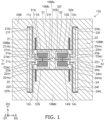
- FIG. 1 is a schematic plan view illustrating a sensor according to the first embodiment.
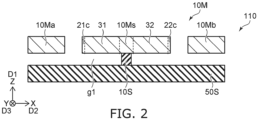
- FIG. 2 is a schematic cross-sectional view illustrating the sensor according to the first embodiment.
- FIG. 2 is a cross-sectional view taken along the line A1-A2 of FIG. 1 .
- a sensor 110 includes a base body 50S, a support portion 10S and a first member 10M.
- the support portion 10S is fixed to the base body 50S.
- the first member 10M is supported by the support portion 10S.
- a gap g1 is provided between the base body 50S and a part of the first member 10M. At least a part of the first member 10M may be conductive.
- a first direction D1 from the base body 50S to the support portion 10S is defined as a Z-axis direction.
- One direction perpendicular to the Z-axis direction is defined as an X-axis direction.
- the direction perpendicular to the Z-axis direction and the X-axis direction is defined as a Y-axis direction.
- the first member 10M includes a supported region 10Ms, a first movable region 10Ma, a first structure 21, a first support structure 11S, a first connection structure 21c, a first connect portion 11c and a first beam 31.
- the support portion 10S is provided between the base body 50S and the supported region 10Ms in the first direction D1.
- the first beam 31 extends along a second direction D2.
- the second direction D2 crosses the first direction D1.
- the second direction D2 is, for example, the X-axis direction.
- a first beam position of the first beam 31 in the second direction D2 is located between a first movable region position of the first movable region 10Ma in the second direction D2 and a support portion position of the support portion 10S in the second direction D2.
- a first end 31e of the first beam 31 is connected to the first connection structure 21c.
- a first other end 31f of the first beam 31 is connected to the supported region 10Ms.
- a first structure position of the first structure 21 in the second direction D2 is located between the first movable region position (the position of the first movable region 10Ma in the second direction D2) and the first beam position (the position of the first beam 31 in the second direction D2).
- a first connection structure position of the first connection structure 21c in the second direction D2 is located between the first structure position and the first beam position.
- a first support structure position of the first support structure 11S in the second direction D2 is located between the first structure position and the support portion position.
- the first structure 21 includes a first portion 21e, a first other portion 21f, and a first intermediate portion 21m.
- the first intermediate portion 21m is located between the first portion 21e and the first other portion 21f.
- the first portion 21e is connected to the first connection structure 21c.
- the first other portion 21f is connected to the first movable region 10Ma.
- the first intermediate portion 21m is connected to the first support structure 11S.
- the first member 10M includes a first portion connect portion 21ec, a first other portion connect portion 21fc, and a first intermediate portion connect portion 21mc.
- the first portion connect portion 21ec connects the first portion 21e to the first connection structure 21c.
- the first other portion connect portion 21fc connects the first other portion 21f to the first movable region 10Ma.
- the first intermediate portion connect portion 21mc connects the first intermediate portion 21m to the first support structure 11S.
- the first connect portion 11c connects the first connection structure 21c to the first support structure 11S.
- the first member 10M can move along the X-axis direction.
- the first movable region 10Ma moves along the X-axis direction.
- the movement of the first movable region 10Ma is transmitted to the first connection structure 21c by the first structure 21.
- the first structure 21 is, for example, a lever.
- the first portion 21e is, for example, a point of action.
- the first other portion 21f is, for example, a point of force.
- the first intermediate portion 21m is, for example, a fulcrum.
- the first connection structure 21c For example, stress along the X-axis direction is applied to the first connection structure 21c. As a result, compressive stress or tensile stress is applied to the first beam 31. As described later, when an AC signal is applied, the first beam 31 vibrates. The resonance frequency of the first beam 31 changes according to the stress applied to the first beam 31. By detecting a change in the resonance frequency of the first beam 31, it is possible to detect an externally applied force (e.g., acceleration).
- an externally applied force e.g., acceleration
- the first connection structure 21c is connected to the first support structure 11S by the first connect portion 11c.
- the movement of the first connection structure 21c is stabilized as compared with a reference example in which the first connection structure 21c is not connected to the first support structure 11S.
- stable detection can be achieved as compared with the reference example.
- a sensor that can improve detection accuracy can be provided.
- the first member 10M includes a second structure 22, a second support structure 12S, and a second connect portion 12c.
- a second structure position of the second structure 22 in the second direction D2 is located between the first movable region position and the first beam position.
- a second support structure position of the second support structure 12S in the second direction D2 is located between the second structure position and the support portion position.
- the second structure 22 includes a second portion 22e, a second other portion 22f, and a second intermediate portion 22m.
- a direction from the second other portion 22f to the second portion 22e is along the third direction D3.
- the second intermediate portion 22m is located between the second other portion 22f and the second portion 22e.
- the second portion 22e is connected to the first connection structure 21c.
- the second other portion 22f is connected to the first movable region 10Ma.
- the second intermediate portion 22m is connected to the second support structure 12S.
- the first member 10M includes a second portion connect portion 22ec, a second other portion connect portion 22fc, and a second intermediate portion connect portion 22mc.
- the second portion connect portion 22ec connects the second portion 22e to the first connection structure 21c.
- the second other portion connect portion 22fc connects the second other portion 22f to the first movable region 10Ma.
- the second intermediate portion connect portion 22mc connects the second intermediate portion 22m to the second support structure 12S.
- the second connect portion 12c connects the first connection structure 21c to the second support structure 12S.
- the first connection structure 21c becomes stable.
- the first connection structure 21c is located between at least a part of the second support structure 12S and at least a part of the first support structure 11S.
- the first connect portion 11c is located between the first connection structure 21c and at least a part of the first support structure 11S.
- the second connect portion 12c is located between at least a part of the second support structure 12S and the first connection structure 21c.
- the second structure 22 is, for example, a lever.
- the second portion 22e is, for example, a point of action.
- the second other portion 22f is, for example, a point of force.
- the second intermediate portion 22m is, for example, a fulcrum.
- the first connection structure 21c is stabilized. More stable detection becomes possible.
- the first member 10M includes a second movable region 10Mb, a third structure 23, a third support structure 13S, a second connection structure 22c, a third connect portion 13c, and a second beam 32.
- the supported region 10Ms is located between the first movable region 10Ma and the second movable region 10Mb.
- the second beam 32 extends along the second direction D2.
- a second beam position of the second beam 32 in the second direction D2 is located between the support portion position and a second movable region position of the second movable region 10Mb in the second direction D2.
- a second end 32e of the second beam 32 is connected to the second connection structure 22c.
- a second other end 32f of the second beam 32 is connected to the supported region 10Ms.
- a third structure position of the third structure 23 in the second direction D2 is located between the second beam position and the second movable region position.
- a second connection structure position of the second connection structure 22c in the second direction D2 is located between the second beam position and the third structure position.
- a third support structure position of the third support structure 13S in the second direction D2 is located between the support portion position and the third structure position.
- the third structure 23 includes a third portion 23e, a third other portion 23f, and a third intermediate portion 23m.
- a direction from the third portion 23e to the third other portion 23f is along the third direction D3.
- the third intermediate portion 23m is located between the third portion 23e and the third other portion 23f.
- the third portion 23e is connected to the second connection structure 22c.
- the third other portion 23f is connected to the second movable region 10Mb.
- the third intermediate portion 23m is connected to the third support structure 13S.
- the first member 10M includes a third portion connect portion 23ec, a third other portion connect portion 23fc, and a third intermediate portion connect portion 23mc.
- the third portion connect portion 23ec connects the third portion 23e to the second connection structure 22c.
- the third other portion connect portion 23fc connects the third other portion 23f to the second movable region 10Mb.
- the third intermediate portion connect portion 23mc connects the third intermediate portion 23m to the third support structure 13S.
- the third connect portion 13c connects the second connection structure 22c to the third support structure 13S.
- the second connection structure 22c is stabilized.
- the third structure 23 is, for example, a lever.
- the third portion 23e is, for example, a point of action.
- the third other portion 23f is, for example, a point of force.
- the third intermediate portion 23m is, for example, a fulcrum.
- the first member 10M includes a fourth structure 24, a fourth support structure 14S, and a fourth connect portion 14c.
- a fourth structure position the fourth structure 24 in the second direction D2 is located between the second beam position and the second movable region position.
- a fourth support structure position of the fourth support structure 14S in the second direction D2 is located between the support portion position and the fourth structure position.
- the fourth structure 24 includes a fourth portion 24e, a fourth other portion 24f, and a fourth intermediate portion 24m.
- a direction from the fourth other portion 24f to the fourth portion 24e is along the third direction D3.
- the fourth intermediate portion 24m is located between the fourth other portion 24f and the fourth portion 24e.
- the fourth portion 24e is connected to the second connection structure 22c.
- the fourth other portion 24f is connected to the second movable region 10Mb.
- the fourth intermediate portion 24m is connected to the fourth support structure 14S.
- the first member 10M includes a fourth portion connect portion 24ec, a fourth other portion connect portion 24fc, and a fourth intermediate portion connect portion 24mc.
- the fourth portion connect portion 24ec connects the fourth portion 24e to the second connection structure 22c.
- the fourth other portion connect portion 24fc connects the fourth other portion 24f to the second movable region 10Mb.
- the fourth intermediate portion connect portion 24mc connects the fourth intermediate portion 24m to the fourth support structure 14S.
- the fourth connect portion 14c connects the second connection structure 22c to the fourth support structure 14S.
- the second connection structure 22c is stabilized.
- the second connection structure 22c is located between at least a part of the fourth support structure 14S and at least a part of the third support structure 13S.
- the third connect portion 13c is located between the second connection structure 22c and at least a part of the third support structure 13S.
- the fourth connect portion 14c is located between at least a part of the fourth support structure 14S and the second connection structure 22c.
- the fourth structure 24 is, for example, a lever.
- the fourth portion 24e is, for example, a point of action.
- the fourth other portion 24f is, for example, a point of force.
- the fourth intermediate portion 24m is, for example, a fulcrum.
- FIG. 3 is a schematic plan view illustrating a part of the sensor according to the first embodiment.
- FIG. 3 a portion of FIG. 1 is shown enlarged.
- the sensor 110 may include a first electrode 51 and a first counter electrode 51A.
- the first electrode 51 is fixed to the base body 50S.
- the first counter electrode 51A is fixed to the base body 50S.
- the first member 10M further includes a first beam electrode 31E connected to the first beam 31 and a first counter beam electrode 31AE connected to the first beam 31.
- the first beam 31 is located between the first counter beam electrode 31AE and the first beam electrode 31E.
- the first electrode 51 faces the first beam electrode 31E.
- the first counter electrode 51A faces the first counter beam electrode 31AE.
- the controller 70 may be provided.
- the controller 70 may be included in the sensor 110.
- the controller 70 may be provided separately from the sensor 110.
- the controller 70 is electrically connected to the first electrode 51, the first counter electrode 51A, the first beam electrode 31E, and the first counter beam electrode 31AE.
- the first beam electrode 31E and the first counter beam electrode 31AE are electrically connected to the first member 10M (for example, the supported region 10Ms).
- the controller 70 is configured to apply a driving signal including an AC component between the first electrode 51 and the first beam electrode 31E.
- the controller 70 is configured to detect an electric signal generated between the first counter electrode 51A and the first counter beam electrode 31AE. By detecting a change in the electric signal generated between the first counter electrode 51A and the first counter beam electrode 31AE, an external force can be detected.
- the sensor 110 may include a second electrode 52 and a second counter electrode 52A.
- the second electrode 52 is fixed to the base body 50S.
- the second counter electrode 52A is fixed to the base body 50S.
- the first member 10M may further include a second beam electrode 32E connected to the second beam 32 and a second counter beam electrode 32AE connected to the second beam 32.
- the second beam 32 is located between the second counter beam electrode 32AE and the second beam electrode 32E.
- the second electrode 52 faces the second beam electrode 32E.
- the second counter electrode 52A faces the second counter beam electrode 32AE.
- the second beam electrode 32E and the second counter beam electrode 32AE are electrically connected to the first member 10M (for example, the supported region 10Ms).
- the controller 70 is configured to apply the drive signal including an AC component between the second electrode 52 and the second beam electrode 32E.
- the controller 70 is configured to detect an electric signal generated between the second counter electrode 52A and the second counter beam electrode 32AE.
- the first member 10M may include a third movable region 10Mc and a fourth movable region 10Md.
- a direction from the fourth movable region 10Md to the third movable region 10Mc is along the third direction D3.
- the third movable region 10Mc and the fourth movable region 10Md are continuous with the first movable region 10Ma and the second movable region 10Mb.
- the supported region 10Ms is provided between the third movable region 10Mc and the fourth movable region 10Md.
- the first member 10M may further include a first movable region connect portion 11A.
- a position of the first support structure 11S in the third direction D3 is located between a position of the supported region 10Ms in the third direction D3 and a position of the third movable region 10Mc in the third direction D3.
- the first movable region connect portion 11A connects the first support structure 11S to the third movable region 10Mc.
- the first member 10M may further include a second movable region connect portion 12A.
- a position of the second support structure 12S in the third direction D3 is located between a position of the fourth movable region 10Md in the third direction D3 and the position of the supported region 10Ms in the third direction D3.
- the second movable region connect portion 12A connects the second support structure 12S to the fourth movable region 10Md.
- the first member 10M may further include a third movable region connect portion 13A.
- a position of the third support structure 13S in the third direction D3 is located between the position of the supported region 10Ms in the third direction D3 and the position of the third movable region 10Mc in the third direction D3.
- the third movable region connect portion 13A connects the third support structure 13S to the third movable region 10Mc.
- the first member 10M may further include a fourth movable region connect portion 14A.
- a position of the fourth support structure 14S in the third direction D3 is located between the position of the fourth movable region 10Md in the third direction D3 and the position of the supported region 10Ms in the third direction D3.
- the fourth movable region connect portion 14A connects the fourth support structure 14S to the fourth movable region 10Md.
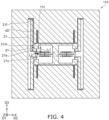
- FIG. 4 is a schematic plan view illustrating the sensor according to the first embodiment.
- FIG. 4 a portion of FIG. 1 is shown enlarged.
- a length of the first connect portion 11c along the third direction D3 is defined as a first length L1.
- a length of the first connect portion 11c along the second direction D2 is defined as a second length L2.
- the first length L1 is longer than the second length L2.
- the first connection structure 21c connected to the first connect portion 11c can be easily displaced along the second direction D2. The position of the first connection structure 21c in the third direction D3 becomes stable.
- a distance between the first portion 21e and the first intermediate portion 21m along the third direction D3 is defined as a first distance d1.
- a distance between the first intermediate portion 21m and the first other portion 21f along the third direction D3 is defined as a second distance d2.
- the first distance d1 is shorter than the second distance d2.
- the first structure 21 efficiently transmits, for example, the displacement of the first movable region 10Ma along the second direction D2 to the first connection structure 21c.
- the configuration relating to the first connect portion 11c can be applied to the second connect portion 12c, the third connect portion 13c, and the fourth connect portion 14c.
- the configuration relating to the first structure 21 can be applied to the second structure 22, the third structure 23 and the fourth structure 24.
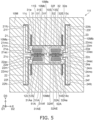
- FIG. 5 is a schematic plan view illustrating a sensor according to the first embodiment.
- a sensor 111 also includes the base body 50S, the support portion 10S, and the first member 10M.
- the first member 10M includes a first counter beam 31A and a second counter beam 32A. Except for this, the configuration of the sensor 111 may be the same as the configuration of the sensor 110.
- the configuration of the first structure 21, the first support structure 11S, the first connection structure 21c, the first connect portion 11c, and the first beam 31 in the sensor 111 may be the same as the configurations of those in the sensor 110.
- the first member 10M includes the second structure 22, the second support structure 12S, the second connect portion 12c, and the first counter beam 31A.
- the first counter beam 31A extends along the second direction D2.
- the second structure position of the second structure 22 in the second direction D2 is located between the first movable region position and a first counter beam position of the first counter beam 31A in the second direction D2.
- a first counter beam end 31Ae of the first counter beam 31A is connected to the first connection structure 21c.
- a first counter beam other end 31Af of the first counter beam 31A is connected to the supported region 10Ms.
- a second support structure position of the second support structure 12S in the second direction D2 is located between the second structure position and the support portion position.
- the second structure 22 includes the second portion 22e, the second other portion 22f, and a second intermediate portion 22m.
- the direction from the second other portion 22f to the second portion 22e is along the third direction D3.
- the second intermediate portion 22m is located between the second other portion 22f and the second portion 22e.
- the second portion 22e is connected to the first connection structure 21c.
- the second other portion 22f is connected to the first movable region 10Ma.
- the second intermediate portion 22m is connected to the second support structure 12S.
- the second connect portion 12c connects the first connection structure 21c to the second support structure 12S.
- the first connection structure 21c is located between at least a part of the second support structure 12S and at least a part of the first support structure 11S.
- the first connect portion 11c is located between the first connection structure 21c and at least a part of the first support structure 11S.
- the second connect portion 12c is located between at least a part of the second support structure 12S and the first connection structure 21c.
- the first counter beam 31A is located between the second support structure 12S and the first beam 31.
- the sensor 111 may include the first electrode 51 and the first counter electrode 51A.
- the first electrode 51 and the first counter electrode 51A are fixed to the base body 50S.
- the first member 10M may include the first beam electrode 31E connected to the first beam 31 and the first counter beam electrode 31AE connected to the first counter beam 31A.
- the first electrode 51 faces the first beam electrode 31E.
- the first counter electrode 51A is faces the first counter beam electrode 31AE.
- the controller 70 may be provided.
- the controller 70 is configured to apply the driving signal including an AC component between the first electrode 51 and the first beam electrode 31E.
- the controller 70 is configuration to detect the electric signal generated between the first counter electrode 51A and the first counter beam electrode 31AE.
- the first member 10M may include the second movable region 10Mb, the third structure 23, the third support structure 13S, the second connection structure 22c, the third connect portion 13c, and the second beam 32.
- the supported region 10Ms is located between the first movable region 10Ma and the second movable region 10Mb.
- the second beam 32 extends along the second direction D2.
- a second beam position of the second beam 32 in the second direction D2 is located between the support portion position and a second movable region position of the second movable region 10Mb in the second direction D2.
- the second end 32e of the second beam 32 is connected to the second connection structure 22c.
- the second other end 32f of the second beam 32 is connected to the supported region 10Ms.
- the third structure position of the third structure 23 in the second direction D2 is located between the second beam position and the second movable region position.
- the second connection structure position of the second connection structure 22c in the second direction D2 is located between the second beam position and the third structure position.
- the third support structure position of the third support structure 13S in the second direction D2 is located between the support portion position and the third structure position.
- the third structure 23 includes the third portion 23e, the third other portion 23f, and the third intermediate portion 23m.
- the direction from the third portion 23e to the third other portion 23f is along the third direction D3.
- the third intermediate portion 23m is located between the third portion 23e and the third other portion 23f.
- the third portion 23e is connected to the second connection structure 22c.
- the third other portion 23f is connected to the second movable region 10Mb.
- the third intermediate portion 23m is connected to the third support structure 13S.
- the third connect portion 13c connects the second connection structure 22c to the third support structure 13S.
- the first member 10M includes the fourth structure 24, the fourth support structure 14S, the fourth connect portion 14c, and the second counter beam 32A.
- the second counter beam 32A extends along the second direction D2.
- the fourth structure position of the fourth structure 24 in the second direction D2 is located between the second counter beam position of the second counter beam 32A in the second direction D2 and the second movable region position.
- the second counter beam end 32Ae of the second counter beam 32A is connected to the second connection structure 22c.
- the second counter beam other end 32Af of the second counter beam 32A is connected to the supported region 10Ms.
- the fourth support structure position of the fourth support structure 14S in the second direction D2 is located between the support portion position and the fourth structure position.
- the fourth structure 24 includes the fourth portion 24e, the fourth other portion 24f, and the fourth intermediate portion 24m.
- the direction from the fourth other portion 24f to the fourth portion 24e is along the third direction D3.
- the fourth intermediate portion 24m is located between the fourth other portion 24f and the fourth portion 24e.
- the fourth portion 24e is connected to the second connection structure 22c.
- the fourth other portion 24f is connected to the second movable region 10Mb.
- the fourth intermediate portion 24m is connected to the fourth support structure 14S.
- the fourth connect portion 14c connects the second connection structure 22c to the fourth support structure 14S.
- the second connection structure 22c is located between at least a part of the fourth support structure 14S and at least a part of the third support structure 13S.
- the third connect portion 13c is located between the second connection structure 22c and at least a part of the third support structure 13S.
- the fourth connect portion 14c is located between at least a part of the fourth support structure 14S and the second connection structure 22c.
- the second counter beam 32A is located between the fourth support structure 14S and the second beam 32.
- the sensor 111 may include the second electrode 52 and the second counter electrode 52A.
- the second electrode 52 and the second counter electrode 52A are fixed to the base body 50S.
- the first member 10M may include the second beam electrode 32E connected to the second beam 32 and the second counter beam electrode 32AE connected to the second counter beam 32A.
- the second electrode 52 faces the second beam electrode 32E.
- the second counter electrode 52A faces the second counter beam electrode 32AE.
- the controller 70 may be provided.
- the controller 70 is configured to apply the drive signal including an AC component between the second electrode 52 and the second beam electrode 32E.
- the controller 70 is configured to detect the electric signal generated between the second counter electrode 52A and the second counter beam electrode 32AE.
- the first beam 31 and the first counter beam 31A form one pair.
- the second beam 32 and the second counter beam 32A form another pair.
- the vibration amplitude at the resonance frequency of the reverse phase mode becomes large.
- the mechanical Q factor (quality factor) increases. High precision detection becomes possible.
- the first member 10M may be conductive.
- the first member 10M may include, for example, conductive silicon.
- at least one of the supported region 10Ms, the first support structure 11S, the second support structure 12S, the third support structure 13S, or the fourth support structure 14S may include a metal layer.
- high thermal conductivity can be obtained.
- a second embodiment relates to an electronic device.
- FIG. 6 is a schematic diagram illustrating an electronic device according to a second embodiment.
- an electronic device 310 includes the sensors according to the first to third embodiments and the circuit processor 170.
- the sensor 110 is drawn as the sensor.
- the circuit processor 170 is configured to control a circuit 180 based on the signal S1 obtained from the sensor.
- the circuit 180 is, for example, a control circuit for a drive device 185. According to the embodiment, for example, the circuit 180 for controlling the drive device 185 can be controlled with high accuracy.
- FIGS.7A to 7H are schematic views illustrating applications of the electronic device.
- the electronic device 310 may be at least a portion of a robot. As shown in FIG. 7B , the electronic device 310 may be at least a portion of a machining robot provided in a manufacturing plant, etc. As shown in FIG. 7C , the electronic device 310 may be at least a portion of an automatic guided vehicle inside a plant, etc. As shown in FIG. 7D , the electronic device 310 may be at least a portion of a drone (an unmanned aircraft). As shown in FIG. 7E , the electronic device 310 may be at least a portion of an airplane. As shown in FIG. 7F , the electronic device 310 may be at least a portion of a ship. As shown in FIG. 7A , the electronic device 310 may be at least a portion of a robot. As shown in FIG. 7B , the electronic device 310 may be at least a portion of a machining robot provided in a manufacturing plant, etc. As shown in FIG. 7C , the electronic device 310 may be at least a portion of an automatic
- the electronic device 310 may be at least a portion of a submarine. As shown in FIG. 7H , the electronic device 310 may be at least a portion of an automobile.
- the electronic device 310 according to the third embodiment may include, for example, at least one of a robot or a moving body.
- FIGS. 8A and 8B are schematic views illustrating applications of the electronic device.
- a sensor 430 according to the fifth embodiment includes the sensor according to one of the first to third embodiments, and a transmission/reception part 420.
- the sensor 110 is illustrated as the sensor.
- the transmission/reception part 420 is configured to transmit the signal obtained from the sensor 110 by, for example, at least one of wireless and wired methods.
- the sensor 430 is provided on, for example, a slope surface 410 such as a road 400.
- the sensor 430 can monitor the state of, for example, a facility (e.g., infrastructure).
- the sensor 430 may be, for example, a state monitoring device.
- the sensor 430 detects a change in the state of a slope surface 410 of a road 400 with high accuracy.
- the change in the state of the slope surface 410 includes, for example, at least one of a change in the inclination angle and a change in the vibration state.
- the signal (inspection result) obtained from the sensor 110 is transmitted by the transmission/reception part 420.
- the status of a facility e.g., infrastructure
- the sensor 430 is provided, for example, in a portion of a bridge 460.
- the bridge 460 is provided above the river 470.
- the bridge 460 includes at least one of a main girder 450 and a pier 440.
- the sensor 430 is provided on at least one of the main girder 450 and the pier 440.
- at least one of the angles of the main girder 450 and the pier 440 may change due to deterioration or the like.
- the vibration state may change in at least one of the main girder 450 and the pier 440.
- the sensor 430 detects these changes with high accuracy.
- the detection result can be transmitted to an arbitrary place by the transmission/reception part 420. Abnormalities can be detected effectively.
- Embodiments include, for example, the following configurations (e.g., technological proposals).
- a sensor comprising:
- the sensor according to Configuration 12 further comprising:
- An electronic device comprising:
- a sensor and an electronic device capable of improving characteristics can be provided.
Landscapes
- Physics & Mathematics (AREA)
- General Physics & Mathematics (AREA)
- Pressure Sensors (AREA)
- Micromachines (AREA)
Applications Claiming Priority (1)
| Application Number | Priority Date | Filing Date | Title |
|---|---|---|---|
| JP2022146096A JP7712904B2 (ja) | 2022-09-14 | 2022-09-14 | センサ及び電子装置 |
Publications (2)
| Publication Number | Publication Date |
|---|---|
| EP4339620A1 true EP4339620A1 (de) | 2024-03-20 |
| EP4339620B1 EP4339620B1 (de) | 2024-11-06 |
Family
ID=85278493
Family Applications (1)
| Application Number | Title | Priority Date | Filing Date |
|---|---|---|---|
| EP23157015.1A Active EP4339620B1 (de) | 2022-09-14 | 2023-02-16 | Sensor und elektronische vorrichtung |
Country Status (3)
| Country | Link |
|---|---|
| US (1) | US12467941B2 (de) |
| EP (1) | EP4339620B1 (de) |
| JP (1) | JP7712904B2 (de) |
Citations (6)
| Publication number | Priority date | Publication date | Assignee | Title |
|---|---|---|---|---|
| CN102147424A (zh) * | 2011-03-01 | 2011-08-10 | 东南大学 | 三轴集成硅微谐振式加速度计 |
| CN105259371A (zh) * | 2015-10-19 | 2016-01-20 | 北京航天控制仪器研究所 | 一种新型硅微谐振加速度计的惯性力放大机构 |
| CN107515311A (zh) * | 2017-08-18 | 2017-12-26 | 西安交通大学 | 一种基于同步谐振频率检测的mems加速度计 |
| US20180362333A1 (en) * | 2017-06-16 | 2018-12-20 | Commissariat A L'energie Atomique Et Aux Energies Alternatives | Microelectromechanical device with at least one translationally guided moveable element |
| CN109270298A (zh) * | 2018-10-24 | 2019-01-25 | 清华大学 | Mems加速度计 |
| CN113740560A (zh) * | 2021-08-20 | 2021-12-03 | 中国科学院空天信息创新研究院 | 一种弱耦合谐振式加速度传感器 |
Family Cites Families (8)
| Publication number | Priority date | Publication date | Assignee | Title |
|---|---|---|---|---|
| US8468887B2 (en) * | 2008-04-14 | 2013-06-25 | Freescale Semiconductor, Inc. | Resonant accelerometer with low sensitivity to package stress |
| GB2505875A (en) * | 2012-09-04 | 2014-03-19 | Cambridge Entpr Ltd | Dual and triple axis inertial sensors and methods of inertial sensing |
| WO2014061099A1 (ja) | 2012-10-16 | 2014-04-24 | 日立オートモティブシステムズ株式会社 | 慣性センサ |
| JP6787304B2 (ja) * | 2017-12-19 | 2020-11-18 | セイコーエプソン株式会社 | 物理量センサー、複合センサー、慣性計測ユニット、携帯型電子機器、電子機器、および移動体 |
| US10866258B2 (en) | 2018-07-20 | 2020-12-15 | Honeywell International Inc. | In-plane translational vibrating beam accelerometer with mechanical isolation and 4-fold symmetry |
| JP7378358B2 (ja) | 2020-06-19 | 2023-11-13 | 株式会社東芝 | センサ及び電子装置 |
| JP7631700B2 (ja) | 2020-07-31 | 2025-02-19 | セイコーエプソン株式会社 | 慣性センサー及び慣性計測装置 |
| JP7421508B2 (ja) * | 2021-02-17 | 2024-01-24 | 株式会社東芝 | センサ及び電子装置 |
-
2022
- 2022-09-14 JP JP2022146096A patent/JP7712904B2/ja active Active
-
2023
- 2023-02-16 EP EP23157015.1A patent/EP4339620B1/de active Active
- 2023-02-27 US US18/175,242 patent/US12467941B2/en active Active
Patent Citations (6)
| Publication number | Priority date | Publication date | Assignee | Title |
|---|---|---|---|---|
| CN102147424A (zh) * | 2011-03-01 | 2011-08-10 | 东南大学 | 三轴集成硅微谐振式加速度计 |
| CN105259371A (zh) * | 2015-10-19 | 2016-01-20 | 北京航天控制仪器研究所 | 一种新型硅微谐振加速度计的惯性力放大机构 |
| US20180362333A1 (en) * | 2017-06-16 | 2018-12-20 | Commissariat A L'energie Atomique Et Aux Energies Alternatives | Microelectromechanical device with at least one translationally guided moveable element |
| CN107515311A (zh) * | 2017-08-18 | 2017-12-26 | 西安交通大学 | 一种基于同步谐振频率检测的mems加速度计 |
| CN109270298A (zh) * | 2018-10-24 | 2019-01-25 | 清华大学 | Mems加速度计 |
| CN113740560A (zh) * | 2021-08-20 | 2021-12-03 | 中国科学院空天信息创新研究院 | 一种弱耦合谐振式加速度传感器 |
Also Published As
| Publication number | Publication date |
|---|---|
| JP7712904B2 (ja) | 2025-07-24 |
| US12467941B2 (en) | 2025-11-11 |
| JP2024041344A (ja) | 2024-03-27 |
| EP4339620B1 (de) | 2024-11-06 |
| US20240085451A1 (en) | 2024-03-14 |
Similar Documents
| Publication | Publication Date | Title |
|---|---|---|
| US12019092B2 (en) | Sensor and electronic device | |
| US11834326B2 (en) | Sensor and electronic device | |
| EP4339620A1 (de) | Sensor und elektronische vorrichtung | |
| US20250076047A1 (en) | Sensor, sensor system, and electronic device | |
| EP4516724A1 (de) | Sensor, sensorsystem und elektronische vorrichtung | |
| US20250076046A1 (en) | Sensor, sensor system, and electronic device | |
| EP4339622B1 (de) | Sensor und elektronische vorrichtung | |
| EP4516725A1 (de) | Sensor, sensorsystem und elektronische vorrichtung | |
| JP7832136B2 (ja) | センサ及び電子装置 | |
| US20250383366A1 (en) | Sensor and electronic device | |
| US20250076054A1 (en) | Sensor, sensor system, and electronic device | |
| US20250076089A1 (en) | Sensor, sensor system, and electronic device | |
| US20230288202A1 (en) | Sensor and electronic device | |
| US20240310406A1 (en) | Sensor and electronic device | |
| US20240310404A1 (en) | Sensor and electronic device | |
| US20250264496A1 (en) | Sensor and electronic device | |
| US20260079173A1 (en) | Sensor and electronic device | |
| US20240401949A1 (en) | Sensor and electronic device | |
| CN103217151A (zh) | 一种四质量块线振动硅微陀螺敏感装置 |
Legal Events
| Date | Code | Title | Description |
|---|---|---|---|
| PUAI | Public reference made under article 153(3) epc to a published international application that has entered the european phase |
Free format text: ORIGINAL CODE: 0009012 |
|
| STAA | Information on the status of an ep patent application or granted ep patent |
Free format text: STATUS: REQUEST FOR EXAMINATION WAS MADE |
|
| 17P | Request for examination filed |
Effective date: 20230216 |
|
| AK | Designated contracting states |
Kind code of ref document: A1 Designated state(s): AL AT BE BG CH CY CZ DE DK EE ES FI FR GB GR HR HU IE IS IT LI LT LU LV MC ME MK MT NL NO PL PT RO RS SE SI SK SM TR |
|
| GRAP | Despatch of communication of intention to grant a patent |
Free format text: ORIGINAL CODE: EPIDOSNIGR1 |
|
| STAA | Information on the status of an ep patent application or granted ep patent |
Free format text: STATUS: GRANT OF PATENT IS INTENDED |
|
| RIC1 | Information provided on ipc code assigned before grant |
Ipc: B81B 5/00 20060101ALN20240605BHEP Ipc: B81B 3/00 20060101ALI20240605BHEP Ipc: G01P 15/097 20060101ALI20240605BHEP Ipc: G01P 15/08 20060101AFI20240605BHEP |
|
| INTG | Intention to grant announced |
Effective date: 20240619 |
|
| GRAS | Grant fee paid |
Free format text: ORIGINAL CODE: EPIDOSNIGR3 |
|
| GRAA | (expected) grant |
Free format text: ORIGINAL CODE: 0009210 |
|
| STAA | Information on the status of an ep patent application or granted ep patent |
Free format text: STATUS: THE PATENT HAS BEEN GRANTED |
|
| AK | Designated contracting states |
Kind code of ref document: B1 Designated state(s): AL AT BE BG CH CY CZ DE DK EE ES FI FR GB GR HR HU IE IS IT LI LT LU LV MC ME MK MT NL NO PL PT RO RS SE SI SK SM TR |
|
| REG | Reference to a national code |
Ref country code: GB Ref legal event code: FG4D |
|
| REG | Reference to a national code |
Ref country code: CH Ref legal event code: EP |
|
| REG | Reference to a national code |
Ref country code: DE Ref legal event code: R096 Ref document number: 602023000904 Country of ref document: DE |
|
| REG | Reference to a national code |
Ref country code: IE Ref legal event code: FG4D |
|
| REG | Reference to a national code |
Ref country code: LT Ref legal event code: MG9D |
|
| REG | Reference to a national code |
Ref country code: NL Ref legal event code: MP Effective date: 20241106 |
|
| PG25 | Lapsed in a contracting state [announced via postgrant information from national office to epo] |
Ref country code: HR Free format text: LAPSE BECAUSE OF FAILURE TO SUBMIT A TRANSLATION OF THE DESCRIPTION OR TO PAY THE FEE WITHIN THE PRESCRIBED TIME-LIMIT Effective date: 20241106 Ref country code: IS Free format text: LAPSE BECAUSE OF FAILURE TO SUBMIT A TRANSLATION OF THE DESCRIPTION OR TO PAY THE FEE WITHIN THE PRESCRIBED TIME-LIMIT Effective date: 20250306 Ref country code: PT Free format text: LAPSE BECAUSE OF FAILURE TO SUBMIT A TRANSLATION OF THE DESCRIPTION OR TO PAY THE FEE WITHIN THE PRESCRIBED TIME-LIMIT Effective date: 20250306 |
|
| PG25 | Lapsed in a contracting state [announced via postgrant information from national office to epo] |
Ref country code: NL Free format text: LAPSE BECAUSE OF FAILURE TO SUBMIT A TRANSLATION OF THE DESCRIPTION OR TO PAY THE FEE WITHIN THE PRESCRIBED TIME-LIMIT Effective date: 20241106 Ref country code: FI Free format text: LAPSE BECAUSE OF FAILURE TO SUBMIT A TRANSLATION OF THE DESCRIPTION OR TO PAY THE FEE WITHIN THE PRESCRIBED TIME-LIMIT Effective date: 20241106 |
|
| REG | Reference to a national code |
Ref country code: AT Ref legal event code: MK05 Ref document number: 1739895 Country of ref document: AT Kind code of ref document: T Effective date: 20241106 |
|
| PG25 | Lapsed in a contracting state [announced via postgrant information from national office to epo] |
Ref country code: BG Free format text: LAPSE BECAUSE OF FAILURE TO SUBMIT A TRANSLATION OF THE DESCRIPTION OR TO PAY THE FEE WITHIN THE PRESCRIBED TIME-LIMIT Effective date: 20241106 |
|
| PG25 | Lapsed in a contracting state [announced via postgrant information from national office to epo] |
Ref country code: ES Free format text: LAPSE BECAUSE OF FAILURE TO SUBMIT A TRANSLATION OF THE DESCRIPTION OR TO PAY THE FEE WITHIN THE PRESCRIBED TIME-LIMIT Effective date: 20241106 |
|
| PG25 | Lapsed in a contracting state [announced via postgrant information from national office to epo] |
Ref country code: NO Free format text: LAPSE BECAUSE OF FAILURE TO SUBMIT A TRANSLATION OF THE DESCRIPTION OR TO PAY THE FEE WITHIN THE PRESCRIBED TIME-LIMIT Effective date: 20250206 |
|
| PG25 | Lapsed in a contracting state [announced via postgrant information from national office to epo] |
Ref country code: LV Free format text: LAPSE BECAUSE OF FAILURE TO SUBMIT A TRANSLATION OF THE DESCRIPTION OR TO PAY THE FEE WITHIN THE PRESCRIBED TIME-LIMIT Effective date: 20241106 Ref country code: GR Free format text: LAPSE BECAUSE OF FAILURE TO SUBMIT A TRANSLATION OF THE DESCRIPTION OR TO PAY THE FEE WITHIN THE PRESCRIBED TIME-LIMIT Effective date: 20250207 Ref country code: AT Free format text: LAPSE BECAUSE OF FAILURE TO SUBMIT A TRANSLATION OF THE DESCRIPTION OR TO PAY THE FEE WITHIN THE PRESCRIBED TIME-LIMIT Effective date: 20241106 |
|
| PG25 | Lapsed in a contracting state [announced via postgrant information from national office to epo] |
Ref country code: PL Free format text: LAPSE BECAUSE OF FAILURE TO SUBMIT A TRANSLATION OF THE DESCRIPTION OR TO PAY THE FEE WITHIN THE PRESCRIBED TIME-LIMIT Effective date: 20241106 |
|
| PG25 | Lapsed in a contracting state [announced via postgrant information from national office to epo] |
Ref country code: RS Free format text: LAPSE BECAUSE OF FAILURE TO SUBMIT A TRANSLATION OF THE DESCRIPTION OR TO PAY THE FEE WITHIN THE PRESCRIBED TIME-LIMIT Effective date: 20250206 |
|
| PG25 | Lapsed in a contracting state [announced via postgrant information from national office to epo] |
Ref country code: SM Free format text: LAPSE BECAUSE OF FAILURE TO SUBMIT A TRANSLATION OF THE DESCRIPTION OR TO PAY THE FEE WITHIN THE PRESCRIBED TIME-LIMIT Effective date: 20241106 |
|
| PG25 | Lapsed in a contracting state [announced via postgrant information from national office to epo] |
Ref country code: DK Free format text: LAPSE BECAUSE OF FAILURE TO SUBMIT A TRANSLATION OF THE DESCRIPTION OR TO PAY THE FEE WITHIN THE PRESCRIBED TIME-LIMIT Effective date: 20241106 |
|
| PG25 | Lapsed in a contracting state [announced via postgrant information from national office to epo] |
Ref country code: EE Free format text: LAPSE BECAUSE OF FAILURE TO SUBMIT A TRANSLATION OF THE DESCRIPTION OR TO PAY THE FEE WITHIN THE PRESCRIBED TIME-LIMIT Effective date: 20241106 |
|
| PG25 | Lapsed in a contracting state [announced via postgrant information from national office to epo] |
Ref country code: RO Free format text: LAPSE BECAUSE OF FAILURE TO SUBMIT A TRANSLATION OF THE DESCRIPTION OR TO PAY THE FEE WITHIN THE PRESCRIBED TIME-LIMIT Effective date: 20241106 |
|
| PG25 | Lapsed in a contracting state [announced via postgrant information from national office to epo] |
Ref country code: SK Free format text: LAPSE BECAUSE OF FAILURE TO SUBMIT A TRANSLATION OF THE DESCRIPTION OR TO PAY THE FEE WITHIN THE PRESCRIBED TIME-LIMIT Effective date: 20241106 |
|
| PG25 | Lapsed in a contracting state [announced via postgrant information from national office to epo] |
Ref country code: CZ Free format text: LAPSE BECAUSE OF FAILURE TO SUBMIT A TRANSLATION OF THE DESCRIPTION OR TO PAY THE FEE WITHIN THE PRESCRIBED TIME-LIMIT Effective date: 20241106 |
|
| PG25 | Lapsed in a contracting state [announced via postgrant information from national office to epo] |
Ref country code: IT Free format text: LAPSE BECAUSE OF FAILURE TO SUBMIT A TRANSLATION OF THE DESCRIPTION OR TO PAY THE FEE WITHIN THE PRESCRIBED TIME-LIMIT Effective date: 20241106 |
|
| REG | Reference to a national code |
Ref country code: DE Ref legal event code: R097 Ref document number: 602023000904 Country of ref document: DE |
|
| PG25 | Lapsed in a contracting state [announced via postgrant information from national office to epo] |
Ref country code: SE Free format text: LAPSE BECAUSE OF FAILURE TO SUBMIT A TRANSLATION OF THE DESCRIPTION OR TO PAY THE FEE WITHIN THE PRESCRIBED TIME-LIMIT Effective date: 20241106 |
|
| PLBE | No opposition filed within time limit |
Free format text: ORIGINAL CODE: 0009261 |
|
| STAA | Information on the status of an ep patent application or granted ep patent |
Free format text: STATUS: NO OPPOSITION FILED WITHIN TIME LIMIT |
|
| PG25 | Lapsed in a contracting state [announced via postgrant information from national office to epo] |
Ref country code: MC Free format text: LAPSE BECAUSE OF FAILURE TO SUBMIT A TRANSLATION OF THE DESCRIPTION OR TO PAY THE FEE WITHIN THE PRESCRIBED TIME-LIMIT Effective date: 20241106 |
|
| 26N | No opposition filed |
Effective date: 20250807 |
|
| PG25 | Lapsed in a contracting state [announced via postgrant information from national office to epo] |
Ref country code: LU Free format text: LAPSE BECAUSE OF NON-PAYMENT OF DUE FEES Effective date: 20250216 |
|
| REG | Reference to a national code |
Ref country code: BE Ref legal event code: MM Effective date: 20250228 |
|
| PGFP | Annual fee paid to national office [announced via postgrant information from national office to epo] |
Ref country code: FR Payment date: 20251208 Year of fee payment: 4 |
|
| PG25 | Lapsed in a contracting state [announced via postgrant information from national office to epo] |
Ref country code: BE Free format text: LAPSE BECAUSE OF NON-PAYMENT OF DUE FEES Effective date: 20250228 |
|
| PG25 | Lapsed in a contracting state [announced via postgrant information from national office to epo] |
Ref country code: IE Free format text: LAPSE BECAUSE OF NON-PAYMENT OF DUE FEES Effective date: 20250216 |
|
| PGFP | Annual fee paid to national office [announced via postgrant information from national office to epo] |
Ref country code: DE Payment date: 20251224 Year of fee payment: 4 |