EP4340295B1 - Procédé et système mis en uvre par ordinateur pour transférer un accès à un actif numérique - Google Patents
Procédé et système mis en uvre par ordinateur pour transférer un accès à un actif numérique Download PDFInfo
- Publication number
- EP4340295B1 EP4340295B1 EP24154980.7A EP24154980A EP4340295B1 EP 4340295 B1 EP4340295 B1 EP 4340295B1 EP 24154980 A EP24154980 A EP 24154980A EP 4340295 B1 EP4340295 B1 EP 4340295B1
- Authority
- EP
- European Patent Office
- Prior art keywords
- private key
- shares
- participants
- participant
- secret value
- Prior art date
- Legal status (The legal status is an assumption and is not a legal conclusion. Google has not performed a legal analysis and makes no representation as to the accuracy of the status listed.)
- Active
Links
Images



Classifications
-
- H—ELECTRICITY
- H04—ELECTRIC COMMUNICATION TECHNIQUE
- H04L—TRANSMISSION OF DIGITAL INFORMATION, e.g. TELEGRAPHIC COMMUNICATION
- H04L9/00—Cryptographic mechanisms or cryptographic arrangements for secret or secure communications; Network security protocols
- H04L9/32—Cryptographic mechanisms or cryptographic arrangements for secret or secure communications; Network security protocols including means for verifying the identity or authority of a user of the system or for message authentication, e.g. authorization, entity authentication, data integrity or data verification, non-repudiation, key authentication or verification of credentials
- H04L9/3247—Cryptographic mechanisms or cryptographic arrangements for secret or secure communications; Network security protocols including means for verifying the identity or authority of a user of the system or for message authentication, e.g. authorization, entity authentication, data integrity or data verification, non-repudiation, key authentication or verification of credentials involving digital signatures
- H04L9/3255—Cryptographic mechanisms or cryptographic arrangements for secret or secure communications; Network security protocols including means for verifying the identity or authority of a user of the system or for message authentication, e.g. authorization, entity authentication, data integrity or data verification, non-repudiation, key authentication or verification of credentials involving digital signatures using group based signatures, e.g. ring or threshold signatures
-
- H—ELECTRICITY
- H04—ELECTRIC COMMUNICATION TECHNIQUE
- H04L—TRANSMISSION OF DIGITAL INFORMATION, e.g. TELEGRAPHIC COMMUNICATION
- H04L9/00—Cryptographic mechanisms or cryptographic arrangements for secret or secure communications; Network security protocols
- H04L9/08—Key distribution or management, e.g. generation, sharing or updating, of cryptographic keys or passwords
- H04L9/0816—Key establishment, i.e. cryptographic processes or cryptographic protocols whereby a shared secret becomes available to two or more parties, for subsequent use
- H04L9/085—Secret sharing or secret splitting, e.g. threshold schemes
-
- H—ELECTRICITY
- H04—ELECTRIC COMMUNICATION TECHNIQUE
- H04L—TRANSMISSION OF DIGITAL INFORMATION, e.g. TELEGRAPHIC COMMUNICATION
- H04L9/00—Cryptographic mechanisms or cryptographic arrangements for secret or secure communications; Network security protocols
- H04L9/30—Public key, i.e. encryption algorithm being computationally infeasible to invert or user's encryption keys not requiring secrecy
- H04L9/3066—Public key, i.e. encryption algorithm being computationally infeasible to invert or user's encryption keys not requiring secrecy involving algebraic varieties, e.g. elliptic or hyper-elliptic curves
-
- H—ELECTRICITY
- H04—ELECTRIC COMMUNICATION TECHNIQUE
- H04L—TRANSMISSION OF DIGITAL INFORMATION, e.g. TELEGRAPHIC COMMUNICATION
- H04L9/00—Cryptographic mechanisms or cryptographic arrangements for secret or secure communications; Network security protocols
- H04L9/32—Cryptographic mechanisms or cryptographic arrangements for secret or secure communications; Network security protocols including means for verifying the identity or authority of a user of the system or for message authentication, e.g. authorization, entity authentication, data integrity or data verification, non-repudiation, key authentication or verification of credentials
- H04L9/3236—Cryptographic mechanisms or cryptographic arrangements for secret or secure communications; Network security protocols including means for verifying the identity or authority of a user of the system or for message authentication, e.g. authorization, entity authentication, data integrity or data verification, non-repudiation, key authentication or verification of credentials using cryptographic hash functions
-
- H—ELECTRICITY
- H04—ELECTRIC COMMUNICATION TECHNIQUE
- H04L—TRANSMISSION OF DIGITAL INFORMATION, e.g. TELEGRAPHIC COMMUNICATION
- H04L9/00—Cryptographic mechanisms or cryptographic arrangements for secret or secure communications; Network security protocols
- H04L9/32—Cryptographic mechanisms or cryptographic arrangements for secret or secure communications; Network security protocols including means for verifying the identity or authority of a user of the system or for message authentication, e.g. authorization, entity authentication, data integrity or data verification, non-repudiation, key authentication or verification of credentials
- H04L9/3247—Cryptographic mechanisms or cryptographic arrangements for secret or secure communications; Network security protocols including means for verifying the identity or authority of a user of the system or for message authentication, e.g. authorization, entity authentication, data integrity or data verification, non-repudiation, key authentication or verification of credentials involving digital signatures
-
- H—ELECTRICITY
- H04—ELECTRIC COMMUNICATION TECHNIQUE
- H04L—TRANSMISSION OF DIGITAL INFORMATION, e.g. TELEGRAPHIC COMMUNICATION
- H04L2209/00—Additional information or applications relating to cryptographic mechanisms or cryptographic arrangements for secret or secure communication H04L9/00
- H04L2209/56—Financial cryptography, e.g. electronic payment or e-cash
-
- H—ELECTRICITY
- H04—ELECTRIC COMMUNICATION TECHNIQUE
- H04L—TRANSMISSION OF DIGITAL INFORMATION, e.g. TELEGRAPHIC COMMUNICATION
- H04L9/00—Cryptographic mechanisms or cryptographic arrangements for secret or secure communications; Network security protocols
- H04L9/50—Cryptographic mechanisms or cryptographic arrangements for secret or secure communications; Network security protocols using hash chains, e.g. blockchains or hash trees
Definitions
- This invention relates generally to the security of data and computer-based resources. More particularly, it relates to cryptocurrencies and cryptography, and also to Elliptic Curve Cryptography, Elliptic Curve Digital Signature Algorithm (ECDSA) and Threshold Cryptography. It can be used to advantage in relation to blockchain-implemented cryptocurrencies such as (for example) Bitcoin but is not limited in this regard, and can have wider applicability.
- the invention may, in one embodiment, be described as providing a threshold digital signature scheme.
- blockchain to include all forms of electronic, computer-based, distributed ledgers. These include consensus-based blockchain and transaction-chain technologies, permissioned and un-permissioned ledgers, shared ledgers and variations thereof.
- the most widely known application of blockchain technology is the Bitcoin ledger, although other blockchain implementations have been proposed and developed. While Bitcoin may be referred to herein for the purpose of convenience and illustration only, it should be noted that the invention is not limited to use with the Bitcoin blockchain and alternative blockchain implementations and protocols fall within the scope of the present invention.
- a blockchain is a peer-to-peer, electronic ledger which is implemented as a computer-based decentralised system made up of blocks which in turn are made up of transactions.
- Each transaction is a data structure that encodes the transfer of control of a digital asset between participants in the blockchain system, and includes at least one input and at least one output.
- Each block contains a hash of the previous block so that blocks become chained together to create a permanent, unalterable record of all transactions which have been written to the blockchain since its inception.
- decentralised systems provide the advantage that, unlike distributed or centralised systems, there is no single point of failure. Therefore, they offer an enhanced level of security and resilience. This security is further enhanced by the use of known cryptographic techniques such as Elliptic Curve Cryptography and ECDSA.
- Multi-signature systems are commonly used in the Bitcoin blockchain to enhance security, by requiring the signature of more than one party to provide access to a digital asset.
- ECDSA threshold signature schemes can replace the 'multi-signature' system for securing Bitcoin wallets, and provide increased security and privacy as well as smaller (and therefore less costly fee) transactions.
- ACNS 2016: Applied Cryptography and Network Security pp 156-174 present variations of a threshold optimal ECDSA signature scheme, such that any t + 1 of n key-share-holders may collaborate to produce a full signature interactively, for all 1 ⁇ t ⁇ n.
- Cryptocurrency exchanges are one application for bi-directional payment channels, and one in which fast signing is particularly desirable.
- Bi-directional payment channels for example as described in J Poon; T Dryja; The Bitcoin Lightning Network: Scalable Off-Chain Instant Payments (2016 ), can permit trading of assets while drastically reducing the trust that the client must place in the exchange.
- a client may hold deposits of, say, Bitcoin and fiat currency at an exchange.
- the proportion of Bitcoin and fiat that they own varies.
- these proportions depend on the trades as recorded by the exchange, and therefore the client must trust the exchange to keep an accurate record.
- deposits of Bitcoin (and, if tokenised, fiat) may be protected from theft (to some degree) by employing an escrow service, the client could still lose their deposits if the exchange were to be compromised and records of trades lost or altered.
- Bi-directional payment channels suffer from a number of further disadvantages.
- Alice and Bob want to send cryptographic tokens back and forward between themselves. They each fund a '2 of 2' multi-signature with an agreed number of tokens, and tokens are then sent (the channel is updated) by exchanging commitment transactions, together with 'values' which effectively invalidate previous states of the channel. If an outdated commitment transaction were to be broadcast by one party, the other party could respond with a 'breach remedy transaction', which contains the appropriate 'value', and thereby claim the entirely of the balance in the channel.
- This custodial system has several major drawbacks, in addition to the security operations and policies of BitGo itself and its application programming interface (API).
- API application programming interface
- the use of a 2-of-3 multisig output compromises the privacy of both the client and the exchange.
- the number of 2-of-3 multisig transaction outputs is a small fraction of the total number of outputs, as a result of which this reduced anonymity makes it easier for observers of the blockchain to identify funds associated with BitGo and exchange wallets.
- the use of a 2-of-3 multisig output also reveals internal exchange operations on the blockchain. External observers can determine which of the three keys has been used to authorise a particular transaction, based on their position within the script.
- the P2SH transaction output type is fundamentally less secure than a standard pay-to-public-key-hash (P2PKH) output due to possibility of it being subjected to a collision attack (or so-called 'birthday attack).
- P2PKH pay-to-public-key-hash
- the P2SH output has 160 bits of security in Bitcoin, which means that a collision attack is prevented with only 80 bits of security. This level of security is not computationally feasible to attack at the present time, but that may not remain the case indefinitely. Collision attacks are not possible on a P2PKH output (which uses just a single public key), and so retain 160 bits of security (in the case of a pre-image attack).
- Threshold signature protocols enable a group of parties (or nodes) to collectively sign a transaction using a threshold m of n key shares without reconstructing the private key at any point, or any participant learning anything about any other party's key share.
- the use of such a scheme prevents a single point of failure in systems that require a number of separate parties to authorise a transaction.
- a threshold signature scheme can be combined with a dealer-free (or dealer-less) protocol for establishing the secret shares, where the shared secret (the private key) is unknown to any party (in fact, it does not need to ever explicitly exist in memory at any point).
- the group it is possible for the group to determine the elliptic curve public key (corresponding to the as yet unknown, but implied, shared secret key). This means that a Bitcoin output can be put under the control of a shared group public key (and corresponding address) in a completely trustless way, and a signature on a transaction can only be generated when a threshold of parties collaborates, without any individual party learning the private key.
- ECDSA Elliptic Curve Digital Signature Algorithm
- the signature generation requires both invocation of Paillier (additively homomorphic) encryption and the creation and verification of a series of zero-knowledge proofs: for just a 2-of-2 signature, it requires 6 rounds of communication and a computation time of ⁇ 10 seconds (per party).
- the private key is shared multiplicatively: this means that only an n -of- n key sharing is possible - to realise a m-of-n scheme with m ⁇ n requires a combinatorial key-sharing structure with each party required to hold multiple key shares (each party requires n m key shares).
- to share a private key multiplicatively without a trusted dealer is much more complex and computationally expensive than if the key is shared on a polynomial (as in Shamir's secret sharing scheme).
- Preferred embodiments of the present invention seek to overcome one or more of the above disadvantages of known schemes.
- the present invention provides method(s) and system(s) as defined in the appended claims.
- this provides the further advantage of enabling that share of the first secret value to be automatically generating so that at least three shares of the first secret value are generated, thereby enabling emulation of a 2 of 3 signature scheme.
- Each of a plurality of said second participants may have a respective private key of the cryptography system.
- This provides the advantage of enabling verification of signatures with the private key by means of the public key corresponding to the private key, thereby enhancing security of the system.
- the method may further comprise distributing shares of a said share of said second private key in possession of said first participant among said first participant and at least one said second participant.
- the method may further comprise transferring access to said digital asset to a third private key of said cryptography system in the event of a said second participant becoming unresponsive.
- the digital asset may remain under control of said third private key for a predetermined time.
- the method may further comprise distributing said shares of said second private key among a plurality of said participants.
- a method of transferring access to a digital asset comprising:
- the shares distributed to each said participant may be inaccessible to each other said participant.
- the step of distributing said shares to each said participant may comprise providing a respective encrypted communication channel with the or each said participant.
- the first and/or second shares may be created by means of respective Shamir secret sharing schemes.
- a plurality of said first and/or second shares may be respective values of a first polynomial function, and corresponding secret value may be determined by deriving the polynomial function from said first threshold number of said shares.
- At least one said first and/or second secret value may be shared among a plurality of said participants by means of joint random secret sharing (JRSS).
- JRSS joint random secret sharing
- Sharing at least one said third secret value may include sharing masking shares generated by joint zero secret sharing (JZSS).
- JZSS joint zero secret sharing
- the cryptography system may be an elliptic curve cryptography system, wherein said public key of each said public-private key pair is related to the corresponding private key by multiplication of an elliptic curve generator point by said private key.
- a system 2 embodying the present invention for carrying out rapid signature of blockchain transactions 4 has four parties in a threshold signature scheme, the parties being a client 6, an exchange 8, a trusted third party (TTP) 10 and an escrow 12.
- Each party has a respective elliptic curve public/private key pair ( y C ,x C ), ( y Ex ,X Ex ), ( y T ,x T ), ( y Es ,x Es ) respectively.
- the present invention features an additional party, the TTP 10.
- the TTP 10 is required to participate in the generation of every signature that does not involve the Escrow 12 (in case of fault resolution).
- the TTP 10 is required to have a fast (low latency) and reliable connection with the Exchange 8, and the TTP 10 should be physically separate from all other parties.
- Secure communication channels enabling both encryption and authentication are then established between the client 6 and exchange 8, the exchange 8 and TTP 10, the client 6 and TTP 10, and the exchange 8 and escrow 12. These communication channels establish shared secrets that can that can be periodically updated without additional communication using the method described in International Patent Application WO 2017/145016 .
- the TTP will provide a partial signature on any transaction in response to an authenticated request from the Exchange 8. It follows that, the '3 of 4' threshold scheme effectively emulates a '2 of 3' multi-signature.
- TTP 10 One further possibility is for there to be restrictions on the types of transaction that TTP 10 will partially sign. For example, the TTP 10 should only sign transactions sending to certain addresses. This arrangement has the advantage that TTP 10 would not need to know anything about the transaction and could therefore 'sign it blind'. Also, this scheme mimics the '2 of 3' structure of BitGo most closely.
- Parties 2, 3 and 4 are assumed to employ trusted hardware, such that their share in the threshold private key is generated within a protected 'enclave'. Messages can be sent into the enclave and a (partial) signature on the message may be output if certain conditions are met, but the private key share never leaves the enclave. In this scheme, the threshold private key can be reconstructed given two private key shares.
- trusted hardware such an attack would require prolonged physical access to two sets of hardware at a time when both pieces of hardware contain key shares of the same generation. Therefore, such an attack would be very difficult to realise in practice.
- the high-level function of the threshold wallet in relation to exchange operations is as follows:
- This section describes the protocol for the creation of the secure wallet and then the threshold signing operation.
- the protocol is described in terms of the high-level primitives that are described in detail in R. Gennaro, S. Jarecki, H. Krawczyk, and T. Rabin. Robust threshold DSS signatures. In International Conference on the Theory and Applications of Cryptographic Techniques, 354-371 (1996 ).
- the creation of the secure wallet is initiated with a re-initialisation of the secure communication channels between the 4 participants in the scheme (as described in International Patent Application WO 2017/145016 ).
- the Exchange 8 then coordinates the dealer-free generation of a shared elliptic curve public key, where each of the 4 participants will hold shares in the corresponding secret key (on a degree 1 polynomial). Two of these four shares are sufficient to reconstruct the private key, but this operation is impossible, even with the collusion of two of the participants if the key shares are protected in trusted execution environments.
- the only possible way to authorise a transaction is via the generation of a threshold signature involving three of the four parties.
- the key generation involves running the Joint Verifiable Random Secret Sharing (JVRSS) protocol to create the shared polynomial, and the corresponding shared public key y via the Exp-Interpolate procedure with each party having a share ( x i ) on the polynomial.
- JVRSS Joint Verifiable Random Secret Sharing
- the Exp-Interpolate procedure is the recovery of the shared secret, multiplied by the elliptic curve generator point, from at least a threshold number of shares, multiplied by the elliptic curve generator point, i.e. using a similar technique (i.e. Lagrange interpolation) which would be used to recover the shared secret from the threshold number of shares.
- Unconditionally secure verification of the secret shares is ensured by performing the protocol of Pedersen [Pedersen 1991].
- the ephemeral key ( k ) shares and secret share multiplication necessary to construct the signature can be generated in advance of the signing procedure. This means that once a signature is required, each party only needs to calculate their signature share (given a particular transaction hash m) which can then be broadcast and interpolated by anyone to generate the full signature.
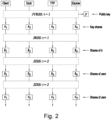
- Figure 2 shows this 'pre-signing' procedure in terms of Joint Random Secret Sharing (JRSS) protocols (sharing an unknown random value), and Joint Zero Secret Sharing (JZSS) protocols (sharing zero with random shares - used for masking).
- JRSS Joint Random Secret Sharing
- JZSS Joint Zero Secret Sharing
- the shared key generation and the 'pre-signing' arrangement described here can be performed in parallel at the same time, saving significantly on communication latency.
- the shares will be produced by the Client 6, the Exchange 8 and the TTP 10.
- the full signature interpolation (Lagrange) can performed by any party, but in the present embodiment is performed by the exchange 8 (or client 6), who will compile the final transaction and broadcast it to the network.
- Figure 3 shows each party computing the signature share and then broadcasting it. This share can be public - it contains no information about the private or ephemeral key shares, or any other identifying information due to the masking shares (of zero) c i .
- a more detailed explanation of the key share scheme used to distribute the key and signature shares shown in Figure 2 is described in Appendix 1.
- the security for the client can be further enhanced by splitting the client key share.
- This process is shown in Figure 4 .
- the client key share x 1
- the splitting is performed according to the protocol described in International Patent Application WO 2017/145010 .
- the key share Once the key share has been split, it is securely deleted.
- the sub-key shares are then sent to different devices to enable two-factor authentication (2FA) in order to authorise transaction signing.
- a further security enhancement can be achieved by the exchange storing one of the client sub-key shares - therefore both the client (via 2FA) and the exchange is required to consent the providing the client partial signature.
- the Exchange 8 must involve the Escrow 12 in order to construct the threshold signature on T.
- the situation is the same as would arise for BitGo.
- the procedure for convincing the Escrow 12 to participate can be relatively slow and involve multiple checks (for example, to guard against the possibility that security of the Exchange 8 has been compromised).
- the Escrow 12 could be configured to (initially) only provide a partial signature on a transaction which moves the funds to a special 'holding account' (recovery address: rec), also secured under a threshold signature, where they must remain for a period of time.
- rec recovery address
- the significance of this account may be known only to the parties of the threshold scheme. This precaution would give the Client 6 time to intervene, for example, if they had been wrongly deemed unresponsive.
- a malicious client 6 acts to prevent the generation of a valid threshold signature (and therefore the transfer of funds) by providing a signature share (i.e. s 1 ) that is invalid.
- a signature share i.e. s 1
- the initial step in this case is to identify which of the three signature shares ( s 1 , s 2 or s 3 ) is invalid. This can be done iteratively: the exchange 8, TTP 10 and Escrow 12 can attempt to sign a transaction to the recovery address, and if this fails a signature can be generated shares from the client 6, TTP 10 and Escrow 12 (i.e. the exchange 8 share is malicious).
- a signature share verification scheme can be employed.
- the present invention enables a secure wallet service system employed by Bitcoin exchanges, which employ the '2 of 3' multi-signature technology, to be effectively replaced (and improved) by a scheme based on threshold signatures employing polynomial secret sharing.
- the present invention is also compatible with trading via payment channels since it allows for signing at high frequency (in contrast to S. Goldfeder, R. Gennaro, H. Kalodner, J. Bonneau, J. A. Kroll, E. W. Felten, and A. Narayanan. Securing Bitcoin wallets via a new DSA/ECDSA threshold signature scheme (2015 ) and R. Gennaro et al.. Threshold-optimal DSA/ECDSA signatures and an application to Bitcoin wallet security (2016). International Conference on Applied Cryptography and Network Security. ACNS 2016: Applied Cryptography and Network Security pp 156-174 , for example).
- the present invention can also be made robust against the possibility of an unresponsive exchange. Because the TTP sees (and provides partial signature on) every commitment transaction, TTP always knows current channel state; this means TTP can collaborate with Escrow and Client to provide an orderly sequence of soft resolutions in event that exchange is rendered unresponsive, thus avoiding 'failure mode' described above.
- the present invention also avoids the need for Segregated Witness, by exchanging the first commitment transactions by embedding them in an on-chain transaction.
- the Escrow monitors the blockchain for these transactions, and collaborates with the appropriate parties to provide refunds if the relevant transactions are not observed before timeout.
- the availability and security of any of the parties may be enhanced by further sharing their private key and/or share in the threshold private key between members of a (private) 'Congress'.
- the Escrow may initiate a refund if the required ECTs are not observed on the blockchain.
- the difficulty of the blocks can be checked inside TEEs belonging to members of the Congress, and a ghostchain may be instantiated to construct the (partial) signature on the refund transaction if and only if commitment transactions are not observed within a certain number of blocks after the channel is funded.
- the invention may be implemented by means of hardware comprising several distinct elements, and by means of a suitably programmed computer.
- a device claim enumerating several means several of these means may be embodied by one and the same item of hardware.
- the mere fact that certain measures are recited in mutually different dependent claims does not indicate that a combination of these measures cannot be used to advantage.
- a constructed key segment d A ( i ) is constructed which is associated with participant( i ) and ( j -1)participants nominated as participant( h ) that are the other parties that participant( i ) exchanges secrets with to sign a key (and hence a Bitcoin transaction).
- This function is subject to a first secret value in the form of the participant's secret a 0 i that is selected as the polynomial free term. This value is not shared.
- a 0 is the secret for each participant p ( i ) and is not shared.
- Each participant P i sets up a respective secure encrypted communication channel with each other participant P j , for example by means of a method disclosed in international patent application WO 2017/145010 .
- Each participant p ( i ) broadcasts the values below to all participants.
- Each participant P ( h ⁇ i ) verifies the consistency of the received shares with those received from each other participant.
- this step consists of carrying out, on the elliptic curve encrypted versions of the shares f i (h) (i.e. f i (h)G), the operation which, if carried out on the unencrypted versions of f i (h), would recover the secret value a 0 (i) , to recover G a 0 (i) .
- the coefficients b h represent the Lagrange interpolation coefficients necessary to recover the secret from its corresponding shares.
- participant P j communicates with participant P i by means of its own encrypted communication channel, it is possible to identify which participant Pj is associated with any inconsistent shares.
- Exp-Interpolate() is defined as the operation which recovers the elliptic curve encrypted secret from the elliptic curve encrypted shares.
- Participant p ( i ) now uses the share in calculating signatures. This role can be conducted by any participant or by a party p ( c ) that acts as a coordinator in the process of collecting a signature.
- the participant p ( c ) can vary and does not need to be the same party on each attempt to collect enough shares to sign a transaction. Hence private key shares d A i ⁇ Z n * have been created without knowledge of the other participant's shares.
- Algorithm 2 can be used to both update the private key as well as to add randomness into the protocol.
- the result of this algorithm is a new key share that is associated with the original private key.
- a variation of this algorithm makes the ability to both increase the randomness of the first algorithm or to engage in a re-sharing exercise that results in new key slices without the need to change the bitcoin address possible.
- the invention allows a group to additively mask a private key share without altering the underlying private key. This process can be used to minimise any potential key leakage associated with the continued use and deployment of the individual key shares without changing the underlying bitcoin address and private key.
Landscapes
- Engineering & Computer Science (AREA)
- Computer Security & Cryptography (AREA)
- Computer Networks & Wireless Communication (AREA)
- Signal Processing (AREA)
- Theoretical Computer Science (AREA)
- Mathematical Optimization (AREA)
- General Physics & Mathematics (AREA)
- Mathematical Analysis (AREA)
- Algebra (AREA)
- Mathematical Physics (AREA)
- Pure & Applied Mathematics (AREA)
- Physics & Mathematics (AREA)
- Computing Systems (AREA)
- Financial Or Insurance-Related Operations Such As Payment And Settlement (AREA)
- Management, Administration, Business Operations System, And Electronic Commerce (AREA)
- Two-Way Televisions, Distribution Of Moving Picture Or The Like (AREA)
- Storage Device Security (AREA)
Claims (15)
- Un procédé de transfert d'accès à un actif numérique, le procédé comprenant :la fourniture, à chaque participant d'une pluralité de participants (6, 8, 10, 12), d'une part respective d'une deuxième clé privée d'une deuxième paire de clés privée-publique d'un système de cryptographie ;la division de la part respective de l'un desdits participants en une pluralité de sous-parts, et la suppression de celle-ci ;la réception d'une première transaction en chaîne de blocs en provenance d'un premier participant (8) desdits participants par chaque participant d'une pluralité de deuxièmes participants (6, 10, 12) desdits participants,ledit premier participant ayant une première clé privée d'une première paire de clés privée-publique dudit système de cryptographie, et ladite première transaction en chaîne de blocs étant signée avec ladite première clé privée ;la vérification, par une pluralité desdits deuxièmes participants, du fait que ladite première transaction en chaîne de blocs a été signée avec ladite première clé privée ; l'application d'une dite part respective de ladite deuxième clé privée à ladite première transaction en chaîne de blocs pour générer une part respective d'une première valeur secrète, ladite première valeur secrète étant une deuxième transaction en chaîne de blocs signée avec ladite deuxième clé privée, ladite première valeur secrète étant accessible à un premier nombre seuil desdites parts de ladite première valeur secrète et étant inaccessible à moins dudit premier nombre seuil de parts de ladite première valeur secrète ; etla combinaison au moins dudit premier nombre seuil desdites parts de ladite première valeur secrète provenant dudit premier participant et d'une pluralité desdits deuxièmes participants pour générer ladite première valeur secrète.
- Un procédé selon la revendication 1, dans lequel l'une desdites sous-parts est stockée au niveau de l'un des autres participants.
- Un procédé selon l'une ou l'autre des revendications 1 et 2, dans lequel chaque participant d'une pluralité desdits deuxièmes participants a une clé privée respective du système de cryptographie.
- Un procédé selon n'importe lesquelles des revendications 1 à 3, comprenant en outre la distribution de parts d'une dite part de ladite deuxième clé privée en possession dudit premier participant parmi ledit premier participant et au moins un dit deuxième participant.
- Un procédé selon n'importe laquelle des revendications précédentes, comprenant en outre le transfert d'accès audit actif numérique à une troisième clé privée dudit système de cryptographie dans le cas où un dit deuxième participant ne réagit plus.
- Un procédé selon la revendication 5, dans lequel l'actif numérique reste sous le contrôle de ladite troisième clé privée pendant un temps prédéterminé.
- Un procédé selon n'importe laquelle des revendications précédentes, comprenant en outre la distribution desdites parts de ladite deuxième clé privée parmi une pluralité desdits participants.
- Un procédé de transfert d'accès à un actif numérique, le procédé comprenant :la fourniture, à chaque participant d'une pluralité de participants (6, 8, 10, 12), d'une part respective d'une deuxième clé privée d'une deuxième paire de clés privée-publique d'un système de cryptographie ;la division de la part respective de l'un desdits participants en une pluralité de sous-parts, et la suppression de celle-ci ;l'envoi d'une première transaction en chaîne de blocs d'un premier participant (8) à une pluralité de deuxièmes participants (6, 10, 12),ledit premier participant ayant une première clé privée d'une première paire de clés privée-publique dudit système de cryptographie, ladite première transaction en chaîne de blocs étant signée avec ladite première clé privée,la part respective de l'un desdits participants étant divisée en une pluralité de sous-parts, après quoi elle est supprimée ;la réception, en provenance d'une pluralité desdits deuxièmes participants, d'une part respective d'une première valeur secrète, ladite première valeur secrète étant une deuxième transaction en chaîne de blocs signée avec ladite deuxième clé privée, ladite première valeur secrète étant accessible à un premier nombre seuil desdites parts de ladite première valeur secrète et étant inaccessible à moins dudit premier nombre seuil de parts de ladite première valeur secrète, chaque dite part de ladite deuxième clé privée étant appliquée à ladite deuxième transaction en chaîne de blocs après vérification, par lesdits deuxièmes participants correspondants, du fait que ladite première transaction en chaîne de blocs a été signée avec ladite première clé privée ; etla combinaison au moins dudit premier nombre seuil desdits parts de ladite première valeur secrète provenant dudit premier participant et d'une pluralité desdits deuxièmes participants pour générer ladite première valeur secrète.
- Un procédé selon la revendication 8, dans lequel l'une desdites sous-parts est stockée au niveau de l'un des autres participants.
- Un procédé selon l'une ou l'autre des revendications 8 et 9, le procédé comprenant en outre au moins un élément parmi :dans lequel chaque participant d'une pluralité desdits deuxièmes participants a une clé privée respective du système de cryptographie ; oula distribution de parts d'une dite part de ladite deuxième clé privée en possession dudit premier participant parmi ledit premier participant et au moins un dit deuxième participant.
- Un procédé selon n'importe laquelle des revendications 8 à 10, comprenant en outre le transfert d'accès audit actif numérique à une troisième clé privée dudit système de cryptographie dans le cas où un dit deuxième participant ne réagit plus.
- Un procédé selon la revendication 11, dans lequel l'actif numérique reste sous le contrôle de ladite troisième clé privée pendant un temps prédéterminé.
- Un procédé selon n'importe laquelle des revendications 8 à 12, comprenant en outre la distribution desdites parts de ladite deuxième clé privée parmi une pluralité desdits participants.
- Un procédé selon n'importe laquelle des revendications précédentes, dans lequel le système de cryptographie est un système de cryptographie à courbe elliptique, dans lequel ladite clé publique de chaque dite paire de clés publique-privée est liée à la clé privée correspondante par multiplication d'un point générateur de courbe elliptique par ladite clé privée.
- Un système mis en œuvre par ordinateur pour la réalisation d'un procédé selon n'importe laquelle des revendications précédentes.
Priority Applications (1)
| Application Number | Priority Date | Filing Date | Title |
|---|---|---|---|
| EP25175396.8A EP4576660A3 (fr) | 2018-04-05 | 2019-03-26 | Procédé et système mis en uvre par ordinateur pour transférer un accès à un actif numérique |
Applications Claiming Priority (4)
| Application Number | Priority Date | Filing Date | Title |
|---|---|---|---|
| GBGB1805633.3A GB201805633D0 (en) | 2018-04-05 | 2018-04-05 | Computer implemented method and system |
| EP19722683.0A EP3777013B1 (fr) | 2018-04-05 | 2019-03-26 | Procédé exécuté par ordinateur et système de transfert d'accès à un bien numérique |
| EP22192030.9A EP4152683B1 (fr) | 2018-04-05 | 2019-03-26 | Procédé mis en oeuvre par ordinateur et système de transfert d'accès à un actif numérique |
| PCT/IB2019/052428 WO2019193452A1 (fr) | 2018-04-05 | 2019-03-26 | Procédé exécuté par ordinateur et système de transfert d'accès à un bien numérique |
Related Parent Applications (3)
| Application Number | Title | Priority Date | Filing Date |
|---|---|---|---|
| EP19722683.0A Division EP3777013B1 (fr) | 2018-04-05 | 2019-03-26 | Procédé exécuté par ordinateur et système de transfert d'accès à un bien numérique |
| EP22192030.9A Division EP4152683B1 (fr) | 2018-04-05 | 2019-03-26 | Procédé mis en oeuvre par ordinateur et système de transfert d'accès à un actif numérique |
| EP22192030.9A Division-Into EP4152683B1 (fr) | 2018-04-05 | 2019-03-26 | Procédé mis en oeuvre par ordinateur et système de transfert d'accès à un actif numérique |
Related Child Applications (1)
| Application Number | Title | Priority Date | Filing Date |
|---|---|---|---|
| EP25175396.8A Division EP4576660A3 (fr) | 2018-04-05 | 2019-03-26 | Procédé et système mis en uvre par ordinateur pour transférer un accès à un actif numérique |
Publications (3)
| Publication Number | Publication Date |
|---|---|
| EP4340295A2 EP4340295A2 (fr) | 2024-03-20 |
| EP4340295A3 EP4340295A3 (fr) | 2024-05-01 |
| EP4340295B1 true EP4340295B1 (fr) | 2025-05-14 |
Family
ID=62202984
Family Applications (4)
| Application Number | Title | Priority Date | Filing Date |
|---|---|---|---|
| EP24154980.7A Active EP4340295B1 (fr) | 2018-04-05 | 2019-03-26 | Procédé et système mis en uvre par ordinateur pour transférer un accès à un actif numérique |
| EP19722683.0A Active EP3777013B1 (fr) | 2018-04-05 | 2019-03-26 | Procédé exécuté par ordinateur et système de transfert d'accès à un bien numérique |
| EP25175396.8A Pending EP4576660A3 (fr) | 2018-04-05 | 2019-03-26 | Procédé et système mis en uvre par ordinateur pour transférer un accès à un actif numérique |
| EP22192030.9A Active EP4152683B1 (fr) | 2018-04-05 | 2019-03-26 | Procédé mis en oeuvre par ordinateur et système de transfert d'accès à un actif numérique |
Family Applications After (3)
| Application Number | Title | Priority Date | Filing Date |
|---|---|---|---|
| EP19722683.0A Active EP3777013B1 (fr) | 2018-04-05 | 2019-03-26 | Procédé exécuté par ordinateur et système de transfert d'accès à un bien numérique |
| EP25175396.8A Pending EP4576660A3 (fr) | 2018-04-05 | 2019-03-26 | Procédé et système mis en uvre par ordinateur pour transférer un accès à un actif numérique |
| EP22192030.9A Active EP4152683B1 (fr) | 2018-04-05 | 2019-03-26 | Procédé mis en oeuvre par ordinateur et système de transfert d'accès à un actif numérique |
Country Status (11)
| Country | Link |
|---|---|
| US (4) | US11641283B2 (fr) |
| EP (4) | EP4340295B1 (fr) |
| JP (3) | JP7316295B2 (fr) |
| KR (1) | KR102889883B1 (fr) |
| CN (2) | CN119254418A (fr) |
| DK (1) | DK3777013T3 (fr) |
| GB (1) | GB201805633D0 (fr) |
| SG (1) | SG11202008860YA (fr) |
| TW (1) | TWI809080B (fr) |
| WO (1) | WO2019193452A1 (fr) |
| ZA (1) | ZA202006065B (fr) |
Families Citing this family (46)
| Publication number | Priority date | Publication date | Assignee | Title |
|---|---|---|---|---|
| GB201605032D0 (en) * | 2016-03-24 | 2016-05-11 | Eitc Holdings Ltd | Recording multiple transactions on a peer-to-peer distributed ledger |
| GB2576081A (en) * | 2018-06-03 | 2020-02-05 | Vvow Company Ltd | Peer-to-peer cryptocurrency and crypto asset trading platform |
| US11444779B2 (en) | 2018-08-02 | 2022-09-13 | Paypal, Inc. | Techniques for securing application programming interface requests using multi-party digital signatures |
| EP3696670B1 (fr) * | 2019-02-13 | 2025-05-14 | UVUE Limited | Système de calcul distribué et son procédé de fonctionnement |
| GB201907396D0 (en) | 2019-05-24 | 2019-07-10 | Nchain Holdings Ltd | Hash function attacks |
| GB2584154A (en) * | 2019-05-24 | 2020-11-25 | Nchain Holdings Ltd | Knowledge proof |
| GB201907392D0 (en) | 2019-05-24 | 2019-07-10 | Nchain Holdings Ltd | Proof-of-work |
| US11310055B2 (en) * | 2019-07-11 | 2022-04-19 | PolySign, Inc. | Preventing an incorrect transmission of a copy of a record of data to a distributed ledger system |
| US11233658B2 (en) * | 2019-08-14 | 2022-01-25 | OX Labs Inc. | Digital transaction signing for multiple client devices using secured encrypted private keys |
| EP4046325B1 (fr) * | 2019-10-15 | 2023-07-19 | SEPIOR ApS | Génération de signatures numériques à l'aide d'un portefeuille froid |
| US11271728B2 (en) * | 2019-12-20 | 2022-03-08 | Fujitsu Limited | Secure key management |
| GB2594312A (en) | 2020-04-23 | 2021-10-27 | Nchain Holdings Ltd | Digital Signatures |
| US12093371B2 (en) | 2020-05-28 | 2024-09-17 | Red Hat, Inc. | Data distribution using a trusted execution environment in an untrusted device |
| US11947659B2 (en) | 2020-05-28 | 2024-04-02 | Red Hat, Inc. | Data distribution across multiple devices using a trusted execution environment in a mobile device |
| US11971980B2 (en) * | 2020-05-28 | 2024-04-30 | Red Hat, Inc. | Using trusted execution environments to perform a communal operation for mutually-untrusted devices |
| GB2596072A (en) | 2020-06-15 | 2021-12-22 | Nchain Holdings Ltd | Generating secret shares |
| GB2597539A (en) * | 2020-07-28 | 2022-02-02 | Nchain Holdings Ltd | Generating shared private keys |
| EP3955110A1 (fr) | 2020-08-12 | 2022-02-16 | UVUE Limited | Système de calcul distribué et son procédé de fonctionnement |
| GB2598112A (en) * | 2020-08-18 | 2022-02-23 | Nchain Holdings Ltd | Threshold signatures |
| US11870914B2 (en) | 2020-09-04 | 2024-01-09 | Nchain Licensing Ag | Digital signatures |
| US11848924B2 (en) | 2020-10-12 | 2023-12-19 | Red Hat, Inc. | Multi-factor system-to-system authentication using secure execution environments |
| GB2600684A (en) | 2020-10-28 | 2022-05-11 | Nchain Holdings Ltd | Identifying denial-of-service attacks |
| CN113159762B (zh) * | 2021-01-28 | 2024-04-09 | 武汉天喻信息产业股份有限公司 | 基于Paillier和博弈论的区块链交易方法 |
| GB2603495A (en) | 2021-02-05 | 2022-08-10 | Nchain Holdings Ltd | Generating shared keys |
| CN112600671B (zh) * | 2021-03-02 | 2021-06-01 | 腾讯科技(深圳)有限公司 | 一种数据处理方法、装置、设备及存储介质 |
| GB2606169A (en) | 2021-04-27 | 2022-11-02 | Nchain Licensing Ag | Nested threshold signatures |
| CN113298522B (zh) * | 2021-05-26 | 2023-03-14 | 杭州安恒信息技术股份有限公司 | 一种闪电网络密钥管理方法、装置、电子设备及存储介质 |
| WO2022266609A1 (fr) | 2021-06-13 | 2022-12-22 | Artema Labs, Inc. | Systèmes et procédés de génération de recommandation reposant sur une chaîne de blocs automatisée, de publicité et de promotion |
| CN113656828B (zh) * | 2021-07-20 | 2023-04-07 | 北京理工大学 | 面向金融系统交易的基于格密码的区块链隐私保护方法 |
| GB2609908B (en) | 2021-08-09 | 2023-10-18 | Nchain Licensing Ag | Generating Digital signatures |
| CN113704831B (zh) * | 2021-08-11 | 2023-11-03 | 北京天威诚信电子商务服务有限公司 | 一种参与方无需同时在线的数字签名多方生成方法及系统 |
| WO2023028462A1 (fr) * | 2021-08-21 | 2023-03-02 | Artema Labs, Inc | Systèmes et procédés d'établissement de rapport d'interactions de jetons |
| GB2612309A (en) | 2021-10-26 | 2023-05-03 | Nchain Licensing Ag | Threshold signature scheme |
| CN114240547B (zh) * | 2021-12-07 | 2022-11-22 | 大汉电子商务有限公司 | 基于数字签章的钢贸交易方法和系统、装置及存储介质 |
| US11997216B2 (en) * | 2022-02-23 | 2024-05-28 | Coinbase, Inc. | Systems and methods for maintaining secure, encrypted communications across distributed computer networks by linking cryptography-based digital repositories in order to perform blockchain operations in decentralized applications |
| CN114598446B (zh) * | 2022-03-11 | 2024-09-17 | 重庆交通大学 | 基于Shamir门限秘密共享的全同态区块链隐私保护方法 |
| CN115459924B (zh) * | 2022-08-31 | 2024-11-26 | 百度(中国)有限公司 | 一种数字签名方法、装置及电子设备 |
| CN115580401B (zh) * | 2022-10-25 | 2023-12-22 | 商密(广州)信息科技有限公司 | 一种基于可验证秘密共享的无证书sm2密钥生成方法 |
| US20240223375A1 (en) * | 2022-12-28 | 2024-07-04 | Dropbox, Inc. | Zero-knowledge encryption architecture for content management systems |
| US12316751B2 (en) * | 2023-05-04 | 2025-05-27 | Fmr Llc | Secret zero generation and usage |
| CN116614227B (zh) * | 2023-05-19 | 2025-10-10 | 河南大学 | 基于秘密共享和同态加密的多时间服务器tre方法和系统 |
| CN116614225A (zh) * | 2023-05-24 | 2023-08-18 | 上海万向区块链股份公司 | 基于区块链技术的密钥分布式验证方法和系统 |
| CN117113420B (zh) * | 2023-10-24 | 2023-12-22 | 北京前景无忧电子科技股份有限公司 | 一种智能电网的用户电力数据隐私保护方法及保护系统 |
| US12603771B1 (en) * | 2024-10-11 | 2026-04-14 | Circle Internet Group, Inc. | Distributed key generation and resharing for multi-device cryptocurrency wallets with tee-backed security |
| CN119484127B (zh) * | 2024-11-21 | 2025-10-21 | 上海零数众合信息科技有限公司 | 基于秘密共享的群身份安全匿名认证方法及系统 |
| CN119834953A (zh) * | 2025-01-10 | 2025-04-15 | 暨南大学 | 一种隐私保护的无脚本链下多路径众筹方法 |
Family Cites Families (39)
| Publication number | Priority date | Publication date | Assignee | Title |
|---|---|---|---|---|
| JP6008316B2 (ja) * | 2012-08-24 | 2016-10-19 | パナソニックIpマネジメント株式会社 | 秘密分散装置および秘密分散プログラム |
| US9489522B1 (en) * | 2013-03-13 | 2016-11-08 | Hrl Laboratories, Llc | Method for secure and resilient distributed generation of elliptic curve digital signature algorithm (ECDSA) based digital signatures with proactive security |
| US9892460B1 (en) * | 2013-06-28 | 2018-02-13 | Winklevoss Ip, Llc | Systems, methods, and program products for operating exchange traded products holding digital math-based assets |
| EP4693151A3 (fr) * | 2014-05-09 | 2026-04-08 | Veritaseum, Inc. | Dispositifs, systèmes et procédés pour faciliter des transferts de valeur de confiance faible et nulle |
| US20150356523A1 (en) * | 2014-06-07 | 2015-12-10 | ChainID LLC | Decentralized identity verification systems and methods |
| WO2016049406A1 (fr) * | 2014-09-26 | 2016-03-31 | Technicolor Usa, Inc. | Procédé et appareil pour signatures à seuil non interactives sécurisées |
| US9413735B1 (en) * | 2015-01-20 | 2016-08-09 | Ca, Inc. | Managing distribution and retrieval of security key fragments among proxy storage devices |
| US9735958B2 (en) * | 2015-05-19 | 2017-08-15 | Coinbase, Inc. | Key ceremony of a security system forming part of a host computer for cryptographic transactions |
| US10097356B2 (en) * | 2015-07-02 | 2018-10-09 | Nasdaq, Inc. | Systems and methods of secure provenance for distributed transaction databases |
| US20170213210A1 (en) * | 2016-01-22 | 2017-07-27 | International Business Machines Corporation | Asset transfers using a multi-tenant transaction database |
| US10164952B2 (en) * | 2016-02-16 | 2018-12-25 | Xerox Corporation | Method and system for server based secure auditing for revisioning of electronic document files |
| EP3754901A1 (fr) * | 2016-02-23 | 2020-12-23 | Nchain Holdings Limited | Système et procédé de comptage mis en uvre par chaîne de blocs destinés à être utilisés dans un vote et une distribution sécurisés |
| CN109155036B (zh) * | 2016-02-23 | 2023-05-23 | 区块链控股有限公司 | 用于经由区块链控制资产有关的动作的系统及方法 |
| US10652014B2 (en) * | 2016-02-23 | 2020-05-12 | nChain Holdings Limited | Determining a common secret for the secure exchange of information and hierarchical, deterministic cryptographic keys |
| SG11201805542TA (en) * | 2016-02-23 | 2018-09-27 | Nchain Holdings Ltd | Secure multiparty loss resistant storage and transfer of cryptographic keys for blockchain based systems in conjunction with a wallet management system |
| GB2560274C (en) * | 2016-02-23 | 2022-06-15 | Nchain Holdings Ltd | Personal device security using elliptic curve cryptography for secret sharing |
| WO2017149537A1 (fr) | 2016-02-29 | 2017-09-08 | Secret Double Octopus Ltd | Système et procédé de sécurisation d'une voie de communication |
| WO2017147696A1 (fr) * | 2016-02-29 | 2017-09-08 | Troy Jacob Ronda | Systèmes et procédés de vérification d'identité distribuée |
| US11057198B2 (en) | 2016-03-04 | 2021-07-06 | Assured Enterprises, Inc. | Utilization of a proxy technique in escrow encryption key usage |
| GB201611948D0 (en) | 2016-07-08 | 2016-08-24 | Kalypton Int Ltd | Distributed transcation processing and authentication system |
| US11531974B2 (en) * | 2016-08-17 | 2022-12-20 | International Business Machines Corporation | Tracking transactions through a blockchain |
| GB2538022B (en) * | 2016-08-20 | 2018-07-11 | PQ Solutions Ltd | Multiple secrets in quorum based data processing |
| CN106533661B (zh) * | 2016-10-25 | 2019-07-19 | 北京大学 | 基于组合公钥的密码学货币地址在线生成方法 |
| CN106503994B (zh) * | 2016-11-02 | 2020-07-28 | 西安电子科技大学 | 基于属性加密的区块链隐私数据访问控制方法 |
| CN106548345B (zh) | 2016-12-07 | 2020-08-21 | 北京信任度科技有限公司 | 基于密钥分割实现区块链私钥保护的方法及系统 |
| CN106533675A (zh) | 2016-12-19 | 2017-03-22 | 北京洋浦伟业科技发展有限公司 | 数字签名方法及系统 |
| GB201705621D0 (en) * | 2017-04-07 | 2017-05-24 | Nchain Holdings Ltd | Computer-implemented system and method |
| WO2019029429A1 (fr) * | 2017-08-05 | 2019-02-14 | Proclus Technologies Limited | Procédé et système permettant de sécuriser une chaîne de blocs avec preuve de transactions |
| GB201715423D0 (en) * | 2017-09-22 | 2017-11-08 | Nchain Holdings Ltd | Computer-implemented system and method |
| KR102810891B1 (ko) * | 2017-12-13 | 2025-05-20 | 엔체인 홀딩스 리미티드 | 암호 자료를 안전하게 공유하기 위한 시스템 및 방법 |
| GB201721021D0 (en) * | 2017-12-15 | 2018-01-31 | Nchain Holdings Ltd | Computer-implemented methods and systems |
| US20210119785A1 (en) * | 2018-04-18 | 2021-04-22 | 2Key New Economics Ltd. | Decentralized protocol for maintaining cryptographically proven multi-step referral networks |
| US11985225B2 (en) * | 2018-05-14 | 2024-05-14 | Nchain Licensing Ag | Computer-implemented systems and methods for using veiled values in blockchain |
| US10754693B2 (en) * | 2018-07-05 | 2020-08-25 | Vmware, Inc. | Secure transfer of control over computational entities in a distributed computing environment |
| US10938549B2 (en) * | 2018-11-27 | 2021-03-02 | Advanced New Technologies Co., Ltd. | System and method for information protection |
| BR112019008058A2 (pt) * | 2018-11-27 | 2019-11-12 | Alibaba Group Holding Ltd | sistema e método para proteção de informações |
| MY193900A (en) * | 2018-11-27 | 2022-10-31 | Advanced New Technologies Co Ltd | System and method for information protection |
| US11870654B2 (en) * | 2020-08-13 | 2024-01-09 | Matthew Branton | Methods and systems for introducing self-contained intent functionality into decentralized computer networks |
| US11621857B2 (en) * | 2020-09-03 | 2023-04-04 | Seagate Technology Llc | Fingerprint and provenance for movable storage devices |
-
2018
- 2018-04-05 GB GBGB1805633.3A patent/GB201805633D0/en not_active Ceased
-
2019
- 2019-03-26 SG SG11202008860YA patent/SG11202008860YA/en unknown
- 2019-03-26 WO PCT/IB2019/052428 patent/WO2019193452A1/fr not_active Ceased
- 2019-03-26 CN CN202411130095.9A patent/CN119254418A/zh active Pending
- 2019-03-26 CN CN201980024832.8A patent/CN112204920B/zh active Active
- 2019-03-26 DK DK19722683.0T patent/DK3777013T3/da active
- 2019-03-26 US US17/045,425 patent/US11641283B2/en active Active
- 2019-03-26 EP EP24154980.7A patent/EP4340295B1/fr active Active
- 2019-03-26 KR KR1020207031626A patent/KR102889883B1/ko active Active
- 2019-03-26 EP EP19722683.0A patent/EP3777013B1/fr active Active
- 2019-03-26 EP EP25175396.8A patent/EP4576660A3/fr active Pending
- 2019-03-26 JP JP2020552031A patent/JP7316295B2/ja active Active
- 2019-03-26 EP EP22192030.9A patent/EP4152683B1/fr active Active
- 2019-04-03 TW TW108111949A patent/TWI809080B/zh active
-
2020
- 2020-09-30 ZA ZA2020/06065A patent/ZA202006065B/en unknown
-
2023
- 2023-03-26 US US18/126,467 patent/US11979507B2/en active Active
- 2023-07-14 JP JP2023115659A patent/JP7620666B2/ja active Active
-
2024
- 2024-03-29 US US18/622,826 patent/US12341908B2/en active Active
-
2025
- 2025-01-10 JP JP2025003962A patent/JP2025069176A/ja active Pending
- 2025-06-03 US US19/226,557 patent/US20250310124A1/en active Pending
Also Published As
| Publication number | Publication date |
|---|---|
| US20240333525A1 (en) | 2024-10-03 |
| US20250310124A1 (en) | 2025-10-02 |
| EP3777013A1 (fr) | 2021-02-17 |
| JP2023134669A (ja) | 2023-09-27 |
| TWI809080B (zh) | 2023-07-21 |
| US11979507B2 (en) | 2024-05-07 |
| JP2025069176A (ja) | 2025-04-30 |
| GB201805633D0 (en) | 2018-05-23 |
| TW201944755A (zh) | 2019-11-16 |
| DK3777013T3 (da) | 2022-12-19 |
| ZA202006065B (en) | 2023-04-26 |
| US12341908B2 (en) | 2025-06-24 |
| EP4576660A3 (fr) | 2025-07-09 |
| EP4340295A2 (fr) | 2024-03-20 |
| EP4152683A1 (fr) | 2023-03-22 |
| EP3777013B1 (fr) | 2022-09-28 |
| EP4152683B1 (fr) | 2024-03-06 |
| EP4340295A3 (fr) | 2024-05-01 |
| KR102889883B1 (ko) | 2025-11-21 |
| JP2021519541A (ja) | 2021-08-10 |
| SG11202008860YA (en) | 2020-10-29 |
| US20210152371A1 (en) | 2021-05-20 |
| US11641283B2 (en) | 2023-05-02 |
| EP4576660A2 (fr) | 2025-06-25 |
| WO2019193452A1 (fr) | 2019-10-10 |
| KR20200139223A (ko) | 2020-12-11 |
| JP7316295B2 (ja) | 2023-07-27 |
| JP7620666B2 (ja) | 2025-01-23 |
| CN112204920B (zh) | 2024-09-03 |
| US20230231727A1 (en) | 2023-07-20 |
| CN119254418A (zh) | 2025-01-03 |
| CN112204920A (zh) | 2021-01-08 |
Similar Documents
| Publication | Publication Date | Title |
|---|---|---|
| US12341908B2 (en) | Computer-implemented method and system for transferring access to a digital asset | |
| JP7289298B2 (ja) | 低エントロピーパスワードを用いてブロックチェーントランザクションを許可するためのコンピュータ実装されたシステム及び方法 | |
| JP2024050855A (ja) | ブロックチェーンネットワーク上のタイムリリース暗号化のためのコンピュータにより実施されるシステム及び方法 | |
| JP7385580B2 (ja) | デジタルアセットの制御を移転するための、コンピュータにより実施される方法およびシステム | |
| US12256023B2 (en) | Computer implemented method and system for obtaining digitally signed data | |
| KR20230093432A (ko) | 서비스 거부 공격들의 식별 | |
| HK40084163A (en) | Computer implemented method and system for transferring access to a digital asset | |
| HK40103212A (en) | Computer implemented method and system for transferring access to a digital asset | |
| HK40084163B (en) | Computer implemented method and system for transferring access to a digital asset | |
| HK40038543A (en) | Computer implemented method and system for transferring access to a digital asset | |
| HK40038543B (en) | Computer implemented method and system for transferring access to a digital asset | |
| CN118316925A (zh) | 基于分布式节点的数据处理方法、装置、可读介质及设备 |
Legal Events
| Date | Code | Title | Description |
|---|---|---|---|
| PUAI | Public reference made under article 153(3) epc to a published international application that has entered the european phase |
Free format text: ORIGINAL CODE: 0009012 |
|
| STAA | Information on the status of an ep patent application or granted ep patent |
Free format text: STATUS: THE APPLICATION HAS BEEN PUBLISHED |
|
| AC | Divisional application: reference to earlier application |
Ref document number: 3777013 Country of ref document: EP Kind code of ref document: P Ref document number: 4152683 Country of ref document: EP Kind code of ref document: P |
|
| AK | Designated contracting states |
Kind code of ref document: A2 Designated state(s): AL AT BE BG CH CY CZ DE DK EE ES FI FR GB GR HR HU IE IS IT LI LT LU LV MC MK MT NL NO PL PT RO RS SE SI SK SM TR |
|
| REG | Reference to a national code |
Ref country code: DE Ref legal event code: R079 Free format text: PREVIOUS MAIN CLASS: H04L0009320000 Ipc: H04L0009000000 Ref document number: 602019070150 Country of ref document: DE |
|
| PUAL | Search report despatched |
Free format text: ORIGINAL CODE: 0009013 |
|
| AK | Designated contracting states |
Kind code of ref document: A3 Designated state(s): AL AT BE BG CH CY CZ DE DK EE ES FI FR GB GR HR HU IE IS IT LI LT LU LV MC MK MT NL NO PL PT RO RS SE SI SK SM TR |
|
| RIC1 | Information provided on ipc code assigned before grant |
Ipc: H04L 9/32 20060101ALI20240322BHEP Ipc: H04L 9/30 20060101ALI20240322BHEP Ipc: H04L 9/08 20060101ALI20240322BHEP Ipc: H04L 9/00 20220101AFI20240322BHEP |
|
| P01 | Opt-out of the competence of the unified patent court (upc) registered |
Effective date: 20240412 |
|
| REG | Reference to a national code |
Ref country code: HK Ref legal event code: DE Ref document number: 40103212 Country of ref document: HK |
|
| STAA | Information on the status of an ep patent application or granted ep patent |
Free format text: STATUS: REQUEST FOR EXAMINATION WAS MADE |
|
| 17P | Request for examination filed |
Effective date: 20241028 |
|
| RBV | Designated contracting states (corrected) |
Designated state(s): AL AT BE BG CH CY CZ DE DK EE ES FI FR GB GR HR HU IE IS IT LI LT LU LV MC MK MT NL NO PL PT RO RS SE SI SK SM TR |
|
| GRAP | Despatch of communication of intention to grant a patent |
Free format text: ORIGINAL CODE: EPIDOSNIGR1 |
|
| STAA | Information on the status of an ep patent application or granted ep patent |
Free format text: STATUS: GRANT OF PATENT IS INTENDED |
|
| INTG | Intention to grant announced |
Effective date: 20241218 |
|
| GRAS | Grant fee paid |
Free format text: ORIGINAL CODE: EPIDOSNIGR3 |
|
| GRAA | (expected) grant |
Free format text: ORIGINAL CODE: 0009210 |
|
| STAA | Information on the status of an ep patent application or granted ep patent |
Free format text: STATUS: THE PATENT HAS BEEN GRANTED |
|
| AC | Divisional application: reference to earlier application |
Ref document number: 3777013 Country of ref document: EP Kind code of ref document: P Ref document number: 4152683 Country of ref document: EP Kind code of ref document: P |
|
| AK | Designated contracting states |
Kind code of ref document: B1 Designated state(s): AL AT BE BG CH CY CZ DE DK EE ES FI FR GB GR HR HU IE IS IT LI LT LU LV MC MK MT NL NO PL PT RO RS SE SI SK SM TR |
|
| REG | Reference to a national code |
Ref country code: GB Ref legal event code: FG4D |
|
| REG | Reference to a national code |
Ref country code: CH Ref legal event code: EP |
|
| REG | Reference to a national code |
Ref country code: DE Ref legal event code: R096 Ref document number: 602019070150 Country of ref document: DE |
|
| REG | Reference to a national code |
Ref country code: IE Ref legal event code: FG4D |
|
| REG | Reference to a national code |
Ref country code: NL Ref legal event code: MP Effective date: 20250514 |
|
| PG25 | Lapsed in a contracting state [announced via postgrant information from national office to epo] |
Ref country code: ES Free format text: LAPSE BECAUSE OF FAILURE TO SUBMIT A TRANSLATION OF THE DESCRIPTION OR TO PAY THE FEE WITHIN THE PRESCRIBED TIME-LIMIT Effective date: 20250514 Ref country code: PT Free format text: LAPSE BECAUSE OF FAILURE TO SUBMIT A TRANSLATION OF THE DESCRIPTION OR TO PAY THE FEE WITHIN THE PRESCRIBED TIME-LIMIT Effective date: 20250915 Ref country code: FI Free format text: LAPSE BECAUSE OF FAILURE TO SUBMIT A TRANSLATION OF THE DESCRIPTION OR TO PAY THE FEE WITHIN THE PRESCRIBED TIME-LIMIT Effective date: 20250514 |
|
| REG | Reference to a national code |
Ref country code: LT Ref legal event code: MG9D |
|
| PG25 | Lapsed in a contracting state [announced via postgrant information from national office to epo] |
Ref country code: GR Free format text: LAPSE BECAUSE OF FAILURE TO SUBMIT A TRANSLATION OF THE DESCRIPTION OR TO PAY THE FEE WITHIN THE PRESCRIBED TIME-LIMIT Effective date: 20250815 Ref country code: NO Free format text: LAPSE BECAUSE OF FAILURE TO SUBMIT A TRANSLATION OF THE DESCRIPTION OR TO PAY THE FEE WITHIN THE PRESCRIBED TIME-LIMIT Effective date: 20250814 |
|
| PG25 | Lapsed in a contracting state [announced via postgrant information from national office to epo] |
Ref country code: NL Free format text: LAPSE BECAUSE OF FAILURE TO SUBMIT A TRANSLATION OF THE DESCRIPTION OR TO PAY THE FEE WITHIN THE PRESCRIBED TIME-LIMIT Effective date: 20250514 Ref country code: PL Free format text: LAPSE BECAUSE OF FAILURE TO SUBMIT A TRANSLATION OF THE DESCRIPTION OR TO PAY THE FEE WITHIN THE PRESCRIBED TIME-LIMIT Effective date: 20250514 |
|
| REG | Reference to a national code |
Ref country code: AT Ref legal event code: MK05 Ref document number: 1795741 Country of ref document: AT Kind code of ref document: T Effective date: 20250514 |
|
| PG25 | Lapsed in a contracting state [announced via postgrant information from national office to epo] |
Ref country code: BG Free format text: LAPSE BECAUSE OF FAILURE TO SUBMIT A TRANSLATION OF THE DESCRIPTION OR TO PAY THE FEE WITHIN THE PRESCRIBED TIME-LIMIT Effective date: 20250514 |
|
| PG25 | Lapsed in a contracting state [announced via postgrant information from national office to epo] |
Ref country code: HR Free format text: LAPSE BECAUSE OF FAILURE TO SUBMIT A TRANSLATION OF THE DESCRIPTION OR TO PAY THE FEE WITHIN THE PRESCRIBED TIME-LIMIT Effective date: 20250514 |
|
| PG25 | Lapsed in a contracting state [announced via postgrant information from national office to epo] |
Ref country code: AT Free format text: LAPSE BECAUSE OF FAILURE TO SUBMIT A TRANSLATION OF THE DESCRIPTION OR TO PAY THE FEE WITHIN THE PRESCRIBED TIME-LIMIT Effective date: 20250514 |
|
| PG25 | Lapsed in a contracting state [announced via postgrant information from national office to epo] |
Ref country code: RS Free format text: LAPSE BECAUSE OF FAILURE TO SUBMIT A TRANSLATION OF THE DESCRIPTION OR TO PAY THE FEE WITHIN THE PRESCRIBED TIME-LIMIT Effective date: 20250814 |
|
| PG25 | Lapsed in a contracting state [announced via postgrant information from national office to epo] |
Ref country code: IS Free format text: LAPSE BECAUSE OF FAILURE TO SUBMIT A TRANSLATION OF THE DESCRIPTION OR TO PAY THE FEE WITHIN THE PRESCRIBED TIME-LIMIT Effective date: 20250914 |
|
| PG25 | Lapsed in a contracting state [announced via postgrant information from national office to epo] |
Ref country code: LV Free format text: LAPSE BECAUSE OF FAILURE TO SUBMIT A TRANSLATION OF THE DESCRIPTION OR TO PAY THE FEE WITHIN THE PRESCRIBED TIME-LIMIT Effective date: 20250514 |
|
| PG25 | Lapsed in a contracting state [announced via postgrant information from national office to epo] |
Ref country code: DK Free format text: LAPSE BECAUSE OF FAILURE TO SUBMIT A TRANSLATION OF THE DESCRIPTION OR TO PAY THE FEE WITHIN THE PRESCRIBED TIME-LIMIT Effective date: 20250514 Ref country code: SM Free format text: LAPSE BECAUSE OF FAILURE TO SUBMIT A TRANSLATION OF THE DESCRIPTION OR TO PAY THE FEE WITHIN THE PRESCRIBED TIME-LIMIT Effective date: 20250514 |
|
| PG25 | Lapsed in a contracting state [announced via postgrant information from national office to epo] |
Ref country code: CZ Free format text: LAPSE BECAUSE OF FAILURE TO SUBMIT A TRANSLATION OF THE DESCRIPTION OR TO PAY THE FEE WITHIN THE PRESCRIBED TIME-LIMIT Effective date: 20250514 |
|
| PG25 | Lapsed in a contracting state [announced via postgrant information from national office to epo] |
Ref country code: EE Free format text: LAPSE BECAUSE OF FAILURE TO SUBMIT A TRANSLATION OF THE DESCRIPTION OR TO PAY THE FEE WITHIN THE PRESCRIBED TIME-LIMIT Effective date: 20250514 |
|
| PG25 | Lapsed in a contracting state [announced via postgrant information from national office to epo] |
Ref country code: SK Free format text: LAPSE BECAUSE OF FAILURE TO SUBMIT A TRANSLATION OF THE DESCRIPTION OR TO PAY THE FEE WITHIN THE PRESCRIBED TIME-LIMIT Effective date: 20250514 |
|
| PG25 | Lapsed in a contracting state [announced via postgrant information from national office to epo] |
Ref country code: IT Free format text: LAPSE BECAUSE OF FAILURE TO SUBMIT A TRANSLATION OF THE DESCRIPTION OR TO PAY THE FEE WITHIN THE PRESCRIBED TIME-LIMIT Effective date: 20250514 |
|
| REG | Reference to a national code |
Ref country code: DE Ref legal event code: R082 Ref document number: 602019070150 Country of ref document: DE |
|
| REG | Reference to a national code |
Ref country code: DE Ref legal event code: R097 Ref document number: 602019070150 Country of ref document: DE |
|
| PLBE | No opposition filed within time limit |
Free format text: ORIGINAL CODE: 0009261 |
|
| STAA | Information on the status of an ep patent application or granted ep patent |
Free format text: STATUS: NO OPPOSITION FILED WITHIN TIME LIMIT |
|
| REG | Reference to a national code |
Ref country code: CH Ref legal event code: L10 Free format text: ST27 STATUS EVENT CODE: U-0-0-L10-L00 (AS PROVIDED BY THE NATIONAL OFFICE) Effective date: 20260325 |
|
| REG | Reference to a national code |
Ref country code: CH Ref legal event code: U11 Free format text: ST27 STATUS EVENT CODE: U-0-0-U10-U11 (AS PROVIDED BY THE NATIONAL OFFICE) Effective date: 20260401 |
|
| PGFP | Annual fee paid to national office [announced via postgrant information from national office to epo] |
Ref country code: GB Payment date: 20260209 Year of fee payment: 8 |
|
| PGFP | Annual fee paid to national office [announced via postgrant information from national office to epo] |
Ref country code: DE Payment date: 20260204 Year of fee payment: 8 |
|
| PGFP | Annual fee paid to national office [announced via postgrant information from national office to epo] |
Ref country code: FR Payment date: 20260209 Year of fee payment: 8 |
|
| 26N | No opposition filed |
Effective date: 20260217 |