EP4340422B1 - Verfahren zur reduzierung der anrufableitrate und endgerät - Google Patents
Verfahren zur reduzierung der anrufableitrate und endgerät Download PDFInfo
- Publication number
- EP4340422B1 EP4340422B1 EP22874455.3A EP22874455A EP4340422B1 EP 4340422 B1 EP4340422 B1 EP 4340422B1 EP 22874455 A EP22874455 A EP 22874455A EP 4340422 B1 EP4340422 B1 EP 4340422B1
- Authority
- EP
- European Patent Office
- Prior art keywords
- identity verification
- verification request
- response
- base station
- usim
- Prior art date
- Legal status (The legal status is an assumption and is not a legal conclusion. Google has not performed a legal analysis and makes no representation as to the accuracy of the status listed.)
- Active
Links
Images



Classifications
-
- H—ELECTRICITY
- H04—ELECTRIC COMMUNICATION TECHNIQUE
- H04W—WIRELESS COMMUNICATION NETWORKS
- H04W12/00—Security arrangements; Authentication; Protecting privacy or anonymity
- H04W12/06—Authentication
-
- H—ELECTRICITY
- H04—ELECTRIC COMMUNICATION TECHNIQUE
- H04W—WIRELESS COMMUNICATION NETWORKS
- H04W36/00—Hand-off or reselection arrangements
- H04W36/0005—Control or signalling for completing the hand-off
- H04W36/0011—Control or signalling for completing the hand-off for data sessions of end-to-end connection
- H04W36/0022—Control or signalling for completing the hand-off for data sessions of end-to-end connection for transferring data sessions between adjacent core network technologies
-
- H—ELECTRICITY
- H04—ELECTRIC COMMUNICATION TECHNIQUE
- H04W—WIRELESS COMMUNICATION NETWORKS
- H04W36/00—Hand-off or reselection arrangements
- H04W36/14—Reselecting a network or an air interface
-
- H—ELECTRICITY
- H04—ELECTRIC COMMUNICATION TECHNIQUE
- H04W—WIRELESS COMMUNICATION NETWORKS
- H04W76/00—Connection management
- H04W76/30—Connection release
- H04W76/38—Connection release triggered by timers
-
- H—ELECTRICITY
- H04—ELECTRIC COMMUNICATION TECHNIQUE
- H04W—WIRELESS COMMUNICATION NETWORKS
- H04W24/00—Supervisory, monitoring or testing arrangements
- H04W24/02—Arrangements for optimising operational condition
-
- H—ELECTRICITY
- H04—ELECTRIC COMMUNICATION TECHNIQUE
- H04W—WIRELESS COMMUNICATION NETWORKS
- H04W36/00—Hand-off or reselection arrangements
- H04W36/0005—Control or signalling for completing the hand-off
- H04W36/0011—Control or signalling for completing the hand-off for data sessions of end-to-end connection
- H04W36/0022—Control or signalling for completing the hand-off for data sessions of end-to-end connection for transferring data sessions between adjacent core network technologies
- H04W36/00224—Control or signalling for completing the hand-off for data sessions of end-to-end connection for transferring data sessions between adjacent core network technologies between packet switched [PS] and circuit switched [CS] network technologies, e.g. circuit switched fallback [CSFB]
Definitions
- This application relates to the communication field, and in particular, to a call drop rate reduction method and a terminal.
- Call drop rate is an important indicator in mobile communication, also known as call interruption rate, refers to the probability of accidental interruption of communication in a process of mobile communication.
- Call drop rate is a very important indicator in the mobile communication network, and a call drop rate level reflects the quality of mobile network communication to a certain extent. Therefore, reducing call drop rates of users has become the focus of network optimization projects.
- CSFB Circuit Switched Fallback
- SRVCC Single Radio Voice Call Continuity
- the terminal After the T3360 timer expires, if the terminal fails to send an authentication success response message to the CN in time, the CN retransmits the identity verification request.
- a universal subscriber identity module Universal Subscriber Identity Module, USIM
- USIM Universal Subscriber Identity Module
- the terminal After the T3360 timer expires, if the terminal fails to send an authentication success response message to the CN in time, the CN retransmits the identity verification request.
- a universal subscriber identity module Universal Subscriber Identity Module, USIM
- USIM Universal Subscriber Identity Module
- the terminal starts a T3320 timer after receiving an identity verification response indicating a verification failure from the USIM. If no identity verification request retransmitted by the core network for failed verification is received again within a timing period corresponding to the T3320 timer, a call drop and other processes are triggered after the T3320 timer expires.
- this application provides a call drop rate reduction method and a terminal, which can effectively avoid misjudgment in the identity verification and authentication stage, thereby solving the problem of a call drop caused by misjudgment in the identity verification and authentication stage in the user scenario, to reduce the call drop rate and improve user experience.
- this application provides a call drop rate reduction method.
- the method is applied to a terminal, and includes: receiving a first identity verification request sent by a base station, where the first identity verification request is initiated by a core network, and a T3360 timer is started by the core network after the core network sends the first identity verification request to the base station; sending, through the base station in response to the first identity verification request, a first identity verification response that is for the first identity verification request and that indicates verification success to the core network; receiving a second identity verification request sent by the base station, where the second identity verification request is initiated by the core network after a timing duration corresponding to the T3360 timer expires; determining whether the first identity verification request is the same as the second identity verification request; when the first identity verification request is the same as the second identity verification request, sending, through the base station in response to the second identity verification request, a second identity verification response that is for the second identity verification request and that indicates verification failure to the core network, and starting a T3320 timer; obtaining
- the core network performs identity verification with the terminal according to the normal process, and when the terminal receives the second identity verification request after the initial identity verification and authentication, the terminal compares the first identity verification request received during the initial identity verification with the second identity verification request, after determining that the second identity verification and authentication fails, the terminal monitors a direction of the call service within the timing duration corresponding to the T3320 timer, and when it is determined that the call service is redirected to success, the terminal automatically stops the T3320 timer to prevent the terminal from automatically executing the call drop process after the T3320 timer expires, thereby effectively avoiding misjudgment in the identity verification and authentication stage, and solving the problem of a call drop caused by misjudgment in the identity verification and authentication stage in existing user scenarios, which reduces the call drop rate and improves user experience.
- the method further includes: determining a system time when the first identity verification request is received, to obtain a first moment; obtaining a session identification number of a call service corresponding to the first identity verification request; generating an authentication tuple according to the first identity verification request, the first identity verification response, the session identification number, and the first moment; and establishing and saving a correspondence between the first identity verification request and the authentication tuple.
- the first identity verification response that is for the first identity verification request and that indicates verification success
- data related to the first identity verification request such as the first identity verification response, the first moment when the first identity verification request is received, and the session identification number of the call service corresponding to the first identity verification request
- an authentication tuple is generated and stored based on the data.
- the second identity verification request that is the same as the first identity verification request and retransmitted by the core network through the base station is subsequently received
- the first identity verification response recorded in the authentication tuple can be directly reused. This avoids that the USIM mistakenly believes that synchronization of the core network is abnormal, that is, the SQN is out of range, and thus returns the second identity verification response that indicates authentication failure, causing the terminal to trigger the call drop process.
- the first identity verification request recorded in the authentication tuple includes a random number and an authentication value; where the authentication value is calculated based on the random number.
- the USIM in the terminal needs to use the authentication value in the first identity verification request when performing identity verification and authentication on the first identity verification request, and the authentication value is calculated based on the random number, so that different identity verification requests can be distinguished. Therefore, in the call drop rate reduction method provided by this application, the first identity verification request required for generating the authentication tuple at least includes a random number and an authentication value.
- the first identity verification response recorded in the authentication tuple includes an A&C reference number, an actual response value, and an expected response value.
- authentication tuples corresponding to a plurality of different identity verification requests may be stored in the terminal. Therefore, to facilitate finding the first identity verification response that can be reused for the second identity verification request, in the call drop rate reduction method provided in this application, the first identity verification response required for generating the authentication tuple includes the reference number that can identify the response, the actual response value calculated according to the message in the first identity verification request, and the expected response value expected by the core network, so as to facilitate determining whether the current authentication is successful.
- the method further includes: determining whether there is the authentication tuple corresponding to the first identity verification request; when there is the authentication tuple corresponding to the first identity verification request, extracting the first identity verification response from the authentication tuple as the second identity verification response that is for the second identity verification request and that indicates verification success, and sending the second identity verification response to the core network through the base station; and when there is no authentication tuple corresponding to the first identity verification request, performing the step of sending, through the base station in response to the second identity verification request, a second identity verification response that is for the second identity verification request and that indicates verification failure to the core network, and starting a T3320 timer.
- the terminal when receiving the second identity verification request that is the same as the first identity verification request, the terminal first checks whether the stored authentication tuple can be reused for the second identity verification request, and then determines, based on the result, whether the existing authentication tuple is directly reused or the USIM performs the identity authentication and authentication operation in response to the second authentication request again, thereby preventing the USIM from returning authentication failure, thereby preventing the execution of the call drop process from the source and effectively reducing the call drop rate.
- the receiving a first identity verification request sent by a base station, and sending, through the base station in response to the first identity verification request, a first identity verification response that is for the first identity verification request and that indicates verification success to the core network includes: receiving, through an antenna, the first identity verification request sent by the base station; determining a first USIM for processing the first identity verification request; sending the first identity verification request to the first USIM through a modem associated with the first USIM; in response to the first identity verification request, sending, by the first USIM, the first identity verification response that is for the first identity verification request and that indicates verification success to the modem; and sending, by the modem, the first identity verification response that indicates verification success to the base station through the antenna, so that the base station sends the first identity verification response that indicates verification success to the core network.
- the identity verification and authentication initiated by the core network is directly implemented on the Model layer of the terminal without interaction with the upper layer and without user intervention, so that the problem of a call drop in the identity verification and authentication stage can
- two USIMs are set in the terminal; and the receiving a second identity verification request sent by the base station, and determining whether the first identity verification request is the same as the second identity verification request includes: receiving, through an antenna, the second identity verification request sent by the base station; determining a second USIM for processing the second identity verification request; sending the second identity verification request to the second USIM through a modem associated with the second USIM; when the first USIM and the second USIM are a same USIM, determining, by the first USIM, whether the first identity verification request is the same as the second identity verification request; when the first USIM and the second USIM are different USIMs, in response to the second identity verification request, sending, by the second USIM, the second identity verification response that is for the second identity verification request and that indicates verification success to the modem associated with the second USIM; and sending, by the modem associated with the second USIM, the second identity verification response that indicates verification success to the base station through the antenna, so that the base station sends
- the determining whether the first identity verification request is the same as the second identity verification request includes: respectively determining a system time when the first identity verification request is received and a system time when the second identity verification request is received, to obtain a first moment and a second moment; determining whether a time interval between the first moment and the second moment is less than a time threshold; when the time interval is less than the time threshold, determining whether content of the first identity verification request is consistent with content of the second identity verification request; when the content of the first identity verification request is consistent with the content of the second identity verification request, respectively obtaining a session identification number of a call service corresponding to the first identity verification request and a session identification number of a call service corresponding to the second identity verification request; determining whether the session identification number of the call service corresponding to the first identity verification request is the same as the session identification number of the call service corresponding to the second identity verification request; and when the session identification number of the call service corresponding to the first identity verification request is the same as the session
- the first identity verification request is the same as the second identity verification request, that is, whether the second identity verification request is the first identity verification request that is retransmitted.
- This can avoid the problem of a call drop caused by authentication failure caused by the misjudgment of the retransmitted identity verification request in the existing authentication and authentication stage, and avoid that different identity verification requests are mistaken as retransmitted requests and consequently a new call service cannot be executed smoothly.
- the determining whether content of the first identity verification request is consistent with content of the second identity verification request includes: obtaining a first serial number corresponding to the first identity verification request and a second serial number corresponding to the second identity verification request; where serial numbers for different identity verification requests are different; determining whether the first serial number is the same as the second serial number; and when the first serial number is the same as the second serial number, determining that the content of the first identity verification request is consistent with the content of the second identity verification request.
- the sending, through the base station in response to the second identity verification request, a second identity verification response that is for the second identity verification request and that indicates verification failure to the core network, and starting a T3320 timer includes: in response to the second identity verification request, generating, by the first USIM, the second identity verification response whose cause value of verification failure is synch failure; sending, by the first USIM, the second identity verification response to the modem; and sending, by the modem, the second identity verification response that indicates verification failure to the base station through the antenna, so that the base station sends the second identity verification response that indicates verification failure to the core network.
- the USIM that processes the second identity verification request in this application returns the second identity verification response whose cause value of verification failure is synch failure, so that the terminal can start the T3320 timer after sending the second identity verification response to the base station.
- the determining, according to the direction information, whether the call service is redirected to success includes: determining whether the direction information is Routing Area Update Accept, or Service Accept, or connect, or connect act; and when the direction information is Routing Area Update Accept, or Service Accept, or connect, or connect act, determining that the call service is redirected to success.
- the terminal receives Routing Area Update Accept, or Service Accept, or connect, or connect act, it often indicates that the current call service is being redirected to success.
- the call drop rate reduction method by determining whether the direction information is any one of the above, it can be quickly determined whether the call service is redirected to success, and then the T3320 timer is stopped in advance before the T3320 timer expires, thereby preventing the execution of the call drop procedure and enabling the current call service to proceed normally and improving user experience.
- the method further includes: when the first identity verification request is not the same as the second identity verification request, sending, through the base station in response to the second identity verification request, the second identity verification response that is for the second identity verification request and that indicates verification success to the core network.
- the terminal performs processing according to the normal authentication process, thus taking into account the execution of the normal authentication process and avoiding misjudgment of the retransmission of the identity verification request.
- this application provides a terminal.
- the terminal includes: at least one USIM, a modem associated with the at least one USIM, one or more processors, a memory, and one or more computer programs; where the one or more computer programs are stored on the memory, and when the computer program is executed by the one or more processors, the terminal is caused to execute the method in the first aspect or any possible implementation of the first aspect.
- this application provides a computer-readable medium for storing a computer program, where the computer program includes instructions for executing the method in the first aspect or any possible implementation of the first aspect.
- this application provides a computer program, where the computer program includes instructions for executing the method in the first aspect or any possible implementation of the first aspect.
- this application provides a chip.
- the chip includes: one or more processing circuits and one or more transceiver pins; where the transceiver pins and the processing circuits communicate with each other through an internal connection path, and the processing circuit executes the method in the first aspect or any possible implementation of the first aspect, to control a receiving pin to receive a signal and to control a sending pin to send a signal.
- this application provides a call drop rate reduction system.
- the system includes a base station, a core network, and the terminal in the second aspect.
- a and/or B is merely an association relationship that describes associated objects, and represents that there may be three relationships.
- a and/or B may represent three cases: only A exists, both A and B exist, and only B exists.
- first and second are used to distinguish between different objects, but are not used to describe a particular sequence of the objects.
- first target object, the second target object, etc. are used to distinguish different target objects, rather than describing a specific order of the target objects.
- the word "exemplary” or “for example” is used to represent giving an example, an illustration, or a description. Any embodiment or design scheme described by using “exemplarily” or “for example” in the embodiments of this application should not be explained as being more preferred or having more advantages than another embodiment or design scheme.
- the terms such as “exemplary” and “example” as used herein are intended to present the related concept in a specific implementation.
- a plurality of means two or more.
- a plurality of processing units mean two or more processing units
- a plurality of systems mean two or more systems.
- the call drop rate reduction method provided by the embodiments of this application is specifically aimed at an identity verification and authentication stage.
- a network grant size for the terminal to access through the base station directly affects the time taken to report terminal capability information to the base station.
- a request for querying the terminal capability by the base station arrives at the terminal before the identity verification request initiated by the core network, and therefore response information of the terminal in response to the request for querying the terminal capability by the base station is ranked before a response message in response to the identity verification request. Therefore, the verification success identity verification response sent by the terminal for the identity verification request may not arrive at the base station within the time duration corresponding to the T3360 timer. In this case, the base station retransmits the previous identity verification request, and as a result, the USIM in the terminal misjudges and triggers the call drop process.
- a terminal such as a calling terminal or a called terminal
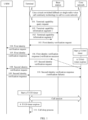
- the base station sends a terminal capability query request to the terminal, that is, step 101 is executed.
- the terminal when the terminal receives the terminal capability query request sent by the base station, the terminal responds to the request and continuously reports obtained terminal capability information segments (subsequently denoted by SEG), such as SEG-1 to SEG-N, to the base station, that is, operations of step 102 and step 102' are performed.
- SEG terminal capability information segments
- terminal capability information segments queued to be reported to the base station in the queue may not all be uploaded.
- the terminal capability information SEG-N is still queued for upload, and the first identity verification request sent by the core network to the terminal through the base station arrives at the terminal, that is, the operation of step 103.
- the terminal After the terminal receives the first identity verification request from the core network sent by the base station, the terminal sends the first identity verification request to a built-in USIM or SIM card, that is, step 104 is executed.
- the USIM or SIM card performs identity verification and authentication processing in response to the first identity verification request, and then obtains a first identity verification response for the first identity verification request, and feeds back the first identity verification response to the terminal, that is, step 105 is executed.
- the first identity verification response for the first identity verification request indicates verification success.
- the obtained first identity verification response needs to be ranked after the terminal capability information SEG-N, that is, after the terminal capability information SEG-N is reported to the base station, the first identity verification response is sent to the base station. Then, the base station forwards the first identity verification response to the core network, that is, step 106.
- the core network after the core network initiates the first identity verification request, the core network starts the T3360 timer, the core network retransmits the previous identity verification request after the T3360 timer expires (the timing duration is generally set to 6s), that is, step 107 is executed, and the base station sends a second identity verification request to the terminal.
- the second identity verification request in step 107 is essentially the first identity verification request, that is, information such as the content and the session identification number of the corresponding call service are all the same.
- the terminal after receiving the second identity verification request, the terminal also sends the second identity verification request to the USIM or SIM for identity verification and authentication processing, that is, step 108 is executed.
- the USIM or SIM performs identity verification and authentication processing in response to the second identity verification request, and then obtains a first identity verification response for the second identity verification request, and feeds back the second identity verification response to the terminal, that is, step 109 is executed.
- the second identity verification request is the retransmitted first identity verification request
- the USIM or SIM has already sent the first identity verification response that indicates verification success for the first identity verification request
- the second identity verification request is received again, it is misjudged that the identity verification and authentication with the core network fails, and therefore a verification failure is returned, and the specific carried cause value of the verification failure can be synch failure.
- the terminal after receiving the second identity verification response that indicates verification failure, the terminal sends the second identity verification response that indicates verification failure to the base station, and then the base station forwards the second identity verification response to the core network, that is, step 110 is executed.
- the terminal after the terminal sends the second identity verification response that indicates verification failure and that has synch failure as the cause value, the terminal starts the T3320 timer and waits for the core network to re-initiate the identity verification request. If the core network does not re-initiate the identity verification request within the time duration corresponding to the T3320 timer, the call drop process is automatically triggered after the T3320 timer expires, that is, step 111.
- the first identity verification response that indicates verification success is not discarded, and the core network only delays reception, that is, after the core network retransmits the previous identity verification request, although the T3360 timer has expired, the first identity verification response that indicates verification success for the first identity verification request arrives at the core network before the second identity verification response that indicates verification failure. Therefore, the core network mistakenly thinks that the received first identity verification response is for the second identity verification request. Because the response received indicates verification success, the call service continues, that is, the core network does not re-initiate the identity verification request within the time duration corresponding to the T3320 timer. In this way, the terminal inevitably executes the call drop process after the T3320 timer expires. Specifically, the local release is performed first, then the current call is barred, and the link is actively disconnected, resulting in a call drop.
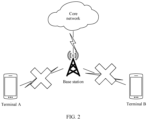
- FIG. 2 is a schematic diagram of a call drop scenario in an identity verification and authentication stage in FIG. 1 .
- the core network when a user uses USIM_1 in terminal A to call USIM_2 in terminal B, the core network sends a first identity verification request to terminal A through the base station, and USIM_1 in terminal A performs identity verification. If terminal A, the base station, and the core network perform operations in accordance with the above steps 101 to 110, before the second identity verification response that indicates verification failure arrives at the core network, the core network has received the first identity verification response that indicates verification success. In this case, the core network sends the call request for calling USIM_2 in terminal B by USIM_1 in terminal A to terminal B through the base station.
- terminal A cannot receive, within the timing duration corresponding to the T3320 timer, the identity verification request retransmitted by the core network through the base station. After the T3320 timer expires, the call drop process is executed, so that the established call is interrupted, and as shown in FIG. 2 , a communication link between terminal A and the base station and a communication link between the base station and terminal B are disconnected.
- the call drop rate reduction method provided by the embodiments of this application.
- the core network performs identity verification with the terminal according to the normal process, and when the terminal receives the second identity verification request after the initial identity verification and authentication, the terminal compares the first identity verification request received during the initial identity verification with the second identity verification request, after determining that the second identity verification and authentication fails, the terminal monitors a direction of the call service within the timing duration corresponding to the T3320 timer, and when it is determined that the call service is redirected to success, the terminal automatically stops the T3320 timer to prevent the terminal from automatically executing the call drop process after the T3320 timer expires, thereby effectively avoiding misjudgment in the identity verification and authentication stage, and solving the problem of a call drop caused by misjudgment in the identity verification and authentication stage in existing user scenarios, which reduces the call
- FIG. 3 is a schematic diagram of a hardware structure of a terminal 100 exemplarily shown to implement the call drop rate reduction method provided by the embodiments of this application.
- the terminal 100 may include a processor 110, an external memory interface 120, an internal memory 121, a universal serial bus (universal serial bus, USB) interface 130, a charge management module 140, a power management module 141, a battery 142, an antenna 1, an antenna 2, a mobile communication module 150, a wireless communication module 160, an audio module 170, a sensor module 180, a key 190, a motor 191, an indicator 192, a camera 193, a display screen 194, and a subscriber identification module (subscriber identification module, SIM) card interface 195, and the like.
- a processor 110 an external memory interface 120, an internal memory 121, a universal serial bus (universal serial bus, USB) interface 130, a charge management module 140, a power management module 141, a battery 142, an antenna 1, an antenna 2, a mobile communication module 150, a wireless communication module 160, an audio module 170, a sensor module 180, a key 190, a motor 191, an indicator 192, a camera 193, a display
- the antenna 1 and the antenna 2 are configured to transmit and receive an electromagnetic wave signal.
- Each antenna in the terminal 100 may be configured to cover a single communications frequency band or a plurality of communications frequency bands. Different antennas may further be multiplexed to improve utilization of the antennas.
- the antenna 1 may be multiplexed into a diversity antenna of a wireless local area network.
- the antennas may be used with a tuning switch.
- the terminal receives the identity verification request sent by the base station and sends the identity verification response to the base station through the antenna 1 or the antenna 2.
- the mobile communications module 150 can provide a solution for wireless communication including 2G/3G/4G/5G and the like to be applied to the terminal 100.
- the mobile communications module 150 may include at least one filter, a switch, a power amplifier, a low noise amplifier (low noise amplifier, LNA), and the like.
- the wireless communications module 160 may provide a solution to wireless communication applied to the terminal 100, for example, a wireless local area network (wireless local area networks, WLAN) (for example, a wireless fidelity (wireless fidelity, Wi-Fi) network), Bluetooth (bluetooth, BT), a global navigation satellite system (global navigation satellite system, GNSS), frequency modulation (frequency modulation, FM), near field communication (near field communication, NFC), and an infrared (infrared, IR) technology.
- the antenna 1 is coupled to the mobile communication module 150, and the antenna 2 is coupled to the wireless communication module 160, so that the terminal 100 can communicate with a network and another device by using a wireless communication technology.
- the audio module 170 of the terminal 100 includes a speaker 170A, a telephone receiver 170B, a microphone 170C, an earphone jack 170D, and the like.
- the terminal 100 may implement an audio function such as music playing or recording or a voice call by using the speaker 170A, the telephone receiver 170B, the microphone 170C, the earphone jack 170D, the application processor, and the like in the audio module 170.
- an audio function such as music playing or recording or a voice call by using the speaker 170A, the telephone receiver 170B, the microphone 170C, the earphone jack 170D, the application processor, and the like in the audio module 170.
- the sensor module 180 in the terminal 100 in some embodiments may include a pressure sensor, a gyroscope sensor, an air pressure sensor, a magnetic sensor, an acceleration sensor, a distance sensor, a proximity light sensor, a fingerprint sensor, a temperature sensor, a touch sensor, an ambient light sensor, a bone conduction sensor, and the like, which are not listed herein and are not limited in this application.
- the processor 110 may include one or more processing units.
- the processor 110 may include an application processor (application processor, AP), a modem processor, a graphics processing unit (graphics processing unit, GPU), an image signal processor (image signal processor, ISP), a controller, a memory, a video codec, a digital signal processor (digital signal processor, DSP), a baseband processor, and/or a neural-network processing unit (neural-network processing unit, NPU).
- processing units may be independent devices, or may be integrated in one or more processors.
- the controller may be the nerve center and the command center of the terminal 100.
- the controller may generate an operation control signal according to instruction operation code and a time-sequence signal, and control obtaining and executing of instructions.
- the memory in the processor 110 is mainly configured to store instructions and data.
- the memory in the processor 110 is a cache memory.
- USB interface 130 shown in FIG. 3 is an interface that complies with the USB standard specification, and may be specifically a Mini USB interface, a Micro USB interface, a USB Type C interface, and the like.
- the charge management module 140 is configured to receive charging input from the charger.
- the power management module 141 shown in FIG. 3 is configured to be connected to the battery 142, the charging management module 140, and the processor 110.
- the power management module 141 receives input from the battery 142 and/or the charge management module 140, and supplies power to the processor 110, the internal memory 121, the external memory, the display screen 194, the camera 193, the wireless communications module 160, and the like.
- a wireless communications function of the terminal 100 may be implemented by using the antenna 1, the antenna 2, the mobile communications module 150, the wireless communications module 160, the modem processor, the baseband processor, and the like.
- the terminal 100 shown in FIG. 3 implements a display function through a GPU, a display screen 194, an application processor, and the like.
- the GPU is a microprocessor for image processing and connects the display screen 194 and the application processor.
- the GPU is configured to perform mathematical and geometric calculations, and is configured to render graphics.
- the processor 110 may include one or more GPUs that execute a program instruction to generate or change display information.
- the display screen 194 is specifically configured to display an image, a video, and the like.
- the display screen 194 includes a display panel.
- the terminal 100 may include 1 or N displays 194, where N is a positive integer greater than 1.
- the display screen in addition to displaying images, videos, and other content, is also configured to cooperate with sensors, such as a pressure sensor, so that the terminal can determine a specific location of an application triggered by the user, and then determine a specific application triggered by the user.
- sensors such as a pressure sensor
- the terminal 100 may implement a photographing function by using the ISP, the camera 193, the video codec, the GPU, the display screen 194, the application processor, and the like.
- the camera 193 is configured to capture still images or videos.
- the terminal 100 may include 1 or N cameras 193, where N is a positive integer greater than 1.
- the external memory interface 120 shown in FIG. 3 may be configured to connect to an external storage card such as a micro SD card, to extend a storage capability of the terminal 100.
- the external storage card communicates with the processor 110 by using the external memory interface 120, to implement a data storage function, for example, store files such as music and a video into the external storage card.
- the internal memory 121 shown in FIG. 3 may be configured to store computer-executable program code.
- the executable program code includes an instruction.
- the processor 110 runs the instructions stored in the internal memory 121, to implement various functional applications and data processing of the terminal 100.
- relevant instructions for implementing the call drop rate reduction method provided by the embodiments of this application are pre-stored in the internal memory 121, and the processor 110 can execute the instructions stored in the internal memory 121, thereby enabling the terminal 100 to execute the call drop rate reduction method provided by the embodiments of this application.
- the motor 191 shown in FIG. 3 may be, for example, a vibration motor; and the indicator 192 may be an indicator light.
- the SIM card interface 195 is configured to connect to a SIM card or a USIM card.
- the SIM card may be inserted into the SIM card interface 195 or plugged from the SIM card interface 195, to come into contact with or be separated from the terminal 100.
- the terminal 100 may support 1 or N (N is an integer greater than 1) SIM card interfaces 195. That is, the plurality of SIM cards or USIM cards can be inserted into the terminal.
- a modem (Modem) corresponding to or associated with the USIM is also set, the number of modems can be the same as the number of USIMs, and modems correspond one-to-one to USIMs.
- each USIM in the terminal corresponds to a modem, so that a call service of each USIM can be directly processed by the Modem associated with the USIM, for example, when the antenna receives an identity verification request for USIM1 initiated by the core network and sent by the base station, the antenna sends the identity verification request to modem1 associated with USIM1, and then modem1 sends the identity verification request to USIM1 for processing.
- the number of modems may be different from the number of USIMs.
- the number of modems may be different from the number of USIMs.
- the relationship between the modem and each USIM can be maintained by the modem itself, which is not limited in this application.
- the hardware structure of the terminal 100 has been described. It should be understood that the terminal 100 shown in FIG. 3 is only an example. In a specific implementation, the terminal 100 can have more or fewer components than shown in the figure, can combine two or more components, or can have different component configurations.
- the various components shown in FIG. 3 may be implemented in hardware, software, or a combination of hardware and software including one or more signal processing and/or application specific integrated circuits.
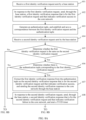
- a specific implementation of a call drop rate reduction method provided by the embodiments of this application, specifically includes:
- Step 201 Receive a first identity verification request sent by a base station.
- the terminal configured to receive the first identity verification request sent by the base station may be, for example, UE (User Equipment) often referred to in the field of mobile communications.
- UE User Equipment
- a user terminal is called UE, which is equivalent to an MS (Mobile Station) in the 2G network, that is, a mobile station/mobile platform with characteristics of both a workstation and a notebook computer. Therefore, in some other embodiments, the terminal configured to receive the first identity verification request sent by the base station may also be the MS.
- MS Mobile Station
- the terminal configured to receive the first identity verification request sent by the base station may also be the MS.
- UEs include but are not limited to mobile phones, smart terminals, multimedia devices, streaming media devices, and the like, which are not listed herein and are not limited in this application.
- this embodiment takes a mobile phone as an example.
- the identity verification and authentication operation between the core network and the terminal is essentially completed by the USIM set in the terminal. That is, after receiving the first identity verification request sent by the base station, the terminal sends the first identity verification request to the corresponding USIM for identity verification and authentication.
- the antenna in the terminal is configured to receive and transmit electromagnetic wave signals. Therefore, the terminal receives, through the internal antenna, the first identity verification request sent by the base station, and then sends, through the modem associated with the USIM, the first identity verification request to the USIM for identity verification and authentication processing.
- a plurality of USIMs may be set in the terminal, that is, the terminal is a multi-card multi-standby terminal.
- the terminal needs to first determine a USIM that processes the first identity verification request.
- the USIM that processes the first identity verification request can be called a first USIM, and then the modem associated with the first USIM sends the first identity verification request to the first USIM.
- the first USIM determined to process the first identity verification request is the originator of the call service corresponding to the first identity verification request.
- the core network after the core network sends the first identity verification request to the base station, the core network starts a T3360 timer according to the stipulations of the 3GPP protocol, and sets a corresponding timing duration, such as 6s.
- the timing duration set for the T3360 timer can be determined according to the current network situation, the grant size occupied by the terminal, and the real-time requirements of the service scenario.
- the specific setting method is not limited or explained in this application.
- Step 202 In response to the first identity verification request, send, through the base station, a first identity verification response that is for the first identity verification request and that indicates verification success to the core network.
- the operation in response to the first identity verification request in step 202 is performed by the USIM set in the terminal, that is, the USIM performs identity verification and authentication processing according to the received first identity verification request.
- the authentication process is not modified in this embodiment and will not be described herein.
- the USIM sends the first identity verification response for the first identity verification request to the associated modem, and then the modem sends the first identity verification response to the antenna, and the first identity verification response is sent to the base station through the antenna, so that the base station can forward the first identity verification response to the core network.
- an authentication result of the USIM for the first identity verification request is either authentication success (authentication success) or authentication failure (authentication failure).
- the call service does not continue to redirect, and instead the core network initiates the operation of retransmitting the identity verification request. Therefore, after the authentication fails, the terminal can receive the retransmitted identity verification request within the timing duration corresponding to the started T3320 timer, and therefore the call drop process is not triggered. Therefore, this embodiment mainly addresses the problem that when the authentication result is authentication success, a call drop is caused by retransmission of the identity verification request initiated before the core network delays receiving the first identity verification response that indicates verification success.
- the USIM sends a first identity verification response that indicates verification success.
- Step 203 Receive a second identity verification request sent by the base station.
- step 201 For details of the receiving process, refer to the description in step 201, which will not be repeated herein.
- Step 204 Determine whether the first identity verification request is the same as the second identity verification request.
- the USIM may perform determining processing, and then provide a processing result, or the terminal can also directly perform determining without the USIM.
- this embodiment uses an example of the scenario in which the USIM needs to perform determining, that is, the antenna needs to send the received second identity verification request to the modem, and then the modem sends the second identity verification request to the associated USIM for processing.
- the USIM performs identity verification and authentication processing on all identity verification requests received by the terminal
- the USIM compares the first identity verification request with the second identity verification request
- the USIM may compare serial numbers that can identify the uniqueness of the authentication requests.
- the USIM can identify that the first identity verification request and the second identity verification request are different.
- the second identity verification request after the time period corresponding to the T3360 timer expires, when the core network retransmits the identity verification request for the first identity verification request, the second identity verification request is actually the first identity verification request.
- the contents, corresponding serial numbers, and call services carried by the two identity verification requests are completely the same. Therefore, in this case, the USIM considers that the first identity verification request and the second identity verification request are the same.
- the time interval between two identity verification requests and the call service corresponding to each identity verification request also affect the determining result. Even if the serial numbers of the two requests are the same, if the time interval is greater than a threshold or the corresponding call services are different, the two identity verification requests cannot be directly regarded as the same. Therefore, when determining whether the first identity verification request and the second identity verification request are the same, two factors, the time interval and the call service, may also be introduced.
- the USIM after receiving the second identity verification request, the USIM respectively determines a system time when the first identity verification request is received and a system time when the second identity verification request is received, to obtain a first moment and a second moment; and then determines whether a time interval between the first moment and the second moment is less than a time threshold.
- the USIM continues to determine whether content of the first identity verification request is consistent with content of the second identity verification request; for example, can perform determining by comparing serial numbers that can identify the identity verification requests.
- the USIM when the content of the first identity verification request is consistent with the content of the second identity verification request, the USIM further obtains the session identification number of the call service corresponding to the first identity verification request and the session identification number of the call service corresponding to the second identity verification request, and then continues to determine whether the session identification number of the call service corresponding to the first identity verification request is the same as the session identification number of the call service corresponding to the second identity verification request.
- the session identification number of the call service corresponding to the first identity verification request is the same as the session identification number of the call service corresponding to the second identity verification request, it is determined that the first identity verification request is the same as the second identity verification request.
- step 204 if it is determined that the first identity verification request and the second identity verification request are the same, perform step 205; otherwise, perform step 210.
- steps 203 and 204 above are specifically: first receiving, through an antenna, the second identity verification request sent by the base station; then determining a second USIM for processing the second identity verification request; then sending the second identity verification request to the second USIM through a modem associated with the second USIM; then when the first USIM and the second USIM are a same USIM, determining, by the first USIM, whether the first identity verification request is the same as the second identity verification request; when the first USIM and the second USIM are different USIMs, in response to the second identity verification request, sending, by the second USIM, the second identity verification response that is for the second identity verification request and that indicates verification success to the modem; and sending, by the modem, the second identity verification response that indicates verification success to the base station through the antenna, so that the base station sends the second identity verification response that indicates verification success to the core network.
- Step 205 Send, through the base station in response to the second identity verification request, a second identity verification response that is for the second identity verification request and that indicates verification failure to the core network, and start a T3320 timer.
- step 205 the operation in response to the second identity verification request is still performed by the USIM, but when the USIM determines that the first identity verification request is the same as the second identity verification request, the USIM mistakenly considers that the identity verification and authentication with the core network fails, and therefore returns verification failure.
- a specifically carried cause value of the verification failure can be synch failure. That is, the second identity verification response that indicates verification failure is sent for the second identity verification request.
- the USIM sends the authentication result to the modem associated with the USIM, and then the modem sends the authentication result to the base station through the antenna, so that the base station sends the second identity verification response whose authentication result is verification failure to the core network.
- the terminal after the terminal sends the second identity verification response that indicates verification failure and that has synch failure as the cause value, the terminal starts the T3320 timer and waits for the core network to re-initiate the identity verification request. If the core network does not re-initiate the identity verification request within the time duration corresponding to the T3320 timer, the call drop process is automatically triggered after the T3320 timer expires, that is, perform step 209.
- the terminal after the terminal sends the second identity verification response whose cause value of verification failure is synch failure to the base station through the antenna, the terminal starts the T3320 timer and sets a corresponding timing duration.
- the timing duration set for the T3320 timer can also be determined according to the current network situation, the grant size occupied by the terminal, and the real-time requirements of the service scenario.
- the specific setting method is not limited or explained in this application.
- Step 206 Obtain direction information of a currently executed call service within a timing duration corresponding to the T3320 timer.
- the terminal monitors, within the timing duration corresponding to the started T3320 timer, whether the identity verification request is retransmitted, and also monitors whether there is a call service being executed, and obtains the direction information of the currently executing call service.
- Step 207 Determine, according to the direction information, whether the call service is redirected to success.
- step 207 if it is determined that the call service is redirected to success, perform step 208; otherwise, perform step 209.
- the direction information is Routing Area Update Accept, or Service Accept, or connect, or connect act
- the current call service usually redirects to success. Therefore, in this embodiment, when determining, according to the direction information, whether the call service is redirected to success, it is specifically determined whether the direction information is Routing Area Update Accept, or Service Accept, or connect, or connect act.
- the direction information is Routing Area Update Accept, or Service Accept, or connect, or connect act, it is determined that the call service is redirected to success.
- Step 208 Stop the T3320 timer.
- the core network when it is determined according to the direction information that the currently executed call service is redirected to success, it means that the core network no longer retransmits the identity verification request to the terminal. In this case, to avoid that the terminal enters the call drop process after the T3320 timer expires, which may cause a call drop and affect the user experience, the terminal actively stops the T3320 timer, thereby preventing the execution of the call drop process.
- Step 209 Execute the call drop process after the T3320 timer expires.
- the call drop process executed when the T3320 timer expires is specifically: the local release is performed first, and then the current call is barred, and the link is actively disconnected, resulting in a call drop.
- the call drop process may still be triggered after the T3320 timer expires, it is found through actual tests that after the core network receives the delayed first identity verification message that indicates verification success, the direction information sent to the terminal when the call service is triggered to redirect to success is usually obtained by the terminal within the timing duration corresponding to the T3320 timer. Therefore, the call drop rate reduction method provided by this embodiment can largely avoid a call drop during the identity verification and authentication stage, thereby reducing the call drop rate and improving user experience.
- Step 210 Send, through the base station in response to the second identity verification request, a second identity verification response that is for the second identity verification request and that indicates verification success to the core network.
- the processing of the second identity verification request by the terminal is similar to the processing of the first identity verification request.
- the specific processing process refer to step 202 and this is not repeated herein.
- the core network performs identity verification with the terminal according to the normal process, and when the terminal receives the second identity verification request after the initial identity verification and authentication, the terminal compares the first identity verification request received during the initial identity verification with the second identity verification request, after determining that the second identity verification and authentication fails, the terminal monitors a direction of the call service within the timing duration corresponding to the T3320 timer, and when it is determined that the call service is redirected to success, the terminal automatically stops the T3320 timer to prevent the terminal from automatically executing the call drop process after the T3320 timer expires, thereby effectively avoiding misjudgment in the identity verification and authentication stage, and solving the problem of a call drop caused by misjudgment in the identity verification and authentication stage in existing user scenarios, which reduces the call drop rate and improves user experience.
- Step 301 When the terminal calls a core network CN using a CSFB technology or an SRVCC technology, the base station first sends a terminal capability query request to the terminal to obtain terminal capability information.
- the terminal needs to establish a communication link with the base station, and receive and transmit, through an antenna, electromagnetic wave signals transmitted in the communication link.
- Step 302 The terminal obtains terminal capability information of the terminal in response to the received terminal capability query request from the base station, for example, a plurality of terminal capability information SEG, and continuously reports the obtained terminal capability information SEG to the base station, for example, terminal capability information SEG-1 to terminal capability information SEG-N in FIG. 5 .
- Step 303 When the terminal sends the terminal capability information SEG to the base station, the core network sends a first identity verification request to the terminal through the base station.
- the core network After the core network sends the first identity verification request to the terminal through the base station, the core network starts the T3360 timer and sets the corresponding timing duration.
- Step 304 The terminal sends the first identity verification request to the USIM set in the terminal.
- the modem associated with the USIM sends the first identity verification request received by the antenna to the associated USIM, so that the USIM can perform identity verification and authentication processing according to the received first identity verification request.
- Step 305 In response to the first identity verification request, the USIM makes a first identity verification response that indicates verification success for the first identity verification request, and sends the first identity verification response to the terminal.
- the first identity verification response is specifically sent to the terminal through the modem associated with the USIM.
- Step 306 The terminal sends the first identity verification response that indicates verification success to the base station, so that the base station sends the first identity verification response to the core network.
- the first identity verification response that indicates verification success needs to be added to the message queue, and can be sent only after the three pieces of terminal capability information SEGs are all sent to the base station.
- the first identity verification response that indicates verification success can be sent only at time T6.
- the core network triggers a flow of retransmission of the identity verification request, that is, perform step 307.
- Step 307 The core network sends a second identity verification request to the terminal through the base station.
- the second identity verification request sent by the core network after the T3360 timer expires is the retransmitted first identity verification request, that is, the first identity verification request and the second authentication request received by the terminal are exactly the same.
- Step 308 The terminal sends the second identity verification request to the USIM set in the terminal.
- the modem associated with the USIM sends the second identity verification request received by the antenna to the associated USIM, so that the USIM can perform identity verification and authentication processing according to the received second identity verification request.
- the identity verification request retransmitted by the core network must be for the call service of the same USIM. Therefore, the second identity verification request received by the antenna is transmitted to the same USIM by the modem that forwards the first identity verification request.
- Step 309 In response to the second identity verification request, the USIM makes a second identity verification response that indicates verification failure for the second identity verification request, and sends the second identity verification response to the terminal.
- the second identity verification response is specifically sent to the terminal through the modem associated with the USIM.
- the USIM compares the received second identity verification request with the first identity verification request, and then determines whether the two identity verification requests are the same, so as to provide an appropriate authentication result.
- the USIM since the first identity verification request and the second identity verification request are the same, and the USIM has made the first identity verification response that indicates verification success for the first identity verification request, and receives the second identity verification request that is the same as the first identity verification request, the USIM mistakenly considers that identity verification and authentication with the core network fails. Therefore, the second identity verification response made for the second identity verification request is a second identity verification response that indicates verification failure.
- the cause value of the verification failure carried in the made second identity verification response that indicates verification failure is specifically synch failure.
- Step 310 The terminal sends the second identity verification response that indicates verification failure to the base station, so that the base station sends the second identity verification response to the core network.
- the second identity verification response that indicates verification failure needs to be added to the message queue, and can be sent only after SEG-5 and the first identity verification response are all sent to the base station.
- the second identity verification response that indicates verification failure can be sent only at time T7.
- the core network first receives the first identity verification response that indicates verification success. Since the first identity verification request and the second identity verification request are exactly the same, the core network mistakenly considers that the currently received first identity verification response is made by the terminal in response to the second identity verification request.
- the core network considers that the identity verification and authentication with the terminal is successful and continues to perform the call service, and the second identity verification response received after the first identity verification response is ignored by the core network, that is, the core network does not re-initiate the identity verification request according to the second identity verification response.
- the terminal after the terminal sends the second identity verification response that indicates verification failure and that has synch failure as the cause value to the core network through base station, the terminal starts the T3320 timer and sets a corresponding timing duration and waits for the core network to re-initiate the identity verification request within the set timing duration. If the core network does not re-initiate the identity verification request within the time duration corresponding to the T3320 timer, the call drop process is automatically triggered after the T3320 timer expires.
- the terminal monitors within the timing duration whether the terminal has received a retransmitted identity verification request sent by the core network through the base station, or directly monitors direction information of the currently executed call service, and determines, according to the direction information, whether the call service is redirected to success, that is, performs step 311.
- Step 311 When the terminal detects within the timing duration corresponding to the T3320 timer that the currently executed call service is redirected to success, the terminal actively stops the T3320 timer.
- step 207 For details on how to determine, according to the direction information, whether the call service is redirected to success, refer to the description of step 207 in the above embodiment, and details will not be repeated herein.
- a specific implementation of another call drop rate reduction method provided by the embodiments of this application, specifically includes:
- Step 401 Receive a first identity verification request sent by a base station.
- Step 402 In response to the first identity verification request, send, through the base station, a first identity verification response that is for the first identity verification request and that indicates verification success to the core network.
- steps 401 and 402 in this embodiment are roughly the same as the steps 201 and 202 in the embodiment shown in FIG. 4 .
- the specific implementation process of steps 401 and 402 is detailed in steps 201 and 202, and will not be repeated herein.
- Step 403 Generate an authentication tuple, and establish and store a correspondence between the first identity verification request and the authentication tuple.
- the authentication tuple generated in this embodiment is for the purpose of directly reusing, for the subsequently retransmitted identity verification request, the identity verification response that the USIM has made, without repeated processing by the USIM, so as to avoid that when the USIM receives the same two identity verification requests, the USIM mistakenly considers that the identity verification and authentication with the core network fails, and then makes the second identity verification response whose cause value of verification failure is synch failure, and starts the T3320 timer, resulting in that the call drop process is triggered when no identity verification request retransmitted by the core network is subsequently received within the timing duration corresponding to the T3320 timer.
- the generated authentication tuple needs to include the first identity verification request and the first identity verification response that indicates verification success and that is for the first identity verification request.
- the session identification number of the call service corresponding to the first identity verification request.
- the authentication tuple also needs to include the system time when the first identity verification request is received.
- the session identification number mentioned in this embodiment is a read-only value that uniquely identifies the current access session. Normally, session IDs are allocated sequentially, that is, session ID "706616433” is followed by session ID "706616434", so that it is possible to distinguish whether two authentication requests are the same.
- the first identity verification request recorded in the authentication tuple includes a random number and an authentication value; where the authentication value is calculated based on the random number.
- the USIM in the terminal needs to use the authentication value in the first identity verification request when performing identity verification and authentication on the first identity verification request, and the authentication value is calculated based on the random number, so that different identity verification requests can be distinguished. Therefore, in the embodiments of this application, the first identity verification request required for generating the authentication tuple includes a random number and an authentication value.
- the first identity verification response recorded in the authentication tuple includes an A&C reference number, an actual response value, and an expected response value.
- the first identity verification response required for generating the authentication tuple includes the reference number that can identify the response, the actual response value calculated according to the message in the first identity verification request, and the expected response value expected by the core network, so as to facilitate determining whether the current authentication is successful.
- Step 404 Receive a second identity verification request sent by the base station.
- step 404 in this embodiment is substantially the same as step 203 in the embodiment shown in FIG. 4 , and the specific implementation process of step 404 can be found in step 203, and will not be repeated herein.
- Step 405 Determine whether the first identity verification request is the same as the second identity verification request.
- the terminal After receiving the second identity verification request, the terminal respectively determines a system time when the first identity verification request is received and a system time when the second identity verification request is received, to obtain a first moment and a second moment; and then determines whether a time interval between the first moment and the second moment is less than a time threshold.
- the terminal when the time interval is less than the time threshold, the terminal continues to determine whether content of the first identity verification request is consistent with content of the second identity verification request; for example, can perform determining by comparing serial numbers that can identify the identity verification requests.
- the terminal when the content of the first identity verification request is consistent with the content of the second identity verification request, the terminal respectively obtains the session identification number of the call service corresponding to the first identity verification request and the session identification number of the call service corresponding to the second identity verification request, and then continues to determine whether the session identification number of the call service corresponding to the first identity verification request is the same as the session identification number of the call service corresponding to the second identity verification request.
- the session identification number of the call service corresponding to the first identity verification request is the same as the session identification number of the call service corresponding to the second identity verification request, it is determined that the first identity verification request is the same as the second identity verification request.
- step 405 if it is determined that the first identity verification request and the second identity verification request are the same, perform step 406; otherwise, perform step 407.
- Step 406 Extract the first identity verification response from the authentication tuple as the second identity verification response that is for the second identity verification request and that indicates verification success, and sending the second identity verification response to the core network through the base station.
- the identity verification response recorded in the authentication tuple is directly reused without the USIM processing the second identity verification request, so that the second identity verification response that indicates verification failure is not invoked, and the terminal is not allowed to start the T3320 timer.
- the solution for reducing the call drop rate provided by the embodiment directly does not trigger the call drop process, thereby avoiding the call drop problem, greatly reducing the call drop rate, and improving user experience.
- Step 407 Send, through the base station in response to the second identity verification request, a second identity verification response that is for the second identity verification request and that indicates verification success to the core network.
- step 407 in this embodiment is substantially the same as step 210 in the embodiment shown in FIG. 4 , and the specific implementation process of step 407 can be found in step 210, and will not be repeated herein.
- the first identity verification response that is for the first identity verification request and that indicates verification success
- data related to the first identity verification request such as the first identity verification response, the first moment when the first identity verification request is received, and the session identification number of the call service corresponding to the first identity verification request
- an authentication tuple is generated and stored based on the data.
- the second identity verification request that is the same as the first identity verification request and retransmitted by the core network through the base station is subsequently received
- the first identity verification response recorded in the authentication tuple can be directly reused. This avoids that the USIM mistakenly believes that synchronization of the core network is abnormal, that is, the SQN is out of range, and thus returns the second identity verification response that indicates authentication failure, causing the terminal to trigger the call drop process.
- the terminal when receiving the second identity verification request that is the same as the first identity verification request, the terminal first checks whether the stored authentication tuple can be reused for the second identity verification request, and then determines, based on the result, whether the existing authentication tuple is directly reused or the USIM performs the identity authentication and authentication operation in response to the second authentication request again, thereby preventing the USIM from returning authentication failure, thereby preventing the execution of the call drop process from the source and effectively reducing the call drop rate.
- Step 501 When the terminal calls a core network CN using a CSFB technology or an SRVCC technology, the base station first sends a terminal capability query request to the terminal to obtain terminal capability information.
- Step 502 The terminal obtains terminal capability information of the terminal in response to the received terminal capability query request from the base station, for example, a plurality of terminal capability information SEG, and continuously reports the obtained terminal capability information SEG to the base station, for example, terminal capability information SEG-1 to terminal capability information SEG-N in FIG. 7 .
- Step 503 When the terminal sends the terminal capability information SEG to the base station, the core network sends a first identity verification request to the terminal through the base station.
- Step 504 The terminal sends the first identity verification request to the USIM set in the terminal.
- Step 505 In response to the first identity verification request, the USIM makes a first identity verification response that indicates verification success for the first identity verification request, and sends the first identity verification response to the terminal.
- Step 506 The terminal sends the first identity verification response that indicates verification success to the base station, so that the base station sends the first identity verification response to the core network.
- the difference in this scenario is that after the terminal sends the first identity verification response that indicates verification success to the base station, the terminal generates and stores an authentication tuple corresponding to the first identity verification request for subsequent reuse.
- step 403 For the manner of generating and saving the authentication tuple, refer to the description of step 403 in the embodiment shown in FIG. 6 above, and details will not be repeated herein.
- Step 507 The core network sends a second identity verification request to the terminal through the base station.
- steps 501 to 507 in the specific scenario description shown in FIG. 7 are substantially the same as steps 301 to 307 in the specific scenario description shown in FIG. 5 , and will not be repeated herein.
- Step 508 The terminal determines whether to reuse the stored authentication tuple.
- the terminal needs to first determine whether the first identity verification request is the same as the second identity verification request, and when determining that the first identity verification request is the same as the second identity verification request, determine whether there is an authentication tuple corresponding to the first identity verification request.
- the specific determining process refer to the description of step 405 and step 406 in the above-mentioned embodiment, and will not be repeated herein.
- step 509 if it is determined that the stored authentication tuple can be reused, perform step 509; otherwise, it means that the first identity verification request and the second identity verification request are different, and perform step 510, that is, a new identity verification and authentication operation is triggered.
- Step 509 The terminal extracts the first identity verification response from the authentication tuple as the second identity verification response that is for the second identity verification request and that indicates verification success, and sends the second identity verification response to the core network through the base station.
- the terminal sends to the core network through the base station is the first identity verification response that indicates verification success.
- the terminal since the first identity verification response that indicates verification success is sent, the terminal does not start the T3320 timer, so that the call drop process will not be triggered.
- Step 510 The terminal sends the second identity verification request to the USIM set in the terminal.
- Step 511 In response to the second identity verification request, the USIM makes a second identity verification response that indicates verification success for the second identity verification request, and sends the second identity verification response to the terminal.
- Step 512 The terminal sends the second identity verification response that indicates verification success to the base station, so that the base station sends the second identity verification response to the core network.
- steps 510 to 512 in the specific scenario description shown in FIG. 7 are roughly the same as steps 308 to 310 in the specific scenario description shown in FIG. 5 , except that in the scenario shown in FIG. 7 , the second identity verification response made by the USIM for the second identity verification request is a second identity verification response that indicates verification success. Therefore, what the terminal sends to the core network through the base station is also the second identity response that indicates verification success, so that the identity verification and authentication between the core network and the terminal can be successful, and the call service can be carried out normally, thereby avoiding the problem of a call drop in the identity verification and authentication stage.
- steps 510 to 512 is the interaction between the USIM, the terminal, the base station, and the core network when the first identity verification request and the second identity verification request are different.
- the subsequently established session is for the second identity response.
- this embodiment specifically combines the above two implementations, so that the identity verification and authentication stage can use the call drop rate reduction method in the embodiment shown in FIG. 4 , or the call drop rate reduction method in the embodiment shown in FIG. 6 .
- Step 601 Receive a first identity verification request sent by a base station.
- Step 602 In response to the first identity verification request, send, through the base station, a first identity verification response that is for the first identity verification request and that indicates verification success to the core network.
- steps 601 and 602 in this embodiment are roughly the same as the steps 201 and 202 in the embodiment shown in FIG. 4 .
- the specific implementation process of steps 601 and 602 is detailed in steps 201 and 202, and will not be repeated herein.
- Step 603 Generate an authentication tuple, and establish and store a correspondence between the first identity verification request and the authentication tuple.
- step 603 in this embodiment is substantially the same as step 403 in the embodiment shown in FIG. 6 , and the specific implementation process of step 603 can be found in step 403, and will not be repeated herein.
- Step 604 Receive a second identity verification request sent by the base station.
- Step 605 Determine whether the first identity verification request is the same as the second identity verification request.
- steps 603 and 604 in this embodiment are roughly the same as the steps 403 and 404 in the embodiment shown in FIG. 6 .
- the specific implementation process of steps 603 and 604 is detailed in steps 403 and 404, and will not be repeated herein.
- Step 606 Determine whether there is the authentication tuple corresponding to the first identity verification request.
- step 607 if it is determined that there is an authentication tuple corresponding to the first identity verification request, perform step 607; otherwise, perform step 608.
- the operation in step 606 may be to query, according to the second identity verification request, whether there is a corresponding authentication tuple.
- Step 607 Extract the first identity verification response from the authentication tuple as the second identity verification response that is for the second identity verification request and that indicates verification success, and sending the second identity verification response to the core network through the base station.
- step 607 in this embodiment is substantially the same as step 406 in the embodiment shown in FIG. 6 , and the specific implementation process of step 607 can be found in step 406, and will not be repeated herein.
- Step 608 Send, through the base station in response to the second identity verification request, a second identity verification response that is for the second identity verification request and that indicates verification failure to the core network, and start a T3320 timer.
- Step 609 Obtain direction information of a currently executed call service within a timing duration corresponding to the T3320 timer.
- Step 610 Determine, according to the direction information, whether the call service is redirected to success.
- Step 611 Stop the T3320 timer.
- Step 612 Execute the call drop process after the T3320 timer expires.
- Step 613 Send, through the base station in response to the second identity verification request, a second identity verification response that is for the second identity verification request and that indicates verification success to the core network.
- steps 608 to 613 in this embodiment are roughly the same as the steps 205 to 210 in the embodiment shown in FIG. 4 .
- the specific implementation process of steps 608 to 613 is detailed in steps 205 to 210, and will not be repeated herein.
- the call drop rate reduction method performed by the terminal can also be performed by a system-on-a-chip included in the terminal, such as a USIM (or SIM) with a processing unit.
- the chip system may include a processor.
- the system-on-a-chip can be coupled with a memory, so that the system-on-a-chip invokes a computer program stored in the memory when running, so as to realize the above-mentioned steps executed by the terminal.
- the processor in the system-on-a-chip may be an application processor or a non-application processor.
- the embodiments of this application also provide a computer-readable storage medium, which stores computer instructions, and when the computer instructions are run on the terminal, the terminal is caused to execute the steps of the above-mentioned related methods to realize the call drop rate reduction method applied to a terminal in the above-mentioned embodiments.
- an embodiment of this application also provides a computer program product, where when running on a computer, the computer program product causes the computer to execute the above related steps, so as to implement the call drop rate reduction method applied to the terminal in the above embodiment.
- an embodiment of this application also provides a call drop rate reduction system.
- the system includes a base station, a core network, and a terminal for implementing the call drop rate reduction method in the foregoing embodiments.
- an embodiment of this application also provides a chip (which may also be a component or a module), which may include one or more processing circuits and one or more transceiver pins; where the transceiver pins and the processing circuits communicate with each other through an internal connection path, and the processing circuit executes the related method steps to perform the call drop rate reduction method in the foregoing embodiment, to control a receiving pin to receive a signal and to control a sending pin to send a signal.
- a chip which may also be a component or a module
- the processing circuit communicate with each other through an internal connection path, and the processing circuit executes the related method steps to perform the call drop rate reduction method in the foregoing embodiment, to control a receiving pin to receive a signal and to control a sending pin to send a signal.
- the terminal includes but is not limited to: at least one USIM, a modem associated with the at least one USIM, one or more processors, memories, and one or more computer programs.
- One or more computer programs are stored in the memory, and when the computer programs are executed by one or more processors, the terminal or the chip system can be caused to execute the steps in any of the above method embodiments.
- the terminal, the computer-readable storage medium, the computer program product, or the chip provided in the embodiments of this application are all configured to perform the corresponding call drop rate reduction method provided above. Therefore, for beneficial effects that can be achieved, refer to the beneficial effects of the corresponding method provided above. Details are not described herein again.
Landscapes
- Engineering & Computer Science (AREA)
- Computer Networks & Wireless Communication (AREA)
- Signal Processing (AREA)
- Computer Security & Cryptography (AREA)
- Mobile Radio Communication Systems (AREA)
- Telephonic Communication Services (AREA)
Claims (15)
- Ein Verfahren zur Reduzierung der Anrufabbruchrate, angewendet auf ein Endgerät, wobei das Verfahren umfasst:Empfangen einer ersten Identitätsüberprüfungsanfrage, die von einer Basisstation gesendet wird, wobei die erste Identitätsüberprüfungsanfrage von einem Kernnetzwerk initiiert wird und ein T3360-Timer vom Kernnetzwerk gestartet wird, nachdem das Kernnetzwerk die erste Identitätsüberprüfungsanfrage an die Basisstation gesendet hat;Senden einer ersten Identitätsüberprüfungsantwort durch die Basisstation als Antwort auf die erste Identitätsüberprüfungsanfrage, die für die erste Identitätsüberprüfungsanfrage bestimmt ist und die Überprüfungserfolg an das Kernnetzwerk anzeigt;Empfangen einer zweiten Identitätsüberprüfungsanfrage, die von der Basisstation gesendet wird, wobei die zweite Identitätsüberprüfungsanfrage vom Kernnetzwerk initiiert wird, nachdem eine Zeitdauer entsprechend dem T3360-Timer abgelaufen ist;Bestimmen, ob die erste Identitätsüberprüfungsanfrage mit der zweiten Identitätsüberprüfungsanfrage übereinstimmt;Wenn die erste Identitätsüberprüfungsanfrage mit der zweiten Identitätsüberprüfungsanfrage übereinstimmt, Senden einer zweiten Identitätsüberprüfungsantwort durch die Basisstation als Antwort auf die zweite Identitätsüberprüfungsanfrage, die für die zweite Identitätsüberprüfungsanfrage bestimmt ist und die Überprüfungsfehler an das Kernnetzwerk anzeigt, und Starten eines T3320-Timers;Abrufen von Richtungsinformationen eines aktuell ausgeführten Anrufdienstes innerhalb einer Zeitdauer entsprechend dem T3320-Timer, wobei der Anrufdienst mit der ersten Identitätsüberprüfungsanfrage und der zweiten Identitätsüberprüfungsanfrage verbunden ist;Bestimmen, gemäß den Richtungsinformationen, ob der Anrufdienst erfolgreich umgeleitet wird; undStoppen des T3320-Timers, wenn der Anrufdienst erfolgreich umgeleitet wird.
- Das Verfahren gemäß Anspruch 1, wobei nach dem Senden einer ersten Identitätsüberprüfungsantwort durch die Basisstation als Antwort auf die erste Identitätsüberprüfungsanfrage, die für die erste Identitätsüberprüfungsanfrage bestimmt ist und die Überprüfungserfolg an das Kernnetzwerk anzeigt, das Verfahren weiterhin umfasst:Bestimmen einer Systemzeit, wenn die erste Identitätsüberprüfungsanfrage empfangen wird, um einen ersten Moment zu erhalten;Abrufen einer Sitzungsidentifikationsnummer eines Anrufdienstes, der der ersten Identitätsüberprüfungsanfrage entspricht;Erzeugen eines Authentifizierungs-Tupels gemäß der ersten Identitätsüberprüfungsanfrage, der ersten Identitätsüberprüfungsantwort, der Sitzungsidentifikationsnummer und dem ersten Moment; undHerstellen und Speichern einer Übereinstimmung zwischen der ersten Identitätsüberprüfungsanfrage und dem Authentifizierungs-Tupel.
- Das Verfahren gemäß Anspruch 2, wobei die im Authentifizierungs-Tupel aufgezeichnete erste Identitätsüberprüfungsanfrage eine Zufallszahl und einen Authentifizierungswert umfasst;
wobei der Authentifizierungswert basierend auf der Zufallszahl berechnet wird. - Das Verfahren gemäß Anspruch 2, wobei die im Authentifizierungs-Tupel aufgezeichnete erste Identitätsüberprüfungsantwort eine A&C-Referenznummer, einen tatsächlichen Antwortwert und einen erwarteten Antwortwert umfasst.
- Das Verfahren gemäß einem der Ansprüche 2-4, wobei vor dem Senden, durch die Basisstation als Antwort auf die zweite Identitätsüberprüfungsanfrage, eine zweite Identitätsüberprüfungsantwort, die für die zweite Identitätsüberprüfungsanfrage ist und die einen Überprüfungsfehler an das Kernnetzwerk anzeigt, und das Starten eines T3320-Timers, das Verfahren weiter umfasst:Bestimmen, ob das Authentifizierungs-Tupel vorhanden ist, das der ersten Identitätsüberprüfungsanfrage entspricht;Wenn das Authentifizierungs-Tupel vorhanden ist, das der ersten Identitätsüberprüfungsanfrage entspricht, Extrahieren der ersten Identitätsüberprüfungsantwort aus dem Authentifizierungs-Tupel als die zweite Identitätsüberprüfungsantwort, die für die zweite Identitätsüberprüfungsanfrage ist und die Überprüfungserfolg anzeigt, und Senden der zweiten Identitätsüberprüfungsantwort an das Kernnetzwerk durch die Basisstation; undWenn kein Authentifizierungs-Tupel vorhanden ist, das der ersten Identitätsüberprüfungsanfrage entspricht, Ausführen des Schritts des Sendens, durch die Basisstation als Antwort auf die zweite Identitätsüberprüfungsanfrage, einer zweiten Identitätsüberprüfungsantwort, die für die zweite Identitätsüberprüfungsanfrage ist und die einen Überprüfungsfehler an das Kernnetzwerk anzeigt, und Starten eines T3320-Timers.
- Das Verfahren gemäß einem der Ansprüche 1-5, wobei das Empfangen einer ersten Identitätsüberprüfungsanfrage, die von einer Basisstation gesendet wird, und das Senden, durch die Basisstation als Antwort auf die erste Identitätsüberprüfungsanfrage, einer ersten Identitätsüberprüfungsantwort, die für die erste Identitätsüberprüfungsanfrage ist und die Überprüfungserfolg an das Kernnetzwerk anzeigt, umfasst:Empfangen, durch eine Antenne, der ersten Identitätsüberprüfungsanfrage, die von der Basisstation gesendet wird;Bestimmen eines ersten USIM zur Verarbeitung der ersten Identitätsüberprüfungsanfrage;Senden der ersten Identitätsüberprüfungsanfrage an das erste USIM durch ein Modem, das mit dem ersten USIM verbunden ist;Als Antwort auf die erste Identitätsüberprüfungsanfrage sendet die erste USIM die erste Identitätsüberprüfungsantwort, die für die erste Identitätsüberprüfungsanfrage bestimmt ist und die Überprüfungserfolg an das Modem anzeigt; undDas Modem sendet die erste Identitätsüberprüfungsantwort, die Überprüfungserfolg anzeigt, über die Antenne an die Basisstation, sodass die Basisstation die erste Identitätsüberprüfungsantwort, die Überprüfungserfolg anzeigt, an das Kernnetzwerk sendet.
- Das Verfahren gemäß Anspruch 6, wobei zwei USIMs im Endgerät eingerichtet sind; und
Das Empfangen einer zweiten Identitätsüberprüfungsanfrage, die von der Basisstation gesendet wird, und das Bestimmen, ob die erste Identitätsüberprüfungsanfrage mit der zweiten Identitätsüberprüfungsanfrage übereinstimmt, umfasst:Empfangen der zweiten Identitätsüberprüfungsanfrage, die von der Basisstation über eine Antenne gesendet wird;Bestimmen einer zweiten USIM zur Verarbeitung der zweiten Identitätsüberprüfungsanfrage;Senden der zweiten Identitätsüberprüfungsanfrage an die zweite USIM über ein Modem, das mit der zweiten USIM verbunden ist;Wenn die erste USIM und die zweite USIM dieselbe USIM sind, bestimmt die erste USIM, ob die erste Identitätsüberprüfungsanfrage mit der zweiten Identitätsüberprüfungsanfrage übereinstimmt;Wenn die erste USIM und die zweite USIM unterschiedliche USIMs sind, sendet die zweite USIM als Antwort auf die zweite Identitätsüberprüfungsanfrage die zweite Identitätsüberprüfungsantwort, die für die zweite Identitätsüberprüfungsanfrage bestimmt ist und die Überprüfungserfolg an das mit der zweiten USIM verbundene Modem anzeigt; undDas mit der zweiten USIM verbundene Modem sendet die zweite Identitätsüberprüfungsantwort, die Überprüfungserfolg anzeigt, über die Antenne an die Basisstation, sodass die Basisstation die zweite Identitätsüberprüfungsantwort, die Überprüfungserfolg anzeigt, an das Kernnetzwerk sendet. - Das Verfahren gemäß Anspruch 7, wobei das Bestimmen, ob die erste Identitätsüberprüfungsanfrage mit der zweiten Identitätsüberprüfungsanfrage übereinstimmt, umfasst:Bestimmen der Systemzeit, zu der die erste Identitätsüberprüfungsanfrage empfangen wird, und der Systemzeit, zu der die zweite Identitätsüberprüfungsanfrage empfangen wird, um einen ersten und einen zweiten Zeitpunkt zu erhalten;Bestimmen, ob das Zeitintervall zwischen dem ersten und dem zweiten Zeitpunkt kleiner als ein Zeitlimit ist;Wenn das Zeitintervall kleiner als das Zeitlimit ist, bestimmen, ob der Inhalt der ersten Identitätsüberprüfungsanfrage mit dem Inhalt der zweiten Identitätsüberprüfungsanfrage übereinstimmt;Wenn der Inhalt der ersten Identitätsüberprüfungsanfrage mit dem Inhalt der zweiten Identitätsüberprüfungsanfrage übereinstimmt, wird jeweils eine Sitzungsidentifikationsnummer eines Anrufdienstes, die der ersten Identitätsüberprüfungsanfrage entspricht, und eine Sitzungsidentifikationsnummer eines Anrufdienstes, die der zweiten Identitätsüberprüfungsanfrage entspricht, erhalten;Bestimmen, ob die Sitzungsidentifikationsnummer des Anrufdienstes, die der ersten Identitätsüberprüfungsanfrage entspricht, mit der Sitzungsidentifikationsnummer des Anrufdienstes, die der zweiten Identitätsüberprüfungsanfrage entspricht, identisch ist; undWenn die Sitzungsidentifikationsnummer des Anrufdienstes, die der ersten Identitätsüberprüfungsanfrage entspricht, mit der Sitzungsidentifikationsnummer des Anrufdienstes, die der zweiten Identitätsüberprüfungsanfrage entspricht, identisch ist, wird bestimmt, dass die erste Identitätsüberprüfungsanfrage mit der zweiten Identitätsüberprüfungsanfrage identisch ist.
- Das Verfahren gemäß Anspruch 8, wobei das Bestimmen, ob der Inhalt der ersten Identitätsüberprüfungsanfrage mit dem Inhalt der zweiten Identitätsüberprüfungsanfrage übereinstimmt, umfasst:Erhalten einer ersten Seriennummer, die der ersten Identitätsüberprüfungsanfrage entspricht, und einer zweiten Seriennummer, die der zweiten Identitätsüberprüfungsanfrage entspricht, wobei Seriennummern für verschiedene Identitätsüberprüfungsanfragen unterschiedlich sind;Bestimmen, ob die erste Seriennummer mit der zweiten Seriennummer identisch ist; undWenn die erste Seriennummer mit der zweiten Seriennummer identisch ist, wird bestimmt, dass der Inhalt der ersten Identitätsüberprüfungsanfrage mit dem Inhalt der zweiten Identitätsüberprüfungsanfrage übereinstimmt.
- Das Verfahren gemäß einem der Ansprüche 7-9, wobei das Senden, durch die Basisstation als Antwort auf die zweite Identitätsüberprüfungsanfrage, einer zweiten Identitätsüberprüfungsantwort, die für die zweite Identitätsüberprüfungsanfrage ist und die einen Verifizierungsfehler an das Kernnetzwerk anzeigt, und das Starten eines T3320-Timers weiter umfasst:Als Antwort auf die zweite Identitätsüberprüfungsanfrage wird durch die erste USIM die zweite Identitätsüberprüfungsantwort generiert, deren Fehlerursachenwert ein Synchronisierungsfehler ist;Senden der zweiten Identitätsüberprüfungsantwort durch die erste USIM an das Modem; undSenden der zweiten Identitätsüberprüfungsantwort, die einen Verifizierungsfehler anzeigt, durch das Modem über die Antenne an die Basisstation, sodass die Basisstation die zweite Identitätsüberprüfungsantwort, die einen Verifizierungsfehler anzeigt, an das Kernnetzwerk sendet.
- Das Verfahren gemäß einem der Ansprüche 1 bis 10, wobei das Bestimmen, ob der Rufdienst gemäß den Richtungsinformationen erfolgreich umgeleitet wird, Folgendes umfasst:Bestimmen, ob die Richtungsinformationen Routing Area Update Accept, Service Accept, Connect oder Connect Act sind; undWenn die Richtungsinformationen Routing Area Update Accept, Service Accept, Connect oder Connect Act sind, wird bestimmt, dass der Rufdienst erfolgreich umgeleitet wird.
- Das Verfahren gemäß einem der Ansprüche 1 bis 10, wobei nach dem Bestimmen, ob die erste Identitätsüberprüfungsanfrage mit der zweiten Identitätsüberprüfungsanfrage übereinstimmt, das Verfahren weiter Folgendes umfasst:
Wenn die erste Identitätsüberprüfungsanfrage nicht mit der zweiten Identitätsüberprüfungsanfrage übereinstimmt, wird über die Basisstation als Antwort auf die zweite Identitätsüberprüfungsanfrage die zweite Identitätsüberprüfungsantwort, die für die zweite Identitätsüberprüfungsanfrage ist und die eine erfolgreiche Überprüfung anzeigt, an das Kernnetz gesendet. - Ein Endgerät, umfassend: mindestens eine USIM, ein Modem, das mit der mindestens einen USIM verbunden ist, einen oder mehrere Prozessoren, einen Speicher und ein oder mehrere Computerprogramme;
Wobei die ein oder mehrere Computerprogramme im Speicher gespeichert sind und, wenn die Computerprogramme von den ein oder mehreren Prozessoren ausgeführt werden, das Endgerät veranlasst wird, das Verfahren zur Reduzierung der Rufabbruchrate gemäß einem der Ansprüche 1 bis 12 auszuführen. - Ein computerlesbares Speichermedium, umfassend ein Computerprogramm, wobei, wenn das Computerprogramm auf einem Endgerät ausgeführt wird, das Endgerät veranlasst wird, das Verfahren zur Reduzierung der Rufabbruchrate gemäß einem der Ansprüche 1 bis 12 auszuführen.
- Ein Chip, umfassend: eine oder mehrere Verarbeitungsschaltungen und eine oder mehrere Transceiver-Pins; wobei die Transceiver-Pins und die Verarbeitungsschaltungen über einen internen Verbindungsweg miteinander kommunizieren und die Verarbeitungsschaltung das Verfahren zur Reduzierung der Rufabbruchrate gemäß einem der Ansprüche 1 bis 12 ausführt, um einen Empfangspin zu steuern, ein Signal zu empfangen, und einen Sendepin zu steuern, ein Signal zu senden.
Applications Claiming Priority (2)
| Application Number | Priority Date | Filing Date | Title |
|---|---|---|---|
| CN202111153780.XA CN113630776B (zh) | 2021-09-29 | 2021-09-29 | 降低掉话率的方法及终端 |
| PCT/CN2022/112510 WO2023051060A1 (zh) | 2021-09-29 | 2022-08-15 | 降低掉话率的方法及终端 |
Publications (3)
| Publication Number | Publication Date |
|---|---|
| EP4340422A1 EP4340422A1 (de) | 2024-03-20 |
| EP4340422A4 EP4340422A4 (de) | 2024-10-16 |
| EP4340422B1 true EP4340422B1 (de) | 2025-06-04 |
Family
ID=78390614
Family Applications (1)
| Application Number | Title | Priority Date | Filing Date |
|---|---|---|---|
| EP22874455.3A Active EP4340422B1 (de) | 2021-09-29 | 2022-08-15 | Verfahren zur reduzierung der anrufableitrate und endgerät |
Country Status (4)
| Country | Link |
|---|---|
| US (1) | US20240284266A1 (de) |
| EP (1) | EP4340422B1 (de) |
| CN (2) | CN114339749B (de) |
| WO (1) | WO2023051060A1 (de) |
Families Citing this family (1)
| Publication number | Priority date | Publication date | Assignee | Title |
|---|---|---|---|---|
| CN114339749B (zh) * | 2021-09-29 | 2023-09-19 | 荣耀终端有限公司 | 降低掉话率的方法及终端 |
Family Cites Families (20)
| Publication number | Priority date | Publication date | Assignee | Title |
|---|---|---|---|---|
| JP2009116378A (ja) * | 2007-11-01 | 2009-05-28 | Renesas Technology Corp | 半導体装置 |
| KR101156164B1 (ko) * | 2008-12-22 | 2012-06-18 | 한국전자통신연구원 | 주파수 집합 통신 환경에서의 단말 및 기지국, 이를 이용한호 접속 처리 방법 |
| CN102316454B (zh) * | 2011-10-12 | 2013-08-14 | 西安新邮通信设备有限公司 | 由无线网络控制器触发的终端差异性分析的方法 |
| KR20130073850A (ko) * | 2011-12-23 | 2013-07-03 | 삼성전자주식회사 | 페이크 네트워크의 식별을 위한 방법 및 장치 |
| WO2015184577A1 (en) * | 2014-06-02 | 2015-12-10 | Qualcomm Incorporated | Method of reducing call drop rate by deferring tvm report during and right after handover procedure |
| CN106411812B (zh) * | 2015-07-27 | 2019-10-08 | 阿里巴巴集团控股有限公司 | 用户身份的验证方法、系统和验证服务器 |
| CN106797562B (zh) * | 2015-08-13 | 2019-04-26 | 华为技术有限公司 | 一种消息保护的方法、相关设备以及系统 |
| CN105208530B (zh) * | 2015-09-02 | 2018-12-04 | 哈尔滨海能达科技有限公司 | 一种组呼业务处理方法、终端及核心网网元 |
| US10091832B2 (en) * | 2015-11-17 | 2018-10-02 | Affirmed Networks, Inc. | Call failure reduction |
| CN106789851A (zh) * | 2015-11-24 | 2017-05-31 | 阿里巴巴集团控股有限公司 | 身份验证方法、系统、业务服务器和验证服务器 |
| EP3396928B1 (de) * | 2016-01-11 | 2021-06-30 | Huawei Technologies Co., Ltd. | Verfahren zur verwaltung von netzwerkzugriffsrechten und zugehörige vorrichtung |
| WO2018011619A1 (en) * | 2016-07-14 | 2018-01-18 | Telefonaktiebolaget Lm Ericsson (Publ) | Enhanced aggregated re-authentication for wireless devices |
| CN108616862A (zh) * | 2017-01-16 | 2018-10-02 | 中兴通讯股份有限公司 | 一种快速呼通方法和装置 |
| US20200304984A1 (en) * | 2019-03-22 | 2020-09-24 | Apple Inc. | Timer Activation for Dual SIM Dual Standby Devices |
| JP6870022B2 (ja) * | 2019-03-28 | 2021-05-12 | シャープ株式会社 | 端末装置、方法、および、集積回路 |
| CN111182534B (zh) * | 2019-12-20 | 2020-10-13 | 翱捷科技股份有限公司 | 移动终端及其在wcdma网络下进行串行鉴权的方法 |
| CN113498123B (zh) * | 2020-03-20 | 2023-06-02 | 华为技术有限公司 | 一种网络接入系统、方法及终端 |
| CN111954217B (zh) * | 2020-08-19 | 2023-10-27 | 中国移动通信集团江苏有限公司 | 用户身份验证方法、装置、电子设备及计算机存储介质 |
| CN112637850B (zh) * | 2020-11-30 | 2023-05-16 | 展讯半导体(成都)有限公司 | 鉴权异常的处理方法、系统及用户终端 |
| CN114339749B (zh) * | 2021-09-29 | 2023-09-19 | 荣耀终端有限公司 | 降低掉话率的方法及终端 |
-
2021
- 2021-09-29 CN CN202111548797.5A patent/CN114339749B/zh active Active
- 2021-09-29 CN CN202111153780.XA patent/CN113630776B/zh active Active
-
2022
- 2022-08-15 EP EP22874455.3A patent/EP4340422B1/de active Active
- 2022-08-15 US US18/571,646 patent/US20240284266A1/en active Pending
- 2022-08-15 WO PCT/CN2022/112510 patent/WO2023051060A1/zh not_active Ceased
Also Published As
| Publication number | Publication date |
|---|---|
| EP4340422A1 (de) | 2024-03-20 |
| US20240284266A1 (en) | 2024-08-22 |
| CN114339749A (zh) | 2022-04-12 |
| CN113630776B (zh) | 2022-02-08 |
| CN114339749B (zh) | 2023-09-19 |
| WO2023051060A1 (zh) | 2023-04-06 |
| EP4340422A4 (de) | 2024-10-16 |
| CN113630776A (zh) | 2021-11-09 |
Similar Documents
| Publication | Publication Date | Title |
|---|---|---|
| KR102898750B1 (ko) | 구성 정보 전송 방법 및 장치, 통신 기기 및 저장 매체 | |
| CN115297448B (zh) | 网络回落方法、设备及存储介质 | |
| EP3975614B1 (de) | Verfahren und vorrichtung für dienst-handover | |
| US20250185114A1 (en) | Method and apparatus for determining activation moment of scheduled carrier, and device and medium | |
| EP4117375B1 (de) | Verfahren und vorrichtung für drahtlosnetzwerkzugang, kommunikationsvorrichtung und speichermedium | |
| US12219612B2 (en) | Random access method, terminal, and network device | |
| WO2021233301A1 (zh) | 一种终端网络连接的控制方法及其介质和芯片 | |
| CN116261205A (zh) | 通信方法、装置、终端、网络设备及介质 | |
| US20250024285A1 (en) | Method and apparatus for determining radio link failure, and terminal and network side device | |
| EP4340422B1 (de) | Verfahren zur reduzierung der anrufableitrate und endgerät | |
| US11109216B2 (en) | Operation optimization for trigger-based instant communication | |
| CN113676891B (zh) | 一种网络接入方法及终端 | |
| US12477492B2 (en) | Information processing method and apparatus, and computer storage medium | |
| CN113841452B (zh) | 发送数据的方法、装置、用户设备及存储介质 | |
| US20230071861A1 (en) | Data transmission methods and communication device | |
| EP4096258B1 (de) | Netzwerkzugangsverfahren und endgerät | |
| US20240397573A1 (en) | Downlink transmission configuration and receiving methods and apparatuses, communication device and storage medium | |
| CN119071747B (zh) | 通信方法、系统及相关设备 | |
| EP4436227B1 (de) | Datenübertragungsverfahren und endgerätevorrichtung | |
| EP4518474A1 (de) | Direktzugriffsverfahren, -vorrichtung und -vorrichtung sowie speichermedium | |
| WO2025130026A1 (zh) | 位置更新的方法、设备、芯片系统及存储介质 | |
| WO2025113128A1 (zh) | 通信方法、装置与系统 | |
| CN121815430A (zh) | 通信方法、装置、终端、芯片和存储介质 |
Legal Events
| Date | Code | Title | Description |
|---|---|---|---|
| STAA | Information on the status of an ep patent application or granted ep patent |
Free format text: STATUS: THE INTERNATIONAL PUBLICATION HAS BEEN MADE |
|
| PUAI | Public reference made under article 153(3) epc to a published international application that has entered the european phase |
Free format text: ORIGINAL CODE: 0009012 |
|
| STAA | Information on the status of an ep patent application or granted ep patent |
Free format text: STATUS: REQUEST FOR EXAMINATION WAS MADE |
|
| 17P | Request for examination filed |
Effective date: 20231214 |
|
| AK | Designated contracting states |
Kind code of ref document: A1 Designated state(s): AL AT BE BG CH CY CZ DE DK EE ES FI FR GB GR HR HU IE IS IT LI LT LU LV MC MK MT NL NO PL PT RO RS SE SI SK SM TR |
|
| A4 | Supplementary search report drawn up and despatched |
Effective date: 20240913 |
|
| RIC1 | Information provided on ipc code assigned before grant |
Ipc: H04W 24/00 20090101ALI20240909BHEP Ipc: H04W 24/04 20090101ALI20240909BHEP Ipc: H04W 24/02 20090101ALI20240909BHEP Ipc: H04W 76/38 20180101ALI20240909BHEP Ipc: H04W 12/06 20210101AFI20240909BHEP |
|
| GRAP | Despatch of communication of intention to grant a patent |
Free format text: ORIGINAL CODE: EPIDOSNIGR1 |
|
| STAA | Information on the status of an ep patent application or granted ep patent |
Free format text: STATUS: GRANT OF PATENT IS INTENDED |
|
| DAV | Request for validation of the european patent (deleted) | ||
| DAX | Request for extension of the european patent (deleted) | ||
| RIC1 | Information provided on ipc code assigned before grant |
Ipc: H04W 24/00 20090101ALI20241218BHEP Ipc: H04W 24/04 20090101ALI20241218BHEP Ipc: H04W 24/02 20090101ALI20241218BHEP Ipc: H04W 76/38 20180101ALI20241218BHEP Ipc: H04W 12/06 20210101AFI20241218BHEP |
|
| INTG | Intention to grant announced |
Effective date: 20250103 |
|
| GRAS | Grant fee paid |
Free format text: ORIGINAL CODE: EPIDOSNIGR3 |
|
| GRAA | (expected) grant |
Free format text: ORIGINAL CODE: 0009210 |
|
| STAA | Information on the status of an ep patent application or granted ep patent |
Free format text: STATUS: THE PATENT HAS BEEN GRANTED |
|
| AK | Designated contracting states |
Kind code of ref document: B1 Designated state(s): AL AT BE BG CH CY CZ DE DK EE ES FI FR GB GR HR HU IE IS IT LI LT LU LV MC MK MT NL NO PL PT RO RS SE SI SK SM TR |
|
| REG | Reference to a national code |
Ref country code: GB Ref legal event code: FG4D |
|
| REG | Reference to a national code |
Ref country code: CH Ref legal event code: EP |
|
| REG | Reference to a national code |
Ref country code: DE Ref legal event code: R096 Ref document number: 602022015665 Country of ref document: DE |
|
| REG | Reference to a national code |
Ref country code: IE Ref legal event code: FG4D |
|
| REG | Reference to a national code |
Ref country code: NL Ref legal event code: FP |
|
| PGFP | Annual fee paid to national office [announced via postgrant information from national office to epo] |
Ref country code: NL Payment date: 20250704 Year of fee payment: 4 |
|
| PG25 | Lapsed in a contracting state [announced via postgrant information from national office to epo] |
Ref country code: ES Free format text: LAPSE BECAUSE OF FAILURE TO SUBMIT A TRANSLATION OF THE DESCRIPTION OR TO PAY THE FEE WITHIN THE PRESCRIBED TIME-LIMIT Effective date: 20250604 Ref country code: FI Free format text: LAPSE BECAUSE OF FAILURE TO SUBMIT A TRANSLATION OF THE DESCRIPTION OR TO PAY THE FEE WITHIN THE PRESCRIBED TIME-LIMIT Effective date: 20250604 |
|
| PGFP | Annual fee paid to national office [announced via postgrant information from national office to epo] |
Ref country code: DE Payment date: 20250702 Year of fee payment: 4 |
|
| REG | Reference to a national code |
Ref country code: LT Ref legal event code: MG9D |
|
| PG25 | Lapsed in a contracting state [announced via postgrant information from national office to epo] |
Ref country code: GR Free format text: LAPSE BECAUSE OF FAILURE TO SUBMIT A TRANSLATION OF THE DESCRIPTION OR TO PAY THE FEE WITHIN THE PRESCRIBED TIME-LIMIT Effective date: 20250905 Ref country code: NO Free format text: LAPSE BECAUSE OF FAILURE TO SUBMIT A TRANSLATION OF THE DESCRIPTION OR TO PAY THE FEE WITHIN THE PRESCRIBED TIME-LIMIT Effective date: 20250904 |
|
| PG25 | Lapsed in a contracting state [announced via postgrant information from national office to epo] |
Ref country code: PL Free format text: LAPSE BECAUSE OF FAILURE TO SUBMIT A TRANSLATION OF THE DESCRIPTION OR TO PAY THE FEE WITHIN THE PRESCRIBED TIME-LIMIT Effective date: 20250604 |
|
| PG25 | Lapsed in a contracting state [announced via postgrant information from national office to epo] |
Ref country code: BG Free format text: LAPSE BECAUSE OF FAILURE TO SUBMIT A TRANSLATION OF THE DESCRIPTION OR TO PAY THE FEE WITHIN THE PRESCRIBED TIME-LIMIT Effective date: 20250604 |
|
| PG25 | Lapsed in a contracting state [announced via postgrant information from national office to epo] |
Ref country code: HR Free format text: LAPSE BECAUSE OF FAILURE TO SUBMIT A TRANSLATION OF THE DESCRIPTION OR TO PAY THE FEE WITHIN THE PRESCRIBED TIME-LIMIT Effective date: 20250604 |
|
| PGFP | Annual fee paid to national office [announced via postgrant information from national office to epo] |
Ref country code: AT Payment date: 20251020 Year of fee payment: 4 |
|
| PG25 | Lapsed in a contracting state [announced via postgrant information from national office to epo] |
Ref country code: RS Free format text: LAPSE BECAUSE OF FAILURE TO SUBMIT A TRANSLATION OF THE DESCRIPTION OR TO PAY THE FEE WITHIN THE PRESCRIBED TIME-LIMIT Effective date: 20250904 |
|
| PG25 | Lapsed in a contracting state [announced via postgrant information from national office to epo] |
Ref country code: LV Free format text: LAPSE BECAUSE OF FAILURE TO SUBMIT A TRANSLATION OF THE DESCRIPTION OR TO PAY THE FEE WITHIN THE PRESCRIBED TIME-LIMIT Effective date: 20250604 |
|
| PG25 | Lapsed in a contracting state [announced via postgrant information from national office to epo] |
Ref country code: PT Free format text: LAPSE BECAUSE OF FAILURE TO SUBMIT A TRANSLATION OF THE DESCRIPTION OR TO PAY THE FEE WITHIN THE PRESCRIBED TIME-LIMIT Effective date: 20251006 |
|
| REG | Reference to a national code |
Ref country code: AT Ref legal event code: MK05 Ref document number: 1801538 Country of ref document: AT Kind code of ref document: T Effective date: 20250604 |
|
| PG25 | Lapsed in a contracting state [announced via postgrant information from national office to epo] |
Ref country code: IS Free format text: LAPSE BECAUSE OF FAILURE TO SUBMIT A TRANSLATION OF THE DESCRIPTION OR TO PAY THE FEE WITHIN THE PRESCRIBED TIME-LIMIT Effective date: 20251004 |
|
| PG25 | Lapsed in a contracting state [announced via postgrant information from national office to epo] |
Ref country code: SM Free format text: LAPSE BECAUSE OF FAILURE TO SUBMIT A TRANSLATION OF THE DESCRIPTION OR TO PAY THE FEE WITHIN THE PRESCRIBED TIME-LIMIT Effective date: 20250604 Ref country code: AT Free format text: LAPSE BECAUSE OF FAILURE TO SUBMIT A TRANSLATION OF THE DESCRIPTION OR TO PAY THE FEE WITHIN THE PRESCRIBED TIME-LIMIT Effective date: 20250604 |
|
| PG25 | Lapsed in a contracting state [announced via postgrant information from national office to epo] |
Ref country code: CZ Free format text: LAPSE BECAUSE OF FAILURE TO SUBMIT A TRANSLATION OF THE DESCRIPTION OR TO PAY THE FEE WITHIN THE PRESCRIBED TIME-LIMIT Effective date: 20250604 |
|
| PG25 | Lapsed in a contracting state [announced via postgrant information from national office to epo] |
Ref country code: EE Free format text: LAPSE BECAUSE OF FAILURE TO SUBMIT A TRANSLATION OF THE DESCRIPTION OR TO PAY THE FEE WITHIN THE PRESCRIBED TIME-LIMIT Effective date: 20250604 |
|
| PG25 | Lapsed in a contracting state [announced via postgrant information from national office to epo] |
Ref country code: SK Free format text: LAPSE BECAUSE OF FAILURE TO SUBMIT A TRANSLATION OF THE DESCRIPTION OR TO PAY THE FEE WITHIN THE PRESCRIBED TIME-LIMIT Effective date: 20250604 |
|
| PG25 | Lapsed in a contracting state [announced via postgrant information from national office to epo] |
Ref country code: IT Free format text: LAPSE BECAUSE OF FAILURE TO SUBMIT A TRANSLATION OF THE DESCRIPTION OR TO PAY THE FEE WITHIN THE PRESCRIBED TIME-LIMIT Effective date: 20250604 |
|
| REG | Reference to a national code |
Ref country code: DE Ref legal event code: R097 Ref document number: 602022015665 Country of ref document: DE |
|
| PG25 | Lapsed in a contracting state [announced via postgrant information from national office to epo] |
Ref country code: RO Free format text: LAPSE BECAUSE OF FAILURE TO SUBMIT A TRANSLATION OF THE DESCRIPTION OR TO PAY THE FEE WITHIN THE PRESCRIBED TIME-LIMIT Effective date: 20250604 |
|
| REG | Reference to a national code |
Ref country code: CH Ref legal event code: H13 Free format text: ST27 STATUS EVENT CODE: U-0-0-H10-H13 (AS PROVIDED BY THE NATIONAL OFFICE) Effective date: 20260324 |
|
| PG25 | Lapsed in a contracting state [announced via postgrant information from national office to epo] |
Ref country code: MC Free format text: LAPSE BECAUSE OF FAILURE TO SUBMIT A TRANSLATION OF THE DESCRIPTION OR TO PAY THE FEE WITHIN THE PRESCRIBED TIME-LIMIT Effective date: 20250604 |
|
| PLBE | No opposition filed within time limit |
Free format text: ORIGINAL CODE: 0009261 |
|
| STAA | Information on the status of an ep patent application or granted ep patent |
Free format text: STATUS: NO OPPOSITION FILED WITHIN TIME LIMIT |
|
| PG25 | Lapsed in a contracting state [announced via postgrant information from national office to epo] |
Ref country code: DK Free format text: LAPSE BECAUSE OF FAILURE TO SUBMIT A TRANSLATION OF THE DESCRIPTION OR TO PAY THE FEE WITHIN THE PRESCRIBED TIME-LIMIT Effective date: 20250604 |
|
| PG25 | Lapsed in a contracting state [announced via postgrant information from national office to epo] |
Ref country code: LU Free format text: LAPSE BECAUSE OF NON-PAYMENT OF DUE FEES Effective date: 20250815 |
|
| REG | Reference to a national code |
Ref country code: CH Ref legal event code: L10 Free format text: ST27 STATUS EVENT CODE: U-0-0-L10-L00 (AS PROVIDED BY THE NATIONAL OFFICE) Effective date: 20260416 |
|
| PG25 | Lapsed in a contracting state [announced via postgrant information from national office to epo] |
Ref country code: CH Free format text: LAPSE BECAUSE OF NON-PAYMENT OF DUE FEES Effective date: 20250831 |