EP4340432A1 - Procédé de détermination de période d'activation de drx et dispositif terminal - Google Patents
Procédé de détermination de période d'activation de drx et dispositif terminal Download PDFInfo
- Publication number
- EP4340432A1 EP4340432A1 EP21948806.1A EP21948806A EP4340432A1 EP 4340432 A1 EP4340432 A1 EP 4340432A1 EP 21948806 A EP21948806 A EP 21948806A EP 4340432 A1 EP4340432 A1 EP 4340432A1
- Authority
- EP
- European Patent Office
- Prior art keywords
- transmission
- timer
- rtt
- duration
- terminal device
- Prior art date
- Legal status (The legal status is an assumption and is not a legal conclusion. Google has not performed a legal analysis and makes no representation as to the accuracy of the status listed.)
- Granted
Links
Images



Classifications
-
- H—ELECTRICITY
- H04—ELECTRIC COMMUNICATION TECHNIQUE
- H04L—TRANSMISSION OF DIGITAL INFORMATION, e.g. TELEGRAPHIC COMMUNICATION
- H04L1/00—Arrangements for detecting or preventing errors in the information received
- H04L1/12—Arrangements for detecting or preventing errors in the information received by using return channel
- H04L1/16—Arrangements for detecting or preventing errors in the information received by using return channel in which the return channel carries supervisory signals, e.g. repetition request signals
- H04L1/18—Automatic repetition systems, e.g. Van Duuren systems
- H04L1/1829—Arrangements specially adapted for the receiver end
- H04L1/1864—ARQ related signaling
-
- H—ELECTRICITY
- H04—ELECTRIC COMMUNICATION TECHNIQUE
- H04W—WIRELESS COMMUNICATION NETWORKS
- H04W76/00—Connection management
- H04W76/20—Manipulation of established connections
- H04W76/28—Discontinuous transmission [DTX]; Discontinuous reception [DRX]
-
- H—ELECTRICITY
- H04—ELECTRIC COMMUNICATION TECHNIQUE
- H04L—TRANSMISSION OF DIGITAL INFORMATION, e.g. TELEGRAPHIC COMMUNICATION
- H04L1/00—Arrangements for detecting or preventing errors in the information received
- H04L1/12—Arrangements for detecting or preventing errors in the information received by using return channel
- H04L1/16—Arrangements for detecting or preventing errors in the information received by using return channel in which the return channel carries supervisory signals, e.g. repetition request signals
- H04L1/18—Automatic repetition systems, e.g. Van Duuren systems
- H04L1/1829—Arrangements specially adapted for the receiver end
- H04L1/1848—Time-out mechanisms
-
- H—ELECTRICITY
- H04—ELECTRIC COMMUNICATION TECHNIQUE
- H04L—TRANSMISSION OF DIGITAL INFORMATION, e.g. TELEGRAPHIC COMMUNICATION
- H04L1/00—Arrangements for detecting or preventing errors in the information received
- H04L1/12—Arrangements for detecting or preventing errors in the information received by using return channel
- H04L1/16—Arrangements for detecting or preventing errors in the information received by using return channel in which the return channel carries supervisory signals, e.g. repetition request signals
- H04L1/18—Automatic repetition systems, e.g. Van Duuren systems
- H04L1/1867—Arrangements specially adapted for the transmitter end
- H04L1/188—Time-out mechanisms
- H04L1/1883—Time-out mechanisms using multiple timers
-
- H—ELECTRICITY
- H04—ELECTRIC COMMUNICATION TECHNIQUE
- H04W—WIRELESS COMMUNICATION NETWORKS
- H04W52/00—Power management, e.g. Transmission Power Control [TPC] or power classes
- H04W52/02—Power saving arrangements
- H04W52/0209—Power saving arrangements in terminal devices
- H04W52/0212—Power saving arrangements in terminal devices managed by the network, e.g. network or access point is leader and terminal is follower
- H04W52/0216—Power saving arrangements in terminal devices managed by the network, e.g. network or access point is leader and terminal is follower using a pre-established activity schedule, e.g. traffic indication frame
-
- H—ELECTRICITY
- H04—ELECTRIC COMMUNICATION TECHNIQUE
- H04W—WIRELESS COMMUNICATION NETWORKS
- H04W52/00—Power management, e.g. Transmission Power Control [TPC] or power classes
- H04W52/02—Power saving arrangements
- H04W52/0209—Power saving arrangements in terminal devices
- H04W52/0225—Power saving arrangements in terminal devices using monitoring of external events, e.g. the presence of a signal
- H04W52/0229—Power saving arrangements in terminal devices using monitoring of external events, e.g. the presence of a signal where the received signal is a wanted signal
-
- H—ELECTRICITY
- H04—ELECTRIC COMMUNICATION TECHNIQUE
- H04W—WIRELESS COMMUNICATION NETWORKS
- H04W52/00—Power management, e.g. Transmission Power Control [TPC] or power classes
- H04W52/02—Power saving arrangements
- H04W52/0209—Power saving arrangements in terminal devices
- H04W52/0261—Power saving arrangements in terminal devices managing power supply demand, e.g. depending on battery level
- H04W52/0274—Power saving arrangements in terminal devices managing power supply demand, e.g. depending on battery level by switching on or off the equipment or parts thereof
- H04W52/028—Power saving arrangements in terminal devices managing power supply demand, e.g. depending on battery level by switching on or off the equipment or parts thereof switching on or off only a part of the equipment circuit blocks
-
- H—ELECTRICITY
- H04—ELECTRIC COMMUNICATION TECHNIQUE
- H04W—WIRELESS COMMUNICATION NETWORKS
- H04W84/00—Network topologies
- H04W84/02—Hierarchically pre-organised networks, e.g. paging networks, cellular networks, WLAN [Wireless Local Area Network] or WLL [Wireless Local Loop]
- H04W84/04—Large scale networks; Deep hierarchical networks
- H04W84/06—Airborne or Satellite Networks
-
- Y—GENERAL TAGGING OF NEW TECHNOLOGICAL DEVELOPMENTS; GENERAL TAGGING OF CROSS-SECTIONAL TECHNOLOGIES SPANNING OVER SEVERAL SECTIONS OF THE IPC; TECHNICAL SUBJECTS COVERED BY FORMER USPC CROSS-REFERENCE ART COLLECTIONS [XRACs] AND DIGESTS
- Y02—TECHNOLOGIES OR APPLICATIONS FOR MITIGATION OR ADAPTATION AGAINST CLIMATE CHANGE
- Y02D—CLIMATE CHANGE MITIGATION TECHNOLOGIES IN INFORMATION AND COMMUNICATION TECHNOLOGIES [ICT], I.E. INFORMATION AND COMMUNICATION TECHNOLOGIES AIMING AT THE REDUCTION OF THEIR OWN ENERGY USE
- Y02D30/00—Reducing energy consumption in communication networks
- Y02D30/70—Reducing energy consumption in communication networks in wireless communication networks
Definitions
- Embodiments of the disclosure relate to the field of communication technologies, and more particularly to a method for determining a Discontinuous Reception (DRX) active time and terminal devices.
- DRX Discontinuous Reception
- LTE Long Term Evolution
- HARQ Hybrid Automatic Repeat Request
- HARQ-ACK Hybrid Automatic Repeat Request
- MTC Machine Type Communication
- MPDCCH Physical Downlink Control Channel
- the time for the base station to feedback UL HARQ-ACK feedback information mainly considers a decoding time after the network device receives PUSCH and a time for allocating resources of transmitting the UL HARQ-ACK feedback.
- the time for the base station to feedback UL HARQ-ACK feedback information is a few milliseconds, which is longer than the RTT of signal transmission between the terminal device and the network device.
- the terminal device in order to support the UL HARQ-ACK feedback, the terminal device enters a DRX active time during transmitting repeated transmission of the PUSCH, and also, the terminal device starts immediately a DRX uplink retransmission timer corresponding to the HARQ process used for the PUSCH transmission after completing the repeated transmission of the PUSCH. In such way, the terminal device continuously listens to the PDCCH used to indicate the UL HARQ-ACK feedback during the PUSCH transmission and for a period of time after the PUSCH transmission is completed.
- NTN Non-Terrestrial Network
- the signal propagation delay between the terminal device and network device increases greatly, and the RTT is much longer than the terminal device processing time considered in the existing TN device standards.
- the terminal device may perform unnecessary PDCCH listening due to the long RTT in NTN, which is not conductive to power saving of the terminal device.
- Embodiments of the disclosure provide a method for determining a DRX active time and terminal devices, which may solve a problem that the existing DRX mechanism is still used in NTN, which leads to unnecessary PDCCH listening of the terminal device and is not conductive for power saving of the terminal device.
- a method for determining a DRX active time includes: the DRX active time is determined according to a transmission duration of a Physical Uplink Shared Channel (PUSCH) bundling transmission and a first RTT.
- PUSCH Physical Uplink Shared Channel
- a terminal device which includes a processing module.
- the processing module is configured to: determine a DRX active time according to a transmission duration of a PUSCH bundling transmission and a first RTT.
- a terminal device which includes a processor.
- the processor is configured to: determine a DRX active time according to a transmission duration of a PUSCH bundling transmission and a first RTT.
- a computer-readable storage medium which includes computer instructions that, when run on a computer, cause the computer to perform the method in the above-described first aspect or in any alternative implementation of the first aspect.
- a computer program product which includes computer instructions.
- the computer program product When the computer program product is running on a computer, the computer executes the computer instructions to cause the computer to perform the method in the above-described first aspect or in any alternative implementation of the first aspect.
- a chip is provided, which is coupled with a memory in a terminal device, causing the chip to call program instructions stored in the memory during runtime, such that the terminal device perform the method in the above-described first aspect or in any alternative implementation of the first aspect.
- the embodiments of the disclosure provide a method for determining a DRX active time.
- a terminal device can determine the DRX active time according to a transmission duration of a PUSCH bundling transmission and a first RTT.
- PDCCH listening is performed during the DRX active time determined by the solution, since the transmission duration of the PUSCH bundling transmission and the first RTT are considered when determining the DRX active time, unnecessary PDCCH listening will not be caused even in the scene where the RTT time is longer, thereby saving the power of the terminal device.
- the words “exemplary” or “for example” are used as examples, illustrations, or explanations. Any embodiment or solution described as “exemplary” or “for example” in embodiments of the disclosure should not be interpreted as being more preferred or advantageous than other embodiments or designs. Specifically, the use of the words “exemplary” or “for example” is intended to present the relevant concepts in a specific manner.
- the third Generation Partnership Project (3GPP) is studying NTN technology, which generally provides communication services to ground users through satellite communication. Compared to terrestrial cellular network communication, satellite communication has the following advantages.
- satellite communication is not limited by user regions.
- general land communication cannot cover areas such as oceans, mountains, desert or the like where communication equipment cannot be set up or that are not be covered by communication due to the scarcity of population.
- satellite communication because a single satellite can cover a large area of the ground and can orbit around the earth, theoretically every corner of the earth can be covered by satellite communication.
- Satellite communication has significant social value. Remote mountainous areas, and poor and underdeveloped countries or regions can be covered by Satellite communication at a lower cost, so that people in these areas can enjoy advanced voice communication and mobile internet technology, which is conducive to narrowing the digital divide with developed areas and promoting the development of these areas.
- satellite communication distance is long, and the communication cost does not increase significantly with the increase of communication distance.
- satellite communication has high stability and is not limited by natural disasters.
- Communication satellites can be divided into low-Earth orbit (LEO) satellites, medium-Earth orbit (MEO) satellites, geostationary Earth orbit (GEO) satellites, high elliptical orbit (HEO) satellites and the like according to their orbital altitudes.
- LEO low-Earth orbit
- MEO medium-Earth orbit
- GEO geostationary Earth orbit
- HEO high elliptical orbit
- LEO and GEO are mainly studied.
- the altitude range of LEO satellites is 500 km ⁇ 1500 km, and the corresponding orbital cycle is about 1.5 hours ⁇ 2 hours.
- the signal propagation delay between user equipment and a satellite in single-hop communication is generally less than 20 ms.
- the maximum satellite visible time is 20 minutes.
- the signal propagation distance is short, the link loss is low, and the transmission power requirements for the user terminals are not high.
- An orbital altitude of GEO is 35786 km and a rotation cycle around the Earth of is 24 hours.
- the signal propagation delay between user equipment and a satellite in single-hop communication is generally 250 ms.
- satellites cover the ground with multiple beams, and a single satellite can form dozens or even hundreds of beams to cover the ground.
- a single satellite beam can cover a ground area with a diameter of tens to hundreds of kilometers.
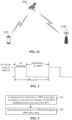
- FIG. 1A is a schematic diagram of an architecture illustrating a communication system according to an embodiment of the disclosure.
- the communication system 100 may include a network device 110, which may be a device that communicates with a terminal device 120 (or referred to as a communication terminal, or a terminal).
- the network device 110 may provide communication coverage for a specific geographic area and may communicate with terminal devices located within that coverage area.
- FIG. 1A exemplarily illustrates one network device and two terminal devices.
- the communication system 100 may include multiple network devices, and other numbers of terminal devices may be included within the coverage range of each network device, which is not limited by embodiments of the disclosure.
- FIG. 1B is another schematic diagram of an architecture illustrating a communication system according to an embodiment of the disclosure.
- the communication system includes a terminal device 1101 and a satellite 1102. Wireless communication may be conducted between the terminal device 1101 and the satellite 1102.
- the network formed between the terminal device 1101 and the satellite 1102 may also be referred to as an NTN.
- the satellite 1102 may have the function of a base station, and terminal device 1101 and the satellite 1102 may communicate directly. Under the system architecture, the satellite 1102 can be referred to as a network device.
- the communication system may include multiple network devices 1102, and other numbers of terminal devices may be included within the coverage range of each network device 1102, which is not limited by embodiments of the disclosure.
- FIG. 1C is another schematic diagram of an architecture illustrating a communication system according to an embodiment of the disclosure.
- the communication system includes a terminal device 1201, a satellite 1202, and a base station 1203. Wireless communication may be conducted between the terminal device 1201 and the satellite 1202, and the satellite 1202 may be communicates with the base station 1203.
- a network formed among the terminal device 1201, the satellite 1202 and the base station 1203 may also be referred to as an NTN.
- the satellite 1202 may not have the function of a base station, and the communication between the terminal device 1201 and the base station 1203 requires a transit through the satellite 1202.
- the base station 1203 may be referred to as a network device.
- the communication system may include multiple network devices 1203, and other numbers of terminal devices may be included within the coverage range of each network device 1203, which is not limited by embodiments of the disclosure.
- FIG. 1A to FIG. 1C are only illustrative examples of the system to which the disclosure applies.
- the method shown in the embodiment of the disclosure can also be applied to other systems, such as a fifth Generation (5G) communication system, an LTE communication system and the like, which are not limited by embodiments of the disclosure.
- 5G fifth Generation
- LTE Long Term Evolution
- the wireless communication system illustrated in FIG. 1A to FIG. 1C may also include other network entities such as a Mobility Management Entity (MME), an Access and Mobility Management Function (AMF) and the like, which are not limited by embodiments of the disclosure.
- MME Mobility Management Entity
- AMF Access and Mobility Management Function
- eMTC Enhanced Machine Type Communication
- the MPDCCH is used to send scheduling information, and is designed based on the Enhanced Physical Downlink Control Channel (EPDCCH) of Long Term Evolution LTE Release 11 (R11).
- the terminal device receives control information based on Demodulation Reference Signal (DMRS), and supports functions such as pre-encoding and beamforming of control information.
- One EPDCCH transmits one or more Enhanced Control Channel Elements (ECCEs), and the aggregation level can be ⁇ 1, 2, 4, 8, 16, 32 ⁇ .
- Each ECCE is composed of multiple Enhanced Resource Element Groups (EREGs).
- the maximum number of repetition of the MPDCCH is configurable, with a value range of ⁇ 1, 2, 4, 8, 16, 32, 64, 128, 256 ⁇ .
- An eMTC Physical Downlink Shared Channel is basically the same as a LTE PDSCH, but repetition and inter-narrowband frequency hopping are added to improve PDSCH channel coverage capability and interference averaging.
- An eMTC terminal device may operate in both Mode A and Mode B.
- Mode A the maximum number of uplink and downlink HARQ processes is 8, and in this mode, the number of PDSCH repetitions is ⁇ 1, 4, 16, 32 ⁇ .
- Mode B the maximum number of uplink and downlink HARQ processes is 2, and in this mode, the number of PDSCH repetitions is ⁇ 4, 16, 64, 128, 256, 512, 1024, 2048 ⁇ .
- a frequency domain resource format of the Physical Uplink Control Channel is the same as that in LTE, and frequency hopping and repeated transmission are supported.
- Mode A supports transmitting Hybrid Automatic Repeat Request (HARQ) Acknowledgement (HARQ-ACK) or HARQ Negative Acknowledgement (HARQ-NACK), Scheduling Request (SR) and Channel State Information (CSI) on the PUCCH, that is, it supports one of PUCCH format 1, PUCCH format 1a, PUCCH format 2 and PUCCH format 2a, with the number of repetitions of ⁇ 1, 2, 4, 8 ⁇ .
- Mode B does not support CSI feedback, only supports PUCCH format 1 or PUCCH format 1a, with the number of repetitions of ⁇ 4, 8, 16, 32 ⁇ .
- a Physical Uplink Shared Channel is the same as that in LTE, but the maximum number of Resource Blocks (RB) that can be scheduled is limited to 6.
- Mode A and Mode B are supported, and the number of repetitions of Mode A can be ⁇ 8, 16, 32 ⁇ , up to 8 processes with high speed are supported.
- a longer distance may be covered in Mode B, and the number of repetitions can be ⁇ 192, 256, 384, 512, 768, 102, 1536, 2048 ⁇ , up to 2 uplink HARQ processes are supported.
- the condition for the terminal device to start or restart the drx-InactivityTimer is that after the terminal device receives the PDCCH indicating the initial downlink or uplink transmission, the drx-InactivityTimer can be started or restarted to enter the "On Duration" (also referred to as active time ), during which data can be received, that is, PDCCH can be listened, and no data can be received during the opportunity for DRX (also referred to as sleep time) in the whole DRX cycle.
- On Duration also referred to as active time
- a network device may configure a DRX function for a terminal device, so that the terminal device listens to the PDCCH discontinuously, so as to save the power of the terminal device.
- Each Media Access Control (MAC) entity has a DRX configuration, and the configuration parameters of the DRX include:
- the terminal device If the terminal device is configured with DRX, the terminal device needs to listen to the PDCCH during the DRX active time.
- the DRX active time includes the following situations;
- the terminal device determines a time to start the drx-onDurationTimer according to whether it is currently in a short DRX cycle or a long DRX cycle, the specific regulations are as follows.
- SFN is the System Frame Number
- subframe number is a subframe number where Physical Random Access Channel (PRACH) resources are located
- drx-ShortCycle is a DRX short cycle
- drx-LongCycle is a DRX long cycle
- drx-StartOffset is a DRX start slot offset.
- HARQ RTT Timer The conditions for the terminal device to start or restart downlink Hybrid Automatic Retransmission Round Trip Time timer (HARQ RTT Timer) are as follows: If the terminal device receives a PDCCH for indicating downlink transmission, or if the terminal device has a configured downlink grant in this subframe, then:
- the UE If the HARQ RTT Timer expires, the UE starts the drx-RetransmissionTimer corresponding to the downlink HARQ process in response to the data decoding of the HARQ process failing.
- Uplink Hybrid Automatic Retransmission Round Trip Time timer (UL HARQ RTT Timer) are as follows.
- the terminal device receives a PDCCH for indicating an uplink transmission using an asynchronous HARQ process, or if the terminal device has a configured uplink grant for an asynchronous HARQ process in this subframe, or if the terminal device receives a PDCCH for indicating an uplink transmission using one automatic HARQ process, then:
- the UE If the UL HARQ RTT Timer corresponding to an uplink HARQ process expires, the UE starts the drx-ULRetransmissionTimer corresponding to the uplink HARQ process.
- PUSCH transmission in CE modeB in the worst case requires 2048 repeated transmissions.
- the base station attempts to decode the repeated transmissions one by one. That is, the base station does not start decoding after receiving all 2048 repeated transmissions, therefore it is possible for the base station to successfully receive the PUSCH after receiving parts of the repeated transmissions.
- the base station may feedback an uplink HARQ-ACK feedback (UL HARQ-ACK feedback) as early as possible, so that the eMTC terminal device can stop the subsequent PUSCH repeated transmissions in time after receiving it, thereby achieving the purpose of energy saving.
- UL HARQ-ACK feedback uplink HARQ-ACK feedback
- one purpose is to terminate PUSCH transmission and the other purpose is to terminate MPDCCH listening.
- the former corresponds to the base station successfully receiving PUSCH through partial repetitions, while the latter corresponds to the base station successfully receiving PUSCH from all HARQ processes.
- the RTT of signal transmission between a terminal device and a network device is very short.
- a time for the base station to feedback UL HARQ-ACK feedback information mainly considers a decoding time after the network device receives PUSCH and a time for allocating resources for transmitting UL HARQ-ACK feedback, the time is usually a few milliseconds, which is longer than the RTT of signal transmission between the terminal device and the network device.
- the terminal device in order to support the UL HARQ-ACK feedback, the terminal device enters a DRX active time during transmitting repeated transmission of the PUSCH, and also, the terminal device starts immediately drx-ULRetransmissionTimer corresponding to the HARQ process used for the PUSCH transmission after completing the repeated transmission of the PUSCH. In such way, the terminal device continuously listens to the PDCCH used to indicate the UL HARQ-ACK feedback during the PUSCH transmission and for a period of time after the PUSCH transmission is completed.
- the signal propagation delay between a terminal device and a network device in NTN significantly increases, and the RTT is much larger than the terminal device processing time considered in the existing terrestrial network device standard, which also poses new problems for UL HARQ ACK feedback mechanism.
- the process that the terminal device sends partial repetitions of the PUSCH, the network device sends a UL HARQ ACK feedback after successfully receiving this partial repetitions and then the terminal device receives the UL HARQ ACK feedback takes a long time (at least one RTT time). If the terminal device still uses the existing DRX mechanism, the terminal device may perform unnecessary PDCCH listening due to the long RTT, which is not conductive to power saving of the terminal device.
- a terminal device may determine a DRX active time according to a transmission duration of a PUSCH bundling transmission and a first RTT. PDCCH listening is performed during the DRX active time determined by the solution. Since the transmission duration of the PUSCH bundling transmission and the first RTT are considered when determining the DRX active time, unnecessary PDCCH listening will not be caused even in the scene where the RTT time is longer, thereby saving the power of the terminal device.
- Embodiments of the disclosure describe various embodiments in connection with a network device and a terminal device.
- the terminal device may also be referred to as User Equipment (UE), an access terminal, a subscriber unit, a subscriber station, a mobile radio station, a mobile station, a remote station, a remote terminal, a mobile device, a user terminal, a terminal, a wireless communication device, a user agent, a user device or the like.
- UE User Equipment
- the terminal device may be a STAION (ST) in a WLAN, including a cell phone, a cordless phone, a Session Initiation Protocol (SIP) phone, a Wireless Local Loop (WLL) station, a Personal Digital Assistant (PDA) device, a handheld device with a wireless communication function, a computing device, another processing device connected to a wireless modem, a vehicle device, a wearable device, a terminal in the next generation communication system such as a next radio (NR) network, a terminal in the future evolved Public Land Mobile Network (PLMN) or the like.
- ST STAION
- WLAN including a cell phone, a cordless phone, a Session Initiation Protocol (SIP) phone, a Wireless Local Loop (WLL) station, a Personal Digital Assistant (PDA) device, a handheld device with a wireless communication function, a computing device, another processing device connected to a wireless modem, a vehicle device, a wearable device, a terminal in the next generation communication system such as
- the terminal device may be deployed on land including indoor or outdoor, hand-held, wearable or vehicle, may also be deployed on the water surface (such as ships), may further be deployed in the air (such as airplanes, balloons, satellites and the like).
- the terminal device can be a Mobile Phone, a Pad, a computer with wireless transceiver function, a Virtual Reality (VR) terminal device, an Augmented Reality (AR) terminal device, a wireless terminal device in industrial control, a wireless terminal device in self-driving, a wireless terminal device in remote medical, a wireless terminal device in smart grid, a wireless terminal device in transportation safety, a wireless terminal device in smart city, a wireless terminal device in a smart home, or the like.
- VR Virtual Reality
- AR Augmented Reality
- the terminal device may also be a wearable device.
- Wearable devices as known as wearable intelligent devices, are the collective term of wearable devices which is developed by using wearable technology to intelligently design daily wear items, such as glasses, gloves, watches, clothing and shoes.
- a wearable device is a portable device that is worn directly on the body or integrated into the clothes or accessories of user.
- the wearable device is not only a hardware device, but also realizes powerful functions through software support, data interaction and cloud interaction.
- wearable smart devices include, for example, smart watches or smart glasses, which have full functions, large size, and can realize complete or partial functions without relying on smart phones, and smart phones, and various smart bracelets and smart jewelry for sigh monitoring, which only focus on a certain type of application function and need to be used in conjunction with other devices.
- the network device can also include access network devices and core network devices. That is, the wireless communication system also includes multiple core networks for communicating with the access network devices.
- the access network device may be an Evolutional Node B (eNB or e-NodeB for short), a macro base station, a micro base station (also referred to as a "small base station"), a pico base station, an access point (AP), a transmission point (TP) or a new generation Node B (gNodeB) in a long-term evolution (LTE) system, a next generation (mobile communication) new radio (NR) system or an authorized auxiliary access long-term evolution (LAA) system.
- eNB Evolutional Node B
- AP access point
- TP transmission point
- gNodeB new generation Node B
- LTE long-term evolution
- NR next generation
- LAA authorized auxiliary access long-term evolution
- the network device may be a device for communicating with the mobile device, and the network device may be an Access Point (AP) in WLAN, a Base Transceiver Station (BTS) in GSM or CDMA, a NodeB (NB) in Wideband Code Division Multiple Access (WCDMA), an Evolved Node B (eNB or eNodeB) in LTE, or a relay station or an Access Point, or a vehicle device, a wearable device, a network device in NR network (gNB), or a network device in future evolved PLMN network, or a network device in NTN network or the like.
- AP Access Point
- BTS Base Transceiver Station
- NB NodeB
- WCDMA Wideband Code Division Multiple Access
- eNB or eNodeB Evolved Node B
- gNB NR network
- future evolved PLMN or a network device in NTN network or the like.
- the network device may have mobility characteristics.
- the network device may be a mobile device.
- the network device can be a satellite or a balloon station.
- the satellite may be low-Earth orbit (LEO) satellites, medium-Earth orbit (MEO) satellites, geostationary Earth orbit (GEO) satellites, high elliptical orbit (HEO) satellites and the like.
- the network device can also be a base station arranged on land, water and the like.
- the network device can provide service for a cell, and the terminal device communicates with the network device through the transmission resources (for example, frequency domain resources, or spectrum resources) used by the cell.
- the cell can be a cell corresponding to a network device (for example, a base station), and the cell can belong to a macro base station or belong to a base station corresponding to a Small cell.
- the Small cell can include: a Metro cell, a Micro cell, a Pico cell, a Femto cell and the like. These small cells have the characteristics of small coverage and low transmission power, and are suitable for providing high-speed data transmission services.
- a device having a communication function in a network/system in an embodiment of the disclosure may be referred to as a communication device.
- the communication device may include a network device and a terminal device with communication functions.
- the network device and the terminal device may be specific devices in embodiments of the disclosure and will not be described herein.
- the communication device may also include other devices in the communication system, for example, network controllers, mobility management entities, and other network entities, which are not limited in embodiments of the disclosure.
- GSM Global System of Mobile communication
- CDMA Code Division Multiple Access
- WCDMA Wideband Code Division Multiple Access
- GPRSs General Packet Radio Services
- LTE Long Term Evolution
- LTE-A Advanced long term evolution
- NR New Radio
- NR-U Non-Terrestrial Networks
- UMTS Universal Mobile Telecommunications Systems
- WLANs Wireless Local Area Networks
- WiFi Wireless Fidelity
- 5G 5th-Generation
- NTN Non-Terrestrial Networks
- TN Terrestrial Networks
- CA Carrier Aggregation
- DC Dual Connectivity
- SA Standalone
- the communication system in the embodiment of the disclosure can be applied to an unlicensed spectrum, and the unlicensed spectrum can also be considered as a shared spectrum, or the communication system in the embodiment of the disclosure can also be applied to a licensed spectrum, and the licensed spectrum can also be considered as a non-shared spectrum.
- system and “network” used herein may usually be exchanged.
- term “and/or” is only an association relationship describing associated objects and represents that three relationships may exist.
- a and/or B may represent three conditions: independent existence of A, existence of both A and B and independent existence of B.
- character “j” used herein usually represents that the associated objects before and after form an "or" relationship.
- the "indication" mentioned in embodiments of the disclosure may be a direct indication, an indirect indication, or a representation of related relationship.
- A indicates B, which can represent that A directly indicates B, for example, B can be obtained through A;
- A indicates B, which also can represent that A indirectly indicates B, for example, A indicates C, and B can be obtained by C;
- correlate may represent that there is a direct correspondence or an indirect correspondence between the two, may also represent that an association relationship between the two, or a relationship between indication and being indicated, configuration and being configured or the like.
- the indication information in embodiments of the disclosure includes physical layer signaling, for example, at least one of Downlink Control Information (DCI), Radio Resource Control (RRC) signaling or Media Access Control Element (MAC CE).
- DCI Downlink Control Information
- RRC Radio Resource Control
- MAC CE Media Access Control Element
- a high layer parameter or a high layer signaling in embodiments of the disclosure includes at least one of Radio Resource Control (RRC) signaling or Media Access Control Element (MAC CE).
- RRC Radio Resource Control
- MAC CE Media Access Control Element
- an embodiment of the disclosure provides a method for determining a DRX active time.
- the method includes the following operations.
- a terminal device determines the DRX active time according to a transmission duration of a PUSCH bundling transmission and a first RTT.
- the terminal device listens to a PDCCH during the DRX active time.
- the first RTT is determined according to any of the following parameters.
- the first RTT may be a value rounded up in milliseconds according to any of the parameters (a), (b), (c), (d), (e) and (f).
- the first RTT may be a value rounded down in milliseconds according to any of the parameters (a), (b), (c), (d), (e) and (f).
- the network device processing time includes the following processing times.
- the above network processing time can be configured through system message broadcasting.
- the above network processing time can be configured by RRC dedicated signaling.
- the above operation 101 may include, but not be limited to, following implementations.
- the terminal device may determine a first moment according to an end moment of a first repeated transmission of the PUSCH bundling (also referred to as PUSCH bundle) transmission and the first RTT, and may determine to enter the DRX active time at the first moment in response to the first moment being within the transmission duration of the PUSCH bundling transmission.
- PUSCH bundling also referred to as PUSCH bundle
- a first time interval is greater than or equal to the first RTT, and the first time interval is a time interval between the first moment and the end moment of the first repeated transmission.
- the transmission duration of the PUSCH bundling transmission refers to the transmission duration of PUSCH bundle.
- the DRX active time is entered at the first moment within the transmission duration of the PUSCH bundling transmission.
- the terminal device when it is determined that the DRX active time is entered in the first moment, the terminal device is in the DRX active time from the first moment to the transmission end moment of the PUSCH bundling transmission, and the terminal device may listen to the PDCCH during the DRX active time.
- the first moment T2 which is a moment to enter the DRX active time, may be determined according to the end moment T1 of the first repeated transmission of the PUSCH bundling transmission and the first RTT. From the moment T2 to the transmission end moment T3 of the PUSCH bundling transmission, the terminal device may be in the DRX active time and listen to the PDCCH.
- a first timer is started at a target subframe.
- the first timer corresponds to a HARQ process used for the PUSCH bundling transmission, a running time of the first timer is in the DRX active time.
- the target subframe is a subframe in which the last repeated transmission of the PUSCH bundling transmission is located, or a next subframe of the subframe in which the last repeated transmission of the PUSCH bundling transmission is located.
- the timing duration of the first timer is determined according to the first RTT.
- the timing time of the first timer is greater than or equal to the first RTT.
- the timing duration of the first timer is a first time interval.
- the first timer is a first uplink retransmission timer.
- the timing duration of the first timer is configured by the network device, or the timing duration of the first timer is determined according to the first RTT, and a duration of the first uplink retransmission timer configured by the network device for a terminal device.
- the duration of the first uplink retransmission timer refers to a timing duration of the first uplink retransmission timer configured by the network device for the terminal device.
- the first timer is a first uplink retransmission timer.
- the timing duration of the first timer is the sum of the first RTT and the duration of the first uplink retransmission timer configured by the network device for the terminal device.
- the first timer is a first uplink retransmission timer.
- the timing duration of the first timer is the sum of the first time interval and the duration of the first uplink retransmission timer configured by the network device for the terminal device.
- a terminal device starts a first timer if the first RTT is greater than the transmission duration of the PUSCH bundling transmission and if a terminal device has not received uplink HARQ-ACK feedback information transmitted by a network device when a first time offset elapses after a last repeated transmission of the PUSCH bundling transmission.
- the first timer corresponds to a HARQ process used for the PUSCH bundling transmission, and the terminal device is in the DRX active time within a timing duration of the first timer.
- the timing duration of the first timer is determined according to the transmission duration of the PUSCH bundling transmission.
- the timing duration of the first timer is determined according to a duration of the first uplink retransmission timer configured by the network device for the terminal device.
- the timing duration of the first timer is determined according to the transmission duration of the PUSCH bundling transmission and a duration of the first uplink retransmission timer configured by the network device for the terminal device.
- the first time offset is determined according to the transmission duration of the PUSCH bundling transmission and the first RTT.
- the timing duration of the first timer is equal to the transmission duration of the PUSCH bundling transmission.
- the first time offset is equal to a difference between the first RTT and the transmission duration of the PUSCH bundling transmission.
- the first timer is a first uplink retransmission timer.
- the timing duration of the first timer is a sum of the duration of the first uplink retransmission timer configured by the network device for the terminal device and the transmission duration of the PUSCH bundling transmission.
- the first timer is a first uplink retransmission timer.
- the first time offset is equal to a difference between the first RTT and the transmission duration of the PUSCH bundling transmission.
- the first timer is a first uplink retransmission timer.
- the timing duration of the first timer is configured by the network device.
- the first timer is a first uplink retransmission timer.
- the first time offset is equal to a difference between the first RTT and the transmission duration of the PUSCH bundling transmission.
- a first timer is started when a second time offset elapses after an end moment of a first repeated transmission of the PUSCH bundling transmission.
- the first timer corresponds to a HARQ process used for the PUSCH bundling transmission, and the terminal device is in the DRX active time within a timing duration of the first timer.
- the second time offset is determined according to the first RTT.
- the timing duration of the first timer is determined according to the transmission duration of the PUSCH bundling transmission.
- the second time offset is equal to the first RTT.
- the timing duration of the first timer is equal to the transmission duration of the PUSCH bundling transmission.
- the embodiments of the disclosure provide a method for determining a DRX active time.
- a terminal device can determine the DRX active time according to a transmission duration of a PUSCH bundling transmission and a first RTT. PDCCH listening is performed during the DRX active time determined by the solution. Since the transmission duration of the PUSCH bundling transmission and the first RTT are considered when determining the DRX active time, unnecessary PDCCH listening will not be caused even in the scene where the RTT time is longer, thereby saving the power of the terminal device.
- a first timer is started when a second time offset elapses after an end moment of a first repeated transmission of the PUSCH bundling transmission. If first information is received before the first timer expires, the first timer is stopped.
- the first information includes at least one of the following information.
- the method further includes the following operations.
- a first uplink retransmission timer is started when the first timer expires.
- the first uplink retransmission timer corresponds to the HARQ process used for the PUSCH bundling transmission.
- the first timer is an uplink retransmission timer and the first RTT is less than or equal to the transmission duration of the PUSCH bundling transmission, if first information is received, the first timer is stopped, which includes the following operations.
- the first uplink retransmission timer is stopped if the first information is received and the first uplink retransmission timer has been running for a period of time which is less than or equal to the first RTT.
- the first uplink retransmission timer is stopped if the first information is received and the first uplink retransmission timer has been running for a period of time that is less than or equal to the transmission duration of the PUSCH bundling transmission.
- uplink retransmission timers correspond to all HARQ processes are stopped if the HARQ-ACK feedback information transmitted by the network device is received and the first uplink retransmission timer has been running for a period of time which exceeds the transmission duration of the PUSCH bundling transmission.
- the first uplink retransmission timer is stopped if the HARQ-ACK feedback information transmitted by the network device is received and the first uplink retransmission timer has been running for a period of time which is less than or equal to the first RTT.
- uplink retransmission timers correspond to all HARQ processes are stopped if the HARQ-ACK feedback information transmitted by the network device is received and the first uplink retransmission timer has been running for a period of time which exceeds the first RTT.
- a first timer corresponding to the uplink HARQ process corresponding to the first timer can be stopped, or all uplink retransmission timers corresponding to the uplink HARQ process corresponding to the first timer can be stopped, so that the DRX active time may be flexibly adjusted and the period of listening to the PDCCH may also be flexibly adjusted.
- determining the DRX active time of the UE includes the following operations.
- the UE configured with mpdcch-UL-HARQ-ACK-FeedbackConfig within the transmission duration of the PUSCH bundle, it can be determined, according to the transmission duration of the PUSCH bundle and the first RTT, that the DRX active time is entered at the first moment.
- the UE performs a repeated transmission within a PUSCH bundle at a first moment and the time interval between the first moment and the end moment of the first repeated transmission of the PUSCH bundle is greater than or equal to the first RTT.
- the DRX active time of the UE is determined according to one of following three cases a), b) and c).
- FIG. 6 it is a schematic diagram illustrating a determined DRX active time of a UE in case that the first RTT is greater than the transmission duration of the PUSCH bundle.
- the HARQ process used for the PUSCH bundling transmission is identified as HARQ ID 0. It is assumed that the transmission end moment of the PUSCH bundle is T3, and the first time offset is represented as Ts.
- the first timer corresponding to the HARQ ID 0 may be started at the moment T5 which is a moment when the Ts elapses after the transmission end moment T3 of the PUSCH bundle.
- the uplink retransmission timer (drx-ULRetransmissionTimer) corresponding to the HARQ ID 0 can be started at the expiring moment T6 of the first timer.
- the timing duration of the first timer is equal to the transmission duration of the PUSCH bundle, and the time interval between T1 and T5 is equal to the first RTT.
- the UE During the running time of the first timer corresponding to the uplink HARQ process, the UE is in the DRX active time. That is, the UE listens to the PDCCH during this duration.
- the UE stops the first timer corresponding to the HARQ process.
- the UE stops the first timer corresponding to the HARQ process.
- the UE can start a drx-ULRetransmissionTimer corresponding to the HARQ process used for the PUSCH bundling transmission.
- determining the DRX active time of the UE includes the following operations.
- the UE starts a first timer corresponding to a HARQ process used for a PUSCH bundling transmission when a second time offset elapses after an end moment of a first repeated transmission of PUSCH bundle transmitted by UE.
- the second time offset is equal to the first RTT, and the timing duration of the first timer is equal to the transmission duration of the PUSCH bundle.
- the UE During the running time of the first timer, the UE is in a DRX active time, that is, during the DRX active time, the UE listens to a PDCCH.
- the UE stops the first timer corresponding to the uplink HARQ process.
- the UE In case that the first timer corresponding to the uplink HARQ process expires, the UE starts a drx-ULRetransmissionTimer corresponding to the HARQ process.
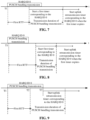
- FIG. 7 it is a schematic diagram illustrating a determined DRX active time of the UE in case that the first RTT is less than or equal to the transmission duration of the PUSCH bundle.
- FIG. 8 it is a schematic diagram illustrating a determined DRX active time of the UE in case that the first RTT is longer than the transmission duration of the PUSCH bundle.
- the HARQ process used for the PUSCH bundling transmission is identified as HARQ ID 0. It is assumed that the second time offset is equal to the first RTT, the first timer corresponding to HARQ ID 0 may be started when the first RTT elapses after an end moment T1 of a first repeated transmission of the PUSCH bundle, and the drx-ULRetransmissionTimer corresponding to HARQ ID 0 may be started after the first timer expires.
- the timing duration of the first timer is the transmission duration of the PUSCH bundle.
- determining the DRX active time of the UE includes the following operations.
- the UE configured with mpdcch-UL-HARQ-ACK-FeedbackConfig within the transmission duration of the PUSCH bundle, it may be determined, according to the transmission duration of the PUSCH bundle and a first RTT, that the DRX active time is entered at a first moment.
- the UE performs a repeated transmission within a PUSCH bundle at a first moment and the time interval between the first moment and the end moment of the first repeated transmission of the PUSCH bundle is greater than or equal to the first RTT.
- the DRX active time of the UE is determined according to one of three cases d), e) and f), .
- the UE If the first RTT is less than or equal to the transmission duration of the PUSCH bundle, the UE starts a drx-ULRetransmissionTimer corresponding to the HARQ process used for the PUSCH transmission in a next subframe of a subframe in which the last repeated transmission of the PUSCH bundle is completed.
- the timing duration of the drx-ULRetransmissionTimer is: the first RTT and the timing duration of the drx-ULRetransmissionTimer configured by a network device through the RRC.
- the UE If the first RTT is less than or equal to the transmission duration of the PUSCH bundle, the UE starts the drx-ULRetransmissionTimer corresponding to the HARQ process used for the PUSCH transmission in a subframe in which the last repeated transmission of the PUSCH bundle is completed.
- the timing duration of the drx-ULRetransmissionTimer is: the first RTT and the timing duration of the drx-ULRetransmissionTimer configured by the network device through the RRC.
- FIG. 9 it is a schematic diagram illustrating a determined DRX active time of the UE in case of the first RTT is less than or equal to the transmission duration of the PUSCH bundle.
- the HARQ process used for the PUSCH bundling transmission is identified as HARQ ID 0.
- the end moment of the first repeated transmission of the PUSCH bundle is T1.
- a first moment T2 is determined when the first RTT elapses after T1.
- the DRX active time is entered at the first moment T2.
- the drx-ULRetransmissionTimer is started at the transmission end moment T3 (which can be a next subframe of a subframe in which the last repeated transmission of the PUSCH bundle is completed, or a subframe in which the last repeated transmission of the PUSCH bundle is completed) of the PUSCH bundle.
- the UE If the first RTT is greater than the transmission duration of the PUSCH bundle, the UE starts drx-ULRetransmissionTimer corresponding to the HARQ process used for the PUSCH bundling transmission when a first time offset elapses after a last repeated transmission of the PUSCH.
- the first time offset is a difference between the first RTT and a transmission duration of the PUSCH bundle
- the timing duration of the drx-ULRetransmissionTimer is: the first RTT and the timing duration of the drx-ULRetransmissionTimer configured by network device through the RRC.
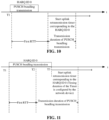
- FIG. 10 it is a schematic diagram illustrating a determined DRX active time of the UE in case that the first RTT is greater than the transmission duration of the PUSCH bundle.
- the HARQ process used for the PUSCH bundling transmission is identified as HARQ ID 0.
- An end moment of a first repeated transmission of the PUSCH bundle is T1, the drx-ULRetransmissionTimer is started when the first time offset (i.e., the first RTT) elapses after T1.
- determining the DRX active time of the UE includes the following operations.
- the UE configured with the mpdcch-UL-HARQ-ACK-FeedbackConfig within the transmission duration of the PUSCH bundle, it can be determined, according to the transmission duration of the PUSCH bundle and the first RTT, that the DRX active time is entered at the first moment.
- the UE performs a repeated transmission within a PUSCH bundle at a first moment and the time interval between the first moment and the end moment of the first repeated transmission of the PUSCH bundle is greater than or equal to the first RTT.
- the DRX active time of the UE is determined according to one of three cases g), h) and i).
- the UE If the first RTT is less than or equal to the transmission duration of the PUSCH bundle, the UE starts the drx-ULRetransmissionTimer corresponding to the HARQ process used for the PUSCH bundling transmission in a next subframe of a subframe in which the last repeated transmission of the PUSCH bundle is completed.
- the duration of the drx-ULRetransmissionTimer is configured by the network via RRC.
- the UE If the first RTT is less than or equal to the transmission duration of the PUSCH bundle, the UE starts the drx-ULRetransmissionTimer corresponding to the HARQ process used for the PUSCH bundling transmission in a subframe in which the last repeated transmission of the PUSCH bundle is completed.
- FIG. 11 it is a schematic diagram illustrating a determined DRX active time of the UE in case that the first RTT is less than or equal to the transmission duration of the PUSCH bundle.
- the HARQ process used for the PUSCH bundling transmission is identified as HARQ ID 0.
- the end moment of the first repeated transmission of the PUSCH bundle is T1.
- a first moment T2 is determined when a first RTT elapses after T1, the duration from T2 to T3 is in the DRX active time.
- the drx-ULRetransmissionTimer is started at the transmission end moment T3 (which can be a next subframe of a subframe in which the last repeated transmission of the PUSCH bundle is completed, or a subframe in which the last repeated transmission of the PUSCH bundle is completed) of the PUSCH bundle.
- the timing duration of the drx-ULRetransmissionTimer is configured by the network device.
- FIG. 12 it is a schematic diagram illustrating a determined DRX active time of the UE in case that the first RTT is longer than the transmission duration of the PUSCH bundle.
- the HARQ process used for the PUSCH bundling transmission is identified as HARQ ID 0.
- An end moment of a first repeated transmission of the PUSCH bundle is T1
- the drx-ULRetransmissionTimer is started when a first time offset (i.e., the first RTT) elapses after T1.
- the timing duration of the drx-ULRetransmissionTimer is configured by the network device.
- the UE starts the drx-ULRetransmissionTimer corresponding to the HARQ process used for the PUSCH bundling transmission when a first time offset elapses after a last repeated transmission of the PUSCH.
- the first time offset the first RTT - the transmission duration of PUSCH bundle, and the timing duration of the drx-ULRetransmissionTimer is configured by the network device through RRC.
- the following operations is performed:
- the UE stops drx-ULRetransmissionTimer corresponding to all uplink HARQ processes.
- the UE stops drx-ULRetransmissionTimer corresponding to all uplink HARQ processes.
- an embodiment of the disclosure provides a terminal device which includes a processing module 1301.
- the processing module 1301 is configured to determine a Discontinuous Reception (DRX) active time according to a transmission duration of a Physical Uplink Shared Channel (PUSCH) bundling transmission and a first Round Trip Time (RTT).
- DRX Discontinuous Reception
- PUSCH Physical Uplink Shared Channel
- RTT Round Trip Time
- the processing module 1301 is specifically configured to: determine a first moment according to an end moment of a first repeated transmission of the PUSCH bundling transmission and the first RTT; and determine to enter the DRX active time at the first moment in response to the first moment being within the transmission duration of the PUSCH bundling transmission.
- a first time interval is greater than or equal to the first RTT, and the first time interval is a time interval between the first moment and the end moment of the first repeated transmission.
- the processing module 1301 is specifically configured to: start a first timer at a target subframe, in case that the first RTT is less than or equal to the transmission duration of the PUSCH bundling transmission and in case that uplink Hybrid Automatic Repeat Request (HARQ) Acknowledgement (HARQ-ACK) feedback information transmitted by a network device has not been received after a last repeated transmission of the PUSCH bundling transmission.
- HARQ Hybrid Automatic Repeat Request
- HARQ-ACK uplink Hybrid Automatic Repeat Request
- the first timer corresponds to a HARQ process used for the PUSCH bundling transmission, a running time of the first timer is in the DRX active time, and the target subframe is a subframe in which the last repeated transmission of the PUSCH bundling transmission is located, or a next subframe of a subframe in which the last repeated transmission of the PUSCH bundling transmission is located.
- a timing duration of the first timer is determined according to the first RTT.
- the timing time of the first timer is greater than or equal to the first RTT.
- the timing duration of the first timer is a first time interval.
- the first timer is a first uplink retransmission timer.
- a timing duration of the first timer is configured by the network device; or, a timing duration of the first timer is determined according to the first RTT, and a duration of the first uplink retransmission timer configured by the network device for a terminal device.
- the timing duration of the first timer is a sum of the first RTT, and the duration of the first uplink retransmission timer configured by the network device for the terminal device.
- the timing duration of the first timer is the sum of a first time interval, and the duration of the first uplink retransmission timer configured by the network device for the terminal device.
- the processing module 1301 is specifically configured to: start a first timer in case that the first RTT is greater than the transmission duration of the PUSCH bundling transmission and in case that the terminal device has not received uplink Hybrid Automatic Repeat Request (HARQ) Acknowledgement (HARQ-ACK) feedback information transmitted by a network device when a first time offset elapses after a last repeated transmission of the PUSCH bundling transmission.
- HARQ Hybrid Automatic Repeat Request
- HARQ-ACK uplink Hybrid Automatic Repeat Request
- the first timer corresponds to a HARQ process used for the PUSCH bundling transmission, and a timing duration of the first timer is in the DRX active time.
- the timing duration of the first timer is determined according to at least one of: the transmission duration of the PUSCH bundling transmission or a duration of a first uplink retransmission timer configured by the network device for the terminal device.
- the first time offset is determined according to the transmission duration of the PUSCH bundling transmission and the first RTT.
- the timing duration of the first timer is equal to the transmission duration of the PUSCH bundling transmission.
- the first time offset is equal to a difference between the first RTT and the transmission duration of the PUSCH bundling transmission.
- the first timer is the first uplink retransmission timer.
- the timing duration of the first timer is a sum of the duration of the first uplink retransmission timer configured by the network device for the terminal device and the transmission duration of the PUSCH bundling transmission
- the first time offset is equal to a difference between the first RTT and the transmission duration of the PUSCH bundling transmission.
- the first timer is the first uplink retransmission timer.
- the timing duration of the first timer is configured by the network device.
- the first time offset is equal to a difference between the first RTT and the transmission duration of the PUSCH bundling transmission.
- the processing module 1301 is specifically configured to: start a first timer when a second time offset elapses after an end moment of a first repeated transmission of the PUSCH bundling transmission.
- the first timer corresponds to a Hybrid Automatic Repeat Request (HARQ) process used for the PUSCH bundling transmission, and a timing duration of the first timer is in the DRX active time.
- HARQ Hybrid Automatic Repeat Request
- the second time offset is determined according to the first RTT.
- the timing duration of the first timer is determined according to the transmission duration of the PUSCH bundling transmission.
- the second time offset is equal to the first RTT.
- the timing duration of the first timer is equal to the transmission duration of the PUSCH bundling transmission.
- processing module 1301 is further configured to: before the first timer expires, stop the first timer in response to receiving first information.
- the first information comprises at least one of: the uplink HARQ Acknowledgement (HARQ-ACK) feedback information or an uplink grant indication for scheduling a new transmission.
- HARQ-ACK uplink HARQ Acknowledgement
- the processing module 1301 is further configured to: start a first uplink retransmission timer in response to the first timer expiring.
- the first uplink retransmission timer corresponds to the HARQ process used for the PUSCH bundling transmission.
- the first timer is a first uplink retransmission timer.
- the processing module 1301 is specifically configured to: stop the first uplink retransmission timer in response to that the first information is received and the first uplink retransmission timer has been running for a period of time which is less than or equal to the first RTT.
- the first timer is a first uplink retransmission timer.
- the processing module 1301 is specifically configured to: stop the first uplink retransmission timer in response to that first information is received and the first uplink retransmission timer has been running for a period of time which is being less than or equal to the transmission duration of the PUSCH bundling transmission.
- the processing module 1301 is further configured to: in case that the first RTT is less than or equal to the transmission duration of the PUSCH bundling transmission, before the first uplink retransmission timer expires, stop uplink retransmission timers correspond to all HARQ processes in response to that the HARQ-ACK feedback information transmitted by the network device is received and the first uplink retransmission timer has been running for a period of time which exceeds the first RTT.
- the processing module 1301 is further configured to: in case that the first RTT is greater than the transmission duration of the PUSCH bundling transmission, before the first uplink retransmission timer expires, stop uplink retransmission timers correspond to all HARQ processes in response to that the HARQ-ACK feedback information transmitted by the network device is received and the first uplink retransmission timer has been running for a period of time which exceeds the transmission duration of the PUSCH bundling transmission.
- the first RTT is determined according to at least one of the following parameters: a first RTT between the terminal device and a base station; a timing advance value of the terminal device; a second RTT between the terminal device and a satellite; a first total time of the first RTT and a network device processing time; a second total time of the timing advance value of the terminal device and the network device processing time; or a third total time of the second RTT and the network device processing time.
- the network device processing time includes at least one of: a satellite processing time or a base station processing time.
- the processing time of the network device is configured by system message broadcasting.
- the processing time of the network device is configured through RRC dedicated signaling.
- the terminal device is applied to a terminal device configured with Machine Type Communication (MTC) Physical Downlink Control Channel (MPDCCH) uplink Hybrid Automatic Repeat Request (HARQ) Acknowledgement (HARQ-ACK) feedback configuration information.
- MTC Machine Type Communication
- MPDCCH Physical Downlink Control Channel
- HARQ Hybrid Automatic Repeat Request
- HARQ-ACK Acknowledgement
- the embodiment of the disclosure also provides a terminal device, which includes: a memory storing executable program codes and a processor coupled to the memory.
- the processor calls the executable program code stored in the memory to perform the method for determining the DRX active time performed by the terminal device in the embodiment of the disclosure.
- a terminal device As an example, as illustrated in FIG. 14 , a terminal device is provided by an embodiment of the disclosure, the terminal device includes a radio frequency (RF) circuit 1410, a memory 1420, a processor 1430 and other components.
- the radio frequency circuit 1410 includes a receiver 1411 and a transmitter 1412.
- RF radio frequency
- the structure of the terminal device illustrated in FIG. 14 does not constitute a limitation to the terminal device and may include more or fewer components than illustrated, or a combination of certain components, or different component arrangements.
- the RF circuit 1410 can be used for receiving and transmitting signals during messaging or calls. Specifically, the RF circuit 1410 receive the downlink information from the base station and transmits it to the processor 1430 for processing. In addition, the RF circuit 1410 transmits the uplink data to the base station. Typically, RF circuit 1410 includes but is not limited to an antenna, at least one amplifier, a transceiver, a coupler, a low noise amplifier (LNA), a diplexer and the like. In addition, the RF circuit 1410 may also communicate with a network and other devices through wireless communication.
- LNA low noise amplifier
- the wireless communication may use any communication standard or protocol, including but not limited to the global system of mobile communication (GSM), general packet radio service (GPRS), code division multiple access (CDMA), wideband code division multiple access (WCDMA), long term evolution (LTE), E-mail, short messaging service (SMS), and so on.
- GSM global system of mobile communication
- GPRS general packet radio service
- CDMA code division multiple access
- WCDMA wideband code division multiple access
- LTE long term evolution
- E-mail short messaging service
- SMS short messaging service
- the memory 1420 may be used to store software programs and modules, while the processor 1430 executes various functional applications and data processing of the terminal device by running the software programs and modules stored in the memory 1420.
- the memory 1420 may mainly include a stored program area and a stored data area, the stored program area may store an operating system, an application program required for at least one function (such as, a sound playback function, an image playback function, etc.), and the like.
- the storage data area may store data (such as audio data, telephone book, etc.) created according to the use of the terminal device.
- the memory 1420 may include a high-speed random access memory and may further include a non-volatile memory, for example, at least one disk memory device, a flash memory device or other volatile solid-state memory devices.
- the processor 1430 is a control center that connects various parts of the entire terminal device by various interfaces and lines, executes various functions of the terminal device and processes data by running or executing software programs and/or modules stored in the memory 1420 and by calling data stored in the memory 1420, thereby monitoring the entire terminal device.
- the processor 1430 may include one or more processing units.
- the processor 1430 may integrate with an application processor and a modem processor; the application processor mainly processes the operating systems, user interfaces, application programs and the like.
- the modem processor mainly processes wireless communications. It can be understand that the modem processor described above may also not be integrated into the processor 1430.
- the processor 1430 is configured to determine a Discontinuous Reception (DRX) active time according to a transmission duration of a Physical Uplink Shared Channel (PUSCH) bundling transmission and a first Round Trip Time (RTT).
- DRX Discontinuous Reception
- PUSCH Physical Uplink Shared Channel
- RTT Round Trip Time
- the processor 1430 is specifically configured to: determine a first moment according to an end moment of a first repeated transmission of the PUSCH bundling transmission and the first RTT; and determine to enter the DRX active time at the first moment in response to the first moment being within the transmission duration of the PUSCH bundling transmission.
- a first time interval is greater than or equal to the first RTT, and the first time interval is a time interval between the first moment and the end moment of the first repeated transmission.
- the processor 1430 is specifically configured to: start a first timer at a target subframe, in response to that the first RTT is less than or equal to the transmission duration of the PUSCH bundling transmission and in response to that uplink Hybrid Automatic Repeat Request (HARQ) Acknowledgement (HARQ-ACK) feedback information transmitted by a network device has not been received after a last repeated transmission of the PUSCH bundling transmission.
- HARQ Hybrid Automatic Repeat Request
- HARQ-ACK uplink Hybrid Automatic Repeat Request
- the first timer corresponds to a HARQ process used for the PUSCH bundling transmission, a running time of the first timer is in the DRX active time, and the target subframe is a subframe in which the last repeated transmission of the PUSCH bundling transmission is located, or a next subframe of a subframe in which the last repeated transmission of the PUSCH bundling transmission is located.
- a timing duration of the first timer is determined according to the first RTT.
- the timing time of the first timer is greater than or equal to the first RTT.
- the timing duration of the first timer is a first time interval.
- the first timer is a first uplink retransmission timer.
- a timing duration of the first timer is configured by the network device; or, a timing duration of the first timer is determined according to the first RTT, and a duration of the first uplink retransmission timer configured by the network device for a terminal device.
- the timing duration of the first timer is a sum of the first RTT, and the duration of the first uplink retransmission timer configured by the network device for the terminal device.
- the timing duration of the first timer is the sum of a first time interval, and the duration of the first uplink retransmission timer configured by the network device for the terminal device.
- the processor 1430 is specifically configured to: start a first timer in case that the first RTT is greater than the transmission duration of the PUSCH bundling transmission and in case that a terminal device has not received uplink Hybrid Automatic Repeat Request (HARQ) Acknowledgement (HARQ-ACK) feedback information transmitted by a network device when a first time offset elapses after a last repeated transmission of the PUSCH bundling transmission.
- HARQ Hybrid Automatic Repeat Request
- HARQ-ACK uplink Hybrid Automatic Repeat Request
- the first timer corresponds to a HARQ process used for the PUSCH bundling transmission, and a timing duration of the first timer is in the DRX active time.
- the timing duration of the first timer is determined according to at least one of: the transmission duration of the PUSCH bundling transmission or a duration of a first uplink retransmission timer configured by the network device for the terminal device.
- the first time offset is determined according to the transmission duration of the PUSCH bundling transmission and the first RTT.
- the timing duration of the first timer is equal to the transmission duration of the PUSCH bundling transmission.
- the first time offset is equal to a difference between the first RTT and the transmission duration of the PUSCH bundling transmission.
- the first timer is the first uplink retransmission timer.
- the timing duration of the first timer is a sum of the duration of the first uplink retransmission timer configured by the network device for the terminal device and the transmission duration of the PUSCH bundling transmission.
- the first time offset is equal to a difference between the first RTT and the transmission duration of the PUSCH bundling transmission.
- the first timer is the first uplink retransmission timer.
- the timing duration of the first timer is configured by the network device.
- the first time offset is equal to a difference between the first RTT and the transmission duration of the PUSCH bundling transmission.
- the processor 1430 is specifically configured to: start a first timer when a second time offset elapses after an end moment of a first repeated transmission of the PUSCH bundling transmission.
- the first timer corresponds to a Hybrid Automatic Repeat Request (HARQ) process used for the PUSCH bundling transmission, and a timing duration of the first timer is in the DRX active time.
- HARQ Hybrid Automatic Repeat Request
- the second time offset is determined according to the first RTT.
- the timing duration of the first timer is determined according to the transmission duration of the PUSCH bundling transmission.
- the second time offset is equal to the first RTT.
- the timing duration of the first timer is equal to the transmission duration of the PUSCH bundling transmission.
- the processor 1430 is further configured to: before the first timer expires, stop the first timer in response to receiving first information.
- the first information comprises at least one of: the uplink HARQ Acknowledgement (HARQ-ACK) feedback information or an uplink grant indication for scheduling a new transmission.
- HARQ-ACK uplink HARQ Acknowledgement
- the processor 1430 is further configured to: start a first uplink retransmission timer in response to the first timer expiring.
- the first uplink retransmission timer corresponds to the HARQ process used for the PUSCH bundling transmission.
- the first timer is a first uplink retransmission timer.
- the processor 1430 is specifically configured to: stop the first uplink retransmission timer in response to that the first information is received and the first uplink retransmission timer has been running for a period of time which is less than or equal to the first RTT.
- the first timer is a first uplink retransmission timer.
- the processor 1430 is specifically configured to: stop the first uplink retransmission timer in response to that the first information is received and the first uplink retransmission timer has been running for a period of time which is less than or equal to the transmission duration of the PUSCH bundling transmission.
- the processor 1430 is further configured to: in case that the first RTT is less than or equal to the transmission duration of the PUSCH bundling transmission, before the first uplink retransmission timer expires, stop uplink retransmission timers correspond to all HARQ processes in response to that the HARQ-ACK feedback information transmitted by the network device is received and the first uplink retransmission timer has been running for a period of time which exceeds the first RTT.
- the processor 1430 is further configured to: in case that the first RTT is greater than the transmission duration of the PUSCH bundling transmission, before the first uplink retransmission timer expires, stop uplink retransmission timers correspond to all HARQ processes in response to that the HARQ-ACK feedback information transmitted by the network device is received and the first uplink retransmission timer has been running for a period of time which exceeds the transmission duration of the PUSCH bundling transmission.
- the first RTT is determined according to at least one of the following parameters: a first RTT between the terminal device and a base station; a timing advance value of the terminal device; a second RTT between the terminal device and a satellite; a first total time of the first RTT and a network device processing time; a second total time of the timing advance value of the terminal device and the network device processing time; or a third total time of the second RTT and the network device processing time.
- the network device processing time includes at least one of: a satellite processing time or a base station processing time.
- the processing time of the network device is configured by system message broadcasting.
- the processing time of the network device is configured through RRC dedicated signaling.
- the terminal device is applied to a terminal device configured with Machine Type Communication (MTC) Physical Downlink Control Channel (MPDCCH) uplink Hybrid Automatic Repeat Request (HARQ) Acknowledgement (HARQ-ACK) feedback configuration information.
- MTC Machine Type Communication
- MPDCCH Physical Downlink Control Channel
- HARQ Hybrid Automatic Repeat Request
- HARQ-ACK Acknowledgement
- An embodiment of the disclosure provides a computer-readable storage medium, which includes computer instructions that, when run on a computer, cause the computer to perform various processes of the terminal device as described in the above method embodiments.
- An embodiment of the disclosure provides a computer program product, which includes computer instructions.
- the computer program product When the computer program product is running on a computer, the computer executes the computer instructions to cause the computer to perform various processes of the terminal device as described in the above method embodiments.
- An embodiment of the disclosure provides a chip, which is coupled with the memory in the terminal device, causing the chip to call program instructions stored in the memory during runtime, such that the terminal device perform various processes of the terminal device as described in the above method embodiments.
- the computer program product includes one or more computer instructions.
- the computer may be a general computer, a specialized computer, a computer network, or other programmable device.
- Computer instructions may be stored in a computer-readable storage medium, or be transmitted from one computer-readable storage medium to another computer-readable storage medium.
- computer instructions may be transmitted from one website site, computer, server, or data center to another website site, computer, server, or data center through wired (such as, coaxial cable, optical fiber, digital subscriber line (DSL)) or wireless (such as, infrared, wireless, microwave, etc.).
- the computer-readable storage medium can be any available medium that a computer can store, or a data storage device such as a server or data center that contains one or more available media integrations.
- the available media can be magnetic media (such as, floppy disks, hard drives, magnetic tapes), optical media (such as, DVDs), or semiconductor media (such as, solid state hard drives (SSDs)) and the like.
Landscapes
- Engineering & Computer Science (AREA)
- Computer Networks & Wireless Communication (AREA)
- Signal Processing (AREA)
- Mobile Radio Communication Systems (AREA)
Applications Claiming Priority (1)
| Application Number | Priority Date | Filing Date | Title |
|---|---|---|---|
| PCT/CN2021/105072 WO2023279308A1 (fr) | 2021-07-07 | 2021-07-07 | Procédé de détermination de période d'activation de drx et dispositif terminal |
Publications (3)
| Publication Number | Publication Date |
|---|---|
| EP4340432A1 true EP4340432A1 (fr) | 2024-03-20 |
| EP4340432A4 EP4340432A4 (fr) | 2024-07-17 |
| EP4340432B1 EP4340432B1 (fr) | 2025-08-27 |
Family
ID=84800288
Family Applications (1)
| Application Number | Title | Priority Date | Filing Date |
|---|---|---|---|
| EP21948806.1A Active EP4340432B1 (fr) | 2021-07-07 | 2021-07-07 | Procédé de détermination de période d'activation de drx et dispositif terminal |
Country Status (4)
| Country | Link |
|---|---|
| US (1) | US20240129072A1 (fr) |
| EP (1) | EP4340432B1 (fr) |
| CN (1) | CN117322032A (fr) |
| WO (1) | WO2023279308A1 (fr) |
Cited By (2)
| Publication number | Priority date | Publication date | Assignee | Title |
|---|---|---|---|---|
| US20240015739A1 (en) * | 2022-07-05 | 2024-01-11 | Qualcomm Incorporated | Early acknowledgement feedback |
| EP4440196A1 (fr) * | 2023-03-29 | 2024-10-02 | Comcast Cable Communications LLC | Communications pour opérations de transfert intercellulaire dans des réseaux non terrestres |
Families Citing this family (4)
| Publication number | Priority date | Publication date | Assignee | Title |
|---|---|---|---|---|
| CN117716741A (zh) * | 2021-07-27 | 2024-03-15 | 高通股份有限公司 | 用于卫星接入的功率节省模式 |
| CN115915346A (zh) * | 2021-08-13 | 2023-04-04 | 华为技术有限公司 | 一种通信方法和设备 |
| US20240022357A1 (en) * | 2022-07-14 | 2024-01-18 | Qualcomm Incorporated | Techniques for hybrid automatic repeat request state discarding |
| WO2025000412A1 (fr) * | 2023-06-29 | 2025-01-02 | 北京小米移动软件有限公司 | Procédé et appareil de démarrage de temporisateur |
Family Cites Families (11)
| Publication number | Priority date | Publication date | Assignee | Title |
|---|---|---|---|---|
| US8305961B2 (en) * | 2008-01-10 | 2012-11-06 | Innovative Sonic Limited | Method and related communications device for improving discontinuous reception functionality |
| EP3665849B1 (fr) * | 2017-08-10 | 2024-05-01 | InterDigital Patent Holdings, Inc. | Procédures de drx en mode connecté améliorées pour nr |
| CN110876210B (zh) * | 2018-08-31 | 2021-06-25 | 展讯通信(上海)有限公司 | Ue非连续接收的控制方法及装置、存储介质、终端 |
| US11503544B2 (en) * | 2019-01-11 | 2022-11-15 | Lenovo (Singapore) Pte. Ltd. | Method and apparatus having a discontinuous reception configuration |
| US11336398B2 (en) * | 2019-03-28 | 2022-05-17 | Lg Electronics Inc. | Method and apparatus for monitoring PDCCH with DRX related timer in wireless communication system |
| US11356954B2 (en) * | 2019-07-26 | 2022-06-07 | Qualcomm Incorporated | Hybrid automatic repeat request (HARQ) handling for discontinuous reception |
| EP3780891A1 (fr) * | 2019-08-01 | 2021-02-17 | ASUSTek Computer Inc. | Procédé et appareil pour fournir de l'économisation d'énergie lors de la surveillance de communications d'appareil-à-appareil dans un système de communication sans fil |
| CN112399435B (zh) * | 2019-08-15 | 2022-10-04 | 华为技术有限公司 | 一种定时器控制方法、装置及系统 |
| WO2022158830A1 (fr) * | 2021-01-22 | 2022-07-28 | 엘지전자 주식회사 | Procédé et dispositif d'attribution de ressources dans un système de communication sans fil |
| US11569942B2 (en) * | 2021-04-28 | 2023-01-31 | PanPsy Technologies, LLC | Enhanced processes for HARQ feedback |
| US12120666B2 (en) * | 2021-06-02 | 2024-10-15 | Samsung Electronics Co., Ltd. | Cross-carrier scheduling across different DRX groups |
-
2021
- 2021-07-07 WO PCT/CN2021/105072 patent/WO2023279308A1/fr not_active Ceased
- 2021-07-07 EP EP21948806.1A patent/EP4340432B1/fr active Active
- 2021-07-07 CN CN202180098065.2A patent/CN117322032A/zh active Pending
-
2023
- 2023-12-26 US US18/396,495 patent/US20240129072A1/en active Pending
Cited By (3)
| Publication number | Priority date | Publication date | Assignee | Title |
|---|---|---|---|---|
| US20240015739A1 (en) * | 2022-07-05 | 2024-01-11 | Qualcomm Incorporated | Early acknowledgement feedback |
| US12356401B2 (en) * | 2022-07-05 | 2025-07-08 | Qualcomm Incorporated | Early acknowledgement feedback |
| EP4440196A1 (fr) * | 2023-03-29 | 2024-10-02 | Comcast Cable Communications LLC | Communications pour opérations de transfert intercellulaire dans des réseaux non terrestres |
Also Published As
| Publication number | Publication date |
|---|---|
| US20240129072A1 (en) | 2024-04-18 |
| CN117322032A (zh) | 2023-12-29 |
| WO2023279308A1 (fr) | 2023-01-12 |
| EP4340432B1 (fr) | 2025-08-27 |
| EP4340432A4 (fr) | 2024-07-17 |
Similar Documents
| Publication | Publication Date | Title |
|---|---|---|
| EP4340432B1 (fr) | Procédé de détermination de période d'activation de drx et dispositif terminal | |
| US12149330B2 (en) | Transmission control method and apparatus, device, and storage medium | |
| CN113728697B (zh) | 无线通信方法和终端设备 | |
| US12519575B2 (en) | Channel transmission method, terminal device and network device | |
| WO2024092456A1 (fr) | Procédé de mesure de position, procédé de maintenance de temporisateur et dispositif | |
| US20230403068A1 (en) | Method for time-domain parameter determination, terminal device, and network device | |
| US20230389126A1 (en) | Pdcch monitoring method and drx uplink retransmission timer control method | |
| CN115176496B (zh) | 一种波束管理方法、电子设备及存储介质 | |
| CN116530160A (zh) | 终端设备切换搜索空间集分组sssg的方法、终端设备和网络设备 | |
| WO2022040867A1 (fr) | Procédé d'accès aléatoire, dispositif terminal et dispositif réseau | |
| CN118921148A (zh) | 通信方法、装置、设备、芯片、存储介质、产品及程序 | |
| US12574995B2 (en) | Discontinuous reception communication method and terminal device | |
| US20230269732A1 (en) | Wireless communication method and terminal device | |
| WO2021155605A1 (fr) | Procédé d'utilisation et appareil permettant de configurer un temporisateur d'autorisation, dispositif terminal et dispositif de réseau | |
| CN115362718B (zh) | 一种非连续接收的处理方法、电子设备及存储介质 | |
| CN119698784A (zh) | 无线通信的方法和终端设备 | |
| WO2023056604A1 (fr) | Procédé de communication sans fil, dispositif terminal et dispositif de réseau | |
| WO2023245594A1 (fr) | Procédé de communication sans fil, dispositif terminal et dispositif de réseau | |
| WO2023279295A1 (fr) | Procédé et appareil de traitement d'informations, dispositif terminal, et support d'enregistrement | |
| US20250393098A1 (en) | Sidelink communication method, terminal device and network device | |
| US20250386330A1 (en) | Communication method, terminal device and storage medium | |
| CN115516795B (zh) | 一种信息处理方法、终端设备及存储介质 | |
| WO2025167509A1 (fr) | Procédé et appareil de communication | |
| WO2024119317A1 (fr) | Procédé de communication sans fil et dispositif terminal | |
| KR20260041676A (ko) | 무선 통신 방법, 단말 장치 및 네트워크 장치 |
Legal Events
| Date | Code | Title | Description |
|---|---|---|---|
| STAA | Information on the status of an ep patent application or granted ep patent |
Free format text: STATUS: THE INTERNATIONAL PUBLICATION HAS BEEN MADE |
|
| PUAI | Public reference made under article 153(3) epc to a published international application that has entered the european phase |
Free format text: ORIGINAL CODE: 0009012 |
|
| STAA | Information on the status of an ep patent application or granted ep patent |
Free format text: STATUS: REQUEST FOR EXAMINATION WAS MADE |
|
| 17P | Request for examination filed |
Effective date: 20231213 |
|
| AK | Designated contracting states |
Kind code of ref document: A1 Designated state(s): AL AT BE BG CH CY CZ DE DK EE ES FI FR GB GR HR HU IE IS IT LI LT LU LV MC MK MT NL NO PL PT RO RS SE SI SK SM TR |
|
| A4 | Supplementary search report drawn up and despatched |
Effective date: 20240619 |
|
| RIC1 | Information provided on ipc code assigned before grant |
Ipc: H04L 1/1867 20230101ALI20240613BHEP Ipc: H04L 1/1829 20230101ALI20240613BHEP Ipc: H04W 76/28 20180101ALI20240613BHEP Ipc: H04W 52/02 20090101ALI20240613BHEP Ipc: H04W 24/02 20090101AFI20240613BHEP |
|
| DAV | Request for validation of the european patent (deleted) | ||
| DAX | Request for extension of the european patent (deleted) | ||
| REG | Reference to a national code |
Ref country code: DE Ref legal event code: R079 Free format text: PREVIOUS MAIN CLASS: H04W0024020000 Ipc: H04W0084060000 Ref country code: DE Ref legal event code: R079 Ref document number: 602021037498 Country of ref document: DE Free format text: PREVIOUS MAIN CLASS: H04W0024020000 Ipc: H04W0084060000 |
|
| GRAP | Despatch of communication of intention to grant a patent |
Free format text: ORIGINAL CODE: EPIDOSNIGR1 |
|
| STAA | Information on the status of an ep patent application or granted ep patent |
Free format text: STATUS: GRANT OF PATENT IS INTENDED |
|
| RIC1 | Information provided on ipc code assigned before grant |
Ipc: H04L 1/1867 20230101ALI20250311BHEP Ipc: H04L 1/1829 20230101ALI20250311BHEP Ipc: H04W 76/28 20180101ALI20250311BHEP Ipc: H04W 52/02 20090101ALI20250311BHEP Ipc: H04W 84/06 20090101AFI20250311BHEP |
|
| INTG | Intention to grant announced |
Effective date: 20250407 |
|
| GRAS | Grant fee paid |
Free format text: ORIGINAL CODE: EPIDOSNIGR3 |
|
| GRAA | (expected) grant |
Free format text: ORIGINAL CODE: 0009210 |
|
| STAA | Information on the status of an ep patent application or granted ep patent |
Free format text: STATUS: THE PATENT HAS BEEN GRANTED |
|
| AK | Designated contracting states |
Kind code of ref document: B1 Designated state(s): AL AT BE BG CH CY CZ DE DK EE ES FI FR GB GR HR HU IE IS IT LI LT LU LV MC MK MT NL NO PL PT RO RS SE SI SK SM TR |
|
| REG | Reference to a national code |
Ref country code: CH Ref legal event code: EP |
|
| REG | Reference to a national code |
Ref country code: DE Ref legal event code: R096 Ref document number: 602021037498 Country of ref document: DE |
|
| REG | Reference to a national code |
Ref country code: IE Ref legal event code: FG4D |
|
| REG | Reference to a national code |
Ref country code: NL Ref legal event code: MP Effective date: 20250827 |
|
| PG25 | Lapsed in a contracting state [announced via postgrant information from national office to epo] |
Ref country code: IS Free format text: LAPSE BECAUSE OF FAILURE TO SUBMIT A TRANSLATION OF THE DESCRIPTION OR TO PAY THE FEE WITHIN THE PRESCRIBED TIME-LIMIT Effective date: 20251227 |
|
| PG25 | Lapsed in a contracting state [announced via postgrant information from national office to epo] |
Ref country code: NO Free format text: LAPSE BECAUSE OF FAILURE TO SUBMIT A TRANSLATION OF THE DESCRIPTION OR TO PAY THE FEE WITHIN THE PRESCRIBED TIME-LIMIT Effective date: 20251127 |
|
| REG | Reference to a national code |
Ref country code: LT Ref legal event code: MG9D |
|
| PG25 | Lapsed in a contracting state [announced via postgrant information from national office to epo] |
Ref country code: PT Free format text: LAPSE BECAUSE OF FAILURE TO SUBMIT A TRANSLATION OF THE DESCRIPTION OR TO PAY THE FEE WITHIN THE PRESCRIBED TIME-LIMIT Effective date: 20251229 |
|
| PG25 | Lapsed in a contracting state [announced via postgrant information from national office to epo] |
Ref country code: FI Free format text: LAPSE BECAUSE OF FAILURE TO SUBMIT A TRANSLATION OF THE DESCRIPTION OR TO PAY THE FEE WITHIN THE PRESCRIBED TIME-LIMIT Effective date: 20250827 |
|
| PG25 | Lapsed in a contracting state [announced via postgrant information from national office to epo] |
Ref country code: NL Free format text: LAPSE BECAUSE OF FAILURE TO SUBMIT A TRANSLATION OF THE DESCRIPTION OR TO PAY THE FEE WITHIN THE PRESCRIBED TIME-LIMIT Effective date: 20250827 Ref country code: HR Free format text: LAPSE BECAUSE OF FAILURE TO SUBMIT A TRANSLATION OF THE DESCRIPTION OR TO PAY THE FEE WITHIN THE PRESCRIBED TIME-LIMIT Effective date: 20250827 |
|
| PG25 | Lapsed in a contracting state [announced via postgrant information from national office to epo] |
Ref country code: GR Free format text: LAPSE BECAUSE OF FAILURE TO SUBMIT A TRANSLATION OF THE DESCRIPTION OR TO PAY THE FEE WITHIN THE PRESCRIBED TIME-LIMIT Effective date: 20251128 |
|
| PG25 | Lapsed in a contracting state [announced via postgrant information from national office to epo] |
Ref country code: SE Free format text: LAPSE BECAUSE OF FAILURE TO SUBMIT A TRANSLATION OF THE DESCRIPTION OR TO PAY THE FEE WITHIN THE PRESCRIBED TIME-LIMIT Effective date: 20250827 |
|
| PG25 | Lapsed in a contracting state [announced via postgrant information from national office to epo] |
Ref country code: LV Free format text: LAPSE BECAUSE OF FAILURE TO SUBMIT A TRANSLATION OF THE DESCRIPTION OR TO PAY THE FEE WITHIN THE PRESCRIBED TIME-LIMIT Effective date: 20250827 |
|
| PG25 | Lapsed in a contracting state [announced via postgrant information from national office to epo] |
Ref country code: BG Free format text: LAPSE BECAUSE OF FAILURE TO SUBMIT A TRANSLATION OF THE DESCRIPTION OR TO PAY THE FEE WITHIN THE PRESCRIBED TIME-LIMIT Effective date: 20250827 Ref country code: PL Free format text: LAPSE BECAUSE OF FAILURE TO SUBMIT A TRANSLATION OF THE DESCRIPTION OR TO PAY THE FEE WITHIN THE PRESCRIBED TIME-LIMIT Effective date: 20250827 |
|
| PG25 | Lapsed in a contracting state [announced via postgrant information from national office to epo] |
Ref country code: RS Free format text: LAPSE BECAUSE OF FAILURE TO SUBMIT A TRANSLATION OF THE DESCRIPTION OR TO PAY THE FEE WITHIN THE PRESCRIBED TIME-LIMIT Effective date: 20251127 |
|
| PG25 | Lapsed in a contracting state [announced via postgrant information from national office to epo] |
Ref country code: ES Free format text: LAPSE BECAUSE OF FAILURE TO SUBMIT A TRANSLATION OF THE DESCRIPTION OR TO PAY THE FEE WITHIN THE PRESCRIBED TIME-LIMIT Effective date: 20250827 |
|
| REG | Reference to a national code |
Ref country code: AT Ref legal event code: MK05 Ref document number: 1831681 Country of ref document: AT Kind code of ref document: T Effective date: 20250827 |
|
| P01 | Opt-out of the competence of the unified patent court (upc) registered |
Free format text: CASE NUMBER: UPC_APP_0001970_4340432/2026 Effective date: 20260120 |
|
| PG25 | Lapsed in a contracting state [announced via postgrant information from national office to epo] |
Ref country code: SM Free format text: LAPSE BECAUSE OF FAILURE TO SUBMIT A TRANSLATION OF THE DESCRIPTION OR TO PAY THE FEE WITHIN THE PRESCRIBED TIME-LIMIT Effective date: 20250827 |
|
| PG25 | Lapsed in a contracting state [announced via postgrant information from national office to epo] |
Ref country code: DK Free format text: LAPSE BECAUSE OF FAILURE TO SUBMIT A TRANSLATION OF THE DESCRIPTION OR TO PAY THE FEE WITHIN THE PRESCRIBED TIME-LIMIT Effective date: 20250827 |
|
| PG25 | Lapsed in a contracting state [announced via postgrant information from national office to epo] |
Ref country code: AT Free format text: LAPSE BECAUSE OF FAILURE TO SUBMIT A TRANSLATION OF THE DESCRIPTION OR TO PAY THE FEE WITHIN THE PRESCRIBED TIME-LIMIT Effective date: 20250827 |
|
| PG25 | Lapsed in a contracting state [announced via postgrant information from national office to epo] |
Ref country code: IT Free format text: LAPSE BECAUSE OF FAILURE TO SUBMIT A TRANSLATION OF THE DESCRIPTION OR TO PAY THE FEE WITHIN THE PRESCRIBED TIME-LIMIT Effective date: 20250827 |
|
| PG25 | Lapsed in a contracting state [announced via postgrant information from national office to epo] |
Ref country code: CZ Free format text: LAPSE BECAUSE OF FAILURE TO SUBMIT A TRANSLATION OF THE DESCRIPTION OR TO PAY THE FEE WITHIN THE PRESCRIBED TIME-LIMIT Effective date: 20250827 |
|
| PG25 | Lapsed in a contracting state [announced via postgrant information from national office to epo] |
Ref country code: EE Free format text: LAPSE BECAUSE OF FAILURE TO SUBMIT A TRANSLATION OF THE DESCRIPTION OR TO PAY THE FEE WITHIN THE PRESCRIBED TIME-LIMIT Effective date: 20250827 Ref country code: SK Free format text: LAPSE BECAUSE OF FAILURE TO SUBMIT A TRANSLATION OF THE DESCRIPTION OR TO PAY THE FEE WITHIN THE PRESCRIBED TIME-LIMIT Effective date: 20250827 |