EP4340509A1 - Procédé et appareil de sélection de ressources de transmission, dispositif et support de stockage - Google Patents
Procédé et appareil de sélection de ressources de transmission, dispositif et support de stockage Download PDFInfo
- Publication number
- EP4340509A1 EP4340509A1 EP21941259.0A EP21941259A EP4340509A1 EP 4340509 A1 EP4340509 A1 EP 4340509A1 EP 21941259 A EP21941259 A EP 21941259A EP 4340509 A1 EP4340509 A1 EP 4340509A1
- Authority
- EP
- European Patent Office
- Prior art keywords
- resource
- time units
- time
- time unit
- resource selection
- Prior art date
- Legal status (The legal status is an assumption and is not a legal conclusion. Google has not performed a legal analysis and makes no representation as to the accuracy of the status listed.)
- Pending
Links
Images


Classifications
-
- H—ELECTRICITY
- H04—ELECTRIC COMMUNICATION TECHNIQUE
- H04W—WIRELESS COMMUNICATION NETWORKS
- H04W72/00—Local resource management
- H04W72/50—Allocation or scheduling criteria for wireless resources
- H04W72/54—Allocation or scheduling criteria for wireless resources based on quality criteria
- H04W72/542—Allocation or scheduling criteria for wireless resources based on quality criteria using measured or perceived quality
-
- H—ELECTRICITY
- H04—ELECTRIC COMMUNICATION TECHNIQUE
- H04W—WIRELESS COMMUNICATION NETWORKS
- H04W72/00—Local resource management
- H04W72/02—Selection of wireless resources by user or terminal
-
- H—ELECTRICITY
- H04—ELECTRIC COMMUNICATION TECHNIQUE
- H04L—TRANSMISSION OF DIGITAL INFORMATION, e.g. TELEGRAPHIC COMMUNICATION
- H04L47/00—Traffic control in data switching networks
- H04L47/10—Flow control; Congestion control
- H04L47/24—Traffic characterised by specific attributes, e.g. priority or QoS
- H04L47/245—Traffic characterised by specific attributes, e.g. priority or QoS using preemption
-
- H—ELECTRICITY
- H04—ELECTRIC COMMUNICATION TECHNIQUE
- H04W—WIRELESS COMMUNICATION NETWORKS
- H04W28/00—Network traffic management; Network resource management
- H04W28/16—Central resource management; Negotiation of resources or communication parameters, e.g. negotiating bandwidth or QoS [Quality of Service]
- H04W28/26—Resource reservation
-
- H—ELECTRICITY
- H04—ELECTRIC COMMUNICATION TECHNIQUE
- H04W—WIRELESS COMMUNICATION NETWORKS
- H04W4/00—Services specially adapted for wireless communication networks; Facilities therefor
- H04W4/30—Services specially adapted for particular environments, situations or purposes
- H04W4/40—Services specially adapted for particular environments, situations or purposes for vehicles, e.g. vehicle-to-pedestrians [V2P]
-
- H—ELECTRICITY
- H04—ELECTRIC COMMUNICATION TECHNIQUE
- H04W—WIRELESS COMMUNICATION NETWORKS
- H04W72/00—Local resource management
- H04W72/04—Wireless resource allocation
-
- H—ELECTRICITY
- H04—ELECTRIC COMMUNICATION TECHNIQUE
- H04W—WIRELESS COMMUNICATION NETWORKS
- H04W72/00—Local resource management
- H04W72/04—Wireless resource allocation
- H04W72/044—Wireless resource allocation based on the type of the allocated resource
- H04W72/0446—Resources in time domain, e.g. slots or frames
-
- H—ELECTRICITY
- H04—ELECTRIC COMMUNICATION TECHNIQUE
- H04W—WIRELESS COMMUNICATION NETWORKS
- H04W72/00—Local resource management
- H04W72/50—Allocation or scheduling criteria for wireless resources
- H04W72/56—Allocation or scheduling criteria for wireless resources based on priority criteria
-
- H—ELECTRICITY
- H04—ELECTRIC COMMUNICATION TECHNIQUE
- H04W—WIRELESS COMMUNICATION NETWORKS
- H04W92/00—Interfaces specially adapted for wireless communication networks
- H04W92/16—Interfaces between hierarchically similar devices
- H04W92/18—Interfaces between hierarchically similar devices between terminal devices
-
- H—ELECTRICITY
- H04—ELECTRIC COMMUNICATION TECHNIQUE
- H04W—WIRELESS COMMUNICATION NETWORKS
- H04W72/00—Local resource management
- H04W72/20—Control channels or signalling for resource management
- H04W72/25—Control channels or signalling for resource management between terminals via a wireless link, e.g. sidelink
-
- H—ELECTRICITY
- H04—ELECTRIC COMMUNICATION TECHNIQUE
- H04W—WIRELESS COMMUNICATION NETWORKS
- H04W72/00—Local resource management
- H04W72/40—Resource management for direct mode communication, e.g. D2D or sidelink
-
- H—ELECTRICITY
- H04—ELECTRIC COMMUNICATION TECHNIQUE
- H04W—WIRELESS COMMUNICATION NETWORKS
- H04W72/00—Local resource management
- H04W72/50—Allocation or scheduling criteria for wireless resources
- H04W72/56—Allocation or scheduling criteria for wireless resources based on priority criteria
- H04W72/566—Allocation or scheduling criteria for wireless resources based on priority criteria of the information or information source or recipient
- H04W72/569—Allocation or scheduling criteria for wireless resources based on priority criteria of the information or information source or recipient of the traffic information
-
- H—ELECTRICITY
- H04—ELECTRIC COMMUNICATION TECHNIQUE
- H04W—WIRELESS COMMUNICATION NETWORKS
- H04W74/00—Wireless channel access
- H04W74/08—Non-scheduled access, e.g. ALOHA
- H04W74/0808—Non-scheduled access, e.g. ALOHA using carrier sensing, e.g. carrier sense multiple access [CSMA]
-
- Y—GENERAL TAGGING OF NEW TECHNOLOGICAL DEVELOPMENTS; GENERAL TAGGING OF CROSS-SECTIONAL TECHNOLOGIES SPANNING OVER SEVERAL SECTIONS OF THE IPC; TECHNICAL SUBJECTS COVERED BY FORMER USPC CROSS-REFERENCE ART COLLECTIONS [XRACs] AND DIGESTS
- Y02—TECHNOLOGIES OR APPLICATIONS FOR MITIGATION OR ADAPTATION AGAINST CLIMATE CHANGE
- Y02D—CLIMATE CHANGE MITIGATION TECHNOLOGIES IN INFORMATION AND COMMUNICATION TECHNOLOGIES [ICT], I.E. INFORMATION AND COMMUNICATION TECHNOLOGIES AIMING AT THE REDUCTION OF THEIR OWN ENERGY USE
- Y02D30/00—Reducing energy consumption in communication networks
- Y02D30/70—Reducing energy consumption in communication networks in wireless communication networks
Definitions
- the present disclosure relates to the field of mobile communications, and in particular relates to transmission resource selection method and apparatus, device and storage medium.
- the present disclosure relates to the field of mobile communications, and in particular relates to transmission resource selection method and apparatus, device and storage medium.
- the Side Link (SL) transmission method is introduced.
- the resource selection for side link supports pre-emption and re-evaluation mechanisms.
- the terminal device Before using the selected transmission resource for side link transmission, the terminal device needs to re-evaluate whether the selected transmission resource is still suitable for transmission based on the listening result. If not suitable, it is necessary to re-select the transmission resource.
- the selected transmission resource is not reserved by other side link transmissions, it is called re-evaluation; when the selected transmission resource is reserved by other side link transmissions, it is called pre-emption.
- the terminal device needs to re-select the transmission resource.
- the embodiments of the present disclosure provide transmission resource selection method, device, apparatus and storage medium, which can perform re-evaluation and/or pre-emption process based on partial listening for the transmission resource.
- the technical solutions are as follows.
- a transmission resource selection method performed by a terminal for V2X transmission, including: determining a target transmission resource during a resource selection process; and processing the target transmission resource using a re-evaluation and/or a preemption process based on partial listening.
- a transmission resource selection device including: a selecting module configured to determine a target transmission resource during a resource selection process; and a processing module configured to process the target transmission resource using a re-evaluation and/or a preemption process based on partial listening.
- a terminal device including a processor and a transceiver connected to the processor; wherein, the processor is configured to determine a target transmission resource during a resource selection process; and process the target transmission resource using a re-evaluation and/or a preemption process based on partial listening.
- a computer readable storage medium storing executable instructions, where the executable instructions are loaded and executed by a processor to achieve the method according to the above aspects.
- a chip including a programmable logic circuit or program, where the chip is configured to implement the method according to the above aspects.
- a computer program product When the computer program product is run on a processor of a computer device, the computer device is caused to perform the method according to the above aspects.
- the technical solution provided in the embodiment of the present disclosure includes at least the following beneficial effects.
- re-evaluation and/or pre-emption process based on partial listening are performed during the process of listening and determining the target transmission resource based on the re-evaluation and pre-emption mechanism, thereby reducing the length of time that terminal devices need to listen and saving energy.
- the first information may also be referred to as the second information, and similarly, the second information may also be referred to as the first information.
- the word “if” as used herein may be interpreted as “when” or “in response to determining... ".First, a brief introduction to the terms involved in the embodiments of the present disclosure is provided.
- V2X Vehicle to everything
- V2X communication includes vehicle-to-vehicle (V2V) communication, vehicle-to-infrastructure (V2I) communication, and vehicle-to-people (V2P) communication.
- V2V vehicle-to-vehicle
- V2I vehicle-to-infrastructure
- V2P vehicle-to-people
- Side Link (SL) transmission It is a device-to-device communication method with high spectral efficiency and low transmission delay.
- Side Link has two transmission modes. The first transmission mode is where the network device allocates a transmission resource for the terminal device, and the terminal device performs side link data transmission on the configured transmission resource.
- the second transmission mode is where the network device allocates a resource pool for the terminal device, and the terminal device automatically select one or more transmission resource from the resource pool for side link data transmission. For example, the terminal device can select a transmission resource in the resource pool by listening, or the terminal device can select a transmission resource in the resource pool by random selection.
- the terminal device In the second transmission mode, the terminal device needs to maintain channel listening to select a resource.
- the terminal device determines the resource selection window and candidate resource set, removes candidate resources with strong expected interference from the resource selection window based on the channel listening result, and randomly selects from the remaining candidate resource set.
- an effective method is to reduce the time for channel listening by the terminal device, and the terminal device only performs channel listening during part of the time.
- LTE (Long Term Evolution)-V2X in R14 (Release 14) supports resource selection for partial listening, and defines the channel listening condition that needs to be met for resource selection for partial listening.
- the side link resource selection in R16 supports pre-emption and re-evaluation mechanisms, which also rely on channel listening.
- the terminal device Before using the selected transmission resource for side link transmission, the terminal device needs to re-evaluate whether the selected transmission resource is still suitable for transmission based on the listening result. If not suitable, it is necessary to re-select a resource.
- the selected transmission resource is not reserved by other transmissions, it is called re-evaluation; and when the selected time-frequency resource has been reserved by other transmissions, it is called pre-emption.
- the channel listening result if other side link transmissions occupy the selected transmission resource and meet the configured priority and S-RSRP measurement condition, the user needs to re-select a resource and give up the transmission on the originally selected transmission resource.
- the terminal device For resource selection based on partial listening in LTE V2x, the terminal device only selects a part of time units in the resource selection window. The terminal device only needs to listen to the selected part of time units, and does not need to listen to every time unit. The terminal device is only allowed to determine the candidate resource set within this part of time units, that is, to determine whether the transmission resource is occupied by other side-link transmissions based on the listening result. If occupied, the time-frequency resource will be excluded from the candidate resource set.
- Resource re-evaluation and pre-emption are functions introduced in R16.
- the terminal device When performing judgment of resource re-evaluation and pre-emption, the terminal device needs to re-determine whether the transmission resource to be transmitted still belongs to the candidate transmission resource. In order to reduce the length of time the terminal device needs to listen, a partial listening concept is introduced for resource re-evaluation and pre-emption to save energy.
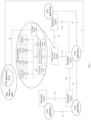
- Fig. 1 shows a block diagram of a communication system supporting side link transmission provided by an exemplary embodiment of the present disclosure.
- the communication system can be a schematic diagram of Non-roaming 5G system architecture, and the system architecture can be applied to the Vehicle to everything (V2X) service using D2D (Device to Device) technology.
- V2X Vehicle to everything
- D2D Device to Device
- the system architecture includes a data network (DN), and the data network is equipped with a V2X application server required for V2X service.
- the system architecture also includes a 5G core network, the network functions of the 5G core network include: unified data management (UDM), policy control function (PCF), network exposure function (NEF), application function (AF), unified data repository (UDR), access and mobility management function (AMF), session management function (SMF), and user plane function (UPF).
- UDM unified data management
- PCF policy control function
- NEF network exposure function
- AF application function
- UDR access and mobility management function
- SMSF session management function
- UPF user plane function
- the system architecture also includes a New Generation-Radio Access Network (NG-RAN) and four exemplarily shown terminals (i.e., terminal 1 to terminal 4).
- NG-RAN New Generation-Radio Access Network
- terminals i.e., terminal 1 to terminal 4
- each terminal is equipped with a V2X application or an application that supports SL transmission.
- One or more access network devices such as base stations (gNBs), are set up in the wireless access network.
- the data network is connected to the user plane function in the 5G core network through the N6 reference point, and the V2X application server is connected to the V2X application in the terminal through the V1 reference point.
- the wireless access network is connected to the AMF function and UPF function in the 5G core network, and the wireless access network is connected to terminal 1 and terminal 5 through the Uu reference point.
- Side link transmission among a plurality of terminals is performed through the PC5 reference point, and a plurality of V2X applications are connected through the V5 reference point.
- the above reference points can also be referred to as "interfaces".
- the "5G NR system" in the embodiments of the present disclosure can also be referred to as the 5G system or NR system, but the meaning can be understood by those skilled in the art.
- the technical solutions described in the embodiments of the present disclosure can be applied to the 5G NR system, and also can be applied to a subsequent evolution system of the 5G NR system.
- the technical solutions described in the embodiments of the present disclosure can be applied to a V2x application, and also can be applied to other application using side link transmission, such as public safety and commercial applications.
- Fig. 2 shows a flowchart of a method for selecting a transmission resource provided by an embodiment of the present disclosure.
- the method can be applied to the system architecture shown in Fig. 1 .
- the method includes the following steps.
- Step 220 The terminal device determines the target transmission resource during the resource selection process.
- the terminal device When the terminal device operates in the second mode of the side link, the terminal device can obtain first side link control information transmitted by other terminal devices by listening to the PSCCH (Physical Side-link Control Channel) transmitted by other terminal devices, and thus can know the resources reserved by other terminal devices. When selecting resources, the terminal device will exclude the resources reserved by other terminal devices, thus avoiding resource collision.
- PSCCH Physical Side-link Control Channel
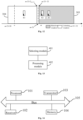
- the data packet of the terminal device arrives in time slot n, triggering resource selection.
- the resource selection window (the second resource selection window 301) starts at time n+T1 and ends at time n+T2.
- T proc,1 is the time for the terminal device to select resources and prepare data; when the sub-carrier spacing is 15kHz, 30kHz, 60kHz, 120kHz, T proc,1 corresponds to 3, 5, 9, 17 time slots; T2 min ⁇ T2 ⁇ Packet Delay Budget (PDB).
- the terminal device performs resource listening in the resource listening window (second resource listening window 302) from n-T0 to n-T proc,0 .
- the value of T0 is 100 or 1100 milliseconds.
- T proc,0 is the time for the terminal device to decode control information.
- T proc,0 is 1, 1, 2, or 4 timeslots, respectively.
- the resource selection process for a target transmission resource includes two steps. Step 1: the terminal device determines a candidate resource set. Step 2: the terminal device selects a target transmission resource from the candidate resource set.
- Step 1 the terminal device determines a candidate resource set.
- the terminal device takes all available resources in the second resource selection window as a resource set A.
- the terminal device transmits data in some time slots within the second resource listening window, then due to the limitation of half-duplex, the terminal device will not listen on these time slots. Therefore, the terminal device needs to remove the resources on time slots within the second resource selection window corresponding to these time slots from the resource set A, so as to avoid resource conflicts with other terminal devices. Specifically, when determining time slots within the second resource selection window corresponding to these time slots, the terminal device uses the value set of the resource reservation period field in the resource pool configuration to determine time slots within the selection window corresponding to these time slots, and excludes all resources on the corresponding time slots from the resource set A.
- the terminal device detects the PSCCH within the second resource listening window, it measures the RSRP (Reference Signal Received Power) of the PSCCH or the RSRP of the PSSCH (Physical Side-link Shared Channel) scheduled by the PSCCH. If the measured RSRP is greater than the SL-RSRP threshold, and a reserved resource is determined to be within the second resource selection window based on the resource reservation information in the side-link control information transmitted in the PSCCH, the reserved resource is excluded from the resource set A. If the remaining resources in the resource set A are less than X% of all resources in the resource set A before resource exclusion, the SL-RSRP threshold is raised by 3db and Step 1 is re-executed.
- RSRP Reference Signal Received Power
- the possible values of X are 20, 35, and 50, and the terminal device determines the parameter X from the set of values based on the priority of the data to be transmitted.
- the SL-RSRP threshold is related to the priority carried in the PSCCH detected by the terminal device and the priority of the data to be transmitted by the terminal device.
- the terminal device uses the remaining resources after resource exclusion in the resource set A as a candidate resource set.
- Step 2 The terminal device selects a target transmission resource from the candidate resource set.
- the terminal device randomly selects several resources from the candidate resource set as the resources used by the terminal device during initial transmission and retransmission.
- Step 2 resource selection needs to meet some time-domain constraints, mainly including the following two points.
- the target transmission resource determined in the resource selection process in step 220 can be the following.
- Step 240 The terminal device uses a re-evaluation and/or a pre-emption process based on partial listening to process the target transmission resource.
- NR-V2X supports a re-evaluation mechanism. After the terminal device completes resource selection, resources that have been selected but not yet indicated by transmitting side-link control information may still be reserved by other terminal devices, resulting in resource collisions. To address this issue, a re-evaluation mechanism is proposed, in which the terminal device continues to listen to side-link control information after completing resource selection, and performs at least one re-evaluation for the selected but not indicated resources.
- resource w, resource x, resource y, resource z, resource u, and resource v are the target transmission resource (selected transmission resource set) selected by the terminal device in time slot n.
- Resource x is located in time slot m.
- the terminal device For resource y and resource z indicating for the first time that the terminal device is about to transmit side-link control information in resource x (resource x has been previously indicated by side-link control information in resource w), the terminal device at least performs the above Step 1 in time slot m-T3 once for re-evaluation, that is, the terminal device determines the first resource selection window 303 and the first resource listening window 304, and excludes resources within the first resource selection window 303 to obtain a candidate resource set.
- the terminal device performs the above Step 2 to re-select the time-frequency resources that are not in the candidate resource set in resource y and resource z, or re-select any resources that have been selected but not indicated by side-link control information, such as any of resource y, resource z, and resource v.
- the above T3 is equal to T proc,1 .
- the dotted arrow in Fig. 4 indicates that side-link control information is about to be transmitted, and the solid arrow indicates that side-link control information has already been transmitted.
- NR-V2X supports the pre-emption mechanism.
- the conclusions about the pre-emption mechanism are described from the perspective of the pre-empted terminal device.
- the terminal device After completing resource selection, the terminal device continues to listen to side-link control information. If the selected time-frequency resource indicated by the side-link control information meets the following three conditions, it indicates that the selected resource has been pre-empted by other terminal devices, and the terminal device triggers resource reselection for the selected resource.
- Condition 1 The reserved resource in the listened side-link control information overlaps with the selected and indicated resource of the terminal device, including full overlap and partial overlap.
- Condition 2 The RSRP of the PSCCH corresponding to the side-link control information listened by the terminal device or the RSRP of the PSSCH scheduled by the PSCCH is greater than the SL-RSRP threshold.
- Condition 3 The priority level carried in the listened side-link control information is higher than the priority level of the data to be transmitted by the terminal device, and other configuration conditions are met.
- the associated priority prio RX satisfies one of the following conditions.
- resources w, x, y, z, and v are time-frequency resources that have been selected by the terminal device in time slot n.
- Resource x is located in time slot m.
- the terminal device at least performs the above steps 1 in time slot m-T3 once, that is, the terminal device determines the first resource selection window 303 and the first resource listening window 304, and excludes resources within the first resource selection window 303 to determine the candidate resource set.
- resource x or y is not in the candidate resource set (satisfying the above conditions 1 and 2), it is further determined whether resource x or y is not in the candidate resource set due to the indication of side-link control information carrying high priority (higher priority than the data to be transmitted by the terminal device) (satisfying the above condition 3). If so, the terminal device performs step 2 to re-select time-frequency resources that meet the above three conditions among resources x and y. In addition, after triggering resource re-selection, the terminal device can re-select any selected resources that have not been indicated by the transmitting side-link control information, such as any of resources z and v.
- the above T3 is equal to T proc,1 .
- the aforementioned R-evaluation mechanism and/or Pre-emption mechanism need to use the method of Step 1 to exclude the resources occupied by other terminal devices from the first resource selection window based on the listening of side-link control information in the first resource listening window and corresponding RSRP measurements, to obtain a candidate resource set, and then determine whether the selected resources are included in the candidate resource set. If not, it indicates that the selected resources have been preempted, triggering resource reselection; if so, it indicates that the selected resources have not been preempted.
- Using this method requires the listening of most of the time-frequency resources in the first resource listening window (except for the time slots in which the terminal device transmits data), and the terminal device needs to perform long-term listening, which is energy-consuming.
- the method of this embodiment uses partial listening when performing re-evaluation and/or preemption for time slot m. That is, selecting some candidate time units in the first resource selection window, and then conducting partial listening of the time-frequency resources corresponding to the candidate time units in the first resource listening window, and determining whether the candidate time units are occupied by other terminal devices based on the listening result.
- the terminal device does not need to listen all the time-frequency resources in the first resource listening window.
- the listening duration of the terminal device is reduced, and the energy consumption of the terminal device is reduced.
- time slots and time units mentioned in the embodiments of this disclosure can refer to physical time, such as 1us (microsecond), 1ms (millisecond), 1symbol, 1slot, 1subframe, 1frame; or can refer to logical time, such as defining a set of all time-domain resources that can be used for side-link communication as a logical time set, or defining all time-domain resources in the Tx (Transmit) resource set as a logical time set, and mapping physical time to the logical time set.
- physical time such as 1us (microsecond), 1ms (millisecond), 1symbol, 1slot, 1subframe, 1frame
- logical time such as defining a set of all time-domain resources that can be used for side-link communication as a logical time set, or defining all time-domain resources in the Tx (Transmit) resource set as a logical time set, and mapping physical time to the logical time set.
- the method provided in this embodiment employs a partial listening approach to perform the re-evaluation and pre-emption mechanism during the process of listening and determining the target transmission resource using the re-evaluation and pre-emption mechanism after determining the target transmission resource, thereby reducing the length of time that the terminal device needs to listen and saving energy for the terminal device.
- the terminal device when the terminal device performs re-evaluation and/or pre-emption based on partial listening for the time-frequency resources within the time unit u, it selects candidate time units from the first resource selection window of the re-evaluation and/or pre-emption, and performs re-evaluation and/or pre-emption based on partial listening for the candidate time units.
- Fig. 6 shows a flowchart of a method for selecting transmission resource provided by an embodiment of the present disclosure.
- the method can be applied to the system architecture shown in Fig. 1 .
- the method includes the following steps.
- Step 220 The terminal device determines the target transmission resource during the resource selection process.
- the target transmission resource determined by the terminal device in the resource selection stage includes the transmission resource within the time unit u.
- the terminal device determines the target transmission resource in the time unit n, and the target transmission resource includes the transmission resource within the time unit u.
- the time unit u can be a single time unit, such as time unit m where resource x for performing pre-emption check is located in Fig. 4 ; or the time unit u can be a plurality of time units, such as the time unit a where resource y for performing re-evaluation is located and the time unit b where resource z for performing re-evaluation is located in Fig. 4 ; or pre-emption check and re-evaluation may also be combined, and the time unit u includes time unit m, time unit a, and time unit b.
- Step 241 The terminal device performs a re-evaluation and/or a pre-emption process on the resources within the target transmission resource, and selects candidate time units from the first resource selection window.
- the candidate time units at least include time unit u.
- the time unit u is a time unit where the resources that need to perform the re-evaluation and/or pre-emption process are located.
- the first resource selection window is a resource selection window corresponding to the re-evaluation and/or pre-emption process based on partial listening.
- the time unit u includes at least two time units.
- the candidate time units selected during the re-evaluation and/or pre-emption process based on partial listening for different resources corresponding to at least two time units are different.
- the candidate time units selected during the re-evaluation and/or pre-emption process based on partial listening for different resources corresponding to at least two time units are the same.
- the re-evaluation and/or pre-emption process based on partial listening for different resources corresponding to at least two time units are different, the re-evaluation and/or pre-emption process based on partial listening of at least two time units are performed separately.
- the re-evaluation and/or pre-emption process based on partial listening for different resources corresponding to at least two time units are the same, the re-evaluation and/or pre-emption process based on partial listening for at least two time units are performed simultaneously (or “combined") or performed separately.
- the terminal device performs a re-evaluation and/or a pre-emption process in time unit p, the set of time units where all resources on which the re-evaluation and/or pre-emption process is required to be performed in time unit p are located is W.
- W includes more than one time unit
- Example 1 the terminal device perform re-evaluation and/or pre-emption process on resources corresponding to different time units within W.
- the time unit W includes time units corresponding to resource x, resource y, and resource z.
- time unit u includes W time units, where W is a positive integer.
- the terminal device selects candidate time units for the target transmission resource corresponding to each time unit in W time units, and performs re-evaluation and/or pre-emption process based on partial listening, where w is a positive integer not greater than W.
- example 2 the terminal device performs process respectively for resources that require re-evaluation and resources that require pre-emption process.
- time unit W contains time units corresponding to resource x, resource y, and resource z, where the pre-emption process needs to be performed on resource x, while re-evaluation needs to be performed on resource y and resource z.
- resource x needs to perform pre-emption
- resource y, and resource z need to perform re-evaluation.
- the terminal device performs pre-emption evaluation on resource x, and performs re-evaluation on resource y and resource z.
- the candidate time units selected in the pre-emption evaluation of resource x are different from the candidate time units selected in the re-evaluation of resources y and z.
- the candidate time units selected in the re-evaluation of resource y and resource z are identical.
- time unit u includes all the corresponding time units of x, y, and z.
- the candidate time units selected in re-evaluation and/or pre-emption of resource x, resource y, and resource z are identical.
- time unit u includes W time units, where W is a positive integer.
- the terminal device performs partial listening based re-evaluation and/or pre-emption process for the W time units based on the partial listening results corresponding to the W time units in the candidate time units.
- time unit u can be understood as a set u of time units, which includes at least one time unit.
- the terminal device at least can use partial listening based re-evaluation and/or preemption process in a variety of situations.
- the partial listening method is also used during the re-evaluation and/or pre-emption of selected or reserved resources.
- the partial listening method can also be used during the re-evaluation and/or pre-emption of selected or reserved resources.
- the terminal device can trigger the re-evaluation and/or pre-emption process based on partial listening in two ways:
- the terminal device determines whether to use partial listening based re-evaluation and/or pre-emption process based on base station configuration, high-level configuration, or pre-configuration information.
- the terminal device determines whether to use a partial listening based re-evaluation and/or pre-emption process based on attributes such as the priority of the data to be transmitted and the cast type (communication type).
- Cast type includes one of unicast, groupcast, and broadcast.
- the terminal device selects candidate time units from the first resource selection window for re-evaluation and/or pre-emption.
- the candidate time units at least include time unit u.
- re-evaluation and/or pre-emption process based on partial listening are performed for the target transmission resource.
- the first resource selection window can be the resource selection window corresponding to the time slot m when the terminal triggers a re-evaluation and/or preemption process based on partial listening in time slot m.
- the terminal device needs to listen on a set of time units corresponding to the candidate time units.
- the first resource selection window is from m-T3+T1 to m-T3+T2.
- the time unit m corresponding to resource x and the time unit a corresponding to resource y are selected from the first resource selection window as candidate time units.
- Listen for side-link control information on the time domain resources corresponding to time unit m and time unit a in the first resource listening window to determine whether time unit m and time unit a have been pre-empted by other terminal devices.
- the temporal location and number of candidate time units can be determined by the terminal device itself.
- the terminal device can obtain the minimum number threshold of candidate time units by receiving configuration information of the access network or reading pre-configuration information.
- Candidate time units can only include time unit u, or can include a plurality of time units including time unit u.
- time unit u can be a set of time units. As shown in Fig. 4 , a pre-emption check of resource x in time unit m, a re-evaluation of resource y in time unit a, and a re-evaluation of resource z in time unit b are performed simultaneously in time unit m-T3.
- the candidate time units can only include time unit m, time unit a or time unit b, or the candidate time units can include a plurality of time units including time unit m, time unit a, and time unit b.
- the terminal device selects L time units in the first resource selection window to obtain candidate time units, where L is a positive integer.
- the value of L is equal to or not less than a preset value.
- the preset value is a value configured by the base station or the preset value is a pre-configured value.
- L the number of time units within time unit u.
- the candidate time units include at least time unit u.
- L is equal to the number of time units within time unit u.
- L is a positive integer not less than a first threshold.
- the first threshold is a pre-configured value or a value configured by the network device.
- L is equal to the number of transmission resource within time unit u.
- the method provided in this embodiment selects candidate time units from the first resource selection window during re-evaluation and/or pre-emption based on partial listening.
- the candidate time units at least include time unit u.
- the time unit u is a time unit corresponding to the resource that needs re-evaluation and/or pre-emption.
- Re-evaluation and/or pre-emption based on partial listening is performed for the target transmission resource based on the partial listening results of the candidate time units, thereby reducing the listening time of the terminal device and reducing the energy consumption of the terminal device during the re-evaluation and/or pre-emption process.
- the selection method of L time units is related to the way resources are selected during the resource selection stage.
- the terminal device uses partial listening based resource selection.
- Y time units are selected as candidate time units (target transmission resource) from the second resource selection window, and periodic resource reservation is performed.
- Y time units are listened and resource exclusion is performed in the second resource listening window.
- selected transmission resource are selected from the candidate time units after resource exclusion.
- Situation (2) In the resource selection stage, the terminal device uses partial listening based resource selection.
- Y time units are selected as candidate time units (target transmission resource) from the second resource selection window, without periodic resource reservation.
- Y time units are listened and resource exclusion is performed.
- selected transmission resource are selected from the candidate time units after resource exclusion.
- the terminal device determines B time units from the second resource selection window as the target transmission resource (selected transmission resource) and performs periodic resource reservation.
- the terminal device determines B time units from the second resource selection window as the target transmission resource (selected transmission resource), without performing periodic resource reservation.
- time unit u includes time units ⁇ (Sy1+k*T),..., (Syu+k*T) ⁇ .
- the second resource selection window is a resource selection window corresponding to the resource selection process.
- Sy is the y-th time unit out of Y time units.
- the resource reservation period for periodic resource reservation is T
- k is a k-th resource reservation period after resource selection
- y 1... yu are positive integers not greater than Y
- Y is a positive integer
- T is a positive number.
- y1 is the smallest time unit in time unit u.
- the value of L is related to Y time units.
- L is equal to Y-y1+1. Or, L is greater than or equal to Y-y1+1. Or, L is equal to Y Or, L is greater than or equal to Y
- the L time units include the time units (Sy1+k*T) corresponding to time unit u to the last time unit (SY+k*T) in the k-th resource reservation period.
- the candidate resource set (target transmission resource) includes Y time units selected by the terminal device from the second resource selection window, as well as Y*k time units obtained through periodic resource reservation based on Y time units.
- the terminal device uses partial listening based resource selection.
- resource selection Y time units ⁇ S1,..., SY ⁇ are selected in the second resource selection window to form a candidate resource set, and periodic resource reservation is performed, with a resource reservation period of T.
- u ⁇ Sy 1+k*T,..., Syu+k*T ⁇ ;
- Sy 1... Syu are the y1-th... yu-th time units within Y time units, and y1 ⁇ ... ⁇ yu.
- k is the sequence number of period of the resource reservation period where the time unit u is currently located, and k is a non-negative integer.
- L time units at least include time units ⁇ Sy1+k*T, S(y1+1)+k*T,..., SY+k*T ⁇ .
- L candidate time units at least include time unit u.
- the resource reservation period for periodic resource reservation is T, and the resource reservation period for periodic resource reservation is one time, that is, the value range of k is 0 or 1.
- L time units include time unit S3. Since S3 is the last time unit in the 0th resource reservation period, L time units at least include time unit S3.
- the resource reservation period for periodic resource reservation is T
- the resource reservation period for periodic resource reservation is one time, that is, the value range of k is 0 or 1.
- L time units include time unit S1+T, as well as time unit S2+T and time unit S3+T after time unit S1+T in the first resource reservation period. That is, the L time units at least include time unit S1+T, time unit S2+T, and time unit S3+T.
- L time units at least include time unit S1+T.
- L time units include time units within the first resource selection window in the Y time units within the k-th resource reservation period.
- L time units include time units of the k-th resource reservation period within the first resource selection window among the Y time units.
- the k-th resource reservation period refers to a resource reservation period where the first time unit belonging to the Y time units within the first resource selection window is located.
- Y time units include S1, S2, S3, as well as S1+T, S2+T, S3+T, S1+2T, S2+2T, S3+2T obtained from periodic reservations for two times.
- the first resource selection window includes S2+T, S3+T, S1+2T, S2+2T, S3+2T
- L time units include time units S2+T and S3+T of the first resource reservation period within the first resource window among the 9 time units mentioned above.
- L time units include time units within the first resource selection window among Y time units.
- L time units include time units within the first resource selection window among the Y time units.
- Y time units include S1, S2, S3, as well as S1+T, S2+T, S3+T, S1+2T, S2+2T, S3+2T obtained from periodic reservations for two times.
- L time units include time units S2+T, S3+T, S1+2T, S2+2T, S3+2T within the first resource window among the 9 time units mentioned above.
- time unit u is equal to time units ⁇ Sy1,..., Syu ⁇ , y 1 ⁇ ... ⁇ yu.
- the second resource selection window is a resource selection window corresponding to the resource selection process.
- Sy1,..., Syu are the y1-th,..., and yu-th time units out of Y time units.
- y1,..., yu are positive integers not greater than Y, and Y is a positive integer.
- the value of L is related to Y time units.
- L is equal to Y-y1+1; or, L is greater than or equal to Y-y1+1; or, L is equal to Y; or, L is greater than or equal to Y.
- L time units include the time unit Sy1 corresponding to time unit u in the candidate resource set to the last time unit SY in the candidate resource set.
- the candidate resource set (target transmission resource) includes Y time units selected by the terminal device from the second resource selection window.
- L time units at least include time units ⁇ Sy1, S (y1+1),..., SY ⁇ ; or L candidate time units at least include time unit u.
- the terminal device uses partial listening based resource selection.
- Y time units ⁇ S1,..., SY ⁇ are selected in the second resource selection window to form a candidate resource set, without periodic resource reservation.
- So u ⁇ Sy1,..., Syu ⁇ ; Sy1,..., Syu are the y1-th,..., and yu-th time units within Y time units.
- L time units include time unit S2 and time unit S3 in the candidate resource set after time unit S2.
- L time units at least include time units S2 and S3.
- L time units at least include time unit S2.
- L time units include the time units within the first resource selection window among Y time units.
- Y time units include S 1, S2, and S3.
- L time units include the time units S2 and S3 within the first resource window among the above three time units.
- time unit u includes time units ⁇ (Rb1+k*T),..., (Rbu+k*T) ⁇ , b1 ⁇ ... ⁇ bu.
- Rb1... Rbu is the b1-th... bu-th time units out of B time units.
- the resource reservation period for periodic resource reservation is T
- k is the k-th resource reservation period after resource selection
- b 1... bu are positive integers not greater than B
- B is a positive integer
- T is a positive number.
- the value of L is related to B time units.
- L is equal to B-b1+1; or, L is greater than or equal to B-b1+1; or, L is equal to B; or, L is greater than or equal to B.
- L time units include time unit (Rb1+k*T) corresponding to time unit u to the last time unit (RB+k*T) in the k-th resource reservation period.
- the target transmission resource includes B time units selected by the terminal device through the resource selection process, as well as B*k time units obtained through periodic resource reservation based on B time units.
- the terminal device uses partial listening based resource selection.
- B time units ⁇ R1,..., RB ⁇ are selected in the second resource selection window to form the target transmission resource, and periodic resource reservations are performed, with a resource reservation period of T;
- So u ⁇ Rb1+k*T,..., Rbu+k*T ⁇ , b1 ⁇ bu;
- Rb1,..., Rbu are the b1-th,..., bu-th time units within B time units, k is the sequence number of period of the resource reservation period where the time unit u is currently located, and k is a non-negative integer.
- the resource reservation period for periodic resource reservations is T
- the resource reservation period for periodic resource reservations is one time, that is, the value range of k is 0 or 1.
- L time units include time unit R3. Since R3 is the last time unit in the 0th resource reservation period, L time units at least includes time unit R3.
- the resource reservation period for periodic resource reservation is T
- the resource reservation period for periodic resource reservation is one time, that is, the value range of k is 0 or 1.
- time unit u is time unit R1+T, that is, b is 1 and k is 1.
- L time units include time unit R1+T corresponding to time unit u, as well as the time units R2+T and R3+T after time unit R1+T in the first resource reservation period.
- L time units at least include time unit R1+T, time unit R2+T, and time unit R3+T.
- L time units at least include time unit R1+T corresponding to time unit u.
- L time units include time units within the first resource selection window in the B time units within the k-th resource reservation period.
- L time units include time units of the k-th resource reservation period within the first resource selection window among the B time units.
- the k-th resource reservation period refers to a resource reservation period where the first time unit belonging to the B time units within the first resource selection window is located.
- B time units include R1, R2, R3, as well as R1+T, R2+T, R3+T, R1+2T, R2+2T, R3+2T obtained from periodic reservations for two times.
- the first resource selection window includes R2+T, R3+T, R1+2T, R2+2T, R3+2T, and R3+2T
- L time units include time units R2+T and R3+T of the first resource reservation period within the first resource window among the 9 time units mentioned above.
- L time units include time units within the first resource selection window among B time units.
- B time units include R1, R2, R3, as well as R1+T, R2+T, R3+T, R1+2T, R2+2T, R3+2T obtained from periodic reservations for two times.
- L time units include the time units R2+T, R3+T, R1+2T, R2+2T, and R3+2T within the first resource window among the 9 time units mentioned above.
- time unit u is equal to time units ⁇ Rb1,..., Rbu ⁇ , b1 ⁇ ... ⁇ bu.
- Rb1,..., Rbu are the b1-th,..., bu-th time units out of B time units, b1,..., bu are positive integers not greater than B, and B is a positive integer.
- the value of L is related to B time units.
- L is equal to B-b1+1; or, L is greater than or equal to B-b1+1; or, L is equal to B; or, L is greater than or equal to B.
- L time units include time unit Rb1 corresponding to the time unit u in the target transmission resource to the last time unit RB in the target transmission resource.
- L time units at least include time units ⁇ Rb1+k*T, R (b1+1)+k*T,..., RB+k*T ⁇ ; or L candidate time units at least include time unit u.
- the target transmission resource includes B time units selected by the terminal device through the resource selection process.
- the terminal device uses partial listening based resource selection.
- L time units include time unit R2 and time unit R3 after time unit R2 in the target transmission resource.
- L time units at least include time units R2 and R3.
- L time units at least include time unit R2.
- L time units include time units within the first resource selection window among B time units.
- B time units include R1, R2, and R3.
- L time units include time units R2 and R3 within the first resource window among the above three time units.
- Fig. 13 shows a structural block diagram of a transmission resource selection device provided in an exemplary embodiment of the present disclosure.
- the device can be implemented as a terminal device or as a part of the terminal device.
- the device includes the following modules.
- Selecting module 401 is configured to determine target transmission resource during the resource selection process.
- Processing module 402 is configured to process the target transmission resource using a re-evaluation and/or a pre-emption process based on partial listening.
- the processing module 402 is configured to process the target transmission resource using a re-evaluation and/or a pre-emption process based on partial listening, in a case of using a resource selection process based on partial listening.
- the processing module 402 is configured to process the target transmission resource using a re-evaluation and/or a pre-emption process based on partial listening in a case where the configuration information is configured to use the partial listening.
- the configuration information includes at least one of the first configuration information transmitted by the access network device, the second configuration information transmitted by the upper layer, and the pre-configuration information.
- the processing module 402 is configured to process the target transmission resource using a re-evaluation and/or a pre-emption process based on partial listening in a case where the attribute of the data to be transmitted meets the triggering condition.
- the target transmission resource includes transmission resource within time unit u.
- the processing module 402 is configured to select candidate time units from the first resource selection window, and the candidate time units at least include the time unit u.
- the processing module 402 is configured to perform partial listening based re-evaluation and/or pre-emption process on the target transmission resource based on the partial listening results corresponding to the candidate time unit.
- the first resource selection window is a resource selection window corresponding to the partial listening based re-evaluation and/or pre-emption process.
- the processing module 402 is configured to select L time units in the first resource selection window to obtain the candidate time units, where L is a positive integer.
- L is equal to the number of time units within the time unit u.
- L is a positive integer not less than a first threshold.
- the first threshold is a pre-configured value or a value configured by network device.
- time unit u includes time units (Sy1+k*T) to time units (Syu+k*T);
- the second resource selection window is a resource selection window corresponding to the resource selection process.
- Sy 1 is the y 1-th time unit among the Y time units.
- Syu is the yu-th time unit among the Y time units.
- the resource reservation period for periodic resource reservations is T, k is the k-th resource reservation period after resource selection, y1, yu are positive integers not greater than Y, Y is a positive integer, and T is a positive number, U is a positive integer.
- time unit u is equal to time unit Sy.
- the second resource selection window is a resource selection window corresponding to the resource selection process.
- Sy is the y-th time unit among the Y time units, y is a positive integer not greater than Y, and Y is a positive integer.
- the value of L is related to the Y time units.
- L is equal to Y-y1+1; Or, L is greater than or equal to Y-y1+1.
- L is equal to Y.
- L is greater than or equal to Y.
- the value of L is related to the Y time units.
- L is equal to Y-y+1.
- L is greater than or equal to Y-y+1; Or, L is equal to Y.
- L is greater than or equal to Y.
- L time units include time unit (Sy1+k*T) to the last time unit (SY+k*T) in the k-th resource reservation period.
- L time units include time unit Sy in the candidate resource set to the last time unit SY in the candidate resource set.
- time unit u when B time units are determined during the resource selection process to form the target transmission resource and periodic resource reservation is performed, time unit u includes time unit (Rb1+k*T) to time unit (Rbu+k*T).
- Rb1 is the b-th time unit among the B time units
- Rbu is the bu-th time unit among the B time units
- the resource reservation period for the periodic resource reservations is T
- k is the k-th resource reservation period after the resource selection
- b1 and bu are positive integers not greater than B
- B is a positive integer
- T is a positive number
- u is a positive integer.
- the time unit u is equal to time unit Rb.
- Rb is the b-th time unit among the B time units, b is a positive integer not greater than B, and B is a positive integer.
- the value of L is related to the B time units.
- L is equal to B-b1+1; or, L is greater than or equal to B-b1+1; or, L is equal to B; or, L is greater than or equal to B.
- the value of L is related to the B time units.
- L is equal to B-b+1.
- L is greater than or equal to B-b+1.
- L is equal to B.
- L is greater than or equal to B.
- the L time units include time unit (Rb1+k*T) to the last time unit (RB+k*T) in the k-th resource reservation period.
- the L time units include time unit Rb in the target transmission resource to the last time unit RB in the target transmission resource.
- the time unit u at least includes two time units.
- the re-evaluation and/or pre-emption process based on the partial listening of the at least two time units are performed separately.
- the re-evaluation and/or pre-emption process based on the partial listening of the at least two time units are performed simultaneously.
- the L time units include time units within the first resource selection window among the Y time units within the k-th resource reservation period.
- the L time units include time units within the first resource selection window among the Y time units.
- the L time units include time units within the first resource selection window among the Y time units.
- the L time units include time units within the first resource selection window among the B time units within the k-th resource reservation period.
- the L time units include time units within the first resource selection window among the B time units.
- the L time units include time units within the first resource selection window among the B time units.
- Fig. 14 shows a schematic diagram of the structure of a communication device (terminal device or network device) provided in an exemplary embodiment of the present disclosure.
- the communication device includes a processor 101, a receiver 102, a transmitter 103, a memory 104, and a bus 105.
- Processor 101 includes one or more processing cores.
- the processor 101 executes various functional applications and information processing by running software programs and modules.
- Receiver 102 and transmitter 103 can be implemented as a communication component, and the communication component can be a communication chip.
- Memory 104 is connected to processor 101 through bus 105.
- the memory 104 can be configured to store at least one instruction, and the processor 101 is configured to execute the at least one instruction to implement the various steps in the above method embodiments.
- memory 104 can be implemented by any type of volatile or non-volatile storage device, or a combination of them.
- Volatile or non-volatile storage devices include but are not limited to: magnetic disks or optical disks, Electrically Erasable Programmable Read Only Memory (EEPROM), Erasable Programmable Read Only Memory (EPROM), Static Random Access Memory (SRAM), Read Only Memory (ROM), Magnetic Memory, Flash Memory, and Programmable Read Only Memory (PROM).
- the processor and transceiver in the communication device referred to in the embodiments of the present disclosure can perform the steps performed by the terminal device in any of the methods shown above, which will not be repeated here.
- the processor when the communication device is implemented as a terminal device, the processor is configured to determine target transmission resource during the resource selection process; and process the target transmission resource using a re-evaluation and/or a pre-emption process based on partial listening.
- a computer readable storage medium is also provided, where at least one instruction, at least one program, code set, or instruction set is stored, and the at least one instruction, at least one program, code set, or instruction set is loaded and executed by a processor to achieve the transmission resource selection method executed by communication device provided by the above method embodiments.
- a chip including programmable logic circuits and/or program instructions for implementing the transmission resource selection method as described in the above aspects when the chip is running on a computer device.
- a computer program product that, when running on a processor of a computer device, causes the computer device to perform the transmission resource selection method as described in the above aspects.
- the programs can be stored in a computer-readable storage medium.
- the above mentioned storing medium can be read-only memory, magnetic disk, or optical disk, etc.
Landscapes
- Engineering & Computer Science (AREA)
- Computer Networks & Wireless Communication (AREA)
- Signal Processing (AREA)
- Quality & Reliability (AREA)
- Mobile Radio Communication Systems (AREA)
Applications Claiming Priority (2)
| Application Number | Priority Date | Filing Date | Title |
|---|---|---|---|
| CN2021092918 | 2021-05-10 | ||
| PCT/CN2021/093070 WO2022236683A1 (fr) | 2021-05-10 | 2021-05-11 | Procédé et appareil de sélection de ressources de transmission, dispositif et support de stockage |
Publications (2)
| Publication Number | Publication Date |
|---|---|
| EP4340509A1 true EP4340509A1 (fr) | 2024-03-20 |
| EP4340509A4 EP4340509A4 (fr) | 2025-04-16 |
Family
ID=77819452
Family Applications (1)
| Application Number | Title | Priority Date | Filing Date |
|---|---|---|---|
| EP21941259.0A Pending EP4340509A4 (fr) | 2021-05-10 | 2021-05-11 | Procédé et appareil de sélection de ressources de transmission, dispositif et support de stockage |
Country Status (3)
| Country | Link |
|---|---|
| US (1) | US20240357553A1 (fr) |
| EP (1) | EP4340509A4 (fr) |
| CN (1) | CN113455078B (fr) |
Families Citing this family (4)
| Publication number | Priority date | Publication date | Assignee | Title |
|---|---|---|---|---|
| WO2022236683A1 (fr) * | 2021-05-10 | 2022-11-17 | 北京小米移动软件有限公司 | Procédé et appareil de sélection de ressources de transmission, dispositif et support de stockage |
| CN115884274A (zh) * | 2021-09-30 | 2023-03-31 | 大唐移动通信设备有限公司 | 一种资源预约方法及终端设备 |
| CN118044300A (zh) * | 2021-12-29 | 2024-05-14 | Oppo广东移动通信有限公司 | 资源排除方法、装置、设备、存储介质及程序产品 |
| CN118679814A (zh) * | 2022-04-06 | 2024-09-20 | Oppo广东移动通信有限公司 | 资源排除方法、装置、设备、存储介质及程序产品 |
Family Cites Families (7)
| Publication number | Priority date | Publication date | Assignee | Title |
|---|---|---|---|---|
| US11336400B2 (en) * | 2019-02-07 | 2022-05-17 | Comcast Cable Communications, Llc | Uplink signal control |
| WO2021258364A1 (fr) * | 2020-06-24 | 2021-12-30 | 北京小米移动软件有限公司 | Procédé de communication de connexion directe d'utilisateur, appareil, dispositif utilisateur et support de stockage |
| CN112385291B (zh) * | 2020-10-13 | 2023-10-10 | 北京小米移动软件有限公司 | 直连通信方法、装置及存储介质 |
| CN112291836B (zh) * | 2020-10-22 | 2023-03-24 | 中信科智联科技有限公司 | 一种资源选择方法、装置及终端 |
| CN116724596A (zh) * | 2021-01-14 | 2023-09-08 | 苹果公司 | 使用资源再评估和资源抢占的用于减少感测ue的功率节省感测 |
| WO2022153547A1 (fr) * | 2021-01-18 | 2022-07-21 | 株式会社Nttドコモ | Terminal et procédé de communication |
| CN117063576A (zh) * | 2021-04-05 | 2023-11-14 | Oppo广东移动通信有限公司 | 用户设备及侧行通信中的资源监听方法 |
-
2021
- 2021-05-11 EP EP21941259.0A patent/EP4340509A4/fr active Pending
- 2021-05-11 US US18/560,208 patent/US20240357553A1/en active Pending
- 2021-05-11 CN CN202180001519.XA patent/CN113455078B/zh active Active
Also Published As
| Publication number | Publication date |
|---|---|
| EP4340509A4 (fr) | 2025-04-16 |
| US20240357553A1 (en) | 2024-10-24 |
| CN113455078A (zh) | 2021-09-28 |
| CN113455078B (zh) | 2024-02-02 |
Similar Documents
| Publication | Publication Date | Title |
|---|---|---|
| US12058734B2 (en) | Information transmission method, apparatus, device and storage medium | |
| EP4340509A1 (fr) | Procédé et appareil de sélection de ressources de transmission, dispositif et support de stockage | |
| CN110167072B (zh) | 资源选择的方法和终端设备 | |
| CN115190545B (zh) | 资源排除方法、装置、设备及存储介质 | |
| JP2023528566A (ja) | ユーザ機器及びそのリソース配分方法 | |
| CN111727624A (zh) | 部分监听方法、装置、终端设备及存储介质 | |
| US20250056612A1 (en) | Resource determining method and apparatus | |
| CN115707111B (zh) | 通信方法及装置 | |
| US20240267875A1 (en) | Resource allocation for sidelink positioning reference signal | |
| WO2021258301A1 (fr) | Procédé et appareil d'exclusion de ressources, dispositif terminal et support de stockage | |
| EP4192095B1 (fr) | Procédé et appareil de resélection de ressource | |
| WO2019179260A1 (fr) | Procédé et dispositif pour sélectionner des ressources dans une onde porteuse | |
| US12262353B2 (en) | Resource selection method and device, terminal, and medium | |
| CN116897578A (zh) | 一种通信方法、终端装置及系统 | |
| CN113678491B (zh) | 待传输时频资源的评估方法、装置及设备 | |
| EP4346303A1 (fr) | Procédé et appareil de re-sélection de ressources, dispositif et support de stockage | |
| WO2022183405A1 (fr) | Procédé et appareil d'envoi d'informations, terminal et support de stockage | |
| WO2023142002A1 (fr) | Procédé et appareil de transmission d'informations, dispositif et support de stockage | |
| CN116744458A (zh) | 通信方法、装置及系统 | |
| WO2022236683A1 (fr) | Procédé et appareil de sélection de ressources de transmission, dispositif et support de stockage | |
| RU2800586C1 (ru) | Способ и устройство для выбора ресурса в процессе прямой связи, электронное устройство и носитель информации | |
| US20240015842A1 (en) | Activation time determination method and apparatus, devices and storage medium | |
| WO2026032187A1 (fr) | Procédé d'activation de cellule secondaire, terminal et dispositif côté réseau | |
| WO2023050870A1 (fr) | Procédé de réservation de ressources et dispositif terminal | |
| CN118102470A (zh) | 一种通信方法及装置 |
Legal Events
| Date | Code | Title | Description |
|---|---|---|---|
| STAA | Information on the status of an ep patent application or granted ep patent |
Free format text: STATUS: THE INTERNATIONAL PUBLICATION HAS BEEN MADE |
|
| PUAI | Public reference made under article 153(3) epc to a published international application that has entered the european phase |
Free format text: ORIGINAL CODE: 0009012 |
|
| STAA | Information on the status of an ep patent application or granted ep patent |
Free format text: STATUS: REQUEST FOR EXAMINATION WAS MADE |
|
| 17P | Request for examination filed |
Effective date: 20231208 |
|
| AK | Designated contracting states |
Kind code of ref document: A1 Designated state(s): AL AT BE BG CH CY CZ DE DK EE ES FI FR GB GR HR HU IE IS IT LI LT LU LV MC MK MT NL NO PL PT RO RS SE SI SK SM TR |
|
| DAV | Request for validation of the european patent (deleted) | ||
| DAX | Request for extension of the european patent (deleted) | ||
| REG | Reference to a national code |
Ref country code: DE Ref legal event code: R079 Free format text: PREVIOUS MAIN CLASS: H04W0072080000 Ipc: H04W0028260000 |
|
| A4 | Supplementary search report drawn up and despatched |
Effective date: 20250314 |
|
| RIC1 | Information provided on ipc code assigned before grant |
Ipc: H04W 74/0808 20240101ALI20250310BHEP Ipc: H04W 72/02 20090101ALI20250310BHEP Ipc: H04W 92/18 20090101ALI20250310BHEP Ipc: H04W 72/04 20230101ALI20250310BHEP Ipc: H04W 4/40 20180101ALI20250310BHEP Ipc: H04W 28/26 20090101AFI20250310BHEP |