EP4341336B1 - Procédé de dépolymérisation de téréphtalate de polyéthylène par glycolyse - Google Patents
Procédé de dépolymérisation de téréphtalate de polyéthylène par glycolyse Download PDFInfo
- Publication number
- EP4341336B1 EP4341336B1 EP22725932.2A EP22725932A EP4341336B1 EP 4341336 B1 EP4341336 B1 EP 4341336B1 EP 22725932 A EP22725932 A EP 22725932A EP 4341336 B1 EP4341336 B1 EP 4341336B1
- Authority
- EP
- European Patent Office
- Prior art keywords
- pet
- acetate
- metal
- catalyst
- reaction
- Prior art date
- Legal status (The legal status is an assumption and is not a legal conclusion. Google has not performed a legal analysis and makes no representation as to the accuracy of the status listed.)
- Active
Links
Images


Classifications
-
- C—CHEMISTRY; METALLURGY
- C08—ORGANIC MACROMOLECULAR COMPOUNDS; THEIR PREPARATION OR CHEMICAL WORKING-UP; COMPOSITIONS BASED THEREON
- C08J—WORKING-UP; GENERAL PROCESSES OF COMPOUNDING; AFTER-TREATMENT NOT COVERED BY SUBCLASSES C08B, C08C, C08F, C08G or C08H
- C08J11/00—Recovery or working-up of waste materials
- C08J11/04—Recovery or working-up of waste materials of polymers
- C08J11/10—Recovery or working-up of waste materials of polymers by chemically breaking down the molecular chains of polymers or breaking of crosslinks, e.g. devulcanisation
- C08J11/18—Recovery or working-up of waste materials of polymers by chemically breaking down the molecular chains of polymers or breaking of crosslinks, e.g. devulcanisation by treatment with organic material
- C08J11/22—Recovery or working-up of waste materials of polymers by chemically breaking down the molecular chains of polymers or breaking of crosslinks, e.g. devulcanisation by treatment with organic material by treatment with organic oxygen-containing compounds
- C08J11/24—Recovery or working-up of waste materials of polymers by chemically breaking down the molecular chains of polymers or breaking of crosslinks, e.g. devulcanisation by treatment with organic material by treatment with organic oxygen-containing compounds containing hydroxyl groups
-
- B—PERFORMING OPERATIONS; TRANSPORTING
- B01—PHYSICAL OR CHEMICAL PROCESSES OR APPARATUS IN GENERAL
- B01J—CHEMICAL OR PHYSICAL PROCESSES, e.g. CATALYSIS OR COLLOID CHEMISTRY; THEIR RELEVANT APPARATUS
- B01J31/00—Catalysts comprising hydrides, coordination complexes or organic compounds
- B01J31/02—Catalysts comprising hydrides, coordination complexes or organic compounds containing organic compounds or metal hydrides
- B01J31/04—Catalysts comprising hydrides, coordination complexes or organic compounds containing organic compounds or metal hydrides containing carboxylic acids or their salts
-
- C—CHEMISTRY; METALLURGY
- C07—ORGANIC CHEMISTRY
- C07C—ACYCLIC OR CARBOCYCLIC COMPOUNDS
- C07C29/00—Preparation of compounds having hydroxy or O-metal groups bound to a carbon atom not belonging to a six-membered aromatic ring
- C07C29/128—Preparation of compounds having hydroxy or O-metal groups bound to a carbon atom not belonging to a six-membered aromatic ring by alcoholysis
- C07C29/1285—Preparation of compounds having hydroxy or O-metal groups bound to a carbon atom not belonging to a six-membered aromatic ring by alcoholysis of esters of organic acids
-
- C—CHEMISTRY; METALLURGY
- C07—ORGANIC CHEMISTRY
- C07C—ACYCLIC OR CARBOCYCLIC COMPOUNDS
- C07C31/00—Saturated compounds having hydroxy or O-metal groups bound to acyclic carbon atoms
- C07C31/18—Polyhydroxylic acyclic alcohols
- C07C31/20—Dihydroxylic alcohols
- C07C31/202—Ethylene glycol
-
- C—CHEMISTRY; METALLURGY
- C07—ORGANIC CHEMISTRY
- C07C—ACYCLIC OR CARBOCYCLIC COMPOUNDS
- C07C67/00—Preparation of carboxylic acid esters
- C07C67/03—Preparation of carboxylic acid esters by reacting an ester group with a hydroxy group
-
- C—CHEMISTRY; METALLURGY
- C07—ORGANIC CHEMISTRY
- C07C—ACYCLIC OR CARBOCYCLIC COMPOUNDS
- C07C69/00—Esters of carboxylic acids; Esters of carbonic or haloformic acids
- C07C69/76—Esters of carboxylic acids having a carboxyl group bound to a carbon atom of a six-membered aromatic ring
- C07C69/80—Phthalic acid esters
- C07C69/82—Terephthalic acid esters
-
- B—PERFORMING OPERATIONS; TRANSPORTING
- B01—PHYSICAL OR CHEMICAL PROCESSES OR APPARATUS IN GENERAL
- B01J—CHEMICAL OR PHYSICAL PROCESSES, e.g. CATALYSIS OR COLLOID CHEMISTRY; THEIR RELEVANT APPARATUS
- B01J2531/00—Additional information regarding catalytic systems classified in B01J31/00
- B01J2531/20—Complexes comprising metals of Group II (IIA or IIB) as the central metal
- B01J2531/22—Magnesium
-
- B—PERFORMING OPERATIONS; TRANSPORTING
- B01—PHYSICAL OR CHEMICAL PROCESSES OR APPARATUS IN GENERAL
- B01J—CHEMICAL OR PHYSICAL PROCESSES, e.g. CATALYSIS OR COLLOID CHEMISTRY; THEIR RELEVANT APPARATUS
- B01J2531/00—Additional information regarding catalytic systems classified in B01J31/00
- B01J2531/20—Complexes comprising metals of Group II (IIA or IIB) as the central metal
- B01J2531/23—Calcium
-
- B—PERFORMING OPERATIONS; TRANSPORTING
- B01—PHYSICAL OR CHEMICAL PROCESSES OR APPARATUS IN GENERAL
- B01J—CHEMICAL OR PHYSICAL PROCESSES, e.g. CATALYSIS OR COLLOID CHEMISTRY; THEIR RELEVANT APPARATUS
- B01J2531/00—Additional information regarding catalytic systems classified in B01J31/00
- B01J2531/20—Complexes comprising metals of Group II (IIA or IIB) as the central metal
- B01J2531/26—Zinc
-
- C—CHEMISTRY; METALLURGY
- C08—ORGANIC MACROMOLECULAR COMPOUNDS; THEIR PREPARATION OR CHEMICAL WORKING-UP; COMPOSITIONS BASED THEREON
- C08J—WORKING-UP; GENERAL PROCESSES OF COMPOUNDING; AFTER-TREATMENT NOT COVERED BY SUBCLASSES C08B, C08C, C08F, C08G or C08H
- C08J2367/00—Characterised by the use of polyesters obtained by reactions forming a carboxylic ester link in the main chain; Derivatives of such polymers
- C08J2367/02—Polyesters derived from dicarboxylic acids and dihydroxy compounds
-
- Y—GENERAL TAGGING OF NEW TECHNOLOGICAL DEVELOPMENTS; GENERAL TAGGING OF CROSS-SECTIONAL TECHNOLOGIES SPANNING OVER SEVERAL SECTIONS OF THE IPC; TECHNICAL SUBJECTS COVERED BY FORMER USPC CROSS-REFERENCE ART COLLECTIONS [XRACs] AND DIGESTS
- Y02—TECHNOLOGIES OR APPLICATIONS FOR MITIGATION OR ADAPTATION AGAINST CLIMATE CHANGE
- Y02P—CLIMATE CHANGE MITIGATION TECHNOLOGIES IN THE PRODUCTION OR PROCESSING OF GOODS
- Y02P20/00—Technologies relating to chemical industry
- Y02P20/141—Feedstock
- Y02P20/143—Feedstock the feedstock being recycled material, e.g. plastics
-
- Y—GENERAL TAGGING OF NEW TECHNOLOGICAL DEVELOPMENTS; GENERAL TAGGING OF CROSS-SECTIONAL TECHNOLOGIES SPANNING OVER SEVERAL SECTIONS OF THE IPC; TECHNICAL SUBJECTS COVERED BY FORMER USPC CROSS-REFERENCE ART COLLECTIONS [XRACs] AND DIGESTS
- Y02—TECHNOLOGIES OR APPLICATIONS FOR MITIGATION OR ADAPTATION AGAINST CLIMATE CHANGE
- Y02W—CLIMATE CHANGE MITIGATION TECHNOLOGIES RELATED TO WASTEWATER TREATMENT OR WASTE MANAGEMENT
- Y02W30/00—Technologies for solid waste management
- Y02W30/50—Reuse, recycling or recovery technologies
- Y02W30/62—Plastics recycling; Rubber recycling
Definitions
- the present invention relates to a process for depolymerizing polyethylene terephthalate by glycolysis wherein the catalyst in prepared in situ.
- the process uses catalysts that have a reduced environmental impact and can be prepared from readily available raw materials.
- PET Polyethylene terephthalate
- TPA terephthalic acid
- EG ethylene glycol
- DMT dimethylterephthalate
- PET has numerous applications.
- PET is used for the production of textile fibers and carpets (fiber grade PET ), food containers (e.g. beverage bottles - bottle grade PET ) and films for food packaging (film grade PET ) .
- a first way of recycling PET waste is through so-called "mechanical recycling".
- Mechanical recycling is based on the mechanical separation of the polymer from contaminants and its subsequent regranulation.
- mechanical recycling includes sorting and separation of PET waste, removal of contaminants, grinding, heat treatment and extrusion into granules.
- this recycling technique has the limitation that it can only be used to recover PET from bottles, where the content of contaminants is relatively low (less than about 10% w/w).
- the presence of dyes and other additives in PET waste and the need to regranulate it to allow it to be reintroduced into industrial production cycles results in a recycled polymer of lower quality than the polymer obtained from virgin raw materials.
- Mechanical recycling is also associated with the risk of accumulation of the above-mentioned contaminants in the polymer, resulting in a degradation of the quality of the polymer obtained each time it is recycled.
- PET waste A second way of recycling PET waste is so-called "chemical recycling”.
- Chemical recycling is based on the chemical transformation of the polymer chains of PET into its starting monomers or oligomers by solvolysis (depolymerization). PET depolymerization products can be easily purified from contaminants before being used in new polymerization processes, thus overcoming the drawbacks associated with mechanical recycling processes.
- chemical recycling allows the original raw materials to be obtained from the processing of PET waste, this technique has the added advantage of meeting the criteria underlying the concepts of circular economy and sustainable development.
- the PET depolymerization reaction can be carried out in several ways:
- Depolymerization of PET by glycolysis with EG is generally carried out at a temperature in the range 180°C - 250°C and atmospheric pressure, typically in the presence of a catalyst.
- the polymer chains are transformed by means of solvolytic cleavage of the polymer chains leading to a theoretically complete depolymerization down to the monomer (BHET) or a partial depolymerization leading to the monomer together with the oligomers.
- BHET monomer
- BHET can be used as a monomer to produce PET of various grades (bottle grade, fiber grade and film grade ) with characteristics and properties fully equivalent to those of PET obtained from virgin raw materials.
- the polymerization reaction leading to the formation of PET from BHET is shown in Diagram 2:
- the polymerization of BHET releases a mole of EG, which can be recycled, e.g. in a depolymerization process.
- the depolymerization reaction can be carried out in the presence or absence of a catalyst.
- non-catalytic depolymerization is an economically unviable process in view of the low conversion yields of PET to BHET and the significantly longer reaction times compared to catalytic glycolysis.
- the most commonly used catalysts for PET depolymerization are mainly based on metal salts, in particular salts of Zn, Ti, Pb, Mn and Na.
- the salts of these metals are typically acetate, carbonate, bicarbonate and chloride salts.
- zinc acetate is by far the most widely used catalyst due to its high efficiency in terms of rate and yield of the depolymerization reaction.
- the metals introduced with the catalyst must be removed from the monomer before it is used for the production of further polymers, both to prevent interference with the quality of the final product and to avoid the accumulation thereof in the polymer during subsequent recycling cycles.
- EP 0723951 A1 describes a process for preparing high purity BHET by depolymerizing PET from recycled post-consumer waste or post-industrial waste. Preferably, depolymerization is catalyzed by catalysts based on Zn, La and Ce acetates or titanium butoxide (Ti(OBu) 4 ). The only example of process implementation uses zinc acetate as a catalyst in an amount of approximately 2.2 mmol/kg (PET + EG).
- EP 0723951 A1 also mentions calcium acetate and other compounds among the catalysts tested, indicating that calcium acetate is poorly effective compared to zinc acetate.
- WO 2017/087752 A1 describes a method for chemically recycling PET in which the depolymerization reaction is assisted by microwaves.
- the reaction mixture comprises a catalytic system comprising a catalyst and a microwave absorber.
- the catalyst is preferably a zinc salt, in particular zinc acetate.
- Alternative catalysts include magnesium acetate.
- SU 146 736 A1 discloses a method for producing bis(2-hydroxyethyl) terephthalate (BHET) from polyethylene terephthalate by treating PET flakes with ethylene glycol in the presence of magnesium acetate at a temperature of 200°C.
- BHET bis(2-hydroxyethyl) terephthalate
- US 4 163 860 A discloses a process, which includes a step of glycolysis of polyester scraps containing 97 % of poly(ethylene terephthalate) carried out using 1 part of ethylene glycol per part of polyester in the presence magnesium acetate at the boiling point of the glycol to obtain a concentrated solution of bis(ethylene glycol) terephthalate.
- JP S53 71035 A discloses a method of depolymerising a material comprising polyethylene terephthalate (PET) by glycolysis with ethylene glycol, which comprises reacting the material comprising PET with EG in the presence of at least calcium acetate so that BHET and/or oligomers thereof are obtained.
- PET polyethylene terephthalate
- CN 112 646 135 A discloses a method for continuously preparing spinnable colorless recycled polyester from colored waste polyester textiles, wherein colored waste polyester textiles are crushed and melted in the presence of an alcoholysis agent and a catalytic system which can be a metal acetate.
- US2014/031441 A1 discloses a process for preparing a modified polybutylene terephthalate from recycled polyethylene terephthalate, the process comprising: in-situ catalyst preparation, depolymerization of recycled PET with ethylene glycol to form bis-hydroxy ethyl terephthalate, ester interchange, and polymerization, wherein the catalyst is the reaction product of tetra(C1-C8 alkyl) titanate and a complexing agent selected from the group consisting of phosphorus-containing compounds, nitrogen-containing compounds, boron-containing compounds, and combinations thereof.
- US 2012/223270 A1 discloses a method of preparing monomeric dihydroxy terephthalate diesters by organocatalyzed depolymerization of terephthalate polyesters by employing an amidine salt organo catalyst, which can be generated in-situ, and a glycol comprising 2 to 5 carbons.
- the metal catalysts for PET depolymerization currently used in the state of the art have several drawbacks.
- the most effective catalysts are based on transition metals and heavy metals (e.g. Zn, Ti, Pb), i.e. elements which have a high environmental impact and whose removal from the BHET monomer at the end of depolymerization is rather difficult.
- the catalyst/PET ratio in the reaction mixture can be as high as 4-6 % w/w, depending on the type of catalyst and the reaction conditions
- catalysts are synthetic compounds, the cost of procuring them is relatively high and significantly affects the final cost of the resulting BHET.
- PET waste recovered by depolymerization is almost exclusively that from the separate collection of plastic containers, particularly bottles.
- Other types of waste, in particular PET fiber from spinning processes or post-consumer carpet recovery, remain largely unused and destined for landfill due to the high levels of contaminants they contain.
- Carpets containing PET are made up of a multilayer structure comprising different types of materials, polymeric and non-polymeric, in which various inorganic materials used as additives are present.
- polyester is used to make the externally visible fibrous part, the underlying support fabric or mesh to which the fibrous part is attached (so-called primary backing) or the backing of the carpet in contact with the support surface (so-called secondary backing).
- Intermediate layers of adhesive or reinforcing materials such as rubber latex and filler materials (e.g. calcium and magnesium salts, aluminium compounds) can be placed between these layers.
- fluff a fibrous material with a cotton-like appearance
- Fluff contains PET together with a relatively high amount of contaminants (up to about 20% by weight), the most abundant of which are: calcium and/or magnesium carbonate, dolomite minerals, aluminosilicates and aluminium tri-hydroxide).
- the Applicant has therefore faced the problem of providing a process for depolymerizing a material comprising PET that overcomes the aforementioned drawbacks of the known art.
- the Applicant has faced the problem of providing a depolymerization process that uses catalysts having a reduced environmental impact and efficacy comparable or even superior to that of known catalysts.
- catalysts must be readily available or be able to be easily prepared from raw materials with these characteristics.
- the Applicant also addressed the issue of providing a depolymerization process to which material comprising PET from various types of waste and process scrap can be supplied, including material comprising PET from waste containing significant amounts of contaminants, such as waste from post-consumer carpet recovery.
- the catalysts according to the present invention exhibit higher reaction rates than known catalysts, even at reduced weight concentrations, allowing depolymerization to be completed in a shorter time with respect to known processes. This offers the advantage of being able to use lower-volume reactors for the same production capacity than those required in state-of-the-art processes.
- the depolymerization catalyst can also be formed in situ in the reaction mixture from acetic acid and compounds containing the metal counter-ion, such as oxides, hydroxides, carbonates or bicarbonates of the aforementioned metals.
- the metal counter-ion such as oxides, hydroxides, carbonates or bicarbonates of the aforementioned metals.
- the catalyst can be prepared in situ by using as metal compounds the compounds present as contaminants in the material comprising PET supplied to depolymerization, such as calcium carbonate, mixed calcium and magnesium carbonates or aluminium hydroxide commonly present in the material derived from post-consumer carpet waste.
- the compounds present as contaminants in the material comprising PET supplied to depolymerization such as calcium carbonate, mixed calcium and magnesium carbonates or aluminium hydroxide commonly present in the material derived from post-consumer carpet waste.
- the in situ catalyst preparation method described here is not to be limited only to acetate salts of Ca, Mg and Al. Indeed, it can be advantageously exploited in the depolymerization of a material comprising PET by glycolysis in the presence of any metal acetate salt capable of effectively acting as a depolymerization catalyst, such as catalysts of the known art like zinc acetate, lead acetate, iron acetate, manganese acetate and antimony acetate.
- a process for depolymerizing a material comprising polyethylene terephthalate (PET) by glycolysis with monoethylene glycol (EG), comprising reacting the material comprising PET with EG in the presence of at least one catalyst so as to obtain a glycolized product containing bis(2-hydroxyethyl) terephthalate (BHET) and/or oligomers thereof, wherein said catalyst comprises an acetate salt of a metal chosen from: calcium, magnesium, aluminium and mixtures thereof.
- the present invention relates to a process for depolymerizing a material comprising polyethylene terephthalate (PET) by glycolysis with ethylene glycol (EG), comprising reacting PET with EG in the presence of at least one catalyst comprising an acetate of a metal so as to obtain a glycolized product containing bis(2-hydroxyethyl) terephthalate (BHET) and/or oligomers thereof, wherein the process comprises a step of preparing said catalyst by in situ reaction between acetic acid and a compound containing said metal.
- PET polyethylene terephthalate
- EG ethylene glycol
- the material comprising PET supplied to the depolymerization process according to the present invention may be any material comprising a PET, preferably in an amount greater than or equal to 60% by weight, more preferably greater than or equal to 70% by weight, even more preferably greater than or equal to 80% by weight.
- the material may comprise contaminants, i.e. compounds other than PET, in an amount of up to 40% by weight, preferably in an amount of up to 30% by weight, even more preferably in an amount of up to 200 by weight.
- contaminants typically present in material including PET from recovered waste are: dyes, polyolefins (e.g. polyethylene or polypropylene), rubber latex, polyamides, polyvinyl alcohol (EVOH), polyvinyl acetate (EVA), UV absorbers; fillers (e.g. calcium carbonate, magnesium carbonate, aluminium hydroxide, titanium dioxide, carbon black, silica), metal particles (e.g. aluminium) and other contaminants deriving from the use of the article.
- polyolefins e.g. polyethylene or polypropylene
- rubber latex polyamides
- polyamides polyvinyl alcohol (EVOH), polyvinyl acetate (EVA)
- UV absorbers e.g. calcium carbonate, magnesium carbonate, aluminium hydroxide, titanium dioxide, carbon black, silica
- fillers e.g. calcium carbonate, magnesium carbonate, aluminium hydroxide, titanium dioxide, carbon black, silica
- metal particles e.g. aluminium
- the material comprising PET comprises post-consumer and/or post-industrial PET waste, which may derive, for example, from a wide variety of products such as:
- the depolymerized material comprises post-consumer wastes and/or post-industrial scraps containing PET, preferably post-consumer carpet wastes containing PET.
- the material comprising PET can be fed to the depolymerization process in the form of granules, flakes, fibers or fluff.
- the depolymerization catalyst is present in the reaction mixture in an amount effective for depolymerizing the PET present therein.
- the catalyst is present in the reaction mixture in an amount in the range of 0.1% to 5% by weight, more preferably in the range of 0.4% to 2.0% by weight with respect to the weight of PET contained in the material undergoing depolymerization.
- the catalyst is present in the reaction mixture in a ratio of mmol catalyst/kg (PET + EG) greater than 5, more preferably greater than 15, even more preferably greater than 20, for example in the range of 20 to 50, wherein "PET + EG" represents the total weight of EG and PET present in the material comprising PET.
- PET + EG represents the total weight of EG and PET present in the material comprising PET.
- the catalyst can be prepared ex situ and added as such to the reaction mixture, or it can be prepared in situ by reaction of acetic acid and a compound containing at least one metal capable of forming an acetate salt of the metal with the acetic acid.
- acetate salt of the metal also includes mixed salts, i.e. salts of metal in which, in addition to the acetate anion (hereinafter also referred to as "Ac"), one or more counter-ions other than the acetate ion are present.
- Ac acetate anion
- An example of a mixed salt is calcium bicarbonate acetate, also referred to below as Ca(HCO 3 )Ac, which can be obtained from the reaction between acetic acid and calcium carbonate in appropriate stoichiometric ratios.
- the compound containing the metal is selected from: oxide, hydroxide, carbonate, bicarbonate, chloride and mixtures thereof.
- the compound containing the metal is selected from: calcium carbonate, calcium bicarbonate, calcium hydroxide, magnesium carbonate, magnesium bicarbonate, magnesium hydroxide, aluminum hydroxide, aluminum trichloride.
- the catalyst when it is prepared in situ, it may include acetate salts other than Ca, Mg and Al acetates.
- the compound containing the metal comprises at least one metal selected from: zinc, iron, manganese, antimony and mixtures thereof; preferably, the aforesaid compound is in the form of an oxide, hydroxide, carbonate, bicarbonate or chloride.
- the reagents required to form the in situ catalyst can be added to the EG, or to the mixture containing EG and the material comprising PET, together or separately.
- the material comprising PET further comprises the compound containing the metal in a catalytically effective amount, i.e. an amount sufficient to provide by reaction with acetic acid an acetate salt capable of catalyzing the depolymerization reaction. If the concentration of the compound containing the metal is not sufficient to obtain the metal acetate in a catalytically effective quantity, the metal compound can be added to the reaction mixture on purpose.
- the acetic acid is added to the reaction mixture in an amount in the range of 0.01% - 5% by weight with respect to the material comprising PET, more preferably in the range of 0.03% - 1.5% by weight, even more preferably in the range of 0.1% - 1% by weight.
- the compound containing the metal is added to the reaction mixture in an amount in the range of 0.01% - 5% by weight with respect to the material comprising PET, more preferably in the range of 0.02% - 1.8% by weight, even more preferably in the range of 0.06% - 1.2% by weight.
- the molar ratio between acetic acid and metal compound is in the range of 1:1 to 1:10.
- the metal acetate formation reaction may compete with the reaction between acetic acid and EG with formation of the corresponding ethylene glycol mono- (EGMA) or di-acetate polyester (EGDA), thus affecting the yield of the acetate salt catalyst formation reaction.
- EGMA ethylene glycol mono-
- EGDA di-acetate polyester
- the acetic acid and the metal compound with the EG, and possibly the material containing PET at a relatively low temperature, preferably in the range of 20°C to 70°C, more preferably 20°C to 50°C, even more preferably 20°C to 40°C, and then raising the temperature of the mixture to the temperature selected for the depolymerization reaction.
- a relatively low temperature preferably in the range of 20°C to 70°C, more preferably 20°C to 50°C, even more preferably 20°C to 40°C
- the temperature of the mixture can be raised to the depolymerization temperature without this resulting in the formation of the EGMA and EGDA esters.
- the metal compound is contained in the material comprising PET to be depolymerized, the latter is also added to the EG and acetic acid preferably at a low temperature.
- said step of preparing said catalyst by in situ reaction comprises:
- Preparation of the catalyst in situ is particularly useful where the material comprising PET also contains one or more metal compounds that act as precursors for the in situ formation of the catalyst by reaction with acetic acid.
- the material comprising PET also contains one or more metal compounds that act as precursors for the in situ formation of the catalyst by reaction with acetic acid.
- said step of preparing said catalyst by in situ reaction comprises:
- the glycolysis reaction is performed at a temperature in the range of 170°C to 230°C, more preferably in the range of 190°C to 210°C.
- the heating of the reaction mixture is not carried out by microwave irradiation.
- the heating of the reaction mixture is not carried out by microwave irradiation when the catalyst comprises magnesium acetate.
- the EG is used in a weight ratio of EG:PETm in the range of 1:1 to 8:1, more preferably in the range of 1:1 to 4:1, even more preferably in the range of 1:1 to 2:1, wherein PETm denotes the material comprising PET.
- the duration of the glycolysis reaction can vary within wide ranges, depending on the reaction conditions, such as temperature, agitation, type of reactor and the like. Usually the reaction time is 1 to 6 hours, preferably 1.5 to 4 hours.
- the reaction can be carried out in a batch or continuous process.
- the reaction pressure is usually atmospheric pressure, but reduced or increased pressure may be used.
- glycolysis reaction leads to the formation of a glycolyzed product comprising BHET and/or oligomers thereof.
- a glycolyzed product comprising BHET and/or oligomers thereof.
- the glycolized product also contains a residual fraction of the material comprising unreacted PET and other depolymerization products (e.g. water, contaminants insoluble in EG, etc.).
- BHET and/or oligomers thereof can be separated from the glycolized product and purified using suitable techniques of the known art such as distillation, filtration, crystallization and the like.
- BHET and/or oligomers thereof obtained by the process described herein can be used as raw materials in new production processes for polyester polymers and copolymers. For example, they can be polymerized to produce PET exclusively from recycled BHET or in combination with BHET made from virgin raw materials.
- the depolymerization reaction can be conducted in an acid-resistant stainless steel reactor equipped with suitable inlets for dosing liquid acetic acid and solid compounds for in situ catalyst formation.
- the reactor can be equipped with heating and mixing means to heat the reaction mixture to the desired temperature and keep it stirred.
- the glycolysis reaction was carried out in a 1 liter round bottomed Pyrex glass reaction flask.
- the flask is heated via a heating mantle (isomantle).
- the reaction flask has four necks with the following functions:
- the reaction mixture was kept under stirring by means of a magnetic stirrer with the aid of a PTFE magnetic stirring rod, the rotation speed of which can be digitally set on the isomantle.
- the reaction temperature and rotation speed were set at 195°C and 1400 rpm respectively.
- the EG and catalyst (if prepared ex situ ) are first loaded into the reaction flask.
- the mixture kept under stirring, is then heated to reaction temperature, recondensing the vapors developed through the bubble condenser.
- the material comprising PET hereinafter also referred to as "PET" only), which has been preheated to 110°C, is introduced into the flask.
- reaction start time 0
- a sample of the glycolysis fluid is taken at regular intervals using a glass Pasteur pipette; the liquid is then transferred to a vial cooled with cold water to stop the reaction progressing and then analysed by HPLC to determine the content of BHET and its oligomers.
- Examples 1-3 (comparative) - catalyst zinc acetate (ZnAc 2 )
- the weight ratios EG/PET and catalyst/PET refer to the weight ratios of EG and catalyst, respectively, to the weight of the material including PET.
- BHET yield refers to the ratios, respectively, of the amounts of BHET, dimer of BHT and sum "BHET + dimer” referring to the weight of the material comprising PET, expressed as a mole/mole percentage.
- Table 1 Example PET [g] PET purity [%] EG [g] EG/PET ratio Catalyst type Catal.
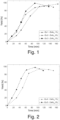
- Figure 1 shows the time-dependent trend of the total yield of the depolymerization reaction.
- composition of the reaction mixtures is provided in Tables 4 - 5 together with the results of the analysis of the reaction liquid taken at different reaction times.
- Table 4 Example PET [g] PET purity [%] EG [g] EG/PET ratio Catalyst type Catal.
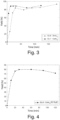
- Figure 2 shows the time-dependent trend of the total yield of the depolymerization reaction.
- step 1 Since the physical form of the material comprising PET can also influence the extent of the depolymerization reaction, the procedure described in step 1 was carried out by feeding a waste comprising PET consisting of spinning waste (purity approx. 97.5%) and using ZnAc 2 or CaAc 2 as a catalyst.
- composition of the reaction mixtures is provided in Tables 6 - 7 together with the results of the analysis of the reaction liquid taken at different reaction times.
- Table 6 Example PET [g] PET purity [%] EG [g] EG/PET ratio Catalyst type Catal.
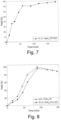
- Figure 3 shows the time-dependent trend of the total yield of the depolymerization reaction of Examples 6 and 7.
- the effectiveness of the CaAc 2 catalyst was tested in the depolymerization reaction of a PET waste from carpet recovery (fluff) .
- the fluff used had a PET content of 80% by weight.
- the process described in point 1 was carried out by feeding the fluff into a reaction mixture including CaAc 2 as a catalyst.
- composition of the reaction mixtures is provided in Tables 8 - 10 together with the results of the analysis of the reaction liquid taken at different reaction times.
- Table 8 Example PET [g] PET purity [%] EG [g] EG/PET ratio Catalyst type Catal.
- Figure 4 shows the time-dependent trend of the total yield of the depolymerization reaction in Example 8, while Figure 5 shows that of the reactions in Examples 9-10.
- Examples 9 and 10 show that even when operating with relatively low CaAc 2 catalyst concentrations and EG/PET ratios, conversion yields of PET to BHET and oligomers comparable to those of catalysts used in glycolysis processes of the known art, such as ZnAc 2 , are obtained at higher EG/PET ratios.
- Example 11 the depolymerization test was carried out using PET in substantially contaminant-free fiber form (purity approx. 97.5%). Only acetic acid was added to the reaction mixture to test its possible effect as a depolymerization catalyst. Acetic acid was added to the EG at 30°C, then the mixture was heated to 195°C, keeping it under reflux. At this temperature, the PET fiber was added. After 3 hours of reaction, no dissolution of the fiber was observed and HPLC analysis of the reaction mixture liquid did not detect the presence of BHET.
- Example 12 was carried out under the same conditions as Example 11, but by adding equimolar amounts of CaCOs and acetic acid to the EG at 30°C. The mixture was then heated to 195°C, keeping it under reflux, and PET fiber was added. The reaction continued until the fiber was completely dissolved.
- Table 11 Example PET [g] PET purity [%] EG [g] EG/PET ratio Catalyst type Catal. [g] Catal.
- Figure 6 shows the time-dependent trend of the total yield of the depolymerization reaction of Example 12 in comparison with that of Example 13.
- Example 13 was carried out under the same conditions as Example 12, but by adding acetic acid and PET fluff to the EG at 30°C and using the CaCOs contained in the PET fluff (80% purity).
- the CaCOs content in the fluff was approx. 5% by weight with respect to the weight of the fluff.
- the composition of the reaction mixtures is provided in Table 12 together with the results of the analysis of the reaction liquid taken at different reaction times.
- Table 12 Example PET [g] PET purity [%] EG [g] EG/PET ratio Catalyst type Catal. [g] Catal.
- Figure 6 shows the time-dependent trend of the total yield of the depolymerization reaction of Example 13. The results show that the PET glycolysis process of Example 13 occurs to a similar extent as that of Example 12, confirming that it is possible to prepare in situ an effective depolymerization catalyst by exploiting the metal compounds present as contaminants in the material comprising recycled PET.
- the composition of the reaction mixtures is provided in Table 13 together with the results of the analysis of the reaction liquid taken at different reaction times.
- Table 13 Example PET [g] PET purity [%] EG [g] EG/PET ratio Catalyst type Catal. [g] Catal.
- Figure 7 shows the time-dependent trend of the total yield of the depolymerization reaction of Example 14. The results show that magnesium acetate is also an effective catalyst in PET depolymerization.
- Examples 15 to 18 were carried out under the same conditions as Example 12, adding to EG at 30°C respectively:
- composition of the reaction mixtures is provided in Tables 14 to 17, together with the results of the analysis of the reaction liquid taken at different reaction times.
- Table 14 Example PET [g] PET purity [%] EG [g] EG/PET ratio Catalyst type Catal.
- Figure 8 and Figure 9 show the time-dependent trend of the total yield of the depolymerization reaction of Examples 15 and 16, respectively, compared with those of Examples 3 and 5, respectively, where the same catalysts were prepared ex situ and then added to the reaction mixture. The results show that the catalysts generated in situ are as effective as those produced ex situ.
- glycolysis residue was filtered to separate unconverted PET and other impurities from the glycolytic material in this first step. Part of the glycol in the permeate is evaporated by flash evaporation under vacuum.
- the resulting material was then analyzed by HPLC, FT-IR, DSC and NMR, confirming that it is BHET and its dimer.
- Example 20 Starting PET PET fiber PET fluff Process parameters As in Example 12 As in Example 13 COOH of BHET [mEq/kg] 36.7 35.4 DEG content in BHET [%] 0.12 0.11 Melting point of BHET[°C] 108.9 107.5
Landscapes
- Chemical & Material Sciences (AREA)
- Organic Chemistry (AREA)
- Chemical Kinetics & Catalysis (AREA)
- Sustainable Development (AREA)
- Life Sciences & Earth Sciences (AREA)
- Health & Medical Sciences (AREA)
- Medicinal Chemistry (AREA)
- Polymers & Plastics (AREA)
- Materials Engineering (AREA)
- Engineering & Computer Science (AREA)
- Separation, Recovery Or Treatment Of Waste Materials Containing Plastics (AREA)
- Organic Low-Molecular-Weight Compounds And Preparation Thereof (AREA)
- Catalysts (AREA)
- Low-Molecular Organic Synthesis Reactions Using Catalysts (AREA)
- Polyesters Or Polycarbonates (AREA)
Claims (10)
- Procédé de dépolymérisation d'une matière comprenant du polyéthylène téréphtalate (PET) par glycolyse avec de l'éthylène glycol (EG), qui comprend la réaction de la matière comprenant du PET avec de l'EG en présence d'au moins un catalyseur comprenant un acétate de métal afin d'obtenir un produit glycolysé contenant du téréphtalate de bis(2-hydroxyéthyle) (BHET) et/ou des oligomères de celui-ci, le procédé comprenant une étape consistant à préparer ledit catalyseur par réaction in situ entre l'acide acétique et un composé contenant ledit métal.
- Procédé selon la revendication 1, ladite étape consistant à préparer ledit catalyseur par réaction in situ entre l'acide acétique et le composé contenant ledit métal comprenant :a. le mélange de l'acide acétique, du composé contenant ledit métal et de l'EG à une température comprise entre 20 - 70°C ;b. le chauffage du mélange obtenu à l'étape a jusqu'à une température comprise entre 170 et 230°C ;c. l'ajout de la matière comprenant du PET au mélange obtenu à l'étape b pour obtenir le produit glycolysé.
- Procédé selon la revendication 2, ladite étape consistant à préparer ledit catalyseur par réaction in situ entre l'acide acétique et le composé contenant ledit métal comprenant :a. le mélange de l'EG, de l'acide acétique et de la matière comprenant le PET et du composé contenant ledit métal à une température comprise entre 20 et 70°C ;b. le chauffage du mélange obtenu à l'étape a jusqu'à une température comprise entre 170 et 230°C et faire en sorte que la réaction se produise pour obtenir le produit glycolysé.
- Procédé selon l'une quelconque des revendications 1 à 3, ledit acétate de métal étant choisi parmi : l'acétate de calcium, l'acétate de magnésium, l'acétate d'aluminium, l'acétate de zinc, l'acétate de plomb, l'acétate de fer, l'acétate de manganèse, l'acétate d'antimoine et leurs mélanges.
- Procédé selon l'une quelconque des revendications 1 à 4, le composé contenant ledit métal étant choisi parmi : l'oxyde, l'hydroxyde, le carbonate, le bicarbonate, le chlorure et leurs mélanges.
- Procédé selon l'une quelconque des revendications 1 à 5, dans lequel le composé contenant ledit métal étant choisi parmi : le carbonate de calcium, le bicarbonate de calcium, l'hydroxyde de calcium, le carbonate de magnésium, le bicarbonate de magnésium, l'hydroxyde de magnésium, l'hydroxyde d'aluminium, le trichlorure d'aluminium.
- Procédé selon l'une quelconque des revendications 1 à 6, le matériau comprenant le PET comprenant le composé contenant ledit métal.
- Procédé selon l'une quelconque des revendications 1 à 7, la matière comprenant du PET comprenant des déchets de post-consommation et/ou des déchets post-industriels contenant du PET, de préférence des déchets de moquette de post-consommation contenant du PET.
- Procédé selon l'une quelconque des revendications 1 à 8, la matière comprenant du PET se présentant sous forme de granulés, de flocons, de fibres ou de peluches.
- Procédé selon l'une quelconque des revendications 1 à 9, le rapport pondéral EG:PETm étant compris entre 1:1 et 8:1, de préférence entre 1:1 et 4:1, plus préférablement encore entre 1:1 et 2:1, PETm désignant la matière comprenant du PET.
Applications Claiming Priority (2)
| Application Number | Priority Date | Filing Date | Title |
|---|---|---|---|
| IT202100012617 | 2021-05-17 | ||
| PCT/IB2022/054519 WO2022243832A1 (fr) | 2021-05-17 | 2022-05-16 | Procédé de dépolymérisation de téréphtalate de polyéthylène par glycolyse |
Publications (3)
| Publication Number | Publication Date |
|---|---|
| EP4341336A1 EP4341336A1 (fr) | 2024-03-27 |
| EP4341336C0 EP4341336C0 (fr) | 2025-01-01 |
| EP4341336B1 true EP4341336B1 (fr) | 2025-01-01 |
Family
ID=77127001
Family Applications (1)
| Application Number | Title | Priority Date | Filing Date |
|---|---|---|---|
| EP22725932.2A Active EP4341336B1 (fr) | 2021-05-17 | 2022-05-16 | Procédé de dépolymérisation de téréphtalate de polyéthylène par glycolyse |
Country Status (11)
| Country | Link |
|---|---|
| US (1) | US20240246897A1 (fr) |
| EP (1) | EP4341336B1 (fr) |
| JP (1) | JP2024521055A (fr) |
| KR (1) | KR20240009934A (fr) |
| CN (1) | CN117279987A (fr) |
| BR (1) | BR112023023381A2 (fr) |
| CA (1) | CA3215350A1 (fr) |
| ES (1) | ES3014893T3 (fr) |
| MX (1) | MX2023013232A (fr) |
| PL (1) | PL4341336T3 (fr) |
| WO (1) | WO2022243832A1 (fr) |
Cited By (1)
| Publication number | Priority date | Publication date | Assignee | Title |
|---|---|---|---|---|
| US20230242733A1 (en) * | 2020-07-02 | 2023-08-03 | Cure Technology B.V. | A Method to Enable Recycling of Polyester Waste Material and a System for Applying the Method |
Families Citing this family (3)
| Publication number | Priority date | Publication date | Assignee | Title |
|---|---|---|---|---|
| TWI811062B (zh) * | 2022-08-12 | 2023-08-01 | 南亞塑膠工業股份有限公司 | 高分子材料的製造方法 |
| KR102916903B1 (ko) | 2024-09-05 | 2026-01-23 | 충북대학교 산학협력단 | 화학 및 생물학적 방법을 통한 폴리(에틸렌 테레프탈레이트)(pet) 해중합 및 바이오폴리올 생산 방법 |
| WO2026079421A1 (fr) * | 2024-10-10 | 2026-04-16 | 東洋紡株式会社 | Procédé de production d'oligomère d'ester |
Citations (1)
| Publication number | Priority date | Publication date | Assignee | Title |
|---|---|---|---|---|
| US20120223270A1 (en) * | 2011-03-04 | 2012-09-06 | King Abdulaziz City For Science And Technology | Methods of depolymerizing terephthalate polyesters |
Family Cites Families (14)
| Publication number | Priority date | Publication date | Assignee | Title |
|---|---|---|---|---|
| SU146736A1 (ru) * | 1961-06-19 | 1961-11-30 | Б | Способ регенерации дигликолевого эфира терефталевой кислоты расщеплением полиэтилентерефталата |
| JPS4541215B1 (fr) * | 1967-04-14 | 1970-12-24 | ||
| OA05495A (fr) * | 1975-12-16 | 1981-04-30 | Rhone Poulenc Textile | Procédé d'obtention de TEREPHTALATE de DIMETHYLE à partir de déchets de polyester. |
| JPS5820951B2 (ja) * | 1976-12-08 | 1983-04-26 | 東レ株式会社 | テレフタル酸ジメチルの回収精製方法 |
| DE4041520A1 (de) * | 1990-12-22 | 1992-06-25 | Bayer Ag | Modifizierte polyesterharze, ein verfahren zu deren herstellung und toner, die solche polyesterharze enthalten |
| IT1278166B1 (it) * | 1995-01-24 | 1997-11-17 | Ars Ing Srl | Processo per la preparazione di bis (2-idrossietil) teraftalato |
| JP2000218167A (ja) * | 1999-01-29 | 2000-08-08 | Mitsubishi Heavy Ind Ltd | ポリエチレンテレフタレートの解重合用触媒 |
| JP2003171454A (ja) * | 2001-01-18 | 2003-06-20 | Toyobo Co Ltd | ポリエステルおよびその製造方法 |
| JP2008266359A (ja) * | 2007-04-16 | 2008-11-06 | Toyobo Co Ltd | ポリエステル重合触媒およびこれを用いて製造されたポリエステルならびにポリエステルの製造方法 |
| US20140031441A1 (en) * | 2012-07-30 | 2014-01-30 | Sabic Innovative Plastics Ip B.V. | Process for the Preparation of Modified Poly(Alkylene Terephthalate) Employing an In-Situ Titanium-Containing Catalyst |
| CN107257823A (zh) * | 2015-01-30 | 2017-10-17 | 瑞森内特材料集团有限公司 | 用于处理pet和ptt回收料流的综合方法 |
| WO2017087752A1 (fr) * | 2015-11-20 | 2017-05-26 | The University Of North Carolina At Chapel Hill | Recyclage chimique de téréphtalate de polyéthylène par irradiation par micro-ondes |
| US10252976B1 (en) * | 2017-09-15 | 2019-04-09 | 9449710 Canada Inc. | Terephthalic acid esters formation |
| CN112646135B (zh) * | 2020-12-10 | 2023-01-13 | 北京服装学院 | 有色废旧聚酯纺织品连续制备可纺级无色再生聚酯的方法 |
-
2022
- 2022-05-16 EP EP22725932.2A patent/EP4341336B1/fr active Active
- 2022-05-16 CA CA3215350A patent/CA3215350A1/fr active Pending
- 2022-05-16 JP JP2023570039A patent/JP2024521055A/ja active Pending
- 2022-05-16 US US18/560,016 patent/US20240246897A1/en active Pending
- 2022-05-16 KR KR1020237038301A patent/KR20240009934A/ko active Pending
- 2022-05-16 MX MX2023013232A patent/MX2023013232A/es unknown
- 2022-05-16 BR BR112023023381A patent/BR112023023381A2/pt unknown
- 2022-05-16 PL PL22725932.2T patent/PL4341336T3/pl unknown
- 2022-05-16 ES ES22725932T patent/ES3014893T3/es active Active
- 2022-05-16 WO PCT/IB2022/054519 patent/WO2022243832A1/fr not_active Ceased
- 2022-05-16 CN CN202280033631.6A patent/CN117279987A/zh active Pending
Patent Citations (1)
| Publication number | Priority date | Publication date | Assignee | Title |
|---|---|---|---|---|
| US20120223270A1 (en) * | 2011-03-04 | 2012-09-06 | King Abdulaziz City For Science And Technology | Methods of depolymerizing terephthalate polyesters |
Cited By (2)
| Publication number | Priority date | Publication date | Assignee | Title |
|---|---|---|---|---|
| US20230242733A1 (en) * | 2020-07-02 | 2023-08-03 | Cure Technology B.V. | A Method to Enable Recycling of Polyester Waste Material and a System for Applying the Method |
| US12552910B2 (en) * | 2020-07-02 | 2026-02-17 | Cure Technology B.V. | Method to enable recycling of polyester waste material and a system for applying the method |
Also Published As
| Publication number | Publication date |
|---|---|
| WO2022243832A1 (fr) | 2022-11-24 |
| US20240246897A1 (en) | 2024-07-25 |
| EP4341336A1 (fr) | 2024-03-27 |
| CA3215350A1 (fr) | 2022-11-24 |
| CN117279987A (zh) | 2023-12-22 |
| KR20240009934A (ko) | 2024-01-23 |
| EP4341336C0 (fr) | 2025-01-01 |
| BR112023023381A2 (pt) | 2024-01-23 |
| ES3014893T3 (en) | 2025-04-28 |
| JP2024521055A (ja) | 2024-05-28 |
| MX2023013232A (es) | 2023-11-16 |
| PL4341336T3 (pl) | 2025-05-05 |
Similar Documents
| Publication | Publication Date | Title |
|---|---|---|
| US20240246897A1 (en) | Process for depolymerizing polyethylene terephthalate by glycolysis | |
| CA2934544C (fr) | Procede de formation d'un diacide aromatique et/ou d'un precurseur de diacide aromatique a partir d'une charge contenant du polyester | |
| Al-Sabagh et al. | Greener routes for recycling of polyethylene terephthalate | |
| CN105658611B (zh) | 用于使聚酯解聚的方法和材料 | |
| US8541477B2 (en) | Methods of depolymerizing terephthalate polyesters | |
| US11479651B2 (en) | Chemical recycling of polyethylene terephthalate by microwave irradiation | |
| US9550713B1 (en) | Polyethylene terephthalate depolymerization | |
| CN1511823A (zh) | 双-β-羟乙基对苯二甲酸酯的制造方法及精制方法 | |
| JP7839868B2 (ja) | 再生ビス(2-ヒドロキシエチル)テレフタラートを含む重合性原料及びその調製方法 | |
| JP7780639B2 (ja) | 連続解重合を経てビス-2-ヒドロキシエチルテレフタレートを製造する方法 | |
| CN119325462A (zh) | 纯化单乙二醇的方法 | |
| EP4413066A1 (fr) | Production de matières premières de pet et de copolyester de qualité vierge à partir de fibres de tapis de polyester | |
| EA049753B1 (ru) | Способ деполимеризации полиэтилентерефталата путем гликолиза | |
| TW200301248A (en) | Method of deionizing solution yielded from polyester decomposition with ethylene glycol | |
| JP2025528972A (ja) | リサイクルエチレングリコールを用いたビス(2-ヒドロキシエチル)テレフタレートの生産方法 | |
| Polk | Depolymerization and recycling | |
| Al-Sabagh et al. | Ionic liquids as Efficient Catalysts for The Glycolysis of Polyethylene Terephthalate | |
| HK1040698A1 (zh) | 从含氧化钛或氧化铁的聚酯加乙二醇分解产物除去氧化钛或氧化铁的方法 | |
| KR0126879B1 (ko) | 폐 폴리에틸렌테레프탈레이트로부터 테레프탈산의 회수방법 | |
| KR20250176475A (ko) | 재생 원료 조성물 및 이의 제조방법 | |
| JP2025526558A (ja) | テレフタル酸ビス(グリコール)を含むポリエステル樹脂、及びその調製方法 |
Legal Events
| Date | Code | Title | Description |
|---|---|---|---|
| STAA | Information on the status of an ep patent application or granted ep patent |
Free format text: STATUS: UNKNOWN |
|
| STAA | Information on the status of an ep patent application or granted ep patent |
Free format text: STATUS: THE INTERNATIONAL PUBLICATION HAS BEEN MADE |
|
| PUAI | Public reference made under article 153(3) epc to a published international application that has entered the european phase |
Free format text: ORIGINAL CODE: 0009012 |
|
| STAA | Information on the status of an ep patent application or granted ep patent |
Free format text: STATUS: REQUEST FOR EXAMINATION WAS MADE |
|
| 17P | Request for examination filed |
Effective date: 20231115 |
|
| AK | Designated contracting states |
Kind code of ref document: A1 Designated state(s): AL AT BE BG CH CY CZ DE DK EE ES FI FR GB GR HR HU IE IS IT LI LT LU LV MC MK MT NL NO PL PT RO RS SE SI SK SM TR |
|
| P01 | Opt-out of the competence of the unified patent court (upc) registered |
Effective date: 20240402 |
|
| DAV | Request for validation of the european patent (deleted) | ||
| DAX | Request for extension of the european patent (deleted) | ||
| GRAP | Despatch of communication of intention to grant a patent |
Free format text: ORIGINAL CODE: EPIDOSNIGR1 |
|
| STAA | Information on the status of an ep patent application or granted ep patent |
Free format text: STATUS: GRANT OF PATENT IS INTENDED |
|
| INTG | Intention to grant announced |
Effective date: 20240913 |
|
| GRAS | Grant fee paid |
Free format text: ORIGINAL CODE: EPIDOSNIGR3 |
|
| GRAA | (expected) grant |
Free format text: ORIGINAL CODE: 0009210 |
|
| STAA | Information on the status of an ep patent application or granted ep patent |
Free format text: STATUS: THE PATENT HAS BEEN GRANTED |
|
| AK | Designated contracting states |
Kind code of ref document: B1 Designated state(s): AL AT BE BG CH CY CZ DE DK EE ES FI FR GB GR HR HU IE IS IT LI LT LU LV MC MK MT NL NO PL PT RO RS SE SI SK SM TR |
|
| REG | Reference to a national code |
Ref country code: GB Ref legal event code: FG4D |
|
| RIN1 | Information on inventor provided before grant (corrected) |
Inventor name: GUERRA, STEFANO Inventor name: MODESTI, MICHELE Inventor name: DAL MORO, ANACLETO Inventor name: BERTOLLA, MADDALENA Inventor name: CECCHETTO, MICHELE |
|
| REG | Reference to a national code |
Ref country code: DE Ref legal event code: R096 Ref document number: 602022009401 Country of ref document: DE |
|
| REG | Reference to a national code |
Ref country code: CH Ref legal event code: EP |
|
| REG | Reference to a national code |
Ref country code: IE Ref legal event code: FG4D |
|
| U01 | Request for unitary effect filed |
Effective date: 20250122 |
|
| U07 | Unitary effect registered |
Designated state(s): AT BE BG DE DK EE FI FR IT LT LU LV MT NL PT RO SE SI Effective date: 20250128 |
|
| P04 | Withdrawal of opt-out of the competence of the unified patent court (upc) registered |
Free format text: CASE NUMBER: APP_3893/2025 Effective date: 20250124 |
|
| U20 | Renewal fee for the european patent with unitary effect paid |
Year of fee payment: 4 Effective date: 20250520 |
|
| PGFP | Annual fee paid to national office [announced via postgrant information from national office to epo] |
Ref country code: ES Payment date: 20250611 Year of fee payment: 4 |
|
| PG25 | Lapsed in a contracting state [announced via postgrant information from national office to epo] |
Ref country code: NO Free format text: LAPSE BECAUSE OF FAILURE TO SUBMIT A TRANSLATION OF THE DESCRIPTION OR TO PAY THE FEE WITHIN THE PRESCRIBED TIME-LIMIT Effective date: 20250401 Ref country code: IS Free format text: LAPSE BECAUSE OF FAILURE TO SUBMIT A TRANSLATION OF THE DESCRIPTION OR TO PAY THE FEE WITHIN THE PRESCRIBED TIME-LIMIT Effective date: 20250501 |
|
| PG25 | Lapsed in a contracting state [announced via postgrant information from national office to epo] |
Ref country code: HR Free format text: LAPSE BECAUSE OF FAILURE TO SUBMIT A TRANSLATION OF THE DESCRIPTION OR TO PAY THE FEE WITHIN THE PRESCRIBED TIME-LIMIT Effective date: 20250101 |
|
| PG25 | Lapsed in a contracting state [announced via postgrant information from national office to epo] |
Ref country code: GR Free format text: LAPSE BECAUSE OF FAILURE TO SUBMIT A TRANSLATION OF THE DESCRIPTION OR TO PAY THE FEE WITHIN THE PRESCRIBED TIME-LIMIT Effective date: 20250402 |
|
| PGFP | Annual fee paid to national office [announced via postgrant information from national office to epo] |
Ref country code: TR Payment date: 20250428 Year of fee payment: 4 |
|
| PG25 | Lapsed in a contracting state [announced via postgrant information from national office to epo] |
Ref country code: CZ Free format text: LAPSE BECAUSE OF FAILURE TO SUBMIT A TRANSLATION OF THE DESCRIPTION OR TO PAY THE FEE WITHIN THE PRESCRIBED TIME-LIMIT Effective date: 20250101 |
|
| PG25 | Lapsed in a contracting state [announced via postgrant information from national office to epo] |
Ref country code: SM Free format text: LAPSE BECAUSE OF FAILURE TO SUBMIT A TRANSLATION OF THE DESCRIPTION OR TO PAY THE FEE WITHIN THE PRESCRIBED TIME-LIMIT Effective date: 20250101 |
|
| PG25 | Lapsed in a contracting state [announced via postgrant information from national office to epo] |
Ref country code: SK Free format text: LAPSE BECAUSE OF FAILURE TO SUBMIT A TRANSLATION OF THE DESCRIPTION OR TO PAY THE FEE WITHIN THE PRESCRIBED TIME-LIMIT Effective date: 20250101 |
|
| PLBE | No opposition filed within time limit |
Free format text: ORIGINAL CODE: 0009261 |
|
| STAA | Information on the status of an ep patent application or granted ep patent |
Free format text: STATUS: NO OPPOSITION FILED WITHIN TIME LIMIT |
|
| REG | Reference to a national code |
Ref country code: CH Ref legal event code: L10 Free format text: ST27 STATUS EVENT CODE: U-0-0-L10-L00 (AS PROVIDED BY THE NATIONAL OFFICE) Effective date: 20251112 |
|
| 26N | No opposition filed |
Effective date: 20251002 |
|
| REG | Reference to a national code |
Ref country code: CH Ref legal event code: H13 Free format text: ST27 STATUS EVENT CODE: U-0-0-H10-H13 (AS PROVIDED BY THE NATIONAL OFFICE) Effective date: 20251223 |
|
| PG25 | Lapsed in a contracting state [announced via postgrant information from national office to epo] |
Ref country code: CH Free format text: LAPSE BECAUSE OF NON-PAYMENT OF DUE FEES Effective date: 20250531 |
|
| PG25 | Lapsed in a contracting state [announced via postgrant information from national office to epo] |
Ref country code: MC Free format text: LAPSE BECAUSE OF FAILURE TO SUBMIT A TRANSLATION OF THE DESCRIPTION OR TO PAY THE FEE WITHIN THE PRESCRIBED TIME-LIMIT Effective date: 20250101 |
|
| PGFP | Annual fee paid to national office [announced via postgrant information from national office to epo] |
Ref country code: GB Payment date: 20260310 Year of fee payment: 5 |
|
| PG25 | Lapsed in a contracting state [announced via postgrant information from national office to epo] |
Ref country code: IE Free format text: LAPSE BECAUSE OF NON-PAYMENT OF DUE FEES Effective date: 20250516 |
|
| PGFP | Annual fee paid to national office [announced via postgrant information from national office to epo] |
Ref country code: PL Payment date: 20260227 Year of fee payment: 5 |
|
| U20 | Renewal fee for the european patent with unitary effect paid |
Year of fee payment: 5 Effective date: 20260330 |