EP4342467A1 - Ku-hemmer zur verwendung in der tumortherapie - Google Patents
Ku-hemmer zur verwendung in der tumortherapie Download PDFInfo
- Publication number
- EP4342467A1 EP4342467A1 EP22196503.1A EP22196503A EP4342467A1 EP 4342467 A1 EP4342467 A1 EP 4342467A1 EP 22196503 A EP22196503 A EP 22196503A EP 4342467 A1 EP4342467 A1 EP 4342467A1
- Authority
- EP
- European Patent Office
- Prior art keywords
- dna
- compound
- general formula
- tumor
- use according
- Prior art date
- Legal status (The legal status is an assumption and is not a legal conclusion. Google has not performed a legal analysis and makes no representation as to the accuracy of the status listed.)
- Withdrawn
Links
Images



Classifications
-
- A—HUMAN NECESSITIES
- A61—MEDICAL OR VETERINARY SCIENCE; HYGIENE
- A61K—PREPARATIONS FOR MEDICAL, DENTAL OR TOILETRY PURPOSES
- A61K31/00—Medicinal preparations containing organic active ingredients
- A61K31/33—Heterocyclic compounds
- A61K31/395—Heterocyclic compounds having nitrogen as a ring hetero atom, e.g. guanethidine or rifamycins
- A61K31/41—Heterocyclic compounds having nitrogen as a ring hetero atom, e.g. guanethidine or rifamycins having five-membered rings with two or more ring hetero atoms, at least one of which being nitrogen, e.g. tetrazole
- A61K31/425—Thiazoles
- A61K31/426—1,3-Thiazoles
-
- A—HUMAN NECESSITIES
- A61—MEDICAL OR VETERINARY SCIENCE; HYGIENE
- A61K—PREPARATIONS FOR MEDICAL, DENTAL OR TOILETRY PURPOSES
- A61K31/00—Medicinal preparations containing organic active ingredients
- A61K31/185—Acids; Anhydrides, halides or salts thereof, e.g. sulfur acids, imidic, hydrazonic or hydroximic acids
- A61K31/19—Carboxylic acids, e.g. valproic acid
- A61K31/195—Carboxylic acids, e.g. valproic acid having an amino group
- A61K31/196—Carboxylic acids, e.g. valproic acid having an amino group the amino group being directly attached to a ring, e.g. anthranilic acid, mefenamic acid, diclofenac, chlorambucil
-
- A—HUMAN NECESSITIES
- A61—MEDICAL OR VETERINARY SCIENCE; HYGIENE
- A61K—PREPARATIONS FOR MEDICAL, DENTAL OR TOILETRY PURPOSES
- A61K31/00—Medicinal preparations containing organic active ingredients
- A61K31/33—Heterocyclic compounds
- A61K31/395—Heterocyclic compounds having nitrogen as a ring hetero atom, e.g. guanethidine or rifamycins
- A61K31/41—Heterocyclic compounds having nitrogen as a ring hetero atom, e.g. guanethidine or rifamycins having five-membered rings with two or more ring hetero atoms, at least one of which being nitrogen, e.g. tetrazole
- A61K31/425—Thiazoles
- A61K31/427—Thiazoles not condensed and containing further heterocyclic rings
-
- A—HUMAN NECESSITIES
- A61—MEDICAL OR VETERINARY SCIENCE; HYGIENE
- A61K—PREPARATIONS FOR MEDICAL, DENTAL OR TOILETRY PURPOSES
- A61K31/00—Medicinal preparations containing organic active ingredients
- A61K31/33—Heterocyclic compounds
- A61K31/395—Heterocyclic compounds having nitrogen as a ring hetero atom, e.g. guanethidine or rifamycins
- A61K31/435—Heterocyclic compounds having nitrogen as a ring hetero atom, e.g. guanethidine or rifamycins having six-membered rings with one nitrogen as the only ring hetero atom
- A61K31/44—Non condensed pyridines; Hydrogenated derivatives thereof
- A61K31/4427—Non condensed pyridines; Hydrogenated derivatives thereof containing further heterocyclic ring systems
- A61K31/4439—Non condensed pyridines; Hydrogenated derivatives thereof containing further heterocyclic ring systems containing a five-membered ring with nitrogen as a ring hetero atom, e.g. omeprazole
-
- A—HUMAN NECESSITIES
- A61—MEDICAL OR VETERINARY SCIENCE; HYGIENE
- A61K—PREPARATIONS FOR MEDICAL, DENTAL OR TOILETRY PURPOSES
- A61K31/00—Medicinal preparations containing organic active ingredients
- A61K31/33—Heterocyclic compounds
- A61K31/395—Heterocyclic compounds having nitrogen as a ring hetero atom, e.g. guanethidine or rifamycins
- A61K31/435—Heterocyclic compounds having nitrogen as a ring hetero atom, e.g. guanethidine or rifamycins having six-membered rings with one nitrogen as the only ring hetero atom
- A61K31/44—Non condensed pyridines; Hydrogenated derivatives thereof
- A61K31/4427—Non condensed pyridines; Hydrogenated derivatives thereof containing further heterocyclic ring systems
- A61K31/444—Non condensed pyridines; Hydrogenated derivatives thereof containing further heterocyclic ring systems containing a six-membered ring with nitrogen as a ring heteroatom, e.g. amrinone
-
- A—HUMAN NECESSITIES
- A61—MEDICAL OR VETERINARY SCIENCE; HYGIENE
- A61K—PREPARATIONS FOR MEDICAL, DENTAL OR TOILETRY PURPOSES
- A61K33/00—Medicinal preparations containing inorganic active ingredients
- A61K33/24—Heavy metals; Compounds thereof
- A61K33/243—Platinum; Compounds thereof
-
- A—HUMAN NECESSITIES
- A61—MEDICAL OR VETERINARY SCIENCE; HYGIENE
- A61K—PREPARATIONS FOR MEDICAL, DENTAL OR TOILETRY PURPOSES
- A61K38/00—Medicinal preparations containing peptides
- A61K38/04—Peptides having up to 20 amino acids in a fully defined sequence; Derivatives thereof
- A61K38/14—Peptides containing saccharide radicals; Derivatives thereof, e.g. bleomycin, phleomycin, muramylpeptides or vancomycin
-
- A—HUMAN NECESSITIES
- A61—MEDICAL OR VETERINARY SCIENCE; HYGIENE
- A61K—PREPARATIONS FOR MEDICAL, DENTAL OR TOILETRY PURPOSES
- A61K45/00—Medicinal preparations containing active ingredients not provided for in groups A61K31/00 - A61K41/00
- A61K45/06—Mixtures of active ingredients without chemical characterisation, e.g. antiphlogistics and cardiaca
-
- A—HUMAN NECESSITIES
- A61—MEDICAL OR VETERINARY SCIENCE; HYGIENE
- A61P—SPECIFIC THERAPEUTIC ACTIVITY OF CHEMICAL COMPOUNDS OR MEDICINAL PREPARATIONS
- A61P35/00—Antineoplastic agents
Definitions
- the present invention relates to heterocyclic compounds useful as inhibitors of binding of Ku to DNA.
- Genome instability is one of the most pervasive characteristics of tumor cells. Genome instabilities drive tumor evolution and mutations affecting DNA damage response and repair (DDR) can be hitchhiked with mutations that were selected for tumor growth and propagation ( Lord, C.J., and Ashworth, A. (2012). The DNA damage response and cancer therapy. Nature 481, 287-294 ). Therefore, DDR is often altered in tumors. This has two major implications for cancer therapy. First, conventional cancer treatments such as chemotherapy or radiotherapy usually implement their effect by damaging the DNA. Upregulation of DDR pathways enhances the ability of tumor cells to circumvent catastrophic DNA damage and contributes to chemo- and radiotherapy resistance. Therefore, drugs targeting DDR are expected to block this resistance and sensitize tumor cells to chemo- and radiotherapy.
- DDR DNA damage response and repair
- Ku is a DNA-end binding complex primarily known for its function in DNA repair pathway called non-homologous end joining (NHEJ) ( Zhao, B., Rothenberg, E., Ramsden, D.A., and Lieber, M.R. (2020). The molecular basis and disease relevance of non-homologous DNA end joining. Nat Rev Mol Cell Biol 21, 765-781 ). It is an abundant nuclear complex that binds free DNA ends in sequence unspecific manner, and acts as a sensor for DNA double strand breaks.
- NHEJ non-homologous end joining
- Ku Upon DNA binding, Ku protects broken DNA ends from degradation and recruits and activates DNA-dependent protein kinase, catalytic subunit (DNA-PKcs), a kinase that phosphorylates downstream factors of NHEJ and the DDR cascade. Ku also forms a synaptic complex with XRCC4 and ligase IV that bridges DSB aligning the two broken DNA termini. In next step, Ku translocates away from DNA termini freeing the ends for processing and religation. NHEJ is the major DNA repair pathway that repairs majority of DSBs throughout the cell cycle and cellular deficiency in NHEJ factors leads to increased sensitivity to genotoxic agents. Nevertheless, Ku function is not limited to NHEJ.
- Ku-deficiency causes excision of telomeric circular molecules (t-circles) via intrachromatid recombination resulting in deletion of large parts of telomeric DNA ( Zellinger, B., Akimcheva, S., Puizina, J., Schirato, M., and Riha, K. (2007). Ku suppresses formation of telomeric circles and alternative telomere lengthening in Arabidopsis. Mol Cell 27, 163-169 ). Knock-out of Ku in human cell lines is lethal, which is attributed to the rapid deletion of telomeres via t-circle excision ( Wang, Y., Ghosh, G., and Hendrickson, E.A. (2009). Ku86 represses lethal telomere deletion events in human somatic cells. Proc Natl Acad Sci U S A 106, 12430-12435 ).
- NHEJ is an interesting target in tumor therapy. Inhibition of NHEJ is expected to synergize effect of DNA damaging drugs and radiotherapy, and induce synthetic lethality in homologous recombination-deficient cancers. So far, most effort was focused on DNA-PKcs. Several potent inhibitors of DNA-PKcs are currently tested in clinical trials, mostly in combination with other chemotherapeutics or with radiotherapy ( Damia, G. (2020). Targeting DNA-PK in cancer.
- the second class of inhibitors was identified by highthroughput screening of chemical libraries for Ku-DNA binding. The identified hit and several of its derivatives were reported to sensitize cells to genotoxic drugs and decreases NHEJ in vivo, but they are biologically active from ⁇ 20 ⁇ M concentrations ( Gavande et al. (2020). Discovery and development of novel DNA-PK inhibitors by targeting the unique Ku-DNA interaction. Nucleic Acids Res 48, 11536-11550 ). Two further groups of Ku inhibitors were recently reported in WO 2021/011778 and US 2022/0089577 , with Ku inhibitory activities expressed as IC50 ranging in tens to hundreds ⁇ M, only a few of them reaching about 5 ⁇ M.
- the present invention provides Ku inhibitors of general formula I wherein
- At least one of X and Y is N. More preferably, one X is N and Y is N.
- R 1 is selected from H, Br.
- R 1 is Br and Y is N.
- R 2 is selected from H, methyl, C1-C3 alkylamino, C3 cycloalkylamino.
- R 3 is selected from H, -NH-C(O)-CH 3 , -(CH 2 ) 2 -NH-C(O)-CH 3 .
- the compound of formula I is selected from or pharmaceutically acceptable salts or solvates thereof.
- the compound of formula I is or pharmaceutically acceptable salts or solvates thereof.
- the compounds of formula I are potent inhibitors of Ku and specifically inhibits association of Ku with DNA. They are capable of inducing rapid telomere shortening through excision of extrachlomosomal telomeric circles, as well as suppressing growth of tumor cells. They are also capable of selective suppression of tumor cells with susceptible genetic background, such as cis-platin resistant SKOV3 cells, or cells deficion in aspects of DNA damage repair and response.
- tumor disease refers to cancers, preferably solid tumors.
- Solid tumors include, for example, colon cancer, cervical cancer, osteosarcoma, ovarian cancer, prostate cancer, liver cancer, kidney cancer, GIT cancers, squamous cell carcinoma, adenocarcinoma, breast cancer and others.
- the compounds of formula I may be used for treatment of solid tumors wherein the tumor cells have susceptible genetic background.
- DNA damaging agents bleomycin, cisplatin, topoisomerase II inhibitors
- radiotherapy or tumors with mutations in genes of DNA damage response or repair (e.g. BRCA1/2, ATM, TP53).
- the present invention provides a compound of formula I in combination with radiotherapy or chemotherapy for use in the treatment of tumor diseases.
- Radiotherapy is preferably applied sequentially to the administration of the compound of formula I. More precisely, radiotherapy is preferably applied after the administration of the compound of formula I.
- Chemotherapy and the compound of formula I can be applied simultaneously or sequentially.
- the chemotherapeutic and the compound of formula I may be contained in one pharmaceutical formulation.
- the chemotherapeutic and the compound of formula I may be contained in separate pharmaceutical formulations.
- chemotherapeutics for such combination treatment include DNA damage inducers, telomerase inhibitors, drugs inducing replication stress, inhibitors of other proteins involved in DNA repair and DNA damage response. More specifically, such chemotherapeutics include BIBR1532, bleomycin, cis-platin, topoisomerase II inhibitors.
- Compounds of formula I may be formulated in pharmaceutical compositions containing at least one compound of formula I and at least one pharmaceutically acceptable excipient.
- the excipients typically include binders, fillers, solvents, preservatives, disintegrants, glidants.
- the pharmaceutical composition may be a liquid pharmaceutical composition, such as solution for injections or infusion solution.
- the pharmaceutical composition may be solid, such as a tablet, a coated tablet or a capsule.
- mwPIFE microwell protein induced fluorescent enhancement assay
- Ku-DNA binding was calculated from altered fluorescence measured by a fluorescence plate reader (Valuchova et al., 2016). Effect of inhibitors on Ku-DNA binding are presented in Table 1 as IC 50 values estimated from the 0.5 to 8 ⁇ M concentration range, and percentage of Ku-DNA binding in the presence of 8 ⁇ M inhibitor compared to 0.5% DMSO. Table 1 Compound No.
- iKU-1 Compound 1
- the published Ku inhibitor STL127705 Weterings, E., Gallegos, A.C., Dominick, L.N., Cooke, L.S., Bartels, T.N., Vagner, J., Matsunaga, T.O., and Mahadevan, D. (2016).
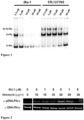
- a 98 bp long oligonucleotide that can bind up to four Ku complexes was used as a probe.
- the probe represents a 98bp cDNA fragment of Arabidopsis thaliana arginine/serine-rich splicing factor 35 amplified from Arabidopsis thaliana cDNA using Phusion DNA polymerase (blunt ends) and RS40-PTC-qF1 (5'-ATGAAAGCTGGGTTTGCTTTTG-3' (SEQ ID NO: 3)) and RS40-PTC-qR1 (5'-CGTCCCTTACGCCCAAAT-3' (SEQ ID NO: 4)) primers and end labeled with gamma[32P]ATP.
- DNA (0.6 nM) in 10 ⁇ l EMSA buffer (35 mM Tris-Cl pH 7.9, 150 mM KCl, 1 mM EDTA, 0.1 mM Dithiothreitol, 5% Glycerol) was mixed with 10 ⁇ l of human Ku complex (100 nM in EMSA buffer) preincubated with the inhibitors for 5 min at room temperature, and incubated for additional 10 min.
- DNA associated with Ku complexes was seprated by native polyacrylamide gel electrophoresis (5% polyacrylamide 29:1 [Sigma-Aldrich], 0.5 TBE) at 160 V for 4 hrs.
- iKU-1 blocks activation of DNA-PKcs upon induction of DNA damage in vivo ( Figure 2 ).
- HCT116 cells were pre-incubated with iKU-1 for 1 hr in McCoy's 5a medium supplemented with 10% Fetal Bovine Serum, 2 mM L-Glutamine, Penicilin/Streptomycin 200 U/l each. DNA breaks were induced by addition of bleomycin and incubated for additional 4 hrs. DNA damage triggers DNA-PKcs activity that leads to its autophosphorylation at the residue 2056.
- the phosphorylated DNA-PKcs was detected by Western blotting using anti-pDNA PKcs (phospho S2056) antibody [EPR5670] (Abcam, ab124918) and the total amount of DNA-PKcs with the anti-DNA PKcs antibody (BioRad, AHP318), both in 1:10000 dilution in TBS-T buffer overnight at 4°C.
- the primary antibody was detected by immunostaining with IRDye 800CW-conjugated Goat anti-Rabbit IgG secondary antibody (dilution 1:20000 in TBS-T).
- the signal was imaged using Odyssey Imager (Li-Cor).
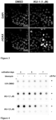
- iKU-1 induces DNA damage in treated cells ( Figure 3 ).
- HCT116 cells were incubated for 1 day in McCoy's 5a medium with 10% Fetal Bovine Serum, 2 mM L-Glutamine and Penicilin/Streptomycin 200 U/l each and supplemented with iKU-1.
- DNA damage induction was assessed by immunodetection of yH2AX in nuclei with specific antibody (Anti-phospho-Histone H2A.X (Ser139) Antibody, clone JBW301, Merck; dilution 1:500) and Alexa Fluor-conjugated secondary antibody (Goat anti-Mouse IgG (H+L) Highly Cross-Adsorbed Secondary Antibody, Alexa Fluor TM Plus 647, Invitrogen/Thermofisher; dilution 1:500).
- Cells were mounted in VECTASHIELD ® Antifade Mounting Medium with DAPI (Vector Laboratories; H-1200-10).
- ⁇ H2AX signal was detected by confocal laser scanning microscopy. iKU-1 treatment led to the formation of either nuclear foci or whole nuclear staining in a subset of cells.
- Compounds 1-9 induce the formation of extrachromosomal circular telomeric DNA.
- HCT116 cell were incubated for 3, 5 or 7 days in McCoy's 5a medium with 10% Fetal Bovine Serum, 2 mM L-Glutamine and Penicilin/Streptomycin 200 U/l each and supplemented with Compound 1-9.
- C-circle assay that utilizes rolling circle amplification of circular DNA by ⁇ 29 polymerase was performed as described in Henson, J.D., Lau, L.M., Koch, S., Martin La Rotta, N., Dagg, R.A., and Reddel, R.R. (2017).
- the C-Circle Assay for alternative-lengthening-of-telomeres activity was performed as described in Henson, J.D., Lau, L.M., Koch, S., Martin La Rotta, N., Dagg, R.A., and Reddel, R.R. (2017).
- telomere shortening via excision of telomeric circles indicates rapid telomere shortening via excision of telomeric circles.
- Q-FISH quantitative fluorescence in situ hybridization
- telomeric peptide nucleid acid probe TelC-Cy3 Panagene, F1002
- 70% formamide 0.5% blocking reagent (Roche)
- 20 mM TRIS-Cl pH 7.4 20 mM TRIS-Cl pH 7.4 according manufacturer's instruction.
- slides were counterstained with DAPI and mounted in VECTASHIELD ® Antifade Mounting Medium with DAPI (Vector Laboratories; H-1200-10). Fluorescence microscope with oil immersed 100 ⁇ objective was used to detect telomeric signal at chromosome ends. This analysis showed that iKU-1 treated HCT116 cells exhibit increase incidence of telomere-free chromosome ends ( Figure 5 ).
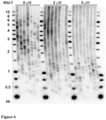
- iKU-1 induces rapid shortening of telomeres ( Figure 6 ).
- HCT116 cells were treated for two days with iKU-1 and telomere size was measured by Telomere Shortest Length Assay as described in Lai, T.P., Zhang, N., Noh, J., Mender, I., Tedone, E., Huang, E., Wright, W.E., Danuser, G., and Shay, J.W. (2017).
- telomeres are PCR-amplified, separated by agarose gel electrophoresis and detected by Southern hybridization with P 32 -labeled telomeric DNA oligonucleotide (5'-CCCTAACCCTAACCCTAACCCTAA-3' (SEQ ID NO: 6)).
- P 32 -labeled telomeric DNA oligonucleotide 5'-CCCTAACCCTAACCCTAACCCTAA-3' (SEQ ID NO: 6).
- This assay showed relative decrease in the size of telomeres in iKU-1 treated samples in comparison with untreated control ( Figure 6 ).
- Compounds 1-9 inhibit proliferation of human tumor cell lines.
- HCT116, U2OS and HeLa cells were grown in McCoy's 5a medium supplemented with 10% Fetal Bovine Serum, 2 mM L-Glutamine and Penicilin/Streptomycin 200 U/l each in the presence of Compound 1-9. After growth at 37 °C, 5% CO2 for 3 days, monolayer of cells was detached using TrypLE Express (Gibco), cells were counted using 0.4% trypan blue stain and hemocytometer. 10,000 cells were seeded in 100 ⁇ l of media for 1 day and then treated with Compound 1-9 in concentrations from 0.1 to 2 ⁇ M. Number of viable cells was estimated using ATPlite kit (Perkin Elmer). IC 50 values for Compounds 1-9 are indicated in Table 1 for HTC116 cells. Growth curves of HTC116, U2OS and HeLa in the presence of different concentrations of iKU-1 (Compound 1) are shown in Figure 7 .
- Flow cytometry analysis that measures DNA content revealed that iKU-1 causes cell cycle arrest in S-phase ( Figure 8 ).
- HCT116 cells were incubated for two days in McCoy's 5a medium supplemented with 10% Fetal Bovine Serum, 2 mM L-Glutamine and Penicilin/Streptomycin 200 U/l each in the presence of iKU-1, harvested and fixed in cold 70% ethanol.
- Cells were recovered in PBS solution and resuspended in 200 ⁇ l of Vindel solution containing propidium iodide and RNAse A, and nuclear DNA content was measured by flow cytometry (Beckton Dickinson FACS Verse). Accumulation of cells in S-phase is apparent already after two days of the iKU-1 treatment.
- iKU-1 exhibits synergism with the telomerase inhibitor BIBR1532 (Boehringer Ingelheim) in HCT116 cancer cell line (Table 2).
- 10,000 HCT116 cells were seeded in 100 ⁇ l of McCoy's 5a medium supplemented with 10% Fetal Bovine Serum, 2 mM L-Glutamine and Penicilin/Streptomycin 200 U/l for 1 day in 96well plate and treated with 10 ⁇ M BIBR1532, 0.25 ⁇ M of iKU-1 or their combination for 4 days. Number of viable cells was measured by ATPlite kit (Perkin Elmer) and normalized to the treatment with 0.5% DMSO.
- Table 2 show a synergistic effect of iKU-1 and BIBR1532 on the growth of HCT116 tumor cell line. Values in the table indicate relative growth assessed by ATPlite kit compared to the control sample treated with 0.5% DMSO after 4 days of treatment.
- Table 2 Cell line BIBR1532 (10 ⁇ M) iKU-1 (0.25 ⁇ M) BIBR1532 + iKU-1 HCT116 0.88 1.17 0.16 U2OS 0.88 0.81 0.51 HeLa 0.92 1.22 1.01
- iKU-1 exhibits synergism with Bleomycin in cisplatin-sensitive human ovarian cancer cell line A2780 (Table 3).
- 2,000 A2780 cells were seeded in 100 ⁇ l of RPMI 1640 medium with 300 mg/l L-Glutamine and 10% Fetal Bovine Serum for 1 day in 96well plate and treated by 0.025 ⁇ g/ml of Bleomycin, 0.5 ⁇ M of iKu-1 or their combination for 7 days. Number of viable cells was measured by ATPlite kit (Perkin Elmer) and normalized to the treatment with 0.5% DMSO.
- Results are shown in Table 3 which shows a synergistic effect of iKU-1 and Bleomycin on the growth of A2780 ovarian tumor cell line. Values in the table indicate relative growth assessed by ATPlite kit compared to the control sample treated with 0.5% DMSO after 7 days of treatment. Table 3 Cell line Bleomycin (0.025 ⁇ g/ml) iKU-1 (0.5 ⁇ M) Bleomycin + iKu-1 A2780 1.00 1.11 0.68
- Cisplatin-resistant ovarian cancer cell line SKOV3 exhibits increased sensitivity to iKU-1.
- 2,000 SKOV3 and A2780 cells were seeded in 100 ⁇ l of McCoy's 5a or RPMI 1640 media, respectively, for one day and then incubated with iKU-1 for 7 days. Number of viable cells was measured by ATPlite kit (Perkin Elmer) and normalized to the treatment with 0.5% DMSO.
- SKOV3 cell are sensitive to iKU-1 at 0.5 ⁇ M concentration, whereas at this concentration A2780 cells do not show growth inhibition.
- the growth curves show that SKOV3 is 10-times more sensitive to iKU-1 than the A2780 cell line ( Figure 9 ).
Landscapes
- Health & Medical Sciences (AREA)
- Life Sciences & Earth Sciences (AREA)
- Chemical & Material Sciences (AREA)
- Medicinal Chemistry (AREA)
- Pharmacology & Pharmacy (AREA)
- Animal Behavior & Ethology (AREA)
- General Health & Medical Sciences (AREA)
- Public Health (AREA)
- Veterinary Medicine (AREA)
- Epidemiology (AREA)
- Gastroenterology & Hepatology (AREA)
- Engineering & Computer Science (AREA)
- Bioinformatics & Cheminformatics (AREA)
- Immunology (AREA)
- Proteomics, Peptides & Aminoacids (AREA)
- Inorganic Chemistry (AREA)
- Chemical Kinetics & Catalysis (AREA)
- General Chemical & Material Sciences (AREA)
- Nuclear Medicine, Radiotherapy & Molecular Imaging (AREA)
- Organic Chemistry (AREA)
- Pharmaceuticals Containing Other Organic And Inorganic Compounds (AREA)
Priority Applications (2)
| Application Number | Priority Date | Filing Date | Title |
|---|---|---|---|
| EP22196503.1A EP4342467A1 (de) | 2022-09-20 | 2022-09-20 | Ku-hemmer zur verwendung in der tumortherapie |
| PCT/CZ2022/050113 WO2024061390A1 (en) | 2022-09-20 | 2022-10-30 | Ku inhibitors for use in tumor therapy |
Applications Claiming Priority (1)
| Application Number | Priority Date | Filing Date | Title |
|---|---|---|---|
| EP22196503.1A EP4342467A1 (de) | 2022-09-20 | 2022-09-20 | Ku-hemmer zur verwendung in der tumortherapie |
Publications (1)
| Publication Number | Publication Date |
|---|---|
| EP4342467A1 true EP4342467A1 (de) | 2024-03-27 |
Family
ID=83398152
Family Applications (1)
| Application Number | Title | Priority Date | Filing Date |
|---|---|---|---|
| EP22196503.1A Withdrawn EP4342467A1 (de) | 2022-09-20 | 2022-09-20 | Ku-hemmer zur verwendung in der tumortherapie |
Country Status (2)
| Country | Link |
|---|---|
| EP (1) | EP4342467A1 (de) |
| WO (1) | WO2024061390A1 (de) |
Citations (4)
| Publication number | Priority date | Publication date | Assignee | Title |
|---|---|---|---|---|
| WO2005026137A2 (en) * | 2003-09-06 | 2005-03-24 | Vertex Pharmaceuticals Incorporated | Modulators of atp-binding cassette transporters |
| WO2018237084A1 (en) * | 2017-06-21 | 2018-12-27 | SHY Therapeutics LLC | COMPOUNDS INTERACTING WITH RAS SUPERFAMIL FOR USE IN THE TREATMENT OF CANCERS, INFLAMMATORY DISEASES, RASOPATHIES AND FIBROTIC DISEASES |
| WO2021011778A1 (en) | 2019-07-16 | 2021-01-21 | Arizona Board Of Regents On Behalf Of The University Of Arizona | Small molecule inhibitors of ku70/80 and uses thereof |
| US20220089577A1 (en) | 2016-05-24 | 2022-03-24 | Indiana University Research And Technology Corporation | Ku inhibitors and their use |
-
2022
- 2022-09-20 EP EP22196503.1A patent/EP4342467A1/de not_active Withdrawn
- 2022-10-30 WO PCT/CZ2022/050113 patent/WO2024061390A1/en not_active Ceased
Patent Citations (4)
| Publication number | Priority date | Publication date | Assignee | Title |
|---|---|---|---|---|
| WO2005026137A2 (en) * | 2003-09-06 | 2005-03-24 | Vertex Pharmaceuticals Incorporated | Modulators of atp-binding cassette transporters |
| US20220089577A1 (en) | 2016-05-24 | 2022-03-24 | Indiana University Research And Technology Corporation | Ku inhibitors and their use |
| WO2018237084A1 (en) * | 2017-06-21 | 2018-12-27 | SHY Therapeutics LLC | COMPOUNDS INTERACTING WITH RAS SUPERFAMIL FOR USE IN THE TREATMENT OF CANCERS, INFLAMMATORY DISEASES, RASOPATHIES AND FIBROTIC DISEASES |
| WO2021011778A1 (en) | 2019-07-16 | 2021-01-21 | Arizona Board Of Regents On Behalf Of The University Of Arizona | Small molecule inhibitors of ku70/80 and uses thereof |
Non-Patent Citations (14)
| Title |
|---|
| BALESTRINI, A.RISTIC, DDIONNE, I.LIU, X.ZWYMAN, CWELLINGER, R.JPETRINI, J.H: "The Ku heterodimer and the metabolism of single-ended DNA double-strand breaks", CELL REP, vol. 3, 2013, pages 2033 - 2045 |
| FAITH MJAMBILI ET AL: "Synthesis and biological evaluation of 2-aminothiazole derivatives as antimycobacterial and antiplasmodial agents", BIOORGANIC & MEDICINAL CHEMISTRY LETTERS, vol. 24, no. 2, 1 January 2014 (2014-01-01), pages 560 - 564, XP055208364, ISSN: 0960-894X, DOI: 10.1016/j.bmcl.2013.12.022 * |
| GAVANDE ET AL.: "Discovery and development of novel DNA-PK inhibitors by targeting the unique Ku-DNA interaction", NUCLEIC ACIDS RES, vol. 48, 2020, pages 11536 - 11550 |
| GAVANDE NAVNATH S ET AL: "Discovery and development of novel DNA-PK inhibitors by targeting the unique Ku-DNA interaction", NUCLEIC ACIDS RESEARCH, vol. 48, no. 20, 18 November 2020 (2020-11-18), GB, pages 11536 - 11550, XP093024314, ISSN: 0305-1048, Retrieved from the Internet <URL:https://watermark.silverchair.com/gkaa934.pdf?token=AQECAHi208BE49Ooan9kkhW_Ercy7Dm3ZL_9Cf3qfKAc485ysgAAAtswggLXBgkqhkiG9w0BBwagggLIMIICxAIBADCCAr0GCSqGSIb3DQEHATAeBglghkgBZQMEAS4wEQQMmXzmDbtK_29VvgmAAgEQgIICjv7ZQNljtag7rSIp48xS468HPbIj2M1mqugzdrHF60rHMX-UY8COux99k56BK0Gm04dYZSsPCPUpUZp7ZHVOxGR-C9is> DOI: 10.1093/nar/gkaa934 * |
| HENSON, J.D.LAU, L.MKOCH, SMARTIN LA ROTTA, NDAGG, R.A.REDDEL, R.R: "The C-Circle Assay for alternative-lengthening-of-telomeres activity", METHODS, vol. 114, 2017, pages 74 - 84, XP029886623, DOI: 10.1016/j.ymeth.2016.08.016 |
| KELM ET AL.: "Recent Advances in the Development of Non-PIKKs Targeting Small Molecule Inhibitors of DNA Double-Strand Break Repair", FRONT ONCOL, vol. 12, 2022, pages 850883 |
| KIM, G. ET AL.: "FDA Approval Summary: Olaparib Monotherapy in Patients with Deleterious Germline BRCA-Mutated Advanced Ovarian Cancer Treated with Three or More Lines of Chemotherapy", CLIN CANCER RES, vol. 21, 2015, pages 4257 - 4261 |
| LAI, T.P.ZHANG, NNOH, JMENDER, ITEDONE, EHUANG, EWRIGHT, W.EDANUSER, GSHAY, J.W: "A method for measuring the distribution of the shortest telomeres in cells and tissues.", NAT COMMUN, vol. 8, 2017, pages 1356, XP055600647, DOI: 10.1038/s41467-017-01291-z |
| LORD, C.J.ASHWORTH, A: "The DNA damage response and cancer therapy", NATURE, vol. 481, 2012, pages 287 - 294, XP055174084, DOI: 10.1038/nature10760 |
| VALUCHOVA, SFULNECEK, JPETROV, A.PTRIPSIANES, KRIHA, K: "A rapid method for detecting protein-nucleic acid interactions by protein induced fluorescence enhancement", SCI REP, vol. 6, 2016, pages 39653 |
| WANG, YGHOSH, GHENDRICKSON, E.A: "Ku86 represses lethal telomere deletion events in human somatic cells", PROC NATL ACAD SCI U S A, vol. 106, 2009, pages 12430 - 12435 |
| WETERINGS, E.GALLEGOS, A.CDOMINICK, L.NCOOKE, L.SBARTELS, T.NVAGNER, JMATSUNAGA, T.OMAHADEVAN, D: "A novel small molecule inhibitor of the DNA repair protein Ku70/80", DNA REPAIR (AMST, vol. 43, 2016, pages 98 - 106, XP029617734, DOI: 10.1016/j.dnarep.2016.03.014 |
| ZELLINGER, BAKIMCHEVA, SPUIZINA, JSCHIRATO, M.RIHA, K.: "Ku suppresses formation of telomeric circles and alternative telomere lengthening in Arabidopsis", MOL CELL, vol. 27, 2007, pages 163 - 169, XP008161615, DOI: 10.1016/j.molcel.2007.05.025 |
| ZHAO, B.ROTHENBERG, ERAMSDEN, D.ALIEBER, M.R: "The molecular basis and disease relevance of non-homologous DNA end joining", NAT REV MOL CELL BIOL, vol. 21, 2020, pages 765 - 781, XP037299642, DOI: 10.1038/s41580-020-00297-8 |
Also Published As
| Publication number | Publication date |
|---|---|
| WO2024061390A1 (en) | 2024-03-28 |
Similar Documents
| Publication | Publication Date | Title |
|---|---|---|
| Bruno et al. | CDC20 in and out of mitosis: a prognostic factor and therapeutic target in hematological malignancies | |
| Long et al. | Rational design of small-molecules to recognize G-quadruplexes of c-MYC promoter and telomere and the evaluation of their in vivo antitumor activity against breast cancer | |
| AU2016207168B2 (en) | Quinazoline heterocyclic compound as EGFR kinase inhibitor, and preparation and application thereof | |
| AU2002307163B2 (en) | A method of treating cancer | |
| Cogoi et al. | Guanidino anthrathiophenediones as G-quadruplex binders: uptake, intracellular localization, and anti-Harvey-Ras gene activity in bladder cancer cells | |
| Hegde et al. | A novel benzimidazole derivative binds to the DNA minor groove and induces apoptosis in leukemic cells | |
| US12496302B2 (en) | Compositions and methods for the treatment and diagnosis of cancer | |
| CA3172987A1 (en) | Small molecule inhibitors of oncogenic chd1l with preclinical activity against colorectal cancer | |
| US12054784B2 (en) | Prognostic biomarkers for TTK inhibitor chemotherapy | |
| Zhang et al. | A novel naphthalimide compound restores p53 function in non-small cell lung cancer by reorganizing the Bak· Bcl-xl complex and triggering transcriptional regulation | |
| Gunaratnam et al. | A naphthalene diimide G-quadruplex ligand inhibits cell growth and down-regulates BCL-2 expression in an imatinib-resistant gastrointestinal cancer cell line | |
| Tan et al. | Quinolone antibiotic derivatives as new selective Axl kinase inhibitors | |
| Mancini et al. | Platinum (II) phenanthroimidazole G-quadruplex ligand induces selective telomere shortening in A549 cancer cells | |
| Johnson et al. | Synthesis, kinetics and cellular studies of new phenothiazine analogs as potent human-TLK inhibitors | |
| Wang et al. | An amphiphilic BODIPY-based selective probe for parallel G4 DNA targeting via disaggregation-induced emission | |
| Hu et al. | Design, synthesis, and evaluation of p53Y220C acetylation targeting chimeras (AceTACs) | |
| WO2024061390A1 (en) | Ku inhibitors for use in tumor therapy | |
| Bohrer et al. | CCAT1 lncRNA is chromatin-retained and post-transcriptionally spliced | |
| Rosenthal et al. | Discovery of ML216, a small molecule inhibitor of bloom (BLM) helicase | |
| US10690656B2 (en) | Methods of screening and treatment with USP4 inhibitors | |
| WO2021207352A1 (en) | Compositions and methods for treatment of anticancer-drug resistant cancers | |
| RU2466132C1 (ru) | ИНГИБИТОР PIM1-КИНАЗЫ 6-[(4-МЕТИЛ-1-1-ПИПЕРАЗИНИЛ)МЕТИЛ]-ИНДОЛО[1',7':1,2,3]ПИРРОЛО[3',4':6,7]АЗЕПИНО[4,5-b]ИНДОЛ-1,3(2Н, 10Н)-ДИОН, СПОСОБ ЕГО ПОЛУЧЕНИЯ И ПРИМЕНЕНИЕ | |
| CN116356032A (zh) | 预测prmt5抑制剂治疗肿瘤的敏感性的检测混合物 | |
| Abdelaziz et al. | Discovery of N-phenyl-4-(1H-pyrrol-3-yl) pyrimidin-2-amine derivatives as potent Mnk2 inhibitors: design, synthesis, SAR analysis, and evaluation of in vitro anti-leukaemic activity | |
| Ayala-Aguilera et al. | Ligand-centred phenotype-driven development of potent kinase inhibitors against oesophageal cancer |
Legal Events
| Date | Code | Title | Description |
|---|---|---|---|
| PUAI | Public reference made under article 153(3) epc to a published international application that has entered the european phase |
Free format text: ORIGINAL CODE: 0009012 |
|
| STAA | Information on the status of an ep patent application or granted ep patent |
Free format text: STATUS: THE APPLICATION HAS BEEN PUBLISHED |
|
| AK | Designated contracting states |
Kind code of ref document: A1 Designated state(s): AL AT BE BG CH CY CZ DE DK EE ES FI FR GB GR HR HU IE IS IT LI LT LU LV MC MK MT NL NO PL PT RO RS SE SI SK SM TR |
|
| STAA | Information on the status of an ep patent application or granted ep patent |
Free format text: STATUS: THE APPLICATION IS DEEMED TO BE WITHDRAWN |
|
| 18D | Application deemed to be withdrawn |
Effective date: 20240928 |