EP4342494A2 - Composition topique et procédés de mesure de la capacité de refroidissement d'une composition topique - Google Patents
Composition topique et procédés de mesure de la capacité de refroidissement d'une composition topique Download PDFInfo
- Publication number
- EP4342494A2 EP4342494A2 EP24155635.6A EP24155635A EP4342494A2 EP 4342494 A2 EP4342494 A2 EP 4342494A2 EP 24155635 A EP24155635 A EP 24155635A EP 4342494 A2 EP4342494 A2 EP 4342494A2
- Authority
- EP
- European Patent Office
- Prior art keywords
- composition
- glycol
- temperature
- weight
- monitoring
- Prior art date
- Legal status (The legal status is an assumption and is not a legal conclusion. Google has not performed a legal analysis and makes no representation as to the accuracy of the status listed.)
- Pending
Links
Images

Classifications
-
- A—HUMAN NECESSITIES
- A61—MEDICAL OR VETERINARY SCIENCE; HYGIENE
- A61K—PREPARATIONS FOR MEDICAL, DENTAL OR TOILETRY PURPOSES
- A61K9/00—Medicinal preparations characterised by special physical form
- A61K9/0012—Galenical forms characterised by the site of application
- A61K9/0034—Urogenital system, e.g. vagina, uterus, cervix, penis, scrotum, urethra, bladder; Personal lubricants
-
- A—HUMAN NECESSITIES
- A61—MEDICAL OR VETERINARY SCIENCE; HYGIENE
- A61K—PREPARATIONS FOR MEDICAL, DENTAL OR TOILETRY PURPOSES
- A61K47/00—Medicinal preparations characterised by the non-active ingredients used, e.g. carriers or inert additives; Targeting or modifying agents chemically bound to the active ingredient
- A61K47/06—Organic compounds, e.g. natural or synthetic hydrocarbons, polyolefins, mineral oil, petrolatum or ozokerite
- A61K47/08—Organic compounds, e.g. natural or synthetic hydrocarbons, polyolefins, mineral oil, petrolatum or ozokerite containing oxygen, e.g. ethers, acetals, ketones, quinones, aldehydes, peroxides
- A61K47/10—Alcohols; Phenols; Salts thereof, e.g. glycerol; Polyethylene glycols [PEG]; Poloxamers; PEG/POE alkyl ethers
-
- A—HUMAN NECESSITIES
- A61—MEDICAL OR VETERINARY SCIENCE; HYGIENE
- A61K—PREPARATIONS FOR MEDICAL, DENTAL OR TOILETRY PURPOSES
- A61K31/00—Medicinal preparations containing organic active ingredients
- A61K31/33—Heterocyclic compounds
- A61K31/395—Heterocyclic compounds having nitrogen as a ring hetero atom, e.g. guanethidine or rifamycins
- A61K31/41—Heterocyclic compounds having nitrogen as a ring hetero atom, e.g. guanethidine or rifamycins having five-membered rings with two or more ring hetero atoms, at least one of which being nitrogen, e.g. tetrazole
- A61K31/4164—1,3-Diazoles
- A61K31/417—Imidazole-alkylamines, e.g. histamine, phentolamine
-
- A—HUMAN NECESSITIES
- A61—MEDICAL OR VETERINARY SCIENCE; HYGIENE
- A61K—PREPARATIONS FOR MEDICAL, DENTAL OR TOILETRY PURPOSES
- A61K31/00—Medicinal preparations containing organic active ingredients
- A61K31/557—Eicosanoids, e.g. leukotrienes or prostaglandins
- A61K31/5575—Eicosanoids, e.g. leukotrienes or prostaglandins having a cyclopentane, e.g. prostaglandin E2, prostaglandin F2-alpha
-
- A—HUMAN NECESSITIES
- A61—MEDICAL OR VETERINARY SCIENCE; HYGIENE
- A61K—PREPARATIONS FOR MEDICAL, DENTAL OR TOILETRY PURPOSES
- A61K45/00—Medicinal preparations containing active ingredients not provided for in groups A61K31/00 - A61K41/00
- A61K45/06—Mixtures of active ingredients without chemical characterisation, e.g. antiphlogistics and cardiaca
-
- A—HUMAN NECESSITIES
- A61—MEDICAL OR VETERINARY SCIENCE; HYGIENE
- A61K—PREPARATIONS FOR MEDICAL, DENTAL OR TOILETRY PURPOSES
- A61K47/00—Medicinal preparations characterised by the non-active ingredients used, e.g. carriers or inert additives; Targeting or modifying agents chemically bound to the active ingredient
- A61K47/06—Organic compounds, e.g. natural or synthetic hydrocarbons, polyolefins, mineral oil, petrolatum or ozokerite
- A61K47/26—Carbohydrates, e.g. sugar alcohols, amino sugars, nucleic acids, mono-, di- or oligo-saccharides; Derivatives thereof, e.g. polysorbates, sorbitan fatty acid esters or glycyrrhizin
-
- A—HUMAN NECESSITIES
- A61—MEDICAL OR VETERINARY SCIENCE; HYGIENE
- A61K—PREPARATIONS FOR MEDICAL, DENTAL OR TOILETRY PURPOSES
- A61K47/00—Medicinal preparations characterised by the non-active ingredients used, e.g. carriers or inert additives; Targeting or modifying agents chemically bound to the active ingredient
- A61K47/30—Macromolecular organic or inorganic compounds, e.g. inorganic polyphosphates
- A61K47/32—Macromolecular compounds obtained by reactions only involving carbon-to-carbon unsaturated bonds, e.g. carbomers, poly(meth)acrylates, or polyvinyl pyrrolidone
-
- A—HUMAN NECESSITIES
- A61—MEDICAL OR VETERINARY SCIENCE; HYGIENE
- A61K—PREPARATIONS FOR MEDICAL, DENTAL OR TOILETRY PURPOSES
- A61K9/00—Medicinal preparations characterised by special physical form
- A61K9/0012—Galenical forms characterised by the site of application
- A61K9/0014—Skin, i.e. galenical aspects of topical compositions
-
- A—HUMAN NECESSITIES
- A61—MEDICAL OR VETERINARY SCIENCE; HYGIENE
- A61K—PREPARATIONS FOR MEDICAL, DENTAL OR TOILETRY PURPOSES
- A61K9/00—Medicinal preparations characterised by special physical form
- A61K9/06—Ointments; Bases therefor; Other semi-solid forms, e.g. creams, sticks, gels
-
- A—HUMAN NECESSITIES
- A61—MEDICAL OR VETERINARY SCIENCE; HYGIENE
- A61L—METHODS OR APPARATUS FOR STERILISING MATERIALS OR OBJECTS IN GENERAL; DISINFECTION, STERILISATION OR DEODORISATION OF AIR; CHEMICAL ASPECTS OF BANDAGES, DRESSINGS, ABSORBENT PADS OR SURGICAL ARTICLES; MATERIALS FOR BANDAGES, DRESSINGS, ABSORBENT PADS OR SURGICAL ARTICLES
- A61L31/00—Materials for other surgical articles, e.g. stents, stent-grafts, shunts, surgical drapes, guide wires, materials for adhesion prevention, occluding devices, surgical gloves, tissue fixation devices
- A61L31/14—Materials characterised by their function or physical properties, e.g. injectable or lubricating compositions, shape-memory materials, surface modified materials
-
- A—HUMAN NECESSITIES
- A61—MEDICAL OR VETERINARY SCIENCE; HYGIENE
- A61P—SPECIFIC THERAPEUTIC ACTIVITY OF CHEMICAL COMPOUNDS OR MEDICINAL PREPARATIONS
- A61P15/00—Drugs for genital or sexual disorders; Contraceptives
- A61P15/10—Drugs for genital or sexual disorders; Contraceptives for impotence
-
- G—PHYSICS
- G01—MEASURING; TESTING
- G01N—INVESTIGATING OR ANALYSING MATERIALS BY DETERMINING THEIR CHEMICAL OR PHYSICAL PROPERTIES
- G01N25/00—Investigating or analyzing materials by the use of thermal means
- G01N25/20—Investigating or analyzing materials by the use of thermal means by investigating the development of heat, i.e. calorimetry, e.g. by measuring specific heat, by measuring thermal conductivity
- G01N25/48—Investigating or analyzing materials by the use of thermal means by investigating the development of heat, i.e. calorimetry, e.g. by measuring specific heat, by measuring thermal conductivity on solution, sorption, or a chemical reaction not involving combustion or catalytic oxidation
- G01N25/4846—Investigating or analyzing materials by the use of thermal means by investigating the development of heat, i.e. calorimetry, e.g. by measuring specific heat, by measuring thermal conductivity on solution, sorption, or a chemical reaction not involving combustion or catalytic oxidation for a motionless, e.g. solid sample
-
- G—PHYSICS
- G01—MEASURING; TESTING
- G01N—INVESTIGATING OR ANALYSING MATERIALS BY DETERMINING THEIR CHEMICAL OR PHYSICAL PROPERTIES
- G01N25/00—Investigating or analyzing materials by the use of thermal means
- G01N25/56—Investigating or analyzing materials by the use of thermal means by investigating moisture content
- G01N25/58—Investigating or analyzing materials by the use of thermal means by investigating moisture content by measuring changes of properties of the material due to heat, cold or expansion
Definitions
- This invention relates to compositions for the treatment or amelioration of conditions susceptible to vascular smooth muscle relaxation, especially erectile dysfunction.
- WO 2019/034878 in the name of the present Applicant - Futura Medical Developments Ltd, includes a comprehensive review of the pathology of, and patent and non-patent literature relating to, erectile dysfunction and previous attempts to provide a solution thereto.
- the composition comprising glyceryl trinitrate (GTN) as active ingredient dissolved in a blend of volatile and non-volatile solvents of different solvating capacities for the GTN, in which the volatile solvents comprise water and a lower alcohol and the non-volatile solvents comprise a polyhydric alcohol and a glycol.
- the polyhydric alcohol and the glycol are required to have a ratio by weight of from 1.5:1 to 6.0:1 and the composition is required to have a pH in the range 5.1-7.0.
- compositions as described in WO 2019/034878 are to provide rapid initial absorption of GTN and an ongoing slow absorption as the volatile solvents evaporate in use so that the GTN concentration is dynamically maintained even as depletion through absorption takes place.
- the GTN promotes the formation of exogenous nitric oxide (NO) in the penile cavernosa to supplement the endogenous NO synthesised internally following stimulation of the glans by manual application of the composition, thus resulting in tumescence and a firm and self-sustaining erection.
- NO nitric oxide
- compositions of WO 2019/034878 are highly encouraging: the compositions have been shown as providing statistically significant improvements with the three primary end points (IIEF, SEP2 AND SEP3) compared with baseline data with over 60% of all subjects experiencing a meaningful difference in improvement of their erections using industry-standard assessment techniques. Over 60% of subjects saw a speed of onset of within ten minutes of application, significantly faster than sildenafil with resulting significant benefits in spontaneity. Furthermore, no serious side effects were reported by any subjects and there was a highly favourable overall side effect profile across all doses.
- compositions containing GTN is contra-indicated for men having medical conditions for which they take nitrate-containing medication.
- an ongoing need to provide an effective formulation which does not contain GTN there is in any event a general desire to provide compositions which do not contain synthetic chemicals as active ingredients, in alignment with the current trend towards the preferred use of "natural" remedies.
- WO 2010/044094 describes a topical composition for treatment of erectile dysfunction and pulmonary hypertension, comprising sildenafil citrate, lidocaine and pharmaceutically acceptable excipients.
- the composition of the present invention is free of sildenafil and lidocaine.
- composition of the present invention is free of an acetylcholinesterase inhibitor.
- the present invention provides a composition for topical application to the penis for the treatment of erectile dysfunction, the composition being free of GTN and comprising volatile and non-volatile solvents, the volatile solvents comprising a lower alcohol and water and the non-volatile solvents comprising a polyhydric alcohol and a glycol.
- the polyhydric alcohol and glycol preferably have a ratio by weight of from 1.5:1 to 6.0:1.
- the pH of the composition is above 5.0 and lower than 7.0.
- compositions according to the invention while being unable (due to the absence of active ingredient) to stimulate production of exogenous NO, nevertheless enhance production of endogenous NO by virtue, for example, of the latent heat of cooling as the volatile solvent component evaporates, stimulating the nerves locally and resulting in generation of endogenous NO.
- organs or parts thereof which are very highly enervated therefore, such as the glans of the penis
- sensors which are reactive to a range of physical sensations, such as and including touch, pressure and temperature
- topical application to such organs of compositions according to invention may stimulate more than one such sensor so that they react synergistically and, in the case of the penis, results in tumescence and erection without the inclusion of an active ingredient as such, whereas topical application of, for example, a known gel formulation containing sildenafil or of a personal lubricant has been found to have no effect on erectile capability.
- composition is free of GTN, i.e. it does not contain any GTN. Further, the composition preferably does not contain any derivatives or prodrugs of GTN.
- the composition is also free of sildenafil and an acetylcholinesterase inhibitor.
- Sildenafil also encompasses salt forms, such as sildenafil citrate.
- the acetylcholinesterase inhibitor may be any acetylcholinesterase inhibitor such as ⁇ 9-tetrahydrocannabinol (THC), physostigmine, neostigmine, pyridostigmine, ambenonium, demarcarium, rivastigmine, galantamine, caffeine, donepezil, tetrahydroaminoacridine, edrophonium, huperzine A, bis-huperzine A, bis-huperzine B, huperzine A-tacrine, derivatives of huperzine A, ladostigil, ungeremine, and lactucopicrin.
- THC ⁇ 9-tetrahydrocannabinol
- composition may also be free of lidocaine.
- lidocaine also encompasses salt forms, such as its hydrochloride salt.
- the composition does not contain any pharmaceutically active ingredients for the treatment of erectile dysfunction, for example, phosphodiesterase type 5 inhibitors (PDE5 inhibitors) such as tadalafil and sildenafil, and vasodilators such as alprostadil and phentolamine mesilate. In some embodiments, the composition does not contain any pharmaceutically active ingredients.
- PDE5 inhibitors phosphodiesterase type 5 inhibitors
- vasodilators such as alprostadil and phentolamine mesilate.
- the composition does not contain any pharmaceutically active ingredients.
- the composition is free of compounds selected from PDE-5 inhibitors, amide anaesthetics, local anaesthetics, natural prostaglandins, synthetic prostaglandins, testosterone or combinations thereof.
- the composition is free of PDE-5 inhibitors and amide anaesthetics.
- the composition does not comprise white petroleum jelly and/or paraffin.
- the composition is not intended for use as a hand sanitizer.
- the composition may have a lower alcohol content of not more than 50%, optionally not more than 45%, optionally not more than 40%, further optionally not more than 36%.
- the composition has an ethanol content of not more than 50%, optionally not more than 45%, optionally not more than 40%, further optionally not more than 36%.
- the composition is in gel, cream or serum form although other forms, such as foams or sprays, may be contemplated and are within the scope of the invention with appropriate additive excipients, for example a propellant gas in the case of a foam or spray.
- the formulation is a gel.
- viscosities in the range of 125,000-600,000 mPas are appropriate to ensure optimum control of application, as governed by the pH being in the range 5.0-7.0.
- the viscosity should have a value in the range 200,000 to 450,000 mPas, more preferably 250,000-350,000 mPas, for example 300,000 mPas when measured by Brookfield Viscometer, Spindle E, 0.3 RPM, at a temperature of 25 °C.
- the pH affects not only viscosity but also stability and appearance.
- the viscosity at a pH of below 5.0 and where the composition is a gel, the viscosity is too low and the composition is too fluid to be applied to the glans without being spread or spontaneously dissipating away from the glans.
- pH values greater than 5.0, preferably greater than 5.2 viscosity is acceptable although, at a pH above about 5.8, there is an increasing risk, depending on other ingredients present in the composition, that the thickening or gelling agent will form a precipitate, thus rendering the composition visually unacceptable.
- a preferred range is 5.2-6 and a more preferred range is 5.25-5.75. At a pH within this range, viscosity and flocculation are acceptable.
- the more preferred pH range for compositions according to the invention should be regarded as 5.25-6.0 and the upper values of the other ranges should be adjusted accordingly.
- Compositions according to the invention may also include, depending on their physical form, at least one additional ingredient selected from: agents for enhancing skin feel, for example a silicone oil composition such as Dimethicone 200; a thickening or gelling agent such as a polyacrylate-based composition; a pH control agent such as triethanolamine or an inorganic base; and an antimicrobial preservative such as methylparaben and/or propylparaben.
- agents for enhancing skin feel for example a silicone oil composition such as Dimethicone 200; a thickening or gelling agent such as a polyacrylate-based composition; a pH control agent such as triethanolamine or an inorganic base; and an antimicrobial preservative such as methylparaben and/or propylparaben.
- agents for enhancing skin feel for example a silicone oil composition such as Dimethicone 200; a thickening or gelling agent such as a polyacrylate-based composition; a pH control agent such as triethanolamine or an inorgan
- Concentrations of the additional ingredients are preferably less than 5% by weight, preferably less than 2% by weight, for example 1.0%.
- the pH control agent is added until the pH is within the desired target range of 5.0-7.0, preferably 5.1-6.0 or more preferably 5.25-5.75, all as manufactured.
- Suitable thickening or gelling agents comprise high molecular weight interpolymers of a crosslinked unsaturated carboxylic acid polymer, which may be a homopolymer or a copolymer, and a copolymeric steric stabiliser having hydrophilic and hydrophobic moieties.
- the monomer of the unsaturated carboxylic acid polymer comprises acrylic acid or an alkyl ester derivate thereof
- the steric stabiliser preferably comprises either a block copolymer and/or a random copolymer, the block copolymer preferably comprising a polyester such as 12-hydroxystearic acid as the hydrophobic moiety and polyethylene glycol as the hydrophilic moiety.
- the unsaturated carboxylic acid comprises acrylic acid crosslinked with allyl sucrose.
- Such interpolymers which include a steric stabiliser in the polymerisation process are rapidly wetted and easy to disperse and, throughout the remainder of this specification, including the claims, will be referred to as "easy to disperse interpolymers of the type described".
- Carbopol ® Ultrez 10, 20, 21 and 30 Commercially-available representative examples include Carbopol ® Ultrez 10, 20, 21 and 30. Homopolymers such as Carbopol ® 934P and 937P are not "easy to disperse interpolymers of the type described", since they do not include the steric stabiliser.
- the thickening or gelling agent is preferably present in the composition at 0.5% to 2% by weight.
- the composition comprises a thickening or gelling agent at 0.5% to 1.5% by weight.
- the composition comprises a thickening or gelling agent at 0.7% to 1.5% by weight.
- the composition comprises a thickening or gelling agent at 0.8% to 1.2% by weight.
- the composition comprises a thickening or gelling agent at about 1% by weight.
- compositions according to the invention may be considered as a single-phase solution comprising the volatile solvent pair of, for example, ethanol and water and the non-volatile solvent pair of, for example, glycerol and propylene glycol.
- a gelling agent comprising an easy to disperse interpolymer of the type described and having the required pH has been found to permit precise application of the composition to the glans penis.
- the volatile solvents may have a molecular weight of 15 to 75 g/mol.
- the non-volatile solvents may have a molecular weight of 40 to 200 g/mol, preferably 50 to 150 g/mol, and more preferably 60 to 120 g/mol.
- the volatile solvents to non-volatile solvents may have a ratio by weight of from 0.5:1 to 4:1.
- the volatile solvent to non-volatile solvent ratio by weight is from 1:1 to 3:1. More preferably, the volatile solvent to non-volatile solvent ratio by weight is from 2:1 to 2.5:1.
- the polyhydric alcohol preferably has a carbon to oxygen atom ratio of from 2:1 to 1:1.
- the glycol preferably has a carbon to oxygen atom ratio of from 2:1 to 1:1.
- the lower alcohol preferably has a boiling point below 150°C.
- the polyhydric alcohol preferably has a boiling point below 150°C.
- the glycol preferably has a boiling point below 250°C.
- compositions according to the invention may be fully water miscible.
- the volatile and non-volatile solvents may be water miscible.
- compositions according to the invention may be clear and/or colourless.
- the polyhydric alcohol and the glycol have a ratio by weight of from 2:1 to 6:1. More preferably, the polyhydric alcohol to glycol ratio by weight is from 2.5:1 to 5.5:1. Even more preferably, the polyhydric alcohol to glycol ratio by weight is from 3:1 to 5:1. More preferably still, the polyhydric alcohol to glycol ratio by weight is from 3.5:1 to 4.5:1.
- compositions according to the invention may comprise the following, the ranges being expressed in percentages by weight of the overall composition:
- the concentration of water is preferably in the range 30-40% by weight.
- the 20% referred to above is the minimum which is preferred for gelling purposes.
- the lower alcohol concentration is preferably in the range 30-35% by weight but, subject to user tolerance, concentrations up to 45% may be accommodated without compromising the efficacy of the composition.
- the ratio of ethanol to water in the volatile solvent pair may be adjusted to alter the rate of evaporation, ethanol being more volatile than water, up to approximately 1:1, the limiting concentration of ethanol as an example of the lower alcohol being governed by local intolerance as a skin irritant.
- the combined amount of the polyhydric alcohol and the glycol is not more than 35% by weight.
- lower alcohol means an aliphatic alcohol having from one to five carbon atoms, for example, ethanol or isopropanol; ethanol is generally preferred.
- polyhydric alcohol is meant an aliphatic polyol such as glycerol, although sorbitol, erythrotol, arabitol and xylitol are examples of other water-soluble polyols which may optionally be used together with or instead of glycerol.
- glycol is meant a primary or secondary diol or polyol compound, such as propylene glycol (propene-1,2-diol), butyline glycol (butane-1,3-diol), pentylene glycol (pentane-1,5-diol) or hexyline glycol (2-methyl-2,4-pentane diol).
- the glycol is a primary or secondary diol.
- compositions according to the invention have the following concentrations in percentages by weight:
- one formulation according to the invention has the following ingredients in percentages by weight:
- Another formulation according to the invention has the following ingredients in percentages by weight:
- the ratio of glycerol to propylene glycol is 4:1.
- the above formulations may also contain a base to bring the pH within the range of 5.0-7.0.
- compositions according to the invention may be made by mixing the ingredients together.
- Conventional process principles may be applied, for example that the Carbopol ® Ultrez 10 is dispersed in the water phase, the ethanol added and the remaining solvents then added optionally with or before pH adjustment.
- an organic base such as triethanolamine
- an inorganic base such as potassium hydroxide, sodium hydroxide or liquid ammonia, to avoid a possibility of nitrosamine formation.
- Such bases are especially beneficial in solvent-rich systems such as those according to the present invention, since the potassium, for example, has the potential to form a salt with the gelling agent, the salt possibly being insoluble at the concentrations used, leading to phase separation after manufacture.
- Easy to disperse interpolymers of the type described appear to be less susceptible to phase separation, due possibly to the increased solvent affinity of the block copolymer backbone segments. Even so, it is considered preferable to control pH to within a range of 5.25 to 5.75 such that precision of application is achieved, Carbopol@ salt phase separation (e.g. using Carbopol@ Ultrez 10, 20, 21 or 30) does not occur and gel viscosity does not compromise rate of loss of volatile solvents.
- composition for use in therapy.
- composition for use in treating or ameliorating erectile dysfunction. Also provided is the use of the composition (as herein before described) in the manufacture of a medicament for treating or ameliorating erectile dysfunction.
- a method for treating or ameliorating erectile dysfunction comprising topical application of a biologically effective amount of the composition (as herein before described) to the penis, preferably to the glans thereof, of a male subject.
- the method may further comprise manual stimulation of the penis.
- the subject may have an existing medical condition, wherein the existence of the condition precludes the taking of an active ingredient for treating erectile dysfunction.
- the subject may have an existing medical condition, wherein the treatment of the condition precludes the taking of an active ingredient for treating erectile dysfunction,
- the existing medical condition may be any condition that precludes the taking of an active ingredient for treating erectile dysfunction.
- the existing medical condition may be angina, low blood pressure, high blood pressure, benign prostatic hyperplasia, of retinitis pigmentosa.
- Treatment of the existing medical condition which precludes the taking of an active ingredient for treating erectile dysfunction may involve the administration of an active ingredient selected from PDE-5 inhibitors, nitrates and alpha blockers.
- the active ingredient for treating the existing medical condition may be selected from GTN, isosorbide mononitrate, isosorbide dinitrate, alfuzosin, doxazosin, indoramin, prazosin, tamsulosin, and terazosin.
- the method may further comprise administering at least one active agent for treating or ameliorating erectile dysfunction to the subject, wherein the method excludes the topical application of GTN, sildenafil or an acetylcholinesterase inhibitor to the penis of the subject.
- the at least one active agent for treating or ameliorating erectile dysfunction may be selected from PDE-5 inhibitors, alprostadil and phentolamine mesilate.
- the at least one active agent for treating or ameliorating erectile dysfunction is administered orally.
- the male subject may have severe erectile dysfunction.
- a condom comprising the composition (as herein before described).
- kits comprising the composition (as herein before described) and an active agent for treating or ameliorating erectile dysfunction, wherein the kit does not comprise GTN, sildenafil or an acetylcholinesterase inhibitor for inclusion in the composition.
- the active agent is preferably administered separately from the composition, e.g. it is not intended to be added to the topical composition (as herein before described).
- the active agent may be selected from PDE-5 inhibitors, alprostadil and phentolamine mesilate.
- the active agent for treating or ameliorating erectile dysfunction is for oral administration, i.e. it is in an oral dosage form.
- a test composition comprising:
- the temperature probe and the test composition are at substantially the same temperature when the layer of the test composition is applied to the temperature probe.
- test composition between about 30 mg and about 120 mg are applied to the temperature probe.
- between about 40 mg and about 100 mg of test composition are applied to the temperature probe.
- More preferably, between about 50 mg and about 90 mg of test composition are applied to the temperature probe.
- the test composition is applied to the temperature probe such that the layer of the test composition is of a substantially even thickness.
- the temperature change of the temperature probe, and optionally the weight change of the temperature probe is monitored for at least about 5 minutes.
- the temperature change of the temperature probe, and optionally the weight change of the temperature probe is monitored for between about 5 minutes and about 45 minutes. More preferably, the temperature change of the temperature probe, and optionally the weight change of the temperature probe, is monitored for between about 10 minutes and about 40 minutes. More preferably still, the temperature change of the temperature probe, and optionally the weight change of the temperature probe, is monitored for between about 15 minutes and about 35 minutes. Even more preferably, the temperature change of the temperature probe, and optionally the weight change of the temperature probe, is monitored for between about 20 minutes and about 30 minutes. In some embodiments, the temperature change of the temperature probe, and optionally the weight change of the temperature probe, is monitored for about 25 minutes.
- the test composition and the temperature probe are incubated in an environment which has a relatively constant temperature and which is at the pre-determined temperature so that the test composition and the temperature probe are at the pre-determined temperature for the applying step.
- the pre-determined temperature may be between about 25°C and about 40°C. In certain embodiments, the pre-determined temperature may be between about 25°C and about 30°C. In some embodiments, the pre-determined temperature may be between about 30°C and about 35°C. In other embodiments, the pre-determined temperature may be between about 35°C and about 40°C. In particular embodiments, the pre-determined temperature is 27°C ⁇ 1°C, 32°C ⁇ 1°C or 37°C ⁇ 1°C.
- the method is preferably carried out at atmospheric pressure, for example, at about 1 atm or about 100 kPa.
- the method is carried out at a relative humidity of between about 40% and 60%.
- the weight of the temperature probe is measured before the application of the test composition.
- the method comprises:
- a method of determining the cooling ability of a test composition comprising the following steps:
- the above method can alternatively be carried out at a temperature of 27°C ⁇ 1°C or 37°C ⁇ 1°C.
- the invention also provides a composition which provides a maximum temperature reduction of at least 5°C when tested using the method described above.
- the maximum temperature reduction is calculated by subtracting the lowest temperature reached by the temperature probe (°C) from the pre-determined temperature (°C) (also referred to as the ambient temperature in the detailed description hereinafter).
- the composition may provide a maximum temperature reduction of at least 6°C when tested using the method described above.
- the composition may provide a maximum temperature reduction of at least 7°C.
- the composition may provide a maximum temperature reduction of at least 8°C.
- the composition may provide a maximum temperature reduction of at least 9°C.
- the composition may provide a maximum temperature reduction of at least 10°C.
- the composition may provide a maximum temperature reduction of at least 11°C.
- the composition provides a maximum temperature reduction of between about 5°C and about 15°C when tested using the method described above.
- the composition may provide a maximum temperature reduction of between about 6°C and about 15°C.
- the composition may provide a maximum temperature reduction of between about 7°C and about 15°C.
- the composition may provide a maximum temperature reduction of between about 8°C and about 14°C.
- the composition may provide a maximum temperature reduction of between about 9°C and about 13°C.
- the composition may provide a maximum temperature reduction of between about 10°C and about 12°C.
- the composition provides a maximum temperature reduction of at most 15°C when tested using the method described above.
- the composition may provide a maximum temperature reduction of at most 14°C.
- the composition may provide a maximum temperature reduction of at most 13°C.
- the composition may provide a maximum temperature reduction of at most 12°C.
- the composition provides a temperature reduction after 1 minute of monitoring of at least 5°C when tested using the method described above.
- the temperature reduction is calculated by subtracting the temperature reached after 1 minute of monitoring (°C) from the pre-determined temperature (°C).
- the composition may provide a temperature reduction after 1 minute of monitoring of at least 6°C when tested using the method described above.
- the composition may provide a temperature reduction after 1 minute of monitoring of at least 7°C.
- the composition may provide a temperature reduction after 1 minute of monitoring of at least 8°C.
- the composition may provide a temperature reduction after 1 minute of monitoring of at least 9°C.
- the composition may provide a temperature reduction after 1 minute of monitoring of at least 10°C.
- the composition may provide a temperature reduction after 1 minute of monitoring of at least 11°C.
- the composition provides a temperature reduction after 1 minute of monitoring of between about 5°C and about 15°C when tested using the method described above.
- the composition may provide a temperature reduction after 1 minute of monitoring of between about 6°C and about 15°C.
- the composition may provide a temperature reduction after 1 minute of monitoring of between about 7°C and about 15°C.
- the composition may provide a temperature reduction after 1 minute of monitoring of between about 8°C and about 14°C.
- the composition may provide a temperature reduction after 1 minute of monitoring of between about 9°C and about 13°C.
- the composition may provide a temperature reduction after 1 minute of monitoring of between about 10°C and about 12°C.
- the composition provides a temperature recovery after 25 minutes of monitoring of at least 4°C when tested using the method described above.
- the temperature recovery is calculated by subtracting the lowest temperature reached by the temperature probe (°C) from the temperature of the temperature probe (°C) after 25 minutes of monitoring.
- the composition may provide a temperature recovery after 25 minute of monitoring of at least 5°C when tested using the method described above.
- the composition may provide a temperature recovery after 25 minute of monitoring of at least 6°C.
- the composition may provide a temperature recovery after 25 minute of monitoring of at least 7°C.
- the composition may provide a temperature recovery after 25 minute of monitoring of at least 8°C.
- the composition provides a temperature recovery after 25 minutes of monitoring of between about 4°C and about 15°C when tested using the method described above.
- the composition may provide a temperature recovery after 25 minutes of monitoring of between about 4°C and about 14°C.
- the composition may provide a temperature recovery after 25 minutes of monitoring of between about 4°C and about 13°C.
- the composition may provide a temperature recovery after 25 minutes of monitoring of between about 4°C and about 12°C.
- the composition may provide a temperature recovery after 25 minutes of monitoring of between about 5°C and about 11°C.
- the composition may provide a temperature recovery after 25 minutes of monitoring of between about 6°C and about 10°C.
- the composition may provide a temperature recovery after 25 minutes of monitoring of between about 7°C and about 9°C.
- composition when the composition is tested at a pre-determined temperature of 32°C ⁇ 1°C,
- the weight change of the composition after 1 minute of monitoring is at least -10% when tested using the method described above.
- the weight change of the composition after 1 minute of monitoring may be at least -12%.
- the weight change of the composition after 1 minute of monitoring may be at least -14%.
- the weight change of the composition after 1 minute of monitoring may be at least -15%.
- the weight change of the composition after 1 minute of monitoring may be at least -16%.
- the weight change of the composition after 1 minute of monitoring may be at least -17%.
- the weight change of the composition after 1 minute of monitoring may be at least -18%.
- the weight change of the composition after 1 minute of monitoring may be between about -10% and about -30% when tested using the method described above.
- the weight change of the composition after 1 minute of monitoring may be between about -12% and about -28%.
- the weight change of the composition after 1 minute of monitoring may be between about -14% and about -26%.
- the weight change of the composition after 1 minute of monitoring may be between about -15% and about -25%.
- the weight change of the composition after 1 minute of monitoring may be between about -16% and about -24%.
- the weight change of the composition after 1 minute of monitoring may be between about -17% and about -23%.
- the weight change of the composition after 1 minute of monitoring may be between about -18% and about -22%.
- the weight change of the composition after 5 minutes of monitoring is at least -20% when tested using the method described above.
- the weight change of the composition after 5 minutes of monitoring may be at least -25%.
- the weight change of the composition after 5 minutes of monitoring may be at least -30%.
- the weight change of the composition after 5 minutes of monitoring may be at least - 32%.
- the weight change of the composition after 5 minutes of monitoring may be at least -34%.
- the weight change of the composition after 5 minutes of monitoring may be at least -35%.
- the weight change of the composition after 5 minutes of monitoring may be at least -36%.
- the weight change of the composition after 5 minutes of monitoring may be at least -37%.
- the weight change of the composition after 5 minutes of monitoring may be at least -38%.
- the weight change of the composition after 5 minutes of monitoring may be between about -20% and about -60% when tested using the method described above.
- the weight change of the composition after 5 minutes of monitoring may be between about -25% and about -55%.
- the weight change of the composition after 5 minutes of monitoring may be between about -30% and about -50%.
- the weight change of the composition after 5 minutes of monitoring may be between about -32% and about -48%.
- the weight change of the composition after 5 minutes of monitoring may be between about -34% and about -46%.
- the weight change of the composition after 5 minutes of monitoring may be between about -35% and about -45%.
- the weight change of the composition after 5 minutes of monitoring may be between about -36% and about -44%.
- the weight change of the composition after 25 minutes of monitoring is at least -40% when tested using the method described above.
- the weight change of the composition after 25 minutes of monitoring may be at least -45%.
- the weight change of the composition after 25 minutes of monitoring may be at least -50%.
- the weight change of the composition after 25 minutes of monitoring may be at least - 52%.
- the weight change of the composition after 25 minutes of monitoring may be at least -54%.
- the weight change of the composition after 25 minutes of monitoring may be at least -55%.
- the weight change of the composition after 25 minutes of monitoring may be at least -56%.
- the weight change of the composition after 25 minutes of monitoring may be at least -57%.
- the weight change of the composition after 25 minutes of monitoring may be at least -58%.
- the weight change of the composition after 25 minutes of monitoring may be at least -59%.
- the weight change of the composition after 25 minutes of monitoring may be at least -60%.
- the weight change of the composition after 25 minutes of monitoring may be between about -40% and about -90% when tested using the method described above.
- the weight change of the composition after 25 minutes of monitoring may be between about -45% and about -85%.
- the weight change of the composition after 25 minutes of monitoring may be between about -50% and about -80%.
- the weight change of the composition after 25 minutes of monitoring may be between about -52% and about -78%.
- the weight change of the composition after 25 minutes of monitoring may be between about -54% and about -76%.
- the weight change of the composition after 25 minutes of monitoring may be between about -55% and about - 75%.
- the weight change of the composition after 25 minutes of monitoring may be between about -56% and about -74%.
- the weight change of the composition after 25 minutes of monitoring may be between about -57% and about -73%.
- the weight change of the composition after 25 minutes of monitoring may be between about -58% and about -72%.
- the weight change of the composition after 25 minutes of monitoring may be between about -59% and about -71%.
- the weight change of the composition after 25 minutes of monitoring may be between about -60% and about -70%.
- the weight change of the composition when the maximum temperature reduction is reached is at least -10% when tested using the method described above.
- the weight change of the composition when the maximum temperature reduction is reached may be at least -12%.
- the weight change of the composition when the maximum temperature reduction is reached may be at least -14%.
- the weight change of the composition when the maximum temperature reduction is reached may be at least -15%.
- the weight change of the composition when the maximum temperature reduction is reached may be at least -16%.
- the weight change of the composition when the maximum temperature reduction is reached may be at least - 17%.
- the weight change of the composition when the maximum temperature reduction is reached may be at least -18%.
- the weight change of the composition when the maximum temperature reduction is reached is between about -10% and about -35% when tested using the method described above.
- the weight change of the composition when the maximum temperature reduction is reached may be at between about -12% and about - 33%.
- the weight change of the composition when the maximum temperature reduction is reached may be at between about -14% and about -31%.
- the weight change of the composition when the maximum temperature reduction is reached may be at between about -15% and about -30%.
- the weight change of the composition when the maximum temperature reduction is reached may be at between about -16% and about -29%.
- the weight change of the composition when the maximum temperature reduction is reached may be at between about -17% and about -28%.
- the weight change of the composition when the maximum temperature reduction is reached may be at between about -18% and about -27%.
- the weight change of the composition when the maximum temperature reduction is reached may be at between about -18% and about -26%.
- the weight change of the composition when the maximum temperature reduction is reached may be at between about -18% and about -25%.
- the weight change of the composition when the maximum temperature reduction is reached is between about -15% and about -25%.
- the composition may be tested at a pre-determined temperature of 32°C ⁇ 1°C.
- the rate of cooling provided by the composition in the temperature reduction phase is faster than the rate of warming provided by the composition in the temperature recovery phase.
- the rate of cooling provided by the composition in the temperature reduction phase is faster when the composition is tested at a higher pre-determined temperature.
- the rate of cooling provided by the composition in the temperature reduction phase is substantially proportional to the rate of weight loss of the composition in the temperature reduction phase.
- compositions according to the invention show that they are equivalent in performance to compositions containing GTN as active ingredient, as set out hereinbefore.
- the composition of the invention contained: ethanol: 33%; water: 35%; glycerol: 24%; propylene glycol: 6%; Carbopol ® Ultrez 10: 1 %. pH was adjusted to 5.25 with potassium hydroxide solution.
- the ethanol used in the manufacture of the composition was absolute ethanol (i.e. 100% ethanol free from water) such that the final composition contained 33% of pure ethanol. If a lower grade of ethanol was used which contained impurity amounts of water (e.g. 96% ethanol), then the amount used would have to be adjusted to ensure the final composition contained the correct amount of the components, i.e. 33% pure ethanol and 35% water.
- compositions according to the invention in providing fast onset time and sustained erection quality, together with a high safety profile, represent a significant improvement to known treatments and offer further treatment opportunities to patients who hitherto have been unable to or are contra-indicated to use currently-available treatments.
- compositions according to the invention show clinical trial results for compositions according to the invention, compared with equivalent compositions containing GTN and with commercially-available Cialis and Vitaros.
- IIEF figures are on the basis of questionnaire responses relating to the evaluation of male sexual function and SWEP2 and SEP3 respectively relate to the ability to insert the penis into the vagina and the ability of the erection to sustain long enough for completion of intercourse.
- compositions of the invention are believed to enhance production of endogenous NO by virtue of the latent heat of cooling as the volatile solvent component evaporates, stimulating the nerves locally and resulting in generation of endogenous NO.
- sensors which are reactive to a range of physical sensations, such as and including touch, pressure and temperature, and topical application of compositions of the invention stimulate such sensors. It is thought that the rapid cooling brought about by the composition followed by the recovery in temperature acts as a stimulant so that the sensors react synergistically and result in tumescence and erection without the inclusion of an active ingredient.
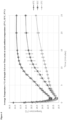
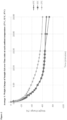
- the cooling effect and rate of recovery of the gel composition is measured by applying the gel to a calibrated temperature probe that is weighed on an analytical balance. This allows the temperature change to be monitored simultaneously with weight loss over time. Different cooling/recovery 'profiles' can be generated when incubating the setup at different ambient temperatures (i.e. 27°C, 32°C and 37°C).
- a suitable method to assess the cooling profiles of the composition of the invention was developed at three different ambient temperatures: 27°C, 32°C and 37°C. The method was issued to describe the process used to obtain the cooling profiles.
- Figure 2 shows the cooling profiles at each ambient temperature when plotting % Weight Change against Time (minutes).
- the % weight change is most rapid at the beginning of the curve for all three ambient temperatures where after -5 minutes the % weight change begins to level off.
- a second % weight change drop was observed at ⁇ 15 minutes for 32°C and at ⁇ 20 minutes for the 37°C ambient temperature.
- a clear difference between the 27°C and 32°C/37°C profiles can be seen with the 32°C profile only showing subtle differences when compared to the 37°C profile.
Landscapes
- Health & Medical Sciences (AREA)
- Chemical & Material Sciences (AREA)
- Life Sciences & Earth Sciences (AREA)
- General Health & Medical Sciences (AREA)
- Veterinary Medicine (AREA)
- Public Health (AREA)
- Animal Behavior & Ethology (AREA)
- Pharmacology & Pharmacy (AREA)
- Medicinal Chemistry (AREA)
- Epidemiology (AREA)
- Chemical Kinetics & Catalysis (AREA)
- Engineering & Computer Science (AREA)
- General Chemical & Material Sciences (AREA)
- Reproductive Health (AREA)
- Gynecology & Obstetrics (AREA)
- Biochemistry (AREA)
- Oil, Petroleum & Natural Gas (AREA)
- Pathology (AREA)
- General Physics & Mathematics (AREA)
- Immunology (AREA)
- Physics & Mathematics (AREA)
- Analytical Chemistry (AREA)
- Endocrinology (AREA)
- Nuclear Medicine, Radiotherapy & Molecular Imaging (AREA)
- Urology & Nephrology (AREA)
- Bioinformatics & Cheminformatics (AREA)
- Organic Chemistry (AREA)
- Combustion & Propulsion (AREA)
- Inorganic Chemistry (AREA)
- Heart & Thoracic Surgery (AREA)
- Surgery (AREA)
- Vascular Medicine (AREA)
- Dermatology (AREA)
- Molecular Biology (AREA)
- Medicinal Preparation (AREA)
- Pharmaceuticals Containing Other Organic And Inorganic Compounds (AREA)
- Medicines That Contain Protein Lipid Enzymes And Other Medicines (AREA)
- Cosmetics (AREA)
- Investigating Or Analysing Biological Materials (AREA)
Applications Claiming Priority (4)
| Application Number | Priority Date | Filing Date | Title |
|---|---|---|---|
| GBGB1918039.7A GB201918039D0 (en) | 2019-12-09 | 2019-12-09 | Topical composition |
| GBGB2015404.3A GB202015404D0 (en) | 2020-09-29 | 2020-09-29 | Topical composition |
| PCT/GB2020/052660 WO2021116651A1 (fr) | 2019-12-09 | 2020-10-22 | Composition topique et procédés de mesure de la capacité de refroidissement d'une composition topique |
| EP20800255.0A EP3934624B1 (fr) | 2019-12-09 | 2020-10-22 | Composition topique et procédés de mesure de la capacité de refroidissement d'une composition topique |
Related Parent Applications (2)
| Application Number | Title | Priority Date | Filing Date |
|---|---|---|---|
| EP20800255.0A Division EP3934624B1 (fr) | 2019-12-09 | 2020-10-22 | Composition topique et procédés de mesure de la capacité de refroidissement d'une composition topique |
| EP20800255.0A Division-Into EP3934624B1 (fr) | 2019-12-09 | 2020-10-22 | Composition topique et procédés de mesure de la capacité de refroidissement d'une composition topique |
Publications (2)
| Publication Number | Publication Date |
|---|---|
| EP4342494A2 true EP4342494A2 (fr) | 2024-03-27 |
| EP4342494A3 EP4342494A3 (fr) | 2024-06-05 |
Family
ID=73040144
Family Applications (2)
| Application Number | Title | Priority Date | Filing Date |
|---|---|---|---|
| EP24155635.6A Pending EP4342494A3 (fr) | 2019-12-09 | 2020-10-22 | Composition topique et procédés de mesure de la capacité de refroidissement d'une composition topique |
| EP20800255.0A Active EP3934624B1 (fr) | 2019-12-09 | 2020-10-22 | Composition topique et procédés de mesure de la capacité de refroidissement d'une composition topique |
Family Applications After (1)
| Application Number | Title | Priority Date | Filing Date |
|---|---|---|---|
| EP20800255.0A Active EP3934624B1 (fr) | 2019-12-09 | 2020-10-22 | Composition topique et procédés de mesure de la capacité de refroidissement d'une composition topique |
Country Status (15)
| Country | Link |
|---|---|
| US (2) | US12414992B2 (fr) |
| EP (2) | EP4342494A3 (fr) |
| KR (1) | KR20220124712A (fr) |
| CN (2) | CN121796316A (fr) |
| AU (1) | AU2020401440A1 (fr) |
| BR (1) | BR112022011284A2 (fr) |
| CA (1) | CA3160206A1 (fr) |
| DK (1) | DK3934624T3 (fr) |
| ES (1) | ES2978421T3 (fr) |
| FI (1) | FI3934624T3 (fr) |
| MX (1) | MX2022007009A (fr) |
| PL (1) | PL3934624T3 (fr) |
| PT (1) | PT3934624T (fr) |
| TW (1) | TWI896577B (fr) |
| WO (1) | WO2021116651A1 (fr) |
Families Citing this family (4)
| Publication number | Priority date | Publication date | Assignee | Title |
|---|---|---|---|---|
| CN119112770B (zh) * | 2023-12-27 | 2025-09-05 | 江苏澳德智科医疗科技有限公司 | 一种功能凝胶的制备方法 |
| US12517073B2 (en) * | 2024-01-25 | 2026-01-06 | Futura Medical Developments Limited | Topical composition testing method and apparatus |
| GB202402524D0 (en) * | 2024-02-22 | 2024-04-10 | Futura Medical Developments Ltd | Topical composition |
| CN118576540A (zh) * | 2024-07-30 | 2024-09-03 | 杭州启真求实科技有限公司 | 一种用于男性勃起障碍外用的组合物凝胶及其制备方法 |
Citations (3)
| Publication number | Priority date | Publication date | Assignee | Title |
|---|---|---|---|---|
| WO2010044094A2 (fr) | 2008-09-03 | 2010-04-22 | Krishna Radharaman Agarwal | Composition topique pour traiter un dysfonctionnement érectile |
| US20140227342A1 (en) | 2013-02-08 | 2014-08-14 | Michael Farber | Acetylcholinesterase inhibitor composition for sexual use |
| WO2019034878A1 (fr) | 2017-08-16 | 2019-02-21 | Futura Medical Developments Limited | Composition topique |
Family Cites Families (13)
| Publication number | Priority date | Publication date | Assignee | Title |
|---|---|---|---|---|
| JP2716739B2 (ja) * | 1988-07-26 | 1998-02-18 | インデナ エス.ピー.エイ | 血管運動作用を有する化粧用組成物 |
| US5093133A (en) * | 1990-01-24 | 1992-03-03 | Mcneil-Ppc, Inc. | Method for percutaneous delivery of ibuprofen using hydroalcoholic gel |
| US5942545A (en) * | 1998-06-15 | 1999-08-24 | Macrochem Corporation | Composition and method for treating penile erectile dysfunction |
| US6435710B1 (en) * | 1998-08-26 | 2002-08-20 | Fauske & Associates, Inc. | Foam detector apparatus and method |
| US6333039B1 (en) * | 1998-09-25 | 2001-12-25 | Gojo Industries, Inc. | Opaque skin sanitizing composition |
| US6183766B1 (en) * | 1999-02-12 | 2001-02-06 | The Procter & Gamble Company | Skin sanitizing compositions |
| GB0602224D0 (en) * | 2006-02-03 | 2006-03-15 | Futura Medical Dev Ltd | Composition for promoting vascular smooth muscle relaxation |
| RU2342923C1 (ru) * | 2007-07-26 | 2009-01-10 | Общество с ограниченной ответственностью "Бентус лаборатории" | Дезинфицирующее антисептическое средство для обработки рук с увлажняющим эффектом (варианты) |
| US20090318510A1 (en) * | 2008-06-24 | 2009-12-24 | Glycobiosciences, Inc. | Topical drug delivery system |
| EP2147674A1 (fr) * | 2008-07-24 | 2010-01-27 | Besins Healthcare | Compositions pharmaceutiques transdermiques comprenant du danazol |
| CA2946568C (fr) * | 2014-04-21 | 2020-07-07 | Aclaris Therapeutics, Inc. | Formules de peroxyde et procedes et applicateurs pour leur utilisation |
| GB201609968D0 (en) | 2016-06-07 | 2016-07-20 | Futura Medical Dev Ltd | Topical pharmaceutical formulation |
| CR20200630A (es) * | 2018-06-01 | 2021-05-26 | Tavanta Therapeutics Hungary Incorporated | Sales tópicas de amlodipino para el tratamiento de enfermedades anorrectales |
-
2020
- 2020-10-22 EP EP24155635.6A patent/EP4342494A3/fr active Pending
- 2020-10-22 KR KR1020227023539A patent/KR20220124712A/ko active Pending
- 2020-10-22 CA CA3160206A patent/CA3160206A1/fr active Pending
- 2020-10-22 FI FIEP20800255.0T patent/FI3934624T3/fi active
- 2020-10-22 PT PT208002550T patent/PT3934624T/pt unknown
- 2020-10-22 CN CN202610095629.1A patent/CN121796316A/zh active Pending
- 2020-10-22 US US17/783,873 patent/US12414992B2/en active Active
- 2020-10-22 PL PL20800255.0T patent/PL3934624T3/pl unknown
- 2020-10-22 AU AU2020401440A patent/AU2020401440A1/en active Pending
- 2020-10-22 MX MX2022007009A patent/MX2022007009A/es unknown
- 2020-10-22 ES ES20800255T patent/ES2978421T3/es active Active
- 2020-10-22 BR BR112022011284A patent/BR112022011284A2/pt unknown
- 2020-10-22 EP EP20800255.0A patent/EP3934624B1/fr active Active
- 2020-10-22 DK DK20800255.0T patent/DK3934624T3/da active
- 2020-10-22 WO PCT/GB2020/052660 patent/WO2021116651A1/fr not_active Ceased
- 2020-10-22 CN CN202080085526.8A patent/CN115003278B/zh active Active
- 2020-12-08 TW TW109143296A patent/TWI896577B/zh active
-
2025
- 2025-06-27 US US19/252,084 patent/US12576152B2/en active Active
Patent Citations (3)
| Publication number | Priority date | Publication date | Assignee | Title |
|---|---|---|---|---|
| WO2010044094A2 (fr) | 2008-09-03 | 2010-04-22 | Krishna Radharaman Agarwal | Composition topique pour traiter un dysfonctionnement érectile |
| US20140227342A1 (en) | 2013-02-08 | 2014-08-14 | Michael Farber | Acetylcholinesterase inhibitor composition for sexual use |
| WO2019034878A1 (fr) | 2017-08-16 | 2019-02-21 | Futura Medical Developments Limited | Composition topique |
Non-Patent Citations (1)
| Title |
|---|
| DAVIS, ADRIAN AND REISMAN, YACOV: "accepted for publication in IJIR:", MEDICINE JOURNAL |
Also Published As
| Publication number | Publication date |
|---|---|
| US12576152B2 (en) | 2026-03-17 |
| US12414992B2 (en) | 2025-09-16 |
| CA3160206A1 (fr) | 2021-06-17 |
| US20230022570A1 (en) | 2023-01-26 |
| ES2978421T3 (es) | 2024-09-12 |
| TW202135785A (zh) | 2021-10-01 |
| CN121796316A (zh) | 2026-04-07 |
| KR20220124712A (ko) | 2022-09-14 |
| BR112022011284A2 (pt) | 2022-09-06 |
| MX2022007009A (es) | 2022-08-25 |
| AU2020401440A1 (en) | 2022-06-16 |
| WO2021116651A1 (fr) | 2021-06-17 |
| CN115003278A (zh) | 2022-09-02 |
| DK3934624T3 (da) | 2024-06-10 |
| PL3934624T3 (pl) | 2024-07-08 |
| EP4342494A3 (fr) | 2024-06-05 |
| US20250352650A1 (en) | 2025-11-20 |
| TWI896577B (zh) | 2025-09-11 |
| EP3934624B1 (fr) | 2024-03-13 |
| PT3934624T (pt) | 2024-04-23 |
| FI3934624T3 (fi) | 2024-05-24 |
| CN115003278B (zh) | 2025-12-30 |
| EP3934624A1 (fr) | 2022-01-12 |
Similar Documents
| Publication | Publication Date | Title |
|---|---|---|
| US12576152B2 (en) | Topical composition | |
| US11413283B2 (en) | Topical formulations for delivery of hedgehog inhibitor compounds and use thereof | |
| US20180263897A1 (en) | Diclofenac formulations | |
| CN106604717A (zh) | 局部用双氯芬酸钠组合物 | |
| WO2014119985A2 (fr) | Composition pharmaceutique présentant un inhibiteur sélectif de l'enzyme phosphodiestérase sous forme de gel oral | |
| HK40102033A (en) | Topical composition and methods of measuring the cooling ability of a topical composition | |
| HK40066929B (en) | Topical composition and methods of measuring the cooling ability of a topical composition | |
| HK40066929A (en) | Topical composition and methods of measuring the cooling ability of a topical composition | |
| US20210000757A1 (en) | Topical composition | |
| JPH11228398A (ja) | エアゾール製剤 | |
| JP4176859B2 (ja) | エアゾール製剤 | |
| WO2025177009A1 (fr) | Composition topique | |
| US12053479B2 (en) | Transdermal treatment for erectile dysfunction | |
| HK1253345B (en) | Topical formulations for delivery of hedgehog inhibitor compounds and use thereof |
Legal Events
| Date | Code | Title | Description |
|---|---|---|---|
| PUAI | Public reference made under article 153(3) epc to a published international application that has entered the european phase |
Free format text: ORIGINAL CODE: 0009012 |
|
| STAA | Information on the status of an ep patent application or granted ep patent |
Free format text: STATUS: THE APPLICATION HAS BEEN PUBLISHED |
|
| AC | Divisional application: reference to earlier application |
Ref document number: 3934624 Country of ref document: EP Kind code of ref document: P |
|
| AK | Designated contracting states |
Kind code of ref document: A2 Designated state(s): AL AT BE BG CH CY CZ DE DK EE ES FI FR GB GR HR HU IE IS IT LI LT LU LV MC MK MT NL NO PL PT RO RS SE SI SK SM TR |
|
| REG | Reference to a national code |
Ref country code: DE Ref legal event code: R079 Free format text: PREVIOUS MAIN CLASS: A61K0047100000 Ipc: A61K0009000000 |
|
| PUAL | Search report despatched |
Free format text: ORIGINAL CODE: 0009013 |
|
| REG | Reference to a national code |
Ref country code: HK Ref legal event code: DE Ref document number: 40102033 Country of ref document: HK |
|
| AK | Designated contracting states |
Kind code of ref document: A3 Designated state(s): AL AT BE BG CH CY CZ DE DK EE ES FI FR GB GR HR HU IE IS IT LI LT LU LV MC MK MT NL NO PL PT RO RS SE SI SK SM TR |
|
| RIC1 | Information provided on ipc code assigned before grant |
Ipc: A61K 31/00 20060101ALI20240430BHEP Ipc: A61P 15/10 20060101ALI20240430BHEP Ipc: A61K 47/32 20060101ALI20240430BHEP Ipc: A61K 47/26 20060101ALI20240430BHEP Ipc: A61K 47/10 20170101ALI20240430BHEP Ipc: A61K 9/00 20060101AFI20240430BHEP |
|
| STAA | Information on the status of an ep patent application or granted ep patent |
Free format text: STATUS: REQUEST FOR EXAMINATION WAS MADE |
|
| 17P | Request for examination filed |
Effective date: 20241122 |
|
| RBV | Designated contracting states (corrected) |
Designated state(s): AL AT BE BG CH CY CZ DE DK EE ES FI FR GB GR HR HU IE IS IT LI LT LU LV MC MK MT NL NO PL PT RO RS SE SI SK SM TR |
|
| STAA | Information on the status of an ep patent application or granted ep patent |
Free format text: STATUS: EXAMINATION IS IN PROGRESS |
|
| 17Q | First examination report despatched |
Effective date: 20260312 |