EP4342534A2 - Phosphatase alcaline recombinée destinée à être utilisée dans le traitement d'une lésion rénale aiguë associée à la septicémie - Google Patents
Phosphatase alcaline recombinée destinée à être utilisée dans le traitement d'une lésion rénale aiguë associée à la septicémie Download PDFInfo
- Publication number
- EP4342534A2 EP4342534A2 EP24155624.0A EP24155624A EP4342534A2 EP 4342534 A2 EP4342534 A2 EP 4342534A2 EP 24155624 A EP24155624 A EP 24155624A EP 4342534 A2 EP4342534 A2 EP 4342534A2
- Authority
- EP
- European Patent Office
- Prior art keywords
- ecc
- egfr
- recap
- treatment
- aspects
- Prior art date
- Legal status (The legal status is an assumption and is not a legal conclusion. Google has not performed a legal analysis and makes no representation as to the accuracy of the status listed.)
- Withdrawn
Links
- 108020004774 Alkaline Phosphatase Proteins 0.000 title claims abstract description 567
- 102000002260 Alkaline Phosphatase Human genes 0.000 title claims abstract description 566
- 206010040047 Sepsis Diseases 0.000 title claims abstract description 70
- 201000011040 acute kidney failure Diseases 0.000 title abstract description 70
- 208000009304 Acute Kidney Injury Diseases 0.000 title abstract description 57
- 208000033626 Renal failure acute Diseases 0.000 title abstract description 57
- 230000003907 kidney function Effects 0.000 claims abstract description 226
- 238000011282 treatment Methods 0.000 claims abstract description 207
- 238000000034 method Methods 0.000 claims abstract description 171
- DDRJAANPRJIHGJ-UHFFFAOYSA-N creatinine Chemical compound CN1CC(=O)NC1=N DDRJAANPRJIHGJ-UHFFFAOYSA-N 0.000 claims abstract description 120
- 238000012959 renal replacement therapy Methods 0.000 claims abstract description 71
- 229940109239 creatinine Drugs 0.000 claims abstract description 60
- 238000004904 shortening Methods 0.000 claims abstract description 7
- 206010061481 Renal injury Diseases 0.000 claims description 80
- 208000037806 kidney injury Diseases 0.000 claims description 79
- 241000282414 Homo sapiens Species 0.000 claims description 41
- 230000006378 damage Effects 0.000 claims description 19
- 230000024924 glomerular filtration Effects 0.000 claims description 19
- 230000001154 acute effect Effects 0.000 claims description 14
- 208000017169 kidney disease Diseases 0.000 claims description 14
- 208000027418 Wounds and injury Diseases 0.000 claims description 13
- 208000014674 injury Diseases 0.000 claims description 13
- 238000001514 detection method Methods 0.000 claims description 8
- 238000004321 preservation Methods 0.000 claims description 8
- 125000003275 alpha amino acid group Chemical group 0.000 claims 1
- 230000003247 decreasing effect Effects 0.000 abstract description 31
- 230000001965 increasing effect Effects 0.000 abstract description 31
- 208000024891 symptom Diseases 0.000 abstract description 17
- 230000034994 death Effects 0.000 abstract description 11
- 231100000517 death Toxicity 0.000 abstract description 11
- 230000001976 improved effect Effects 0.000 abstract description 10
- 230000002265 prevention Effects 0.000 abstract description 5
- 239000003814 drug Substances 0.000 description 119
- 239000000523 sample Substances 0.000 description 95
- 229940079593 drug Drugs 0.000 description 76
- 230000000694 effects Effects 0.000 description 69
- 239000000090 biomarker Substances 0.000 description 63
- 239000000902 placebo Substances 0.000 description 59
- 229940068196 placebo Drugs 0.000 description 59
- 210000003734 kidney Anatomy 0.000 description 54
- 208000037265 diseases, disorders, signs and symptoms Diseases 0.000 description 50
- 238000002560 therapeutic procedure Methods 0.000 description 50
- 201000010099 disease Diseases 0.000 description 41
- 229940124597 therapeutic agent Drugs 0.000 description 39
- 230000004083 survival effect Effects 0.000 description 38
- 238000004458 analytical method Methods 0.000 description 34
- 238000005259 measurement Methods 0.000 description 30
- 102100034459 Hepatitis A virus cellular receptor 1 Human genes 0.000 description 27
- 101710185991 Hepatitis A virus cellular receptor 1 homolog Proteins 0.000 description 27
- 210000002966 serum Anatomy 0.000 description 26
- 238000003745 diagnosis Methods 0.000 description 24
- 230000002411 adverse Effects 0.000 description 21
- 150000001413 amino acids Chemical group 0.000 description 21
- 230000002354 daily effect Effects 0.000 description 21
- 210000002700 urine Anatomy 0.000 description 20
- 230000002829 reductive effect Effects 0.000 description 19
- 230000008901 benefit Effects 0.000 description 18
- 239000002872 contrast media Substances 0.000 description 16
- 238000004393 prognosis Methods 0.000 description 16
- 230000009467 reduction Effects 0.000 description 16
- 230000003197 catalytic effect Effects 0.000 description 15
- 230000007423 decrease Effects 0.000 description 15
- 208000020832 chronic kidney disease Diseases 0.000 description 14
- 235000001014 amino acid Nutrition 0.000 description 13
- 229940024606 amino acid Drugs 0.000 description 13
- 229940039231 contrast media Drugs 0.000 description 13
- 229930004094 glycosylphosphatidylinositol Natural products 0.000 description 13
- 102000004160 Phosphoric Monoester Hydrolases Human genes 0.000 description 12
- 108090000608 Phosphoric Monoester Hydrolases Proteins 0.000 description 12
- 230000001684 chronic effect Effects 0.000 description 12
- 108010031345 placental alkaline phosphatase Proteins 0.000 description 12
- 238000011285 therapeutic regimen Methods 0.000 description 12
- 102100024321 Alkaline phosphatase, placental type Human genes 0.000 description 11
- 230000006870 function Effects 0.000 description 11
- 230000006872 improvement Effects 0.000 description 11
- 230000000968 intestinal effect Effects 0.000 description 11
- 238000001990 intravenous administration Methods 0.000 description 11
- 238000012986 modification Methods 0.000 description 11
- 230000004048 modification Effects 0.000 description 11
- 210000004369 blood Anatomy 0.000 description 10
- 239000008280 blood Substances 0.000 description 10
- 230000000875 corresponding effect Effects 0.000 description 10
- 238000012546 transfer Methods 0.000 description 10
- 102000004190 Enzymes Human genes 0.000 description 9
- 108090000790 Enzymes Proteins 0.000 description 9
- 102100024319 Intestinal-type alkaline phosphatase Human genes 0.000 description 9
- 238000003556 assay Methods 0.000 description 9
- 208000035475 disorder Diseases 0.000 description 9
- 238000001802 infusion Methods 0.000 description 9
- 230000007774 longterm Effects 0.000 description 9
- 230000003169 placental effect Effects 0.000 description 9
- 235000018102 proteins Nutrition 0.000 description 9
- 108090000623 proteins and genes Proteins 0.000 description 9
- 102000004169 proteins and genes Human genes 0.000 description 9
- 206010003658 Atrial Fibrillation Diseases 0.000 description 8
- BPYKTIZUTYGOLE-IFADSCNNSA-N Bilirubin Chemical compound N1C(=O)C(C)=C(C=C)\C1=C\C1=C(C)C(CCC(O)=O)=C(CC2=C(C(C)=C(\C=C/3C(=C(C=C)C(=O)N\3)C)N2)CCC(O)=O)N1 BPYKTIZUTYGOLE-IFADSCNNSA-N 0.000 description 8
- 101000688216 Homo sapiens Intestinal-type alkaline phosphatase Proteins 0.000 description 8
- 230000000977 initiatory effect Effects 0.000 description 8
- 230000004044 response Effects 0.000 description 8
- 108010074051 C-Reactive Protein Proteins 0.000 description 7
- 102100032752 C-reactive protein Human genes 0.000 description 7
- 101000574440 Homo sapiens Alkaline phosphatase, germ cell type Proteins 0.000 description 7
- 102000004889 Interleukin-6 Human genes 0.000 description 7
- 108090001005 Interleukin-6 Proteins 0.000 description 7
- 101000779569 Zymomonas mobilis subsp. mobilis (strain ATCC 31821 / ZM4 / CP4) Alkaline phosphatase PhoD Proteins 0.000 description 7
- 239000002131 composite material Substances 0.000 description 7
- JLTPSDHKZGWXTD-UHFFFAOYSA-N 2-[6-(dicyanomethylidene)naphthalen-2-ylidene]propanedinitrile Chemical compound N#CC(C#N)=C1C=CC2=CC(=C(C#N)C#N)C=CC2=C1 JLTPSDHKZGWXTD-UHFFFAOYSA-N 0.000 description 6
- 102100025677 Alkaline phosphatase, germ cell type Human genes 0.000 description 6
- 102100025683 Alkaline phosphatase, tissue-nonspecific isozyme Human genes 0.000 description 6
- 101710161969 Alkaline phosphatase, tissue-nonspecific isozyme Proteins 0.000 description 6
- DHMQDGOQFOQNFH-UHFFFAOYSA-N Glycine Chemical compound NCC(O)=O DHMQDGOQFOQNFH-UHFFFAOYSA-N 0.000 description 6
- 101001068480 Homo sapiens Guanylyl cyclase-activating protein 1 Proteins 0.000 description 6
- XSQUKJJJFZCRTK-UHFFFAOYSA-N Urea Chemical compound NC(N)=O XSQUKJJJFZCRTK-UHFFFAOYSA-N 0.000 description 6
- 230000009471 action Effects 0.000 description 6
- 238000004364 calculation method Methods 0.000 description 6
- 238000007675 cardiac surgery Methods 0.000 description 6
- 210000004027 cell Anatomy 0.000 description 6
- 231100000673 dose–response relationship Toxicity 0.000 description 6
- 239000012530 fluid Substances 0.000 description 6
- 229940100601 interleukin-6 Drugs 0.000 description 6
- 239000012528 membrane Substances 0.000 description 6
- 239000000203 mixture Substances 0.000 description 6
- 230000003589 nefrotoxic effect Effects 0.000 description 6
- 231100000381 nephrotoxic Toxicity 0.000 description 6
- 210000000056 organ Anatomy 0.000 description 6
- 238000011084 recovery Methods 0.000 description 6
- 238000007619 statistical method Methods 0.000 description 6
- 239000000126 substance Substances 0.000 description 6
- 238000012360 testing method Methods 0.000 description 6
- 230000001225 therapeutic effect Effects 0.000 description 6
- 210000001519 tissue Anatomy 0.000 description 6
- 206010019280 Heart failures Diseases 0.000 description 5
- 102000003810 Interleukin-18 Human genes 0.000 description 5
- 108090000171 Interleukin-18 Proteins 0.000 description 5
- 210000001367 artery Anatomy 0.000 description 5
- 239000003795 chemical substances by application Substances 0.000 description 5
- 230000006735 deficit Effects 0.000 description 5
- 238000013461 design Methods 0.000 description 5
- 230000002349 favourable effect Effects 0.000 description 5
- 230000036541 health Effects 0.000 description 5
- 238000005399 mechanical ventilation Methods 0.000 description 5
- 229940021182 non-steroidal anti-inflammatory drug Drugs 0.000 description 5
- 230000035939 shock Effects 0.000 description 5
- 238000004088 simulation Methods 0.000 description 5
- 238000001356 surgical procedure Methods 0.000 description 5
- 230000009885 systemic effect Effects 0.000 description 5
- 238000002054 transplantation Methods 0.000 description 5
- 108091032973 (ribonucleotides)n+m Proteins 0.000 description 4
- 102100036475 Alanine aminotransferase 1 Human genes 0.000 description 4
- 108010082126 Alanine transaminase Proteins 0.000 description 4
- 241000283690 Bos taurus Species 0.000 description 4
- 101000688206 Bos taurus Intestinal-type alkaline phosphatase Proteins 0.000 description 4
- 206010061218 Inflammation Diseases 0.000 description 4
- 102000003855 L-lactate dehydrogenase Human genes 0.000 description 4
- 108700023483 L-lactate dehydrogenases Proteins 0.000 description 4
- 102000052508 Lipopolysaccharide-binding protein Human genes 0.000 description 4
- 108010053632 Lipopolysaccharide-binding protein Proteins 0.000 description 4
- 206010053159 Organ failure Diseases 0.000 description 4
- 108010076504 Protein Sorting Signals Proteins 0.000 description 4
- 230000003044 adaptive effect Effects 0.000 description 4
- 230000004872 arterial blood pressure Effects 0.000 description 4
- 230000001419 dependent effect Effects 0.000 description 4
- 238000002405 diagnostic procedure Methods 0.000 description 4
- 239000002934 diuretic Substances 0.000 description 4
- 210000003743 erythrocyte Anatomy 0.000 description 4
- 230000007717 exclusion Effects 0.000 description 4
- 239000012634 fragment Substances 0.000 description 4
- 102000006640 gamma-Glutamyltransferase Human genes 0.000 description 4
- 230000004054 inflammatory process Effects 0.000 description 4
- 230000000302 ischemic effect Effects 0.000 description 4
- 230000003908 liver function Effects 0.000 description 4
- 238000012423 maintenance Methods 0.000 description 4
- 238000000491 multivariate analysis Methods 0.000 description 4
- 208000010125 myocardial infarction Diseases 0.000 description 4
- 230000003285 pharmacodynamic effect Effects 0.000 description 4
- 230000008569 process Effects 0.000 description 4
- 230000002459 sustained effect Effects 0.000 description 4
- 239000005526 vasoconstrictor agent Substances 0.000 description 4
- 108010003415 Aspartate Aminotransferases Proteins 0.000 description 3
- 102000004625 Aspartate Aminotransferases Human genes 0.000 description 3
- 208000028399 Critical Illness Diseases 0.000 description 3
- 241000588724 Escherichia coli Species 0.000 description 3
- LYCAIKOWRPUZTN-UHFFFAOYSA-N Ethylene glycol Chemical compound OCCO LYCAIKOWRPUZTN-UHFFFAOYSA-N 0.000 description 3
- 239000004471 Glycine Substances 0.000 description 3
- 108010044467 Isoenzymes Proteins 0.000 description 3
- 208000001647 Renal Insufficiency Diseases 0.000 description 3
- 206010051379 Systemic Inflammatory Response Syndrome Diseases 0.000 description 3
- 206010048709 Urosepsis Diseases 0.000 description 3
- 229940124572 antihypotensive agent Drugs 0.000 description 3
- 230000009286 beneficial effect Effects 0.000 description 3
- 230000017531 blood circulation Effects 0.000 description 3
- 230000036772 blood pressure Effects 0.000 description 3
- 239000004202 carbamide Substances 0.000 description 3
- 230000002596 correlated effect Effects 0.000 description 3
- 229940124446 critical care medicine Drugs 0.000 description 3
- 238000000502 dialysis Methods 0.000 description 3
- 238000001647 drug administration Methods 0.000 description 3
- 230000029142 excretion Effects 0.000 description 3
- 230000002757 inflammatory effect Effects 0.000 description 3
- 230000000297 inotrophic effect Effects 0.000 description 3
- 239000002611 ionic contrast media Substances 0.000 description 3
- 208000028867 ischemia Diseases 0.000 description 3
- 201000006370 kidney failure Diseases 0.000 description 3
- 210000004185 liver Anatomy 0.000 description 3
- 238000011068 loading method Methods 0.000 description 3
- 230000009525 mild injury Effects 0.000 description 3
- 238000012544 monitoring process Methods 0.000 description 3
- 150000007523 nucleic acids Chemical class 0.000 description 3
- 230000001575 pathological effect Effects 0.000 description 3
- 238000012545 processing Methods 0.000 description 3
- 230000008085 renal dysfunction Effects 0.000 description 3
- 230000002792 vascular Effects 0.000 description 3
- 239000013598 vector Substances 0.000 description 3
- MTCFGRXMJLQNBG-REOHCLBHSA-N (2S)-2-Amino-3-hydroxypropansäure Chemical compound OC[C@H](N)C(O)=O MTCFGRXMJLQNBG-REOHCLBHSA-N 0.000 description 2
- UUUHXMGGBIUAPW-UHFFFAOYSA-N 1-[1-[2-[[5-amino-2-[[1-[5-(diaminomethylideneamino)-2-[[1-[3-(1h-indol-3-yl)-2-[(5-oxopyrrolidine-2-carbonyl)amino]propanoyl]pyrrolidine-2-carbonyl]amino]pentanoyl]pyrrolidine-2-carbonyl]amino]-5-oxopentanoyl]amino]-3-methylpentanoyl]pyrrolidine-2-carbon Chemical compound C1CCC(C(=O)N2C(CCC2)C(O)=O)N1C(=O)C(C(C)CC)NC(=O)C(CCC(N)=O)NC(=O)C1CCCN1C(=O)C(CCCN=C(N)N)NC(=O)C1CCCN1C(=O)C(CC=1C2=CC=CC=C2NC=1)NC(=O)C1CCC(=O)N1 UUUHXMGGBIUAPW-UHFFFAOYSA-N 0.000 description 2
- LTMHDMANZUZIPE-UHFFFAOYSA-N 3-[3-[5-[5-(4,5-dihydroxy-6-methyloxan-2-yl)oxy-4-hydroxy-6-methyloxan-2-yl]oxy-4-hydroxy-6-methyloxan-2-yl]oxy-12,14-dihydroxy-10,13-dimethyl-1,2,3,4,5,6,7,8,9,11,12,15,16,17-tetradecahydrocyclopenta[a]phenanthren-17-yl]-2h-furan-5-one Chemical compound C1C(O)C(O)C(C)OC1OC1C(C)OC(OC2C(OC(OC3CC4C(C5C(C6(CCC(C6(C)C(O)C5)C=5COC(=O)C=5)O)CC4)(C)CC3)CC2O)C)CC1O LTMHDMANZUZIPE-UHFFFAOYSA-N 0.000 description 2
- 108010088751 Albumins Proteins 0.000 description 2
- 102000009027 Albumins Human genes 0.000 description 2
- DCXYFEDJOCDNAF-UHFFFAOYSA-N Asparagine Natural products OC(=O)C(N)CC(N)=O DCXYFEDJOCDNAF-UHFFFAOYSA-N 0.000 description 2
- 206010016803 Fluid overload Diseases 0.000 description 2
- 108020004206 Gamma-glutamyltransferase Proteins 0.000 description 2
- 101710107035 Gamma-glutamyltranspeptidase Proteins 0.000 description 2
- 229930182566 Gentamicin Natural products 0.000 description 2
- CEAZRRDELHUEMR-URQXQFDESA-N Gentamicin Chemical compound O1[C@H](C(C)NC)CC[C@@H](N)[C@H]1O[C@H]1[C@H](O)[C@@H](O[C@@H]2[C@@H]([C@@H](NC)[C@@](C)(O)CO2)O)[C@H](N)C[C@@H]1N CEAZRRDELHUEMR-URQXQFDESA-N 0.000 description 2
- 101710173228 Glutathione hydrolase proenzyme Proteins 0.000 description 2
- 208000010496 Heart Arrest Diseases 0.000 description 2
- 241000282412 Homo Species 0.000 description 2
- 108060003951 Immunoglobulin Proteins 0.000 description 2
- XUJNEKJLAYXESH-REOHCLBHSA-N L-Cysteine Chemical compound SC[C@H](N)C(O)=O XUJNEKJLAYXESH-REOHCLBHSA-N 0.000 description 2
- QNAYBMKLOCPYGJ-REOHCLBHSA-N L-alanine Chemical compound C[C@H](N)C(O)=O QNAYBMKLOCPYGJ-REOHCLBHSA-N 0.000 description 2
- DCXYFEDJOCDNAF-REOHCLBHSA-N L-asparagine Chemical compound OC(=O)[C@@H](N)CC(N)=O DCXYFEDJOCDNAF-REOHCLBHSA-N 0.000 description 2
- CKLJMWTZIZZHCS-REOHCLBHSA-N L-aspartic acid Chemical compound OC(=O)[C@@H](N)CC(O)=O CKLJMWTZIZZHCS-REOHCLBHSA-N 0.000 description 2
- FYYHWMGAXLPEAU-UHFFFAOYSA-N Magnesium Chemical compound [Mg] FYYHWMGAXLPEAU-UHFFFAOYSA-N 0.000 description 2
- TWRXJAOTZQYOKJ-UHFFFAOYSA-L Magnesium chloride Chemical compound [Mg+2].[Cl-].[Cl-] TWRXJAOTZQYOKJ-UHFFFAOYSA-L 0.000 description 2
- 241000124008 Mammalia Species 0.000 description 2
- 241001465754 Metazoa Species 0.000 description 2
- 206010028980 Neoplasm Diseases 0.000 description 2
- 108091028043 Nucleic acid sequence Proteins 0.000 description 2
- 206010061876 Obstruction Diseases 0.000 description 2
- 102000004270 Peptidyl-Dipeptidase A Human genes 0.000 description 2
- 108090000882 Peptidyl-Dipeptidase A Proteins 0.000 description 2
- 208000004880 Polyuria Diseases 0.000 description 2
- ZLMJMSJWJFRBEC-UHFFFAOYSA-N Potassium Chemical compound [K] ZLMJMSJWJFRBEC-UHFFFAOYSA-N 0.000 description 2
- 206010062237 Renal impairment Diseases 0.000 description 2
- MTCFGRXMJLQNBG-UHFFFAOYSA-N Serine Natural products OCC(N)C(O)=O MTCFGRXMJLQNBG-UHFFFAOYSA-N 0.000 description 2
- PNNCWTXUWKENPE-UHFFFAOYSA-N [N].NC(N)=O Chemical compound [N].NC(N)=O PNNCWTXUWKENPE-UHFFFAOYSA-N 0.000 description 2
- 239000013543 active substance Substances 0.000 description 2
- UCTWMZQNUQWSLP-UHFFFAOYSA-N adrenaline Chemical compound CNCC(O)C1=CC=C(O)C(O)=C1 UCTWMZQNUQWSLP-UHFFFAOYSA-N 0.000 description 2
- 239000000048 adrenergic agonist Substances 0.000 description 2
- 235000004279 alanine Nutrition 0.000 description 2
- 229940126575 aminoglycoside Drugs 0.000 description 2
- 239000002333 angiotensin II receptor antagonist Substances 0.000 description 2
- 229940125364 angiotensin receptor blocker Drugs 0.000 description 2
- 230000003288 anthiarrhythmic effect Effects 0.000 description 2
- 239000003242 anti bacterial agent Substances 0.000 description 2
- 230000003466 anti-cipated effect Effects 0.000 description 2
- 239000003416 antiarrhythmic agent Substances 0.000 description 2
- 239000003698 antivitamin K Substances 0.000 description 2
- 238000013459 approach Methods 0.000 description 2
- 235000009582 asparagine Nutrition 0.000 description 2
- 229960001230 asparagine Drugs 0.000 description 2
- 235000003704 aspartic acid Nutrition 0.000 description 2
- QVGXLLKOCUKJST-UHFFFAOYSA-N atomic oxygen Chemical compound [O] QVGXLLKOCUKJST-UHFFFAOYSA-N 0.000 description 2
- 239000002876 beta blocker Substances 0.000 description 2
- 229940097320 beta blocking agent Drugs 0.000 description 2
- OQFSQFPPLPISGP-UHFFFAOYSA-N beta-carboxyaspartic acid Natural products OC(=O)C(N)C(C(O)=O)C(O)=O OQFSQFPPLPISGP-UHFFFAOYSA-N 0.000 description 2
- 102000014974 beta2-adrenergic receptor activity proteins Human genes 0.000 description 2
- 108040006828 beta2-adrenergic receptor activity proteins Proteins 0.000 description 2
- 230000033228 biological regulation Effects 0.000 description 2
- 230000036770 blood supply Effects 0.000 description 2
- 210000000988 bone and bone Anatomy 0.000 description 2
- 201000011510 cancer Diseases 0.000 description 2
- 210000000170 cell membrane Anatomy 0.000 description 2
- 238000006243 chemical reaction Methods 0.000 description 2
- 210000000038 chest Anatomy 0.000 description 2
- 210000000349 chromosome Anatomy 0.000 description 2
- 229940124301 concurrent medication Drugs 0.000 description 2
- 235000018417 cysteine Nutrition 0.000 description 2
- XUJNEKJLAYXESH-UHFFFAOYSA-N cysteine Natural products SCC(N)C(O)=O XUJNEKJLAYXESH-UHFFFAOYSA-N 0.000 description 2
- 230000037213 diet Effects 0.000 description 2
- 235000005911 diet Nutrition 0.000 description 2
- 238000003748 differential diagnosis Methods 0.000 description 2
- 229940082657 digitalis glycosides Drugs 0.000 description 2
- 230000035619 diuresis Effects 0.000 description 2
- 230000001882 diuretic effect Effects 0.000 description 2
- 229940030606 diuretics Drugs 0.000 description 2
- VYFYYTLLBUKUHU-UHFFFAOYSA-N dopamine Chemical compound NCCC1=CC=C(O)C(O)=C1 VYFYYTLLBUKUHU-UHFFFAOYSA-N 0.000 description 2
- 238000002651 drug therapy Methods 0.000 description 2
- -1 e.g. Proteins 0.000 description 2
- 239000003792 electrolyte Substances 0.000 description 2
- 238000011156 evaluation Methods 0.000 description 2
- 230000003203 everyday effect Effects 0.000 description 2
- 230000001747 exhibiting effect Effects 0.000 description 2
- 238000009472 formulation Methods 0.000 description 2
- 230000002489 hematologic effect Effects 0.000 description 2
- JYGXADMDTFJGBT-VWUMJDOOSA-N hydrocortisone Chemical compound O=C1CC[C@]2(C)[C@H]3[C@@H](O)C[C@](C)([C@@](CC4)(O)C(=O)CO)[C@@H]4[C@@H]3CCC2=C1 JYGXADMDTFJGBT-VWUMJDOOSA-N 0.000 description 2
- 230000007062 hydrolysis Effects 0.000 description 2
- 238000006460 hydrolysis reaction Methods 0.000 description 2
- 230000002209 hydrophobic effect Effects 0.000 description 2
- 230000002727 hyperosmolar Effects 0.000 description 2
- 230000002163 immunogen Effects 0.000 description 2
- 102000018358 immunoglobulin Human genes 0.000 description 2
- 229940027941 immunoglobulin g Drugs 0.000 description 2
- 208000015181 infectious disease Diseases 0.000 description 2
- 230000004199 lung function Effects 0.000 description 2
- 239000011777 magnesium Substances 0.000 description 2
- 229910052749 magnesium Inorganic materials 0.000 description 2
- 239000000463 material Substances 0.000 description 2
- 230000001404 mediated effect Effects 0.000 description 2
- 238000002483 medication Methods 0.000 description 2
- 108020004999 messenger RNA Proteins 0.000 description 2
- 230000000116 mitigating effect Effects 0.000 description 2
- HYIMSNHJOBLJNT-UHFFFAOYSA-N nifedipine Chemical compound COC(=O)C1=C(C)NC(C)=C(C(=O)OC)C1C1=CC=CC=C1[N+]([O-])=O HYIMSNHJOBLJNT-UHFFFAOYSA-N 0.000 description 2
- 239000001301 oxygen Substances 0.000 description 2
- 229910052760 oxygen Inorganic materials 0.000 description 2
- 230000010412 perfusion Effects 0.000 description 2
- 230000035479 physiological effects, processes and functions Effects 0.000 description 2
- 231100000857 poor renal function Toxicity 0.000 description 2
- 229910052700 potassium Inorganic materials 0.000 description 2
- 239000011591 potassium Substances 0.000 description 2
- 230000000069 prophylactic effect Effects 0.000 description 2
- 210000005084 renal tissue Anatomy 0.000 description 2
- 231100000279 safety data Toxicity 0.000 description 2
- 235000004400 serine Nutrition 0.000 description 2
- 230000009528 severe injury Effects 0.000 description 2
- 208000037974 severe injury Diseases 0.000 description 2
- 239000000243 solution Substances 0.000 description 2
- 229940124530 sulfonamide Drugs 0.000 description 2
- 150000003456 sulfonamides Chemical class 0.000 description 2
- 229960000707 tobramycin Drugs 0.000 description 2
- NLVFBUXFDBBNBW-PBSUHMDJSA-N tobramycin Chemical compound N[C@@H]1C[C@H](O)[C@@H](CN)O[C@@H]1O[C@H]1[C@H](O)[C@@H](O[C@@H]2[C@@H]([C@@H](N)[C@H](O)[C@@H](CO)O2)O)[C@H](N)C[C@@H]1N NLVFBUXFDBBNBW-PBSUHMDJSA-N 0.000 description 2
- 230000002485 urinary effect Effects 0.000 description 2
- 229940019333 vitamin k antagonists Drugs 0.000 description 2
- 239000002699 waste material Substances 0.000 description 2
- SFLSHLFXELFNJZ-QMMMGPOBSA-N (-)-norepinephrine Chemical compound NC[C@H](O)C1=CC=C(O)C(O)=C1 SFLSHLFXELFNJZ-QMMMGPOBSA-N 0.000 description 1
- BTJIUGUIPKRLHP-UHFFFAOYSA-N 4-nitrophenol Chemical compound OC1=CC=C([N+]([O-])=O)C=C1 BTJIUGUIPKRLHP-UHFFFAOYSA-N 0.000 description 1
- 239000005541 ACE inhibitor Substances 0.000 description 1
- 208000003918 Acute Kidney Tubular Necrosis Diseases 0.000 description 1
- APKFDSVGJQXUKY-KKGHZKTASA-N Amphotericin-B Natural products O[C@H]1[C@@H](N)[C@H](O)[C@@H](C)O[C@H]1O[C@H]1C=CC=CC=CC=CC=CC=CC=C[C@H](C)[C@@H](O)[C@@H](C)[C@H](C)OC(=O)C[C@H](O)C[C@H](O)CC[C@@H](O)[C@H](O)C[C@H](O)C[C@](O)(C[C@H](O)[C@H]2C(O)=O)O[C@H]2C1 APKFDSVGJQXUKY-KKGHZKTASA-N 0.000 description 1
- 206010002199 Anaphylactic shock Diseases 0.000 description 1
- 201000003126 Anuria Diseases 0.000 description 1
- 241000894006 Bacteria Species 0.000 description 1
- 208000035143 Bacterial infection Diseases 0.000 description 1
- 231100000699 Bacterial toxin Toxicity 0.000 description 1
- OYPRJOBELJOOCE-UHFFFAOYSA-N Calcium Chemical compound [Ca] OYPRJOBELJOOCE-UHFFFAOYSA-N 0.000 description 1
- 208000020446 Cardiac disease Diseases 0.000 description 1
- 108010020326 Caspofungin Proteins 0.000 description 1
- VYZAMTAEIAYCRO-UHFFFAOYSA-N Chromium Chemical compound [Cr] VYZAMTAEIAYCRO-UHFFFAOYSA-N 0.000 description 1
- 206010057573 Chronic hepatic failure Diseases 0.000 description 1
- PMATZTZNYRCHOR-CGLBZJNRSA-N Cyclosporin A Chemical compound CC[C@@H]1NC(=O)[C@H]([C@H](O)[C@H](C)C\C=C\C)N(C)C(=O)[C@H](C(C)C)N(C)C(=O)[C@H](CC(C)C)N(C)C(=O)[C@H](CC(C)C)N(C)C(=O)[C@@H](C)NC(=O)[C@H](C)NC(=O)[C@H](CC(C)C)N(C)C(=O)[C@H](C(C)C)NC(=O)[C@H](CC(C)C)N(C)C(=O)CN(C)C1=O PMATZTZNYRCHOR-CGLBZJNRSA-N 0.000 description 1
- 229930105110 Cyclosporin A Natural products 0.000 description 1
- 108010036949 Cyclosporine Proteins 0.000 description 1
- 108020004414 DNA Proteins 0.000 description 1
- JRWZLRBJNMZMFE-UHFFFAOYSA-N Dobutamine Chemical compound C=1C=C(O)C(O)=CC=1CCNC(C)CCC1=CC=C(O)C=C1 JRWZLRBJNMZMFE-UHFFFAOYSA-N 0.000 description 1
- KCXVZYZYPLLWCC-UHFFFAOYSA-N EDTA Chemical compound OC(=O)CN(CC(O)=O)CCN(CC(O)=O)CC(O)=O KCXVZYZYPLLWCC-UHFFFAOYSA-N 0.000 description 1
- 206010014418 Electrolyte imbalance Diseases 0.000 description 1
- 208000010334 End Stage Liver Disease Diseases 0.000 description 1
- LFQSCWFLJHTTHZ-UHFFFAOYSA-N Ethanol Chemical compound CCO LFQSCWFLJHTTHZ-UHFFFAOYSA-N 0.000 description 1
- 208000026019 Fanconi renotubular syndrome Diseases 0.000 description 1
- 201000006328 Fanconi syndrome Diseases 0.000 description 1
- 206010053172 Fatal outcomes Diseases 0.000 description 1
- 206010058872 Fungal sepsis Diseases 0.000 description 1
- 241000233866 Fungi Species 0.000 description 1
- 206010066476 Haematological malignancy Diseases 0.000 description 1
- 206010020751 Hypersensitivity Diseases 0.000 description 1
- 206010020772 Hypertension Diseases 0.000 description 1
- 206010058558 Hypoperfusion Diseases 0.000 description 1
- 206010021138 Hypovolaemic shock Diseases 0.000 description 1
- DGAQECJNVWCQMB-PUAWFVPOSA-M Ilexoside XXIX Chemical compound C[C@@H]1CC[C@@]2(CC[C@@]3(C(=CC[C@H]4[C@]3(CC[C@@H]5[C@@]4(CC[C@@H](C5(C)C)OS(=O)(=O)[O-])C)C)[C@@H]2[C@]1(C)O)C)C(=O)O[C@H]6[C@@H]([C@H]([C@@H]([C@H](O6)CO)O)O)O.[Na+] DGAQECJNVWCQMB-PUAWFVPOSA-M 0.000 description 1
- 101710184243 Intestinal-type alkaline phosphatase Proteins 0.000 description 1
- 208000000816 Intravenous Substance Abuse Diseases 0.000 description 1
- 229920001202 Inulin Polymers 0.000 description 1
- FBOZXECLQNJBKD-ZDUSSCGKSA-N L-methotrexate Chemical compound C=1N=C2N=C(N)N=C(N)C2=NC=1CN(C)C1=CC=C(C(=O)N[C@@H](CCC(O)=O)C(O)=O)C=C1 FBOZXECLQNJBKD-ZDUSSCGKSA-N 0.000 description 1
- GSDSWSVVBLHKDQ-JTQLQIEISA-N Levofloxacin Chemical compound C([C@@H](N1C2=C(C(C(C(O)=O)=C1)=O)C=C1F)C)OC2=C1N1CCN(C)CC1 GSDSWSVVBLHKDQ-JTQLQIEISA-N 0.000 description 1
- 208000019693 Lung disease Diseases 0.000 description 1
- 238000000585 Mann–Whitney U test Methods 0.000 description 1
- 208000034176 Neoplasms, Germ Cell and Embryonal Diseases 0.000 description 1
- 201000005118 Nephrogenic diabetes insipidus Diseases 0.000 description 1
- 206010029164 Nephrotic syndrome Diseases 0.000 description 1
- 102100029438 Nitric oxide synthase, inducible Human genes 0.000 description 1
- 101710089543 Nitric oxide synthase, inducible Proteins 0.000 description 1
- 206010030302 Oliguria Diseases 0.000 description 1
- 229910019142 PO4 Inorganic materials 0.000 description 1
- 206010033645 Pancreatitis Diseases 0.000 description 1
- 206010033647 Pancreatitis acute Diseases 0.000 description 1
- 208000030852 Parasitic disease Diseases 0.000 description 1
- 102000045595 Phosphoprotein Phosphatases Human genes 0.000 description 1
- 108700019535 Phosphoprotein Phosphatases Proteins 0.000 description 1
- 108010029485 Protein Isoforms Proteins 0.000 description 1
- 102000001708 Protein Isoforms Human genes 0.000 description 1
- 206010037423 Pulmonary oedema Diseases 0.000 description 1
- 206010058151 Pulseless electrical activity Diseases 0.000 description 1
- 208000004531 Renal Artery Obstruction Diseases 0.000 description 1
- 206010038378 Renal artery stenosis Diseases 0.000 description 1
- 206010038540 Renal tubular necrosis Diseases 0.000 description 1
- 206010063837 Reperfusion injury Diseases 0.000 description 1
- NCDNCNXCDXHOMX-UHFFFAOYSA-N Ritonavir Natural products C=1C=CC=CC=1CC(NC(=O)OCC=1SC=NC=1)C(O)CC(CC=1C=CC=CC=1)NC(=O)C(C(C)C)NC(=O)N(C)CC1=CSC(C(C)C)=N1 NCDNCNXCDXHOMX-UHFFFAOYSA-N 0.000 description 1
- 240000004808 Saccharomyces cerevisiae Species 0.000 description 1
- 206010040070 Septic Shock Diseases 0.000 description 1
- 238000000692 Student's t-test Methods 0.000 description 1
- 208000001871 Tachycardia Diseases 0.000 description 1
- QJJXYPPXXYFBGM-LFZNUXCKSA-N Tacrolimus Chemical compound C1C[C@@H](O)[C@H](OC)C[C@@H]1\C=C(/C)[C@@H]1[C@H](C)[C@@H](O)CC(=O)[C@H](CC=C)/C=C(C)/C[C@H](C)C[C@H](OC)[C@H]([C@H](C[C@H]2C)OC)O[C@@]2(O)C(=O)C(=O)N2CCCC[C@H]2C(=O)O1 QJJXYPPXXYFBGM-LFZNUXCKSA-N 0.000 description 1
- 206010043376 Tetanus Diseases 0.000 description 1
- 206010048302 Tubulointerstitial nephritis Diseases 0.000 description 1
- 108010059993 Vancomycin Proteins 0.000 description 1
- GXBMIBRIOWHPDT-UHFFFAOYSA-N Vasopressin Natural products N1C(=O)C(CC=2C=C(O)C=CC=2)NC(=O)C(N)CSSCC(C(=O)N2C(CCC2)C(=O)NC(CCCN=C(N)N)C(=O)NCC(N)=O)NC(=O)C(CC(N)=O)NC(=O)C(CCC(N)=O)NC(=O)C1CC1=CC=CC=C1 GXBMIBRIOWHPDT-UHFFFAOYSA-N 0.000 description 1
- 102000002852 Vasopressins Human genes 0.000 description 1
- 108010004977 Vasopressins Proteins 0.000 description 1
- 241000700605 Viruses Species 0.000 description 1
- 208000002223 abdominal aortic aneurysm Diseases 0.000 description 1
- 238000002835 absorbance Methods 0.000 description 1
- 239000008186 active pharmaceutical agent Substances 0.000 description 1
- 201000003229 acute pancreatitis Diseases 0.000 description 1
- 230000006978 adaptation Effects 0.000 description 1
- 230000007815 allergy Effects 0.000 description 1
- APKFDSVGJQXUKY-INPOYWNPSA-N amphotericin B Chemical compound O[C@H]1[C@@H](N)[C@H](O)[C@@H](C)O[C@H]1O[C@H]1/C=C/C=C/C=C/C=C/C=C/C=C/C=C/[C@H](C)[C@@H](O)[C@@H](C)[C@H](C)OC(=O)C[C@H](O)C[C@H](O)CC[C@@H](O)[C@H](O)C[C@H](O)C[C@](O)(C[C@H](O)[C@H]2C(O)=O)O[C@H]2C1 APKFDSVGJQXUKY-INPOYWNPSA-N 0.000 description 1
- 229960003942 amphotericin b Drugs 0.000 description 1
- 238000000540 analysis of variance Methods 0.000 description 1
- 208000003455 anaphylaxis Diseases 0.000 description 1
- 208000007502 anemia Diseases 0.000 description 1
- 229940044094 angiotensin-converting-enzyme inhibitor Drugs 0.000 description 1
- 229940124599 anti-inflammatory drug Drugs 0.000 description 1
- 229940088710 antibiotic agent Drugs 0.000 description 1
- 239000002220 antihypertensive agent Substances 0.000 description 1
- 229940127088 antihypertensive drug Drugs 0.000 description 1
- 239000004599 antimicrobial Substances 0.000 description 1
- 239000002246 antineoplastic agent Substances 0.000 description 1
- 208000007474 aortic aneurysm Diseases 0.000 description 1
- 239000012062 aqueous buffer Substances 0.000 description 1
- KBZOIRJILGZLEJ-LGYYRGKSSA-N argipressin Chemical compound C([C@H]1C(=O)N[C@@H](CCC(N)=O)C(=O)N[C@@H](CC(N)=O)C(=O)N[C@@H](CSSC[C@@H](C(N[C@@H](CC=2C=CC(O)=CC=2)C(=O)N1)=O)N)C(=O)N1[C@@H](CCC1)C(=O)N[C@@H](CCCN=C(N)N)C(=O)NCC(N)=O)C1=CC=CC=C1 KBZOIRJILGZLEJ-LGYYRGKSSA-N 0.000 description 1
- 239000012131 assay buffer Substances 0.000 description 1
- 230000002238 attenuated effect Effects 0.000 description 1
- 208000022362 bacterial infectious disease Diseases 0.000 description 1
- 239000000688 bacterial toxin Substances 0.000 description 1
- 230000003115 biocidal effect Effects 0.000 description 1
- 230000008033 biological extinction Effects 0.000 description 1
- 230000031018 biological processes and functions Effects 0.000 description 1
- 238000001815 biotherapy Methods 0.000 description 1
- 238000004820 blood count Methods 0.000 description 1
- 210000000481 breast Anatomy 0.000 description 1
- 239000000872 buffer Substances 0.000 description 1
- 229910052793 cadmium Inorganic materials 0.000 description 1
- 239000011575 calcium Substances 0.000 description 1
- 229910052791 calcium Inorganic materials 0.000 description 1
- 229960004562 carboplatin Drugs 0.000 description 1
- 190000008236 carboplatin Chemical compound 0.000 description 1
- 230000000747 cardiac effect Effects 0.000 description 1
- 238000002680 cardiopulmonary resuscitation Methods 0.000 description 1
- 229960003034 caspofungin Drugs 0.000 description 1
- JYIKNQVWKBUSNH-WVDDFWQHSA-N caspofungin Chemical compound C1([C@H](O)[C@@H](O)[C@H]2C(=O)N[C@H](C(=O)N3CC[C@H](O)[C@H]3C(=O)N[C@H](NCCN)[C@H](O)C[C@@H](C(N[C@H](C(=O)N3C[C@H](O)C[C@H]3C(=O)N2)[C@@H](C)O)=O)NC(=O)CCCCCCCC[C@@H](C)C[C@@H](C)CC)[C@H](O)CCN)=CC=C(O)C=C1 JYIKNQVWKBUSNH-WVDDFWQHSA-N 0.000 description 1
- 230000005779 cell damage Effects 0.000 description 1
- 208000037887 cell injury Diseases 0.000 description 1
- 230000008859 change Effects 0.000 description 1
- 238000000546 chi-square test Methods 0.000 description 1
- 229910052804 chromium Inorganic materials 0.000 description 1
- 239000011651 chromium Substances 0.000 description 1
- 208000011444 chronic liver failure Diseases 0.000 description 1
- 208000022831 chronic renal failure syndrome Diseases 0.000 description 1
- 229960001265 ciclosporin Drugs 0.000 description 1
- 229960004316 cisplatin Drugs 0.000 description 1
- DQLATGHUWYMOKM-UHFFFAOYSA-L cisplatin Chemical compound N[Pt](N)(Cl)Cl DQLATGHUWYMOKM-UHFFFAOYSA-L 0.000 description 1
- 238000004590 computer program Methods 0.000 description 1
- 229930182912 cyclosporin Natural products 0.000 description 1
- 230000002380 cytological effect Effects 0.000 description 1
- 229940127089 cytotoxic agent Drugs 0.000 description 1
- 230000002950 deficient Effects 0.000 description 1
- 230000003111 delayed effect Effects 0.000 description 1
- 238000012217 deletion Methods 0.000 description 1
- 230000037430 deletion Effects 0.000 description 1
- 230000006866 deterioration Effects 0.000 description 1
- 230000001627 detrimental effect Effects 0.000 description 1
- 238000011161 development Methods 0.000 description 1
- 238000010790 dilution Methods 0.000 description 1
- 239000012895 dilution Substances 0.000 description 1
- 230000003292 diminished effect Effects 0.000 description 1
- 229940042399 direct acting antivirals protease inhibitors Drugs 0.000 description 1
- 238000002224 dissection Methods 0.000 description 1
- 238000009826 distribution Methods 0.000 description 1
- 229960001089 dobutamine Drugs 0.000 description 1
- 229960003638 dopamine Drugs 0.000 description 1
- 231100000371 dose-limiting toxicity Toxicity 0.000 description 1
- 229940126534 drug product Drugs 0.000 description 1
- 229940088679 drug related substance Drugs 0.000 description 1
- 230000004064 dysfunction Effects 0.000 description 1
- 230000002526 effect on cardiovascular system Effects 0.000 description 1
- ZJKNESGOIKRXQY-UHFFFAOYSA-N enoximone Chemical compound C1=CC(SC)=CC=C1C(=O)C1=C(C)NC(=O)N1 ZJKNESGOIKRXQY-UHFFFAOYSA-N 0.000 description 1
- 229960000972 enoximone Drugs 0.000 description 1
- 238000001914 filtration Methods 0.000 description 1
- 238000002637 fluid replacement therapy Methods 0.000 description 1
- 238000001415 gene therapy Methods 0.000 description 1
- 230000002068 genetic effect Effects 0.000 description 1
- 229960002518 gentamicin Drugs 0.000 description 1
- 210000004602 germ cell Anatomy 0.000 description 1
- 230000001434 glomerular Effects 0.000 description 1
- 210000003904 glomerular cell Anatomy 0.000 description 1
- RRMGGYGDQCMPKP-UHFFFAOYSA-N gold lithium Chemical compound [Li].[Au] RRMGGYGDQCMPKP-UHFFFAOYSA-N 0.000 description 1
- 208000019622 heart disease Diseases 0.000 description 1
- 229910001385 heavy metal Inorganic materials 0.000 description 1
- 239000004009 herbicide Substances 0.000 description 1
- 230000013632 homeostatic process Effects 0.000 description 1
- 229940088597 hormone Drugs 0.000 description 1
- 239000005556 hormone Substances 0.000 description 1
- 102000045323 human ALPG Human genes 0.000 description 1
- 102000053119 human ALPI Human genes 0.000 description 1
- BHEPBYXIRTUNPN-UHFFFAOYSA-N hydridophosphorus(.) (triplet) Chemical compound [PH] BHEPBYXIRTUNPN-UHFFFAOYSA-N 0.000 description 1
- 229930195733 hydrocarbon Natural products 0.000 description 1
- 150000002430 hydrocarbons Chemical class 0.000 description 1
- 229960000890 hydrocortisone Drugs 0.000 description 1
- 230000001900 immune effect Effects 0.000 description 1
- 230000008105 immune reaction Effects 0.000 description 1
- 230000005847 immunogenicity Effects 0.000 description 1
- 229960003444 immunosuppressant agent Drugs 0.000 description 1
- 230000001861 immunosuppressant effect Effects 0.000 description 1
- 239000003018 immunosuppressive agent Substances 0.000 description 1
- 230000001771 impaired effect Effects 0.000 description 1
- 238000000338 in vitro Methods 0.000 description 1
- 229960001936 indinavir Drugs 0.000 description 1
- CBVCZFGXHXORBI-PXQQMZJSSA-N indinavir Chemical compound C([C@H](N(CC1)C[C@@H](O)C[C@@H](CC=2C=CC=CC=2)C(=O)N[C@H]2C3=CC=CC=C3C[C@H]2O)C(=O)NC(C)(C)C)N1CC1=CC=CN=C1 CBVCZFGXHXORBI-PXQQMZJSSA-N 0.000 description 1
- 230000001939 inductive effect Effects 0.000 description 1
- 230000028709 inflammatory response Effects 0.000 description 1
- 239000003112 inhibitor Substances 0.000 description 1
- 230000005764 inhibitory process Effects 0.000 description 1
- 238000011081 inoculation Methods 0.000 description 1
- 239000004041 inotropic agent Substances 0.000 description 1
- 239000002917 insecticide Substances 0.000 description 1
- 210000002570 interstitial cell Anatomy 0.000 description 1
- JYJIGFIDKWBXDU-MNNPPOADSA-N inulin Chemical compound O[C@H]1[C@H](O)[C@@H](CO)O[C@@]1(CO)OC[C@]1(OC[C@]2(OC[C@]3(OC[C@]4(OC[C@]5(OC[C@]6(OC[C@]7(OC[C@]8(OC[C@]9(OC[C@]%10(OC[C@]%11(OC[C@]%12(OC[C@]%13(OC[C@]%14(OC[C@]%15(OC[C@]%16(OC[C@]%17(OC[C@]%18(OC[C@]%19(OC[C@]%20(OC[C@]%21(OC[C@]%22(OC[C@]%23(OC[C@]%24(OC[C@]%25(OC[C@]%26(OC[C@]%27(OC[C@]%28(OC[C@]%29(OC[C@]%30(OC[C@]%31(OC[C@]%32(OC[C@]%33(OC[C@]%34(OC[C@]%35(OC[C@]%36(O[C@@H]%37[C@@H]([C@@H](O)[C@H](O)[C@@H](CO)O%37)O)[C@H]([C@H](O)[C@@H](CO)O%36)O)[C@H]([C@H](O)[C@@H](CO)O%35)O)[C@H]([C@H](O)[C@@H](CO)O%34)O)[C@H]([C@H](O)[C@@H](CO)O%33)O)[C@H]([C@H](O)[C@@H](CO)O%32)O)[C@H]([C@H](O)[C@@H](CO)O%31)O)[C@H]([C@H](O)[C@@H](CO)O%30)O)[C@H]([C@H](O)[C@@H](CO)O%29)O)[C@H]([C@H](O)[C@@H](CO)O%28)O)[C@H]([C@H](O)[C@@H](CO)O%27)O)[C@H]([C@H](O)[C@@H](CO)O%26)O)[C@H]([C@H](O)[C@@H](CO)O%25)O)[C@H]([C@H](O)[C@@H](CO)O%24)O)[C@H]([C@H](O)[C@@H](CO)O%23)O)[C@H]([C@H](O)[C@@H](CO)O%22)O)[C@H]([C@H](O)[C@@H](CO)O%21)O)[C@H]([C@H](O)[C@@H](CO)O%20)O)[C@H]([C@H](O)[C@@H](CO)O%19)O)[C@H]([C@H](O)[C@@H](CO)O%18)O)[C@H]([C@H](O)[C@@H](CO)O%17)O)[C@H]([C@H](O)[C@@H](CO)O%16)O)[C@H]([C@H](O)[C@@H](CO)O%15)O)[C@H]([C@H](O)[C@@H](CO)O%14)O)[C@H]([C@H](O)[C@@H](CO)O%13)O)[C@H]([C@H](O)[C@@H](CO)O%12)O)[C@H]([C@H](O)[C@@H](CO)O%11)O)[C@H]([C@H](O)[C@@H](CO)O%10)O)[C@H]([C@H](O)[C@@H](CO)O9)O)[C@H]([C@H](O)[C@@H](CO)O8)O)[C@H]([C@H](O)[C@@H](CO)O7)O)[C@H]([C@H](O)[C@@H](CO)O6)O)[C@H]([C@H](O)[C@@H](CO)O5)O)[C@H]([C@H](O)[C@@H](CO)O4)O)[C@H]([C@H](O)[C@@H](CO)O3)O)[C@H]([C@H](O)[C@@H](CO)O2)O)[C@@H](O)[C@H](O)[C@@H](CO)O1 JYJIGFIDKWBXDU-MNNPPOADSA-N 0.000 description 1
- 229940029339 inulin Drugs 0.000 description 1
- 239000000193 iodinated contrast media Substances 0.000 description 1
- 230000002427 irreversible effect Effects 0.000 description 1
- 238000002955 isolation Methods 0.000 description 1
- 229910052745 lead Inorganic materials 0.000 description 1
- 231100000518 lethal Toxicity 0.000 description 1
- 230000001665 lethal effect Effects 0.000 description 1
- 210000000265 leukocyte Anatomy 0.000 description 1
- 229960003376 levofloxacin Drugs 0.000 description 1
- 208000019423 liver disease Diseases 0.000 description 1
- 230000005923 long-lasting effect Effects 0.000 description 1
- 229910001629 magnesium chloride Inorganic materials 0.000 description 1
- 201000004792 malaria Diseases 0.000 description 1
- 230000036210 malignancy Effects 0.000 description 1
- 238000004519 manufacturing process Methods 0.000 description 1
- 229910052753 mercury Inorganic materials 0.000 description 1
- 229910021645 metal ion Inorganic materials 0.000 description 1
- 229960000485 methotrexate Drugs 0.000 description 1
- 206010062198 microangiopathy Diseases 0.000 description 1
- 244000005700 microbiome Species 0.000 description 1
- 235000013336 milk Nutrition 0.000 description 1
- 239000008267 milk Substances 0.000 description 1
- 210000004080 milk Anatomy 0.000 description 1
- 244000309715 mini pig Species 0.000 description 1
- 230000035772 mutation Effects 0.000 description 1
- 238000011328 necessary treatment Methods 0.000 description 1
- 210000000885 nephron Anatomy 0.000 description 1
- 210000000440 neutrophil Anatomy 0.000 description 1
- QJGQUHMNIGDVPM-UHFFFAOYSA-N nitrogen group Chemical group [N] QJGQUHMNIGDVPM-UHFFFAOYSA-N 0.000 description 1
- 231100001210 nonnephrotoxic Toxicity 0.000 description 1
- 229960002748 norepinephrine Drugs 0.000 description 1
- SFLSHLFXELFNJZ-UHFFFAOYSA-N norepinephrine Natural products NCC(O)C1=CC=C(O)C(O)=C1 SFLSHLFXELFNJZ-UHFFFAOYSA-N 0.000 description 1
- 238000010606 normalization Methods 0.000 description 1
- 108020004707 nucleic acids Proteins 0.000 description 1
- 102000039446 nucleic acids Human genes 0.000 description 1
- 230000003287 optical effect Effects 0.000 description 1
- 230000008816 organ damage Effects 0.000 description 1
- 230000008520 organization Effects 0.000 description 1
- 230000036281 parasite infection Effects 0.000 description 1
- 230000036961 partial effect Effects 0.000 description 1
- 230000007170 pathology Effects 0.000 description 1
- 230000001991 pathophysiological effect Effects 0.000 description 1
- 230000007310 pathophysiology Effects 0.000 description 1
- 239000013610 patient sample Substances 0.000 description 1
- 239000000137 peptide hydrolase inhibitor Substances 0.000 description 1
- 230000002085 persistent effect Effects 0.000 description 1
- 239000000825 pharmaceutical preparation Substances 0.000 description 1
- 230000000144 pharmacologic effect Effects 0.000 description 1
- 125000001997 phenyl group Chemical group [H]C1=C([H])C([H])=C(*)C([H])=C1[H] 0.000 description 1
- NBIIXXVUZAFLBC-UHFFFAOYSA-K phosphate Chemical compound [O-]P([O-])([O-])=O NBIIXXVUZAFLBC-UHFFFAOYSA-K 0.000 description 1
- 239000010452 phosphate Substances 0.000 description 1
- 230000036470 plasma concentration Effects 0.000 description 1
- 239000013612 plasmid Substances 0.000 description 1
- 230000008092 positive effect Effects 0.000 description 1
- 238000013105 post hoc analysis Methods 0.000 description 1
- 239000002243 precursor Substances 0.000 description 1
- 229960005205 prednisolone Drugs 0.000 description 1
- OIGNJSKKLXVSLS-VWUMJDOOSA-N prednisolone Chemical compound O=C1C=C[C@]2(C)[C@H]3[C@@H](O)C[C@](C)([C@@](CC4)(O)C(=O)CO)[C@@H]4[C@@H]3CCC2=C1 OIGNJSKKLXVSLS-VWUMJDOOSA-N 0.000 description 1
- 229960004618 prednisone Drugs 0.000 description 1
- XOFYZVNMUHMLCC-ZPOLXVRWSA-N prednisone Chemical compound O=C1C=C[C@]2(C)[C@H]3C(=O)C[C@](C)([C@@](CC4)(O)C(=O)CO)[C@@H]4[C@@H]3CCC2=C1 XOFYZVNMUHMLCC-ZPOLXVRWSA-N 0.000 description 1
- 238000009597 pregnancy test Methods 0.000 description 1
- 229940002612 prodrug Drugs 0.000 description 1
- 239000000651 prodrug Substances 0.000 description 1
- 230000002035 prolonged effect Effects 0.000 description 1
- 238000011321 prophylaxis Methods 0.000 description 1
- 210000005234 proximal tubule cell Anatomy 0.000 description 1
- 208000005333 pulmonary edema Diseases 0.000 description 1
- 238000000746 purification Methods 0.000 description 1
- 238000011002 quantification Methods 0.000 description 1
- 230000002285 radioactive effect Effects 0.000 description 1
- ZAHRKKWIAAJSAO-UHFFFAOYSA-N rapamycin Natural products COCC(O)C(=C/C(C)C(=O)CC(OC(=O)C1CCCCN1C(=O)C(=O)C2(O)OC(CC(OC)C(=CC=CC=CC(C)CC(C)C(=O)C)C)CCC2C)C(C)CC3CCC(O)C(C3)OC)C ZAHRKKWIAAJSAO-UHFFFAOYSA-N 0.000 description 1
- 238000003259 recombinant expression Methods 0.000 description 1
- 230000029865 regulation of blood pressure Effects 0.000 description 1
- 230000008327 renal blood flow Effects 0.000 description 1
- 230000000241 respiratory effect Effects 0.000 description 1
- 230000036387 respiratory rate Effects 0.000 description 1
- 229960000311 ritonavir Drugs 0.000 description 1
- NCDNCNXCDXHOMX-XGKFQTDJSA-N ritonavir Chemical compound N([C@@H](C(C)C)C(=O)N[C@H](C[C@H](O)[C@H](CC=1C=CC=CC=1)NC(=O)OCC=1SC=NC=1)CC=1C=CC=CC=1)C(=O)N(C)CC1=CSC(C(C)C)=N1 NCDNCNXCDXHOMX-XGKFQTDJSA-N 0.000 description 1
- 238000012216 screening Methods 0.000 description 1
- 230000028327 secretion Effects 0.000 description 1
- 238000000926 separation method Methods 0.000 description 1
- 230000036303 septic shock Effects 0.000 description 1
- 230000000405 serological effect Effects 0.000 description 1
- 206010040560 shock Diseases 0.000 description 1
- 150000004760 silicates Chemical class 0.000 description 1
- 229960002930 sirolimus Drugs 0.000 description 1
- QFJCIRLUMZQUOT-HPLJOQBZSA-N sirolimus Chemical compound C1C[C@@H](O)[C@H](OC)C[C@@H]1C[C@@H](C)[C@H]1OC(=O)[C@@H]2CCCCN2C(=O)C(=O)[C@](O)(O2)[C@H](C)CC[C@H]2C[C@H](OC)/C(C)=C/C=C/C=C/[C@@H](C)C[C@@H](C)C(=O)[C@H](OC)[C@H](O)/C(C)=C/[C@@H](C)C(=O)C1 QFJCIRLUMZQUOT-HPLJOQBZSA-N 0.000 description 1
- 230000000391 smoking effect Effects 0.000 description 1
- 229910052708 sodium Inorganic materials 0.000 description 1
- 239000011734 sodium Substances 0.000 description 1
- 239000007787 solid Substances 0.000 description 1
- 125000006850 spacer group Chemical group 0.000 description 1
- 241000894007 species Species 0.000 description 1
- 238000000528 statistical test Methods 0.000 description 1
- 150000003431 steroids Chemical class 0.000 description 1
- 239000000758 substrate Substances 0.000 description 1
- 208000011580 syndromic disease Diseases 0.000 description 1
- 230000006794 tachycardia Effects 0.000 description 1
- 229960001967 tacrolimus Drugs 0.000 description 1
- QJJXYPPXXYFBGM-SHYZHZOCSA-N tacrolimus Natural products CO[C@H]1C[C@H](CC[C@@H]1O)C=C(C)[C@H]2OC(=O)[C@H]3CCCCN3C(=O)C(=O)[C@@]4(O)O[C@@H]([C@H](C[C@H]4C)OC)[C@@H](C[C@H](C)CC(=C[C@@H](CC=C)C(=O)C[C@H](O)[C@H]2C)C)OC QJJXYPPXXYFBGM-SHYZHZOCSA-N 0.000 description 1
- 210000001550 testis Anatomy 0.000 description 1
- 238000011287 therapeutic dose Methods 0.000 description 1
- 230000004797 therapeutic response Effects 0.000 description 1
- 210000001541 thymus gland Anatomy 0.000 description 1
- 231100000331 toxic Toxicity 0.000 description 1
- 230000002588 toxic effect Effects 0.000 description 1
- 239000003053 toxin Substances 0.000 description 1
- 231100000765 toxin Toxicity 0.000 description 1
- 108700012359 toxins Proteins 0.000 description 1
- 230000010024 tubular injury Effects 0.000 description 1
- 208000037978 tubular injury Diseases 0.000 description 1
- 238000011144 upstream manufacturing Methods 0.000 description 1
- 238000002562 urinalysis Methods 0.000 description 1
- 229960003165 vancomycin Drugs 0.000 description 1
- MYPYJXKWCTUITO-LYRMYLQWSA-N vancomycin Chemical compound O([C@@H]1[C@@H](O)[C@H](O)[C@@H](CO)O[C@H]1OC1=C2C=C3C=C1OC1=CC=C(C=C1Cl)[C@@H](O)[C@H](C(N[C@@H](CC(N)=O)C(=O)N[C@H]3C(=O)N[C@H]1C(=O)N[C@H](C(N[C@@H](C3=CC(O)=CC(O)=C3C=3C(O)=CC=C1C=3)C(O)=O)=O)[C@H](O)C1=CC=C(C(=C1)Cl)O2)=O)NC(=O)[C@@H](CC(C)C)NC)[C@H]1C[C@](C)(N)[C@H](O)[C@H](C)O1 MYPYJXKWCTUITO-LYRMYLQWSA-N 0.000 description 1
- MYPYJXKWCTUITO-UHFFFAOYSA-N vancomycin Natural products O1C(C(=C2)Cl)=CC=C2C(O)C(C(NC(C2=CC(O)=CC(O)=C2C=2C(O)=CC=C3C=2)C(O)=O)=O)NC(=O)C3NC(=O)C2NC(=O)C(CC(N)=O)NC(=O)C(NC(=O)C(CC(C)C)NC)C(O)C(C=C3Cl)=CC=C3OC3=CC2=CC1=C3OC1OC(CO)C(O)C(O)C1OC1CC(C)(N)C(O)C(C)O1 MYPYJXKWCTUITO-UHFFFAOYSA-N 0.000 description 1
- 208000019553 vascular disease Diseases 0.000 description 1
- 229960003726 vasopressin Drugs 0.000 description 1
- 239000011592 zinc chloride Substances 0.000 description 1
- JIAARYAFYJHUJI-UHFFFAOYSA-L zinc dichloride Chemical compound [Cl-].[Cl-].[Zn+2] JIAARYAFYJHUJI-UHFFFAOYSA-L 0.000 description 1
Images
















Classifications
-
- A—HUMAN NECESSITIES
- A61—MEDICAL OR VETERINARY SCIENCE; HYGIENE
- A61K—PREPARATIONS FOR MEDICAL, DENTAL OR TOILETRY PURPOSES
- A61K38/00—Medicinal preparations containing peptides
- A61K38/16—Peptides having more than 20 amino acids; Gastrins; Somatostatins; Melanotropins; Derivatives thereof
- A61K38/43—Enzymes; Proenzymes; Derivatives thereof
- A61K38/46—Hydrolases (3)
- A61K38/465—Hydrolases (3) acting on ester bonds (3.1), e.g. lipases, ribonucleases
-
- A—HUMAN NECESSITIES
- A61—MEDICAL OR VETERINARY SCIENCE; HYGIENE
- A61K—PREPARATIONS FOR MEDICAL, DENTAL OR TOILETRY PURPOSES
- A61K38/00—Medicinal preparations containing peptides
- A61K38/16—Peptides having more than 20 amino acids; Gastrins; Somatostatins; Melanotropins; Derivatives thereof
- A61K38/43—Enzymes; Proenzymes; Derivatives thereof
-
- A—HUMAN NECESSITIES
- A61—MEDICAL OR VETERINARY SCIENCE; HYGIENE
- A61K—PREPARATIONS FOR MEDICAL, DENTAL OR TOILETRY PURPOSES
- A61K9/00—Medicinal preparations characterised by special physical form
- A61K9/0012—Galenical forms characterised by the site of application
- A61K9/0019—Injectable compositions; Intramuscular, intravenous, arterial, subcutaneous administration; Compositions to be administered through the skin in an invasive manner
-
- A—HUMAN NECESSITIES
- A61—MEDICAL OR VETERINARY SCIENCE; HYGIENE
- A61P—SPECIFIC THERAPEUTIC ACTIVITY OF CHEMICAL COMPOUNDS OR MEDICINAL PREPARATIONS
- A61P13/00—Drugs for disorders of the urinary system
- A61P13/12—Drugs for disorders of the urinary system of the kidneys
-
- C—CHEMISTRY; METALLURGY
- C12—BIOCHEMISTRY; BEER; SPIRITS; WINE; VINEGAR; MICROBIOLOGY; ENZYMOLOGY; MUTATION OR GENETIC ENGINEERING
- C12Y—ENZYMES
- C12Y301/00—Hydrolases acting on ester bonds (3.1)
- C12Y301/03—Phosphoric monoester hydrolases (3.1.3)
- C12Y301/03001—Alkaline phosphatase (3.1.3.1)
Definitions
- the kidneys perform several functions in an animal body, such as excretion of waste, acid-base homeostasis, osmolality regulation, blood pressure regulation and hormone secretion. To enable the kidneys to perform these tasks, the kidneys receive, despite their relatively small size, approximately 20% of the cardiac output. Consequently a disruption of blood flow to the kidneys (renal blood flow, RBF) has a direct impact on many of the functions of the kidney. For instance, reduction of excretion of nitrogenous waste and disturbances of fluid and electrolyte balances could then occur. On the long term, reduced RBF, but also other toxic events, such as ischemia (reperfusion injury), use of contrast media or (other) nephrotoxic drugs, e.g. antibiotics, can be so stressful to the kidneys that it results in acute kidney injury (AKI).
- ischemia perfusion injury
- contrast media or (other) nephrotoxic drugs, e.g. antibiotics
- Acute Kidney Injury is observed in up to 60% of patients in intensive care units (ICUs), and its incidence is increasing ( Hoste et al. Intensive Care Med 2015;41:1411-23 ; Hoste et al. Critical Care; 10 ; Nisula et al. Intensive Care Med 2013;39:420-8 ; Vincent et al. Critical Care Medicine 2006;34:344-53 ).
- Development of AKI in sepsis patients is associated with an increased mortality ( Kellum et al. Critical Care Medicine 2016;193:281-7 ), while survivors are at risk of developing chronic kidney disease ( Chawla et al. Kidney Int 2011;79:1361-9 ; Oppert et al. Nephrol Dial Transplant 2008;23:904-9 ; Vaara et al. Crit Care 2012;16:R197 ) resulting in a tremendous burden for both patient and society.
- AKI chronic kidney injury
- CKI chronic kidney injury
- an individual that has acquired CKI is more prone to (again) acquire AKI, which is then called "acute on chronic kidney injury". Because the renal function in CKI patients is already reduced, acute on chronic kidney injury may reduce renal function below a critical threshold.
- the present disclosure provides methods to treat sepsis-associated acute kidney disease injury (SA-AKI) in a subject in need thereof comprising administering an effective amount of alkaline phosphatase (AP) to said subject, wherein (i) the subject has an ECC (endogenous creatinine clearance) rate ⁇ 60 ml/min prior to the treatment with AP or an eGFR (estimated glomerular filtration rate) ⁇ 60 ml/min prior to the treatment with AP, (ii) the AP is administered in at least one 500 U/kg to 2,000 U/kg dose, and (iii) the administration of the AP results in an increase in renal function.
- ECC endogenous creatinine clearance
- AP endogenous creatinine clearance rate
- the subject has moderate kidney injury (15-60 ml/min ECC) prior to treatment with AP. In some aspects, the subject has severe kidney injury ( ⁇ 15 ml/min ECC) prior to treatment with AP. In some aspects, the subject does not have mild kidney injury (>60 ml/min ECC) prior to treatment with AP. In some aspects, the subject has 15-60 ml/min eGFR prior to treatment with AP. In some aspects, the subject has ⁇ 15 ml/min eGFR prior to treatment with AP. In some aspects, the subject does not have >60 ml/min eGFR prior to treatment with AP. In some aspects, the AP is a human AP.
- the AP is a recombinant AP. In some aspects, the recombinant AP is chimeric. In some aspects, the chimeric AP has at least 70%, at least 75%, at least 80%, at least 85%, at least 90%, at least 95%, at least 96%, at least 97%, at least 98%, at least 99% or 100% sequence identity to RecAP (SEQ ID NO: 1).
- the increase in renal function comprises an increase in ECC with respect to ECC in the absence of treatment or an increase in eGFR with respect to eGFR in the absence of treatment.
- sepsis is detected less than 96 hours prior to AP administration. In some aspects, the sepsis is detected less than 72 hours prior to SA-AKI detection.
- treatment in initiated within 24 hours after sepsis is detected. In some aspects, treatment is initiated within 24 hours after SA-AKI is detected.
- AP is administered once daily. In some aspects, AP is administered intravenously. In some aspects, AP is administered in three daily doses. In some aspects, the AP dose is 0.8 mg/kg or 1.6 mg/kg of RecAP, e.g., the clinical grade RecAP used in the present disclosure. In some aspects, the AP dose is 500 U/kg or 1000 U/kg of RecAP, e.g., the clinical grade RecAP used in the present disclosure.
- the administration of at least one dose of AP results in a shortening of duration or cessation of renal replacement therapy (RRT) in a subject undergoing RRT. In some aspects, the administration of at least one dose of AP results in the preservation or increase of glomerular filtration rate (GFR) or eGFR in the subject.
- RRT renal replacement therapy
- GFR glomerular filtration rate
- SA-AKI Sepsis-associated AKI
- the STOP-AKI clinical trial was an international randomized, double-blind, placebo-controlled, four arm, parallel-group, dose-finding adaptive phase IIa/IIb multicenter study conducted in critically ill adults with sepsis-associated acute kidney injury.
- a total of 301 patients were enrolled across 53 sites in 11 countries in the European Union and North America.
- the four arms of the study consisted of patients receiving RecAP 0.4 mg/kg, 0.8 mg/kg, 1.6 mg/kg or placebo. Following the interim-analysis, the study continued with RecAP 1.6 mg/kg as treatment.
- RecAP is a chimeric AP that combines the properties of two human isoenzymes, intestinal and placental AP ( Kiffer-Moreira et al. PLoS One 2014;9:e89374 ).
- Replacing the crown domain of intestinal AP (the most biologically active isoenzyme) with the crown domain of placental AP (which has the longest half-life) creates a highly stable, biologically active enzyme ( Kiffer-Moreira et al. PLoS One 2014;9:e89374 ).
- U.S. Patent Nos. US8586032 and US8557545 and U.S. Patent Appl. Publ. Nos. US20170009216 and US20160250299 , the disclosures of which are incorporated herein by reference in their entireties.
- RecAP 1.6 mg/kg did not affect creatinine clearance in the first week or renal replacement therapy rates.
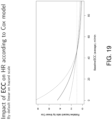
- stratifying patients according to, e.g., particular markers of kidney function and/or biomarkers e.g., ECC or eGFR
- ECC or eGFR markers of kidney function and/or biomarkers
- the parameter or parameters defining each of these subgroups can be used, for example, to evaluate the likelihood of a positive outcome, to selected patients for treatment, or to make decisions related to the AP treatment (e.g., modify dosage).
- kidney injury corresponding, e.g., to a 15 mg/ml to 60 ml/min ECC
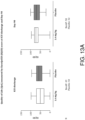
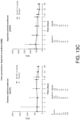
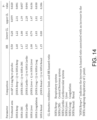
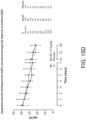
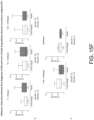
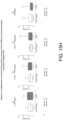
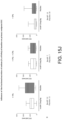
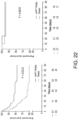
- there was a statistically significant effect of RecAP which resulted in improved kidney function (as evidenced by improved creatinine clearance with respect to placebo).
- severe kidney injury corresponding, e.g., to ⁇ 15 ml/min baseline ECC
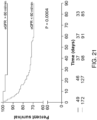
- there was a statistically significant long term effect resulting in improved survival If the subject had ⁇ 60 eGFR, there was also a statistically significant long term effect resulting in improved survival.
- a goal of the present disclosure is to provide methods for preserving or improving renal function in a subject, especially in cases where the subject undergoes a treatment with a risk of reducing renal function, or suffers from or is at risk of sepsis.
- Another goal of the present disclosure is to prevent or shorten the duration of renal-replacement therapy (RRT), to increase the kidney creatinine clearance, and/or to increase survival.
- RRT renal-replacement therapy
- the present disclosure relates to the use of an alkaline phosphatase (AP), e.g., RecAP, to preserve or improve kidney function in a subject with kidney injury, e.g., acute kidney injury (AKI), and in particular a subject with sepsis-associated AKI (SA-AKI).
- AP alkaline phosphatase
- SA-AKI sepsis-associated AKI
- the disclosure provides, for example, methods for treating a subject with kidney injury, e.g., SA-AKI, comprising administering an AP, e.g., RecAP, to the subject.
- each dose of AP administered to the subject comprises at least 500 U/kg (0.8 mg/kg in the case of the clinical grade RecAP used).
- each AP dose is at least 1,000 U/g (1.6 mg/kg in the case of the clinical grade RecAP used).
- the AP e.g., RecAP
- kidney injury e.g., SA-AKI
- the methods disclosed herein comprise measuring severity of kidney injury, e.g., by determining glomerular filtration rate or a surrogate measure such as ECC or eGFR, prior to treatment with AP to determine whether the subject suffers moderate to severe kidney injury, or severe kidney injury.
- kidney injury e.g., SA-AKI
- kidney injury is classified as moderate to severe if baseline ECC is between about 15 ml/min and about 60 ml/min.
- kidney injury, e.g., SA-AKI is classified as severe if baseline ECC is lower that about 15 ml/min.
- other diagnostic measurements can be used to determine the severity of the kidney injury, e.g. eGFR.
- AP treatment is not administered to the subject if kidney injury is determined to be mild injury (e.g., if >60 ml/min baseline ECC) or if >60 ml/min baseline eGFR.
- ECC or eGFR are within the defined range or below or beyond the defined threshold.
- ECC and eGFR are correlated and a person having an ECC of ⁇ 15 ml/min, for instance, is likely to (also) have an eGFR of ⁇ 15 ml/min as well and vice versa.
- ECC of > 60 ml/min in respect of eGFR of >60 ml/min and an ECC of between 15 - 60 ml/min in respect of eGFR of between 15 - 60 ml/min.
- ECC and eGFR values may be used for determining whether a patient may or may not benefit from administration of AP.
- an AP e.g., RecAP
- the methods disclosed herein comprise administering at least one dose of AP, e.g., RecAP, to the subject wherein each dose is least 500 U/kg (0.8 mg/kg for the clinical grade RecAP used) or 1000 U/kg (1.6 mg/kg for the clinical grade RecAP used).
- the dosage regimen comprises administering 0.5 mg/kg to 2 mg/kg of an AP, e.g., RecAP, by intravenous infusion, in daily doses, for at least three days.
- the dosage regimen comprises administering 0.5 mg/kg to 2 mg/kg of an AP, e.g., RecAP, by intravenous infusion, in daily doses, for at least three days.
- Numeric ranges are inclusive of the numbers defining the range. Where a range of values is recited, it is to be understood that each intervening integer value, and each fraction thereof, between the recited upper and lower limits of that range is also specifically disclosed, along with each subrange between such values. The upper and lower limits of any range can independently be included in or excluded from the range, and each range where either, neither or both limits are included is also encompassed within the invention. Where a value is explicitly recited, it is to be understood that values which are about the same quantity or amount as the recited value are also within the scope of the invention. Where a combination is disclosed, each subcombination of the elements of that combination is also specifically disclosed and is within the scope of the invention.
- the terms “treat,” “treatment, “ or “treatment of” refers to (i) reducing the potential or risk for a disease or disorder, e.g., AKI (e.g., SA-AKI), (ii) reducing the occurrence of a disease or disorder, e.g., AKI (e.g., SA-AKI), (iii) reducing the severity (e.g., ameliorating the symptoms) of a disease or disorder, e.g., AKI (e.g., SA-AKI), or (iv) a combination thereof.
- AKI e.g., SA-AKI
- reducing the severity e.g., ameliorating the symptoms of a disease or disorder, e.g., AKI (e.g., SA-AKI)
- a combination thereof e.g., a combination thereof.
- treating can refer to the ability of a therapy when administered to a subject, to prevent or reduce the risk of kidney injury, e.g., SA-AKI, from occurring (for example, in subjects diagnosed with sepsis or at a risk for sepsis) and/or to cure or to alleviate symptoms, signs, or causes of kidney injure, e.g., SA-AKI.
- Treating also refers to mitigating or decreasing at least one clinical symptom and/or inhibition or delay in the progression of the condition and/or prevention or delay of the onset of a disease or illness when compared with a non-treated (or placebo treated) group.
- the terms “treat,” “treating” or “treatment of” refer to both prophylactic and therapeutic treatment regimes.
- subjects, after being treated with an AP with a method as disclosed herein improve in renal function or less decline in renal function, relative to subjects that have not been treated with said AP.
- the term “preserving” includes preventing a reduction, slowing down a reduction, stopping a reduction and/or at least partly reversing a reduction of a renal function.
- the term “increasing” is not necessarily limited to increasing said renal function to a value equal to or higher than that before said treatment occurred. It includes partly restoring renal function.
- treatment with a risk of decreasing renal function is typically used to refer to a treatment which bears the risk that renal function is reduced by said treatment when comparing the value of at least one renal related parameter to a recognized or average (laboratory) value of said parameter, or by comparing said parameter to the value before said treatment is performed. If, for example, the amount of protein in the urine of a subject, preferably a human being is significantly above a recognized or average (laboratory) value, said renal function is said to be "decreased.”
- the corresponding analysis can be performed in a laboratory but also in a home setting. For example, since September 2006 the Dutch “Nierstichting" has introduced a simple test (named Kidney check (“Niercheck”)) which can be performed at home to test whether the kidneys function properly. This test is for instance directed to the amount of protein in the urine.
- subject or “patient” as used herein refer to any subject, particularly a mammalian subject, for whom therapy or prognosis of kidney injury, e.g., SA-AKI is desired.
- subject or “patient” include any human or nonhuman animal.
- phrases such as "a patient having SA-AKI” or a "patient having sepsis” includes subjects, such as mammalian subjects, that would benefit from the administration of a therapy with AP, as disclosed herein.
- a subject is a naive subject.
- a naive subject is a subject that has not been administered a therapy, for example a therapeutic agent.
- a naive subject has not been treated with a therapeutic agent prior to being diagnosed with kidney injury, e.g., SA-AKI, or a disease or condition (e.g., sepsis) that can lead to kidney injury.
- a subject has received therapy and/or one or more doses of a therapeutic agent prior to being diagnosed as having kidney injury, e.g., SA-AKI, or a disease or condition (e.g., sepsis) that can lead to kidney injury .
- a therapeutic agent e.g., SA-AKI
- a disease or condition e.g., sepsis
- a subject can be administered at least one therapeutically effective dose of an AP, e.g., RecAP, if the subject's baseline ECC or eGFR is below a predetermined ECC or eGFR threshold level, or if the baseline ECC or eGFR is above a predetermined ECC or eGFR threshold level, or if the baseline ECC or eGFR is within a predetermined range.
- an AP e.g., RecAP
- therapeutic agent and “drug” as used herein also refer to any therapeutically active substance that is administered to a subject having a disease or disorder, e.g., kidney injury, e.g., SA-AKI, or a disease or condition (e.g., sepsis) that can lead to kidney injury to produce a desired, usually beneficial, effect.
- a therapeutic agent can also be a prodrug, which metabolizes into the desired therapeutically active substance when administered to a subject.
- the therapeutic agent is a prophylactic agent.
- a therapeutic agent can be pharmaceutically formulated.
- a therapeutic agent can also be or comprise a radioactive isotope or agent activated by some other form of energy such as light or ultrasonic energy, or by other circulating molecules that can be systemically administered.
- a therapeutic agent for the treatment, prevention, or amelioration of the symptom of kidney injury, e.g., SA-AKI, or a disease or condition (e.g., sepsis) that can lead to kidney injury can comprise an AP, e.g., RecAP; alone or in combination with one or more standard therapeutic agents generally used for the treatment of kidney injury, e.g., SA-AKI, or a disease or condition (e.g., sepsis) that can lead to kidney injury.
- a “therapeutically effective” amount as used herein is an amount of therapeutic agent that provides some improvement or benefit to a subject having a disease or disorder, e.g., kidney injury, e.g., SA-AKI, or a disease or condition (e.g., sepsis) that can lead to kidney injury.
- a “therapeutically effective” amount is an amount that provides some alleviation, mitigation, and/or decrease in at least one clinical symptom of a disease or disorder, e.g., kidney injury, e.g., SA-AKI, or a disease or condition (e.g., sepsis) that can lead to kidney injury.
- kidney injury e.g., SA-AKI
- a disease or condition e.g., sepsis
- the therapeutic effects need not be complete or curative, as long as some benefit is provided to the subject.
- the term "therapeutically effective" refers to an amount of a therapeutic agent therapeutic agent that is capable of altering biomarker levels, e.g., ECC or eGFR in a patient in need thereof.
- a "sufficient amount” or “an amount sufficient to” achieve a particular result in a patient having a disease or disorder, e.g., kidney injury, e.g., SA-AKI, or a disease or condition (e.g., sepsis) that can lead to kidney injury refers to an amount of a therapeutic agent (e.g. , an AP such as RecAP) that is effective to produce a desired effect, which is optionally a therapeutic effect ( i.e. , by administration of a therapeutically effective amount).
- a therapeutic agent e.g. , an AP such as RecAP
- such particular result is an improvement in kidney function or an increase in survival.
- healthcare provider refers to individuals or institutions that directly interact and administer to living subjects, e.g ., human patients.
- Non-limiting examples of healthcare providers include doctors, nurses, technicians, therapist, pharmacists, counselors, alternative medicine practitioners, medical facilities, doctor's offices, hospitals, emergency rooms, clinics, urgent care centers, alternative medicine clinics/facilities, and any other entity providing general and/or specialized treatment, assessment, maintenance, therapy, medication, and/or advice relating to all, or any portion of, a patient's state of health, including but not limited to general medical, specialized medical, surgical, and/or any other type of treatment, assessment, maintenance, therapy, medication and/or advice.
- the term "clinical laboratory” refers to a facility for the examination or processing of materials derived from a living subject, e.g ., a human being.
- processing include biological, biochemical, serological, chemical, immunohematological, hematological, biophysical, cytological, pathological, genetic, or other examination of materials derived from the human body for the purpose of providing information, e.g ., for the diagnosis, prevention, or treatment of any disease or impairment of, or the assessment of the health of living subjects, e.g., human beings.
- These examinations can also include procedures to collect or otherwise obtain a sample, prepare, determine, measure, or otherwise describe the presence or absence of various substances in the body of a living subject, e.g. , a human being, or a sample obtained from the body of a living subject, e.g. , a human being.
- healthcare benefits provider encompasses individual parties, organizations, or groups providing, presenting, offering, paying for in whole or in part, or being otherwise associated with giving a patient access to one or more healthcare benefits, benefit plans, health insurance, and/or healthcare expense account programs.
- a healthcare provider can administer or instruct another healthcare provider to administer a therapy to prevent, treat, or ameliorate the symptoms of a disease or disorder, e.g., kidney injury, e.g., SA-AKI, or a disease or condition (e.g., sepsis) that can lead to kidney injury.
- a disease or disorder e.g., kidney injury, e.g., SA-AKI
- a disease or condition e.g., sepsis
- a healthcare provider can implement or instruct another healthcare provider or patient to perform the following actions: obtain a sample, process a sample, submit a sample, receive a sample, transfer a sample, analyze or measure a sample, quantify a sample, provide the results obtained after analyzing/measuring/quantifying a sample, receive the results obtained after analyzing/measuring/quantifying a sample, compare/score the results obtained after analyzing/measuring/quantifying one or more samples, provide the comparison/score from one or more samples, obtain the comparison/score from one or more samples, administer a therapy (e.g.
- an AP such as RecAP
- commence the administration of a therapy commences the administration of a therapy, cease the administration of a therapy, continue the administration of a therapy, temporarily interrupt the administration of a therapy, increase the amount of an administered therapeutic agent, decrease the amount of an administered therapeutic agent, continue the administration of an amount of a therapeutic agent, increase the frequency of administration of a therapeutic agent, decrease the frequency of administration of a therapeutic agent, maintain the same dosing frequency on a therapeutic agent, replace a therapy or therapeutic agent by at least another therapy or therapeutic agent, combine a therapy or therapeutic agent with at least another therapy or additional therapeutic agent.
- a healthcare benefits provider can authorize or deny, for example, collection of a sample, processing of a sample, submission of a sample, receipt of a sample, transfer of a sample, analysis or measurement a sample, quantification a sample, provision of results obtained after analyzing/measuring/quantifying a sample, transfer of results obtained after analyzing/measuring/quantifying a sample, comparison/scoring of results obtained after analyzing/measuring/quantifying one or more samples, transfer of the comparison/score from one or more samples, administration of a therapy or therapeutic agent, commencement of the administration of a therapy or therapeutic agent, cessation of the administration of a therapy or therapeutic agent, continuation of the administration of a therapy or therapeutic agent, temporary interruption of the administration of a therapy or therapeutic agent, increase of the amount of administered therapeutic agent, decrease of the amount of administered therapeutic agent, continuation of the administration of an amount of a therapeutic agent, increase in the frequency of administration of a therapeutic agent, decrease in the frequency of administration of a therapeutic agent, maintain the same do
- a healthcare benefits provides can, e.g ., authorize or deny the prescription of a therapy, authorize or deny coverage for therapy, authorize or deny reimbursement for the cost of therapy, determine or deny eligibility for therapy, etc.
- a clinical laboratory can, for example, collect or obtain a sample, process a sample, submit a sample, receive a sample, transfer a sample, analyze or measure a sample, quantify a sample, provide the results obtained after analyzing/measuring/quantifying a sample, receive the results obtained after analyzing/measuring/quantifying a sample, compare/score the results obtained after analyzing/measuring/quantifying one or more samples, provide the comparison/score from one or more samples, obtain the comparison/score from one or more samples, or other related activities.
- the present disclosure is related to methods for preserving or improving kidney in populations of subjects, in particular, SA-AKI patients, that have been determined to respond particularly well to treatment with AP.
- the STOP-AKI study has identified statistically significant correlations between thresholds corresponding to degrees of severity of kidney injury and improvements in kidney function (as evidenced by improved creatinine clearance with respect to placebo) and long term survival. As discussed above, stratifying patients in the STOP-AKI clinical trial according to, e.g., markers of kidney function (e.g., ECC or eGFR) has identified particular effects of AP administration on specific subgroups.
- markers of kidney function e.g., ECC or eGFR
- the parameter or parameters defining each of these subgroups can be used, e.g., to personalize AP therapy to specific subgroups, to selected patients for treatment, to make decisions related to the AP treatment (e.g., modify dosing or dosage schedule), or to evaluate the likelihood of a positive outcome.
- a series of thresholds such as ECC or eGFR thresholds
- the methods disclosed herein relate to the administration of AP, e.g., RecAP, to a subject determined to have either moderate to severe kidney injury, or with severe kidney injury, e.g., due to SA-AKI, comprising administering an AP such as RecAP to the subject.
- Administration of AP is particularly effective when administered to subjects having moderate to severe kidney injury or severe kidney injury at doses of least 500 U/kg.
- AP was most effective when administered at doses of at least 1,000 U/kg.
- kidney injury refers to kidney damage or impairment of kidney function resulting in a creatinine clearance rate lower than 15 ml/min.
- moderate to severe kidney injury refers to kidney damage or impairment of kidney function resulting in a creatinine clearance rate of 15 ml/min to 60 ml/min.
- miild kidney injury refers to kidney damage or impairment of kidney function resulting in a creatinine clearance rate of higher than 60 ml/min.
- baseline ECC refers to the endogenous creatinine clearance rate at baseline.
- baseline eGFR refers to the estimated glomerular filtration rate at baseline. Both ECC and eGFR are estimations of the actual glomerular filtration rate as measurement of kidney function.
- the present disclosure provides, e.g., a method to treat sepsis-associated acute kidney disease injury (SA-AKI) in a subject in need thereof, or alkaline phosphatase (AP) for use in a method to treat sepsis-associated acute kidney disease injury (SA-AKI) in a subject in need thereof, wherein the method comprises administering an effective amount of alkaline phosphatase (AP) to said subject, wherein
- SA-AKI sepsis-associated acute kidney disease injury
- AP alkaline phosphatase
- the subject with an ECC rate ⁇ 60 ml/min prior to the treatment with AP has moderate kidney injury (15-60 ml/min baseline ECC). In some aspects, the subject with an ECC rate ⁇ 60 ml/min prior to the treatment with AP has severe kidney injury ( ⁇ 15 ml/min baseline ECC). In some aspects, the subject with an ECC rate ⁇ 60 ml/min prior to the treatment with AP does not have mild kidney injury (>60 ml/min baseline ECC). In some aspects the subject with an eGFR ⁇ 60 ml/min prior to the treatment with AP has 15-60 ml/min baseline eGFR.
- the subject with an eGFR ⁇ 60 ml/min prior to the treatment with AP has ⁇ 15 ml/min baseline eGFR. In some aspects, the subject with an eGFR ⁇ 60 ml/min prior to the treatment with AP does not have >60 ml/min baseline eGFR.
- the AP (e.g., RecAP) is administered as doses of at least about 500 U/kg, at least about 600 U/kg, at least about 700 U/kg, at least about 800 U/kg, at least about 900 U/kg, at least about 1000 U/kg, at least about 1100 U/kg, at least about 1200 U/kg, at least about 1300 U/kg, at least about 1400 U/kg, at least about 1500 U/kg, at least about 1600 U/kg, at least about 1700 U/kg, at least about 1800 U/kg, at least about 1900 U/kg, or at least about 2000 U/kg per dose.
- the AP e.g. RecAP
- the AP is administered as doses above 2000 U/kg per dose.
- the AP (e.g., RecAP) is administered as doses below 500 U/kg per dose.
- the AP (e.g., RecAP) is administered at a dose between about 500 U/kg and about 1500 U/kg, between about 600 U/kg and about 1400 U/kg, between about 700 U/kg and about 1300 U/kg, between about 800 U/kg and about 1200 U/kg, or between about 900 U/kg and about 1100 U/kg. In some specific aspects, AP is administered as about 1000 U/kg doses.
- the AP is a human AP. In some aspects, the AP is a recombinant AP. In some aspects, the AP is a chimeric AP. In a particular aspects, the chimeric AP is RecAP (SEQ ID NO: 1). In some aspects, an AP disclosed herein has at least about 70%, at least about 75%, at least about 80%, at least about 85%, at least about 90%, at least about 95%, at least about 96%, at least about 97%, at least about 98%, or at least about 99% sequence identity to the amino acid sequence of SEQ ID NO:1.
- the AP is a functional fragment (i.e., a fragment of the AP, e.g., AP conserving at least about 10%, at least about 20%, at least about 30%, at least 40%, at least about 50%, at least about 60%, at least 70%, at least about 80%, or at least about 90% of the AP activity of the corresponding full length AP).
- the AP is a variant or a derivative of an AP disclosed herein. Other AP that can be used according to, or for the methods disclosed herein are discussed in detail below.
- the AP is RecAP (e.g., the clinical grade RecAP used in the present disclosure), and it is administered at a dose of at least about 0.1 mg/kg, at least about 0.2 mg/kg, at least about 0.3 mg/kg, at least about 0.4 mg/kg, at least about 0.5 mg/kg, at least about 0.6 mg/kg, at least about 0.7 mg/kg, at least about 0.8 mg/kg, at least about 0.9 mg/kg, at least about 1 mg/kg, at least about 1.1 mg/kg, at least about 1.3 mg/kg, at least about 1.4 mg/kg, at least about 1.5 mg/kg, at least about 1.6 mg/kg, at least about 1.7 mg/kg, at least about 1.8 mg/kg, at least about 1.9 mg/kg, at least about 2 mg/kg, at least about 2.1 mg/kg, at least about 2.2 mg/kg, at least about 2.3 mg/kg, or at least about 2.4/kg per dose.
- RecAP e.g., the clinical grade RecAP used
- the AP is administered as doses above 2.4 mg/kg per dose.
- the AP is RecAP (e.g., the clinical grade RecAP used in the present disclosure), and it is administered at a dose of at least about 100 U/kg, at least about 200 U/kg, at least about 300 U/kg, at least about 400 U/kg, at least about 500 U/kg, at least about 600 U/kg, at least about 700 U/kg, at least about 800 U/kg, at least about 900 U/kg, at least about 1000 U/kg, at least about 1100 U/kg, at least about 1200 U/kg, at least about 1300 U/kg, at least about 1400 U/kg, at least about 1500 U/kg, at least about 1600 U/kg, at least about 1700 U/kg, at least about 1800 U/kg, at least about 1900 U/kg, or at least about 2000 U/kg.
- the AP is RecAP, and it is administered at a dose below 100 U/kg.
- the AP is RecAP
- the AP is RecAP (e.g., the clinical grade RecAP used in the present disclosure) and it is administered at a dose between about 0.8 mg/kg and about 2.4 mg/kg, between about 0.9 mg/kg and about 2.3 mg/kg, between about 1 mg/kg and about 2.2 mg/kg, between about 1.1 mg/kg and about 2.1 mg/kg, between about 1.2 mg/kg and about 2 mg/kg, between about 1.3 mg/kg and about 1.9 mg/kg, between about 1.4 mg/kg and about 1.8 mg/kg, or between about 1.5 mg/kg and about 1.7 mg/kg.
- AP is administered as about 1.6 mg/kg doses.
- the AP is RecAP (e.g., the clinical grade RecAP used in the present disclosure) and it has a specific activity of at least about 100 U/mg, at least about 200 U/mg, at least about 300 U/mg, at least about 400 U/mg, at least about 500 U /mg, at least about 600 U/mg, at least about 700 U/mg, at least about 800 U/mg, at least about 900 U/mg, at least about 1000 U/mg, at least about 1100 U/mg, at least about 1200 U/mg, at least about 1300 U/mg, at least about 1400 U/mg, at least about 1500 U/mg, at least about 1600 U/mg, at least about 1700 U/mg, at least about 1800 U/mg, at least about 1900 U/mg, or at least about 2000 U/mg.
- RecAP e.g., the clinical grade RecAP used in the present disclosure
- the AP is RecAP (e.g., the clinical grade RecAP used in the present disclosure) and it has a specific activity of about 1000 U:1.6 mg. In some aspects, the AP is RecAP and it has a specific activity between about 600 U/mg and about 700 U/mg, or between about 500 U/mg and about 800 U/mg, or between about 400 U/mg and about 900 U/mg, or between about 300 U/mg and about 1000 U/mg, or between about 200 U/mg and about 1100 U/mg, or between 100 U/mg and about 1200 U/mg. In some aspects, the AP is RecAP and it has a specific activity below 100 U/mg. In some aspects, the AP is RecAP and it has a specific activity above 1200 U/mg.
- the AP is RecAP (e.g., the clinical grade RecAP used in the present disclosure) and it has a specific activity of about 1000 U:1.6 mg. In some aspects, the AP is RecAP and it has
- only one dose of AP e.g., RecAP
- more than one dose of AP is administered.
- two, three, four, five, six, seven, eight, nine, 10, 11, 12, 13, 14, 15, 16, 17, 18, 19, 20, or 21 doses of AP are administered (e.g., at least two doses per day for 1-7 days).
- the AP doses are administered daily. In other aspects, AP doses are administered every 2, 3, 4, 5, 6 or 7 days.
- a single dose is administered every day. In some aspects, 2, 3, or more doses are administered every day.
- the treatment with AP is less than about 4 days. In some aspects, the treatment with AP is less than 3 days, less than 2 days, or less than 1 day.
- the AP is administered as a daily about 1000 U/kg dose administered in 3 consecutive days.
- the AP is administered as daily 1.6 mg/kg doses administered in 3 consecutive days.
- each AP e.g., RecAP (e.g., the clinical grade RecAP used in the present disclosure)
- dose is between about 0.10 mg/kg and about 3 mg/kg, or between about 0.20 mg/kg and about 2.9 mg/kg, or between about 0.3mg/kg and about 2.8 mg/kg, or between about 0.4 mg/kg and about 2.7 mg/kg, or between about 0.5 mg/kg and about 2.6 mg/kg, or between about 0.6 mg/kg and about 2.5 mg/kg, or between about 0.7 mg/kg and about 2.4 mg/kg, or between about 0.8 mg/kg and about 2.3 mg/kg, or between about 0.9 mg/kg and about 2.2 mg/kg, or between about 1 mg and about 2.1 mg/kg, or between about 1.1
- each AP e.g., RecAP
- each AP comprises at least about 0.1 mg AP/kg, at least about 0.2 mg AP/kg, at least about 0.3 mg AP/kg, at least about 0.4 mg AP/kg, at least about 0.5 mg AP/kg, at least about 0.6 mg AP/kg, at least about 0.7 mg AP/kg, at least about 0.8 mg AP/kg, at least about 0.9 mg AP/kg, at least about 1 mg AP/kg, at least about 1.1 mg AP/kg, at least about 1.2 mg AP/kg, at least about 1.3 mg AP/kg, at least about 1.4 mg AP/kg, at least about 1.5 mg AP/kg, at least about 1.6 mg AP/kg, at least about 1.7 mg AP/kg, at least about 1.8 mg AP/kg, at least about 1.9 mg AP/kg, at least about 2 mg AP/kg, at least about 2.1 mg AP/kg, at least about 2.2 mg AP/
- the AP may be administered via different routes, for example intravenously, rectally, bronchially or orally.
- the AP is administered intravenously, e.g., via intravenous infusion.
- AP is administered intravenously via continuous infusion.
- ECC can be determined by methods known in the art.
- One method of calculation of ECC is to collect a urine sample (usually collected for 24-hours) to determine the amount of creatinine that was removed from the blood over a given time interval. If one removes, for instance, 1440 mg in 24 hours, this is equivalent to removing 1 mg/min. If the blood concentration is 0.01 mg/mL (1 mg/dL), then the creatinine clearance is said to be 100 mL/min. This is because, in order to excrete 1 mg of creatinine, 100 mL of blood containing 0.01 mg/mL would need to have been cleared.
- eGFR can be determined by methods known in the art. Either the Modification of Diet in Renal Disease (MDRD) Study equation or the Chronic Kidney Disease Epidemiology Collaboration (CKD-EPI) equation can be used, preferably the CKD-EPI equation.
- MDRD Modification of Diet in Renal Disease
- CKD-EPI Chronic Kidney Disease Epidemiology Collaboration
- the skilled person is aware how to estimate eGFR according to either method, for instance by using a website for calculation of the eGFR as provided, for instance, by the national kidney foundation (kidney.org).
- the administration of AP to the subject according to the methods disclosed herein is capable of improving many renal function related parameters, such as BUN, ECC, eGFR, and serum creatinine levels in the subject.
- the administration of AP results in an increase in renal function comprising an increase in ECC or eGFR with respect to ECC or eGFR, respectively, in the absence of treatment.
- the increase in ECC or eGFR is at least 5, 6, 7, 8, 9, 10, 11, 12, 13, 14, 15, 16, 17, 18, 19, 20, 21, 22, 23, 24, 25, 26, 27, 28, 29, 30, 31, 32, 33, 34, 35, 36, 37, 38, 39, 40 ml/min with respect to ECC or eGFR in the absence of treatment.
- the administration of AP results in an increase in renal function comprising an increase in ECC or eGFR with respect to baseline ECC or eGFR, respectively.
- the increase in ECC or eGFR is at least 5, 6, 7, 8, 9, 10, 11, 12, 13, 14, 15, 16, 17, 18, 19, 20, 21, 22, 23, 24, 25, 26, 27, 28, 29, 30, 31, 32, 33, 34, 35, 36, 37, 38, 39, 40, 41, 42, 43, 44, 45, 46, 47, 47, 48, 49, 50, 51, 52, 53, 54, 55, 56, 57, 58, 59, 60, 61, 62, 63, 64, 65, 66, 67, 68, 69, 70, 71, 72, 73, 74, 75, 76, 77, 78, 79, or 80 ml/min with respect to baseline ECC or eGFR, respectively.
- the increase in renal function is observed 1, 2, 3, 4, 5, 6, 7, 8, 9, 10, 11, 12, 13, 14, 15, 16, 17, 18, 19, 20, 21, 22, 23, 24, 25, 26, 27, or 28 days after AP administration.
- ECC can be used as an approximation of glomerular filtration rate (GFR).
- GFR glomerular filtration rate
- other parameters can also be assessed in order to determine renal function, e.g., GFR, eGFR, serum creatinine levels, electrolyte derangement, amount of produced urine, BUN, calcium levels, phosphorous levels, albumin levels, and/or red and white blood cells in urine.
- Another test that can be performed to determine renal function is, e.g., a complete blood count with differential. It is also possible to analyze a urine sample on the presence of absence of an RNA molecule.
- RNA in urine can be obtained from urine-secreted renal cells.
- the RNA is an mRNA molecule such iNOS mRNA.
- the administration of AP results in an increase of the survival rate of at least 5, 6, 7, 8, 9, 10, 11, 12, 13, 14, 15, 16, 17, 18, 19, 20, 21, 22, 23, 24, 25, 26, 27, 28, 29, 30, 31, 32, 33, 34, 35, 36, 37, 38, 39, or 40% compared to the survival rate in the absence of AP treatment.
- AP e.g., RecAP
- AP e.g., RecAP
- the administration of AP results in a decrease of the mortality rate of at least 5, 6, 7, 8, 9, 10, 11, 12, 13, 14, 15, 16, 17, 18, 19, 20, 21, 22, 23, 24, 25, 26, 27, 28, 29, 30, 31, 32, 33, 34, 35, 36, 37, 38, 39, or 40% compared to the mortality rate in the absence of AP treatment.
- AP e.g., RecAP
- AP is administered to the subject only if sepsis has been detected less than 96 hours prior to the decision to initiate the treatment. In other aspects, AP is administered only if sepsis was detected less than 72 hours prior to SA-AKI detection.
- treatment with AP is initiated within 24 hours after sepsis is detected.
- the presence of sepsis can be detected, e.g., as disclosed in the Examples section of this application.
- treatment with AP is administered to a subject at risk of sepsis in order to prevent reduction in kidney function.
- treatment is initiated within 24 hours after SA-AKI is detected.
- the administration of at least one dose of AP results in a shortening of duration or cessation of renal replacement therapy (RRT) in a subject undergoing RRT.
- RRT renal replacement therapy
- the administration of at least one dose of AP results in the preservation or increase of glomerular filtration rate (GFR) in the subject.
- GFR can be assessed in several ways, e.g., by inulin or chromium EDTA clearance, or an approximation of GFR can be made, for instance by calculating ECC. This is calculated from a measured 24 hour urine volume, the urine creatinine level, and the serum creatinine level. The GFR can also be estimated (eGFR), based on serum creatinine.
- the administration of AP results in an increase of renal function or prevents the reduction of renal function below a critical threshold which would preclude the administration of a certain treatment, e.g., the administration of an antibiotic to treat sepsis.
- AP administration is able to prevent reduction of the renal function below a critical threshold and thus enables such person to receive the treatment.
- an indicator of renal function e.g., ECC or eGFR
- the methods disclosed herein comprise detecting changes in markers of kidney function, e.g., ECC, eGFR, or BUN clearance, alone or in combination with the detection of changes in the levels of one, two, three, or more biomarkers.
- markers of kidney function e.g., ECC, eGFR, or BUN clearance
- the methods disclosed herein comprise predicting an increased clinical response to therapy with AP, e.g., RecAP, based on detected kidney function parameters (e.g., baseline ECC or baseline eGFR).
- the methods of the present disclosure comprise evaluating whether a kidney function parameter (e.g., baseline ECC or baseline eGFR) falls within a certain range, or it's above or below a certain threshold (e.g., ECC or eGFR threshold for severity of kidney injury).
- the kidney function parameter e.g., baseline ECC or baseline eGFR
- therapy could commence, or be maintained, or be modified (e.g., increasing or decreasing dosage, or increasing or decreasing frequency of doses).
- kidney function parameter e.g., baseline ECC or baseline eGFR
- therapy could be discontinued, temporarily suspended, modified (e.g., increasing or decreasing dosage or increasing or decreasing frequency of doses), etc.
- kidney function parameter e.g., baseline ECC or baseline eGFR
- other molecular or clinical biomarkers are correlated with clinical efficacy of AP therapy and useful to predict clinical outcomes in specific populations of patients suffering from sepsis and/or SA-AKI.
- the invention provides alkaline phosphatase (AP) for use in a method to treat sepsis-associated acute kidney disease injury (SA-AKI) comprising administering an effective amount of alkaline phosphatase (AP) to said subject, wherein
- SA-AKI sepsis-associated acute kidney disease injury
- an AP for use according to the invention wherein the subject does not have mild kidney injury (>60 ml/min ECC) prior to the treatment with AP. Also provided is an AP for use according to the invention, wherein the subject does not have >60 ml/min eGFR prior to the treatment with AP.
- an AP for use according to the invention is provided, wherein the AP is a human AP,
- the AP is a recombinant AP, preferably chimeric, more preferably having at least 80%, at least 85%, at least 90%, at least 95%, at least 96%, at least 97%, at least 98%, at least 99%, or at least 100% sequence identity to the amino acid sequence of RecAP (SEQ ID NO: 1).
- an AP for use according to the invention wherein the administration of AP leads to an increase in renal function and wherein the increase in renal function comprises an increase in ECC with respect to ECC in the absence of treatment or an increase in eGFR with respect to eGFR in the absence of treatment.
- an AP for use according to the invention is provided, wherein sepsis is detected less than 96 hours prior to AP administration.
- an AP for use according to the invention wherein the sepsis is detected less than 72 hours prior to SA-AKI detection.
- treatment is initiated within 24 hours after sepsis is detected and/or after SA-AKI is detected.
- AP for use according to the invention is provided, wherein AP is administered once daily. In a preferred embodiment, AP is administered intravenously. In a preferred embodiment, AP is administered in three daily doses.
- AP for use according to the invention is provided, wherein the AP is RecAP and the dose is between 0.06 mg/kg (and/or 375 U/kg) or 3.2 mg/kg (and/or 2,000 U/kg) of RecAP, preferably between 0.08 mg/kg (and/or 500 U/kg).
- AP for use according to the invention is provided, wherein the administration of at least one dose of AP results in a shortening of duration or cessation of renal replacement therapy (RRT) in a subject undergoing RRT.
- RRT renal replacement therapy
- AP for use according to the invention is provided, wherein the administration of at least one dose of AP results in the preservation or increase of glomerular filtration rate (GFR) in the subject.
- GFR glomerular filtration rate
- biomarker refers to a factor that is a distinctive indicator of a biological process, biological event, and/or pathologic condition, e.g. , a predictor of clinical response to treatment with AP, e.g., RecAP.
- pathologic condition e.g., a predictor of clinical response to treatment with AP, e.g., RecAP.
- biomarker encompasses both clinical markers and molecular biomarkers (biological markers).
- the term “biomarker” encompasses, e.g ., “biological biomarkers” or “molecular biomarkers.”
- the biological or molecular biomarkers used to evaluate kidney function comprise markers of liver function (e.g., alanine aminotransferase, aspartate aminotransferase, gamma-glutamyl transferase, bilirubin, or LDH), C-reactive protein (CRP), interleukin 6 (IL-6), interleukin 18 (IL-18), lipopolysaccharide binding protein, kidney injury molecule 1 (KIM-1) or combinations thereof.
- liver function e.g., alanine aminotransferase, aspartate aminotransferase, gamma-glutamyl transferase, bilirubin, or LDH
- CRP C-reactive protein
- IL-6 interleukin 6
- IL-18 interleukin 18
- KIM-1 kidney injury molecule 1
- biomarker also encompasses “clinical biomarkers,” also referred to as “clinical status markers,” that can be predictive of response to biological therapies, for example, gender, age, concomitant drugs, smoking status, body mass index (BMI), etc.
- a cut-off approach based on baseline ECC values is applied to classify AKI as "severe kidney injury,” “moderate to severe kidney injury,” or “mild kidney injury.”
- the differences in ECC levels observed, e.g., in subjects “severe kidney injury,” “moderate to severe kidney injury,” or “mild kidney injury,” can be applied to predicting clinical outcomes when the patients are treated with an AP, for example, RecAP.
- AP for example, RecAP.
- eGFR may be used, and preferably is used, for a cut-off approach.
- a subject's ECC rate or eGFR at baseline are below a certain threshold (e.g., 60 ml/min or 15 ml/min)
- a certain threshold e.g. 60 ml/min or 15 ml/min
- that subject would become a candidate for treatment with a certain AP therapy, e.g., therapy with a certain AP regimen comprising one or more doses of RecAP.
- ECC rates or eGFR can be used alone.
- the ECC rate or eGFR can be combined with each other or with other measures of kidney function (e.g., BUN clearance) and/or molecular or clinical biomarkers, such KIM-1 levels.
- the methods disclosed herein include prescribing, initiating, and/or altering prophylaxis and/or treatment, e.g ., for SA-AKI, based at least in part on a subject's ECC or eGFR (or another kidney function parameter), alone or in combination with one or more additional biomarkers.
- the present disclosure provides a method of determining whether to treat a patient having SA-AKI with a therapeutic regimen comprising the administration of an AP wherein the method comprises: (a) measuring or instructing a clinical laboratory to measure ECC or eGFR (or another kidney function parameter), and optionally levels of additional biomarkers such as KIM-1 in a sample taken from the patient, and (b) treating or instructing a healthcare provider to treat the patient, or suspending the treatment, not initiating the treatment, denying the treatment, or instructing a healthcare provider to suspend, not initiate, or deny the treatment with a therapeutic regimen comprising the administration of an AP, e.g., RecAP, if the patient is determined to have higher or lower ECC or eGFR (or another kidney function parameter), and optionally levels of additional biomarkers such as KIM-1 in the sample compared to each biomarker predetermined threshold level or levels, or compared to each biomarker level or levels in one or more controls.
- an AP e.g., RecAP
- Also provided is a method of determining whether a patient having SA-AKI is likely to respond to a therapeutic regimen comprising the administration of an AP comprising: (a) measuring or instructing a clinical laboratory to measure ECC or eGFR (or another kidney function parameter), and optionally levels of additional biomarkers such as KIM-1 in a sample taken from the patient, and (b) determining that the patient is likely to respond, or is not likely to respond, to the treatment with a therapeutic regimen comprising the administration of an AP, e.g., RecAP, if the patient is determined to have higher or lower ECC (or another kidney function parameter), and optionally levels of additional biomarkers such as KIM-1 in the sample compared to each biomarker predetermined threshold level or levels, or compared to each biomarker level or levels in one or more controls.
- ECC is measured.
- eGFR is measured.
- the disclosure provides a method of determining whether to treat a patient having SA-AKI with a therapeutic regimen comprising the administration of an AP wherein the method comprises: (a) measuring or instructing a clinical laboratory to measure ECC or eGFR (or another kidney function parameter) and optionally levels of additional biomarkers such as KIM-1 in a sample taken from the patient, and (b) treating or instructing a healthcare provider to treat the patient with a therapeutic regimen comprising the administration of an AP if the patient is determined to have lower or decreased ECC or eGFR (or another kidney function parameter), and higher or increased levels of at least one optional additional biomarker such as KIM-1 in the sample compared to a predetermined biomarker threshold level or levels, or compared to a biomarker level or levels in one or more controls.
- Also provided is a method of determining whether a patient having SA-AKI is likely to respond to a therapeutic regimen comprising the administration of an AP comprises: (a) measuring or instructing a clinical laboratory to measure ECC or eGFR (or another kidney function parameter) and optionally levels of additional biomarkers such as KIM-1 in a sample taken from the patient, and (b) determining that the patient is likely to respond to a therapeutic regimen comprising the administration of an AP if the patient is determined to have lower or decreased ECC or eGFR (or another kidney function parameter), and higher or increased levels of at least one optional additional biomarker such as KIM-1 in the sample compared to a predetermined biomarker threshold level or levels, or compared to a biomarker level or levels in one or more controls.
- the disclosure provides a method of determining whether to treat a patient having SA-AKI with a therapeutic regimen comprising the administration of an AP wherein the method comprises (a) measuring or instructing a clinical laboratory to measure the ECC or eGFR (or another kidney function parameter) and optionally levels of additional biomarkers such KIM-1 in a sample taken from the patient, and (b) suspending the treatment, not initiating treatment, denying the treatment, or instructing a healthcare provider to suspend, not initiate, or deny the treatment of the patient with a therapeutic regimen comprising the administration of an AP, e.g., RecAP, to the patient if the patient is determined to have higher or increased ECC or eGFR (or another kidney function parameter), and lower or decreased levels of at least one optional additional biomarker such as KIM-1 in the sample compared to a predetermined biomarker threshold level or levels, or compared to a biomarker level or levels in one or more controls.
- an AP e.g., RecAP
- Also provided is a method of determining whether to treat a patient having SA-AKI with a therapeutic regimen comprising the administration of an AP wherein the method comprises (a) measuring or instructing a clinical laboratory to measure the ECC or eGFR (or another kidney function parameter) and optionally levels of additional biomarkers such KIM-1 in a sample taken from the patient, and (b) determining that the patient is unlikely to respond to a therapeutic regimen comprising the administration of an AP, e.g., RecAP, to the patient if the patient is determined to have higher or increased ECC or eGFR (or another kidney function parameter), and lower or decreased levels of at least one optional additional biomarker such as KIM-1 in the sample compared to a predetermined biomarker threshold level or levels, or compared to a biomarker level or levels in one or more controls.
- an AP e.g., RecAP
- Also provided is a method of selecting a patient diagnosed with SA-AKI as a candidate for treatment with an AP comprising (a) measuring or instructing a clinical laboratory to measure ECC or eGFR (or another kidney function parameter) and optionally levels of additional biomarkers such as KIM-1 in a sample taken from the patient, and (b) treating or instructing a healthcare provider to treat the patient with an AP if the patient is determined to have lower or decreased ECC or eGFR (or another kidney function parameter), and higher or increased levels of at least one optional additional biomarker such as KIM-1 in the sample compared to a predetermined threshold level or levels, or compared to a biomarker level or levels in one or more controls.
- Also provided is a method of selecting a patient diagnosed with SA-AKI as a candidate for treatment with an AP comprising (a) measuring or instructing a clinical laboratory to measure ECC or eGFR (or another kidney function parameter) and optionally levels of additional biomarkers such as KIM-1 in a sample taken from the patient, and (b) determining that the patient is likely to respond to a treatment with AP if the patient is determined to have lower or decreased ECC or eGFR (or another kidney function parameter), and higher or increased levels of at least one optional additional biomarker such as KIM-1 in the sample compared to a predetermined threshold level or levels, or compared to a biomarker level or levels in one or more controls.
- Also provided is a method of selecting a patient diagnosed with SA-AKI as a candidate for treatment with an AP comprising (a) measuring or instructing a clinical laboratory to measure ECC or eGFR (or another kidney function parameter) and optionally levels of additional biomarkers such KIM-1 in a sample taken from the patient, and (b) suspending the treatment, not initiating treatment, denying the treatment, or instructing a healthcare provider to suspend, not initiate, or deny the treatment of the patient with an AP, e.g., RecAP, to the patient if the patient is determined to have higher or increased ECC or eGFR (or another kidney function parameter), and lower or decreased levels of at least one optional additional biomarker such as KIM-1 in the sample compared to a predetermined threshold level or levels, or compared to a biomarker level or levels in one or more controls.
- an AP e.g., RecAP
- Also provided is a method of selecting a patient diagnosed with SA-AKI as a candidate for treatment with an AP comprising (a) measuring or instructing a clinical laboratory to measure ECC or eGFR (or another kidney function parameter) and optionally levels of additional biomarkers such KIM-1 in a sample taken from the patient, and (b) determining that the patient is unlikely to respond to treatment with an AP, e.g., RecAP, if the patient is determined to have higher or increased ECC or eGFR (or another kidney function parameter), and lower or decreased levels of at least one optional additional biomarker such as KIM-1 in the sample compared to a predetermined threshold level or levels, or compared to a biomarker level or levels in one or more controls.
- an AP e.g., RecAP
- the methods disclosed can entail ordering and/or performing one or more additional assays.
- the ECC or eGFR (or another kidney function parameter) determination assay may be repeated to rule out a false negative result, and/or one or more additional ECC or eGFR (or another kidney function parameter) determination assays may be performed to monitor the subject's status.
- the predetermined ECC or eGFR threshold level is about 15 ml/min (threshold differentiating between severe kidney injure and moderate to severe kidney injury), or about 60 ml/min (threshold differentiating between moderate to severe kidney injury and mild kidney injury).
- the presence of ECC or eGFR (or another kidney function parameter) above or below a predetermined threshold level in a patient with SA-AKI can be used in combination with one or more of clinical or molecular biomarkers specific for sepsis, or for the specific infection that lead to sepsis.
- ECC or eGFR (or another kidney function parameter) can be used according to the methods disclosed herein, including but not limited to treatment, diagnostic, and monitoring methods, as a positive selector, i.e. , a specific action would be taken (e.g. , treating a patient) if the ECC or eGFR (or another kidney function parameter) value in a sample taken from the patient is below or above a predetermined ECC or eGFR (or another kidney function parameter) threshold level, or ECC or eGFR (or another kidney function parameter) is increased or decreased relative to the ECC or eGFR (or another kidney function parameter) in one or more controls.
- a positive selector i.e. , a specific action would be taken (e.g. , treating a patient) if the ECC or eGFR (or another kidney function parameter) value in a sample taken from the patient is below or above a predetermined ECC or eGFR (or another kidney function parameter) threshold level, or ECC or e
- ECC or eGFR (or another kidney function parameter) can be used according to the methods disclosed herein, including but not limited to treatment, diagnostic, and monitoring methods, as a negative selector, i.e. , a specific action would not be taken (e.g ., treating a patient) if ECC or eGFR (or another kidney function parameter) value in a sample taken from the patient is below or above a predetermined ECC or eGFR (or another kidney function parameter) threshold level, or ECC or eGFR (or another kidney function parameter) is increased or decreased relative to the ECC or eGFR (or another kidney function parameter) in one or more controls.
- a negative selector i.e., a specific action would not be taken (e.g ., treating a patient) if ECC or eGFR (or another kidney function parameter) value in a sample taken from the patient is below or above a predetermined ECC or eGFR (or another kidney function parameter) threshold level, or ECC or eG
- the disclosure includes methods to facilitate a determination by a healthcare provider, a healthcare benefits provider, or a clinical laboratory to as to whether a patient will benefit from treatment with an AP.
- the methods disclosed herein include making a diagnosis, which may be a differential diagnosis, based at least in part on ECC or eGFR (or another kidney function parameter) of a patient.
- the methods disclosed herein include informing the subject of a result of the ECC or eGFR (or another kidney function parameter) determination assay and/or of a diagnosis based at least in part on ECC or eGFR (or another kidney function parameter).
- the patient can be informed verbally, in writing, and/or electronically. This diagnosis can also be recorded in a patient medical record.
- medical record refers to an account of a patient's examination and/or treatment that typically includes one or more of the following: the patient's medical history and complaints, the physician's physical findings, the results of diagnostic tests and procedures, and patient medications and therapeutic procedures.
- a medical record is typically made by one or more physicians and/or physicians' assistants and it is a written, transcribed or otherwise recorded record and/or history of various illnesses or injuries requiring medical care, and/or inoculations, and/or allergies, and/or treatments, and/or prognosis, and/or frequently health information about parents, siblings, and/or occupation. The record may be reviewed by a physician in diagnosing the condition.
- the medical record can be in paper form and/or can be maintained in a computer-readable medium.
- the medical record can be maintained by a laboratory, physician's office, a hospital, a healthcare maintenance organization, an insurance company, and/or a personal medical record website.
- a diagnosis based at least in part on the measured ECC or eGFR, is recorded on or in a medical alert article such as a card, a worn article, and/or a radiofrequency identification (RFID) tag.
- RFID radiofrequency identification
- the term "worn article” refers to any article that can be worn on a subject's body, including, but not limited to, a tag, bracelet, necklace, arm band, or head band.
- diagnosis means detecting a disease or determining the stage or degree of a disease.
- a diagnosis of a disease is based on the evaluation of one or more factors and/or symptoms that are indicative of the disease. That is, a diagnosis can be made based on the presence, absence or amount of a factor which is indicative of presence or absence of the disease or disorder.
- Each factor or symptom that is considered to be indicative for the diagnosis of a particular disease does not need be exclusively related to the particular disease, e.g . there may be differential diagnoses that can be inferred from a diagnostic factor or symptom.
- there may be instances where a factor or symptom that is indicative of a particular disease is present in an individual that does not have the particular disease.
- diagnosis also encompasses determining the therapeutic effect of a drug therapy, e.g., AP therapy, or predicting the pattern of response to a drug therapy.
- the diagnostic methods may be used independently, or in combination with other diagnosing and/or staging methods known in the medical arts for a particular disease.
- the term "differential diagnosis” refers to the determination of which of two or more diseases with similar symptoms is likely responsible for a subject's symptom(s), based on an analysis of the clinical data.
- the term is also used to refer to the determination of whether a patient is susceptible to treatment with an AP depending on whether the measured ECC or eGFR (or another kidney function parameter) in a patient sample is above or below a predetermined threshold level, or elevated or decreased relative to the level in one or more controls.
- prognosis refers to a prediction of the probable course and outcome of a clinical condition or disease, e.g., sepsis or SA-AKI.
- a prognosis is usually made by evaluating factors or symptoms of a disease that are indicative of a favorable or unfavorable course or outcome of the disease.
- determining the prognosis refers to the process by which the skilled artisan can predict the course or outcome of a condition in a patient.
- prognosis does not refer to the ability to predict the course or outcome of a condition with 100% accuracy.
- prognosis refers to an increased probability that a certain course or outcome will occur; that is, that a course or outcome is more likely to occur in a patient exhibiting a given condition, when compared to those individuals not exhibiting the condition.
- vorable prognosis and positive prognosis or “unfavorable prognosis” and “negative prognosis” as used herein are relative terms for the prediction of the probable course and/or likely outcome of a condition or a disease, e.g., sepsis or SA-AKI.
- a favorable or positive prognosis predicts a better outcome for a condition than an unfavorable or negative prognosis.
- a "favorable prognosis" is an outcome that is relatively better than many other possible prognoses that could be associated with a particular condition, whereas an unfavorable prognosis predicts an outcome that is relatively worse than many other possible prognoses that could be associated with a particular condition.
- Typical examples of a favorable or positive prognosis include increased kidney function, preservation of kidney function, increase in ECC or eGFR (or another kidney function parameter), and the like.
- the disclosure includes methods of treating SA-AKI in a subject, or AP for use in a method of treating SA-AKI in a subject, based on the changes in expression of ECC (or another kidney function parameter).
- the disclosure provides a method of treating a patient having SA-AKI, or AP for use in a method of treating SA-AKI in a subject, wherein the method comprises: administering an AP to the patient if the patient is determined to have a lower or decreased ECC or eGFR (or another kidney function parameter) in one or more samples taken from the patient compared to predetermined ECC or eGFR (or another kidney function parameter) threshold levels, or compared to the ECC or eGFR (or another kidney function parameter)in one or more controls.
- the disclosure also provides a method of treating a patient having SA-AKI, or AP for use in a method of treating a patient having SA-AKI, wherein the method comprises: (a) submitting a sample taken from the patient for measurement of ECC or eGFR (or another kidney function parameter) in the sample, and (b) administering an AP to the patient if the patient has a lower or decreased ECC or eGFR (or another kidney function parameter) in the sample taken compared to a predetermined ECC or eGFR (or another kidney function parameter) threshold level, or compared to the level of ECC or eGFR (or another kidney function parameter)in one or more controls.
- AP e.g., RecAP
- the disclosure also provides a method of treating a patient having SA-AKI, or AP for use in a method of treating a patient having SA-AKI, wherein the method comprises: (a) measuring ECC or eGFR (or another kidney function parameter) in a sample obtained from the patient; and (b) determining whether ECC or eGFR (or another kidney function parameter) values in the sample is higher or increased, or lower or decreased compared to a predetermined ECC or eGFR (or another kidney function parameter) threshold level.
- the method further comprises administering or advising a healthcare provider to administer an AP, e.g., RecAP, to the patient if the patient is determined to have a lower or decreased ECC or eGFR (or another kidney function parameter) in the sample compared to a predetermined ECC or eGFR (or another kidney function parameter) threshold level, or compared to the ECC or eGFR (or another kidney function parameter) level in one or more controls; or to suspend or deny the administration of an AP if the patient is determined to have a higher or increased ECC or eGFR (or another kidney function parameter) level in the sample compared to a predetermined ECC or eGFR (or another kidney function parameter) threshold level, or compared to the ECC or eGFR (or another kidney function parameter) level in one or more controls.
- an AP e.g., RecAP
- the sample is a urine sample obtained from the patient and is submitted for measurement of ECC or estimation of eGFR in the sample, for example, to a clinical laboratory.
- the ECC or eGFR (or another kidney function parameter) determination assay is performed on a sample obtained from the patient, by the healthcare professional treating the patient.
- a sample is obtained from the patient and is submitted, e.g. , to a clinical laboratory, for measurement of ECC or eGFR (or another kidney function parameter) in the sample according to the healthcare professional's instructions.
- the clinical laboratory performing the assay will advise the healthcare provider as to whether the patient can benefit from treatment with an AP based on whether the patient's ECC or eGFR (or another kidney function parameter) is above or below a predetermined ECC or eGFR (or another kidney function parameter) threshold value or is elevated or reduced relative to one or more controls.
- the disclosure also provides a method of measuring the efficacy or pharmacodynamics of an AP in a patient diagnosed with SA-AKI, comprising: (a) conducting a first measurement of the patients' ECC or eGFR (or another kidney function parameter) in a first sample taken from the patient; (b) administering the AP, e.g., RecAP; and (c) conducting a second measurement of ECC or eGFR (or another kidney function parameter) in a second sample taken from the patient, wherein an increase of the ECC or eGFR (or another kidney function parameter) in the second measurement compared to the patient's ECC or eGFR (or another kidney function parameter) in the first measurement, indicates that the patient is responding to treatment with the AP, e.g., RecAP.
- the disclosure also provides a method of measuring the efficacy or pharmacodynamics of an AP in a patient diagnosed with SA-AKI, comprising: (a) conducting a first measurement of the patients' ECC or eGFR (or another kidney function parameter) in a first sample taken from the patient; and (b) conducting a second measurement of ECC or eGFR (or another kidney function parameter) in a second sample taken from the patient after the patient has been provided with the AP, e.g.
- RecAP wherein an increase of the ECC or eGFR (or another kidney function parameter) in the second measurement compared to the patient's ECC or eGFR (or another kidney function parameter) in the first measurement, indicates that the patient is responding to treatment with the AP, e.g., RecAP.
- the disclosure also provides a method of measuring the efficacy or pharmacodynamics of an AP in a patient diagnosed with SA-AKI, comprising: (a) conducting a first measurement of the patients' ECC or eGFR (or another kidney function parameter) in a first sample taken from the patient; (b) administering the AP, e.g., RecAP; and (c) conducting a second measurement of ECC or eGFR (or another kidney function parameter) in a second sample taken from the patient, wherein a decrease of the ECC or eGFR (or another kidney function parameter) in the second measurement compared to the patient's ECC or eGFR (or another kidney function parameter) in the first measurement, indicates that the patient is not responding to treatment with the AP, e.g., RecAP.
- the disclosure also provides a method of measuring the efficacy or pharmacodynamics of an AP in a patient diagnosed with SA-AKI, comprising: (a) conducting a first measurement of the patients' ECC or eGFR (or another kidney function parameter) in a first sample taken from the patient; and (b) conducting a second measurement of ECC or eGFR (or another kidney function parameter) in a second sample taken from the patient after the patient has been provided with the AP, e.g.
- RecAP wherein a decrease of the ECC or eGFR (or another kidney function parameter) in the second measurement compared to the patient's ECC or eGFR (or another kidney function parameter) in the first measurement, indicates that the patient is not responding to treatment with the AP, e.g., RecAP.
- the second measurement is conducted 1, 2, 3, 4, 5, 6, 7, 8, 9, 10, 11, 12, 13, 14, 15, 16, 17, 18, 19, 20, 21, 22, 23, 24, 25, 26, 27, or 28 days, or at 1, 2, 3, 4, 5, 6, 7, 8, 9, 10, 11, 12, 13, 14, 15 or 16 weeks, or at intervening times, after administering the AP, e.g., RecAP.
- the AP e.g., RecAP.
- a "loading" dose of an AP is administered to achieve a desired level of kidney function in the patient. If the AP loading dose does not affect the patient's kidney function significantly a decision could be made to discontinue treatment - e.g. , to switch to an alternative therapy.
- this disclosure includes a method of treating a patient having SA-AKI, or AP for use in a method of treating a patient having SA-AKI, wherein the method comprises: measuring, e.g ., in a clinical laboratory, the ECC or eGFR (or another kidney function parameter) level and optionally one or more biomarker levels in a first sample obtained from a patient having SA-AKI, e.g., a sample provided by a healthcare provider, wherein the patient's ECC or eGFR (or another kidney function parameter) level in the first sample is, for example, measured; determining whether the patient's ECC or eGFR (or another kidney function parameter) level in the first sample is below a predetermined ECC or eGFR (or another kidney function parameter) threshold level, or is reduced relative to the ECC or eGFR (or another kidney function parameter) level in one or more controls; and advising a healthcare provider to administer an AP, e.g., RecAP, to the patient if
- a sample is obtained from the patient (e.g., a 24 hour urine sample or a blood sample) and is submitted, e.g., to a clinical laboratory, for measurement of ECC or eGFR (or another kidney function parameter) alone or in combination with the level of at least another biomarker; or a combination thereof in the sample.
- a sample is obtained from the patient (e.g., a 24 hour urine sample or a blood sample) and is submitted, e.g., to a clinical laboratory, for measurement of ECC or eGFR (or another kidney function parameter) alone or in combination with the level of at least another biomarker; or a combination thereof in the sample.
- the clinical laboratory performing the assay will advise the healthcare provider as to whether the patient can benefit from treatment with an AP based on whether the patient's ECC or eGFR (or another kidney function parameter) is below or above a predetermined ECC or eGFR (or another kidney function parameter) threshold value.
- an AP e.g., RecAP
- the formulation, dosage regimen, and route of administration of an AP can be adjusted to provide an effective amount for an optimum therapeutic response according to the method disclosed herein.
- the AP may be administered through any suitable means, compositions and routes known in the art.
- dosage regiments a single bolus can be administered, several divided doses can be administered over time or the dose can be proportionally reduced or increased as indicated by the exigencies of the therapeutic situation.
- Alkaline phosphatase (AP; EC 3.1.3.1 according to IUBMB Enzyme Nomenclature), is an enzyme that catalyzes the reaction of a phosphatase monoester and H2O to an alcohol and phosphate.
- Other name(s) for AP are alkaline phosphomonoesterase; phosphomonoesterase; glycerophosphatase; alkaline phosphohydrolase; alkaline phenyl phosphatase; orthophosphoric-monoester phosphohydrolase (alkaline optimum).
- the systemic name of AP is phosphate-monoester phosphohydrolase (alkaline optimum).
- AP is a wide specificity enzyme, it also catalyzes transphosphorylations. In humans and other mammals at least four distinct but related AP are known. They are intestinal, placental, placental-like, and liver/bone/kidney (or tissue non-specific) AP. The first three are located together on chromosome 2 while the tissue non-specific form is located on chromosome 1.
- AP of the present disclosure refers to isolated alkaline phosphatases, including splice variants, isoforms, and polymorphic forms thereof. Also included are recombinant AP and chimeric AP.
- the AP is RecAP.
- the amino acid sequence of RecAP is shown in FIG. 2 .
- an AP disclosed herein has at least about 70%, at least about 75%, at least about 80%, at least about 85%, at least about 90%, at least about 95%, at least about 96%, at least about 97%, at least about 98%, or at least about 99% sequence identity to the amino acid sequence of SEQ ID NO:1.
- the AP is a functional fragment (i.e., a fragment of the AP, e.g., AP conserving at least about 10%, at least about 20%, at least about 30%, at least about 40%, at least about 50%, at least about 60%, at least 70%, at least about 80%, or at least about 90% of the AP activity of the corresponding full length AP).
- the AP is a variant or a derivative of an AP disclosed herein.
- An AP for use according to the present disclosure can be a commercial AP enzyme, or any composition comprising the AP enzyme and any means capable of producing a functional AP enzyme in the context of the current invention, such as DNA or RNA nucleic acids encoding an AP protein.
- the nucleic acid encoding AP may be embedded in suitable vectors such as plasmids, phagemids, phages, (retro)viruses, transposons, gene therapy vectors and other vectors capable of inducing or conferring production of AP. Also native or recombinant microorganisms, such as bacteria, fungi, protozoa and yeast may be applied as a source of AP in the context of the current disclosure.
- AP containing compositions for use according to the present disclosure can comprise a eukaryotic AP, e.g., a mammalian AP, which may be of the types tissue non-specific AP, such as liver-bone or kidney type, or tissue specific such as placental AP, intestinal AP and placental-like AP.
- tissue non-specific AP such as liver-bone or kidney type
- tissue specific such as placental AP, intestinal AP and placental-like AP.
- germ cell AP also known as germ cell AP, is localized to testis, thymus and certain germ cell tumors, and is closely related to both the placental and intestinal forms of AP.
- the mammalian AP is a human or a bovine AP.
- a human AP sequence can be found in the NCBI (Genpept) collection and include: NP_001622 (intestinal AP), NP_001623 (placental AP), NP_112603 (placental-like AP) or NP_000469 (tissue non-specific AP).
- the AP comprises a polymorphism.
- the AP is placental AP, placental-like AP, intestinal AP, liver/bone/kidney AP, or a combination thereof.
- the AP is recombinant AP.
- an AP roughly consists of two domains: a crown domain and an active-site domain.
- the active-site domain can be divided in separate parts like the catalytic residue and the three metal ion sites (Zn1, Zn2 and Mg3).
- the crown domain is flanked by the amino acids that form the active site domain.
- the amino acid sequence of APs and the relative positions of the catalytic and crown domain are known by the skilled person.
- the AP is an isolated or recombinant AP comprising a crown domain and a catalytic domain, wherein said crown domain and said catalytic domain are obtained from different APs and wherein at least one of said different phosphatases is a human phosphatase.
- the AP is, for example, ECAP ( Escherichia coli AP) or one of the seven known BIAPs (Bovine Intestinal AP).
- AP is an isolated or recombinant AP comprising a crown domain and a catalytic domain, wherein said crown domain and said catalytic domain are obtained from different APs and wherein the different APs are human APs. This is especially useful if the modified phosphatase is subsequently used in human therapy.
- AP for use in the disclosed methods can be modified, e.g., genetically modified, APs of human origin which are not or only weakly immunogenic.
- a modified AP disclosed herein can be used, for example, in "in vitro” or “ex vivo” diagnostics or treatments.
- Such modified phosphatase can comprise, for example, a human and an E.coli AP or may be composed of a bovine and an E.coli AP.
- the AP is an isolated or recombinant AP comprising a crown domain and a catalytic domain, wherein said crown domain and said catalytic domain are obtained from different APs and wherein said crown domain is the crown domain of placental AP (ALPP) and wherein said catalytic domain is the catalytic domain of intestinal AP (ALPI).
- at least one of the different APs is a human phosphatase.
- both different APs are human phosphatases.
- Catalytic domain Crown domain Referred to as ALPI GCAP catALPI/crownGCAP TNAP catALPI/crownTNAP ALPP GCAP catALPP/crownGCAP TNAP catALPP/crownTNAP GCAP ALPI catGCAP/crownALPI ALPP catGCAP/crownALPP TNAP catGCAP/crownTNAP TNAP ALPI catTNAP/crownALPI ALPP catTNAP/crownALPP GCAP catTNAP/crownGCAP
- the AP is a combinations between the catalytic domain of ECAP or any of the human forms (ALPI, ALPP, GCAP or TNAP) with the crown domain of BIAP. Moreover, combinations of the crown domain of BIAP with the catalytic domain of ECAP or any of the human forms can also be produced.
- the modified AP is an AP which under natural conditions are linked to the membrane of a cell via a glycosylphosphatidylinositol (GPI) anchor but which is modified such that it is no longer attached to the membrane of a cell.
- GPI glycosylphosphatidylinositol
- All isoenzymes are functionally active in the cell membrane and GPI-anchor deficient forms are not naturally present at detectable levels.
- serum AP activity has been demonstrated it is generally accepted that the enzyme is still present in shed membrane fractions or membrane vesicles.
- AP activity in milk is also present in fractions containing membrane vesicles.
- the GPI anchor is stored as a precursor molecule in the cell where it is attached to the attachment site through a transamidase.
- the backbone of the GPI-anchor is identical in mammals, but cell-type dependent modifications are known.
- the AP for treatment of human subjects, is human. This is primarily due to the fact that AP forms obtained from other species may be immunogenic in human subjects and treatment could elicit immunological reactions and pathological side effects. In some subjects even lethal side effects, i.e., anaphylactic shock may occur and the risks of immunological side effects are therefore preferably minimized by use of human AP forms.
- the recombinant APs comprises a modification in the GPI signal sequence, wherein said modification results in a secreted AP, i.e., the AP is not attached to the cell membrane.
- the recombinant AP comprises a modification in the GPI signal sequence, wherein said modification results in a secreted AP that is biological active, i.e., it shows activity towards a biologically relevant substrate.
- the secreted AP is a human AP.
- the secreted human AP human liver-kidney-bone phosphatase, human intestinal AP, or human placental-like alkaline phosphatase.
- the recombinant AP comprises a modification in the GPI signal sequence which results in a secreted AP, wherein the modification comprises a mutation or a deletion of at least one amino acid in the sequence encompassing the consensus GPI signal sequence.
- the AP is an AP disclosed in U.S. Patent No. 8,557,545 .
- the AP is a chimeric AP or chimeric AP-like protein such as those described in in U.S. Patent Appl. Publ. No. US2017/0009216 and US2014/0193388 .
- the AP is a recombinant alkaline phosphatase comprising the catalytic domain of ALPI (intestinal alkaline phosphatase) and the crown domain of ALPP (placental alkaline phosphatase), e.g., RecAP (SEQ ID NO: 1).
- RecAP is also known as catALPI/crownALPP, Xinplap, and sALPI-ALPP-CD.
- the AP is an improved RecAP, e.g., LVL-RecAP (corresponding to SEQ ID NO:1 in U.S. Patent Appl. Publ. No. US2017/0009216 ).
- an AP of the present disclosure comprises (i) a sequence having at least about 70%, at least about 75%, at least about 80%, at least about 85%, at least about 90%, at least about 95%, at least about 96%, at least about 97%, at least about 98%, or at least 99% sequence identity with the crown domain of a human ALPP, and (ii) a sequence having at least about 70%, at least about 75%, at least about 80%, at least about 85%, at least about 90%, at least about 95%, at least about 96%, at least about 97%, at least about 98%, or at least 99% sequence identity with the catalytic domain of a human ALPI.
- said sequence having said sequence identity to the crown domain of ALPP is situated in a protein according to the invention at approximately the same position as the crown domain of ALPP in the native ALPP protein
- the percentage of identity of an amino acid or nucleic acid sequence is defined herein as the percentage of residues in a candidate amino acid or nucleic acid sequence that is identical with the residues in a reference sequence after aligning the two sequences and introducing gaps, if necessary, to achieve the maximum percent identity. In a preferred embodiment, the calculation of said at least percentage of sequence identity is carried out without introducing gaps.
- Methods and computer programs for the alignment are well known in the art, for example "Align 2" or the BLAST service of the National Center for Biotechnology Information (NCBI).
- the methods disclosed herein can be applied to treat and/or prevent loss of renal function caused by the treatment of other diseases or conditions, diagnostic methods, etc., wherein loss of renal function is an adverse effect.
- the methods disclosed herein can be applied to SA-AKI patients that have to undergo renal replacement, subjected to the use of contrast media for diagnostic purposes, etc.
- Reduced renal function can be an indication for RRT, but in some cases reduced renal function may also be a contra-indication for RRT. This is explained by the fact that RRT generally is accompanied by intravasal fluid depletion and critically ill patients do not tolerate fluctuations in amount of intravasal fluid. This may ultimately lead to hypovolemic shock, which compromises the blood flow to the kidneys, exposing the kidneys to an ischemic insult. Complete loss of residual renal function has been observed in subjects receiving chronic RRT.
- the present invention now provides a method to decrease and/or prevent loss of renal function, e.g., complete loss of residual renal function, in a subject receiving chronic RRT comprising administering an AP, preferably an AP as disclosed herein, e.g., RecAP, before and/or during RRT.
- the present invention also provides AP for use in a method to decrease and/or prevent loss of renal function, e.g., complete loss of residual renal function, in a subject receiving chronic RRT, wherein an AP, preferably an AP as disclosed herein, e.g., RecAP, is administered before and/or during RRT.
- Contrast media Another treatment with a risk of reducing renal function is the use of intravascular contrast media, such as for instance iodinated contrast media.
- intravascular contrast media such as for instance iodinated contrast media.
- ionic contrast media which are highly hyperosmolar in comparison with (blood)plasma are often associated with a reduction in renal function.
- the effect of ionic contrast media may be explained as follows.
- the hyperosmolar contrast agent may attract extravasal fluids into the vascular system, which can cause the arteries of the kidneys to expand. When the arteries expand vasoconstrictors are released to compensate for the artery expansion. These actions can result in a rapid opening and closing action of the arteries. The result of this action is a diminished blood supply to kidneys which can lead to total shut down of the kidneys.
- the present disclosure provides methods to retain or improve renal function when ionic contrast media are used comprising administering an AP, preferably an AP as disclosed herein, e.g., RecAP. In such case, a patient requiring contrast media can receive such necessary treatment with reduced risk of reducing renal function.
- an AP preferably an AP as disclosed herein, e.g., RecAP.
- an AP preferably an AP as disclosed herein, e.g., RecAP
- an AP can be administered before and/or during and/or after administration of contrast media.
- contrast media encompasses not only a single contrast medium (contrast agent) but also combinations of two or more contrast media.
- Cardiac surgery and kidney transplantation can also reduce renal function.
- Cardiac surgery itself is a risk factor for AKI, but peri-operative parameters can influenced independently the risk on AKI after cardiac surgery. These parameters are, e.g., preoperative anemia, red blood cell transfusion, and surgical re-exploration. These parameters, and heart surgery as such, are all believed to cause ischemia to the kidney. Not only heart surgery, but also, e.g., kidney surgery or transplantation can cause ischemia to renal tissue. Thus kidney transplantation is also regarded as a treatment with a risk of reducing renal function.
- cardiac surgery is a treatment carrying a risk of reducing renal function
- administration of an AP preferably an AP as disclosed herein, e.g., RecAP, can improve or retain renal function in a patient receiving cardiac surgery.
- Medication Other treatments having a risk of reducing renal function include for instance the use of certain medication or drugs. Renal dysfunction and injury secondary to medications are common, and can present as subtle injury and/or overt renal failure. Some drugs perturb renal perfusion and induce loss of filtration capacity. Others directly injure vascular, tubular, glomerular and interstitial cells, such that specific loss of renal function leads to clinical findings, including microangiopathy, Fanconi syndrome, acute tubular necrosis, acute interstitial nephritis, nephrotic syndrome, obstruction, nephrogenic diabetes insipidus, electrolyte abnormalities and chronic renal failure.
- certain antimicrobial agents such as Amphotericin B, caspofungin, vancomycin,, levofloxacin, and aminoglycosides such as tobramycin and gentamicin
- other drugs e.g., chemotherapeutic agents such as cisplatin, carboplatin, or methotrexate; protease inhibitors such as indinavir or ritonavir; gold; lithium; anti-inflammatory drugs such as non-steroidal anti-inflammatory drugs; cyclosporin; tacrolimus; sirolimus; anti-hypertensive drugs such as angiotensin converting enzyme (ACE) inhibitors and angiotensin receptor blockers (ARBs)); and certain chemicals such as silicates, hydrocarbons, heavy metals (such as Cd, Hg, Pb), insecticides, herbicides, ethylene glycol, and bacterial toxins (such as tetanus, streptococcal toxins) are known to bear the risk
- the present disclosure provides a method, or AP for use in a method, to reduce the effect of these agents or chemicals by administering an AP, preferably an AP as disclosed herein, e.g., RecAP, to subjects exposed to such agents or chemicals. It also possible to reduce the amount of certain drugs, as the present invention provides the insight that a use of AP according to the invention reduces the amount of co-medication in a patient.
- an AP preferably an AP as disclosed herein, e.g., RecAP
- the present disclosure provides methods, or AP for use in a method, to treat a subject at risk of reduced renal function due to RRT, exposure to intravascular contrast media, kidney and/or heart surgery, kidney and/or heart transplantation, blood transfusion, red blood cell transfusion, drug treatment, and surgical (re)exploration wherein the method comprises administering an AP, preferably an AP as disclosed herein, e.g., RecAP, to the subject.
- an AP preferably an AP as disclosed herein, e.g., RecAP
- the treatment with an AP can take place before and/or during and/or after RRT, exposure to intravascular contrast media, kidney and/or heart surgery, kidney and/or heart transplantation, blood transfusion, red blood cell transfusion, drug treatment, or surgical (re)exploration.
- an AP preferably an AP as disclosed herein, e.g., RecAP
- a treatment having a risk of reducing renal function may result in reducing the blood flow through the kidneys.
- the outer medulla of the kidney is especially susceptible to injury and/or cell damage when the blood supply is decreased, leading to an ischemic event.
- an AP preferably an AP as disclosed herein, e.g., RecAP, for retaining or improving renal function when the mean arterial blood pressure is, or is expected to become, less than 80 mm Hg. Below a mean arterial blood pressure of 80 mm Hg, the kidney is at risk of being injured, which generally results in a reduction of renal function.
- an AP preferably an AP as disclosed herein, e.g., RecAP is provided in a treatment with a risk of reduce renal function, wherein the treatment results in or is accompanied by, hypoperfusion of the kidney, e.g., due to mean arterial blood pressure being below 80 mm Hg, or below 75 mm Hg, or below 70 mm Hg, or below 65 mm Hg, or below 60 mm Hg.
- the administration of an AP, preferably an AP as disclosed herein, e.g., RecAP is able to, at least in part, prevent a reduction in renal function by preventing kidney injury due to the drop in mean arterial blood pressure.
- an AP preferably an AP as disclosed herein, e.g., RecAP
- the present disclosure provides a method of reducing the amount of medication administered to a patient with sepsis, or AP for use in a method of reducing the amount of medication administered to a patient with sepsis, the method comprising administering an AP, preferably an AP as disclosed herein, e.g., RecAP to the patient.
- administering an AP preferably an AP as disclosed herein, e.g., RecAP can be used to reduce the amounts of medication or comedication used in the treatment of diseases and conditions other than SA-AKI that may adversely affect kidney function in the subj ect.
- an AP preferably an AP as disclosed herein, e.g., RecAP
- RecAP can be used to reduce the amounts of medication or comedication used in the treatment of diseases and conditions other than SA-AKI that may adversely affect kidney function in the subj ect.
- the medication is for the treatment of a heart condition, such as a heart condition resulting from myocardial infarction or heart failure.
- a heart condition such as a heart condition resulting from myocardial infarction or heart failure.
- the present disclosure provides a method for reducing the amount of medication for the treatment of a heart condition, or AP for use in a method for reducing the amount of medication for the treatment of a heart condition, thereby reducing for instance the adverse side effects of such medication, the method comprising administering AP, e.g., RecAP, to a patient.
- AP e.g., RecAP
- the administration of AP, preferably RecAP or any of the AP disclosed above, to a subject in need thereof can reduce the amount of (co)medication, thereby at least in part preserving and/or increasing renal function.
- the present disclosure provides a method according to the disclosure for reducing the amount of (co)medication in a patient already suffering (or at risk of suffering) from reduced renal function.
- the invention provides an alkaline phosphatase for use in a method according to the invention, comprising administering an AP as disclosed herein, e.g., RecAP.
- the (co)medication is for the treatment of a heart condition, e.g., a heart condition resulting from myocardial infarction or heart failure.
- the (co)medication is a diuretic medicament.
- Diuretic medicaments influence the fluid balance in an individual by forced diuresis.
- Diuretics have been proven useful for, amongst others, the treatment of heart failure, hypertension and renal diseases.
- diuretics may reduce renal function even further, as a result of the reduction in blood pressure due to diuresis.
- AP is able to reduce such reduction in blood pressure and/or prevent or improve reduced renal function resulting from such reduction in blood pressure.
- the present disclosure provides a method for reducing (co) medication, or AP for use in a method for reducing (co) medication, the method comprising administering an AP, preferably an AP as disclosed herein, e.g., RecAP, wherein the (co)medication is a class III anti-arrhythmic, a selective ⁇ -blocker, a digitalis glycoside, a vitamin K antagonist, or a selective ⁇ -2-adrenoceptor agonist.
- an AP preferably an AP as disclosed herein, e.g., RecAP
- the (co)medication is a class III anti-arrhythmic, a selective ⁇ -blocker, a digitalis glycoside, a vitamin K antagonist, or a selective ⁇ -2-adrenoceptor agonist.
- the present disclosure provides a method for reducing (co) medication, or AP for use in a method for reducing (co) medication, the method comprising administering an AP, preferably an AP as disclosed herein, e.g., RecAP, wherein the (co) medication is potassium, a benzo-derivative, a plain sulfonamide, magnesium and/or digitalis glycosides.
- an AP preferably an AP as disclosed herein, e.g., RecAP
- the (co) medication is potassium, a benzo-derivative, a plain sulfonamide, magnesium and/or digitalis glycosides.
- the present disclosure provides a method for preventing and/or treating atrial fibrillation, or AP for use in a method for preventing and/or treating atrial fibrillation, the method comprising administering an AP, preferably an AP as disclosed herein, e.g., RecAP.
- the atrial fibrillation can be due, e.g., to reduced renal function and/or (co)medication.
- AP is especially useful in reducing the amount and/or adverse side effects of (co)medication. Therefore, also provided is a method for decreasing the amount of (co)medication, or AP for use in a method for decreasing the amount of (co)medication, the method comprising administering an AP, preferably an AP as disclosed herein, e.g., RecAP to a subject receiving (co)medication or being at risk of receiving the (co)medication.
- administering an AP preferably an AP as disclosed herein, e.g., RecAP, not only decreases the amount of (co)medication in subjects receiving AP in comparison with subjects receiving placebo, but also reduces adverse effects of (co)medication.
- the present disclosure provides a method for decreasing adverse effects of (co)medication in a subject receiving said (co)medication or being at risk of receiving said (co)medication, or AP for use in a method for decreasing adverse effects of (co)medication in a subject receiving said (co)medication or being at risk of receiving said (co)medication, the method comprising administering an AP, preferably an AP as disclosed herein, e.g., RecAP, before, during and/or after the subject receives the medication, thereby decreasing adverse effects of the (co)medication in the subject.
- an AP preferably an AP as disclosed herein, e.g., RecAP
- the present disclosure provides a method for reducing (co)medication for the treatment of a heart condition, e.g., a heart condition resulting from myocardial infarction or heart failure, or AP for use in a method for reducing (co)medication for the treatment of a heart condition, e.g., a heart condition resulting from myocardial infarction or heart failure, the method comprising administering an AP, preferably an AP as disclosed herein, e.g., RecAP.
- the (co)medication is a class III anti-arrhythmic, a selective ⁇ -blocker, a digitalis glycoside, a vitamin K antagonist, or a selective ⁇ -2-adrenoceptor agonist.
- the (co)medication is potassium, a benzo-derivative, a plain sulfonamide, magnesium and/or digitalis glycosides.
- the before mentioned drugs are potentially kidney damaging in subjects exposed to them, reducing the amount of these drugs results in a reduced risk of reduced renal function in these subjects.
- the present disclosure provides a method for preventing and/or treating atrial fibrillation, or AP for use in a method for preventing and/or treating atrial fibrillation, wherein the method comprises administering an AP, preferably an AP as disclosed herein, e.g., RecAP, to a subject suffering or at risk of suffering from atrial fibrillation, thereby preventing or treating said atrial fibrillation.
- an AP preferably an AP as disclosed herein, e.g., RecAP
- Alkaline phosphatase (AP) for use in a method to treat sepsis-associated acute kidney disease injury (SA-AKI) in a subject in need thereof, the method comprising administering an effective amount of alkaline phosphatase (AP) to said subject, wherein (i) the subject has an ECC (endogenous creatinine clearance) rate ⁇ 60 ml/min prior to the treatment with AP or an eGFR (estimated glomerular filtration rate) ⁇ 60 ml/min prior to the treatment with AP,
- ECC endogenous creatinine clearance
- eGFR estimated glomerular filtration rate
- Aspect 2 AP for use according to Aspect 1, wherein the subject has moderate kidney injury (15-60 ml/min ECC) or 15 - 60 ml/min eGFR prior to the treatment with AP.
- Aspect 3 AP for use according to Aspect 1 or Aspect 2, wherein the subject has severe kidney injury ( ⁇ 15 ml/min ECC) or ⁇ 15 ml/min eGFR prior to the treatment with AP.
- Aspect 4 AP for use according to any one of Aspects 1-3, wherein the subject does not have mild kidney injury (>60 ml/min ECC) or >60 ml/min eGFR prior to the treatment with AP.
- Aspect 5. AP for use according to any one of Aspects 1-4, wherein the AP is a human AP.
- Aspect 6. AP for use according to any one of Aspects 1-5, wherein the AP is a recombinant AP
- Aspect 7 AP for use according to any one of Aspects 1-6, wherein the recombinant AP is chimeric.
- Aspect 8 AP for use according to any one of Aspects 1-7, wherein the chimeric AP has at least 80%, at least 85%, at least 90%, at least 95%, at least 96%, at least 97%, at least 98%, at least 99%, or 100% sequence identity to the amino acid sequence of RecAP (SEQ ID NO: 1).
- Aspect 9 AP for use according to any one of Aspects 1-8, wherein the increase in renal function comprises an increase in ECC with respect to ECC in the absence of treatment or an increase in eGFR with respect to eGFR in the absence of treatment.
- Aspect 10 AP for use according to any one of Aspects 1-9, wherein sepsis is detected less than 96 hours prior to AP administration.
- Aspect 11 AP for use according to any one of Aspects 1-10, wherein sepsis is detected less than 72 hours prior to SA-AKI detection.
- Aspect 12 AP for use according to any one of Aspects 1-11, wherein treatment is initiated within 24 hours after sepsis is detected.
- Aspect 13 AP for use according to any one of Aspects 1-12, wherein treatment is initiated within 24 hours after SA-AKI is detected.
- Aspect 14 AP for use according to any one of Aspects 1-13, wherein AP is administered once daily.
- Aspect 15 AP for use according to any one of Aspects 1-14, wherein AP is administered intravenously.
- Aspect 16 AP for use according to any one of Aspects 1-15, wherein AP is administered in three daily doses.
- Aspect 17 AP for use according to any one of Aspects 1-16, wherein the AP dose is 0.8 mg/kg or 1.6 mg/kg of RecAP.
- Aspect 18 AP for use according to any one of Aspects 1-17, wherein the AP dose is 500 U/kg or 1000 U/kg of RecAP.
- Aspect 19 AP for use according to any one of Aspects 1-18, wherein the administration of at least one dose of AP results in a shortening of duration or cessation of renal replacement therapy (RRT) in a subject undergoing RRT.
- RRT renal replacement therapy
- Aspect 20 AP for use according to any one of Aspects 1-19, wherein the administration of at least one dose of AP results in the preservation or increase of glomerular filtration rate (GFR) or eGFR in the subject.
- GFR glomerular filtration rate
- Sepsis-associated acute kidney injury adversely affects long-term renal outcomes and survival.
- Administration of the detoxifying enzyme alkaline phosphatase improved renal function and survival in preclinical studies.
- RecAP human recombinant alkaline phosphatase
- RecAP treatment resulted in enhanced and sustained recovery of renal function and better survival versus placebo. RecAP appeared safe and well tolerated.
- the STOP-AKI trial was an international randomized, double-blind, placebo-controlled, four arm, parallel-group, dose-finding adaptive phase 2a/2b trial conducted in critically ill adults with SA-AKI.
- the protocol including slight changes in eligibility criteria implemented after inclusion of 120 patients, was published previously ( Peters et al. BMJ Open 2016;6:e012371 ).
- the inclusion and exclusion criteria are provided below
- Treatment was initiated within 24 hours after SA-AKI was first diagnosed and within 96 hours following fulfilment of sepsis criteria ( Levy et al. Crit Care Med 2003;31:1250-6 .). Patients enrolled during the first part of the study were randomly assigned to receive either placebo or one of three RecAP doses (0.4; 0.8; 1.6 mg/kg) once daily for 3 days using an 1:1:1:1 allocation ratio.
- Interim analysis An unblinded interim analysis was conducted on the Part 1 data to determine the optimal RecAP dose for Part 2. This analysis compared the primary efficacy endpoint and a selection of the safety data for the four treatment groups from Part 1. The interim analysis was conducted when the first 7 days of laboratory data had been collected for 120 patients from Part 1, unless the patient was randomized but had died or discontinued before completing 7 days.
- Futility analysis At the interim analysis, the data were reviewed to identify whether none of the RecAP doses show evidence of efficacy. The results were assessed from the comparison of each RecAP dose with placebo on the primary endpoint, using a one-sided significance level of 0.8. This significance level was chosen for the futility analysis to ensure a sufficient overall power for the study and to allow for the multiple comparison to placebo. At the futility analysis, each RecAP dose would only be deemed as having shown some evidence of efficacy if the one-sided, unadjusted p-value for its comparison with placebo is less than 0.8.
- the optimal dose was defined as the dose with the best safe improvement on creatinine clearance compared to placebo.
- the optimal dose would be, preferably, the highest dose of RecAP (i.e. 1.6 mg/kg).
- the selection of the optimal dose would be carried out using the following effectiveness criteria.
- the optimal dose level would be selected amongst the dose levels where there are no safety or/and dose-response modelling concerns.
- the effectiveness of a dose level would be determined based on the one-sided unadjusted p-value for comparison with placebo on the primary endpoint, i.e. the dose with the smallest p-value would be considered the most effective dose. Any dose with a one-sided unadjusted p-value less than 0.025 would be considered to have a significantly greater improvement on creatinine clearance than placebo. However, the comparison with placebo did not have to be significant at the 2.5% level for a dose to be considered the most effective dose. Should more than one dose have appeared to be the most effective with the same effect, the safety data as well as the Emax dose-response modelling should be closely examined for selecting the optimal dose.
- the adaptive design directed the cessation of two treatment arms, as described in the statistical analysis plan such that, in Part 2, patients were randomly assigned to receive either placebo or the optimal dose of RecAP selected based on interim analysis of the primary endpoint data.
- the dose rationale was primarily based on: 1) observed Phase 1 RecAP PK parameters; 2) trough levels (293 U/l, corresponding to 0.171 mg/l RecAP) obtained in a previous study using Bovine Intestinal Alkaline Phosphatase (BiAP); and 3) exposure maintained during the previous study using BiAP and associated with clinical activity.
- the three dose-level schedules for the first part of this Phase 2 study, in addition to the placebo group, are shown in FIG. 1 .
- these schedules provided the area under the concentration-time curve from zero up to an infinite time (AUC 0-inf ) and observed minimum post-administration plasma or serum concentration (C min ) levels that were similar to or exceeded the presumed minimal requirements based on two different BiAP studies. Furthermore, these dose groups were likely to achieve significantly different exposures when comparing three groups of 30 patients (as informed by the observed PK variability in Phase 1 patients). Analyzing PK simulations, the RecAP low-dose group was expected to achieve sufficient exposure, with C min dropping below target trough concentration before re-infusion, whereas the mid-dose and high-dose groups exceeded target exposure and C min . If clinical activity was observed to be different in the Phase 2 study of STOP-AKI at interim analysis, the proposed design of dose groups was likely to enable a clear decision on optimal RecAP dose for continuation into the second part of the study.
- PK model developed in phase I is still applicable, indicating similar pharmacokinetic properties.
- the PK model allows for a co-variate analysis. Co-variates studied include: age, weight, BMI, race, AKIN stage, RRT, baseline ClCr, KIM, CRP, IL6, IL18, LBP, FeNa, BUN, albumin, ALAT, ASAT, and bilirubin. Except for ALAT and ASAT at baseline, none of these parameters appears to have an influence on the PK of RecAP. See FIG. 6 .
- Study drug was administered as a 1-hour intravenous infusion within 24 hours after SA-AKI was first diagnosed, and then 24 ⁇ 1 and 48 ⁇ 1 hours later. Administration of nephrotoxic drugs were avoided where possible, as recommended ( Okusa et al. Kidney Int 2014;85:39-48 ). Personnel involved in this study were blinded to treatment assignment during Parts 1 and 2; therefore, to maintain blinding, AP levels were not measured until day 14 (details on blinding are shown below.
- RecAP RecAP was supplied as a clear, colorless, pyrogen-free solution for intravenous infusion with a content of 40 mg per vial at 8.0 mg/ml in an aqueous buffer.
- Matching placebo was supplied in an identical manner. All ampoules and drug boxes had a fully identical appearance and label. All persons involved in the study were blinded to treatment assignment. The randomization schedule was held by an independent team at a different regional location and was not revealed to the blinded study team until all patients had completed the study and the database had been finalized for the end of the study.
- the primary objective of this study was to investigate the optimal therapeutic dose of RecAP and to evaluate its effect on renal function (ECC), defined as the area under the time-corrected (i.e. measured per day) curve (AUC) for ECC from day 1 through 7, divided by 7 to provide a mean creatinine clearance (AUC 1-7 ECC).
- ECC renal function
- AUC area under the time-corrected (i.e. measured per day) curve
- RRT renal replacement therapy
- Other renal endpoints included blood urea nitrogen (BUN) clearance, RRT-free days, renal function (ECC and estimated glomerular filtration rate (eGFR)) and MAKE composite scores at days 28 (RRT or death ⁇ 28 days), 60 (eGFR ⁇ 60 ml/min, or chronic RRT, or death ⁇ 60 days), and 90 (eGFR ⁇ 60 ml/min, or chronic RRT, or hospitalization for new episode of AKI, or death ⁇ 90 days). See FIG. 3 .
- the primary endpoint was the area under the time-corrected endogenous creatinine- clearance (ECC) curve from Day 1 to Day 7 (AUC 1-7 ), calculated as the average of the standardized endogenous creatinine clearance values over the 7 days.
- ECC time-corrected endogenous creatinine- clearance
- AUC 1-7 time-corrected endogenous creatinine- clearance
- Renal endpoints included the following:
- Endpoints for organs other than kidney included the following:
- Biomarker endpoints included the following:
- Custom-programmed simulations were performed using SAS software V.9.2 to determine power and type I error rate of the chosen sample size and design in a number of different dose-response scenarios.
- Each scenario assumed a standard deviation of 49 ml/min for the primary end point with an assumed response of 60 ml/min for the placebo group, and between 60 mL/min (no treatment effect) and 79 ml/min (strong treatment effect) for the RecAP dose groups.
- the power was defined as the probability of rejecting the null hypothesis (of no difference between treatment groups) when one or more RecAP dose groups have a treatment effect, defined as a response of 69.5 ml/min. This was investigated across seven scenarios with 10 000 simulations performed for each. The chosen design achieved power of between 79% and 86% for scenarios with strong treatment effects for the medium and high RecAP dose groups; a varying response for the low-dose group, and between 66% and 67% when only the high-dose group had a strong treatment effect. As the sample size determination was based on the number of patients required for the intention-to-treat (ITT) analysis, patients who are randomly assigned and subsequently withdrew prior to completion of the study were not to be replaced.
- ITT intention-to-treat
- a per-protocol analysis compared the intervention groups with the placebo group for patients who received study medication according to the study protocol, and had no more than two missing ECC values on days 1 through 7, as detailed in the statistical analysis plan.
- the median AUC 1-7 ECC was 47.0, 63.5, 60.7 ml/min in patients treated with RecAP 0.4, 0.8, 1.6 mg/kg, respectively, compared with 46.2 ml/min in the placebo group. See FIG. 7 .
- the significantly higher survival rate in the RecAP-treated group likely affected the primary and key secondary outcomes, as poor renal function in the most severely ill, but surviving, patients in the treatment group may have attenuated the ECC.
- the survival benefit in the treatment arm did not negatively affect any of the other endpoints, such as quality of life.
- RecAP therapy was considered safe and well-tolerated.
- RecAP treatment was observed to provide significant improvements of longer-term renal function, MAKE 60-90 , and survival.
- model fit statistics presented in FIG. 18 such as R squared and Log likelihood Ratio (LR) test demonstrate a comparable but slightly better fit for the continuous model (Model 1) compared to the categorical model (Model 2) with one less parameter; the categorical model however provides however coefficients that are interpretable as hazard ratios (HR).
- LR Log likelihood Ratio
- Determination of recAP enzyme activity was based on the conversion (hydrolysis) of 4-nitrophenolphosphate into 4-nitrophenol which is colored yellow.
- the change in optical density at 405nm per unit time is a measure for the alkaline phosphatase activity.
- the assay buffer consisted of 0.25M Glycine buffer pH 9.6 at 25°C with 2mM MgCl 2 and 0.1 mM ZnCl 2 and 8.5mM 4-nitrophenolphosphate.
- the unit (U) definition for recAP is the amount of enzyme causing the hydrolysis of 1 ⁇ mol of 4-nitrophenolphosphate per minute at pH 9.6 and 25°C.
- RecAP Drug Substance and Drug Product were performed by UV/Vis analysis.
Landscapes
- Health & Medical Sciences (AREA)
- Life Sciences & Earth Sciences (AREA)
- Chemical & Material Sciences (AREA)
- General Health & Medical Sciences (AREA)
- Veterinary Medicine (AREA)
- Medicinal Chemistry (AREA)
- Pharmacology & Pharmacy (AREA)
- Animal Behavior & Ethology (AREA)
- Public Health (AREA)
- Bioinformatics & Cheminformatics (AREA)
- Engineering & Computer Science (AREA)
- Epidemiology (AREA)
- Immunology (AREA)
- Proteomics, Peptides & Aminoacids (AREA)
- Gastroenterology & Hepatology (AREA)
- Organic Chemistry (AREA)
- Chemical Kinetics & Catalysis (AREA)
- Urology & Nephrology (AREA)
- General Chemical & Material Sciences (AREA)
- Nuclear Medicine, Radiotherapy & Molecular Imaging (AREA)
- Dermatology (AREA)
- Biochemistry (AREA)
- General Engineering & Computer Science (AREA)
- Genetics & Genomics (AREA)
- Wood Science & Technology (AREA)
- Zoology (AREA)
- Medicines That Contain Protein Lipid Enzymes And Other Medicines (AREA)
- Enzymes And Modification Thereof (AREA)
- Peptides Or Proteins (AREA)
Applications Claiming Priority (3)
| Application Number | Priority Date | Filing Date | Title |
|---|---|---|---|
| US201862640494P | 2018-03-08 | 2018-03-08 | |
| EP19721159.2A EP3762018B1 (fr) | 2018-03-08 | 2019-03-08 | Phosphatase alcaline recombinée destinée à être utilisée dans le traitement d'une lésion rénale aiguë associée à un sepsis |
| PCT/NL2019/050153 WO2019172766A1 (fr) | 2018-03-08 | 2019-03-08 | Phosphatase alcaline recombinée destinée à être utilisée dans le traitement d'une lésion rénale aiguë associée à un sepsis |
Related Parent Applications (1)
| Application Number | Title | Priority Date | Filing Date |
|---|---|---|---|
| EP19721159.2A Division EP3762018B1 (fr) | 2018-03-08 | 2019-03-08 | Phosphatase alcaline recombinée destinée à être utilisée dans le traitement d'une lésion rénale aiguë associée à un sepsis |
Publications (2)
| Publication Number | Publication Date |
|---|---|
| EP4342534A2 true EP4342534A2 (fr) | 2024-03-27 |
| EP4342534A3 EP4342534A3 (fr) | 2024-05-22 |
Family
ID=66349613
Family Applications (2)
| Application Number | Title | Priority Date | Filing Date |
|---|---|---|---|
| EP19721159.2A Active EP3762018B1 (fr) | 2018-03-08 | 2019-03-08 | Phosphatase alcaline recombinée destinée à être utilisée dans le traitement d'une lésion rénale aiguë associée à un sepsis |
| EP24155624.0A Withdrawn EP4342534A3 (fr) | 2018-03-08 | 2019-03-08 | Phosphatase alcaline recombinée destinée à être utilisée dans le traitement d'une lésion rénale aiguë associée à la septicémie |
Family Applications Before (1)
| Application Number | Title | Priority Date | Filing Date |
|---|---|---|---|
| EP19721159.2A Active EP3762018B1 (fr) | 2018-03-08 | 2019-03-08 | Phosphatase alcaline recombinée destinée à être utilisée dans le traitement d'une lésion rénale aiguë associée à un sepsis |
Country Status (15)
| Country | Link |
|---|---|
| US (2) | US12178857B2 (fr) |
| EP (2) | EP3762018B1 (fr) |
| JP (2) | JP7502994B2 (fr) |
| CN (1) | CN112261948B (fr) |
| AU (1) | AU2019232395B2 (fr) |
| CA (1) | CA3093040A1 (fr) |
| DK (1) | DK3762018T3 (fr) |
| ES (1) | ES2978165T3 (fr) |
| FI (1) | FI3762018T3 (fr) |
| IL (1) | IL277088B2 (fr) |
| MX (1) | MX2020009002A (fr) |
| PL (1) | PL3762018T3 (fr) |
| PT (1) | PT3762018T (fr) |
| RU (1) | RU2020129445A (fr) |
| WO (1) | WO2019172766A1 (fr) |
Families Citing this family (7)
| Publication number | Priority date | Publication date | Assignee | Title |
|---|---|---|---|---|
| US11338020B2 (en) | 2018-01-09 | 2022-05-24 | Synthetic Biologics, Inc. | Alkaline phosphatase agents for treatment of neurodevelopmental disorders |
| FI3762018T3 (fi) | 2018-03-08 | 2024-04-22 | Am Pharma Bv | Rekombinantti alkalinen fosfataasi käytettäväksi sepsikseen liittyvän akuutin munuaisvaurion hoitamiseen |
| ES3032290T3 (en) | 2018-03-20 | 2025-07-16 | Theriva Biologics Inc | Intestinal alkaline phosphatase formulations |
| US11654184B2 (en) | 2018-03-20 | 2023-05-23 | Theriva Biologics, Inc. | Alkaline phosphatase agents for treatment of radiation disorders |
| JP7660523B2 (ja) | 2019-05-06 | 2025-04-11 | セリバ・バイオロジクス・インコーポレイテッド | アルカリリン酸塩に基づいた癌治療 |
| NL2025730B1 (en) | 2020-06-02 | 2022-01-20 | Sulfateq Bv | Compounds for treatment of sepsis |
| JP2026511077A (ja) * | 2023-03-21 | 2026-04-10 | アーエム-ファルマ ベー.フェー. | 慢性腎障害の急性増悪を治療することにおける使用のためのアルカリホスファターゼ |
Citations (4)
| Publication number | Priority date | Publication date | Assignee | Title |
|---|---|---|---|---|
| US8557545B2 (en) | 2007-04-27 | 2013-10-15 | Am-Pharma B.V. | Modified phosphatases |
| US8586032B2 (en) | 2007-01-30 | 2013-11-19 | Am-Pharma B.V. | Use of alkaline phosphatase in the treatment of reduced renal function |
| US20160250299A1 (en) | 2011-06-08 | 2016-09-01 | Am-Pharma B.V. | Use of Alkaline Phosphatase for Preserving Renal Function |
| US20170009216A1 (en) | 2014-01-24 | 2017-01-12 | Am-Pharma B.V. | Chimeric Alkaline Phosphatase-Like Proteins |
Family Cites Families (2)
| Publication number | Priority date | Publication date | Assignee | Title |
|---|---|---|---|---|
| WO2015160805A1 (fr) | 2014-04-15 | 2015-10-22 | The Brigham And Women's Hospital, Inc. | Taux de kim-1 circulant pour la détection de pathologies associées à une lésion ou un cancer du rein |
| FI3762018T3 (fi) | 2018-03-08 | 2024-04-22 | Am Pharma Bv | Rekombinantti alkalinen fosfataasi käytettäväksi sepsikseen liittyvän akuutin munuaisvaurion hoitamiseen |
-
2019
- 2019-03-08 FI FIEP19721159.2T patent/FI3762018T3/fi active
- 2019-03-08 RU RU2020129445A patent/RU2020129445A/ru unknown
- 2019-03-08 ES ES19721159T patent/ES2978165T3/es active Active
- 2019-03-08 DK DK19721159.2T patent/DK3762018T3/da active
- 2019-03-08 IL IL277088A patent/IL277088B2/en unknown
- 2019-03-08 CA CA3093040A patent/CA3093040A1/fr active Pending
- 2019-03-08 WO PCT/NL2019/050153 patent/WO2019172766A1/fr not_active Ceased
- 2019-03-08 CN CN201980031165.6A patent/CN112261948B/zh active Active
- 2019-03-08 JP JP2020547061A patent/JP7502994B2/ja active Active
- 2019-03-08 AU AU2019232395A patent/AU2019232395B2/en active Active
- 2019-03-08 PL PL19721159.2T patent/PL3762018T3/pl unknown
- 2019-03-08 PT PT197211592T patent/PT3762018T/pt unknown
- 2019-03-08 EP EP19721159.2A patent/EP3762018B1/fr active Active
- 2019-03-08 MX MX2020009002A patent/MX2020009002A/es unknown
- 2019-03-08 EP EP24155624.0A patent/EP4342534A3/fr not_active Withdrawn
- 2019-03-08 US US16/979,117 patent/US12178857B2/en active Active
-
2022
- 2022-03-02 JP JP2022032161A patent/JP2022078186A/ja active Pending
-
2024
- 2024-11-19 US US18/952,680 patent/US20250222077A1/en active Pending
Patent Citations (5)
| Publication number | Priority date | Publication date | Assignee | Title |
|---|---|---|---|---|
| US8586032B2 (en) | 2007-01-30 | 2013-11-19 | Am-Pharma B.V. | Use of alkaline phosphatase in the treatment of reduced renal function |
| US8557545B2 (en) | 2007-04-27 | 2013-10-15 | Am-Pharma B.V. | Modified phosphatases |
| US20140193388A1 (en) | 2007-04-27 | 2014-07-10 | Am-Pharma B.V. | Modified Phosphatases |
| US20160250299A1 (en) | 2011-06-08 | 2016-09-01 | Am-Pharma B.V. | Use of Alkaline Phosphatase for Preserving Renal Function |
| US20170009216A1 (en) | 2014-01-24 | 2017-01-12 | Am-Pharma B.V. | Chimeric Alkaline Phosphatase-Like Proteins |
Non-Patent Citations (29)
| Title |
|---|
| AMERICAN COLLEGE OF CHEST PHYSICIANS/SOCIETY OF CRITICAL CARE MEDICINE |
| BELLOMO ET AL., THE LANCET, vol. 380, 2012, pages 756 - 66 |
| BILLINGS ET AL., NEPHRON CLINICAL PRACTICE, vol. 127, 2014, pages 89 - 93 |
| BONE ET AL., CHEST, vol. 101, 1992, pages 1644 - 55 |
| BONVENTRE ET AL., J CLIN INVEST, vol. 121, 2011, pages 4210 - 21 |
| CHAWLA ET AL., KIDNEY INT, vol. 79, 2011, pages 1361 - 9 |
| GOMEZ ET AL., SHOCK, vol. 41, 2014, pages 3 - 11 |
| HEEMSKERK ET AL., CRIT CARE MED, vol. 37, 2009, pages 417 - 23 |
| HOSTE ET AL., CRITICAL CARE, vol. 10 |
| HOSTE ET AL., INTENSIVE CARE MED, vol. 41, 2015, pages 1411 - 23 |
| JOANNIDIS ET AL., INTENSIVE CARE MEDICINE, vol. 43, 2017, pages 730 - 49 |
| KELLUM ET AL., AM J RESPIR CRIT CARE MED, vol. 195, 2017, pages 784 - 91 |
| KELLUM ET AL., CRITICAL CARE MEDICINE, vol. 193, 2016, pages 281 - 7 |
| KELLUM ET AL., NAT REV NEPH, 2018 |
| KHUNDMIRI ET AL., AM J PHYSIOL, vol. 273, 1997, pages 849 - 56 |
| KIFFER-MOREIRA ET AL., PLOS ONE, vol. 9, 2014, pages e89374 |
| LEVY ET AL., CRIT CARE MED, vol. 31, 2003, pages 1250 - 6 |
| MEHTA ET AL., CRIT CARE, vol. 11, 2007, pages R31 |
| NISULA ET AL., INTENSIVE CARE MED, vol. 39, 2013, pages 420 - 8 |
| OKUSA ET AL., KIDNEY INT, vol. 85, 2014, pages 39 - 48 |
| OPPERT ET AL., NEPHROL DIAL TRANSPLANT, vol. 23, 2008, pages 904 - 9 |
| PERRONE ET AL., CLIN CHEM, vol. 38, 1992, pages 1933 - 53 |
| PETERS ET AL., BMJ OPEN, vol. 6, 2016, pages e012371 |
| PETERS ET AL., BR J PHARMACOL, vol. 172, 2015, pages 4932 - 45 |
| PICKKERS ET AL., CRIT CARE, vol. 16, 2012, pages R197 |
| POELSTRA ET AL., AMERICAN JOURNAL OF PATHOLOGY, vol. 151, 1997, pages 1163 - 69 |
| SHEMESH ET AL., KIDNEY INTERNATIONAL, vol. 28, 1985, pages 830 - 8 |
| VERWEIJ ET AL., SHOCK, vol. 22, 2004, pages 174 - 9 |
| VINCENT ET AL., CRITICAL CARE MEDICINE, vol. 34, 2006, pages 344 - 53 |
Also Published As
| Publication number | Publication date |
|---|---|
| JP7502994B2 (ja) | 2024-06-19 |
| US12178857B2 (en) | 2024-12-31 |
| DK3762018T3 (da) | 2024-05-06 |
| IL277088B2 (en) | 2024-04-01 |
| EP4342534A3 (fr) | 2024-05-22 |
| CN112261948A (zh) | 2021-01-22 |
| MX2020009002A (es) | 2021-02-15 |
| JP2022078186A (ja) | 2022-05-24 |
| WO2019172766A1 (fr) | 2019-09-12 |
| AU2019232395B2 (en) | 2025-01-23 |
| PL3762018T3 (pl) | 2024-06-17 |
| FI3762018T3 (fi) | 2024-04-22 |
| EP3762018B1 (fr) | 2024-02-14 |
| ES2978165T3 (es) | 2024-09-06 |
| EP3762018A1 (fr) | 2021-01-13 |
| AU2019232395A1 (en) | 2020-10-15 |
| CA3093040A1 (fr) | 2019-09-12 |
| US20250222077A1 (en) | 2025-07-10 |
| NZ768111A (en) | 2024-08-30 |
| US20200397870A1 (en) | 2020-12-24 |
| CN112261948B (zh) | 2024-06-25 |
| RU2020129445A (ru) | 2022-04-08 |
| IL277088B1 (en) | 2023-12-01 |
| IL277088A (en) | 2020-10-29 |
| JP2021515022A (ja) | 2021-06-17 |
| PT3762018T (pt) | 2024-05-07 |
Similar Documents
| Publication | Publication Date | Title |
|---|---|---|
| US20250222077A1 (en) | Recombinant alkaline phosphatase for use in treating sepsis-associated acute kidney injury | |
| Diesler et al. | Pulmonary fibrosis associated with rheumatoid arthritis: from pathophysiology to treatment strategies | |
| DK2717906T5 (en) | APPLICATION OF ALKALISK PHOSPHATASE FOR THE CONSERVATION OF Kidney Function | |
| US9921221B2 (en) | Predicting and treating diabetic complications | |
| Miravitlles et al. | Nine controversial questions about augmentation therapy for alpha-1 antitrypsin deficiency: a viewpoint | |
| Öqvist et al. | Nephropathy in Fabry disease: the importance of early diagnosis and testing in high-risk populations | |
| Amor et al. | Nuclear magnetic resonance lipoproteins are associated with carotid atherosclerosis in type 1 diabetes and pre‐eclampsia | |
| Coquerel et al. | Apelin-13 in septic shock: effective in supporting hemodynamics in sheep but compromised by enzymatic breakdown in patients | |
| Basturk et al. | Pentraxin-2 is associated with renal fibrosis in patients undergoing renal biopsy | |
| HK40035973B (en) | Recombinant alkaline phosphatase for use in treating sepsis-associated acute kidney injury | |
| HK40035973A (en) | Recombinant alkaline phosphatase for use in treating sepsis-associated acute kidney injury | |
| Arakawa et al. | Long-term safety of enzyme replacement therapy with agalsidase alfa in patients with Fabry disease: Post-marketing extension surveillance in Japan | |
| EP4683658A1 (fr) | Phosphatase alcaline destinée à être utilisée dans le traitement d'une lésion rénale aiguë sur chronique | |
| Ni et al. | Acute carbon monoxide poisoning induces renal inflammation and apoptosis via CCL4 upregulation and activation of the PI3K/Akt pathway in mice | |
| US20240009280A1 (en) | Recombinant alkaline phosphatase for use in treating acute respiratory distress syndrome | |
| Li et al. | Concurrent fabry disease and monoclonal gammopathy of renal significance: a case report | |
| Krauss-Schilling et al. | LIGHT CHAIN DEPOSITION DISEASE–presenting with cystic pulmonary disorder as primary manifestation-A CASE REPORT | |
| Imeraj et al. | Onco-Nephrology: Unraveling acute Kidney injury in Cancer and its association with Nephrotoxic Medications and Biomarkers | |
| Paterson | The complexities of ageing in cystic fibrosis | |
| Nijenhuis | The Calcium-Dependent Protease Calpain-1 Links TRPC6 Activity to Podocyte Injury | |
| Hoy | Abstracts Day 3 | |
| Bosch et al. | MINUTES OF THE 48th GENERAL ASSEMBLY OF THE EUROPE-AN ASSOCIATION FOR THE STUDY OF DIABETES |
Legal Events
| Date | Code | Title | Description |
|---|---|---|---|
| PUAI | Public reference made under article 153(3) epc to a published international application that has entered the european phase |
Free format text: ORIGINAL CODE: 0009012 |
|
| STAA | Information on the status of an ep patent application or granted ep patent |
Free format text: STATUS: REQUEST FOR EXAMINATION WAS MADE |
|
| 17P | Request for examination filed |
Effective date: 20240202 |
|
| AC | Divisional application: reference to earlier application |
Ref document number: 3762018 Country of ref document: EP Kind code of ref document: P |
|
| AK | Designated contracting states |
Kind code of ref document: A2 Designated state(s): AL AT BE BG CH CY CZ DE DK EE ES FI FR GB GR HR HU IE IS IT LI LT LU LV MC MK MT NL NO PL PT RO RS SE SI SK SM TR |
|
| REG | Reference to a national code |
Ref country code: DE Ref legal event code: R079 Free format text: PREVIOUS MAIN CLASS: A61P0013120000 Ipc: A61K0038430000 |
|
| PUAL | Search report despatched |
Free format text: ORIGINAL CODE: 0009013 |
|
| P01 | Opt-out of the competence of the unified patent court (upc) registered |
Effective date: 20240328 |
|
| AK | Designated contracting states |
Kind code of ref document: A3 Designated state(s): AL AT BE BG CH CY CZ DE DK EE ES FI FR GB GR HR HU IE IS IT LI LT LU LV MC MK MT NL NO PL PT RO RS SE SI SK SM TR |
|
| RIC1 | Information provided on ipc code assigned before grant |
Ipc: A61P 13/12 20060101ALI20240417BHEP Ipc: A61P 29/00 20060101ALI20240417BHEP Ipc: A61K 38/43 20060101AFI20240417BHEP |
|
| STAA | Information on the status of an ep patent application or granted ep patent |
Free format text: STATUS: THE APPLICATION IS DEEMED TO BE WITHDRAWN |
|
| 18D | Application deemed to be withdrawn |
Effective date: 20241123 |