EP4342942B1 - Verfahren zur wiederverwertung von polyethylenterephthalat, bestimmt durch intrinsische viskosität von polyethylenterephthalat - Google Patents
Verfahren zur wiederverwertung von polyethylenterephthalat, bestimmt durch intrinsische viskosität von polyethylenterephthalat Download PDFInfo
- Publication number
- EP4342942B1 EP4342942B1 EP22196676.5A EP22196676A EP4342942B1 EP 4342942 B1 EP4342942 B1 EP 4342942B1 EP 22196676 A EP22196676 A EP 22196676A EP 4342942 B1 EP4342942 B1 EP 4342942B1
- Authority
- EP
- European Patent Office
- Prior art keywords
- volume section
- preferred
- polyester
- range
- organic compound
- Prior art date
- Legal status (The legal status is an assumption and is not a legal conclusion. Google has not performed a legal analysis and makes no representation as to the accuracy of the status listed.)
- Active
Links
Images






Classifications
-
- C—CHEMISTRY; METALLURGY
- C08—ORGANIC MACROMOLECULAR COMPOUNDS; THEIR PREPARATION OR CHEMICAL WORKING-UP; COMPOSITIONS BASED THEREON
- C08J—WORKING-UP; GENERAL PROCESSES OF COMPOUNDING; AFTER-TREATMENT NOT COVERED BY SUBCLASSES C08B, C08C, C08F, C08G or C08H
- C08J11/00—Recovery or working-up of waste materials
- C08J11/04—Recovery or working-up of waste materials of polymers
- C08J11/10—Recovery or working-up of waste materials of polymers by chemically breaking down the molecular chains of polymers or breaking of crosslinks, e.g. devulcanisation
-
- B—PERFORMING OPERATIONS; TRANSPORTING
- B29—WORKING OF PLASTICS; WORKING OF SUBSTANCES IN A PLASTIC STATE IN GENERAL
- B29B—PREPARATION OR PRETREATMENT OF THE MATERIAL TO BE SHAPED; MAKING GRANULES OR PREFORMS; RECOVERY OF PLASTICS OR OTHER CONSTITUENTS OF WASTE MATERIAL CONTAINING PLASTICS
- B29B17/00—Recovery of plastics or other constituents of waste material containing plastics
- B29B17/02—Separating plastics from other materials
-
- C—CHEMISTRY; METALLURGY
- C08—ORGANIC MACROMOLECULAR COMPOUNDS; THEIR PREPARATION OR CHEMICAL WORKING-UP; COMPOSITIONS BASED THEREON
- C08G—MACROMOLECULAR COMPOUNDS OBTAINED OTHERWISE THAN BY REACTIONS ONLY INVOLVING UNSATURATED CARBON-TO-CARBON BONDS
- C08G63/00—Macromolecular compounds obtained by reactions forming a carboxylic ester link in the main chain of the macromolecule
- C08G63/78—Preparation processes
-
- C—CHEMISTRY; METALLURGY
- C08—ORGANIC MACROMOLECULAR COMPOUNDS; THEIR PREPARATION OR CHEMICAL WORKING-UP; COMPOSITIONS BASED THEREON
- C08J—WORKING-UP; GENERAL PROCESSES OF COMPOUNDING; AFTER-TREATMENT NOT COVERED BY SUBCLASSES C08B, C08C, C08F, C08G or C08H
- C08J11/00—Recovery or working-up of waste materials
- C08J11/02—Recovery or working-up of waste materials of solvents, plasticisers or unreacted monomers
-
- C—CHEMISTRY; METALLURGY
- C08—ORGANIC MACROMOLECULAR COMPOUNDS; THEIR PREPARATION OR CHEMICAL WORKING-UP; COMPOSITIONS BASED THEREON
- C08J—WORKING-UP; GENERAL PROCESSES OF COMPOUNDING; AFTER-TREATMENT NOT COVERED BY SUBCLASSES C08B, C08C, C08F, C08G or C08H
- C08J11/00—Recovery or working-up of waste materials
- C08J11/04—Recovery or working-up of waste materials of polymers
- C08J11/10—Recovery or working-up of waste materials of polymers by chemically breaking down the molecular chains of polymers or breaking of crosslinks, e.g. devulcanisation
- C08J11/18—Recovery or working-up of waste materials of polymers by chemically breaking down the molecular chains of polymers or breaking of crosslinks, e.g. devulcanisation by treatment with organic material
-
- C—CHEMISTRY; METALLURGY
- C08—ORGANIC MACROMOLECULAR COMPOUNDS; THEIR PREPARATION OR CHEMICAL WORKING-UP; COMPOSITIONS BASED THEREON
- C08J—WORKING-UP; GENERAL PROCESSES OF COMPOUNDING; AFTER-TREATMENT NOT COVERED BY SUBCLASSES C08B, C08C, C08F, C08G or C08H
- C08J11/00—Recovery or working-up of waste materials
- C08J11/04—Recovery or working-up of waste materials of polymers
- C08J11/10—Recovery or working-up of waste materials of polymers by chemically breaking down the molecular chains of polymers or breaking of crosslinks, e.g. devulcanisation
- C08J11/18—Recovery or working-up of waste materials of polymers by chemically breaking down the molecular chains of polymers or breaking of crosslinks, e.g. devulcanisation by treatment with organic material
- C08J11/22—Recovery or working-up of waste materials of polymers by chemically breaking down the molecular chains of polymers or breaking of crosslinks, e.g. devulcanisation by treatment with organic material by treatment with organic oxygen-containing compounds
- C08J11/24—Recovery or working-up of waste materials of polymers by chemically breaking down the molecular chains of polymers or breaking of crosslinks, e.g. devulcanisation by treatment with organic material by treatment with organic oxygen-containing compounds containing hydroxyl groups
-
- B—PERFORMING OPERATIONS; TRANSPORTING
- B29—WORKING OF PLASTICS; WORKING OF SUBSTANCES IN A PLASTIC STATE IN GENERAL
- B29B—PREPARATION OR PRETREATMENT OF THE MATERIAL TO BE SHAPED; MAKING GRANULES OR PREFORMS; RECOVERY OF PLASTICS OR OTHER CONSTITUENTS OF WASTE MATERIAL CONTAINING PLASTICS
- B29B17/00—Recovery of plastics or other constituents of waste material containing plastics
- B29B17/02—Separating plastics from other materials
- B29B2017/0213—Specific separating techniques
- B29B2017/0217—Mechanical separating techniques; devices therefor
- B29B2017/0234—Mechanical separating techniques; devices therefor using gravity, e.g. separating by weight differences in a wind sifter
-
- B—PERFORMING OPERATIONS; TRANSPORTING
- B29—WORKING OF PLASTICS; WORKING OF SUBSTANCES IN A PLASTIC STATE IN GENERAL
- B29B—PREPARATION OR PRETREATMENT OF THE MATERIAL TO BE SHAPED; MAKING GRANULES OR PREFORMS; RECOVERY OF PLASTICS OR OTHER CONSTITUENTS OF WASTE MATERIAL CONTAINING PLASTICS
- B29B17/00—Recovery of plastics or other constituents of waste material containing plastics
- B29B17/02—Separating plastics from other materials
- B29B2017/0213—Specific separating techniques
- B29B2017/0217—Mechanical separating techniques; devices therefor
- B29B2017/0237—Mechanical separating techniques; devices therefor using density difference
-
- B—PERFORMING OPERATIONS; TRANSPORTING
- B29—WORKING OF PLASTICS; WORKING OF SUBSTANCES IN A PLASTIC STATE IN GENERAL
- B29B—PREPARATION OR PRETREATMENT OF THE MATERIAL TO BE SHAPED; MAKING GRANULES OR PREFORMS; RECOVERY OF PLASTICS OR OTHER CONSTITUENTS OF WASTE MATERIAL CONTAINING PLASTICS
- B29B17/00—Recovery of plastics or other constituents of waste material containing plastics
- B29B17/02—Separating plastics from other materials
- B29B2017/0213—Specific separating techniques
- B29B2017/0217—Mechanical separating techniques; devices therefor
- B29B2017/0237—Mechanical separating techniques; devices therefor using density difference
- B29B2017/0244—Mechanical separating techniques; devices therefor using density difference in liquids
-
- C—CHEMISTRY; METALLURGY
- C08—ORGANIC MACROMOLECULAR COMPOUNDS; THEIR PREPARATION OR CHEMICAL WORKING-UP; COMPOSITIONS BASED THEREON
- C08J—WORKING-UP; GENERAL PROCESSES OF COMPOUNDING; AFTER-TREATMENT NOT COVERED BY SUBCLASSES C08B, C08C, C08F, C08G or C08H
- C08J2367/00—Characterised by the use of polyesters obtained by reactions forming a carboxylic ester link in the main chain; Derivatives of such polymers
-
- C—CHEMISTRY; METALLURGY
- C08—ORGANIC MACROMOLECULAR COMPOUNDS; THEIR PREPARATION OR CHEMICAL WORKING-UP; COMPOSITIONS BASED THEREON
- C08J—WORKING-UP; GENERAL PROCESSES OF COMPOUNDING; AFTER-TREATMENT NOT COVERED BY SUBCLASSES C08B, C08C, C08F, C08G or C08H
- C08J2367/00—Characterised by the use of polyesters obtained by reactions forming a carboxylic ester link in the main chain; Derivatives of such polymers
- C08J2367/02—Polyesters derived from dicarboxylic acids and dihydroxy compounds
-
- C—CHEMISTRY; METALLURGY
- C08—ORGANIC MACROMOLECULAR COMPOUNDS; THEIR PREPARATION OR CHEMICAL WORKING-UP; COMPOSITIONS BASED THEREON
- C08J—WORKING-UP; GENERAL PROCESSES OF COMPOUNDING; AFTER-TREATMENT NOT COVERED BY SUBCLASSES C08B, C08C, C08F, C08G or C08H
- C08J2467/00—Characterised by the use of polyesters obtained by reactions forming a carboxylic ester link in the main chain; Derivatives of such polymers
-
- C—CHEMISTRY; METALLURGY
- C08—ORGANIC MACROMOLECULAR COMPOUNDS; THEIR PREPARATION OR CHEMICAL WORKING-UP; COMPOSITIONS BASED THEREON
- C08J—WORKING-UP; GENERAL PROCESSES OF COMPOUNDING; AFTER-TREATMENT NOT COVERED BY SUBCLASSES C08B, C08C, C08F, C08G or C08H
- C08J2467/00—Characterised by the use of polyesters obtained by reactions forming a carboxylic ester link in the main chain; Derivatives of such polymers
- C08J2467/02—Polyesters derived from dicarboxylic acids and dihydroxy compounds
-
- Y—GENERAL TAGGING OF NEW TECHNOLOGICAL DEVELOPMENTS; GENERAL TAGGING OF CROSS-SECTIONAL TECHNOLOGIES SPANNING OVER SEVERAL SECTIONS OF THE IPC; TECHNICAL SUBJECTS COVERED BY FORMER USPC CROSS-REFERENCE ART COLLECTIONS [XRACs] AND DIGESTS
- Y02—TECHNOLOGIES OR APPLICATIONS FOR MITIGATION OR ADAPTATION AGAINST CLIMATE CHANGE
- Y02P—CLIMATE CHANGE MITIGATION TECHNOLOGIES IN THE PRODUCTION OR PROCESSING OF GOODS
- Y02P20/00—Technologies relating to chemical industry
- Y02P20/141—Feedstock
- Y02P20/143—Feedstock the feedstock being recycled material, e.g. plastics
-
- Y—GENERAL TAGGING OF NEW TECHNOLOGICAL DEVELOPMENTS; GENERAL TAGGING OF CROSS-SECTIONAL TECHNOLOGIES SPANNING OVER SEVERAL SECTIONS OF THE IPC; TECHNICAL SUBJECTS COVERED BY FORMER USPC CROSS-REFERENCE ART COLLECTIONS [XRACs] AND DIGESTS
- Y02—TECHNOLOGIES OR APPLICATIONS FOR MITIGATION OR ADAPTATION AGAINST CLIMATE CHANGE
- Y02W—CLIMATE CHANGE MITIGATION TECHNOLOGIES RELATED TO WASTEWATER TREATMENT OR WASTE MANAGEMENT
- Y02W30/00—Technologies for solid waste management
- Y02W30/50—Reuse, recycling or recovery technologies
- Y02W30/62—Plastics recycling; Rubber recycling
Definitions
- IN202121037279 A discloses a method for recycling PET flakes using ethylene glycol.
- EP3875523 A1 discloses a method for recycling PET that uses ethylene glycol, and wherein the recycled PET oligomers are mixed with PET monomers produced directly from a petrochemical feedstock and which has not been processed or used before.
- Caustic may be present due to, e.g., the feedstock (used for the method for producing the first intermediate product) having being subjected to a caustic wash.
- the feedstock further comprises at least one impurity.
- This preferred embodiment is a 6 th embodiment of the invention.
- the fragments are in a form that is selected from the group consisting of flakes, threads, fibres, particles, splinters, sheets, films, and a combination of two or more thereof.
- This preferred embodiment is a 9 th embodiment of the invention.
- the at least partial sorting is done according to at least one of the following properties of the fragments: a weight, a thickness, a colour, an optical classification based on an absorption of light, an electrical property, an aerodynamic property, a width, a length, a geometric shape (e.g., a curvature), or a combination of two or more thereof.
- the sorting is done prior to contacting the feedstock with the first amount of the first organic compound.
- the physical property is not a density of the fragments.
- the temperature of the first initial mixture is below the glass transition temperature of the first polyester.
- a temperature of the first polyester in the volume section V 1 differs by less than 4 %, more preferably by less than 2 %, and further preferably by less than 1 % from a temperature of the first organic compound in the volume section V 1 .
- This preferred embodiment is a 19 th embodiment of the invention.
- a relative ratio of the particle count per area of the at least one impurity in the feedstock to the particle count per area of the at least one impurity at an outlet of the volume section V 1 is equal to or greater than 15, more preferably equal to or greater than 20, even more preferably equal to or greater than 25, further preferably equal to or greater than 30, and even further preferably equal to or greater than 35.
- This preferred embodiment is a 20 th embodiment of the invention.
- the relative ratio of the particle count per area of the at least one impurity in the feedstock to the particle count per area of the at least one impurity at the outlet of the volume section V 1 is equal to or less than 1000, more preferably equal to or less than 500, and even more preferably equal to or less than 250.
- a residence time of the first polyester in the volume section V 1 is in the range of 5 min to 45 min, more preferably in the range of 8 min to 40 min, and further preferably in the range of 10 min to 30 min.
- This preferred embodiment is a 21 st embodiment of the invention.
- a pressure in the volume section V 1 is in the range of 75 kPa to 130 kPa, more preferably in the range of 90 kPa to 115 kPa, further preferably in the range of 95 kPa to 107 kPa, and even further preferably in the range of 98 kPa to 103 kPa.
- This preferred embodiment is a 22 nd embodiment of the invention.
- This preferred embodiment is a 26 th embodiment of the invention.
- the wt-% is based on the total weight of the first organic compound in the volume section V 2 .
- a further amount of the first organic compound is an example of a fraction of the first organic compound added via at least one inlet. In an aspect of the 26 th embodiment, it is preferred to transport the first polyester from the volume section V 1 to a volume section V 2 via a siphon.
- the temperature is increased by the contact of the first polyester with the further amount of the first organic compound. In an aspect of the 31 st embodiment, it is preferred to increase the temperature prior to contacting the first polyester with the further organic compound.
- all possible combination of the features a. to d. are preferred aspects of the embodiment. These combinations are e.g., a; b; c; d; a+b; a+c; a+d; b+c; b+d; c+d; a+b+c; a+b+d; a+c+d; b+c+d; a+b+c+d.
- the first intermediate product comprises in the range of 15 wt-% to 30 wt-%, and optionally in the range of 20 wt-% to 25 wt-% of the monomer. In an optional aspect of the 54 th embodiment, the first intermediate product comprises in the range of 70 wt-% to 85 wt-%, and optionally in the range of 75 wt-% to 85 wt-% of the oligomer.
- the first intermediate product has at least one or all of the following properties:
- This preferred embodiment is a 55 th embodiment of the invention.
- This preferred embodiment is a 56 th embodiment of the invention.
- the features a. and b. are preferred aspects of the embodiment. These combinations are e.g., a; b; a+b.
- the wt-% are based on a total weight of the first intermediate mixture.
- the further organic compound should preferably be understood to be free, i.e., not chemically bound to the first intermediate product by a covalent bond.
- the first intermediate mixture comprises in the range of 5 wt-% to 20 wt-%, optionally in the range of 7 wt-% to 15 wt-%, and optionally in the range of 9 wt-% to 12 wt-% of the further organic compound.
- the method further comprises the step of adding first particulated material to the first intermediate mixture, preferably in the volume section V 4 .
- This preferred embodiment is a 58 th embodiment of the invention.
- the first particulated material is adapted and arranged for adsorption. In another aspect of the 58 th embodiment, it is preferred that the first particulated material is adapted and arranged for de-colouring. In a further aspect of the 58 th embodiment, it is preferred that the first particulated material is porous. In an aspect of the 58 th embodiment, it is particularly preferred that the first particulated material is adapted and arranged for filtration, more preferably micro-filtration. Micro-filtration is the filtration of particles in the range of 0.5 ⁇ m - 10 ⁇ m. In an aspect of the 58 th embodiment, it is preferred to add the first particulate material after the weight average molar mass of the first polyester has been reduced.
- the first particulated material has a median pore diameter in the range of 5.0 ⁇ m to 20.0 ⁇ m, preferably in the range of 10.0 ⁇ m to 20.0 ⁇ m, and further preferably in the range of 15.0 ⁇ m to 18.0 ⁇ m.
- This preferred embodiment is a 59 th embodiment of the invention.
- the first particulated material has a pore diameter distribution with at least one mode in the range of 8 000 nm to 20 000 nm, more preferably in the range of 10 000 nm to 18 000 nm, and further preferably in the range of 10 000 nm to 15 000 nm.
- This preferred embodiment is a 60 th embodiment of the invention.
- This preferred embodiment is a 61 st embodiment of the invention.
- the mode in feature a. is a secondary mode. In an aspect of the 61 st embodiment, it is preferred that the mode in feature b. is a primary mode.
- the first particulated material has a pore diameter distribution with at least one first mode in the range of 9 000 nm to 15 000 nm, and at least one further mode in the range of > 15 000 nm to 20 000 nm, wherein a ratio of the first mode to the further mode is in the range of 0.30 to 1.00, preferably in the range of 0.40 to 0.90, and further preferably in the range of 0.45 to 0.85.
- This preferred embodiment is a 62 nd embodiment of the invention.
- This preferred embodiment is a 64 th embodiment of the invention.
- a temperature of the first intermediate mixture in the volume section V 4 is in the range of 160 °C to 230 °C, more preferably in the range of 170 °C to 220 °C, even more preferably in the range of 180 °C to 215 °C, further preferably in the range of 185 °C to 209 °C, and even further preferably in the range of 190 °C to 205 °C.
- This preferred embodiment is a 67 th embodiment of the invention.
- the first intermediate mixture in the volume section V 4 is agitated.
- This preferred embodiment is a 68 th embodiment of the invention.
- the first intermediate mixture is agitated using a mechanical means adapted and arranged for agitating.
- a residence time of the first intermediate mixture in the volume section V 4 is 10 hours or less, more preferably 7 hours or less, and further preferably 5 hours or less.
- This preferred embodiment is a 69 th embodiment of the invention.
- the residence time of the first intermediate mixture in the volume section V 4 is at least 0.1 hours, optionally at least 1 hour, and optionally at least 3.5 hours.
- the method further comprises the step of transporting the first intermediate mixture to a filtering means, preferably from the volume section V 4 .
- a filtering means preferably from the volume section V 4 .
- the filtering means is selected from the group consisting of a leaf filter, a lamella clarifier, a candle filter, a porous filter, a sintered filter, a metallic wire mesh, a rotary drum filter, and a combination of two or more thereof.
- This preferred embodiment is a 71 st embodiment of the invention.
- the pressure in the filtering means in in the range of 80 kPa to 1000 kPa, more preferably in the range of 140 kPa to 800 kPa, even more preferably in the range of 170 kPa to 610 kPa, and further preferably in the range of 200 kPa to 545 kPa.
- This preferred embodiment is a 72 nd embodiment of the invention.
- the temperature in the filtering means in in the range of 150 °C to 215 °C, more preferably in the range of 160 °C to 205 °C, even more preferably in the range of 165 °C to 200 °C, and further preferably in the range of 170 °C to 195 °C.
- This preferred embodiment is a 73 rd embodiment of the invention.
- the method further comprises the step of pre-coating the filtering means, preferably with the first particulated material.
- This preferred embodiment is a 74 th embodiment of the invention.
- the pre-coating step is performed prior to at least partially removing at least one or all of the following: at least one impurity, the first particulated material.
- the method further comprises the step of at least partially removing at least one impurity from the first intermediate mixture, preferably using the filtering means.
- This preferred embodiment is a 75 th embodiment of the invention.
- the particulates that are removed have a particle size that is larger than 100 nm, more preferably larger than 150 nm, and further preferably larger than 200 nm.
- the particulates that are removed have a particle size of 50 ⁇ m or less, more preferably 20 ⁇ m or less, even more preferably 10 ⁇ m or less, and further preferably 5 ⁇ m or less.
- the method further comprises the step of transporting the first intermediate mixture to a volume section V 5 .
- This preferred embodiment is a 76 th embodiment of the invention.
- the first intermediate mixture is transported from the volume section V 3 to the volume section V 5 . It is however, more preferred that the first intermediate mixture is transported from a volume section V 3 to the volume section V 5 via at least one or all of the following: the volume section V 4 , the filtering means. In this aspect, it is particularly preferred that the first intermediate mixture is transported to the volume section V 5 from the filtering means.
- the method further comprises the step of adjusting a b value of the Hunter Lab colour coordinates of the first intermediate mixture, preferably in a volume section V 3 , so that b ⁇ 0, more preferably b ⁇ -1, and further preferably b ⁇ -2.
- This preferred embodiment is a 77 th embodiment of the invention.
- the Hunter Lab colour coordinates of the first intermediate mixture is adjusted, preferably in a volume section V 5 , so that b is in the range of -10 to -3, more preferably -9 to-4, and further preferably in the range of -8 to -6.
- the Hunter Lab colour coordinates of the first intermediate mixture is adjusted, preferably in a volume section V 5 , so that L is in the range of 65 to 92, more preferably 70 to 86, and further preferably in the range of 75 to 82.
- the Hunter Lab colour coordinate(s) L, b, or both are adjusted by the addition of at least one colouring agent to the first intermediate mixture, preferably in the volume section V 5 .
- This preferred embodiment is a 79 th embodiment of the invention. Suitable colouring agents are well-known to the skilled person, and are commercially available from Asili Corporation (USA) and Clariant AG (Switzerland).
- the amount of the at least one colouring agent added to the first intermediate mixture is determined by at least one or all of the following:
- This preferred embodiment is an 80 th embodiment of the invention.
- the ppm wt values are based on a total weight of the first intermediate mixture.
- all possible combination of the features a. to c. are preferred aspects of the embodiment. These combinations are e.g., a; b; c; a+b; a+c; b+c; a+b+c.
- feature a. optionally at least 1 ppm wt, optionally at least 2 ppm wt, optionally at least 3 ppm wt of the red colouring agent is added.
- feature b. optionally at least 0.8 ppm wt, optionally at least 1.8 ppm wt, optionally at least 2.7 ppm wt of the blue colouring agent is added.
- feature c. the ratio of the red colouring agent to the blue colouring agent is calculated as the ppm wt of the red colouring agent added, divided by the ppm wt of the blue colouring agent added.
- the red colouring and the blue colouring agent is added when the L value of the of the first intermediate mixture, prior to the addition of any colouring agents, is preferably in the range of 80 to 90, and more preferably in the range of 82 to 88.
- the at least one colouring agent is selected from the group consisting of dyes, toners, pigments, and a combination of at least two thereof.
- This preferred embodiment is an 81 st embodiment of the invention.
- the at least one colouring agent is pigments, dyes, or a combination thereof. In this aspect, pigments are more preferred than dyes. In another aspect of the 81 st embodiment, it is preferred that the at least one colouring agent is not an acid dye. In yet another aspect of the 81 st embodiment, it is preferred that the at least one colouring agent is pigments with a particle size that is less than 20 microns, more preferably less than 10 microns, even more preferably less than 1 micron, and further preferably less than 0.5 micron.
- the first intermediate mixture is provided by transporting the first intermediate mixture to a volume section V 6 .
- This preferred embodiment is an 83 rd embodiment of the disclosure.
- the further intermediate product preferably the further intermediate product that exits the volume section V 6 , has at least one or all of the following properties:
- the temperature given in the embodiment is the temperature that is measured at an inlet of the volume section V 7 , more preferably an inlet through which the further intermediate mixture enters the volume section V 7 .
- the pressure is in the range of 0.001 kPa to 0.400 kPa, and more preferably in the range of 0.005 kPa to 0.350 kPa.
- the further intermediate product has, in Hunter Lab colour coordinates, a b value in the range of 0 to 6, more preferably in the range of 1 to 5, and further preferably in the range of 2 to 4.
- the product is selected from the group consisting of a yarn, a textile, shaped articles (e.g. , bottles), moulding materials, films, sheets, granulates, composites, foams, fibres, lubricants, adhesives, thickening agents, suspending agents, flocculants, resins, plastics, coatings, construction materials, absorbent materials, pharmaceuticals, materials for controlled release of active substances, powders, and a combination of at least two or more thereof.
- This preferred embodiment is a 103 rd embodiment of the disclosure.
- Some preferred embodiments and preferred aspects may comprise different combinations of features. If the various combinations are listed, the combinations are separated by a semi-colon (";"). For example, the list “a; a+b; a+c+d” should be understood to disclose an embodiment that comprises the feature “a”, an embodiment that comprises the features “a” and “b”, and an embodiment that comprises the features "a", "c", and “d”.
- PET polyethylene terephthalate
- PVC polyvinyl chloride
- EG ethylene glycol
- MEG mono ethylene glycol
- BHET Bis(2-Hydroxyethyl) terephthalate
- volume sections at least partially intersect in space.
- a first polyester is contacted with a first amount of a first organic compound in a volume section V 1 , while a reduction of a weight average molar mass of the first polyester is performed in a volume section V 3 .
- the volume sections V 1 and V 3 both refer to the same inner volume of a reactor, the volume sections V 1 and V 3 intersect in space.
- two volume sections e.g ., a first volume section and a further volume section
- the volume sections are distinguished from each other by a difference of at least 15 % of at least one physical parameter in the volume sections, e.g., the temperature.
- the first volume section has an average temperature of 60 °C
- the further volume section has an average temperature of 120 °C. If two volume sections (e.g., a first volume section and a further volume section) intersect in space, a transport of, e.g., the first initial mixture from the first volume section to the further volume section, should preferably be understood to mean that at least one physical parameter in the volume section, e.g ., a temperature, is varied by at least 15 %.
- At least two, more preferably at least three, even more preferably at least four, and further preferably all volume sections intersect by less than 30 %, more preferably less than 20 %, and further preferably by less than 10 % in space.
- the volume sections are in different vessels, such as reactors or storage tanks.
- At least one, more preferably at least two, even more preferably at least three, and further preferably all volume sections are in fluid communication with at least one filtering means.
- a volume section V 1 is adapted and arranged for at least one or all of the following: removing at least one impurity from a surface of a first polyester (e.g. , removing labels from PET flakes), removing at least one impurity from a first initial mixture, and removing at least one impurity (e.g ., dust) from a feedstock.
- a volume section V 4 is adapted and arranged for at least one or all of the following: mixing a liquid with a particulated material, and heating a liquid.
- a volume section V 5 is adapted and arranged for at least one or all of the following: storing a liquid, maintaining a temperature of a liquid, heating a liquid, or a combination of at least two thereof.
- At least one or all of the following can be transported between two components that are in fluid communication with each other: a solid, a mixture of a solid and a fluid, a mixture of a solid and a gas, and a mixture of a solid, liquid and gas.
- a mixture comprising PET flakes and MEG can be transported between two volume sections, that are in fluid communication with each other, using an Archimedean screw, a siphon, or a combination thereof.
- a number average molar mass of a further intermediate product that exits a volume section V 6 is in the range of 200 Da to 600 Da, more preferably in the range of 3 000 Da to 6 500 Da, and further preferably in the range of 3 700 Da to 5 500 Da.
- a first polyester is in the form of a plurality of fragments of a first kind and a plurality of fragments of a further kind. In this aspect, it is preferred that at least one or all of the following applies:
- a direction e.g., a first direction
- a direction e.g., a first direction
- Agitation in a volume section is preferably performed using a mechanical means adapted and arranged for agitation, a non-mechanical means adapted and arranged for agitation, or a combination thereof.
- suitable mechanical means include a stirrer, e.g., a vertical blade stirrer, a turbine, an impeller, and a propellor.
- suitable non-mechanical means include the injection, preferably under pressure, of at least one fluid (e.g. , in the form of a gas, a liquid, or a combination thereof) into a volume section, and ultrasound.
- a further organic compound is injected as a liquid, via a nozzle, into a volume section V 3 .
- a preferred "organic compound” is a compound that is suitable for use for reducing a molar mass (e.g. , weight average molar mass, number average molar mass) of a first polyester, preferably by solvolysis.
- a molar mass e.g. , weight average molar mass, number average molar mass
- solvolysis e.g., if the first polyester is PET, (mono)ethylene glycol, alcohol, or methanol can be used to reduce the weight average molar mass of the first polyester via the process of solvolysis.
- a preferred "organic compound” e.g., a first organic compound, a further organic compound
- a preferred "organic compound” is selected from the list consisting of (mono)ethylene glycol, diethylene glycol, triethylene glycol, dipropylene glycol, poly propylene glycol, alcohol, methanol, and a combination of at least two thereof, with (mono)ethylene glycol more preferred, and mono ethylene glycol particularly preferred.
- First particulated material suitable for the invention is commercially available from e.g ., Merck KGaA (Germany) and Donau Carbon GmbH (Germany).
- a method according to the invention is operated continuously, semi-continuously, or batchwise.
- An examples of this method is a "method for producing a first intermediate product".
- a preferred example of a "method for producing a first intermediate product” is a method wherein the first intermediate product is produced by a recycling of a first polyester.
- a preferred example of a "method for producing a further intermediate product” is a method wherein the further intermediate product is produced by a recycling of a first polyester.
- a process step of "contacting" a component (e.g. , a first polyester) with an organic compound preferably includes at least one or all of the following: a process step wherein the organic compound and the component are mixed (e.g. , mixing the organic compound and the component in a volume section using an agitation means); a process step of keeping the organic compound and the component in contact with each other (e.g. , the component and the organic compound form a mixture, the component is in suspension in the organic compound, or the component is at least partially dissolved in the organic compound); a process step of passing the organic compound through the component (e.g. , allowing a vapour to pass through a porous component, or the component is in the form of a plurality of fragment and the vapour is allowed to pass between the fragments); or a combination of at least two or more thereof.
- a process step wherein the organic compound and the component are mixed e.g. , mixing the organic compound and the component in a volume section using an agitation means
- the weight average molar mass of the first polyester is reduced by solvolysis.
- solvolysis include hydrolysis, glycolysis, alcoholysis, and aminolysis.
- water can be used to depolymerised the PET to terephthalic acid and ethylene glycol (hydrolysis).
- methanol can be used to depolymerised the PET to dimethyl terephthalate and ethylene glycol (methanolysis).
- methanolysis ethylene glycol
- glycolysis is particularly preferred.
- the process step of "increasing a weight average molar mass of an intermediate product" preferably includes at least one or all of the following: at least partially polymerising the intermediate product; cross-linking the intermediate product; transesterification of the intermediate product; or a combination of at least two or more thereof.
- the weight average molar mass of an intermediate product is increased by at least partially polymerising the intermediate product. In this aspect, polycondensation is preferred.
- intrinsic viscosity should preferably be understood to mean an average intrinsic viscosity.
- a “first direction” should preferably be understood to mean a direction that is at least partially opposite the direction of gravity.
- a “further direction” should preferably be understood to mean a direction that is at least partially along the direction of gravity.
- a “first intermediate product” should preferably be understood to mean a product that is obtained by reducing a weight average molar mass of a first polyester.
- the "first intermediate product” are oligomers of the first polyester, monomers of the first polyester, or a combination thereof.
- the "first intermediate product” comprises at least one or all of the following: monomers of the first polyester, oligomers of the first polyester, or both.
- the bulk density of the feedstock ⁇ BULK, FEED , is calculated according to the standard ASTM D1895-17 B.
- the bulk density of the feedstock is measured prior to contacting the feedstock with the first amount of the first organic compound. The method is described using a feedstock of PET flakes as an example.
- the variation can either be an increase or a decrease. 10 measurements should be made of the physical property at the first position, where each measurement is separated by a 5 minute interval. P 1 is the average of the 10 measurements made at the first position. Similarly, 10 measurements should be made of the physical property at the second position, where each measurement is separated by a 5 minute interval. P 2 is the average of the 10 measurements made at the second position.
- P 1 is measured at the inlet where the first polyester enters the volume section V 1
- P 2 is measured at the outlet where the first polyester exits the volume section V 1 .
- the variation in a physical property should be calculated using values that are expressed in the units used for the property in the description, e.g ., the variation in temperature should be calculated using values expressed in °C.
- P 1 is measured in the feedstock prior to transporting the feedstock into the volume section V 1
- P 2 is measured at the outlet where the first polyester exits the volume section V 1
- the 10 measurements for P 1 are taken at 10 different positions in the feedstock, where the positions are uniformly distributed through the volume of the feedstock.
- P 1 is measured at the inlet where the first polyester enters the volume section V 2
- P 2 is measured at the outlet where the first polyester exits the volume section V 2 .
- the relative ratio should be calculated using values that are expressed in the units used for the property in the description, e.g. , the relative ratio of the temperature should be calculated using values expressed in °C.
- the content of PVC in the feedstock C PVC is determined by selecting 10 samples, comprising PET flakes, from the feedstock. The sample are selected at positions that are uniformly distributed through the volume of the feedstock.
- the PVC content of a sample C SAMPLE, PVC is determined as follows:
- the weighing of the specimen A and specimen B is performed using an analytical balance.
- the PVC content in the feedstock C PVC is the average of the C SAMPLE , PVC values determined for the samples.
- the content of floatable impurities in the feedstock C F is determined by selecting 10 samples, comprising PET flakes, from the feedstock. The sample are selected at positions that are uniformly distributed through the volume of the feedstock.
- the content of floatable impurities for a sample C SAMPLE , C is determined as follows:
- the weighing of specimen C and the petri dish is performed using an analytical balance.
- the content of floatable impurities in the feedstock C F is the average of the C SAMPLE , F values determined for the samples.
- the content of solid impurities in the feedstock C S is determined by selecting 10 samples, comprising PET flakes, from the feedstock. The sample are selected at positions that are uniformly distributed through the volume of the feedstock.
- the content of solid impurities for a sample C SAMPLE, S is determined as follows:
- PET wt-% 100 % ⁇ C PVC ⁇ C F ⁇ C S / 10 6 .
- the median particle size of the first particulated material is measured using the following particle analyser and set-up: Helos/BR + Rodos + Vibri/L. This particle analyser and set-up is commercially available from Sympatec GmbH (Germany).
- At least a fraction of the impurities e.g. , fragments of bottle caps which comprise polyolefins, float on a surface 106 of the first initial mixture 105.
- These floating impurities can be removed by using, e.g. , skimming or filtration.
- the impurities are removed from the volume section V 1 103 via the outlet 123.
- the PET flakes in the first initial mixture 105 sink to a bottom 107 of the volume section V 1 103.
- the first zone 120 is filled with an even-further initial mixture, which comprises a mixture of PET flakes (and PET oligomers, if present) that are submerged in MEG.
- the further zone 121 comprises PET flakes and any liquid MEG that adheres to surfaces of the PET flakes, as well as MEG vapour.
- the further zone 121 may also comprise PET oligomers.
- the first intermediate mixture which comprises the diatomaceous earth, exits the volume section V 4 127 via an outlet 129, and is transported to a vertical leaf filter 130 (filtering means), which is in fluid communication with the volume section V 4 127.
- the first intermediate mixture which comprises the diatomaceous earth, enters the vertical leaf filter 130 via an inlet 131.
- the first intermediate mixture flows through the leaf filter 130 and is re-circulated (not shown) between the leaf filter 130 and the volume section V 4 127, thereby allowing the individual filters of the leaf filter 130 to be coated with the diatomaceous earth. Initially the filtrate (the intermediate mixture) will be turbid.
- Figs. 1A and 1B show that the PET flakes are transported in a first direction that is at least partially opposite the direction of gravity when the PET flakes have an intrinsic viscosity that is larger than or equal to a value Y IV,1 , and transported in further direction that is at least partially along the direction of gravity when the PET flakes have an intrinsic viscosity that is less than a value Y IV,2 (here Y IV,1 and Y IV,2 represents variables, with Y IV,1 > Y IV,2 ) .
- the PET flakes are transported to volume section V 2 108 along the direction 110, which is at least partially opposite the direction of gravity 161.
- the PET flakes are transported in the transport direction 118, which is directed opposite the direction of gravity 161, i.e. , the average transport direction of the PET flakes in the volume section V 2 108 is upward.
- the first direction can be defined as the direction from the bottom 107 of the volume section V 1 103 to the outlet 122 of the volume section V 2 108. The preceding should, however, not be seen as the general definition of the first direction.
- the transporting of PET e.g.
- 311 optionally, transporting the first intermediate mixture to a filtering means from the volume section V 4 .
- 312 optionally, at least partially removing the following, using the filtering means, from the first intermediate mixture: the first particulated material, at least one impurity.
- 313 optionally, transporting the first intermediate mixture to a volume section V 5 from the filtering means.
- steps 304 and 305 are performed at least partially simultaneously.
- steps 307 and 308 are performed at least partially simultaneously.
- Fig. 4 is flow diagram showing the steps of an embodiment of a method 400, of the disclosure, for producing a further intermediate product. Optional steps in Fig. 4 are indicated with a dashed box. The description of the method steps are given below.
- 402 Increasing the weight average molar mass of the first intermediate product in the first intermediate mixture, in the volume section V 6 , to obtain a further intermediate mixture that comprises a further intermediate product.
- step 405 is performed at least partially simultaneously with at least one or all of the steps 402 and 405.
- a method, according to the disclosure, for producing a further intermediate product comprises the steps 301 to 314, as well as the steps 401 to 405.
- the steps of Fig. 3 can be combined with the steps of Fig. 4 , where the steps of Fig. 3 are performed prior to the steps of Fig. 4 . In such a combination, optional steps described in Figs 3 and 4 remain optional.
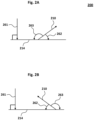
- Fig. 5 shows how an orientation of a direction with respect to gravity is defined.
- Fig. 5A shows a direction 570 that is at least partially opposite the direction of gravity 561.
- the direction 570 can be decomposed into three components.
- the direction 570 has a component 571 parallel to the direction of gravity 561, and a component 572 perpendicular to the direction of gravity (the other component perpendicular to the direction of gravity is not shown).
- the direction of the component 571 is opposite the direction of gravity.
- Fig. 5B shows a direction 570 that is at least partially along the direction of gravity 561. Similar to Fig. 5A , the direction 570 has a component 571 parallel to the direction of gravity 561, and a component 572 perpendicular to direction of gravity. However, in contrast to Fig. 5A , the direction of the component 571 in Fig. 5B is along the direction of gravity.
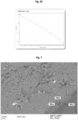
- Fig. 8 shows the distribution of the pore diameter of the first particulated material.
- the first particulated material has modes at approximately 17 100 nm, 15 100 nm, 12 300 nm, 10 600 nm, and 9 300 nm.
- a mode is where the quantity dV/dlogD has a maximum value (either a local maximum or a global maximum).
- dV is the differential volume
- dlogD is the differential of the logarithm of the pore diameter of the first particulated material.
- a primary mode refers to the global maximum of dV/dlogD.
- a secondary mode refers to the second largest maximum of dV/dlogD.
- Fig. 8 also shows the cumulative pore volume for the first particulated material.
- the first initial mixture 105 in the volume section V 1 is divided into a number of height sections H as shown in Fig. 9 .
- the first height section H1 is bordered by the bottom 107 of the volume section V 1 103 and a height A1
- the second height section H2 is bordered by the heights A1 and A2, etc.
- the last height section H6 is bordered by the height A5 and the surface 106 of the first initial mixture 105.
- Fig. 9 shows 6 height sections H
- the number of height sections is determined by the fill height of the first initial mixture 105 in the volume section V 1 103.
- the height sections should each have a height of 20 cm, with the exception of the last height section bordered by the surface of the first initial mixture (height section H6 in Fig. 9 ).
- the agitation means is a physical agitation means ( e.g. , 164 in Fig. 9 ) which does not allow for the taking of samples below a certain height, the lowest height A min where it is possible to take a sample without interfering with the agitation means replaces the bottom 107 in the procedure above, i.e., the first height section is bordered by A min .
- the new height sections I adjusted for the presence of the agitation means 164, are shown in Fig. 9 .
- the 5 samples taken in a height section should be taken at positions that are evenly spread out in a direction that is perpendicular to the height of the first initial mixture. This is shown as positions C1 to C5 in Fig. 9 .
- the size of a technical effect is indicated by one or more "-" or "+”.
- the scale, arranged from lowest to highest, is as follows: “- , , -, +, ++, +++”.
- a value of "Ref' indicates a reference value, i.e., the increase or decrease of a technical effect is relative to the "Ref' value.
- a value of "0" indicates no change with respect to the reference value.
- the scale, arranged from lowest to highest is as follows: "- , , -, Ref, +, ++, +++”.
- the following parameters are used for the volume section V 2 : a mass ratio of PET to MEG at an inlet of the volume section V 2 in the range of 0.3 - 0.5, a mass ratio of PET to MEG at an outlet of the volume section V 2 in the range of 5 - 20, a temperature in the range of 60 °C to 200 °C, an overpressure in the range of 4 kPa to 8 kPa, and a residence time in the range of 110 minutes to 150 minutes.
- the PET flakes are subsequently transported from the volume section V 2 to the volume section V 3 (a glycolysis reactor).
- the PET flakes in the volume section V 3 are also contacted with MEG.
- the following parameters are used for the glycolysis process in the volume section V 3 : a temperature in the range of 195 °C to 240 °C, an overpressure in the range of 0.7 kPa to 0.9 kPa, and a residence time in the range of 250 minutes to 420 minutes.
- the intermediate product is transported from the volume section V 3 to a volume section V 4 .
- the first intermediate mixture is agitated in the volume section V 4 while first particulated material is added to the first intermediate mixture.
- the first intermediate mixture, now comprising the first particulated material is transported from the volume section V 4 to a filtering means, where the first intermediate mixture is subjected to a filtering step.
- This filtering step also includes the pre-coating step described in Fig. 1B .
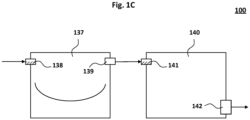
- the filtered, first intermediate mixture is subsequently subjected to polymerisation as described in Fig. 1C . Recycled PET is thus obtained.
- the recycled PET is used to produce yarn.
- Table 1 shows whether the PET flakes are transported along or against gravity when the PET flakes have an intrinsic viscosity that is ⁇ 0.20 dL/g, and whether the PET flakes are transported along or against gravity when the PET flakes have an intrinsic viscosity that is ⁇ 0.09 dL/g. Table 1 also shows the effects of transporting the PET flakes either against or along gravity depending on the intrinsic viscosity of the PET flakes.
- the PET flakes When the PET flakes have an intrinsic viscosity that is less than 0.20 dL/g and more than 0.09 dL/g, the PET flakes are transported along the direction of gravity. This happens when the PET flakes are transported from the volume section V 2 to the volume section V 3 .
Landscapes
- Chemical & Material Sciences (AREA)
- Polymers & Plastics (AREA)
- Health & Medical Sciences (AREA)
- Chemical Kinetics & Catalysis (AREA)
- Medicinal Chemistry (AREA)
- Organic Chemistry (AREA)
- Sustainable Development (AREA)
- Life Sciences & Earth Sciences (AREA)
- Engineering & Computer Science (AREA)
- Environmental & Geological Engineering (AREA)
- Mechanical Engineering (AREA)
- Polyesters Or Polycarbonates (AREA)
- Separation, Recovery Or Treatment Of Waste Materials Containing Plastics (AREA)
Claims (8)
- Ein Verfahren zur Herstellung eines ersten Zwischenprodukts, das die folgenden Schritte umfassta. Bereitstellung eines Ausgangsmaterials (101), das einen ersten Polyester enthält;b. Inkontaktbringen des Ausgangsmaterials (101) mit einer ersten Menge einer ersten organischen Verbindung in einem Volumenabschnitt V1 (103), um ein erstes Ausgangsgemisch (105) zu erhalten, wobei die erste Menge in Form einer Flüssigkeit vorliegt und wobei die Grenzviskosität des ersten Polyesters in dem Volumenabschnitt V1 um weniger als 15 % variiert;c. Transportieren des ersten Polyesters zu einem Volumenabschnitt V2 (108) aus dem Volumenabschnitt V1 (103);d. Inkontaktbringen des ersten Polyesters mit einer weiteren Menge der ersten organischen Verbindung im Volumenbereich V2 (108);e. Reduzieren einer intrinsischen Viskosität des ersten Polyesters in dem Volumenabschnitt V2 (108), wobei der erste Polyester nach Abschluss des Reduzierungsschritts in dem Volumenabschnitt V2 (108) eine intrinsische Viskosität im Bereich von 0,10 dL/g bis 0,45 dL/g aufweist,f. Transportieren des ersten Polyesters zu einem Volumenabschnitt V3 ;g. Inkontaktbringen des ersten Polyesters mit einer weiteren organischen Verbindung im Volumenbereich V3 (124), um ein weiteres Ausgangsgemisch zu erhalten;h. Verringern der gewichtsmittleren molaren Masse des ersten Polyesters im Volumenbereich V3 (124), um ein erstes Zwischengemisch zu erhalten, wobei das erste Zwischengemisch umfassti. ein erstes Zwischenprodukt, das eine intrinsische Viskosität im Bereich von 0,010 dL/g bis 0,090 dL/g aufweist,ii. die weitere organische Verbindung;wobei der erste Polyester transportiert wirdI./ in einer ersten Richtung, die zumindest teilweise der Schwerkraftrichtung entgegengesetzt ist, wenn der erste Polyester eine intrinsische Viskosität aufweist, die größer oder gleich YIV,1 ist, wobei YIV,1 0,10 dL/g beträgt;II./ in einer weiteren Richtung, die zumindest teilweise entlang der Richtung der Schwerkraft verläuft, wenn der erste Polyester eine intrinsische Viskosität aufweist, die kleiner oder gleich YIV,2 ist, wobei YIV,2 0,09 dL/g ist; undIII./ der Transport des ersten Polyesters entlang der ersten Richtung den Transport von dem Volumenabschnitt V1 (103) zu dem Volumenabschnitt V2 (108) und den Transport durch den Volumenabschnitt V2 (108) umfasst,wobei die Grenzviskosität nach dem hier beschriebenen Verfahren bestimmt wird.
- Das Verfahren nach Anspruch 1, wobei der erste Polyester aus der Gruppe ausgewählt ist, die aus einem Polyethylenterephthalat, einem Polybutylenterephthalat, einem Polylactid, einem Polytrimethylenterephthalat, einem Polyethylennaphthalat, einem Polycarbonat, einem Polyestercarbonat, einem Polyarylat, einem Polyesterharz und einer Kombination von zwei oder mehreren davon besteht.
- Das Verfahren nach einem der vorhergehenden Ansprüche, wobei die erste organische Verbindung mindestens eine oder alle der folgenden Eigenschaften aufweist:a. mindestens zwei Hydroxylgruppen enthält;b. eine molare Masse von mindestens 60 g/mol;c. einen Siedepunkt von mindestens 192 °C.
- Das Verfahren nach einem der vorhergehenden Ansprüche, wobei der erste Polyester in dem Volumenabschnitt V1 (103) eine intrinsische Viskosität im Bereich von 0,50 dL/g bis 1,00 dL/g aufweist, wobei die intrinsische Viskosität nach dem hier beschriebenen Verfahren bestimmt wird.
- Das Verfahren nach einem der vorhergehenden Ansprüche, wobei das Verfahren ferner den Schritt des Verringerns der folgenden in dem Volumenabschnitt V2 (108) umfasst: das Gewichtsmittel der Molmasse des ersten Polyesters .
- Das Verfahren nach Anspruch 5, wobei nach Abschluss des Reduktionsschritts im Volumenabschnitt V2 (108) der erste Polyester die folgende Eigenschaft aufweist:
ein Gewichtsmittel der Molmasse im Bereich von 3 000 Da bis 7 500 Da.
mit der gewichtsmittleren molaren Masse, die nach dem hier beschriebenen Verfahren bestimmt wird. - Das Verfahren nach einem der vorhergehenden Ansprüche, wobei die weitere organische Verbindung mindestens eine oder alle der folgenden Eigenschaften aufweist:a. mindestens zwei Hydroxylgruppen enthält;b. eine molare Masse von mindestens 60 g/mol;c. einen Siedepunkt von mindestens 192 °C.
- Das Verfahren nach einem der vorhergehenden Ansprüche, wobei mindestens 40 Gew.-% des ersten Zwischenprodukts in Form von Oligomeren vorliegen, die im Bereich von 2 bis 35 sich wiederholenden Einheiten liegen, wobei die Gew.-% gemäß dem hier beschriebenen Verfahren bestimmt werden.
Priority Applications (10)
| Application Number | Priority Date | Filing Date | Title |
|---|---|---|---|
| ES22196676T ES2987871T3 (es) | 2022-09-20 | 2022-09-20 | Proceso para reciclar tereftalato de polietileno determinado por la viscosidad intrínseca del tereftalato de polietileno |
| EP22196676.5A EP4342942B1 (de) | 2022-09-20 | 2022-09-20 | Verfahren zur wiederverwertung von polyethylenterephthalat, bestimmt durch intrinsische viskosität von polyethylenterephthalat |
| EP23775998.0A EP4590754A1 (de) | 2022-09-20 | 2023-09-19 | Verfahren zur wiederverwertung von polyethylenterephthalat, bestimmt durch intrinsische viskosität von polyethylenterephthalat |
| US18/857,340 US12496749B2 (en) | 2022-09-20 | 2023-09-19 | Process for recycling polyethylene terephthalate determined by intrinsic viscosity of polyethylene terephthalate |
| KR1020257012923A KR20250070093A (ko) | 2022-09-20 | 2023-09-19 | 폴리에틸렌 테레프탈레이트의 고유 점도에 의해 결정된 폴리에틸렌 테레프탈레이트의 재활용 공정 |
| CN202380067528.8A CN120035632A (zh) | 2022-09-20 | 2023-09-19 | 回收通过聚对苯二甲酸乙二醇酯的特性粘度确定的聚对苯二甲酸乙二醇酯的方法 |
| AU2023346826A AU2023346826A1 (en) | 2022-09-20 | 2023-09-19 | Process for recycling polyethylene terephthalate determined by intrinsic viscosity of polyethylene terephthalate |
| PCT/EP2023/075809 WO2024061909A1 (en) | 2022-09-20 | 2023-09-19 | Process for recycling polyethylene terephthalate determined by intrinsic viscosity of polyethylene terephthalate |
| JP2025515596A JP2025530363A (ja) | 2022-09-20 | 2023-09-19 | ポリエチレンテレフタレートの固有粘度によって決定されるポリエチレンテレフタレートをリサイクルするプロセス |
| MX2025002867A MX2025002867A (es) | 2022-09-20 | 2025-03-11 | Proceso para reciclar tereftalato de polietileno determinado por la viscosidad intrinseca del tereftalato de polietileno |
Applications Claiming Priority (1)
| Application Number | Priority Date | Filing Date | Title |
|---|---|---|---|
| EP22196676.5A EP4342942B1 (de) | 2022-09-20 | 2022-09-20 | Verfahren zur wiederverwertung von polyethylenterephthalat, bestimmt durch intrinsische viskosität von polyethylenterephthalat |
Publications (3)
| Publication Number | Publication Date |
|---|---|
| EP4342942A1 EP4342942A1 (de) | 2024-03-27 |
| EP4342942C0 EP4342942C0 (de) | 2024-07-10 |
| EP4342942B1 true EP4342942B1 (de) | 2024-07-10 |
Family
ID=83398472
Family Applications (2)
| Application Number | Title | Priority Date | Filing Date |
|---|---|---|---|
| EP22196676.5A Active EP4342942B1 (de) | 2022-09-20 | 2022-09-20 | Verfahren zur wiederverwertung von polyethylenterephthalat, bestimmt durch intrinsische viskosität von polyethylenterephthalat |
| EP23775998.0A Pending EP4590754A1 (de) | 2022-09-20 | 2023-09-19 | Verfahren zur wiederverwertung von polyethylenterephthalat, bestimmt durch intrinsische viskosität von polyethylenterephthalat |
Family Applications After (1)
| Application Number | Title | Priority Date | Filing Date |
|---|---|---|---|
| EP23775998.0A Pending EP4590754A1 (de) | 2022-09-20 | 2023-09-19 | Verfahren zur wiederverwertung von polyethylenterephthalat, bestimmt durch intrinsische viskosität von polyethylenterephthalat |
Country Status (9)
| Country | Link |
|---|---|
| US (1) | US12496749B2 (de) |
| EP (2) | EP4342942B1 (de) |
| JP (1) | JP2025530363A (de) |
| KR (1) | KR20250070093A (de) |
| CN (1) | CN120035632A (de) |
| AU (1) | AU2023346826A1 (de) |
| ES (1) | ES2987871T3 (de) |
| MX (1) | MX2025002867A (de) |
| WO (1) | WO2024061909A1 (de) |
Families Citing this family (7)
| Publication number | Priority date | Publication date | Assignee | Title |
|---|---|---|---|---|
| EP4342940B1 (de) | 2022-09-20 | 2024-07-10 | revalyu Resources GmbH | Verfahren zur wiederverwertung von polyethylenterephthalat unter verwendung eines ausgewählten temperaturbereichs zur oligomerverarbeitung |
| EP4342938B1 (de) | 2022-09-20 | 2024-07-17 | revalyu Resources GmbH | Verfahren zur wiederverwertung von polyethylenterephthalat unter verwendung spezifischer farbkoordinaten für die oligomerverarbeitung |
| EP4342946B1 (de) | 2022-09-20 | 2024-07-17 | revalyu Resources GmbH | Verfahren zur wiederverwertung von polyethylenterephthalat unter verwendung eines waschreaktors |
| ES2987868T3 (es) | 2022-09-20 | 2024-11-18 | Revalyu Resources Gmbh | Proceso para reciclar tereftalato de polietileno utilizando material filtrante de partículas porosas |
| EP4342943B1 (de) | 2022-09-20 | 2024-07-17 | revalyu Resources GmbH | Verfahren zur wiederverwertung von polyethylenterephthalat unter verwendung eines ausgewählten ausgangsmaterials |
| EP4342945B1 (de) | 2022-09-20 | 2024-07-17 | revalyu Resources GmbH | Verfahren zur wiederverwendung von polyethylenterephthalat unter verwendung verschiedener mengen an monoethylenglykol |
| EP4342941B1 (de) | 2022-09-20 | 2024-07-10 | revalyu Resources GmbH | Verfahren zur wiederverwertung von polyethylenterephthalat unter verwendung eines verunreinigungskonzentrationsgradienten |
Citations (3)
| Publication number | Priority date | Publication date | Assignee | Title |
|---|---|---|---|---|
| EP2784110B1 (de) * | 2013-03-26 | 2017-03-29 | Oxxynova GmbH | Verfahren und vorrichtung zur entfernung von farben aus zerkleinerten pet-flocken |
| CN106832397A (zh) * | 2015-12-07 | 2017-06-13 | 中国石化仪征化纤有限责任公司 | 在线回用pet聚合废料的方法 |
| EP3778744B1 (de) * | 2020-03-03 | 2022-02-16 | UAB Neo Group | Verfahren zum recycling von polyethylenterephthalat |
Family Cites Families (117)
| Publication number | Priority date | Publication date | Assignee | Title |
|---|---|---|---|---|
| US3884850A (en) | 1970-02-13 | 1975-05-20 | Fiber Industries Inc | Continuous atmospheric depolymerization of polyester |
| US3907868A (en) | 1974-02-15 | 1975-09-23 | Du Pont | Polyester waste recovery |
| JPS60248646A (ja) | 1984-05-25 | 1985-12-09 | Toray Ind Inc | ポリエステル屑の解重合方法 |
| US5223544A (en) | 1992-03-31 | 1993-06-29 | Shell Oil Company | Process for the removal of foreign materials from a post-consumer plyethylene terephthalate feed stream |
| AU659021B2 (en) | 1992-05-18 | 1995-05-04 | Alphapet Ltd | Improved poly ethylene terephthalate decontamination |
| WO1995010499A1 (en) | 1993-10-14 | 1995-04-20 | Shell Internationale Research Maatschappij B.V. | Process for recovering dicarboxylic acid with reduced impurities from polyester polymer |
| US5710315A (en) | 1994-05-27 | 1998-01-20 | E. I. Du Pont De Nemours And Company | Monomer recovery process for contaminated polymers |
| FI97726C (fi) | 1994-07-07 | 1997-02-10 | Alko Yhtioet Oy | Sulatyöstettävä polyesteriuretaani ja menetelmä sen valmistamiseksi |
| DE19531886A1 (de) | 1995-08-30 | 1997-03-06 | Basf Magnetics Gmbh | Kontinuierlich ablaufendes Verfahren zur Wiedergewinnung von Rohmaterialien aus beschichteten Folien |
| DE19534276A1 (de) | 1995-09-15 | 1997-03-20 | Degussa | Verfahren zur Aufarbeitung von Polyalkylenterephthalaten |
| US6369192B1 (en) | 1995-10-27 | 2002-04-09 | Praxair Technology, Inc. | Methods for removing contaminants from polymers |
| US6103774A (en) | 1997-04-02 | 2000-08-15 | The Coca-Cola Company | Process for removing contaminants from polyesters and controlling polymer molecular weight |
| US6136869A (en) | 1997-10-17 | 2000-10-24 | Eastman Chemical Company | Depolymerization process for recycling polyesters |
| MXPA02003928A (es) | 1999-10-22 | 2002-10-23 | Teijin Ltd | Metodo para la separacion y recuperacion de tereftalato de dimetilo y etilenglicol a partir de residuo de poliester. |
| CZ2000969A3 (cs) | 2000-03-17 | 2001-08-15 | Milan Ing. Šírek | Způsob chemické recyklace odpadního polyethylentereftalátu |
| JP4008214B2 (ja) | 2001-08-03 | 2007-11-14 | 三菱重工業株式会社 | ポリエステルのモノマー化反応容器 |
| DE10140370A1 (de) | 2001-08-23 | 2003-03-06 | Buehler Ag | Verfahren zur Verarbeitung eines Polykondensats in einem Mehrwellen-Extruder |
| ATE374794T1 (de) | 2001-10-16 | 2007-10-15 | Teijin Ltd | Verfahren zur rezyklierung von pet-flaschen |
| US20030134915A1 (en) | 2001-12-17 | 2003-07-17 | Scantlebury Geoffrey Raymond | Production of transparent polyester using waste |
| JP2003191241A (ja) | 2001-12-28 | 2003-07-08 | Is:Kk | 使用済みポリエチレンテレフタレート製ボトルの粉砕物の洗浄方法 |
| JP2003300933A (ja) | 2002-02-06 | 2003-10-21 | Is:Kk | ポリエチレンテレフタレート解重合溶液からの微粒子の除去方法 |
| EP2163369A1 (de) | 2002-04-12 | 2010-03-17 | MBA Polymers, Inc. | Mehrstufige Trennung von Kunststoffen |
| EP1367080A1 (de) | 2002-05-29 | 2003-12-03 | Hycail B.V. | Hyperverzweigte Polyhydroxycarbonsäurepolymere |
| JP2004083899A (ja) | 2002-08-06 | 2004-03-18 | Is:Kk | ポリエチレンテレフタレート解重合溶液からの微粒子の除去方法及びこれに用いた濾材の再生方法 |
| US7297721B2 (en) | 2003-06-20 | 2007-11-20 | Futura Polyesters Limited | Process for controlled polymerization of a mixed polymer |
| DE10348144A1 (de) | 2003-10-13 | 2005-05-19 | Krones Ag | PET-Flaschen-Recycling |
| JP2005350509A (ja) | 2004-06-08 | 2005-12-22 | Daicel Polymer Ltd | Pet再生樹脂組成物、pet再生樹脂用改質材及びこれを用いたpet再生樹脂成形品 |
| BRPI0402330B1 (pt) | 2004-06-14 | 2020-11-03 | Fundação De Amparo À Pesquisa Do Estado de São Paulo | processo de descontaminação de poliéster reciclado e uso do mesmo |
| WO2006044154A1 (en) | 2004-10-18 | 2006-04-27 | Phoenix Technologies International, Llc | Method for treating recycled polyethylene terephthalate for rapid decontamination and solid-stating |
| JP2006143622A (ja) | 2004-11-17 | 2006-06-08 | Is:Kk | グリコール溶液の精製方法 |
| DE102004059808A1 (de) | 2004-12-10 | 2006-06-14 | Krones Ag | Dekontamination von Flakes |
| EP1829914A1 (de) | 2004-12-21 | 2007-09-05 | Asahi Kasei Chemicals Corporation | Verfahren zur wiederverwertung von rückgewonnenem polykondensationspolymer |
| JP4937521B2 (ja) | 2005-03-31 | 2012-05-23 | 三井化学株式会社 | ポリエステルより高純度モノマーを回収する方法及び高純度モノマー、ポリエステル |
| WO2007066446A1 (ja) | 2005-12-09 | 2007-06-14 | Kumamoto Technology And Industry Foundation | ポリエステルおよび不飽和ポリエステルの解重合方法、ならびに当該解重合方法を用いたポリエステルモノマーの回収方法 |
| GB0615765D0 (en) | 2006-08-09 | 2006-09-20 | Waste And Resources Action Pro | Recycling process for polyethylene terephthalate (PET) |
| ITVR20060034U1 (it) | 2006-11-15 | 2008-05-16 | Marco Bologna | Sistema di controllo e comando per l'attivazione di apparati in genere e trasporto di dati |
| ITTO20070084A1 (it) | 2007-02-06 | 2008-08-07 | K & E Srl | Dispositivi di miscelazione radiale per reattori inclinati rotanti. |
| KR100837781B1 (ko) | 2007-04-17 | 2008-06-13 | 충남대학교산학협력단 | 폴리에스터 폐기물의 재생방법 및 이에 사용되는 장치 |
| JP2009120766A (ja) | 2007-11-16 | 2009-06-04 | Teijin Fibers Ltd | テレフタル酸ジメチル及びエチレングリコールの回収方法 |
| MX2022000197A (es) | 2008-09-30 | 2022-03-02 | Shaw Ind Group Inc | Composiciones de tereftalato de polietileno reciclado, fibras y articulos producidos a partir de las mismas, y metodos para producirlas. |
| AU2010266117A1 (en) | 2009-07-02 | 2012-02-23 | Bepex International, Llc | Vapor phase assisted post-consumer polymer processing apparatus and method |
| KR101099009B1 (ko) | 2009-10-09 | 2011-12-28 | 충남대학교산학협력단 | 폴리에스터 폐기물의 재생방법 및 그 재생장치 |
| KR101142328B1 (ko) | 2010-01-05 | 2012-05-17 | 주식회사 휴비스 | 폴리에스테르의 화학적 재생 방법 |
| US8877107B2 (en) | 2010-09-28 | 2014-11-04 | Uhde Inventa-Fischer Gmbh | Method for increasing the molecular weight of a polyester granulate by using its residual heat |
| PT2621619E (pt) | 2010-09-30 | 2015-05-11 | Equipolymers Gmbh | Processo de mistura |
| KR101302359B1 (ko) | 2011-04-07 | 2013-09-06 | 주식회사 휴비스 | 화학재생 공정을 이용한 생분해성 공중합 폴리에스테르수지 및 그 제조방법 |
| KR101306580B1 (ko) | 2011-05-30 | 2013-09-11 | 웅진케미칼 주식회사 | 폐 저융점 폴리에스테르를 이용한 재생 저융점 폴리에스테르의 제조방법 |
| CN103146151B (zh) | 2011-12-06 | 2015-04-08 | 上海聚友化工有限公司 | 一种废聚酯瓶回收再利用的方法 |
| CN103360260B (zh) | 2012-04-10 | 2015-04-01 | 李晓峰 | 一种对苯二甲酸乙二酯的制备工艺和聚酯的制备方法 |
| IN2014MN02312A (de) | 2012-04-20 | 2015-08-07 | Perpetual Global Technologies Ltd | |
| DE102012220498A1 (de) | 2012-11-09 | 2014-05-15 | Aquafil Engineering Gmbh | Verfahren und Vorrichtung zur Behandlung von Polymeren |
| US9353237B2 (en) | 2013-01-11 | 2016-05-31 | Plastipak Packaging, Inc. | System and method for recycling and recapture of bio-based plastics |
| CN103147163B (zh) | 2013-03-21 | 2015-03-18 | 宁波大发化纤有限公司 | 一种皮芯型再生聚酯短纤维及其制备方法 |
| CN203346318U (zh) | 2013-06-03 | 2013-12-18 | 扬州惠通化工技术有限公司 | 废瓶片聚酯熔体生产装置 |
| ES2670009T3 (es) | 2013-06-17 | 2018-05-29 | Sk Chemicals Co., Ltd. | Composición para formar una película termocontraíble, que comprende resina de politereftalato de etileno y resina de copolímero poliéster, y película termocontraíble |
| CN103357605B (zh) | 2013-07-13 | 2015-04-15 | 福建锦兴环保科技有限公司 | 废旧聚酯瓶片的清洗装置及清洗工艺 |
| CN103755933B (zh) | 2014-01-14 | 2016-01-13 | 北京服装学院 | 一种废旧pet织物半降解增粘制备长丝级切片的方法 |
| EP3140281B1 (de) | 2014-05-05 | 2018-03-14 | Resinate Materials Group, Inc. | Polyesterpolyole mit verbessertem wiederverwertbarem inhalt |
| DE102014220330B4 (de) | 2014-10-07 | 2016-11-03 | Herbold Meckesheim Gmbh | Verfahren zur Aufbereitung von Kunststoffen und Vorrichtung |
| CN104327259B (zh) | 2014-11-03 | 2016-02-10 | 东华大学 | 一种低熔点再生共聚酯的制备方法 |
| CN104447341B (zh) | 2014-11-03 | 2016-02-10 | 东华大学 | 一种聚酯醇解方法 |
| CN104357938B (zh) | 2014-11-03 | 2016-06-15 | 东华大学 | 一种再生聚酯纤维的制备方法 |
| FR3030541B1 (fr) | 2014-12-19 | 2017-02-03 | Ifp Energies Now | Procede de glycolyse du poly(terephtalate d'ethylene) en deux etapes reactionnelles |
| BR112017016060A2 (pt) | 2015-01-30 | 2018-04-03 | Resinate Mat Group Inc | processo integrado para o tratamento de reciclos de pet e ptt |
| CN105367415B (zh) | 2015-11-13 | 2018-02-13 | 航天资源循环科技有限公司 | 一种废旧pet材料化学法回收循环再利用系统 |
| WO2017092071A1 (zh) | 2015-11-30 | 2017-06-08 | 谭亦武 | 一种废pet回收再利用的方法及应用 |
| CH713339A1 (de) | 2017-01-03 | 2018-07-13 | Alpla Werke Alwin Lehner Gmbh & Co Kg | PET-Regranulat mit hoher intrinsischer Viskosität und Verfahren zu dessen Herstellung. |
| CN206883973U (zh) | 2017-06-21 | 2018-01-16 | 濠锦化纤(福州)有限公司 | 再生塑料粉碎装置 |
| CN107266664A (zh) | 2017-07-12 | 2017-10-20 | 宜兴市创新精细化工有限公司 | 一种聚酯废料回收工艺 |
| CN109423699A (zh) | 2017-08-24 | 2019-03-05 | 青岛吉盛纺织有限公司 | 一种利用回收的pet瓶制造纺织用长丝的方法 |
| DE102018202547A1 (de) | 2018-02-20 | 2019-10-02 | Thyssenkrupp Ag | Vorrichtung und Verfahren zum Einmischen von Recyclingmaterial in eine Polyesterschmelze |
| CN108395373A (zh) | 2018-04-10 | 2018-08-14 | 福建荔枝新材料有限公司 | 一种废旧聚酯回收方法 |
| BR102018068454B1 (pt) | 2018-09-12 | 2022-04-19 | Petróleo Brasileiro S.A. - Petrobras | Catalisadores e processo para obtenção de poliéster reciclado |
| GB2570019B (en) | 2018-09-17 | 2021-04-21 | Impact Laboratories Ltd | Plastic recycling process |
| CA3113666C (en) | 2018-09-21 | 2023-12-19 | Premirr Plastics Inc. | Process and system for depolymerizing plastic |
| CN109134244B (zh) | 2018-09-26 | 2020-10-30 | 东华大学 | 一种废旧聚酯的降解方法 |
| CN111138641B (zh) | 2018-11-02 | 2021-12-21 | 中国石油化工股份有限公司 | 一种废聚酯瓶回用制备瓶级切片的方法 |
| WO2020149798A1 (en) | 2019-01-15 | 2020-07-23 | Köksan Pet Ve Plasti̇k Ambalaj Sanayi̇ Ve Ti̇caret Anoni̇m Şi̇rketi̇ | Chemical glycolysis method in which transparent pet wastes are recycled to be used in bottle-grade pet resin production |
| FR3092323B1 (fr) | 2019-02-01 | 2021-06-04 | Ifp Energies Now | Procédé de production d’un polyester téréphtalate à partir d’un mélange monomérique comprenant un diester |
| FR3092324B1 (fr) | 2019-02-01 | 2021-04-23 | Ifp Energies Now | Procédé de production d’un polyester téréphtalate intégrant un procédé de dépolymérisation |
| US20210094205A1 (en) | 2019-05-20 | 2021-04-01 | Octal Saoc Fzc | Process for rotary die cutting of reclaimed polyester |
| CN110273197A (zh) | 2019-05-20 | 2019-09-24 | 福建师范大学福清分校 | 一种废弃绦纶纺织物生产的再生彩纱及其制备方法 |
| CN110527138B (zh) | 2019-07-10 | 2020-07-03 | 艾凡佳德(上海)环保科技有限公司 | 一种废旧聚酯的连续醇解回收方法 |
| GB2598077B (en) | 2019-08-13 | 2026-03-18 | Poseidon Plastics Ltd | Polymer recycling |
| GB2586249B (en) | 2019-08-13 | 2021-09-22 | Poseidon Plastics Ltd | Polymer recycling |
| CN112759746B (zh) | 2019-10-21 | 2022-08-12 | 中国石油化工股份有限公司 | 一种高洁净食品级再生瓶片的制备方法 |
| CN110616474B (zh) | 2019-10-22 | 2021-02-12 | 宁波大发化纤有限公司 | 废聚酯纺织品制备皮芯复合低熔点再生聚酯纤维的方法 |
| CN110698658B (zh) | 2019-10-22 | 2021-11-26 | 宁波大发化纤有限公司 | 一种废聚酯链解制备有色聚酯的方法 |
| NL2024181B1 (en) | 2019-11-07 | 2021-07-20 | Ioniqa Tech B V | Reactor system and method of separating a first contaminant from a feed stream |
| NL2024194B1 (en) | 2019-11-08 | 2021-07-20 | Ioniqa Tech B V | Method for treatment of waste material and reactor system thereof |
| CN110734578B (zh) | 2019-11-13 | 2022-03-11 | 宁波大发化纤有限公司 | 一种废聚酯原料中分离获得再生聚酯的方法 |
| US11710592B2 (en) | 2019-11-17 | 2023-07-25 | Littelfuse, Inc. | Bi-stable mechanical latch including positioning spheres |
| CN110818886B (zh) | 2019-12-13 | 2022-02-11 | 中国科学院过程工程研究所 | 一种废弃pet聚酯制备再生食品级pet聚酯的方法 |
| FR3105236B1 (fr) | 2019-12-19 | 2022-12-16 | Ifp Energies Now | Procédé optimisé de dépolymérisation d’un polyester comprenant du polyéthylène téréphtalate |
| US11639431B2 (en) | 2020-01-23 | 2023-05-02 | Premirr Plastics Inc. | Process and system for depolymerizing plastic |
| CN115052683A (zh) | 2020-02-10 | 2022-09-13 | 伊士曼化工公司 | 废塑料的离心密度分离 |
| MX2022009400A (es) | 2020-02-10 | 2022-10-07 | Eastman Chem Co | Materiales de plastico de desecho tratados. |
| CN115052730A (zh) | 2020-02-10 | 2022-09-13 | 伊士曼化工公司 | 处理的混合塑料废物流的化学回收 |
| WO2021163099A1 (en) | 2020-02-10 | 2021-08-19 | Eastman Chemical Company | Particulate plastic solids handling apparatus and methods |
| JP2023521995A (ja) | 2020-04-13 | 2023-05-26 | イーストマン ケミカル カンパニー | プラスチック乾燥細粒のケミカルリサイクル |
| JP2023521429A (ja) | 2020-04-13 | 2023-05-24 | イーストマン ケミカル カンパニー | 湿った細粒を含む様々な供給源からの廃棄プラスチックのケミカルリサイクル |
| KR20220165782A (ko) | 2020-04-13 | 2022-12-15 | 이스트만 케미칼 컴파니 | 화학적 재활용을 위한 가용매분해 부산물 스트림의 증진된 분리 |
| CN111978686B (zh) | 2020-08-25 | 2022-12-20 | 广州大学 | 一种再生聚酯材料及其制备方法 |
| CN111849026A (zh) | 2020-08-27 | 2020-10-30 | 华润化学材料科技股份有限公司 | 一种生产rPET瓶级聚酯切片的方法和系统 |
| CN112646135B (zh) | 2020-12-10 | 2023-01-13 | 北京服装学院 | 有色废旧聚酯纺织品连续制备可纺级无色再生聚酯的方法 |
| CN112608514A (zh) | 2020-12-14 | 2021-04-06 | 浙江理工大学 | 一种废旧聚酯醇解法制备抗菌再生聚酯的方法 |
| IN202121037279A (de) * | 2021-08-17 | 2022-09-16 | Jb Rpet Industries Pvt Ltd | |
| JPWO2023176649A1 (de) | 2022-03-15 | 2023-09-21 | ||
| EP4342941B1 (de) | 2022-09-20 | 2024-07-10 | revalyu Resources GmbH | Verfahren zur wiederverwertung von polyethylenterephthalat unter verwendung eines verunreinigungskonzentrationsgradienten |
| ES2987868T3 (es) | 2022-09-20 | 2024-11-18 | Revalyu Resources Gmbh | Proceso para reciclar tereftalato de polietileno utilizando material filtrante de partículas porosas |
| EP4342946B1 (de) | 2022-09-20 | 2024-07-17 | revalyu Resources GmbH | Verfahren zur wiederverwertung von polyethylenterephthalat unter verwendung eines waschreaktors |
| EP4342940B1 (de) | 2022-09-20 | 2024-07-10 | revalyu Resources GmbH | Verfahren zur wiederverwertung von polyethylenterephthalat unter verwendung eines ausgewählten temperaturbereichs zur oligomerverarbeitung |
| EP4342938B1 (de) | 2022-09-20 | 2024-07-17 | revalyu Resources GmbH | Verfahren zur wiederverwertung von polyethylenterephthalat unter verwendung spezifischer farbkoordinaten für die oligomerverarbeitung |
| EP4342943B1 (de) | 2022-09-20 | 2024-07-17 | revalyu Resources GmbH | Verfahren zur wiederverwertung von polyethylenterephthalat unter verwendung eines ausgewählten ausgangsmaterials |
| ES2987876T3 (es) | 2022-09-20 | 2024-11-18 | Revalyu Resources Gmbh | Proceso para reciclar tereftalato de polietileno utilizando monoetilenglicol gaseoso y/o líquido |
| EP4342945B1 (de) | 2022-09-20 | 2024-07-17 | revalyu Resources GmbH | Verfahren zur wiederverwendung von polyethylenterephthalat unter verwendung verschiedener mengen an monoethylenglykol |
| EP4342937B1 (de) | 2022-09-20 | 2024-07-17 | revalyu Resources GmbH | Verfahren zur wiederverwertung von polyethylenterephthalat unter verwendung eines getrennten ausgangsmaterials |
-
2022
- 2022-09-20 ES ES22196676T patent/ES2987871T3/es active Active
- 2022-09-20 EP EP22196676.5A patent/EP4342942B1/de active Active
-
2023
- 2023-09-19 EP EP23775998.0A patent/EP4590754A1/de active Pending
- 2023-09-19 US US18/857,340 patent/US12496749B2/en active Active
- 2023-09-19 CN CN202380067528.8A patent/CN120035632A/zh active Pending
- 2023-09-19 AU AU2023346826A patent/AU2023346826A1/en active Pending
- 2023-09-19 JP JP2025515596A patent/JP2025530363A/ja active Pending
- 2023-09-19 WO PCT/EP2023/075809 patent/WO2024061909A1/en not_active Ceased
- 2023-09-19 KR KR1020257012923A patent/KR20250070093A/ko active Pending
-
2025
- 2025-03-11 MX MX2025002867A patent/MX2025002867A/es unknown
Patent Citations (3)
| Publication number | Priority date | Publication date | Assignee | Title |
|---|---|---|---|---|
| EP2784110B1 (de) * | 2013-03-26 | 2017-03-29 | Oxxynova GmbH | Verfahren und vorrichtung zur entfernung von farben aus zerkleinerten pet-flocken |
| CN106832397A (zh) * | 2015-12-07 | 2017-06-13 | 中国石化仪征化纤有限责任公司 | 在线回用pet聚合废料的方法 |
| EP3778744B1 (de) * | 2020-03-03 | 2022-02-16 | UAB Neo Group | Verfahren zum recycling von polyethylenterephthalat |
Also Published As
| Publication number | Publication date |
|---|---|
| CN120035632A (zh) | 2025-05-23 |
| JP2025530363A (ja) | 2025-09-11 |
| EP4342942A1 (de) | 2024-03-27 |
| MX2025002867A (es) | 2025-06-02 |
| ES2987871T3 (es) | 2024-11-18 |
| EP4342942C0 (de) | 2024-07-10 |
| EP4590754A1 (de) | 2025-07-30 |
| WO2024061909A1 (en) | 2024-03-28 |
| KR20250070093A (ko) | 2025-05-20 |
| AU2023346826A1 (en) | 2025-03-06 |
| US12496749B2 (en) | 2025-12-16 |
| US20250262804A1 (en) | 2025-08-21 |
Similar Documents
| Publication | Publication Date | Title |
|---|---|---|
| EP4342944B1 (de) | Verfahren zur wiederverwendung von polyethylenterephthalat unter verwendung von gasförmigem und/oder flüssigem monoethylenglykol | |
| EP4342942B1 (de) | Verfahren zur wiederverwertung von polyethylenterephthalat, bestimmt durch intrinsische viskosität von polyethylenterephthalat | |
| EP4342937B1 (de) | Verfahren zur wiederverwertung von polyethylenterephthalat unter verwendung eines getrennten ausgangsmaterials | |
| EP4342941B1 (de) | Verfahren zur wiederverwertung von polyethylenterephthalat unter verwendung eines verunreinigungskonzentrationsgradienten | |
| EP4342943B1 (de) | Verfahren zur wiederverwertung von polyethylenterephthalat unter verwendung eines ausgewählten ausgangsmaterials | |
| EP4342945B1 (de) | Verfahren zur wiederverwendung von polyethylenterephthalat unter verwendung verschiedener mengen an monoethylenglykol | |
| EP4342946B1 (de) | Verfahren zur wiederverwertung von polyethylenterephthalat unter verwendung eines waschreaktors | |
| EP4342940B1 (de) | Verfahren zur wiederverwertung von polyethylenterephthalat unter verwendung eines ausgewählten temperaturbereichs zur oligomerverarbeitung | |
| EP4342938B1 (de) | Verfahren zur wiederverwertung von polyethylenterephthalat unter verwendung spezifischer farbkoordinaten für die oligomerverarbeitung | |
| EP4342939B1 (de) | Verfahren zur wiederverwertung von polyethylenterephthalat unter verwendung von porösem teilchenförmigem filtermaterial |
Legal Events
| Date | Code | Title | Description |
|---|---|---|---|
| STAA | Information on the status of an ep patent application or granted ep patent |
Free format text: STATUS: EXAMINATION IS IN PROGRESS |
|
| PUAI | Public reference made under article 153(3) epc to a published international application that has entered the european phase |
Free format text: ORIGINAL CODE: 0009012 |
|
| 17P | Request for examination filed |
Effective date: 20230704 |
|
| AK | Designated contracting states |
Kind code of ref document: A1 Designated state(s): AL AT BE BG CH CY CZ DE DK EE ES FI FR GB GR HR HU IE IS IT LI LT LU LV MC MK MT NL NO PL PT RO RS SE SI SK SM TR |
|
| GRAP | Despatch of communication of intention to grant a patent |
Free format text: ORIGINAL CODE: EPIDOSNIGR1 |
|
| STAA | Information on the status of an ep patent application or granted ep patent |
Free format text: STATUS: GRANT OF PATENT IS INTENDED |
|
| GRAS | Grant fee paid |
Free format text: ORIGINAL CODE: EPIDOSNIGR3 |
|
| RIC1 | Information provided on ipc code assigned before grant |
Ipc: C08J 11/24 20060101ALN20240415BHEP Ipc: C08J 11/18 20060101ALI20240415BHEP Ipc: C08J 11/10 20060101AFI20240415BHEP |
|
| RIC1 | Information provided on ipc code assigned before grant |
Ipc: C08J 11/24 20060101ALN20240426BHEP Ipc: C08J 11/18 20060101ALI20240426BHEP Ipc: C08J 11/10 20060101AFI20240426BHEP |
|
| INTG | Intention to grant announced |
Effective date: 20240508 |
|
| GRAA | (expected) grant |
Free format text: ORIGINAL CODE: 0009210 |
|
| STAA | Information on the status of an ep patent application or granted ep patent |
Free format text: STATUS: THE PATENT HAS BEEN GRANTED |
|
| AK | Designated contracting states |
Kind code of ref document: B1 Designated state(s): AL AT BE BG CH CY CZ DE DK EE ES FI FR GB GR HR HU IE IS IT LI LT LU LV MC MK MT NL NO PL PT RO RS SE SI SK SM TR |
|
| REG | Reference to a national code |
Ref country code: CH Ref legal event code: EP |
|
| REG | Reference to a national code |
Ref country code: DE Ref legal event code: R096 Ref document number: 602022004450 Country of ref document: DE |
|
| U01 | Request for unitary effect filed |
Effective date: 20240808 |
|
| U07 | Unitary effect registered |
Designated state(s): AT BE BG DE DK EE FI FR IT LT LU LV MT NL PT RO SE SI Effective date: 20240902 |
|
| U20 | Renewal fee for the european patent with unitary effect paid |
Year of fee payment: 3 Effective date: 20240924 |
|
| REG | Reference to a national code |
Ref country code: ES Ref legal event code: FG2A Ref document number: 2987871 Country of ref document: ES Kind code of ref document: T3 Effective date: 20241118 |
|
| PG25 | Lapsed in a contracting state [announced via postgrant information from national office to epo] |
Ref country code: NO Free format text: LAPSE BECAUSE OF FAILURE TO SUBMIT A TRANSLATION OF THE DESCRIPTION OR TO PAY THE FEE WITHIN THE PRESCRIBED TIME-LIMIT Effective date: 20241010 |
|
| PG25 | Lapsed in a contracting state [announced via postgrant information from national office to epo] |
Ref country code: GR Free format text: LAPSE BECAUSE OF FAILURE TO SUBMIT A TRANSLATION OF THE DESCRIPTION OR TO PAY THE FEE WITHIN THE PRESCRIBED TIME-LIMIT Effective date: 20241011 Ref country code: PL Free format text: LAPSE BECAUSE OF FAILURE TO SUBMIT A TRANSLATION OF THE DESCRIPTION OR TO PAY THE FEE WITHIN THE PRESCRIBED TIME-LIMIT Effective date: 20240710 |
|
| PG25 | Lapsed in a contracting state [announced via postgrant information from national office to epo] |
Ref country code: IS Free format text: LAPSE BECAUSE OF FAILURE TO SUBMIT A TRANSLATION OF THE DESCRIPTION OR TO PAY THE FEE WITHIN THE PRESCRIBED TIME-LIMIT Effective date: 20241110 |
|
| PG25 | Lapsed in a contracting state [announced via postgrant information from national office to epo] |
Ref country code: HR Free format text: LAPSE BECAUSE OF FAILURE TO SUBMIT A TRANSLATION OF THE DESCRIPTION OR TO PAY THE FEE WITHIN THE PRESCRIBED TIME-LIMIT Effective date: 20240710 |
|
| PG25 | Lapsed in a contracting state [announced via postgrant information from national office to epo] |
Ref country code: RS Free format text: LAPSE BECAUSE OF FAILURE TO SUBMIT A TRANSLATION OF THE DESCRIPTION OR TO PAY THE FEE WITHIN THE PRESCRIBED TIME-LIMIT Effective date: 20241010 |
|
| PG25 | Lapsed in a contracting state [announced via postgrant information from national office to epo] |
Ref country code: RS Free format text: LAPSE BECAUSE OF FAILURE TO SUBMIT A TRANSLATION OF THE DESCRIPTION OR TO PAY THE FEE WITHIN THE PRESCRIBED TIME-LIMIT Effective date: 20241010 Ref country code: PL Free format text: LAPSE BECAUSE OF FAILURE TO SUBMIT A TRANSLATION OF THE DESCRIPTION OR TO PAY THE FEE WITHIN THE PRESCRIBED TIME-LIMIT Effective date: 20240710 Ref country code: NO Free format text: LAPSE BECAUSE OF FAILURE TO SUBMIT A TRANSLATION OF THE DESCRIPTION OR TO PAY THE FEE WITHIN THE PRESCRIBED TIME-LIMIT Effective date: 20241010 Ref country code: IS Free format text: LAPSE BECAUSE OF FAILURE TO SUBMIT A TRANSLATION OF THE DESCRIPTION OR TO PAY THE FEE WITHIN THE PRESCRIBED TIME-LIMIT Effective date: 20241110 Ref country code: HR Free format text: LAPSE BECAUSE OF FAILURE TO SUBMIT A TRANSLATION OF THE DESCRIPTION OR TO PAY THE FEE WITHIN THE PRESCRIBED TIME-LIMIT Effective date: 20240710 Ref country code: GR Free format text: LAPSE BECAUSE OF FAILURE TO SUBMIT A TRANSLATION OF THE DESCRIPTION OR TO PAY THE FEE WITHIN THE PRESCRIBED TIME-LIMIT Effective date: 20241011 |
|
| PG25 | Lapsed in a contracting state [announced via postgrant information from national office to epo] |
Ref country code: SM Free format text: LAPSE BECAUSE OF FAILURE TO SUBMIT A TRANSLATION OF THE DESCRIPTION OR TO PAY THE FEE WITHIN THE PRESCRIBED TIME-LIMIT Effective date: 20240710 |
|
| PG25 | Lapsed in a contracting state [announced via postgrant information from national office to epo] |
Ref country code: MC Free format text: LAPSE BECAUSE OF FAILURE TO SUBMIT A TRANSLATION OF THE DESCRIPTION OR TO PAY THE FEE WITHIN THE PRESCRIBED TIME-LIMIT Effective date: 20240710 |
|
| PG25 | Lapsed in a contracting state [announced via postgrant information from national office to epo] |
Ref country code: CZ Free format text: LAPSE BECAUSE OF FAILURE TO SUBMIT A TRANSLATION OF THE DESCRIPTION OR TO PAY THE FEE WITHIN THE PRESCRIBED TIME-LIMIT Effective date: 20240710 |
|
| PG25 | Lapsed in a contracting state [announced via postgrant information from national office to epo] |
Ref country code: SK Free format text: LAPSE BECAUSE OF FAILURE TO SUBMIT A TRANSLATION OF THE DESCRIPTION OR TO PAY THE FEE WITHIN THE PRESCRIBED TIME-LIMIT Effective date: 20240710 |
|
| PLBE | No opposition filed within time limit |
Free format text: ORIGINAL CODE: 0009261 |
|
| STAA | Information on the status of an ep patent application or granted ep patent |
Free format text: STATUS: NO OPPOSITION FILED WITHIN TIME LIMIT |
|
| 26N | No opposition filed |
Effective date: 20250411 |
|
| PG25 | Lapsed in a contracting state [announced via postgrant information from national office to epo] |
Ref country code: IE Free format text: LAPSE BECAUSE OF NON-PAYMENT OF DUE FEES Effective date: 20240920 |
|
| U20 | Renewal fee for the european patent with unitary effect paid |
Year of fee payment: 4 Effective date: 20250926 |
|
| PG25 | Lapsed in a contracting state [announced via postgrant information from national office to epo] |
Ref country code: CY Free format text: LAPSE BECAUSE OF FAILURE TO SUBMIT A TRANSLATION OF THE DESCRIPTION OR TO PAY THE FEE WITHIN THE PRESCRIBED TIME-LIMIT; INVALID AB INITIO Effective date: 20220920 |
|
| PGFP | Annual fee paid to national office [announced via postgrant information from national office to epo] |
Ref country code: ES Payment date: 20251001 Year of fee payment: 4 |
|
| PG25 | Lapsed in a contracting state [announced via postgrant information from national office to epo] |
Ref country code: HU Free format text: LAPSE BECAUSE OF FAILURE TO SUBMIT A TRANSLATION OF THE DESCRIPTION OR TO PAY THE FEE WITHIN THE PRESCRIBED TIME-LIMIT; INVALID AB INITIO Effective date: 20220920 |