EP4343045A1 - Verfahren zum beleimen von faserprodukten, verfahren zur herstellung von faserprodukten - Google Patents
Verfahren zum beleimen von faserprodukten, verfahren zur herstellung von faserprodukten Download PDFInfo
- Publication number
- EP4343045A1 EP4343045A1 EP22797618.0A EP22797618A EP4343045A1 EP 4343045 A1 EP4343045 A1 EP 4343045A1 EP 22797618 A EP22797618 A EP 22797618A EP 4343045 A1 EP4343045 A1 EP 4343045A1
- Authority
- EP
- European Patent Office
- Prior art keywords
- sizing
- textile product
- carbon dioxide
- sizing agent
- supercritical carbon
- Prior art date
- Legal status (The legal status is an assumption and is not a legal conclusion. Google has not performed a legal analysis and makes no representation as to the accuracy of the status listed.)
- Pending
Links
Images




Classifications
-
- D—TEXTILES; PAPER
- D06—TREATMENT OF TEXTILES OR THE LIKE; LAUNDERING; FLEXIBLE MATERIALS NOT OTHERWISE PROVIDED FOR
- D06B—TREATING TEXTILE MATERIALS USING LIQUIDS, GASES OR VAPOURS
- D06B1/00—Applying liquids, gases or vapours onto textile materials to effect treatment, e.g. washing, dyeing, bleaching, sizing or impregnating
-
- D—TEXTILES; PAPER
- D06—TREATMENT OF TEXTILES OR THE LIKE; LAUNDERING; FLEXIBLE MATERIALS NOT OTHERWISE PROVIDED FOR
- D06B—TREATING TEXTILE MATERIALS USING LIQUIDS, GASES OR VAPOURS
- D06B9/00—Solvent-treatment of textile materials
-
- D—TEXTILES; PAPER
- D02—YARNS; MECHANICAL FINISHING OF YARNS OR ROPES; WARPING OR BEAMING
- D02J—FINISHING OR DRESSING OF FILAMENTS, YARNS, THREADS, CORDS, ROPES OR THE LIKE
- D02J3/00—Modifying the surface
- D02J3/18—Treating with particulate, semi-solid, or solid substances, e.g. wax
-
- D—TEXTILES; PAPER
- D06—TREATMENT OF TEXTILES OR THE LIKE; LAUNDERING; FLEXIBLE MATERIALS NOT OTHERWISE PROVIDED FOR
- D06L—DRY-CLEANING, WASHING OR BLEACHING FIBRES, FILAMENTS, THREADS, YARNS, FABRICS, FEATHERS OR MADE-UP FIBROUS GOODS; BLEACHING LEATHER OR FURS
- D06L1/00—Dry-cleaning or washing fibres, filaments, threads, yarns, fabrics, feathers or made-up fibrous goods
- D06L1/12—Dry-cleaning or washing fibres, filaments, threads, yarns, fabrics, feathers or made-up fibrous goods using aqueous solvents
- D06L1/14—De-sizing
-
- D—TEXTILES; PAPER
- D06—TREATMENT OF TEXTILES OR THE LIKE; LAUNDERING; FLEXIBLE MATERIALS NOT OTHERWISE PROVIDED FOR
- D06M—TREATMENT, NOT PROVIDED FOR ELSEWHERE IN CLASS D06, OF FIBRES, THREADS, YARNS, FABRICS, FEATHERS OR FIBROUS GOODS MADE FROM SUCH MATERIALS
- D06M11/00—Treating fibres, threads, yarns, fabrics or fibrous goods made from such materials, with inorganic substances or complexes thereof; Such treatment combined with mechanical treatment, e.g. mercerising
- D06M11/73—Treating fibres, threads, yarns, fabrics or fibrous goods made from such materials, with inorganic substances or complexes thereof; Such treatment combined with mechanical treatment, e.g. mercerising with carbon or compounds thereof
-
- D—TEXTILES; PAPER
- D06—TREATMENT OF TEXTILES OR THE LIKE; LAUNDERING; FLEXIBLE MATERIALS NOT OTHERWISE PROVIDED FOR
- D06M—TREATMENT, NOT PROVIDED FOR ELSEWHERE IN CLASS D06, OF FIBRES, THREADS, YARNS, FABRICS, FEATHERS OR FIBROUS GOODS MADE FROM SUCH MATERIALS
- D06M15/00—Treating fibres, threads, yarns, fabrics, or fibrous goods made from such materials, with macromolecular compounds; Such treatment combined with mechanical treatment
- D06M15/01—Treating fibres, threads, yarns, fabrics, or fibrous goods made from such materials, with macromolecular compounds; Such treatment combined with mechanical treatment with natural macromolecular compounds or derivatives thereof
- D06M15/03—Polysaccharides or derivatives thereof
- D06M15/05—Cellulose or derivatives thereof
- D06M15/07—Cellulose esters
-
- D—TEXTILES; PAPER
- D06—TREATMENT OF TEXTILES OR THE LIKE; LAUNDERING; FLEXIBLE MATERIALS NOT OTHERWISE PROVIDED FOR
- D06M—TREATMENT, NOT PROVIDED FOR ELSEWHERE IN CLASS D06, OF FIBRES, THREADS, YARNS, FABRICS, FEATHERS OR FIBROUS GOODS MADE FROM SUCH MATERIALS
- D06M15/00—Treating fibres, threads, yarns, fabrics, or fibrous goods made from such materials, with macromolecular compounds; Such treatment combined with mechanical treatment
- D06M15/19—Treating fibres, threads, yarns, fabrics, or fibrous goods made from such materials, with macromolecular compounds; Such treatment combined with mechanical treatment with synthetic macromolecular compounds
- D06M15/21—Macromolecular compounds obtained by reactions only involving carbon-to-carbon unsaturated bonds
- D06M15/227—Macromolecular compounds obtained by reactions only involving carbon-to-carbon unsaturated bonds of hydrocarbons, or reaction products thereof, e.g. afterhalogenated or sulfochlorinated
- D06M15/233—Macromolecular compounds obtained by reactions only involving carbon-to-carbon unsaturated bonds of hydrocarbons, or reaction products thereof, e.g. afterhalogenated or sulfochlorinated aromatic, e.g. styrene
-
- D—TEXTILES; PAPER
- D06—TREATMENT OF TEXTILES OR THE LIKE; LAUNDERING; FLEXIBLE MATERIALS NOT OTHERWISE PROVIDED FOR
- D06M—TREATMENT, NOT PROVIDED FOR ELSEWHERE IN CLASS D06, OF FIBRES, THREADS, YARNS, FABRICS, FEATHERS OR FIBROUS GOODS MADE FROM SUCH MATERIALS
- D06M15/00—Treating fibres, threads, yarns, fabrics, or fibrous goods made from such materials, with macromolecular compounds; Such treatment combined with mechanical treatment
- D06M15/19—Treating fibres, threads, yarns, fabrics, or fibrous goods made from such materials, with macromolecular compounds; Such treatment combined with mechanical treatment with synthetic macromolecular compounds
- D06M15/21—Macromolecular compounds obtained by reactions only involving carbon-to-carbon unsaturated bonds
- D06M15/263—Macromolecular compounds obtained by reactions only involving carbon-to-carbon unsaturated bonds of unsaturated carboxylic acids; Salts or esters thereof
-
- D—TEXTILES; PAPER
- D06—TREATMENT OF TEXTILES OR THE LIKE; LAUNDERING; FLEXIBLE MATERIALS NOT OTHERWISE PROVIDED FOR
- D06M—TREATMENT, NOT PROVIDED FOR ELSEWHERE IN CLASS D06, OF FIBRES, THREADS, YARNS, FABRICS, FEATHERS OR FIBROUS GOODS MADE FROM SUCH MATERIALS
- D06M15/00—Treating fibres, threads, yarns, fabrics, or fibrous goods made from such materials, with macromolecular compounds; Such treatment combined with mechanical treatment
- D06M15/19—Treating fibres, threads, yarns, fabrics, or fibrous goods made from such materials, with macromolecular compounds; Such treatment combined with mechanical treatment with synthetic macromolecular compounds
- D06M15/21—Macromolecular compounds obtained by reactions only involving carbon-to-carbon unsaturated bonds
- D06M15/327—Macromolecular compounds obtained by reactions only involving carbon-to-carbon unsaturated bonds of unsaturated alcohols or esters thereof
- D06M15/333—Macromolecular compounds obtained by reactions only involving carbon-to-carbon unsaturated bonds of unsaturated alcohols or esters thereof of vinyl acetate; Polyvinylalcohol
-
- D—TEXTILES; PAPER
- D06—TREATMENT OF TEXTILES OR THE LIKE; LAUNDERING; FLEXIBLE MATERIALS NOT OTHERWISE PROVIDED FOR
- D06M—TREATMENT, NOT PROVIDED FOR ELSEWHERE IN CLASS D06, OF FIBRES, THREADS, YARNS, FABRICS, FEATHERS OR FIBROUS GOODS MADE FROM SUCH MATERIALS
- D06M15/00—Treating fibres, threads, yarns, fabrics, or fibrous goods made from such materials, with macromolecular compounds; Such treatment combined with mechanical treatment
- D06M15/19—Treating fibres, threads, yarns, fabrics, or fibrous goods made from such materials, with macromolecular compounds; Such treatment combined with mechanical treatment with synthetic macromolecular compounds
- D06M15/37—Macromolecular compounds obtained otherwise than by reactions only involving carbon-to-carbon unsaturated bonds
- D06M15/53—Polyethers
-
- D—TEXTILES; PAPER
- D06—TREATMENT OF TEXTILES OR THE LIKE; LAUNDERING; FLEXIBLE MATERIALS NOT OTHERWISE PROVIDED FOR
- D06M—TREATMENT, NOT PROVIDED FOR ELSEWHERE IN CLASS D06, OF FIBRES, THREADS, YARNS, FABRICS, FEATHERS OR FIBROUS GOODS MADE FROM SUCH MATERIALS
- D06M23/00—Treatment of fibres, threads, yarns, fabrics or fibrous goods made from such materials, characterised by the process
- D06M23/10—Processes in which the treating agent is dissolved or dispersed in organic solvents; Processes for the recovery of organic solvents thereof
- D06M23/105—Processes in which the solvent is in a supercritical state
-
- D—TEXTILES; PAPER
- D06—TREATMENT OF TEXTILES OR THE LIKE; LAUNDERING; FLEXIBLE MATERIALS NOT OTHERWISE PROVIDED FOR
- D06M—TREATMENT, NOT PROVIDED FOR ELSEWHERE IN CLASS D06, OF FIBRES, THREADS, YARNS, FABRICS, FEATHERS OR FIBROUS GOODS MADE FROM SUCH MATERIALS
- D06M2101/00—Chemical constitution of the fibres, threads, yarns, fabrics or fibrous goods made from such materials, to be treated
- D06M2101/02—Natural fibres, other than mineral fibres
- D06M2101/04—Vegetal fibres
- D06M2101/06—Vegetal fibres cellulosic
-
- D—TEXTILES; PAPER
- D06—TREATMENT OF TEXTILES OR THE LIKE; LAUNDERING; FLEXIBLE MATERIALS NOT OTHERWISE PROVIDED FOR
- D06M—TREATMENT, NOT PROVIDED FOR ELSEWHERE IN CLASS D06, OF FIBRES, THREADS, YARNS, FABRICS, FEATHERS OR FIBROUS GOODS MADE FROM SUCH MATERIALS
- D06M2200/00—Functionality of the treatment composition and/or properties imparted to the textile material
- D06M2200/40—Reduced friction resistance, lubricant properties; Sizing compositions
-
- Y—GENERAL TAGGING OF NEW TECHNOLOGICAL DEVELOPMENTS; GENERAL TAGGING OF CROSS-SECTIONAL TECHNOLOGIES SPANNING OVER SEVERAL SECTIONS OF THE IPC; TECHNICAL SUBJECTS COVERED BY FORMER USPC CROSS-REFERENCE ART COLLECTIONS [XRACs] AND DIGESTS
- Y02—TECHNOLOGIES OR APPLICATIONS FOR MITIGATION OR ADAPTATION AGAINST CLIMATE CHANGE
- Y02P—CLIMATE CHANGE MITIGATION TECHNOLOGIES IN THE PRODUCTION OR PROCESSING OF GOODS
- Y02P70/00—Climate change mitigation technologies in the production process for final industrial or consumer products
- Y02P70/50—Manufacturing or production processes characterised by the final manufactured product
- Y02P70/62—Manufacturing or production processes characterised by the final manufactured product related technologies for production or treatment of textile or flexible materials or products thereof, including footwear
Definitions
- the present invention relates to a method for applying a sizing agent to a textile product, a method for manufacturing a sizing-applied textile product, a method for removing a sizing agent from a sizing-applied textile product, and a method for manufacturing a textile product from a sizing-applied textile product.
- cotton fabrics are made by interlacing warp and weft threads.
- the process of making fabrics first, begins with dividing grey yarns into warp and weft threads. Grey yarns divided into warp and weft threads go through various processes. Finally, the warp and weft threads are put on a loom, and the finished fabric is inspected and sent to the finishing process.
- the main processes of manufacturing cotton products are spinning, sizing, weaving, desizing/scouring/bleaching, dyeing, and finishing.
- a large amount of water is used, and at the same time, a large amount of wastewater is discharged. It is said that 20% of the world's wastewater is discharged from the manufacturing of clothes. As reducing the burden on the environment has become a major issue worldwide, there is a need for an environment-friendly manufacturing process that solves these wastewater problems.
- a supercritical state is expressed as a state exceeding the critical temperature (Tc) and critical pressure (Tp) unique to each compound.
- Tc critical temperature
- Tp critical pressure
- a compound in this state is called a supercritical fluid, which has intermediate properties between gas and liquid.
- carbon dioxide has a Tc of 31.1°C and a Tp of 7.38 MPa, and can express a supercritical state under relatively mild conditions, and therefore has advantages of being non-explosive, non-toxic, highly safe, inexpensive and readily available.
- the supercritical carbon dioxide has the following properties: (1) the density changes significantly when the pressure is slightly changed near the critical temperature; (2) transport properties are excellent and penetrability into substances is high due to low viscosity and high diffusivity; (3) thermal conductivity is high and a heat transfer rate is high, (4) a reaction rate is faster due to a solvation effect; (5) supercritical carbon dioxide can be used as a favorable solvent for nonpolar organic substances because the dielectric constant is smaller than that of water and approximately the same as that of ordinary nonpolar organic solvents; and (6) carbon dioxide can be recycled.
- An object of the present invention is to realize an environment-friendly manufacturing process for textile products that solves the problem of wastewater by using a solvent instead of conventionally used water in the sizing process and/or desizing process of textile products.
- the present inventors have found that the above problems can be solved by using carbon dioxide in a supercritical state as a solvent instead of conventionally used water, and have completed the present invention. From the above properties (1) to (5) of supercritical carbon dioxide, by using supercritical carbon dioxide as a solvent in the sizing process and/or the desizing process, a manufacturing process that does not use water and does not generate wastewater can be realized.
- the method according to the present invention can realize an environment-friendly manufacturing process for textile products that solves the problem of wastewater by using a solvent instead of conventionally used water in a sizing process and/or desizing process of textile products.
- a method for applying a sizing agent to a textile product including: a step of sizing the textile product by bringing the textile product into contact with a fluid containing the sizing agent and supercritical carbon dioxide.
- a method for manufacturing a sizing-applied textile product including: a step of sizing the textile product by bringing the textile product into contact with a fluid containing a sizing agent and supercritical carbon dioxide.
- the textile product is not particularly limited, and includes fibers, threads, fabrics, and the like.
- fibers include tows and the like that have not been made into threads.
- Threads are not particularly limited, and examples thereof include spun threads, filament threads, blended twisted threads or blended threads obtained by mixing and twisting these threads together, and the like.
- fabrics include woven fabrics and knitted fabrics using threads, non-woven fabrics, felts, and the like.
- the type of thread is not particularly limited, and examples thereof include natural fibers such as vegetable fibers (for example, cotton and linen), and animal fibers such as silk and wool, synthetic fibers such as polyester and acrylic, semisynthetic fibers such as acetate, triacetate, and promix, and chemical fibers such as regenerated fibers (for example, rayon, polynosic, cupra, and lyocell), and inorganic fibers (for example, glass fibers, metal fibers, and carbon fibers). Two or more of these threads may be blended or twisted together. These threads may be single threads, two-ply threads, triple threads, or twisted threads of four or more threads.
- natural fibers such as vegetable fibers (for example, cotton and linen), and animal fibers such as silk and wool
- synthetic fibers such as polyester and acrylic
- semisynthetic fibers such as acetate, triacetate, and promix
- chemical fibers such as regenerated fibers (for example, rayon, polynosic, cupra, and
- the sizing agent is not particularly limited, examples thereof include cellulose acetate, polymethyl methacrylate, polyethylene glycol, polyvinyl acetate, polystyrene, and the like, and one or a combination of two or more of these sizing agents can be used. From the viewpoint of solubility in supercritical carbon dioxide, the sizing agent is preferably cellulose acetate.
- the viscosity of cellulose acetate is preferably 30 ⁇ 10 -3 to 200 ⁇ 10 -3 Pa s, and can be set to 40 ⁇ 10 -3 to 150 ⁇ 10 -3 Pa ⁇ s, from the viewpoint of solubility in supercritical carbon dioxide.
- the viscosity of cellulose acetate can be measured using an Ostwald viscometer at 25°C.
- the acetylation degree of cellulose acetate is preferably 55 to 62.5%.
- the acetylation degree of cellulose acetate can be measured, for example, by an alkaline saponification method (ASTM: D-817-91).
- the treatment conditions when the fluid containing the sizing agent and supercritical carbon dioxide is brought into contact with the textile product are not particularly limited, and from the viewpoint of improving the sizing properties, a condition in which the temperature is 31 to 150°C, the pressure is 8 to 25 MPa, and the time is 30 to 800 minutes can be used.
- the process of bringing the textile product into contact with the fluid containing the sizing agent and supercritical carbon dioxide can be batch processing.
- the amount of sizing agent used is not particularly limited, and for example, in a case where cotton threads are used as textile products, from the viewpoint of improving sizing properties, it is preferable to use 1 to 5 g of sizing agent per 1 g of cotton threads.
- the fluid containing the sizing agent and supercritical carbon dioxide may be made by placing the sizing agent into a treatment container in advance and feeding the supercritical carbon dioxide into the treatment container.
- the fluid containing the sizing agent and supercritical carbon dioxide may further contain a cosolvent.
- a cosolvent in the fluid, the solubility of the sizing agent in the solvent (including the supercritical carbon dioxide and cosolvent) can be improved, and the sizing properties can be improved.
- acetone is preferable from the viewpoint of improving the solubility of the sizing agent in the solvent (including the supercritical carbon dioxide and cosolvent) and improving the sizing properties.
- the cosolvent in a case where a cosolvent is used, can be fed into the treatment container separately from the supercritical carbon dioxide.
- the ratio (% by mol) of the cosolvent to supercritical carbon dioxide is not particularly limited, and from the viewpoint of improving the solubility of the sizing agent in the solvent and improving the sizing properties, the ratio is preferably 5 to 15% by mol.
- the adhesion rate (%) of the sizing agent in the sizing-applied textile product is not particularly limited, and may be 0.1 to 100%.
- the adhesionrate (%) of the sizing agent can be calculated based on Formula (2) described in (4-1) of Example 2 below.
- the sizing-applied textile product obtained by the method of the present embodiment can show high tensile strength.
- the sizing-applied textile product has high resistance to friction, and the tensile strength is not likely to decrease even after a friction test.
- the method of the present embodiment can be used as a sizing process, which is one process of textile processing, and can also be used in combination with each process such as spinning, weaving, desizing/scouring/bleaching, dyeing, and finishing, which are other processes of textile processing.
- the method for applying a sizing agent to a textile product or the method for manufacturing a sizing-applied textile product according to the present embodiment can also be one method or a manufacturing method in combination with a method for removing a sizing agent from a sizing-applied textile product or a method for manufacturing a textile product from a sizing-applied textile product, which will be described later.
- a method for removing a sizing agent from a sizing-applied textile product including: a step of desizing the sizing-applied textile product by bringing the sizing-applied textile product into contact with a fluid containing supercritical carbon dioxide.
- a method for manufacturing a textile product from a sizing-applied textile product including: a step of desizing the sizing-applied textile product by bringing the sizing-applied textile product into contact with a fluid containing supercritical carbon dioxide.
- textile product those described in the above [Method for Applying Sizing Agent to Textile Product and Method for Manufacturing Sizing-applied Textile Product] can be used.
- the sizing agent is not particularly limited, and those described in the above [Method for Applying Sizing Agent to Textile Product and Method for Manufacturing Sizing-applied Textile Product] can be used.
- the sizing agent is preferably cellulose acetate.
- the viscosity of cellulose acetate may be within the numerical range described in the above [Method for Applying Sizing Agent to Textile Product and Method for Manufacturing Sizing-applied Textile Product].
- the sizing-applied textile product is not particularly limited, and those obtained by the above [Method for Applying Sizing Agent to Textile Product and Method for Manufacturing Sizing-applied Textile Product] can be used.
- the treatment conditions when the fluid containing the supercritical carbon dioxide is brought into contact with the sizing-applied textile product are not particularly limited, and from the viewpoint of improving the desizing properties, a condition in which the temperature is 31 to 150°C, the pressure is 8 to 25 MPa, and the time is 30 to 800 minutes can be used.
- the desizing process may be batch processing or continuous processing.
- the fluid containing the supercritical carbon dioxide may further contain a cosolvent.
- a cosolvent in the fluid, the solubility of the sizing agent in the solvent (including the supercritical carbon dioxide and cosolvent) can be improved, and the desizing properties can be improved.
- the cosolvent is not particularly limited, and those described in the above [Method for Applying Sizing Agent to Textile Product and Method for Manufacturing Sizing-applied Textile Product] can be used.
- acetone is preferable from the viewpoint of improving the solubility of the sizing agent in the solvent (including the supercritical carbon dioxide and cosolvent) and improving the desizing properties.
- the cosolvent in a case where a cosolvent is used, can be fed into the treatment container separately from the supercritical carbon dioxide.
- the ratio (% by mol) of the cosolvent to supercritical carbon dioxide is not particularly limited, and from the viewpoint of improving the solubility of the sizing agent in the solvent and improving the desizing properties, the ratio is preferably 5 to 15% by mol.
- the flow rate of the supercritical carbon dioxide to the treatment container is not particularly limited, and from the viewpoint of improving solubility of the sizing agent in the solvent and improving the desizing properties, the flow rate is preferably 50 ml to 2000 ml per 1 g of fiber, and more preferably 100 ml to 1500 ml.
- the flow rate of the cosolvent to the treatment container is not particularly limited, and is preferably 1 ml to 500 ml per 1 g of fiber, and is more preferably 10 ml to 400 ml.
- the removal rate (%) of the sizing agent after desizing by the method of the present embodiment is not particularly limited, and can be 1 to 99% or the like.
- the removal rate (%) of the sizing agent can be calculated based on Formula (3) described in (4) of Example 3 below.
- the desizing process can include bringing the metal balls into contact with the sizing-applied textile product.
- the desizing properties can be improved by bringing the metal balls into contact with the sizing-applied textile product.
- the material of the metal ball is not particularly limited, and stainless steel, steel, titanium, and the like can be used, and among these, stainless steel is preferable.
- the sizing-applied textile product in a case where the sizing-applied textile product is supported by a member such as a stand made of wire in the treatment container, by removing the member, it becomes easier to bring the sizing-applied textile product into contact with a fluid containing the supercritical carbon dioxide, and the desizing properties can be improved.
- the method of the present embodiment can be used as a desizing process, which is one process of textile processing, and can also be used in combination with each process such as spinning, weaving, sizing, scouring/bleaching, dyeing, and finishing, which are other processes of textile processing.
- the method for removing the sizing agent from the sizing-applied textile product or the method for manufacturing the textile product from the sizing-applied textile product according to the present embodiment can also be one method or a manufacturing method in combination with the method for applying a sizing agent to the textile product or the method for manufacturing the sizing-applied textile product, which were described above.
- starch paste and polyvinyl alcohol are typical examples of sizing agents used in the manufacturing process for cotton products and the like. These sizing agents are hydrophilic polymers and are used by dissolving them in water.
- carbon dioxide is a nonpolar substance and shows the properties of dissolving hydrophobic polymers. Therefore, for sizing using supercritical carbon dioxide, it is preferable to use a sizing agent showing hydrophobicity and high solubility in carbon dioxide.
- polymers showing hydrophobicity and showing a structure similar to conventionally used starch paste polymethyl methacrylate, polyethylene glycol, polyvinyl acetate, celluloses acetate, and polystyrene were prepared. Also, polyvinyl alcohol was prepared as a conventionally used sizing agent (polymer). Details of these polymers are shown in Table 1 below. [Table 1] Sample Structure Company Molecular weight Polymethyl methacrylate Nacalai Tesque Inc. 8000 (n) Polyethylene glycol Nacalai Tesque Inc. 950 - 1050 (MW) Polyvinyl alcohol Nacalai Tesque Inc.
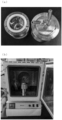
- Figs. 2 and 3 show an apparatus used in the solubility test in supercritical carbon dioxide.
- Fig. 2(a) is a photograph showing a high-pressure container (EV-3-50-2/4 manufactured by JASCO Corporation, content 50 ml)
- Fig. 2(b) is a photograph showing the high-pressure container set in an oven SCF-Sro manufactured by JASCO Corporation, respectively.
- Fig. 3 is a diagram showing an overview of the entire apparatus.
- a liquid-feeding pump (PU-2086 Intelligent HPLC pump manufactured by JASCO Corporation) for feeding carbon dioxide and a liquid-feeding pump (PU-2080 Intelligent HPLC pump manufactured by JASCO Corporation) for feeding acetone were attached to the high-pressure container.
- a cooling head was attached to the liquid-feeding pump for feeding carbon dioxide, and the carbon dioxide was kept in the liquid phase by passing a refrigerant of -10°C or lower.
- a fully automatic pressure control valve BP-2080 manufactured by JASCO Corporation was attached to the pressure release unit of the high-pressure container, and the pressure in the high-pressure container and the speed of releasing carbon dioxide were adjusted and kept constant.
- a liquefied carbon dioxide cylinder (Kind Gas Co., Ltd., purity of 99.5% or higher) was used as a carbon dioxide supply source.
- each sample was removed and placed in a cylindrical glass filter (ADVANTEC 88R) to prepare each sample.
- a high-pressure container was preheated to 100°C, and each prepared sample was placed in the high-pressure container.
- carbon dioxide was fed to the high-pressure container using a liquid-feeding pump, and the inside of the high-pressure container was pressurized.
- the conditions for treating each sample with supercritical carbon dioxide fluid were set to the pressure of 20 MPa, the temperature of 100°C, the time of 180 minutes, and a batch type, and the treatment was performed while stirring the inside of the high-pressure container with a magnetic stirrer. After treatment with the supercritical carbon dioxide fluid, the valve of the high-pressure vessel was opened and the pressure was released to atmospheric pressure. After the pressure of the high-pressure container was released, each sample was removed and weighed again.
- Table 2 shows the results of the solubility of each polymer in supercritical carbon dioxide calculated in (3) above. [Table 2] No. Sample Solubility (%) 1 Polymethyl methacrylate 2.5 2 Polyethylene glycol 0.2 3 Polyvinyl alcohol -0.7 4 Polyvinyl acetate 0.9 5 Cellulose acetate 19.5 6 Polystyrene 1.6
- cellulose acetate had the highest solubility, showing a solubility value of 19.5%.
- the reason why cellulose acetate shows higher solubility in supercritical carbon dioxide than other polymers is considered to be due to the large effect of the acetyl groups in the side chains of cellulose acetate.
- Cellulose acetate has acetylated hydroxy groups, has many acetyl groups, and has low polarity. Such a difference in the polarity of the functional groups is considered to have contributed to the high solubility of cellulose acetate in supercritical carbon dioxide, which is a nonpolar solvent.
- cellulose acetate is a preferable sizing agent when sizing with supercritical carbon dioxide.
- cellulose acetate As the sizing agent (polymer), cellulose acetate, which showed high solubility in supercritical carbon dioxide in Example 1 above, was used. As the cellulose acetate, the same cellulose acetate manufactured by Sigma-Aldrich as in Example 1 was used. The cellulose acetates used are shown in Table 3 below. [Table 3] No. Sample Company Acetylation degree (%) 1 Cellulose acetate Sigma-Aldrich 56
- a high-pressure container was preheated to 40°C, and each weight (g) of cellulose acetate shown in Table 4 below was placed in the high-pressure container.
- a predetermined amount of acetone, which is a cosolvent was fed into the high-pressure container in a manner such that the ratio (% by mol) of acetone to supercritical carbon dioxide was as shown in Table 4.
- scoured and bleached cotton thread (20 count, single thread) manufactured by IZAWA TOWEL CO., LTD. was weighed and dried at 105°C for 2 hours, and the dried cotton thread was weighed.
- the dried cotton thread was isolated with a stand made of wire not to come into contact with a stirring bar (stirrer tip), and placed in a high-pressure container.
- carbon dioxide was fed to the high-pressure container using a liquid-feeding pump, and the inside of the high-pressure container was pressurized.
- each cotton thread with a supercritical carbon dioxide fluid was set to (40°C, 10 MPa) or (100°C, 20 MPa), the time of 30 minutes, and a batch type, and the treatment was performed while stirring the inside of a high-pressure container with a magnetic stirrer.
- the pressure of the high-pressure container was released to atmospheric pressure at a constant rate of 0.1 MPa/min.
- each cotton thread was taken out and dried at 105°C for 2 hours, and each of the dried cotton threads was weighed.
- the weight (g) of the cotton thread before treatment (before sizing) with supercritical carbon dioxide fluid obtained as in (3) above and the weight (g) of the cotton thread after treatment (after sizing) with supercritical carbon dioxide fluid were used to calculate the adhesion rate (Sizing rate S) of cellulose acetate, which is a sizing agent, based on the following Formula (2).
- Sizing rate S % Weight after treatment ⁇ Weight before treatment / Weight before treatment ⁇ 100
- each cotton thread (length 20 cm) after sizing and cardboard (width 4 cm ⁇ length 23 cm) were prepared, and a sample for measurement was prepared by fixing the cotton thread to the cardboard in a manner such that the length direction of the cotton thread matched the length direction of the cardboard and the cotton thread was stretched.
- the center part was cut and removed leaving both end parts (2 cm each) of the cardboard to obtain a cotton thread test piece having grip portions (both end parts of the cardboard).
- a tensile test was performed on test pieces of each cotton thread under the condition of a tensile speed of 200 mm/min. The tensile test was performed 10 times with respect to one type of cotton thread after sizing, and the average value was calculated.
- the tensile test was similarly performed with respect to cotton threads to which no sizing agent was attached and cotton threads to which approximately 3% by weight of starch paste was attached, and the average value was calculated.
- Abrasive paper (CW-C P1000) was wrapped around the roller to prepare a roller with abrasive paper.
- a cotton thread (length 20 cm) after sizing and cardboard (width 4 cm ⁇ length 23 cm) were prepared, and a sample for measurement was prepared in which the cotton thread was fixed to the cardboard by the same procedure as in (4-2) above.
- the center part was cut and removed leaving both end parts (2 cm each) of the cardboard to obtain a cotton thread test piece having grip portions (both end parts of the cardboard).
- the obtained test piece was set on the mat, and the center part (cotton thread part) of the test piece on the mat was reciprocated 100 times by a roller with abrasive paper to rub the cotton thread part.
- the cotton thread was set in a table-top precision universal testing machine AGS-J (manufactured by Shimadzu Corporation), and subjected to a tensile test under the same conditions as in (4-2) above. The tensile test was performed 10 times with respect to one type of cotton thread, and the average value was calculated.
- Tables 4 and 5 show the evaluation results of (4-1) above.
- the adhesion rate of the sizing agent was 1.2% (the weight of sizing agent is 1.000 g under the condition of 40°C and 10 MPa or 100°C and 20 MPa).
- the weight of sizing agent was 1.000 g under the condition of 40°C and 10 MPa
- the adhesion rate of the sizing agent was increased to 62.6%.
- the sizing rate S was 10.0%. In addition, in a case where 7% by mol of acetone was added, the sizing rate S was 6.9%. Thus, in a case where 7% by mol of acetone was added, compared to a case where 10% by mol of acetone was added, the sizing rate S becomes lower, and it is considered that the content ratio of acetone is suitably 10% by mol.
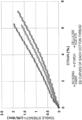
- Table 6 shows the evaluation results of (4-2) above. SS curves of each cotton thread are shown in Figs. 7 to 9 . In addition, Fig. 10 shows a summary of the graphs closest to the average value for each SS curve. [Table 6] Sample Sizing rate S (%) Tensile strength (average) (cN/dtex) No sizing agent 0 1.63 Starch 3 1.75 Cellulose acetate (Sigma-Aldrich) 17.7 1.94
- the tensile strength of the cotton thread to which starch paste was attached was 1.75 cN/dtex, which was higher than the tensile strength of the cotton thread to which no sizing agent was attached.
- the cotton thread to which cellulose acetate was attached by supercritical carbon dioxide showed a higher tensile strength than the cotton thread to which starch paste was attached. From these results, it is considered that the cotton thread to which cellulose acetate is attached has cleared the reference tensile strength value, such as the tensile strength of the cotton thread to which starch paste is attached.
- the cotton thread to which cellulose acetate was attached showed a high value, and the cotton thread to which starch paste was attached showed a low value. From this result, it was found that the cotton thread to which cellulose acetate was attached was harder than the cotton thread to which starch paste was attached.
- Table 7 shows the evaluation results of (4-4) above.
- Sample Sizing rate S (%) Tensile strength (average) (cN/dtex) Starch (before friction test) 3 1.75 Starch (after friction test) 3 0.81 Cellulose acetate (Sigma-Aldrich) (before friction test) 17.7 1.94 Cellulose acetate (Sigma-Aldrich) (after friction test) 11.8 1.11
- the scoured and bleached cotton thread (20 count, single thread) manufactured by IZAWA TOWEL CO., LTD. was treated to prepare a cotton thread (Sizing rate S: 15.5%) to which cellulose acetate (manufactured by Sigma-Aldrich) was attached.
- the high-pressure container was preheated to 40°C, and the cotton thread to which the cellulose acetate (manufactured by Sigma-Aldrich) was attached shown in (1) above was placed in the high-pressure container being separated from the stand made of wire not to come into contact with the stirring bar (stirrer tip).
- acetone was placed in the high-pressure container using a liquid-feeding pump in a manner such that the ratio (% by mol) of acetone to supercritical carbon dioxide was 10% by mol.
- carbon dioxide was fed to the high-pressure container using a liquid-feeding pump, and the inside of the high-pressure container was pressurized.
- each cotton thread with supercritical carbon dioxide fluid was set to 40°C, 10 MPa, 60 minutes, and a batch type, and the treatment was performed while stirring the inside of the high-pressure container with a magnetic stirrer. After treatment with the supercritical carbon dioxide fluid, the valve of the high-pressure container was opened and the pressure was released to atmospheric pressure. After releasing the pressure of the high-pressure container, each cotton thread was taken out and dried under the condition of 105°C and 2 hours, and each of the dried cotton threads was weighed. Then, each of the dried cotton threads was repeatedly subjected to the same treatment with the supercritical carbon dioxide fluid 5 times in total.
- the high-pressure container was preheated, and 0.2 g of the cotton thread to which the cellulose acetate (manufactured by Sigma-Aldrich) was attached shown in (1) above was placed in the high-pressure container being separated from the stand made of wire not to come into contact with the stirring bar (stirrer tip).
- the high-pressure container was closed, and the fully automatic adjustment valve was set to a predetermined pressure.
- carbon dioxide was fed to the high-pressure container at a predetermined flow speed using a liquid-feeding pump, and the time when the fully automatic adjustment valve started releasing pressure was taken as the starting point of the treatment.
- acetone feeding was started after the pressure in the high-pressure container had risen to the pressure level set by the fully automatic adjustment delivery.
- the time at which the fully automatic adjustment valve started to release the pressure was taken as the starting point of the treatment, similar to the liquid feeding of the carbon dioxide. After treatment with supercritical carbon dioxide fluid, the pressure of the high-pressure container was rapidly released. After releasing the pressure of the high-pressure container, each cotton thread was taken out and dried under the condition of 105°C and 2 hours, and each of the dried cotton threads was weighed.
- the temperature and pressure were set to conditions such as (40°C, 10 MPa), (40°C, 20 MPa), and (100°C, 10 MPa), respectively, and supercritical treatment was performed.
- Carbon dioxide and acetone were fed at the setting of a flow speed of 1 ml/min and 0.2 ml/min, respectively, and supercritical treatment was performed for 5 hours.
- a stand made of wire as described above was removed and the cotton thread and stirrer were brought into contact with each other.
- 10 stainless steel metal balls (inch size 1/4) were placed in a high-pressure container and further stirred to perform desizing.
- the temperature and pressure conditions in the supercritical treatment were 40°C and 10 MPa.
- Carbon dioxide and acetone were fed at the setting of a flow speed of 1 ml/min and 0.2 ml/min, respectively, and supercritical treatment was performed for 5 hours.
- the flow speed of carbon dioxide, the flow speed of acetone, and the time of supercritical treatment are set to (5 ml/min, 1 ml/min, 60 min), (1 ml/min, 0.2 ml/min, 300 min), (0.5 ml/min, 0.1 ml/min, 600 min), respectively.
- the temperature and pressure conditions in the supercritical treatment were 40°C and 10 MPa.
- the Sizing rate S of cellulose acetate (sizing agent) after desizing treatment was calculated.
- Sizing rate S before supercritical treatment is S 0
- Sizing rate S and desizing rate D after the first treatment are S 1 and DD 1
- the second and subsequent treatments are S 1 to S 5 and D 1 to D 5 , respectively.
- Table 8 shows the evaluation results of the batch method, and Table 9 shows the evaluation results of the continuous method, respectively.
- test No. 2 had the same temperature, pressure, and time conditions as the test of 5 times of treatment by the batch method shown in Table 8, but t desizing rate D was 43.9%, which was lower than desizing rate D (82.4%) of the batch method. This is probably because the supercritical carbon dioxide flows out of the high-pressure vessel before the cellulose acetate dissolves in the supercritical carbon dioxide due to insufficient stirring by the stirring bar in the continuous method.
- test No. 3 had a higher pressure than test No. 2, but desizing rate D was 38.3%, which was comparable to test No. 2. From this result, it is considered that the solubility of cellulose acetate in supercritical carbon dioxide does not change even when the pressure is changed in the range of 10 to 20 MPa.
- test No. 5 was a test that employed the same conditions as test No. 2, removed the stand made of wire, and brought the cotton thread into contact with the stirring bar.
- Test No. 5 had desizing rate D of 72.4%, which was significantly higher than that of test No. 2. From this result, it is considered that the degree of physical contact with the cotton thread is significantly related to the desizing rate D in the desizing test.
- test No. 6 a desizing test was performed by placing a stainless metal ball in the high-pressure vessel and further increasing the degree of physical contact with the cotton thread. As a result, desizing rate D was 81.1%, which was higher than that of test No. 5. From this result, it was found that the factor of physical contact with the cotton thread has a considerable influence on desizing.
- Test No. 7 was a test in which the treatment time was extended and the flow speed was slowed down compared to No. 6 under the conditions of using metal balls, but desizing rate D was 75.9%, which was slightly lower than that in test No. 6. From this result, in a case where the cotton thread and high-pressure container of the present example were used, under the conditions of a treatment time of 300 minutes, a flow speed of supercritical carbon dioxide of 1 ml/min, and a flow speed of acetone of 0.2 ml/min, it is considered that cellulose acetate shows high solubility in solvent.
Landscapes
- Engineering & Computer Science (AREA)
- Textile Engineering (AREA)
- Chemical & Material Sciences (AREA)
- Chemical Kinetics & Catalysis (AREA)
- Dispersion Chemistry (AREA)
- Treatments For Attaching Organic Compounds To Fibrous Goods (AREA)
- Treatment Of Fiber Materials (AREA)
- Chemical Or Physical Treatment Of Fibers (AREA)
Applications Claiming Priority (2)
| Application Number | Priority Date | Filing Date | Title |
|---|---|---|---|
| JP2021084556A JP7133125B2 (ja) | 2021-05-19 | 2021-05-19 | 糊剤を繊維品に付与する方法、糊剤付き繊維品の製造方法、糊剤付き繊維品から糊剤を除去する方法、及び糊剤付き繊維品から繊維品を製造する方法 |
| PCT/JP2022/019650 WO2022244634A1 (ja) | 2021-05-19 | 2022-05-09 | 糊剤を繊維品に付与する方法、糊剤付き繊維品の製造方法、糊剤付き繊維品から糊剤を除去する方法、及び糊剤付き繊維品から繊維品を製造する方法 |
Publications (2)
| Publication Number | Publication Date |
|---|---|
| EP4343045A1 true EP4343045A1 (de) | 2024-03-27 |
| EP4343045A4 EP4343045A4 (de) | 2025-10-15 |
Family
ID=77364831
Family Applications (1)
| Application Number | Title | Priority Date | Filing Date |
|---|---|---|---|
| EP22797618.0A Pending EP4343045A4 (de) | 2021-05-19 | 2022-05-09 | Verfahren zum beleimen von faserprodukten, verfahren zur herstellung von faserprodukten |
Country Status (4)
| Country | Link |
|---|---|
| US (1) | US20240240377A1 (de) |
| EP (1) | EP4343045A4 (de) |
| JP (1) | JP7133125B2 (de) |
| WO (1) | WO2022244634A1 (de) |
Families Citing this family (3)
| Publication number | Priority date | Publication date | Assignee | Title |
|---|---|---|---|---|
| JP7867659B2 (ja) * | 2023-03-28 | 2026-06-01 | 伊澤タオル株式会社 | 糊剤付き繊維品、糊剤、糊剤付き繊維品を製造する方法、及び繊維品を製造する方法 |
| JP7758309B2 (ja) * | 2024-02-06 | 2025-10-22 | 伊澤タオル株式会社 | 糊剤付き繊維品、糊剤、糊剤付き繊維品を製造する方法、及び繊維品を製造する方法 |
| WO2026003902A1 (ja) * | 2024-06-24 | 2026-01-02 | 伊澤タオル株式会社 | 糊剤付き繊維品、糊剤、糊剤付き繊維品を製造する方法、及び繊維品を製造する方法 |
Family Cites Families (5)
| Publication number | Priority date | Publication date | Assignee | Title |
|---|---|---|---|---|
| US5863298A (en) * | 1996-03-08 | 1999-01-26 | Battelle Memorial Institute | Method for sizing and desizing yarns with liquid and supercritical carbon dioxide solvent |
| JP4766501B2 (ja) * | 2000-12-15 | 2011-09-07 | 三菱レイヨン株式会社 | 炭素繊維の処理方法 |
| AU2002345758A1 (en) * | 2001-06-22 | 2003-01-08 | Raveendran Poovathinthodiyil | Renewable, carbohydrate based co2-philes |
| JP5831541B2 (ja) * | 2011-03-31 | 2015-12-09 | 日東紡績株式会社 | ガラス繊維織物の洗浄方法 |
| CN104389153B (zh) * | 2014-10-17 | 2017-01-11 | 苏州大学 | 一种超临界二氧化碳流体中棉的酶退浆方法 |
-
2021
- 2021-05-19 JP JP2021084556A patent/JP7133125B2/ja active Active
-
2022
- 2022-05-09 WO PCT/JP2022/019650 patent/WO2022244634A1/ja not_active Ceased
- 2022-05-09 EP EP22797618.0A patent/EP4343045A4/de active Pending
- 2022-05-09 US US17/924,653 patent/US20240240377A1/en active Pending
Also Published As
| Publication number | Publication date |
|---|---|
| WO2022244634A1 (ja) | 2022-11-24 |
| JP7133125B2 (ja) | 2022-09-08 |
| EP4343045A4 (de) | 2025-10-15 |
| US20240240377A1 (en) | 2024-07-18 |
| JP2021121700A (ja) | 2021-08-26 |
Similar Documents
| Publication | Publication Date | Title |
|---|---|---|
| US20240240377A1 (en) | Method for applying sizing agent to textile product, method for manufacturing sizing-applied textile product, method for removing sizing agent from sizing-applied textile product, and method for manufacturing textile product from sizing-applied textile product | |
| EP2785901B1 (de) | Garn mit gelbildenden fäden oder fasern | |
| EP2826894B1 (de) | Ultradünne polyesterfaser und nahtloses röhrenförmiges gewebe | |
| EP2562299B1 (de) | Herstellungsverfahren für ein gequollenes garn zur herstellung eines gewebes oder strickstoffs | |
| JP4353698B2 (ja) | 後加工に優れた複合繊維及びその製造方法 | |
| EP2589689A2 (de) | Spinnlösung zum spinnen einer lyozelle, verfahren zur herstellung einer lyozellenfilamentfaser und verfahren zur herstellung einer lyozellenstapelfaser damit | |
| CN1934303B (zh) | 各向同性沥青系碳纤维细纱、使用了该细纱的复合丝和织物及它们的制造方法 | |
| EP2878719B1 (de) | Strukturiertes gesponnenes garn und web- oder strickstoff damit | |
| EP0866154A1 (de) | Falschzwirngarn | |
| CN100497769C (zh) | 衣料用布帛及其制造方法 | |
| RU2745811C1 (ru) | Трикотажные полотна из непрерывных лиоцелловых волокон | |
| US4144079A (en) | Rayon fibers containing starch | |
| EP4092185A1 (de) | Fibrillierte regenerierte cellulosefaser und damit ausgerüstetes gewebe | |
| USRE31380E (en) | Rayon fibers containing starch | |
| JPH1072741A (ja) | フィラメント複合織物及びその製造方法 | |
| JPS5854081A (ja) | 親水性合成繊維 | |
| US6524493B1 (en) | Textile sizing composition and textiles sized therewith | |
| US5612475A (en) | Carboxymethylated guar galactomannan as a sizing agent | |
| JPS5854080A (ja) | 親水性合成繊維 | |
| JP4815280B2 (ja) | 複合撚糸 | |
| EP4361341A1 (de) | Verfahren zum auswaschen von faserprodukten und verfahren zum auswaschen von faserprodukten zur herstellung von ausgereiften faserprodukten | |
| JPS5854016A (ja) | ポリアクリロニトリル系フイラメント糸の製造法 | |
| JP3689945B2 (ja) | ポリエステル系合成繊維製品の処理方法 | |
| WO2026003902A1 (ja) | 糊剤付き繊維品、糊剤、糊剤付き繊維品を製造する方法、及び繊維品を製造する方法 | |
| WO2025169511A1 (ja) | 糊剤付き繊維品、糊剤、糊剤付き繊維品を製造する方法、及び繊維品を製造する方法 |
Legal Events
| Date | Code | Title | Description |
|---|---|---|---|
| STAA | Information on the status of an ep patent application or granted ep patent |
Free format text: STATUS: UNKNOWN |
|
| STAA | Information on the status of an ep patent application or granted ep patent |
Free format text: STATUS: THE INTERNATIONAL PUBLICATION HAS BEEN MADE |
|
| PUAI | Public reference made under article 153(3) epc to a published international application that has entered the european phase |
Free format text: ORIGINAL CODE: 0009012 |
|
| STAA | Information on the status of an ep patent application or granted ep patent |
Free format text: STATUS: REQUEST FOR EXAMINATION WAS MADE |
|
| 17P | Request for examination filed |
Effective date: 20221109 |
|
| AK | Designated contracting states |
Kind code of ref document: A1 Designated state(s): AL AT BE BG CH CY CZ DE DK EE ES FI FR GB GR HR HU IE IS IT LI LT LU LV MC MK MT NL NO PL PT RO RS SE SI SK SM TR |
|
| DAV | Request for validation of the european patent (deleted) | ||
| DAX | Request for extension of the european patent (deleted) | ||
| RIC1 | Information provided on ipc code assigned before grant |
Ipc: D06B 9/00 20060101ALI20250530BHEP Ipc: D02J 3/18 20060101ALI20250530BHEP Ipc: D06M 23/10 20060101ALI20250530BHEP Ipc: D06M 15/07 20060101ALI20250530BHEP Ipc: D06M 15/53 20060101ALI20250530BHEP Ipc: D06M 15/263 20060101ALI20250530BHEP Ipc: D06M 15/333 20060101ALI20250530BHEP Ipc: D06L 1/00 20170101ALI20250530BHEP Ipc: D06M 15/233 20060101ALI20250530BHEP Ipc: D06B 1/00 20060101AFI20250530BHEP |
|
| RIC1 | Information provided on ipc code assigned before grant |
Ipc: D06B 1/00 20060101AFI20250902BHEP Ipc: D06M 15/233 20060101ALI20250902BHEP Ipc: D06L 1/00 20170101ALI20250902BHEP Ipc: D06M 15/333 20060101ALI20250902BHEP Ipc: D06M 15/263 20060101ALI20250902BHEP Ipc: D06M 15/53 20060101ALI20250902BHEP Ipc: D06M 15/07 20060101ALI20250902BHEP Ipc: D06M 23/10 20060101ALI20250902BHEP Ipc: D02J 3/18 20060101ALI20250902BHEP Ipc: D06B 9/00 20060101ALI20250902BHEP |
|
| A4 | Supplementary search report drawn up and despatched |
Effective date: 20250916 |
|
| RIC1 | Information provided on ipc code assigned before grant |
Ipc: D06B 1/00 20060101AFI20250908BHEP Ipc: D06M 15/233 20060101ALI20250908BHEP Ipc: D06L 1/00 20170101ALI20250908BHEP Ipc: D06M 15/333 20060101ALI20250908BHEP Ipc: D06M 15/263 20060101ALI20250908BHEP Ipc: D06M 15/53 20060101ALI20250908BHEP Ipc: D06M 15/07 20060101ALI20250908BHEP Ipc: D06M 23/10 20060101ALI20250908BHEP Ipc: D02J 3/18 20060101ALI20250908BHEP Ipc: D06B 9/00 20060101ALI20250908BHEP |