EP4343328A2 - Diagnostisches verfahren und zusammensetzung zum nachweis von mastitis verursacht durch e. coli, s. uberis, s. agalactiae oder s. aureus - Google Patents
Diagnostisches verfahren und zusammensetzung zum nachweis von mastitis verursacht durch e. coli, s. uberis, s. agalactiae oder s. aureus Download PDFInfo
- Publication number
- EP4343328A2 EP4343328A2 EP23461639.9A EP23461639A EP4343328A2 EP 4343328 A2 EP4343328 A2 EP 4343328A2 EP 23461639 A EP23461639 A EP 23461639A EP 4343328 A2 EP4343328 A2 EP 4343328A2
- Authority
- EP
- European Patent Office
- Prior art keywords
- amino acid
- acid sequence
- protein
- uberis
- seq
- Prior art date
- Legal status (The legal status is an assumption and is not a legal conclusion. Google has not performed a legal analysis and makes no representation as to the accuracy of the status listed.)
- Granted
Links
Images





Classifications
-
- G—PHYSICS
- G01—MEASURING; TESTING
- G01N—INVESTIGATING OR ANALYSING MATERIALS BY DETERMINING THEIR CHEMICAL OR PHYSICAL PROPERTIES
- G01N33/00—Investigating or analysing materials by specific methods not covered by groups G01N1/00 - G01N31/00
- G01N33/48—Biological material, e.g. blood, urine; Haemocytometers
- G01N33/50—Chemical analysis of biological material, e.g. blood, urine; Testing involving biospecific ligand binding methods; Immunological testing
- G01N33/53—Immunoassay; Biospecific binding assay; Materials therefor
- G01N33/569—Immunoassay; Biospecific binding assay; Materials therefor for microorganisms, e.g. protozoa, bacteria, viruses
- G01N33/56911—Bacteria
- G01N33/56916—Enterobacteria, e.g. shigella, salmonella, klebsiella, serratia
-
- G—PHYSICS
- G01—MEASURING; TESTING
- G01N—INVESTIGATING OR ANALYSING MATERIALS BY DETERMINING THEIR CHEMICAL OR PHYSICAL PROPERTIES
- G01N33/00—Investigating or analysing materials by specific methods not covered by groups G01N1/00 - G01N31/00
- G01N33/48—Biological material, e.g. blood, urine; Haemocytometers
- G01N33/50—Chemical analysis of biological material, e.g. blood, urine; Testing involving biospecific ligand binding methods; Immunological testing
- G01N33/53—Immunoassay; Biospecific binding assay; Materials therefor
- G01N33/569—Immunoassay; Biospecific binding assay; Materials therefor for microorganisms, e.g. protozoa, bacteria, viruses
- G01N33/56911—Bacteria
- G01N33/56938—Staphylococcus
-
- G—PHYSICS
- G01—MEASURING; TESTING
- G01N—INVESTIGATING OR ANALYSING MATERIALS BY DETERMINING THEIR CHEMICAL OR PHYSICAL PROPERTIES
- G01N33/00—Investigating or analysing materials by specific methods not covered by groups G01N1/00 - G01N31/00
- G01N33/48—Biological material, e.g. blood, urine; Haemocytometers
- G01N33/50—Chemical analysis of biological material, e.g. blood, urine; Testing involving biospecific ligand binding methods; Immunological testing
- G01N33/53—Immunoassay; Biospecific binding assay; Materials therefor
- G01N33/569—Immunoassay; Biospecific binding assay; Materials therefor for microorganisms, e.g. protozoa, bacteria, viruses
- G01N33/56911—Bacteria
- G01N33/56944—Streptococcus
-
- G—PHYSICS
- G01—MEASURING; TESTING
- G01N—INVESTIGATING OR ANALYSING MATERIALS BY DETERMINING THEIR CHEMICAL OR PHYSICAL PROPERTIES
- G01N2333/00—Assays involving biological materials from specific organisms or of a specific nature
- G01N2333/195—Assays involving biological materials from specific organisms or of a specific nature from bacteria
- G01N2333/24—Assays involving biological materials from specific organisms or of a specific nature from bacteria from Enterobacteriaceae (F), e.g. Citrobacter, Serratia, Proteus, Providencia, Morganella, Yersinia
- G01N2333/245—Escherichia (G)
-
- G—PHYSICS
- G01—MEASURING; TESTING
- G01N—INVESTIGATING OR ANALYSING MATERIALS BY DETERMINING THEIR CHEMICAL OR PHYSICAL PROPERTIES
- G01N2333/00—Assays involving biological materials from specific organisms or of a specific nature
- G01N2333/195—Assays involving biological materials from specific organisms or of a specific nature from bacteria
- G01N2333/305—Assays involving biological materials from specific organisms or of a specific nature from bacteria from Micrococcaceae (F)
- G01N2333/31—Assays involving biological materials from specific organisms or of a specific nature from bacteria from Micrococcaceae (F) from Staphylococcus (G)
-
- G—PHYSICS
- G01—MEASURING; TESTING
- G01N—INVESTIGATING OR ANALYSING MATERIALS BY DETERMINING THEIR CHEMICAL OR PHYSICAL PROPERTIES
- G01N2333/00—Assays involving biological materials from specific organisms or of a specific nature
- G01N2333/195—Assays involving biological materials from specific organisms or of a specific nature from bacteria
- G01N2333/315—Assays involving biological materials from specific organisms or of a specific nature from bacteria from Streptococcus (G), e.g. Enterococci
-
- G—PHYSICS
- G01—MEASURING; TESTING
- G01N—INVESTIGATING OR ANALYSING MATERIALS BY DETERMINING THEIR CHEMICAL OR PHYSICAL PROPERTIES
- G01N2469/00—Immunoassays for the detection of microorganisms
- G01N2469/10—Detection of antigens from microorganism in sample from host
Definitions
- the invention concerns a diagnostic method and composition for detecting mastitis caused by E. coli, S. uberis, S. agalactiae or S. aureus.
- Bovine mastitis (inflammation of the udder), generating millions of dollars in losses for cattle farmers, is an important veterinary issue [1]. It is estimated that mastitis is confirmed in up to 20% of cows in countries considered leaders in milk production [2]. In addition, economic losses sustained due to the clinical type of mastitis may be as high as $76,000 per month in each farm [3]. The losses are caused first of all by the decreased volume of milk produced, its lower quality and they may also result from the need for isolating affected animals for the time of treatment whereby animals not only do not produce milk but also need to be treated [1].
- Bacteria are listed as the most common pathogens responsible for mastitis, such as: Staphylococcus aureus, Streptococcus uberis, Streptococcus agalactiae, Streptococcus dysgalactiae, Corynebacterium bovis, Mycoplasma bovis, Escherichia coli, Klebsiella pneumoniae, but also fungi and algae [4, 5].
- Mastitis may be a subclinical, clinical or chronic infection.
- the type depends for example on the etiological agent, age, race, the animal's resistance and lactation status.
- the chronic type is the least frequent, but it results in the permanent inflammation of the mammary gland.
- the clinical form is the most dangerous, diagnosed based on visible and palpable symptoms, such as fever, edema, pain and redness of the mammary gland; in addition, the volume of milk produced decreases and changes in milk appearance develop.
- the subclinical form generates the largest losses in dairy industry because no evident symptoms are seen [6, 7, 8].
- mastitis is currently based mainly on rapid tests that estimate the somatic cell count (SCC) in a test sample of cow's milk.
- SCC somatic cell count
- This approach promptly provides diagnosis and, what is most important, the tests can be performed directly next to the animal. This is one of the most important advantages considering the type of field work of veterinarians. Nevertheless, the key limitation of the method is that the etiological agent cannot be identified. Because nothing is known about the pathogen responsible for the infection, targeted antibiotic therapy cannot be started, with a potential consequence of an increasing percentage of multi-resistant bacterial strains, a growing problem worldwide.
- Patent application US2003073073A1 concerns a multiplex immunochromatographic test (lateral flow assay, LFA) for the diagnosis of mastitis both in cows and in other dairy animals.
- LFA lateral flow assay
- fibronectin binding protein was claimed for Staphylococcus aureus, whose variant A is claimed in this application.
- the same proteins are not included for other species ( E. coli, S. agalactiae, S. uberis ) .
- Patent application WO2019216775A1 also discloses an LFA for the multiplex diagnosis of mastitis, but other antigens are targeted.
- Patent application US2005260695A1 concerns the immunodiagnostics of mastitis based on lactoferrin, for example.
- Patent US9556281B2 concerns protein A (SpA) for Staphylococcus aureus as an antigen used in the treatment and prevention of infections caused by the bacteria.
- SpA protein A
- Patent application CA2270404A1 concerns a diagnostic marker for Streptococcus uberis known as lactoferrin binding protein, which is not included in the pool of proteins included in the application.
- patent application EP1532253A1 describes a component of a vaccine against Streptococcus uberis in the form of proteins with a mass of approx. 22 kDa.
- the object of the invention is a method for detecting mastitis caused by E. coli, S. uberis, S. agalactiae or S. aureus, characterized in that the following antigens are tested in a biological specimen, in particular milk, collected from the udder of a tested cow:
- Another object of the invention concerns a diagnostic composition for detecting mastitis caused by E. coli, S. uberis, S. agalactiae or S. aureus, characterized in that it contains reagents, in particular antibodies, useful for detecting the following antigens:
- the diagnostic composition of the invention is characterized in that it contains monoclonal or polyclonal antibodies specific for the hereinabove antigens.
- the diagnostic composition of the invention contains labelled antibodies.
- One of the aspects of the invention is a multiplex immunodiagnostic test for detecting bacterial antigens representative for 4 bacterial species: E. coli, S. uberis, S. agalactiae and S. aureus, which are the most common etiological agents responsible for mastitis in cows.
- immunogenic proteins having antigenic potential defined as species specificity and immunoreactivity, and also associated with the bacterial cell surface.
- the properties could be confirmed both through bioinformatic analysis and experimental laboratory tests using SDS-PAGE and immunoblotting based on antibodies from animals infected by one of the four hereinabove bacteria and also from healthy cows (negative control, animals without mastitis).
- strains from animals with mastitis with etiologies other than E. coli, S. uberis, S. agalactiae or S. aureus were used in the experiments to rule out cross-reactivity.
- proteins (ompA for E . coli, EF-Tu for S. uberis, ADA for S. agalactiae, FnBPA for S. aureus ) selected according to the invention and monoclonal antibodies against these proteins were used to develop a rapid multiplex immunochromatographic test based on which bacteria found in milk from cows with mastitis can be detected.
- the antigens identified by the present inventors are detected by monoclonal antibodies, the key component of the immunochromatographic test (lateral flow assay, LFA).
- the said test is in the form of a cassette immunochromatographic test (lateral flow assay, LFA).
- the test based on the antigens specified according to the invention ensures high sensitivity, specificity and/or accuracy of at least 75%.
- Example 1 Identification of antigens useful for detecting mastitis caused by E. coli, S. uberis, S. agalactiae or S. aureus
- Twenty-two milk samples were collected from infected quarters of cow's udders in which clinical symptoms of mastitis were identified, such as edema, elevated temperature, hardening, redness and tenderness of the udder, changes in milk consistency (watery, pus or clots).
- the samples were collected within routine milk collection procedures by veterinarians from the "Omnivet” Veterinary Clinic in Orzesze and the "Egida” Veterinary Clinic in Wizna.
- 12 milk samples were collected from healthy animals, and constituted negative controls.
- a milk samples from a cow with infection caused by Streptococcus dysgalactiae was a cross-reactivity control between the tested isolates of the genus Streptococcus.
- the milk and sera were stored at -80°C.
- each milk sample was cultured in the Columbia medium with sheep blood added (Difco) in aerobic conditions at 37°C for 24 hours. Subsequently, the samples preliminarily identified as E. coli were cultured in the McConkey medium (Oxoid) in aerobic conditions at 37°C for 24 hours to confirm the species. In addition, colonies showing morphology consistent with one of the four species sought were further analyzed to confirm the species.
- Identification included culture in the Granada Agar medium (bioMerieux) dedicated for the detection of ⁇ -hemolyzing Streptococcus agalactiae strains and the chromogenic CHROMagar TM Mastitis GP medium (CHROMagar TM ) used to differentiate between the most common Gram-positive species causing mastitis in cows. Identification was also performed based on the CAMP test, catalase test, API test and MALDI-ToF technique.
- Bacterial strains were isolated based on a modified procedure of Park et al. [9], developed based on a protocol reported by Fang and Oliver [10]. Modifications included for example culture in liquid tryptic soy broth (TSB, Becton-Dickinson) at 37°C for 24 hours. After the end of culture, the bacterial suspension was centrifuged (3000 rpm for 30 min), and the supernatant was removed and the bacterial pellet was suspended in 3 mL phosphate buffered saline (PBS, Thermo Fisher) and centrifuged for 20 minutes (3300 rpm).
- TBS liquid tryptic soy broth
- SDS sodium dodecyl sulfate
- the membranes were blocked in 1% bovine serum albumin (BSA) solution (Thermo Fisher) in PBS with Tween-20 (PBS-T, Thermo Fisher) added with shaking at room temperature for 1 hour.
- BSA bovine serum albumin
- the membranes were washed in PBS-T 3 times for 5 minutes, and incubated with the test serum solution at 37°C for 2 hours in a 1:1,000 dilution and washed again in PBS-T (3 x 5 min).
- the bands were destained with methanol, and then reduced and alkylated with dithiothreitol and iodoacetamide solutions. Subsequently, gel fragments were digested in trypsin solution in 50 mM carbonate buffer (Promega, Trypsin Gold, Mass Spectrometry Grade, Technical Bulletin) at 37°C overnight. The resulting peptides were extracted from the gel using a solution consisting of water, acetonitrile and trifluoroacetic acid with elution performed three times (v:v 45:50:5). The peptide mixture was purified and concentrated using C18 Zip-tips according to the manufacturer's instructions (Merck Chemicals, Billerica, MA, USA, PR 02358, Technical Note).
- Mass spectra of the analyzed samples were recorded in a range of 700-4,000 m/z using an Ultraflextreme MALDI TOF/TOF spectrometer (Bruker) with flexControl 3.3 software (Bruker). The resulting spectra were subjected to smoothing and cut-off lines were corrected.
- the spectra were compared in terms of similarity to the peptide fingerprint specific for respective proteins. In this case, the number of overlapping peptide signals generated after digestion was used to compare the data with those found in the annotated protein database. The results obtained in Mascot with values greater than 61 were considered statistically significant (p ⁇ 0.05). Other spectra of fragment ions for selected peptides were recorded in the LIFT mode and pooled to enable MALDI TOF/TOF identification. The results were interpreted as follows: a protein result was -10*Log(P), wherein P was the probability that the observed match was a random event. The higher score, the better identification.
- bioinformatic analyses were performed including prediction of cell localization, antigenicity, detection of signal peptides and classic or non-classic proteins.
- selected proteins were analyzed to identify linear B cell epitopes, search for PDB models and identify conformational B cell epitopes.
- Subcellular localization of the proteins was predicted using PsortB 3.0 and the Bologna Unified Subcellular Component Annotator (BUSCA) server, with differentiation between Gram-positive and Gram-negative bacteria. Subcellular localizations were annotated as GO, with extracellular annotated as GO:0005615 and cytoplasmic as GO:0005737.
- BUSCA Bologna Unified Subcellular Component Annotator
- Protein functions were predicted using PRED-LIPO (prediction of signal proteins), SignalP (classic proteins), Secretome (non-classic proteins for Gram-positive bacteria) and PncsHub (non-classic proteins for Gram-negative bacteria) servers.
- Classic or non-classic proteins were predicted with a default setting of 0.45 and 0.5, respectively.
- B cell epitopes for antigenic proteins were identified using Antibody Epitope Prediction in the IEDB database.
- Conformational B cell epitopes were identified as follows: the PDB matrix was identified using SWISS-MODEL Workspace including PDB identifiers for each protein sequence. Subsequently, the best matrix (with higher identity) was selected, based on which a respective model was built. Selected PDB identifiers were then used to predict linear and discontinuous conformational B cell epitopes using ellipro software.
- Streptococcus uberis found in 11 test samples (73%), prevailed in the genus Streptococcus, Streptococcus dysgalactiae was detected in two samples (13%), and Streptococcus agalactiae was found in only one milk specimen tested (7%).
- One streptococcal strain (7%) was not identified as to the species.
- Fig. 1 shows the percentage of bacterial strains isolated from the milk of cows with confirmed mastitis, divided into species and/or genera.
- Protein detection was performed for three representative strains of Escherichia coli, three strains of Streptococcus uberis and one strain of Streptococcus agalactiae.
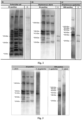
- Fig. 2 shows examplary results of the immunodetection of proteins representative for Escherichia coli, Streptococcus uberis and Streptococcus agalactiae tested in the presence of sera from infected animals (EC-positive: sera from cows with mastitis caused by Escherichia coli ; SU-positive: sera from cows with mastitis caused by Streptococcus uberis, GBS-positive: sera from cows with mastitis caused by Streptococcus agalactiae (group B streptococcus, GBS) and from healthy animals (C-).
- EC-positive sera from cows with mastitis caused by Escherichia coli
- SU-positive sera from cows with mastitis caused by Streptococcus uberis
- GBS-positive sera from cows with mastitis caused by Streptococcus agalactiae (group B streptococcus, G
- Fig. 3 shows examplary results for the cross-reactivity between Streptococcus agalactiae, Streptococcus uberis and Streptococcus dysgalactiae tested in the presence of sera from cows with mastitis caused by Streptococcus agalactiae (GBS-positive) and pooled sera from cows with Streptococcus uberis mastitis (SU-positive).
- uberis elongation factor Tu (SU 1), tRNA uridine 5-carboxymethylaminomethyl modification enzyme MnmG (SU 3), GTPase Obg (SU 4), glyceraldehyde-3-phosphate dehydrogenase (SU 5), and 3 for E. coli: molybdenum cofactor biosynthesis protein B (EC 1), aldehyde reductase YahK (EC 2) and outer membrane protein A (EC 3). Differences in molecular masses between the mass of the identified proteins and that determined by SDS-PAGE based on a comparison with the protein marker mass may result from multiple protein forms present, their modification or their partial breakdown.
- EC 1 molybdenum cofactor biosynthesis protein B
- EC 2 aldehyde reductase YahK
- EC 3 outer membrane protein A
- proteins listed above were subjected to bioinformatic analysis to determine their immunogenicity and functionality.
- the proteins were classified based on their cell localization.
- 12 proteins were classified as cytoplasmic (GO: 000573), and one (EC3) was localized in the outer membrane (GO: 0019867) of subcellular elements.
- proteins were divided into classic and non-classic. As a result, 9 proteins: EC3, GBS 1, GBS 2, GBS 3, GBS 4, GBS 7, SU 1, SU 3, SU 5 were identified as non-classic proteins (secretomic proteins). Furthermore, the proteins were also classified in terms of their antigenic potential and 12 of the 13 proteins were identified as antigens. Detection of signal peptides showed that only one protein (EC3) had a signal peptide (Sec signal).
- amino acid sequences were retrieved from Esembl Bacteria and UniProt databases. Due to the very large volume of data, the sequences were merged into single files representative for respective species. Subsequently, the sequences were divided into two groups: "positive” (Gram-positive) and "negative” (Gram-negative). At the next stage, the amino acid sequences were clustered using CD-HIT software. Analyses were performed for the identity thresholds of 70%, 80% and 90%. In addition, potential surface proteins were predicted using PSORTb software which determined protein localization in the bacterial cell.
- the test sequences were divided into: “Cellwall” (associated with the cell wall), “CytoplasmicMembrane” (found in cytoplasm), “Extracellular” (extracellular proteins) and “Unknown”. Only the sequences identified as “CellWall” were selected for further analysis. At the next stage, the data obtained through analyses using PSORTb and CD-HIT were merged. The amino acid sequences representative for surface proteins from Staphylococcus aureus, classified into a common cluster with the sequences representative for other Gram-positive species, were excluded from further analysis. The other proteins were analyzed in the NCBI BLAST database to compare them with reference sequences representative for a total of 18 bacterial, viral and fungal species that could potentially be found in cow's milk.
- Bacterial DNA was isolated using a commercial Genomic Mini Kit (A&A Biotechnology) according to the manufacturer's procedure modified by adding 0.4 U/ ⁇ L lysostaphin (A&A Biotechnology). The concentration and purity of the isolated DNA was evaluated using the NanoDrop device (Thermo Scientific). The DNA was stored at -20°C for further tests.
- fnb A gene encoding fibronectin binding protein A was performed based on a procedure developed by Tristan et al. [12] with minor modifications.
- the fnb A gene was amplified using primers with the following sequences: fnb A - F (CATAAATTGGGAGCAGCATCA) and fnb A-R (ATCAGCAGCTGAATTCCCATT) (Genomed) at 0.1 ⁇ M (1.25 ⁇ L of each primer per sample), 12.5 ⁇ L of the commercial PCR Mix Plus Kit (A&A Biotechnology) and 7.5 ⁇ L RNase-free water (A&A Biotechnology) and 2.5 ⁇ L bacterial DNA.
- the PCR was performed in the T100 Thermal Cycler (BIO-RAD) according to the following program: initial denaturation (5 min, 94°C), 30 amplification cycles including steps of denaturation (1 min, 94°C), primer annealing (1 min, 55°C) and extension of DNA strand (1 min, 72°C). The reaction was completed with a step of 10-minute incubation at 72°C. The amplification product with a size of 128 bp was visualized after 60-minute electrophoresis in 1% agarose gel (Prona).
- bacteria were cultured in the liquid TSB medium in aerobic conditions at 37°C for 18 hours, and the concentration of bacterial suspension was brought to 3.3 McFarland in PBS (Gibco). The bacteria were washed twice and centrifuged (4000 x g, 3 min). Subsequently, the supernatant was removed and the pellet was suspended in 150 ⁇ L of PBS solution with 12 ⁇ L lysostaphin (A&A Biotechnology) and 1 mM PMSF protease inhibitor (phenylmethylsulfonyl fluoride; BIO-RAD) added and incubated at 37°C for 30 min with shaking. Subsequently, the material was centrifuged (4000 x g, 20 min, 4°C), and the supernatant was collected.
- PMSF protease inhibitor phenylmethylsulfonyl fluoride
- the membranes were fixed in 1% BSA solution (Sigma-Aldrich) in PBS-T (Thermo Fisher) at 4°C overnight. The membranes were washed three times in PBS-T for 5 minutes and incubated with anti-FnBPA monoclonal antibodies (Biolim) diluted in PBS-T at 22°C for 1 hour in a concentration of 1:100, and washed again (3 x 5 min).
- Bioinformatic analysis was performed for a total of 515 species and 93,800,000 amino acid sequences retrieved using Ensembl Bacteria and UniProt programs, of which 292 species and 46,180,426 amino acid sequences were classified in the "Gram-positive" group.
- CD-HIT program 545,500 clusters were generated corresponding to Gram-positive bacteria at an identity level of 70%.
- PSORTb was used to detect 101 proteins representative for Staphylococcus aureus localized on the cell surface, of which 74 can potentially be found in milk, as predicted based on analysis performed in the NCBI BLAST database.
- FnBPA fibrinogen binding protein
- the fnbA gene was confirmed in all the clinical strains of Staphylococcus aureus tested.
- Fig. 4 shows fnbA gene detection (128 bp).
- M marker
- SA31 S. aureus strains tested
- C- negative control.
- FnBPA protein fragment of an appropriate size (approx. 40 kDa) was detected and immunoreactivity in the presence of anti-FnBPA monoclonal antibodies was tested to confirm specificity in the presence of sera from healthy cows; as a result, the protein was confirmed in all the Staphylococcus aureus strains tested.
- Fig. 5 shows FnBPA protein detection for S. aureus in the presence of anti-FnBPA monoclonal antibodies (A) with confirmation of its specificity in the presence of sera from healthy cows (negative control) (B).
- MW molecular weight marker (BIO-RAD); SA1-SA4: protein lysates of cow S. aureus isolates.
- Table 1 shows the amino acid sequences identified according to the invention of epitopes from the protein antigens specific for pathogenic Staphylococcus aureus strains causing mastitis in cows identified according to the invention.
- Example 2 A diagnostic test for detecting mastitis caused by E. coli, S. uberis, S. agalactiae or S. aureus
- the diagnostic test for detecting mastitis caused by E. coli, S. uberis, S. agalactiae or S. aureus based on the composition consists of the following components:
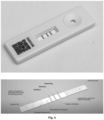
- Fig. 6 shows a diagram of the layout and operation of the immunochromatographic test.
- test and control develop, a positive result is obtained (mastitis caused by S. aureus or S. agalactiae or S. uberis or E. coli ) , and one band (control band) indicates a negative result of a test performed correctly. No band or a test band only indicates that the test has been performed incorrectly and the whole procedure will need to be performed again.
- Test interpretation is completed quickly and it is unambiguous and can be performed both by a veterinarian and by a person responsible for monitoring animal health in a herd.
- Fig. 7 shows a diagram of the immunochromatographic test of the multiplex type for the simultaneous identification of Staphylococcus aureus (SA), Escherichia coli (EC), Streptococcus agalactiae (GBS) and Streptococcus uberis (SU).
- SA Staphylococcus aureus
- EC Escherichia coli
- GGS Streptococcus agalactiae
- SU Streptococcus uberis
- Example 4 Determination of the titer of monoclonal antibodies as a component of the developed immunochromatographic test and antigens detected in the test specimen and a test to rule out cross-reactivity
- the objective of the first stage was to rule out cross-reactivity between the components of sterile milk in the presence of monoclonal antibodies (anti-ompA, anti-EFTu, anti-ADA, anti-FnBPA) using Western blot and ELISA assay techniques. Based on the techniques, unspecific reactions between the monoclonal antibodies and the components of milk obtained from cows without confirmed mastitis were ruled out.
- monoclonal antibodies anti-ompA, anti-EFTu, anti-ADA, anti-FnBPA
- Fig. 8 shows an example result of a cross-reactivity test between the antigens (recombinant proteins, (A: ADA, T: EF Tu, O: ompA, F: FnBPA) and monoclonal antibodies (anti-ompA, anti-EFTu, anti-ADA and anti-FnBPA).
- A ADA
- T EF Tu
- O ompA
- F FnBPA
- monoclonal antibodies anti-ompA, anti-EFTu, anti-ADA and anti-FnBPA
- antibody titers were determined using the ELISA assay. Therefore, wells of a 96-well MaxiSorp plate were coated with proteins in a concentration of 2.5 ⁇ g/mL at 4°C for 16 hours. Subsequently, unbound antigens were rinsed off 3 times in TBST. The wells were blocked with a blocking buffer and dilutions of the anti-ADA, anti-EFTu, anti-ompA and anti-FnBPA antibodies were prepared using a diluent solution (2% skimmed milk in PBS) in a geometric range between 1:25 0000 and 1:51 200 000, and 100 ⁇ L of an appropriate solution of the antibodies was applied into each well and incubated at 4°C for 2 hours.
- a diluent solution 2% skimmed milk in PBS
- the lowest titer of antibodies that reacted with the proteins could not be determined. Failure of determination of the threshold value could have resulted from a high concentration of the antibodies prepared by the manufacturer, that is, 3-4 mg/mL.
- the ranges of concentrations tested were expanded to between 1:250,000 and 1:51,200,000.
- the titer was determined, defined as the first decrease in the absorbance after the plateau, and it was thus shown that the optimal titers of monoclonal antibodies for anti-ompA were 1:100,000, 1:200,000 for anti-EFTu, 1:50,000 for anti-ADA and 1:50,000 for anti-FnBPA ( Fig. 9 ).
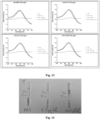
- Fig. 9 shows a titration result for the anti-ompA, anti-EFTu, anti-ADA and anti-FnBPA antibodies in the presence of antigens (ompA, EF-Tu, ADA, FnBPA) in a quantity of 0.25 ⁇ g/well.
- Fig. 10 shows results of testing potential cross-reactivity between antigens (ADA, EF-Tu, ompA, FnBPA) and monoclonal antibodies (anti-ADA, anti-EFTu, anti-ompA, anti-FnBPA) using the ELISA assay with different concentrations of the monoclonal antibodies.
- a cut-off value of 0.016 was determined based on the test.
- a cELISA assay was used for testing the following species: E.coli, K. pneumoniae, Ps. aeruginosa, S. aureus, E. faecalis, S. agalactiae, S. uberis, suspended in PBS with 4% formaldehyde in concentrations corresponding to OD 600 values of 2.0, 1.0, 0.5 and 0.1. It was found that antibody sensitivity declined with decreasing OD values, but the results were above the detection threshold for all the concentrations tested.
- the proteins were isolated with 0.1% SDS at 42°C. Considering the low quantity of bands visualized using Coomassie stain, it was decided to modify the isolation procedure.
- bacterial suspension with optical density OD 600 1.0 in a volume of 1 mL was centrifuged for 10 min at 4500 RPM, and subsequently suspended in 200 ⁇ L lysis buffer consisting of 0.2% SDS, 0.1% Triton X-100, 50 ⁇ g/mL lysozyme and 1 ⁇ L benzonase.
- the lysates were incubated at 25°C for 30 minutes and subsequently at 42°C for 1 hour with constant vigorous shaking (700 RPM).
- the quantity of proteins isolated was determined using the Bradford assay. Therefore, 10 ⁇ L of bacterial lysate was incubated with 250 ⁇ L of the Bradford reagent (Thermo Scientific Chemicals), and the samples were incubated in darkness for 10 minutes. Absorbance values for respective samples were measured at a wavelength of 595 nm. Absorbance results were referred to the standard curve obtained based on successive BSA dilutions in a range of 0.00-1.50 mg/mL. Quantities of the resulting proteins were in a range of between 9.5 and 36.9 ⁇ g for samples in a volume of 20 ⁇ L.
- the lysates were tested to evaluate the binding capacity of the monoclonal antibodies to bacterial cell lysates using Western blot. Therefore, the resulting bacterial lysates were separated using the SDS-PAGE technique.
- Bacterial lysates diluted in PBS with a final protein concentration of 20 ⁇ g/mL were used for the separation. 4 ⁇ L of a 5x concentrated sample buffer (Thermo Fisher) was added to the samples and incubated at 95°C/5 min and separated by SDS-PAGE in four replicates.
- the proteins were transferred onto nitrocellulose membranes for Western blot.
- the membranes were blocked with the Blocking Solution (Thermo Fisher) for 1 hour with shaking, and the membranes were subsequently coated (separately) with the antibodies: anti-ADA, anti-EfTU, anti-OMPA, anti-FnPBA in the following titers: 1:50,000; 1:50,000; 1:100,000; 1:200,000 and incubated at 4°C for 16 hours with constant shaking. After incubation, the membranes were washed three times for 10 min using PBS buffer containing 0.05% Tween-20 (PBST).
- PBST PBS buffer containing 0.05% Tween-20
- the membranes were coated with horseradish peroxidase (HRP)-conjugated goat anti-mouse antibodies (Invitrogen) with a titer of 1:5,000 and incubated at 4°C for 2 hours with constant shaking. The membranes were washed three times for 10 min using PBST buffer. Subsequently, a substrate (3,3',5,5'-tetramethylbenzidine, TMB, Thermo Fisher) was added onto the membranes until completely coated and incubated at 4°C in darkness for 20 min. Thus prepared membranes were visualized.
- HRP horseradish peroxidase
- Gold nanoparticles with a diameter of 30 nm were synthesized in a chemical reaction involving reduction of tetrachloroauric(III) acid (Thermofisher) using sodium citrate (Chempur). Before starting the reaction, laboratory glassware was cleaned chemically using aqua regia prepared by mixing 3 parts of hydrochloric acid with 1 part of nitric(V) acid.
- Fig. 11 shows the results of hydrodynamic measurements of the resulting gold nanoparticle solution in five replicates.
- Fig. 12 shows the results of DLS (Dynamic Light Scattering) measurements of the gold nanoparticle solution prepared in five replicates by reducing tetrachloroauric(III) acid using sodium citrate.
- K 2 CO 3 potassium carbonate
- Adequate mAb quantities were added to 100 ⁇ L AuNps to obtain the concentrations and the systems were incubated at room temp. for 1 hour to bind mAbs with AuNps.
- Fig. 13 shows charts presenting AuNps spectra after conjugation with mAbs.
- the systems were centrifuged at 2,500 x g at room temperature for 30 min, the supernatant was removed and it was washed twice with 20 mM borate buffer containing 1% BSA.
- the precipitate was finally suspended in 1 mL of 20 mM borate buffer and added to 1 mL suspension buffer containing 3% sucrose, 0.6 M NaCl, 0.2% Tween-20, 2% BSA, prepared from 20 mM borate buffer.
- the lateral flow assay was assembled as follows: The sample pad overlapped with its surface onto the conjugate pad which overlapped with the start of the nitrocellulose membrane. The absorbent pad was placed at the end of the nitrocellulose membrane to absorb any excess liquid. Test bands with a width of 30 mm were cut out from the membranes thus prepared.
- Fig. 14 shows an examplary result of the lateral flow test for detecting EF-Tu protein representative for S. uberis.
- T EF-Tu protein
- C control band
- T test band
- PBS negative control with PBS
- 2.5 test for protein in a concentration of 2.5 ⁇ g/mL
- 250 test for protein in a concentration of 250 ⁇ g/mL.
- test based on anti-EfTU antibodies was validated in the presence of 203 cow's milk samples from three regions of Tru, of which 100 were obtained from cows with a clinical type of mastitis (study group), and 103 were obtained from cows without clinical symptoms of mastitis (control group). Subsequently, the test results were subjected to statistical analysis to determine sensitivity, specificity and accuracy compared to the gold standard, that is, culture results in the chromogenic Chromagar mastitis medium. It was found in the analysis that the test prototype developed had specificity of 89.02%, accuracy of 79.31% and sensitivity of 38.46% for milk samples containing bacteria of the genus S. uberis with CFU > 1 ⁇ 10 3 .
- Fig. 15 shows the result of a test for detecting the S. uberis EF-Tu antigen with recombinant EF-Tu, proteins, bacterial lysates from the species S. uberis and whole bacterial cells as examples.
- Fig. 16 shows an example positive result of the test S. uberis in a milk sample (W84) based on monoclonal anti-EfTU antibodies.
- Table 1 List of epitopes for selected antigens representative for E . coli (ompA), S. uberis (EF-Tu), S. agalactiae (ADA) and S. aureus (FnBPA). No. Sequence Length (number of amino acids) ompA protein 5.
- GYPITD 110 6 8. 126 DTKSNVYGKNHDTGVSP 142 17 9.
- TDVTSKVTVE 204 10 34. 368 IKPNNGKTTSVTV 380 13 35. 232 KFENGLHQGDYFDFT 264 15 36. 342 GNYYAN 347 6 37. 415 ANTTDTSKFKEVTSNMSGNLNLQNNG 440 26 38. 443 SLNIENLDKTYV 454 12 39. 388 SNQNGNQPKVRIFEYLGNNEDIA 410 23 40. 276 EVLEGGKIRYTFTNDIEDKVDV 297 22 41. 312 VQTNGNQTITSTLNEEQTSKELD 334 23 42. 195 TDVTSKVT 202 8 43. 232 KFENGLHQGDYFDFT 246 15 44.
Landscapes
- Health & Medical Sciences (AREA)
- Life Sciences & Earth Sciences (AREA)
- Immunology (AREA)
- Engineering & Computer Science (AREA)
- Urology & Nephrology (AREA)
- Hematology (AREA)
- Biomedical Technology (AREA)
- Chemical & Material Sciences (AREA)
- Molecular Biology (AREA)
- Medicinal Chemistry (AREA)
- Physics & Mathematics (AREA)
- Cell Biology (AREA)
- Tropical Medicine & Parasitology (AREA)
- Biotechnology (AREA)
- Food Science & Technology (AREA)
- Virology (AREA)
- Microbiology (AREA)
- Analytical Chemistry (AREA)
- Biochemistry (AREA)
- General Health & Medical Sciences (AREA)
- General Physics & Mathematics (AREA)
- Pathology (AREA)
- Peptides Or Proteins (AREA)
- Measuring Or Testing Involving Enzymes Or Micro-Organisms (AREA)
- Investigating Or Analysing Biological Materials (AREA)
Applications Claiming Priority (1)
| Application Number | Priority Date | Filing Date | Title |
|---|---|---|---|
| PL442091A PL246485B1 (pl) | 2022-08-25 | 2022-08-25 | Sposób i kompozycja diagnostyczna do wykrywania mastitis wywołanego przez E. coli, S. uberis, S. agalactiae lub S. aureus |
Publications (3)
| Publication Number | Publication Date |
|---|---|
| EP4343328A2 true EP4343328A2 (de) | 2024-03-27 |
| EP4343328A3 EP4343328A3 (de) | 2024-04-10 |
| EP4343328B1 EP4343328B1 (de) | 2026-03-11 |
Family
ID=88207674
Family Applications (1)
| Application Number | Title | Priority Date | Filing Date |
|---|---|---|---|
| EP23461639.9A Active EP4343328B1 (de) | 2022-08-25 | 2023-08-25 | Diagnostisches verfahren und zusammensetzung zum nachweis von mastitis verursacht durch e. coli, s. uberis, s. agalactiae oder s. aureus |
Country Status (2)
| Country | Link |
|---|---|
| EP (1) | EP4343328B1 (de) |
| PL (1) | PL246485B1 (de) |
Citations (6)
| Publication number | Priority date | Publication date | Assignee | Title |
|---|---|---|---|---|
| CA2270404A1 (en) | 1996-11-14 | 1998-05-22 | University Of Saskatchewan | Streptococcus uberis lactoferrin-binding protein |
| US20030073073A1 (en) | 2001-10-11 | 2003-04-17 | Wondu Wolde-Mariam | Method for simultaneous detection of multiple microbial antigens in biological specimens from mastitic animals |
| EP1532253A1 (de) | 2002-08-12 | 2005-05-25 | Akzo Nobel N.V. | Streptococcus uberis protein, die dafür kodierende nukleinsäuresequenz, sowie dessen verwendung in einem impfstoff gegen mastitis |
| US20050260695A1 (en) | 2003-09-23 | 2005-11-24 | Genprime, Inc. | Methods, compositions, devices, and kits for detecting mastitis |
| US9556281B2 (en) | 2011-08-15 | 2017-01-31 | The University Of Chicago | Compositions and methods related to antibodies to staphylococcal protein A |
| WO2019216775A1 (en) | 2018-05-10 | 2019-11-14 | Koru Diagnostics Limited | Device for detection of antibodies to a pathogen |
Family Cites Families (2)
| Publication number | Priority date | Publication date | Assignee | Title |
|---|---|---|---|---|
| US8445215B1 (en) * | 2010-07-23 | 2013-05-21 | Nestec S.A. | Assays and methods for the detection of Crohn's disease |
| IN2014DN10498A (de) * | 2012-06-13 | 2015-08-21 | Asahi Chemical Ind |
-
2022
- 2022-08-25 PL PL442091A patent/PL246485B1/pl unknown
-
2023
- 2023-08-25 EP EP23461639.9A patent/EP4343328B1/de active Active
Patent Citations (6)
| Publication number | Priority date | Publication date | Assignee | Title |
|---|---|---|---|---|
| CA2270404A1 (en) | 1996-11-14 | 1998-05-22 | University Of Saskatchewan | Streptococcus uberis lactoferrin-binding protein |
| US20030073073A1 (en) | 2001-10-11 | 2003-04-17 | Wondu Wolde-Mariam | Method for simultaneous detection of multiple microbial antigens in biological specimens from mastitic animals |
| EP1532253A1 (de) | 2002-08-12 | 2005-05-25 | Akzo Nobel N.V. | Streptococcus uberis protein, die dafür kodierende nukleinsäuresequenz, sowie dessen verwendung in einem impfstoff gegen mastitis |
| US20050260695A1 (en) | 2003-09-23 | 2005-11-24 | Genprime, Inc. | Methods, compositions, devices, and kits for detecting mastitis |
| US9556281B2 (en) | 2011-08-15 | 2017-01-31 | The University Of Chicago | Compositions and methods related to antibodies to staphylococcal protein A |
| WO2019216775A1 (en) | 2018-05-10 | 2019-11-14 | Koru Diagnostics Limited | Device for detection of antibodies to a pathogen |
Non-Patent Citations (14)
| Title |
|---|
| BANNER M. A., CUNNIFFE J. G., MACINTOSH R. L., FOSTER T. J., ROHDE H., MACK D.: "Localized tufts of fibrils on Staphylococcus epidermidis NCTC 11047 are comprised of the accumulation-associated protein", J BACTERIOL, vol. 189, 2007, pages 2793 - 804 |
| DUFOUR, S.LABRIE, J.JACQUES, M.: "The Mastitis Pathogens Culture Collection", MICROBIOL. RESOUR. ANNOUNC., vol. 8, 2019, pages 133 - 52 |
| FANG, W.OLIVER, S. P.: "Identification of lactoferrin-binding proteins in bovine mastitis-causing Streptococcus uberis", FEMS. MICROBIOL. LETT., vol. 176, 1999, pages 91 - 6, XP002437755, DOI: 10.1111/j.1574-6968.1999.tb13647.x |
| GALFRE G.MILSTEIN C.: "Preparation of monoclonal antibodies: strategies and procedures", METHODS ENZYMOL., vol. 73, 1981, pages 3 - 46, XP009100436, DOI: 10.1016/0076-6879(81)73054-4 |
| HE, W.MA, S.LEI, L.HE, J.LI, X.TAO, J. ET AL.: "Prevalence, etiology, and economic impact of clinical mastitis on large dairy farms in China", VET. MICROBIOL., vol. 242, 2020, pages 108570 |
| HOGEVEEN, H., HUIJPS, K., LAM, T. J. G. M.: "Economic aspects of mastitis: New developments", N. Z. VET. J., vol. 59, 2011, pages 16 - 23 |
| KULKARNI, A. G.KALIWAL, B. B.: "Bovine mastitis: a review", INTERNATIONAL JOURNAL OF RECENT SCIENTIFIC RESEARCH, vol. 4, 2013, pages 543 - 8 |
| LAEMMLI, U. K.: "Cleavage of structural proteins during the assembly of the head of bacteriophage T4", NATURE, vol. 227, 1970, pages 680 - 5, XP055108426, DOI: 10.1038/227680a0 |
| LASSA, H.KUBIAK, J.MALKINSKA-HORODYSKA, M.: "Antibiotic susceptibility of the bacteria most often isolated from clinical mastitis in cows", ZYCIE WETERYNARYJNE, vol. 88, 2013, pages 651 |
| PARK, H. M.ALMEIDA, R. A.OLIVER, S. P.: "Identification of lactoferrin-binding proteins in Streptococcus dysgalactiae subsp. dysgalactiae and Streptococcus agalactiae isolated from cows with mastitis", FEMS. MICROBIOL. LETT., vol. 207, 2002, pages 87 - 90, XP002437757, DOI: 10.1111/j.1574-6968.2002.tb11033.x |
| PHILPOT, W. N.NICKERSON, S. C., MASTITIS: COUNTER ATTACK: A STRATEGY TO COMBAT MASTITIS. CHICAGO, 1991 |
| TRISTAN AYING LBES METIENNE JVANDENESCH FLINA G: "Use of multiplex PCR to identify Staphylococcus aureus adhesins involved in human hematogenous infections", J CLIN MICROBIOL., vol. 41, 2003, pages 4465 - 7 |
| WILSON, D. J.GONZALEZ, R. N.DAS, H. H.: "Bovine Mastitis Pathogens in New York and Pennsylvania: Prevalence and Effects on Somatic Cell Count and Milk Production", J. DAIRY. SCI., vol. 80, 1997, pages 2592 - 8, XP055020424, DOI: 10.3168/jds.S0022-0302(97)76215-5 |
| YALCIN, C: "Cost of Mastitis in Scottish Dairy Herds with Low and High Subclinical Mastitis Problems", TURKISH JOURNAL OF VETERINARY AND ANIMAL SCIENCES, vol. 24, 2000, pages 465 - 72 |
Also Published As
| Publication number | Publication date |
|---|---|
| PL442091A1 (pl) | 2024-02-26 |
| EP4343328A3 (de) | 2024-04-10 |
| PL246485B1 (pl) | 2025-02-03 |
| EP4343328B1 (de) | 2026-03-11 |
Similar Documents
| Publication | Publication Date | Title |
|---|---|---|
| Okwumabua et al. | Cloning and characterization of the gene encoding the glutamate dehydrogenase of Streptococcus suis serotype 2 | |
| EP3085769B1 (de) | Verfahren zum nachweis coliformer bakterien in milch | |
| Tsilia et al. | Application of MALDI-TOF mass spectrometry for the detection of enterotoxins produced by pathogenic strains of the Bacillus cereus group | |
| Kochi et al. | The interaction of two novel putative proteins of Leptospira interrogans with E-cadherin, plasminogen and complement components with potential role in bacterial infection | |
| ES2771598T3 (es) | Procedimiento para detectar bacterias del género Streptococcus en la leche | |
| CN110642927B (zh) | 一种蛋白在制备预防化脓隐秘杆菌感染的药物中的应用 | |
| Grange et al. | Characterization of a Propionibacterium acnes surface protein as a fibrinogen-binding protein | |
| JP5712140B2 (ja) | マイコプラズマ・ニューモニエ及び/又はマイコプラズマ・ジェニタリウムに属する微生物を検出する方法 | |
| EP3180620B1 (de) | Vorhersage der s. aureus-krankheit | |
| Ramón‐Luing et al. | Immunoproteomics of the active degradome to identify biomarkers for Trichomonas vaginalis | |
| EP1224319B1 (de) | Serum amyloid a als marker für entzündungsreaktion, milch qualität und die anwesenheit von kolostrum in milch | |
| Morineaux et al. | Characterization of botulinum neurotoxin type A subtypes by immunocapture enrichment and liquid chromatography–tandem mass spectrometry: V. Morineaux et al. | |
| Koyuncu et al. | Diagnostic potential of Brucella melitensis Rev1 native Omp28 precursor in human brucellosis | |
| Bai et al. | YSIRK-G/S-directed translocation is required for Streptococcus suis to deliver diverse cell wall anchoring effectors contributing to bacterial pathogenicity | |
| Gad et al. | A novel diagnostic technique for diagnosis of Staphylococcus aureus subclinical mastitis using gold nanoparticle-based ELISA | |
| KR101650083B1 (ko) | 폐렴연쇄상구균 유래 막소포체 및 이를 이용한 폐렴연쇄상구균 매개 질환 진단 방법 | |
| EP4343328B1 (de) | Diagnostisches verfahren und zusammensetzung zum nachweis von mastitis verursacht durch e. coli, s. uberis, s. agalactiae oder s. aureus | |
| CN106018831B (zh) | 脑多头蚴病的标志物gp50以及用于诊断脑多头蚴病的试剂盒 | |
| Hamsten et al. | Expression and immunogenicity of six putative variable surface proteins in Mycoplasma mycoides subsp. mycoides SC | |
| Soprano et al. | Trypanosoma cruzi serinecarboxipeptidase is a sulfated glycoprotein and a minor antigen in human Chagas disease infection | |
| KR20110129833A (ko) | 폐렴연쇄상구균의 분비단백질을 포함하는 폐렴 진단용 조성물 | |
| EP2098865A1 (de) | Verfahren zum Nachweis von Legionellen unter Verwendung polyklonaler Antikörper | |
| CN103667200A (zh) | 一种诱导短寿抗体反应的血吸虫抗原和检测该抗体反应的血吸虫病诊断试剂盒及检测方法 | |
| Chiu et al. | Secretome analysis of novel IgE‐binding proteins from Penicillium citrinum | |
| KR20200004500A (ko) | 브루셀라 어보투스 유래의 재조합 Ohr 단백질을 유효성분으로 포함하는 브루셀라 감염증 진단용 조성물 및 이의 용도 |
Legal Events
| Date | Code | Title | Description |
|---|---|---|---|
| STAA | Information on the status of an ep patent application or granted ep patent |
Free format text: STATUS: UNKNOWN |
|
| PUAI | Public reference made under article 153(3) epc to a published international application that has entered the european phase |
Free format text: ORIGINAL CODE: 0009012 |
|
| STAA | Information on the status of an ep patent application or granted ep patent |
Free format text: STATUS: THE APPLICATION HAS BEEN PUBLISHED |
|
| PUAL | Search report despatched |
Free format text: ORIGINAL CODE: 0009013 |
|
| AK | Designated contracting states |
Kind code of ref document: A2 Designated state(s): AL AT BE BG CH CY CZ DE DK EE ES FI FR GB GR HR HU IE IS IT LI LT LU LV MC ME MK MT NL NO PL PT RO RS SE SI SK SM TR |
|
| AK | Designated contracting states |
Kind code of ref document: A3 Designated state(s): AL AT BE BG CH CY CZ DE DK EE ES FI FR GB GR HR HU IE IS IT LI LT LU LV MC ME MK MT NL NO PL PT RO RS SE SI SK SM TR |
|
| RIC1 | Information provided on ipc code assigned before grant |
Ipc: G01N 33/569 20060101AFI20240304BHEP |
|
| STAA | Information on the status of an ep patent application or granted ep patent |
Free format text: STATUS: REQUEST FOR EXAMINATION WAS MADE |
|
| 17P | Request for examination filed |
Effective date: 20241010 |
|
| RBV | Designated contracting states (corrected) |
Designated state(s): AL AT BE BG CH CY CZ DE DK EE ES FI FR GB GR HR HU IE IS IT LI LT LU LV MC ME MK MT NL NO PL PT RO RS SE SI SK SM TR |
|
| GRAP | Despatch of communication of intention to grant a patent |
Free format text: ORIGINAL CODE: EPIDOSNIGR1 |
|
| STAA | Information on the status of an ep patent application or granted ep patent |
Free format text: STATUS: GRANT OF PATENT IS INTENDED |
|
| INTG | Intention to grant announced |
Effective date: 20251020 |
|
| GRAS | Grant fee paid |
Free format text: ORIGINAL CODE: EPIDOSNIGR3 |
|
| GRAA | (expected) grant |
Free format text: ORIGINAL CODE: 0009210 |
|
| STAA | Information on the status of an ep patent application or granted ep patent |
Free format text: STATUS: THE PATENT HAS BEEN GRANTED |
|
| AK | Designated contracting states |
Kind code of ref document: B1 Designated state(s): AL AT BE BG CH CY CZ DE DK EE ES FI FR GB GR HR HU IE IS IT LI LT LU LV MC ME MK MT NL NO PL PT RO RS SE SI SK SM TR |
|
| REG | Reference to a national code |
Ref country code: CH Ref legal event code: F10 Free format text: ST27 STATUS EVENT CODE: U-0-0-F10-F00 (AS PROVIDED BY THE NATIONAL OFFICE) Effective date: 20260311 Ref country code: GB Ref legal event code: FG4D |
|
| REG | Reference to a national code |
Ref country code: DE Ref legal event code: R096 Ref document number: 602023013334 Country of ref document: DE |
|
| REG | Reference to a national code |
Ref country code: IE Ref legal event code: FG4D |
|
| PG25 | Lapsed in a contracting state [announced via postgrant information from national office to epo] |
Ref country code: RS Free format text: LAPSE BECAUSE OF FAILURE TO SUBMIT A TRANSLATION OF THE DESCRIPTION OR TO PAY THE FEE WITHIN THE PRESCRIBED TIME-LIMIT Effective date: 20260611 |
|
| PG25 | Lapsed in a contracting state [announced via postgrant information from national office to epo] |
Ref country code: ES Free format text: LAPSE BECAUSE OF FAILURE TO SUBMIT A TRANSLATION OF THE DESCRIPTION OR TO PAY THE FEE WITHIN THE PRESCRIBED TIME-LIMIT Effective date: 20260311 |
|
| PG25 | Lapsed in a contracting state [announced via postgrant information from national office to epo] |
Ref country code: GR Free format text: LAPSE BECAUSE OF FAILURE TO SUBMIT A TRANSLATION OF THE DESCRIPTION OR TO PAY THE FEE WITHIN THE PRESCRIBED TIME-LIMIT Effective date: 20260612 |
|
| REG | Reference to a national code |
Ref country code: LT Ref legal event code: MG9D |
|
| PG25 | Lapsed in a contracting state [announced via postgrant information from national office to epo] |
Ref country code: LT Free format text: LAPSE BECAUSE OF FAILURE TO SUBMIT A TRANSLATION OF THE DESCRIPTION OR TO PAY THE FEE WITHIN THE PRESCRIBED TIME-LIMIT Effective date: 20260311 |
|
| PG25 | Lapsed in a contracting state [announced via postgrant information from national office to epo] |
Ref country code: NO Free format text: LAPSE BECAUSE OF FAILURE TO SUBMIT A TRANSLATION OF THE DESCRIPTION OR TO PAY THE FEE WITHIN THE PRESCRIBED TIME-LIMIT Effective date: 20260611 |
|
| PG25 | Lapsed in a contracting state [announced via postgrant information from national office to epo] |
Ref country code: FI Free format text: LAPSE BECAUSE OF FAILURE TO SUBMIT A TRANSLATION OF THE DESCRIPTION OR TO PAY THE FEE WITHIN THE PRESCRIBED TIME-LIMIT Effective date: 20260311 Ref country code: SE Free format text: LAPSE BECAUSE OF FAILURE TO SUBMIT A TRANSLATION OF THE DESCRIPTION OR TO PAY THE FEE WITHIN THE PRESCRIBED TIME-LIMIT Effective date: 20260311 |
|
| REG | Reference to a national code |
Ref country code: NL Ref legal event code: MP Effective date: 20260311 |
|
| PG25 | Lapsed in a contracting state [announced via postgrant information from national office to epo] |
Ref country code: HR Free format text: LAPSE BECAUSE OF FAILURE TO SUBMIT A TRANSLATION OF THE DESCRIPTION OR TO PAY THE FEE WITHIN THE PRESCRIBED TIME-LIMIT Effective date: 20260311 |
|
| PG25 | Lapsed in a contracting state [announced via postgrant information from national office to epo] |
Ref country code: LV Free format text: LAPSE BECAUSE OF FAILURE TO SUBMIT A TRANSLATION OF THE DESCRIPTION OR TO PAY THE FEE WITHIN THE PRESCRIBED TIME-LIMIT Effective date: 20260311 |
|
| PG25 | Lapsed in a contracting state [announced via postgrant information from national office to epo] |
Ref country code: BG Free format text: LAPSE BECAUSE OF FAILURE TO SUBMIT A TRANSLATION OF THE DESCRIPTION OR TO PAY THE FEE WITHIN THE PRESCRIBED TIME-LIMIT Effective date: 20260311 |