EP4344090A1 - Réception d'informations d'assistance satellite au niveau d'un équipement utilisateur - Google Patents
Réception d'informations d'assistance satellite au niveau d'un équipement utilisateur Download PDFInfo
- Publication number
- EP4344090A1 EP4344090A1 EP22197857.0A EP22197857A EP4344090A1 EP 4344090 A1 EP4344090 A1 EP 4344090A1 EP 22197857 A EP22197857 A EP 22197857A EP 4344090 A1 EP4344090 A1 EP 4344090A1
- Authority
- EP
- European Patent Office
- Prior art keywords
- system information
- satellite
- determining
- time window
- receipts
- Prior art date
- Legal status (The legal status is an assumption and is not a legal conclusion. Google has not performed a legal analysis and makes no representation as to the accuracy of the status listed.)
- Pending
Links
- 238000000034 method Methods 0.000 claims abstract description 13
- 238000012545 processing Methods 0.000 claims description 6
- 230000007704 transition Effects 0.000 claims description 6
- 230000015654 memory Effects 0.000 claims description 5
- 230000006870 function Effects 0.000 description 8
- 238000005259 measurement Methods 0.000 description 5
- 230000005540 biological transmission Effects 0.000 description 4
- 238000004088 simulation Methods 0.000 description 4
- 238000013500 data storage Methods 0.000 description 3
- 238000013442 quality metrics Methods 0.000 description 3
- 230000001419 dependent effect Effects 0.000 description 2
- 238000005265 energy consumption Methods 0.000 description 2
- 230000006978 adaptation Effects 0.000 description 1
- 230000006399 behavior Effects 0.000 description 1
- 230000001413 cellular effect Effects 0.000 description 1
- 230000000694 effects Effects 0.000 description 1
- 238000007726 management method Methods 0.000 description 1
- 238000013507 mapping Methods 0.000 description 1
- 238000012986 modification Methods 0.000 description 1
- 230000004048 modification Effects 0.000 description 1
- 238000012544 monitoring process Methods 0.000 description 1
- 230000004044 response Effects 0.000 description 1
- 238000012360 testing method Methods 0.000 description 1
Images


Classifications
-
- H—ELECTRICITY
- H04—ELECTRIC COMMUNICATION TECHNIQUE
- H04B—TRANSMISSION
- H04B7/00—Radio transmission systems, i.e. using radiation field
- H04B7/14—Relay systems
- H04B7/15—Active relay systems
- H04B7/185—Space-based or airborne stations; Stations for satellite systems
- H04B7/195—Non-synchronous stations
-
- H—ELECTRICITY
- H04—ELECTRIC COMMUNICATION TECHNIQUE
- H04B—TRANSMISSION
- H04B7/00—Radio transmission systems, i.e. using radiation field
- H04B7/14—Relay systems
- H04B7/15—Active relay systems
- H04B7/185—Space-based or airborne stations; Stations for satellite systems
- H04B7/1851—Systems using a satellite or space-based relay
-
- H—ELECTRICITY
- H04—ELECTRIC COMMUNICATION TECHNIQUE
- H04B—TRANSMISSION
- H04B7/00—Radio transmission systems, i.e. using radiation field
- H04B7/14—Relay systems
- H04B7/15—Active relay systems
- H04B7/185—Space-based or airborne stations; Stations for satellite systems
- H04B7/1851—Systems using a satellite or space-based relay
- H04B7/18519—Operations control, administration or maintenance
-
- H—ELECTRICITY
- H04—ELECTRIC COMMUNICATION TECHNIQUE
- H04W—WIRELESS COMMUNICATION NETWORKS
- H04W48/00—Access restriction; Network selection; Access point selection
- H04W48/08—Access restriction or access information delivery, e.g. discovery data delivery
- H04W48/12—Access restriction or access information delivery, e.g. discovery data delivery using downlink control channel
-
- H—ELECTRICITY
- H04—ELECTRIC COMMUNICATION TECHNIQUE
- H04W—WIRELESS COMMUNICATION NETWORKS
- H04W52/00—Power management, e.g. Transmission Power Control [TPC] or power classes
- H04W52/02—Power saving arrangements
- H04W52/0209—Power saving arrangements in terminal devices
- H04W52/0212—Power saving arrangements in terminal devices managed by the network, e.g. network or access point is leader and terminal is follower
- H04W52/0216—Power saving arrangements in terminal devices managed by the network, e.g. network or access point is leader and terminal is follower using a pre-established activity schedule, e.g. traffic indication frame
-
- H—ELECTRICITY
- H04—ELECTRIC COMMUNICATION TECHNIQUE
- H04W—WIRELESS COMMUNICATION NETWORKS
- H04W52/00—Power management, e.g. Transmission Power Control [TPC] or power classes
- H04W52/02—Power saving arrangements
- H04W52/0209—Power saving arrangements in terminal devices
- H04W52/0225—Power saving arrangements in terminal devices using monitoring of external events, e.g. the presence of a signal
- H04W52/0245—Power saving arrangements in terminal devices using monitoring of external events, e.g. the presence of a signal according to signal strength
-
- H—ELECTRICITY
- H04—ELECTRIC COMMUNICATION TECHNIQUE
- H04W—WIRELESS COMMUNICATION NETWORKS
- H04W52/00—Power management, e.g. Transmission Power Control [TPC] or power classes
- H04W52/02—Power saving arrangements
- H04W52/0209—Power saving arrangements in terminal devices
- H04W52/0251—Power saving arrangements in terminal devices using monitoring of local events, e.g. events related to user activity
- H04W52/0258—Power saving arrangements in terminal devices using monitoring of local events, e.g. events related to user activity controlling an operation mode according to history or models of usage information, e.g. activity schedule or time of day
-
- H—ELECTRICITY
- H04—ELECTRIC COMMUNICATION TECHNIQUE
- H04W—WIRELESS COMMUNICATION NETWORKS
- H04W84/00—Network topologies
- H04W84/02—Hierarchically pre-organised networks, e.g. paging networks, cellular networks, WLAN [Wireless Local Area Network] or WLL [Wireless Local Loop]
- H04W84/04—Large scale networks; Deep hierarchical networks
- H04W84/06—Airborne or Satellite Networks
Definitions
- Various example embodiments relate to receiving satellite assistance information at a user equipment.
- Low-earth orbit (LEO) satellites are increasingly used to transparently relay signals between a UE (user equipment) and a gNB on Earth, such that coverage & service can be provided to a UE far away from any terrestrial base station.
- the LEO satellites move about 7.5 km/s relative to Earth and furthermore operate at altitudes of 300-1500 km.
- the satellite periodically broadcasts information regarding its location and trajectory. This information is only valid for a limited period and so this information is transmitted along with an indication of its validity.
- a UE that wants to communicate via the satellite will require an up-to-date record of this information.
- the UE may determine when the information it has received will expire and from that when it should read updated information. Where the UE cannot be sure that the information will be reliably acquired then determining when to read the updated information becomes more complex.
- Embodiments seek to select preferred times to read the required satellite information.
- an apparatus comprising: means for receiving and decoding system information, said system information providing satellite assistance information indicative of at least one of the following: location, direction, speed of a satellite or a validity time period indicative of a time period during which at least one of said satellite assistance information is valid; means for determining a time window within said validity time period; and means for controlling said means for receiving and decoding to receive and decode said system information that is broadcast during said time window.
- Embodiments recognise that for an apparatus to be able to receive and send signals via a satellite the apparatus should have an idea of the current location of the satellite. This information is broadcast by the satellite and is valid for an indicated time period. The apparatus requires updated information before the valid time period of the previously received information expires. If the quality of the connection with the satellite is not high then there may be difficulties in receiving and decoding the broadcast information, and in this case several broadcasts may need to be received before the information can be successfully decoded. However, receiving many broadcasts increases the power consumption of the user equipment. Embodiments address these competing issues by determining a time window within the validity time period and controlling the means for receiving and decoding to receive and decode system information broadcast during this time window. Embodiments control the means for receiving and decoding to not receive system information during the validity time period outside of this time window.
- said system information comprises satellite assistance information indicative of location, direction, speed of a satellite and a validity time period.
- said satellite assistance information comprises satellite ephemeris and said validity time period comprises an Epoch time and a time period.
- said system information may also comprise an indication of timing advances for pre-compensation of the signals, this may be based on feeder link delay (or common delay), that is the time taken for a return signal from the UE to reach the satellite. There may also be information on how the timing between the gNB and the satellite varies over time - this may be known as common Timing Advance.
- said system information is broadcast periodically and said means for determining is configured to determine a number of receipts of system information required to provide a desired decoding reliability level, said determining means determining a size of said time window based on said number of receipts of system information.
- said required number of receipts of system information comprises more than one receipt of system information.
- said apparatus further comprises means for ascertaining a reception metric indicative of at least one of the following: an elevation angle of said satellite, a quality of a radio link to said satellite and a quality of a received signal from said satellite, said means for determining being configured to determine said number of receipts of system information required to provide said desired decoding reliability level in dependence upon said reception metric.
- said reception metric comprises a quality of a radio link on which said system information is transmitted.
- said means for determining comprises an algorithm linking at least one reception metric to said required number of receipts of system information.
- said means for determining is configured to update said algorithm in dependence upon a determined success or failure of decoding said receipts of system information for at least one of said plurality of reception metrics.
- said algorithm is based on simulations of the number of receipts of system information required to provide a desired decoding reliability level.
- said algorithm is based on previous measurements of the number of receipts of system information required to provide a desired decoding reliability level.
- said reception metric is based on at least one of the following: on RSRP (reference signal received power), RSRQ (reference signal received quality), RSSI (reference signal strength indicator), SINR (signal to interference noise ratio), RSSI (reference signal strength indicator), or CQI (channel quality indicator).
- RSRP reference signal received power
- RSRQ reference signal received quality
- RSSI reference signal strength indicator
- SINR signal to interference noise ratio
- RSSI reference signal strength indicator
- CQI channel quality indicator
- said means for determining said size of said time window is configured to determine said size of said time window to encompass said determined required number of receipts of system information.
- a size of said time window is determined not to encompass further receipts of system information.
- said means for determining is configured to extend said size of said time window to include processing time for decoding said receipts of system information.
- said apparatus further comprises means for controlling discontinuous operation of said apparatus, said means for controlling being configured to control said apparatus to transition between an operational mode and a low power mode.
- said means for controlling discontinuous operation is configured to control said apparatus to be in said operational mode at a start of said time window.
- said means for controlling discontinuous operation is configured to control said apparatus to be in said low power mode outside of said time window within said validity time period.
- said means for determining said time window determines said time window to end at an end of said validity time period.
- said means for determining said time window determines said time window to encompass a determined broadcast of said system information within and closest to an end of said validity time period.
- a method comprising: receiving and decoding system information, said system information providing satellite assistance information indicative of at least one of location, direction, speed of a satellite and a validity time period indicative of a time period during which at least some of said satellite assistance information is valid; determining a time window within said validity time period; and controlling an apparatus to receive and decode further system information that is broadcast during said time window.
- said system information is broadcast periodically and said method further comprises determining a number of receipts of system information required to provide a desired decoding reliability level, said step of determining a size of said time window doing so based on said number of receipts of system information.
- said method further comprises ascertaining a reception metric indicative of at least one of the following: an elevation angle of said satellite a quality of a radio link to said satellite and a quality of a received signal from said satellite, said step of determining said number of receipts of system information required to provide said desired decoding reliability level determining said number in dependence upon said reception metric.
- said step of determining said required number of receipts comprises using an algorithm linking at least one reception metric to said required number of receipts of system information.
- said method further comprises updating said algorithm in dependence upon a determined success or failure of decoding said receipts of system information for at least one of said plurality of reception metrics.
- determining said size of said time window comprises determining said size of said time window to encompass said determined required number of receipts of system information.
- said determining said size of said time window comprise extending said size of said time window to include processing time for decoding said receipts of system information.
- said method further comprises controlling discontinuous operation of said apparatus by controlling said apparatus to transition between an operational mode and a low power mode.
- said controlling discontinuous operation comprises controlling said apparatus to be in said operational mode at a start of said time window. In some example embodiments, said controlling discontinuous operation comprises controlling said apparatus to be in said low power mode outside of said time window within said validity time period.
- said determining said time window comprises determining said time window to end at an end of said validity time period.
- an apparatus comprising: at least one processor; and at least one memory storing instructions that when executed by the at least one processor cause the apparatus at least to: receive and decode system information, said system information providing satellite assistance information indicative of at least one of the following: location, direction, speed of a satellite or a validity time period indicative of a time period during which at least some of said satellite assistance information is valid; determine a time window within said validity time period; and control said apparatus to receive and decode further system information that is broadcast during said time window.
- an apparatus comprising: receive and decode circuitry configured to receive and decode system information, said system information providing satellite assistance information indicative of at least one of the following: location, direction, speed of a satellite or a validity time period indicative of a time period during which at least one of said satellite assistance information is valid; determining circuitry configured to determine a time window within said validity time period; and control circuitry configured to control said receive and decode circuitry to receive and decode said system information that is broadcast during said time window.
- said system information is broadcast periodically and said determining circuitry is configured to determine a number of receipts of system information required to provide a desired decoding reliability level, said determining circuitry determining a size of said time window based on said number of receipts of system information.
- said apparatus further comprises ascertaining circuitry configured to determine a reception metric indicative of at least one of the following: an elevation angle of said satellite a quality of a radio link to said satellite and a quality of a received signal from said satellite, said determining circuitry being configured to determine said number of receipts of system information required to provide said desired decoding reliability level in dependence upon said reception metric.
- said determining circuitry comprises an algorithm linking at least one reception metric to said required number of receipts of system information.
- said determining circuitry is configured to update said algorithm in dependence upon a determined success or failure of decoding said receipts of system information for at least one of said plurality of reception metrics.
- said determining circuitry is configured to determine said size of said time window to encompass said determined required number of receipts of system information.
- said determining circuitry is configured to extend said size of said time window to include processing time for decoding said receipts of system information.
- said apparatus further comprises discontinuous operation controlling circuitry configured to control said apparatus to transition between an operational mode and a low power mode.
- said discontinuous operation controlling circuitry is configured to control said apparatus to be in said operational mode at a start of said time window.
- said discontinuous operation controlling circuitry is configured to control said apparatus to be in said low power mode outside of said time window within said validity time period.
- said determining circuitry is configured to determine said time window to end at an end of said validity time period.
- a non-transitory computer readable medium comprising program instructions stored thereon for performing at least the following: control receipt and decoding of system information, said system information providing satellite assistance information indicative of at least one of the following: location, direction, speed of a satellite or a validity time period indicative of a time period during which at least some of said satellite assistance information is valid; determine a time window within said validity time period; and control receipt and decode of further system information that is broadcast during said time window.
- Embodiments relate to support of 5G NR (new radio) over non-terrestrial networks.
- 5G NR new radio
- LEO low-earth orbit
- the LEO satellites move about 7.5 km/s relative to Earth and furthermore operate at altitudes of 300-1500 km. Therefore, a UE will observe fast varying propagation delay and Doppler shift, when communicating with the LEO satellite (and the gNB, which is being relayed through the satellite under the current deployment assumption which is relying on a transparent architecture).
- the 3GPP has agreed the UE is responsible for performing pre-compensation of uplink transmissions.
- SIB System Information Broadcast
- the 3GPP has specified that the information is complemented with a validity duration and an Epoch time.
- the Epoch time denotes the time by which the UE shall assume the assistance information to be valid. Since the assistance information contains time varying parameters such as Common TA descriptors and the satellite position, it is crucial that there is an exact time by which the UE can assume this to be applicable in order for the UE to establish the satellite's position in space at different time instants. This provisioning of Epoch time and valid time enables the UE to determine at which point the information is considered valid and for how long i.e. UE can start the validity timer (corresponding to the network-provided validity duration) at the indicated Epoch time.
- the UE does not need to read the assistance information again as long as it has assistance information which has a valid validity timer.
- SIB information For the connection between the UE and the satellite to function current SIB information is required and therefore it can be desirable to ensure good reliability for the SIB reading.
- the reliability depends on the actual signal reception and interference, as illustrated in Fig. 1 , showing that the reliability is lower in case of low signal level or SINR and increases with higher signal levels and/or SINR.
- the reliability can be increased by reading the SIB19 multiple times, which is possible as SIB19 will be repeated with small intervals (as defined by the SIB scheduling window). With an increasing number of reading of a SIB the probability of correct reception of at least one of them is increased. Furthermore, in case of loT (internet of things - in which case SIB31 is used instead of SIB19) the SIB is repeated at every occasion in order to provide coverage, which will also lead to higher reliability if more than one copy is received. In the loT case the copies can be soft combined which further leads to higher reliability.
- Fig. 2 shows an example of scheduling of SIBs - SchedulinglnfoSIB1:
- This IE (information element) indicates the index of the following table.
- the IE value itself indicates I_TBS for SIB1-NB transmission and for each I_TBS a different number of repetition occurs as is mapped in the second column (Number of NPDSCH Narrowband Physical Downlink Shared Channel repetitions).
- Embodiments seek to optimise or at least improve the UE power consumption by optimising or improving the SIB reading while maintaining good reliability.
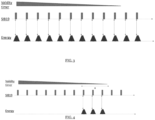
- One way to improve reliability would be to read every single SIB transmission, but every reading of the SIB comes with use of energy at the UE side, as shown in Fig. 3 , so excessive reading of the SIB information should be avoided.
- Another choice would be to read only the last SIB before the validity timer expires, but if the link quality is low, this reading may fail, which will increase the risk of UE not having valid assistance information.
- Fig. 4 schematically shows how such a procedure when used in the example of Fig. 3 can reduce energy consumption.
- the number of SIB readings are significantly reduced, and energy usage is correspondingly lowered.
- the number of SIB readings has been selected based on estimated reception quality to attain the required reliability level.
- the SIBs closest to the end of the validity period have been selected, such that the next validity period will start later and therefore expire later.
- the UE is assumed to have acquired the serving satellite ephemeris information (assistance information). Based on this, the UE will know the Epoch time (time of application of the assistance) and the associated validity timer (for how long the information is available).
- the UE may monitor conditions of the radio link of the serving satellite.
- the UE may be monitoring the RSRP/RSRQ (reference signal received power/reference signal received quality) for the purpose of evaluating the link quality for the serving cell for cell reselection purposes.
- the UE may be performing similar measurements for handover purposes, but may also be performing more detailed/accurate measurements for the link quality (for instance the CQI channel quality indicator measurements for link adaptation).
- Fig. 5 shows a flow chart schematically illustrating steps performed at a user equipment according to an embodiment.
- step 1 the UE estimates the quality of a reception metric for receiving the satellite assistance information.
- the reception metric which is used in step 1 can be RSRP, RSRQ, RSSI, SINR (signal to interference noise ratio), CQI or another metric such as satellite elevation angle.
- step 2 the number of required SIB reception attempts K to reach the desired reliability level is determined. This can be done in a number of ways:
- the UE may introduce a "margin" (D) as part of step 3 that is used as an offset to the number of decoding attempts that the UE will have.
- step 4 the UE wakes up X ms before the validity timer expires and reads the SIB occasions that occur within this time window of X ms.
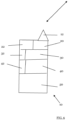
- Fig. 6 shows a user equipment according to an embodiment.
- User equipment 10 comprises an antenna 12 and receive and decoding circuitry 20. It also comprises transmitting circuitry 22.
- the receive and decoding circuitry 20 is configured to receive system information broadcast periodically from a satellite. This may include satellite assistance information indicative of the satellite ephemeris, a valid time period and in some cases an offset timing advance. This system information may be broadcast in system information blocks SIBs.
- the valid time period indicates a time period during which this information is valid, while the Epoch time in the satellite ephemeris indicates a time at which this information becomes valid.
- User equipment 10 comprises a validity timer 32 that is set to the value of the valid time period and starts to count at the Epoch time.
- User equipment 10 also comprises determining circuitry 30 configured to determine a time window within the validity time period during which satellite assistance information should be received and decoded.
- the determining means 30 may determine a number of receipts of system information required to provide a desired decoding reliability level and from this it will determine the required size of the time window. In order to do this the determining means 30 may require some indication of a quality of a connection with the satellite and this may be provide by ascertaining circuitry 42.
- Ascertaining circuitry 42 is configured to ascertain one or more reception metric indicative of a quality of a connection with the satellite.
- the ascertaining circuitry 42 may determine these by measuring certain channel quality indicators or by obtaining them from other circuitry within the apparatus that has measured or received them.
- the reception metrics may include RSRP, RSRQ, RSSI, SINR, CQI and in some cases an elevation angle of the satellite.
- the determining means 30 may comprise an algorithm that is able to map at least one of the reception metrics obtained by the ascertaining circuitry 42 to the required number of receipts of system information. This algorithm may have derived such a mapping from previous behaviour or by simulations of a link with the same or similar parameters.
- the user equipment may also comprise data store 32 for storing a history of previous decoding successes or failures.
- the determining circuitry 30 may update the algorithm in response to the data stored in data store 32. In particular, where it is determined that more system information blocks were read than were required for successful decoding, then the determining circuitry may amend the algorithm to reduce the time window. Alternatively, where it is determined that there has been a failure to decode the system information then the algorithm may be amended such that the time window that it determines is extended.
- the determining circuitry 30 determines a time window that encompasses the estimated number of system information broadcasts plus an additional amount to account for processing time.
- User equipment 10 may also comprises discontinuous operation control circuitry 40 which controls the user equipment to transition between an operational mode and a low power mode.
- the discontinuous operation control circuitry 40 controls the apparatus to be in the operational state at the start of the time window determined by the determining circuitry and to transition to the sleep or low power state at the end of the time window.
- User equipment 10 further comprises control circuitry 50 configured to control the receive and decode circuitry to receive and decode system information during the time window determined by determining circuitry 32.
- embodiments provide a user equipment that determines from a reception metric indicative of radio link quality a number of times it may need to require satellite assistance information and sets a time window to encompass this number of broadcasts of this information, the time window being set to be located towards the end of the valid time period for the previously acquired satellite assistance information.
- the time window is set to encompass the last SIB in the valid time window, in some cases it expires at the same time as the validity timer. In this way, energy consumption is reduced while reliability is maintained. Selecting the later SIBs to read makes the validity timer for the acquired updated satellite assistance information expire at a later time.
- the radio link whose quality is being considered may be the radio link with the serving satellite that was used for receipt of previous system information from the satellite.
- program storage devices e.g., digital data storage media, which are machine or computer readable and encode machine-executable or computer-executable programs of instructions, wherein said instructions perform some or all of the steps of said above-described methods.
- the program storage devices may be, e.g., digital memories, magnetic storage media such as a magnetic disks and magnetic tapes, hard drives, or optically readable digital data storage media.
- the embodiments are also intended to cover computers programmed to perform said steps of the above-described methods.
- the tern non-transitory as used herein, is a limitation of the medium itself (i.e., tangible, not a signal) as opposed to a limitation on data storage persistency (e.g. RAM vs ROM).
- circuitry may refer to one or more or all of the following:
- circuitry also covers an implementation of merely a hardware circuit or processor (or multiple processors) or portion of a hardware circuit or processor and its (or their) accompanying software and/or firmware.
- circuitry also covers, for example and if applicable to the particular claim element, a baseband integrated circuit or processor integrated circuit for a mobile device or a similar integrated circuit in server, a cellular network device, or other computing or network device.
Landscapes
- Engineering & Computer Science (AREA)
- Computer Networks & Wireless Communication (AREA)
- Signal Processing (AREA)
- Physics & Mathematics (AREA)
- Astronomy & Astrophysics (AREA)
- Aviation & Aerospace Engineering (AREA)
- General Physics & Mathematics (AREA)
- Computer Security & Cryptography (AREA)
- Radio Relay Systems (AREA)
- Mobile Radio Communication Systems (AREA)
Priority Applications (2)
| Application Number | Priority Date | Filing Date | Title |
|---|---|---|---|
| EP22197857.0A EP4344090A1 (fr) | 2022-09-26 | 2022-09-26 | Réception d'informations d'assistance satellite au niveau d'un équipement utilisateur |
| US18/372,830 US20240106531A1 (en) | 2022-09-26 | 2023-09-26 | Receipt of satellite assistance information at a user equipment |
Applications Claiming Priority (1)
| Application Number | Priority Date | Filing Date | Title |
|---|---|---|---|
| EP22197857.0A EP4344090A1 (fr) | 2022-09-26 | 2022-09-26 | Réception d'informations d'assistance satellite au niveau d'un équipement utilisateur |
Publications (1)
| Publication Number | Publication Date |
|---|---|
| EP4344090A1 true EP4344090A1 (fr) | 2024-03-27 |
Family
ID=83457372
Family Applications (1)
| Application Number | Title | Priority Date | Filing Date |
|---|---|---|---|
| EP22197857.0A Pending EP4344090A1 (fr) | 2022-09-26 | 2022-09-26 | Réception d'informations d'assistance satellite au niveau d'un équipement utilisateur |
Country Status (2)
| Country | Link |
|---|---|
| US (1) | US20240106531A1 (fr) |
| EP (1) | EP4344090A1 (fr) |
Family Cites Families (3)
| Publication number | Priority date | Publication date | Assignee | Title |
|---|---|---|---|---|
| CN115567902A (zh) * | 2017-05-05 | 2023-01-03 | 瑞典爱立信有限公司 | 用于降低系统信息(si)获得时间的方法和系统 |
| US11191056B2 (en) * | 2018-08-08 | 2021-11-30 | Qualcomm Incorporated | Systems and methods for validity time and change notification of broadcast location assistance data |
| US12120544B2 (en) * | 2020-05-15 | 2024-10-15 | Qualcomm Incorporated | Reducing the overhead of reporting measurements and transmission-reception point (TRP) identifiers in positioning state information (PSI) |
-
2022
- 2022-09-26 EP EP22197857.0A patent/EP4344090A1/fr active Pending
-
2023
- 2023-09-26 US US18/372,830 patent/US20240106531A1/en active Pending
Non-Patent Citations (5)
| Title |
|---|
| ERICSSON: "On IoT NTN maintenance issues", vol. RAN WG1, no. e-Meeting; 20220509 - 20220520, 25 April 2022 (2022-04-25), XP052137826, Retrieved from the Internet <URL:https://ftp.3gpp.org/tsg_ran/WG1_RL1/TSGR1_109-e/Docs/R1-2203632.zip R1-2203632 On IoT NTN maintenance issues.docx> [retrieved on 20220425] * |
| INTERDIGITAL: "Report of [AT118-e][104][NTN] UP corrections: Phase 1", vol. RAN WG2, no. eMeeting; 20220509 - 20220520, 27 May 2022 (2022-05-27), XP052156293, Retrieved from the Internet <URL:https://ftp.3gpp.org/tsg_ran/WG2_RL2/TSGR2_118-e/Docs/R2-2206194.zip R2-2206194 Report of [AT118-e][104][NTN] UP corrections.docx> [retrieved on 20220527] * |
| NEC: "Discussion on the remaining issues in R17 NR NTN", vol. RAN WG1, no. e-Meeting; 20220509 - 20220520, 25 April 2022 (2022-04-25), XP052137929, Retrieved from the Internet <URL:https://ftp.3gpp.org/tsg_ran/WG1_RL1/TSGR1_109-e/Docs/R1-2203935.zip R1-2203935 8_4 Discussion on the remaining issues in R17 NR NTN.docx> [retrieved on 20220425] * |
| PANASONIC: "Maintenance on Solutions for NR to support non-terrestrial networks (NTN)", vol. RAN WG1, no. E-meeting; 20220509 - 20220520, 22 April 2022 (2022-04-22), XP052137235, Retrieved from the Internet <URL:https://ftp.3gpp.org/tsg_ran/WG1_RL1/TSGR1_109-e/Docs/R1-2203289.zip R1-2203289 Maintenance on Solutions for NR-NTN for RAN1_109-e final.docx> [retrieved on 20220422] * |
| SONY: "Remaining issues on time and frequency synchronisation for IoT-NTN", vol. RAN WG1, no. e-Meeting; 20211111 - 20211119, 5 November 2021 (2021-11-05), XP052074860, Retrieved from the Internet <URL:https://ftp.3gpp.org/tsg_ran/WG1_RL1/TSGR1_107-e/Docs/R1-2111410.zip R1-2111410 IoT NTN time synchronisation.docx> [retrieved on 20211105] * |
Also Published As
| Publication number | Publication date |
|---|---|
| US20240106531A1 (en) | 2024-03-28 |
Similar Documents
| Publication | Publication Date | Title |
|---|---|---|
| US20230118153A1 (en) | Non-terrestrial network | |
| US20230209473A1 (en) | Terminal device, telecommunications apparatus and methods | |
| KR101418362B1 (ko) | 통신 시스템에서 단말의 위치정보에 기반한 송수신성능개선 방법 및 장치 | |
| EP2640115A1 (fr) | Rapport de couverture radio | |
| US8908586B2 (en) | Method and arrangement for DL-OTDOA (downlink observed time difference of arrival) positioning in a LTE (long term evolution) wireless communications system | |
| KR101605986B1 (ko) | 불연속 수신 모드에서의 무선 디바이스를 위한 전력 절감 방법 | |
| JP4100320B2 (ja) | 位置検出システムおよび装置 | |
| KR20240067883A (ko) | 유효성 타이머의 구성 | |
| WO2017016715A1 (fr) | Optimisation de puissance pour comptes rendus d'état de canal dans un réseau de communications sans fil | |
| CN117322018B (zh) | 卫星定位测量的增强 | |
| US9668155B2 (en) | Method and apparatus of performing radio measurement in | |
| EP3900447B1 (fr) | Procédé d'estimation d'avance de synchronisation dans une zone à grandes cellules | |
| US20240106531A1 (en) | Receipt of satellite assistance information at a user equipment | |
| EP4409771A1 (fr) | Procédés, dispositifs de communication et équipement d'infrastructure | |
| WO2024029483A1 (fr) | Cellule la mieux appropriée pour une resélection de cellule dans un réseau non terrestre | |
| EP4205445B1 (fr) | Emploi d'une détection par un équipement d'utilisateur (ue) de conditions d'état radio | |
| JP2025511811A (ja) | ビーム管理方法、基地局、ユーザ装置、記憶媒体、及びプログラム製品 | |
| CN119422360A (zh) | 有效持续时间的延长系统和方法 | |
| US20240107624A1 (en) | Receipt of satellite assistance information at a user equipment configured for discontinuous operation | |
| CN118891932A (zh) | 用于多间隔不连续接收的机制 | |
| CN117044365A (zh) | 指示参考信号存在 | |
| EP4409984A1 (fr) | Rapport de mesure de positionnement | |
| CN114982323B (zh) | 一种数据传输方法、终端设备、网络设备 | |
| WO2024029484A1 (fr) | Déclencheurs de mesure de cellule en mode veille pour réseau non terrestre | |
| WO2024159346A1 (fr) | Systèmes et procédés de vérification d'emplacement dans un réseau non terrestre |
Legal Events
| Date | Code | Title | Description |
|---|---|---|---|
| PUAI | Public reference made under article 153(3) epc to a published international application that has entered the european phase |
Free format text: ORIGINAL CODE: 0009012 |
|
| STAA | Information on the status of an ep patent application or granted ep patent |
Free format text: STATUS: THE APPLICATION HAS BEEN PUBLISHED |
|
| AK | Designated contracting states |
Kind code of ref document: A1 Designated state(s): AL AT BE BG CH CY CZ DE DK EE ES FI FR GB GR HR HU IE IS IT LI LT LU LV MC MK MT NL NO PL PT RO RS SE SI SK SM TR |
|
| STAA | Information on the status of an ep patent application or granted ep patent |
Free format text: STATUS: REQUEST FOR EXAMINATION WAS MADE |
|
| 17P | Request for examination filed |
Effective date: 20240927 |
|
| RBV | Designated contracting states (corrected) |
Designated state(s): AL AT BE BG CH CY CZ DE DK EE ES FI FR GB GR HR HU IE IS IT LI LT LU LV MC MK MT NL NO PL PT RO RS SE SI SK SM TR |