EP4344724A2 - Système de cathéter de remplissage de ballonnet à étanchéité automatique - Google Patents
Système de cathéter de remplissage de ballonnet à étanchéité automatique Download PDFInfo
- Publication number
- EP4344724A2 EP4344724A2 EP24158123.0A EP24158123A EP4344724A2 EP 4344724 A2 EP4344724 A2 EP 4344724A2 EP 24158123 A EP24158123 A EP 24158123A EP 4344724 A2 EP4344724 A2 EP 4344724A2
- Authority
- EP
- European Patent Office
- Prior art keywords
- conduit
- balloon
- catheter
- fluid
- interior
- Prior art date
- Legal status (The legal status is an assumption and is not a legal conclusion. Google has not performed a legal analysis and makes no representation as to the accuracy of the status listed.)
- Granted
Links
Images






Classifications
-
- A—HUMAN NECESSITIES
- A61—MEDICAL OR VETERINARY SCIENCE; HYGIENE
- A61F—FILTERS IMPLANTABLE INTO BLOOD VESSELS; PROSTHESES; DEVICES PROVIDING PATENCY TO, OR PREVENTING COLLAPSING OF, TUBULAR STRUCTURES OF THE BODY, e.g. STENTS; ORTHOPAEDIC, NURSING OR CONTRACEPTIVE DEVICES; FOMENTATION; TREATMENT OR PROTECTION OF EYES OR EARS; BANDAGES, DRESSINGS OR ABSORBENT PADS; FIRST-AID KITS
- A61F5/00—Orthopaedic methods or devices for non-surgical treatment of bones or joints; Nursing devices ; Anti-rape devices
- A61F5/0003—Apparatus for the treatment of obesity; Anti-eating devices
- A61F5/0013—Implantable devices or invasive measures
- A61F5/003—Implantable devices or invasive measures inflatable
-
- A—HUMAN NECESSITIES
- A61—MEDICAL OR VETERINARY SCIENCE; HYGIENE
- A61F—FILTERS IMPLANTABLE INTO BLOOD VESSELS; PROSTHESES; DEVICES PROVIDING PATENCY TO, OR PREVENTING COLLAPSING OF, TUBULAR STRUCTURES OF THE BODY, e.g. STENTS; ORTHOPAEDIC, NURSING OR CONTRACEPTIVE DEVICES; FOMENTATION; TREATMENT OR PROTECTION OF EYES OR EARS; BANDAGES, DRESSINGS OR ABSORBENT PADS; FIRST-AID KITS
- A61F5/00—Orthopaedic methods or devices for non-surgical treatment of bones or joints; Nursing devices ; Anti-rape devices
- A61F5/0003—Apparatus for the treatment of obesity; Anti-eating devices
- A61F5/0013—Implantable devices or invasive measures
- A61F5/0036—Intragastrical devices
- A61F5/004—Intragastrical devices remotely adjustable
- A61F5/0043—Intragastrical devices remotely adjustable using injection ports
-
- A—HUMAN NECESSITIES
- A61—MEDICAL OR VETERINARY SCIENCE; HYGIENE
- A61F—FILTERS IMPLANTABLE INTO BLOOD VESSELS; PROSTHESES; DEVICES PROVIDING PATENCY TO, OR PREVENTING COLLAPSING OF, TUBULAR STRUCTURES OF THE BODY, e.g. STENTS; ORTHOPAEDIC, NURSING OR CONTRACEPTIVE DEVICES; FOMENTATION; TREATMENT OR PROTECTION OF EYES OR EARS; BANDAGES, DRESSINGS OR ABSORBENT PADS; FIRST-AID KITS
- A61F5/00—Orthopaedic methods or devices for non-surgical treatment of bones or joints; Nursing devices ; Anti-rape devices
- A61F5/0003—Apparatus for the treatment of obesity; Anti-eating devices
- A61F5/0013—Implantable devices or invasive measures
- A61F5/0036—Intragastrical devices
-
- A—HUMAN NECESSITIES
- A61—MEDICAL OR VETERINARY SCIENCE; HYGIENE
- A61F—FILTERS IMPLANTABLE INTO BLOOD VESSELS; PROSTHESES; DEVICES PROVIDING PATENCY TO, OR PREVENTING COLLAPSING OF, TUBULAR STRUCTURES OF THE BODY, e.g. STENTS; ORTHOPAEDIC, NURSING OR CONTRACEPTIVE DEVICES; FOMENTATION; TREATMENT OR PROTECTION OF EYES OR EARS; BANDAGES, DRESSINGS OR ABSORBENT PADS; FIRST-AID KITS
- A61F5/00—Orthopaedic methods or devices for non-surgical treatment of bones or joints; Nursing devices ; Anti-rape devices
- A61F5/0003—Apparatus for the treatment of obesity; Anti-eating devices
- A61F5/0089—Instruments for placement or removal
-
- A—HUMAN NECESSITIES
- A61—MEDICAL OR VETERINARY SCIENCE; HYGIENE
- A61M—DEVICES FOR INTRODUCING MEDIA INTO, OR ONTO, THE BODY; DEVICES FOR TRANSDUCING BODY MEDIA OR FOR TAKING MEDIA FROM THE BODY; DEVICES FOR PRODUCING OR ENDING SLEEP OR STUPOR
- A61M25/00—Catheters; Hollow probes
- A61M25/10—Balloon catheters
-
- A—HUMAN NECESSITIES
- A61—MEDICAL OR VETERINARY SCIENCE; HYGIENE
- A61M—DEVICES FOR INTRODUCING MEDIA INTO, OR ONTO, THE BODY; DEVICES FOR TRANSDUCING BODY MEDIA OR FOR TAKING MEDIA FROM THE BODY; DEVICES FOR PRODUCING OR ENDING SLEEP OR STUPOR
- A61M39/00—Tubes, tube connectors, tube couplings, valves, access sites or the like, specially adapted for medical use
- A61M39/22—Valves or arrangement of valves
-
- A—HUMAN NECESSITIES
- A61—MEDICAL OR VETERINARY SCIENCE; HYGIENE
- A61M—DEVICES FOR INTRODUCING MEDIA INTO, OR ONTO, THE BODY; DEVICES FOR TRANSDUCING BODY MEDIA OR FOR TAKING MEDIA FROM THE BODY; DEVICES FOR PRODUCING OR ENDING SLEEP OR STUPOR
- A61M39/00—Tubes, tube connectors, tube couplings, valves, access sites or the like, specially adapted for medical use
- A61M39/22—Valves or arrangement of valves
- A61M39/223—Multiway valves
-
- A—HUMAN NECESSITIES
- A61—MEDICAL OR VETERINARY SCIENCE; HYGIENE
- A61M—DEVICES FOR INTRODUCING MEDIA INTO, OR ONTO, THE BODY; DEVICES FOR TRANSDUCING BODY MEDIA OR FOR TAKING MEDIA FROM THE BODY; DEVICES FOR PRODUCING OR ENDING SLEEP OR STUPOR
- A61M39/00—Tubes, tube connectors, tube couplings, valves, access sites or the like, specially adapted for medical use
- A61M39/22—Valves or arrangement of valves
- A61M39/24—Check- or non-return valves
-
- A—HUMAN NECESSITIES
- A61—MEDICAL OR VETERINARY SCIENCE; HYGIENE
- A61M—DEVICES FOR INTRODUCING MEDIA INTO, OR ONTO, THE BODY; DEVICES FOR TRANSDUCING BODY MEDIA OR FOR TAKING MEDIA FROM THE BODY; DEVICES FOR PRODUCING OR ENDING SLEEP OR STUPOR
- A61M39/00—Tubes, tube connectors, tube couplings, valves, access sites or the like, specially adapted for medical use
- A61M39/22—Valves or arrangement of valves
- A61M39/26—Valves closing automatically on disconnecting the line and opening on reconnection thereof
-
- A—HUMAN NECESSITIES
- A61—MEDICAL OR VETERINARY SCIENCE; HYGIENE
- A61M—DEVICES FOR INTRODUCING MEDIA INTO, OR ONTO, THE BODY; DEVICES FOR TRANSDUCING BODY MEDIA OR FOR TAKING MEDIA FROM THE BODY; DEVICES FOR PRODUCING OR ENDING SLEEP OR STUPOR
- A61M25/00—Catheters; Hollow probes
- A61M25/10—Balloon catheters
- A61M2025/1043—Balloon catheters with special features or adapted for special applications
- A61M2025/1052—Balloon catheters with special features or adapted for special applications for temporarily occluding a vessel for isolating a sector
-
- A—HUMAN NECESSITIES
- A61—MEDICAL OR VETERINARY SCIENCE; HYGIENE
- A61M—DEVICES FOR INTRODUCING MEDIA INTO, OR ONTO, THE BODY; DEVICES FOR TRANSDUCING BODY MEDIA OR FOR TAKING MEDIA FROM THE BODY; DEVICES FOR PRODUCING OR ENDING SLEEP OR STUPOR
- A61M25/00—Catheters; Hollow probes
- A61M25/10—Balloon catheters
- A61M2025/1043—Balloon catheters with special features or adapted for special applications
- A61M2025/1054—Balloon catheters with special features or adapted for special applications having detachable or disposable balloons
-
- A—HUMAN NECESSITIES
- A61—MEDICAL OR VETERINARY SCIENCE; HYGIENE
- A61M—DEVICES FOR INTRODUCING MEDIA INTO, OR ONTO, THE BODY; DEVICES FOR TRANSDUCING BODY MEDIA OR FOR TAKING MEDIA FROM THE BODY; DEVICES FOR PRODUCING OR ENDING SLEEP OR STUPOR
- A61M2210/00—Anatomical parts of the body
- A61M2210/10—Trunk
- A61M2210/1042—Alimentary tract
- A61M2210/1053—Stomach
-
- A—HUMAN NECESSITIES
- A61—MEDICAL OR VETERINARY SCIENCE; HYGIENE
- A61M—DEVICES FOR INTRODUCING MEDIA INTO, OR ONTO, THE BODY; DEVICES FOR TRANSDUCING BODY MEDIA OR FOR TAKING MEDIA FROM THE BODY; DEVICES FOR PRODUCING OR ENDING SLEEP OR STUPOR
- A61M25/00—Catheters; Hollow probes
- A61M25/10—Balloon catheters
- A61M25/1018—Balloon inflating or inflation-control devices
- A61M25/10184—Means for controlling or monitoring inflation or deflation
- A61M25/10185—Valves
Definitions
- the present invention generally relates to the field of balloon devices that occupy spaces within remote cavities and more particularly relates to the catheters/conduits used to inflate these devices with fluid.
- balloon devices that occupy space in a remote cavity is a intragastric balloon for weight loss.
- World Health Organization data 198 million Americans over the age of 15 are above target weight. Of these individuals, 89 million are considered overweight (25 ⁇ Body Mass Index ⁇ 30) and 109 million are considered obese (Body Mass Index >30).
- Body Mass Index >30 a body mass index
- Obesity places patients at increased risk of numerous, potentially disabling conditions including type 2 diabetes, heart disease, stroke, gallbladder disease, and musculoskeletal disorders. Compared with healthy weight adults, obese adults are more than three times as likely to have been diagnosed with diabetes or high blood pressure.
- Intragastric balloons in their uninflated state can be placed endoscopically or positioned using other methods and, once in place, are typically filled with a filling fluid through a thin catheter or conduit extending up the esophagus from the device in the stomach to an external fluid supply. This catheter is then removed from the device and extracted from the body through the esophagus. Upon removal of the catheter, the catheter fill system must seal the fluid communication between the interior of the device and the gastric environment to maintain the balloon in its filled state for the proscribed time.
- a filling tube comprising a soft, flexible hollow tube portion and a barbed, solid distal portion is pre-installed through a piece of "semi-rigid tube" that penetrates the balloon wall.
- the filling tube has an outer dimension that is slightly larger than the inner dimension of the semirigid tube and is stretchable longitudinally to reduce the outer diameter to facilitate passage through the passageway in the semirigid tube.
- the outer diameter of the solid portion of the filling tube can be reduced by said longitudinal stretching to allow the solid portion to be pulled into the semi-rigid tube. The solid portion then sealingly engages the semirigid tube upon relaxation thereof.
- the present invention relates to devices and valve assemblies for remotely sealing an inflatable structure.
- such devices can be used to occupying a space within a patient's body.
- the invention relates to catheter or conduit systems and methods for filling the devices and removing the catheter from the device and the patient's body without leakage of the filling fluid.
- the present invention relates to catheter systems that automatically form a permanent seal for use in these space occupying devices.
- the present devices include valve assemblies.
- Such valve assemblies can be used with a balloon device (or any expandable device) having a fluid port.
- the valve assembly includes a jacket member having an elongated shape, an outer surface and an interior channel, the interior channel comprising an engagement member; a wall anchor positioned within the balloon device and adjacent to the fluid port, the wall anchor having an interior passage that receives the jacket member, where a portion of the balloon device adjacent to the fluid port extends into the interior passage of the wall anchor and is secured between the outer surface of the jacket member and the interior channel of the wall anchor; a conduit (or catheter/tube) extending through the interior channel of the jacket member, the conduit having a fill end and a balloon end, wherein the conduit and the interior channel are configured to have a sliding resistance therebetween; the conduit having an interference region at the balloon end positioned within the balloon device, the interference region having a locking profile that allows the interference region to become fixedly engaged within the interior channel when moved therein; a weakened section located between the fill end of the conduit and
- Variation of the device can include a jacket member comprises an elongated cylindrical shape.
- the balloon end of the conduit includes a cylindrical plug having an external shaft diameter equal to or greater than an interior diameter of the conduit.
- the cylindrical plug can include a plug head sized to prevent movement through the interior channel of the conduit.
- the cylindrical plug comprises at least one tooth comprising a tapered shape that increases a force required to remove the plug from the conduit.
- a variation of the device can include a conduit that includes a spherical plug in the balloon end of the conduit, where an external diameter of the spherical plug is equal to or greater than an interior diameter of the conduit.
- the inter interference region can be adjacent to the balloon end.
- Variations of the conduit can include one or more weakened sections located between the fill end and the interference region.
- the interior channel of the jacket member includes at least one engaging element that reduces an interior diameter of the interior channel, wherein the interference region locks with the at least one engaging element to seal the interior channel of the jacket member.
- Variations of the wall anchor can comprises a flared end adjacent to the balloon device.
- the fill openings in the conduit can comprise a plurality of fill openings.
- portion of the balloon device can extending into the interior passage of the wall anchor extends to at least a length of the jacket member.
- a proximal face of the wall anchor is adjacent to but unconnected with a wall of the balloon device.
- a friction fit between the conduit and the interior passage of the jacket member creates a resistance between the conduit and interior passage of the jacket member that permits movement of the balloon device upon pulling the conduit.
- the present invention also includes balloon device comprising one or more variations of the valve structure described herein.
- the present disclosure also includes methods for sealing and releasing a fluid-filled balloon tethered to a conduit within a remote cavity and accessible through a passage.
- the method can include retaining an end of the conduit outside of the passage, where the conduit is coupled to the fluid-filled balloon through a closure assembly, and where the conduit comprises a weakened section; applying a first extractive force to the conduit to overcome a frictional resistance between the conduit and the closure assembly causing the conduit to slide within the closure assembly until an interference region of the conduit engages the closure assembly, wherein the first extractive force is insufficient to separate the conduit at the weakened section; applying a second sealing force to overcome a sealing resistance between the interference region and the closure assembly to seat the interference region within the closure assembly to form a seal therebetween, where the second sealing force is greater than the frictional resistance but is insufficient to separate the conduit at the weakened section; applying a third detachment force, the detachment force being greater than the second sealing force, wherein application of the detachment force causes separation of the conduit at
- One variation of the method can further comprise applying a positioning force to the conduit, where the positioning force is less than the first extractive force and causes movement of the fluid-filled balloon and conduit within the remote cavity.
- the methods described herein can include positioning the fluid-filled balloon against an anatomic structure in or surrounding the remote cavity, wherein the anatomic structure applies a physical resistance against movement of the fluid-filled balloon.
- the resistance of the balloon member described herein can include a resistance against the balloon member when engaging a surface of the body cavity or a surface of the passage.
- a fit between the conduit and the closure assembly can create a fluid seal at an interface of the conduit and the interior of the closure assembly.
- a fit between the conduit and the closure assembly can creates a fluid seal at the closure assembly when the interference region is positioned within the interior of the closure assembly.
- Yet another variation of a method described in the present disclosure includes a method for filling a space in a remote cavity within a body and accessible through a passage.
- a method can include retaining an end of a conduit outside of the body; advancing the conduit and a balloon member into the remote cavity through the passage, where the conduit is coupled to the balloon member through a closure assembly, and where the conduit comprises a weakened section positioned within the balloon member; delivering a fluid through the conduit into the balloon member to increase a size of the balloon member; initially applying a proximal force on the conduit such that a resistance of the balloon member causes the conduit to slide relative to an interior of the closure assembly until an interference region on the conduit contacts the interior of the closure assembly to provide a locking resistance, increasing the initial proximal force on the conduit to overcome the locking resistance and lockingly seats the interference region within interior of the closure assembly and seals the closure assembly and the balloon; further increasing the proximal force on the conduit cause failure of the conduit at the weakened section such that a section of the conduit prox
- the present disclosure can also include catheter systems for use with fluid filled balloons for occupying a space within the patient's body.
- a medical device includes a liquid impermeable surface material forming a device body having an interior reservoir, the device body having a deployment profile and being expandable to an active profile upon receiving the liquid filler material within the interior reservoir; a fluid catheter comprising an extended section extending from the device to the exterior of the patient's body and a device section, the latter section passing through a fluid path, or catheter jacket, to provide a fluid filling material to the interior reservoir of the device body, where the catheter jacket is held in place in a wall of the device body by a balloon wall anchor, and where the extended section of the catheter is removable from the catheter jacket, such that upon removal of the extended portion of the catheter, the device section remains in the fluid path, which is thereby automatically closed to prevent liquid transfer to or from the patient's body.
- valves described herein provide a secure seal upon removal of the catheter from the device where the seal can optionally be permanent.
- the valves can include a design and materials that permit packaging in a compact configuration. Variations of the valves can be soft enough to be left in a patient's stomach for extended period without irritation to the stomach. Additional variations of the valve can reduce incidents of damage to the valve or associated device during manufacture or storage. Additional variations of the valve allow for balancing of material properties to allow for improved catheter removal by stretching and tearing at a designed tension.
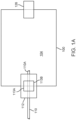
- FIG. 1A illustrates schematic block diagram of a fluid fillable balloon device 100; in particular, it illustrates a gastric balloon device assembly 100.
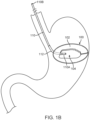
- FIG. 1B is an illustration of device 100 in place in a patient's stomach.
- the device generally comprises two states of interest: a pre-deployment or uninflated configuration and a deployed, inflated or active configuration; the deployed configuration is shown.
- the device is inflated with a fluid.
- the fluid can be delivered through a tube 110 also referred to herein as a catheter or conduit, wherein the tube may pass through a lumen in the wall of the balloon device or is coupled to a fluid path 112 between the exterior and the interior of the balloon device.
- the fluid can be delivered using any type of device that can deliver fluid.
- a wall 102 of the balloon 100 is fabricated from a thin film material such as, for example, polyurethane.
- the tube 110 comprises a balloon end or internal section 110A that extends through fluid path 112 into the central enclosed space or reservoir 104 of device 100.
- internal section 110A stops before entering the reservoir or is just adjacent to the reservoir 104.
- the conduit 110 is removed from the device once inflation is completed. When the conduit is removed, fluid path 112 must be sealed to prevent the fluid from leaking out through fluid path 112 from reservoir 104. As shown schematically in FIG. 1A , sealing is accomplished by fill valve, which may comprise an internal section 113B, an external section 113A, or a combination of both.
- elements of the fill valve 113 may have components installed inside conduit 110 as well as in fluid path 112.
- a gastric balloon device assembly 100 further comprise a fluid release valve 126.
- release valve 126 is independent from fill valve 113.
- release valve 126 may be combined, at least in part, with fill valve 113.
- release valve 126 reverses the operation of the sealing mechanism of fill valve 113.
- the fluid path itself serves as the fill valve, wherein the fluid path itself closes down to prevent fluid from escaping from reservoir 104.
- the fluid path is sealed by an automatic-sealing catheter assembly 10, which is a separate valve mechanism installed in the fluid path or in a portion of the conduit left behind in the fluid path when the main length of the conduit is withdrawn from the patient's body.
- FIG. 2A illustrates a partial cut-away view of one variation of the device 100 in the region of fill valve as it might appear within a patient's stomach, ready to be inflated.
- the fill valve is an automatic-sealing catheter assembly (ASCA) 10.
- the variation shown in FIG. 2A includes a catheter 110 that extends from interior section 110A to outside of device 100, typically extending far enough to reach the exterior of the patient, where the balloon thin film wall 102 defines the division between the interior and the exterior of the device.
- FIG. 2B is a close up cutaway view of the ASCA 10 of FIG. 2A .
- the assembly comprises the internal section 110A of catheter 110, the end of which has been sealed shut with a plug 120, in this variation by a toothed plug 120, during assembly.
- the plug has one or more circumferential, or partially circumferential, teeth or projections 115 which create rings or bulges 116 that cause an increased diameter on the exterior of internal section 110A.
- the circumferential projections 115 also work to lock plug 120 into section 110A substantially permanently, although glue, welding, or other bonding approaches could be used to lock a plug into section 110A.
- the catheter further comprises one or more side-wall openings or fill ports 130, where the variation with one fill port is show in the figures, wherein the fill ports are disposed to be clear from plug 120 to allow filling fluid coming through the catheter to freely enter the balloon.
- a catheter jacket 210 has been inserted through a section of balloon wall 102 from the exterior of the balloon and is held in place by pinching balloon wall 102 between the exterior of catheter jacket 210 and the interior of a balloon wall anchor 310.
- the catheter further comprises a weakened section 150 designed to define where and with what tension the catheter will tear apart.
- section 150 is a slit extending part way across conduit 110.
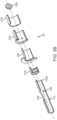
- FIG 3A illustrates another variation of ASCA 10.
- the toothed plug has been replaced with a spherical plug 125, for example a ball bearing.
- a retaining ring 410 has been added to reinforce wall anchor 310.
- An exploded, cross-sectional view of the ASCA 10 of FIG 3A is illustrated in FIG 3B for clarity.
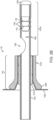
- FIG. 4A illustrates an example of the automatic-sealing behavior of the catheter assembly of FIG 3 .
- FIG. 4A illustrates ASCA 10 as fluid enters a balloon device 100.
- balloon 100 is inflated by injecting a fluid 1000 at a catheter fill end 110B.
- the fluid travels the length of the catheter and exits the catheter through a catheter fill port 130 disposed proximate or, in close proximity to, a catheter balloon end 110A, where the catheter balloon end 110A is intended to be inserted far enough into the balloon such that the fill port 130 is completely unobstructed by the other components of the variation of ASCA 10.
- catheter 110 is withdrawn from the patient.
- fluid path112 which normally would allow two-way fluid flow, must prevent exit of the fluid to prevent deflation of the balloon.
- FIG 4B illustrates a partially withdrawn catheter 110 in a sealing position.
- catheter 110 has been pulled into catheter jacket 210 until it moves plug 125 between the engagement elements 212 built into the inner surface of jacket 210.
- catheter 110 is secured in the sealing position when catheter wall bulges 116 formed by plug 125 abut engagement elements 212, which, in this variation, are ridges in the inside of catheter jacket 210.
- the fill port 130 is no longer in fluid communication with the interior of the balloon and the exterior of the catheter is compressed between the internal ridges and the plug, in this case operating like an o-ring, effectively sealing the catheter assembly.
- any further increase in axial tension on the catheter are applied to tear the catheter to allow the majority of catheter 110 to be extracted from the patient while leaving catheter balloon end 110A in catheter jacket 210, as indicated in FIG. 4B .
- tear-away slit 150 shown in FIG. 3B ) creates a unique location at which the catheter will tear; additionally, by design, the force at which the catheter tears can be adjusted to any reasonable value by varying the depth or shape of slit 150.
- plug 120 can have just one ( FIG. 5B ), instead of two ( FIG. 5C ), circumferential teeth 115, or a plug shaft 122 can be smooth sided ( FIG 5A ).
- plug 120 can be a small ball bearing 125 ( FIG 5D ) or the plug can be a measured amount of hardening material, for example, glue 127 injected into the end of the catheter 110 ( FIG. 5F ) or the distinct plug can be replaced by simply sealing the balloon end of catheter 110 ( FIG. 5E ).
- plug 120 includes a shaft 122 that is generally smooth sided except for a bulbous protrusion 118 at its tip.
- plug 120 comprises plug shaft 122 and a plug head 121 wherein plug shaft 122 has a main diameter substantially equal to the interior diameter of catheter 110 while plug head 121 has a diameter larger than the internal diameter, ID C , of catheter 110 to facilitate insertion and/or removal of plug 120 from the catheter and, in some variations, plug head 121 has a diameter larger than the external diameter of catheter 110 to improve retention of the catheter balloon end 110A inside balloon jacket 210 as the major portion of the catheter is removed from the patient's body.
- the plug shaft 122 comprises one or more teeth 115 wherein the teeth are disposed to permit plug 120 to be inserted into catheter balloon end 110A with relatively little extra resistance but are shaped to dig into the relatively soft catheter material when force is exerted in the direction to extract plug 120 from catheter 110.
- the diameter of the teeth is, by design, selected to form localized expanded bands, rings, or bulges 116 around the exterior of catheter 110. The region having these expanded bands is the interference region, so-called because the region has a mechanical interference with the engagement elements in jacket 210.
- Plug 120 may be fabricated from any substantially incompressible, bio-compatible material. In one variation the plug is fabricated from stainless steel. In one variation in which a ball bearing is used as plug 120 the diameter of the ball bearing is designed to provide substantially the same functions as a toothed plug, that is, the diameter of the ball bearing is slightly larger than ID C , thus both plugging catheter 110 and forming one expanded band around the exterior of catheter 110.
- FIG. 6A illustrates a single fill port 130 in catheter 110, whose size is determined by the net port open area designed to fill the balloon without creating excessive backpressure or slow fill rates.
- FIG. 6B the single fill port replaced by two or more, possibly smaller, ports 130A. These two ports are shown as diametrically opposed but they may be located anywhere around catheter 110.
- port 130 can even be replaced by micro-drilled perforations 131, as shown in FIG 6C , in a band around the catheter 110, this latter approach maintains rotational symmetry of the structure of the catheter 110 while still providing the desired net open area in the catheter.
- Laser micro machining by a vendor such as Resonetics, 44 Simon St. Nashua, NH can be advantageously used to create these small, closely packed openings 131 in the catheter material.
- FIG. 7 illustrates in cutaway variations of catheter jacket 210.
- jacket 210 comprises a rigid cylindrical tube.
- jacket 210 has an internal diameter smaller than the catheter's outer diameter by a small amount, say 0.010 inches.
- jacket 210 further comprises one or more raised engagement elements 212, wherein the elements 212 may be distinct bumps, knobs, or teeth, as shown in FIG. 7B , or they may be continuous ridges or rings as shown in FIG. 7A .
- engagement elements 212 reduce the internal clearance of the jacket to be less than catheter's 110 outer diameter to provide frictional engagement, or mechanical interference, between the jacket 210 and the interference region of catheter 110.
- the engagement element can gently dig into the exterior of catheter 110. This diametrical difference is preferably between 0.001 inches and 0.050 inches; more preferably between 0.005 inches and 0.020 inches; and most preferably between 0.006 and 0.010 inches
- one or more of these raised elements may be asymmetric relative to the axis of symmetry of jacket 210, that is, the interior edge 214 and the exterior edge 216 may have different slope angles.
- the interior edge 214 is sloped to facilitate pulling catheter balloon end 110A from the exterior side into jacket 210 to seal the ASCA while exterior edge 216 is more perpendicular to the interior wall of jacket 210 to inhibit, but not preventing, catheter balloon end 110A from moving inwardly after the rest of catheter 110 has been torn away.
- other engagement elements 212 may be configured to help form a fluid tight seal when plug 120 is pulled into jacket 210.
- the outermost (that is, closest to the exterior of balloon 100) engagement elements 212A have a small enough inner diameter to prevent plug 120 (shown as ball bearing 125 in FIG. 4B ) from being pulled out jacket 210 when catheter 110 is extracted, whilst innermost elements 212B prevent plug 120 from migrating back into balloon reservoir 104 once the plug is in the sealing position.
- Innermost elements 212B also help to form a fluid-tight seal by squeezing plug 125 against outermost elements 212A when there is a compressible section of catheter therebetween.
- engagement elements 212 are configured to compress and dig into catheter 110 to hold catheter balloon end 110A inside gastric device 100 under small, incidental extractive loads but not retain catheter balloon end 110A inside the gastric device under the larger, intentional extraction load used to detach the catheter from the device.
- the frictional force holding a prototypical polymeric catheter back from extraction generated by outermost or exterior engagement elements 212A of a compatibly designed jacket may be determined at the time of design to span a wide range.
- the elements that comprise the ASCA are intended to control the frictional/retention force that holds the catheter 110 in the ASCA during the deployment process.
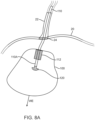
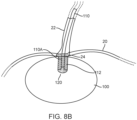
- FIGS. 8A-8C there are three stages in the deployment process, where the maximum retaining force that holds the catheter within the device varies in each stage.
- the first stage that occurs after positioning the device in the stomach 20 is a filling stage, during which the medical caregiver begins to infuse fluid into the empty device 100 (or partially empty device).
- device 100 can be considered as a weighted mass at the end of the catheter 110.
- the weight of the balloon 100 increases from the weight of just the un-inflated thin film balloon.
- the filled balloon weight is approximately 500 grams.
- the filled device is at least partly supported by surrounding tissue or, in the case of a gastric balloon, by the contents of the stomach, which reduces the effective weight applied by the balloon on the catheter.
- the force that retains the catheter within the valve (the sliding resistance threshold or retention force "FR") must be greater than the effective weight (“WE”) or else the weight of the balloon could cause pre-mature detachment of the catheter or sealing of the valve.
- a second stage of the deployment process seals the ASCA. Closing this valve requires pulling balloon end 110A of catheter 110 into fluid path 112 such that the fill port 130 is withdrawn from the reservoir of the balloon 100.
- this stage of the process comprises pulling the catheter 110 in a proximal direction (e.g., towards the esophagus 22) until filled device 100 encounters resistance to motion against the esophageal sphincter 24. Once device 100 abuts sphincter 24, continued application of the proximal force increases the tension in catheter 100 until the tension is greater than, and overcomes, the FR, allowing the catheter internal end 110A to slide into fluid path 112 with a sliding resistance somewhat below the sliding resistance threshold.
- FC Closing force
- plug 120 reaches engagement elements 212A (not shown in FIG. 8A ) and cannot move any further.
- the majority of catheter 110 is disconnected from device 100 and removed from the patient's body. Only internal section 110A, which is part of ASCA 10, remains in device 100 after device deployment. With the device lodged against esophageal sphincter 24 the disconnection of catheter 110 is effected by pulling on the catheter with increasing force until the tension in catheter 110 exceeds a tear force, FT, which causes the catheter to separate at weakened section 150, in this variation a slit, where the depth of slit 150 has been designed to keep the tear force FT below a force, FE, that would damage the esophageal sphincter. Note that in some variations tear slit 150 is replaced by other means of weakening the catheter at the desired tear location to achieve a safe disconnection of catheter 110.
- FT tear force
- FIG. 7D illustrates the relationship between the internal diameter of an engagement element ("Barb ID") and the frictional force/resistance felt by a catheter, as measured for an exemplary embodiment of element 212A and catheter 110.
- FR is preferably, 0.25 lbf ⁇ FR ⁇ 1.6 lbf and more preferably 0.6 lbf ⁇ FR ⁇ 1.1 lbf. where 1.6 lbf was determined to be safely below FE for human patients. Further, 1.25 lbf ⁇ FT ⁇ 1.6 lbf. Note that FC is not a free design parameter because it is always equal to the FR of the specific as-built valve. (that is, the valve starts closing as soon as FC exceeds the threshold of FR).
- FIG. 7E Another variation of a catheter jacket is illustrated in cutaway view in FIG. 7E .
- the distinct engagement elements of previous variations are replaced by closely spaced, tapered internal diameter ridges 212C. These ridges apply an increasingly tight grip on the catheter as catheter balloon end 110A is pulled further outwardly, whereas engagement elements 212A tend to grip the catheter with a constant force, independent of how far the catheter has been pulled.
- jacket 210 is affixed to a portion of the balloon wall material, either a free-standing patch or a relatively smooth portion of the actual balloon wall at, for example, a polar region of an oblate spheroid balloon.
- jacket 210 can be fabricated from a short piece of polymer tubing such as polyurethane, which is compatible with welding or gluing into an equatorial seam between two halves of a polymer, for example polyurethane, balloon.
- jacket 210 may be held in place by a balloon wall anchor 310.
- the thin film of material (either in the form of a section of the balloon wall 102 or a separate patch of material) is pinched between catheter jacket 210 and balloon wall anchor 310, locking catheter jacket 210 in place in the balloon wall.
- anchor 310 may comprise one or more internal rings or teeth 320 to lock jacket 210 in place.
- anchor 310 comprises an inwardfacing lip 315 which prevents catheter jacket 210 from entering the interior of the balloon device.
- anchor 310 comprises inward facing nubs 320 that are shaped to allow jacket 210 to slide over them when being inserted from the exterior side of the balloon but which lock it in place once the end of the jacket passes the edge of the nubs. Additionally, some variations of anchor 310 comprise a flared exterior facing end 330, as shown in FIGS. 2B and 3A . Flaring this end of wall anchor 310 provides a smooth and expanded contact surface between the anchor and the thin-film wall material, reducing the probability of tearing the wall material. In some variations anchor 310 is fabricated from polymer material to reduce the probability of damage to the thin film wall material 102, which is sandwiched between jacket 210 and anchor 310.
- retaining ring 410 is installed over balloon wall anchor 310.
- retaining ring 410 comprises a thin walled, stiff cylindrical tube with a close inner diameter-to-wall anchor outer diameter tolerance designed to capture the thin film wall material in a press fit.
- the retaining ring provides the creep resistance and stiffness normally found in a metal wall anchor.
- An advantage of this variation is that a metal catheter jacket, for example stainless steel, can be pressed through the region of thin-film wall material and up into the soft/compliant wall anchor without the force from the press fit causing the film to shear.
- the soft wall anchor acts as a cushion for the film between a stiff, metal catheter jacket and a stiff, metal retaining ring so that a strong press fit can be achieved.
- the ASCA can be fabricated on a separate patch of balloon-compatible material or assembled in situ in a wall of the balloon device.
- a process for fabricating the automatic-sealing catheter assembly typically comprises the following steps:
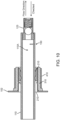
- the functions of the plug and fill port(s) can be combined by using a micro-check valve 123.
- a micro-check valve 123 For example, both axial and side exit micro-check valves are available from The Lee Company, 2 Pettipaug Road, PO Box 424, Westbrook, CT 06498. See, for example, Lee part number CCPI25100xxS, where xx is the cracking pressure.
- the check valve may be installed in catheter balloon end 110A as a direct replacement for plug 120, as illustrated in FIG. 10 , in which case the ASCA is similar to the variations described above, except there is no need for the catheter to comprise one or more fill ports.
- the fluid flows through the catheter and the (forward) pressure opens the check valve in the end of the catheter, allowing the fluid to enter reservoir.
- the check valve seals the end of the catheter.
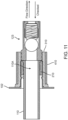
- FIG. 11 An alternative variation, shown in FIG. 11 , incorporates a micro-check valve 123 directly into the end of wall anchor 310 or retaining ring 410.
- the micro-check valve is part of the balloon device and the catheter is inserted into and held in catheter jacket 210 independently from the presence of a plug.
Landscapes
- Health & Medical Sciences (AREA)
- Heart & Thoracic Surgery (AREA)
- Life Sciences & Earth Sciences (AREA)
- Animal Behavior & Ethology (AREA)
- Veterinary Medicine (AREA)
- Public Health (AREA)
- Engineering & Computer Science (AREA)
- Biomedical Technology (AREA)
- General Health & Medical Sciences (AREA)
- Child & Adolescent Psychology (AREA)
- Orthopedic Medicine & Surgery (AREA)
- Vascular Medicine (AREA)
- Nursing (AREA)
- Obesity (AREA)
- Pulmonology (AREA)
- Anesthesiology (AREA)
- Hematology (AREA)
- Biophysics (AREA)
- Media Introduction/Drainage Providing Device (AREA)
Applications Claiming Priority (3)
| Application Number | Priority Date | Filing Date | Title |
|---|---|---|---|
| US201862635272P | 2018-02-26 | 2018-02-26 | |
| EP19756699.5A EP3755240B1 (fr) | 2018-02-26 | 2019-02-26 | Système de cathéter de remplissage de ballonnet à bouchage automatique |
| PCT/US2019/019630 WO2019165449A1 (fr) | 2018-02-26 | 2019-02-26 | Système de cathéter de remplissage de ballonnet à bouchage automatique |
Related Parent Applications (2)
| Application Number | Title | Priority Date | Filing Date |
|---|---|---|---|
| EP19756699.5A Division-Into EP3755240B1 (fr) | 2018-02-26 | 2019-02-26 | Système de cathéter de remplissage de ballonnet à bouchage automatique |
| EP19756699.5A Division EP3755240B1 (fr) | 2018-02-26 | 2019-02-26 | Système de cathéter de remplissage de ballonnet à bouchage automatique |
Publications (3)
| Publication Number | Publication Date |
|---|---|
| EP4344724A2 true EP4344724A2 (fr) | 2024-04-03 |
| EP4344724A3 EP4344724A3 (fr) | 2024-08-21 |
| EP4344724B1 EP4344724B1 (fr) | 2026-04-01 |
Family
ID=67685353
Family Applications (2)
| Application Number | Title | Priority Date | Filing Date |
|---|---|---|---|
| EP19756699.5A Active EP3755240B1 (fr) | 2018-02-26 | 2019-02-26 | Système de cathéter de remplissage de ballonnet à bouchage automatique |
| EP24158123.0A Active EP4344724B1 (fr) | 2018-02-26 | 2019-02-26 | Système de cathéter de remplissage de ballonnet à étanchéité automatique |
Family Applications Before (1)
| Application Number | Title | Priority Date | Filing Date |
|---|---|---|---|
| EP19756699.5A Active EP3755240B1 (fr) | 2018-02-26 | 2019-02-26 | Système de cathéter de remplissage de ballonnet à bouchage automatique |
Country Status (4)
| Country | Link |
|---|---|
| US (5) | US10470908B2 (fr) |
| EP (2) | EP3755240B1 (fr) |
| ES (1) | ES2982266T3 (fr) |
| WO (1) | WO2019165449A1 (fr) |
Families Citing this family (10)
| Publication number | Priority date | Publication date | Assignee | Title |
|---|---|---|---|---|
| US10182932B2 (en) | 2012-02-21 | 2019-01-22 | Allurion Technologies, Inc. | Methods and devices for deploying and releasing a temporary implant within the body |
| RU2601995C2 (ru) | 2012-02-21 | 2016-11-10 | Аллюрион Текнолоджиз, Инк. | Способы и устройство для внедрения временного имплантата в тело и извлечения временного имплантата из тела |
| WO2019165449A1 (fr) | 2018-02-26 | 2019-08-29 | Allurion Technologies, Inc. | Système de cathéter de remplissage de ballonnet à bouchage automatique |
| EP3813922B1 (fr) | 2018-07-06 | 2023-12-20 | Allurion Technologies, Inc. | Système de valve de régulation fluidique binaire |
| EP3886774A4 (fr) | 2018-12-13 | 2022-09-28 | Allurion Technologies, Inc. | Système amélioré d'administration de fluide |
| US20240050254A1 (en) * | 2019-09-20 | 2024-02-15 | Leonardo Salles De Almeida | Devices and method for bi-directional adjustment of intragastric balloons, and shut-off valve |
| CN111544175A (zh) * | 2020-04-27 | 2020-08-18 | 王利 | 减肥水囊 |
| CN115120298A (zh) * | 2022-08-02 | 2022-09-30 | 为泰医疗器械(深圳)有限公司 | 双腔封堵球囊导管及其使用方法 |
| US12246163B2 (en) * | 2023-04-12 | 2025-03-11 | Allurion Technologies, Inc. | Automatic-sealing balloon-filling catheter system |
| US12245962B2 (en) | 2023-04-12 | 2025-03-11 | Allurion Technologies, Inc. | Balloon sealing and fill valve |
Citations (3)
| Publication number | Priority date | Publication date | Assignee | Title |
|---|---|---|---|---|
| US20100110311A1 (en) | 2008-10-30 | 2010-05-06 | Samsung Electronics Co., Ltd. | Method and system for adjusting a presentation of image data |
| US20130012980A1 (en) | 2011-01-21 | 2013-01-10 | Obalon Therapeutics, Inc. | Intragastric device |
| US20130218190A1 (en) | 2012-02-21 | 2013-08-22 | Allurion Technologies, Inc. | Methods and devices for deploying and releasing a temporary implant within the body |
Family Cites Families (144)
| Publication number | Priority date | Publication date | Assignee | Title |
|---|---|---|---|---|
| US2911988A (en) | 1956-01-24 | 1959-11-10 | Clarence J Ravn | Moisture releasable drain valve |
| US3586018A (en) | 1969-02-24 | 1971-06-22 | Thermia Verken Ab | Self-closing valve |
| US3638733A (en) | 1970-03-03 | 1972-02-01 | Kidde & Co Walter | Heat operated fire extinguisher |
| US3853116A (en) | 1971-06-21 | 1974-12-10 | Investors In Ventures Inc | Implant methods and devices for influencing body fluids |
| GB1577517A (en) | 1976-04-28 | 1980-10-22 | Ici Ltd | Method of thermoforming |
| US4133315A (en) | 1976-12-27 | 1979-01-09 | Berman Edward J | Method and apparatus for reducing obesity |
| US4253201A (en) | 1979-05-24 | 1981-03-03 | Ross David A | Prosthesis with self-sealing valve |
| DE2935631A1 (de) | 1979-09-04 | 1981-04-16 | Plate Bonn Gmbh, 5300 Bonn | Mehrschicht-kunststoff-folie, verfahren zu ihrer herstellung und deren verwendung |
| US4614188A (en) | 1980-08-15 | 1986-09-30 | Seymour Bazell | Balloon catheter |
| US4899747A (en) | 1981-12-10 | 1990-02-13 | Garren Lloyd R | Method and appartus for treating obesity |
| US4636213A (en) | 1985-01-24 | 1987-01-13 | Pakiam Anthony I | Implantable prosthesis |
| US4723547A (en) | 1985-05-07 | 1988-02-09 | C. R. Bard, Inc. | Anti-obesity balloon placement system |
| US4739758A (en) | 1986-05-19 | 1988-04-26 | Criticare Systems, Inc. | Apparatus for stomach cavity reduction |
| US4732188A (en) | 1987-06-15 | 1988-03-22 | Gt Development Corporation | Fuel tank cap with pressure/thermal relief |
| US4949756A (en) | 1988-08-31 | 1990-08-21 | Uresil Corporation | One-way valve |
| US4842007A (en) | 1988-09-08 | 1989-06-27 | Guard Associates, Inc. | Self-sealing valve for inflated bodies |
| US5018665A (en) | 1990-02-13 | 1991-05-28 | Hale Fire Pump Company | Thermal relief valve |
| US5092847A (en) | 1990-04-06 | 1992-03-03 | Sherwood Medical Company | Enteral feeding tube stylet |
| JP2514087Y2 (ja) | 1990-05-25 | 1996-10-16 | 幸三 牧田 | 離脱式両端逆止弁付きバル―ン |
| US5222970A (en) | 1991-09-06 | 1993-06-29 | William A. Cook Australia Pty. Ltd. | Method of and system for mounting a vascular occlusion balloon on a delivery catheter |
| US5336123A (en) | 1992-04-08 | 1994-08-09 | Vonco Products, Inc. | Inflatable flexible pouch |
| US5348537A (en) | 1992-07-15 | 1994-09-20 | Advanced Cardiovascular Systems, Inc. | Catheter with intraluminal sealing element |
| US5482492A (en) | 1994-01-10 | 1996-01-09 | M & D Balloons, Inc. | Balloons and balloon valves |
| US5496203A (en) | 1994-03-25 | 1996-03-05 | Murray; Robert H. | Balloon valve assembly |
| US5507808A (en) | 1994-10-26 | 1996-04-16 | Becker; Hilton | Filling tube and seal construction |
| US5632297A (en) | 1995-09-26 | 1997-05-27 | Amcast Industrial Corporation | Piston-type thermally or pressure activated relief device |
| US5884625A (en) | 1996-07-09 | 1999-03-23 | Hart; William T. | Oral appliance for delivering gas to the retroglossal area |
| DE19831698C2 (de) | 1998-07-15 | 2000-08-31 | Caremed Medical Produkte Ag | Rückschlagventil, insbesondere für eine implantierbare künstliche Harnblase |
| US6129751A (en) | 1998-07-28 | 2000-10-10 | Intermedics Inc. | Cardiac lead with active fixation and biocompatible lubricant |
| AUPP550098A0 (en) | 1998-08-26 | 1998-09-17 | Microcatheters Pty Ltd | Catheter guide |
| US6162251A (en) | 1999-05-25 | 2000-12-19 | Novamed Medical Products Manufacturing, Inc. | Saline implant having single valve with primary and secondary closures |
| US6453907B1 (en) | 1999-08-12 | 2002-09-24 | Obtech Medical Ag | Food intake restriction with energy transfer device |
| US20040101540A1 (en) | 1999-09-01 | 2004-05-27 | John Cooker | Oral delivery system and method for making same |
| US6367499B2 (en) | 2000-03-02 | 2002-04-09 | Hamai Industries Limited | Safety valve |
| FR2805986B1 (fr) | 2000-03-13 | 2002-10-11 | Districlass Madical | Dispositif intra-gastrique a volume variable |
| US6682473B1 (en) | 2000-04-14 | 2004-01-27 | Solace Therapeutics, Inc. | Devices and methods for attenuation of pressure waves in the body |
| US6375972B1 (en) | 2000-04-26 | 2002-04-23 | Control Delivery Systems, Inc. | Sustained release drug delivery devices, methods of use, and methods of manufacturing thereof |
| US6663648B1 (en) | 2000-06-15 | 2003-12-16 | Cordis Corporation | Balloon catheter with floating stiffener, and procedure |
| US7837720B2 (en) * | 2000-06-20 | 2010-11-23 | Boston Scientific Corporation | Apparatus for treatment of tissue adjacent a bodily conduit with a gene or drug-coated compression balloon |
| US6460541B1 (en) | 2000-11-07 | 2002-10-08 | Polyzen, Inc. | Heat-sealed inflatable article, and method of making the same |
| US6814097B2 (en) | 2001-03-20 | 2004-11-09 | Teleflex Gfi Control Systems L.P. | Pressure relief device |
| US6537247B2 (en) | 2001-06-04 | 2003-03-25 | Donald T. Shannon | Shrouded strain relief medical balloon device and method of use |
| US6644336B2 (en) | 2001-06-12 | 2003-11-11 | Oil States Industries, Inc. | Method and apparatus for automatic shutoff of a valve when a substance is present in a flow of fluid |
| US6939292B2 (en) | 2001-06-20 | 2005-09-06 | Olympus Corporation | Capsule type endoscope |
| US7160258B2 (en) | 2001-06-26 | 2007-01-09 | Entrack, Inc. | Capsule and method for treating or diagnosing the intestinal tract |
| US20040146559A1 (en) | 2002-09-28 | 2004-07-29 | Sowden Harry S. | Dosage forms having an inner core and outer shell with different shapes |
| US6712832B2 (en) | 2001-10-15 | 2004-03-30 | Tilak M. Shah | Low-pressure medical balloons and method of making same |
| TW555029U (en) | 2001-12-12 | 2003-09-21 | Shi-Guang Weng | Multi-purpose temperature control safety plug |
| US6733512B2 (en) | 2002-03-07 | 2004-05-11 | Mcghan Jim J. | Self-deflating intragastric balloon |
| US7169134B2 (en) | 2002-03-26 | 2007-01-30 | Ultradent Products, Inc. | Apparatus with rotatable valve syringe |
| US7485093B2 (en) | 2002-04-25 | 2009-02-03 | Given Imaging Ltd. | Device and method for in-vivo sensing |
| US6981978B2 (en) | 2002-08-30 | 2006-01-03 | Satiety, Inc. | Methods and devices for maintaining a space occupying device in a relatively fixed location within a stomach |
| US9060844B2 (en) | 2002-11-01 | 2015-06-23 | Valentx, Inc. | Apparatus and methods for treatment of morbid obesity |
| US20040192582A1 (en) | 2002-12-19 | 2004-09-30 | Burnett Daniel R. | Ingestible formulations for transient, noninvasive reduction of gastric volume |
| DK174883B1 (da) | 2003-02-27 | 2004-01-19 | Unomedical As | Engangsurinpose til opsamling af urin |
| JP3820483B2 (ja) | 2003-03-03 | 2006-09-13 | 株式会社フジキン | 安全弁 |
| US20060058829A1 (en) | 2003-03-19 | 2006-03-16 | Sampson Douglas C | Intragastric volume-occupying device |
| US6981980B2 (en) | 2003-03-19 | 2006-01-03 | Phagia Technology | Self-inflating intragastric volume-occupying device |
| DK1638638T3 (da) | 2003-06-20 | 2009-11-23 | Allergan Inc | Tovejsslidsventil |
| US9498366B2 (en) | 2003-07-28 | 2016-11-22 | Baronova, Inc. | Devices and methods for pyloric anchoring |
| US8048169B2 (en) | 2003-07-28 | 2011-11-01 | Baronova, Inc. | Pyloric valve obstructing devices and methods |
| US7951121B2 (en) | 2003-07-30 | 2011-05-31 | Navilyst Medical, Inc. | Pressure actuated valve with improved slit configuration |
| US20060004323A1 (en) | 2004-04-21 | 2006-01-05 | Exploramed Nc1, Inc. | Apparatus and methods for dilating and modifying ostia of paranasal sinuses and other intranasal or paranasal structures |
| WO2006020929A2 (fr) | 2004-08-13 | 2006-02-23 | Phagia Technology | Dispositif place dans le volume intragastrique |
| US7641688B2 (en) | 2004-09-16 | 2010-01-05 | Evera Medical, Inc. | Tissue augmentation device |
| WO2006034077A1 (fr) | 2004-09-16 | 2006-03-30 | Juva Medical, Inc. | Dispositif d'augmentation du volume de tissus |
| US20070078476A1 (en) | 2004-10-12 | 2007-04-05 | Hull Wendell C Sr | Overweight control apparatuses for insertion into the stomach |
| EP1830115B1 (fr) | 2004-11-11 | 2014-03-26 | Kawasaki Jukogyo Kabushiki Kaisha | Dispositif de soupape de securite |
| EP1853205A1 (fr) | 2005-02-24 | 2007-11-14 | Compagnie Europeenne d' etude et de recherche de di spositfs pour l'implantation par la paroscopie | Ballon intra-gastrique avec renfort d extraction |
| US20060222705A1 (en) | 2005-03-31 | 2006-10-05 | Flanner Henry H | Pharmaceutical tablet and apparatus and method for making |
| ATE478637T1 (de) | 2005-06-01 | 2010-09-15 | Cie Euro Etude Rech Paroscopie | Intragastrischer ballon mit einem gelhaltigen ventil und kit |
| US20070010791A1 (en) | 2005-07-07 | 2007-01-11 | Bristol-Myers Squibb Company | Valve for inflatable chamber of medical device |
| PL1948075T3 (pl) | 2005-10-31 | 2017-01-31 | Reshape Medical, Inc. | Wypełniacz przestrzeni wewnątrzżołądkowej |
| US20110112383A1 (en) | 2005-11-08 | 2011-05-12 | Plensat, Inc | Devices, systems and methods for treatment of eating disorders |
| US20070207199A1 (en) | 2005-12-28 | 2007-09-06 | Sogin Stephen J | Appetite suppression device |
| FR2897529B1 (fr) | 2006-02-17 | 2008-10-31 | Cie Euro Etude Rech Paroscopie | Ballon intra-gastrique a memoire de forme |
| US8398668B2 (en) | 2006-04-19 | 2013-03-19 | Vibrynt, Inc. | Devices and methods for treatment of obesity |
| US7740023B2 (en) | 2006-08-18 | 2010-06-22 | Restaurant Technologies, Inc. | Check valve assemblies and related methods |
| EP2061397B1 (fr) | 2006-09-02 | 2015-01-07 | Barosense, Inc. | Manchons intestinaux et systèmes de déploiement associés |
| DE502006002903D1 (de) | 2006-11-06 | 2009-04-02 | Job Lizenz Gmbh | Sicherheitsventil für einen Druckgasbehälter |
| WO2008091652A2 (fr) | 2007-01-24 | 2008-07-31 | Acclarent, Inc. | Procédés, dispositifs et systèmes pour un traitement et/ou un diagnostic de trouble otorhinolaryngologique |
| US8585676B2 (en) | 2007-02-05 | 2013-11-19 | Polyzen Inc. | Multi-lumen lay-flat tubing, catheter articles comprising same, and method of manufacture thereof |
| JP5259966B2 (ja) | 2007-03-26 | 2013-08-07 | 株式会社ジェイ・エム・エス | 口腔関連圧力測定用バルーンおよびその製造方法 |
| US8226602B2 (en) | 2007-03-30 | 2012-07-24 | Reshape Medical, Inc. | Intragastric balloon system and therapeutic processes and products |
| US20080249635A1 (en) | 2007-04-05 | 2008-10-09 | Barry Weitzner | Gastric filler devices for obesity therapy |
| US20080306441A1 (en) | 2007-04-10 | 2008-12-11 | Wilson-Cook Medical Inc. | Non-buckling balloon catheter with spring loaded floating flexible tip |
| US20080255601A1 (en) | 2007-04-13 | 2008-10-16 | Allergan, Inc. | Apparatus and method for remote deflation of intragastric balloon |
| US7976497B2 (en) | 2007-09-25 | 2011-07-12 | Polyzen Inc. | Multi-layer film welded articulated balloon |
| KR101542277B1 (ko) | 2007-10-23 | 2015-08-06 | 알러간, 인코포레이티드 | 압력 감지 위내 풍선 |
| WO2009059803A1 (fr) | 2007-11-09 | 2009-05-14 | Venera Khafizova | Dispositif à ballon gastrique gonflable par voie externe |
| WO2009059802A1 (fr) | 2007-11-09 | 2009-05-14 | Venera Khafizova | Dispositif à ballon gastrique auto-dégonflable |
| EP2231212A2 (fr) | 2007-12-20 | 2010-09-29 | 7L, Llc | Dispositif autodilatable à avaler occupant l'espace gastrique |
| US20090259246A1 (en) | 2008-04-14 | 2009-10-15 | Sherif Eskaros | Intragastric Volume-Occupying Device |
| US8377128B2 (en) | 2008-04-28 | 2013-02-19 | Allergan, Inc. | Flush patch for elastomeric implant shell |
| EP2282801A1 (fr) | 2008-05-01 | 2011-02-16 | Edwards Lifesciences Corporation | Dispositif et procédé de déploiement de ballonnet |
| US7971798B2 (en) | 2008-05-07 | 2011-07-05 | GM Global Technology Operations LLC | Resettable thermal pressure relief device |
| EP2300094B1 (fr) | 2008-06-02 | 2013-07-24 | Loma Vista Medical, Inc., | Dispositifs médicaux gonflables |
| US20100062057A1 (en) | 2008-09-10 | 2010-03-11 | Pronova BioPharma Norge AS. | Formulation |
| WO2010045477A2 (fr) | 2008-10-16 | 2010-04-22 | Obalon Therapeutics, Inc. | Dispositif occupant un volume intra-gastrique et son procédé de fabrication |
| US20100114311A1 (en) | 2008-11-05 | 2010-05-06 | Hilton Becker | Multi-Lumen Breast Prothesis and Improved Valve Assembly Therefor |
| US9913964B2 (en) | 2008-12-29 | 2018-03-13 | Acclarnet, Inc. | System and method for dilating an airway stenosis |
| US20100246165A1 (en) | 2009-03-31 | 2010-09-30 | Diaz Edmundo B | Invisible and/ or non-invisible designed inflatables combined with electric black ultra-violet lights and inflator nozzle fixture accessories |
| US20110004236A1 (en) | 2009-07-01 | 2011-01-06 | E2 Llc | Systems and Methods for Treating Obesity and Type 2 Diabetes |
| US8608642B2 (en) | 2010-02-25 | 2013-12-17 | Ethicon Endo-Surgery, Inc. | Methods and devices for treating morbid obesity using hydrogel |
| US20110275882A1 (en) | 2010-05-05 | 2011-11-10 | Syncardia Systems, Inc | Valve for ventricular assist device |
| CN102883684B (zh) | 2010-05-10 | 2015-04-08 | 爱德华兹生命科学公司 | 人工心脏瓣膜 |
| EP3552655B1 (fr) | 2010-07-13 | 2020-12-23 | Loma Vista Medical, Inc. | Dispositifs médicaux gonflables |
| US8870966B2 (en) | 2010-10-18 | 2014-10-28 | Apollo Endosurgery, Inc. | Intragastric balloon for treating obesity |
| US8383135B2 (en) | 2010-12-03 | 2013-02-26 | Richard C. Fuisz | Solid dosage form that promotes reliable oral, esophageal and GI transit |
| US20120141544A1 (en) | 2010-12-03 | 2012-06-07 | Fuisz Richard C | Solid Dosage Form That Promotes Reliable Oral, Esophageal and GI Transit |
| AU2012207387B2 (en) | 2011-01-17 | 2017-02-16 | Artio Medical, Inc. | Ballstent device and methods of use |
| CN201977967U (zh) | 2011-01-18 | 2011-09-21 | 郭加 | 一种减肥用胃内填充球装置 |
| NO3117865T3 (fr) | 2011-01-21 | 2018-04-07 | ||
| US8292911B2 (en) | 2011-01-21 | 2012-10-23 | Obalon Therapeutics, Inc. | Intragastric device |
| US8202291B1 (en) | 2011-01-21 | 2012-06-19 | Obalon Therapeutics, Inc. | Intragastric device |
| US20120273050A1 (en) | 2011-04-28 | 2012-11-01 | K&N Innovations, LLC | Automatic Shutoff Drain |
| US8183227B1 (en) | 2011-07-07 | 2012-05-22 | Chemo S. A. France | Compositions, kits and methods for nutrition supplementation |
| US8974483B2 (en) * | 2012-02-21 | 2015-03-10 | Allurion Technologies, Inc. | Methods and devices for deploying and releasing a temporary implant within the body |
| US10182932B2 (en) | 2012-02-21 | 2019-01-22 | Allurion Technologies, Inc. | Methods and devices for deploying and releasing a temporary implant within the body |
| US9849018B2 (en) | 2012-02-21 | 2017-12-26 | Allurion Technologies, Inc. | Ingestible delivery systems and methods |
| WO2013144710A1 (fr) | 2012-03-29 | 2013-10-03 | Trudell Medical International | Dispositif buccal comprenant un simulateur de bol et procédé pour son utilisation |
| WO2014040064A1 (fr) | 2012-09-10 | 2014-03-13 | Boston Scientific Scimed, Inc. | Cathéter ayant un ballonnet détachable et procédés s'y rapportant |
| US8628571B1 (en) | 2012-11-13 | 2014-01-14 | Mitraltech Ltd. | Percutaneously-deliverable mechanical valve |
| US9713578B2 (en) | 2012-12-20 | 2017-07-25 | Sabry Gabriel | Feeding tube with inflatable balloon component |
| JP5973367B2 (ja) | 2013-03-04 | 2016-08-23 | 川崎重工業株式会社 | 溶栓式安全弁 |
| AU2014342014B2 (en) | 2013-11-01 | 2019-02-14 | Allurion Technologies, Llc | Methods and devices for deploying and releasing a temporary implant within the body |
| CA2946856C (fr) | 2014-04-25 | 2022-10-04 | CreatiVasc Medical Corporation | Systeme de valvule d'acces arterioveineuse activee magnetiquement et methodes associees |
| JP2016030000A (ja) | 2014-07-28 | 2016-03-07 | 株式会社クローバージャパン | 炭酸泉生成装置 |
| US20160045719A1 (en) | 2014-08-15 | 2016-02-18 | Acclarent, Inc. | Shaft system for balloon dilation |
| US9822886B2 (en) | 2014-10-15 | 2017-11-21 | Baker Products, Ltd. | Temperature controlled purge valve with washer/O-ring seal stack |
| ES3060761T3 (en) | 2015-03-09 | 2026-03-30 | Allurion Tech Llc | Devices for deploying and releasing a temporary implant within the body |
| WO2016149653A2 (fr) | 2015-03-19 | 2016-09-22 | Prytime Medical Devices, Inc. | Système et procédé pour cathéter d'occlusion à ballonnet à faible encombrement |
| GB2541221B (en) | 2015-08-12 | 2021-04-14 | Royal United Hospitals Bath Nhs Found Trust | Pinch valve for a urinary drainage system |
| US20170211715A1 (en) | 2016-01-21 | 2017-07-27 | GM Global Technology Operations LLC | Oil bypass valve with temporary spacer to provide initially opened fluid circuit |
| WO2017136840A1 (fr) | 2016-02-05 | 2017-08-10 | Allurion Technologies, Inc. | Méthodes de fabrication de dispositifs pour le déploiement et la mise en place d'un implant temporaire dans le corps |
| US10779980B2 (en) * | 2016-04-27 | 2020-09-22 | Synerz Medical, Inc. | Intragastric device for treating obesity |
| EP4302815A3 (fr) | 2016-06-02 | 2024-03-27 | Prytime Medical Devices, Inc. | Système et procédé pour cathéter à ballonnet d'occlusion à profil bas |
| JP6222763B1 (ja) | 2017-01-31 | 2017-11-01 | 日本ライフライン株式会社 | バルーンカテーテル |
| US20180311484A1 (en) | 2017-05-01 | 2018-11-01 | Allurion Technologies, Inc. | Method of fabrication for devices for deploying and releasing a temporary implant within the body |
| US10238516B1 (en) | 2017-11-01 | 2019-03-26 | Barix Medical Corp. | Simplified implantable gastric balloon system with self deflating timer |
| WO2019112768A1 (fr) | 2017-12-07 | 2019-06-13 | Obalon Therapeutics, Inc. | Dispositif intragastrique à auto-dégonflage |
| WO2019165449A1 (fr) | 2018-02-26 | 2019-08-29 | Allurion Technologies, Inc. | Système de cathéter de remplissage de ballonnet à bouchage automatique |
| EP3813922B1 (fr) | 2018-07-06 | 2023-12-20 | Allurion Technologies, Inc. | Système de valve de régulation fluidique binaire |
| EP3886774A4 (fr) | 2018-12-13 | 2022-09-28 | Allurion Technologies, Inc. | Système amélioré d'administration de fluide |
-
2019
- 2019-02-26 WO PCT/US2019/019630 patent/WO2019165449A1/fr not_active Ceased
- 2019-02-26 EP EP19756699.5A patent/EP3755240B1/fr active Active
- 2019-02-26 US US16/286,321 patent/US10470908B2/en active Active
- 2019-02-26 EP EP24158123.0A patent/EP4344724B1/fr active Active
- 2019-02-26 ES ES19756699T patent/ES2982266T3/es active Active
- 2019-09-05 US US16/562,021 patent/US10588768B2/en active Active
- 2019-09-05 US US16/562,055 patent/US10583024B2/en active Active
-
2020
- 2020-01-24 US US16/752,515 patent/US11559418B2/en active Active
-
2022
- 2022-12-20 US US18/068,907 patent/US12109138B2/en active Active
Patent Citations (3)
| Publication number | Priority date | Publication date | Assignee | Title |
|---|---|---|---|---|
| US20100110311A1 (en) | 2008-10-30 | 2010-05-06 | Samsung Electronics Co., Ltd. | Method and system for adjusting a presentation of image data |
| US20130012980A1 (en) | 2011-01-21 | 2013-01-10 | Obalon Therapeutics, Inc. | Intragastric device |
| US20130218190A1 (en) | 2012-02-21 | 2013-08-22 | Allurion Technologies, Inc. | Methods and devices for deploying and releasing a temporary implant within the body |
Also Published As
| Publication number | Publication date |
|---|---|
| US20190388258A1 (en) | 2019-12-26 |
| EP3755240A1 (fr) | 2020-12-30 |
| EP3755240B1 (fr) | 2024-03-27 |
| EP4344724A3 (fr) | 2024-08-21 |
| US20230120118A1 (en) | 2023-04-20 |
| WO2019165449A1 (fr) | 2019-08-29 |
| US20200155335A1 (en) | 2020-05-21 |
| US10583024B2 (en) | 2020-03-10 |
| EP3755240A4 (fr) | 2021-12-08 |
| US12109138B2 (en) | 2024-10-08 |
| US10470908B2 (en) | 2019-11-12 |
| EP4344724B1 (fr) | 2026-04-01 |
| ES2982266T3 (es) | 2024-10-15 |
| US11559418B2 (en) | 2023-01-24 |
| EP3755240C0 (fr) | 2024-03-27 |
| US10588768B2 (en) | 2020-03-17 |
| US20190388259A1 (en) | 2019-12-26 |
| US20190262157A1 (en) | 2019-08-29 |
Similar Documents
| Publication | Publication Date | Title |
|---|---|---|
| US12109138B2 (en) | Automatic-sealing balloon-filling catheter system | |
| EP4295820B1 (fr) | Système de soupape de régulation de fluide binaire | |
| US4909785A (en) | Method for valving body fluids | |
| US5112306A (en) | Method and apparatus for valving body fluids | |
| US20110295300A1 (en) | Intragastric treatment assembly | |
| US20120088962A1 (en) | Self-adjusting gastric band | |
| US12246163B2 (en) | Automatic-sealing balloon-filling catheter system | |
| US12245962B2 (en) | Balloon sealing and fill valve | |
| CN215653320U (zh) | 扩张球囊及球囊扩张导管 | |
| DE102012003034A1 (de) | Vorrichtung zur Stuhldrainage | |
| EP0769931A1 (fr) | Ensemble et procede de prevention de l'incontinence urinaire chez l'homme | |
| CN121843667A (zh) | 尿道内装置 |
Legal Events
| Date | Code | Title | Description |
|---|---|---|---|
| PUAI | Public reference made under article 153(3) epc to a published international application that has entered the european phase |
Free format text: ORIGINAL CODE: 0009012 |
|
| STAA | Information on the status of an ep patent application or granted ep patent |
Free format text: STATUS: THE APPLICATION HAS BEEN PUBLISHED |
|
| AC | Divisional application: reference to earlier application |
Ref document number: 3755240 Country of ref document: EP Kind code of ref document: P |
|
| AK | Designated contracting states |
Kind code of ref document: A2 Designated state(s): AL AT BE BG CH CY CZ DE DK EE ES FI FR GB GR HR HU IE IS IT LI LT LU LV MC MK MT NL NO PL PT RO RS SE SI SK SM TR |
|
| RAP1 | Party data changed (applicant data changed or rights of an application transferred) |
Owner name: ALLURION TECHNOLOGIES, LLC |
|
| REG | Reference to a national code |
Ref country code: DE Ref legal event code: R079 Free format text: PREVIOUS MAIN CLASS: A61M0029020000 Ipc: A61B0017120000 Ref country code: DE Ref legal event code: R079 Ref document number: 602019083287 Country of ref document: DE Free format text: PREVIOUS MAIN CLASS: A61M0029020000 Ipc: A61B0017120000 |
|
| PUAL | Search report despatched |
Free format text: ORIGINAL CODE: 0009013 |
|
| AK | Designated contracting states |
Kind code of ref document: A3 Designated state(s): AL AT BE BG CH CY CZ DE DK EE ES FI FR GB GR HR HU IE IS IT LI LT LU LV MC MK MT NL NO PL PT RO RS SE SI SK SM TR |
|
| RIC1 | Information provided on ipc code assigned before grant |
Ipc: A61M 25/10 20130101ALI20240716BHEP Ipc: A61M 29/02 20060101ALI20240716BHEP Ipc: A61M 29/00 20060101ALI20240716BHEP Ipc: A61M 25/00 20060101ALI20240716BHEP Ipc: A61F 5/00 20060101ALI20240716BHEP Ipc: A61B 17/00 20060101ALI20240716BHEP Ipc: A61B 17/12 20060101AFI20240716BHEP |
|
| STAA | Information on the status of an ep patent application or granted ep patent |
Free format text: STATUS: REQUEST FOR EXAMINATION WAS MADE |
|
| 17P | Request for examination filed |
Effective date: 20250217 |
|
| STAA | Information on the status of an ep patent application or granted ep patent |
Free format text: STATUS: EXAMINATION IS IN PROGRESS |
|
| 17Q | First examination report despatched |
Effective date: 20250626 |
|
| GRAP | Despatch of communication of intention to grant a patent |
Free format text: ORIGINAL CODE: EPIDOSNIGR1 |
|
| STAA | Information on the status of an ep patent application or granted ep patent |
Free format text: STATUS: GRANT OF PATENT IS INTENDED |
|
| INTG | Intention to grant announced |
Effective date: 20251120 |
|
| GRAS | Grant fee paid |
Free format text: ORIGINAL CODE: EPIDOSNIGR3 |
|
| GRAA | (expected) grant |
Free format text: ORIGINAL CODE: 0009210 |
|
| STAA | Information on the status of an ep patent application or granted ep patent |
Free format text: STATUS: THE PATENT HAS BEEN GRANTED |
|
| AC | Divisional application: reference to earlier application |
Ref document number: 3755240 Country of ref document: EP Kind code of ref document: P |
|
| AK | Designated contracting states |
Kind code of ref document: B1 Designated state(s): AL AT BE BG CH CY CZ DE DK EE ES FI FR GB GR HR HU IE IS IT LI LT LU LV MC MK MT NL NO PL PT RO RS SE SI SK SM TR |
|
| REG | Reference to a national code |
Ref country code: CH Ref legal event code: F10 Free format text: ST27 STATUS EVENT CODE: U-0-0-F10-F00 (AS PROVIDED BY THE NATIONAL OFFICE) Effective date: 20260401 Ref country code: GB Ref legal event code: FG4D |
|
| REG | Reference to a national code |
Ref country code: DE Ref legal event code: R096 Ref document number: 602019083287 Country of ref document: DE |
|
| REG | Reference to a national code |
Ref country code: IE Ref legal event code: FG4D |