EP4345167A1 - Méthode d'analyse de l'arnt par séquencage direct - Google Patents
Méthode d'analyse de l'arnt par séquencage direct Download PDFInfo
- Publication number
- EP4345167A1 EP4345167A1 EP22382917.7A EP22382917A EP4345167A1 EP 4345167 A1 EP4345167 A1 EP 4345167A1 EP 22382917 A EP22382917 A EP 22382917A EP 4345167 A1 EP4345167 A1 EP 4345167A1
- Authority
- EP
- European Patent Office
- Prior art keywords
- oligonucleotide
- trna
- rna
- splinted
- dna
- Prior art date
- Legal status (The legal status is an assumption and is not a legal conclusion. Google has not performed a legal analysis and makes no representation as to the accuracy of the status listed.)
- Pending
Links
Images










Classifications
-
- C—CHEMISTRY; METALLURGY
- C12—BIOCHEMISTRY; BEER; SPIRITS; WINE; VINEGAR; MICROBIOLOGY; ENZYMOLOGY; MUTATION OR GENETIC ENGINEERING
- C12Q—MEASURING OR TESTING PROCESSES INVOLVING ENZYMES, NUCLEIC ACIDS OR MICROORGANISMS; COMPOSITIONS OR TEST PAPERS THEREFOR; PROCESSES OF PREPARING SUCH COMPOSITIONS; CONDITION-RESPONSIVE CONTROL IN MICROBIOLOGICAL OR ENZYMOLOGICAL PROCESSES
- C12Q1/00—Measuring or testing processes involving enzymes, nucleic acids or microorganisms; Compositions therefor; Processes of preparing such compositions
- C12Q1/68—Measuring or testing processes involving enzymes, nucleic acids or microorganisms; Compositions therefor; Processes of preparing such compositions involving nucleic acids
- C12Q1/6869—Methods for sequencing
-
- C—CHEMISTRY; METALLURGY
- C12—BIOCHEMISTRY; BEER; SPIRITS; WINE; VINEGAR; MICROBIOLOGY; ENZYMOLOGY; MUTATION OR GENETIC ENGINEERING
- C12N—MICROORGANISMS OR ENZYMES; COMPOSITIONS THEREOF; PROPAGATING, PRESERVING, OR MAINTAINING MICROORGANISMS; MUTATION OR GENETIC ENGINEERING; CULTURE MEDIA
- C12N15/00—Mutation or genetic engineering; DNA or RNA concerning genetic engineering, vectors, e.g. plasmids, or their isolation, preparation or purification; Use of hosts therefor
- C12N15/09—Recombinant DNA-technology
- C12N15/10—Processes for the isolation, preparation or purification of DNA or RNA
- C12N15/1034—Isolating an individual clone by screening libraries
- C12N15/1093—General methods of preparing gene libraries, not provided for in other subgroups
-
- C—CHEMISTRY; METALLURGY
- C12—BIOCHEMISTRY; BEER; SPIRITS; WINE; VINEGAR; MICROBIOLOGY; ENZYMOLOGY; MUTATION OR GENETIC ENGINEERING
- C12Q—MEASURING OR TESTING PROCESSES INVOLVING ENZYMES, NUCLEIC ACIDS OR MICROORGANISMS; COMPOSITIONS OR TEST PAPERS THEREFOR; PROCESSES OF PREPARING SUCH COMPOSITIONS; CONDITION-RESPONSIVE CONTROL IN MICROBIOLOGICAL OR ENZYMOLOGICAL PROCESSES
- C12Q1/00—Measuring or testing processes involving enzymes, nucleic acids or microorganisms; Compositions therefor; Processes of preparing such compositions
- C12Q1/25—Measuring or testing processes involving enzymes, nucleic acids or microorganisms; Compositions therefor; Processes of preparing such compositions involving enzymes not classifiable in groups C12Q1/26 - C12Q1/66
-
- C—CHEMISTRY; METALLURGY
- C12—BIOCHEMISTRY; BEER; SPIRITS; WINE; VINEGAR; MICROBIOLOGY; ENZYMOLOGY; MUTATION OR GENETIC ENGINEERING
- C12Q—MEASURING OR TESTING PROCESSES INVOLVING ENZYMES, NUCLEIC ACIDS OR MICROORGANISMS; COMPOSITIONS OR TEST PAPERS THEREFOR; PROCESSES OF PREPARING SUCH COMPOSITIONS; CONDITION-RESPONSIVE CONTROL IN MICROBIOLOGICAL OR ENZYMOLOGICAL PROCESSES
- C12Q1/00—Measuring or testing processes involving enzymes, nucleic acids or microorganisms; Compositions therefor; Processes of preparing such compositions
- C12Q1/48—Measuring or testing processes involving enzymes, nucleic acids or microorganisms; Compositions therefor; Processes of preparing such compositions involving transferase
-
- C—CHEMISTRY; METALLURGY
- C12—BIOCHEMISTRY; BEER; SPIRITS; WINE; VINEGAR; MICROBIOLOGY; ENZYMOLOGY; MUTATION OR GENETIC ENGINEERING
- C12Q—MEASURING OR TESTING PROCESSES INVOLVING ENZYMES, NUCLEIC ACIDS OR MICROORGANISMS; COMPOSITIONS OR TEST PAPERS THEREFOR; PROCESSES OF PREPARING SUCH COMPOSITIONS; CONDITION-RESPONSIVE CONTROL IN MICROBIOLOGICAL OR ENZYMOLOGICAL PROCESSES
- C12Q1/00—Measuring or testing processes involving enzymes, nucleic acids or microorganisms; Compositions therefor; Processes of preparing such compositions
- C12Q1/68—Measuring or testing processes involving enzymes, nucleic acids or microorganisms; Compositions therefor; Processes of preparing such compositions involving nucleic acids
- C12Q1/6806—Preparing nucleic acids for analysis, e.g. for polymerase chain reaction [PCR] assay
-
- C—CHEMISTRY; METALLURGY
- C12—BIOCHEMISTRY; BEER; SPIRITS; WINE; VINEGAR; MICROBIOLOGY; ENZYMOLOGY; MUTATION OR GENETIC ENGINEERING
- C12Q—MEASURING OR TESTING PROCESSES INVOLVING ENZYMES, NUCLEIC ACIDS OR MICROORGANISMS; COMPOSITIONS OR TEST PAPERS THEREFOR; PROCESSES OF PREPARING SUCH COMPOSITIONS; CONDITION-RESPONSIVE CONTROL IN MICROBIOLOGICAL OR ENZYMOLOGICAL PROCESSES
- C12Q1/00—Measuring or testing processes involving enzymes, nucleic acids or microorganisms; Compositions therefor; Processes of preparing such compositions
- C12Q1/68—Measuring or testing processes involving enzymes, nucleic acids or microorganisms; Compositions therefor; Processes of preparing such compositions involving nucleic acids
- C12Q1/6813—Hybridisation assays
-
- C—CHEMISTRY; METALLURGY
- C12—BIOCHEMISTRY; BEER; SPIRITS; WINE; VINEGAR; MICROBIOLOGY; ENZYMOLOGY; MUTATION OR GENETIC ENGINEERING
- C12Q—MEASURING OR TESTING PROCESSES INVOLVING ENZYMES, NUCLEIC ACIDS OR MICROORGANISMS; COMPOSITIONS OR TEST PAPERS THEREFOR; PROCESSES OF PREPARING SUCH COMPOSITIONS; CONDITION-RESPONSIVE CONTROL IN MICROBIOLOGICAL OR ENZYMOLOGICAL PROCESSES
- C12Q1/00—Measuring or testing processes involving enzymes, nucleic acids or microorganisms; Compositions therefor; Processes of preparing such compositions
- C12Q1/68—Measuring or testing processes involving enzymes, nucleic acids or microorganisms; Compositions therefor; Processes of preparing such compositions involving nucleic acids
- C12Q1/6876—Nucleic acid products used in the analysis of nucleic acids, e.g. primers or probes
-
- C—CHEMISTRY; METALLURGY
- C12—BIOCHEMISTRY; BEER; SPIRITS; WINE; VINEGAR; MICROBIOLOGY; ENZYMOLOGY; MUTATION OR GENETIC ENGINEERING
- C12Y—ENZYMES
- C12Y207/00—Transferases transferring phosphorus-containing groups (2.7)
- C12Y207/07—Nucleotidyltransferases (2.7.7)
- C12Y207/07049—RNA-directed DNA polymerase (2.7.7.49), i.e. telomerase or reverse-transcriptase
-
- C—CHEMISTRY; METALLURGY
- C12—BIOCHEMISTRY; BEER; SPIRITS; WINE; VINEGAR; MICROBIOLOGY; ENZYMOLOGY; MUTATION OR GENETIC ENGINEERING
- C12Y—ENZYMES
- C12Y600/00—Ligases (6.)
-
- C—CHEMISTRY; METALLURGY
- C40—COMBINATORIAL TECHNOLOGY
- C40B—COMBINATORIAL CHEMISTRY; LIBRARIES, e.g. CHEMICAL LIBRARIES
- C40B40/00—Libraries per se, e.g. arrays, mixtures
- C40B40/04—Libraries containing only organic compounds
- C40B40/06—Libraries containing nucleotides or polynucleotides, or derivatives thereof
-
- C—CHEMISTRY; METALLURGY
- C40—COMBINATORIAL TECHNOLOGY
- C40B—COMBINATORIAL CHEMISTRY; LIBRARIES, e.g. CHEMICAL LIBRARIES
- C40B50/00—Methods of creating libraries, e.g. combinatorial synthesis
- C40B50/06—Biochemical methods, e.g. using enzymes or whole viable microorganisms
-
- G—PHYSICS
- G16—INFORMATION AND COMMUNICATION TECHNOLOGY [ICT] SPECIALLY ADAPTED FOR SPECIFIC APPLICATION FIELDS
- G16B—BIOINFORMATICS, i.e. INFORMATION AND COMMUNICATION TECHNOLOGY [ICT] SPECIALLY ADAPTED FOR GENETIC OR PROTEIN-RELATED DATA PROCESSING IN COMPUTATIONAL MOLECULAR BIOLOGY
- G16B30/00—ICT specially adapted for sequence analysis involving nucleotides or amino acids
Definitions
- tRNAs Transfer RNA
- tRNAs are highly-modified small non-coding RNAs that play a pivotal role in protein translation. Modifications present in tRNAs are key for their stability, and act as identity elements for correct aminoacylation, ensuring that the fidelity of the genetic code is maintained. Despite their central role in protein translation, tRNA modifications are reversible and can be dynamically regulated upon environmental exposures, across cell cycle stages, and upon tumorigenesis. Similarly, tRNA abundances are also dysregulated upon environmental exposures, as well as in several human diseases. Therefore, quantifying both tRNA abundances as well as tRNA modification dynamics is essential to understand the function and regulation of tRNAs, as well as to understand how and why tRNA dysregulation is linked to diverse human diseases.
- DRS direct RNA nanopore sequencing
- the oligonucleotide design of said document (5' and 3' oligonucleotides that ligate to the tRNA molecule) is incompatible with linearization of the tRNA molecule, thus leading to decreased sequencing yields, partly due to pore clogging and the need for gel-mediated tRNA selection, which contributes to tRNA fragmentation.
- the yield of tRNA reads obtained per sequencing run was extremely low (about 50,000 reads, compared to 1-2M reads that are typically obtained from DRS runs).
- this previous method does not allow for sample multiplexing, limiting its applicability to samples where RNA amounts are not limiting.
- the present invention relates to a nanopore-based method that allows fast, accurate and direct measurement of tRNA abundances and modifications with at least about 10 times more tRNA reads than the previous works, recapitulates tRNA modifications at their sites, simplifies the library preparation steps and consequently the time required for the library preparation, and allows for sample multiplexing.
- the method of the invention is a sensitive and accurate method for quantification of tRNA abundance and modification profiles with single-transcript resolution.
- the robust and simple library preparation workflow can be completed within a day, and sequencing within one to two days, being faster than the methods disclosed in the state of the art.
- complementary and complementarity are interchangeable and refer to the ability of polynucleotides to form base pairs with one another.
- Base pairs are typically formed by hydrogen bonds between nucleotide units in antiparallel polynucleotide strands or regions.
- Complementary polynucleotide strands or regions can base pair in the Watson-Crick manner (e.g., A to T, A to U, C to G).
- 100% (or total) complementary refers to the situation in which each nucleotide unit of one polynucleotide strand or region can hydrogen bond with each nucleotide unit of a second polynucleotide strand or region.
- Less than perfect (or partial) complementarity refers to the situation in which some, but not all, nucleotide units of two strands or two regions can hydrogen bond with each other and can be expressed as a percentage.
- hybridization is used to refer to the structure formed by 2 independent strands of RNA that form a double stranded structure via base pairings from one strand to the other. These base pairs are considered to be G-C, A-U and G-U. (A - Adenine, C -Cytosin, G-Guanine, U - Uracil). As in the case of the complementarity, the hybridization can be total or partial
- RNA adapter is synonym to “first splinted oligonucleotide” and to “first splinted RNA oligonucleotide” and can be used interchangeably.
- RNA adapter is synonym to "second splinted oligonucleotide", and to “second splinted RNA oligonucleotide” and when this oligonucleotide has at least 1 DNA nucleotide starting from its 3' end or extrme is termed “second splinted RNA:DNA oligonucleotide” and can be used interchangeably.
- ONT RTA adapter A is synonym to “first adapter DNA nucleotide” and can be used interchangeably.
- ONT RTA adapter B is synonym to “second adapter DNA oligonucleotide” and can be used interchangeably.
- oligonucleotide refers to RNA, DNA, or RNA:DNA oligonucleotides.
- nucleotide can refer to both, ribonucleotide or deoxyribonucleotide, unless otherwise explained.
- a first object of the invention relates to a method to quantify tRNA abundance and tRNA modifications that comprises the following steps:
- step d) is divided in the following sub-steps:
- the RNA sample containing in tRNA is an RNA sample wherein at least 10%, preferably at least 20%, more preferably at least 30%, even more preferably at least 40%, even more preferably at least 50%, even more preferably at least 60%, even more preferably at least 70%, even more preferably at least 80%, even more preferably at least 85%, even more preferably at least 90%, even more preferably at least 95%, even more preferably 100% of the RNAs have a length of less than 300 nucleotides, preferably less than 200 nucleotides, more preferably less than 150 nucleotides, but in any case, equal or more than 40 nucleotides. Therefore, the RNA sample to be sequenced contains tRNA species.
- an RNA sample containing tRNA is an RNA sample enriched in tRNA.
- RNA sample enriched in tRNA is an RNA sample in which at least 1% of the RNA molecules of said sample are tRNA, preferably at least 2%, more preferably at least 3%, even more preferably at least 5%, even more preferably at least 7%, even more preferably at least 10% of the RNA molecules of said sample are tRNA, even more preferably at least 20% of the RNA molecules of said sample are tRNA, even more preferably at least 30% of the RNA molecules of said sample are tRNA, even more preferably at least 40% of the RNA molecules of said sample are tRNA, even more preferably at least 50% of the RNA molecules of said sample are tRNA, even more preferably at least 60% of the RNA molecules of said sample are tRNA, even more preferably at least 70% of the RNA molecules of said sample are tRNA, even more preferably at least 80% of the RNA molecules of said sample are tRNA, even more preferably at least 90% of the RNA molecules of said sample are tRNA and even more preferably 100% of the
- the agent with ligating activity can be an enzyme or a chemical agent, preferably an enzyme.
- the ligating is by enzymatic ligation.
- Suitable reagents e.g., ligases and corresponding buffers, etc.
- kits for performing enzymatic ligation reactions are known and available, e.g., the Instant Sticky-end Ligase Master Mix available from New England Biolabs (Ipswich, MA).
- Ligases that may be employed include, e.g., T4 RNA ligase 2 from NEB (NEB #M0239). Conditions suitable for performing the ligation reaction will vary depending upon the type of ligase used. Information regarding such conditions is readily available.
- the ligase enzyme is E. coli T4 Rnl2 (gp24.1) its nucleotide sequence is SEQ ID N° 1 and the codon optimized sequence SEQ ID N° 2 and the concentration is in the range of 1 to 20 mg/ml, preferably from 2 to 11 mg/ml, preferably from 2 to 10 mg/ml, more preferably from 4 to 9 mg/ml.
- concentration of the ligase is important to reduce the time required for an effective ligation of the tRNA and the pre-annealed splinted double-stranded oligonucleotide, while keeping the reaction volume to a minimum.
- step a) is between 10 min and 6hr, preferably between 20 min and 5 hr, more preferably between 30 min and 4 hr, even more preferably between 45 min and 4 hr, even more preferably between 1hr and 3hr at room temperature, this is, between 17°C and 29°C, preferably between 18°C and 28°C, more preferably between 19°C and 27°C, even more preferably between 20°C and 26°C.
- step a) is between 1hr and 3hr at a temperature, between 20°C and 26°C. In another particular embodiment, step a) is between 8hr and 16hr at a temperature between 2°C and 6°C.
- step a) is between 8hr and 16hr at a temperature, between 2°C and 6°C.
- a crowding agent is added during the ligation to maximize its efficiency, and the crowding agent is selected from the group consisting of Polyethylene glycol) (PEG) 8000, PEG 6000, or any other commercial crowding agent and combinations thereof.
- the crowding agent is PEG8000 about 10% w/v, or about 20% w/v, or about 30% w/v or about 40% w/v or about 50% w/v, preferably between 15% w/v and 25 % w/v
- the RNA composition containing tRNA can be contacted with an agent comprising a deacylation activity.
- an agent comprising a deacylation activity is to increase the ligation yield of the following step, as it prevents the ligation of the second splinted oligonucleotide.
- RNA sample containing tRNA used in the methods described herein may be from any source including, human beings, animals, plants, bacteria and fungi or yeast.
- a body fluid blood or plasma
- tissue sample tissue sample
- organ organelle
- single cells obtained using methods known in the art.
- kits are available for isolation of RNA including, for example, RNeasy Kits (Qiagen).
- Approaches, reagents and kits for isolating, purifying and/or concentrating RNA from sources of interest are known in the art and commercially available.
- kits for isolating RNA from a source of interest include the nucleic acid isolation/purification kits by Qiagen, Inc.
- the nucleic acid is isolated from a fixed biological sample, e.g., formalin-fixed, paraffin-embedded (FFPE) tissue.
- FFPE formalin-fixed, paraffin-embedded
- RNE from FFPE tissue may be isolated using commercially available kits - such as the AllPrep ® DNA/RNA FFPE kit by Qiagen, Inc. (Germantown, Me), and the RecoverAII ® Total Nucleic Acid Isolation kit for FFPE by Life Technologies, Inc. (Carlsbad, CA).
- RNA composition containing tRNA is treated with a DNAse before the method of the invention.
- Both splinted and adapter oligonucleotides need to be pre-annealed before steps a) and b) of the method of the invention in order to obtain double-stranded oligonucleotides.
- both the first splinted oligonucleotide and the second splinted oligonucleotide are mixed in a molar ratio about 3:1, 2.5:1, 2:1, 1,5:1, or about 1:1 molar ratio first splinted oligonucleotide: second splinted oligonucleotide.
- said first and second splinted oligonucleotides are mixed in a molar ratio about 1:1, 1:1.5, 1:2, 1:2.5, or about 1:3 first splinted oligonucleotide: second splinted oligonucleotide, preferably a 1:1 molar ratio.
- both the first adapter DNA oligonucleotide and the second DNA oligonucleotide are mixed in a molar ratio about 3:1, 2.5:1, 2:1, 1,5:1, 1.2:1 or about 1:1 first adapter DNA oligonucleotide: DNA oligonucleotide.
- said first and second adapter DNA oligonucleotides are mixed in a molar ratio about 1:1, 1:1.2, 1:1.5, 1:2, 1:2.5, or about1:3 first adapter DNA oligonucleotide: DNA oligonucleotide, preferably a 1:1 molar ratio.
- the conditions for the annealing can be the general conditions used in the field following regular protocols known by a skilled person.
- the above-mentioned splinted or adapter oligonucleotides are pre-annealed in a solution of about 8-12 mM Tris-HCI (pH 7.5), 45-55 mM NaCl and RNasin ® Ribonuclease Inhibitor (Promega,N251A), with a final concentration of about 50 ng/ ⁇ L, and heated to 65°C to 85C for about 15 s and cooled to 18 to 27°C at a rate of about 0.1°C/s to hybridize said adapters.
- the nucleotides of the first splinted oligonucleotide are selected from RNA, DNA or combinations thereof, preferably RNA.
- the nucleotides are RNA nucleotides, in the present description this oligo can be termed as first splinted RNA oligonucleotide.
- the tRNA hybridization region of the first splinted oligonucleotide has at least 3 nucleotides (preferably RNA nucleotides) matching the CCA overhang of the tRNA, this is UGG plus a random nucleotide (N) in the 3' end.
- the 3' end sequence of the first splinted oligonucleotide is 5'-rUrGrG(rN)-3', being N any ribonucleotide selected form rA, rU, rG or rC.
- the nucleotides of the second splinted oligonucleotide are selected from RNA, DNA or combinations thereof.
- the nucleotides of the second splinted oligonucleotide are RNA.
- this oligo can be termed as second splinted RNA oligonucleotide.
- the nucleotides of the second splinted oligonucleotide are both RNA and DNA; concretely, there is at least 1 terminal DNA base starting from its 3' end (preferably 3 terminal DNA bases).
- this oligo can be termed as second splinted RNA:DNA oligonucleotide.
- the disadvantage of a second splinted DNA oligonucleotide is that the mapping step after the sequencing will be worse.
- the disadvantage of a second splinted RNA oligonucleotide is that it will self-hybridize during the first ligation step, thus reducing the yield of step a).
- the second splinted RNA:DNA oligonucleotide may have at least 1 terminal DNA nucleotide, preferably 2 or 3 terminal DNA nucleotides, preferably 10 or even up to 15 DNA nucleotides starting from the 3' end of said oligonucleotide.
- the technical effect of these DNA nucleotides is to prevent self-ligation, thus increasing the overall ligation yield.
- the terminal DNA nucleotide is selected from the group consisting of A, T, C, G and combinations thereof.
- the second adapter DNA oligonucleotide hybridization region of the second splinted oligonucleotide can be any sequence of at least 10 nucleotides, preferably a poly-A tail of at least 10 A nucleotides. This overhang of at least 10 nucleotides ensures that the library (this is, the RNA sample containing tRNA with the first and second splinted oligonucleoide) can be coupled with default ONT oligonucleotides known in the state of the art for direct RNA library preparation (RTA ligation step).
- the size of at least 10 nucleotides, preferably 20 nucleotides in the adapter design improves the mappability of the reads.
- the size has to be as long as possible to improve the mapping of the tRNAs, and it has to be as small as possible so that it can be removed by the clean-up; any commercial RNA cleanup kit can be used, preferably one that retains any size larger than 17nt, such as the Zymo cleanup kit. For this reason, bead clean up can be used as alternative to these clean up kits, which gives more flexibility in terms of which RNAs are lost during the clean-up step.
- the terminal DNA nucleotide(s) is part of the second adapter DNA oligonucleotide hybridization region of the second splinted RNA:DNA oligonucleotide.
- it can be one, or two, or three "A" of the poly-A tail of 10 A nucleotides.
- the first and second splinted oligonucleotides are designed such that when the first and second splint oligonucleotides hybridization regions of those oligos are hybridized to their respective regions, an end of the second splint oligonucleotide is adjacent to the 3' end of the tRNA, and the opposite end of the second splint RNA:DNA oligonucleotide is adjacent to the first adapter DNA oligonucleotide.
- adjacent ends may be covalently linked (e.g., by enzymatic ligation, for instance, by T4 RNA ligase 2) which may then be used in a downstream application of interest (e.g., PCR amplification, nano-pore direct sequencing, next-generation sequencing, and/or the like) facilitated by one or more sequences in the oligonucleotides employed.
- a downstream application of interest e.g., PCR amplification, nano-pore direct sequencing, next-generation sequencing, and/or the like
- the agent with ligating activity can be any commercial T4RNA ligase 2, or preferably SEQ ID No 1, more preferably SEQ ID No 2, or a variant having at least 80 % identity, more preferably 85% identity, even more preferably at least 90 % identity, and even more preferably 91 % or 92 % or 93 % or 94 % or 95 % or 96 % or 97 % or 98 % or even up to 99 % identity with respect to the SEQ ID No 1 or SEQ ID No 2 polynucleotide sequence.
- concentration of the ligase must be from 2 to 11 mg/ml, preferably from 2 to 10 mg/ml, more preferably from 4 to 9 mg/ml.
- the agent with ligating activity for step a) can be any commercial T4 RNA ligase 2, or preferably SEQ ID No 1, more preferably SEQ ID No 2 or a variant having at least 80 % identity, more preferably 85% identity, even more preferably at least 90 % identity, and even more preferably 91 % or 92 % or 93 % or 94 % or 95 % or 96 % or 97 % or 98 % or even up to 99 % identity with respect to the SEQ ID No 1 or SEQ ID No 2 polynucleotide sequence.
- the concentration of the enzyme must be from 2 to 11 mg/ml, preferably from 2 to 10 mg/ml, more preferably from 4 to 9 mg/ml. Any commercial DNA ligase can be used for step b).
- the second splinted oligonucleotide hybridization region of the second adapter DNA oligonucleotide can be any sequence as long as it is complementary to the second adapter DNA oligonucleotide hybridization region of the second splinted oligonucleotide. In a particular embodiment, it has at least 10 nucleotides, preferably a poly-T tail of 10 T nucleotides.
- RNA lengths below 150 nucleotides are badly detected by this technology and RNA lengths below 60 nucleotides are not even detected.
- the size of the first splinted oligonucleotide is between 15 and 40 nucleotides, preferably between 20 and 30 nucleotides.
- the size of the second splinted oligonucleotide is between 25 and 50 nucleotides, preferably between 28 and 35 nucleotides. A size of 24nt or more is required for efficient basecalling and mapping, to capture the maximal number of tRNA reads.
- the second splinted oligonucleotide should be 25nt of RNA or more for optimal read mappability, in a preferred embodiment it is 30nt RNA, to give buffer for potential basecalling issues related to the homopolymer of the 10X polyA tail at the 3' end of the oligo.
- the second RNA:DNA splinted oligonucleotide has 3nt DNA bases starting from the 3' end to reduce self-ligation. Even only 1 DNA nucleotide would still avoid self-ligation. A second RNA splinted oligonucleotide would not avoid self-ligation, it but would avoid a cleanup step.
- the first splinted oligonucleotide cannot be basecalled, it is not possible to confirm the minimum length requirement as with the second splinted oligonucleotide, but it should be similar to the 3' oligo, meaning that there should be a 20-25nt RNA buffer at the 5' end.
- the 5' first splinted oligonucleotide is 24nt long.
- the size of the first adapter DNA oligonucleotide is between 15 and 40 nucleotides, preferably between 20 and 35 nucleotides.
- the size of the second adapter DNA oligonucleotide is between 25 and 60 nucleotides, preferably between 30 and 50 nucleotides.
- Table 1 shows a particular example of oligonucleotides that can be used for the method of the invention TABLE 1: Splinted and Adapter oligonucleotides sequences Oligonucleotides SEQ ID Sequence first splinted RNA oligonucleotide SEQ ID No 3 rCrCrUrArArArGrArGrCrArArGrArArGrArArGrArGrCrCrUrGrGrN second splinted RNA oligonucleotide SEQ ID No 4 second splinted RNA:DNA oligonucleotide SEQ ID No 5 first adapter DNA oligonucleotide SEQ ID No 6 /5Phos/GGCTTCTTCTTGCTCTTAGGTAGTAGGT
- the first RNA splinted oligonucleotide is SEQ ID No 3 and the second splinted oligonucleotide is SEQ ID No 4 or SEQ ID No 5 or a variant having at least 80%, preferably at least 85%, more preferably at least 90 % and even more preferably 91 % or 92 % or 93 % or 94 % or 95 % or 96 % or 97 % or 98 % or even up to 99 % identity with respect to SEQ ID No 3, SEQ ID No 4, SEQ ID No 5.
- one or more of the oligonucleotides are modified to have a 5'monophospahte group, because said oligonucleotides, after being chemically synthesized, have a 5'triphosphate group, preferably the second splinted oligonucleotide and the first adapter DNA oligonucleotide.
- a skilled person would know how to carry on sad modification using common general knowledge.
- one or more oligonucleotides of the invention have a shuffled string of nucleotides that act as a unique identifier of the sample to allow multiplexing, this is, several samples analyzed together simultaneously in steps e) and f) of the method of the invention
- This barcode or unique identifier uniquely identifies the first adapter DNA oligonucleotide, the second adapter DNA oligonucleotide or both and/or uniquely identifies the sample source of the RNA containing tRNA being sequenced to enable sample multiplexing by marking every molecule from a given sample with a specific barcode or "tag"); a barcode sequencing primer binding domain (a domain to which a primer used for sequencing a barcode binds); a molecular identification domain (e.g., a molecular index tag, such as a randomized tag of 4, 6, or other number of nucleotides) for uniquely marking molecules of interest, e.g., to determine expression levels based on the number of instances a unique tag is sequenced; a complement of any such domains; or any combination thereof.
- a barcode domain e.g., sample index tag
- a molecular identification domain e.g., a molecular index tag
- the barcode or unique identifier is in both, the first adapter DNA oligonucleotide and the second adapter DNA oligonucleotide being complementary between said oligonucleotides.
- the nanopore direct sequencing will only sequence the nucleic acid chain bound to the first DNA oligonucleotide (and not its complementary chain), this is the barcode (concrete sequence) contained in said oligonucleotide that will be used later for demultiplexing the signal in step f) of the method of the invention.
- the oligonucleotide hybridization region of both DNA adapter oligonucleotides can be replaced by the barcode sequence.
- the barcodes are complementary and have the same size.
- a first adapter DNA oligonucleotide for multiplex run is: N(15-45)TAGTAGGTTC.
- SEQ ID No 8 comprise the last 10 nucleotides, of said first adapter DNA oligonucleotide for multiplex run TAGTAGGTTC, which are also the last 10 nucleotides of SEQ ID No 6
- N is a nucleotide selected from the group consisting of A, C, T, G and will contain the barcode.
- SEQ ID No 9 comprise the first 19 nucleotides, of said second adapter DNA oligonucleotide for multiplex run GAGGCGAGCGGTCAATTTT, which are also the first 19 nucleotides of SEQ ID No 7
- N is a nucleotide selected from the group consisting of A, C, T, G and will contain the barcode.
- the string of 10 "T" of the above mentioned example is the second splinted RNA:DNA oligonucleotide hybridization region, this it can be any other sequence as long as it is complementary with the second adapter DNA oligonucleotide hybridization region of the second splinted RNA:DNA oligonucleotide
- step c) allows for a linearization of the product and this linearization decreases the pore clogging that occurs when sequencing structured RNA molecules during the nanopore direct sequencing and thus increases sequencing yield by 50% compared to other methods without linearization step but with gel purification steps.
- gel purification is labor intensive, requires a lot of time and leads to fragmentation of tRNAs.
- the conditions for the reverse transcription are known by anyone skilled in the art; for instance, using a temperature comprised between 55°C and 65°C for a period of time between 45 min and 75 min.
- Any commercial reverse transcriptase can be used. For instance, Maxima Reverse Transcriptase from ThermoFisher, Superscript TM II reverse transcriptase or Superscript TM IV reverse transcriptase.
- the helicase protein locates in one strand of the double-stranded sequencing adapter RNA oligonucleotide possibilities such particular RNA strand to be translocated by the nanopore of the following step at a constant speed and thus sequenced.
- step d) the sequencing of the linearized product of step c) can be performed by any direct sequencing method that comprises a nanopore, for instance Oxford Nanopore technologies.
- the nanopore direct sequencing and the materials and protocols to perform it are known in the art. For instance, in EP0815438B1 .
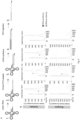
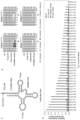
- the oligonucleotide adapter configured to perform nanopore direct sequencing is a double-stranded sequencing adapter DNA oligonucleotide with a helicase protein bound to one of the strands and having the complementary strand, a first DNA adapter oligonucleotide hybridization region (See Fig 2 , Nano-tRNA seq, box 3).
- the nanopore direct sequencing comprises a membrane, said membrane can be either solid-state or biological membranes.
- any known nanopore direct sequencing method or product can be used to perform step f) of the current invention, for instance the one disclosed in EP0815438B1 or EP1238275B1 .
- step g) can be any commercial one known by a skilled of many performing algorithms known in the art suitable for nanopore direct RNA sequencing.
- the first step is extracting the reads. This step can be done by a commercial software, for instance MinKNOW or any software configured to analyze the sequencing results of the nanopore direct sequencing.
- Next step of the analysis is the basecalling, which can be done by several known performing algorithms in the field by a skilled person such as Guppy or Bonito.
- Last step of the analysis is to mapping which can be done by several known performing algorithms. For example, Minimap2 or BWA which is a versatile sequence alignment program that aligns nucleic acid sequences against a large reference database.
- Minimap2 or BWA which is a versatile sequence alignment program that aligns nucleic acid sequences against a large reference database.
- the performing algorithm is configured to capture (and sequence) more tRNAs in a quantitative way compared to the default or adjusted parameters of MinKnow.
- the method of the invention coupled to a known algorithm to analyze the nanopore sequencing step provides 10-12 times more reads, of which around 5 times more tRNA reads are mapped, compared to other methods of the state of the art such as Thomas NK, Poodari VC, Jain M, Olsen HE, Akeson M, Abu-Shumays RL. Direct Nanopore Sequencing of Individual Full Length tRNA Strands. ACS Nano. 2021;15(10):16642-16653. doi:10.1021/acsnano.1c06488 . and with improved recovery of shorter tRNA molecules, which are otherwise largely lost, leading to biased representations of the tRNA abundances.
- the performing algorithm in MinKNOW is configured to capture (and sequence) more tRNAs and in a quantitative way.
- MinKNOW (21/07/2022), as well as prior versions of MinKNOW, is optimised to capture long RNA reads (typically >200 nucleotides). It detects valid reads in two steps.
- a molecule passing through a pore is assigned as:
- a custom sequencing script was prepared in the commercial software used to carry on the sequencing, MinKNOW version 1.11.5. which is the standard software that drives nanopore sequencing devices.
- the parameters of the software configured to analyze the sequencing results of the nanopore direct sequencing are adjusted for up to 1 second definition for adapter and a maximum of 2 seconds for the strand.
- the performing algorithm uses (Burrow-Wheeler Aligner) BWA configuration, and its parameters are selected from the group consisting of:
- the performing algorithm for the multiplexing running comprises minimap2 with following adjusted parameters: -xmap-ont -k6 -w3 -n1 -m10 -s13 -A1 -B1 - O1 -E1. These adjusted configuration allows for a higher sensitivity and better alignments.
- the present invention provides a simple, cost-effective, high-throughput and reproducible method to accurately reproduce tRNA abundances and capture tRNA modification changes simultaneously, using native tRNA nanopore sequencing, providing a novel framework to study the tRNAome at single molecule resolution, whilst retaining all the tRNA modification information.
- Another object of the present invention relates to a Kit for quantifying tRNA abundance and tRNA modifications in a RNA sample containing tRNA.
- kit comprises reagents for quantifying tRNA abundance and tRNA modifications in a RNA sample containing tRNA disclosed by the methods described herein.
- the kit comprises:
- the nucleotides of the first splinted oligonucleotide are selected from RNA, DNA or combinations thereof, preferably RNA with a 3' end sequence of 5'-rUrGrG(rN)-3'.
- nucleotides of the second splinted oligonucleotide are RNA.
- nucleotides of the second splinted oligonucleotide are both RNA and DNA, concretely, there is at least 1 terminal DNA base starting from its 3' end.
- the second splinted RNA:DNA oligonucleotide may have at least 1 terminal DNA nucleotides, preferably 2 or 3 terminal DNA nucleotides, even up to 10 or 15 DNA nucleotides starting from the 3' end of said oligonucleotide.
- sequence of the oligonucleotides is the sequence depicted on Table 1 or a variant having at least 80%, preferably at least 85%, more preferably at least 90 % and even more preferably 91 % or 92 % or 93 % or 94 % or 95 % or 96 % or 97 % or 98 % or even up to 99 % identity with respect to one or more of the sequences depicted in Table 1.
- the Kit further comprises a double-stranded sequencing adapter DNA oligonucleotide with a helicase protein bound to one of the strands and having the complementary strand, a first DNA adapter oligonucleotide hybridization region.
- the Kit further comprises one or more of the following reagents an agent with ligating activity, an agent to perform reverse transcription, solutions for performing deacylation and buffers and solutions required for reverse transcription, ligation and/or deacylation reaction.
- the agent with ligating activity is an enzyme, preferably a DNA ligase, RNA ligase or both.
- the RNA ligase is T4 RNA ligase 2.
- the nucleotide sequence of the T4 RNA ligase 2 is SEQ ID No 1 or SEQ ID No 2 or a variant having at least 80%, preferably at least 85%, more preferably at least 90 % and even more preferably 91 % or 92 % or 93 % or 94 % or 95 % or 96 % or 97 % or 98 % or even up to 99 % identity with respect to SEQ ID No 1 or SEQ ID No 2.
- the kit may further include reagents and solutions to obtain a RNA sample containing tRNA and/or to enrich the amount of tRNA in such RNA sample.
- the kit further includes instructions and the required plastic were to perform the method of the invention.
- Components of the subject kit may be present in separate containers, or multiple components may be present in a single container.
- a suitable container includes a single tube (e.g., vial), one or more wells of a plate (e.g., a 96-well plate, a 384-well plate, etc.), or the like.
- the instructions for using any of the reagents of the above-mentioned kit to perform the method of the invention may be recorded on a suitable recording medium.
- the instructions may be printed on a substrate, such as paper or plastic, etc.
- the instructions may be present in the kits as a package insert, in the labeling of the container of the kit or components thereof (i.e., associated with the packaging or sub-packaging), etc.
- the instructions are present as an electronic storage data file present on a suitable computer- readable storage medium, e.g., portable flash drive, DVD, CD-ROM, diskette, etc.
- the actual instructions are not present in the kit, but means for obtaining the instructions from a remote source, e.g. via the internet, are provided.
- An example of this embodiment is a kit that includes a web address where the instructions can be viewed and/or from which the instructions can be downloaded.
- the means for obtaining the instructions is recorded on a suitable substrate.
- the listing includes all ranges between any two of the values listed (e.g., the listing of "80%, 90% or 95%” includes ranges of "80% to 90%", “80% to 95%” and “90% to 95%”). Certain implementations of the technology are set forth in examples below.
- each tRNA was assembled using six DNA oligonucleotides that were first annealed and then ligated between Hindlll and BamHl restriction sites of the plasmid pUC19.
- BstNI-linearized plasmids were used to perform the in vitro transcription with T7 RNA polymerase, according to standard and known protocols [ Sampson JR, Uhlenbeck OC. Biochemical and physical characterization of an unmodified yeast phenylalanine transfer RNA transcribed in vitro. Proc Natl Acad Sci USA. 1988;85: 1033-1037 .]. Transcripts were separated by 8 M urea/10% polyacrylamide gel electrophoresis. The tRNA was identified by UV shadowing, electroeluted and ethanol precipitated.
- the tRNA pellet was resuspended in RNAse-free water, and the integrity of the IVT tRNA products was checked using 8 M urea/15% polyacrylamide gel and stored until further use.
- Table 2 IVT tRNA and commercial tRNA references. Reference of each IVT tRNA and the commercial S.
- the 5' triphosphate was converted to 5' monophosphate by incubating 1 ⁇ L of RppH enzyme (NEB, M0356S) per 100 ng of input IVT tRNAs, with 1X Thermopol Buffer (NEB, B9004S), in a total reaction volume of 30 ⁇ L, at 37°C for 2 h.
- the reaction was inactivated by adding 0.6 ⁇ L of 500 mM EDTA and incubating at 65°C for 5 min, followed by clean up using a Zymo RNA Clean and Concentrator-5 kit (Zymo, R1016), following the manufacturer's instructions to retain RNAs ⁇ 17 nt. This step is required only for IVT RNAs, because they have three phosphates at their 5' end. In vivo tRNAs have only one phosphate, so this step is not needed for an RNA sample containing tRNA.
- Saccharomyces cerevisiae parental strain (BY4741) and Pus4 knockout strain (BY4741 MATa pus4::KAN) were obtained from the Yeast Knockout Collection (Dharmacon) and grown under standard conditions overnight in 4 mL yeast extract peptone dextrose (YPD) medium (1% yeast extract, 2% Bacto Peptone and 2% dextrose) at 30°C. The following day, cultures were diluted to 0.0001 OD600 in 200 mL of YPD and grown overnight at 30°C with shaking (250 r.p.m.).
- the WT culture was divided into 3x 50 mL subcultures, which were then incubated for 1 h at 30°C (control), 45°C (heat stress) or in 2 mM H202 (oxidative stress).
- the Pus4 culture was divided into 1x 50 mL culture and incubated at 30°C. Following incubation, cultures were quickly transferred into a pre-chilled 50 mL Falcon tube and centrifuged at 3000 g for 5 min at 4°C, followed by two washes with water, then pellets were snap-frozen at -80°C. Replicates were performed on consecutive days.
- Snap-frozen yeast pellets were resuspended in 660 ⁇ L of TRIzol ® Reagent (Thermo Fisher Scientific, 15596018) with 340 ⁇ L of acid-washed and autoclaved 425-600 ⁇ m glass beads (Sigma-Aldrich, G8772).
- the cells were disrupted by vortexing on top speed for seven cycles of 15 s and chilling the samples on ice for 30 s between cycles. The samples were then incubated at room temperature for 5 min and 200 ⁇ L of chloroform was added. After briefly vortexing the suspension, the samples were incubated for 5 min at room temperature.
- RNA samples were then centrifuged at 14,000 g for 15 min at 4°C, and the upper aqueous phase was transferred to a new tube.
- 1X volume of molecular-grade isopropanol and 1 ⁇ L of GlycoBlue TM coprecipitant (Thermo Fisher Scientific, AM9515) was added and mixed by inverting and incubated for 10 min at room temperature.
- the samples were centrifuged at 14,000 g for 15 min at 4°C and the pellet was then washed with ice cold 70% ethanol. The pellet was resuspended in nuclease-free water after air drying for 5 min on the benchtop and the RNA purity was measured using a NanoDrop 1000 spectrophotometer.
- RNA Binding Buffer was combined with 1X volume of 100% ethanol. 2X volume of the RNA Binding Buffer and ethanol solution was added to the reaction, transferred to a Zymo-IC column and spun at ⁇ 12,000 g at room temperature for 1 min.
- RNA concentration was determined using Qubit Fluorometric Quantitation, RNA purity was measured with a NanoDrop 1000 spectrophotometer, and the RNA electropherogram was obtained using Agilent 4200 TapeStation RNA HS Screentape Assay.
- RNA RNA was precipitated using a NanoDrop 1000 spectrophotometer.
- the samples were treated with Turbo DNase (Thermo Fisher Scientific, no.
- RNAs ⁇ 200 nt were cleaned up using a Qiagen RNeasy MinElute Cleanup Kit (Qiagen, no. 74204) following the manufacturer's instructions to retain RNAs ⁇ 200 nt, but adding some steps to retain also RNAs >200 nt. Briefly, 350 ⁇ L of RLT Buffer was added to the sample, 250 ⁇ L of 100% ethanol and then, the samples were transferred to an RNeasy MinElute spin column and centrifuged at >8,000 g at room temperature for 40 s to retain RNAs > 200 nt.
- Qiagen RNeasy MinElute Cleanup Kit Qiagen, no. 74204
- In vivo-purified tRNAs may be aminoacylated, which can inhibit 3' ligation and polyA tailing reactions.
- Commercial S. cerevisiae tRNAPhe (Sigma Aldrich, R4018), commercial S. cerevisiae total tRNA (Sigma Aldrich, AM7119) and tRNAs purified from S. cerevisiae BY4741 WT and Pus4 knockout cultures were resuspended in 10 ⁇ L nuclease-free water and deacylated in 95 ⁇ L 100 mM Tris-HCI (pH 9.0) at 37°C for 30 min.
- RNAs were recovered using Zymo RNA Clean and Concentrator-5 kit (Zymo, R1016), following the manufacturer's instructions to retain RNAs ⁇ 17 nt, confirmed using Agilent 4200 TapeStation RNA HS Screentape Assay.
- Nanopore direct tRNA sequencing library preparation (Nano-tRNAseq)
- tRNA libraries were prepared using the SQK-RNA002 kit (Oxford Nanopore Technologies) with some protocol alterations as described here. All oligonucleotides used in this study were obtained from Integrated DNA Technologies (IDT) (see Table 1 for sequences).
- the 5' RNA splint adapter first splinted RNA oligonucleotide, SEQ ID NO 3 was designed to be complementary to the 3' NCCA overhang of mature tRNAs, and the 3' splint RNA:DNA adapter: second splinted oligonucleotide SEQ ID NO 5 was designed to be complementary to the rest of the 5' RNA splint adapter (first splinted RNA oligonucleotide), with a short polyA segment for the ONT RTA adapter (second adapter DNA oligonucleotide) to anneal to ( Figure 2 ).
- the 5' and 3' RNA splint adapters were prepared at a 1:1 molar ratio in a solution of 10 mM Tris-HCI (pH 7.5), 50 mM NaCl and 1 ⁇ L RNasin ® Ribonuclease Inhibitor (Promega,N251A), with a final concentration of 50 ng/ ⁇ L, and heated to 75°C for 15 s and cooled to 25°C at a rate of 0.1°C/s to hybridize the adapters.
- DNA oligos with the same sequence as ONT RTA adapters were ordered from IDT and annealed in the same manner as the 5' and 3' splint adapters.
- Deacylated tRNAs were ligated to the pre-annealed 5' and 3' splint adapters at a molar ratio of 1.2:1 (assuming an average tRNA length of 90 nt).
- the ligation was carried out at room temperature for 2 h in a total reaction volume of 50 ⁇ L with 20% PEG 8000 (NEB, B10048), 1X T4 RNA Ligase 2 Buffer (NEB, B0239S), 4 ⁇ L 6 mg/mL recombinant E. coli T4 RNA 2 Ligase (made in-house, see below) and 1 ⁇ L RNasin ® Ribonuclease Inhibitor (Promega, N251A).
- RNAClean XP beads A 2X volume of room temperature equilibrated Ampure RNAClean XP beads (Beckman-Coulter, A63987) was then added to the reaction and pipetting gently up and down, and incubated for 15 minutes at room temperature on a Hula mixer The beads were washed with freshly prepared 70% ethanol and left to air dry. The samples were eluted by resuspending the beads in nuclease-free water and incubating for 10 minutes at room temperature on a Hula mixer.
- RNA concentration was determined using RNA HS Qubit Fluorometric Quantification. 200 ng of 5' and 3' ligated tRNAs were ligated to the pre-annealed RTA adapters at a molar ratio of 1:2 (roughly 4.3 pmol tRNAs to 8.6 pmol of RTA adapter). The ligation was carried out at room temperature for 30 min in a total reaction volume of 15 ⁇ L with 1X Quick Ligation Reaction buffer (NEB, B6058S), 1.5 ⁇ L T4 DNA Ligase (NEB, M0202M, 2,000,000 units/mL) and 0.5 ⁇ L RNasin ® Ribonuclease Inhibitor (Promega, N251A).
- 1X Quick Ligation Reaction buffer NEB, B6058S
- T4 DNA Ligase NEB, M0202M, 2,000,000 units/mL
- 0.5 ⁇ L RNasin ® Ribonuclease Inhibitor Promega, N
- RNA concentration was not measured in the proceeding steps as it is below the detectable range for the Qubit RNA HS Assay.
- the ONT RMX sequencing adapters were ligated at room temperature for 30 min in a total reaction volume of 40 ⁇ L with 1X Quick Ligation Reaction buffer (NEB, B6058S), 3 ⁇ L T4 DNA Ligase (NEB, M0202M, 2,000,000 units/mL) and 6 ⁇ L RMX adapters.
- a 2X volume of Ampure RNAClean XP beads was then added and mixed into the reaction by pipetting gently up and down, and incubated for 10 min at room temperature on a Hula mixer. The sample was washed twice with 150 ⁇ L WSB (Wash Buffer), in which the pellet was resuspended by flicking the tube.
- the sample was eluted in 20 ⁇ L ELB (Elution Buffer) and incubated for 10 minutes at room temperature on a Hula mixer.
- the final library was prepared by adding 17.5 ⁇ L of nuclease-free water and 37.5 ⁇ L of vortexed RRB, and kept on ice until loading.
- the MinION flow cell (FLO-MIN-106) in which Direct Nanopore RNA is to be performed was Quality Checked, primed and loaded as per the standard ONT SQK-RNA002 protocol.
- RNA concentration was determined using Qubit Fluorometric Quantification. The ligation of RTA and RMX adapters, final library preparation steps, and flowcell QC and loading is as described above.
- Strategy B The 5' splint RNA adapter; (first splinted RNA oligonucleotide SEQ ID No 3), and ONT RTA adapter oligo A (first adapter DNA oligonucleotide) were annealed in a molar ratio of 1:1 as described above.
- the annealed 5' splint RNA adapter and 3' splint DNA adapter were ligated to 5' monophosphate, deacylated tRNAs and cleaned up using the same protocol as in Strategy A.
- the ligation of RMX adapters, final library preparation steps, and flowcell QC and loading is as described in Nano-tRNAseq.
- T4 RNA Ligase 2 is only available at low concentrations.
- E. coli T4 RNA Ligase 2 SEQ ID No2 (T4RNL2) ORF DNA was synthetically ordered from IDT, and was cloned into the expression plasmid pETM14 in frame, with a coding sequence of a hexa-histidine tag followed by a 3C precision cleavage recognition sequence.
- Protein expression conditions of SEQ_ ID No 1 or SEQ ID No 2 where as follows: For 1L BL21 (DE3) in 2TY growth medium; growth at a temperature range from 32°C to 40°C preferably about 37°C until OD600 0,4; and protein expression was induced with 0,4mM IPTG; for about 3h 37°C.
- the maximum amount of protein obtained per 1L is about 7mg
- the ready to use ligase T4 RNA ligase SEQ_ ID NO 1 or SEQ ID NO has a concentration from: about 2 mg/ml to 11 mg/ml preferably about 9mg/mL in 10 mM Tris-HCI, 50 mM KCI, 35 mM (NH4)2SO4, 0.1 mM DTT, 0.1 mM EDTA, 50% Glycerol pH 7.5 at 25°C.
- any other solution commonly known in the field which does not interfere with the ligase activity can be used.
- the gel was poststained in the dark in 1X TBE with 1X SYBR TM Gold (Invitrogen, S11494) for 5 min. Gels were transferred to copier transparency film (Niceday, 607510) and using UV underlighting, the gel region corresponding to tRNAs (around 70 to 110 nt) was excised using a sterile scalpel and transferred into a Zymo-Spin TM IV Column from the ZR small-RNA PAGE Recovery kit (Zymo, R1070). tRNAs were extracted from the gel as per manufacturer's instructions, and the extracted tRNA profiles were confirmed using Agilent 4200 TapeStation RNA HS Screentape Assay.
- 500 ng of gel purified tRNAs were digested at 37°C for 1 h using Nucleoside Digestion Mix (NEB, M0649), following manufacturer's instructions.
- the nucleoside digestion solution was then desalted using HyperSep TM SpinTip Column (ThermoFisher, 60109-404); first the column was washed with 40 ⁇ L of 60% acetonitrile by centrifuging at 100 g for 10 min, then washed with 40 ⁇ L of 0.1% formic acid by centrifuging at 100 g for 5 min.
- the digested sample was combined with 30 ⁇ L of formic acid, added to the column and collected in a fresh collection tube by centrifuging at 100 g for 10 min.
- RNAs and commercial S. cerevisiae tRNA Phe were polyA tailed as described in Strategy A. Importantly, only synthetic RNAs have a 5' monophosphate.
- 100 ng of poly A tailed RNA, 1 ⁇ L of 100 ⁇ M 3' RT test adapter SEQ ID No 26 /5Phos/ACT TGC CTG TCG CTC TAT CTT CTT TTT TTT TTT TTT TTTVN
- N can be any nucleotide selected from A, C, T, G
- V can be any nucleotide selected from A, C and G.
- RNA reverse transcription tests 100 ng of poly A tailed RNA, 1 ⁇ L of 100 ⁇ M 3' RT test adapter, 4 ⁇ L of 5X TGIRT RT buffer, 1 ⁇ L of 0.1 M DTT, 1 ⁇ L of TGIRT TM -III (InGex, TGIRT50), 1 ⁇ L of RNaseOUT TM were combined in a total reaction volume of 19 ⁇ L and incubated at room temperature for 30 mins. Then, 1 ⁇ L of 10 mM dNTPs was added, and the reaction was incubated 60°C for 1 hour, inactivated by heating at 75°C for 15 minutes, followed by RNAse digestion.
- RNA reverse transcription tests 100 ng of poly A tailed RNA, 1 ⁇ L of 100 ⁇ M 3' RT test adapter, 1 ⁇ L of 10 mM dNTP were combined in a total reaction volume of 12 ⁇ L, incubated at 65°C for 5 mins then chilled on ice. Then, 4 ⁇ L of 5X Maxima RT buffer, 1 ⁇ L of RNaseOUT TM , 1 ⁇ L of Maxima H Minus reverse transcriptase (ThermoFisher, EP0751) were added, and the reaction was incubated at 55°C or 60°C for 1 hour, inactivated by heating at 85°C for 5 minutes, followed by RNAse digestion.
- GtRNAdb2 reports 275 tRNA sequences annotated in the S. cerevisiae genome but there are only 43 unique isoacceptor-anticodon pairs (including Und-NNN). Most tRNA isoacceptors (i.e. with the same anticodon) have multiple copies, e.g. Asp-GTC and Gly-GCC have 16 copies each. Most of those copies are identical - there are only 55 unique, mature tRNA sequences.
- Reads were basecalled using Guppy basecaller v3.6.1 in high-accuracy mode. All Us were converted to Ts before mapping. Basecalled reads were mapped using minimap2 v2.17-r941 with recommended parameters (-xmap -ont) or sensitive parameters (-ax map-ont -k5) or BWA v0.7.17-r1188.
- Differential tRNA modifications were measured by using differential basecalling errors (mismatch, insertion, deletion), for each tRNA nucleotide.
- the sum of basecalling errors was calculated by subtracting the frequency of the reference base from 1.
- the frequency of reference base equals the number of reads with a basecalled equivalent to reference base, divided by the depth of coverage for that position. Only uniquely aligned reads (primary alignment with mapping quality above 0) were considered for downstream analyses.
- MinKNOW configurations may be adjusted as follows for enhanced capture small, RNA molecules such as tRNA, reads from direct RNA nanopore sequencing runs (if these parameters are not adjusted, MinKNOW will incorrectly discard small RNA reads, or tRNA reads as "adapter-only” reads, and these reads will never be stored in a FAST5 file or FASTQ file). Therefore, this step reinforces the recovery of small RNA or tRNA populations.
- MinKNOW defines the duration of the adapter up to 5 seconds and the strand (an actual read) at least 2 seconds. Thus, the RNA molecule has to spend up to 7 seconds in the pore in order to be classified and reported as an actual read.
- RNA helicase used in DRS experiments has an average speed of 70 nt per second, thus 7 seconds corresponds to roughly 490 nt.
- Such definition makes sense for long molecule sequencing, as it filters out the adaptoronly reads.
- short RNA sequencing it would be reasonable to shorten both the adapter and strand definitions.
- the number of reported, basecalled, aligned and uniquely aligned reads generated by default and custom MinKNOW configurations were compared.
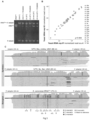
- 1 second definition for adapter and 2 seconds for the strand resulted in the highest number of aligned and uniquely aligned reads (Table 8). Therefore, those settings are used across the manuscript unless stated otherwise.
- Step 1 Set up alternative MinKNOW configuration files
- Step 2 Reload the scripts in MinKNOW,
- MinKNOW reads the configuration from:
- MinKNOW with alternative configurations can be now run which will allows to capture short tRNAs during the sequencing run, without having to save the bulk FAST5 file.
- Step 3 Launch sequencing (or simulation of sequencing run once you saved the "bulk” fast5 from a previous run) with the new MinKNOVV configuration:
- the S. cerevisiae tRNA expression estimations obtained by the method of the present invention were compared to estimates reported by orthogonal Illumina-based tRNA sequencing methods ARM-seq [ Cozen AE, Quartley E, Holmes AD, Hrabeta-Robinson E, Phizicky EM, Lowe TM. ARM-seq: AlkBfacilitated RNA methylation sequencing reveals a complex landscape of modified tRNA fragments. Nat Methods. 2015;12: 879-884 .], Hydro-tRNAseq [ Gogakos T, Brown M, Garzia A, Meyer C, Hafner M, Tuschl T.
- Standard nanopore DRS of tRNA molecules results in low sequencing yields and poor 5' end coverage
- Nanopore direct sequencing, or nanopore direct RNA sequencing is a well-established long-read sequencing technology to study RNA molecules, typically polyadenylated mRNAs. DRS is inefficient at capturing RNA molecules shorter than 200 nt, and is generally considered unable to capture sequences shorter than around 100 nt, limiting its applicability to study short RNA populations such as tRNAs. In addition, the first about15 nucleotides at the 5' end of RNA molecules are typically lost in DRS runs [ Workman RE, Tang AD, Tang PS, Jain M, Tyson JR. Nanopore native RNA sequencing of a human poly (A) transcriptome. Nature. 2019.
- T4 RNA ligase 2 The correct ligase for the first adapter ligation step of Nano-tRNAseq is T4 RNA ligase 2.
- T4 RNA ligase 2 commercial T4 RNA ligase 2 (NEB or Enzymatics) are not concentrated (10.000U/mL and 30.000U/mL, respectively).
- T4 DNA ligase (NEB) is sold in concentrated format (2.000.000U/mL). For this reason, even though T4 DNA ligase is less efficient at ligating this reaction, its increased concentration causes that with equivalent volume, more ligation is achieved. In Fig 14 we can see that at equal units, T4 RNA ligase 2 is more efficient at this reaction, but would require too large volumes for library preparation.
- Double ligation of RNA adapters to the tRNA molecule ends improves basecalling of tRNAs
- RNA-only 3' adapters led to increased self-ligation (Table 4), an issue that we later mitigated by adding DNA bases to the end of the adapter
- the pre-annealed 5' RNA and 3' RNA:DNA splint adapters were ligated to deacylated tRNAs by T4 RNA Ligase 2. Diverse ligation times and the addition of a molecular crowding agent were tested, to ensure that conditions that maximized ligation efficiency were chosen.
- short and unmodified sequences can be aligned efficiently even without RNA adapters in the reference sequences, while short and modified reads benefit greatly from the extension from adapters, demonstrating that extending molecules with RNA adapters is essential for guiding the correct alignment of short reads enriched in 'mismatches', such as those derived from native tRNAs.
- RNA adapters For native S. cerevisiae tRNA Phe , the read mappability plateaued at a 3' adapter length of 25 nt ( Figure 4F ), demostrating that our 30 nt RNA portion of 3' RNA:DNA used in Nano-tRNAseq is more than sufficient to achieve optimal read mappability.
- cerevisiae tRNA Phe NanotRNAseq (3' RNA adapter) 208.000 Default 72 7.800 19.420 3,75 9,34 179 4_NanotRNAseq_ IVT+tRNAphe 2x IVT tRNAs + S. cerevisiae tRNA Phe NanotRNAseq (3' RNA adapter) 51.352 Default 20 1.315 6.640 2,56 12,93 2 5_NanotRNAseq_ WTyeast_rep1_noRT S .
- Custom MinKNOW parameters leads to a 12-fold increase in sequencing yield
- MinKNOW software is responsible for analyzing the continuous electrical current (signal intensity) measured at each pore, reporting the signal regions that correspond to 'reads' into FAST5 files, which are then basecalled to generate a FASTQ file.
- MinKNOW by default reports reads that last at least 2 seconds, which roughly corresponds to RNA molecules of 140 nt (assuming constant helicase processivity of 70 nt/s in DRS).
- cerevisiae WT total tRNA default 5 2 72 512 380,959 1,00 248,683 65,28 1,00 custom 2 1 72 512 1,162,29 3 3,05 542,771 46,70 2,18 8_NanotRNAseq_ pus4KOyeast_rep1 NanotRNAseq S.
- cerevisiae Pus4 KO total tRNA default 5 2 72 512 376,606 1,00 248,061 65,87 1,00 custom 2 1 72 512 784,714 2,08 378,299 48,21 1,53 9_NanotRNAseq_ Heatstressyeast_rep1 NanotRNAseq S .
- cerevisiae heat stress total tRNA default 5 2 72 512 588,336 1,00 384,900 65,42 1,00 custom 2 1 72 512 1,716,06 5 2,92 788,830 45,97 2,05 10_NanotRNAseq_ Oxidativestressyeast_rep 1 NanotRNAseq S .
- cerevisiae oxidative stress total tRNA default 5 2 72 512 343,750 1,00 222,638 64,77 1,00 custom 2 1 72 512 652,249 1,90 304,056 46,62 1,37 11_NanotRNAseq_ WTyeast_rep2 NanotRNAseq S .
- cerevisiae WT total tRNA default 5 2 72 512 495,919 1,00 322,138 64,96 1,00 custom 2 1 72 512 1,702,24 0 3,43 786,434 46,20 2,44 12_NanotRNAseq_ pus4KOyeast_rep2 NanotRNAseq S .
- cerevisiae Pus4 KO total tRNA default 5 2 72 512 586,456 1,00 383,645 65,42 1,00 custom 2 1 72 512 1,001,99 3 1,71 428,994 42,81 1,12 13_NanotRNAseq_ Heatstressyeast_rep2 NanotRNAseq S .
- cerevisiae heat stress total tRNA default 5 2 72 512 614,586 1,00 388,139 63,15 1,00 custom 2 1 72 512 1,477,00 2 2,40 639,413 43,29 1,65 14_NanotRNAseq_Oxida tivestressyeast_rep2 NanotRNAseq S . cerevisiae oxidative stress total tRNA default 5 2 72 512 497,752 1,00 317,876 63,86 1,00 custom 2 1 72 512 1,591,90 4 3,20 709,920 44,60 2,23
- a linear tRNA molecule may (i) reduce the clogging of pores, allowing more reads to be sequenced and maintain the integrity of the flowcell longer, and/or (ii) stabilize the tRNA translocation speed through the pore, improving the accuracy of basecalling algorithms.
- tRNAs are difficult to fully and accurately reverse transcribe due to their compact secondary and tertiary structures as well as their abundance of modifications that disrupt the Watson-Crick base pairing.
- IVT tRNAs as input
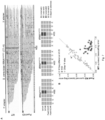
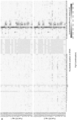
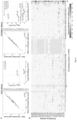
- S. cerevisiae tRNA abundances predicted using Nano-tRNAseq to those reported using three different Illumina-based methods: ARM-seq, Hydro-tRNAseq and mim-tRNAseq.
- ARM-seq tRNAs are pretreated with demethylating enzyme E.
- Hydro-tRNAseq relies on partial alkaline RNA hydrolysis that generates fragments amenable for sequencing.
- mim-tRNAseq the authors improved the efficiency of cDNA synthesis by optimizing TGIRT reverse transcription conditions and allowing for position-specific mismatch tolerance during read alignment.
- the low correlation with Hydro-tRNAseq is probably due to the fact that (i) fragments which harbor such modifications are especially short and are less likely to be PCRamplified, and (ii) mapping fragmented samples is challenging and can lead to spurious tRNA counts.
- the generally low correlation of Illumina-based methods with Nano-tRNAseq is unsurprising given the substantial differences in library preparation and analysis.
- Nano-tRNAseq identifies tRNA modification interdependencies
- tRNA modifications are introduced in a defined sequential order, and the chronology is controlled by the cross-talk between modification events and RNA modifying enzymes.
- NMR nuclear magnetic resonance
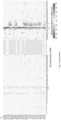
- Nano-tRNAseq does not allow us to dissect the specific order of a modification circuit, it can reveal RNA modification interdependencies at distinct tRNA sites in the same transcript and quantify site-specific changes in RNA modifications across tRNA isoacceptors in a high-throughput manner with higher sensitivity than orthogonal methods, with the concurrent benefit of measuring tRNA abundance, confirmed that Nano-tRNAseq was able recapitulate the known relationship between loss of ⁇ 55, which is catalyzed by Pus4, and the subsequent loss of m 1 A58 and m 5 U54 ( Figure 7C-D ), With the generation of yeast knockout strains of every tRNA modifying enzyme nearly complete, the method of the invention presents an excellent opportunity to describe tRNA modification circuits in a holistic manner, providing invaluable insights into how these processes are
- Nano-tRNAseq reveals tRNA deadenylation upon oxidative stress, but not heat stress
- tRNA modifying enzymes are dysregulated in a multitude of human diseases, and are subject to change under certain cellular conditions. Indeed, previous studies provide evidence that tRNA modification profiles are re-programmed under stressful conditions, such as elevated temperature and oxidative stress. However, chromatography-coupled mass spectrometry-based methods do not provide information about from which tRNA isoacceptor the modification originates, nor the sequence context. To examine the changes that occur in tRNA abundances and modifications at single nucleotide and single tRNA isoacceptor resolution, we sequenced tRNAs from WT S. cerevisiae that were exposed to heat stress or oxidative stress (see Methods).
- tRNAs were inferred using DESeq2. Base mean (the average normalized counts taken over all samples), log2FoldChange (log2 fold change between groups), IfcSE (standard error of log2FoldChange), stat (Walk Statistic), pvalue (Wald test p-value), padj (Benjamini-Hochberg adjusted p-value). Table 16. Differential expression analysis of heat stress S. cerevisiae tRNAs.
- tRNAs Differentially expressed tRNAs were inferred using DESeq2. Base mean (the average normalized counts taken over all samples), log2FoldChange (log2 fold change between groups), IfcSE (standard error of log2FoldChange), stat (Walk Statistic), pvalue (Wald test p-value), padj (Benjamini-Hochberg adjusted p-value).
- MinKNOW configuration is suboptimal in detecting reads originating from short molecules such as tRNA.
- MinKNOW configuration was developed to capture about 10x more reads from tRNA experiments. This is achieved by reporting as reads molecules that are classified as adapter or strand (See methods).
- the method of the invention is able to produce millions of tRNA reads from a single sequencing reaction.
- the library preparation and sequencing is expensive. And for downstream analyses, having tens-to-hundreds of thousands of reads would be sufficient. Therefore, the availability of a multiplexing method allowing sequencing of multiple samples in a single reaction would be desirable for tRNA sequencing.
- the method to demultiplex tRNA reads consists of the following steps:
- Step 1 Identification of the barcode (segmentation of the read based on alignment information)
- the segmentation step does not rely on the presence of polyA signals in the read. Instead, here we define the end of the barcode as the signal corresponding to the last aligned base of the read.
- the read has to be first basecalled and aligned, and precise read start in the signal space can then be identified by checking which is the last aligned base reported by the basecaller. This information is extracted from the "move" table, that is provided by the basecaller.
- Step 2 DNA Barcode basecalling using Guppy
- RNA reads i.e. those arising from direct RNA sequencing
- RNA basecalling models i.e. those arising from direct RNA sequencing
- we used a Bonito-trained DNA model to basecall the DNA adapter regions of the reads sequenced using direct RNA sequencing.
- the basecalling itself was performed using guppy, but using as DNA basecalling model a pre-trained DNA model that was trained in-house using Bonito (see below for details on training the DNA model).
- Step 3 Barcode assignment via sequence alignment
- barcode sequences are mapped onto barcode reference sequences using minimap2 with following parameters: -xmap-ont -k6 -w3 -n1 -m10 -s13 -A1 -B1 -O1 -E1. Only best, unique (map quality above 0) alignments are reported. Only barcodes that were aligned uniquely to barcode reference were kept as "true”. Barcodes that are mapped not uniquely are reported as unknown (bc_0).
- a software to perform steps 1,2 and 3 iSn one sole program can be used.
- Such all-in-one design performs much faster than performing all operations sequentially.
- 4K reads can be basecalled, aligned and demultiplexed in 2-5seconds using 1CPU and 1GPU.
- FAST5 reads To perform the same operation sequentially, it is necessary to store the basecalled FAST5 reads, which occupy a lot of space and are not actually needed for any additional steps once the demultiplexing has been accomplished.
- the sequential steps performed by this software are:
- Oligos used in the multiplexing experiment SEQ ID No 28 OligoA_bc2 /5Phos/GTGATTCTCGTCTTTCTGCGTAGTAGGTTC SEQ ID No 29 OligoA_bc3 /5Phos/GTACTTTTCTCTTTGCGCGGTAGTAGGTTC SEQ ID No 30 OligoA_bc4 /5Phos/GGTCTTCGCTCGGTCTTATTTAGTAGGTTC SEQ ID No 31 OligoA_bc23 SEQ ID No 32 OligoA_bc48 SEQ ID No 33 OligoA_bc82 SEQ ID No 34 OligoB_bc2 SEQ ID No 35 OligoB_bc3 SEQ ID No 36 OligoB_bc4 SEQ ID No 37 OligoB_bc23 SEQ ID No 38 OligoB_bc48 SEQ ID No 39 OligoB_bc82 Shown in bold - barcode Shown underlined - oligodT overhang required to anneal with tRNA template that has 3' adapter
- DeePlexiCon proceeds in 3 steps: i) barcode identification in the signal space (segmentation), ii) signal to image conversion (GASF) and barcode classification using convolutional neural network typically applied in image analysis (ResNet).
- GSF signal to image conversion
- ResNet convolutional neural network typically applied in image analysis
- DeePlexiCon performed very poorly with tRNA samples, reaching only 0.696 accuracy (Table 19), making it completely unusable for tRNA multiplexing.
- the most likely explanation of such low performance is the problem with segmentation due to the short polyA tail used in the Nano-RNA seq protocol (10 bases).
- the segmentation method used in DeePlexiCon was developed for long mRNA reads and those tend to have much longer polyA tails, often in the range of hundreds of bases. Table 19.
Landscapes
- Chemical & Material Sciences (AREA)
- Life Sciences & Earth Sciences (AREA)
- Organic Chemistry (AREA)
- Health & Medical Sciences (AREA)
- Engineering & Computer Science (AREA)
- Zoology (AREA)
- Wood Science & Technology (AREA)
- Proteomics, Peptides & Aminoacids (AREA)
- Biochemistry (AREA)
- Genetics & Genomics (AREA)
- Bioinformatics & Cheminformatics (AREA)
- Molecular Biology (AREA)
- General Health & Medical Sciences (AREA)
- Analytical Chemistry (AREA)
- General Engineering & Computer Science (AREA)
- Physics & Mathematics (AREA)
- Biotechnology (AREA)
- Biophysics (AREA)
- Microbiology (AREA)
- Immunology (AREA)
- Chemical Kinetics & Catalysis (AREA)
- General Chemical & Material Sciences (AREA)
- Medicinal Chemistry (AREA)
- Bioinformatics & Computational Biology (AREA)
- Biomedical Technology (AREA)
- Evolutionary Biology (AREA)
- Medical Informatics (AREA)
- Spectroscopy & Molecular Physics (AREA)
- Theoretical Computer Science (AREA)
- Crystallography & Structural Chemistry (AREA)
- Plant Pathology (AREA)
- Measuring Or Testing Involving Enzymes Or Micro-Organisms (AREA)
Priority Applications (4)
| Application Number | Priority Date | Filing Date | Title |
|---|---|---|---|
| EP22382917.7A EP4345167A1 (fr) | 2022-09-30 | 2022-09-30 | Méthode d'analyse de l'arnt par séquencage direct |
| PCT/IB2023/059599 WO2024069464A1 (fr) | 2022-09-30 | 2023-09-27 | Procédé d'analyse d'arnt à l'aide d'un séquençage direct |
| CN202380068770.7A CN119948171A (zh) | 2022-09-30 | 2023-09-27 | 使用直接测序分析tRNA的方法 |
| US19/109,597 US20260085349A1 (en) | 2022-09-30 | 2023-09-27 | METHOD TO ANALYZE tRNA USING DIRECT SEQUENCING |
Applications Claiming Priority (1)
| Application Number | Priority Date | Filing Date | Title |
|---|---|---|---|
| EP22382917.7A EP4345167A1 (fr) | 2022-09-30 | 2022-09-30 | Méthode d'analyse de l'arnt par séquencage direct |
Publications (1)
| Publication Number | Publication Date |
|---|---|
| EP4345167A1 true EP4345167A1 (fr) | 2024-04-03 |
Family
ID=83689765
Family Applications (1)
| Application Number | Title | Priority Date | Filing Date |
|---|---|---|---|
| EP22382917.7A Pending EP4345167A1 (fr) | 2022-09-30 | 2022-09-30 | Méthode d'analyse de l'arnt par séquencage direct |
Country Status (4)
| Country | Link |
|---|---|
| US (1) | US20260085349A1 (fr) |
| EP (1) | EP4345167A1 (fr) |
| CN (1) | CN119948171A (fr) |
| WO (1) | WO2024069464A1 (fr) |
Cited By (1)
| Publication number | Priority date | Publication date | Assignee | Title |
|---|---|---|---|---|
| WO2026057755A1 (fr) * | 2024-09-13 | 2026-03-19 | Oxford Nanopore Technologies Plc | Adaptateurs et kits pour le marquage et la caractérisation de molécules d'arn |
Families Citing this family (3)
| Publication number | Priority date | Publication date | Assignee | Title |
|---|---|---|---|---|
| WO2025250601A2 (fr) * | 2024-05-28 | 2025-12-04 | The Regents Of The University Of Colorado, A Body Corporate | Séquençage direct par nanopore d'arn de transfert aminoacylés |
| WO2026082954A1 (fr) * | 2024-10-18 | 2026-04-23 | Fundació Institució Catalana De Recerca I Estudis Avançats | Dispositif de conversion en séquences de base d'adn pour le séquençage direct d'arn et utilisations associées dans des nanopores |
| CN119876146A (zh) * | 2025-01-20 | 2025-04-25 | 湖南大学 | 一种富集全长tRNA的双链接头及其在tRNA测序中的应用 |
Citations (3)
| Publication number | Priority date | Publication date | Assignee | Title |
|---|---|---|---|---|
| EP0815438B1 (fr) | 1995-03-17 | 2008-06-04 | President And Fellows Of Harvard College | Caracterisation de molecules de polymere particulieres sur la base des interactions monomeres-interface |
| EP1238275B1 (fr) | 1999-12-09 | 2008-10-22 | President And Fellows Of Harvard College | Caracterisation de molecules de polymere hybrides sur la base des interactions monomere-interface |
| WO2015148567A1 (fr) * | 2014-03-24 | 2015-10-01 | Bernick David L | Adaptateur moléculaire pour la capture et la manipulation de l'arn de transfert |
-
2022
- 2022-09-30 EP EP22382917.7A patent/EP4345167A1/fr active Pending
-
2023
- 2023-09-27 CN CN202380068770.7A patent/CN119948171A/zh active Pending
- 2023-09-27 WO PCT/IB2023/059599 patent/WO2024069464A1/fr not_active Ceased
- 2023-09-27 US US19/109,597 patent/US20260085349A1/en active Pending
Patent Citations (3)
| Publication number | Priority date | Publication date | Assignee | Title |
|---|---|---|---|---|
| EP0815438B1 (fr) | 1995-03-17 | 2008-06-04 | President And Fellows Of Harvard College | Caracterisation de molecules de polymere particulieres sur la base des interactions monomeres-interface |
| EP1238275B1 (fr) | 1999-12-09 | 2008-10-22 | President And Fellows Of Harvard College | Caracterisation de molecules de polymere hybrides sur la base des interactions monomere-interface |
| WO2015148567A1 (fr) * | 2014-03-24 | 2015-10-01 | Bernick David L | Adaptateur moléculaire pour la capture et la manipulation de l'arn de transfert |
Non-Patent Citations (19)
| Title |
|---|
| ANDREW M. SMITH ET AL: "Capture, Unfolding, and Detection of Individual tRNA Molecules Using a Nanopore Device", FRONTIERS IN BIOENGINEERING AND BIOTECHNOLOGY, vol. 3, no. 91, 24 June 2015 (2015-06-24), pages 1 - 11, XP055227932, DOI: 10.3389/fbioe.2015.00091 * |
| BEGIK OLUCAS MCPRYSZCZ LPRAMIREZ JMMEDINA RMILENKOVIC I ET AL.: "Quantitative profiling of pseudouridylation dynamics in native RNAs with nanopore sequencing", NAT BIOTECHNOL., 2021 |
| BEHRENS ARODSCHINKA GNEDIALKOVA DD: "High-resolution quantitative profiling of tRNA abundance and modification status in eukaryotes by mim-tRNAseq", MOL CELL, vol. 81, 2021, pages 1802 - 1815 |
| BULLARD DRBOWATER RP: "Direct comparison of nick-joining activity of the nucleic acid ligases from bacteriophage T4", BIOCHEM J., vol. 398, 2006, pages 135 - 144, XP002467857, DOI: 10.1042/BJ20060313 |
| CHAN PPLOWE TM: "GtRNAdb 2.0: an expanded database of transfer RNA genes identified in complete and draft genomes", NUCLEIC ACIDS RES., vol. 44, 2016, pages D184 - 9, XP055777962, DOI: 10.1093/nar/gkv1309 |
| COZEN AEQUARTLEY EHOLMES ADHRABETA-ROBINSON EPHIZICKY EMLOWE TM: "ARM-seq: AlkB-facilitated RNA methylation sequencing reveals a complex landscape of modified tRNA fragments", NAT METHODS, vol. 12, 2015, pages 879 - 884, XP055917210, DOI: 10.1038/nmeth.3508 |
| DANIEL R GARALDE ET AL: "Highly parallel direct RNA sequencing on an array of nanopores", NATURE METHODS, vol. 15, no. 3, 1 March 2018 (2018-03-01), New York, pages 201 - 206, XP055559264, ISSN: 1548-7091, DOI: 10.1038/nmeth.4577 * |
| GOGAKOS TBROWN MGARZIA AMEYER CHAFNER MTUSCHL T: "Characterizing Expression and Processing of Precursor and Mature Human tRNAs by Hydro-tRNAseq and PAR-CLIP", CELL REP., vol. 20, 2017, pages 1463 - 1475, XP055917209, DOI: 10.1016/j.celrep.2017.07.029 |
| LEGER AAMARAL PPPANDOLFINI LCAPITANCHIK CCAPRARO FMIANO V ET AL.: "RNA modifications detection by comparative Nanopore direct RNA sequencing", NAT COMMUN, vol. 12, 2021, pages 7198 |
| LI HDURBIN R: "Fast and accurate short read alignment with Burrows-Wheeler transform", BIOINFORMATICS, vol. 25, 2009, pages 1754 - 1760 |
| PRATANWANICH PNYAO FCHEN YKOH CWQWAN YKHENDRA C ET AL.: "Identification of differential RNA modifications from nanopore direct RNA sequencing with xPore", NATURE BIOTECHNOLOGY, 2021, pages 1394 - 1402, XP037616225, DOI: 10.1038/s41587-021-00949-w |
| SAINT-LEGER ABELLO CDANS PDTORRES AGNOVOA EMCAMACHO N ET AL.: "Saturation of recognition elements blocks evolution of new tRNA identities", SCI ADV., vol. 2, 2016, pages e1501860 |
| SAMPSON JRUHLENBECK OC: "Biochemical and physical characterization of an unmodified yeast phenylalanine transfer RNA transcribed in vitro", PROC NATL ACAD SCI USA., vol. 85, 1988, pages 1033 - 1037 |
| SMITH MAERSAVAS TFERGUSON JM ET AL.: "Molecular barcoding of native RNAs using nanopore sequencing and deep learning", GENOME RES., vol. 30, no. 9, 2020, pages 1345 - 1353, XP055803768, DOI: 10.1101/gr.260836.120 |
| STEPHENSON WRAZAGHI RBUSAN SWEEKS KMTIMP WSMIBERT P, DIRECT DETECTION OF RNA MODIFICATIONS AND STRUCTURE USING SINGLE MOLECULE NANOPORE SEQUENCING |
| THOMAS NIKI K. ET AL: "Direct Nanopore Sequencing of Individual Full Length tRNA Strands", ACS NANO, vol. 15, no. 10, 7 October 2021 (2021-10-07), US, pages 16642 - 16653, XP093028819, ISSN: 1936-0851, Retrieved from the Internet <URL:https://pubs.acs.org/doi/pdf/10.1021/acsnano.1c06488> DOI: 10.1021/acsnano.1c06488 * |
| THOMAS NKPOODARI VCJAIN MOLSEN HEAKESON MABU-SHUMAYS RL: "Direct Nanopore Sequencing of Individual Full Length tRNA Strands", ACS NANO, vol. 15, no. 10, 2021, pages 16642 - 16653 |
| THOMAS NKPOODARI VCJAIN MOLSEN HEAKESON MABU-SHUMAYS RL: "Direct Nanopore Sequencing of Individual Full Length tRNA Strands", ACS NANO., vol. 15, no. 10, 2021, pages 16642 - 16653 |
| WORKMAN RETANG ADTANG PSJAIN MTYSON JR: "Nanopore native RNA sequencing of a human poly (A) transcriptome", NATURE, 2019, Retrieved from the Internet <URL:https://www.nature.com/articles/s41592-019-0617-2> |
Cited By (1)
| Publication number | Priority date | Publication date | Assignee | Title |
|---|---|---|---|---|
| WO2026057755A1 (fr) * | 2024-09-13 | 2026-03-19 | Oxford Nanopore Technologies Plc | Adaptateurs et kits pour le marquage et la caractérisation de molécules d'arn |
Also Published As
| Publication number | Publication date |
|---|---|
| US20260085349A1 (en) | 2026-03-26 |
| WO2024069464A1 (fr) | 2024-04-04 |
| CN119948171A (zh) | 2025-05-06 |
Similar Documents
| Publication | Publication Date | Title |
|---|---|---|
| Lucas et al. | Quantitative analysis of tRNA abundance and modifications by nanopore RNA sequencing | |
| Shi et al. | Bias in RNA‐seq library preparation: current challenges and solutions | |
| US20260085349A1 (en) | METHOD TO ANALYZE tRNA USING DIRECT SEQUENCING | |
| Watkins et al. | A multiplex platform for small RNA sequencing elucidates multifaceted tRNA stress response and translational regulation | |
| Chou et al. | Transcriptome-wide analysis of roles for tRNA modifications in translational regulation | |
| Subtelny et al. | Poly (A)-tail profiling reveals an embryonic switch in translational control | |
| Van Dijk et al. | Library preparation methods for next-generation sequencing: tone down the bias | |
| EP2898090B1 (fr) | Procédé et kit de préparation d'une composition appauvrie d'arn cible | |
| CN105400776B (zh) | 寡核苷酸接头及其在构建核酸测序单链环状文库中的应用 | |
| WO2012003374A2 (fr) | Préparation d'une bibliothèque de séquençage ciblé par recircularisation de l'adn génomique | |
| US9909175B2 (en) | Analysing sequencing bias | |
| US20260049348A1 (en) | Methods and compositions for sequencing library normalization | |
| WO2022229128A1 (fr) | Amplification d'adn simple brin | |
| Mestre-Fos et al. | eIF3 engages with 3’-UTR termini of highly translated mRNAs | |
| US20240301466A1 (en) | Efficient duplex sequencing using high fidelity next generation sequencing reads | |
| US20230141630A1 (en) | Rolling Circle Reverse Transcription of Circular RNA | |
| CN103555848B (zh) | 小RNA的3’-5’-qPCR定量检测技术 | |
| WO2022015513A2 (fr) | Systèmes et procédés d'évaluation de la stabilité de l'arn | |
| Wesseling et al. | Chemical nucleases are a robust alternative for RNase H cleavage of human ribosomal RNA | |
| US20260117220A1 (en) | Method for cdna library construction and analysis from transfer rna | |
| WO2025000136A1 (fr) | Procédé de préparation d'une banque de brins spécifiques pour la détection rapide de divers types d'arn et technique de séquençage à haut débit | |
| WO2023116490A1 (fr) | Nouveau procédé de détection de petit arn et son utilisation | |
| US20240312562A1 (en) | Methods and kits for enriching for polynucleotides | |
| Begik et al. | Long-read transcriptome-wide RNA structure maps using DMS-FIRST-seq | |
| JP2023548857A (ja) | ヘアピンオリゴヌクレオチド及びその使用 |
Legal Events
| Date | Code | Title | Description |
|---|---|---|---|
| PUAI | Public reference made under article 153(3) epc to a published international application that has entered the european phase |
Free format text: ORIGINAL CODE: 0009012 |
|
| STAA | Information on the status of an ep patent application or granted ep patent |
Free format text: STATUS: THE APPLICATION HAS BEEN PUBLISHED |
|
| AK | Designated contracting states |
Kind code of ref document: A1 Designated state(s): AL AT BE BG CH CY CZ DE DK EE ES FI FR GB GR HR HU IE IS IT LI LT LU LV MC MK MT NL NO PL PT RO RS SE SI SK SM TR |
|
| STAA | Information on the status of an ep patent application or granted ep patent |
Free format text: STATUS: REQUEST FOR EXAMINATION WAS MADE |
|
| 17P | Request for examination filed |
Effective date: 20240910 |
|
| RBV | Designated contracting states (corrected) |
Designated state(s): AL AT BE BG CH CY CZ DE DK EE ES FI FR GB GR HR HU IE IS IT LI LT LU LV MC MK MT NL NO PL PT RO RS SE SI SK SM TR |
|
| 111L | Licence recorded |
Designated state(s): AL AT BE BG CH CY CZ DE DK EE ES FI FR GB GR HR HU IE IS IT LT LU LV MC MK MT NL NO PL PT RO RS SE SI SK SM TR Free format text: EXCLUSIVE LICENSE Name of requester: IMMAGINA BIOTECHNOLOGY S.R.L., IT Effective date: 20240830 |