EP4345170A2 - Commande d'amplification interne - Google Patents
Commande d'amplification interne Download PDFInfo
- Publication number
- EP4345170A2 EP4345170A2 EP23219107.2A EP23219107A EP4345170A2 EP 4345170 A2 EP4345170 A2 EP 4345170A2 EP 23219107 A EP23219107 A EP 23219107A EP 4345170 A2 EP4345170 A2 EP 4345170A2
- Authority
- EP
- European Patent Office
- Prior art keywords
- seq
- sequence
- nucleic acid
- nucleotides
- reaction
- Prior art date
- Legal status (The legal status is an assumption and is not a legal conclusion. Google has not performed a legal analysis and makes no representation as to the accuracy of the status listed.)
- Pending
Links
- 230000003321 amplification Effects 0.000 title claims abstract description 61
- 238000003199 nucleic acid amplification method Methods 0.000 title claims abstract description 61
- 239000002773 nucleotide Substances 0.000 claims abstract description 88
- 150000007523 nucleic acids Chemical class 0.000 claims abstract description 72
- 108020004707 nucleic acids Proteins 0.000 claims abstract description 69
- 102000039446 nucleic acids Human genes 0.000 claims abstract description 69
- 125000003729 nucleotide group Chemical group 0.000 claims abstract description 68
- 238000006243 chemical reaction Methods 0.000 claims abstract description 59
- 230000000295 complement effect Effects 0.000 claims abstract description 41
- 239000003112 inhibitor Substances 0.000 claims abstract description 40
- 238000000034 method Methods 0.000 claims abstract description 26
- 238000011002 quantification Methods 0.000 claims abstract description 20
- 230000015556 catabolic process Effects 0.000 claims abstract description 16
- 238000006731 degradation reaction Methods 0.000 claims abstract description 16
- 239000000203 mixture Substances 0.000 claims abstract description 8
- 108091034117 Oligonucleotide Proteins 0.000 claims description 23
- 238000001514 detection method Methods 0.000 claims description 15
- 238000003753 real-time PCR Methods 0.000 claims description 15
- JLCPHMBAVCMARE-UHFFFAOYSA-N [3-[[3-[[3-[[3-[[3-[[3-[[3-[[3-[[3-[[3-[[3-[[5-(2-amino-6-oxo-1H-purin-9-yl)-3-[[3-[[3-[[3-[[3-[[3-[[5-(2-amino-6-oxo-1H-purin-9-yl)-3-[[5-(2-amino-6-oxo-1H-purin-9-yl)-3-hydroxyoxolan-2-yl]methoxy-hydroxyphosphoryl]oxyoxolan-2-yl]methoxy-hydroxyphosphoryl]oxy-5-(5-methyl-2,4-dioxopyrimidin-1-yl)oxolan-2-yl]methoxy-hydroxyphosphoryl]oxy-5-(6-aminopurin-9-yl)oxolan-2-yl]methoxy-hydroxyphosphoryl]oxy-5-(6-aminopurin-9-yl)oxolan-2-yl]methoxy-hydroxyphosphoryl]oxy-5-(6-aminopurin-9-yl)oxolan-2-yl]methoxy-hydroxyphosphoryl]oxy-5-(6-aminopurin-9-yl)oxolan-2-yl]methoxy-hydroxyphosphoryl]oxyoxolan-2-yl]methoxy-hydroxyphosphoryl]oxy-5-(5-methyl-2,4-dioxopyrimidin-1-yl)oxolan-2-yl]methoxy-hydroxyphosphoryl]oxy-5-(4-amino-2-oxopyrimidin-1-yl)oxolan-2-yl]methoxy-hydroxyphosphoryl]oxy-5-(5-methyl-2,4-dioxopyrimidin-1-yl)oxolan-2-yl]methoxy-hydroxyphosphoryl]oxy-5-(5-methyl-2,4-dioxopyrimidin-1-yl)oxolan-2-yl]methoxy-hydroxyphosphoryl]oxy-5-(6-aminopurin-9-yl)oxolan-2-yl]methoxy-hydroxyphosphoryl]oxy-5-(6-aminopurin-9-yl)oxolan-2-yl]methoxy-hydroxyphosphoryl]oxy-5-(4-amino-2-oxopyrimidin-1-yl)oxolan-2-yl]methoxy-hydroxyphosphoryl]oxy-5-(4-amino-2-oxopyrimidin-1-yl)oxolan-2-yl]methoxy-hydroxyphosphoryl]oxy-5-(4-amino-2-oxopyrimidin-1-yl)oxolan-2-yl]methoxy-hydroxyphosphoryl]oxy-5-(6-aminopurin-9-yl)oxolan-2-yl]methoxy-hydroxyphosphoryl]oxy-5-(4-amino-2-oxopyrimidin-1-yl)oxolan-2-yl]methyl [5-(6-aminopurin-9-yl)-2-(hydroxymethyl)oxolan-3-yl] hydrogen phosphate Polymers Cc1cn(C2CC(OP(O)(=O)OCC3OC(CC3OP(O)(=O)OCC3OC(CC3O)n3cnc4c3nc(N)[nH]c4=O)n3cnc4c3nc(N)[nH]c4=O)C(COP(O)(=O)OC3CC(OC3COP(O)(=O)OC3CC(OC3COP(O)(=O)OC3CC(OC3COP(O)(=O)OC3CC(OC3COP(O)(=O)OC3CC(OC3COP(O)(=O)OC3CC(OC3COP(O)(=O)OC3CC(OC3COP(O)(=O)OC3CC(OC3COP(O)(=O)OC3CC(OC3COP(O)(=O)OC3CC(OC3COP(O)(=O)OC3CC(OC3COP(O)(=O)OC3CC(OC3COP(O)(=O)OC3CC(OC3COP(O)(=O)OC3CC(OC3COP(O)(=O)OC3CC(OC3COP(O)(=O)OC3CC(OC3COP(O)(=O)OC3CC(OC3CO)n3cnc4c(N)ncnc34)n3ccc(N)nc3=O)n3cnc4c(N)ncnc34)n3ccc(N)nc3=O)n3ccc(N)nc3=O)n3ccc(N)nc3=O)n3cnc4c(N)ncnc34)n3cnc4c(N)ncnc34)n3cc(C)c(=O)[nH]c3=O)n3cc(C)c(=O)[nH]c3=O)n3ccc(N)nc3=O)n3cc(C)c(=O)[nH]c3=O)n3cnc4c3nc(N)[nH]c4=O)n3cnc4c(N)ncnc34)n3cnc4c(N)ncnc34)n3cnc4c(N)ncnc34)n3cnc4c(N)ncnc34)O2)c(=O)[nH]c1=O JLCPHMBAVCMARE-UHFFFAOYSA-N 0.000 claims description 8
- 108020005187 Oligonucleotide Probes Proteins 0.000 claims 1
- 239000002751 oligonucleotide probe Substances 0.000 claims 1
- 108091092878 Microsatellite Proteins 0.000 description 26
- 239000000523 sample Substances 0.000 description 20
- 108020004414 DNA Proteins 0.000 description 19
- 238000003752 polymerase chain reaction Methods 0.000 description 18
- 239000013615 primer Substances 0.000 description 15
- 238000011529 RT qPCR Methods 0.000 description 12
- 239000000975 dye Substances 0.000 description 12
- 238000004458 analytical method Methods 0.000 description 10
- QJZYHAIUNVAGQP-UHFFFAOYSA-N 3-nitrobicyclo[2.2.1]hept-5-ene-2,3-dicarboxylic acid Chemical compound C1C2C=CC1C(C(=O)O)C2(C(O)=O)[N+]([O-])=O QJZYHAIUNVAGQP-UHFFFAOYSA-N 0.000 description 9
- 239000004021 humic acid Substances 0.000 description 9
- BMUDPLZKKRQECS-UHFFFAOYSA-K 3-[18-(2-carboxyethyl)-8,13-bis(ethenyl)-3,7,12,17-tetramethylporphyrin-21,24-diid-2-yl]propanoic acid iron(3+) hydroxide Chemical compound [OH-].[Fe+3].[N-]1C2=C(C)C(CCC(O)=O)=C1C=C([N-]1)C(CCC(O)=O)=C(C)C1=CC(C(C)=C1C=C)=NC1=CC(C(C)=C1C=C)=NC1=C2 BMUDPLZKKRQECS-UHFFFAOYSA-K 0.000 description 7
- 229940109738 hematin Drugs 0.000 description 7
- 238000013382 DNA quantification Methods 0.000 description 5
- 239000007850 fluorescent dye Substances 0.000 description 5
- 238000007481 next generation sequencing Methods 0.000 description 5
- YBJHBAHKTGYVGT-ZKWXMUAHSA-N (+)-Biotin Chemical compound N1C(=O)N[C@@H]2[C@H](CCCCC(=O)O)SC[C@@H]21 YBJHBAHKTGYVGT-ZKWXMUAHSA-N 0.000 description 4
- 108091028043 Nucleic acid sequence Proteins 0.000 description 4
- 238000003205 genotyping method Methods 0.000 description 4
- 230000005764 inhibitory process Effects 0.000 description 3
- 238000007403 mPCR Methods 0.000 description 3
- 239000003550 marker Substances 0.000 description 3
- PYWVYCXTNDRMGF-UHFFFAOYSA-N rhodamine B Chemical compound [Cl-].C=12C=CC(=[N+](CC)CC)C=C2OC2=CC(N(CC)CC)=CC=C2C=1C1=CC=CC=C1C(O)=O PYWVYCXTNDRMGF-UHFFFAOYSA-N 0.000 description 3
- 230000035945 sensitivity Effects 0.000 description 3
- -1 xanthinosine Chemical compound 0.000 description 3
- FZWGECJQACGGTI-UHFFFAOYSA-N 2-amino-7-methyl-1,7-dihydro-6H-purin-6-one Chemical compound NC1=NC(O)=C2N(C)C=NC2=N1 FZWGECJQACGGTI-UHFFFAOYSA-N 0.000 description 2
- OIVLITBTBDPEFK-UHFFFAOYSA-N 5,6-dihydrouracil Chemical compound O=C1CCNC(=O)N1 OIVLITBTBDPEFK-UHFFFAOYSA-N 0.000 description 2
- LRFVTYWOQMYALW-UHFFFAOYSA-N 9H-xanthine Chemical compound O=C1NC(=O)NC2=C1NC=N2 LRFVTYWOQMYALW-UHFFFAOYSA-N 0.000 description 2
- 102000053602 DNA Human genes 0.000 description 2
- 239000003155 DNA primer Substances 0.000 description 2
- 238000003556 assay Methods 0.000 description 2
- 230000008901 benefit Effects 0.000 description 2
- 229960002685 biotin Drugs 0.000 description 2
- 235000020958 biotin Nutrition 0.000 description 2
- 239000011616 biotin Substances 0.000 description 2
- 238000005251 capillar electrophoresis Methods 0.000 description 2
- 238000002474 experimental method Methods 0.000 description 2
- MHMNJMPURVTYEJ-UHFFFAOYSA-N fluorescein-5-isothiocyanate Chemical compound O1C(=O)C2=CC(N=C=S)=CC=C2C21C1=CC=C(O)C=C1OC1=CC(O)=CC=C21 MHMNJMPURVTYEJ-UHFFFAOYSA-N 0.000 description 2
- 230000002068 genetic effect Effects 0.000 description 2
- FDGQSTZJBFJUBT-UHFFFAOYSA-N hypoxanthine Chemical compound O=C1NC=NC2=C1NC=N2 FDGQSTZJBFJUBT-UHFFFAOYSA-N 0.000 description 2
- 238000007834 ligase chain reaction Methods 0.000 description 2
- 239000002777 nucleoside Substances 0.000 description 2
- 125000003835 nucleoside group Chemical group 0.000 description 2
- 102000054765 polymorphisms of proteins Human genes 0.000 description 2
- 239000002987 primer (paints) Substances 0.000 description 2
- 108090000623 proteins and genes Proteins 0.000 description 2
- 230000002285 radioactive effect Effects 0.000 description 2
- 229910052761 rare earth metal Inorganic materials 0.000 description 2
- 150000002910 rare earth metals Chemical class 0.000 description 2
- 230000003252 repetitive effect Effects 0.000 description 2
- 230000010076 replication Effects 0.000 description 2
- 238000003757 reverse transcription PCR Methods 0.000 description 2
- 238000012360 testing method Methods 0.000 description 2
- ANRHNWWPFJCPAZ-UHFFFAOYSA-M thionine Chemical compound [Cl-].C1=CC(N)=CC2=[S+]C3=CC(N)=CC=C3N=C21 ANRHNWWPFJCPAZ-UHFFFAOYSA-M 0.000 description 2
- 238000013518 transcription Methods 0.000 description 2
- 230000035897 transcription Effects 0.000 description 2
- 239000001226 triphosphate Substances 0.000 description 2
- 235000011178 triphosphate Nutrition 0.000 description 2
- TZMSYXZUNZXBOL-UHFFFAOYSA-N 10H-phenoxazine Chemical compound C1=CC=C2NC3=CC=CC=C3OC2=C1 TZMSYXZUNZXBOL-UHFFFAOYSA-N 0.000 description 1
- VGIRNWJSIRVFRT-UHFFFAOYSA-N 2',7'-difluorofluorescein Chemical compound OC(=O)C1=CC=CC=C1C1=C2C=C(F)C(=O)C=C2OC2=CC(O)=C(F)C=C21 VGIRNWJSIRVFRT-UHFFFAOYSA-N 0.000 description 1
- ASJSAQIRZKANQN-CRCLSJGQSA-N 2-deoxy-D-ribose Chemical compound OC[C@@H](O)[C@@H](O)CC=O ASJSAQIRZKANQN-CRCLSJGQSA-N 0.000 description 1
- ZAYHVCMSTBRABG-UHFFFAOYSA-N 5-Methylcytidine Natural products O=C1N=C(N)C(C)=CN1C1C(O)C(O)C(CO)O1 ZAYHVCMSTBRABG-UHFFFAOYSA-N 0.000 description 1
- ZAYHVCMSTBRABG-JXOAFFINSA-N 5-methylcytidine Chemical compound O=C1N=C(N)C(C)=CN1[C@H]1[C@H](O)[C@H](O)[C@@H](CO)O1 ZAYHVCMSTBRABG-JXOAFFINSA-N 0.000 description 1
- LRSASMSXMSNRBT-UHFFFAOYSA-N 5-methylcytosine Chemical compound CC1=CNC(=O)N=C1N LRSASMSXMSNRBT-UHFFFAOYSA-N 0.000 description 1
- WQZIDRAQTRIQDX-UHFFFAOYSA-N 6-carboxy-x-rhodamine Chemical compound OC(=O)C1=CC=C(C([O-])=O)C=C1C(C1=CC=2CCCN3CCCC(C=23)=C1O1)=C2C1=C(CCC1)C3=[N+]1CCCC3=C2 WQZIDRAQTRIQDX-UHFFFAOYSA-N 0.000 description 1
- BZTDTCNHAFUJOG-UHFFFAOYSA-N 6-carboxyfluorescein Chemical compound C12=CC=C(O)C=C2OC2=CC(O)=CC=C2C11OC(=O)C2=CC=C(C(=O)O)C=C21 BZTDTCNHAFUJOG-UHFFFAOYSA-N 0.000 description 1
- VWOLRKMFAJUZGM-UHFFFAOYSA-N 6-carboxyrhodamine 6G Chemical compound [Cl-].C=12C=C(C)C(NCC)=CC2=[O+]C=2C=C(NCC)C(C)=CC=2C=1C1=CC(C(O)=O)=CC=C1C(=O)OCC VWOLRKMFAJUZGM-UHFFFAOYSA-N 0.000 description 1
- CJIJXIFQYOPWTF-UHFFFAOYSA-N 7-hydroxycoumarin Natural products O1C(=O)C=CC2=CC(O)=CC=C21 CJIJXIFQYOPWTF-UHFFFAOYSA-N 0.000 description 1
- OGHAROSJZRTIOK-KQYNXXCUSA-O 7-methylguanosine Chemical compound C1=2N=C(N)NC(=O)C=2[N+](C)=CN1[C@@H]1O[C@H](CO)[C@@H](O)[C@H]1O OGHAROSJZRTIOK-KQYNXXCUSA-O 0.000 description 1
- GZSUIHUAFPHZSU-UHFFFAOYSA-N 9-ethyl-2,3-dihydro-1h-carbazol-4-one Chemical compound C12=CC=CC=C2N(CC)C2=C1C(=O)CCC2 GZSUIHUAFPHZSU-UHFFFAOYSA-N 0.000 description 1
- GJCOSYZMQJWQCA-UHFFFAOYSA-N 9H-xanthene Chemical compound C1=CC=C2CC3=CC=CC=C3OC2=C1 GJCOSYZMQJWQCA-UHFFFAOYSA-N 0.000 description 1
- 239000012099 Alexa Fluor family Substances 0.000 description 1
- 208000035473 Communicable disease Diseases 0.000 description 1
- HMFHBZSHGGEWLO-SOOFDHNKSA-N D-ribofuranose Chemical compound OC[C@H]1OC(O)[C@H](O)[C@@H]1O HMFHBZSHGGEWLO-SOOFDHNKSA-N 0.000 description 1
- 239000003298 DNA probe Substances 0.000 description 1
- AHCYMLUZIRLXAA-SHYZEUOFSA-N Deoxyuridine 5'-triphosphate Chemical compound O1[C@H](COP(O)(=O)OP(O)(=O)OP(O)(O)=O)[C@@H](O)C[C@@H]1N1C(=O)NC(=O)C=C1 AHCYMLUZIRLXAA-SHYZEUOFSA-N 0.000 description 1
- 108090000790 Enzymes Proteins 0.000 description 1
- 102000004190 Enzymes Human genes 0.000 description 1
- UGQMRVRMYYASKQ-UHFFFAOYSA-N Hypoxanthine nucleoside Natural products OC1C(O)C(CO)OC1N1C(NC=NC2=O)=C2N=C1 UGQMRVRMYYASKQ-UHFFFAOYSA-N 0.000 description 1
- 208000026350 Inborn Genetic disease Diseases 0.000 description 1
- UGQMRVRMYYASKQ-KQYNXXCUSA-N Inosine Chemical compound O[C@@H]1[C@H](O)[C@@H](CO)O[C@H]1N1C2=NC=NC(O)=C2N=C1 UGQMRVRMYYASKQ-KQYNXXCUSA-N 0.000 description 1
- 229930010555 Inosine Natural products 0.000 description 1
- 108060004795 Methyltransferase Proteins 0.000 description 1
- KWYHDKDOAIKMQN-UHFFFAOYSA-N N,N,N',N'-tetramethylethylenediamine Chemical compound CN(C)CCN(C)C KWYHDKDOAIKMQN-UHFFFAOYSA-N 0.000 description 1
- 206010028980 Neoplasm Diseases 0.000 description 1
- 238000012408 PCR amplification Methods 0.000 description 1
- 229930185560 Pseudouridine Natural products 0.000 description 1
- PTJWIQPHWPFNBW-UHFFFAOYSA-N Pseudouridine C Natural products OC1C(O)C(CO)OC1C1=CNC(=O)NC1=O PTJWIQPHWPFNBW-UHFFFAOYSA-N 0.000 description 1
- KDCGOANMDULRCW-UHFFFAOYSA-N Purine Natural products N1=CNC2=NC=NC2=C1 KDCGOANMDULRCW-UHFFFAOYSA-N 0.000 description 1
- CZPWVGJYEJSRLH-UHFFFAOYSA-N Pyrimidine Chemical compound C1=CN=CN=C1 CZPWVGJYEJSRLH-UHFFFAOYSA-N 0.000 description 1
- PYMYPHUHKUWMLA-LMVFSUKVSA-N Ribose Natural products OC[C@@H](O)[C@@H](O)[C@@H](O)C=O PYMYPHUHKUWMLA-LMVFSUKVSA-N 0.000 description 1
- SWPYNTWPIAZGLT-UHFFFAOYSA-N [amino(ethoxy)phosphanyl]oxyethane Chemical class CCOP(N)OCC SWPYNTWPIAZGLT-UHFFFAOYSA-N 0.000 description 1
- DZBUGLKDJFMEHC-UHFFFAOYSA-N acridine Chemical class C1=CC=CC2=CC3=CC=CC=C3N=C21 DZBUGLKDJFMEHC-UHFFFAOYSA-N 0.000 description 1
- DZBUGLKDJFMEHC-UHFFFAOYSA-O acridine;hydron Chemical compound C1=CC=CC2=CC3=CC=CC=C3[NH+]=C21 DZBUGLKDJFMEHC-UHFFFAOYSA-O 0.000 description 1
- 230000000735 allogeneic effect Effects 0.000 description 1
- 125000003275 alpha amino acid group Chemical group 0.000 description 1
- HMFHBZSHGGEWLO-UHFFFAOYSA-N alpha-D-Furanose-Ribose Natural products OCC1OC(O)C(O)C1O HMFHBZSHGGEWLO-UHFFFAOYSA-N 0.000 description 1
- WGDUUQDYDIIBKT-UHFFFAOYSA-N beta-Pseudouridine Natural products OC1OC(CN2C=CC(=O)NC2=O)C(O)C1O WGDUUQDYDIIBKT-UHFFFAOYSA-N 0.000 description 1
- 230000015572 biosynthetic process Effects 0.000 description 1
- 238000010322 bone marrow transplantation Methods 0.000 description 1
- 239000000872 buffer Substances 0.000 description 1
- 238000004364 calculation method Methods 0.000 description 1
- 201000011510 cancer Diseases 0.000 description 1
- 238000001818 capillary gel electrophoresis Methods 0.000 description 1
- 230000000052 comparative effect Effects 0.000 description 1
- 150000001875 compounds Chemical class 0.000 description 1
- 235000001671 coumarin Nutrition 0.000 description 1
- 125000000332 coumarinyl group Chemical group O1C(=O)C(=CC2=CC=CC=C12)* 0.000 description 1
- SUYVUBYJARFZHO-RRKCRQDMSA-N dATP Chemical compound C1=NC=2C(N)=NC=NC=2N1[C@H]1C[C@H](O)[C@@H](COP(O)(=O)OP(O)(=O)OP(O)(O)=O)O1 SUYVUBYJARFZHO-RRKCRQDMSA-N 0.000 description 1
- SUYVUBYJARFZHO-UHFFFAOYSA-N dATP Natural products C1=NC=2C(N)=NC=NC=2N1C1CC(O)C(COP(O)(=O)OP(O)(=O)OP(O)(O)=O)O1 SUYVUBYJARFZHO-UHFFFAOYSA-N 0.000 description 1
- RGWHQCVHVJXOKC-SHYZEUOFSA-J dCTP(4-) Chemical compound O=C1N=C(N)C=CN1[C@@H]1O[C@H](COP([O-])(=O)OP([O-])(=O)OP([O-])([O-])=O)[C@@H](O)C1 RGWHQCVHVJXOKC-SHYZEUOFSA-J 0.000 description 1
- HAAZLUGHYHWQIW-KVQBGUIXSA-N dGTP Chemical compound C1=NC=2C(=O)NC(N)=NC=2N1[C@H]1C[C@H](O)[C@@H](COP(O)(=O)OP(O)(=O)OP(O)(O)=O)O1 HAAZLUGHYHWQIW-KVQBGUIXSA-N 0.000 description 1
- NHVNXKFIZYSCEB-XLPZGREQSA-N dTTP Chemical compound O=C1NC(=O)C(C)=CN1[C@@H]1O[C@H](COP(O)(=O)OP(O)(=O)OP(O)(O)=O)[C@@H](O)C1 NHVNXKFIZYSCEB-XLPZGREQSA-N 0.000 description 1
- 238000012217 deletion Methods 0.000 description 1
- 230000037430 deletion Effects 0.000 description 1
- 239000005549 deoxyribonucleoside Substances 0.000 description 1
- 230000001419 dependent effect Effects 0.000 description 1
- 238000003745 diagnosis Methods 0.000 description 1
- ZPTBLXKRQACLCR-XVFCMESISA-N dihydrouridine Chemical compound O[C@@H]1[C@H](O)[C@@H](CO)O[C@H]1N1C(=O)NC(=O)CC1 ZPTBLXKRQACLCR-XVFCMESISA-N 0.000 description 1
- 238000010790 dilution Methods 0.000 description 1
- 239000012895 dilution Substances 0.000 description 1
- 238000001962 electrophoresis Methods 0.000 description 1
- 238000005516 engineering process Methods 0.000 description 1
- 230000006353 environmental stress Effects 0.000 description 1
- ZMMJGEGLRURXTF-UHFFFAOYSA-N ethidium bromide Chemical compound [Br-].C12=CC(N)=CC=C2C2=CC=C(N)C=C2[N+](CC)=C1C1=CC=CC=C1 ZMMJGEGLRURXTF-UHFFFAOYSA-N 0.000 description 1
- 229960005542 ethidium bromide Drugs 0.000 description 1
- 238000011156 evaluation Methods 0.000 description 1
- GNBHRKFJIUUOQI-UHFFFAOYSA-N fluorescein Chemical compound O1C(=O)C2=CC=CC=C2C21C1=CC=C(O)C=C1OC1=CC(O)=CC=C21 GNBHRKFJIUUOQI-UHFFFAOYSA-N 0.000 description 1
- 238000001917 fluorescence detection Methods 0.000 description 1
- 239000012634 fragment Substances 0.000 description 1
- 208000016361 genetic disease Diseases 0.000 description 1
- 238000009396 hybridization Methods 0.000 description 1
- 125000002887 hydroxy group Chemical group [H]O* 0.000 description 1
- 229960003786 inosine Drugs 0.000 description 1
- 238000003780 insertion Methods 0.000 description 1
- 230000037431 insertion Effects 0.000 description 1
- 238000002372 labelling Methods 0.000 description 1
- 238000011005 laboratory method Methods 0.000 description 1
- 239000000463 material Substances 0.000 description 1
- 230000001404 mediated effect Effects 0.000 description 1
- 238000012986 modification Methods 0.000 description 1
- 230000004048 modification Effects 0.000 description 1
- 238000001823 molecular biology technique Methods 0.000 description 1
- 230000009871 nonspecific binding Effects 0.000 description 1
- 150000005053 phenanthridines Chemical class 0.000 description 1
- 125000002467 phosphate group Chemical group [H]OP(=O)(O[H])O[*] 0.000 description 1
- 150000004713 phosphodiesters Chemical class 0.000 description 1
- INAAIJLSXJJHOZ-UHFFFAOYSA-N pibenzimol Chemical compound C1CN(C)CCN1C1=CC=C(N=C(N2)C=3C=C4NC(=NC4=CC=3)C=3C=CC(O)=CC=3)C2=C1 INAAIJLSXJJHOZ-UHFFFAOYSA-N 0.000 description 1
- 239000013612 plasmid Substances 0.000 description 1
- 230000003389 potentiating effect Effects 0.000 description 1
- 102000004169 proteins and genes Human genes 0.000 description 1
- PTJWIQPHWPFNBW-GBNDHIKLSA-N pseudouridine Chemical compound O[C@@H]1[C@H](O)[C@@H](CO)O[C@H]1C1=CNC(=O)NC1=O PTJWIQPHWPFNBW-GBNDHIKLSA-N 0.000 description 1
- IGFXRKMLLMBKSA-UHFFFAOYSA-N purine Chemical compound N1=C[N]C2=NC=NC2=C1 IGFXRKMLLMBKSA-UHFFFAOYSA-N 0.000 description 1
- 238000003762 quantitative reverse transcription PCR Methods 0.000 description 1
- 238000011160 research Methods 0.000 description 1
- 108091008146 restriction endonucleases Proteins 0.000 description 1
- MYIOYATURDILJN-UHFFFAOYSA-N rhodamine 110 Chemical compound [Cl-].C=12C=CC(N)=CC2=[O+]C2=CC(N)=CC=C2C=1C1=CC=CC=C1C(O)=O MYIOYATURDILJN-UHFFFAOYSA-N 0.000 description 1
- 239000002342 ribonucleoside Substances 0.000 description 1
- 238000005096 rolling process Methods 0.000 description 1
- 238000000926 separation method Methods 0.000 description 1
- 239000007787 solid Substances 0.000 description 1
- 239000007858 starting material Substances 0.000 description 1
- 239000000126 substance Substances 0.000 description 1
- 238000003786 synthesis reaction Methods 0.000 description 1
- 230000002194 synthesizing effect Effects 0.000 description 1
- ABZLKHKQJHEPAX-UHFFFAOYSA-N tetramethylrhodamine Chemical compound C=12C=CC(N(C)C)=CC2=[O+]C2=CC(N(C)C)=CC=C2C=1C1=CC=CC=C1C([O-])=O ABZLKHKQJHEPAX-UHFFFAOYSA-N 0.000 description 1
- MPLHNVLQVRSVEE-UHFFFAOYSA-N texas red Chemical compound [O-]S(=O)(=O)C1=CC(S(Cl)(=O)=O)=CC=C1C(C1=CC=2CCCN3CCCC(C=23)=C1O1)=C2C1=C(CCC1)C3=[N+]1CCCC3=C2 MPLHNVLQVRSVEE-UHFFFAOYSA-N 0.000 description 1
- 238000004448 titration Methods 0.000 description 1
- 125000002264 triphosphate group Chemical class [H]OP(=O)(O[H])OP(=O)(O[H])OP(=O)(O[H])O* 0.000 description 1
- 238000013024 troubleshooting Methods 0.000 description 1
- ORHBXUUXSCNDEV-UHFFFAOYSA-N umbelliferone Chemical compound C1=CC(=O)OC2=CC(O)=CC=C21 ORHBXUUXSCNDEV-UHFFFAOYSA-N 0.000 description 1
- HFTAFOQKODTIJY-UHFFFAOYSA-N umbelliferone Natural products Cc1cc2C=CC(=O)Oc2cc1OCC=CC(C)(C)O HFTAFOQKODTIJY-UHFFFAOYSA-N 0.000 description 1
- 229940075420 xanthine Drugs 0.000 description 1
Images

Classifications
-
- C—CHEMISTRY; METALLURGY
- C12—BIOCHEMISTRY; BEER; SPIRITS; WINE; VINEGAR; MICROBIOLOGY; ENZYMOLOGY; MUTATION OR GENETIC ENGINEERING
- C12Q—MEASURING OR TESTING PROCESSES INVOLVING ENZYMES, NUCLEIC ACIDS OR MICROORGANISMS; COMPOSITIONS OR TEST PAPERS THEREFOR; PROCESSES OF PREPARING SUCH COMPOSITIONS; CONDITION-RESPONSIVE CONTROL IN MICROBIOLOGICAL OR ENZYMOLOGICAL PROCESSES
- C12Q1/00—Measuring or testing processes involving enzymes, nucleic acids or microorganisms; Compositions therefor; Processes of preparing such compositions
- C12Q1/68—Measuring or testing processes involving enzymes, nucleic acids or microorganisms; Compositions therefor; Processes of preparing such compositions involving nucleic acids
- C12Q1/6844—Nucleic acid amplification reactions
- C12Q1/6846—Common amplification features
-
- C—CHEMISTRY; METALLURGY
- C12—BIOCHEMISTRY; BEER; SPIRITS; WINE; VINEGAR; MICROBIOLOGY; ENZYMOLOGY; MUTATION OR GENETIC ENGINEERING
- C12Q—MEASURING OR TESTING PROCESSES INVOLVING ENZYMES, NUCLEIC ACIDS OR MICROORGANISMS; COMPOSITIONS OR TEST PAPERS THEREFOR; PROCESSES OF PREPARING SUCH COMPOSITIONS; CONDITION-RESPONSIVE CONTROL IN MICROBIOLOGICAL OR ENZYMOLOGICAL PROCESSES
- C12Q1/00—Measuring or testing processes involving enzymes, nucleic acids or microorganisms; Compositions therefor; Processes of preparing such compositions
- C12Q1/68—Measuring or testing processes involving enzymes, nucleic acids or microorganisms; Compositions therefor; Processes of preparing such compositions involving nucleic acids
- C12Q1/6844—Nucleic acid amplification reactions
- C12Q1/6848—Nucleic acid amplification reactions characterised by the means for preventing contamination or increasing the specificity or sensitivity of an amplification reaction
-
- C—CHEMISTRY; METALLURGY
- C12—BIOCHEMISTRY; BEER; SPIRITS; WINE; VINEGAR; MICROBIOLOGY; ENZYMOLOGY; MUTATION OR GENETIC ENGINEERING
- C12Q—MEASURING OR TESTING PROCESSES INVOLVING ENZYMES, NUCLEIC ACIDS OR MICROORGANISMS; COMPOSITIONS OR TEST PAPERS THEREFOR; PROCESSES OF PREPARING SUCH COMPOSITIONS; CONDITION-RESPONSIVE CONTROL IN MICROBIOLOGICAL OR ENZYMOLOGICAL PROCESSES
- C12Q1/00—Measuring or testing processes involving enzymes, nucleic acids or microorganisms; Compositions therefor; Processes of preparing such compositions
- C12Q1/68—Measuring or testing processes involving enzymes, nucleic acids or microorganisms; Compositions therefor; Processes of preparing such compositions involving nucleic acids
- C12Q1/6844—Nucleic acid amplification reactions
- C12Q1/6851—Quantitative amplification
-
- C—CHEMISTRY; METALLURGY
- C12—BIOCHEMISTRY; BEER; SPIRITS; WINE; VINEGAR; MICROBIOLOGY; ENZYMOLOGY; MUTATION OR GENETIC ENGINEERING
- C12Q—MEASURING OR TESTING PROCESSES INVOLVING ENZYMES, NUCLEIC ACIDS OR MICROORGANISMS; COMPOSITIONS OR TEST PAPERS THEREFOR; PROCESSES OF PREPARING SUCH COMPOSITIONS; CONDITION-RESPONSIVE CONTROL IN MICROBIOLOGICAL OR ENZYMOLOGICAL PROCESSES
- C12Q2545/00—Reactions characterised by their quantitative nature
- C12Q2545/10—Reactions characterised by their quantitative nature the purpose being quantitative analysis
- C12Q2545/101—Reactions characterised by their quantitative nature the purpose being quantitative analysis with an internal standard/control
-
- C—CHEMISTRY; METALLURGY
- C12—BIOCHEMISTRY; BEER; SPIRITS; WINE; VINEGAR; MICROBIOLOGY; ENZYMOLOGY; MUTATION OR GENETIC ENGINEERING
- C12Q—MEASURING OR TESTING PROCESSES INVOLVING ENZYMES, NUCLEIC ACIDS OR MICROORGANISMS; COMPOSITIONS OR TEST PAPERS THEREFOR; PROCESSES OF PREPARING SUCH COMPOSITIONS; CONDITION-RESPONSIVE CONTROL IN MICROBIOLOGICAL OR ENZYMOLOGICAL PROCESSES
- C12Q2600/00—Oligonucleotides characterized by their use
- C12Q2600/16—Primer sets for multiplex assays
-
- C—CHEMISTRY; METALLURGY
- C12—BIOCHEMISTRY; BEER; SPIRITS; WINE; VINEGAR; MICROBIOLOGY; ENZYMOLOGY; MUTATION OR GENETIC ENGINEERING
- C12Q—MEASURING OR TESTING PROCESSES INVOLVING ENZYMES, NUCLEIC ACIDS OR MICROORGANISMS; COMPOSITIONS OR TEST PAPERS THEREFOR; PROCESSES OF PREPARING SUCH COMPOSITIONS; CONDITION-RESPONSIVE CONTROL IN MICROBIOLOGICAL OR ENZYMOLOGICAL PROCESSES
- C12Q2600/00—Oligonucleotides characterized by their use
- C12Q2600/166—Oligonucleotides used as internal standards, controls or normalisation probes
Definitions
- Molecular biology techniques are widely used in genotyping applications and other areas such as biological research, forensic and diagnostic applications, including human identification and paternity testing and for diagnosis of infectious diseases or chimera analysis after allogeneic bone marrow transplantation as well the detection of genetic diseases and cancer.
- the most commonly used technique is the polymerase chain reaction (PCR) that allows the researchers to amplify the desired DNA requiring only tiny amounts of sample.
- PCR polymerase chain reaction
- STR markers are genetic elements of variable lengths that are characterized by short repetitive sequence motifs and are used in combination with other STR loci in order to obtain a genetic fingerprint of an individual. This information can be further used to accurately identify or eliminate a suspect by comparing this fingerprint with evidence from the crime scene.
- the resulting PCR products are labelled using fluorescent dyes and the technique of capillary electrophoresis (CE) is employed to separate said amplification products according to their molecular size.
- the fluorescent signals are represented as peaks in the electropherogram.
- the primers are already labelled.
- the invention addresses the technical problems described above by means of an internal amplification control consisting of a set of primers and a template.
- the invention relates to a method for evaluating the amplification efficiency and/or the presence of inhibitors and/or degradation and/or performing a quantification of a nucleic acid in a real-time amplification reaction comprising:
- smaller amplification products in particular 200 bp to 600 bp are preferred.
- the invention further relates to a nucleic acid with a sequence
- oligonucleotide with a sequence according to SEQ ID NO. 2, SEQ ID NO. 3, SEQ ID NO. 4 or the reverse complement thereof or at least containing the first 15 nucleotides in common with those according to SEQ ID NO. 2, 3 and 4, as well as a kit with IC and oligonucleotides.
- a “primer” herein refers to an oligonucleotide comprising a sequence that is complementary to a nucleic acid to be amplified or transcribed ("template").
- template a nucleic acid to be amplified or transcribed
- a polymerase attaches nucleotides to the 3'-OH end of the primer complementary to the respective nucleotides of the template.
- STR refers to short tandem repeats.
- NGS Next Generation Sequencing.
- the invention relates to a method for evaluating the amplification efficiency and/or the presence of inhibitors and/or degradation and/or performing a quantification of a nucleic acid in a real-time amplification reaction comprising:
- the IC amplification product is detected with a probe according to SEQ ID NO. 4.
- the invention further relates to a nucleic acid with a sequence
- the nucleic acid may have a sequence according to one of the aforementioned alternatives a-d.
- oligonucleotide with a sequence according to SEQ ID NO. 2 or SEQ ID NO. 3 or the reverse complement thereof or at least containing the first 15 nucleotides in common with those according to SEQ ID NO. 2 and 3, as well as a kit with IC and oligonucleotides.
- oligonucleotide with a sequence according to SEQ ID NO. 4 or the reverse complement thereof or at least containing the first 15 nucleotides in common with those according to SEQ ID NO. 4, as well as a kit with IC and oligonucleotides according to SEQ ID NO. 2, 3 and 4.
- first 15 nucleotides refers to the first 15 nucleotides starting from the 3'-end of said oligonucleotide according to the invention.
- sequence that differs by no more than 15% therefrom refers to the degree of identity (percent identity) between a given query sequence, i.e. SEQ ID NO. 1, and a subject sequence.
- Gapped BLAST is utilized as described by Altschul et al. (Nucleic Acids Res. (1997) 25: 3389-3402 ). When utilizing BLAST and Gapped BLAST programs, the default parameters of the respective programs are used.
- the term "about” refers to +/- 5 nucleotides of a defined value and/or range.
- terminal 3'-end and terminal 5'-end refers to the nucleotide position at the 3'- and 5'-end of a nucleic acid, respectively. Accordingly, the term “final 18 to 30 3'- or 5'-nucleotides of SEQ ID NO. 1" refers to the terminal 18 to 30 nucleotides counted from the first nucleotide positioned at 3'- or 5'- end of the nucleic acid sequence SEQ ID NO. 1.
- the present invention encompasses at least one internal nucleic acid control template (IC) according to SEQ ID NO. 1, primers according to SEQ ID NO. 2 and 3 and a probe according to SEQ ID NO. 4 for using in method for quantifying and/or detecting a nucleic acid in a quantitative real-time PCR reaction.
- IC internal nucleic acid control template
- the method relates to the use of an internal control nucleic acid and its amplification as an internal control.
- the amplification methods will comprise buffers, dNTPs or NTPs in addition to the enzymes required.
- dNTP deoxyribonucleoside triphosphates.
- Non-limiting examples of such dNTPs are dATP, dGTP, dCTP, dTTP, dUTP, which may also be present in the form of labelled derivatives, for instance comprising a fluorescence label, a radioactive label, a biotin label.
- dNTPs with modified nucleotide bases are also encompassed, wherein the nucleotide bases are for example hypoxanthine, xanthine, 7-methylguanine, inosine, xanthinosine, 7-methylguanosine, 5,6-dihydrouracil, 5-methylcytosine, pseudouridine, dihydrouridine, 5-methylcytidine.
- nucleotide bases are for example hypoxanthine, xanthine, 7-methylguanine, inosine, xanthinosine, 7-methylguanosine, 5,6-dihydrouracil, 5-methylcytosine, pseudouridine, dihydrouridine, 5-methylcytidine.
- ddNTPs of the above-described molecules are encompassed in the present invention.
- NTP refers to ribonucleoside triphosphates.
- NTPs are ATP, GTP, CTP, TTP, UTP, which may also be present in the form of labelled derivatives, for instance comprising a fluorescent label, a radioactive label, a biotin label.
- rtPCR quantitative real-time PCR
- the internal nucleic acid template or the one or more internal nucleic acid templates are artificial nucleic acid templates.
- the internal nucleic acid template or the one or more internal nucleic acid templates consist of a sequence of an organism, which is different than the origin or suspected origin of the sample nucleic acid to be analyzed.
- the internal nucleic acid template or the one or more internal nucleic acid templates consist of a sequence with a very low identity to sequences in the sample.
- the internal nucleic acid template or templates have been generated using a random algorithm.
- the internal nucleic acid template or templates is similar to that of SEQ ID NO. 1.
- the internal nucleic acid template or templates have a length between 70 and 2000 nucleotides. In a preferred embodiment, the internal nucleic acid template or templates have a length between 150 and 1500 nucleotides. In a more preferred embodiment the internal nucleic acid template or templates have a length between 150 and 1000 nucleotides. In an even more preferred embodiment the internal nucleic acid template or templates have a length between 200 and 500 nucleotides.
- the internal nucleic acid template or templates have a length between 50 and 2000 nucleotides. In a preferred embodiment, the internal nucleic acid template or templates have a length between 50 and 1500 nucleotides. In a more preferred embodiment the internal nucleic acid template or templates have a length between 50 and 1000 nucleotides. In an even more preferred embodiment the internal nucleic acid template or templates have a length between 50 and 500 nucleotides.
- the IC may be prepared using synthesis by chemistry, PCR or even a plasmid.
- the amount of IC in each reaction is important. It is between 100.000 and 6.5 Mio. copies, preferably between 200.000 and 4 Mio. copies, more preferably between 300.000 and 3 Mio. copies and most preferably between 500.000 and 2.6 Mio. copies. Often, 650.000 copies were used per reaction which was found to be ideal.
- each primer and probe concentrations are likewise important. Ideally, each primer and probe has a concentration of 0,05 ⁇ M to 0,35 ⁇ M, better 0,85 ⁇ M to 0,3 ⁇ M, ideally 0,15 ⁇ M to 0,25 ⁇ M, and best around 0,2 ⁇ M (+/- 5-20%).
- the method of the invention is a real-time PCR reaction.
- the system herein comprises the IC (SEQ ID NO. 1), primers (SEQ ID NO. 2 and 3) and the detection probe (SEQ ID NO. 4).
- This system is preferably used in a quantitative real-time PCR.
- a real-time polymerase chain reaction is a laboratory technique of molecular biology based on the polymerase chain reaction (PCR). It monitors the amplification of a targeted DNA molecule during the PCR, i.e. in real-time, and not at its end, as in conventional PCR.
- Real-time PCR can be used quantitatively (quantitative real-time PCR), semi-quantitatively, i.e.
- the method according to the invention can be combined also with the use of a multi copy locus within the genome for further quantification, wherein the multicopy locus ideally is not a repetitive element for detecting and/or quantifying the nucleic acids of said genome.
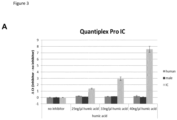
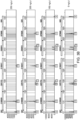
- the use of said multi copy locus is intended for detecting and/or quantifying nucleic acids according to the herein cited methods or for analyzing the status of degradation of human DNA. Forensic scientists often deal with case-work samples from different sources. These samples can be degraded due to different factors such as environmental stress. Therefore, the internal nucleic acid control template (IC) according to the invention can additionally be used in a STR reaction to provide with information about the degradation status of DNA sample as well as information on the presence of inhibitors (see figure 3B ).
- IC internal nucleic acid control template
- the present invention also encompasses the use of a nucleic acid with a sequence
- STR reaction refers to multiplex system used to identify specific short tandem repeats (STRs) in a DNA sample.
- the invention also relates to a human DNA degradation marker evaluation system with higher sensitivity and accuracy than state of the art methods.
- fluorescence is detected and measured in the real-time PCR thermocycler, and its geometric increase corresponding to exponential increase of the product is used to determine the threshold cycle (Ct) in each reaction.
- the unknown and each of the standards are amplified in separate tubes.
- a standard curve (plot of Ct value/crossing point against log of amount of standard) is generated using different dilutions of the standard.
- the Ct value of the unknown samples is compared with the standard curve, allowing calculation of the initial amount of the target. It is important to select an appropriate standard for the type of nucleic acid to be quantified. To generate a standard curve, at least 5 different amounts of the standard should be quantified, and the amount of unknown target should fall within the range of the standard curve. Hence, in one embodiment also the above quantification steps are performed.
- Labelling systems comprise rare earth cryptates or rare earth chelates in combination with a fluorescence dye or chemiluminescence dye, in particular a dye of the cyanine type.
- fluorescence based assays comprise the use of dyes, which may for instance be selected from the group comprising FAM (5-or 6-carboxyfluorescein), VIC, NED, Fluorescein, Fluoresceinisothiocyanate (FITC), IRD-700/800, Cyanine dyes, such as CY3, CY5, CY3.5, CY5.5, Cy7, Xanthen, 6-Carboxy-2',4',7',4,7-hexachlorofluorescein (HEX), TET, 6-Carboxy-4',5'-dichloro-2',7'-dimethodyfluorescein (JOE), N,N,N',N'-Tetramethyl-6-carboxyrhodamine (TAMRA), 6-Carboxy-X-
- FAM flu
- chemiluminescence based assays comprise the use of dyes, based on the physical principles described for chemiluminescent materials in Kirk-Othmer, Encyclopedia of chemical technology, 4th ed., executive editor, J. I. Kroschwitz; editor, M. Howe-Grant, John Wiley & Sons, 1993, vol.15, p. 518-562 , incorporated herein by reference, including citations on pages 551-562.
- Preferred chemiluminescent dyes are acridinium esters.
- nucleotide is defined herein to include both nucleotides and nucleosides.
- Nucleosides as for nucleotides, comprise a purine or pyrimidine base linked glycosidically to ribose or deoxyribose, but they lack the phosphate residues which would make them a nucleotide. Synthetic and naturally occurring nucleotides, prior to their modification at the 3' sugar hydroxyl, are included within the definition.
- the first target nucleic acid is a short tandem repeat (STR) marker and the method is performed in the context of genotyping.
- STR short tandem repeat
- a defined amount of IC nucleic acid is added to the reaction and the expected amplification product amount usually obtained in the absence of an amplification inhibitor is compared to the product amount obtained in the reaction.
- the primers used for amplifying the internal nucleic acid control templates have a nucleotide sequence according to SEQ ID NO. 2 and 3, or the reverse complement thereof or at least have the first fifteen 3'-prime nucleotides in common with the sequences according to SEQ ID NO. 2 and 3.
- Oligonucleotide primers may be prepared using any suitable method, such as, for example, the phosphotriester and phosphodiester methods or automated embodiments thereof. In one such automated embodiment diethyl phosphoramidites are used as starting materials and may be synthesized as described by Beaucage et al. (1981) Tetrahedron Letters 22:1859-1862 . One method for synthesizing oligonucleotides on a modified solid support is described in US Patent No. 4,458,006 . It is also possible to use a primer, which has been isolated from a biological source (such as a restriction endonuclease digest). Preferred primers have a length of about 6-100 bases, more preferably about 20-50, most preferably about 20-40 bases.
- a biological source such as a restriction endonuclease digest
- the invention also relates to nucleic acid (IC) with a sequence, i) according to SEQ ID NO. 1, ii) with a sequence that differs by no more than 15% therefrom, iii) with a reverse complement sequence of SEQ ID NO. 1 or a sequence that is differs by no more than 15% therefrom or, iv) with a sequence or a reverse complement thereof comprising the final 18 to 30 3'-nucleotides of SEQ ID NO. 1 at its terminal 3'-end and the final 18 to 30 5'-nucleotides of SEQ ID NO. 1 at its terminal 5'-end, or terminal ends that differ by no more than 5% from SEQ ID NO.
- the nucleic may have any nucleotide sequence and is between about 30 and about 1950 nucleotides in length. Preferably the length is between 200 bp (or nulcotides) and 600 bp (or nucleotides).
- the invention also relates to an IC which is not identical but shares at least, 80%, 85%, 90%, better 95% sequence identity with SEQ ID NO. 1 or its reverse complement.
- the invention also relates to an oligonucleotide with a sequence according to SEQ ID NO. 2 or SEQ ID NO. 3 or the reverse complement thereof or at least containing the first 15 3'-prime nucleotides in common with those according to SEQ ID NO. 2 and 3.
- the oligonucleotide primers the inventors have created are as follows: SEQ ID NO. 2 5' gtagctccataatcagaagatgcg 3' SEQ ID NO. 3 5' attcgctctactccaaccacataatag 3'
- the probe the inventors have created is as follows: SEQ ID NO. 4 5' tccgatactaaggctctgccggcgct 3'
- the invention also relates to an oligonucleotide with a sequence according to SEQ ID NO. 4 or the reverse complement thereof, or at least sharing 95% sequence identity thereto or to the reverse complement.
- the invention relates to the use of the nucleic acid and/or an oligonucleotide in a real-time amplification reaction for the detection and/or quantification of inhibitors in the reaction and/or for the quantification of a nucleic acid in said reaction.
- It also relates to a kit for evaluating the amplification efficiency and/or the presence of inhibitors and/or degradation in an amplification reaction, comprising
- the nucleic acid according to the kit for evaluating the amplification efficiency and/or the presence of inhibitors and/or degradation in an amplification reaction can alternatively or additionally comprises
- the oligonucleotide according to the kit for evaluating the amplification efficiency and/or the presence of inhibitors and/or degradation in an amplification reaction can alternatively or additionally comprises
- the method relates to one internal amplification product.
- This system makes use of a specific combination of (i) an IC template which is added to the quantitative real-time PCR in a defined amount (SEQ ID NO. 1), (ii) a specific primer set (SEQ ID NO. 2 and 3) as well as (iii) a probe for detection (SEQ ID NO. 4).
- first and second amplification product When one, e.g. only one genomic template and one IC are used, these amplification products are referred to herein as first and second amplification product.
- the amplification may be a multiplex PCR.
- Multiplex PCR is for example used for the simultaneous detection of multiple marker genes and/or their polymorphisms, e.g. short tandem repeats (STRs) or deletion insertion polymorphisms (DIPS or Indels). Detection of the amplification products and their genotyping is usually carried out by multiple colour fluorescence detection after electrophoretic separation (e.g. capillary gel electrophoresis) in DNA sequencers. In real-time, quantitative multiplex PCR, the amplification of multiple target sequences can be monitored at the same time by simultaneous detection of fluorescence of different fluorescent dyes.
- the inventive system may be used to quantify nucleic acids precisely prior to STR analysis or prior to NGS analysis. Both require a precise titration of the DNA amount used.
- the amplification reaction is preferably selected from the group comprising real-time polymerase chain reaction (PCR), real-time ligase chain reaction (LCR), transcription-based amplification system (TAS), nucleic acid sequence based amplification (NASBA), rolling circle amplification (RCA), transcription-mediated amplification (TMA), self-sustaining sequence replication (3SR), QP amplification and (thermostable) helicase dependent amplification ((t)HAD). More preferably the amplification reaction is a real-time PCR. Most preferably, the amplification reaction is a multiplex real-time PCR, i.e. the amplification of more than one target nucleic acid sequence in a single tube, e.g.
- loci target nucleic acid sequences
- 2, 3, 4, 5, 6, 7, 8, 9, 10, 11, 12, 13, 14, 15,16, 17,18, 19, 20, 21, 22, 23, 24, 25, 26, 27, 28, 29, 30, 31, 32, 33, 34, 35, 36, 37, 38, 39 or 40 loci may be amplified simultaneously.
- the invention relates to a method for evaluating the amplification efficiency and/or the presence of inhibitors and/or degradation in an amplification reaction, this may be done prior to an STR analysis or NGS analysis.
- the system is preferably used in a quantitative real-time PCR set-up.
- the relevant indices measured are primarily the Ct values. Given a certain amount of IC and certain Ct values can be expected. If the Ct values is higher, i.e. the signal appears only in later cycles, this shows inhibition of the reaction.
- the internal control in DNA quantification is a PCR system, which reliably is reporting the presence of PCR inhibitors in the sample while PCR systems for quantification function as stable as possible.
- Human DNA isolated from various sources has to be assessed in terms of quantity, quality and integrity prior to further forensic testing e.g. STR analyses, next-generation-sequencing. These are complex systems that require a defined range of input DNA and template quality to perform accurately, therefore DNA-quantification is an important step within the forensic workflow.
- Many commercial available kits for DNA quantification contain an internal PCR amplification control (IC). The IC in many commercially available DNA quantification kits suffer from poor correlation to the inhibitor resistance of new generation STR-Kits, or fail report the presence these inhibitors in a gradational manner.
- FIG. 2 Examples of inhibitor sensitivity in quantification reactions are shown in figure 2 with two commercially available kits.
- the Quantifiler TRIO kit fails to report any hematin concentration higher than 125 ⁇ M, while the Promega PowerQuant kit shows virtual no reaction for humic acid concentrations tested and only a slight increase in Ct values of 0.6 for 200 ⁇ M of hematin, giving a poor resolution of inhibitor presence in the sample.
- the typical forensic workflow suggests the quantification of the DNA before the STR reaction is carried out. This is done to determine how much DNA was obtained from a sample, e.g. collected from a crime scene, and how much of this DNA should be used in an STR reaction.
- the typical STR reaction works optimally in a certain range of template DNA and the analysis is very labor-intensive, therefore methodologies are needed that ensure a very high success rate. Therefore, it is a real advantage that the present invention enables the user not only to surely quantify the amount of DNA present but also to assess the absence of inhibitors, which could compromise the STR-reaction result, which would result in failure or loss of valuable sample material.
- IC internal nucleic acid control templates
- the primers the inventors have created are as follows: SEQ ID NO. 2 5' gtagctccataatcagaagatgcg 3' SEQ ID NO. 3 5' attcgctctactccaaccacataatag3'
- the probe the inventors have created is as follows: SEQ ID NO. 4 5' tccgatactaaggctctgccggcgct 3'
Landscapes
- Chemical & Material Sciences (AREA)
- Organic Chemistry (AREA)
- Life Sciences & Earth Sciences (AREA)
- Zoology (AREA)
- Wood Science & Technology (AREA)
- Proteomics, Peptides & Aminoacids (AREA)
- Health & Medical Sciences (AREA)
- Engineering & Computer Science (AREA)
- Chemical Kinetics & Catalysis (AREA)
- Biophysics (AREA)
- Immunology (AREA)
- Microbiology (AREA)
- Molecular Biology (AREA)
- Biotechnology (AREA)
- Analytical Chemistry (AREA)
- Physics & Mathematics (AREA)
- Biochemistry (AREA)
- Bioinformatics & Cheminformatics (AREA)
- General Engineering & Computer Science (AREA)
- General Health & Medical Sciences (AREA)
- Genetics & Genomics (AREA)
- Measuring Or Testing Involving Enzymes Or Micro-Organisms (AREA)
Applications Claiming Priority (3)
| Application Number | Priority Date | Filing Date | Title |
|---|---|---|---|
| EP16189225 | 2016-09-16 | ||
| PCT/EP2017/073304 WO2018050835A1 (fr) | 2016-09-16 | 2017-09-15 | Contrôle interne d'amplification |
| EP17768773.8A EP3512961B1 (fr) | 2016-09-16 | 2017-09-15 | Commande d'amplification interne |
Related Parent Applications (2)
| Application Number | Title | Priority Date | Filing Date |
|---|---|---|---|
| EP17768773.8A Division EP3512961B1 (fr) | 2016-09-16 | 2017-09-15 | Commande d'amplification interne |
| PCT/EP2017/073304 Previously-Filed-Application WO2018050835A1 (fr) | 2016-09-16 | 2017-09-15 | Contrôle interne d'amplification |
Publications (2)
| Publication Number | Publication Date |
|---|---|
| EP4345170A2 true EP4345170A2 (fr) | 2024-04-03 |
| EP4345170A3 EP4345170A3 (fr) | 2024-07-03 |
Family
ID=56939947
Family Applications (2)
| Application Number | Title | Priority Date | Filing Date |
|---|---|---|---|
| EP17768773.8A Active EP3512961B1 (fr) | 2016-09-16 | 2017-09-15 | Commande d'amplification interne |
| EP23219107.2A Pending EP4345170A3 (fr) | 2016-09-16 | 2017-09-15 | Commande d'amplification interne |
Family Applications Before (1)
| Application Number | Title | Priority Date | Filing Date |
|---|---|---|---|
| EP17768773.8A Active EP3512961B1 (fr) | 2016-09-16 | 2017-09-15 | Commande d'amplification interne |
Country Status (3)
| Country | Link |
|---|---|
| US (2) | US11345952B2 (fr) |
| EP (2) | EP3512961B1 (fr) |
| WO (1) | WO2018050835A1 (fr) |
Families Citing this family (2)
| Publication number | Priority date | Publication date | Assignee | Title |
|---|---|---|---|---|
| CN111455092B (zh) * | 2020-05-27 | 2022-02-18 | 中国农业大学 | 用于大丽轮枝菌定量pcr检测的内参菌株及其应用 |
| WO2024089028A1 (fr) | 2022-10-27 | 2024-05-02 | Qiagen Gmbh | Procédé d'amplification numérique pour quantifier et/ou déterminer l'intégrité d'adn mâle humain |
Citations (1)
| Publication number | Priority date | Publication date | Assignee | Title |
|---|---|---|---|---|
| US4458006A (en) | 1982-06-21 | 1984-07-03 | Hoechst Aktiengesellschaft | Photopolymerizable mixture and photopolymerizable copying material prepared therewith |
Family Cites Families (3)
| Publication number | Priority date | Publication date | Assignee | Title |
|---|---|---|---|---|
| US6218529B1 (en) * | 1995-07-31 | 2001-04-17 | Urocor, Inc. | Biomarkers and targets for diagnosis, prognosis and management of prostate, breast and bladder cancer |
| EP2678443B1 (fr) | 2011-02-21 | 2016-11-23 | Qiagen GmbH | Procédé de quantification d'adn humain au moyen d'un témoin interne |
| HUE043152T2 (hu) | 2014-01-28 | 2019-08-28 | Qiagen Gmbh | Eljárás és készlet belsõ amplifikációs kontrollal |
-
2017
- 2017-09-15 US US16/333,143 patent/US11345952B2/en active Active
- 2017-09-15 EP EP17768773.8A patent/EP3512961B1/fr active Active
- 2017-09-15 WO PCT/EP2017/073304 patent/WO2018050835A1/fr not_active Ceased
- 2017-09-15 EP EP23219107.2A patent/EP4345170A3/fr active Pending
-
2022
- 2022-05-19 US US17/748,928 patent/US12331348B2/en active Active
Patent Citations (1)
| Publication number | Priority date | Publication date | Assignee | Title |
|---|---|---|---|---|
| US4458006A (en) | 1982-06-21 | 1984-07-03 | Hoechst Aktiengesellschaft | Photopolymerizable mixture and photopolymerizable copying material prepared therewith |
Non-Patent Citations (5)
| Title |
|---|
| ALTSCHUL, J. MOL. BIOL., vol. 215, 1990, pages 403 - 410 |
| ALTSCHUL, NUCLEIC ACIDS RES., vol. 25, 1997, pages 3389 - 3402 |
| BEAUCAGE ET AL., TETRAHEDRON LETTERS, vol. 22, 1981, pages 1859 - 1862 |
| KARLINALTSCHUL, PROC. NATL. ACAD. SCI. USA, vol. 90, 1993, pages 5873 - 5877 |
| KIRK-OTHMER: "Encyclopedia of chemical technology", vol. 15, 1993, JOHN WILEY & SONS, pages: 518 - 562 |
Also Published As
| Publication number | Publication date |
|---|---|
| EP4345170A3 (fr) | 2024-07-03 |
| WO2018050835A1 (fr) | 2018-03-22 |
| EP3512961A1 (fr) | 2019-07-24 |
| US20200087720A1 (en) | 2020-03-19 |
| US12331348B2 (en) | 2025-06-17 |
| EP3512961B1 (fr) | 2024-01-10 |
| US11345952B2 (en) | 2022-05-31 |
| EP3512961C0 (fr) | 2024-01-10 |
| US20220333176A1 (en) | 2022-10-20 |
Similar Documents
| Publication | Publication Date | Title |
|---|---|---|
| US9175336B2 (en) | Method for differentiation of polynucleotide strands | |
| CN104583413B (zh) | 用于自rna模板开始的等温dna扩增试剂盒 | |
| JP5680080B2 (ja) | アンカーオリゴヌクレオチドおよびアダプターオリゴヌクレオチドを用いる核酸の正規化した定量化方法 | |
| US20120190027A1 (en) | Ligation-based method of normalized quantification of nucleic acids | |
| CN104334739A (zh) | 通过新一代测序进行基因分型 | |
| EP2678443B1 (fr) | Procédé de quantification d'adn humain au moyen d'un témoin interne | |
| JP2003210199A (ja) | 高度ダイナミックレンジを有する定量的多重pcr | |
| US12331348B2 (en) | Detection probe for internal amplification control and kit including same | |
| EP4608991A1 (fr) | Procédé d'amplification numérique pour quantifier et/ou déterminer l'intégrité d'adn mâle humain | |
| US20240084363A1 (en) | Method for quantifying and/or detecting human male dna | |
| EP3099812B1 (fr) | Methode et kit avec controle interne de l'amplification | |
| Ji et al. | Principles of nucleic acid-based detection methods | |
| US20240410024A1 (en) | Method for relative quantification of gm crops using digital pcr without certified reference material | |
| CN114585749B (zh) | 核酸序列浓度的确定 | |
| WO2024089027A1 (fr) | Quantification d'acides nucléiques et/ou évaluation de l'état de dégradation et/ou d'intégrité d'acide nucléique par pcr numérique | |
| EP1924714A2 (fr) | Quantification d'acides nucléiques à l'aide d'une courbe d'étalonnage interne | |
| EP4638790A1 (fr) | Procédé de quantification des acides nucléiques utilisé pour augmenter la gamme dynamique dans la pcr numérique | |
| JP2024536115A (ja) | 核酸増幅生成物を試験する方法 | |
| US9382582B1 (en) | Methods, compositions and kits for enriching for a minor template amplification product in a mixed template amplification reaction |
Legal Events
| Date | Code | Title | Description |
|---|---|---|---|
| PUAI | Public reference made under article 153(3) epc to a published international application that has entered the european phase |
Free format text: ORIGINAL CODE: 0009012 |
|
| STAA | Information on the status of an ep patent application or granted ep patent |
Free format text: STATUS: REQUEST FOR EXAMINATION WAS MADE |
|
| 17P | Request for examination filed |
Effective date: 20240102 |
|
| AC | Divisional application: reference to earlier application |
Ref document number: 3512961 Country of ref document: EP Kind code of ref document: P |
|
| AK | Designated contracting states |
Kind code of ref document: A2 Designated state(s): AL AT BE BG CH CY CZ DE DK EE ES FI FR GB GR HR HU IE IS IT LI LT LU LV MC MK MT NL NO PL PT RO RS SE SI SK SM TR |
|
| REG | Reference to a national code |
Ref country code: DE Ref legal event code: R079 Free format text: PREVIOUS MAIN CLASS: C12Q0001684400 Ipc: C12Q0001685100 |
|
| PUAL | Search report despatched |
Free format text: ORIGINAL CODE: 0009013 |
|
| AK | Designated contracting states |
Kind code of ref document: A3 Designated state(s): AL AT BE BG CH CY CZ DE DK EE ES FI FR GB GR HR HU IE IS IT LI LT LU LV MC MK MT NL NO PL PT RO RS SE SI SK SM TR |
|
| RIC1 | Information provided on ipc code assigned before grant |
Ipc: C12Q 1/6848 20180101ALI20240524BHEP Ipc: C12Q 1/6851 20180101AFI20240524BHEP |