EP4345567A1 - Procédé et appareil d'évitement d'obstacle, dispositif électronique et support de stockage - Google Patents
Procédé et appareil d'évitement d'obstacle, dispositif électronique et support de stockage Download PDFInfo
- Publication number
- EP4345567A1 EP4345567A1 EP22827605.1A EP22827605A EP4345567A1 EP 4345567 A1 EP4345567 A1 EP 4345567A1 EP 22827605 A EP22827605 A EP 22827605A EP 4345567 A1 EP4345567 A1 EP 4345567A1
- Authority
- EP
- European Patent Office
- Prior art keywords
- robot
- obstacle
- container
- target position
- determining
- Prior art date
- Legal status (The legal status is an assumption and is not a legal conclusion. Google has not performed a legal analysis and makes no representation as to the accuracy of the status listed.)
- Granted
Links
Images

Classifications
-
- G—PHYSICS
- G05—CONTROLLING; REGULATING
- G05D—SYSTEMS FOR CONTROLLING OR REGULATING NON-ELECTRIC VARIABLES
- G05D1/00—Control of position, course, altitude or attitude of land, water, air or space vehicles, e.g. using automatic pilots
- G05D1/60—Intended control result
- G05D1/617—Safety or protection, e.g. defining protection zones around obstacles or avoiding hazards
- G05D1/622—Obstacle avoidance
-
- G—PHYSICS
- G05—CONTROLLING; REGULATING
- G05D—SYSTEMS FOR CONTROLLING OR REGULATING NON-ELECTRIC VARIABLES
- G05D1/00—Control of position, course, altitude or attitude of land, water, air or space vehicles, e.g. using automatic pilots
- G05D1/02—Control of position or course in two dimensions
- G05D1/021—Control of position or course in two dimensions specially adapted to land vehicles
- G05D1/0231—Control of position or course in two dimensions specially adapted to land vehicles using optical position detecting means
- G05D1/0238—Control of position or course in two dimensions specially adapted to land vehicles using optical position detecting means using obstacle or wall sensors
- G05D1/024—Control of position or course in two dimensions specially adapted to land vehicles using optical position detecting means using obstacle or wall sensors in combination with a laser
-
- G—PHYSICS
- G05—CONTROLLING; REGULATING
- G05D—SYSTEMS FOR CONTROLLING OR REGULATING NON-ELECTRIC VARIABLES
- G05D1/00—Control of position, course, altitude or attitude of land, water, air or space vehicles, e.g. using automatic pilots
- G05D1/02—Control of position or course in two dimensions
- G05D1/021—Control of position or course in two dimensions specially adapted to land vehicles
- G05D1/0212—Control of position or course in two dimensions specially adapted to land vehicles with means for defining a desired trajectory
- G05D1/0214—Control of position or course in two dimensions specially adapted to land vehicles with means for defining a desired trajectory in accordance with safety or protection criteria, e.g. avoiding hazardous areas
-
- G—PHYSICS
- G05—CONTROLLING; REGULATING
- G05D—SYSTEMS FOR CONTROLLING OR REGULATING NON-ELECTRIC VARIABLES
- G05D1/00—Control of position, course, altitude or attitude of land, water, air or space vehicles, e.g. using automatic pilots
- G05D1/02—Control of position or course in two dimensions
- G05D1/021—Control of position or course in two dimensions specially adapted to land vehicles
- G05D1/0231—Control of position or course in two dimensions specially adapted to land vehicles using optical position detecting means
- G05D1/0242—Control of position or course in two dimensions specially adapted to land vehicles using optical position detecting means using non-visible light signals, e.g. IR or UV signals
-
- G—PHYSICS
- G05—CONTROLLING; REGULATING
- G05D—SYSTEMS FOR CONTROLLING OR REGULATING NON-ELECTRIC VARIABLES
- G05D1/00—Control of position, course, altitude or attitude of land, water, air or space vehicles, e.g. using automatic pilots
- G05D1/02—Control of position or course in two dimensions
- G05D1/021—Control of position or course in two dimensions specially adapted to land vehicles
- G05D1/0231—Control of position or course in two dimensions specially adapted to land vehicles using optical position detecting means
- G05D1/0246—Control of position or course in two dimensions specially adapted to land vehicles using optical position detecting means using a video camera in combination with image processing means
- G05D1/0251—Control of position or course in two dimensions specially adapted to land vehicles using optical position detecting means using a video camera in combination with image processing means extracting 3D information from a plurality of images taken from different locations, e.g. stereo vision
-
- G—PHYSICS
- G05—CONTROLLING; REGULATING
- G05D—SYSTEMS FOR CONTROLLING OR REGULATING NON-ELECTRIC VARIABLES
- G05D1/00—Control of position, course, altitude or attitude of land, water, air or space vehicles, e.g. using automatic pilots
- G05D1/20—Control system inputs
- G05D1/24—Arrangements for determining position or orientation
- G05D1/242—Means based on the reflection of waves generated by the vehicle
-
- G—PHYSICS
- G05—CONTROLLING; REGULATING
- G05D—SYSTEMS FOR CONTROLLING OR REGULATING NON-ELECTRIC VARIABLES
- G05D1/00—Control of position, course, altitude or attitude of land, water, air or space vehicles, e.g. using automatic pilots
- G05D1/40—Control within particular dimensions
- G05D1/46—Control of position or course in three dimensions [3D]
-
- G—PHYSICS
- G05—CONTROLLING; REGULATING
- G05D—SYSTEMS FOR CONTROLLING OR REGULATING NON-ELECTRIC VARIABLES
- G05D1/00—Control of position, course, altitude or attitude of land, water, air or space vehicles, e.g. using automatic pilots
- G05D1/60—Intended control result
- G05D1/617—Safety or protection, e.g. defining protection zones around obstacles or avoiding hazards
- G05D1/639—Resolving or avoiding being stuck or obstructed
- G05D1/642—Resolving or avoiding being stuck or obstructed involving obstacle removal, e.g. opening doors or pushing furniture
-
- G—PHYSICS
- G05—CONTROLLING; REGULATING
- G05D—SYSTEMS FOR CONTROLLING OR REGULATING NON-ELECTRIC VARIABLES
- G05D1/00—Control of position, course, altitude or attitude of land, water, air or space vehicles, e.g. using automatic pilots
- G05D1/60—Intended control result
- G05D1/65—Following a desired speed profile
-
- G—PHYSICS
- G05—CONTROLLING; REGULATING
- G05D—SYSTEMS FOR CONTROLLING OR REGULATING NON-ELECTRIC VARIABLES
- G05D1/00—Control of position, course, altitude or attitude of land, water, air or space vehicles, e.g. using automatic pilots
- G05D1/60—Intended control result
- G05D1/656—Interaction with payloads or external entities
- G05D1/667—Delivering or retrieving payloads
-
- B—PERFORMING OPERATIONS; TRANSPORTING
- B65—CONVEYING; PACKING; STORING; HANDLING THIN OR FILAMENTARY MATERIAL
- B65G—TRANSPORT OR STORAGE DEVICES, e.g. CONVEYORS FOR LOADING OR TIPPING, SHOP CONVEYOR SYSTEMS OR PNEUMATIC TUBE CONVEYORS
- B65G1/00—Storing articles, individually or in orderly arrangement, in warehouses or magazines
- B65G1/02—Storage devices
- B65G1/04—Storage devices mechanical
- B65G1/0492—Storage devices mechanical with cars adapted to travel in storage aisles
-
- B—PERFORMING OPERATIONS; TRANSPORTING
- B65—CONVEYING; PACKING; STORING; HANDLING THIN OR FILAMENTARY MATERIAL
- B65G—TRANSPORT OR STORAGE DEVICES, e.g. CONVEYORS FOR LOADING OR TIPPING, SHOP CONVEYOR SYSTEMS OR PNEUMATIC TUBE CONVEYORS
- B65G2203/00—Indexing code relating to control or detection of the articles or the load carriers during conveying
- B65G2203/02—Control or detection
- B65G2203/0266—Control or detection relating to the load carrier(s)
- B65G2203/0283—Position of the load carrier
-
- B—PERFORMING OPERATIONS; TRANSPORTING
- B65—CONVEYING; PACKING; STORING; HANDLING THIN OR FILAMENTARY MATERIAL
- B65G—TRANSPORT OR STORAGE DEVICES, e.g. CONVEYORS FOR LOADING OR TIPPING, SHOP CONVEYOR SYSTEMS OR PNEUMATIC TUBE CONVEYORS
- B65G2203/00—Indexing code relating to control or detection of the articles or the load carriers during conveying
- B65G2203/04—Detection means
- B65G2203/041—Camera
-
- B—PERFORMING OPERATIONS; TRANSPORTING
- B65—CONVEYING; PACKING; STORING; HANDLING THIN OR FILAMENTARY MATERIAL
- B65G—TRANSPORT OR STORAGE DEVICES, e.g. CONVEYORS FOR LOADING OR TIPPING, SHOP CONVEYOR SYSTEMS OR PNEUMATIC TUBE CONVEYORS
- B65G2203/00—Indexing code relating to control or detection of the articles or the load carriers during conveying
- B65G2203/04—Detection means
- B65G2203/042—Sensors
- B65G2203/044—Optical
-
- B—PERFORMING OPERATIONS; TRANSPORTING
- B65—CONVEYING; PACKING; STORING; HANDLING THIN OR FILAMENTARY MATERIAL
- B65G—TRANSPORT OR STORAGE DEVICES, e.g. CONVEYORS FOR LOADING OR TIPPING, SHOP CONVEYOR SYSTEMS OR PNEUMATIC TUBE CONVEYORS
- B65G2207/00—Indexing codes relating to constructional details, configuration and additional features of a handling device, e.g. Conveyors
- B65G2207/40—Safety features of loads, equipment or persons
-
- G—PHYSICS
- G05—CONTROLLING; REGULATING
- G05D—SYSTEMS FOR CONTROLLING OR REGULATING NON-ELECTRIC VARIABLES
- G05D2105/00—Specific applications of the controlled vehicles
- G05D2105/20—Specific applications of the controlled vehicles for transportation
-
- G—PHYSICS
- G05—CONTROLLING; REGULATING
- G05D—SYSTEMS FOR CONTROLLING OR REGULATING NON-ELECTRIC VARIABLES
- G05D2105/00—Specific applications of the controlled vehicles
- G05D2105/20—Specific applications of the controlled vehicles for transportation
- G05D2105/28—Specific applications of the controlled vehicles for transportation of freight
-
- G—PHYSICS
- G05—CONTROLLING; REGULATING
- G05D—SYSTEMS FOR CONTROLLING OR REGULATING NON-ELECTRIC VARIABLES
- G05D2107/00—Specific environments of the controlled vehicles
- G05D2107/70—Industrial sites, e.g. warehouses or factories
-
- G—PHYSICS
- G05—CONTROLLING; REGULATING
- G05D—SYSTEMS FOR CONTROLLING OR REGULATING NON-ELECTRIC VARIABLES
- G05D2109/00—Types of controlled vehicles
- G05D2109/10—Land vehicles
- G05D2109/14—Land vehicles moving on a grid
-
- G—PHYSICS
- G05—CONTROLLING; REGULATING
- G05D—SYSTEMS FOR CONTROLLING OR REGULATING NON-ELECTRIC VARIABLES
- G05D2111/00—Details of signals used for control of position, course, altitude or attitude of land, water, air or space vehicles
- G05D2111/10—Optical signals
Definitions
- This application relates to intelligent control technologies, and in particular, to an obstacle avoidance method and apparatus, an electronic device, and a storage medium.
- robots dedicated to goods transfer came into being, which are generally known as robot trolleys.
- a rack area is provided in the storage space.
- the rack area includes a plurality of racks, and each rack includes a plurality of storage locations for placing goods, and a roadway is arranged between two adjacent racks.
- Each rack is provided with a plurality of vertical tracks and/or a plurality of transverse tracks on one side of the roadway.
- the robot can pass through the roadway, reach the vertical track, and autonomously climb the rack through the vertical track and/or transverse track, pick up goods, and transport the goods.
- the robot When the robot operates, the robot may collide with another robot, or be hindered by the goods protruding from the rack, causing interruption of the operation process and even damage to the device.
- This application provides an obstacle avoidance method and apparatus, an electronic device, and a storage medium, to prevent a robot from being hindered by an obstacle and ensure safety of the robot.
- this application provides an obstacle avoidance method, applicable to a robot, where the robot is configured to move along a track in a rack area, and the method includes:
- the planning a traveling route again includes: replanning a traveling route from the current position to the target position by adjusting the traveling direction of the robot.
- the planning a traveling route again includes: replanning a traveling route from the current position to the target position by adjusting a traveling speed of the robot.
- the planning a traveling route again includes:
- the determining a new target position includes:
- the determining a new target position includes:
- the rack area includes a plurality of storage locations, and each of the storage locations is configured to store a determined container; and if a current task of the robot is to reach the target position to take goods, the determining a new target position includes:
- the detecting whether a suspected obstacle exists in a traveling direction includes:
- the detecting whether a suspected obstacle exists in a traveling direction includes:
- the determining that the suspected obstacle is an obstacle includes:
- the determining whether the container hinders the robot based on the space range occupied by the robot and the space range by which the container protrudes beyond the edge of the rack includes:
- the method further includes: reducing a traveling speed of the robot.
- the robot is configured to move along a track in a rack, the track on the rack includes a vertical track and/or a horizontal track, and the method includes: if the current position of the robot is located on the vertical track, the current traveling direction is upward along the vertical track, and a task of the robot is to perform an operation of retrieving goods, after the determining that the container is an obstacle, the method further includes:
- the method further includes:
- the determining that the suspected obstacle is an obstacle includes:
- the determining whether the another robot hinders the robot based on a movement state of the robot and the target position that the robot is required to reach along the current traveling direction, and the movement state of the another robot and the target position that the another robot is required to reach along the current traveling direction of the another robot includes:
- this application provides an obstacle avoidance apparatus, including:
- the route planning module is specifically configured to: replan a traveling route from the current position to the target position by adjusting the traveling direction of the robot.
- the route planning module is specifically configured to:
- the route planning module is specifically configured to:
- the route planning module 404 is specifically configured to:
- the route planning module 404 is specifically configured to:
- the rack area includes a plurality of storage locations, and each of the storage locations is configured for a fixed container to be stored; and if a current task of the robot is to reach the target position to retrieve goods, when determining the new target position, the route planning module is specifically configured to:
- the suspected obstacle detection module is specifically configured to:
- the suspected obstacle detection module is specifically configured to:
- the obstacle determination module is specifically configured to:
- the obstacle determination module when determining whether the container hinders the robot based on a space range occupied by the robot and the space range that the container protrudes beyond the edge of the rack, is specifically configured to:
- the obstacle determination module is specifically configured to: reduce the traveling speed of the robot.
- the robot is configured to move along a track in a rack, and the track on the rack includes a vertical track and/or a horizontal track; and if the current position of the robot is located on the vertical track, the current traveling direction is upward along the vertical track, and a task of the robot is to perform an operation of retrieving goods, after the determining that the container is an obstacle, the obstacle determination module 403 is further configured to:
- the obstacle determination module is further configured to:
- the obstacle determination module is specifically configured to:
- the obstacle determination module 403 is specifically configured to:
- this application provides an electronic device, including: a memory, configured to store program instructions; and a processor, configured to invoke and execute the program instructions in the memory, and perform the method according to the first aspect.
- this application provides a computer-readable storage medium, having a computer program stored thereon.
- the computer program is executed by a processor, the method according to the first aspect is performed.
- this application provides a computer program product, including a computer program.
- the program is executed by a processor, the method according to the first aspect is performed.
- the obstacle avoidance method is applicable to a robot.
- the robot is configured to move along a track in a rack area, and the method includes: detecting whether a suspected obstacle exists in a traveling direction, where the suspected obstacle protrudes from an edge of a rack; determining a relative position relationship between the suspected obstacle and a target position the robot is required to reach along a current traveling direction when the suspected obstacle is detected; determining that the suspected obstacle is an obstacle if the suspected obstacle is located between a current position of the robot and the target position; and replanning a traveling route to avoid the obstacle.
- the corresponding obstacle avoidance method is performed by the robot moving in the track in the rack area.
- a detection is performed as to whether the suspected obstacle protruding from the edge of the rack exists in the traveling direction, and a determination is made as to whether the suspected obstacle hinders the traveling. If the suspected obstacle may cause a hindrance, the suspected obstacle may be determined as the obstacle, and the traveling route is replanned to avoid the obstacle, thereby preventing the travelling from being hindered by the obstacle, and ensuring safety of the robot.
- a climbable rack is provided with a vertical track and/or a transverse track for a robot to climb.
- the robot can climb through the vertical track, and/or switch a traveling direction between the vertical track and the transverse track, so as to reach the corresponding storage location for performing the operation of placing and/or retrieving goods, and then leave the rack through the vertical track and/or the transverse track.
- the robot When performing a task on the rack, the robot may meet another robot and be hindered by the another robot, or the robot may be hindered by goods protruding from the rack. Due to the fixed nature of the track on the rack, the robot cannot avoid an obstacle by adjusting the direction at any time when being hindered, as the robot does when travel on the ground.
- this application provides an obstacle avoidance method and apparatus, an electronic device, and a storage medium, which are suitable for a scenario where the robot climbing on the rack avoids the obstacle, avoids the robot being hindered by obstacle during travel, prevents a collision, and ensures safety of the robot.
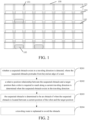
- FIG. 1 is a schematic diagram of an application scenario according to an embodiment of this application.
- a frame of the rack 100 is provided with a vertical track 101 and a transverse track 102 for the robot to climb.
- the vertical track 101 and the transverse track 102 are arranged around a storage location 103 and intersect on four corners of the storage location.
- Goods 104 are stored in the storage location 103.
- the robot 105 can move on the vertical track 101 and the transverse track 102 to reach the corresponding storage location to perform the goods retrieving task.
- the obstacle avoidance method of this application is used for obstacle avoidance.
- FIG. 2 is a flowchart of an obstacle avoidance method according to an embodiment of this application.
- the method of this embodiment can be applied to the robot, where the robot is configured to move along a track in a rack area.
- the rack area includes a plurality of climbable racks (such as the rack 100).
- the method in this embodiment may include the following operations.
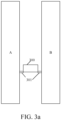
- FIG. 3a is a schematic diagram of a robot climbing on the rack, shown in the form of a side view.
- the robot 300 is provided with a walking mechanism 301 corresponding to the vertical track and/or the transverse track on a rack A and a rack B, so that the robot 300 can move vertically or laterally along the track in the space between the rack A and the rack B. It can be determined from the figure that when another object exists in the space between the rack A and the rack B, and the another object is properly in a moving direction of the robot 300, the another object is possible to hinder the progress of the robot 300 during the movement. Therefore, an object protruding beyond the edge of the rack in the traveling direction of the robot is referred to as a suspected obstacle.
- the robot When the robot moves on the track in the rack area, it can detect in real time whether the suspected obstacle exists in the traveling direction.
- a sensor arranged on the robot may be configured to detect whether the suspected obstacle exists in the traveling direction.
- the sensor includes at least one of a laser sensor and an optical sensor.
- an infrared sensor arranged on the robot is configured to emit infrared light toward the traveling direction, and it is determined whether the suspected obstacle exists in the traveling direction by receiving the reflected infrared light.
- the infrared light may be reflected and the infrared sensor may receive the reflected infrared light.
- a light source with a light directing towards the robot is set on the rack, and a brightness detection apparatus arranged on the robot is configured to detect the brightness in the traveling direction. It is determined whether the suspected obstacle exists in the traveling direction through brightness analysis. If the suspected obstacle exists, a shadow may be formed on the robot, causing the brightness to dim.
- An image acquisition apparatus arranged on the robot may be configured to detect whether the suspected obstacle exists in the traveling direction.
- the image acquisition apparatus includes at least one of a camera, a video camera, and a depth camera.
- a relative position relationship between the suspected obstacle and a target position that a robot is required to reach along a current traveling direction is determined when the suspected obstacle exists in the traveling direction.
- the robot can travel according to the planned route during the travel process. It may be that the server performs route planning and then sends the planned route to the robot; and may also be that the robot performs route planning by itself based on the task situation.
- the planned route needs to contain information such as a traveling direction of the robot and a moving distance in each traveling direction. Based on the information, the robot can determine the target position to be reached in a current direction.
- the target position may be a storage location corresponding to goods to be stored/taken, or a position on the track where the traveling direction is changed (an intersection of the vertical track and the transverse track, and the like), or an endpoint on the track (a position at an intersection between the vertical track and an overhead track from which the robot leaves the rack, a position at an intersection between the vertical track and a roadway from which the robot leaves the rack, or the like).
- a relative position relationship between the suspected obstacle and the target position can be roughly determined by comparing a distance from the suspected obstacle and a distance from the target position.
- the suspected obstacle is located between a current position of the robot and the target position (that is, if the robot continues to move forward, the robot reaches the position of the suspected obstacle first, and then reach the target position); or, the suspected obstacle is located after the target position (that is, if the robot continues to move forward, the robot reaches the target position first, and then reach the suspected obstacle position).
- the suspected obstacle is determined to be an obstacle when the suspected obstacle is located between a current position of the robot and the target position.
- the robot If it is determined that the suspected obstacle is located between the current position of the robot and the target position, that is, if the robot continues to move forward, the robot reaches the position of the suspected obstacle first. However, because the suspected obstacle protrudes beyond the edge of the rack, the suspected obstacle occupies space for the robot to move forward and may hinder the travel of the robot. The robot may not cross the suspected obstacle to reach the target position, so it can be determined that the suspected obstacle is the obstacle.
- the "obstacle” can be considered an object that is located on the current traveling route of the robot and may indeed hinder the travel of the robot.
- the obstacle may be another robot, or may be goods that are not placed well and protrude beyond the edge of the rack, or may be another rack structure.
- the traveling route is replanned to avoid the obstacle.
- the route to the target position may be replanned.
- the obstacle when the obstacle is the goods protruding beyond the edge of the rack, the obstacle can be avoided through detouring by adjusting the traveling direction of the robot.
- the obstacle when the obstacle is the another robot, the obstacle can be avoided by adjusting a traveling speed of the robot to stagger the time to reach the same position.
- a new target position may also be determined, the traveling route to the new target position may also be replanned, to avoid the obstacle by changing the traveling route.
- the obstacle avoidance method provided by the embodiment of this application is applicable to the robot, where the robot is configured to move along a track in a rack area, and the method includes: detecting whether a suspected obstacle exists in a traveling direction, where the suspected obstacle protrudes beyond an edge of a rack; determining a relative position relationship between the suspected obstacle and a target position that the robot is required to reach along a current traveling direction when the suspected obstacle exists in the traveling direction; determining that the suspected obstacle is an obstacle when the suspected obstacle is located between a current position of the robot and the target position; and replanning a traveling route to avoid the obstacle.
- the corresponding obstacle avoidance method is performed by the robot moving in the track in the rack area.
- a detection is performed as to whether the suspected obstacle protruding beyond the edge of the rack exists in the traveling direction, and a determination is made as to whether the suspected obstacle hinders the traveling. If the suspected obstacle may cause a hindrance, the suspected obstacle may be determined as the obstacle, and the traveling route is replanned to avoid the obstacle, thereby preventing the travelling from being hindered by the obstacle, and ensuring safety of the robot.
- the determining a new target position includes: reporting position information of the obstacle to a management device, and requesting a replacement task; receiving a new task issued by the management device; and determine the new target position corresponding to the new task based on the new task.
- the current task of the robot is to reach the target position to place and/or retrieve goods, that is, the current traveling direction of the robot is towards a target storage location, and after reaching the target storage location, the robot may perform the operation of placing and/or retrieving goods. If the obstacle is detected between the current position and the target storage location of the robot, one possible manner to replan the traveling route is to determine the new target position by changing the task, and replan the traveling route to the new target position, to avoid the obstacle by changing the traveling route.
- a specific manner of changing the task may be to report the position information of the obstacle to a management device (a server or another robot) responsible for task allocation, and request to change the task; the management device can replace the robot with a new task and send the task to the robot after receiving the request from the robot; and the robot can determine the new target position based on the traveling route corresponding to the new task and the new task.
- a management device a server or another robot responsible for task allocation, and request to change the task
- the management device can replace the robot with a new task and send the task to the robot after receiving the request from the robot
- the robot can determine the new target position based on the traveling route corresponding to the new task and the new task.
- the new task that the management device replaces for the robot may be a task that has not yet been assigned, or a task that has been assigned to the another robot but has not yet been performed. If it is the task that has been assigned to the another robot but has not yet been performed, the two tasks can be exchanged. Specifically, the management device can find the assigned tasks within a range near the robot, determine a most suitable task, and then send storage location information and traveling route information corresponding to the task to the robot. Meanwhile, the target storage location information of the robot is sent to a robot that has been assigned the determined most suitable task before.
- the premise of task exchanging is that a new path after the exchanging is not be affected by the obstacle. In order to meet a condition that the new path after the switch is not be affected by the obstacle, the path after the exchanging can be planned, and then the exchanging can be performed after it is determined that the path is not be affected by the obstacle.
- a task corresponding to the storage location whose distance from the target storage location is within a preset range can be preferentially selected as the new task.
- the determining a new target position includes: detecting whether another robot exists in a target area, where a current task of the another robot is to reach a target position corresponding to the another robot to retrieve and/or place goods; and if the another robot exists in the target area, the obstacle is not located between a current position of the another robot and the target position, and the obstacle is not located between the current position of the robot and the target position corresponding to the another robot, exchanging the current task of the robot and the current task of the another robot and determining the target position corresponding to the another robot as the new target position of the robot.
- the current task of the robot is to reach the target position to place and/or retrieve goods, that is, the current traveling direction of the robot is towards the target storage location, an obstacle exists between the current position of the robot and the target storage location, and the new target position is determined by changing the task.
- the difference is that the specific manner of exchanging the task.
- the manner of exchanging the task is that the robot detects whether the another robot that proceeds to the corresponding target position to perform the task exists in the target area; if the another robot exists, a request can be initiated to the another robot to obtain the target position information of the another robot; paths of exchanged tasks may be planned to determine whether the two robots are affected by the obstacle after the tasks are exchanged; and if it is determined that neither robot is affected by the obstacle after the task is exchanged, exchanging the tasks of the two robots, that is, determining the target position corresponding to the another robot as the new target position of the robot.
- the manner of determining the new target position of this embodiment is similar to that of the previous embodiment, and the main difference lies in the difference of an execution body.
- the previous embodiment is adapted to a scenario in which unified task allocation and/or path planning and/or robot management are performed by the management device.
- This embodiment is applicable to a scenario in which the robot performs task switch and/or path planning autonomously and has high functional requirements for the robot.
- this embodiment may be applicable to a scenario where the goods are not bound to the storage location, and tasks of retrieving goods of the two robots could be exchanged, and tasks of placing goods of the two robots could be exchanged.
- There is no binding relationship between the goods and the storage location that is, there is no specified storage location for each goods or the container where the goods are located, and the goods can be placed in any storage location.
- the rack area includes a plurality of storage locations, and the storage locations are configured to store a determined container
- the container refers to things stored in the storage location, which may essentially be the goods themselves, or a container such as a tray for loading the goods). That is, each container can only be placed in a designated storage location.
- the container may be caused to place into the storage location that does not correspond, which may affect inventory management of the rack area.
- the determining a new target position includes: detecting whether another robot exists in the target area, where a current task of the another robot is to reach the target position corresponding to the another robot to retrieve goods; and if the another robot exists in the target area, the obstacle is not located between a current position of the another robot and the target position, and the obstacle is not located between the current position of the robot and the target position corresponding to the another robot, exchanging the current task of the robot and the current task of the another robot and determining the target position corresponding to the another robot as a new target position.
- the obstacle may be the another robot, or may be goods that are not placed well and protrude beyond the edge of the rack, or may be another rack structure.
- the robot is not necessarily hindered.
- FIG. 3b is a top view corresponding to FIG. 3a .
- the walking mechanism 301 of the robot forms a gap between a robot body and the rack. That is to say, if a part of the suspected obstacle protruding beyond the rack can pass through the gap, the suspected obstacle does not cause a substantial hindrance to the robot, and the suspected obstacle is not enough to become the obstacle.
- the determining that the suspected obstacle is an obstacle includes: detecting whether the suspected obstacle is a container; detecting a size of a space range that the container protrudes beyond the edge of the rack when the suspected obstacle is the container; determining whether the container hinders the robot based on a space range occupied by the robot and the space range by which the container protrudes beyond the edge of the rack; and determining that the container is the obstacle if the container hinders the robot.
- a shape of a projection of the part protruding beyond the rack in the current traveling direction of the robot may be a geometric shape such as a triangle, a quadrangle, and an arc. If the suspected obstacle is the another robot, the shape of the projection is the shape of the robot. Relatively speaking, the two types of suspected obstacles are well distinguished.
- the space range occupied by the robot can be determined in advance based on the shape of the robot, the structure of the rack track, and the connection between the robot and the track. As a result, if the size of the space range occupied by the part of the container protruding beyond the edge of the rack is collected and compared with the space range occupied by the robot, it can be determined whether the container hinders the robot. If the size of the space range occupied by the part of the container protruding beyond the edge of the rack is properly within the gap formed by the robot and the rack, the container does not hinder the robot, and the container is not the obstacle. Otherwise, it can be determined that the container is an obstacle.
- the suspected obstacle and the obstacle can be more accurately divided, and the erroneous determination of the obstacle can be reduced. Avoidance cannot be performed for the suspected obstacle that do not cause hindrance, which can reduce a large amount of data processing for avoidance, and does not affect operation efficiency of the robot.
- the determining whether the container hinders the robot based on the space range occupied by the robot and the space range of the container protrudes beyond the edge of the rack includes: constructing a three-dimensional structure diagram based on the space range occupied by the robot; fitting the space range of the container protruding beyond the edge of the rack into the three-dimensional structure diagram; and determining whether an overlap will exist between a three-dimensional structure of the robot and a three-dimensional structure of the container after the robot moves to a plane where the container is located; and the determining that the container is an obstacle if the container hinders the robot includes: determining that the container is an obstacle if an overlap exists between the three-dimensional structure of the robot and the three-dimensional structure of the container.
- a manner to determine the space range occupied by the robot and the space range of the container protrudes beyond the edge of the rack is implemented by a three-dimensional model.
- the three-dimensional structure diagram of the space range occupied by the robot can be constructed in advance based on the shape and the rack structure of the robot.
- the three-dimensional structure diagram of the container protruding beyond the edge of the rack can be constructed based on the shape of the projection of the part of the container protruding beyond the rack in the current traveling direction of the robot.
- the relative position relationship when the robot moves to the plane where the container is located can be obtained by fitting the two three-dimensional structure diagrams.
- An overlap may exist between the robot and the container structure in the fitting diagram. If the overlap exists, it means that the robot is hindered by the container. In this case, it can be determined that the container is an obstacle.
- the relative position relationship between the robot and the container can be determined more accurately, and then whether the container is an obstacle can be determined.
- the traveling speed of the robot in order to ensure detection accuracy of the size of the space range by which the container protrudes from the edge of the rack in the above embodiment, can also be reduced before the size of the space range by which the container protrudes beyond the edge of the rack is detected.
- deceleration can also prevent the robot from getting too close to the container, such that the traveling direction can be adjusted in time after determining that the container is an obstacle.
- the container protruding beyond the rack can also be sorted out.
- the track on the rack includes a vertical track and/or a horizontal track.
- the current position of the robot is located on the vertical track, the current traveling direction is upward along the vertical track, and a task of the robot is to perform an operation of retrieving goods
- the method further includes: determining a storage location where the container is located; and taking out the container out after reaching the storage location where the container is located, and placing the container back to the storage location.
- the robot can currently perform the operation of retrieving goods.
- the robot can operate the container before reaching the plane where the container is located in the current traveling direction.
- the function of a robot is to retrieve goods by extending a manipulator located on an upper part of the robot and inserting the manipulator into a bottom of the container for retrieving.
- the obstacle container in this application, when it is determined that the obstacle is the container protruding beyond the rack, the obstacle is referred to as an obstacle container
- the obstacle container located in front of the robot may be taken out and put back to adjust the position of the container in the storage location, so that the container does no longer protrudes beyond the rack.
- the distance between the container and the robot can be detected by a distance sensor, and then combined with a current height of the robot, the storage location where the container is located can be determined.
- the robot By sorting out the obstacle container, the robot is avoided from being hindered by the obstacle container, and a large amount of data processing for avoidance is also eliminated. Meanwhile, an obstacle in the direction is reduced, and an obstacle is reduced for the another robot, which improves overall obstacle avoidance efficiency.
- the container can also be sorted by the another robot.
- the task of the robot is to perform the operation of placing goods. That is to say, the robot does not now meet the first condition above, the operation of taking goods cannot be performed (because the robot is not empty).
- the storage location where the container is located can be determined after determining that the container is an obstacle. Information of the storage location is synchronized to a server and/or another robot, so that the another robot avoids the container or adjust a state of the container.
- the storage location information can be sent to the server, and the server synchronizes the information to all robots for avoidance. Either the server directly avoids the obstacle container in the path planning process, or the server designates a robot to go to the corresponding storage location to sort out the obstacle container.
- the storage location information of the obstacle container can also be sent to a nearby robot that satisfies the sorting condition, and the robot that satisfies the sorting condition goes to the corresponding storage location to sort out the obstacle container.
- the obstacle in the rack scenario of this application, may be the another robot, or may be goods that are not placed well and protrude beyond the edge of the rack, or may be another rack structure.
- the obstacle robot in this application, when it is determined that the obstacle is the another robot, the obstacle is referred to as an obstacle robot, is not a fixed obstacle. It is necessary to further determine whether it causes substantial hindrance to the robot in combination with the state of the obstacle robot, and then further determine the avoidance solution.
- the determining that the suspected obstacle is an obstacle includes: detecting whether the suspected obstacle is another robot; determining a movement state of the another robot and a target position that the another robot is required to reach along the current traveling direction of the another robot when the suspected obstacle is the another robot; determining whether the another robot hinders the robot based on a movement state of the robot and the target position that the robot is required to reach along the current traveling direction, and the movement state of the another robot and the target position that the another robot is required to reach along the current traveling direction of the another robot; and determining that the another robot is the obstacle if the another robot hinders the robot.
- the determining whether the another robot hinders the robot based on a movement state of the robot and the target position that the robot is required to reach along the current traveling direction, and the movement state of the another robot and the target position that the another robot is required to reach along the current traveling direction of the another robot includes: determining, based on a traveling speed of the robot, position information corresponding to each moment in first route information of a traveling route of which a target position that the robot is required to reach along the current traveling direction; determining, based on a traveling speed of the another robot, position information corresponding to each moment in second route information of a traveling route of which a target position that the another robot is required to reach along the current traveling direction of the another robot; and determining whether a distance value for positions corresponding to a same moment in the first route information and the second route information is within a preset range; and the determining that the another robot is the obstacle if the another robot hinders the robot includes: determining that the another robot is the obstacle if the distance value for positions corresponding to the same moment in the
- the position of the robot changes dynamically, if the position of the another robot coincides with the position of the robot at a certain moment, it means that the two machines may collide. That is to say, the another robot hinders the robot, and it is determined that the another robot is the obstacle robot. Whether the overlap occurs, the respective movement states of the two robots are necessarily to be analyzed.
- the robot currently moves upward along the vertical track to reach the target position, and the another robot currently moves to right along the transverse track to reach the target position of another robot.
- the another robot is currently located between the current position of the robot and the target position, the movement direction is obviously different afterwards, and the overlap does not occur on the path.
- the robot currently moves upward along the vertical track to reach the target position
- the another robot currently may move upward along the vertical track to reach the target position of the another robot.
- the movement direction is the same, and it cannot be determined by the movement direction.
- the position information corresponding to the robot and the another robot at each moment can be further determined in combination with the movement speed. If a distance value of the corresponding positions of the two robots at a moment is within the preset range, it means that another robot hinders the robot.
- the preset range is less than or equal to a length or a height of the robot. Which range is specifically determined also needs to be determined based on operation directions of the two robots.
- the robots When the two robots travel on the transverse track, the robots may meet on the transverse track, and the preset range should be less than or equal to the length of the robot; when the two robots travel on the vertical track, the robots may meet on the vertical track, and the preset range should be less than or equal to the height of the robot; and When two robots travel in the vertical track and the transverse track respectively, the robots may meet at an intersection of the transverse track and the vertical track.
- the preset range should be less than or equal to Robot height 2 + Robot length 2 .
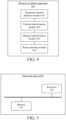
- FIG. 4 is a schematic structural diagram of an obstacle avoidance apparatus according to an embodiment of this application.
- the obstacle avoidance apparatus 400 in this embodiment includes: a suspected obstacle detection module 401, a position determination module 402, an obstacle determination module 403, and a route planning module 404.
- the suspected obstacle detection module 401 is configured to detect whether a suspected obstacle exists in a traveling direction, where the suspected obstacle protrudes beyond an edge of a rack.
- the position determination module 402 is configured to determine a relative position relationship between the suspected obstacle and a target position that the robot is required to reach along a current traveling direction when the suspected obstacle exists in the traveling direction.
- the obstacle determination module 403 is configured to determine that the suspected obstacle is an obstacle when the suspected obstacle is located between a current position of the robot and the target position.
- the route planning module 404 is configured to replan a traveling route to avoid the obstacle.
- the route planning module 404 is specifically configured to: replan a traveling route from the current position to the target position by adjusting the traveling direction of the robot.
- the route planning module 404 is specifically configured to: replan a traveling route from the current position to the target position by adjusting a traveling speed of the robot.
- the route planning module 404 is specifically configured to:
- the route planning module 404 is specifically configured to:
- the route planning module 404 is specifically configured to:
- the rack area includes a plurality of storage locations, and each of the storage locations is configured for a fixed container to be stored; and if a current task of the robot is to reach the target position to retrieve goods, when determining the new target position, the route planning module 404 is specifically configured to:
- the suspected obstacle detection module 401 is specifically configured to:
- the suspected obstacle detection module 401 is specifically configured to:
- the obstacle determination module 403 is specifically configured to:
- the obstacle determination module 403 is specifically configured to:
- the obstacle determination module 403 is specifically configured to: reduce the traveling speed of the robot.
- the robot is configured to move along a track in a rack, and the track on the rack includes a vertical track and/or a horizontal track; and if the current position of the robot is located on the vertical track, the current traveling direction is upward along the vertical track, and a task of the robot is to perform an operation of retrieving goods, after the determining that the container is an obstacle, the obstacle determination module 403 is further configured to:
- the obstacle determination module 403 is further configured to:
- the obstacle determination module 403 is specifically configured to:
- the obstacle determination module 403 is specifically configured to:
- the apparatus provided in this embodiment may be configured to perform the methods of any of the above embodiments. Their implementation principles and technical effects are similar. Details are not described herein again.
- FIG. 5 is a schematic structural diagram of an electronic device according to an embodiment of this application.
- the electronic device 500 of this embodiment may include a memory 501 and a processor 502.
- the memory 501 is configured to store program instructions.
- the processor 502 is configured to invoke and execute the program instructions in the memory 501, and perform the method according to the above embodiments.
- the electronic device of this embodiment may be provided as a robot.
- This application further provides a computer-readable storage medium.
- the computer-readable storage medium has a computer program stored thereon. When the computer program is executed by the processor, the method in the above embodiment is implemented.
- the computer program product includes a computer program.
- the computer program is executed by the processor, the method in the above embodiment is implemented.
- the program may be stored in a computer-readable storage medium.
- the foregoing storage medium includes a medium such as a ROM, a RAM, a magnetic disk, or an optical disc that can store program code.
Landscapes
- Engineering & Computer Science (AREA)
- Physics & Mathematics (AREA)
- Automation & Control Theory (AREA)
- Remote Sensing (AREA)
- Radar, Positioning & Navigation (AREA)
- General Physics & Mathematics (AREA)
- Aviation & Aerospace Engineering (AREA)
- Electromagnetism (AREA)
- Computer Vision & Pattern Recognition (AREA)
- Optics & Photonics (AREA)
- Multimedia (AREA)
- Control Of Position, Course, Altitude, Or Attitude Of Moving Bodies (AREA)
- Warehouses Or Storage Devices (AREA)
- Manipulator (AREA)
Applications Claiming Priority (2)
| Application Number | Priority Date | Filing Date | Title |
|---|---|---|---|
| CN202110713731.0A CN113359754B (zh) | 2021-06-25 | 2021-06-25 | 障碍物躲避方法、装置、电子设备和存储介质 |
| PCT/CN2022/100404 WO2022268113A1 (fr) | 2021-06-25 | 2022-06-22 | Procédé et appareil d'évitement d'obstacle, dispositif électronique et support de stockage |
Publications (3)
| Publication Number | Publication Date |
|---|---|
| EP4345567A1 true EP4345567A1 (fr) | 2024-04-03 |
| EP4345567A4 EP4345567A4 (fr) | 2024-10-23 |
| EP4345567B1 EP4345567B1 (fr) | 2025-06-25 |
Family
ID=77536527
Family Applications (1)
| Application Number | Title | Priority Date | Filing Date |
|---|---|---|---|
| EP22827605.1A Active EP4345567B1 (fr) | 2021-06-25 | 2022-06-22 | Procédé et appareil d'évitement d'obstacle, dispositif électronique et support de stockage |
Country Status (5)
| Country | Link |
|---|---|
| US (1) | US20240118711A1 (fr) |
| EP (1) | EP4345567B1 (fr) |
| JP (1) | JP7678159B2 (fr) |
| CN (1) | CN113359754B (fr) |
| WO (1) | WO2022268113A1 (fr) |
Families Citing this family (4)
| Publication number | Priority date | Publication date | Assignee | Title |
|---|---|---|---|---|
| CN113359754B (zh) * | 2021-06-25 | 2024-07-26 | 深圳市海柔创新科技有限公司 | 障碍物躲避方法、装置、电子设备和存储介质 |
| CN114493413A (zh) * | 2021-11-28 | 2022-05-13 | 杭州拼便宜网络科技有限公司 | 智能仓储分发方法、装置、电子设备及存储介质 |
| CN114326712B (zh) * | 2021-12-06 | 2024-12-10 | 云鲸智能科技(东莞)有限公司 | 机器人的导航路径生成方法、机器人、装置以及存储介质 |
| CN118226871B (zh) * | 2024-05-23 | 2024-08-16 | 北京数易科技有限公司 | 基于深度强化学习的无人机避障方法、系统及介质 |
Family Cites Families (26)
| Publication number | Priority date | Publication date | Assignee | Title |
|---|---|---|---|---|
| JP3198076B2 (ja) * | 1997-05-28 | 2001-08-13 | 新菱冷熱工業株式会社 | 移動ロボットの経路作成方法 |
| JP2006259877A (ja) * | 2005-03-15 | 2006-09-28 | Daifuku Co Ltd | 物品搬送設備 |
| DE102006040197A1 (de) * | 2006-08-28 | 2008-03-06 | Jungheinrich Aktiengesellschaft | Steuersystem für Flurförderzeuge |
| CN101435879B (zh) * | 2007-11-12 | 2011-04-13 | 中国国际海运集装箱(集团)股份有限公司 | 一种障碍物检测装置及具有该装置的堆垛机 |
| US8740538B2 (en) * | 2009-04-10 | 2014-06-03 | Symbotic, LLC | Storage and retrieval system |
| EP3000772B1 (fr) * | 2014-09-25 | 2017-04-12 | Toyota Material Handling Manufacturing Sweden AB | Chariot élévateur à fourche et procédé de fonctionnement d'un tel chariot |
| FR3042182B1 (fr) * | 2015-10-13 | 2020-09-18 | Exotec Solutions | Systeme de preparation de commandes |
| MX372796B (es) * | 2016-08-04 | 2020-07-03 | Opex Corp | Sistema de almacenamiento y recuperación automatizado con detector para detectar productos que se extienden más alla del umbral dimensional. |
| CN114756031B (zh) * | 2016-08-26 | 2025-05-27 | 克朗设备公司 | 物料搬运车辆和关于物料搬运车辆执行路径确认逻辑的方法 |
| CN107544514B (zh) * | 2017-09-29 | 2022-01-07 | 广州唯品会研究院有限公司 | 机器人障碍物避让方法、装置、存储介质及机器人 |
| CN108733065B (zh) * | 2017-09-29 | 2021-06-04 | 北京猎户星空科技有限公司 | 一种机器人的避障方法、装置及机器人 |
| US10394234B2 (en) * | 2017-12-18 | 2019-08-27 | The Boeing Company | Multi-sensor safe path system for autonomous vehicles |
| JP2019218195A (ja) * | 2018-06-21 | 2019-12-26 | 住友重機械搬送システム株式会社 | 自動倉庫システム |
| WO2020037610A1 (fr) * | 2018-08-23 | 2020-02-27 | 深圳市大疆创新科技有限公司 | Procédé de prédiction de trajectoire de mouvement pour objet cible, et plate-forme de surveillance |
| CN109753070A (zh) * | 2019-01-16 | 2019-05-14 | 深圳市海柔创新科技有限公司 | 一种避障方法、装置及仓储机器人 |
| CN109991988A (zh) * | 2019-05-06 | 2019-07-09 | 北京云迹科技有限公司 | 一种机器人调度方法、机器人及存储介质 |
| CN110609546B (zh) * | 2019-08-15 | 2023-06-30 | 浙江国自机器人技术股份有限公司 | 拣货装置的防护方法、系统、计算机设备和可读存储介质 |
| US11164226B2 (en) * | 2019-11-01 | 2021-11-02 | AiFi Inc. | Method and system for managing product items in a store |
| CN110980081B (zh) * | 2019-12-10 | 2021-05-28 | 上海道简机电科技有限公司 | 一种仓储物流智能搬运机器人及搬运方法和中转系统 |
| CN111191931A (zh) * | 2019-12-30 | 2020-05-22 | 深圳优地科技有限公司 | 一种多机器人任务分配的方法、装置及终端设备 |
| CN112650235A (zh) * | 2020-03-11 | 2021-04-13 | 南京奥拓电子科技有限公司 | 一种机器人避障控制方法、系统及机器人 |
| CN111694333A (zh) * | 2020-06-10 | 2020-09-22 | 中国联合网络通信集团有限公司 | 一种agv协同管理方法及装置 |
| CN111813124B (zh) * | 2020-07-22 | 2022-08-19 | 浙江迈睿机器人有限公司 | 一种基于拓扑地图的移动机器人混合调度方法 |
| CN112731920B (zh) * | 2020-12-04 | 2024-08-02 | 北京旷视机器人技术有限公司 | 搬运设备的控制方法、装置、搬运设备及存储介质 |
| CN112665592B (zh) * | 2020-12-16 | 2023-10-20 | 郑州大学 | 一种基于多智能体的时空路径规划方法 |
| CN113359754B (zh) * | 2021-06-25 | 2024-07-26 | 深圳市海柔创新科技有限公司 | 障碍物躲避方法、装置、电子设备和存储介质 |
-
2021
- 2021-06-25 CN CN202110713731.0A patent/CN113359754B/zh active Active
-
2022
- 2022-06-22 JP JP2023579223A patent/JP7678159B2/ja active Active
- 2022-06-22 WO PCT/CN2022/100404 patent/WO2022268113A1/fr not_active Ceased
- 2022-06-22 EP EP22827605.1A patent/EP4345567B1/fr active Active
-
2023
- 2023-12-21 US US18/392,202 patent/US20240118711A1/en active Pending
Also Published As
| Publication number | Publication date |
|---|---|
| CN113359754A (zh) | 2021-09-07 |
| WO2022268113A1 (fr) | 2022-12-29 |
| CN113359754B (zh) | 2024-07-26 |
| KR20240024115A (ko) | 2024-02-23 |
| EP4345567B1 (fr) | 2025-06-25 |
| JP7678159B2 (ja) | 2025-05-15 |
| JP2024526186A (ja) | 2024-07-17 |
| US20240118711A1 (en) | 2024-04-11 |
| EP4345567A4 (fr) | 2024-10-23 |
Similar Documents
| Publication | Publication Date | Title |
|---|---|---|
| EP4345567A1 (fr) | Procédé et appareil d'évitement d'obstacle, dispositif électronique et support de stockage | |
| KR102813120B1 (ko) | 창고 로봇 네비게이션 경로 예약 | |
| US20260070736A1 (en) | Autonomous transport vehicle with vision system | |
| EP4365109A1 (fr) | Procédé et appareil de commande de flotte, dispositif électronique et support de stockage | |
| CN109969989B (zh) | 行驶策略确定方法、智能叉车及存储介质 | |
| CN118753699B (zh) | 基于云边协同的智能仓储多层机器人系统 | |
| US11163315B2 (en) | Method and system for synchronizing movement of transport vehicles in a storage facility | |
| US20220355474A1 (en) | Method and computing system for performing robot motion planning and repository detection | |
| GB2598202A (en) | A controller and method for transporting devices | |
| US11174104B2 (en) | Method and system for transporting payloads in storage facilities | |
| US20230348248A1 (en) | Transfer system, control device, mobile body, method for controlling mobile body, and storage medium | |
| CN120191875B (zh) | 一种托盘叉取方法、系统、存储介质及程序产品 | |
| CN109571408B (zh) | 一种机器人、库存容器的角度校准方法及存储介质 | |
| KR20230109714A (ko) | 로봇 및 위치 결정 방법 | |
| CN119803475B (zh) | 一种无人叉车室内导航系统及导航方法 | |
| KR102956993B1 (ko) | 장애물 회피 방법, 장치, 전자 기기 및 저장 매체 | |
| CN114384865A (zh) | 业务移交系统及方法 | |
| US20240417168A1 (en) | System and method for using a camera to detect robot position on grid | |
| US12619240B1 (en) | Reality capture robot for generating a map of an environment | |
| US12545515B1 (en) | Stereo structured light machine vision system for guidance of automated tote exchange equipment | |
| CN112764045A (zh) | 一种基于激光雷达的无人驾驶集卡装箱的精确对位方法 | |
| KR102901809B1 (ko) | 체결 대상 인지 가능한 무인운송기기 | |
| CN121005193A (zh) | 立体仓储机器人取放货检测方法及系统 | |
| KR20260003132A (ko) | 차량 제어 | |
| CN120539738A (zh) | 一种基于鹰眼系统的装卸货定位方法、装置、设备及介质 |
Legal Events
| Date | Code | Title | Description |
|---|---|---|---|
| STAA | Information on the status of an ep patent application or granted ep patent |
Free format text: STATUS: THE INTERNATIONAL PUBLICATION HAS BEEN MADE |
|
| PUAI | Public reference made under article 153(3) epc to a published international application that has entered the european phase |
Free format text: ORIGINAL CODE: 0009012 |
|
| STAA | Information on the status of an ep patent application or granted ep patent |
Free format text: STATUS: REQUEST FOR EXAMINATION WAS MADE |
|
| 17P | Request for examination filed |
Effective date: 20231228 |
|
| AK | Designated contracting states |
Kind code of ref document: A1 Designated state(s): AL AT BE BG CH CY CZ DE DK EE ES FI FR GB GR HR HU IE IS IT LI LT LU LV MC MK MT NL NO PL PT RO RS SE SI SK SM TR |
|
| REG | Reference to a national code |
Ref country code: DE Ref legal event code: R079 Ref document number: 602022016606 Country of ref document: DE Free format text: PREVIOUS MAIN CLASS: G05D0001020000 Ipc: G05D0001242000 |
|
| RIC1 | Information provided on ipc code assigned before grant |
Ipc: G05D 109/10 20240101ALI20240701BHEP Ipc: G05D 107/70 20240101ALI20240701BHEP Ipc: G05D 105/28 20240101ALI20240701BHEP Ipc: B65G 1/06 20060101ALI20240701BHEP Ipc: B65G 1/04 20060101ALI20240701BHEP Ipc: G05D 1/622 20240101ALI20240701BHEP Ipc: G05D 1/46 20240101ALI20240701BHEP Ipc: G05D 1/242 20240101AFI20240701BHEP |
|
| DAV | Request for validation of the european patent (deleted) | ||
| DAX | Request for extension of the european patent (deleted) | ||
| A4 | Supplementary search report drawn up and despatched |
Effective date: 20240924 |
|
| RIC1 | Information provided on ipc code assigned before grant |
Ipc: G05D 109/10 20240101ALI20240918BHEP Ipc: G05D 107/70 20240101ALI20240918BHEP Ipc: G05D 105/28 20240101ALI20240918BHEP Ipc: B65G 1/06 20060101ALI20240918BHEP Ipc: B65G 1/04 20060101ALI20240918BHEP Ipc: G05D 1/622 20240101ALI20240918BHEP Ipc: G05D 1/46 20240101ALI20240918BHEP Ipc: G05D 1/242 20240101AFI20240918BHEP |
|
| GRAP | Despatch of communication of intention to grant a patent |
Free format text: ORIGINAL CODE: EPIDOSNIGR1 |
|
| STAA | Information on the status of an ep patent application or granted ep patent |
Free format text: STATUS: GRANT OF PATENT IS INTENDED |
|
| INTG | Intention to grant announced |
Effective date: 20250307 |
|
| GRAS | Grant fee paid |
Free format text: ORIGINAL CODE: EPIDOSNIGR3 |
|
| GRAA | (expected) grant |
Free format text: ORIGINAL CODE: 0009210 |
|
| STAA | Information on the status of an ep patent application or granted ep patent |
Free format text: STATUS: THE PATENT HAS BEEN GRANTED |
|
| AK | Designated contracting states |
Kind code of ref document: B1 Designated state(s): AL AT BE BG CH CY CZ DE DK EE ES FI FR GB GR HR HU IE IS IT LI LT LU LV MC MK MT NL NO PL PT RO RS SE SI SK SM TR |
|
| REG | Reference to a national code |
Ref country code: GB Ref legal event code: FG4D |
|
| REG | Reference to a national code |
Ref country code: CH Ref legal event code: EP |
|
| REG | Reference to a national code |
Ref country code: CH Ref legal event code: EP |
|
| REG | Reference to a national code |
Ref country code: IE Ref legal event code: FG4D |
|
| REG | Reference to a national code |
Ref country code: DE Ref legal event code: R096 Ref document number: 602022016606 Country of ref document: DE |
|
| PG25 | Lapsed in a contracting state [announced via postgrant information from national office to epo] |
Ref country code: FI Free format text: LAPSE BECAUSE OF FAILURE TO SUBMIT A TRANSLATION OF THE DESCRIPTION OR TO PAY THE FEE WITHIN THE PRESCRIBED TIME-LIMIT Effective date: 20250625 |
|
| REG | Reference to a national code |
Ref country code: LT Ref legal event code: MG9D |
|
| PG25 | Lapsed in a contracting state [announced via postgrant information from national office to epo] |
Ref country code: NO Free format text: LAPSE BECAUSE OF FAILURE TO SUBMIT A TRANSLATION OF THE DESCRIPTION OR TO PAY THE FEE WITHIN THE PRESCRIBED TIME-LIMIT Effective date: 20250925 Ref country code: GR Free format text: LAPSE BECAUSE OF FAILURE TO SUBMIT A TRANSLATION OF THE DESCRIPTION OR TO PAY THE FEE WITHIN THE PRESCRIBED TIME-LIMIT Effective date: 20250926 |
|
| PG25 | Lapsed in a contracting state [announced via postgrant information from national office to epo] |
Ref country code: BG Free format text: LAPSE BECAUSE OF FAILURE TO SUBMIT A TRANSLATION OF THE DESCRIPTION OR TO PAY THE FEE WITHIN THE PRESCRIBED TIME-LIMIT Effective date: 20250625 |
|
| PG25 | Lapsed in a contracting state [announced via postgrant information from national office to epo] |
Ref country code: HR Free format text: LAPSE BECAUSE OF FAILURE TO SUBMIT A TRANSLATION OF THE DESCRIPTION OR TO PAY THE FEE WITHIN THE PRESCRIBED TIME-LIMIT Effective date: 20250625 |
|
| PG25 | Lapsed in a contracting state [announced via postgrant information from national office to epo] |
Ref country code: RS Free format text: LAPSE BECAUSE OF FAILURE TO SUBMIT A TRANSLATION OF THE DESCRIPTION OR TO PAY THE FEE WITHIN THE PRESCRIBED TIME-LIMIT Effective date: 20250925 |
|
| PG25 | Lapsed in a contracting state [announced via postgrant information from national office to epo] |
Ref country code: LV Free format text: LAPSE BECAUSE OF FAILURE TO SUBMIT A TRANSLATION OF THE DESCRIPTION OR TO PAY THE FEE WITHIN THE PRESCRIBED TIME-LIMIT Effective date: 20250625 |
|
| REG | Reference to a national code |
Ref country code: NL Ref legal event code: MP Effective date: 20250625 |
|
| PG25 | Lapsed in a contracting state [announced via postgrant information from national office to epo] |
Ref country code: NL Free format text: LAPSE BECAUSE OF FAILURE TO SUBMIT A TRANSLATION OF THE DESCRIPTION OR TO PAY THE FEE WITHIN THE PRESCRIBED TIME-LIMIT Effective date: 20250625 |
|
| PG25 | Lapsed in a contracting state [announced via postgrant information from national office to epo] |
Ref country code: PT Free format text: LAPSE BECAUSE OF FAILURE TO SUBMIT A TRANSLATION OF THE DESCRIPTION OR TO PAY THE FEE WITHIN THE PRESCRIBED TIME-LIMIT Effective date: 20251027 |
|
| REG | Reference to a national code |
Ref country code: AT Ref legal event code: MK05 Ref document number: 1807111 Country of ref document: AT Kind code of ref document: T Effective date: 20250625 |
|
| PG25 | Lapsed in a contracting state [announced via postgrant information from national office to epo] |
Ref country code: IS Free format text: LAPSE BECAUSE OF FAILURE TO SUBMIT A TRANSLATION OF THE DESCRIPTION OR TO PAY THE FEE WITHIN THE PRESCRIBED TIME-LIMIT Effective date: 20251025 |
|
| PG25 | Lapsed in a contracting state [announced via postgrant information from national office to epo] |
Ref country code: AT Free format text: LAPSE BECAUSE OF FAILURE TO SUBMIT A TRANSLATION OF THE DESCRIPTION OR TO PAY THE FEE WITHIN THE PRESCRIBED TIME-LIMIT Effective date: 20250625 Ref country code: SM Free format text: LAPSE BECAUSE OF FAILURE TO SUBMIT A TRANSLATION OF THE DESCRIPTION OR TO PAY THE FEE WITHIN THE PRESCRIBED TIME-LIMIT Effective date: 20250625 |
|
| PG25 | Lapsed in a contracting state [announced via postgrant information from national office to epo] |
Ref country code: CZ Free format text: LAPSE BECAUSE OF FAILURE TO SUBMIT A TRANSLATION OF THE DESCRIPTION OR TO PAY THE FEE WITHIN THE PRESCRIBED TIME-LIMIT Effective date: 20250625 |
|
| PG25 | Lapsed in a contracting state [announced via postgrant information from national office to epo] |
Ref country code: PL Free format text: LAPSE BECAUSE OF FAILURE TO SUBMIT A TRANSLATION OF THE DESCRIPTION OR TO PAY THE FEE WITHIN THE PRESCRIBED TIME-LIMIT Effective date: 20250625 |
|
| PG25 | Lapsed in a contracting state [announced via postgrant information from national office to epo] |
Ref country code: EE Free format text: LAPSE BECAUSE OF FAILURE TO SUBMIT A TRANSLATION OF THE DESCRIPTION OR TO PAY THE FEE WITHIN THE PRESCRIBED TIME-LIMIT Effective date: 20250625 |
|
| PG25 | Lapsed in a contracting state [announced via postgrant information from national office to epo] |
Ref country code: SK Free format text: LAPSE BECAUSE OF FAILURE TO SUBMIT A TRANSLATION OF THE DESCRIPTION OR TO PAY THE FEE WITHIN THE PRESCRIBED TIME-LIMIT Effective date: 20250625 |
|
| PG25 | Lapsed in a contracting state [announced via postgrant information from national office to epo] |
Ref country code: ES Free format text: LAPSE BECAUSE OF FAILURE TO SUBMIT A TRANSLATION OF THE DESCRIPTION OR TO PAY THE FEE WITHIN THE PRESCRIBED TIME-LIMIT Effective date: 20250625 |
|
| PG25 | Lapsed in a contracting state [announced via postgrant information from national office to epo] |
Ref country code: DK Free format text: LAPSE BECAUSE OF FAILURE TO SUBMIT A TRANSLATION OF THE DESCRIPTION OR TO PAY THE FEE WITHIN THE PRESCRIBED TIME-LIMIT Effective date: 20250625 |
|
| PG25 | Lapsed in a contracting state [announced via postgrant information from national office to epo] |
Ref country code: IT Free format text: LAPSE BECAUSE OF FAILURE TO SUBMIT A TRANSLATION OF THE DESCRIPTION OR TO PAY THE FEE WITHIN THE PRESCRIBED TIME-LIMIT Effective date: 20250625 |
|
| PLBE | No opposition filed within time limit |
Free format text: ORIGINAL CODE: 0009261 |
|
| STAA | Information on the status of an ep patent application or granted ep patent |
Free format text: STATUS: NO OPPOSITION FILED WITHIN TIME LIMIT |