EP4345745A2 - Verfahren und system zur bestimmung einer eigenschaft einer keratinischen oberfläche sowie verfahren und system zur behandlung der keratinischen oberfläche - Google Patents
Verfahren und system zur bestimmung einer eigenschaft einer keratinischen oberfläche sowie verfahren und system zur behandlung der keratinischen oberfläche Download PDFInfo
- Publication number
- EP4345745A2 EP4345745A2 EP24151919.8A EP24151919A EP4345745A2 EP 4345745 A2 EP4345745 A2 EP 4345745A2 EP 24151919 A EP24151919 A EP 24151919A EP 4345745 A2 EP4345745 A2 EP 4345745A2
- Authority
- EP
- European Patent Office
- Prior art keywords
- image
- hair
- user
- characteristic
- keratinous surface
- Prior art date
- Legal status (The legal status is an assumption and is not a legal conclusion. Google has not performed a legal analysis and makes no representation as to the accuracy of the status listed.)
- Withdrawn
Links
Images


Classifications
-
- G—PHYSICS
- G06—COMPUTING OR CALCULATING; COUNTING
- G06T—IMAGE DATA PROCESSING OR GENERATION, IN GENERAL
- G06T7/00—Image analysis
- G06T7/0002—Inspection of images, e.g. flaw detection
- G06T7/0012—Biomedical image inspection
-
- A—HUMAN NECESSITIES
- A61—MEDICAL OR VETERINARY SCIENCE; HYGIENE
- A61B—DIAGNOSIS; SURGERY; IDENTIFICATION
- A61B5/00—Measuring for diagnostic purposes; Identification of persons
- A61B5/0059—Measuring for diagnostic purposes; Identification of persons using light, e.g. diagnosis by transillumination, diascopy, fluorescence
- A61B5/0075—Measuring for diagnostic purposes; Identification of persons using light, e.g. diagnosis by transillumination, diascopy, fluorescence by spectroscopy, i.e. measuring spectra, e.g. Raman spectroscopy, infrared absorption spectroscopy
-
- A—HUMAN NECESSITIES
- A61—MEDICAL OR VETERINARY SCIENCE; HYGIENE
- A61B—DIAGNOSIS; SURGERY; IDENTIFICATION
- A61B5/00—Measuring for diagnostic purposes; Identification of persons
- A61B5/44—Detecting, measuring or recording for evaluating the integumentary system, e.g. skin, hair or nails
- A61B5/448—Hair evaluation, e.g. for hair disorder diagnosis
-
- G—PHYSICS
- G06—COMPUTING OR CALCULATING; COUNTING
- G06N—COMPUTING ARRANGEMENTS BASED ON SPECIFIC COMPUTATIONAL MODELS
- G06N20/00—Machine learning
-
- G—PHYSICS
- G06—COMPUTING OR CALCULATING; COUNTING
- G06T—IMAGE DATA PROCESSING OR GENERATION, IN GENERAL
- G06T7/00—Image analysis
- G06T7/10—Segmentation; Edge detection
-
- G—PHYSICS
- G06—COMPUTING OR CALCULATING; COUNTING
- G06T—IMAGE DATA PROCESSING OR GENERATION, IN GENERAL
- G06T7/00—Image analysis
- G06T7/90—Determination of colour characteristics
-
- G—PHYSICS
- G06—COMPUTING OR CALCULATING; COUNTING
- G06T—IMAGE DATA PROCESSING OR GENERATION, IN GENERAL
- G06T2207/00—Indexing scheme for image analysis or image enhancement
- G06T2207/10—Image acquisition modality
- G06T2207/10048—Infrared image
-
- G—PHYSICS
- G06—COMPUTING OR CALCULATING; COUNTING
- G06T—IMAGE DATA PROCESSING OR GENERATION, IN GENERAL
- G06T2207/00—Indexing scheme for image analysis or image enhancement
- G06T2207/20—Special algorithmic details
- G06T2207/20081—Training; Learning
-
- G—PHYSICS
- G06—COMPUTING OR CALCULATING; COUNTING
- G06T—IMAGE DATA PROCESSING OR GENERATION, IN GENERAL
- G06T2207/00—Indexing scheme for image analysis or image enhancement
- G06T2207/20—Special algorithmic details
- G06T2207/20084—Artificial neural networks [ANN]
-
- G—PHYSICS
- G06—COMPUTING OR CALCULATING; COUNTING
- G06T—IMAGE DATA PROCESSING OR GENERATION, IN GENERAL
- G06T2207/00—Indexing scheme for image analysis or image enhancement
- G06T2207/30—Subject of image; Context of image processing
- G06T2207/30004—Biomedical image processing
- G06T2207/30088—Skin; Dermal
-
- G—PHYSICS
- G06—COMPUTING OR CALCULATING; COUNTING
- G06T—IMAGE DATA PROCESSING OR GENERATION, IN GENERAL
- G06T2207/00—Indexing scheme for image analysis or image enhancement
- G06T2207/30—Subject of image; Context of image processing
- G06T2207/30196—Human being; Person
- G06T2207/30201—Face
Definitions
- the present invention relates to a method and system for determining at least one characteristic of a keratinous surface and to a method and system for treating said keratinous surface.
- the method is particularly directed to the evaluation and treatment of human hairs, and more particularly, to a method and system for bleaching or dyeing hairs such as disclosed in document WO2004002300A2 and US9316580B2 for example.
- Personalization can pertain to any body part but is of particular interest for exposed body parts such as the face (makeup or care products, in particular foundation) and scalp / hairs (care or dyeing products for example).
- personalization comprises a first diagnostic step aiming at obtaining data that are specific to said user, the data being then used to determine an appropriate subsequent treatment and/or product(s) to be applied to the user concerned body part.
- obtaining data from the user's concerned body part can be done through measurement using an appropriate measurement device (called a "reader") for obtaining one or more specific features that are looked after for determining the appropriate treatment or product.
- a reader an appropriate measurement device
- An example of such a device is the CAPSURE reader marketed by X-RITE and able to return a color data code of the skin of a user.
- the collected data may then be fed (possibly with other additional data) to a computing unit that will help determining the most suitable product according to various set of rules.
- the subsequent treatment or product determined according to the collected data may be a ready-made product chosen from a catalogue or in a database (such as in documents US5478238 or US9519927 disclosing methods for finding a matching foundation products) or a personalized product, the composition of which has been determined based on the previously obtained data.
- the recommended product may then be bought or ordered by the user.
- said personalized product may be then manufactured on site, directly in the shop or in the beauty / hair salon by a device able to mix components according to the personalized composition and dispense said composition.
- the personalized product may also be ordered by the user for a later delivery.
- obtaining reliable, objective and relevant data from the user may be particularly challenging. This is especially the case for hairs or scalp due to their specific texture and environment.
- Document KR-A1-101456942 discloses a hair and scalp condition diagnostic device comprising a sensor unit to diagnose a user's hair or scalp condition objectively by comparing previously stored hair or scalp samples based on diagnosis signals diagnosed by a hair or scalp condition.
- the device may comprise an image sensor for acquiring images of an area of the scalp.
- the acquired images may be then processed through an image analysis module using for example light intensity recognition, color recognition or contrast analysis in order to determine some properties of the hairs such as number of hairs, diameter, etc.
- this document states that the hair and the scalp are strong in contrast and can thus be clearly distinguished from each other in the image, this is actually often not the case since hairs are at least partially translucent depending on the level of melanin they contain. This is particularly true for thin hairs, white and blond hairs, which are the most difficult to identify and count.
- Document WO2017207455 filed in the name of the present applicant also proposes a method for analyzing a condition of the scalp and / or hairs comprising the step of taking pictures under different lighting conditions (white light and UV-Blue light), in order to improve detection of the hairs and better reveal light and white hairs.
- the images are then processed namely through contrast analysis in a complementary way.
- Document US2012253203 discloses a method for imaging a skin surface presenting hairs, such as an area of the scalp in order to determine a skin and hair growth condition.
- the method comprising taking pictures of the concerned surface under different viewing angles, said pictures being then potentially processed by computer analysis in order to determine properties such as number of hairs protruding from the skin surface, thickness of hairs, diameter or cross sectional shape of hairs, length of hairs protruding from the surface.
- Document US2009036800 pertains to a hair densitometer.
- the densitometer works by taking magnified pictures of an area of the scalp. Hairs visible in the image may be counted and measured by a technician or by any suitable automated system.
- the method further uses the Hunter L, a, b values of hair and use these to propose an appropriate coloring agent that can achieve the desired hair tone from a predefined database.
- Spectrophotometers are capable of measuring an object color with high accuracy but they are averaging its value over the whole measurement area, usually on the order of 1 cm 2 . Thus, the color actually obtained from the spectrum does not exactly correspond to the true color of the user's hairs and may require correction.
- spectrophotometer In the specific context of hair color measurement, spectrophotometer cannot be used near the scalp for root measurements, as they would average the whole area, mixing hair and scalp values and being highly dependent on the exact area being measured.
- a spectrophotometer or colorimeter is dedicated to color measurement and obtaining additional relevant data such as the density of hairs, etc, is not possible or requires additional sensors or additional dedicated device.
- document US7508508 discloses the combined use of a spectral analysis unit and an image unit, said image unit being used to display the image of the measured area thus allowing the operator to precisely control the measured area and perform a complementary visual assessment.
- a spectral analysis unit and an image unit, said image unit being used to display the image of the measured area thus allowing the operator to precisely control the measured area and perform a complementary visual assessment.
- a cosmetic color analysis system that analyzes the color of a three dimensional object, such as hair, through acquisition by a camera sensor and produces a cosmetic color determination by relative weighing of multiple cosmetic colors.
- the system does not take the scalp and hair environment into account.
- document US8428382 proposes a method and an apparatus for displaying images of hair regions in order to evaluate the hair styling using image processing.
- the present application proposes a solution to at least part of the above mentioned limitations and pertains to a method for determining at least one physical and/or chemical characteristic of a keratinous surface of a user, the method comprising the steps of :
- the proposed method allows for a quantitative determination of the desired characteristics.
- the quantitative value may then be used as an input data in further calculations and transformations. This goes beyond mere classification where a class or category is returned even if the label of the category may use numbers.
- the returned numerical value is a continuous output variable which is a real-value such as an integer or floating-point value. These are often quantities such as amounts and sizes.
- the machine learning model is a regression model.
- the machine learning model is a classification model where the labels have an ordered relationship (discretization model), said labels being ordered to a continuous range corresponding to the physical / chemical characteristic to estimate.
- a classification model may predict a continuous value, said value is in the form of a probability for a class label.
- a regression model may predict a discrete value, but said discrete value is in the form of an integer quantity.
- the image is a high resolution image.
- the image is a macro image of the keratinous surface.
- a macro image is an image shot at a magnification ratio of 1:1 or higher.
- each pixel has a maximum size of 10 ⁇ m so as to have several pixels along a diameter of a hair strand.
- the image data can be obtained through a known image sensor such as a CMOS or CCD image sensor.
- the image is advantageously parallax-free.
- the method comprises a pre-processing image segmentation step, the machine learning model being applied to at least one identified segment.
- Image segmentation aims at extracting significant objects associated with the characteristic to determine.
- Image segmentation is the process of partitioning the digital image into multiple segments or sets of pixels in order to simplify and/or change the representation of an image into something that is more meaningful and easier to analyze.
- Image segmentation is typically used to locate objects and boundaries (lines, curves, etc.) in images.
- Such a pre-processing step will enhance the prediction made by the machine learning model by highlighting specific objects in the image data. For example, an image of the scalp can be segmented in order to identify pixels that are highly likely to be hairs. The machine learning model can then be applied to those specific segments for better prediction.
- the segmentation step is performed by contrast analysis.
- the segmentation step is performed by applying a machine learning model to the image, namely a classification model.
- pre-processing steps may be performed on the image data such as color calibration and correction.
- the image is an RGB image.
- the image may be a CMYK image or encoded in another color space.
- the image is a multispectral image comprising at least one spectral band chosen among the visible spectral band 380nm to 700nm, the UV band 300 to 380 (or even 200 to 380 nm for Near UV band) nm and the IR band 700 to 1500 nm.
- the image may also be an infrared image.
- the method is repeated in order to determine a second characteristic of the keratinous surface, the method being preferably repeated using the same image data.
- the method uses data of a single image, even when different machine learning models are applied, the models being applied to the same single image.
- the method comprises a subsequent step of recommending a cosmetic product based on at least some of the real-valued characteristic(s).
- the product may be selected in a database depending on its listed properties.
- a « cosmetic product » or a « cosmetic composition » is understood to mean a product as defined in European Council and Parliament Regulation 1223/2009 of November 30, 2009, pertaining to cosmetic products.
- the method comprises a subsequent step of determining a recommended cosmetic product composition based on at least some of the real-valued characteristic(s).
- the method comprises the subsequent step of making and dispensing a cosmetic product according to the recommended composition.
- the method comprises the step of mixing at least some of the components in a mixing unit.
- the method comprises the step of dispensing at least one hair dye coloring agent (preferably in a solid form as a bead or tablet) into a hair dye oxidation base agent (preferably in the form of a liquid or cream).
- the keratinous surface pictured in the image is an area of the skin of a user.
- the area of the skin pictured in the image is an area of the face of the user, preferably an area of a cheek and/or forehead of the user.
- the area of the skin pictured in the image is an area of the scalp of the user.
- the area of the skin pictured in the image comprises hairs.
- the area pictured in the image is a hair-root region of the user.
- the roots of hair i.e. the first centimeter away from the scalp
- the characteristic to be determined is chosen among hair tone, hair diameter, hair density, percentage of white hair, length color, root color, hair shine, scalp dryness, dandruff degree, hair colorimetry, hair spectrum, Eulamin level, Pheomelanin level, level of artificial dyes, moisture, level of cysteic acid, damage level, lift level, the machine learning model having been trained accordingly to evaluate said characteristics.
- the machine learning model is a pre-trained Convolutional Neural Network.
- the method is directed to the determination of natural hair tone of a user, the method comprising the step of :
- the method is directed to the determination of natural hair tone of a user, the method comprising the step of :
- the present application also pertains to one or more non-transitory computer storage media storing computer-useable instructions that, when used by a computing device, cause the computing device to perform a method according to the invention.
- the present application is also directed to a system for implementing the method according to the invention and more precisely to a system for determining at least one physical and/or chemical characteristic of a keratinous surface of a user, said system comprising an image sensor configured for acquiring an image of the keratinous surface and to transmit the image data to a processor, said processor being configured to process the image data according to a method of the invention.
- the image sensor may be a sensor known in the art such as a CCD sensor or a CMOS sensor.
- the sensor may also be a multispectral sensor and / or use filters such as an infrared filter in order to obtain an infrared image.
- the system is at least partially integrated into a portable camera device.
- the system comprises a camera device including the image sensor, said camera device being configured to transmit the image data wirelessly to a distant processing device.
- the camera device may also include the processing unit and directly output the returned property value. This way the camera device forms an autonomous diagnosis unit that can be easily handheld and used as a standalone device.
- the present application is also directed to a system for making a personalized cosmetic product, in particular a hair care or hair coloration product, comprising a characteristic determination system (preferably a unit, namely handheld) according to the invention and a dispensing unit configured to deliver a cosmetic product according to characteristics obtained from the characteristic determination system.
- a characteristic determination system preferably a unit, namely handheld
- the characteristic determination system can transmit the real-value data wirelessly to the dispensing unit. More precisely, the characteristic determination unit will forward the real-valued characteristic as an input to a computing unit (recommending) that will determine a suitable output product or composition. The recommending unit may then send input instructions to a mixing and delivery unit in order to provide the user with the recommended product or composition.
- the present application is particularly relevant to scalp and hair diagnostic and hair property measurement, it is not limited to such keratinous surface and may find application in more general skin surface characterization and measurement.
- hair related characteristics being the most challenging to obtain in a reliable way, the following description is illustrated by hair measurements.
- the present method is not limited to hair measurement and may find other skin applications.
- the first necessary step before applying any hair coloring product or recommending a hair treatment is hair diagnosis.
- the hairdresser needs to estimate are the hair tone, white hair percentage, hair diameter and density.
- the root of the hair is commonly the only region where we have access to hair that has not been altered by external factors, such as natural/artificial colorants. It is a region where we can measure natural hair color and white hair percentage as well as hair density.
- the roots of hair i.e. the first centimeter away from the scalp
- the roots of hair present us with clean hair fiber portions that have not been subjected to color change due to hair dyeing or environmental conditions. Therefore, they are a measure of a person's baseline hair characteristics.
- the method according to the present application will be illustrated in details for hair tone measurement (especially natural hair tone measurement), however it may be used more generally for determining other physical or chemical properties depending on the property for which the model has been trained.
- Natural hair tone is the visual attribute of the hair lightness/darkness and is related to the hair melanin concentration. As such, it is bound by the color space of hair colors existing in nature. It is traditionally measured using a logarithmic scale starting at 1, for very dark hair, to 10 for very light blond hair.
- hair tone scale is a perceptually linear scale notation that is appropriate to use with the present method returning a numerical value (prediction) and not a class per se (classification).
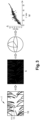
- determining a user's natural hair tone comprises the following steps, the general sequence of which is shown on figure 1 .
- an image I of the user's scalp 10 at hair roots 11 is taken using a camera device 20 forming a diagnosis unit.
- the camera device 20 is preferably handheld.
- the image I corresponds to an object (scalp) area of about 12 x 17 mm.
- the image I is acquired by a 2000 x 1200 RGB CMOS sensor, but other kind of high resolution sensors may be used.
- the method is used to estimate an unbiased hair tone value h.
- this hair tone h is not directly readable from the acquired images I since they present a mix between hair 11 and scalp 10.
- the scalp color can influence the visible hair pixels.
- the image I data shall be processed with the specific objective of obtaining accurate hair tones h.
- the image data is processed by applying a machine learning model to said image before returning a numerical real-valued hair tone.
- the machine learning models hereafter described have been statistically trained using a training set comprising 11175 pictures taken on 407 subjects. Each picture has been assessed and labelled with an actual value of the desired property (Training process is generally shown on figure 2 ).
- Hair tone estimation has been done using the following two approaches namely a colorimetric model and a deep learning model based on a convolutional neural network (CNN).
- CNN convolutional neural network
- the acquired image I is pre-process through a segmentation step S. More precisely, the hair pixels of interest are segmented from the image. Then, the RGB values of the segmented hair pixels are transformed into CIELAB color space and a fitted colorimetric model M estimates the hair tone from the median L* value of hair.
- this colorimetric approach involves the use of two independent machine learnings models successively applied to the image data: first a machine learning model is applied to perform the color space conversion, then a second machine learning model is applied for hair tone estimation form media hair L*.
- Hair segmentation S is the first pre-processing step.
- the main objective of this step is to transform the different RGB values of hair pixels to a single integral L*a*b* value. Therefore, instead of segmenting all hair pixels in the image, which can introduce outliers, it is preferable to segment robustly an adequate number of hair pixels avoiding specularities and other artifacts.
- the segmentation method is based on adaptive thresholding in order to vastly segment hair form scalp areas. Before thresholding, a Gaussian filter is applied to reduce the noise in the image. Finally, the resulting hair regions are ranked by size using connected components analysis in order to eliminate small detected areas that could be specularities or other artifacts falsely segmented as hair.
- the RGB values are converted to CIELab color space by applying machine learning model. More specifically, the camera device shall be calibrated in order to transform the device-dependent RGB values to a device-independent color space.
- the CIELAB color space was selected for this transformation since it is relatively perceptually uniform and is widely used in the industry.
- the smoothing factor ⁇ was set to 0.35, so as to ignore small variations along hair tone range [1; 10].
- the hair tone is predicted from a single input image I.
- CNN The basic idea behind CNN is to apply successive linear operations, such as 3x3 convolutions, with non-linear functions in-between them as well as operations reducing the spatial dimension of the image representation. This produces feature maps of the image, which is a representation into visual patterns. After successive regressions, such representation is reduced to a single real-valued output, that will be eventually mapped to labels h i in the training process.
- A is the momentum
- B is the set of indices i of the mini-batch - ⁇ ⁇ 1..
- m .
- Each mini-batch update of the weights is thus based on a history of the gradient and not only on the mini-batch gradient ⁇ ⁇ ( ⁇ ( I i ), h i ), which presents high variations through mini-batches.
- each image Ii is randomly flipped horizontally and vertically in order to augment artificially our data set.
- the implementation of Keras based on the Tensorflow back-end we used the implementation of Keras based on the Tensorflow back-end.
- machine learning model colorimetric model & convolutional neural network model
- machine learning technics may be used, main aspect of the present application being the use of a statistical machine learning model in lieu of classical metrology using image analysis technique to directly extract the relevant parameter and actually performing a measurement.
- the returned real-valued property may then be used as a parameter for further calculations or steps.
- the real-valued property may be used in a recommender, the method comprising a subsequent step of recommending a cosmetic product based on said real-valued characteristic.
- the real-valued characteristic may be used to calculate or determine a composition of a cosmetic product based on a desired effect or result. More specifically, the method may comprise a step of calculation a proportion and / or amount of a component based on its alteration power of the rea-valued characteristic in order to achieve the desired result. For example, if a user wishes to dye its hair in order to reach a hair tone of 5 and its initial hair tone is 7, the method will comprise a step of calculating the amount of oxidant required to reach this result.
- the determined composition may then be manufactured, on site or off site, and dispensed or delivered accordingly to the user.
- aspects of the present invention may be embodied as a system, method or computer program product. Accordingly, aspects of the present invention may take the form of an entirely hardware embodiment, an entirely software embodiment (including firmware, resident software, micro-code, etc.) or an embodiment combining software and hardware aspects. Furthermore, aspects of the present invention may take the form of a computer program product embodied in one or more computer readable medium(s) having computer readable program code embodied thereon.
- the computer readable medium may be, for example, but is not limited to, an electronic, magnetic, optical, electromagnetic, infrared, or semiconductor system, apparatus, or device, or any suitable combination of the foregoing.
- a computer readable storage medium may be any tangible medium that can contain, or store a program for use by or in connection with an instruction execution system, apparatus, or device.
- Computer program code for carrying out operations for aspects of the present invention may be written in any combination of one or more programming languages, e.g., an object oriented programming language such as Java, Smalltalk, C++ or the like, or a conventional procedural programming language, such as the "C" programming language or similar programming languages.
- the program code may execute entirely on the user's computer, partly on the user's computer, as a stand-alone software package, partly on the user's computer and partly on a remote computer or entirely on the remote computer or server.
- the remote computer may be connected to the user's computer through any type of network, including a local area network (LAN) or a wide area network (WAN), or the connection may be made to an external computer (for example, through the Internet using an Internet Service Provider).
- LAN local area network
- WAN wide area network
- Internet Service Provider for example, AT&T, MCI, Sprint, EarthLink, MSN, GTE, etc.
- the various functions of the computer systems may be distributed in any manner among any quantity of software modules or units, processing or computer systems and/or circuitry, where the computer or processing systems may be disposed locally or remotely of each other and communicate via any suitable communications medium (e.g., LAN, WAN, Intranet, Internet, hardwire, modem connection, wireless, etc.).
- any suitable communications medium e.g., LAN, WAN, Intranet, Internet, hardwire, modem connection, wireless, etc.
- the above detailed method is implemented into a system for determining at least one physical and / or chemical characteristic of a keratinous surface of a user, said system comprising an image sensor configured for acquiring an image of the targeted keratinous surface, the image data being transmitted to a processor configured to process the image data according to the above described method, namely by applying the machine learning model and return a real-valued estimate of the characteristic.
- a system forms a diagnosis unit.
- the system is integrated into a portable camera device.
- the camera device comprises the image sensor and the image data are processed outside the camera device in a distant processing unit.
- the image data are transmitted wirelessly.
- the system is fully integrated into the portable device, meaning that the camera device also comprises the processing unit. This way, the camera device can be used as an autonomous and/or real-time diagnosis unit directly outputting the real-valued property.
- the system may comprise additional components in order to, for example, form a system for making a personalized cosmetic product, in particular a hair product, namely a hair coloring product.
- the system comprises a diagnosis unit as described above and a dispensing unit configured to deliver a cosmetic product according to characteristics obtained from the diagnosis unit.
- a dispensing unit For a detailed description of a dispensing unit, one may refer to previously cited document US9316580 the content of which is hereby fully integrated.
- the system and method described in the present application thus improves the overall automation of the personalization process.
- the automation of the process is vital in order to ease the life of hairdressers and equip them with tools that guarantee precision, robustness and efficiency.
- using such devices we can go beyond the human visual perception and offer an objective notation that does not vary depending on the hairdresser and the conditions - in others terms, a standardized notation.
Landscapes
- Engineering & Computer Science (AREA)
- Health & Medical Sciences (AREA)
- Life Sciences & Earth Sciences (AREA)
- Physics & Mathematics (AREA)
- Medical Informatics (AREA)
- General Health & Medical Sciences (AREA)
- Theoretical Computer Science (AREA)
- General Physics & Mathematics (AREA)
- Computer Vision & Pattern Recognition (AREA)
- Surgery (AREA)
- Animal Behavior & Ethology (AREA)
- Veterinary Medicine (AREA)
- Public Health (AREA)
- Biophysics (AREA)
- Pathology (AREA)
- Biomedical Technology (AREA)
- Heart & Thoracic Surgery (AREA)
- Molecular Biology (AREA)
- Dermatology (AREA)
- Radiology & Medical Imaging (AREA)
- Spectroscopy & Molecular Physics (AREA)
- Quality & Reliability (AREA)
- Nuclear Medicine, Radiotherapy & Molecular Imaging (AREA)
- Software Systems (AREA)
- Computing Systems (AREA)
- Evolutionary Computation (AREA)
- Data Mining & Analysis (AREA)
- Artificial Intelligence (AREA)
- General Engineering & Computer Science (AREA)
- Mathematical Physics (AREA)
- Image Analysis (AREA)
- Measurement Of The Respiration, Hearing Ability, Form, And Blood Characteristics Of Living Organisms (AREA)
- Measuring And Recording Apparatus For Diagnosis (AREA)
- Investigating Or Analysing Materials By Optical Means (AREA)
- Management, Administration, Business Operations System, And Electronic Commerce (AREA)
- Investigating Or Analysing Biological Materials (AREA)
Priority Applications (1)
| Application Number | Priority Date | Filing Date | Title |
|---|---|---|---|
| EP24151919.8A EP4345745A3 (de) | 2018-09-20 | 2018-09-20 | Verfahren und system zur bestimmung einer eigenschaft einer keratinischen oberfläche sowie verfahren und system zur behandlung der keratinischen oberfläche |
Applications Claiming Priority (2)
| Application Number | Priority Date | Filing Date | Title |
|---|---|---|---|
| EP24151919.8A EP4345745A3 (de) | 2018-09-20 | 2018-09-20 | Verfahren und system zur bestimmung einer eigenschaft einer keratinischen oberfläche sowie verfahren und system zur behandlung der keratinischen oberfläche |
| EP18195776.2A EP3627444B1 (de) | 2018-09-20 | 2018-09-20 | Verfahren und system zur bestimmung einer eigenschaft einer keratinhaltigen oberfläche sowie verfahren und system zur behandlung dieser keratinhaltigen oberfläche |
Related Parent Applications (2)
| Application Number | Title | Priority Date | Filing Date |
|---|---|---|---|
| EP18195776.2A Division EP3627444B1 (de) | 2018-09-20 | 2018-09-20 | Verfahren und system zur bestimmung einer eigenschaft einer keratinhaltigen oberfläche sowie verfahren und system zur behandlung dieser keratinhaltigen oberfläche |
| EP18195776.2A Division-Into EP3627444B1 (de) | 2018-09-20 | 2018-09-20 | Verfahren und system zur bestimmung einer eigenschaft einer keratinhaltigen oberfläche sowie verfahren und system zur behandlung dieser keratinhaltigen oberfläche |
Publications (2)
| Publication Number | Publication Date |
|---|---|
| EP4345745A2 true EP4345745A2 (de) | 2024-04-03 |
| EP4345745A3 EP4345745A3 (de) | 2024-06-19 |
Family
ID=63832171
Family Applications (2)
| Application Number | Title | Priority Date | Filing Date |
|---|---|---|---|
| EP24151919.8A Withdrawn EP4345745A3 (de) | 2018-09-20 | 2018-09-20 | Verfahren und system zur bestimmung einer eigenschaft einer keratinischen oberfläche sowie verfahren und system zur behandlung der keratinischen oberfläche |
| EP18195776.2A Active EP3627444B1 (de) | 2018-09-20 | 2018-09-20 | Verfahren und system zur bestimmung einer eigenschaft einer keratinhaltigen oberfläche sowie verfahren und system zur behandlung dieser keratinhaltigen oberfläche |
Family Applications After (1)
| Application Number | Title | Priority Date | Filing Date |
|---|---|---|---|
| EP18195776.2A Active EP3627444B1 (de) | 2018-09-20 | 2018-09-20 | Verfahren und system zur bestimmung einer eigenschaft einer keratinhaltigen oberfläche sowie verfahren und system zur behandlung dieser keratinhaltigen oberfläche |
Country Status (7)
| Country | Link |
|---|---|
| US (1) | US12159397B2 (de) |
| EP (2) | EP4345745A3 (de) |
| JP (1) | JP7179998B2 (de) |
| KR (1) | KR102670274B1 (de) |
| CN (1) | CN112740266B (de) |
| ES (1) | ES2986403T3 (de) |
| WO (1) | WO2020057803A1 (de) |
Families Citing this family (18)
| Publication number | Priority date | Publication date | Assignee | Title |
|---|---|---|---|---|
| US11172873B2 (en) | 2018-05-17 | 2021-11-16 | The Procter & Gamble Company | Systems and methods for hair analysis |
| EP4345745A3 (de) * | 2018-09-20 | 2024-06-19 | L'oreal | Verfahren und system zur bestimmung einer eigenschaft einer keratinischen oberfläche sowie verfahren und system zur behandlung der keratinischen oberfläche |
| US12274346B2 (en) * | 2019-05-15 | 2025-04-15 | Clics Llc | Systems and methods for coloring hair |
| AU2020276282B2 (en) * | 2019-05-15 | 2025-08-14 | CLiCS, LLC | Systems and methods for coloring hair |
| US20220164852A1 (en) * | 2020-11-20 | 2022-05-26 | The Procter & Gamble Company | Digital Imaging and Learning Systems and Methods for Analyzing Pixel Data of an Image of a Hair Region of a User's Head to Generate One or More User-Specific Recommendations |
| US11137291B1 (en) * | 2021-03-08 | 2021-10-05 | Innovative Beauty LLC | Hair colorant assessment, selection and formulation system |
| US12039732B2 (en) * | 2021-04-14 | 2024-07-16 | The Procter & Gamble Company | Digital imaging and learning systems and methods for analyzing pixel data of a scalp region of a users scalp to generate one or more user-specific scalp classifications |
| JP2022187493A (ja) * | 2021-06-07 | 2022-12-19 | 大正製薬株式会社 | 白髪識別装置、白髪識別方法及び白髪識別プログラム |
| US20230043674A1 (en) * | 2021-08-09 | 2023-02-09 | Techturized, Inc. | Scientific and technical systems and methods for providing hair health diagnosis, treatment, and styling recommendations |
| TWI823143B (zh) * | 2021-09-13 | 2023-11-21 | 美科實業股份有限公司 | 智慧頭皮屑檢測系統與方法 |
| KR102654796B1 (ko) * | 2021-11-29 | 2024-04-11 | (주)스톤랩 | 시각 인공지능 활용 비침습 피부 생체지표 추정 기반 피부염 판별 시스템 및 그 방법 |
| AR130905A1 (es) * | 2022-10-31 | 2025-01-29 | Natura Cosmeticos Sa | Sistema y método para la evaluación por imágenes del estado de los filamentos del cabello de un usuario |
| WO2024262567A1 (ja) * | 2023-06-21 | 2024-12-26 | 株式会社頭皮labo | 情報提供システム、情報提供プログラム、及び、情報提供方法 |
| WO2025096205A1 (en) * | 2023-11-03 | 2025-05-08 | L'oreal | Modulation of coloring formulation components for hair coloring device |
| US20250143437A1 (en) * | 2023-11-03 | 2025-05-08 | L'oreal | Modulation of coloring formulation components for hair coloring device |
| WO2025120099A1 (en) * | 2023-12-07 | 2025-06-12 | L'oréal | Hair color classification using consistency regularization and annotation confusion matrices and hair color simulation using a hair color classification guided network |
| US20250191248A1 (en) * | 2023-12-07 | 2025-06-12 | L'oreal | Hair color simulation using a hair color classification guided network |
| US20250239026A1 (en) * | 2024-01-23 | 2025-07-24 | L'oreal | Method and system for 3d hair virtual try on |
Citations (14)
| Publication number | Priority date | Publication date | Assignee | Title |
|---|---|---|---|---|
| US5478238A (en) | 1993-08-03 | 1995-12-26 | Parfums Christian Dior | Method and apparatus for determining the foundation makeup color that substantially reproduces a person's natural skin color |
| US6067504A (en) | 1983-07-18 | 2000-05-23 | Chromatics Color Sciences International, Inc. | Method for correctly identifying hair color |
| WO2004002300A2 (en) | 2002-06-28 | 2004-01-08 | Seethrough Ltd. | Hair color measurement and treatment |
| US7151851B2 (en) | 2001-07-31 | 2006-12-19 | Mahmoud Ladjevardi | Advanced cosmetic color analysis system and methods therefor |
| US20090036800A1 (en) | 2007-07-30 | 2009-02-05 | Michael Rabin | Hair Densitometer |
| US7508508B2 (en) | 2006-09-19 | 2009-03-24 | Seethrough Ltd. | Device and method for inspecting a hair sample |
| WO2011024160A1 (en) | 2009-08-24 | 2011-03-03 | Ofer Levi | A method and apparatus for providing hair dyeing composition |
| US20120253203A1 (en) | 2011-03-30 | 2012-10-04 | Nigel Weston | Method of viewing a surface |
| US8428382B2 (en) | 2007-02-16 | 2013-04-23 | Kao Corporation | Hair image display method and display apparatus |
| US20140216492A1 (en) | 2011-09-19 | 2014-08-07 | Natura Cosmeticos S.A. | Method for assessing hair conditions and diagnostic system for prescription of customized cosmetic treatment and/or product |
| KR101456942B1 (ko) | 2013-11-10 | 2014-11-12 | 한규나 | 머리카락 및 두피상태 진단장치 |
| US9316580B2 (en) | 2011-03-21 | 2016-04-19 | Coloright Ltd. | Systems for custom coloration |
| US9519927B1 (en) | 2013-05-22 | 2016-12-13 | Sephora USA, Inc. | System for cosmetics matching based on skin tone |
| WO2017207455A1 (en) | 2016-06-01 | 2017-12-07 | L'oreal | System and method for determining parameters of the scalp and/or of the hair for the purpose of recommending cosmetic products |
Family Cites Families (28)
| Publication number | Priority date | Publication date | Assignee | Title |
|---|---|---|---|---|
| US20070058858A1 (en) * | 2005-09-09 | 2007-03-15 | Michael Harville | Method and system for recommending a product based upon skin color estimated from an image |
| WO2010093503A2 (en) * | 2007-01-05 | 2010-08-19 | Myskin, Inc. | Skin analysis methods |
| WO2011109321A1 (en) * | 2010-03-02 | 2011-09-09 | The Procter & Gamble Company | Method for assessing the damage of keratin fibers |
| US10869626B2 (en) * | 2010-06-07 | 2020-12-22 | Affectiva, Inc. | Image analysis for emotional metric evaluation |
| FR2975804B1 (fr) * | 2011-05-27 | 2022-06-17 | Lvmh Rech | Procede de caracterisation du teint de la peau ou des phaneres |
| US9528935B2 (en) * | 2012-03-30 | 2016-12-27 | Haripriya Pulyassary | Water weather station for monitoring changes in water quality |
| JP6131597B2 (ja) * | 2012-12-28 | 2017-05-24 | 花王株式会社 | 皮膚の評価方法及び皮膚の評価システム |
| US10285624B2 (en) * | 2013-03-12 | 2019-05-14 | University Of Washington | Systems, devices, and methods for estimating bilirubin levels |
| JP2017519193A (ja) * | 2014-04-27 | 2017-07-13 | コロライト エルティーディー.ColoRight Ltd. | 毛髪を分析するための、及び/又はヘアカラー処理の結果を予測するための装置及び方法 |
| US9928410B2 (en) * | 2014-11-24 | 2018-03-27 | Samsung Electronics Co., Ltd. | Method and apparatus for recognizing object, and method and apparatus for training recognizer |
| US9928601B2 (en) * | 2014-12-01 | 2018-03-27 | Modiface Inc. | Automatic segmentation of hair in images |
| JP2018531437A (ja) * | 2015-06-15 | 2018-10-25 | アミール,ハイム | 適応皮膚処置のためのシステムおよび方法 |
| DE102015225459A1 (de) * | 2015-12-16 | 2017-06-22 | Henkel Ag & Co. Kgaa | Verfahren und Datenverarbeitungsvorrichtung zum computergestützten Ermitteln eines Haarfärbemittels zum Färben von Haaren in einer Wunschhaarfarbe und Vorrichtung zum Herstellen eines individuell ermittelten Haarfärbemittels |
| US10699213B2 (en) * | 2016-03-07 | 2020-06-30 | Micron Technology, Inc. | Space efficient random decision forest models implementation utilizing automata processors |
| CA3015492C (en) | 2016-03-21 | 2021-11-23 | The Procter & Gamble Company | Systems and methods for providing customized product recommendations |
| SG10202010314UA (en) * | 2016-04-22 | 2020-11-27 | Illumina Inc | Photonic stucture-based devices and compositions for use in luminescent imaging of multiple sites within a pixel, and methods of using the same |
| CN106022221B (zh) * | 2016-05-09 | 2021-11-30 | 腾讯科技(深圳)有限公司 | 一种图像处理方法及处理系统 |
| EP3531915B1 (de) * | 2016-10-24 | 2024-12-04 | Akili Interactive Labs, Inc. | Als ein biomarker oder ein anderer markertyp konfigurierte, kognitive plattform |
| JP6492044B2 (ja) * | 2016-10-28 | 2019-03-27 | ロレアル | ヒトケラチン物質の状態について使用者に知らせるための方法 |
| CA3055319A1 (en) * | 2017-03-07 | 2018-09-13 | Shiseido Americas Corporation | System and method for adjusting custom topical agents |
| KR101936751B1 (ko) * | 2017-05-22 | 2019-04-09 | 주식회사 엘지생활건강 | 화장품 공급 장치 및 그의 동작 방법 |
| DE102017211782A1 (de) * | 2017-07-10 | 2019-01-10 | Henkel Ag & Co. Kgaa | System und Verfahren zum Verbessern eines kosmetischen Haarzustands |
| EP3669318A1 (de) * | 2017-08-16 | 2020-06-24 | Henkel AG & Co. KGaA | Verfahren und vorrichtung zur computergestützten haarbehandlungsberatung |
| CN107909566A (zh) * | 2017-10-28 | 2018-04-13 | 杭州电子科技大学 | 一种基于深度学习的皮肤癌黑色素瘤的图像识别方法 |
| EP3530179A1 (de) * | 2018-02-27 | 2019-08-28 | Koninklijke Philips N.V. | Erhalt von bildern zur verwendung bei der bestimmung einer oder mehrerer eigenschaften der haut einer person |
| US11680063B2 (en) * | 2018-09-06 | 2023-06-20 | Insilico Medicine Ip Limited | Entangled conditional adversarial autoencoder for drug discovery |
| EP4345745A3 (de) * | 2018-09-20 | 2024-06-19 | L'oreal | Verfahren und system zur bestimmung einer eigenschaft einer keratinischen oberfläche sowie verfahren und system zur behandlung der keratinischen oberfläche |
| US12538972B2 (en) * | 2021-12-30 | 2026-02-03 | L'oreal | Predictive application for AI-powered dispensing device for hair treatment |
-
2018
- 2018-09-20 EP EP24151919.8A patent/EP4345745A3/de not_active Withdrawn
- 2018-09-20 ES ES18195776T patent/ES2986403T3/es active Active
- 2018-09-20 EP EP18195776.2A patent/EP3627444B1/de active Active
-
2019
- 2019-07-15 US US17/277,166 patent/US12159397B2/en active Active
- 2019-07-15 CN CN201980061174.XA patent/CN112740266B/zh active Active
- 2019-07-15 WO PCT/EP2019/069047 patent/WO2020057803A1/en not_active Ceased
- 2019-07-15 KR KR1020217007390A patent/KR102670274B1/ko active Active
- 2019-07-15 JP JP2021538896A patent/JP7179998B2/ja active Active
Patent Citations (14)
| Publication number | Priority date | Publication date | Assignee | Title |
|---|---|---|---|---|
| US6067504A (en) | 1983-07-18 | 2000-05-23 | Chromatics Color Sciences International, Inc. | Method for correctly identifying hair color |
| US5478238A (en) | 1993-08-03 | 1995-12-26 | Parfums Christian Dior | Method and apparatus for determining the foundation makeup color that substantially reproduces a person's natural skin color |
| US7151851B2 (en) | 2001-07-31 | 2006-12-19 | Mahmoud Ladjevardi | Advanced cosmetic color analysis system and methods therefor |
| WO2004002300A2 (en) | 2002-06-28 | 2004-01-08 | Seethrough Ltd. | Hair color measurement and treatment |
| US7508508B2 (en) | 2006-09-19 | 2009-03-24 | Seethrough Ltd. | Device and method for inspecting a hair sample |
| US8428382B2 (en) | 2007-02-16 | 2013-04-23 | Kao Corporation | Hair image display method and display apparatus |
| US20090036800A1 (en) | 2007-07-30 | 2009-02-05 | Michael Rabin | Hair Densitometer |
| WO2011024160A1 (en) | 2009-08-24 | 2011-03-03 | Ofer Levi | A method and apparatus for providing hair dyeing composition |
| US9316580B2 (en) | 2011-03-21 | 2016-04-19 | Coloright Ltd. | Systems for custom coloration |
| US20120253203A1 (en) | 2011-03-30 | 2012-10-04 | Nigel Weston | Method of viewing a surface |
| US20140216492A1 (en) | 2011-09-19 | 2014-08-07 | Natura Cosmeticos S.A. | Method for assessing hair conditions and diagnostic system for prescription of customized cosmetic treatment and/or product |
| US9519927B1 (en) | 2013-05-22 | 2016-12-13 | Sephora USA, Inc. | System for cosmetics matching based on skin tone |
| KR101456942B1 (ko) | 2013-11-10 | 2014-11-12 | 한규나 | 머리카락 및 두피상태 진단장치 |
| WO2017207455A1 (en) | 2016-06-01 | 2017-12-07 | L'oreal | System and method for determining parameters of the scalp and/or of the hair for the purpose of recommending cosmetic products |
Also Published As
| Publication number | Publication date |
|---|---|
| WO2020057803A1 (en) | 2020-03-26 |
| CN112740266B (zh) | 2024-09-13 |
| EP3627444C0 (de) | 2024-06-26 |
| KR102670274B1 (ko) | 2024-05-30 |
| JP2022523623A (ja) | 2022-04-26 |
| US20220005189A1 (en) | 2022-01-06 |
| JP7179998B2 (ja) | 2022-11-29 |
| ES2986403T3 (es) | 2024-11-11 |
| CN112740266A (zh) | 2021-04-30 |
| EP3627444B1 (de) | 2024-06-26 |
| KR20210042966A (ko) | 2021-04-20 |
| EP3627444A1 (de) | 2020-03-25 |
| EP4345745A3 (de) | 2024-06-19 |
| US12159397B2 (en) | 2024-12-03 |
Similar Documents
| Publication | Publication Date | Title |
|---|---|---|
| US12159397B2 (en) | Method and system for determining a characteristic of a keratinous surface and method and system for treating said keratinous surface | |
| JP7235895B2 (ja) | 美容的皮膚特性を視覚化するための装置及び方法 | |
| JP7248820B2 (ja) | 美容的皮膚属性を決定するための機器及び方法 | |
| KR102074178B1 (ko) | 개인 맞춤형 화장품 정보제공 분석 시스템 및 방법 | |
| EP3433818B1 (de) | Systeme und verfahren zur bereitstellung von personalisierten produktempfehlungen | |
| US7489816B2 (en) | Advanced cosmetic color analysis system and methods therefor | |
| KR102135874B1 (ko) | 상태정보 분석장치, 방법, 시스템 및 프로그램 | |
| US11010894B1 (en) | Deriving a skin profile from an image | |
| US11896114B2 (en) | System for managing hair condition information and method for optimizing a cosmetic consultation system | |
| WO2017207455A1 (en) | System and method for determining parameters of the scalp and/or of the hair for the purpose of recommending cosmetic products | |
| KR20200069695A (ko) | 피부 측정기를 활용한 화장품 추천 장치 및 방법 | |
| KR20210059214A (ko) | 인공 지능에 기반한 피부 진단을 통한 고객 맞춤형 피부 외용제의 제공 방법 | |
| WO2016152900A1 (ja) | 画像処理装置及び撮像装置 | |
| KR20210079090A (ko) | 모바일 피부촬영장치 및 영상분석 시스템 | |
| WO2022254188A1 (en) | Skincare device | |
| KR20210019702A (ko) | 상태정보 분석장치, 방법, 시스템 및 프로그램 | |
| KR102074179B1 (ko) | 개인 맞춤형 마스크 팩 정보제공 분석 시스템 및 방법 | |
| KR20210126191A (ko) | 영상 인공지능 기반 피부 손실도 및 수분도 추정 방법 | |
| KR20240089084A (ko) | 피부색 결정을 위한 시스템 및 방법 | |
| IL308471A (en) | Computer-based body part analysis methods and systems | |
| Bokaris et al. | Hair tone estimation at roots via imaging device with embedded deep learning | |
| KR20200008484A (ko) | 피부 진단을 통한 화장품 추천 시스템 | |
| WO2026039483A1 (en) | Artificial intelligence(ai)-based systems and methods for generating and evaluating reconstructed multi-spectral images depicting skin | |
| KR20230010977A (ko) | 피부 유전 예보 및 이를 통한 화장품 추천 시스템 | |
| FR3133981A1 (fr) | Application prédictive pour un dispositif de distribution de traitement des cheveux alimenté par IA |
Legal Events
| Date | Code | Title | Description |
|---|---|---|---|
| PUAI | Public reference made under article 153(3) epc to a published international application that has entered the european phase |
Free format text: ORIGINAL CODE: 0009012 |
|
| STAA | Information on the status of an ep patent application or granted ep patent |
Free format text: STATUS: THE APPLICATION HAS BEEN PUBLISHED |
|
| AC | Divisional application: reference to earlier application |
Ref document number: 3627444 Country of ref document: EP Kind code of ref document: P |
|
| AK | Designated contracting states |
Kind code of ref document: A2 Designated state(s): AL AT BE BG CH CY CZ DE DK EE ES FI FR GB GR HR HU IE IS IT LI LT LU LV MC MK MT NL NO PL PT RO RS SE SI SK SM TR |
|
| PUAL | Search report despatched |
Free format text: ORIGINAL CODE: 0009013 |
|
| AK | Designated contracting states |
Kind code of ref document: A3 Designated state(s): AL AT BE BG CH CY CZ DE DK EE ES FI FR GB GR HR HU IE IS IT LI LT LU LV MC MK MT NL NO PL PT RO RS SE SI SK SM TR |
|
| RIC1 | Information provided on ipc code assigned before grant |
Ipc: A61B 5/00 20060101ALI20240516BHEP Ipc: G06T 7/00 20170101AFI20240516BHEP |
|
| STAA | Information on the status of an ep patent application or granted ep patent |
Free format text: STATUS: THE APPLICATION HAS BEEN WITHDRAWN |
|
| 18W | Application withdrawn |
Effective date: 20250102 |