EP4347576B1 - Composés et compositions pharmaceutiques à utiliser pour des troubles neurodégénératifs - Google Patents
Composés et compositions pharmaceutiques à utiliser pour des troubles neurodégénératifs Download PDFInfo
- Publication number
- EP4347576B1 EP4347576B1 EP22732100.7A EP22732100A EP4347576B1 EP 4347576 B1 EP4347576 B1 EP 4347576B1 EP 22732100 A EP22732100 A EP 22732100A EP 4347576 B1 EP4347576 B1 EP 4347576B1
- Authority
- EP
- European Patent Office
- Prior art keywords
- compound according
- formula
- disease
- compound
- multiple sclerosis
- Prior art date
- Legal status (The legal status is an assumption and is not a legal conclusion. Google has not performed a legal analysis and makes no representation as to the accuracy of the status listed.)
- Active
Links
Images


Classifications
-
- C—CHEMISTRY; METALLURGY
- C07—ORGANIC CHEMISTRY
- C07D—HETEROCYCLIC COMPOUNDS
- C07D295/00—Heterocyclic compounds containing polymethylene-imine rings with at least five ring members, 3-azabicyclo [3.2.2] nonane, piperazine, morpholine or thiomorpholine rings, having only hydrogen atoms directly attached to the ring carbon atoms
- C07D295/04—Heterocyclic compounds containing polymethylene-imine rings with at least five ring members, 3-azabicyclo [3.2.2] nonane, piperazine, morpholine or thiomorpholine rings, having only hydrogen atoms directly attached to the ring carbon atoms with substituted hydrocarbon radicals attached to ring nitrogen atoms
- C07D295/08—Heterocyclic compounds containing polymethylene-imine rings with at least five ring members, 3-azabicyclo [3.2.2] nonane, piperazine, morpholine or thiomorpholine rings, having only hydrogen atoms directly attached to the ring carbon atoms with substituted hydrocarbon radicals attached to ring nitrogen atoms substituted by singly bound oxygen or sulfur atoms
-
- C—CHEMISTRY; METALLURGY
- C07—ORGANIC CHEMISTRY
- C07D—HETEROCYCLIC COMPOUNDS
- C07D231/00—Heterocyclic compounds containing 1,2-diazole or hydrogenated 1,2-diazole rings
- C07D231/02—Heterocyclic compounds containing 1,2-diazole or hydrogenated 1,2-diazole rings not condensed with other rings
- C07D231/10—Heterocyclic compounds containing 1,2-diazole or hydrogenated 1,2-diazole rings not condensed with other rings having two or three double bonds between ring members or between ring members and non-ring members
- C07D231/12—Heterocyclic compounds containing 1,2-diazole or hydrogenated 1,2-diazole rings not condensed with other rings having two or three double bonds between ring members or between ring members and non-ring members with only hydrogen atoms, hydrocarbon or substituted hydrocarbon radicals, directly attached to ring carbon atoms
-
- A—HUMAN NECESSITIES
- A61—MEDICAL OR VETERINARY SCIENCE; HYGIENE
- A61K—PREPARATIONS FOR MEDICAL, DENTAL OR TOILETRY PURPOSES
- A61K31/00—Medicinal preparations containing organic active ingredients
- A61K31/33—Heterocyclic compounds
- A61K31/395—Heterocyclic compounds having nitrogen as a ring hetero atom, e.g. guanethidine or rifamycins
- A61K31/535—Heterocyclic compounds having nitrogen as a ring hetero atom, e.g. guanethidine or rifamycins having six-membered rings with at least one nitrogen and one oxygen as the ring hetero atoms, e.g. 1,2-oxazines
- A61K31/5375—1,4-Oxazines, e.g. morpholine
- A61K31/5377—1,4-Oxazines, e.g. morpholine not condensed and containing further heterocyclic rings, e.g. timolol
-
- A—HUMAN NECESSITIES
- A61—MEDICAL OR VETERINARY SCIENCE; HYGIENE
- A61P—SPECIFIC THERAPEUTIC ACTIVITY OF CHEMICAL COMPOUNDS OR MEDICINAL PREPARATIONS
- A61P25/00—Drugs for disorders of the nervous system
- A61P25/08—Antiepileptics; Anticonvulsants
-
- A—HUMAN NECESSITIES
- A61—MEDICAL OR VETERINARY SCIENCE; HYGIENE
- A61P—SPECIFIC THERAPEUTIC ACTIVITY OF CHEMICAL COMPOUNDS OR MEDICINAL PREPARATIONS
- A61P25/00—Drugs for disorders of the nervous system
- A61P25/28—Drugs for disorders of the nervous system for treating neurodegenerative disorders of the central nervous system, e.g. nootropic agents, cognition enhancers, drugs for treating Alzheimer's disease or other forms of dementia
-
- C—CHEMISTRY; METALLURGY
- C07—ORGANIC CHEMISTRY
- C07C—ACYCLIC OR CARBOCYCLIC COMPOUNDS
- C07C45/00—Preparation of compounds having >C = O groups bound only to carbon or hydrogen atoms; Preparation of chelates of such compounds
- C07C45/61—Preparation of compounds having >C = O groups bound only to carbon or hydrogen atoms; Preparation of chelates of such compounds by reactions not involving the formation of >C = O groups
- C07C45/64—Preparation of compounds having >C = O groups bound only to carbon or hydrogen atoms; Preparation of chelates of such compounds by reactions not involving the formation of >C = O groups by introduction of functional groups containing oxygen only in singly bound form
-
- C—CHEMISTRY; METALLURGY
- C07—ORGANIC CHEMISTRY
- C07D—HETEROCYCLIC COMPOUNDS
- C07D261/00—Heterocyclic compounds containing 1,2-oxazole or hydrogenated 1,2-oxazole rings
- C07D261/02—Heterocyclic compounds containing 1,2-oxazole or hydrogenated 1,2-oxazole rings not condensed with other rings
- C07D261/06—Heterocyclic compounds containing 1,2-oxazole or hydrogenated 1,2-oxazole rings not condensed with other rings having two or more double bonds between ring members or between ring members and non-ring members
- C07D261/08—Heterocyclic compounds containing 1,2-oxazole or hydrogenated 1,2-oxazole rings not condensed with other rings having two or more double bonds between ring members or between ring members and non-ring members with only hydrogen atoms, hydrocarbon or substituted hydrocarbon radicals, directly attached to ring carbon atoms
-
- C—CHEMISTRY; METALLURGY
- C07—ORGANIC CHEMISTRY
- C07D—HETEROCYCLIC COMPOUNDS
- C07D405/00—Heterocyclic compounds containing both one or more hetero rings having oxygen atoms as the only ring hetero atoms, and one or more rings having nitrogen as the only ring hetero atom
- C07D405/02—Heterocyclic compounds containing both one or more hetero rings having oxygen atoms as the only ring hetero atoms, and one or more rings having nitrogen as the only ring hetero atom containing two hetero rings
- C07D405/06—Heterocyclic compounds containing both one or more hetero rings having oxygen atoms as the only ring hetero atoms, and one or more rings having nitrogen as the only ring hetero atom containing two hetero rings linked by a carbon chain containing only aliphatic carbon atoms
-
- C—CHEMISTRY; METALLURGY
- C07—ORGANIC CHEMISTRY
- C07D—HETEROCYCLIC COMPOUNDS
- C07D413/00—Heterocyclic compounds containing two or more hetero rings, at least one ring having nitrogen and oxygen atoms as the only ring hetero atoms
- C07D413/02—Heterocyclic compounds containing two or more hetero rings, at least one ring having nitrogen and oxygen atoms as the only ring hetero atoms containing two hetero rings
- C07D413/06—Heterocyclic compounds containing two or more hetero rings, at least one ring having nitrogen and oxygen atoms as the only ring hetero atoms containing two hetero rings linked by a carbon chain containing only aliphatic carbon atoms
Definitions
- the present invention relates to compounds, pharmaceutical compositions and medicaments suitable for use in the prevention and/or treatment of neurodegenerative disorders, such as for example demyelinating diseases. These compounds improve cognition and/or neuroplasticity as well as to induce and/or stimulate remyelination of the myelin sheet. Furthermore, the present invention relates to methods for synthesis of said compounds.
- AD Alzheimer's disease
- PD Parkinson's disease
- ALS Lou Gehrig's disease
- stroke traumatic brain injury
- spinal cord injury spinal cord injury
- mild cognitive impairment and demyelinating diseases such as peripheral demyelinating diseases
- MS multiple sclerosis
- Demyelinating diseases are a group of neurological/neurodegenerative disorders in which myelin, the substance surrounding axons of neurons, degenerates. As a result, the axon's ability to conduct electrical signals degenerates.
- the most common demyelinating disease is multiple sclerosis, a demyelinating disorder of the central nervous system (CNS).
- Demyelinating diseases can also be related to the peripheral nervous system (i.e. peripheral demyelinating diseases), such as for example different types of neuropathy, Marie-Charcot tooth disease or traumatic nerve injury.
- Loss of myelin not only disrupts axonal function per se, but it also compromises the physical integrity of axons by increasing susceptibility to inflammatory mediators and disrupting trophic support provided by myelinating oligodendrocytes.
- Phosphodiesterases are a class of enzymes that hydrolyze and inactivate cyclic oligonucleotides (cAMP and/or cGMP). Cyclic oligonucleotides are second messengers that translate an extracellular signal such as a growth factor binding to its receptor into cellular differentiation. PDEs have been classified in 11 families (PDE1-11) based on subcellular distribution, mechanisms of regulation, and enzymatic and kinetic properties. Most of these families consist of several gene products (e.g. PDE4A-4D), yielding a cell type-specific PDE expression signature.
- the genes PDE4A and PDE4B are known to show a higher expression level in oligodendrocytes, compared to the PDE4D gene, which shows a 10-fold lower expression.
- the pan-PDE4 inhibitor roflumilast which inhibits all PDE4 isoforms, induces in vitro and in vivo remyelination as well as an improved cognitive behavior.
- the present invention aims at enabling efficient and effective treatment, or preferably curing, of neurodegenerative disorders. Even though the currently available therapeutics are effective in the initial stages of neurodegenerative diseases, they have limited efficacy in preventing the transition towards the progressive stage when cognitive impairment prevails, nor can they ensure recovery of the myelin sheath. During the chronic stages, when little inflammation is present, endogenous repair mechanisms (remyelination) become insufficient and cause a gradually worsening of the disability. We have shown that inhibition of phosphodiesterase 4D boosts OPC differentiation, and therefore, myelination, without inducing side-effects.
- the present invention provides a compound according to formula (I), or a stereoisomer, tautomer, racemic, salt, hydrate, N-oxide form, or solvate thereof, wherein:
- the present invention provides a compound as defined herein wherein R 4 is -CH 3 .
- the compound of the present invention is selected from the list comprising:
- the present invention provides a pharmaceutical composition
- a pharmaceutical composition comprising at least one compound as defined herein and a pharmaceutical acceptable carrier.
- the present invention also provides the compound or pharmaceutical composition as defined herein for use in human or veterinary medicine; in particular for use as a medicament with PDE4D inhibiting activity.
- the present invention provides a compound or pharmaceutical composition as defined herein for use in the prevention and/or treatment and/or cure of a neurodegenerative disorder in a subject; in particular a neurodegenerative disorder selected from the list comprising: Alzheimer's disease (AD), Parkinson's disease (PD), Huntington's disease, Lou Gehrig's disease (ALS), stroke, traumatic brain injury, spinal cord injury, mild cognitive impairment and demyelinating diseases such as peripheral demyelinating diseases, and multiple sclerosis (MS).
- AD Alzheimer's disease
- PD Parkinson's disease
- ALS Lou Gehrig's disease
- MS multiple sclerosis
- said multiple sclerosis is progressive multiple sclerosis such as selected from the group comprising primary progressive multiple sclerosis and secondary progressive multiple sclerosis, or relapse remitting multiple sclerosis.
- the present invention also provides a PDE4D inhibitor comprising a compound or a pharmaceutical composition as defined herein, wherein the PDE4D inhibitor selectively inhibits the type D isoforms of PDE4.
- the present invention provides a method for synthesis of a compound as defined herein, comprising the steps of:
- the step of adding toluene-4-sulfonic acid hydrazide to the dissolved compound according to formula (III) forming a reaction mixture is performed at a temperature in the range of 15 °C to 40 °C, preferably at a temperature in the range of 15 °C to 30 °C, more preferably at a temperature of about 20°C.
- the step of adding toluene-4-sulfonic acid hydrazide to the dissolved compound according to formula (III) forming a reaction mixture is performed for at least 45 minutes, more preferably performed for at least 55 minutes, more preferably performed for about 60 minutes.
- the step of adding sodium hydroxide (NaOH) to the reaction mixture is performed for at least 10 minutes, preferably for at least 15 minutes, more preferably for at least 20 minutes.
- the step of reacting the compound according formula (V) with morpholine to form the compound according to formula (VI) is performed at a temperature in the range of 30 °C to 80 °C, preferably performed at a temperature in the range of 40 °C to 70 °C, more preferably performed at a temperature in the range of 50 °C to 60 °C.
- the present invention further provides a compound according to formula (I), wherein:
- R 4 of the compound according to formula (I) is -CH 3 .
- -CH 3 refers to a methyl group.
- the compound of the present invention is selected from the list comprising: In yet another preferred embodiment according to the invention, formula (I) is
- the invention also relates to Compound according to formula (I), or a stereoisomer, tautomer, racemic, salt, hydrate, N-oxide form, or solvate thereof wherein:
- R 4 of the compound according to the invention is -CH 3 . More preferably, formula (I) is (I').
- the compound of formula (I') is herein below also referred to as “RICE01” or more generally “RICE”.
- the invention also relates to a pharmaceutical composition
- a pharmaceutical composition comprising at least one compound according to the invention and a pharmaceutical acceptable carrier.
- the compound or composition according to the invention is used as a medicament with PDE4D inhibiting activity.
- the compound, pharmaceutical composition or medicament is used in the prevention and/or treatment and/or cure of a neurodegenerative disorder such as Alzheimer's disease (AD), Parkinson's disease (PD), Huntington's disease, Lou Gehrig's disease (ALS), stroke, traumatic brain injury, spinal cord injury, mild cognitive impairment and demyelinating diseases such as peripheral demyelinating diseases, and multiple sclerosis (MS) in a subject; in particular for use in improving cognition and/or neuroplasticity and/or for the remyelination of the myelin sheet.
- a neurodegenerative disorder such as Alzheimer's disease (AD), Parkinson's disease (PD), Huntington's disease, Lou Gehrig's disease (ALS), stroke, traumatic brain injury, spinal cord injury, mild cognitive impairment and demyelinating diseases such as peripheral demyelinating diseases, and multiple sclerosis (MS) in a subject; in particular for use in improving cognition and/
- the compound, pharmaceutical composition or medicament is used in the treatment of multiple sclerosis in particular progressive multiple sclerosis such as selected from the group comprising primary progressive multiple sclerosis, secondary progressive multiple sclerosis and relapse remitting multiple sclerosis.
- the medicament provided an efficient and effective prevention and/or treatment and/or cure.
- composition or medicament provides the same effects and advantages as those described for the compound.
- the compounds of the invention may be used as a free acid or base, and/or in the form of a pharmaceutically acceptable acid-addition and/or base-addition salt (e.g. obtained with non-toxic organic or inorganic acid or base), in the form of a hydrate, solvate and/or complex, and/or in the form or a pro-drug or pre-drug, such as an ester.
- a pharmaceutically acceptable acid-addition and/or base-addition salt e.g. obtained with non-toxic organic or inorganic acid or base
- solvate includes any combination which may be formed by a compound of this invention with a suitable inorganic solvent (e.g. hydrates) or organic solvent, such as but not limited to alcohols, ketones, esters and the like.
- suitable inorganic solvent e.g. hydrates
- organic solvent such as but not limited to alcohols, ketones, esters and the like.
- the pharmaceutically acceptable salts of the compounds according to the invention include the conventional non-toxic salts or the quaternary ammonium salts which are formed, e.g., from inorganic or organic acids or bases.
- the compounds of the inventions may be formulated as a pharmaceutical preparation or pharmaceutical composition comprising at least one compound of the invention and at least one pharmaceutically acceptable carrier, diluent or excipient and/or adjuvant, and optionally one or more further pharmaceutically active compounds.
- such a formulation or medicament may be in a form suitable for oral administration, for parenteral administration (such as by intravenous, intramuscular or subcutaneous injection or intravenous infusion), for intranasal administration etc.
- parenteral administration such as by intravenous, intramuscular or subcutaneous injection or intravenous infusion
- intranasal administration etc.
- suitable administration forms - which may be solid, semi-solid or liquid, depending on the manner of administration - as well as methods and carriers, diluents and excipients for use in the preparation thereof, will be clear to the skilled person.
- Such preparations include tablets, pills, powders, lozenges, sachets, cachets, elixirs, suspensions, emulsions, solutions, syrups, aerosols, ointments, creams, lotions, soft and hard gelatin capsules, suppositories, eye drops, sterile injectable solutions and sterile packaged powders (which are usually reconstituted prior to use) for administration as a bolus and/or for continuous administration, which may be formulated with carriers, excipients, and diluents that are suitable per se for such formulations.
- the formulations can optionally contain other pharmaceutically active substances (which may or may not lead to a synergistic effect with the compounds of the invention) and other substances that are commonly used in pharmaceutical formulations, such as lubricating agents, wetting agents, emulsifying and suspending agents, dispersing agents, desintegrants, bulking agents, fillers, preserving agents, sweetening agents, flavoring agents, flow regulators, release agents, etc..
- the compositions may also be formulated so as to provide rapid, sustained or delayed release of the active compound(s) contained therein, for example using liposomes or hydrophilic polymeric matrices based on natural gels or synthetic polymers.
- compositions particularly reference is made to the compositions, formulations (and carriers, excipients, diluents, etc. for use therein), routes of administration etc.
- the preparations may be prepared in a manner known per se, which usually involves mixing at least one compound according to the invention with the one or more pharmaceutically acceptable carriers, and, if desired, in combination with other pharmaceutical active compounds, when necessary under aseptic conditions.
- the pharmaceutical preparations of the invention are preferably in a unit dosage form, and may be suitably packaged, for example in a box, blister, vial, bottle, sachet, ampoule or in any other suitable single-dose or multi-dose holder or container (which may be properly labeled); optionally with one or more leaflets containing product information and/or instructions for use.
- unit dosages will contain between 0.005 and 1000 mg, usually between 0.01 and 1000 mg, or between 0.05 and 500 mg, of at least one compound of the invention, e.g. about 0.005, 0.01, 0.05, 1, 2.5, 5, 10, 20, 50, 100, 150, 200, 250 or 500 mg per unit dosage.
- the compounds can be administered by a variety of routes including the oral, rectal, ocular, transdermal, subcutaneous, intravenous, intramuscular or intranasal routes, depending mainly on the specific preparation used and the condition to be treated or prevented, and with oral and intravenous administration usually being preferred.
- the at least one compound of the invention will generally be administered in an "effective amount", upon suitable administration, is sufficient to achieve the desired therapeutic or prophylactic effect in the individual to which it is administered.
- an effective amount will usually be between 0.005 to 1000 mg per day, more often between 0.001 and 1000 mg, such as between 0.05 and 500 mg, such as for example about 0.005, 0.01, 0.05, 1, 2.5, 5, 10, 20, 50, 100, 150, 200, 250 mg or 500mg, which may be administered as a single daily dose, divided over one or more daily doses, or essentially continuously, e.g. using a drip infusion.
- the amount(s) to be administered, the route of administration and the further treatment regimen may be determined by the treating clinician, depending on factors such as the age, gender and general condition of the patient and the nature and severity of the disease/symptoms to be treated.
- said pharmaceutical composition can be administered separately at different times during the course of therapy or concurrently in divided or single combination forms.
- the present invention is therefore to be understood as embracing all such regimes of simultaneous or alternating treatment and the term "administering" is to be interpreted accordingly.
- compositions of the present invention can be mixed with suitable additives, such as excipients, stabilizers, or inert diluents, and brought by means of the customary methods into the suitable administration forms, such as tablets, coated tablets, hard capsules, aqueous, alcoholic, or oily solutions.
- suitable inert carriers are gum arabic, magnesia, magnesium carbonate, potassium phosphate, lactose, glucose, or starch, in particular, corn starch.
- the preparation can be carried out both as dry and as moist granules.
- Suitable oily excipients or solvents are vegetable or animal oils, such as sunflower oil or cod liver oil.
- Suitable solvents for aqueous or alcoholic solutions are water, ethanol, sugar solutions, or mixtures thereof.
- Polyethylene glycols and polypropylene glycols are also useful as further auxiliaries for other administration forms.
- these compositions may contain microcrystalline cellulose, dicalcium phosphate, starch, magnesium stearate and lactose and/or other excipients, binders, extenders, disintegrants, diluents and lubricants known in the art.
- the compound according to the invention if desired with the substances customary therefore such as solubilizers, emulsifiers or further auxiliaries are brought into solution, suspension, or emulsion.
- the compounds of the invention can also be lyophilized and the lyophilizates obtained used, for example, for the production of injection or infusion preparations.
- compositions are of value in the veterinary field, which for the purposes herein not only includes the prevention and/or treatment of diseases in animals, but also - for economically important animals such as cattle, pigs, sheep, chicken, fish, etc. - enhancing the growth and/or weight of the animal and/or the amount and/or the quality of the meat or other products obtained from the animal.
- the invention relates to a composition for veterinary use that contains at least one compound of the invention and at least one suitable carrier (i.e. a carrier suitable for veterinary use).
- suitable carrier i.e. a carrier suitable for veterinary use.
- the invention also relates to the use of a compound of the invention in the preparation of such a composition.
- the present invention provides a pharmaceutical composition comprising selective PDE4D inhibitor(s) as mentioned above, for use as a medicament in the diagnosis, prevention or treatment of a neurodegenerative disorder, such as Alzheimer's disease (AD), Parkinson's disease (PD), Huntington's disease, Lou Gehrig's disease (ALS), stroke, traumatic brain injury, spinal cord injury, mild cognitive impairment and demyelinating diseases such as peripheral demyelinating diseases, and multiple sclerosis (MS); in particular for use in the diagnosis, prevention and/or treatment of demyelinating diseases of the central nervous system or demyelinating diseases of the peripheral nervous system.
- a neurodegenerative disorder such as Alzheimer's disease (AD), Parkinson's disease (PD), Huntington's disease, Lou Gehrig's disease (ALS), stroke, traumatic brain injury, spinal cord injury, mild cognitive impairment and demyelinating diseases such as peripheral demyelinating diseases, and multiple sclerosis (MS); in particular for use in the diagnosis, prevention and/or treatment of demyelinating diseases of the central nervous
- AD Alzheimer's disease
- senile plaques and neurofibrillary tangles.
- Parkinson's disease is the second most common neurodegenerative disorder. It typically manifests as bradykinesia, rigidity, resting tremor and/or postur instability. PD is primarily characterized by death of dopaminergic neurons in the substantia nigra, a region fo the midbrain.
- the main known risk factor is age, although mutations in particular genes, such as SNCA, LRRK2, GBA and MAPT have also been shown to cause hereditary PD or increase PD risk.
- HD Huntington's disease
- HHT huntingtin gene
- ALS Amyotrophic lateral sclerosis
- Lou Gherig's disease is a disease in which motor neurons are selectively targeted for degeneration.
- ALS is a neurodegenerative disorders that negatively impacts the upper motor neurons and lower motor neurons.
- Early diagnosis of ALS is harder than with other neurodegenerative diseases as there are no highly effective means of determining its early onset.
- Stroke is a medical condition in which poor blood flow to the brain cases cell death.
- Signs and symptoms of a stroke may include an inability to move or feel on one side of the body, problems understanding or speaking, dizziness, or loss of vision on one side.
- Traumatic brain injury also known as an intracranial injury, is an injury to the brain caused by an external force. It can be classified based on severity, mechanism or other features. Traumatic brain injury can result is physical, cognitive, social, emotional and behavioral symptoms, and outcomes can range from complete recovery to permanent disability or death.
- Spinal cord injury is damage to the spinal cord that causes temporary or permanent changes in its function. Symptoms may include loss of muscle function, sensation or autonomic function in the parts of the body served by the spinal cord below the level of the injury. Injury can occur at any level of the spinal cord and can be complete, with a total loss of sensation and muscle function at lower sacral segments, or incomplete, meaning some nervous signals are able to travel past the injured area of the cord.
- Mild cognitive impairment is a neurocognitive disorder which involves cognitive impairments beyond those expected based on an individual's age and education but which are not significant enough to interfere with instrumental activities of daily living. MCI may occur as a transitional stage between normal aging and dementia, especially Alzheimer's disease. It includes both cognitive and non-cognitive impairments.
- Demyelinating diseases of the central nervous system can be multiple sclerosis, neuromyelitis optic (Devic's disease), inflammatory demyelinating diseases, central nervous system neuropathy, central pontine myelinolysis, myelopathy, leukoencephalopathy, or leukodystrophy.
- the demyelinating disease of the central nervous system is multiple sclerosis.
- the demyelinating disease of the central nervous system is progressive multiple sclerosis. Therefore, in an even more preferred embodiment, the present invention provides a pharmaceutical composition comprising one or more selective PDE4D inhibitor(s) for use as a medicament in restoring the remyelination process in the treatment of progressive multiple sclerosis.
- MS Multiple sclerosis
- pMS progressive stage of MS
- the demyelinating disease of the peripheral nerve system is selected from Guillain-Barré syndrome, chronic inflammatory demyelinating polyneuropathy, anti-MAG peripheral neuropathy, Charcot-Marie tooth disease, hereditary neuropathy with liability to pressure palsy; copper deficiency-associated conditions such as peripheral neuropathy, myelopathy, optic neuropathy, progressive inflammatory neuropathy, diabetic neuropathy or traumatic nerve injury.
- the present invention is also directed to a pharmaceutical composition comprising one or more selective PDE4D inhibitors as described above, for use in the diagnosis, prevention and/or treatment of demyelinating diseases of the peripheral nervous system; preferably demyelinating diseases of the peripheral nervous system selected from Guillain-Barré syndrome, chronic inflammatory demyelinating polyneuropathy, anti-MAG peripheral neuropathy, Charcot-Marie tooth disease, hereditary neuropathy with liability to pressure palsy; copper deficiency-associated conditions such as peripheral neuropathy, myelopathy, optic neuropathy; progressive inflammatory neuropathy, diabetic neuropathy or traumatic nerve injury.
- demyelinating diseases of the peripheral nervous system selected from Guillain-Barré syndrome, chronic inflammatory demyelinating polyneuropathy, anti-MAG peripheral neuropathy, Charcot-Marie tooth disease, hereditary neuropathy with liability to pressure palsy; copper deficiency-associated conditions such as peripheral neuropathy, myelopathy, optic neuropathy; progressive inflammatory neuropathy, diabetic neuropathy or traumatic
- the invention also relates to a PDE4D inhibitor comprising a compound according to the invention, wherein the PDE4D inhibitor selectively inhibits the type D isoforms of PDE4 for use in the prevention and/or treatment of a neurodegenerative disorder such as selected from the list comprising: Alzheimer's disease (AD), Parkinson's disease (PD), Huntington's disease, Lou Gehrig's disease (ALS), stroke, traumatic brain injury, spinal cord injury, mild cognitive impairment and demyelinating diseases such as peripheral demyelinating diseases, and multiple sclerosis (MS) in a subject.
- a neurodegenerative disorder such as selected from the list comprising: Alzheimer's disease (AD), Parkinson's disease (PD), Huntington's disease, Lou Gehrig's disease (ALS), stroke, traumatic brain injury, spinal cord injury, mild cognitive impairment and demyelinating diseases such as peripheral demyelinating diseases, and multiple sclerosis (MS) in a subject.
- a neurodegenerative disorder such as selected from the list comprising: Alzheimer's
- the PDE4D inhibitor provides the same effects and advantages as those described for the compound and the pharmaceutical composition.
- the PDE4D inhibitor is typically characterized in that it provides selective PDE4D inhibitors for use in the treatment of neurodegenerative disorders such as selected from the list comprising: Alzheimer's disease (AD), Parkinson's disease (PD), Huntington's disease, Lou Gehrig's disease (ALS), stroke, traumatic brain injury, spinal cord injury, mild cognitive impairment and demyelinating diseases such as peripheral demyelinating diseases, and multiple sclerosis (MS).
- AD Alzheimer's disease
- PD Parkinson's disease
- Huntington's disease Huntington's disease
- Lou Gehrig's disease ALS
- stroke traumatic brain injury
- spinal cord injury spinal cord injury
- mild cognitive impairment and demyelinating diseases such as peripheral demyelinating diseases
- MS multiple sclerosis
- pan-PDE4 inhibitors that inhibit all types of isoforms of PDE4D at a high level
- the present invention is directed to selective PDE4D inhibitors that selectively inhibit the type D isoform of PDE4.
- selective inhibition of the type D isoforms of PDE4 is defined as at least 50% inhibition of the activity of the type D isoforms of PDE4 and maximum 45% inhibition of the activity of the other (type A, B and C) isoforms of PDE4.
- selective inhibition of the type D isoform of PDE4 is defined as at least 60% inhibition of the activity of the type D isoforms of PDE4 and maximum 45% inhibition of the activity of the other (type A, B and C) isoforms of PDE4.
- selective PDE4D inhibitors are inhibitors that inhibit at least 50% of the activity of type D isoforms of PDE4 and inhibit the activity of the other Type A, B and C isoforms of PDE4 with maximum 45%.
- RICE selective PDE4D inhibitors
- RICE or RICE01 may refer to RICE3, RICE10, RICE30, RICE100, RICE300, and/or RICE1000, wherein the number refers to the concentration (nM) of the compound as defined in the examples part.
- selective PDE4D inhibitors such as for example RICE (compound according to the invention) stimulated the differentiation of oligodendrocytes in vitro and improved (re)myelination in ex vivo demyelinated cerebellar brain slices, thereby rendering them suitable in preventing the transition towards the progressive stage when cognitive impairment features.
- RICE compound according to the invention
- only low doses of the selective PDE4D inhibitors are sufficient to achieve their effect, and hence, emetic side-effects, that are often observed after treatment with pan-PDE4 inhibitors, are expected to be absent.
- the present invention is therefore directed to selective PDE4D inhibitor(s) that selectively inhibit the type D isoform of PDE4 for use in the prevention and/or treatment of neurodegenerative disorders such as selected from the list comprising: Alzheimer's disease (AD), Parkinson's disease (PD), Huntington's disease, Lou Gehrig's disease (ALS), stroke, traumatic brain injury, spinal cord injury, mild cognitive impairment and demyelinating diseases such as peripheral demyelinating diseases, and multiple sclerosis (MS).
- AD Alzheimer's disease
- PD Parkinson's disease
- ALS Lou Gehrig's disease
- MS multiple sclerosis
- the selective PDE4D inhibitor is for use in restoring the remyelination process in the treatment of neurodegenerative disorders, in particular demyelinating diseases of the central nervous system.
- the invention is directed to said selective PDE4D inhibitors for use in the prevention and/or treatment of multiple sclerosis, wherein the selective PDE4D inhibitor(s) restore the remyelination process in the treatment of MS of said subject.
- the selective PDE4D inhibitor(s) for use according to the invention restore the remyelination process in the treatment of progressive MS (pMS) of said subject, it is accordingly an objective of the present invention to provide selective PDE4D inhibitor(s) for use in the prevention and/or treatment and/or curing of progressive MS in a subject, more in particular for use in the prevention and/or treatment of primary progressive multiple sclerosis, secondary progressive multiple sclerosis or relapse remitting multiple sclerosis.
- demyelinating disease is a disease condition in which the myelin sheath which surrounds neurons in nervous tissue is lost or damaged, leading to axonal degeneration and impaired signal transduction in the affected nerves.
- a demyelinating disease of the central nervous system is a disease in which the myelin sheaths of neurons in the central nervous system are lost or damaged. Examples of demyelinating diseases of the central nervous systems are multiple sclerosis, neuromyelitis optic (Devic's disease), inflammatory demyelinating diseases, central nervous system neuropathy, central pontine myelinolysis, myelopathy, leukoencephalopathy, or leukodystrophy.
- a demyelinating disease of the peripheral nervous system is a disease condition in which the myelin sheaths of neurons in the peripheral nervous system are lost or damaged.
- demyelinating diseases of the peripheral nervous system are Guillain-Barré syndrome, chronic inflammatory demyelinating polyneuropathy, anti-MAG peripheral neuropathy, Charcot-Marie tooth disease, hereditary neuropathy with liability to pressure palsy; copper deficiency-associated conditions such as peripheral neuropathy, myelopathy, optic neuropathy; progressive inflammatory neuropathy, diabetic neuropathy or traumatic nerve injury.
- MS multiple sclerosis
- CNS central nervous system
- pMS progressive multiple sclerosis
- PPMS Primary progressive MS
- SPMS Secondary progressive MS
- RRMS relapse remitting MS
- PPMS Primary progressive MS
- neurologic function accumulation of disability
- PPMS can be further characterized at different points in time as either active (with an occasional relapse and/or evidence of new MRI activity) or not active, as well as with progression (evidence of disease worsening on an objective measure of change over time, with or without relapse or new MRI activity) or without progression.
- SPMS Secondary progressive MS
- RRMS relapse remitting MS
- SPMS can be further characterized at different points in time as either active (with relapses and/or evidence of new MRI activity) or not active, as well as with progression (evidence of disease worsening on an objective measure of change over time, with or without relapses) or without progression.
- the subject may be a non-human animal or a human.
- the selective PDE4D inhibitor is administered at a dose rate between 0.005 and 1000 mg, such as between 0.01 mg and 1000 mg, preferably at a dose rate between 0.025 mg and 750 mg, more preferably at a dose rate between 0.05 mg and 500 mg.
- the invention provides the use of selective PDE4D inhibitors in in vitro, ex vivo and in vivo remyelination assays.
- Said in vitro, ex vivo and in vivo remyelination assays may for example be characterized by OPC differentiation assays (in vitro), brain slices ( ex vivo ) and cuprizone modelling with a molecular and functional readout ( in vivo ).
- PDE4D inhibition assays can be performed for example using recombinant human PDE enzymes expressed in a baculoviral system.
- the preliminary screening assays can be performed by the IMAP technology (Molecular Devices), which is based on the high affinity binding of phosphate by immobilized metal coordination complexes on nanoparticles.
- binding causes a change in the rate of the molecular motion of the phosphate bearing molecule and results in an increase in the fluorescence polarization value observed for the fluorescent label attached to the substrate.
- Rolipram can be used as reference compound. All compounds can be solved in DMSO at 10 -2 M concentration and then diluted with water to the final suitable concentrations. All synthesized compounds can be tested preliminary on PDE4D at 10 -5 M concentration, in duplicate. Results showing an inhibition of the control higher than 50% are considered to represent significant effects of the test compounds. IC 50 values of less than 10 ⁇ M are considered to be potent PDE4 inhibitors.
- IC 50 values for rolipram and tested compounds can be determined by nonlinear regression analysis of its inhibition curve, using Hill equation curve fitting (Graph Pad Prism software). IC 50 values are reported at ⁇ M concentration.
- Said inhibition may be effected in vitro, ex vivo and/or in vivo, and when effected in vivo, is preferably effected in a selective manner, as defined above.
- the invention also relates to a method for preventing and/or treating and/or curing a neurodegenerative disorder such as selected from the list comprising: Alzheimer's disease (AD), Parkinson's disease (PD), Huntington's disease, Lou Gehrig's disease (ALS), stroke, traumatic brain injury, spinal cord injury, mild cognitive impairment and demyelinating diseases such as peripheral demyelinating diseases, and multiple sclerosis (MS), comprising administering a pharmaceutical composition according to the invention.
- a neurodegenerative disorder such as selected from the list comprising: Alzheimer's disease (AD), Parkinson's disease (PD), Huntington's disease, Lou Gehrig's disease (ALS), stroke, traumatic brain injury, spinal cord injury, mild cognitive impairment and demyelinating diseases such as peripheral demyelinating diseases, and multiple sclerosis (MS), comprising administering a pharmaceutical composition according to the invention.
- the method for preventing and/or treating and/or curing a demyelinating disease provides the same effects and advantages as those described for the compound, the pharmaceutical composition, and PDE4D inhibitor.
- the method according to the invention for preventing and/or treating and/or curing neurodegenerative disorders comprises administering a pharmaceutical composition according to the invention to said subject.
- the present invention provides a method for preventing and/or treating and/or curing multiple sclerosis, preferably progressive multiple sclerosis in a subject. Said prevention and/or treatment and/or cure comprise administering a pharmaceutical composition according to the invention to said subject. In an even further embodiment, the present invention provides a method for restoring the remyelination process in the treatment of progressive multiple sclerosis in a subject, said method comprising administering a pharmaceutical composition according to the invention to said subject.
- the present invention provides a method for preventing and/or treating and/or curing demyelinating diseases of the peripheral nervous system, preferably demyelinating diseases of the peripheral nervous system associated with peripheral neuropathy.
- the demyelinating disease of the peripheral nervous system is selected from Guillain-Barré syndrome, chronic inflammatory demyelinating polyneuropathy, anti-MAG peripheral neuropathy, Charcot-Marie tooth disease, hereditary neuropathy with liability to pressure palsy, copper deficiency-associated conditions such as peripheral neuropathy, myelopathy, optic neuropathy; progressive inflammatory neuropathy or traumatic nerve injury.
- the invention also relates to a method for synthesis of a compound according to the invention, comprising the steps of:
- the method for synthesis of a compound according to the invention provides the same effects and advantages as those described for the compound, the pharmaceutical composition, PDE4D inhibitor, and method for preventing and/or treating and/or curing a neurodegenerative disorder such as selected from the list comprising: Alzheimer's disease (AD), Parkinson's disease (PD), Huntington's disease, Lou Gehrig's disease (ALS), stroke, traumatic brain injury, spinal cord injury, mild cognitive impairment and demyelinating diseases such as peripheral demyelinating diseases, and multiple sclerosis (MS).
- AD Alzheimer's disease
- PD Parkinson's disease
- Huntington's disease Huntington's disease
- Lou Gehrig's disease ALS
- stroke traumatic brain injury
- spinal cord injury spinal cord injury
- mild cognitive impairment and demyelinating diseases such as peripheral demyelinating diseases, and multiple sclerosis (MS).
- the step of adding toluene-4-sulfonic acid hydrazide to the dissolved compound according to formula (III) forming a reaction mixture is performed at a temperature in the range of 15 °C to 40 °C, preferably at a temperature in the range of 15 °C to 30 °C, more preferably at a temperature of about 20°C.
- the step of adding toluene-4-sulfonic acid hydrazide to the dissolved compound according to formula (III) forming a reaction mixture is performed for at least 45 minutes, more preferably performed for at least 55 minutes, more preferably performed for about 60 minutes.
- the step of adding sodium hydroxide (NaOH) to the reaction mixture is performed for at least 10 minutes, preferably for at least 15 minutes, more preferably for at least 20 minutes.
- potassium hydroxide or any other suitable hydroxide may be used instead of the sodium hydroxide.
- the step of reacting the compound according formula (V) with morpholine to form the compound according to formula (VI) is performed at a temperature in the range of 30 °C to 80 °C, preferably performed at a temperature in the range of 40 °C to 70 °C, more preferably performed at a temperature in the range of 50 °C to 60 °C.
- alkyl by itself or as part of another substituent refers to a fully saturated hydrocarbon of Formula C x H 2x+1 wherein x is a number greater than or equal to 1.
- alkyl groups of this invention comprise from 1 to 20 carbon atoms.
- Alkyl groups may be linear or branched and may be substituted as indicated herein.
- the subscript refers to the number of carbon atoms that the named group may contain.
- C 1 -C 4 alkyl means an alkyl of one to four carbon atoms.
- alkyl groups are methyl, ethyl, n-propyl, i-propyl, butyl, and its isomers (e.g. n-butyl, i-butyl and t-butyl); pentyl and its isomers, hexyl and its isomers, heptyl and its isomers, octyl and its isomers, nonyl and its isomers; decyl and its isomers.
- C 1 -C 6 alkyl includes all linear, branched, or cyclic alkyl groups with between 1 and 6 carbon atoms, and thus includes methyl, ethyl, n-propyl, i-propyl, butyl and its isomers (e.g. n-butyl, i-butyl and t-butyl); pentyl and its isomers, hexyl and its isomers, cyclopentyl, 2-, 3-, or 4-methylcyclopentyl, cyclopentylmethylene, and cyclohexyl.
- optionally substituted refers to a certain group optionally substituted with one or more substituents (for example 1 to 4 substituents, for example 1, 2, 3, or 4 substituents or 1 to 2 substituents) at any available point of attachment.
- RICE PDE4D inhibitor
- RICE01, RICE3, RICE10, RICE30, RICE100, RICE300, and/or RICE1000 are used herein as "RICE01, RICE3, RICE10, RICE30, RICE100, RICE300, and/or RICE1000" - depending on the tested concentrations in-between 3 nM and 1000 nM. All abbreviations are used and refer to the same inhibitor RICE. Unless specifically stated that RICE01, RICE3, RICE10, RICE30, RICE100, RICE300, and/or RICE1000 is mentioned.
- pan-PDE4 inhibitor roflumilast is sometimes abbreviated as 'Roflu'. Both the terms “roflumilast” and “roflu” are used and refer to the same inhibitor roflumilast.
- FIG. 1 shows OPC differentiation ( in vitro ) wherein the x-axis represents the PDE4D inhibitor (from left to right DMSO, RICE3, RICE10, RICE30, RICE100, RICE300, RICE1000) and the y-axis the relative O4.
- Primary OPCs (150.000 cells/condition) were cultured and stimulated with vehicle (0.1% DMSO) or different concentration of RICE (3 nM, 10 nM, 30 nM, 100 nM, 300 nM, 1000 nM) in 0.1% DMSO.
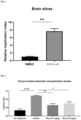
- Mouse cerebellar brain slices (350 ⁇ m) were made from the cerebellum of p10 C57bl6 pups. After 4 days in culture, slices were demyelinated using 0,5mg/ml lysolecithin (18h) and subsequently treated for 10 days with 1 ⁇ M RICE (in 0,1% DMSO) ( Figure 2).
- Figure 2 shows on the x-axis the PDE4D inhibitor (from left to right DMSO and RICE (1 ⁇ M) and the y-axis the relative myelination index or relative MBP expression. Treatment was repeated every 2 days with a 50% medium replenishment. After 10 days of treatment, brain slices were fixated using 4% paraformaldehyde and stained for MBP and neurofilament.
- Figure 3 shows visual evoked potentials (remyelination phase), wherein the x-axis shows from left to right no cuprozine, vehicle, RICE 0.1 mg/kg, and RICE 0.3 mg/kg, and the y-axis shows latency (ms).
- Epidermal VEP was recorded in response to flash stimulation (3 trains of 20 stimuli, 10 ⁇ s duration, 1 Hz frequency) from both eyes.
- the vehicle treated group After cuprizone administration, the vehicle treated group showed significantly increased latency time, indicating damage at the myelin sheath of the optic nerve.
- the RICE treated groups showed decreased latency times indicating increased levels of remyelination compared to the vehicle treated group. Data shown are displayed as mean +/- SEM. A one-way ANOVA with Kruskall Wallis multiple comparison test was conducted to evaluate statistical significances (*p ⁇ 0,05; **p ⁇ 0,01, ****p ⁇ 0,001).
- the mouse neuronal celline N2a was plated in a 96-well plate at a density of 3000 cells/well ( Figure 4).
- Figure 4 shows on the x-axis time (hours) and on the y-axis neurite outgrowth (mm 2 /cell body), wherein from bottom to top at time is 44 hours the graph represents DMSO, 0.1 ⁇ M RICE, 0.5 ⁇ M RICE, 1 ⁇ M RICE.
- DMSO 0.1 ⁇ M RICE
- 0.5 ⁇ M RICE 0.5 ⁇ M RICE
- 1 DMSO One hour after plating, cells were treated with 0,1% DMSO or different concentrations of RICE (0,1 ⁇ M, 0,5 ⁇ M or 1 ⁇ M) in 0,1% DMSO. Afterwards, cells were placed in the incucyte and the Neurotrack automated neurite outgrowth track and analysis was conducted.
- RICE02 As from hereon, further to RICE01 as defined above, several other compounds falling within the scope of the present invention have been synthesized and tested (RICE02 - RICE08). A similar annotation as used herein above for RICE01 is used, for example R2 100 is meant to be RICE02 tested at a concentration of 100 nM. The synthesis schemes for each of these compounds may be found at the end of the EXAMPLES part.
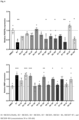
- Figure 5 shows that RICE treatment induces differentiation of a human oligodendrocyte cell line, indicative of remyelination-inducing properties of RICE compounds.
- HOG - celline Human oligodendrocytes (HOG - celline) were plated in a 96 well plate (5.000 cells/well). Cells were cultured for 48h with treatment starting 4h post plating the cells. Cells were cultured and stimulated with vehicle (0.1% DMSO) or RICE compounds (30nM RICE01 or 30-1000nM RICE02-08). Phase-contrast pictures were taken every 3h using the Incucyte and the level of of complexity of treated HOG cells was determined using the NeuroTrack analysis. Data (n ⁇ 6/group) are displayed as mean +/-SEM. Data were analyzed using a one-way ANOVA with Dunnett's multiple comparison test (compared to DMSO condition) (*p ⁇ 0.05; **p ⁇ 0.01; ***p ⁇ 0.005; ****p ⁇ 0.001)
- FIG. 6 shows that RICE treatment decreases PDGFRa and increases MBP expression in a mouse cell line, supporting remyelination-inducing properties of RICE compounds (e.g. decrease in PDGFRa combined with an increase in MBP expression.
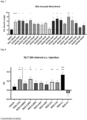
- Figure 7 shows that RICE treatment increases neurite length in a mouse neuroblastoma cell line, indicating neuroplasticity-inducing capacities of RICE compounds.
- FIG 8 shows that RICE01 increases discrimination index (D2) in the object location task (OLT) with a 24h intertrial interval in young adult C57BL/6J-OlaHsd mice.
- a onesample t-test revealed that the D2 value in 0.00003mg/kg, 0.0001mg/kg, 0.0003mg/kg, 0.001 mg/kg, 0.01mg/kg, 0.03mg/kg, and 0.1 mg/kg were significantly higher than zero, indicating discrimination between object locations (*: p ⁇ 0.05, **: p ⁇ 0.01 ***: p ⁇ 0.001, ****: p ⁇ 0.0001).
- RICE 0.0001mg/kg and 0.1mg/kg had a significantly higher d2 index, as assessed with Dunnett's multiple comparison test: #: p ⁇ 0.05, ###: p ⁇ 0.001).
- the crude product was purified by Prep-HPLC with the following conditions (Column: Xselect CSH C18 OBD Column 30*150mm 5 ⁇ m, n; Mobile Phase A: Water(0.05%TFA ), Mobile Phase B: MeOH-HPLC; Flow rate: 60 mL/min; Gradient: 3% B to 33% B in 10 min, 33% B; Wave Length: 254 nm; RT1(min): 8.55; Number Of Runs: 4) to afford 1-(2,6-dimethylmorpholino)-3-(3-(3-hydroxy-4-methoxyphenyl)-1H-pyrazol-1-yl)propan-1-one (28.4 mg, 33.79%) as a white solid.
- Step 2b Synthesis of 3-(3-(4-(difluoromethoxy)-3-((4-methoxybenzyl)oxy)phenyl)-1H-pyrazol-1-yl)-1-morpholinopropan-1-one
- the crude product was purified by Prep-HPLC with the following conditions (Column: Xbridge Prep OBD C18 Column, 30 x 150 mm, 5 ⁇ m; Mobile Phase A: Water(10 mmol/L NH 4 HCO 3 +0.1%NH 3 .H 2 O), Mobile Phase B: CAN; Flow rate: 60 mL/min; Gradient: 17% B to 47% B in 7 min, 47% B; Wave Length: 254 nm; RT1(min): 5.20) .
- the product fractions were lyophilized to afford 3-(3-(4-(difluoromethoxy)-3-hydroxyphenyl)-1H-pyrazol-1-yl)-1-morpholinopropan-1-one (33.5 mg, 12.4%) as a white solid.
- the crude product (110 mg) was purified by Prep-HPLC with the following conditions (Column: Xbridge Shield RP18 OBD Column, 30*150 mm, 5 ⁇ m; Mobile Phase A: Water(10 mmol/L NH4HCO3), Mobile Phase B: CAN; Flow rate: 60 mL/min; Gradient: 17% B to 47% B in 7 min, 47% B; Wave Length: 254 nm; RT1(min): 4.67; Number Of Runs: 0) to afford 1- ⁇ 3-[4-(difluoromethoxy)-3-[(4-methoxyphenyl)methoxy]phenyl]-1,2-oxazol-5-yl ⁇ -3-(morpholin-4-yl)propan-2-ol (31.8 mg, 11.97%) as an off-white solid.
- the mixture was re-separated by prep-Achiral SFC with the following conditions: Column: YMC-Actus Triart Diol-HILIC, 3 x 25 cm, 5 ⁇ m; Flow rate: 65 mL/min; Gradient: isocratic 15% B; Column Temperature (°C): 35; Back Pressure (bar): 100; Wave Length: 254 nm; RT1(min): 8.03; RT2(min): 9.75; Injection Volume: 1.5 mL; Number Of Runs: 9.
- the residue was purified by Prep-HPLC with the following conditions (Column: Xbridge Shield RP18 OBD Column, 30 x 150 mm, 5 ⁇ m; Mobile Phase A: Water (10 mmol/L NH4HCO3), Mobile Phase B: CAN; Flow rate: 60 mL/min; Gradient: 22% B to 52% B in 7 min, 52% B; Wave Length: 254 nm; RT1(min): 5.02).
- the product fractions were lyophilized to afford 2-(difluoromethoxy)-5- ⁇ 1-[3-(2,6-dimethylmorpholin-4-yl)-2-hydroxypropyl]pyrazol-3-yl ⁇ phenol (40.1 mg, 17.3%) as a white solid.
Landscapes
- Chemical & Material Sciences (AREA)
- Organic Chemistry (AREA)
- Health & Medical Sciences (AREA)
- Public Health (AREA)
- Veterinary Medicine (AREA)
- Pharmacology & Pharmacy (AREA)
- Medicinal Chemistry (AREA)
- Life Sciences & Earth Sciences (AREA)
- Animal Behavior & Ethology (AREA)
- General Health & Medical Sciences (AREA)
- Chemical Kinetics & Catalysis (AREA)
- Neurology (AREA)
- Engineering & Computer Science (AREA)
- Bioinformatics & Cheminformatics (AREA)
- Biomedical Technology (AREA)
- Neurosurgery (AREA)
- General Chemical & Material Sciences (AREA)
- Nuclear Medicine, Radiotherapy & Molecular Imaging (AREA)
- Pain & Pain Management (AREA)
- Epidemiology (AREA)
- Hospice & Palliative Care (AREA)
- Psychiatry (AREA)
- Pharmaceuticals Containing Other Organic And Inorganic Compounds (AREA)
Claims (15)
- Composé selon la formule (I), ou un stéréo-isomère, tautomère, racémique, sel, hydrate, forme N-oxyde ou solvate de celui-ci,
 R1 = -CH3 ou -CHF2 ;
X= R2 = -CO, -C=O(CH2), -CH(OH)-CH2, -CH2-C=O, -CH2-CH2-C=O, -CH2-CH(OH)-CH2, -CH2CH(OCOR4)-CH2 ;
R3 =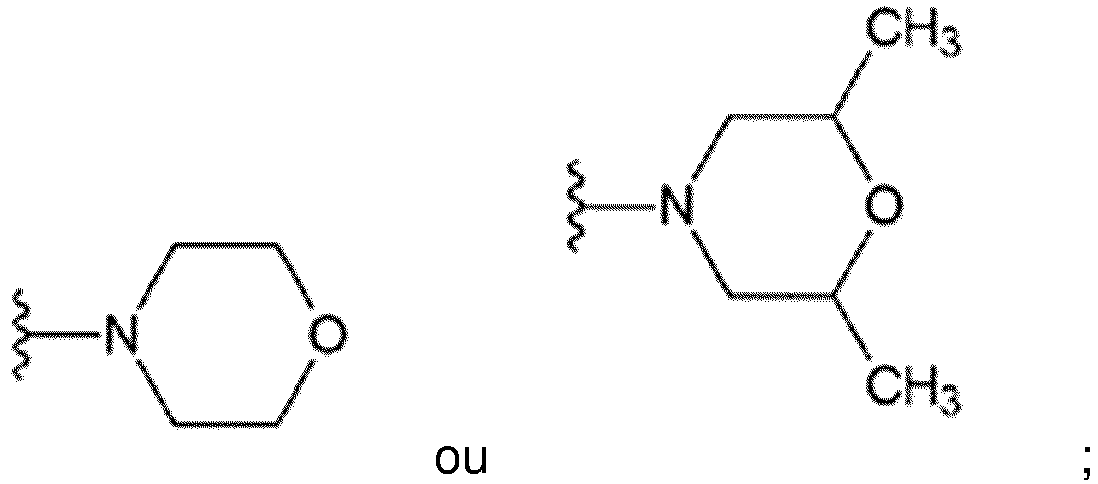 R4 = alkyle en C1-C3,
 - Composé selon la revendication 1, dans lequel R4 est -CH3.
- Composé selon l'une quelconque des revendications précédentes, dans lequel ledit composé est choisi parmi la liste comprenant


- Composition pharmaceutique comprenant au moins un composé selon l'une quelconque des revendications 1 à 3 et un support pharmaceutique acceptable.
- Composé selon l'une quelconque des revendications 1 à 3, ou composition pharmaceutique selon la revendication 4, pour une utilisation en médecine humaine ou vétérinaire.
- Composé selon l'une quelconque des revendications 1 à 3, ou composition pharmaceutique selon la revendication 4, pour une utilisation en tant que médicament ayant une activité inhibitrice de la PDE4D.
- Composé selon l'une quelconque des revendications 1 à 3 ou composition pharmaceutique selon la revendication 4, pour utilisation dans la prévention et/ou le traitement et/ou la guérison d'un trouble neurodégénératif chez un sujet.
- Composé ou composition pharmaceutique pour utilisation selon la revendication 7, dans lequel/laquelle le trouble neurodégénératif est choisi parmi la liste comprenant : la maladie d'Alzheimer (AD), la maladie de Parkinson (PD), la maladie de Huntington, la maladie de Lou Gehrig (ALS), les accidents vasculaires cérébraux, les lésions cérébrales traumatiques, les lésions de la moelle épinière, les troubles cognitifs légers et les maladies démyélinisantes telles que les maladies démyélinisantes périphériques, et la sclérose en plaques (MS).
- Composé ou composition pharmaceutique pour utilisation selon la revendication 8, dans lequel/laquelle la sclérose en plaques est une sclérose en plaques progressive telle que choisie dans le groupe comprenant la sclérose en plaques primaire progressive, la sclérose en plaques secondaire progressive et la sclérose en plaques récurrente-rémittente.
- Inhibiteur de la PDE4D comprenant un composé selon l'une quelconque des revendications 1 à 3 ou une composition pharmaceutique selon la revendication 4, dans lequel l'inhibiteur de la PDE4D inhibe sélectivement les isoformes de type D de la PDE4.
- Procédé de synthèse d'un composé selon l'une quelconque des revendications 1 à 2, comprenant les étapes consistant à :- fournir un composé selon la formule (II) ;
 - faire réagir le composé selon la formule (II) avec le chlorure de 4-méthoxybenzyle (PMBC1) formant un composé selon la formule (III) ;
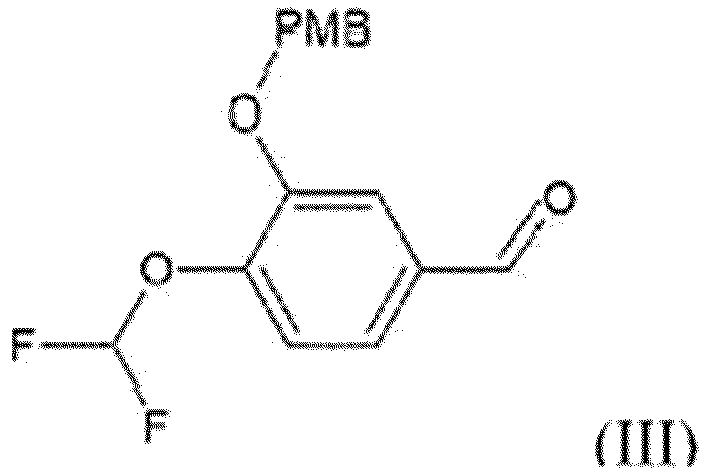 - dissoudre le composé selon la formule (III) dans l'acétonitrile (MeCN) ;- faire réagir le composé dissous selon la formule (III) pour former le composé selon la formule (IV),
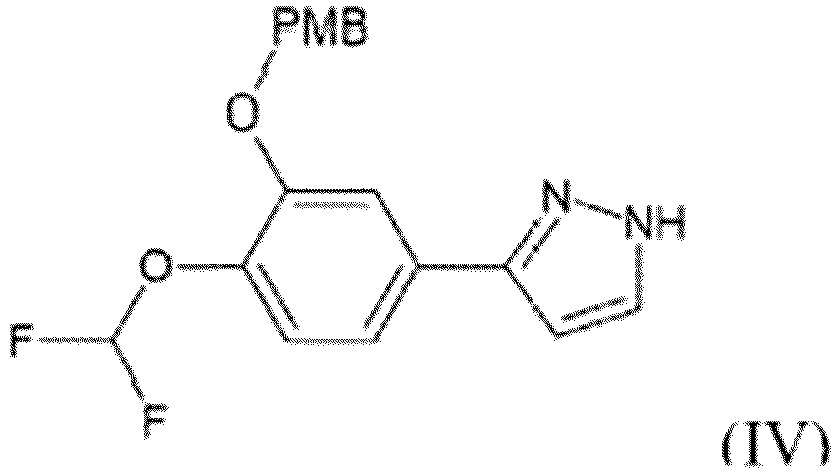 - l'ajout d'hydrazide de l'acide toluène-4-sulfonique au composé dissous selon la formule (III) pour former un mélange réactionnel ;- l'ajout de l'hydroxyde de sodium (NaOH) au mélange réactionnel ; et- l'ajout du 1-vinlyimidazole au mélange réactionnel ;- la réaction du composé selon la formule (IV) avec le 2-(chlorométhyl)oxirane et la triméthylamine (EtsN) pour former le composé selon la formule (V) ;
 - la réaction du composé selon la formule (V) avec la morpholine pour former le composé selon la formule (VI) ; et
 - la réaction du composé selon la formule (VI) avec l'acide trifluoroacétique (TFA) pour former le composé selon la formule (I').
 - Procédé selon la revendication 11, dans lequel l'étape consistant à ajouter l'hydrazide de l'acide toluène-4-sulfonique au composé dissous selon la formule (III) pour former un mélange réactionnel est effectuée à une température dans la plage de 15 °C à 40 °C, de préférence à une température dans la plage de 15 °C à 30 °C, plus préférablement à une température d'environ 20 °C.
- Procédé selon les revendications 11 ou 12, dans lequel l'étape consistant à ajouter l'hydrazide de l'acide toluène-4-sulfonique au composé dissous selon la formule (III) formant un mélange réactionnel est effectuée pendant au moins 45 minutes, de préférence pendant au moins 55 minutes, plus préférablement pendant environ 60 minutes.
- Procédé selon l'une quelconque des revendications 11 à 13, dans lequel l'étape consistant à ajouter l'hydroxyde de sodium (NaOH) au mélange réactionnel est effectuée pendant au moins 10 minutes, de préférence pendant au moins 15 minutes, plus préférablement pendant au moins 20 minutes.
- Procédé selon l'une quelconque des revendications 11 à 14, dans lequel l'étape consistant à faire réagir le composé selon la formule (V) avec la morpholine pour former le composé selon la formule (VI) est effectuée à une température dans la plage de 30 °C à 80 °C, de préférence effectuée à une température dans la plage de 40 °C à 70 °C, plus préférablement effectuée à une température dans la plage de 50 °C à 60 °C.
Applications Claiming Priority (2)
| Application Number | Priority Date | Filing Date | Title |
|---|---|---|---|
| EP21177320 | 2021-06-02 | ||
| PCT/EP2022/065055 WO2022253959A1 (fr) | 2021-06-02 | 2022-06-02 | Composés et compositions pharmaceutiques destinés à être utilisés dans des troubles neurodégénératifs |
Publications (3)
| Publication Number | Publication Date |
|---|---|
| EP4347576A1 EP4347576A1 (fr) | 2024-04-10 |
| EP4347576B1 true EP4347576B1 (fr) | 2025-04-23 |
| EP4347576C0 EP4347576C0 (fr) | 2025-04-23 |
Family
ID=76250163
Family Applications (1)
| Application Number | Title | Priority Date | Filing Date |
|---|---|---|---|
| EP22732100.7A Active EP4347576B1 (fr) | 2021-06-02 | 2022-06-02 | Composés et compositions pharmaceutiques à utiliser pour des troubles neurodégénératifs |
Country Status (4)
| Country | Link |
|---|---|
| US (1) | US20240279183A1 (fr) |
| EP (1) | EP4347576B1 (fr) |
| CA (1) | CA3221753A1 (fr) |
| WO (1) | WO2022253959A1 (fr) |
Family Cites Families (3)
| Publication number | Priority date | Publication date | Assignee | Title |
|---|---|---|---|---|
| US5547967A (en) * | 1993-12-08 | 1996-08-20 | Kali-Chemie Pharma Gmbh | (Phenylalkylaminoalkyloxy)-heteroaryl-compounds, processes and intermediates for their production and pharmaceutical compositions containing them |
| EP1631568A1 (fr) * | 2003-04-18 | 2006-03-08 | Memory Pharmaceuticals Corporation | Derives du pyrazole inhibiteurs de la phosphodiesterase 4 |
| EP2907806A1 (fr) * | 2014-02-14 | 2015-08-19 | Universita Degli Studi Di Genova | Nouveux composés comme inhibiteurs sélectifs de PDE4D |
-
2022
- 2022-06-02 EP EP22732100.7A patent/EP4347576B1/fr active Active
- 2022-06-02 US US18/564,839 patent/US20240279183A1/en active Pending
- 2022-06-02 CA CA3221753A patent/CA3221753A1/fr active Pending
- 2022-06-02 WO PCT/EP2022/065055 patent/WO2022253959A1/fr not_active Ceased
Also Published As
| Publication number | Publication date |
|---|---|
| CA3221753A1 (fr) | 2022-12-08 |
| EP4347576C0 (fr) | 2025-04-23 |
| WO2022253959A1 (fr) | 2022-12-08 |
| EP4347576A1 (fr) | 2024-04-10 |
| US20240279183A1 (en) | 2024-08-22 |
Similar Documents
| Publication | Publication Date | Title |
|---|---|---|
| JP7774320B2 (ja) | ミエリン形成を促進する化合物および方法 | |
| EP3810608B1 (fr) | Composés pyrrolopyridines comme des inhibiteurs de oga | |
| US10017506B2 (en) | ATX modulating agents | |
| US20190231798A1 (en) | Compositions and methods for the repair of myelin | |
| TW201414703A (zh) | 做爲s1p調節劑及/或atx調節劑之化合物 | |
| EP2877185B1 (fr) | Dérivés de 2-(1-(1-(6-((cyclohéxyl)oxy)-5-(trifluorométhyl)naphthalén-2-yl)éthyl)pipéridin-3-yl) acide acétique en tant que modulateurs d'autotaxin (atx) pour le traitement d'inflammations et de maladies d'auto-immunité | |
| CN105193802A (zh) | 用于预防和/或治疗溶酶体贮积失调的新颖组合物 | |
| EP2760858B1 (fr) | Dérivés d'uridine diphosphate, compositions et méthodes de traitement de troubles neurodégénératifs | |
| RU2735277C2 (ru) | 3,3-дифторпиперидинкарбаматные гетероциклические соединения в качестве антагонистов nr2b nmda-рецептора | |
| US20250129054A1 (en) | Prodrugs of 3,4-methylenedioxy-n-methcathinone and uses thereof | |
| JP2022059650A (ja) | 筋萎縮性側索硬化症治療剤及び治療用組成物 | |
| WO2018213491A9 (fr) | Méthodes de traitement de l'épilepsie et de troubles neurodéveloppementaux | |
| TWI736519B (zh) | 治療神經退化性疾病之組合物及方法 | |
| CN111902143B (zh) | 神经细胞内钙浓度上升抑制剂 | |
| WO2024026368A1 (fr) | Dérivés de pyridine substitués en tant qu'inhibiteurs de sarm1 | |
| EP4347576B1 (fr) | Composés et compositions pharmaceutiques à utiliser pour des troubles neurodégénératifs | |
| JP2024533323A (ja) | 神経変性疾患を処置するための方法 | |
| US11318126B2 (en) | Composition for activating neurogenesis | |
| AU703776B2 (en) | Derivatives of 4-(cycloalkyl)piperidines and of 4-(cycloalkylalkyl)piperidines, their preparation and their therapeutic application | |
| HK40073119A (en) | Compounds and methods of promoting myelination | |
| WO2025164698A1 (fr) | Agent thérapeutique et composition thérapeutique pour la maladie de huntington | |
| HK40116117A (zh) | 新颖嘧啶基和三嗪基磺醯胺衍生物 | |
| JP2026502630A (ja) | 新規ピリミジニルスルホンアミド誘導体 | |
| WO2019046534A1 (fr) | Composés d'indoloquinoline deutérés | |
| HK1233638B (en) | Compositions and methods for treating neurodegenerative diseases |
Legal Events
| Date | Code | Title | Description |
|---|---|---|---|
| STAA | Information on the status of an ep patent application or granted ep patent |
Free format text: STATUS: UNKNOWN |
|
| STAA | Information on the status of an ep patent application or granted ep patent |
Free format text: STATUS: THE INTERNATIONAL PUBLICATION HAS BEEN MADE |
|
| PUAI | Public reference made under article 153(3) epc to a published international application that has entered the european phase |
Free format text: ORIGINAL CODE: 0009012 |
|
| STAA | Information on the status of an ep patent application or granted ep patent |
Free format text: STATUS: REQUEST FOR EXAMINATION WAS MADE |
|
| 17P | Request for examination filed |
Effective date: 20231221 |
|
| AK | Designated contracting states |
Kind code of ref document: A1 Designated state(s): AL AT BE BG CH CY CZ DE DK EE ES FI FR GB GR HR HU IE IS IT LI LT LU LV MC MK MT NL NO PL PT RO RS SE SI SK SM TR |
|
| DAV | Request for validation of the european patent (deleted) | ||
| DAX | Request for extension of the european patent (deleted) | ||
| GRAP | Despatch of communication of intention to grant a patent |
Free format text: ORIGINAL CODE: EPIDOSNIGR1 |
|
| STAA | Information on the status of an ep patent application or granted ep patent |
Free format text: STATUS: GRANT OF PATENT IS INTENDED |
|
| INTG | Intention to grant announced |
Effective date: 20241113 |
|
| GRAS | Grant fee paid |
Free format text: ORIGINAL CODE: EPIDOSNIGR3 |
|
| GRAA | (expected) grant |
Free format text: ORIGINAL CODE: 0009210 |
|
| STAA | Information on the status of an ep patent application or granted ep patent |
Free format text: STATUS: THE PATENT HAS BEEN GRANTED |
|
| AK | Designated contracting states |
Kind code of ref document: B1 Designated state(s): AL AT BE BG CH CY CZ DE DK EE ES FI FR GB GR HR HU IE IS IT LI LT LU LV MC MK MT NL NO PL PT RO RS SE SI SK SM TR |
|
| REG | Reference to a national code |
Ref country code: GB Ref legal event code: FG4D |
|
| REG | Reference to a national code |
Ref country code: CH Ref legal event code: EP |
|
| REG | Reference to a national code |
Ref country code: DE Ref legal event code: R096 Ref document number: 602022013610 Country of ref document: DE |
|
| REG | Reference to a national code |
Ref country code: IE Ref legal event code: FG4D |
|
| U01 | Request for unitary effect filed |
Effective date: 20250521 |
|
| U07 | Unitary effect registered |
Designated state(s): AT BE BG DE DK EE FI FR IT LT LU LV MT NL PT RO SE SI Effective date: 20250527 |
|
| PGFP | Annual fee paid to national office [announced via postgrant information from national office to epo] |
Ref country code: IE Payment date: 20250627 Year of fee payment: 4 |
|
| U20 | Renewal fee for the european patent with unitary effect paid |
Year of fee payment: 4 Effective date: 20250628 |
|
| PG25 | Lapsed in a contracting state [announced via postgrant information from national office to epo] |
Ref country code: ES Free format text: LAPSE BECAUSE OF FAILURE TO SUBMIT A TRANSLATION OF THE DESCRIPTION OR TO PAY THE FEE WITHIN THE PRESCRIBED TIME-LIMIT Effective date: 20250423 |
|
| PG25 | Lapsed in a contracting state [announced via postgrant information from national office to epo] |
Ref country code: GR Free format text: LAPSE BECAUSE OF FAILURE TO SUBMIT A TRANSLATION OF THE DESCRIPTION OR TO PAY THE FEE WITHIN THE PRESCRIBED TIME-LIMIT Effective date: 20250724 Ref country code: NO Free format text: LAPSE BECAUSE OF FAILURE TO SUBMIT A TRANSLATION OF THE DESCRIPTION OR TO PAY THE FEE WITHIN THE PRESCRIBED TIME-LIMIT Effective date: 20250723 |
|
| PG25 | Lapsed in a contracting state [announced via postgrant information from national office to epo] |
Ref country code: PL Free format text: LAPSE BECAUSE OF FAILURE TO SUBMIT A TRANSLATION OF THE DESCRIPTION OR TO PAY THE FEE WITHIN THE PRESCRIBED TIME-LIMIT Effective date: 20250423 |
|
| PG25 | Lapsed in a contracting state [announced via postgrant information from national office to epo] |
Ref country code: HR Free format text: LAPSE BECAUSE OF FAILURE TO SUBMIT A TRANSLATION OF THE DESCRIPTION OR TO PAY THE FEE WITHIN THE PRESCRIBED TIME-LIMIT Effective date: 20250423 |
|
| PG25 | Lapsed in a contracting state [announced via postgrant information from national office to epo] |
Ref country code: RS Free format text: LAPSE BECAUSE OF FAILURE TO SUBMIT A TRANSLATION OF THE DESCRIPTION OR TO PAY THE FEE WITHIN THE PRESCRIBED TIME-LIMIT Effective date: 20250723 |
|
| PG25 | Lapsed in a contracting state [announced via postgrant information from national office to epo] |
Ref country code: IS Free format text: LAPSE BECAUSE OF FAILURE TO SUBMIT A TRANSLATION OF THE DESCRIPTION OR TO PAY THE FEE WITHIN THE PRESCRIBED TIME-LIMIT Effective date: 20250823 |
|
| PG25 | Lapsed in a contracting state [announced via postgrant information from national office to epo] |
Ref country code: SM Free format text: LAPSE BECAUSE OF FAILURE TO SUBMIT A TRANSLATION OF THE DESCRIPTION OR TO PAY THE FEE WITHIN THE PRESCRIBED TIME-LIMIT Effective date: 20250423 |
|
| PG25 | Lapsed in a contracting state [announced via postgrant information from national office to epo] |
Ref country code: CZ Free format text: LAPSE BECAUSE OF FAILURE TO SUBMIT A TRANSLATION OF THE DESCRIPTION OR TO PAY THE FEE WITHIN THE PRESCRIBED TIME-LIMIT Effective date: 20250423 |
|
| PG25 | Lapsed in a contracting state [announced via postgrant information from national office to epo] |
Ref country code: SK Free format text: LAPSE BECAUSE OF FAILURE TO SUBMIT A TRANSLATION OF THE DESCRIPTION OR TO PAY THE FEE WITHIN THE PRESCRIBED TIME-LIMIT Effective date: 20250423 |
|
| REG | Reference to a national code |
Ref country code: CH Ref legal event code: H13 Free format text: ST27 STATUS EVENT CODE: U-0-0-H10-H13 (AS PROVIDED BY THE NATIONAL OFFICE) Effective date: 20260127 |
|
| PG25 | Lapsed in a contracting state [announced via postgrant information from national office to epo] |
Ref country code: MC Free format text: LAPSE BECAUSE OF FAILURE TO SUBMIT A TRANSLATION OF THE DESCRIPTION OR TO PAY THE FEE WITHIN THE PRESCRIBED TIME-LIMIT Effective date: 20250423 |
|
| PLBE | No opposition filed within time limit |
Free format text: ORIGINAL CODE: 0009261 |
|
| STAA | Information on the status of an ep patent application or granted ep patent |
Free format text: STATUS: NO OPPOSITION FILED WITHIN TIME LIMIT |
|
| REG | Reference to a national code |
Ref country code: CH Ref legal event code: L10 Free format text: ST27 STATUS EVENT CODE: U-0-0-L10-L00 (AS PROVIDED BY THE NATIONAL OFFICE) Effective date: 20260304 |
|
| 26N | No opposition filed |
Effective date: 20260126 |
|
| PG25 | Lapsed in a contracting state [announced via postgrant information from national office to epo] |
Ref country code: CH Free format text: LAPSE BECAUSE OF NON-PAYMENT OF DUE FEES Effective date: 20250630 |