EP4349987A1 - Acide nucléique antisens - Google Patents
Acide nucléique antisens Download PDFInfo
- Publication number
- EP4349987A1 EP4349987A1 EP22811423.7A EP22811423A EP4349987A1 EP 4349987 A1 EP4349987 A1 EP 4349987A1 EP 22811423 A EP22811423 A EP 22811423A EP 4349987 A1 EP4349987 A1 EP 4349987A1
- Authority
- EP
- European Patent Office
- Prior art keywords
- oligonucleotide
- nucleotide sequence
- acceptable salt
- pharmaceutically acceptable
- seq
- Prior art date
- Legal status (The legal status is an assumption and is not a legal conclusion. Google has not performed a legal analysis and makes no representation as to the accuracy of the status listed.)
- Withdrawn
Links
Images



Classifications
-
- C—CHEMISTRY; METALLURGY
- C12—BIOCHEMISTRY; BEER; SPIRITS; WINE; VINEGAR; MICROBIOLOGY; ENZYMOLOGY; MUTATION OR GENETIC ENGINEERING
- C12N—MICROORGANISMS OR ENZYMES; COMPOSITIONS THEREOF; PROPAGATING, PRESERVING, OR MAINTAINING MICROORGANISMS; MUTATION OR GENETIC ENGINEERING; CULTURE MEDIA
- C12N9/00—Enzymes; Proenzymes; Compositions thereof; Processes for preparing, activating, inhibiting, separating or purifying enzymes
- C12N9/14—Hydrolases (3)
- C12N9/16—Hydrolases (3) acting on ester bonds (3.1)
-
- A—HUMAN NECESSITIES
- A61—MEDICAL OR VETERINARY SCIENCE; HYGIENE
- A61P—SPECIFIC THERAPEUTIC ACTIVITY OF CHEMICAL COMPOUNDS OR MEDICINAL PREPARATIONS
- A61P43/00—Drugs for specific purposes, not provided for in groups A61P1/00-A61P41/00
-
- C—CHEMISTRY; METALLURGY
- C12—BIOCHEMISTRY; BEER; SPIRITS; WINE; VINEGAR; MICROBIOLOGY; ENZYMOLOGY; MUTATION OR GENETIC ENGINEERING
- C12N—MICROORGANISMS OR ENZYMES; COMPOSITIONS THEREOF; PROPAGATING, PRESERVING, OR MAINTAINING MICROORGANISMS; MUTATION OR GENETIC ENGINEERING; CULTURE MEDIA
- C12N15/00—Mutation or genetic engineering; DNA or RNA concerning genetic engineering, vectors, e.g. plasmids, or their isolation, preparation or purification; Use of hosts therefor
- C12N15/09—Recombinant DNA-technology
- C12N15/11—DNA or RNA fragments; Modified forms thereof; Non-coding nucleic acids having a biological activity
- C12N15/113—Non-coding nucleic acids modulating the expression of genes, e.g. antisense oligonucleotides; Antisense DNA or RNA; Triplex- forming oligonucleotides; Catalytic nucleic acids, e.g. ribozymes; Nucleic acids used in co-suppression or gene silencing
-
- A—HUMAN NECESSITIES
- A61—MEDICAL OR VETERINARY SCIENCE; HYGIENE
- A61K—PREPARATIONS FOR MEDICAL, DENTAL OR TOILETRY PURPOSES
- A61K31/00—Medicinal preparations containing organic active ingredients
- A61K31/70—Carbohydrates; Sugars; Derivatives thereof
- A61K31/7088—Compounds having three or more nucleosides or nucleotides
-
- A—HUMAN NECESSITIES
- A61—MEDICAL OR VETERINARY SCIENCE; HYGIENE
- A61K—PREPARATIONS FOR MEDICAL, DENTAL OR TOILETRY PURPOSES
- A61K31/00—Medicinal preparations containing organic active ingredients
- A61K31/70—Carbohydrates; Sugars; Derivatives thereof
- A61K31/7088—Compounds having three or more nucleosides or nucleotides
- A61K31/7115—Nucleic acids or oligonucleotides having modified bases, i.e. other than adenine, guanine, cytosine, uracil or thymine
-
- A—HUMAN NECESSITIES
- A61—MEDICAL OR VETERINARY SCIENCE; HYGIENE
- A61K—PREPARATIONS FOR MEDICAL, DENTAL OR TOILETRY PURPOSES
- A61K31/00—Medicinal preparations containing organic active ingredients
- A61K31/70—Carbohydrates; Sugars; Derivatives thereof
- A61K31/7088—Compounds having three or more nucleosides or nucleotides
- A61K31/712—Nucleic acids or oligonucleotides having modified sugars, i.e. other than ribose or 2'-deoxyribose
-
- A—HUMAN NECESSITIES
- A61—MEDICAL OR VETERINARY SCIENCE; HYGIENE
- A61K—PREPARATIONS FOR MEDICAL, DENTAL OR TOILETRY PURPOSES
- A61K31/00—Medicinal preparations containing organic active ingredients
- A61K31/70—Carbohydrates; Sugars; Derivatives thereof
- A61K31/7088—Compounds having three or more nucleosides or nucleotides
- A61K31/7125—Nucleic acids or oligonucleotides having modified internucleoside linkage, i.e. other than 3'-5' phosphodiesters
-
- A—HUMAN NECESSITIES
- A61—MEDICAL OR VETERINARY SCIENCE; HYGIENE
- A61K—PREPARATIONS FOR MEDICAL, DENTAL OR TOILETRY PURPOSES
- A61K31/00—Medicinal preparations containing organic active ingredients
- A61K31/70—Carbohydrates; Sugars; Derivatives thereof
- A61K31/7088—Compounds having three or more nucleosides or nucleotides
- A61K31/713—Double-stranded nucleic acids or oligonucleotides
-
- A—HUMAN NECESSITIES
- A61—MEDICAL OR VETERINARY SCIENCE; HYGIENE
- A61K—PREPARATIONS FOR MEDICAL, DENTAL OR TOILETRY PURPOSES
- A61K48/00—Medicinal preparations containing genetic material which is inserted into cells of the living body to treat genetic diseases; Gene therapy
-
- C—CHEMISTRY; METALLURGY
- C07—ORGANIC CHEMISTRY
- C07K—PEPTIDES
- C07K14/00—Peptides having more than 20 amino acids; Gastrins; Somatostatins; Melanotropins; Derivatives thereof
- C07K14/435—Peptides having more than 20 amino acids; Gastrins; Somatostatins; Melanotropins; Derivatives thereof from animals; from humans
-
- C—CHEMISTRY; METALLURGY
- C12—BIOCHEMISTRY; BEER; SPIRITS; WINE; VINEGAR; MICROBIOLOGY; ENZYMOLOGY; MUTATION OR GENETIC ENGINEERING
- C12N—MICROORGANISMS OR ENZYMES; COMPOSITIONS THEREOF; PROPAGATING, PRESERVING, OR MAINTAINING MICROORGANISMS; MUTATION OR GENETIC ENGINEERING; CULTURE MEDIA
- C12N15/00—Mutation or genetic engineering; DNA or RNA concerning genetic engineering, vectors, e.g. plasmids, or their isolation, preparation or purification; Use of hosts therefor
- C12N15/09—Recombinant DNA-technology
- C12N15/11—DNA or RNA fragments; Modified forms thereof; Non-coding nucleic acids having a biological activity
- C12N15/113—Non-coding nucleic acids modulating the expression of genes, e.g. antisense oligonucleotides; Antisense DNA or RNA; Triplex- forming oligonucleotides; Catalytic nucleic acids, e.g. ribozymes; Nucleic acids used in co-suppression or gene silencing
- C12N15/1137—Non-coding nucleic acids modulating the expression of genes, e.g. antisense oligonucleotides; Antisense DNA or RNA; Triplex- forming oligonucleotides; Catalytic nucleic acids, e.g. ribozymes; Nucleic acids used in co-suppression or gene silencing against enzymes
-
- C—CHEMISTRY; METALLURGY
- C12—BIOCHEMISTRY; BEER; SPIRITS; WINE; VINEGAR; MICROBIOLOGY; ENZYMOLOGY; MUTATION OR GENETIC ENGINEERING
- C12N—MICROORGANISMS OR ENZYMES; COMPOSITIONS THEREOF; PROPAGATING, PRESERVING, OR MAINTAINING MICROORGANISMS; MUTATION OR GENETIC ENGINEERING; CULTURE MEDIA
- C12N9/00—Enzymes; Proenzymes; Compositions thereof; Processes for preparing, activating, inhibiting, separating or purifying enzymes
- C12N9/90—Isomerases (5.)
-
- C—CHEMISTRY; METALLURGY
- C12—BIOCHEMISTRY; BEER; SPIRITS; WINE; VINEGAR; MICROBIOLOGY; ENZYMOLOGY; MUTATION OR GENETIC ENGINEERING
- C12N—MICROORGANISMS OR ENZYMES; COMPOSITIONS THEREOF; PROPAGATING, PRESERVING, OR MAINTAINING MICROORGANISMS; MUTATION OR GENETIC ENGINEERING; CULTURE MEDIA
- C12N2310/00—Structure or type of the nucleic acid
- C12N2310/10—Type of nucleic acid
- C12N2310/11—Antisense
-
- C—CHEMISTRY; METALLURGY
- C12—BIOCHEMISTRY; BEER; SPIRITS; WINE; VINEGAR; MICROBIOLOGY; ENZYMOLOGY; MUTATION OR GENETIC ENGINEERING
- C12N—MICROORGANISMS OR ENZYMES; COMPOSITIONS THEREOF; PROPAGATING, PRESERVING, OR MAINTAINING MICROORGANISMS; MUTATION OR GENETIC ENGINEERING; CULTURE MEDIA
- C12N2310/00—Structure or type of the nucleic acid
- C12N2310/30—Chemical structure
- C12N2310/31—Chemical structure of the backbone
- C12N2310/314—Phosphoramidates
-
- C—CHEMISTRY; METALLURGY
- C12—BIOCHEMISTRY; BEER; SPIRITS; WINE; VINEGAR; MICROBIOLOGY; ENZYMOLOGY; MUTATION OR GENETIC ENGINEERING
- C12N—MICROORGANISMS OR ENZYMES; COMPOSITIONS THEREOF; PROPAGATING, PRESERVING, OR MAINTAINING MICROORGANISMS; MUTATION OR GENETIC ENGINEERING; CULTURE MEDIA
- C12N2310/00—Structure or type of the nucleic acid
- C12N2310/30—Chemical structure
- C12N2310/31—Chemical structure of the backbone
- C12N2310/315—Phosphorothioates
-
- C—CHEMISTRY; METALLURGY
- C12—BIOCHEMISTRY; BEER; SPIRITS; WINE; VINEGAR; MICROBIOLOGY; ENZYMOLOGY; MUTATION OR GENETIC ENGINEERING
- C12N—MICROORGANISMS OR ENZYMES; COMPOSITIONS THEREOF; PROPAGATING, PRESERVING, OR MAINTAINING MICROORGANISMS; MUTATION OR GENETIC ENGINEERING; CULTURE MEDIA
- C12N2310/00—Structure or type of the nucleic acid
- C12N2310/30—Chemical structure
- C12N2310/32—Chemical structure of the sugar
- C12N2310/323—Chemical structure of the sugar modified ring structure
- C12N2310/3233—Morpholino-type ring
-
- C—CHEMISTRY; METALLURGY
- C12—BIOCHEMISTRY; BEER; SPIRITS; WINE; VINEGAR; MICROBIOLOGY; ENZYMOLOGY; MUTATION OR GENETIC ENGINEERING
- C12N—MICROORGANISMS OR ENZYMES; COMPOSITIONS THEREOF; PROPAGATING, PRESERVING, OR MAINTAINING MICROORGANISMS; MUTATION OR GENETIC ENGINEERING; CULTURE MEDIA
- C12N2320/00—Applications; Uses
- C12N2320/30—Special therapeutic applications
- C12N2320/33—Alteration of splicing
-
- C—CHEMISTRY; METALLURGY
- C12—BIOCHEMISTRY; BEER; SPIRITS; WINE; VINEGAR; MICROBIOLOGY; ENZYMOLOGY; MUTATION OR GENETIC ENGINEERING
- C12Y—ENZYMES
- C12Y306/00—Hydrolases acting on acid anhydrides (3.6)
- C12Y306/04—Hydrolases acting on acid anhydrides (3.6) acting on acid anhydrides; involved in cellular and subcellular movement (3.6.4)
- C12Y306/04012—DNA helicase (3.6.4.12)
Definitions
- the present invention relates to an antisense oligonucleotide (antisense nucleic acid) that enables skipping of the 27th exon of a WRN gene, which is the causal gene for Werner syndrome, and a pharmaceutical composition containing the oligonucleotide.
- Werner syndrome is a rare disease that causes premature ageing, and is known to present in the juvenile stage with common features found in elderly such as generation of white hair, hair loss, diabetes mellitus, heart disease, cancers, skin retraction, scleroderma-like skin changes, juvenile cataract, progeria, and hypogonadism. More specifically, geriatric symptoms including skin atrophy and sclerosis, hair change such as white hair and baldness, and cataracts begin to appear in the twenties and thirties. In addition, diabetes mellitus, arteriosclerosis, malignant tumors, and others are likely to occur in combination, and most of the patients die in their fifties. In many cases, exacerbation of the refractory skin ulcer that usually develops on the elbows, knees, heels, and the like, leads to amputation of the extremities, with a consequent deterioration in quality of life (NPL 1).
- Werner syndrome is an autosomal recessive rare disease for which the WRN gene, located on the short arm of chromosome 8 (8p12) and encoding the RecQ DNA/RNA helicase (WRN helicase), has been identified as the causative gene (NPL 2, NPL 3).
- the WRN protein consists of 1432 amino acids, and has ATP-dependent DNA/RNA helicase activity and 3' ⁇ 5' exonuclease activity.
- the WRN protein has various physiological functions including DNA replication, base excision repair, DNA double-strand break repair, transcription, and telomere maintenance, and serves for gene repair and maintenance of the stability of chromosomes. Therefore, significant genomic destabilization is found in Werner syndrome. Fibroblasts derived from a Werner syndrome patient have a shorter replicative lifespan and exhibit significantly lower growth rates than normal cells derived from a healthy individual (NPL 4). The reduced proliferative potential of fibroblasts is inferred to be a cause for delayed of wound healing of skin ulcers in Werner syndrome (NPL 5).
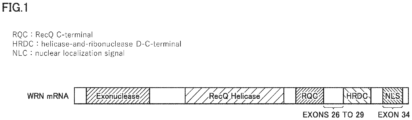
- a nuclear localization signal is located near the C terminus of the WRN protein and is involved in normal physiological functions by inducing nuclear localization ( Fig. 1 ).
- a nuclear localization signal is generated due to the occurrence of a premature stop codon (termination codon) as a result of a mutation such as splicing, nonsense, and frameshift mutations
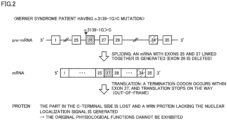
- the WRN helicase which is supposed to function in the nuclei, is prevented from being localized in the nuclei, and is thus unable to perform its functions, resulting in the onset of Werner syndrome ( Fig. 1 and Fig. 2 ) (NPL 3).
- the reading frame is shifted (out-of-frame) by the skipping mutation c.3139-1G>C in the 26th exon of the human WRN gene, resulting in the occurrence of a stop codon (termination codon) in the 27th exon (hereinafter, occasionally referred to as "exon 27"). Therefore, a WRN protein with deletion of the nuclear localization signal, which is otherwise present at the C-terminal part corresponding to the downstream of the 27th exon of the human WRN gene, is generated, leading to the loss of the original functions ( Fig. 2 ) (NPL 3).
- nucleic acid drugs have been used as new therapeutic agents.
- Nucleic acid drugs each of which is composed of an oligonucleic acid, which is a nucleic acid or modified nucleic acid of ten to several tens of nucleotides linked together, are pharmaceuticals produced by chemical synthesis, some of which are known to act directly on messenger RNA involved in protein translation or noncoding RNA or the like, and some of which are known to act on target protein like antibody drugs.
- Splicing-switching antisense oligonucleotides one of the nucleic acid drugs, can inhibit the binding of a splicing factor to an mRNA precursor (hereinafter, occasionally referred to as "pre-mRNA") to switch splicing of a nearby exon (splice-out), thereby normalizing the reading frame of frameshifted abnormal RNA. Accordingly, one exon of a gene is spliced out to allow expression of the corresponding protein retaining the N-terminal and C-terminal parts that are important for functional expression to be expressed.
- pre-mRNA an mRNA precursor
- skipping a targeted exon with a splice-switching antisense oligonucleotide allows a functional protein to be re-expressed that has been translated to the C-terminus, thereby potentially ameliorating the pathological condition of a disease. This is called exon-skipping therapy, and the proteins expressed by the treatment are shorter than normal, but can still restore the functions that were defective due to a mutation (NPL 6).
- the skipping mutation c.3139-1G>C in the 26th exon of the human WRN gene has been reported as the most common mutation in Werner syndrome.
- the skipping mutation c.3139-1G>C causes the appearance of a termination codon within the 27th exon, and a WRN protein with a deletion of an amino acid sequence corresponding to the downstream of the termination codon and containing a nuclear localization signal present in the C-terminal part, is generated, resulting in the loss of the original physiological functions.
- the present inventors focused on splicing-switching antisense oligonucleotides, and investigated to discover an antisense oligonucleotide that induces skipping of exon 27 of a human WRN gene.
- the present invention was made in view of such circumstances, and an object of the technical problem to be solved by the present invention is to provide an oligonucleotide enabling skipping of the 27th exon of the human WRN gene, and an composition containing the oligonucleotide and enabling skipping of the 27th exon of a human WRN gene with high efficiency.
- the present inventors have found that by targeting a sequence consisting of nucleotides of exon 27 and those around it in an mRNA precursor for the human WRN gene with an antisense oligonucleotide, skipping of exon 27 can be induced with high efficiency.
- the present invention was completed. More particularly, the present invention is as follows.
- the present invention can provide an oligonucleotide that enables skipping of the 27th exon of a human WRN gene, and an agent that contains the oligonucleotide and allows the 27th exon of a human WRN gene to be skipped with high efficiency.
- the oligonucleotide of the present embodiment is an oligonucleotide that expresses a functional human WRN protein against a skipping mutation in the 26th or 28th exon of a human WRN gene, or a pharmaceutically acceptable salt thereof, wherein
- the oligonucleotide having the configuration or a pharmaceutically acceptable salt thereof enables skipping of the 27th exon of a human WRN gene.
- the oligonucleotide or a pharmaceutically acceptable salt thereof may be regarded as an "oligonucleotide that allows the 27th exon of a human WRN gene to be skipped or a pharmaceutically acceptable salt thereof".
- the present invention can ameliorate symptoms of Werner syndrome including refractory skin ulcer by inducing skipping of the 27th exon of a human WRN gene for an mRNA precursor with a displaced amino acid reading frame due to abnormal splicing caused by the skipping mutation c.3139-1G>C in the 26th exon to correct the displacement of the reading frame.
- the present invention can be applied not only to treatment of Werner syndrome patients possessing the skipping mutation c.3139-1G>C in the 26th exon, but also to treatment of those possessing, for example, any of the skipping mutation c.3233+1G>T in the 26th exon, the skipping mutation c.3233+1G>C in the 26th exon, and the skipping mutation c.IVS28+2T>C in the 28th exon.
- the details will be described below.
- the oligonucleotide according to the present embodiment is occasionally expressed as "the antisense oligonucleotide", "the single-stranded antisense oligonucleotide", or the like for convenience; however, this is not intended to limit the oligonucleotide according to the present embodiment to such an expression.
- a "WRN gene” can be defined according to Nature (1992) 355: 735-738 (NPL 2) and Am. J. Hum. Genet. (1997) 60: 330-341 (NPL 3).
- a "single-stranded antisense oligonucleotide” or “antisense oligonucleotide” refers to an oligonucleotide complementary to an mRNA, mRNA precursor, or ncRNA (noncoding RNA) (hereinafter, these three are occasionally referred to as “target RNA", collectively) for a target gene, or a pharmacologically acceptable salt thereof.
- An antisense oligonucleotide is composed of DNA, RNA, and/or an analog thereof.
- Antisense oligonucleotides suppress the functions of a targeted mRNA, mRNA precursor, or ncRNA by forming a duplex with the targeted mRNA, mRNA precursor, or ncRNA.
- Antisense oligonucleotides include those having a nucleotide sequence completely complementary to the nucleotide sequence of an mRNA, mRNA precursor, or ncRNA to be targeted, those having a nucleotide sequence formed by deleting, substituting, inserting, or adding one or several nucleotides in the complementary nucleotide sequence, and those containing bases forming a wobble base pair in the nucleotide sequence.
- the antisense oligonucleotide of the present invention may further contain a modified nucleotide known in the art other than a "modified nucleic acid in which a sugar moiety is a modified sugar" (modified nucleotides with sugar modification) described later.
- modified nucleotide known in the art include not only modified nucleotides with sugar modification, but also modified nucleotides with phosphate group modification and modified nucleotides with nucleobase modification, which will be described later.
- each end of the antisense oligonucleotide in the present embodiment is not limited, and may be, for example, -OH or -OR (wherein R represents an alkyl chain, a phosphate form, or an additive substance described later).
- the single-stranded antisense oligonucleotide in the present embodiment may be in a single-stranded form, or take a double-stranded form through hybridizing with a second-strand oligonucleotide described later.
- a double-stranded oligonucleotide consisting of the single-stranded antisense oligonucleotide and a second-strand oligonucleotide hybridizing with the single-stranded antisense oligonucleotide is occasionally referred to as a "double-stranded antisense oligonucleotide".
- an "oligonucleotide” refers to a polymer of nucleotides in which 2 to 30 identical or different nucleotides are linked via phosphoric diester bonds or bonds of another type.
- the oligonucleotide may be regarded as being composed of a nucleobase moiety, a phosphate moiety, and a sugar moiety or a morpholino ring moiety, as illustrated by the following structural formula.
- oligonucleotides are roughly classified into natural oligonucleotides and non-natural oligonucleotides.
- a "natural oligonucleotide” refers to an oligonucleotide consisting of naturally occurring nucleotides.
- a “non-natural oligonucleotide” refers to an oligonucleotide containing at least one modified nucleotide, described later, as a constituent unit.
- non-natural oligonucleotides include modified-sugar derivatives in which a sugar moiety is modified; phosphorothioate derivatives in which one of the non-crosslinking oxygen atoms of a phosphoric diester bond is replaced with a sulfur atom; phosphorodithioate derivatives in which the two non-crosslinking oxygen atoms of a phosphoric diester bond are replaced with sulfur atoms; ester derivatives in which a phosphoric diester bond is triesterified; phosphoamide derivatives in which a phosphoric diester bond is amidated; boranophosphate derivatives in which a phosphoric diester bond is boronated; alkylphosphonate (e.g., methylphosphonate, methoxypropylphosphonate) derivatives in which a non-crosslinking oxygen atom in a phosphoric diester bond is substituted with an alkyl group; amide derivatives in which a phosphoric diester bond is replaced
- non-natural oligonucleotides include crosslinked modified-sugar derivatives in which a sugar moiety is modified; phosphorothioate derivatives in which one of the non-crosslinking oxygen atoms of a phosphoric diester bond is replaced with a sulfur atom; ester derivatives in which a phosphoric diester bond is esterified; and derivatives in which a sugar moiety is modified to form a modified sugar described later (e.g., a crosslinked sugar), and one of the non-crosslinking oxygen atoms of a phosphoric diester bond is replaced with a sulfur atom or a non-crosslinked oxygen atom of a phosphoric diester bond is substituted with an alkyl group to form an alkylphosphonate.
- phosphorothioate derivatives in which one of the non-crosslinking oxygen atoms of a phosphoric diester bond is replaced with a sulfur atom
- ester derivatives in which a phosphoric diester bond is esterified
- nucleoside refers to a compound in which a purine base or pyrimidine base and a sugar are bonding together.
- a naturally occurring nucleoside is occasionally referred to as a "natural nucleoside”.
- a not naturally occurring modified nucleoside is occasionally referred to as a "modified nucleoside”.
- a modified nucleoside in which the sugar moiety is modified is occasionally referred to as a "modified-sugar nucleoside”.
- nucleotide refers to a compound in which a phosphate group is bonding to the sugar of the nucleoside.
- a naturally occurring nucleotide is occasionally referred to as a "natural nucleotide”.
- modified nucleotides are occasionally referred to as “modified nucleotides” or a "modified nucleic acid”.
- modified nucleotides include compounds in which a phosphate group is bonding to the sugar moiety of any of the modified nucleosides, and compounds in which a modified phosphate group described later is bonding to the sugar moiety of a natural nucleoside.
- sugar modification means that the sugar moiety of the nucleotide is modified.
- a modified sugar moiety is occasionally referred to as a "modified sugar”.
- Modified nucleotides subjected to sugar modification are applicable to a modified nucleic acid, and examples thereof include 2'-O-alkylated nucleic acid, 2'-F-nucleic acid, 5'-methylated nucleic acid, 2',4'-BNA (bridged nucleic acid, hereinafter, occasionally referred to as "LNA"), AmNA (amide-crosslinked artificial nucleic acid, amido-bridged nucleic acid), GuNA (guanidine-crosslinked artificial nucleic acid, guanidino-bridged nucleic acid), scpBNA (2'-O,4'-C-spirocyclopropylene-bridged nucleic acid), ENA (2'-O,4'-C-ethylene-bridged nucleic acid), and S-cEt (2',4'-con
- Examples of the 2'-O-alkylated nucleic acid include those including structures denoted by the symbols “A(M)”, “A(m)", “C(M)”, “5(m)”, “G(M)”, “G(m)”, “U(M)", and “T(m)” shown later.
- Examples of the LNA include those including structures denoted by the symbols “A(L)”, “5(L)”, “G(L)”, and “T(L)” shown later.
- Examples of the AmNA include those including structures denoted by the symbols “A(Y)”, “5(Y)", “G(Y)", and “T(Y)” shown later.
- Examples of the GuNA include those including structures denoted by the symbols “A(Gx)”, “5(Gx)”, “G(Gx)”, and “T(Gx)” shown later.
- Examples of the scpBNA include those including structures denoted by the symbols “A(S)”, “5(S)”, “G(S)”, and “T(S)” shown later.
- modification of a sugar constituting the oligonucleotide be made to form a group represented by a formula (A1) below.
- a modified sugar constituting the oligonucleotide may be regarded as being represented by the following formula (A1).
- Bx is a nucleobase, being independently in each occurrence a group formed from adenine, guanine, cytosine, 5-methylcytosine, thymine, or uracil;
- X is a phosphate bond, being independently in each occurrence a phosphodiester bond, a phosphorothioate bond, a phosphorodithioate bond, a phosphoamidate bond, a boranophosphate bond, or an alkylphosphonate bond;
- Y is independently in each occurrence a hydrogen atom, a hydroxy group, a fluorine atom, an optionally substituted alkoxy group having one to six carbon atoms, or an optionally substituted amino group; and
- Z is independently in each occurrence a hydrogen atom, or an alkyl group having one to five carbon atoms and optionally having a carbon-oxygen double bond or a cyclic structure, or a certain carbon atom in the alkyl group and Y are taken together
- Examples of the "optionally substituted alkoxy group having one to six carbon atoms” include unsubstituted alkoxy groups having one to six carbon atoms, and alkoxy groups having one to six carbon atoms and substituted with a substituent selected from the group consisting of a hydroxy group, a fluorine atom, a linear or branched alkoxy group having one to six carbon atoms, a cyclic alkoxy group having three to eight carbon atoms, a carbamoyl group, and an alkylamide group having one to eight carbon atoms (a group represented by -(CO)-NR 7 R 8 ).
- R 7 and R 8 each independently represent a hydrogen atom, or a linear or branched alkyl group having one to eight carbon atoms.
- Examples of the "optionally substituted amino group” include an unsubstituted amino group, and amino groups substituted with a substituent selected from the group consisting of a linear or branched alkyl group having one to six carbon atoms (the alkyl group is optionally substituted with a linear or branched alkoxy group having one to six carbon atoms, or a group represented by -(CO)-NR 9 R 10 ), a cyclic alkyl group having three to eight carbon atoms, an acyl group having one to six carbon atoms, and an amidine group substituted at one to three positions with a linear or branched alkyl group having one to six carbon atoms.
- R 9 and R 10 each independently represent a hydrogen atom, or a linear or branched alkyl group having one to six carbon atoms.
- alkyl group having one to five carbon atoms and optionally having a carbon-oxygen double bond or a cyclic structure include unsubstituted alkyl groups having one to five carbon atoms, alkyl groups having one to five carbon atoms with a carbon-oxygen double bond, and cycloalkyl groups having three to five carbon atoms (such as a cyclopropyl group).
- the number of carbon atoms in the "alkyl groups having one to five carbon atoms with a carbon-oxygen double bond” may include the carbon atom constituting the carbon-oxygen double bond.
- the "alkyl groups having one to five carbon atoms with a carbon-oxygen double bond" can include an aldehyde group.
- Z is an aldehyde group and Y is an optionally substituted amino group
- the ring formed by Y and Z together may have a structure including an amide bond.
- modification of a sugar constituting the oligonucleotide be made to form a group represented by a formula (A2) or formula (A3) below.
- a modified sugar constituting the oligonucleotide may be regarded as being represented by the following formula (A2) or formula (A3).
- Bx is a nucleobase, being independently in each occurrence a group formed from adenine, guanine, cytosine, 5-methylcytosine, thymine, or uracil;
- X is a phosphate bond, being independently in each occurrence a phosphodiester bond, a phosphorothioate bond, a phosphorodithioate bond, a phosphoamidate bond, a boranophosphate bond, or an alkylphosphonate bond;
- R 4 is independently in each occurrence a hydrogen atom or an optionally substituted alkyl group having one to six carbon atoms;
- Y' is an oxygen atom or an optionally substituted nitrogen atom;
- R 5 and R 6 are each independently in each occurrence a hydrogen atom or an optionally substituted alkyl group having one to six carbon atoms, or R 5 and R 6 are taken together to form a carbonyl group or a ring; and
- n is 0 or 1.
- modification of a sugar constituting the oligonucleotide be made to form a group represented by the formula (A2), and the R 4 be independently in each occurrence a methyl group, a methoxyethyl group, or an N-methylpropanamide group (-CH 2 CH 2 -CONH-CH 3 , a methyliminocarbonylethyl group).
- modification of a sugar constituting the oligonucleotide be made to form a group represented by the formula (A3), the Y' be an oxygen atom, or a nitrogen atom optionally substituted with a hydrogen atom, a methyl group, a methoxyethyl group, or an N-methylpropanamide group, the R 5 and R 6 be each independently in each occurrence a hydrogen atom, an alkyl group having one or two carbon atoms, or the R 5 and R 6 be taken together to form a carbonyl group or a ring having three to six carbon atoms, and n be 0 or 1.
- Modification of a nucleotide known in the art other than the sugar modification is applicable to a modified nucleic acid for producing the single-stranded antisense oligonucleotide of the present invention.
- Known as modification of a nucleotide are phosphate group modification and nucleobase modification described later. Examples of such modifications of a nucleotide include modification of nucleotides described in J. Med. Chem. (2016) 59: 9645-9667 (NPL 5). Each of those modifications of a nucleotide can be performed according to a method known in the art, which is described in a literature cited in that literature.
- a "phosphate group” refers to such a group that the binding mode of the phosphate moiety of the nucleotide is a naturally occurring phosphodiester bond (a bond denoted by the symbol "-" shown later).
- phosphate group modification means that the phosphate moiety of the nucleotide is modified.
- a modified phosphate moiety is occasionally referred to as a "modified phosphate group".
- the binding mode including the modified phosphate group include a phosphorothioate bond (a bond denoted by the symbol " ⁇ ” shown later), a phosphorodithioate bond, a phosphoamidate bond, or a boranophosphate bond, an alkylphosphonate bond, a phosphorodiamidate bond (a bond denoted by the symbol "*" shown later), a phosphorodiamidothioate bond, and a phosphorodiamidodithioate bond.
- nucleobase modification means that a nucleobase moiety of the nucleotide is modified.
- a modified nucleobase moiety is occasionally referred to as a "modified nucleobase”.
- modified nucleobase include 5-methylcytosine, 5-hydroxymethylcytosine, and 5-propynylcytosine.
- the analog of DNA or RNA refers to a molecule having a structure similar to that of DNA or RNA. Examples thereof include peptide nucleic acid (pNA) and morpholino nucleic acid.
- pNA peptide nucleic acid
- morpholino nucleic acid examples thereof include peptide nucleic acid (pNA) and morpholino nucleic acid.
- nucleic acid to be used in the present invention not only nucleic acids with in which a sugar moiety is modified but also morpholino nucleic acids and peptide nucleic acids may be used.
- the oligonucleotides corresponding to the sequences listed in the column ⁇ Nucleotide sequence of single-stranded antisense oligonucleotide> shown later may be each composed of an analog of DNA or RNA.
- Such an analog of DNA or RNA at least contains a peptide nucleic acid or morpholino nucleic acid.
- a morpholino oligonucleic acid can be produced according to WO 1991/009033 (PTL 4), WO 2009/064471 (PTL 5), or J. Am. Chem. Soc (2016) 138: 15663-15672 (NPL 8).
- Examples of the morpholino nucleic acid include those including structures denoted by the symbols "A(N)", “C(N)”, “G(N)”, and "T(N)" shown later.
- the oligonucleotide be a morpholino oligonucleic acid composed of a morpholino nucleic acid represented by the following formula (A4).
- Bx is a nucleobase, being independently in each occurrence a group formed from adenine, guanine, cytosine, 5-methylcytosine, thymine, or uracil; and X' is a phosphate bond, being independently in each occurrence a phosphorodiamidate bond, a phosphorodiamidothioate bond, or a phosphorodiamidodithioate bond.
- ncRNA is a collective term for RNA not involved in translation of proteins.
- examples of the ncRNA include ribosomal RNA, transfer RNA, miRNA, and natural antisense transcripts (NAT).
- nucleobase moieties of the oligonucleotide include a thyminyl group, a cytosinyl group, an adeninyl group, a guaninyl group, a 5-methylcytosinyl group, a uracilyl group, a 2-oxo-4-hydroxy-5-methyl-1,2-dihydropyrimidin-1-yl group, a 2-oxo-4-amino-1,2-dihydropyrimidin-1-yl group, a 4-amino-5-methyl-2-oxo-1,2-dihydropyrimidin-1-yl group, and a 2-oxo-4-hydroxy-1,2-dihydropyrimidin-1-yl group.
- nucleobase moieties include a thyminyl group, a cytosinyl group, an adeninyl group, a guaninyl group, a 5-methylcytosinyl group, and a uracilyl group.
- uracil (U) and thymine (T) are compatible with each other. Both uracil (U) and thymine (T) are capable of forming a base pair with adenine (A) in the complementary strand.
- nucleobase moieties of the antisense oligonucleotide are compatible with each other.
- target RNA refers to RNA to which the single-stranded antisense oligonucleotide is to bind.
- the target RNA in the present embodiment refers to an mRNA precursor for a WRN gene.
- the target RNA include an mRNA precursor having a nucleotide sequence set forth in SEQ ID NO: 2 for a human WRN gene, an mRNA precursor having a nucleotide sequence set forth in any of SEQ ID NOs: 3 to 5 for a human WRN gene with an exon 26 skip mutation, and an mRNA precursor having a nucleotide sequence set forth in SEQ ID NO: 6 for a human WRN gene with an exon 28 skip mutation.
- binding to target RNA means that nucleobases of a single-stranded antisense oligonucleotide form a double-stranded nucleic acid together with nucleobases of target RNA through the complementarity to the target RNA. It is enough for the double-stranded nucleic acid to be formed in at least part of the target RNA.
- the strength of binding to the target RNA can be measured, for example, on the basis of an indicator of thermal stability. Examples of the indicator of thermal stability include the melting temperature (Tm value) of the double-stranded nucleic acid.
- the Tm value is preferably 40 to 90°C, and more preferably 50 to 70°C.
- the target region refers to a region of an mRNA precursor for a WRN gene where binding to the single-stranded antisense oligonucleotide occurs.
- target regions include target regions each consisting of a nucleotide sequence listed, and regions on an mRNA precursor for WRN.
- the mRNA precursor refers to a primary transcript of RNA transcribed from DNA. That is, the mRNA precursor is RNA containing exon regions, intron regions, and untranslated regions (UTR).
- the mRNA precursor may be regarded as RNA before being subjected to post-transcriptional splicing. After being spliced, the mRNA precursor becomes mRNA.
- Binding to the target region means that the single-stranded antisense oligonucleotide of the present invention forms a duplex with the target region.
- the single-stranded antisense oligonucleotide of the present invention does not always need to form a duplex with the whole target region, and it is enough for the single-stranded antisense oligonucleotide of the present invention to form a duplex with a partial region of the target region.
- the single-stranded antisense oligonucleotide of the present invention have complete complementarity to the target region, but it is enough for the single-stranded antisense oligonucleotide of the present invention to be complementary to at least a partial region of the target region, to the extent that the single-stranded antisense oligonucleotide of the present invention binds to the target region of WRN.
- a part of the target region refers to a region of 10 to 15 nucleotides in nucleotide length in the target region.
- Being complementary to at least part of the target region means being complementary to nucleotides in at least a partial region of the target region on the target RNA.
- such situation also includes being complementary to nucleotides in a region on the mRNA precursor corresponding to at least the partial region.
- the present inventors focused on splicing-switching antisense oligonucleotides, and examined to discover an antisense oligonucleotide that induces skipping of exon 27 of a human WRN gene.
- the single-stranded antisense oligonucleotide is a compound that enables restoration of an abnormalized reading frame in abnormal RNA, for example, due to frameshift, and is for allowing an exon as a target region to be skipped. Accordingly, the structure of the antisense oligonucleotide is designed so as to bind to the target region of target RNA, and, in addition, a sugar moiety-modified nucleic acid is disposed so as not to be recognized by nucleases such as RNase H.
- nucleotide sequences listed in sequence listings are used for showing only sequence information on nucleobase moieties.
- Structural information on oligonucleotides including sugar moieties and phosphate moieties in addition to nucleobase moieties is shown in a description format shown later in Table 2-1 to Table 2-7.
- sequence identity refers to the proportion (%) of identical nucleotides in the whole overlapping nucleotide sequence in an optimum alignment when two nucleotide sequences are aligned by using a mathematical algorithm known in the art (preferably, the algorithm is capable of considering introduction of a gap into one or both of the sequences for optimum alignment).
- a mathematical algorithm known in the art preferably, the algorithm is capable of considering introduction of a gap into one or both of the sequences for optimum alignment.
- the nucleotide sequence of the single-stranded antisense oligonucleotide according to the present embodiment preferably has a sequence identity of 95% or more and 100% or less, more preferably has a sequence identity of 98% or more and 100% or less, further preferably has a sequence identity of 100%, with a nucleotide sequence complementary to the specific target region described above in a nucleotide sequence set forth in SEQ ID NO: 1.
- nucleotide sequence formed by deleting, substituting, inserting, or adding one or several nucleotides is, for example, a nucleotide sequence provided by the deletion, substitution, insertion, or addition with a sequence identity of 80% or more, 85% or more, 90% or more, 95% or more, 97% or more, 98% or more, or 99% or more with the nucleotide sequence before the deletion, substitution, insertion, or addition.
- the deletion, substitution, insertion, and addition may occur each independently or in any combination at one position, two positions, three positions, four position, or five positions.
- stringent conditions are such conditions that incubation is performed in a solution containing 6 ⁇ SSC (composition of 1 ⁇ SSC: 0.15 M NaCl, 0.015 M sodium citrate, pH 7.0), 0.5% SDS, 5 ⁇ Denhardt's solution, 100 ⁇ g/mL modified salmon sperm DNA, and 50% (v/v) formamide at room temperature for 12 hours, and washing is further performed with 0.5 ⁇ SSC at a temperature of 50°C or more.
- more stringent conditions for example, more severe conditions such as incubating at 45°C or 60°C for 12 hours, washing with 0.2 ⁇ SSC or 0.1 ⁇ SSC, and washing under a temperature condition of 60°C or 65°C or more in washing.
- the nucleotide sequence of the single-stranded antisense oligonucleotide be a nucleotide sequence complementary to a target region composed of continuous 15 to 25mer starting from a nucleotide at any of positions 1 to 40, 46, 51, 56, and 62 to 63 counted from a 5' end in a nucleotide sequence set forth in SEQ ID NO: 1 or a target region composed of continuous 15 to 25mer starting from a nucleotide at any of positions 108873, 108878 to 108917, 108923, 108928, 108933, and 108939 to 108940 counted from a 5' end in a nucleotide sequence set forth in SEQ ID NO: 2.
- the nucleotide sequence of the single-stranded antisense oligonucleotide be a nucleotide sequence complementary to a target region composed of continuous 15 to 25mer starting from a nucleotide at any of positions 1 to 32, 34 to 40, 46, 51, and 62 to 63 counted from a 5' end in a nucleotide sequence set forth in SEQ ID NO: 1 or a target region composed of continuous 15 to 25mer starting from a nucleotide at any of positions 108878 to 108909, 108911 to 108917, 108923, 108928, and 108939 to 108940 counted from a 5' end in a nucleotide sequence set forth in SEQ ID NO: 2.
- the nucleotide sequence of the single-stranded antisense oligonucleotide be a nucleotide sequence complementary to a target region composed of continuous 15 to 25mer starting from a nucleotide at any of positions 1, 3, 5 to 12, 14 to 19, 21, 25, 29, 30, 31, 34, 46, and 51 counted from a 5' end in a nucleotide sequence set forth in SEQ ID NO: 1 or a target region composed of continuous 15 to 25mer starting from a nucleotide at any of positions 108878, 108880, 108882 to 108889, 108891 to 108896, 108898, 108902, 108906 to 108908, 108911, 108923, and 108928 counted from a 5' end in a nucleotide sequence set forth in SEQ ID NO: 2.
- the single-stranded antisense oligonucleotide is capable of binding to the target region of a WRN gene.
- binding to the target region of a WRN gene encompasses direct binding of the single-stranded antisense oligonucleotide of the present invention to an mRNA precursor for WRN.
- a mode of the single-stranded antisense oligonucleotide of the present invention is a single-stranded antisense oligonucleotide that allows exon 27 of a WRN gene to be skipped and has any nucleotide sequence shown in Table 1-1 to Table 1-4, wherein the single-stranded oligonucleotide is complementary to a target region in an mRNA precursor for a human WRN gene.
- the single-stranded antisense oligonucleotide may have an extension of one to five nucleotides in either one or each of the 3' side and the 5' side as long as the single-stranded antisense oligonucleotide contains a nucleotide sequence shown in Table 1-1 to Table 1-4.
- the target region can be said to be a region associated particularly with regulation of expression of a human WRN gene (e.g., a region having an mRNA secondary structure that allows the antisense nucleotide to bind thereto with ease) in an mRNA precursor for human WRN.
- Position of 5' end in SEQ ID NO: 1 is "5" and Position of 3' end therein is "24" in Table 1-1, for example, a nucleotide sequence of continuous 20mer from the 5th to the 24th counted from the 5' end in the nucleotide sequence set forth in SEQ ID NO: 1 (corresponding to exon 27 in SEQ ID NO: 2) is the target region in exon 27 for human WRN targeted by the corresponding single-stranded antisense oligonucleotide (Sequence name: "5-20").
- a nucleotide sequence of 20mer from the 5th nucleotide being in an intron region that binds to the 5' end and counted from the position that binds to exon 27 to the 15th in exon 27 in the nucleotide sequence set forth in SEQ ID NO: 1 (corresponding to exon 27 in SEQ ID NO: 2) is the target region in in exon 27 for human WRN targeted by the corresponding single-stranded antisense oligonucleotide (Sequence name: "(-)5-20").
- the sign "A"', the sign “C”', the sign “G”', and the sign “T'” are each selected from the corresponding natural nucleoside (a, c, g, or t described later) and modified nucleosides (including modified-sugar nucleosides).
- the sign "A'” indicates one being selected from A(M) and A(m) shown later
- the sign “C'” indicates one being selected from C(M) and 5(m) shown later
- the sign “G'” indicates one being selected from G(M) and G(m) shown later
- the sign “T'” indicates one being selected from U(M) and T(m) shown later.
- the sign "A'” indicates one being selected from A(L), A(Y), A(Gx), and A(S) shown later
- the sign “C'” indicates one being selected from 5(x), 5(L), 5(Y), 5(Gx), and 5(S) shown later
- the sign “G”' indicates one being selected from G(L), G(Y), G(Gx), and G(S) shown later
- the sign “T'” indicates one being selected from T(L), T(Y), T(Gx), and T(S) shown later.
- the sign "A'” indicates A(N) shown later
- the sign “C'” indicates C(N) shown later
- the sign “G'” indicates G(N) shown later
- the sign “T”' indicates T(N) shown later.
- the single-stranded antisense oligonucleotide according to the present embodiment may be in the form of a pharmacologically acceptable salt.
- the "pharmacologically acceptable salt” refers to a salt of the single-stranded antisense oligonucleotide of the present invention, wherein the salt is a physiologically acceptable salt of the single-stranded antisense oligonucleotide of the present invention, specifically, a salt retaining desired biological activities of the single-stranded antisense oligonucleotide and not retaining undesired toxicological effects thereof.
- the same also applies to a double-stranded antisense oligonucleotide and antisense oligonucleotide complex described later.
- the single-stranded antisense oligonucleotide may be in the form of a pharmaceutically acceptable salt.
- pharmaceutically acceptable salt refers to one that is the mentioned pharmacologically acceptable salt and is an acid addition salt or a base addition salt.
- the acid addition salt examples include inorganic acid salts such as hydrochlorides, hydrobromides, sulfates, hydroiodides, nitrates, and phosphates; and organic acid salts such as citrates, oxalates, phthalates, fumarates, maleates, succinates, malates, acetates, formates, propionates, benzoates, trifluoroacetates, methanesulfonates, benzenesulfonates, para-toluenesulfonates, and camphorsulfonates.
- inorganic acid salts such as hydrochlorides, hydrobromides, sulfates, hydroiodides, nitrates, and phosphates
- organic acid salts such as citrates, oxalates, phthalates, fumarates, maleates, succinates, malates, acetates, formates, propionates, benzoates, trifluoroacetates
- the base addition salt examples include inorganic base salts such as sodium salts, potassium salts, calcium salts, magnesium salts, barium salts, and aluminum salts; and organic base salts such as trimethylamine, triethylamine, pyridine, picoline, 2,6-lutidine, ethanolamine, diethanolamine, triethanolamine, tromethamine [tris(hydroxymethyl)methylamine], tert-butylamine, cyclohexylamine, dicyclohexylamine, and N,N-dibenzylethylamine.
- inorganic base salts such as sodium salts, potassium salts, calcium salts, magnesium salts, barium salts, and aluminum salts
- organic base salts such as trimethylamine, triethylamine, pyridine, picoline, 2,6-lutidine, ethanolamine, diethanolamine, triethanolamine, tromethamine [tris(hydroxymethyl)methylamine], tert-butylamine, cyclohexyl
- amino acid salt such as arginine, lysine, ornithine, aspartic acid, or glutamic acid.
- amino acid salt such as arginine, lysine, ornithine, aspartic acid, or glutamic acid.
- the single-stranded antisense oligonucleotide according to the present embodiment is composed of a natural oligonucleotide and/or a non-natural oligonucleotide. It is preferable that the single-stranded antisense oligonucleotide be in the form of a single chain. In an aspect of the present embodiment, the single-stranded antisense oligonucleotide may hybridize with a second-strand oligonucleotide described later to take the form of a duplex (double-stranded antisense oligonucleotide).
- the nucleotide sequence of the second-strand oligonucleotide be a nucleotide sequence having a sequence identity of 90% or more and 100% or less with a nucleotide sequence complementary to the nucleotide sequence of the single-stranded antisense oligonucleotide.
- the single-stranded antisense oligonucleotide restores a reading frame of an abnormally spliced target RNA into the original reading frame to induce expression of the functional WRN protein through the following mechanism.
- exon skipping can be induced through a process in which a single-stranded antisense oligonucleotide targeting either one or both of the 5' splice site and 3' splice site of an exon or the inside of an exon binds to the exon.
- an exon of interest can be skipped through the process in which the single-stranded antisense oligonucleotide binds to the target region of the target RNA to inhibit splicing of the exon, and translation into a functional protein is induced on the basis of the mRNA expressed.
- the single-stranded antisense oligonucleotide in the present embodiment, can be preferably used for skipping the 27th exon of a human WRN gene with high efficiency through the mechanism as described above (including the case of acting via regulating the maturation of an mRNA precursor for WRN). More specifically, the single-stranded antisense oligonucleotide binds to exon 27, which is the target region of the target RNA (mRNA precursor of WRN gene) (top in Fig. 3 ) to inhibit splicing of exon 27.
- exon 27 is the target region of the target RNA (mRNA precursor of WRN gene) (top in Fig. 3 ) to inhibit splicing of exon 27.
- a termination codon within exon 27 that has appeared as a result of a skipping mutation in exon 26, the mutation found in Werner syndrome patients, is skipped to generate a WRN mRNA in which exon 25 and exon 28 are linked together (corrected to the reading frame of the WRN gene of healthy individuals: in-frame) (middle in Fig. 3 ), and translation into the functional WRN protein having a nuclear localization signal contained in exon 34 occurs on the basis of the mRNA.
- the effect of the single-stranded antisense oligonucleotide to regulate expression of a functional WRN gene can be exerted even in transdermal administration, intravenous administration, and intradermal administration, which are routes of administration commonly used in clinical applications.
- skipping the 27th exon of a human WRN gene with high efficiency at least means skipping the 27th exon of a human WRN gene with high efficiency, and at least means the resulting restoration of expression of a functional WRN protein.
- Examples of natural nucleotides whose sugar moiety is deoxyribose include deoxyadenosine monophosphate, deoxyguanosine monophosphate, thymidine monophosphate, deoxycytidine monophosphate, and deoxy-5-methylcytidine monophosphate.
- examples of natural nucleotides constituting the single-stranded antisense oligonucleotide include those having structural formulas corresponding to the signs a, g, t, c, and 5(x) shown later.
- non-natural nucleotides whose sugar moiety is deoxyribose include 2-thio-thymidine monophosphate, 2-aminoadenosine monophosphate, and 7-deazaguanosine monophosphate.
- the single-stranded antisense oligonucleotide of the present invention is 10 to 30mer, preferably 15 to 25mer, more preferably 18 to 22mer, further preferably 16 to 20mer, and particularly preferably 18 to 20mer in nucleotide length. If the single-stranded antisense oligonucleotide of the present invention is 15 to 25mer, 18 to 22mer, 16 to 20mer, or 18 to 20mer in nucleotide length, the binding to an mRNA precursor for WRN is particularly strong, and high-efficient skipping of the 27th exon of a human WRN gene can be effectively controlled.
- one nucleotide is bound to another via a phosphate group and/or modified phosphate group in the single-stranded antisense oligonucleotide, and it is preferable that one nucleotide be bound to another via a phosphodiester bond or a phosphorothioate bond in the single-stranded antisense oligonucleotide.
- the double-stranded antisense oligonucleotide according to the present embodiment is a double-stranded antisense oligonucleotide containing the single-stranded antisense oligonucleotide and a second-strand oligonucleotide hybridizing with the single-stranded antisense oligonucleotide, or a pharmaceutically acceptable salt thereof. It is preferable that the nucleotide sequence of the second-strand oligonucleotide be a nucleotide sequence having a sequence identity of 90% or more and 100% or less with a nucleotide sequence complementary to the nucleotide sequence of the single-stranded antisense oligonucleotide.
- the double-stranded antisense oligonucleotide can dissociate in a solution to separate into the single-stranded antisense oligonucleotide and the second-strand oligonucleotide.
- the single-stranded antisense oligonucleotide separated can bind to the target RNA described above.
- the single-stranded antisense oligonucleotide may be regarded as the "first-strand oligonucleotide" in relation to the second-strand oligonucleotide.
- the first-strand oligonucleotide has an antisense strand to the target RNA described above; however, the double-stranded oligonucleotide consisting of the first-strand oligonucleotide and the second-strand oligonucleotide is referred to as the "double-stranded antisense oligonucleotide" for convenience.
- the single-stranded antisense oligonucleotide of the present invention can be produced through solid-phase synthesis by a phosphoramidite method.
- a single-stranded oligonucleotide having a specific nucleotide sequence is first synthesized on a solid-phase carrier by using a commercially available automated nucleic acid synthesizer.
- the single-stranded oligonucleotide synthesized is cut out of the solid-phase carrier by using a basic substance or the like, and deprotected to give a crude form of the single-stranded oligonucleotide.
- the resulting crude form of the single-stranded oligonucleotide is purified by using HPLC or the like.
- Production of the single-stranded antisense oligonucleotide of the present invention is not limited to the described production method, and the single-stranded antisense oligonucleotide of the present invention can be produced with appropriate modification of, for example, the nucleotide sequence or modification sites of the nucleic acid according to a method known to those skilled in the art.
- AmNA, GuNA, and scpBNA can be produced with methods described in WO 2011/052436 (PTL 1), WO 2014/046212 (PTL 2), and WO 2015/125783 (PTL 3), respectively.
- Morpholino oligonucleic acids (PMO) can be produced according to a method described in WO 1991/009033 (PTL 4), WO 2009/064471 (PTL 5), or NPL 8.
- the double-stranded antisense oligonucleotide of the present invention can be produced as follows: first, an oligonucleotide having a specific sequence identity with a nucleotide sequence complementary to the single-stranded antisense oligonucleotide (second-strand oligonucleotide) is produced by using the same production method as for the single-stranded antisense oligonucleotide; thereafter, the single-stranded antisense oligonucleotide and the second-strand oligonucleotide are allowed to hybridize with each other.
- the additive substance is selected from the group consisting of polyethylene glycol, a peptide, an alkyl chain (e.g., saturated aliphatic hydrocarbon), a ligand compound, an antibody, a protein, and a sugar chain (e.g., carbohydrate, polysaccharide).
- an alkyl chain e.g., saturated aliphatic hydrocarbon
- a ligand compound e.g., an antibody, a protein
- a sugar chain e.g., carbohydrate, polysaccharide
- the oligonucleotide complex is an oligonucleotide complex or a pharmaceutically acceptable salt thereof, the oligonucleotide complex containing:
- the antisense oligonucleotide complex contains:
- the antisense oligonucleotide complex contains:
- the "additive substance” refers to a substance that is bound to the single-stranded antisense oligonucleotide or the second-strand oligonucleotide and used for imparting a specific effect.
- the additive substance may be bound to the 5' end, the 3' end, or each of the 5' end and 3' end of the single-stranded antisense oligonucleotide.
- the additive substance may be bound to the 5' end, the 3' end, or each of the 5' end and 3' end of the second-strand oligonucleotide.
- the additive substance be bound to either one of the 5' end and 3' end of the single-stranded antisense oligonucleotide or the second-strand oligonucleotide.
- the additive substance may be directly bound to the single-stranded antisense oligonucleotide or the second-strand oligonucleotide via a covalent bond.
- the additive substance may be bound to the single-stranded antisense oligonucleotide or the second-strand oligonucleotide via a linker substance.
- linker substance examples include an alkyl, polyethylene glycol, a peptide, a disulfide, a phosphate bond, and/or a linker composed of any combination of them.
- the linker substance may be regarded as a linker bond.
- Examples of the peptide to be used as the additive substance include, but are not limited to, the followings: CPPs (Cell Penetrating Peptides), nuclear-localized peptides, TAT (Trans-Activator of Transcription protein), polyarginine, glucagon-like peptide 1 analog peptide, synthetic cyclic RGD peptide, and skin penetrating peptides.
- CPPs Cell Penetrating Peptides
- TAT Trans-Activator of Transcription protein
- polyarginine polyarginine
- glucagon-like peptide 1 analog peptide synthetic cyclic RGD peptide
- skin penetrating peptides skin penetrating peptides.
- ligand compound to be used as the additive substance examples include, but are not limited to, the followings: N-acetylgalactosamine (GalNAc), saccharides (e.g., glucose, mannose), lipids (e.g., cholesterol), vitamins (e.g., folic acid, vitamin A, vitamin E), and amino acids.
- GalNAc N-acetylgalactosamine
- saccharides e.g., glucose, mannose
- lipids e.g., cholesterol
- vitamins e.g., folic acid, vitamin A, vitamin E
- amino acids e.g., folic acid, vitamin A, vitamin E
- Examples of the antibody to be used as the additive substance include, but are not limited to, the followings: an anti-insulin receptor antibody, an anti-transferrin receptor antibody, an anti-LDL receptor-associated protein antibody, an anti-CD22 antibody, an anti-CD30 antibody, and an anti-HER2 antibody.
- protein to be used as the additive substance examples include, but are not limited to, the following: albumin.
- Examples of combinations of the additive substance and the linker substance in morpholino oligonucleic acids include, but are not limited to, those represented by the following structural formula:
- the skipping agent for the 27th exon of a human WRN gene contains the single-stranded antisense oligonucleotide of the present invention, the double-stranded antisense oligonucleotide, or the antisense oligonucleotide complex as an active ingredient.
- the single-stranded antisense oligonucleotide of the present invention enables skipping of the 27th exon of a human WRN gene by binding to an mRNA precursor for WRN.
- Any administration method and formulation known in the art are available as an administration method and formulation for the skipping agent.
- the functional WRN recovery agent is a functional WRN recovery agent that possesses a nuclear localization signal by virtue of skipping of the 27th exon of a human WRN gene, the functional WRN recovery agent containing the oligonucleotide or a pharmaceutically acceptable salt thereof, the double-stranded antisense oligonucleotide or a pharmaceutically acceptable salt thereof, or the oligonucleotide complex or a pharmaceutically acceptable salt thereof as an active ingredient.
- the single-stranded antisense oligonucleotide of the present invention enables skipping of the 27th exon of a human WRN gene by binding to an mRNA precursor for WRN.
- the human WRN gene has a skipping mutation in exon 26, the mutation found in Werner syndrome patients, a termination codon within exon 27 that has appeared in the human WRN gene is skipped to generate a WRN mRNA in which exon 25 and exon 28 are linked together, and translation into a functional WRN protein having a nuclear localization signal contained in exon 34 occurs on the basis of the mRNA.
- the pharmaceutical composition according to the present embodiment contains the single-stranded antisense oligonucleotide of the present invention or a pharmaceutically acceptable salt thereof, the double-stranded antisense oligonucleotide or a pharmaceutically acceptable salt thereof, or the antisense oligonucleotide complex or a pharmaceutically acceptable salt thereof as an active ingredient.
- Any administration method and formulation known in the art are available as an administration method and formulation for the pharmaceutical composition of the present embodiment.
- the pharmaceutical composition is occasionally referred to as "the pharmaceutical composition of the antisense oligonucleotide or the like".
- the pharmaceutical composition is used for treating or preventing Werner syndrome.
- the pharmaceutical composition can be used for treatment or prevention expected to ameliorate symptoms of Werner syndrome by skipping the 27th exon of a human WRN gene with high efficiency.
- the therapeutic agent for Werner syndrome according to the present embodiment contains the single-stranded antisense oligonucleotide or a pharmaceutically acceptable salt thereof, the double-stranded antisense oligonucleotide or a pharmaceutically acceptable salt thereof, or the antisense oligonucleotide complex or a pharmaceutically acceptable salt thereof as an active ingredient.
- the prophylactic agent for Werner syndrome according to the present embodiment contains the single-stranded antisense oligonucleotide or a pharmaceutically acceptable salt thereof, the double-stranded antisense oligonucleotide or a pharmaceutically acceptable salt thereof, or the antisense oligonucleotide complex or a pharmaceutically acceptable salt thereof as an active ingredient.
- An individual in the present invention refers to a mammal. Preferred are humans, monkeys, marmosets, dogs, pigs, rabbits, guinea pigs, rats, and mice. More preferred are humans.
- the administration method and dosage form are not limited. That is, any administration method and formulation known in the art can be used as an administration method and formulation for the antisense oligonucleotide or the like of the present invention. Examples of the administration method include oral administration and parenteral administration.
- parenteral administration examples include ophthalmic administration, intravaginal administration, intrarectal administration, intranasal administration, transdermal administration, intravenous injection, drip infusion, subcutaneous administration, intraperitoneal administration or intramuscular infusion, pulmonary administration by aspiration or inhalation, intrathecal administration, and intracerebroventricular administration.
- various pharmaceutical excipients such as diluents, binders, wetting agents, disintegrators, lubricants, diluting agents, corrigents, aromatic substances, solubilizers, suspending agents, emulsifying agents, stabilizers, preservatives, and isotonic agents can be mixed into the formulation of the antisense oligonucleotide or the like of the present invention.
- formulations including transdermal patches, ointments, lotions, creams, gels, drops, suppositories, sprays, liquids, and powders are available.
- formulations including powders, granules, suspensions or solutions with water or nonaqueous medium for dissolution, capsules, dry powders, and tablets are available.
- formulations including sterile aqueous solutions are available.
- the effective dose of the single-stranded antisense oligonucleotide of the present invention can be arbitrarily set, for example, according to the sex, age, and body weight of and symptoms in an individual to receive the dose. Additionally, the effective dose can be arbitrarily set, for example, according to the method, route, and frequency of administration.
- An example of the dose is 0.01 to 100 mg/kg.
- the dose is preferably 0.1 to 50 mg/kg, and further preferably 0.1 to 10 mg/kg.
- the method for skipping the 27th exon of a human WRN gene in the present embodiment includes administering the single-stranded antisense oligonucleotide or a pharmaceutically acceptable salt thereof, the double-stranded antisense oligonucleotide or a pharmaceutically acceptable salt thereof, or the antisense oligonucleotide complex or a pharmaceutically acceptable salt thereof as an active ingredient to cells, tissue, or an individual expressing such a WRN gene.
- administering the single-stranded antisense oligonucleotide or the like to cells, tissue, or an individual may be performed with an in vitro or in vivo method.
- in vivo administration any of the routes of administration mentioned above is used as a route of administration therefor.
- Examples of the "cells expressing a WRN gene" in the present embodiment include fibroblasts, adipocytes, mesenchymal stem cells, keratinocytes, myocytes, vascular endothelial cells, and smooth muscle cells.
- the method for treating or preventing Werner syndrome in the present embodiment includes administering the single-stranded antisense oligonucleotide or a pharmaceutically acceptable salt thereof, the double-stranded antisense oligonucleotide or a pharmaceutically acceptable salt thereof, or the antisense oligonucleotide complex or a pharmaceutically acceptable salt thereof as an active ingredient to an individual affected by Werner syndrome.
- the antisense oligonucleotide according to the present embodiment has been described.
- the single-stranded antisense oligonucleotide having the configuration described above enables skipping of the 27th exon of a human WRN gene with high efficiency.
- the cells to be used can be any cells expressing a WRN gene, and are, for example, HEK293T cells or fibroblasts derived from a Werner syndrome patient (hereinafter, referred to as "Werner syndrome patient fibroblasts").
- the cells treated with the antisense oligonucleotide may be collected immediately after the treatment, or continuously cultured with the antisense oligonucleotide removed.
- Reverse transcription reaction is performed for the total RNA extracted from the cells collected, and a region around exon 27 of a WRN gene of the resulting cDNA is amplified through PCR.
- the 27th exon skipping for the WRN gene can be confirmed by quantification of the amounts of polynucleotides or sequence analysis for the PCR amplification products.
- Skipping efficiency (%) 100 ⁇ A / (A + B)
- the present invention is not limited to the embodiment described above.
- the following modes of implementation are included as the single-stranded antisense oligonucleotide.
- a mode of the single-stranded antisense oligonucleotide of the present invention is an oligonucleotide that expresses a functional human WRN protein against a skip mutation in the 26th or 28th exon of a human WRN gene, or a pharmaceutically acceptable salt thereof, wherein
- the nucleotide sequence of the single-stranded antisense oligonucleotide is: a nucleotide sequence having a sequence identity of 95% or more and 100% or less with a nucleotide sequence complementary to at least one target region having the same nucleotide length as the single-stranded antisense oligonucleotide in a nucleotide sequence set forth in SEQ ID NO: 1, SEQ ID NO: 2, SEQ ID NO: 3, SEQ ID NO: 4, SEQ ID NO: 5, or SEQ ID NO: 6.
- the nucleotide sequence of the single-stranded antisense oligonucleotide is a nucleotide sequence complementary to at least one target region having the same nucleotide length as the single-stranded antisense oligonucleotide in a nucleotide sequence set forth in SEQ ID NO: 1, SEQ ID NO: 2, SEQ ID NO: 3, SEQ ID NO: 4, SEQ ID NO: 5, or SEQ ID NO: 6.
- a sugar constituting the oligonucleotide is D-ribofuranose
- modification of a sugar is sugar modification on a hydroxy group at position 2' of D-ribofuranose
- the oligonucleotide is 15 to 25mer in nucleotide length.
- modification of a sugar constituting the oligonucleotide is made to form a group represented by the following formula (A1): wherein Bx is a nucleobase, being independently in each occurrence a group formed from adenine, guanine, cytosine, 5-methylcytosine, thymine, or uracil; X is a phosphate bond, being independently in each occurrence a phosphodiester bond, a phosphorothioate bond, a phosphorodithioate bond, a phosphoamidate bond, a boranophosphate bond, or an alkylphosphonate bond; Y is independently in each occurrence a hydrogen atom, a hydroxy group, a fluorine atom, an optionally substituted alkoxy group having one to six carbon atoms, or an optionally substituted amino group; and Z is independently in each occurrence a hydrogen atom,
- Examples of the "carbon-oxygen double bond" possessed by the alkyl group having one to five carbon atoms include a carbonyl group.
- Examples of the "cyclic structure” possessed by the alkyl group having one to five carbon atoms include a cyclopropane structure.
- At least one intemucleotide bond in the oligonucleotide is a phosphorothioate bond.
- At least one internucleotide bond in the oligonucleotide is a phosphodiester bond.
- nucleotide sequence of the oligonucleotide is:
- nucleotide sequence of the oligonucleotide is:
- the nucleotide sequence of the oligonucleotide is a nucleotide sequence having a sequence identity of 90% or more and 100% or less with a nucleotide sequence complementary to a target region composed of continuous 15 to 25mer starting from a nucleotide at any of positions 1, 3 to 12, 14 to 19, 21, 25, 29, 30, 31, 34, 46, and 51 counted from a 5' end in a nucleotide sequence set forth in SEQ ID NO: 1.
- the nucleotide sequence of the oligonucleotide is a nucleotide sequence having a sequence identity of 90% or more and 100% or less with a nucleotide sequence complementary to a target region composed of continuous 15 to 25mer starting from a nucleotide at any of positions 1 to 32, 34 to 40, 46, 51, and 62 to 63 counted from a 5' end in a nucleotide sequence set forth in SEQ ID NO: 1 or a target region composed of continuous 15 to 25mer starting from a nucleotide at any of positions 108878 to 108909, 108911 to 108917, 108923, 108928, and 108939 to 108940 counted from a 5' end in a nucleotide sequence set forth in SEQ ID NO: 2.
- the nucleotide sequence of the oligonucleotide is a nucleotide sequence having a sequence identity of 90% or more and 100% or less with a nucleotide sequence complementary to a target region composed of continuous 15 to 25mer starting from a nucleotide at any of positions 1, 3, 6 to 12, 14 to 19, 21, 25, 29, 30, 31, 34, 46, and 51 counted from a 5' end in a nucleotide sequence set forth in SEQ ID NO: 1.
- the nucleotide sequence of the oligonucleotide is a nucleotide sequence having a sequence identity of 90% or more and 100% or less with a nucleotide sequence complementary to a target region composed of continuous 15 to 25mer starting from a nucleotide at any of positions 1, 3, 5 to 12, 14 to 19, 21, 25, 29, 30, 31, 34, 46, and 51 counted from a 5' end in a nucleotide sequence set forth in SEQ ID NO: 1 or a target region composed of continuous 15 to 25mer starting from a nucleotide at any of positions 108878, 108880, 108882 to 108889, 108891 to 108896, 108898, 108902, 108906 to 108908, 108911, 108923, and 108928 counted from a 5' end in a nucleotide sequence set forth in SEQ ID NO: 2.
- modification of a sugar constituting the oligonucleotide is made to form a group represented by the following formula (A2) or formula (A3): wherein Bx is a nucleobase, being independently in each occurrence a group formed from adenine, guanine, cytosine, 5-methylcytosine, thymine, or uracil; X is a phosphate bond, being independently in each occurrence a phosphodiester bond, a phosphorothioate bond, a phosphorodithioate bond, a phosphoamidate bond, a boranophosphate bond, or an alkylphosphonate bond; R 4 is independently in each occurrence a hydrogen atom or an optionally substituted alkyl group having one to six carbon atoms; Y' is an oxygen atom or an optionally substituted nitrogen atom; R 5 and R 6 are each independently in each occurrence a
- the nucleotide sequence of the oligonucleotide is one nucleotide sequence selected from the group consisting of nucleotide sequences set forth in SEQ ID NOs: 9, 11, 14 to 22, 24 to 29, 31, 35, 39 to 41, 44, 52, and 53.
- the nucleotide sequence of the oligonucleotide is one nucleotide sequence selected from the group consisting of nucleotide sequences set forth in SEQ ID NOs: 9 to 14, 16 to 26, 28 to 39, 41 to 42, 44 to 50, 52, 55 to 56, 69, 73, 80 to 105, 107 to 108, 110, 112, 114, 116, 118 to 131, 133, and 135.
- the nucleotide sequence of the oligonucleotide is a single-stranded antisense oligonucleotide.
- Single-stranded antisense oligonucleotides for a WRN gene were prepared in the following procedure.
- Single-stranded antisense oligonucleotides containing any of 2'-OMe (O-methyl), 2'-MOE (O-methoxyethyl), AmNA, scpBNA, and GuNA were synthesized by using an automated nucleic acid synthesizer (model nS-8, manufactured by GeneDesign, Inc.) at a scale of 0.2 ⁇ mol. Chain length elongation was performed in accordance with a standard phosphoramidite protocol. At that time, CPG resin was used as a solid-phase carrier.
- DDTT ((dimethylamino-methylidene)amino)-3H-1,2,4-dithiazaoline-3-thione) or the like was used.
- Antisense oligonucleotides containing any of AmNA and scpBNA were obtained as ones each of which had the hydroxy group at position 5' of an end not protected with a DMTr (4,4'-dimethoxytrityl) group and was supported at position 3' by the solid phase.
- Each single-stranded antisense oligonucleotide was cut out of the solid-phase carrier through subsequent alkali treatment, and collected in a state of solution.
- R 1 , R 2 , and R 3 each independently represent a hydrogen atom, a linear or branched alkyl group having one to six carbon atoms, or a cycloalkyl group having three to seven carbon atoms.
- Gx the case that R 1 and R 3 are each a hydrogen atom and R 2 is a methyl group is indicated by "Gm”
- R 1 is a hydrogen atom and R 2 and R 3 are each a methyl group
- GtB the case that R 1 and R 3 are each a hydrogen atom and R 2 is a tert-butyl group is indicated by "GtB”.
- Gene expression evaluation in the present Examples is evaluation of the sequence structure of the 27th exon of a WRN gene by measuring the amount of amplification with use of a PCR method for a region ranging from exons 26 (for HEK293T having a normal WRN gene) or 25 (for Werner syndrome patient fibroblasts with exon 26 deleted) to 29 of the WRN gene in complementary DNA (cDNA) given by reverse transcription reaction.
- cDNA complementary DNA
- Cells expressing a human WRN gene were treated with an antisense oligonucleotide by means of introduction by, for example, lipofection or direct addition for 2 days.
- the cells used were cells expressing a WRN gene (e.g., HEK293T cells or Werner syndrome patient fibroblasts with exon 26 deleted).
- the cells treated with the antisense oligonucleotide were collected immediately after the treatment, or collected after being continuously cultured with the antisense oligonucleotide removed.
- Reverse transcription reaction was performed for the total RNA extracted from the cells collected, and, for the resulting cDNA, a region ranging from exon 26 to exon 29 of a WRN gene (in using HEK293T cells having a normal WRN gene) or a region ranging from exon 25 to exon 29 of a WRN gene (in using Werner syndrome patient fibroblasts with exon 26 deleted) was amplified by using a PCR method. In this amplification, the annealing temperature was set to 60°C.
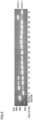
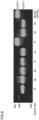
- Amplification of the region from exons 26 to 29 of WRN cDNA from HEK293T having a normal WRN gene in the described manner without addition of an antisense oligonucleotide gave a band of 290 base pairs. Determination of the nucleotide sequence of this amplification product by a conventional method showed that the amplification product consisted of exon 26, exon 27, exon 28, and exon 29.
- the present inventors confirmed that the designed antisense oligonucleotides effectively induced skipping of exon 27. Also for Werner syndrome patient fibroblasts having the skipping mutation c.3139-1G>C in the 26th exon (Werner syndrome patient fibroblasts with exon 26 deleted), the present inventors confirmed that the designed antisense oligonucleotides effectively induced skipping of exon 27.
- the present invention will be described in more detail on the basis of different tests.
- evaluation of induction of exon 27 skipping for a WRN gene was carried out in different ways: evaluation using human embryonic kidney cells, HEK293T cells, and evaluation using Werner syndrome patient fibroblasts having the skip mutation c.3139-1G>C in the 26th exon. The specific procedures will be described in the following.
- HEK293T cells Human embryonic kidney cells, HEK293T cells (ATCC (R) CRL-3216 (TM)), were cultured in a culture medium under conditions of 37°C and 5% CO 2 .
- the culture medium used for HEK293T cells was one having the following composition.
- composition of culture medium for HEK293T cells Composition of culture medium for HEK293T cells
- HEK293T cells were seeded in a 96-well plate (12000 cells/well), and cultured overnight under conditions of 37°C and 5% CO 2 . Thereafter, cells were transfected with a single-stranded antisense oligonucleotide diluted with phosphate-buffered saline (PBS) (50 nM) by means of lipofection. Cells transfected with PBS dissolving no single-stranded antisense oligonucleotide therein were used as a negative control group. The cells after transfection were cultured in a culture medium for 48 hours under conditions of 37°C and 5% CO 2 .
- PBS phosphate-buffered saline
- RNAs complementary DNAs
- PCR was performed over exon 25 to exon 29 of a WRN gene with use of specific primers designed in advance (see below).
- the program used for the PCR was as follows.
- the gene-specific primers used were WRN_Exon26_Fw and WRN_Exon29_Rv.
- reaction products of the PCR reaction were separated by 3% agarose gel electrophoresis, and gel photographs were taken using a photographic system constructed by combining the LED transilluminator GELmieru (Wako Pure Chemical Industries, Ltd.) and an iPhone 8 (Apple Inc.).
- Fig. 5 shows the experimental results of measurement of the skipping activities of single-stranded antisense oligonucleotides ( Fig. 4 ) for exon 27 of a human WRN gene as determined for a human WRN mRNA precursor with the method described above.
- cDNA from HEK293T cells with the addition of one of the antisense oligonucleotides not only gave an amplification product of the same size as the amplification product given by the cells without the introduction of an antisense oligonucleotide, but also a small amplification product (215 base pairs) after 48 hours of culture. Determination of the nucleotide sequence of this amplification product by sequencing showed that the amplification product consisted of exon 26, exon 28, and exon 29. Under these conditions, an antisense oligonucleotide was also given with which only found amplification products of small size, that is, with high efficiency skipping activity for exon 27.
- Skipping efficiency % 100 ⁇ A / A + B [Table 3-1] Sequence name SEQ ID NO WRN Exon27 skipping efficiency @ 50 nM (-)10-20-A 7 0.0 (-)5-20-A 8 12.4 1-20-A 9 100.0 2-20-A 10 37.6 3-20-A 11 61.7 4-20-A 12 59.6 5-20-A 13 0.0 6-20-A 14 96.9 7-20-A 15 93.5 8-20-A 16 98.8 8-20-B 17 100.0 8-20-C 18 0.0 9-20-A 19 100.0 10-20-A 20 100.0 11-20-A 21 0.0 12-20-A 22 100.0 13-20-A 23 0.0 14-20-A 24 100.0 15-20-A 25 100.0 16-20-A 26 91.2 17-20-A 27 92.9 18-20-A 28 100.0 19-20-A 29 100.0 20-20-A 30 36.7 21-20-A 31 85.1 22-20-A 32 0.0 [Table 3-2] Sequence name SEQ ID NO WRN Exon27 skipping efficiency @ 50
- Werner syndrome patient fibroblasts (Coriell Cell Repositories, Cat# AG12795) were cultured in a culture medium under conditions of 37°C and 5% CO 2 .
- the culture medium used for Werner syndrome patient fibroblasts had the following composition.
- composition of culture medium for Werner syndrome patient fibroblasts Eagle's minimum essential medium (MEM): manufactured by Sigma-Aldrich Co. LLC, Cat# M5650 15% FBS: manufactured by Thermo Fisher Scientific, Cat# 10437028
- the program used for the PCR was as follows.
- the gene-specific primers used were WRN_Exon25_Fw and WRN_Exon29_Rv.
- the reaction products of the PCR reaction were separated by 3% agarose gel electrophoresis, amplified PCR fragments were detected by using the LED transilluminator GELmieru (Wako Pure Chemical Industries, Ltd.), and a portion of the gel containing the PCR fragments was excised.
- the amplified PCR fragments were purified and subjected to analysis by sequencing, which confirmed that the Werner syndrome patient fibroblasts were a homozygous for c. 3 13 9-1 G>C for a WRN gene.
- reaction products of the PCR reaction were separated by 3% agarose gel electrophoresis, and gel photographs were taken using a photographic system constructed by combining the LED transilluminator GELmieru (Wako Pure Chemical Industries, Ltd.) and an iPhone 8 (Apple Inc.).
- Fig. 6 shows experimental results of measuring of the skipping activities of single-stranded antisense oligonucleotides for exon 27 of a human WRN gene as determined for a human WRN mRNA precursor by the method described above.
- a sample without introduction of an antisense oligonucleotide into it labelled with "WITHOUT ADDITION" in Fig. 6
- amplification of a region from exon 25 to exon 29 of WRN cDNA from Werner syndrome patient fibroblasts gave a band of 352 base pairs. Determination of the nucleotide sequence of this amplification product by sequencing showed that this band consisted of exon 25, exon 27, exon 28, and exon 29. This result was in good agreement with the patient's genetic analysis.
- Skipping efficiency % 100 ⁇ A / A + B [Table 4-1A] Sequence name SEQ ID NO WRN Exon27 skipping efficiency @ 50 nM (-) 10-20-A 7 8.6 (-)5-20-A 8 74.4 1-20-A 9 100.0 2-20-A 10 96.3 3-20-A 11 100.0 4-20-A 12 100.0 5-20-A 13 100.0 6-20-A 14 96.9 7-20-A 15 62.2 8-20-A 16 88.9 8-20-B 17 100.0 8-20-C 18 100.0 9-20-A 19 100.0 10-20-A 20 100.0 11-20-A 21 100.0 12-20-A 22 100.0 13-20-A 23 100.0 14-20-A 24 100.0 15-20-A 25 100.0 16-20-A 26 93.8 17-20-A 27 66.7 18-20-A 28 95.6 19-20-A 29 100.0 20-20-A 30 100.0 21-20-A 31 99.6 [Table 4-1B] Sequence name SEQ ID NO WRN Exon27 skipping efficiency @ 50 nM 22-20-A
- the evaluation of the induction of the expression of a functional WRN protein by exon 27 skipping for a WRN gene was performed with Werner syndrome patient fibroblasts, that were homozygous for c.3139-1G>C for a WRN gene.
- Werner syndrome patient fibroblasts were seeded in a 96-well plate (10000 cells/well) and cultured overnight under conditions of 37°C and 5% CO 2 . Thereafter, the cells were transfected with a single-stranded antisense oligonucleotide consisting of a nucleotide sequence set forth in SEQ ID NO: 28 and diluted with PBS (final concentration: 50 nM) by means of lipofection.
- Cells transfected with PBS in which no single-stranded antisense oligonucleotide was dissolved were used as a negative control group. After transfection, the cells were cultured in a culture medium for 48 hours under conditions of 37°C and 5% CO 2 . Thereafter, the cells were fixed with 4% paraformaldehyde (FUJIFILM Wako Pure Chemical Corporation, Cat# 163-20145) for 15 minutes, and incubated with 0.5% Triton-X (manufactured by NACALAI TESQUE, INC., Cat# 12967-45) for 10 minutes.
- the incubated cells were blocked with PBS containing 5% goat serum for 1 hour, and incubated in anti-WRN antibody (manufactured by Cell Signaling Technology, Inc., Cat# 4666) solution overnight.
- the cells were further incubated in anti-mouse IgG antibody (manufactured by Thermo Fisher Scientific, A32766) solution for 1 hour.
- the cells were incubated in Hoechst (R) 33342 nucleic acid staining (manufactured by Thermo Fisher Scientific, Cat# H3570) solution for 15 minutes, and observed under a fluorescence microscope.
- Fig. 7 shows a result of induction of expression of a functional WRN protein by the skipping activity of the single-stranded antisense oligonucleotide for exon 27 of a WRN gene as determined for a human WRN mRNA precursor by the method described above. It is apparent from Fig. 7 that the cells transfected with the single-stranded antisense oligonucleotide consisting of the nucleotide sequence set forth in SEQ ID NO: 28 ("ASO: No. 28" in Fig. 7 ) have undergone nuclear localization of functional WRN protein.
- the cells after transfection were cultured in culture medium for 288 hours under conditions of 37°C and 5% CO 2 . Thereafter, Celltiter-Glo 2.0 Assay (manufactured by Promega Corporation, Cat# G9242) was added to the culture medium, and the cell number was determined. The measurements of cell count of the cells transfected with the single-stranded antisense oligonucleotide, "A”, and the cell count of the negative control group, "B”, were applied to a calculation formula below to determine the cell growth rate (%). The results are shown in Table 5.
- HepG2 cells a cell strain derived from human liver cancer, were cultured in a growth medium under conditions of 37°C and 5% CO 2 .
- the growth medium used had the following composition.
- the cells were seeded in a 96-well plate (1.5 ⁇ 104 cells/well). The seeded cells were cultured overnight under conditions of 37°C and 5% CO2, and then transfected by lipofection with a single-stranded antisense oligonucleotide diluted in PBS (final concentration: 3 to 30 nM). After the addition, the cells were cultured for 24 hours under conditions of 37°C and 5% CO2. Cells transfected with PBS without single-stranded antisense oligonucleotide therein were used as a negative control group.
Landscapes
- Health & Medical Sciences (AREA)
- Life Sciences & Earth Sciences (AREA)
- Chemical & Material Sciences (AREA)
- Engineering & Computer Science (AREA)
- Genetics & Genomics (AREA)
- Molecular Biology (AREA)
- General Health & Medical Sciences (AREA)
- Organic Chemistry (AREA)
- Bioinformatics & Cheminformatics (AREA)
- Medicinal Chemistry (AREA)
- Biomedical Technology (AREA)
- Zoology (AREA)
- Biochemistry (AREA)
- Wood Science & Technology (AREA)
- Biotechnology (AREA)
- Veterinary Medicine (AREA)
- Public Health (AREA)
- Animal Behavior & Ethology (AREA)
- Pharmacology & Pharmacy (AREA)
- General Engineering & Computer Science (AREA)
- Epidemiology (AREA)
- Microbiology (AREA)
- Biophysics (AREA)
- Physics & Mathematics (AREA)
- Plant Pathology (AREA)
- Virology (AREA)
- Nuclear Medicine, Radiotherapy & Molecular Imaging (AREA)
- Chemical Kinetics & Catalysis (AREA)
- General Chemical & Material Sciences (AREA)
- Toxicology (AREA)
- Gastroenterology & Hepatology (AREA)
- Proteomics, Peptides & Aminoacids (AREA)
- Pharmaceuticals Containing Other Organic And Inorganic Compounds (AREA)
- Enzymes And Modification Thereof (AREA)
Applications Claiming Priority (2)
| Application Number | Priority Date | Filing Date | Title |
|---|---|---|---|
| JP2021090359 | 2021-05-28 | ||
| PCT/JP2022/021818 WO2022250155A1 (fr) | 2021-05-28 | 2022-05-27 | Acide nucléique antisens |
Publications (1)
| Publication Number | Publication Date |
|---|---|
| EP4349987A1 true EP4349987A1 (fr) | 2024-04-10 |
Family
ID=84228935
Family Applications (1)
| Application Number | Title | Priority Date | Filing Date |
|---|---|---|---|
| EP22811423.7A Withdrawn EP4349987A1 (fr) | 2021-05-28 | 2022-05-27 | Acide nucléique antisens |
Country Status (10)
| Country | Link |
|---|---|
| US (1) | US20250084411A1 (fr) |
| EP (1) | EP4349987A1 (fr) |
| JP (1) | JPWO2022250155A1 (fr) |
| KR (1) | KR20240013202A (fr) |
| CN (1) | CN117500925A (fr) |
| AU (1) | AU2022279820A1 (fr) |
| CA (1) | CA3221758A1 (fr) |
| MX (1) | MX2023014092A (fr) |
| TW (1) | TW202313975A (fr) |
| WO (1) | WO2022250155A1 (fr) |
Cited By (1)
| Publication number | Priority date | Publication date | Assignee | Title |
|---|---|---|---|---|
| EP4342498A4 (fr) * | 2021-05-13 | 2025-01-08 | National University Corporation Chiba University | Oligomère anti-sens |
Family Cites Families (6)
| Publication number | Priority date | Publication date | Assignee | Title |
|---|---|---|---|---|
| EP0962463B1 (fr) | 1989-12-20 | 2002-07-10 | Antivirals Inc. | Polymeres non chargés à base de Morpholine ayant des liaisons chirales phosphoreuses entre les sous-unités |
| DK2207779T3 (da) | 2007-11-15 | 2014-07-14 | Sarepta Therapeutics Inc | Fremgangsmåde til syntese af morpholinooligomerer |
| CN105779453A (zh) * | 2008-10-24 | 2016-07-20 | 萨雷普塔治疗公司 | 用于dmd的多外显子跳跃组合物 |
| US8541562B2 (en) | 2009-10-29 | 2013-09-24 | Osaka University | Bridged artificial nucleoside and nucleotide |
| JP6048982B2 (ja) | 2012-09-21 | 2016-12-21 | 国立大学法人大阪大学 | グアニジン架橋を有する人工ヌクレオシドおよびオリゴヌクレオチド |
| CA2939822C (fr) | 2014-02-18 | 2018-09-25 | Osaka University | Nucleoside et nucleotide reticules |
-
2022
- 2022-05-27 CN CN202280038163.1A patent/CN117500925A/zh active Pending
- 2022-05-27 TW TW111119953A patent/TW202313975A/zh unknown
- 2022-05-27 KR KR1020237044656A patent/KR20240013202A/ko active Pending
- 2022-05-27 CA CA3221758A patent/CA3221758A1/fr active Pending
- 2022-05-27 MX MX2023014092A patent/MX2023014092A/es unknown
- 2022-05-27 WO PCT/JP2022/021818 patent/WO2022250155A1/fr not_active Ceased
- 2022-05-27 EP EP22811423.7A patent/EP4349987A1/fr not_active Withdrawn
- 2022-05-27 AU AU2022279820A patent/AU2022279820A1/en active Pending
- 2022-05-27 US US18/564,976 patent/US20250084411A1/en active Pending
- 2022-05-27 JP JP2023524257A patent/JPWO2022250155A1/ja active Pending
Cited By (1)
| Publication number | Priority date | Publication date | Assignee | Title |
|---|---|---|---|---|
| EP4342498A4 (fr) * | 2021-05-13 | 2025-01-08 | National University Corporation Chiba University | Oligomère anti-sens |
Also Published As
| Publication number | Publication date |
|---|---|
| AU2022279820A1 (en) | 2023-12-14 |
| CN117500925A (zh) | 2024-02-02 |
| JPWO2022250155A1 (fr) | 2022-12-01 |
| CA3221758A1 (fr) | 2022-12-01 |
| AU2022279820A9 (en) | 2024-01-04 |
| WO2022250155A1 (fr) | 2022-12-01 |
| MX2023014092A (es) | 2023-12-11 |
| KR20240013202A (ko) | 2024-01-30 |
| US20250084411A1 (en) | 2025-03-13 |
| TW202313975A (zh) | 2023-04-01 |
Similar Documents
| Publication | Publication Date | Title |
|---|---|---|
| EP3004347B1 (fr) | Agents à double brin pour l'administration d'oligonucléotides thérapeutiques | |
| JP7416852B2 (ja) | Htra1の発現を調節するためのアンチセンスオリゴヌクレオチド | |
| CN115397436B (zh) | 用于抑制PNPLA3表达的RNAi剂、其药物组合物和使用方法 | |
| JP2006507809A (ja) | Vegf共調節ケモカイン−1発現のアンチセンス変調 | |
| CA3238865A1 (fr) | Composition et procede d'inhibition de l'expression de la proteine angiotensinogene (agt) | |
| US20220042022A1 (en) | Antisense oligonucleotides for modulating htra1 expression | |
| EP4252846A1 (fr) | Régulateur pour l'expression et/ou la fonction du gène rps25 | |
| US20250084411A1 (en) | Antisense Nucleic Acid | |
| EP2205741A2 (fr) | Accroissement de l'érythropoïétine utilisant des acides nucléiques hybridables à de l'arnmi et leurs précurseurs | |
| HK40106720A (en) | Antisense nucleic acid | |
| JP2009516710A (ja) | eIF4E−BP2の発現のモジュレート | |
| WO2021187540A1 (fr) | Régulateur de l'expression et/ou de la fonction du gène scn1a | |
| EP4729616A1 (fr) | Oligonucléotide antisens pouvant réguler l'expression et/ou la fonction du gène rps25 | |
| JP7859631B2 (ja) | Rps25遺伝子の発現及び/又は機能調節剤 | |
| JP2024079633A (ja) | アンチセンス核酸からなる医薬 | |
| HK40097491A (en) | Regulator for expression and/or function of rps25 gene | |
| EP4331606A1 (fr) | Prévention ou traitement d'une myopathie à l'aide d'un inhibiteur de mir-33b | |
| CN120608055A (zh) | 用于抑制HSD17B13表达的双链siRNA类似物及其制备方法和用途 | |
| WO2026048784A1 (fr) | Acide nucléique antisens pour réguler l'expression et/ou la fonction du gène atxn7 | |
| WO2024227458A2 (fr) | Arnsi ciblant l'expression du gène agt et conjugué et utilisation de celui-ci | |
| CA3255765A1 (fr) | Arnsi pour supprimer l'expression du récepteur 2 de la transferrine | |
| HK40131699A (zh) | 调节rps25基因的表达和/或其功能的反义寡核苷酸 | |
| HK40115058A (en) | Composition and method for inhibiting angiotensinogen (agt) protein expression | |
| CN120384076A (zh) | 用于抑制SCAP基因表达的RNAi剂及其制备方法和用途 | |
| HK40021168A (en) | Antisense oligonucleotides for modulating htra1 expression |
Legal Events
| Date | Code | Title | Description |
|---|---|---|---|
| STAA | Information on the status of an ep patent application or granted ep patent |
Free format text: STATUS: THE INTERNATIONAL PUBLICATION HAS BEEN MADE |
|
| PUAI | Public reference made under article 153(3) epc to a published international application that has entered the european phase |
Free format text: ORIGINAL CODE: 0009012 |
|
| STAA | Information on the status of an ep patent application or granted ep patent |
Free format text: STATUS: REQUEST FOR EXAMINATION WAS MADE |
|
| 17P | Request for examination filed |
Effective date: 20231204 |
|
| AK | Designated contracting states |
Kind code of ref document: A1 Designated state(s): AL AT BE BG CH CY CZ DE DK EE ES FI FR GB GR HR HU IE IS IT LI LT LU LV MC MK MT NL NO PL PT RO RS SE SI SK SM TR |
|
| DAV | Request for validation of the european patent (deleted) | ||
| DAX | Request for extension of the european patent (deleted) | ||
| REG | Reference to a national code |
Ref country code: HK Ref legal event code: DE Ref document number: 40106720 Country of ref document: HK |
|
| STAA | Information on the status of an ep patent application or granted ep patent |
Free format text: STATUS: THE APPLICATION HAS BEEN WITHDRAWN |
|
| 18W | Application withdrawn |
Effective date: 20250226 |