EP4350546B1 - Vorrichtung und verfahren zur bestimmung von verschlüsselung - Google Patents
Vorrichtung und verfahren zur bestimmung von verschlüsselung Download PDFInfo
- Publication number
- EP4350546B1 EP4350546B1 EP22205782.0A EP22205782A EP4350546B1 EP 4350546 B1 EP4350546 B1 EP 4350546B1 EP 22205782 A EP22205782 A EP 22205782A EP 4350546 B1 EP4350546 B1 EP 4350546B1
- Authority
- EP
- European Patent Office
- Prior art keywords
- characteristic
- encrypted
- side channel
- standard deviation
- segments
- Prior art date
- Legal status (The legal status is an assumption and is not a legal conclusion. Google has not performed a legal analysis and makes no representation as to the accuracy of the status listed.)
- Active
Links
Images




Classifications
-
- H—ELECTRICITY
- H04—ELECTRIC COMMUNICATION TECHNIQUE
- H04L—TRANSMISSION OF DIGITAL INFORMATION, e.g. TELEGRAPHIC COMMUNICATION
- H04L9/00—Cryptographic mechanisms or cryptographic arrangements for secret or secure communications; Network security protocols
- H04L9/002—Countermeasures against attacks on cryptographic mechanisms
-
- G—PHYSICS
- G06—COMPUTING OR CALCULATING; COUNTING
- G06F—ELECTRIC DIGITAL DATA PROCESSING
- G06F21/00—Security arrangements for protecting computers, components thereof, programs or data against unauthorised activity
- G06F21/50—Monitoring users, programs or devices to maintain the integrity of platforms, e.g. of processors, firmware or operating systems
- G06F21/55—Detecting local intrusion or implementing counter-measures
- G06F21/556—Detecting local intrusion or implementing counter-measures involving covert channels, i.e. data leakage between processes
-
- G—PHYSICS
- G06—COMPUTING OR CALCULATING; COUNTING
- G06F—ELECTRIC DIGITAL DATA PROCESSING
- G06F21/00—Security arrangements for protecting computers, components thereof, programs or data against unauthorised activity
- G06F21/50—Monitoring users, programs or devices to maintain the integrity of platforms, e.g. of processors, firmware or operating systems
- G06F21/55—Detecting local intrusion or implementing counter-measures
- G06F21/56—Computer malware detection or handling, e.g. anti-virus arrangements
- G06F21/566—Dynamic detection, i.e. detection performed at run-time, e.g. emulation, suspicious activities
-
- G—PHYSICS
- G06—COMPUTING OR CALCULATING; COUNTING
- G06F—ELECTRIC DIGITAL DATA PROCESSING
- G06F21/00—Security arrangements for protecting computers, components thereof, programs or data against unauthorised activity
- G06F21/50—Monitoring users, programs or devices to maintain the integrity of platforms, e.g. of processors, firmware or operating systems
- G06F21/57—Certifying or maintaining trusted computer platforms, e.g. secure boots or power-downs, version controls, system software checks, secure updates or assessing vulnerabilities
- G06F21/577—Assessing vulnerabilities and evaluating computer system security
Definitions
- the present invention relates to an encryption determining device and method thereof, more particularly an encryption determining device and method thereof for gathered side channel information.
- An SCA utilizes collected physical signals inadvertently emanated from a hardware device when the hardware device is encrypting data, and through performing statistical analysis and processing signals, the SCA is able to analyze the collected physical signals to obtain encrypted secret messages such as a decryption key or a plaintext before the encryption.
- These physical signals inadvertently emanated from the hardware device may be measured as, for example, electromagnetic waves, currents, power, audible decibels, detectable light signals of a signal light of a processing device, etc.
- SCA collector devices A physical signal collected by an SCA collector device is also called a trace.
- DAO BA-ANH ET AL "Correlation Power Analysis Attack Resisted Cryptographic RISC-V SoC With Random Dynamic Frequency Scaling Countermeasure", IEEE ACCESS, IEEE, USA, vol. 9, 15 November 2021 (2021-11-15), pages 151993-152014 , XP011888100, DOI: 10.1109/ACCESS.2021.3126703 discloses optimizing chips against attacks using side-channel attacks to determine encryption key by applying a trained characteristic recognition model using power.
- US 2020/279043 A1 discloses detecting ransomware by detecting encryption using side-channel signals such as voltage, power, current, temperature.
- the present invention provides an encryption determining device and a method thereof.
- the present invention is able to detect a side channel signal, to efficiently locate a position of an encrypted segment within the side channel signal, and to analyze an encryption type utilized for the encrypted segment.
- the encryption determining device includes a side channel sensor, a memory, and a processor.
- the processor is electrically connected to the side channel sensor and the memory.
- the side channel sensor detects the side channel signal.
- the memory stores a characteristic recognition model.
- the processor is configured to receive the side channel signal from the side channel sensor, generate a filtered side channel signal by filtering noise within the side channel signal, generate a phasor signal by utilizing a filter to covert the filtered side channel signal, locate an encrypted segment by calculating a periodicity of the phasor signal utilizing a standard deviation window, extract at least one encrypted characteristic from the encrypted segment, and generate an encryption analytic result by recognizing the at least one encrypted characteristic according to the characteristic recognition model; wherein the encryption analytic result includes a position of the encrypted segment within the side channel signal, and an encryption type corresponding to the side channel signal.
- the encryption determining method of the present invention is executed by the processor, and the encryption determining method of the present invention includes the following steps: receiving the side channel signal from the side channel sensor; generating a filtered side channel signal by filtering noise within the side channel signal; generating a phasor signal by utilizing a filter to covert the filtered side channel signal; locating the encrypted segment by calculating a periodicity of the phasor signal utilizing a standard deviation window; extracting at least one encrypted characteristic from the encrypted segment; and generating an encryption analytic result by recognizing the at least one encrypted characteristic according to the characteristic recognition model; wherein the encryption analytic result includes the position of the encrypted segment within the side channel signal, and the encryption type corresponding to the side channel signal.
- the side channel sensor After the side channel sensor receives the side channel signal from a circuit, the side channel sensor sends the side channel signal to the processor, allowing the processor to execute the encryption determining method.
- the encryption determining method filters noise within the side channel signal with the processor, transforms the filtered side channel signal into the phasor signal, and utilizes the standard deviation window to calculate the periodicity of the phasor signal for further locating the encrypted segment.
- the present invention is able to locate the encrypted segment without human assistance, and thus the present invention is able to automatically locate the encrypted segment according to the side channel signal received.
- the present invention is able to extract the at least one encrypted characteristic from the encrypted segment. This further allows the generation of the encryption analytic result by recognizing the at least one encrypted characteristic according to the characteristic recognition model stored in the memory, and thus analyzing the encryption type corresponding to the side channel signal.
- the present invention not only functions automatically, but also is able to more efficiently locate the encrypted segment. For this reason, the present invention is able to decrease time needed for analyzing the encryption type corresponding to the side channel signal, and thus more efficiently analyze the encryption type corresponding to the side channel signal.
- the present invention provides an encryption determining device and an encryption determining method.
- the encryption determining device of the present invention includes a side channel sensor 10, a memory 20, and a processor 30.
- the encryption determining device is utilized to sense and identify a side channel signal gathered from a circuit 100.
- the processor 30 is electrically connected to the side channel sensor 10 and the memory 20.
- the circuit 100 is controlled by an electronic device 200 for executing actions such as, for example, encrypting data.
- the memory 20 and the processor 30 may be a memory and a processor within the electronic device 200, or the memory 20 and the processor 30 may be electronic components independent from the electronic device 200.
- the electronic device 200 further includes a monitor 201, a keyboard 202, and a mouse 203.
- a user of the present invention is able to control the electronic device 200 via the monitor 201, the keyboard 202, and the mouse 203 of the electronic device 200.
- the circuit 100 includes a communication port 101, and the communication port 101 is electrically connected to the processor 30 of the electronic device 200. As such, the communication port 101 functions, as its name suggests, a communication port between the circuit 100 and the processor 30.
- the processor 30 sends an original signal (Sor) to the communication port 101 of the circuit 100, wherein the original signal (Sor) includes a plaintext within.
- the circuit 100 After the circuit 100 receives the original signal (Sor) from the processor 30 through the communication port 101, the circuit 100 starts encrypting the plaintext within the original signal (Sor).
- the side channel sensor 10 includes an oscilloscope 11 and a detector 12.
- the oscilloscope 11 is electrically connected to the electronic device 200, and the detector 12 is electrically connected to the oscilloscope 11.
- the detector 12 of the side channel sensor 10 detects a trace generated by the circuit 100 when the circuit is encrypting the plaintext. As such, the detector 12 collects the side channel signal from the circuit 100, and the detector 12 transports the side channel signal to the oscilloscope 11.
- the oscilloscope 11 is able to display a waveform of the side channel signal, allowing the user to track changes of the waveform of the side channel signal through manipulating the oscilloscope 11. This way, the waveform of the side channel signal is tracked and made to be clearly defined through manipulations of the oscilloscope 11.
- the detector 12 is a voltage-conducting wire, and the voltage-conducting wire is electrically connected to a point on the circuit 100 that generates the side channel signal. This allows for a collection of voltage signals generated by the circuit 100 when the circuit 100 is encrypting the plaintext, and the voltage signals collected are utilized as the side channel signal.
- the point on the circuit 100 that generates the side channel signal could be the communication port 101, or any other nodes available for collecting the side channel signal.
- the detector 12 may be a current-conducting wire, and the current-conducting wire is utilized to collect current signals generated by the circuit 100 when the circuit 100 is encrypting the plaintext.
- the detector 12 also may be an infra-red temperature sensor, wherein the infra-red temperature sensor is utilized to collect infra-red temperature signals in close proximity generated by the circuit 100 when the circuit 100 is encrypting the plaintext.
- the detector 12 also may be an electro-magnetic wave sensor, wherein the electro-magnetic wave sensor is utilized to collect electro-magnetic signals emanated from the circuit 100 in close proximity when the circuit 100 is encrypting the plaintext.
- the present invention is free to collect any physical forms of signals as the side channel signal.
- the side channel signal may be a voltage signal, a current signal, a temperature signal, or an electro-magnetic signal, etc.
- the memory 20 stores a characteristic recognition model, a working frequency, a default configuration file, and a weight data.
- the characteristic recognition model is a trained artificial intelligence (AI) model.
- AI artificial intelligence
- the processor 30 utilizes a result generated by the present invention as well as the weight data to train the characteristic recognition model.
- the weight data is a score entered by the user into the electronic device 200, the score rating the result generated by the present invention. In other words, the weight data helps train the characteristic recognition model to more accurately help generate the result for the present invention.
- the working frequency is a frequency of the circuit 100 when the circuit 100 is working normally.
- the default configuration file stores parameters utilized by the present invention when the present invention is calculating and analyzing data.
- the side channel sensor 10 gathers the side channel signal from the circuit 100
- the side channel sensor 10 sends the side channel signal to the processor 30.
- the processor 30 of the present invention executes the following steps:
- step S1 the processor 30 receives the side channel signal detected by the side channel sensor 10.
- the side channel signal may be a voltage signal, a current signal, a temperature signal, or an electro-magnetic signal, etc.
- step S2 the processor 30 filters noise within the side channel signal and generates the filtered side channel signal. More particularly, the processor 30 utilizes spectral filtering to filter out frequencies within the side channel signal greater than or less than the working frequency as noises to generate the filtered side channel signal. In other words, the filtered side channel signal generated by the processor 30 is only in the working frequency.
- Fig. 4A shows waveform of the side channel signal before filtering
- Fig. 4B shows waveform of the filtered side channel signal.
- the vertical axis (Y axis) is in units of 10 fold millivolts (mV)
- the horizontal axis (X axis) is in units of milliseconds (ms).
- the waveform of the side channel signal before filtering has larger amplitude, and has more irregular patterns, for example, between 55 ms and 75 ms.
- the waveform of the filtered side channel signal has smaller amplitude, and has less irregular patterns between 55 ms and 75 ms. As such, the waveform of the filtered side channel signal is more defined, and therefore the filtered side channel signal is more suitably utilized for locating the encrypted segment and for analyzing the encryption type than the side channel signal before filtering.
- the processor 30 utilizes the filter to transform the side channel signal into the phasor signal.
- Fig. 5 shows a waveform of the phasor signal.
- the vertical axis represents a phasor of the phasor signal
- the horizontal axis represents samples of a measuring time of measuring the filtered side channel signal.
- the measuring time of measuring the filtered side channel signal is 80 ms.
- the samples have a count of 320,000 samples.
- the filter is a Hilbert transform filter.
- the processor 30 utilizes the Hilbert transform filter to generate the phasor signal, the processor 30 performs a Hilbert transform to transform the filtered side channel signal into the phasor signal.
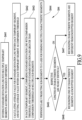
- step S4 the processor 30 utilizes the standard deviation window to calculate the periodicity of the phasor signal in order to locate the encrypted segment. More particularly, when the processor 30 executes S4, the processor 30 in fact executes the following sub-steps S41 to S44:
- step S41 the processor 30 utilizes the standard deviation window to calculate the standard deviation of the phasor signal in order to generate the standard deviation line L1.
- Fig. 7 provides a perspective view of the standard deviation line L1 after the processor 30 executes step S41.
- a size of the standard deviation window and a spacing gap at which the standard deviation window moves on the horizontal axis may be configured as desired.
- a content within the default configuration file may be configured by the user through manipulating the electronic device 200, adjusting settings for the standard deviation window.
- the processor 30 adjusts the size of the standard deviation window and spacing gap at which the standard deviation window moves on the horizontal axis according to the default configuration file stored in the memory 20. This adjustment allows the processor 30 to adjust the count of samples framed by the standard deviation window, to adjust the standard deviation of the phasor signal calculated from the count of samples framed by the standard deviation window, and to adjust the generation of the standard deviation line L1.
- the processor 30 utilizes the differential window to extract a part of the standard deviation line L1.
- the processor 30 calculates the maximum value and the minimum value corresponding to the part of the standard deviation line L1, and calculates the difference between the maximum value and the minimum value.
- Fig. 8 shows the difference between the maximum value and the minimum value of the standard deviation line L1 after the processing module 30 executes step S43.
- a size of the differential window and a spacing gap at which the differential window moves on the horizontal axis may be configured as desired in the default configuration file stored in the memory 20.
- step S44 the processor 30 locates the encrypted segment according to the difference. More particularly, when the processor 30 executes step S44, the processor 03 in fact executes the following sub-steps S441 to S447.
- Step S441 dividing the standard deviation line L1 into multiple temporary segments according to changes in the difference.
- Step S442 calculating an average value for the standard deviation line L1 within each of the temporary segments, and setting the average value within each of the temporary segments as a comparison threshold.
- Step S443 in each of the temporary segments, comparing the standard deviation line L1 with the comparison threshold, and marking parts of the standard deviation line L1 greater than the comparison threshold as multiple sub-segments.
- Step S444 perpendicularly projecting the sub-segments to an X axis for forming multiple characteristic segments.
- Step S445 determining whether respective lengths of the characteristic segments are nearly identical.
- Step S446 when determining respective lengths of the characteristic segments are nearly identical, recognizing one of the characteristic segments as the encrypted segment.
- Step S447 when determining respective lengths of the characteristic segments are different, recognizing the characteristic segments are different from the encrypted segment.
- step S441 the processor 30 divides the standard deviation line L1 into multiple temporary segments according to changes in the difference. More particularly, the processor 30 determines a separation sample SB between a first sample S1 and a last sample SA, wherein the separation sample SB has the greatest difference. With reference to Fig. 10 , a position of the separation sample SB corresponds to a position of a correct sample within the standard deviation line L1 to divide the standard deviation line L1 into the multiple temporary segments.
- the processor 30 proceeds to divide the standard deviation line L1 according to the separation sample SB. As such, the processor 30 divides the standard deviation line L1 left side of the separation sample SB as a first temporary segment R1, and the processor 30 divides the standard deviation line L1 right side of the separation sample SB as a second temporary segment R2.
- step S442 the processor 30 calculates the average value for the standard deviation line L1 within each of the temporary segments, and setting the average value within each of the temporary segments as the comparison threshold. More particularly, the processor 30 respectively calculates a first average value A1 for the standard deviation line L1 within the first temporary segment R1 and calculates a second average value A2 for the standard deviation line L1 within the second temporary segment R2.
- the processor 30 compares the standard deviation line L1 with the comparison threshold in each of the temporary segments, respectively marks parts of the standard deviation line L1 greater than the comparison threshold as the multiple sub-segments, and determines whether the characteristic segments perpendicularly projected from the sub-segments are nearly identical. More particularly, the processor 30 respectively marks parts of the standard deviation line L1 greater than the first average value A1 within the first temporary segment R1 as multiple first sub-segments within the first temporary segment R1, and the processor 30 marks parts of the standard deviation line L1 greater than the second average value A2 within the second temporary segment R2 as multiple second sub-segments within the second temporary segment R2. Furthermore, the processor 30 respectively perpendicularly projects the first sub-segments within the first temporary segment R1 and the second sub-segments within the second temporary segment R2 to the X axis for forming characteristic segments Sg1-Sg9.
- the first sub-segments perpendicularly project to the X axis and, as a result, form a total of nine characteristic segments Sg1-Sg9.
- the second temporary segment R2 shown in Fig. 12 the second sub-segments perpendicularly project to the X axis and, as a result, form a total of eight characteristic segments Sg1-Sg8.
- the X axis represents a count of samples of the standard deviation line L1 respectively within the first temporary segment R1 and the second temporary segment R2. Therefore, the nine characteristic segments Sg1-Sg9 corresponding to the first temporary segment R1 also correspond to multiple counts of samples for the nine segments.
- the eight characteristic segments Sg1-Sg8 corresponding to the second temporary segment R2 also correspond to multiple counts of samples for the eight segments.
- step S445 the processor 30 determines whether the respective lengths of the characteristic segments are nearly identical. More particularly, when the processor 30 executes step S445, the processor further executes the following sub-steps S4451 to S4453.
- Step S4451 determining whether length differences between the characteristic segments are less than or equal to a differential threshold.
- Step S4452 when determining the length differences between the characteristic segments are less than or equal to the differential threshold, determining the characteristic segments are nearly identical, and therefore further executing step S446.
- Step S4453 when determining the length differences between the characteristic segments are greater than the differential threshold, determining the characteristic segments are different, and therefore further executing step S447.
- the length differences between the nine characteristic segments Sg1-Sg9 corresponding to the first temporary segment R1 are barely noticeable, and as such, the length differences between the nine characteristic segments Sg1-Sg9 corresponding to the first temporary segment R1 are considered nearly identical.
- the nine characteristic segments Sg1-Sg9 corresponding to the first temporary segment R1 are considered to be periodic, and that one of the nine characteristic segments Sg1-Sg9 corresponding to the first temporary segment R1 is the encrypted segment.
- the length differences between the eight characteristic segments Sg1-Sg8 corresponding to the second temporary segment R2 are quite noticeable, and as such, the length differences between the eight characteristic segments Sg1-Sg8 corresponding to the second temporary segment R2 are considered different.
- the eight characteristic segments Sg1-Sg8 corresponding to the second temporary segment R2 are considered to be aperiodic and devoid of the encrypted segment.
- the differential threshold may be configured as desired in the default configuration file stored in the memory 20.
- the side channel signal corresponding to the encrypted segment should retain periodic signal qualities, and since the side channel signal corresponding to the encrypted segment is periodic, the filtered side channel signal, the phasor signal, and the standard deviation line L1 respectively corresponding to the encrypted segment should all be periodic as well.
- the processor 30 executes step S445, the processor 30 determines the encrypted segment part of a periodic signal, and determines aperiodic signals are devoid of the encrypted segment.
- the periodicity is hereby determined as the length of the characteristic segments. As previously disclosed, the characteristic segments with similar lengths are considered periodic, whereas the characteristic segments with noticeably different lengths are considered aperiodic.
- the length of the characteristic segments although defined by a length of a count of the samples, also corresponds to a time length of a processing time for measuring the side channel signal. This relationship between a count of the samples and a processing time is previously discussed, as previously mentioned, the processor 30 processes several thousand counts of samples per millisecond. More particularly, the time length of the processing time of the side channel signal is proportional to the count of the samples as the following formula suggests:
- step S5 the processor 30 extracts the at least one encrypted characteristic from the encrypted segment. More particularly, when the processor 30 executes step S5, the processor 30 executes the following sub-steps S51 to S54.
- Step S51 setting a cycle number by identifying a peak number or a trough number of the standard deviation line L1 within the encrypted segment.
- Step S52 calculating a time duration of the encrypted segment.
- Step S53 extracting a part of the filtered side channel signal corresponding to the encrypted segment as an encrypted segment of the side channel signal.
- Step S54 calculating an average amplitude of the encrypted segment of the side channel signal.
- the at least one encrypted characteristic extracted from the encrypted segment includes the cycle number, the time duration, and the average amplitude.
- step S6 the processor 30 utilizes the characteristic recognition model to recognize the at least one encrypted characteristic in order to generate the encryption analytic result. More particularly, when the processor 30 executes step S6, the processor 30 utilizes the characteristic recognition model to recognize the cycle number, the time duration, or the average amplitude for generating the encryption analytic result.
- the processor 30 utilizes the characteristic recognition model to recognize the cycle number, the time duration, or the average amplitude for generating the encryption analytic result.
- DES Data Encryption Standard
- AES Advanced Encryption Standard
- these algorithms respectively correspond to different counts of duty cycles, different processing time, and different consumption of energy or power when encrypting data.
- different counts of duty cycles of different algorithms correspond to the cycle number identified within the encrypted segment of the present invention.
- Different processing time corresponds to the count of samples within the encrypted segment of the present invention and also corresponds to a time length of part of the filtered side channel signal corresponding to the encrypted segment.
- Different consumption of energy or power corresponds to amplitude changes of part of the filtered side channel signal corresponding to the encrypted segment.
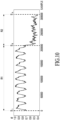
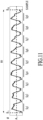
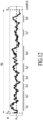
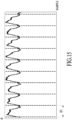
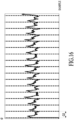
- the processor 30 calculates that a first cycle G1 has repeated nine times as the processor 30 detects roughly how many times waveforms within the encrypted segment have repeated. The processor 30 therefore obtains the cycle number as nine.
- the processor 30 also roughly detects a second cycle G2 and calculates that the second cycle G2 has repeated sixteen times. According to the characteristic recognition model, the processor 30 determines the cycle number as nine corresponding to AES, and the processor 30 determines the cycle number as sixteen corresponding to DES. Therefore, the processor determines the encrypted segment shown in Fig. 15 utilizes AES, and the encrypted segment shown in Fig. 16 utilizes DES.
- the processor 30 of the present invention may also utilize the characteristic recognition model to recognize the time duration or the average amplitude for generating the encryption analytic result. More particularly, the processor 30 can obtain the phasor signal from a part of the standard deviation line L1 corresponding to the encrypted segment, and then further obtain a part of the filtered side channel signal corresponding to the encrypted segment from the obtained phasor signal.
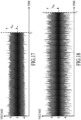
- the part of the filtered side channel signal corresponding to the located encrypted segment includes two characteristics - a first time length characteristic T1 and a first voltage amplitude characteristic VA1.
- the processor 30 determines that the encrypted segment corresponding to the first time length characteristic T1 utilizes AES.
- the first voltage amplitude characteristic VA1 is a fluctuating voltage amplitude of the filtered side channel signal.
- the processor 30 calculates an averaged absolute value of a voltage of the filtered side channel signal as the first voltage amplitude characteristic VA1 in this example, and the processor 30 also recognizes the first voltage amplitude characteristic VA1 as an averaged amplitude value.
- the processor 30 determines that the encrypted segment corresponding to the first voltage amplitude characteristic VA1 utilizes AES.
- the part of the filtered side channel signal corresponding to the located encrypted segment further includes a first power characteristic.
- the processor 30 calculates an average of a square of the voltage of the filtered side channel signal shown in Fig. 17 as the first power characteristic, and the processor 30 also recognizes the first power characteristic as the averaged amplitude value. Furthermore, according to the characteristic recognition model, the processor 30 determines that the encrypted segment corresponding to the first power characteristic utilizes AES. In other words, in this embodiment, the averaged amplitude value corresponds to the power consumption of utilizing AES.
- the power consumption is proportional to the square of the voltage, and therefore, in the example shown in Fig. 17 , the at least one encrypted characteristic gathered from the filtered side channel signal can be utilized to linearly determine what type of encryption algorithm is utilized.
- the part of the filtered side channel signal corresponding to the located encrypted segment includes two characteristics - a second time length characteristic T2 and a second voltage amplitude characteristic VA2.
- the processor 30 determines that the encrypted segment corresponding to having the second time length characteristic T2 utilizes DES.
- the second voltage amplitude characteristic VA2 is the fluctuating voltage amplitude of the filtered side channel signal.
- the processor 30 calculates an averaged absolute value of a voltage of the filtered side channel signal as the second voltage amplitude characteristic VA2 in this example, and the processor 30 also recognizes the second voltage amplitude characteristic VA2 as the averaged amplitude value.
- the processor 30 determines that the encrypted segment corresponding to the second voltage amplitude characteristic VA2 utilizes DES.
- the part of the filtered side channel signal corresponding to the located encrypted segment further includes a second power characteristic.
- the processor 30 calculates an average of a square of the voltage of the filtered side channel signal shown in Fig. 18 as the second power characteristic, and the processor 30 also recognizes the second power characteristic as the averaged amplitude value. Furthermore, according to the characteristic recognition model, the processor 30 determines that the encrypted segment corresponding to the second power characteristic utilizes DES. In other words, in this embodiment, the averaged amplitude value corresponds to the power consumption of utilizing DES. As the power consumption is proportional to the square of the voltage, in the example shown in Fig. 18 , the at least one encrypted characteristic gathered from the filtered side channel signal can be utilized to linearly determine what type of encryption algorithm is utilized.
- the processor 30 of the present invention may utilize all of the above determinations in accordance to the characteristic recognition model to conclude that the filtered side channel signal shown in Fig. 17 utilizes AES, and the filtered side channel signal shown in Fig. 18 utilizes DES.
- the encryption algorithm utilized for the filtered side channel signal is in fact also the encryption algorithm utilized for the side channel signal before the side channel signal is filtered by the processor 30.
- the processor 30 of the present invention may further execute the following step: utilizing the at least one encrypted characteristic and the encryption analytic result corresponding to the at least one characteristic as a training data, and generating the characteristic recognition model according to the training data.
- the present invention utilizes the at least one encrypted characteristic and the encryption analytic result corresponding to the at least one characteristic to train the characteristic recognition model according to weight data stored in the memory 20 through machine learning. This allows the trained characteristic recognition model to more accurately generate the encryption analytic result, and as a result, the position of the encrypted segment is more efficiently located, and the encryption type corresponding to the side channel signal is more efficiently analyzed.
- the present invention avoids needing to collect multiple side channel signals and spend great processing cost, waste great amount of energy, waste great amount of processing time to synchronize time stamps of all the collected side channel signals, and then to analyze for analytic results from the synchronized multiple side channel signals.
- the present invention only needs to receive the side channel signal as a single signal in order to generate the encryption analytic result from the single side channel signal.
- the present invention is able to automatically locate the position of the encrypted segment and analyze the encryption type according to the characteristic recognition model.
- the characteristic recognition model is well trained in the encryption determining device of the present invention. As such, the present invention is able to more efficiently detect the encryption type corresponding to the side channel signal.
- the present invention decreases time needed and human resources needed to analyze the encryption type corresponding to the side channel signal.
Landscapes
- Engineering & Computer Science (AREA)
- Computer Security & Cryptography (AREA)
- Theoretical Computer Science (AREA)
- Computer Hardware Design (AREA)
- General Engineering & Computer Science (AREA)
- Software Systems (AREA)
- Physics & Mathematics (AREA)
- General Physics & Mathematics (AREA)
- General Health & Medical Sciences (AREA)
- Computing Systems (AREA)
- Virology (AREA)
- Health & Medical Sciences (AREA)
- Computer Networks & Wireless Communication (AREA)
- Signal Processing (AREA)
- Storage Device Security (AREA)
- Complex Calculations (AREA)
- Management, Administration, Business Operations System, And Electronic Commerce (AREA)
- Radar Systems Or Details Thereof (AREA)
- Mobile Radio Communication Systems (AREA)
- Inspection Of Paper Currency And Valuable Securities (AREA)
- Spectrometry And Color Measurement (AREA)
- Investigating Or Analysing Biological Materials (AREA)
Claims (18)
- - Verschlüsselungsbestimmungsvorrichtung, wobei die Verschlüsselungsbestimmungsvorrichtung Folgendes umfasst:einen Seitenkanalsensor (10), der ein Seitenkanalsignal erfasst;wobei die Verschlüsselungsbestimmungsvorrichtung gekennzeichnet ist durch:
einen Speicher (20), der zum Speichern eines Charakteristikerkennungsmodells konfiguriert ist:
einen Prozessor (30), der den Seitenkanalsensor (10) und den Speicher (20) elektrisch verbindet und zu Folgendem konfiguriert ist:Empfangen des Seitenkanalsignals von dem Seitenkanalsensor (10);Erzeugen eines gefilterten Seitenkanalsignals durch Filtern von Rauschen in dem Seitenkanalsignal;Erzeugen eines Phasorsignal durch Verwenden eines Filters, um das gefilterte Seitenkanalsignal umzuwandeln;Lokalisieren eines verschlüsselten Segments durch Berechnen einer Periodizität des Phasorsignals unter Verwendung eines Standardabweichungsfensters;Extrahieren mindestens einer verschlüsselten Charakteristik aus dem verschlüsselten Segment; undErzeugen eines analytischen Verschlüsselungsresultats durch Erkennen der mindestens einen verschlüsselten Charakteristik gemäß dem Charakteristikerkennungsmodell; wobei das analytische Verschlüsselungsresultat eine Position des verschlüsselten Segments innerhalb des Seitenkanalsignals und einen Verschlüsselungstyp, der dem Seitenkanalsignal entspricht, beinhaltet. - - Verschlüsselungsbestimmungsvorrichtung nach Anspruch 1, wobei der Prozessor (30) ferner konfiguriert ist, um durch Verwenden der mindestens einen verschlüsselten Charakteristik und des Verschlüsselungsanalyseresultats, das der mindestens einen verschlüsselten Charakteristik entspricht, als Trainingsdaten, das Charakteristikerkennungsmodell zu erzeugen.
- - Verschlüsselungsbestimmungsvorrichtung nach Anspruch 1, wobei, wenn der Prozessor (30) das verschlüsselte Segment durch Berechnen der Periodizität des Phasorsignals unter Verwendung des Standardabweichungsfensters lokalisiert, der Prozessor (30) ferner zu Folgendem konfiguriert ist:Erzeugen einer Standardabweichungslinie durch Berechnen einer Standardabweichung des Phasorsignals unter Verwendung des Standardabweichungsfensters; wobei das Standardabweichungsfenster einen Teil des Phasorsignals zum Berechnen von Standardabweichung einrahmt;Extrahieren eines Teils der Standardabweichungslinie durch Verwenden eines Differentialfensters;Berechnen eines Maximalwerts und eines Minimalwerts, die dem Teil der Standardabweichungslinie entsprechen, und Berechnen einer Differenz zwischen dem Maximalwert und dem Minimalwert; undLokalisieren des verschlüsselten Segments gemäß der Differenz.
- - Verschlüsselungsbestimmungsvorrichtung nach Anspruch 3, wobei, wenn der Prozessor (30) das verschlüsselte Segment gemäß der Differenz lokalisiert, der Prozessor (30) ferner zu Folgendem konfiguriert ist:Unterteilen der Standardabweichungslinie gemäß Änderungen in der Differenz in mehrere temporäre Segmente;Vergleichen der Standardabweichungslinie mit einem Vergleichsschwellenwert in jedem der temporären Segmente vergleichen und Markieren von Teilen der Standardabweichungslinie, die größer sind als der Vergleichsschwellenwert, als mehrere Teilsegmente in jedem der temporären Segmente;Projizieren der Teilsegmente senkrecht zu einer X-Achse, um mehrere charakteristischen Segmente zu bilden;Bestimmen, ob jeweilige Längen der charakteristischen Segmente nahezu identisch sind; undErkennen eines der charakteristischen Segmente als das verschlüsselte Segment, wenn bestimmt wird, dass die jeweiligen Längen der charakteristischen Segmente nahezu identisch sind.
- - Verschlüsselungsbestimmungsvorrichtung nach Anspruch 4, wobei:
der Prozessor (30) einen Durchschnittswert für die Standardabweichungslinie innerhalb von jedem der temporären Segmente berechnet und jeden der Durchschnittswerte als den Vergleichsschwellenwert innerhalb von jedem der temporären Segmente festlegt. - - Verschlüsselungsbestimmungsvorrichtung nach Anspruch 4, wobei, wenn der Prozessor (30) bestimmt, ob die charakteristischen Segmente nahezu identisch sind, der Prozessor (30) ferner konfiguriert ist, um zu bestimmen, ob Längenunterschiede zwischen den charakteristischen Segmenten kleiner als oder gleich wie ein Differenzschwellenwert sind, und um zu bestimmen, dass die charakteristischen Segmente nahezu identisch sind, wenn bestimmt wird, dass die Längenunterschiede zwischen den charakteristischen Segmenten kleiner als oder gleich wie der Differenzschwellenwert sind.
- - Verschlüsselungsbestimmungsvorrichtung nach Anspruch 3, wobei, wenn der Prozessor (30) die mindestens eine verschlüsselte Charakteristik aus dem verschlüsselten Segment extrahiert, der Prozessor (30) ferner konfiguriert ist, um eine Zyklusnummer festzulegen, indem er eine Spitzenzahl oder eine Tiefstzahl der Standardabweichungslinie innerhalb des verschlüsselten Segments identifiziert;
wobei die mindestens eine verschlüsselte Charakteristik die Zyklusnummer beinhaltet. - - Verschlüsselungsbestimmungsvorrichtung nach Anspruch 1, wobei, wenn der Prozessor (30) die mindestens eine verschlüsselte Charakteristik aus dem verschlüsselten Segment extrahiert, der Prozessor (30) ferner konfiguriert ist, um eine Zeitdauer des verschlüsselten Segments zu berechnen;
wobei die mindestens eine verschlüsselte Charakteristik die Zeitdauer beinhaltet. - - Verschlüsselungsbestimmungsvorrichtung nach Anspruch 1, wobei, wenn der Prozessor (30) die mindestens eine verschlüsselte Charakteristik aus dem verschlüsselten Segment extrahiert, der Prozessor (30) ferner zu Folgendem konfiguriert ist:Extrahieren eines Teils des gefilterten Seitenkanalsignals, der dem verschlüsselten Segment entspricht, als ein verschlüsseltes Segment des Seitenkanalsignals; undBerechnen einer durchschnittlichen Amplitude des verschlüsselten Segments des Seitenkanalsignals;wobei die mindestens eine verschlüsselte Charakteristik die durchschnittliche Amplitude beinhaltet.
- - Verschlüsselungsbestimmungsverfahren, wobei das Verschlüsselungsbestimmungsverfahren von einem Prozessor (30) ausgeführt wird, und das Verschlüsselungsbestimmungsverfahren die folgenden Schritte umfasst:Empfangen eines Seitenkanalsignals (S1);wobei das Verschlüsselungsbestimmungsverfahren gekennzeichnet ist durch:Erzeugen eines gefilterten Seitenkanalsignals durch Filtern von Rauschen in dem Seitenkanalsignal (S2);Erzeugen eines Phasorsignal durch Verwenden eines Filters, um das gefilterte Seitenkanalsignal umzuwandeln (S3);Lokalisieren eines verschlüsselten Segments durch Berechnen einer Periodizität des Phasorsignals unter Verwendung eines Standardabweichungsfensters (S4);Extrahieren mindestens einer verschlüsselten Charakteristik aus dem verschlüsselten Segment (S5); undErzeugen eines analytischen Verschlüsselungsresultats durch Erkennen der mindestens einen verschlüsselten Charakteristik gemäß einem Charakteristikerkennungsmodell (S6); wobei das analytische Verschlüsselungsresultat eine Position des verschlüsselten Segments innerhalb des Seitenkanalsignals und einen Verschlüsselungstyp, der dem Seitenkanalsignal entspricht, beinhaltet.
- - Verschlüsselungsbestimmungsverfahren nach Anspruch 10, ferner umfassend den folgenden Schritt:
Erzeugen des Charakteristikerkennungsmodells durch Verwenden der mindestens einen verschlüsselten Charakteristik und des Verschlüsselungsanalyseresultats, das der mindestens einen verschlüsselten Charakteristik entspricht, als Trainingsdaten. - - Verschlüsselungsbestimmungsverfahren nach Anspruch 10, wobei der Schritt eines Lokalisierens des verschlüsselten Segments durch Berechnen der Periodizität des Phasorsignals unter Verwendung des Standardabweichungsfensters (S4) ferner die folgenden Teilschritte beinhaltet:Erzeugen einer Standardabweichungslinie durch Berechnen einer Standardabweichung des Phasorsignals unter Verwendung des Standardabweichungsfensters (S41); wobei das Standardabweichungsfenster einen Teil des Phasorsignals zum Berechnen von Standardabweichung einrahmt;Extrahieren eines Teils der Standardabweichungslinie durch Verwenden eines Differentialfensters (S42);Berechnen eines Maximalwerts und eines Minimalwerts, die dem Teil der Standardabweichungslinie entsprechen, und Berechnen einer Differenz zwischen dem Maximalwert und dem Minimalwert (S43); undLokalisieren des verschlüsselten Segments gemäß der Differenz (S44).
- - Verschlüsselungsbestimmungsverfahren nach Anspruch 12, wobei der Schritt eines Lokalisierens des verschlüsselten Segments gemäß der Differenz (S44) ferner die folgenden Teilschritte beinhaltet: Unterteilen der Standardabweichungslinie gemäß Änderungen in der Differenz in mehrere temporäre Segmente (S441);in jedem der temporären Segmente, Vergleichen der Standardabweichungslinie mit einem Vergleichsschwellenwert und Markieren von Teilen der Standardabweichungslinie, die größer sind als der Vergleichsschwellenwert, als mehrere Teilsegmente (S443);Projizieren der Teilsegmente senkrecht zu einer X-Achse, um mehrere charakteristischen Segmente zu bilden (S444);Bestimmen, ob die charakteristischen Segmente nahezu identisch sind (S445);wenn bestimmt wird, dass die charakteristischen Segmente nahezu identisch sind, Erkennen eines der charakteristischen Segmente als das verschlüsselte Segment (S446).
- - Verschlüsselungsbestimmungsverfahren nach Anspruch 13, wobei:
der Vergleichsschwellenwert innerhalb von jedem der temporären Segmente ein Durchschnittswert für die Standardabweichungslinie innerhalb von jedem der temporären Segmente ist. - - Verschlüsselungsbestimmungsverfahren nach Anspruch 13, wobei der Schritt eines Bestimmens, ob die charakteristischen Segmente nahezu identisch sind (S445), die folgenden Teilschritte beinhaltet:Bestimmen, ob Längenunterschiede zwischen den charakteristischen Segmenten kleiner als oder gleich wie ein Differenzschwellenwert sind (S4451);wenn bestimmt wird, dass die Längenunterschiede zwischen den charakteristischen Segmenten kleiner als oder gleich wie der Differenzschwellenwert sind, Bestimmen, dass die charakteristischen Segmente nahezu identisch sind (S4452).
- - Verschlüsselungsbestimmungsverfahren nach Anspruch 12, wobei der Schritt eines Extrahierens der mindestens einen verschlüsselten Charakteristik aus dem verschlüsselten Segment (S5) ferner den folgenden Teilschritt beinhaltet:Bestimmen einer Zyklusnummer durch Identifizieren einer Spitzenzahl oder eine Tiefstzahl der Standardabweichungslinie innerhalb des verschlüsselten Segments (S51);wobei die mindestens eine verschlüsselte Charakteristik die Zyklusnummer beinhaltet.
- - Verschlüsselungsbestimmungsverfahren nach Anspruch 10, wobei der Schritt eines Extrahierens der mindestens einen verschlüsselten Charakteristik aus dem verschlüsselten Segment (S5) ferner den folgenden Teilschritt beinhaltet:Berechnen einer Zeitdauer des verschlüsselten Segments (S52);wobei die mindestens eine verschlüsselte Charakteristik die Zeitdauer beinhaltet.
- - Verschlüsselungsbestimmungsverfahren nach Anspruch 10, wobei der Schritt eines Extrahierens der mindestens einen verschlüsselten Charakteristik aus dem verschlüsselten Segment (S5) ferner die folgenden Teilschritte beinhaltet:Extrahieren eines Teils des gefilterten Seitenkanalsignals, der dem verschlüsselten Segment entspricht, als ein verschlüsseltes Segment des Seitenkanalsignals (S53); undBerechnen einer durchschnittlichen Amplitude des verschlüsselten Segments des Seitenkanalsignals (S54);wobei die mindestens eine verschlüsselte Charakteristik die durchschnittliche Amplitude beinhaltet.
Applications Claiming Priority (1)
| Application Number | Priority Date | Filing Date | Title |
|---|---|---|---|
| TW111137746A TWI808905B (zh) | 2022-10-04 | 2022-10-04 | 加密訊號辨識裝置與方法 |
Publications (3)
| Publication Number | Publication Date |
|---|---|
| EP4350546A1 EP4350546A1 (de) | 2024-04-10 |
| EP4350546C0 EP4350546C0 (de) | 2025-02-12 |
| EP4350546B1 true EP4350546B1 (de) | 2025-02-12 |
Family
ID=84330036
Family Applications (1)
| Application Number | Title | Priority Date | Filing Date |
|---|---|---|---|
| EP22205782.0A Active EP4350546B1 (de) | 2022-10-04 | 2022-11-07 | Vorrichtung und verfahren zur bestimmung von verschlüsselung |
Country Status (3)
| Country | Link |
|---|---|
| US (1) | US12120214B2 (de) |
| EP (1) | EP4350546B1 (de) |
| TW (1) | TWI808905B (de) |
Families Citing this family (1)
| Publication number | Priority date | Publication date | Assignee | Title |
|---|---|---|---|---|
| TWI845428B (zh) * | 2023-10-05 | 2024-06-11 | 財團法人資訊工業策進會 | 加密訊號區段定位裝置及方法 |
Family Cites Families (9)
| Publication number | Priority date | Publication date | Assignee | Title |
|---|---|---|---|---|
| JPWO2009072547A1 (ja) * | 2007-12-05 | 2011-04-28 | 日本電気株式会社 | サイドチャネル攻撃耐性評価装置、方法及びプログラム |
| US10015006B2 (en) * | 2014-11-05 | 2018-07-03 | Georgia Tech Research Corporation | Systems and methods for measuring side-channel signals for instruction-level events |
| EP3412057B1 (de) * | 2016-02-05 | 2019-11-06 | Intel Corporation | Betrieb eines paketdatenkonvergenzprotokolls (pdcp) in einem transparenten modus |
| CN107798237B (zh) * | 2016-08-30 | 2021-06-11 | 航天信息股份有限公司 | 一种通过侧信道信号确定嵌入式系统中隐藏后门的方法和系统 |
| US20180084581A1 (en) * | 2016-09-20 | 2018-03-22 | John David Terry | Method and Apparatus for Dynamic Channel Selection in a Digital Chaos Cooperative Network |
| US11042638B2 (en) * | 2017-11-14 | 2021-06-22 | Southern Methodist University | Detecting malicious software using sensors |
| CN112883385B (zh) * | 2019-11-29 | 2022-07-01 | 上海复旦微电子集团股份有限公司 | 侧信道泄露位置定位方法及装置、存储介质、终端 |
| US20210365554A1 (en) * | 2020-05-25 | 2021-11-25 | Eta Scale Ab | Securing computing systems against microarchitectural replay attacks |
| CN111832025A (zh) * | 2020-05-29 | 2020-10-27 | 西北工业大学 | 高层综合能量隐通道硬件安全优化方法 |
-
2022
- 2022-10-04 TW TW111137746A patent/TWI808905B/zh active
- 2022-10-31 US US17/977,320 patent/US12120214B2/en active Active
- 2022-11-07 EP EP22205782.0A patent/EP4350546B1/de active Active
Also Published As
| Publication number | Publication date |
|---|---|
| TWI808905B (zh) | 2023-07-11 |
| EP4350546C0 (de) | 2025-02-12 |
| EP4350546A1 (de) | 2024-04-10 |
| US12120214B2 (en) | 2024-10-15 |
| TW202416163A (zh) | 2024-04-16 |
| US20240113856A1 (en) | 2024-04-04 |
Similar Documents
| Publication | Publication Date | Title |
|---|---|---|
| Röbel | A new approach to transient processing in the phase vocoder | |
| KR102411687B1 (ko) | 정상상태시각유발전위신호에 대한 자극 주파수 검출 방법 | |
| EP4350546B1 (de) | Vorrichtung und verfahren zur bestimmung von verschlüsselung | |
| CN107951470B (zh) | 睡眠信号处理方法及装置 | |
| Zhang et al. | Anomalous sound detection using self-attention-based frequency pattern analysis of machine sounds | |
| WO2019192237A1 (zh) | 基于声学信道的个人计算机使用行为监测方法及系统 | |
| KR102155206B1 (ko) | 심전도 신호의 주기성을 이용한 r파 정점 검출 방법 | |
| CN112687068B (zh) | 一种基于微波和振动传感器数据的侵入检测方法 | |
| CN111327413B (zh) | 一种侧信道数据处理方法及设备 | |
| CN113609535B (zh) | 一种侧信道曲线特征提取方法及装置 | |
| CN120763550A (zh) | 电力系统次/超同步振荡信号识别方法及装置 | |
| CN119441902B (zh) | 一种无监督降维的电压互感器二次回路异常在线监测方法 | |
| CN120105397A (zh) | 设备指纹生成方法及装置、电子设备、存储介质 | |
| KR102516666B1 (ko) | 펄스 시스템 검증 | |
| CN108267689B (zh) | 发电机组的调速系统的阻尼极性判别方法、系统 | |
| CN107085544A (zh) | 一种系统错误定位方法及装置 | |
| TWI743842B (zh) | 腦波訊號處理方法與系統 | |
| EP2829229A1 (de) | Vorrichtung zur bestimmung eines aufwachgrades. programm zur bestimmung eines aufwachgrades und verfahren zur bestimmung eines aufwachgrades | |
| KR102538631B1 (ko) | 개인 맞춤형 수면 케어 시스템의 eog 데이터 필터 장치 및 방법 | |
| JP7267002B2 (ja) | 呼吸周期測定装置及び呼吸周期測定プログラム | |
| WO2014107191A1 (en) | Method and apparatus for correlating biometric responses to analyze audience reactions | |
| TWI845428B (zh) | 加密訊號區段定位裝置及方法 | |
| CN119420538B (zh) | 一种基于特征序列化的恶意流量重塑方法 | |
| CN120837096B (zh) | 基于单变量瞬时能量熵的脑电高频振荡能量突变检测方法 | |
| CN118432877B (zh) | 基于光信号的照度侧信道分析方法、装置及存储介质 |
Legal Events
| Date | Code | Title | Description |
|---|---|---|---|
| PUAI | Public reference made under article 153(3) epc to a published international application that has entered the european phase |
Free format text: ORIGINAL CODE: 0009012 |
|
| STAA | Information on the status of an ep patent application or granted ep patent |
Free format text: STATUS: REQUEST FOR EXAMINATION WAS MADE |
|
| 17P | Request for examination filed |
Effective date: 20230920 |
|
| AK | Designated contracting states |
Kind code of ref document: A1 Designated state(s): AL AT BE BG CH CY CZ DE DK EE ES FI FR GB GR HR HU IE IS IT LI LT LU LV MC ME MK MT NL NO PL PT RO RS SE SI SK SM TR |
|
| GRAP | Despatch of communication of intention to grant a patent |
Free format text: ORIGINAL CODE: EPIDOSNIGR1 |
|
| STAA | Information on the status of an ep patent application or granted ep patent |
Free format text: STATUS: GRANT OF PATENT IS INTENDED |
|
| RIC1 | Information provided on ipc code assigned before grant |
Ipc: G06F 21/57 20130101ALI20240726BHEP Ipc: G06F 21/56 20130101ALI20240726BHEP Ipc: G06F 21/55 20130101AFI20240726BHEP |
|
| INTG | Intention to grant announced |
Effective date: 20240820 |
|
| GRAS | Grant fee paid |
Free format text: ORIGINAL CODE: EPIDOSNIGR3 |
|
| GRAA | (expected) grant |
Free format text: ORIGINAL CODE: 0009210 |
|
| STAA | Information on the status of an ep patent application or granted ep patent |
Free format text: STATUS: THE PATENT HAS BEEN GRANTED |
|
| AK | Designated contracting states |
Kind code of ref document: B1 Designated state(s): AL AT BE BG CH CY CZ DE DK EE ES FI FR GB GR HR HU IE IS IT LI LT LU LV MC ME MK MT NL NO PL PT RO RS SE SI SK SM TR |
|
| REG | Reference to a national code |
Ref country code: GB Ref legal event code: FG4D |
|
| REG | Reference to a national code |
Ref country code: CH Ref legal event code: EP |
|
| REG | Reference to a national code |
Ref country code: DE Ref legal event code: R096 Ref document number: 602022010447 Country of ref document: DE |
|
| REG | Reference to a national code |
Ref country code: IE Ref legal event code: FG4D |
|
| U01 | Request for unitary effect filed |
Effective date: 20250212 |
|
| U07 | Unitary effect registered |
Designated state(s): AT BE BG DE DK EE FI FR IT LT LU LV MT NL PT RO SE SI Effective date: 20250218 |
|
| PG25 | Lapsed in a contracting state [announced via postgrant information from national office to epo] |
Ref country code: RS Free format text: LAPSE BECAUSE OF FAILURE TO SUBMIT A TRANSLATION OF THE DESCRIPTION OR TO PAY THE FEE WITHIN THE PRESCRIBED TIME-LIMIT Effective date: 20250512 |
|
| PG25 | Lapsed in a contracting state [announced via postgrant information from national office to epo] |
Ref country code: PL Free format text: LAPSE BECAUSE OF FAILURE TO SUBMIT A TRANSLATION OF THE DESCRIPTION OR TO PAY THE FEE WITHIN THE PRESCRIBED TIME-LIMIT Effective date: 20250212 |
|
| PG25 | Lapsed in a contracting state [announced via postgrant information from national office to epo] |
Ref country code: ES Free format text: LAPSE BECAUSE OF FAILURE TO SUBMIT A TRANSLATION OF THE DESCRIPTION OR TO PAY THE FEE WITHIN THE PRESCRIBED TIME-LIMIT Effective date: 20250212 |
|
| PG25 | Lapsed in a contracting state [announced via postgrant information from national office to epo] |
Ref country code: NO Free format text: LAPSE BECAUSE OF FAILURE TO SUBMIT A TRANSLATION OF THE DESCRIPTION OR TO PAY THE FEE WITHIN THE PRESCRIBED TIME-LIMIT Effective date: 20250512 Ref country code: IS Free format text: LAPSE BECAUSE OF FAILURE TO SUBMIT A TRANSLATION OF THE DESCRIPTION OR TO PAY THE FEE WITHIN THE PRESCRIBED TIME-LIMIT Effective date: 20250612 |
|
| PG25 | Lapsed in a contracting state [announced via postgrant information from national office to epo] |
Ref country code: HR Free format text: LAPSE BECAUSE OF FAILURE TO SUBMIT A TRANSLATION OF THE DESCRIPTION OR TO PAY THE FEE WITHIN THE PRESCRIBED TIME-LIMIT Effective date: 20250212 |
|
| PG25 | Lapsed in a contracting state [announced via postgrant information from national office to epo] |
Ref country code: GR Free format text: LAPSE BECAUSE OF FAILURE TO SUBMIT A TRANSLATION OF THE DESCRIPTION OR TO PAY THE FEE WITHIN THE PRESCRIBED TIME-LIMIT Effective date: 20250513 |
|
| PG25 | Lapsed in a contracting state [announced via postgrant information from national office to epo] |
Ref country code: SM Free format text: LAPSE BECAUSE OF FAILURE TO SUBMIT A TRANSLATION OF THE DESCRIPTION OR TO PAY THE FEE WITHIN THE PRESCRIBED TIME-LIMIT Effective date: 20250212 |
|
| PG25 | Lapsed in a contracting state [announced via postgrant information from national office to epo] |
Ref country code: CZ Free format text: LAPSE BECAUSE OF FAILURE TO SUBMIT A TRANSLATION OF THE DESCRIPTION OR TO PAY THE FEE WITHIN THE PRESCRIBED TIME-LIMIT Effective date: 20250212 |
|
| PG25 | Lapsed in a contracting state [announced via postgrant information from national office to epo] |
Ref country code: SK Free format text: LAPSE BECAUSE OF FAILURE TO SUBMIT A TRANSLATION OF THE DESCRIPTION OR TO PAY THE FEE WITHIN THE PRESCRIBED TIME-LIMIT Effective date: 20250212 |
|
| PLBE | No opposition filed within time limit |
Free format text: ORIGINAL CODE: 0009261 |
|
| STAA | Information on the status of an ep patent application or granted ep patent |
Free format text: STATUS: NO OPPOSITION FILED WITHIN TIME LIMIT |
|
| U20 | Renewal fee for the european patent with unitary effect paid |
Year of fee payment: 4 Effective date: 20251126 |
|
| 26N | No opposition filed |
Effective date: 20251113 |