EP4351228A2 - Procédé de communication, dispositif de réseau d'accès, dispositif de réseau central et dispositif d'équipement utilisateur - Google Patents
Procédé de communication, dispositif de réseau d'accès, dispositif de réseau central et dispositif d'équipement utilisateur Download PDFInfo
- Publication number
- EP4351228A2 EP4351228A2 EP23211657.4A EP23211657A EP4351228A2 EP 4351228 A2 EP4351228 A2 EP 4351228A2 EP 23211657 A EP23211657 A EP 23211657A EP 4351228 A2 EP4351228 A2 EP 4351228A2
- Authority
- EP
- European Patent Office
- Prior art keywords
- network device
- access network
- information
- user equipment
- nssai
- Prior art date
- Legal status (The legal status is an assumption and is not a legal conclusion. Google has not performed a legal analysis and makes no representation as to the accuracy of the status listed.)
- Granted
Links
Images




Classifications
-
- H—ELECTRICITY
- H04—ELECTRIC COMMUNICATION TECHNIQUE
- H04W—WIRELESS COMMUNICATION NETWORKS
- H04W36/00—Hand-off or reselection arrangements
- H04W36/0005—Control or signalling for completing the hand-off
- H04W36/0055—Transmission or use of information for re-establishing the radio link
-
- H—ELECTRICITY
- H04—ELECTRIC COMMUNICATION TECHNIQUE
- H04W—WIRELESS COMMUNICATION NETWORKS
- H04W36/00—Hand-off or reselection arrangements
- H04W36/0005—Control or signalling for completing the hand-off
- H04W36/0011—Control or signalling for completing the hand-off for data sessions of end-to-end connection
- H04W36/0033—Control or signalling for completing the hand-off for data sessions of end-to-end connection with transfer of context information
-
- H—ELECTRICITY
- H04—ELECTRIC COMMUNICATION TECHNIQUE
- H04W—WIRELESS COMMUNICATION NETWORKS
- H04W4/00—Services specially adapted for wireless communication networks; Facilities therefor
- H04W4/02—Services making use of location information
- H04W4/029—Location-based management or tracking services
-
- H—ELECTRICITY
- H04—ELECTRIC COMMUNICATION TECHNIQUE
- H04L—TRANSMISSION OF DIGITAL INFORMATION, e.g. TELEGRAPHIC COMMUNICATION
- H04L5/00—Arrangements affording multiple use of the transmission path
- H04L5/003—Arrangements for allocating sub-channels of the transmission path
- H04L5/0053—Allocation of signalling, i.e. of overhead other than pilot signals
- H04L5/0055—Physical resource allocation for ACK/NACK
-
- H—ELECTRICITY
- H04—ELECTRIC COMMUNICATION TECHNIQUE
- H04W—WIRELESS COMMUNICATION NETWORKS
- H04W48/00—Access restriction; Network selection; Access point selection
- H04W48/08—Access restriction or access information delivery, e.g. discovery data delivery
-
- H—ELECTRICITY
- H04—ELECTRIC COMMUNICATION TECHNIQUE
- H04W—WIRELESS COMMUNICATION NETWORKS
- H04W48/00—Access restriction; Network selection; Access point selection
- H04W48/20—Selecting an access point
-
- H—ELECTRICITY
- H04—ELECTRIC COMMUNICATION TECHNIQUE
- H04W—WIRELESS COMMUNICATION NETWORKS
- H04W68/00—User notification, e.g. alerting and paging, for incoming communication, change of service or the like
- H04W68/005—Transmission of information for alerting of incoming communication
-
- H—ELECTRICITY
- H04—ELECTRIC COMMUNICATION TECHNIQUE
- H04W—WIRELESS COMMUNICATION NETWORKS
- H04W74/00—Wireless channel access
- H04W74/08—Non-scheduled access, e.g. ALOHA
- H04W74/0833—Random access procedures, e.g. with 4-step access
-
- H—ELECTRICITY
- H04—ELECTRIC COMMUNICATION TECHNIQUE
- H04W—WIRELESS COMMUNICATION NETWORKS
- H04W48/00—Access restriction; Network selection; Access point selection
- H04W48/16—Discovering, processing access restriction or access information
-
- H—ELECTRICITY
- H04—ELECTRIC COMMUNICATION TECHNIQUE
- H04W—WIRELESS COMMUNICATION NETWORKS
- H04W48/00—Access restriction; Network selection; Access point selection
- H04W48/18—Selecting a network or a communication service
-
- H—ELECTRICITY
- H04—ELECTRIC COMMUNICATION TECHNIQUE
- H04W—WIRELESS COMMUNICATION NETWORKS
- H04W84/00—Network topologies
- H04W84/02—Hierarchically pre-organised networks, e.g. paging networks, cellular networks, WLAN [Wireless Local Area Network] or WLL [Wireless Local Loop]
- H04W84/04—Large scale networks; Deep hierarchical networks
- H04W84/042—Public Land Mobile systems, e.g. cellular systems
Definitions
- Embodiments of the present invention relate to the communications field, and more specifically, to a communication method, an access network device, a core network device, and user equipment.
- 5G 5th generation
- 5G supports a variety of application requirements, including: support of an access capability with higher-speed experience and higher bandwidth, information exchange with a lower latency and high reliability, access and management of massive machine type communication devices with low costs, and the like.
- 5G supports various vertical industry application scenarios, such as the Internet of Vehicles, emergency communications, and the industrial Internet. Due to these performance requirements and application scenarios of 5G, a 5G network needs to better meet a particular requirement of a user, and a customization capability of the 5G network needs to be further improved.
- An operator network may include a critical machine type communication (Critical Machine Type Communication, Critical MTC for short) network slice, a massive machine type communication (Massive Machine Type Communication, Massive MTC for short) network slice, and a mobile broadband (Mobile Broad Band, MBB for short) network slice.
- Critical MTC Critical Machine Type Communication
- Massive MTC massive Machine Type Communication
- MBB Mobile Broad Band
- Embodiments of the present invention provide a communication method, an access network device, a core network device, and user equipment, so that the user equipment can aware a network slice instance.
- a communication method including the following steps: receiving, by an access network device, first information sent by a core network device, where the first information includes information about a cell that supports a network slice instance and that allows or does not allow user equipment to access; and sending, by the access network device, the first information to the user equipment.
- the user equipment may obtain the information about a cell that supports a network slice instance and that allows or does not allow the user equipment to access, to aware the network slice instance.
- dedicated signaling is used in the foregoing process, so that signaling overheads can be reduced. Each user equipment supports a different network slice instance.
- effective information can be provided by using dedicated signaling and based on a network slice instance supported by each UE, so that customization processing can be implemented on the user equipment.
- the user equipment does not need to aware the network slice instance due to an access failure, so that unnecessary requests such as a connection establishment request and a session request of the UE are avoided.
- a communication method including the following steps: receiving, by user equipment, first information sent by an access network device, where the first information includes information about a cell that supports a network slice instance and that allows or does not allow the user equipment to access; and storing, by the user equipment, the first information.
- the communication method further includes: selecting, by the user equipment based on the first information, a cell that supports a network slice instance and that allows the user equipment to access, to camp on.
- the communication method further includes: determining, by the user equipment based on the first information, to perform data transmission in a cell that supports a network slice instance and that allows the user equipment to access.
- the communication method further includes: attaching, by the user equipment based on the first information, to a cell that supports a network slice instance and that allows the user equipment to access, to trigger a service request.
- a communication method including the following steps: sending, by a core network device, an initial context setup request to an access network device, where the initial context setup request includes first information, and the first information includes information about a cell that supports a network slice instance and that allows or does not allow user equipment to access; and receiving, by the core network device, an initial context setup request complete message.
- an access network device including: a transceiver; a memory, configured to store an instruction; and a processor.
- the processor is separately connected to the memory and the transceiver, and is configured to execute the instruction stored in the memory, to perform the following steps when executing the instruction: receiving, by using the transceiver, first information sent by a core network device, where the first information includes information about a cell that supports a network slice instance and that allows or does not allow user equipment to access; and sending the first information to the user equipment by using the transceiver.
- user equipment including: a transceiver; a memory, configured to store an instruction; and a processor.
- the processor is separately connected to the memory and the transceiver, and is configured to execute the instruction stored in the memory, to perform the following steps when executing the instruction: receiving, by using the transceiver, first information sent by an access network device, where the first information includes information about a cell that supports a network slice instance and that allows or does not allow the user equipment to access; and storing the first information by using the memory.
- a core network device including: a transceiver; a memory, configured to store an instruction; and a processor.
- the processor is separately connected to the memory and the transceiver, and is configured to execute the instruction stored in the memory, to perform the following steps when executing the instruction: sending an initial context setup request by using the transceiver, where the initial context setup request includes first information, and the first information includes information about a cell that supports a network slice instance and that allows or does not allow user equipment to access; and receiving an initial context setup request complete message by using the transceiver.
- a communication method including the following steps: receiving, by an access network device, first information sent by a core network device, where the first information includes information about a tracking area that supports a network slice instance and that allows or does not allow user equipment to access; and sending, by the access network device, the first information to the user equipment.
- a communication method including the following steps: receiving, by user equipment, first information sent by an access network device, where the first information includes information about a tracking area that supports a network slice instance and that allows or does not allow the user equipment to access; and storing, by the user equipment, the first information.
- a communication method including the following steps: sending, by a core network device, an initial context setup request to an access network device, where the initial context setup request includes first information, and the first information includes information about a tracking area that supports a network slice instance and that allows or does not allow user equipment to access; and receiving, by the core network device, an initial context setup request complete message.
- an access network device including: a transceiver; a memory, configured to store an instruction; and a processor.
- the processor is separately connected to the memory and the transceiver, and is configured to execute the instruction stored in the memory, to perform the following steps when executing the instruction: receiving, by using the transceiver, first information sent by a core network device, where the first information includes information about a tracking area that supports a network slice instance and that allows or does not allow user equipment to access; and sending the first information to the user equipment by using the transceiver.
- user equipment including: a transceiver; a memory, configured to store an instruction; and a processor.
- the processor is separately connected to the memory and the transceiver, and is configured to execute the instruction stored in the memory, to perform the following steps when executing the instruction: receiving, by using the transceiver, first information sent by an access network device, where the first information includes information about a tracking area that supports a network slice instance and that allows or does not allow the user equipment to access; and storing the first information by using the memory.
- a core network device including: a transceiver; a memory, configured to store an instruction; and a processor.
- the processor is separately connected to the memory and the transceiver, and is configured to execute the instruction stored in the memory, to perform the following steps when executing the instruction: sending an initial context setup request by using the transceiver, where the initial context setup request includes first information, and the first information includes information about a tracking area that supports a network slice instance and that allows or does not allow user equipment to access; and receiving an initial context setup request complete message by using the transceiver.
- the first information further includes information indicating that a network slice instance accessed by the user equipment is allowed to be switched to another network slice instance. Therefore, when a network slice instance is deployed by area, based on the information indicating that a network slice instance accessed by the user equipment is allowed to be switched to another network slice instance, continuity of an original data flow of the user equipment can be guaranteed as much as possible, and traffic flow interruption is avoided.
- the network slice instance is determined by using network slice selection assistance information.
- the network slice instance is determined by using a network slice instance identifier.
- the access network device determines, by using the first information, a target access network device to which the user equipment is handed over.
- a computer readable storage medium stores an instruction.
- the instruction runs on a computer, the computer executes the methods in the foregoing aspects.
- a computer program product that includes an instruction is provided.
- the instruction runs on a computer
- the computer executes the methods in the foregoing aspects.
- GSM Global System for Mobile Communications
- CDMA Code Division Multiple Access
- WCDMA Wideband Code Division Multiple Access
- GPRS General Packet Radio Service
- LTE Long Term Evolution
- FDD Frequency Division Duplex
- TDD Time Division Duplex
- Universal Mobile Telecommunications System Universal Mobile Telecommunications System
- UMTS Universal Mobile Telecommunications System
- WiMAX Worldwide Interoperability for Microwave Access
- the embodiments of the present invention relate to a network slicing technology.
- the network slicing technology logically abstracts a network as one or more network slices, and each network slice includes a series of logical network functions, to meet different requirements of different service types.
- network slicing is an on-demand networking manner, and brings, to an operator, a new service that can be adjusted depending on a continuously changing user requirement and that can quickly meet a new application requirement.
- the network slicing technology abstracts, based on scenario requirements, a physical infrastructure resource in the 5G network as a plurality of parallel network slice instances that are independent of each other.
- a network function is customized and a corresponding network function is orchestrated.
- One network slice instance may be considered as one instantiated 5G network.
- an operator can provide a network for a user as a service, and can freely combine entity networks based on indicators such as a speed, a capacity, coverage, a latency, reliability, security, and availability, to meet requirements of different users.
- a network slice is a specific logical network that is customized based on a different service requirement on a physical or virtual network infrastructure.
- the network slice may be a complete network that includes an access network and a core network, can provide a telecommunications service, and has a network capability.
- the network slice may have one or more of the following characteristics:
- the access network may be sliced, or may not be sliced.
- the access network may be shared by a plurality of network slices.
- a network slice instance (Network slice instance, NSI) is a really operating logical network, and can meet a network characteristic or service requirement.
- One network slice instance may provide one or more services.
- the network slice instance may be created from a network slice template, or may not be created from a network slice template.
- the network slice template is a manner of generating the network slice instance, and is used to provide a reference for generating the network slice instance.
- the network slice template specifies how the network slice instance should be generated.
- the network slice template may indicate which network function a network slice should include and which key performance indicator (Key Performance Indicators, KPI for short) the network slice should meet.
- KPI Key Performance Indicators
- the network slice template may define a network function that can provide a communications service and a network capability, and a logical expression of a resource corresponding to the network function.
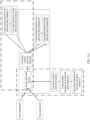
- FIG. 1A is a schematic architectural diagram of a network system according to an embodiment of the present invention.
- the network system includes at least two network slice instances, for example, a network slice instance A, a network slice instance B, and a network slice instance C.
- the network slice instance A includes a core network control plane network function used for the network slice instance A, a core network user plane network function used for the network slice instance A, a shared control plane function, and an access network device.
- the network slice instance B includes a core network control plane network function used for the network slice instance B, a core network user plane network function used for the network slice instance B, the shared control plane function, and the access network device.
- the network slice instance C includes a core network control plane network function used for the network slice instance C, a core network user plane network function used for the network slice instance C, the shared control plane function, and the access network device. These network slice instances may share some control plane functions, and the shared control plane functions are collectively referred to as common control network functions (Common Control Network functions, CCNF for short).
- the CCNF may include an access and mobility management function (Core Access and Mobility Management Function, AMF for short) and a network slice instance selection function.
- the UE When UE initially accesses a network or performs a tracking area update (tracking area update, TAU for short), the UE provides slice selection assistance information (network slice selection assistance information, NSSAI), so that the network selects a slice instance of an access network part and a slice instance of a core network part.
- the NSSAI may include one or a plurality of session management-slice selection assistance information (session management-network slice selection assistance information, SM-NSSAI).
- a SM-NSSAI may be used to select a specific slice.
- the SM-NSSAI may include a slice/service type (Slice/service type, SST for short). The SST is used to indicate a particular feature and service type of a slice.
- the SM-NSSAI may further include a slice differentiator (Slice Differentiator, SD for short). The SD may further be used to distinguish between a plurality of network slice instances that have a same SST.
- the user equipment may be separately connected to a core network control plane device and a core network user plane device by using the access network device.
- the user equipment may be a device such as a personal communications service (English: Personal Communication Service, PCS for short) phone, a cordless telephone set, a Session Initiation Protocol (English: Session Initial Protocol, SIP for short) phone, a wireless local loop (English: Wireless Local Loop, WLL for short) station, or a personal digital assistant (English: Personal Digital Assistant, PDA for short).
- a personal communications service English: Personal Communication Service, PCS for short
- PCS Personal Communication Service
- SIP Session Initial Protocol
- WLL Wireless Local Loop
- PDA Personal Digital Assistant
- the user equipment may also be referred to as a system, a subscriber unit (Subscriber Unit), a subscriber station (Subscriber Station), a mobile station (Mobile Station), a mobile station (Mobile), a remote station (Remote Station), an access point (Access Point), a remote terminal (Remote Terminal), an access terminal (Access Terminal), a user terminal (User Terminal), a user agent (User Agent), or a terminal.
- Subscriber Unit Subscriber Unit
- Subscriber Station Subscriber Station
- Mobile Station mobile station
- Mobile mobile station
- Remote Station Remote station
- an access point Access Point
- Remote Terminal Remote Terminal
- an access terminal Access Terminal
- User Terminal User Terminal
- User Agent User Agent
- a network slice is usually available only in a particular area.
- the area may be of a cell level, namely, the network slice is available in one or more cells.
- the area may be of a tracking area (Tracking Area, TA) level, namely, the network slice is available in one or more TAs.
- TA Tracking Area
- an operator may deploy a network slice within a range of the shopping mall, to provide a service for a user within the range of the shopping mall. After leaving the shopping mall, the user is not served by the network slice.
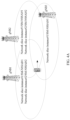
- FIG. 1B is a schematic diagram in which a network slice is deployed by area. As shown in FIG.
- FIG. 1B an access network device supports two cells, one cell A supports a network slice instance 1, and the other cell B supports a network slice instance 2.
- FIG. 1C is another schematic diagram in which a network slice is deployed by area. As shown in FIG. 1C , an access network device gNB1 supports a network slice instance 1 and a network slice 2, and another access network device gNB2 supports a network slice instance 3.
- the embodiments of the present invention intend to resolve a technical problem about how to enable UE to aware a network slice instance deployed by area.
- a solution is that each cell in a network broadcasts a slice instance supported by the cell, for example, broadcasts information about SM-NSSAI or an ID of the network slice instance supported by the cell.
- Dedicated signaling is used to enable the UE to aware the network slice instance deployed by area, thereby reducing signaling overheads.
- the following uses FIG. 2 , FIG. 3 , and FIG. 7 as examples to describe how the UE aware the network slice instance deployed by area.
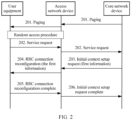
- FIG. 2 is a schematic interaction diagram of a service request when user equipment is switched from an idle mode to a connected mode.
- the service request process includes the following steps:
- the core network device may be a network element that includes an access and mobility management function, for example, an AMF entity.
- an access and mobility management function for example, an AMF entity.
- a random access procedure may be further included.
- the access network device may obtain the first information.
- the first information may include network slice availability (Slice Availability) information.
- the first information includes information about a cell that supports a network slice instance and that allows or does not allow the user equipment to access.
- the first information may also include information about a network slice instance that allows being accessed by the user equipment and another network slice instance that allows to be switched. In a case, the network slice instance is determined by using network slice selection assistance information.
- the first information may further include information about a public land mobile network (Public Land Mobile Network, PLMN for short) that allows or does not allow the UE to access.
- the first information may further include a data network name (Data Network Name, DNN for short) that allows or does not allow the UE to access.
- the first information may be represented in a form of a list or an information set.
- Table 1 shows a first representation form of the first information.
- Table 1 may include an NSSAI list (NSSAI List).
- NSSAI List Each NSSAI in the NSSAI list may include the following content: information about a cell that allows access, information about a cell that does not allow access, and information about NSSAI that allows being switched.
- Information about each cell may include a PLMN ID and a cell identifier (Cell ID).
- Cell ID cell a cell identifier
- Each NSSAI may include an NSSAI identifier (NSSAI ID).
- Table 1 may further include DNN information. Specifically, the NSSAI may be represented by using SM-NSSAI.
- SM-NSSAI On an SM-NSSAI granularity basis, differentiated processing and area-based processing may be implemented on different SM-NSSAI in a single network slice instance, and an operator can flexibly perform slice deployment by area.
- Table 1 Element name Quantity of elements Element explanation Serving public land mobile network SM-NSSAI list A quantity of elements in the list is M1 >SM-NSSAI ID Includes a slice / service type and a slice differentiator >List of cells that allow access A quantity of elements in the list is N1 >>Public land mobile network ID >>Cell ID >List of cells that do not allow access A quantity of elements in the list is N2 >>Public land mobile network ID >>Cell ID >List of SM-NSSAI that is switchable A quantity of elements in the list is M2 List of SM-NSSAI IDs that are allowed to be switched to SM-NSSAI >>ID of allowed SM-NSSAI Includes a slice / service type and a slice differentiator >Data network name
- Table 2 shows a second representation form of the first information.
- Table 2 may include information about a cell that allows access and information about a cell that does not allow access. Each cell that allows access may include the following content: a PLMN ID, a cell ID, and a corresponding NSSAI list.
- the NSSAI list may include an NSSAI ID and information about NSSAI that is switchable. Each cell that does not allow access may include the following content: a PLMN ID, a cell ID, and a corresponding NSSAI list.
- the NSSAI list may include an NSSAI ID.
- Table 2 may further include DNN information. Specifically, the NSSAI may be represented by using SM-NSSAI.
- the first information includes information about a tracking area (Tracking area, TA for short) that supports a network slice instance and that allows or does not allow the user equipment to access.
- the first information may further include information indicating that a network slice instance accessed by the user equipment is allowed to be switched to another network slice instance.
- the network slice instance is determined by using network slice selection assistance information.
- the first information may further include information about a public land mobile network (Public Land Mobile Network, PLMN for short) that allows or does not allow the UE to access.
- PLMN Public Land Mobile Network
- the first information may further include information about a DNN that allows or does not allow the UE to access.
- Table 3 shows a third representation form of the first information.
- Table 3 may include an NSSAI list (NSSAI List).
- NSSAI List NSSAI list
- Each NSSAI in the NSSAI list may include the following content: information about a TA that allows access, information about a TA that does not allow access, and information about NSSAI that is allowed to be switched.
- Information about each TA may include a PLMN ID and a cell identifier (Cell ID).
- Cell ID cell identifier
- Each NSSAI may include an NSSAI identifier (NSSAI ID).
- Table 3 may further include DNN information. Specifically, the NSSAI may be represented by using SM-NSSAI.
- SM-NSSAI list A quantity of elements in the list is M1 >SM-NSSAI ID Includes a slice / service type and a slice differentiator >List of tracking areas that allow access A quantity of elements in the list is N1 >>Public land mobile network ID >>Tracking area ID >List of tracking areas that do not allow access A quantity of elements in the list is N2 >>Public land mobile network ID >>Tracking area ID >List of SM-NSSAI that is switchable A quantity of elements in the list is M2 List of SM-NSSAI IDs that are allowed to be switched to SM-NSSAI >>ID of allowed SM-NSSAI Includes a slice / service type and a slice differentiator >Data network name
- Table 4 shows a fourth representation form of the first information.
- Table 4 may include a tracking area list.
- the tracking area list may include information about a tracking area that allows access and information about a tracking area that does not allow access.
- Each tracking area that allows access may include the following content: a PLMN ID, a TA ID, and a corresponding NSSAI list.
- the NSSAI list may include an NSSAI ID and information about NSSAI that is switchable.
- Each tracking area that does not allow access may include the following content: a PLMN ID, a TA ID, and a corresponding NSSAI list.
- the NSSAI list may include an NSSAI ID. Specifically, the NSSAI may be represented by using SM-NSSAI.
- Element name Quantity of elements Element explanation Serving public land mobile network List of tracking areas that allow access
- a quantity of elements in the list is M1 >Public land mobile network ID >Tracking area ID >SM-NSSAI list
- a quantity of elements in the list is N1
- SM-NSSAI ID Includes a slice / service type and a slice differentiator >>List of SM-NSSAI that is switchable
- a quantity of elements in the list is M2 >Public land mobile network ID >Tracking area ID >SM-NSSAI list
- a quantity of elements in the list is N3
- SM-NSSAI Includes a slice / service type and a slice differentiator
- Table 1 and Table 2 use a cell-based granularity, so that a network has good deployment flexibility.
- Table 3 and Table 4 use a TA-based granularity, so that a network slice can be deployed in a larger area.
- the network slice instance is determined by using the network slice selection assistance information. It should be noted that the network slice instance may alternatively be determined by using a network slice instance identifier. This may be implemented by replacing the NSSAI in Table 1 to Table 4 is correspondingly with the network slice instance (Slice Instance). When the network slice instance is determined by using the network slice instance identifier, signaling overheads may be reduced.
- Table 5 shows a fifth representation form of the first information.
- Table 5 is corresponding to Table 1.
- Table 5 may include a network slice instance list (Slice Instance List).
- Each network slice instance in the slice instance list may include the following content: information about a cell that allows access, information about a cell that does not allow access, and information about a network slice instance that is switchable.
- Information about each cell may include a PLMN ID and a cell identifier (Cell ID).
- Cell ID cell identifier
- the information about the network slice instance that is switchable may include an identifier (ID) of the network slice instance that is switchable.
- the first information may alternatively be represented by using a RAN notification area (RAN notification area) ID.
- RAN notification area RAN notification area
- the cell ID or the tracking area ID is replaced with the RAN notification area ID.
- the first information may be referred to as slice-related mobility information.
- the first information may also be referred to as a slice-related mobility list, and the first information may be used as a part of a user equipment context.
- the following behavior of the UE is decided, for example, the UE is allowed or is not allowed to access a cell, data transmission behavior, or handover behavior.
- Using dedicated signaling of the UE ensures that the UE can aware area-based slice deployment, so that signaling overheads are reduced.
- the access network device and the user equipment may further obtain the first information by using another procedure, for example, may obtain the first information by using a procedure in which the user equipment accesses (Attach) a network.
- FIG. 3 is a schematic interaction diagram in which user equipment accesses a network. The user equipment and an access network device may also obtain first information by using an attach procedure. As shown in FIG. 3 , that user equipment accesses a network specifically includes the following steps:
- a random access procedure may be further included.
- the user equipment may store the first information. For the UE in a various state, some operations are performed based on the first information. The following describes how the first information is used for user equipment in various states.
- a serving cell/base station uses the first information as one of factors to determine a specific cell to which the UE is handed over or a specific cell, in a specific TA, to which the UE is handed over.
- the access network device uses the first information as one of factors to select a target access network device for the UE.
- the access network device uses the first information as a part of a user equipment context (UE context), and transfers the first information to the target access network device in a handover process.
- UE context user equipment context
- FIG. 4A is a schematic diagram of a mobility scenario according to an embodiment of the present invention.
- an access network device gNB1 supports a network slice instance#1 and a network slice instance#2, and an access network device gNB2 supports same types of network slice instances as the access network device gNB 1.
- an access network device gNB3 supports only the network slice instance#1.
- the access network device gNB1 supports SM-NSSAI#1 and SM-NSSAI#2
- the access network device gNB2 also supports the SM-NSSAI#1 and the SM-NSSAI#2, but the access network device gNB3 supports only the SM-NSSAI#1.
- the access network device gNB1 When other conditions (such as a measurement result reported by UE and a load status) are the same or similar, the access network device gNB1 preferably hands over the UE to the access network device gNB2 that supports two network slice instances or two SM-NSSAIs. In another case, for example, when the measurement result reported by the UE indicates that the gNB3 has best network quality, the gNB1 hands over the UE to the gNB3. In addition, the gNB1 determines, based on first information, whether the SM-NSSAI#2 supported by the source access network device gNB1 is allowed to be switched to the SM-NSSAI#1 supported by the gNB3, to use related configurations of the SM-NSSAI#1.
- the gNB1 determines, based on first information, whether the network slice instance#2 supported by the source access network device gNB1 is allowed to be switched to the network slice instance#1 supported by the gNB3, to use related configurations of the network slice instance#1.
- the gNB1 performs switching from the network slice instance#2 to the network slice instance#1, and notifies the UE; or otherwise, the gNB1 refuses a request for switching the network slice instance#2, and notifies the UE.
- FIG. 4B is a schematic interaction diagram in which user equipment is handed over by using an interface (such as an NG2 interface) between an access network device and a core network device.
- a target access network device may obtain first information, and the user equipment obtains updated first information.
- the handover process specifically includes the following steps:
- FIG. 5 is a schematic interaction diagram in which user equipment is handed over by using an interface (such as an Xn interface) between access network devices.
- a source access network device gNB1 determines, based on first information, a target base station to which the user equipment is to be handed over, and transfers the first information to the target access network device by using the Xn interface.
- the handover process specifically includes the following steps:
- the core network device may further determine, based on the first information, whether the user equipment can roam to another operator.
- the core network device stores user equipment context information, and the access network device also stores the user equipment context information.
- the user equipment takes the first information into consideration to determine whether the user equipment can continue performing data transmission (such as small packet transmission).
- the user equipment may decide data transmission behavior of the user equipment based on the first information. Specifically, when the user equipment finds, based on the first information, that the SM-NSSAI#2 is allowed to be switched to the SM-NSSAI#1, the user equipment is handed over from the SM-NSSAI#2 to the SM-NSSAI#1, that is, uses a configuration parameter of the SM-NSSAI#1 (which includes a same logical channel priority) to continue transmitting a service of the SM-NSSAI#2. Otherwise, the user equipment stops corresponding data transmission of the SM-NSSAI#2, and continues to transmit a service of the SM-NSSAI#1.
- FIG. 6 is a schematic interaction diagram of state transition of inactive user equipment. As shown in FIG. 6 , the state transition includes the following steps:
- the UE also uses the first information to perform a subsequent operation. For example, when the UE performs cell reselection, and the UE finds that a highest-priority inter-frequency (inter-frequency) cell or a highest-level intra-frequency (intra-frequency) cell of the UE is a cell that supports a network slice instance and that does not allow access, the UE cannot use the cell as a candidate cell within a first time T1. After the first time T1 expires, if the UE still cannot select a suitable cell to camp on, the restriction is canceled. When the UE has left a slice deployment area for a time period, the UE may delete the first information. The UE may further use the first information to attach to a suitable cell, to trigger a service request of a network slice supported by the cell.
- inter-frequency inter-frequency
- intra-frequency intra-frequency
- the access network device and the user equipment may obtain the first information in another manner.
- the core network device also notifies a serving (serving) access network device of the first information through context setup, S1/X2 handover, and sending of NAS downlink signaling.
- the UE and the access network device may also obtain the first information.
- the UE may also obtain the first information by using an RRC connection release message, so that the UE is redirected to a cell that supports NSSAI or a network slice instance ID.
- FIG. 7 is a schematic diagram of a tracking area update procedure of user equipment. As shown in FIG. 7 , the procedure includes the following steps:
- the access network device and the UE obtain the first information by using dedicated signaling of the UE, so that signaling overheads can be reduced.
- the first information may be broadcast, so that the UE obtains the first information.
- the first information may include information about NSSAI that is supported or not supported by a cell or an ID of a network slice instance that is supported or not supported by the cell, and further includes information about NSSAI that is supported or not supported by another cell or an ID of a network slice instance that is supported or not supported by the another cell.
- the first information may include information about NSSAI that is supported or not supported by a tracking area level or an ID of a network slice instance that is supported or not supported by the tracking area level, and further includes information about NSSAI that is supported or not supported by another tracking area level or an ID of a network slice instance that is supported or not supported by the another tracking area level.
- the access network device and the user equipment may obtain the first information.
- idle UE can select a suitable cell to camp on a network, so that the UE can attach to a cell that supports a network slice instance.
- Connected UE can be handed over to a suitable target cell; and inactive UE can continue transmitting data in a target cell of the UE. Therefore, impact of area-based slice deployment on the UE and the network can be avoided. In this way, the UE can better aware area-based network deployment, a slice is visible to the UE, unnecessary cell access, handover, roaming, and the like are avoided, and UE experience is improved.
- the foregoing describes in detail the communication method according to the embodiments of the present invention.
- FIG. 8 to FIG. 10 the following describes in detail an access network device, user equipment, and a core network device according to the embodiments of the present invention.
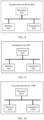
- FIG. 8 is a schematic diagram of an access network device according to an embodiment of the present invention.
- the access network device includes a processor 810, a transceiver 820, and a memory 830.
- the processor 810 is separately connected to the transceiver 820 and the memory 830.
- the memory 830 is configured to store an instruction.
- the processor 810 is configured to execute the instruction stored in the memory 830, to control the transceiver 820 to send a signal and/or receive a signal.
- the processor 810 may control the transceiver 820 to perform receiving and sending steps performed by the access network device in the embodiments shown in FIG. 2 to FIG. 8 .
- FIG. 8 For details, refer to a corresponding process in the foregoing method embodiments. Details are not described herein again.
- FIG. 9 is a schematic diagram of user equipment according to an embodiment of the present invention.
- the access network device includes a processor 910, a transceiver 920, and a memory 930.
- the processor 910 is separately connected to the transceiver 920 and the memory 930.
- the memory 930 is configured to store an instruction.
- the processor 910 is configured to execute the instruction stored in the memory 930, to control the transceiver 920 to send a signal and/or receive a signal.
- the processor 910 may control the transceiver 920 to perform receiving and sending steps performed by the user equipment in the embodiments shown in FIG. 2 to FIG. 7 .
- the processor 910 may control the memory 930 to store first information. For details, refer to a corresponding process in the foregoing method embodiments. Details are not described herein again.
- FIG. 10 is a schematic diagram of a core network device according to an embodiment of the present invention.
- the core network device includes a processor 1010, a transceiver 1020, and a memory 1030.
- the processor 1010 is separately connected to the transceiver 1020 and the memory 1030.
- the memory 1030 is configured to store an instruction.
- the processor 1010 is configured to execute the instruction stored in the memory 1030, to control the transceiver 1020 to send a signal and/or receive a signal.
- the processor 1010 may control the transceiver 1020 to perform receiving and sending steps performed by the core network device in the embodiments shown in FIG. 2 to FIG. 7 .
- FIG. 2 For details, refer to a corresponding process in the foregoing method embodiments. Details are not described herein again.
- sequence numbers of the foregoing processes do not mean execution sequences in the embodiments of the present invention.
- the execution sequences of the processes should be determined based on functions and internal logic of the processes, and should not be construed as any limitation on the implementation processes of the embodiments of the present invention.
- the disclosed system, apparatus, and method may be implemented in other manners.
- the described apparatus embodiment is only an example.
- the unit division is only logical function division and may be other division in actual implementation.
- a plurality of units or components may be combined or integrated into another system, or some features may be ignored or not performed.
- the shown or discussed mutual couplings or direct couplings or communication connections may be implemented through some interfaces.
- the indirect couplings or communication connections between the apparatuses or units may be implemented in electrical, mechanical, or other forms.
- All or some of the foregoing embodiments may be implemented by using software, hardware, firmware, or any combination thereof.
- software is used to implement the embodiments, all or some of the embodiments may be implemented in a form of a computer program product.
- the computer program product includes one or more computer instructions.
- the computer may be a general-purpose computer, a dedicated computer, a computer network, or another programmable apparatus.
- the computer instructions may be stored in a computer-readable storage medium or may be transmitted from a computer-readable storage medium to another computer-readable storage medium.
- the computer instructions may be transmitted from a website, computer, server, or data center to another website, computer, server, or data center in a wired (for example, a coaxial cable, an optical fiber, or a digital subscriber line (DSL)) or wireless (for example, infrared, radio, or microwave) manner.
- the computer-readable storage medium may be any usable medium accessible by a computer, or a data storage device, such as a server or a data center, integrating one or more usable media.
- the usable medium may be a magnetic medium (for example, a floppy disk, a hard disk, or a magnetic tape), an optical medium (for example, a DVD), a semiconductor medium (for example, a solid state disk Solid State Disk (SSD)), or the like.
- a magnetic medium for example, a floppy disk, a hard disk, or a magnetic tape
- an optical medium for example, a DVD
- a semiconductor medium for example, a solid state disk Solid State Disk (SSD)
Landscapes
- Engineering & Computer Science (AREA)
- Signal Processing (AREA)
- Computer Networks & Wireless Communication (AREA)
- Computer Security & Cryptography (AREA)
- Mobile Radio Communication Systems (AREA)
- Two-Way Televisions, Distribution Of Moving Picture Or The Like (AREA)
- Financial Or Insurance-Related Operations Such As Payment And Settlement (AREA)
- Data Exchanges In Wide-Area Networks (AREA)
Applications Claiming Priority (4)
| Application Number | Priority Date | Filing Date | Title |
|---|---|---|---|
| CN201710010762.3A CN108616959B (zh) | 2017-01-06 | 2017-01-06 | 一种通信方法、接入网设备、核心网设备和用户设备 |
| EP22182151.5A EP4125290B1 (fr) | 2017-01-06 | 2018-01-04 | Signalisation descendante de strate de non-accès (nas) dans un cadre de tranches de réseau pour la réception, par un dispositif de réseau d'accès, d'un identificateur nssai trasmis d'un dispositif de réseau central |
| EP18736532.5A EP3567928B1 (fr) | 2017-01-06 | 2018-01-04 | Transfert intercellulaire dans un contexte de tranches de réseau sur la base d'un identificateur nssai trasmis par un dispositif de réseau central vers un dispositif de réseau d'accès de destin sélectionné par un dispositif de réseau d'accès d'origine |
| PCT/CN2018/071271 WO2018127065A1 (fr) | 2017-01-06 | 2018-01-04 | Procédé de communication, dispositif de réseau d'accès, dispositif de réseau central, et équipement d'utilisateur |
Related Parent Applications (3)
| Application Number | Title | Priority Date | Filing Date |
|---|---|---|---|
| EP18736532.5A Division EP3567928B1 (fr) | 2017-01-06 | 2018-01-04 | Transfert intercellulaire dans un contexte de tranches de réseau sur la base d'un identificateur nssai trasmis par un dispositif de réseau central vers un dispositif de réseau d'accès de destin sélectionné par un dispositif de réseau d'accès d'origine |
| EP22182151.5A Division-Into EP4125290B1 (fr) | 2017-01-06 | 2018-01-04 | Signalisation descendante de strate de non-accès (nas) dans un cadre de tranches de réseau pour la réception, par un dispositif de réseau d'accès, d'un identificateur nssai trasmis d'un dispositif de réseau central |
| EP22182151.5A Division EP4125290B1 (fr) | 2017-01-06 | 2018-01-04 | Signalisation descendante de strate de non-accès (nas) dans un cadre de tranches de réseau pour la réception, par un dispositif de réseau d'accès, d'un identificateur nssai trasmis d'un dispositif de réseau central |
Publications (3)
| Publication Number | Publication Date |
|---|---|
| EP4351228A2 true EP4351228A2 (fr) | 2024-04-10 |
| EP4351228A3 EP4351228A3 (fr) | 2024-06-19 |
| EP4351228B1 EP4351228B1 (fr) | 2025-08-20 |
Family
ID=62789465
Family Applications (4)
| Application Number | Title | Priority Date | Filing Date |
|---|---|---|---|
| EP23211657.4A Active EP4351228B1 (fr) | 2017-01-06 | 2018-01-04 | Procédé de communication, dispositif de réseau d'accès, dispositif de réseau central et dispositif d'équipement utilisateur |
| EP22182157.2A Active EP4124112B1 (fr) | 2017-01-06 | 2018-01-04 | Établissement de contexte initial dans un cadre de tranches de réseau sur la base d'un identificateur nssai trasmis par un dispositif de réseau central vers un dispositif de réseau d'accès |
| EP18736532.5A Active EP3567928B1 (fr) | 2017-01-06 | 2018-01-04 | Transfert intercellulaire dans un contexte de tranches de réseau sur la base d'un identificateur nssai trasmis par un dispositif de réseau central vers un dispositif de réseau d'accès de destin sélectionné par un dispositif de réseau d'accès d'origine |
| EP22182151.5A Active EP4125290B1 (fr) | 2017-01-06 | 2018-01-04 | Signalisation descendante de strate de non-accès (nas) dans un cadre de tranches de réseau pour la réception, par un dispositif de réseau d'accès, d'un identificateur nssai trasmis d'un dispositif de réseau central |
Family Applications After (3)
| Application Number | Title | Priority Date | Filing Date |
|---|---|---|---|
| EP22182157.2A Active EP4124112B1 (fr) | 2017-01-06 | 2018-01-04 | Établissement de contexte initial dans un cadre de tranches de réseau sur la base d'un identificateur nssai trasmis par un dispositif de réseau central vers un dispositif de réseau d'accès |
| EP18736532.5A Active EP3567928B1 (fr) | 2017-01-06 | 2018-01-04 | Transfert intercellulaire dans un contexte de tranches de réseau sur la base d'un identificateur nssai trasmis par un dispositif de réseau central vers un dispositif de réseau d'accès de destin sélectionné par un dispositif de réseau d'accès d'origine |
| EP22182151.5A Active EP4125290B1 (fr) | 2017-01-06 | 2018-01-04 | Signalisation descendante de strate de non-accès (nas) dans un cadre de tranches de réseau pour la réception, par un dispositif de réseau d'accès, d'un identificateur nssai trasmis d'un dispositif de réseau central |
Country Status (7)
| Country | Link |
|---|---|
| US (4) | US11310708B2 (fr) |
| EP (4) | EP4351228B1 (fr) |
| JP (4) | JP7100040B2 (fr) |
| CN (4) | CN114423064B (fr) |
| CA (3) | CA3206275A1 (fr) |
| ES (3) | ES2927249T3 (fr) |
| WO (1) | WO2018127065A1 (fr) |
Families Citing this family (45)
| Publication number | Priority date | Publication date | Assignee | Title |
|---|---|---|---|---|
| CN114423064B (zh) * | 2017-01-06 | 2023-04-11 | 荣耀终端有限公司 | 一种通信方法、接入网设备、通信装置 |
| WO2018134483A1 (fr) * | 2017-01-23 | 2018-07-26 | Nokia Technologies Oy | Procédé et appareil pour un déploiement de tranche de réseau complémentaire et équivalente dans un environnement de réseau |
| WO2018175498A1 (fr) * | 2017-03-20 | 2018-09-27 | Zte Corporation | Fonction de service de découpage de réseau |
| US10764951B2 (en) * | 2017-06-17 | 2020-09-01 | Lg Electronics Inc. | Registration method of user terminal in wireless communication system and apparatus therefor |
| WO2019091562A1 (fr) * | 2017-11-09 | 2019-05-16 | Huawei Technologies Co., Ltd. | Appareil et procédé permettant d'obtenir des informations de support de tranche |
| JP6827971B2 (ja) * | 2018-03-26 | 2021-02-10 | Kddi株式会社 | 端末装置による自律的ハンドオーバのための端末装置、基地局装置、制御方法、及びプログラム |
| JP7169827B2 (ja) * | 2018-09-21 | 2022-11-11 | 株式会社Nttドコモ | 端末及び通信方法 |
| CN111148187B (zh) | 2018-11-02 | 2023-12-15 | 华为技术有限公司 | 通信方法和装置 |
| EP3883285B1 (fr) * | 2018-11-15 | 2024-07-10 | Beijing Xiaomi Mobile Software Co., Ltd. | Procédé et dispositif d'utilisation de tranche de réseau |
| US12335893B2 (en) | 2018-11-20 | 2025-06-17 | Guangdong Oppo Mobile Telecommunications Corp., Ltd. | Registration method, terminal device and network device |
| CN112188544A (zh) * | 2019-07-04 | 2021-01-05 | 大唐移动通信设备有限公司 | 一种基站间用户设备网络切片信息处理的方法和装置 |
| CN112218342B (zh) * | 2019-07-11 | 2024-10-01 | 中兴通讯股份有限公司 | 一种实现核心网子切片容灾的方法、装置和系统 |
| CN110650548B (zh) * | 2019-09-20 | 2021-11-23 | 展讯通信(上海)有限公司 | 多小区数据传输的方法与设备 |
| CN110719571B (zh) * | 2019-09-29 | 2020-12-08 | 中国联合网络通信集团有限公司 | 5g网络通信管制方法及装置、平台及系统 |
| CN112737808B (zh) * | 2019-10-28 | 2024-12-03 | 中兴通讯股份有限公司 | 一种网络切片实例配置方法和装置 |
| EP4040913B1 (fr) * | 2019-10-31 | 2025-08-06 | Huawei Technologies Co., Ltd. | Procédé, dispositif et système de communication |
| CN112954669B (zh) * | 2019-11-26 | 2025-02-14 | 中兴通讯股份有限公司 | 共享终端业务控制方法、装置、网元及存储介质 |
| WO2021108759A1 (fr) * | 2019-11-27 | 2021-06-03 | Netsia, Inc. | Assurance de tranche dans un réseau mobile |
| US11240855B2 (en) * | 2020-01-13 | 2022-02-01 | Qualcomm Incorporated | Local area network client participation in a network slice |
| CN113141607B (zh) * | 2020-01-19 | 2022-09-02 | 大唐移动通信设备有限公司 | 一种ims紧急服务状态指示方法及装置 |
| US11026149B1 (en) * | 2020-01-31 | 2021-06-01 | Dish Wireless Llc | Systems and methods for reducing slice access failures |
| US12262314B2 (en) | 2020-02-12 | 2025-03-25 | Apple Inc. | Network slice aware cell selection |
| CN121692076A (zh) | 2020-02-17 | 2026-03-17 | 华为技术有限公司 | 通信方法及通信装置 |
| CN113453283B (zh) * | 2020-03-25 | 2023-09-08 | 中移(上海)信息通信科技有限公司 | 一种远程连接方法、装置、设备和计算机可读存储介质 |
| CN115428521A (zh) * | 2020-04-02 | 2022-12-02 | 日本电气株式会社 | Amf设备、接入网节点及其方法 |
| CN111586807B (zh) * | 2020-05-22 | 2022-04-15 | Oppo广东移动通信有限公司 | 一种网络接入方法及通信装置 |
| CN113747605B (zh) | 2020-05-28 | 2023-11-17 | 华为技术有限公司 | 通信方法和通信装置 |
| EP4149172B1 (fr) * | 2020-05-28 | 2024-07-10 | Guangdong Oppo Mobile Telecommunications Corp., Ltd. | Procédé de sélection de tranche et dispositif terminal |
| CN113766581B (zh) * | 2020-06-03 | 2024-12-24 | 华为技术有限公司 | 通信方法以及相关联的通信装置、介质和芯片 |
| EP4128956A4 (fr) * | 2020-06-24 | 2023-08-02 | Nokia Technologies Oy | Sélection de cellules en utilisant des informations de tranches de réseau prises en charge |
| CN113873581B (zh) * | 2020-06-30 | 2024-04-09 | 华为技术有限公司 | 小区选择的方法和装置 |
| CN113950013B (zh) * | 2020-07-16 | 2023-03-28 | 中国移动通信有限公司研究院 | 一种消息发送、接收方法、设备及介质 |
| WO2022036668A1 (fr) * | 2020-08-21 | 2022-02-24 | Qualcomm Incorporated | Amélioration de la mobilité de mise en tranche de réseau |
| EP4275399A4 (fr) * | 2021-01-11 | 2024-12-04 | LG Electronics Inc. | Procédé et appareil d'acquisition d'une configuration de tranche de réseau dans un système de communication sans fil |
| JP7048775B2 (ja) * | 2021-01-20 | 2022-04-05 | Kddi株式会社 | 端末装置による自律的ハンドオーバのための端末装置、基地局装置、制御方法、及びプログラム |
| JP7245942B2 (ja) * | 2021-01-20 | 2023-03-24 | Kddi株式会社 | 端末装置による自律的ハンドオーバのための端末装置、基地局装置、制御方法、及びプログラム |
| CN120640392A (zh) * | 2021-02-09 | 2025-09-12 | 华为技术有限公司 | 基于网络切片的通信方法及装置 |
| US12075337B2 (en) | 2021-12-17 | 2024-08-27 | Juniper Networks, Inc. | Radio access network tracking area visualization management and monitoring |
| CN117941388A (zh) * | 2021-12-30 | 2024-04-26 | Oppo广东移动通信有限公司 | 网络切片的请求方法、设备、存储介质及程序产品 |
| JP7442711B2 (ja) * | 2022-03-23 | 2024-03-04 | Kddi株式会社 | 端末装置による自律的ハンドオーバのための端末装置、基地局装置、制御方法、及びプログラム |
| CN116867026A (zh) * | 2022-03-26 | 2023-10-10 | 华为技术有限公司 | 通信方法、通信装置和通信系统 |
| EP4274305A1 (fr) * | 2022-05-06 | 2023-11-08 | Nokia Technologies Oy | Gestion d'une demande de service avec prise en charge des tranches de réseau non homogènes |
| US12452759B2 (en) * | 2022-05-20 | 2025-10-21 | Dish Wireless L.L.C. | Systems and methods for expandable network slices in a wireless telecommunication network |
| JP7842881B2 (ja) * | 2022-08-29 | 2026-04-08 | 楽天モバイル株式会社 | ネットワークスライス識別子の自動生成および実装のためのシステムおよび方法 |
| US12615559B2 (en) * | 2022-10-12 | 2026-04-28 | At&T Intellectual Property I, L.P. | Facilitating network slicing information preservation in advanced networks |
Family Cites Families (50)
| Publication number | Priority date | Publication date | Assignee | Title |
|---|---|---|---|---|
| CN101330714A (zh) * | 2007-06-20 | 2008-12-24 | 华为技术有限公司 | 一种无线接入方法、系统及装置 |
| CN101547495A (zh) * | 2008-03-27 | 2009-09-30 | 华为技术有限公司 | 小区重选的方法、终端及系统 |
| US9743228B2 (en) * | 2009-06-22 | 2017-08-22 | Qualcomm Incorporated | Transport of LCS-related messages for LTE access |
| CN103368930B (zh) * | 2012-03-27 | 2017-11-28 | 华为技术有限公司 | 用于控制访问核心网的方法和用户设备 |
| US9124527B2 (en) * | 2012-08-29 | 2015-09-01 | International Business Machines Corporation | Sliced routing table management |
| EP2901766A2 (fr) * | 2012-09-27 | 2015-08-05 | Interdigital Patent Holdings, Inc. | Architecture de bout en bout, structure d'api, découverte et accès dans un réseau virtualisé |
| CN104822169B (zh) | 2014-01-30 | 2019-01-25 | 上海诺基亚贝尔股份有限公司 | 用于为用户设备的切换提供服务的方法、基站和双连接系统 |
| WO2015115621A1 (fr) * | 2014-01-31 | 2015-08-06 | 京セラ株式会社 | Procédé de commande de communication, station de base maître, station de base secondaire et terminal utilisateur |
| US10206135B2 (en) * | 2014-03-14 | 2019-02-12 | Lg Electronics Inc. | Method and apparatus for handling RAN assistance information for roaming user equipments in wireless communication system |
| US9686675B2 (en) * | 2015-03-30 | 2017-06-20 | Netscout Systems Texas, Llc | Systems, methods and devices for deriving subscriber and device identifiers in a communication network |
| US10362473B2 (en) * | 2015-05-18 | 2019-07-23 | Intel IP Corporation | Device, system and method of HPLMN preferred EPDG selection in roaming scenarios |
| CN107710832B (zh) * | 2015-06-01 | 2020-10-09 | 华为技术有限公司 | 用于控制面和数据面中的虚拟化功能的系统和方法 |
| WO2017034352A1 (fr) * | 2015-08-25 | 2017-03-02 | 엘지전자 주식회사 | Procédé de connexion de station de base et équipement utilisateur le mettant en œuvre |
| US10506489B2 (en) * | 2015-09-18 | 2019-12-10 | Huawei Technologies Co., Ltd. | System and methods for network slice reselection |
| US10129235B2 (en) | 2015-10-16 | 2018-11-13 | Qualcomm Incorporated | Key hierarchy for network slicing |
| US10932253B2 (en) | 2016-01-08 | 2021-02-23 | Telefonaktiebolaget Lm Ericsson (Publ) | Radio network nodes management system providing dual connectivity |
| CN108476547B (zh) * | 2016-01-15 | 2022-04-29 | 瑞典爱立信有限公司 | 传送通信装置、接收通信装置以及由此在网络切片的上下文中执行的方法 |
| WO2017135860A1 (fr) * | 2016-02-05 | 2017-08-10 | Telefonaktiebolaget Lm Ericsson (Publ) | Nœuds de réseau, et procédés exécutés dans ceux-ci, pour permettre une communication dans un réseau de communications |
| EP3412085B1 (fr) | 2016-02-05 | 2019-11-13 | Telefonaktiebolaget LM Ericsson (publ) | Noeud de réseau principal, dispositif sans fil et procédés associés |
| US9961713B2 (en) * | 2016-02-23 | 2018-05-01 | Motorola Mobility Llc | Procedures to support network slicing in a wireless communication system |
| WO2017166148A1 (fr) | 2016-03-31 | 2017-10-05 | 华为技术有限公司 | Procédé de transmission de données et dispositif associé |
| EP3437367B1 (fr) | 2016-04-01 | 2021-06-02 | Telefonaktiebolaget LM Ericsson (PUBL) | Transfert intercellulaire dans un réseau de communication sans fil comportant des tranches de réseau |
| WO2017181408A1 (fr) * | 2016-04-22 | 2017-10-26 | Telefonaktiebolaget Lm Ericsson (Publ) | Procédé et élément de réseau pour transfert intercellulaire de trafic de plan utilisateur |
| CN107318176B (zh) * | 2016-04-26 | 2022-12-20 | 中兴通讯股份有限公司 | 恢复标识的获取、发送方法及装置、ue、接入网设备 |
| US10652809B2 (en) | 2016-05-15 | 2020-05-12 | Lg Electronics Inc. | Method and apparatus for supporting network slicing selection and authorization for new radio access technology |
| CN111107588B (zh) | 2016-05-30 | 2021-03-05 | 华为技术有限公司 | 无线通信的方法、核心网实体和用户设备 |
| US10278123B2 (en) * | 2016-07-04 | 2019-04-30 | Apple Inc. | Network slice selection |
| WO2018010812A1 (fr) * | 2016-07-15 | 2018-01-18 | Telefonaktiebolaget Lm Ericsson (Publ) | Contrôle d'accès dans un réseau de communications en tranches |
| US10470149B2 (en) * | 2016-07-27 | 2019-11-05 | Lg Electronics Inc. | Method and apparatus for performing MM attach and service request procedure for network slice based new radio access technology in wireless communication system |
| US10805168B2 (en) * | 2016-07-29 | 2020-10-13 | Lg Electronics Inc. | Method and apparatus for performing cell specific procedure or mobility procedure for network slice-based NR in wireless communication system |
| EP3499964B1 (fr) | 2016-08-10 | 2021-06-23 | Nec Corporation | Noeud de réseau d'accès sans fil, terminal sans fil, noeud de réseau central, et procédés associés |
| KR102316926B1 (ko) * | 2016-08-16 | 2021-10-26 | 아이디에이씨 홀딩스, 인크. | 네트워크 슬라이스 재선택 |
| EP3490280B1 (fr) * | 2016-08-23 | 2020-11-04 | Huawei Technologies Co., Ltd. | Déplacement de l'entité de gestion des sessions |
| WO2018069852A1 (fr) | 2016-10-11 | 2018-04-19 | Telefonaktiebolaget Lm Ericsson (Publ) | Réseau d'accès adapté à la segmentation de réseau |
| WO2018079691A1 (fr) | 2016-10-26 | 2018-05-03 | 日本電気株式会社 | Système de communication, dispositif de sécurité, terminal de communication, et procédé de communication |
| KR102108871B1 (ko) * | 2016-11-03 | 2020-05-12 | 주식회사 케이티 | 네트워크 슬라이스 기반 데이터 처리 방법 및 그 장치 |
| KR20190082897A (ko) | 2016-11-18 | 2019-07-10 | 엘지전자 주식회사 | 무선 통신 시스템에서의 네트워크 노드 선택 방법 및 이를 위한 장치 |
| US10716083B2 (en) | 2016-12-15 | 2020-07-14 | Lg Electronics Inc. | Tracking area assignment method in wireless communication system and device therefor |
| CN114423064B (zh) * | 2017-01-06 | 2023-04-11 | 荣耀终端有限公司 | 一种通信方法、接入网设备、通信装置 |
| GB2558585A (en) * | 2017-01-06 | 2018-07-18 | Nec Corp | Communication system |
| US11246085B2 (en) | 2017-01-27 | 2022-02-08 | Nec Corporation | Communication terminal, core network apparatus, communication system, information management method, and computer readable medium |
| EP3358887B1 (fr) * | 2017-02-06 | 2020-02-05 | Industrial Technology Research Institute | Procédé d'enregistrement d'équipement utilisateur pour la sélection d'une tranche de réseau et contrôleur de réseau et système de communication de réseau l'utilisant |
| EP3567934B1 (fr) * | 2017-02-07 | 2022-11-02 | Huawei Technologies Co., Ltd. | Procédé de transmission de données, terminal et élément de réseau d'accès |
| WO2018184707A1 (fr) * | 2017-04-03 | 2018-10-11 | Blackberry Limited | Fourniture d'indicatifs d'urgence à un dispositif mobile |
| CN109151924B (zh) * | 2017-06-16 | 2024-03-01 | 华为技术有限公司 | 通信方法及接入网设备、核心网设备 |
| CN111491345B (zh) * | 2017-08-11 | 2021-04-20 | 华为技术有限公司 | 通信方法、接入网设备及计算机可读存储介质 |
| RU2737964C1 (ru) * | 2017-10-16 | 2020-12-07 | Хуавей Текнолоджиз Ко., Лтд. | Система, устройство и способ управления мобильностью |
| US10660016B2 (en) * | 2017-11-08 | 2020-05-19 | Ofinno, Llc | Location based coexistence rules for network slices in a telecommunication network |
| US10939280B2 (en) * | 2018-04-05 | 2021-03-02 | Qualcomm Incorporated | Optimization of user equipment radio capability signaling |
| JP7279177B2 (ja) * | 2019-02-22 | 2023-05-22 | アップル インコーポレイテッド | ハンドオーバ割り込みを低減するためのシステム及び方法 |
-
2017
- 2017-01-06 CN CN202111602350.1A patent/CN114423064B/zh active Active
- 2017-01-06 CN CN201710010762.3A patent/CN108616959B/zh active Active
- 2017-01-06 CN CN202111605622.3A patent/CN114501561A/zh active Pending
- 2017-01-06 CN CN201811603720.1A patent/CN109561485B/zh active Active
-
2018
- 2018-01-04 EP EP23211657.4A patent/EP4351228B1/fr active Active
- 2018-01-04 EP EP22182157.2A patent/EP4124112B1/fr active Active
- 2018-01-04 ES ES18736532T patent/ES2927249T3/es active Active
- 2018-01-04 JP JP2019536910A patent/JP7100040B2/ja active Active
- 2018-01-04 EP EP18736532.5A patent/EP3567928B1/fr active Active
- 2018-01-04 ES ES22182157T patent/ES2975530T3/es active Active
- 2018-01-04 EP EP22182151.5A patent/EP4125290B1/fr active Active
- 2018-01-04 CA CA3206275A patent/CA3206275A1/fr active Pending
- 2018-01-04 CA CA3045535A patent/CA3045535C/fr active Active
- 2018-01-04 ES ES22182151T patent/ES2999297T3/es active Active
- 2018-01-04 CA CA3206273A patent/CA3206273A1/fr active Pending
- 2018-01-04 WO PCT/CN2018/071271 patent/WO2018127065A1/fr not_active Ceased
-
2019
- 2019-07-03 US US16/503,278 patent/US11310708B2/en active Active
-
2022
- 2022-02-28 JP JP2022030304A patent/JP7304451B2/ja active Active
- 2022-02-28 JP JP2022030299A patent/JP7311657B2/ja active Active
- 2022-04-11 US US17/717,385 patent/US11877197B2/en active Active
- 2022-04-11 US US17/717,381 patent/US11792705B2/en active Active
-
2023
- 2023-07-06 JP JP2023111097A patent/JP7724816B2/ja active Active
- 2023-07-07 US US18/348,455 patent/US12200575B2/en active Active
Also Published As
Similar Documents
| Publication | Publication Date | Title |
|---|---|---|
| US12200575B2 (en) | Communication method, access network device, core network device, and user equipment for handling a handover request | |
| US11463947B2 (en) | Communication method, access network device, and terminal device to facilitate communication in a network slice architecture | |
| EP3820192B1 (fr) | Procédé de communication, dispositif de réseau d'accès et dispositif terminal | |
| US20200305224A1 (en) | Service Processing Method and Apparatus | |
| US11240866B2 (en) | Communication method, terminal, and access network device | |
| US11140592B2 (en) | Method and apparatus for selecting radio access network device | |
| EP3863334A1 (fr) | Procédé et appareil de communication | |
| EP3661270A1 (fr) | Procédé et appareil permettant de transmettre des informations | |
| US12538200B2 (en) | Communication system with virtual network mapping | |
| WO2022067643A1 (fr) | Procédé et appareil de sélection de cellule et procédé et appareil de radiomessagerie | |
| WO2018014611A1 (fr) | Procédé et dispositif de transmission d'informations | |
| KR20250042823A (ko) | 이중 연결 조건부 핸드오버 복구를 위한 방법 및 장치 |
Legal Events
| Date | Code | Title | Description |
|---|---|---|---|
| PUAI | Public reference made under article 153(3) epc to a published international application that has entered the european phase |
Free format text: ORIGINAL CODE: 0009012 |
|
| STAA | Information on the status of an ep patent application or granted ep patent |
Free format text: STATUS: REQUEST FOR EXAMINATION WAS MADE |
|
| 17P | Request for examination filed |
Effective date: 20231123 |
|
| AC | Divisional application: reference to earlier application |
Ref document number: 3567928 Country of ref document: EP Kind code of ref document: P Ref document number: 4125290 Country of ref document: EP Kind code of ref document: P |
|
| AK | Designated contracting states |
Kind code of ref document: A2 Designated state(s): AL AT BE BG CH CY CZ DE DK EE ES FI FR GB GR HR HU IE IS IT LI LT LU LV MC MK MT NL NO PL PT RO RS SE SI SK SM TR |
|
| REG | Reference to a national code |
Ref country code: DE Ref legal event code: R079 Free format text: PREVIOUS MAIN CLASS: H04W0048180000 Ipc: H04W0036000000 Ref document number: 602018084906 Country of ref document: DE |
|
| PUAL | Search report despatched |
Free format text: ORIGINAL CODE: 0009013 |
|
| AK | Designated contracting states |
Kind code of ref document: A3 Designated state(s): AL AT BE BG CH CY CZ DE DK EE ES FI FR GB GR HR HU IE IS IT LI LT LU LV MC MK MT NL NO PL PT RO RS SE SI SK SM TR |
|
| RIC1 | Information provided on ipc code assigned before grant |
Ipc: H04W 48/18 20090101ALN20240514BHEP Ipc: H04W 36/00 20090101AFI20240514BHEP |
|
| GRAP | Despatch of communication of intention to grant a patent |
Free format text: ORIGINAL CODE: EPIDOSNIGR1 |
|
| STAA | Information on the status of an ep patent application or granted ep patent |
Free format text: STATUS: GRANT OF PATENT IS INTENDED |
|
| RIC1 | Information provided on ipc code assigned before grant |
Ipc: H04W 48/18 20090101ALN20250224BHEP Ipc: H04W 36/00 20090101AFI20250224BHEP |
|
| INTG | Intention to grant announced |
Effective date: 20250314 |
|
| GRAS | Grant fee paid |
Free format text: ORIGINAL CODE: EPIDOSNIGR3 |
|
| GRAA | (expected) grant |
Free format text: ORIGINAL CODE: 0009210 |
|
| STAA | Information on the status of an ep patent application or granted ep patent |
Free format text: STATUS: THE PATENT HAS BEEN GRANTED |
|
| AC | Divisional application: reference to earlier application |
Ref document number: 4125290 Country of ref document: EP Kind code of ref document: P Ref document number: 3567928 Country of ref document: EP Kind code of ref document: P |
|
| AK | Designated contracting states |
Kind code of ref document: B1 Designated state(s): AL AT BE BG CH CY CZ DE DK EE ES FI FR GB GR HR HU IE IS IT LI LT LU LV MC MK MT NL NO PL PT RO RS SE SI SK SM TR |
|
| REG | Reference to a national code |
Ref country code: GB Ref legal event code: FG4D |
|
| REG | Reference to a national code |
Ref country code: CH Ref legal event code: EP |
|
| REG | Reference to a national code |
Ref country code: DE Ref legal event code: R096 Ref document number: 602018084906 Country of ref document: DE |
|
| REG | Reference to a national code |
Ref country code: IE Ref legal event code: FG4D |
|
| REG | Reference to a national code |
Ref country code: NL Ref legal event code: FP |
|
| PG25 | Lapsed in a contracting state [announced via postgrant information from national office to epo] |
Ref country code: IS Free format text: LAPSE BECAUSE OF FAILURE TO SUBMIT A TRANSLATION OF THE DESCRIPTION OR TO PAY THE FEE WITHIN THE PRESCRIBED TIME-LIMIT Effective date: 20251220 |
|
| PGFP | Annual fee paid to national office [announced via postgrant information from national office to epo] |
Ref country code: GB Payment date: 20251204 Year of fee payment: 9 |
|
| PG25 | Lapsed in a contracting state [announced via postgrant information from national office to epo] |
Ref country code: NO Free format text: LAPSE BECAUSE OF FAILURE TO SUBMIT A TRANSLATION OF THE DESCRIPTION OR TO PAY THE FEE WITHIN THE PRESCRIBED TIME-LIMIT Effective date: 20251120 |
|
| REG | Reference to a national code |
Ref country code: LT Ref legal event code: MG9D |
|
| PG25 | Lapsed in a contracting state [announced via postgrant information from national office to epo] |
Ref country code: PT Free format text: LAPSE BECAUSE OF FAILURE TO SUBMIT A TRANSLATION OF THE DESCRIPTION OR TO PAY THE FEE WITHIN THE PRESCRIBED TIME-LIMIT Effective date: 20251222 |
|
| PG25 | Lapsed in a contracting state [announced via postgrant information from national office to epo] |
Ref country code: FI Free format text: LAPSE BECAUSE OF FAILURE TO SUBMIT A TRANSLATION OF THE DESCRIPTION OR TO PAY THE FEE WITHIN THE PRESCRIBED TIME-LIMIT Effective date: 20250820 |
|
| PG25 | Lapsed in a contracting state [announced via postgrant information from national office to epo] |
Ref country code: HR Free format text: LAPSE BECAUSE OF FAILURE TO SUBMIT A TRANSLATION OF THE DESCRIPTION OR TO PAY THE FEE WITHIN THE PRESCRIBED TIME-LIMIT Effective date: 20250820 |
|
| PGFP | Annual fee paid to national office [announced via postgrant information from national office to epo] |
Ref country code: NL Payment date: 20251215 Year of fee payment: 9 |
|
| PG25 | Lapsed in a contracting state [announced via postgrant information from national office to epo] |
Ref country code: GR Free format text: LAPSE BECAUSE OF FAILURE TO SUBMIT A TRANSLATION OF THE DESCRIPTION OR TO PAY THE FEE WITHIN THE PRESCRIBED TIME-LIMIT Effective date: 20251121 |
|
| PG25 | Lapsed in a contracting state [announced via postgrant information from national office to epo] |
Ref country code: SE Free format text: LAPSE BECAUSE OF FAILURE TO SUBMIT A TRANSLATION OF THE DESCRIPTION OR TO PAY THE FEE WITHIN THE PRESCRIBED TIME-LIMIT Effective date: 20250820 |
|
| PG25 | Lapsed in a contracting state [announced via postgrant information from national office to epo] |
Ref country code: LV Free format text: LAPSE BECAUSE OF FAILURE TO SUBMIT A TRANSLATION OF THE DESCRIPTION OR TO PAY THE FEE WITHIN THE PRESCRIBED TIME-LIMIT Effective date: 20250820 |
|
| PG25 | Lapsed in a contracting state [announced via postgrant information from national office to epo] |
Ref country code: BG Free format text: LAPSE BECAUSE OF FAILURE TO SUBMIT A TRANSLATION OF THE DESCRIPTION OR TO PAY THE FEE WITHIN THE PRESCRIBED TIME-LIMIT Effective date: 20250820 Ref country code: PL Free format text: LAPSE BECAUSE OF FAILURE TO SUBMIT A TRANSLATION OF THE DESCRIPTION OR TO PAY THE FEE WITHIN THE PRESCRIBED TIME-LIMIT Effective date: 20250820 |
|
| PG25 | Lapsed in a contracting state [announced via postgrant information from national office to epo] |
Ref country code: RS Free format text: LAPSE BECAUSE OF FAILURE TO SUBMIT A TRANSLATION OF THE DESCRIPTION OR TO PAY THE FEE WITHIN THE PRESCRIBED TIME-LIMIT Effective date: 20251120 |
|
| PG25 | Lapsed in a contracting state [announced via postgrant information from national office to epo] |
Ref country code: ES Free format text: LAPSE BECAUSE OF FAILURE TO SUBMIT A TRANSLATION OF THE DESCRIPTION OR TO PAY THE FEE WITHIN THE PRESCRIBED TIME-LIMIT Effective date: 20250820 |
|
| REG | Reference to a national code |
Ref country code: AT Ref legal event code: MK05 Ref document number: 1828731 Country of ref document: AT Kind code of ref document: T Effective date: 20250820 |
|
| PG25 | Lapsed in a contracting state [announced via postgrant information from national office to epo] |
Ref country code: SM Free format text: LAPSE BECAUSE OF FAILURE TO SUBMIT A TRANSLATION OF THE DESCRIPTION OR TO PAY THE FEE WITHIN THE PRESCRIBED TIME-LIMIT Effective date: 20250820 |
|
| PG25 | Lapsed in a contracting state [announced via postgrant information from national office to epo] |
Ref country code: DK Free format text: LAPSE BECAUSE OF FAILURE TO SUBMIT A TRANSLATION OF THE DESCRIPTION OR TO PAY THE FEE WITHIN THE PRESCRIBED TIME-LIMIT Effective date: 20250820 |
|
| PGFP | Annual fee paid to national office [announced via postgrant information from national office to epo] |
Ref country code: DE Payment date: 20251203 Year of fee payment: 9 |
|
| PG25 | Lapsed in a contracting state [announced via postgrant information from national office to epo] |
Ref country code: AT Free format text: LAPSE BECAUSE OF FAILURE TO SUBMIT A TRANSLATION OF THE DESCRIPTION OR TO PAY THE FEE WITHIN THE PRESCRIBED TIME-LIMIT Effective date: 20250820 |
|
| PG25 | Lapsed in a contracting state [announced via postgrant information from national office to epo] |
Ref country code: IT Free format text: LAPSE BECAUSE OF FAILURE TO SUBMIT A TRANSLATION OF THE DESCRIPTION OR TO PAY THE FEE WITHIN THE PRESCRIBED TIME-LIMIT Effective date: 20250820 |
|
| PG25 | Lapsed in a contracting state [announced via postgrant information from national office to epo] |
Ref country code: CZ Free format text: LAPSE BECAUSE OF FAILURE TO SUBMIT A TRANSLATION OF THE DESCRIPTION OR TO PAY THE FEE WITHIN THE PRESCRIBED TIME-LIMIT Effective date: 20250820 |
|
| PG25 | Lapsed in a contracting state [announced via postgrant information from national office to epo] |
Ref country code: EE Free format text: LAPSE BECAUSE OF FAILURE TO SUBMIT A TRANSLATION OF THE DESCRIPTION OR TO PAY THE FEE WITHIN THE PRESCRIBED TIME-LIMIT Effective date: 20250820 Ref country code: SK Free format text: LAPSE BECAUSE OF FAILURE TO SUBMIT A TRANSLATION OF THE DESCRIPTION OR TO PAY THE FEE WITHIN THE PRESCRIBED TIME-LIMIT Effective date: 20250820 |