EP4351239A1 - Procédé et appareil de traitement d'informations, dispositif de communication, et support de stockage lisible - Google Patents
Procédé et appareil de traitement d'informations, dispositif de communication, et support de stockage lisible Download PDFInfo
- Publication number
- EP4351239A1 EP4351239A1 EP22815279.9A EP22815279A EP4351239A1 EP 4351239 A1 EP4351239 A1 EP 4351239A1 EP 22815279 A EP22815279 A EP 22815279A EP 4351239 A1 EP4351239 A1 EP 4351239A1
- Authority
- EP
- European Patent Office
- Prior art keywords
- information
- paging
- terminal
- paging restriction
- priority
- Prior art date
- Legal status (The legal status is an assumption and is not a legal conclusion. Google has not performed a legal analysis and makes no representation as to the accuracy of the status listed.)
- Pending
Links
Images



Classifications
-
- H—ELECTRICITY
- H04—ELECTRIC COMMUNICATION TECHNIQUE
- H04W—WIRELESS COMMUNICATION NETWORKS
- H04W68/00—User notification, e.g. alerting and paging, for incoming communication, change of service or the like
- H04W68/12—Inter-network notification
-
- H—ELECTRICITY
- H04—ELECTRIC COMMUNICATION TECHNIQUE
- H04W—WIRELESS COMMUNICATION NETWORKS
- H04W68/00—User notification, e.g. alerting and paging, for incoming communication, change of service or the like
- H04W68/02—Arrangements for increasing efficiency of notification or paging channel
-
- H—ELECTRICITY
- H04—ELECTRIC COMMUNICATION TECHNIQUE
- H04W—WIRELESS COMMUNICATION NETWORKS
- H04W68/00—User notification, e.g. alerting and paging, for incoming communication, change of service or the like
- H04W68/005—Transmission of information for alerting of incoming communication
-
- H—ELECTRICITY
- H04—ELECTRIC COMMUNICATION TECHNIQUE
- H04W—WIRELESS COMMUNICATION NETWORKS
- H04W48/00—Access restriction; Network selection; Access point selection
- H04W48/16—Discovering, processing access restriction or access information
-
- H—ELECTRICITY
- H04—ELECTRIC COMMUNICATION TECHNIQUE
- H04W—WIRELESS COMMUNICATION NETWORKS
- H04W76/00—Connection management
- H04W76/20—Manipulation of established connections
- H04W76/27—Transitions between radio resource control [RRC] states
-
- H—ELECTRICITY
- H04—ELECTRIC COMMUNICATION TECHNIQUE
- H04W—WIRELESS COMMUNICATION NETWORKS
- H04W76/00—Connection management
- H04W76/30—Connection release
-
- H—ELECTRICITY
- H04—ELECTRIC COMMUNICATION TECHNIQUE
- H04W—WIRELESS COMMUNICATION NETWORKS
- H04W88/00—Devices specially adapted for wireless communication networks, e.g. terminals, base stations or access point devices
- H04W88/02—Terminal devices
- H04W88/06—Terminal devices adapted for operation in multiple networks or having at least two operational modes, e.g. multi-mode terminals
Definitions
- This application pertains to the field of communications technologies, and specifically relates to an information processing method and apparatus, a communication device, and a readable storage medium.
- a multi-SIM terminal is increasingly commonly used, and there may be two or more subscriber identity module (Subscriber Identity Module, SIM) cards on the multi-SIM terminal.
- SIM Subscriber Identity Module
- a paging restriction (Paging Restriction, PR) function is introduced to improve performance of the multi-SIM terminal.
- PR paging Restriction
- Embodiments of this application provide an information processing method and apparatus, a communication device, and a readable storage medium, to resolve a problem of how to release a terminal state in the case of introducing PR.
- an information processing method is provided, where the method is applied to a first communication device and includes:
- an information processing method is provided, where the method is applied to a second communication device and includes:
- an information processing method is provided, where the method is applied to a third communication device and includes:
- an information processing method is provided, where the method is applied to a fourth communication device and includes:
- an information processing method is provided, where the method is applied to a fifth communication device and includes:
- an information processing method is provided, where the method is applied to a sixth communication device and includes: sending first indication information, where the first indication information is used to indicate at least one of the following: allowing the terminal to concurrently send paging restriction information when sending a NAS leave request or a NAS paging rejection; and not allowing the terminal to concurrently send paging restriction information when sending an AS leave request or an AS paging rejection.
- an information processing apparatus is provided, where the apparatus is applied to a first communication device and includes:
- an information processing apparatus where the apparatus is applied to a second communication device and includes:
- an information processing apparatus is provided, where the apparatus is applied to a third communication device and includes:
- an information processing apparatus is provided, where the apparatus is applied to a fourth communication device and includes:
- an information processing apparatus where the apparatus is applied to a fifth communication device and includes:
- an information processing apparatus configured to apply to a sixth communication device and includes: a sending module, configured to send first indication information, where the first indication information is used to indicate at least one of the following: allowing the terminal to concurrently send paging restriction information when sending a NAS leave request or a NAS paging rejection; and not allowing the terminal to concurrently send paging restriction information when sending an AS leave request or an AS paging rejection.
- a readable storage medium stores a program or an instruction, and the program or instruction is executed by a processor to implement the steps of the method in the first aspect, or the method in the second aspect, or the method in the third aspect, or the method in the fourth aspect, or the method in the fifth aspect, or the method in the sixth aspect.
- a readable storage medium stores a program or an instruction, and the program or instruction is executed by a processor to implement the steps of the method in the first aspect, or the method in the second aspect, or the method in the third aspect, or the method in the fourth aspect, or the method in the fifth aspect, or the method in the sixth aspect.
- a chip includes a processor and a communication interface, the communication interface is coupled to the processor, and the processor is configured to run a program or an instruction to implement the steps of the method in the first aspect, or the steps of the method in the second aspect, or the steps of the method in the third aspect, or the steps of the method in the fourth aspect, or the steps of the method in the fifth aspect, or the steps of the method in the sixth aspect.
- a computer program/program product is provided.
- the computer program/program product is stored in a non-transient storage medium, and the program/program product is executed by at least one processor to implement the steps of the method in the first aspect, or the steps of the method in the second aspect, or the steps of the method in the third aspect, or the steps of the method in the fourth aspect, or the steps of the method in the fifth aspect, or the steps of the method in the sixth aspect.
- a communication device configured to perform the steps of the method in the first aspect, or the steps of the method in the second aspect, or the steps of the method in the third aspect, or the steps of the method in the fourth aspect, or the steps of the method in the fifth aspect, or the steps of the method in the sixth aspect.
- UE when a terminal sends paging restriction information, UE can be released to a corresponding state (for example, an idle state) by using an initiated NAS release request/paging rejection.
- a corresponding state for example, an idle state
- first, second, and the like are intended to distinguish between similar objects but do not describe a specific order or sequence. It should be understood that, the terms used in such a way is interchangeable in proper circumstances, so that the embodiments of this application can be implemented in an order other than the order illustrated or described herein.
- Objects classified by “first” and “second” are usually of a same type, and the number of objects is not limited. For example, there may be one or more first objects.
- “and/or” represents at least one of connected objects, and a character “/” generally represents an "or” relationship between associated objects.
- FIG. 1 is a block diagram of a wireless communication system to which embodiments of this application can be applied.
- the wireless communication system includes a terminal 11 and a network side device 12.
- the terminal 11 may also be referred to as a terminal device or user equipment (User Equipment, UE).
- UE User Equipment
- the terminal 11 may be a terminal side device such as a mobile phone, a tablet personal computer (Tablet Personal Computer), a laptop computer (Laptop Computer) or a notebook computer, a personal digital assistant (Personal Digital Assistant, PDA), a palmtop computer, a netbook, an ultra-mobile personal computer (ultra-mobile personal computer, UMPC), a mobile internet device (Mobile Internet Device, MID), a wearable device (Wearable Device), vehicle user equipment (VUE), or pedestrian user equipment (PUE).
- the wearable device includes a smartwatch, a bracelet, a headset, glasses, and the like. It should be noted that a specific type of the terminal 11 is not limited in the embodiments of this application.
- the network side device 12 may be a base station or a core network.
- the base station may be referred to as a NodeB, an evolved NodeB, an access point, a base transceiver station (Base Transceiver Station, BTS), a radio base station, a radio transceiver, a basic service set (Basic Service Set, BSS), an extended service set (Extended Service Set, ESS), a NodeB, an evolved NodeB (eNB), a home NodeB, a home evolved NodeB, a WLAN access point, a Wi-Fi node, a transmitting receiving point (Transmitting Receiving Point, TRP), or another appropriate term in the art.
- the base station is not limited to a specified technical term. It should be noted that, in the embodiments of this application, only a base station in an NR system is used as an example, but a specific type of the base station is not limited.
- can may represent at least one of the following: allowing, supporting, tending to, and preferentially having a capability, and cannot may represent at least one of the following: not allowing, not supporting, not tending to, and not having a capability.
- obtaining or acquiring may be understood as obtaining from a configuration, receiving, receiving through a request, obtaining through self-learning, deriving from unreceived information, or obtaining after processing based on received information. This may be specifically determined based on an actual requirement, and is not limited in the embodiments of this application. For example, when indication information of a capability sent by a device is not received, it may be deduced that the device does not support the capability.
- sending may include broadcasting, broadcasting in a system message, and returning after responding to a request.
- a communication device may include at least one of the following: a communication network element and a terminal.
- the communication network element may include at least one of the following: a core network element and a radio access network element.
- the core network element may include but is not limited to at least one of the following: a core network device, a core network node, a core network function, a core network element, a mobility management entity (Mobility Management Entity, MME), an access management function (Access Management Function, AMF), a session management function (Session Management Function, SMF), a user plane function (User Plane Function, UPF), a serving gateway (serving GW, SGW), a PDN gateway (PDN Gateway, PDN gateway), a policy control function (Policy Control Function, PCF), a policy and charging rules function (Policy and Charging Rules Function, PCRF), a serving GPRS support node (Serving GPRS Support Node, SGSN), a gateway GPRS support node (Gateway GPRS Support Node, GGSN), a unified data management (Unified Data Management, UDM), a unified data repository (Unified Data Repository, UDR
- MME Mobility Management Entity
- AMF Access
- a RAN network element may include but is not limited to at least one of the following: a radio access network device, a radio access network node, a radio access network function, a radio access network unit, a 3GPP radio access network, a non-3GPP radio access network, a centralized unit (Centralized Unit, CU), a distributed unit (Distributed Unit, DU), a base station, an evolved NodeB (evolved NodeB, eNB), a 5G base station (gNB), a radio network controller (Radio Network Controller, RNC), a NodeB (NodeB), a non-3GPP inter-working function (Non-3GPP Inter Working Function, N3IWF), an access controller (Access Controller, AC) node, an access point (Access Point, AP) device, a wireless local area network (Wireless Local Area Networks, WLAN) node, and an N3IWF.
- a radio access network device a radio access network node, a radio access network function, a
- the NW may indicate a PR support to the UE.
- the UE may send a PR to the network when sending a release request or a paging rejection.
- the network can only release the UE to a radio resource control (Radio Resource Control, RRC) idle state.
- RRC Radio Resource Control
- Non-Access Stratum NAS
- NAS non-access stratum
- the RAN cannot determine, according to the NAS data packet, whether the NAS data packet includes the paging restriction information, the RAN does not know whether the UE can be released to RRC Inactive.
- the network is a mobile communication network.
- a non-connected state may include at least one of the following: an idle state and an inactive state.
- an operation of releasing the terminal includes releasing the terminal to a non-connected state.
- the inactive state includes a radio resource control (Radio Resource Control, RRC) inactive state.
- RRC Radio Resource Control
- the idle state includes at least one of the following: an RRC idle state and a connection management (Connection Management, CM) idle state.
- a connection between the terminal and the network includes at least one of the following: an RRC connection and a non-access stratum (Non-access stratum, NAS) connection.
- RRC Radio Resource Control
- NAS non-access stratum
- the network support a paging rejection function may include at least one of the following: the network receives information that is sent by the terminal and that is used for a paging rejection; and the network performs at least one of the following according to information used for a paging rejection: stopping paging the terminal, discarding or suspending data about the terminal, and releasing a connection to the terminal.
- that the terminal supports a paging rejection function may include at least one of the following: the terminal sends information used for a paging rejection to the network. It is not difficult to understand that in a case that the terminal does not intend to accept the received paging, the terminal that supports a paging rejection function may send the information used for a paging rejection to the network.
- the paging rejection is information used for a paging rejection.
- the paging rejection may be performed by sending a leave request (for example, a connection release request).
- the paging rejection includes at least one of the following: a NAS paging rejection and an AS paging rejection.
- the NAS paging rejection is a paging rejection sent by using NAS signaling.
- the NAS paging rejection can be understood by the CN.
- the NAS paging rejection is transparent to the RAN.
- the AS paging rejection is a paging rejection sent by using AS signaling (for example, RRC signaling).
- AS signaling for example, RRC signaling
- the AS paging rejection can be understood by the RAN.
- the paging restriction function includes at least one of the following: a function of restricting paging (for example, not sending the paging to the terminal), and a function of restricting data (for example, buffer or discard).
- the terminal supports a paging restriction function includes at least one of the following: initiating a request to the network, where the request is used for one of the following: requesting to restrict paging, and request to restrict data.
- the data includes control plane data and/or user plane data.
- the network supports a paging restriction function includes at least one of the following: restricting paging according to a request of the terminal, and restricting data according to a request of the terminal.
- the paging restriction information includes at least one of the following:
- a leave network function includes at least one of the following: a function of releasing a connection between the terminal and the network, and a function of configuring the terminal as a non-connected state.
- the terminal supports a leave network function includes: initiating a leave request to the network, where the leave request is used for one of the following: requesting to leave the network, requesting to release a connection between the terminal and the network, and requesting to release the terminal to a non-connected state.
- the leave request is information used for a leave request.
- the leave request is also referred to as a connection release request (for example, information used for a connection release request).
- the leave request includes at least one of the following: a NAS leave request and an AS leave request.
- the NAS leave request is a leave request sent by using NAS signaling.
- the NAS leave request can be understood by the CN.
- the NAS leave request is transparent to the RAN.
- the AS leave request is a leave request sent by using AS signaling (for example, RRC signaling).
- AS signaling for example, RRC signaling
- the AS leave request can be understood by the RAN.
- the network supports a leave network function includes: releasing a connection between the terminal and the network according to a leave request of the terminal, and performing an operation of releasing the terminal or releasing the terminal to a non-connected state.
- information used to instruct to request to leave the network includes at least one of the following: requesting to release a connection between the terminal and the network, and requesting to configure the terminal as a non-connected state.
- the operation of releasing the terminal includes: releasing the terminal to a non-connected state.
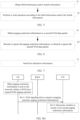
- FIG. 2 is a flowchart of an information processing method according to an embodiment of this application.
- the method is applied to a first communication device, and the first communication device includes but is not limited to a terminal (UE).
- the method includes the following steps.
- Step 21 Perform a first operation or a second operation.
- the first operation may include at least one of the following:
- the sending a NAS leave request to a network includes: sending the NAS leave request to the network, and not sending an AS leave request to the network.
- the sending a NAS paging rejection to the network includes: sending the NAS paging rejection to the network, and not sending an AS paging rejection to the network.
- the sending a NAS leave request to a network includes at least one of the following: sending NAS signaling to the network, where the NAS signaling includes indication information used for the NAS leave request.
- the sending a NAS paging rejection request to the network includes at least one of the following: sending NAS signaling to the network, where the NAS signaling includes indication information used for the NAS paging rejection.
- the NAS signaling includes at least one of the following: a service request (Service Request), a location update request (for example, Mobility Registration Request or Tracking Area Update Request), or a connection setup request (for example, Service Request).
- Service Request a service request
- location update request for example, Mobility Registration Request or Tracking Area Update Request
- connection setup request for example, Service Request
- the second operation may include at least one of the following:
- the sending an AS leave request to the network includes: sending the AS leave request to the network, and not sending a NAS leave request to the network.
- the sending an AS paging rejection to the network includes: sending the AS paging rejection to the network, and not sending a NAS paging rejection to the network.
- the sending an AS leave request to the network includes at least one of the following: sending AS signaling to the network (for example, RRC signaling), where the AS signaling includes indication information used for the AS leave request.
- sending AS signaling to the network for example, RRC signaling
- the AS signaling includes indication information used for the AS leave request.
- the sending an AS paging rejection request to the network includes at least one of the following: sending AS signaling to the network, where the AS signaling includes indication information used for the AS paging rejection.
- the AS signaling includes at least one of the following: a connection setup request (for example, RRC Setup Request) and a connection resume request (for example, RRC Resume Request).
- a connection setup request for example, RRC Setup Request
- a connection resume request for example, RRC Resume Request
- the NAS leave request is sent to the network, which may be used to request to leave the network and/or reject paging.
- the AS leave request is sent to the network, which may be used to request to leave the network and/or reject paging.
- the performing a first operation may include: performing the first operation in a case that a first condition is met.
- the first condition may include at least one of the following:
- the allowing the terminal to concurrently send paging restriction information when sending a NAS leave request or a NAS paging rejection includes: only allowing the terminal to concurrently send the paging restriction information when sending the NAS leave request or the NAS paging rejection.
- the terminal when the terminal needs to delete paging restriction information, the terminal sends a NAS leave request to the network.
- the paging restriction information to be deleted is the paging restriction information previously sent to the network.
- the terminal sends NAS signaling (for example, RRC signaling) of a connection setup request to the network, where the NAS signaling carries information used to indicate a leave request, but does not carry the paging restriction information.
- the performing a second operation may include: performing the second operation in a case that a second condition is met.
- the second condition may include at least one of the following:
- the immediate release is that the network (for example, a RAN) returns a connection release response and/or does not return other information after receiving a leave request.
- the network may configure a new user identifier (for example, a 5G globally unique temporary identifier (5G Globally Unique Temporary Identifier, 5G-GUTI)) for the terminal before releasing the terminal. This scenario does not belong to the immediate release.
- a new user identifier for example, a 5G globally unique temporary identifier (5G Globally Unique Temporary Identifier, 5G-GUTI)
- the method before the step of performing a first operation or a second operation, the method further includes: receiving first indication information sent by the network, where the first indication information is used to indicate at least one of the following: allowing the terminal to concurrently send paging restriction information when sending a NAS leave request or a NAS paging rejection; and not allowing the terminal to concurrently send paging restriction information when sending an AS leave request or an AS paging rejection.
- the first condition may further include at least one of the following:
- the first condition may further include at least one of the following:
- the first condition may further include at least one of the following:
- the second condition may further include at least one of the following:
- the second condition may further include at least one of the following:
- the second condition may further include at least one of the following:
- the terminal when the terminal expects to send the paging restriction information, only a NAS release request/paging rejection can be initiated, but an RRC release request/paging rejection cannot be initiated.
- the terminal is released to an idle state by using a NAS leave request. In another implementation, the terminal is released to an idle state or an inactive state by using an AS leave request.
- the paging restriction information cannot be executed in an inactive state. Therefore, for the terminal that sends a leave request or a paging rejection request, if paging restriction information is further sent at the same time, and the paging restriction information is accepted by the network, the terminal is released to an idle state.
- the terminal may select a NAS leave request. It is not difficult to understand that in a case that an RRC leave request is initiated, the RAN does not determine whether the CN needs to send downlink NAS information to the terminal after receiving the NAS information, and cannot immediately release the terminal. In this case, it is more efficient for the terminal to select the NAS leave request.
- UE when a terminal sends paging restriction information, UE can be released to a corresponding state (for example, an idle state) by using an initiated NAS release request/paging rejection.
- FIG. 3 is a flowchart of another information processing method according to an embodiment of this application.
- the method is applied to a second communication device, and the second communication device includes but is not limited to a terminal (UE).
- the method includes the following steps.
- Step 31 Perform a third operation or a fourth operation.
- the third operation may include at least one of the following:
- the fourth operation may include at least one of the following:
- the third operation includes sending paging restriction information to a network; and the fourth operation includes sending, to the network, information used to request to be released to an inactive state, or sending state release tendency information to the network.
- the third operation includes sending paging restriction information to a network, and sending state release tendency information to the network, where the state release tendency information is used to indicate one of the following: no tendency and tending to be released to an idle state; and the fourth operation includes sending, to the network, information used to request to be released to an inactive state, and sending state release tendency information to the network, where the state release tendency information is used to indicate tending to be released to an inactive state.
- the state release tendency information may be used to indicate one of the following: no tendency, tending to be released to an inactive state, and tending to be released to an idle state.
- the sending paging restriction information to a network may include: sending the paging restriction information, and not sending the information used to request to be released to an inactive state; and/or
- the paging restriction information and the information used to request to be released to an inactive state cannot be sent at the same time, and/or the paging restriction information and the state release tendency information cannot be sent at the same time.
- the performing a third operation may include: performing the third operation in a case that a third condition is met.
- the third condition may include at least one of the following:
- the priority of the paging restriction information is higher than the priority of the information about tending to be released to an inactive state, or the priority of the paging restriction information is higher than the priority of the state release tendency information.
- a user sets that a priority of paging restriction is higher than that of fast switching between networks of two or more SIM cards.
- a terminal released to an inactive state is faster than a terminal released to an idle state to restore a connection to the network.
- paging restriction may reduce a quantity of times that the terminal is paged.
- the performing a fourth operation may include: performing the fourth operation in a case that a fourth condition is met.
- the fourth condition may include at least one of the following:
- the priority of the paging restriction information is lower than the priority of the information about tending to be released to an inactive state, or the priority of the paging restriction information is lower than the priority of the state release tendency information.
- paging restriction information and information used to request to be released to an inactive state cannot be sent at the same time, and/or paging restriction information and state release tendency information cannot be sent at the same time, so that UE can be released to a corresponding state when paging restriction information is introduced.
- FIG. 4 is a flowchart of another information processing method according to an embodiment of this application.
- the method is applied to a third communication device, and the third communication device includes but is not limited to at least one of the following: a CN network element (for example, an AMF or an MME) and a RAN network element.
- a CN network element for example, an AMF or an MME
- a RAN network element for example, an RAN network element.
- the method includes the following steps.
- Step 41 Obtain at least one of the following: first information, a notification that the terminal enters an inactive state, information used to instruct to delete paging restriction information, and second information.
- the first information may include at least one of the following: paging restriction information, information used to request to be released to an inactive state, state release tendency information, and a terminal capability.
- the second information may include at least one of the following: a network policy and a network capability.
- the first information may be obtained from the terminal.
- the notification that the terminal enters an inactive state may be obtained from the RAN.
- the information used to instruct to delete paging restriction information may be obtained from the RAN.
- paging restriction information in a case that paging restriction information is received, one of the following information is received at the same time: a terminal leave request, and information used for a paging rejection.
- a NAS data packet is received from the RAN network element, where the NAS data packet includes paging restriction information.
- the NAS data packet does not include at least one of the following: a terminal leave request and information used for a paging rejection.
- the terminal capability may include at least one of the following: the terminal supports a paging restriction function, the terminal supports a leave network function, and the terminal supports a paging rejection function.
- the network capability may include at least one of the following: a network supports a paging restriction function, the network supports a leave network function, and the network supports a paging rejection function.
- the network policy may include at least one of the following:
- Step 42 Perform a fifth operation according to the obtained information.
- the fifth operation may include at least one of the following:
- supporting a paging restriction function in the third indication information may represent at least one of the following: the terminal supports a paging restriction function, the terminal enables a paging restriction function, the network supports a paging restriction function, and the network allows the terminal to use a paging restriction function.
- not supporting a paging restriction function in the third indication information may represent at least one of the following: the terminal does not support a paging restriction function, the terminal does not enable a paging restriction function, the network does not support a paging restriction function, and the network does not allow the terminal to use a paging restriction function.
- the operation of determining to accept paging restriction information may include at least one of the following:
- the operation of determining not to accept paging restriction information may include at least one of the following:
- a priority of the paging restriction information is higher than a priority of the state release tendency information includes: a priority of the paging restriction information of the terminal is higher than a priority of the state release tendency information of the terminal.
- a priority of the state release tendency information is higher than a priority of the paging restriction information includes: a priority of the state release tendency information of the terminal is higher than a priority of the paging restriction information of the terminal.
- a priority of the paging restriction information is higher than a priority of the information about tending to be released to an inactive state includes: a priority of the paging restriction information of the terminal is higher than a priority of the information, of the terminal, about tending to be released to an inactive state.
- the information about tending to be released to an inactive state includes: information used to request to be released to an inactive state, or state release tendency information used to indicate tending to be released to an inactive state.
- the determining not to accept paging restriction information and/or releasing the terminal to an inactive state may include: in a case that a fifth condition is met, determining not to accept the paging restriction information and/or releasing the terminal to an inactive state.
- the fifth condition may include at least one of the following:
- the fifth condition is an abnormal case, and the fifth condition needs to be discarded or ignored.
- the determining to accept paging restriction information and/or releasing the terminal to an idle state may include: in a case that a sixth condition is met, determining to accept the paging restriction information and/or releasing the terminal to an idle state.
- the sixth condition may include at least one of the following:
- the sixth condition may include at least one of the following:
- the method may further include: subscribing to the notification that the terminal enters an inactive state from a RAN. For example, before the step of receiving the notification that the terminal enters an inactive state, the notification that the terminal enters an inactive state is subscribed to from the RAN.
- the subscribing to the notification that the terminal enters an inactive state from a RAN may include: in a case that a seventh condition is met, subscribing to the notification that the terminal enters an inactive state from the RAN.
- the seventh condition may include at least one of the following:
- the operation of deleting paging restriction information includes: in a case that an eighth condition is met, performing the operation of deleting the paging restriction information.
- the eighth condition may include at least one of the following:
- At least one of the following may be performed: storing the paging restriction information; performing the operation of releasing the UE to an idle state (for example, sending a UE context release command to the RAN); and sending the second indication information to the RAN, to instruct to accept the paging restriction information.
- At least one of the following may be performed: discarding or ignoring the paging restriction information; sending the second indication information to the RAN, to instruct not to accept the paging restriction information; and instructing the RAN to release the terminal to a non-connected state.
- the UE can be released to a corresponding state when the UE sends the paging restriction information.
- FIG. 5 is a flowchart of another information processing method according to an embodiment of this application.
- the method is applied to a fourth communication device, and the fourth communication device includes but is not limited to a RAN network element. As shown in FIG. 5 , the method includes the following steps.
- Step 51 Obtain third information and/or fourth information.
- the third information may include at least one of the following: a leave request (for example, an AS leave request); paging rejection (for example, AS paging rejection); a first NAS data packet; fourth indication information, where the fourth indication information is used to indicate that the first NAS data packet includes paging restriction information; AS paging restriction information; and information used to instruct to delete paging restriction information.
- a leave request for example, an AS leave request
- paging rejection for example, AS paging rejection
- a first NAS data packet for example, fourth indication information, where the fourth indication information is used to indicate that the first NAS data packet includes paging restriction information; AS paging restriction information; and information used to instruct to delete paging restriction information.
- the fourth information includes at least one of the following: second indication information, where the second indication information is used to indicate one of the following: accepting paging restriction information and not accepting paging restriction information; and third indication information, where the third indication information is used to indicate at least one of the following: supporting a paging restriction function and not supporting a paging restriction function.
- the first NAS data packet is a NAS data packet received together with an AS leave request or an AS paging rejection.
- Step 52 Perform a sixth operation according to the third information.
- the sixth operation may include at least one of the following:
- the fourth information is obtained from a CN.
- the third information is obtained from the terminal.
- the sending, to the first target end, the information used to instruct to delete paging restriction information includes: in a case that a ninth condition is met, sending, to the first target end, the information used to instruct to delete paging restriction information.
- the ninth condition may include at least one of the following:
- the terminal when the terminal initiates a leave request or a paging rejection, and any information related to paging restriction information is not included, it indicates that the terminal expects to delete the paging restriction information.
- the operation of releasing the terminal can release the terminal to one of the following states: an inactive state and an idle state.
- the operation of waiting for a period of time or the operation of starting timing may be performed according to a first time period or first duration.
- the first time period may be a preset time period or an obtained time period configuration.
- the first duration may be preset duration, or an obtained duration configuration.
- the releasing the terminal to an idle state includes: in a case that a tenth condition is met, releasing the terminal to an idle state.
- the tenth condition may include at least one of the following:
- the performing an operation of releasing the terminal may include: in a case that an eleventh condition is met, performing the operation of releasing the terminal.
- the eleventh condition includes at least one of the following:
- the paging restriction information is received: the first NAS data packet is received and/or the fourth indication information is received, or the AS paging restriction information is received.
- the performing an operation of releasing the terminal further includes: in a case that the terminal is released to an inactive state, notifying a second target end that the terminal enters an inactive state.
- the performing an operation of waiting for a period of time may include at least one of the following:
- the performing the operation of releasing the terminal after the waiting expires includes: after the waiting expires, in a case that the release request of the third target end is not received, performing the operation of releasing the terminal.
- the performing an operation of starting timing may include at least one of the following:
- the performing the operation of releasing the terminal after the timing expires includes: after the timing expires, in a case that the release request of the third target end is not received, performing the operation of releasing the terminal.
- the first target end, the second target end, and the third target end may be the same, including a CN (for example, an AMF).
- a CN for example, an AMF
- the UE can be released to a corresponding state when the UE sends the paging restriction information.
- FIG. 6 is a flowchart of another information processing method according to an embodiment of this application.
- the method is applied to a fifth communication device, and the fifth communication device includes but is not limited to a CN network element (for example, an AMF or an MME) and a RAN network element.
- the method includes the following steps.
- Step 61 Obtain paging restriction information or a second NAS data packet.
- Step 62 Discard or ignore the paging restriction information, or discard or ignore the second NAS data packet.
- the second NAS data packet is a NAS data packet received together with an AS leave request or an AS paging rejection.
- the fifth communication device is a RAN network element
- the RAN network element may not support or may not allow the terminal to send the paging restriction information together with the AS leave request or the AS paging rejection. Therefore, the second NAS packet may be directly discarded or ignored.
- the fifth communication device is a CN network element
- the CN network element may not support or may not allow the terminal to send the paging restriction information together with the AS leave request or the AS paging rejection. Therefore, the paging restriction information received by the RAN is directly discarded or ignored.
- the discarding or ignoring the paging restriction information may include: discarding or ignoring the paging restriction information in a case that a twelfth condition is met.
- the twelfth condition may include at least one of the following:
- the UE can be released to a corresponding state when the UE sends the paging restriction information.
- FIG. 7 is a flowchart of another information processing method according to an embodiment of this application.
- the method is applied to a sixth communication device, and the sixth communication device includes but is not limited to a CN network element (for example, an AMF or an MME).
- the method includes the following steps.
- Step 71 Send first indication information.
- the first indication information is used to indicate at least one of the following: allowing the terminal to concurrently send paging restriction information when sending a NAS leave request or a NAS paging rejection; and not allowing the terminal to concurrently send paging restriction information when sending an AS leave request or an AS paging rejection.
- the allowing the terminal to concurrently send paging restriction information when sending a NAS leave request or a NAS paging rejection includes: "only" allowing the terminal to concurrently send the paging restriction information when sending the NAS leave request or the NAS paging rejection.
- an AMF or an MME may send the first indication information to the terminal.
- the sending first indication information may include: sending the first indication information in a case that a thirteenth condition is met.
- the thirteenth condition may include at least one of the following:
- UE when a terminal sends paging restriction information, UE can be released to a corresponding state (for example, an idle state) by using an initiated NAS release request/paging rejection.
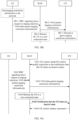
- a related UE release process may include: Step 8A-1: When UE sends paging restriction information to a network, the UE sends paging restriction information to a CN (hereinafter described by using an AMF as an example) at the same time of sending a NAS leave request or a NAS paging rejection.
- the UE When the UE needs to delete the paging restriction information, the UE does not carry any paging restriction information at the same time of sending the NAS leave request or the NAS paging rejection.
- Step 8A-2 The AMF determines, according to a network policy, a terminal capability, and/or a network capability, to accept or not accept the paging restriction information.
- a RAN may be required to release the UE to a non-connected state (for example, an inactive state or an idle state), or may perform a related operation of releasing the UE to an idle state (for example, sending a UE context release command to a RAN).
- a non-connected state for example, an inactive state or an idle state
- a related operation of releasing the UE to an idle state for example, sending a UE context release command to a RAN.
- a related operation of releasing the UE to an idle state may be performed (for example, sending a UE context release command to a RAN).
- a related UE release process may include:
- a related UE release process may include:
- the AMF determines, according to the received paging restriction information, whether to accept the paging restriction information.
- the paging restriction information may be stored.
- an operation of releasing the UE to an idle state may be performed, for example, a UE context release command is sent to the RAN, as shown in step 9A06.
- the paging restriction information may be discarded or ignored.
- the UE When it is determined not to accept the paging restriction information and the notification that the UE enters an inactive state is received, the UE may be kept in an inactive state.
- a related UE release process may include:
- the AMF determines, according to the received paging restriction information, whether to accept the paging restriction information.
- At least one of the following may be performed: storing the paging restriction information; performing the operation of releasing the UE to an idle state (for example, sending a UE context release command to the RAN, as shown in step 9B05); and sending second indication information to the RAN, to instruct to accept the paging restriction information.
- At least one of the following may be performed: discarding or ignoring the paging restriction information; sending second indication information to the RAN, to instruct not to accept the paging restriction information; and instructing the RAN to release the terminal to a non-connected state.
- the RAN Before the waiting expires, the RAN receives the UE context release command sent by the CN, stops waiting, and releases the UE according to the UE context release command.
- the RAN Before the waiting expires, the RAN receives the information that is sent by the CN and that is used to instruct to accept or not accept the paging restriction information, and stops waiting. Further, in a case that third indication information instructs to accept the paging restriction information, the terminal is released to an idle state.
- the terminal is released to an idle state.
- the terminal is released to a non-connected state (that is, an idle state or an inactive state).
- Step 9B04 In a case that the waiting expires, release the terminal to a non-connected state (that is, an idle state or an inactive state).
- Embodiment 5 for behavior of UE, paging restriction information and information used to request to be released to an inactive state (for example, RRC Inactive) cannot be sent at the same time, and/or paging restriction information and state release tendency information cannot be sent at the same time. For example, when the UE expects to be released to an inactive state, the paging restriction information cannot be sent.
- an inactive state for example, RRC Inactive
- the RAN may determine, according to a network policy, a terminal capability, and/or a network capability, not to accept the paging restriction information (for example, discarding or ignoring the paging restriction information) and allow the UE to enter an inactive state, or forward the paging restriction information and release the UE to an idle state (for example, an RRC idle state).
- a network policy for example, discarding or ignoring the paging restriction information
- an idle state for example, an RRC idle state
- a related UE release process may include: Step 1001: A CN sends a UE context setup command message or a UE context modify command message to a RAN.
- the message includes third indication information used to indicate at least one of the following: supporting a paging restriction function and not supporting a paging restriction function.
- Step 1002 UE sends an RRC leave request or an RRC paging rejection to the RAN, and may further carry a NAS data packet including paging restriction information or RRC paging restriction information (that is, paging restriction information that can be understood by the RAN) and/or fourth indication information (indicating that the NAS data packet includes the paging restriction information).
- paging restriction information that is, paging restriction information that can be understood by the RAN
- fourth indication information indicating that the NAS data packet includes the paging restriction information
- Step 1003 The RAN forwards the received NAS data packet or paging restriction information to the CN.
- Step 1004 The RAN releases the UE according to the received information.
- the terminal In a case that the third indication information indicates that the paging restriction function is supported, and the paging restriction information is received, the terminal is released to an idle state.
- the terminal In a case that the third indication determines that the paging restriction function is not supported or the paging restriction information is not received, the terminal is released to a non-connected state (that is, an idle state or an inactive state).
- the information processing method provided in the embodiments of this application may be performed by an information processing apparatus, or a control module that is in the information processing apparatus and that is configured to perform the information processing method.
- that the information processing apparatus performs the information processing method is used as an example to describe the information processing apparatus provided in the embodiments of this application.
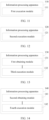
- FIG. 11 is a schematic structural diagram of an information processing apparatus according to an embodiment of this application.
- the apparatus is applied to a first communication device.
- an information processing apparatus 110 includes a first execution module 111, configured to perform a first operation or a second operation, where the first operation includes at least one of the following:
- the performing a first operation includes:
- the performing a second operation includes:
- the method further includes: receiving first indication information sent by the network, where the first indication information is used to indicate at least one of the following: allowing the terminal to concurrently send paging restriction information when sending a NAS leave request or a NAS paging rejection; and not allowing the terminal to concurrently send paging restriction information when sending an AS leave request or an AS paging rejection.
- the information processing apparatus 110 can implement the processes implemented in the method embodiment in FIG. 2 of this application, and achieve a same technical effect. To avoid repetition, details are not described herein again.
- FIG. 12 is a schematic structural diagram of another information processing apparatus according to an embodiment of this application.
- the apparatus is applied to a second communication device.
- an information processing apparatus 120 includes:
- the sending paging restriction information to a network includes: sending the paging restriction information, and not sending the information used to request to be released to an inactive state; and/or
- the state release tendency information is used to indicate one of the following: no tendency, tending to be released to an inactive state, and tending to be released to an idle state.
- the performing a third operation includes:
- the performing a fourth operation includes:
- the information processing apparatus 120 can implement the processes implemented in the method embodiment in FIG. 3 of this application, and achieve a same technical effect. To avoid repetition, details are not described herein again.
- FIG. 13 is a schematic structural diagram of another information processing apparatus according to an embodiment of this application.
- the apparatus is applied to a third communication device.
- an information processing apparatus 130 includes:
- the terminal capability includes at least one of the following: the terminal supports a paging restriction function, the terminal supports a leave network function, and the terminal supports a paging rejection function; and/or
- the determining not to accept paging restriction information and/or releasing the terminal to an inactive state includes:
- the determining to accept paging restriction information and/or releasing the terminal to an idle state includes:
- the determining to accept paging restriction information and/or releasing the terminal to an idle state includes:
- the method further includes:
- the deleting paging restriction information includes:
- the information processing apparatus 130 can implement the processes implemented in the method embodiment in FIG. 4 of this application, and achieve a same technical effect. To avoid repetition, details are not described herein again.
- FIG. 14 is a schematic structural diagram of another information processing apparatus according to an embodiment of this application.
- the apparatus is applied to a fourth communication device.
- an information processing apparatus 140 includes:
- the sending, to the first target end, the information used to instruct to delete paging restriction information includes:
- the first NAS data packet is a NAS data packet received together with an AS leave request or an AS paging rejection.
- the releasing the terminal to an idle state includes:
- the performing an operation of releasing the terminal includes:
- the performing an operation of releasing the terminal further includes: in a case that the terminal is released to an inactive state, notifying a second target end that the terminal enters an inactive state.
- the performing an operation of waiting for a period of time includes at least one of the following:
- the information processing apparatus 140 can implement the processes implemented in the method embodiment in FIG. 5 of this application, and achieve a same technical effect. To avoid repetition, details are not described herein again.
- FIG. 15 is a schematic structural diagram of another information processing apparatus according to an embodiment of this application.
- the apparatus is applied to a fifth communication device.
- an information processing apparatus 150 includes:
- the discarding or ignoring the paging restriction information includes:
- the information processing apparatus 150 can implement the processes implemented in the method embodiment in FIG. 6 of this application, and achieve a same technical effect. To avoid repetition, details are not described herein again.
- FIG. 16 is a schematic structural diagram of another information processing apparatus according to an embodiment of this application.
- the apparatus is applied to a sixth communication device.
- an information processing apparatus 160 includes: a sending module 161, configured to send first indication information, where the first indication information is used to indicate at least one of the following: allowing the terminal to concurrently send paging restriction information when sending a NAS leave request or a NAS paging rejection; and not allowing the terminal to concurrently send paging restriction information when sending an AS leave request or an AS paging rejection.
- the sending first indication information includes: sending the first indication information in a case that a thirteenth condition is met, where the thirteenth condition includes at least one of the following:
- the information processing apparatus 160 can implement the processes implemented in the method embodiment in FIG. 7 of this application, and achieve a same technical effect. To avoid repetition, details are not described herein again.
- an embodiment of this application further provides a communication device 170, including a processor 171, a memory 172, and a program or an instruction that is stored in the memory 172 and that can be run on the processor 171, where the program or the instruction is executed by the processor 171 to implement the processes of the foregoing information processing method embodiment, and a same technical effect can be achieved. To avoid repetition, details are not described herein again.
- An embodiment of this application further provides a readable storage medium.
- the readable storage medium stores a program or an instruction, and when the program or the instruction is executed by a processor, the processes of the foregoing information processing method embodiment are implemented and a same technical effect can be achieved. To avoid repetition, details are not described herein again.
- the processor is a processor in the terminal in the foregoing embodiment.
- the readable storage medium includes a computer-readable storage medium, such as a computer read-only memory (Read-Only Memory, ROM), a random access memory (Random Access Memory, RAM), a magnetic disk, or an optical disc.
- An embodiment of this application further provides a chip.
- the chip includes a processor and a communications interface, the communications interface is coupled to the processor, and the processor is configured to run a program or an instruction to implement the processes of the foregoing information processing method embodiment, and a same technical effect can be achieved. To avoid repetition, details are not described herein again.
- the chip mentioned in this embodiment of this application may also be referred to as a system-level chip, a system chip, a chip system, or an on-chip system chip.
- An embodiment of this application further provides a computer program product.
- the computer program product is stored in a non-volatile storage medium, and the computer program product is executed by at least one processor to implement the processes of the foregoing information processing method embodiment, and a same technical effect can be achieved. To avoid repetition, details are not described herein again.
- the terms "include”, “comprise”, or their any other variant is intended to cover a non-exclusive inclusion, so that a process, a method, an article, or an apparatus that includes a list of elements not only includes those elements but also includes other elements which are not expressly listed, or further includes elements inherent to such process, method, article, or apparatus.
- An element limited by “including a " does not, without more constraints, preclude the presence of additional identical elements in the process, method, article, or apparatus that includes the element.
- the scope of the method and the apparatus in the embodiments of this application is not limited to performing functions in an illustrated or discussed sequence, and may further include performing functions in a basically simultaneous manner or in a reverse sequence according to the functions concerned.
- the described method may be performed in an order different from that described, and the steps may be added, omitted, or combined.
- features described with reference to some examples may be combined in other examples.
- the method in the foregoing embodiment may be implemented by software in addition to a necessary universal hardware platform or by hardware only. In most circumstances, the former is a preferred implementation.
- the technical solutions of this application essentially or the part contributing to the related technologies may be implemented in a form of a computer software product.
- the computer software product is stored in a storage medium (such as a ROM/RAM, a hard disk, or an optical disc), and includes several instructions for instructing a terminal (which may be a mobile phone, a computer, a server, an air conditioner, a network side device, or the like) to perform the methods described in the embodiments of this application.
Landscapes
- Engineering & Computer Science (AREA)
- Computer Networks & Wireless Communication (AREA)
- Signal Processing (AREA)
- Computer Security & Cryptography (AREA)
- Mobile Radio Communication Systems (AREA)
Applications Claiming Priority (2)
| Application Number | Priority Date | Filing Date | Title |
|---|---|---|---|
| CN202110616042.8A CN115442890A (zh) | 2021-06-02 | 2021-06-02 | 信息处理方法、装置、通信设备及可读存储介质 |
| PCT/CN2022/096325 WO2022253235A1 (fr) | 2021-06-02 | 2022-05-31 | Procédé et appareil de traitement d'informations, dispositif de communication, et support de stockage lisible |
Publications (2)
| Publication Number | Publication Date |
|---|---|
| EP4351239A1 true EP4351239A1 (fr) | 2024-04-10 |
| EP4351239A4 EP4351239A4 (fr) | 2025-01-01 |
Family
ID=84240403
Family Applications (1)
| Application Number | Title | Priority Date | Filing Date |
|---|---|---|---|
| EP22815279.9A Pending EP4351239A4 (fr) | 2021-06-02 | 2022-05-31 | Procédé et appareil de traitement d'informations, dispositif de communication, et support de stockage lisible |
Country Status (5)
| Country | Link |
|---|---|
| US (1) | US20240098700A1 (fr) |
| EP (1) | EP4351239A4 (fr) |
| JP (1) | JP7698073B2 (fr) |
| CN (1) | CN115442890A (fr) |
| WO (1) | WO2022253235A1 (fr) |
Cited By (1)
| Publication number | Priority date | Publication date | Assignee | Title |
|---|---|---|---|---|
| EP4369809A4 (fr) * | 2021-07-09 | 2025-04-16 | Beijing Xiaomi Mobile Software Co., Ltd. | Procédé et appareil d'envoi d'informations, procédé et appareil de restriction de radiomessagerie, appareil de communication et support de stockage |
Families Citing this family (1)
| Publication number | Priority date | Publication date | Assignee | Title |
|---|---|---|---|---|
| US20250081159A1 (en) * | 2021-08-10 | 2025-03-06 | Samsung Electronics Co., Ltd. | Methods and apparatus for handling musim per access |
Family Cites Families (6)
| Publication number | Priority date | Publication date | Assignee | Title |
|---|---|---|---|---|
| CN103874170A (zh) * | 2012-12-10 | 2014-06-18 | 中兴通讯股份有限公司 | 一种用户设备及利用扩展寻呼周期进行寻呼的方法和系统 |
| CN107637146A (zh) * | 2015-06-23 | 2018-01-26 | 华为技术有限公司 | 一种寻呼的方法及装置 |
| US10517067B2 (en) * | 2018-04-06 | 2019-12-24 | Qualcomm Incorporated | Techniques and apparatuses for providing notifications in short paging messages |
| WO2020209620A1 (fr) * | 2019-04-09 | 2020-10-15 | Samsung Electronics Co., Ltd. | Procédé et ue de gestion de procédure de radiomessagerie dans un réseau de communication sans fil |
| US11252787B2 (en) * | 2019-10-03 | 2022-02-15 | Apple Inc. | System enablers for multi-SIM devices |
| CN112788745B (zh) * | 2019-11-08 | 2022-11-04 | 华为技术有限公司 | 一种通信方法及装置 |
-
2021
- 2021-06-02 CN CN202110616042.8A patent/CN115442890A/zh active Pending
-
2022
- 2022-05-31 JP JP2023574543A patent/JP7698073B2/ja active Active
- 2022-05-31 WO PCT/CN2022/096325 patent/WO2022253235A1/fr not_active Ceased
- 2022-05-31 EP EP22815279.9A patent/EP4351239A4/fr active Pending
-
2023
- 2023-11-29 US US18/522,761 patent/US20240098700A1/en active Pending
Cited By (1)
| Publication number | Priority date | Publication date | Assignee | Title |
|---|---|---|---|---|
| EP4369809A4 (fr) * | 2021-07-09 | 2025-04-16 | Beijing Xiaomi Mobile Software Co., Ltd. | Procédé et appareil d'envoi d'informations, procédé et appareil de restriction de radiomessagerie, appareil de communication et support de stockage |
Also Published As
| Publication number | Publication date |
|---|---|
| JP2024520140A (ja) | 2024-05-21 |
| EP4351239A4 (fr) | 2025-01-01 |
| JP7698073B2 (ja) | 2025-06-24 |
| WO2022253235A1 (fr) | 2022-12-08 |
| CN115442890A (zh) | 2022-12-06 |
| US20240098700A1 (en) | 2024-03-21 |
Similar Documents
| Publication | Publication Date | Title |
|---|---|---|
| US9191917B2 (en) | Method and arrangement for paging in a wireless communications system | |
| CN111182593B (zh) | 支持漫游的方法及通信设备 | |
| WO2021027835A1 (fr) | Procédé de transmission de messages et dispositif de communication | |
| CN111726862B (zh) | 寻呼监听方法、装置、系统及存储介质 | |
| EP4266774A1 (fr) | Procédé et appareil de traitement d'informations, dispositif et support de stockage lisible | |
| US20240098700A1 (en) | Information processing method and apparatus, communication device, and readable storage medium | |
| US20230083832A1 (en) | Information indication method and apparatus and communication device | |
| US20210084483A1 (en) | Gateway recovery processing method and device | |
| EP4247073A1 (fr) | Procédé et appareil de transmission d'indication d'occupation | |
| US20240224216A1 (en) | Information processing method and apparatus, terminal, and readable storage medium | |
| CN109151939B (zh) | 调整方法、终端及网络设备 | |
| EP3324677A1 (fr) | Procédé de transmission de données et d'accès à un réseau, et dispositif et système apparentés | |
| CN113810956B (zh) | 切换多播业务的方法及设备 | |
| US20240049181A1 (en) | Information processing method and apparatus, and terminal and storage medium | |
| TWI743184B (zh) | 傳輸資料的方法、存取網路裝置和終端裝置 | |
| US20240064702A1 (en) | Information processing method and apparatus, communication device and readable storage medium | |
| CN115314881A (zh) | 信息处理方法、装置、通信设备及可读存储介质 | |
| WO2021254433A1 (fr) | Procédé et appareil de commande d'abandon de réseau et dispositif de communication | |
| CN114339905B (zh) | 信息处理方法、装置、终端、网络侧设备及存储介质 | |
| CN113709913B (zh) | 连接控制方法、装置和通信设备 | |
| CN114828296B (zh) | 离开网络的操作方法、装置、设备及可读存储介质 | |
| WO2024061086A1 (fr) | Procédé et appareil de communication, et dispositif | |
| WO2022134070A1 (fr) | Procédé de communication sans fil, dispositif de terminal et dispositif de réseau |
Legal Events
| Date | Code | Title | Description |
|---|---|---|---|
| STAA | Information on the status of an ep patent application or granted ep patent |
Free format text: STATUS: THE INTERNATIONAL PUBLICATION HAS BEEN MADE |
|
| PUAI | Public reference made under article 153(3) epc to a published international application that has entered the european phase |
Free format text: ORIGINAL CODE: 0009012 |
|
| STAA | Information on the status of an ep patent application or granted ep patent |
Free format text: STATUS: REQUEST FOR EXAMINATION WAS MADE |
|
| 17P | Request for examination filed |
Effective date: 20231228 |
|
| AK | Designated contracting states |
Kind code of ref document: A1 Designated state(s): AL AT BE BG CH CY CZ DE DK EE ES FI FR GB GR HR HU IE IS IT LI LT LU LV MC MK MT NL NO PL PT RO RS SE SI SK SM TR |
|
| DAV | Request for validation of the european patent (deleted) | ||
| DAX | Request for extension of the european patent (deleted) | ||
| RIC1 | Information provided on ipc code assigned before grant |
Ipc: H04W 88/06 20090101ALI20240906BHEP Ipc: H04W 68/02 20090101ALI20240906BHEP Ipc: H04W 68/12 20090101ALI20240906BHEP Ipc: H04W 76/27 20180101ALI20240906BHEP Ipc: H04W 68/00 20090101AFI20240906BHEP |
|
| A4 | Supplementary search report drawn up and despatched |
Effective date: 20241203 |
|
| RIC1 | Information provided on ipc code assigned before grant |
Ipc: H04W 88/06 20090101ALI20241127BHEP Ipc: H04W 68/02 20090101ALI20241127BHEP Ipc: H04W 68/12 20090101ALI20241127BHEP Ipc: H04W 76/27 20180101ALI20241127BHEP Ipc: H04W 68/00 20090101AFI20241127BHEP |
|
| STAA | Information on the status of an ep patent application or granted ep patent |
Free format text: STATUS: EXAMINATION IS IN PROGRESS |
|
| 17Q | First examination report despatched |
Effective date: 20251205 |