EP4351348B1 - Hydrolysiertes ganzes kokosnussprodukt zur möglichen verwendung als getränk oder als pulver für desserts und zum kochen - Google Patents
Hydrolysiertes ganzes kokosnussprodukt zur möglichen verwendung als getränk oder als pulver für desserts und zum kochen Download PDFInfo
- Publication number
- EP4351348B1 EP4351348B1 EP22733036.2A EP22733036A EP4351348B1 EP 4351348 B1 EP4351348 B1 EP 4351348B1 EP 22733036 A EP22733036 A EP 22733036A EP 4351348 B1 EP4351348 B1 EP 4351348B1
- Authority
- EP
- European Patent Office
- Prior art keywords
- coconut
- weight
- process according
- kernels
- dried
- Prior art date
- Legal status (The legal status is an assumption and is not a legal conclusion. Google has not performed a legal analysis and makes no representation as to the accuracy of the status listed.)
- Active
Links
Images



Classifications
-
- A—HUMAN NECESSITIES
- A23—FOODS OR FOODSTUFFS; TREATMENT THEREOF, NOT COVERED BY OTHER CLASSES
- A23L—FOODS, FOODSTUFFS OR NON-ALCOHOLIC BEVERAGES, NOT OTHERWISE PROVIDED FOR; PREPARATION OR TREATMENT THEREOF
- A23L11/00—Pulses, i.e. fruits of leguminous plants, for production of food; Products from legumes; Preparation or treatment thereof
- A23L11/01—Pulses or legumes in the form of whole pieces or fragments thereof, without mashing or comminuting
-
- A—HUMAN NECESSITIES
- A23—FOODS OR FOODSTUFFS; TREATMENT THEREOF, NOT COVERED BY OTHER CLASSES
- A23L—FOODS, FOODSTUFFS OR NON-ALCOHOLIC BEVERAGES, NOT OTHERWISE PROVIDED FOR; PREPARATION OR TREATMENT THEREOF
- A23L19/00—Products from fruits or vegetables; Preparation or treatment thereof
- A23L19/01—Instant products; Powders; Flakes; Granules
-
- A—HUMAN NECESSITIES
- A23—FOODS OR FOODSTUFFS; TREATMENT THEREOF, NOT COVERED BY OTHER CLASSES
- A23B—PRESERVATION OF FOODS, FOODSTUFFS OR NON-ALCOHOLIC BEVERAGES; CHEMICAL RIPENING OF FRUIT OR VEGETABLES
- A23B2/00—Preservation of foods or foodstuffs, in general
- A23B2/90—Preservation of foods or foodstuffs, in general by drying or kilning; Subsequent reconstitution
- A23B2/93—Spray drying
-
- A—HUMAN NECESSITIES
- A23—FOODS OR FOODSTUFFS; TREATMENT THEREOF, NOT COVERED BY OTHER CLASSES
- A23C—DAIRY PRODUCTS, e.g. MILK, BUTTER OR CHEESE; MILK OR CHEESE SUBSTITUTES; PREPARATION THEREOF
- A23C1/00—Concentration, evaporation or drying
- A23C1/14—Concentration, evaporation or drying combined with other treatment
- A23C1/16—Concentration, evaporation or drying combined with other treatment using additives
-
- A—HUMAN NECESSITIES
- A23—FOODS OR FOODSTUFFS; TREATMENT THEREOF, NOT COVERED BY OTHER CLASSES
- A23L—FOODS, FOODSTUFFS OR NON-ALCOHOLIC BEVERAGES, NOT OTHERWISE PROVIDED FOR; PREPARATION OR TREATMENT THEREOF
- A23L11/00—Pulses, i.e. fruits of leguminous plants, for production of food; Products from legumes; Preparation or treatment thereof
- A23L11/30—Removing undesirable substances, e.g. bitter substances
- A23L11/33—Removing undesirable substances, e.g. bitter substances using enzymes; Enzymatic transformation of pulses or legumes
-
- A—HUMAN NECESSITIES
- A23—FOODS OR FOODSTUFFS; TREATMENT THEREOF, NOT COVERED BY OTHER CLASSES
- A23L—FOODS, FOODSTUFFS OR NON-ALCOHOLIC BEVERAGES, NOT OTHERWISE PROVIDED FOR; PREPARATION OR TREATMENT THEREOF
- A23L2/00—Non-alcoholic beverages; Dry compositions or concentrates therefor; Preparation or treatment thereof
- A23L2/02—Non-alcoholic beverages; Dry compositions or concentrates therefor; Preparation or treatment thereof containing fruit or vegetable juices
- A23L2/08—Concentrating or drying of juices
- A23L2/10—Concentrating or drying of juices by heating or contact with dry gases
- A23L2/102—Spray-drying
-
- A—HUMAN NECESSITIES
- A23—FOODS OR FOODSTUFFS; TREATMENT THEREOF, NOT COVERED BY OTHER CLASSES
- A23L—FOODS, FOODSTUFFS OR NON-ALCOHOLIC BEVERAGES, NOT OTHERWISE PROVIDED FOR; PREPARATION OR TREATMENT THEREOF
- A23L2/00—Non-alcoholic beverages; Dry compositions or concentrates therefor; Preparation or treatment thereof
- A23L2/70—Clarifying or fining of non-alcoholic beverages; Removing unwanted matter
- A23L2/84—Clarifying or fining of non-alcoholic beverages; Removing unwanted matter using microorganisms or biological material, e.g. enzymes
-
- A—HUMAN NECESSITIES
- A23—FOODS OR FOODSTUFFS; TREATMENT THEREOF, NOT COVERED BY OTHER CLASSES
- A23L—FOODS, FOODSTUFFS OR NON-ALCOHOLIC BEVERAGES, NOT OTHERWISE PROVIDED FOR; PREPARATION OR TREATMENT THEREOF
- A23L5/00—Preparation or treatment of foods or foodstuffs, in general; Food or foodstuffs obtained thereby; Materials therefor
- A23L5/20—Removal of unwanted matter, e.g. deodorisation or detoxification
- A23L5/25—Removal of unwanted matter, e.g. deodorisation or detoxification using enzymes
Definitions
- the present invention relates generally to the field of food and beverages.
- the present invention relates to a process to prepare a hydrolyzed coconut product .
- the hydrolyzed coconut product may be prepared by a process comprising an enzymatic hydrolysis of coconut kernels and the liquefaction of the coconut kernels.
- the process of the present invention comprises the steps of enzymatically hydrolyzing grated coconut kernels; liquefying the coconut kernels; and spray drying the hydrolyzed and liquefied coconut kernels.
- the subject matter of the present invention allows it, for example, to use unprocessed coconut kernels rather than coconut milk and coconut flour to prepare the hydrolyzed coconut product.
- Powdered coconut milk is used today worldwide in the preparation many dishes, for example, Asian or Asian-like dishes.
- Natural coconut milk comprises a lot of coconut fat and sugars, which makes it difficult to industrially process and dry, particularly to spray dry, it into a dry, smooth and non-sticking powder. So typically, coconut milk has about 15-55% fat content.
- GB 1'144'256 describes the use and addition of specifically selected emulsifiers to coconut milk in order to facilitate spray drying.
- CN107348413 describes the use of casein protein, maltodextrin and sodium citrate for facilitating spray drying.
- US2005/100645 A1 describes a production process of vegetable foods from coconuts comprises fermenting pulverized pressed cake by mashing with water to create pumpable pulp added with enzyme preparation, and isolating coconut meal by homogenization, and pasteurization.
- WO2020239521 describes in this respect a coconut milk powder comprising coconut milk and coconut flour, wherein the powder is a spray-dried powder.
- the powder may consist of coconut milk and coconut flour.
- the powder may further be free from maltodextrin.
- coconut milk and coconut flour as raw materials is relatively expensive and can lead to sandiness perception on the sensory dimension.
- the inventors aim to provide a hydrolyzed coconut product which can be used for cooking and which has an excellent taste- and texture profile, is not overly processed, has very good energy balance in production, valorizes raw materials as much as possible and is economically reasonable to produce.
- the objective of the present invention is to enrich or improve the state of the art and in particular to provide a hydrolyzed coconut product that can be used for cooking, baking and deserts, that has an excellent taste and texture profile, uses little energy and/or generates little CO 2 during production, largely valorizes raw materials and is economically reasonable to produce and a process to produce such a product, or to at least provide a useful alternative to solutions existing in the art.
- the present invention provides a process for making a dried coconut powder in accordance with the present invention, the process comprising the steps of enzymatically hydrolyzing grated coconut kernels; liquefying the coconut kernels; and spray drying the hydrolyzed and liquefied coconut kernels, wherein the enzymatic hydrolysis is carried out by an amount of 0.1% weight to 8 weight-% , preferably from 0.3 to 2 weight-% on a wet basis of a combination of enzymes selected from the group consisting of cellulases, mannanases, beta-glucanases and xylanases.
- the product obtained by the process of the present invention showed the above-described unexpected benefits when compared to coconut powder of the prior art made from coconut milk and coconut flour.
- coconut milk refers to the liquid that comes from a grated pulp of a mature coconut.
- coconut milk is a traditional food ingredient consumed mostly in South and Southeast Asia, the Caribbean and South America.
- coconut milk typically has about 15-40 weight-% (weight per-cent) fat, 1-5 weight-% (weight per-cent) proteins, and zero to a neglect-able amount of insoluble fibers.
- 'coconut flour' refers to the soft flour made from the coconut pulp left-over after the production of coconut milk. It is the protein- and fiber-rich by-product of the coconut milk production. Typically, coconut flour is dried and in powder form. Coconut flour is gluten-free and it is free from wheat and other grains. Typically, coconut flour has about 5-25 weight-% (weight per-cent) fat, 5-20 weight-% (weight per-cent) proteins, 15-50 weight-% (weight per-cent) insoluble fibers, and a moisture content of up to 10 weight-% (weight per-cent).
- the process of the present invention allows it to use largely unprocessed coconut kernels as starting material, which may be coarsely ground. As coconut kernels are far less expensive that coconut milk and coconut flour, the product of the present invention can be more cost effective than prior art products.
- the process of the present invention may use coconut kernels as starting material which are pre-treated by dehusking the coconuts exocarp, mesocarp and endocarp.
- a testa removal may be carried out.
- the resulting coconut kernels may be grated to a particle size in the range of about 1-2 cm and a thickness in the range of about 1-1.5 mm.
- the process of the present invention use grated coconut kernels as a starting material, for example grated coconut kernels with a particle size in the range of about 1-2 cm and a thickness in the range of about 1-1.5 mm.
- Avoiding to use more processed ingredients such as coconut milk and coconut flour as staring material also allows it to save processing energy and CO 2 emissions.
- the coconut is completely valorized. If the coconut is pre-treated by dehusking the coconuts exocarp, mesocarp and endocarp and by testa removal, no more plant material is not used than one would also not consume if one eats a coconut as it is. Unnecessary raw material losses are avoided.
- the product obtained by the process of the present invention was found to achieve a significantly improved taste and texture profile than prior art compositions.
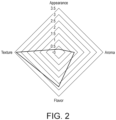
- a more intense sweetness, coconut aroma and the absence of a sandy texture is observed in the product of the present invention and when using the process of the present invention.
- the inventors currently believe that this is at least in part achieved by avoiding the use of coconut flour.
- the product obtained of the process of the present invention can be used to replace coconut milk, possibly after reconstitution in liquids.
- the product may be used in hot and cold soups, currys, creams, custards, fillings, coconut-based deserts or ice-creams for example.
- the inventors have obtained very good results, when the enzymatic hydrolysis was carried out by a mix of enzymes comprising at least one mannanase and at least one cellulase, preferably a combination of at least one mannanase and at least one cellulase .
- enzymes with endo-beta-1,4-mannanase activity and/or endo-beta-1,4-glucanase activity may be used, preferably enzymes with endo-beta-1,4-mannanase activity and endo-beta-1,4-glucanase activity may be used.
- enzymes with beta-glucanase and/or xylanase activity preferably enzymes with beta-glucanase and xylanase activity.
- the inventors have obtained good results with ROHALASE ® GMP and with FoodPro ® , both commercially available from specialist suppliers (AB Enzymes, Darmstadt, Germany and DuPont Industrial Biosciences, Brabrand, Denmark; respectively).
- the hydrolysis and the liquefaction of the coconut kernels may be carried out sequentially and/or simultaneously.
- WO2020239521 The inventors of WO2020239521 have found that maltodextrin or starch can be entirely replaced by coconut flour, which allows to readily spray-dry high-fat containing liquids such as coconut milks.
- the inventors of the present invention now propose to hydrolyze coconut kernels.
- the inventors believe that the hydrolyzed coconut fibers that are already present in the whole coconut kernel will serve well as a carrier material for spray drying, avoiding the need for maltodextrin or for coconut flour.
- the dried coconut powder is free from maltodextrin and/or starch.
- the dried coconut powder is made from unprocessed grated coconut kernels.
- the grated coconut kernels may be steamed in order to stabilize the grated coconut and/or to increase its storage time.
- the dried coconut powder may have a particle size distribution after hydrolysis of 1 to 1000 ⁇ m, 10 to 900 ⁇ m, 10 to 800 ⁇ m, 10 to 700 ⁇ m, 10 to 600 ⁇ m, 10 to 500 ⁇ m, 10 to 400 ⁇ m, 10 to 300 ⁇ m, 10 to 200 ⁇ m, or 10 to 100 ⁇ m.
- the dried coconut powder in accordance with the present invention may have a particle size with a D90 value of less than 1000 ⁇ m, less than 900 ⁇ m, less than 800 ⁇ m, less than 700 ⁇ m, less than 600 ⁇ m, less than 500 ⁇ m, less than 400 ⁇ m, less than 300 ⁇ m, less than 200 ⁇ m, or less than 100 ⁇ m.
- D90 means that 90% of the particles are smaller than this value.
- Particle size and particle size distribution is measured according to ISO 13320:2009.
- the following emulsifiers may be used: sodium caseinate, acacia gum, xanthan gum, guar gum, lecithins, monoglycerides, plant proteins such as pea proteins, soy proteins, faba proteins, rice proteins, pectins such as sugar beet pectin, citrus pectin, apple pectin, saponins.
- the emulsifier may be selected from the group consisting of sodium caseinate or pea protein.
- the following acidity regulators may be used: trisodium phosphate, sodium bicarbonate, potassium carbonate, calcium hydroxide.
- the acidity regulator may be selected from the group consisting of trisodium phosphate or sodium bicarbonate.
- the hydrolyzed coconut product in accordance with the present invention may have a viscosity in the range of 50 to 300 cP, for example 100-200 cP.
- the hydrolyzed coconut product in accordance with the present invention, for example in liquid form may have a viscosity in the range of 0.05 to 0.3
- Viscosity is measured according to ISO 11443:2021 using capillary and slit-die rheometers (device: TA AR 2000EX Advanced Rheometer)
- the dried coconut powder in accordance with the present invention may have a coconut fat dry weight content from 25-85 weight-%, preferably from 35-75 weight-%, more preferably from 55-70 weight-%; a protein dry weight content in the range of 1 weight-% to 10 weight-%, preferably from 3 to 9 weight-% and a coconut fiber dry weight content from 1 to 10 weight-%, preferably from 2 to 6 weight-%.
- weight-% always refers to "% of dry weight", unless indicated otherwise.
- the fiber present in dried coconut powder may comprise at least 90 weight-% soluble fiber, for example at least 95 weight-% soluble fiber.
- the fiber content of the composition of the present invention appears to be essential for example for the spray drying properties of the product of the present invention.
- composition of the present invention may also comprise added fiber, for example selected from the group consisting of pectins, citrus fibers, apple fibers, acacia gum, xanthan gum, guar gum or combinations thereof.
- added fiber may be used, for example, to stabilize the emulsion before drying
- the composition of the present invention contains as little fiber added from other sources as possible.
- the dried coconut powder comprises fiber only from coconut.
- the dried coconut powder comprises no added fiber.
- the moisture content of the composition of the present invention is important. A too high water content will have negative consequences for storage times and powder properties, while a too low water content may have negative consequences for the reconstitution of the powder in liquids. Accordingly, the inventors propose that the dried coconut powder in accordance with the present invention may have a moisture content in the range of 0. weight-% to 10 weight-%, preferably from 0.5 to 3 weight-%.
- the dried coconut powder of the present invention may comprise at least 90 weight-% coconut, at least 95 weight-% coconut, at least 98 weight-% coconut, or may consist of coconut.
- the enzymatic hydrolysis may be carried out by an amount of 0.1% weight to 8 weight-% , preferably from 0.3 to 2 weight-% on a wet basis of an enzyme or an enzyme mixture.
- the enzyme or the enzyme mixture may be selected from a comination of the group consisting of cellulases, mannanases, beta-glucanases and xylanases, , preferably the enzyme mixture is a combination of cellulases, mannanases, beta-glucanases and xylanases,.
- the hydrolysis may be carried out for a time range of about 20 minutes to 5 hours; and at a temperature in the range of about 40 to 70°C.
- the enzyme or the enzyme mixture may be deactivated after hydrolysis.
- the enzyme or the enzyme mixture may be deactivated after the hydrolysis by thermal treatment.
- the deactivation may be carried out in a batch system or in a continuous system.
- Such a thermal treatment may be carried out, for example, for about 10 minutes at 85°C in a batch system, or for about 20 seconds at 90°C, preferably 5 seconds at 84°C in a continuous system.
- the hydrolyzed coconut kernels are liquefied.
- a liquefication may be carried out by enzymatic treatment, for example, and may be carried out after the hydrolyzing the coconut kernels and/or simultaneously while hydrolyzing the coconut kernels.
- the hydrolyzed coconut kernels may be liquefied by enzymatic treatment.
- Liquefaction may be the process of rendering solid components liquid by their partial or total enzymatic hydrolysis. Thermostable enzymes may be used as this process may be carried out at elevated temperatures. Partial hydrolysis not only reduces viscosity but may also prevent retrogradation upon further cooling.
- the hydrolyzed and liquefied coconut kernels may be spray dried, for example by an industrial or semi-industrial spray dryer.
- Spray drying is a preferred drying process when it comes to drying large industrial quantities of an aqueous slurry into a powder in an economic way.
- spray drying is done at a temperature from 110°C to 180°C. This allows on one hand to efficiently dry the composition into a powder, and on the other hand not to overheat the composition in order to prevent or minimize burning and other deteriorating effects such as undesired Maillard reactions.
- Example 1 Preparation of a product in accordance with the present invention
- the hydrolyzed coconut kernels were then homogenized at 250 bars and heat treated in a tubular heat exchanger for 20 seconds at 90°C. Subsequently, the slurry was spray dried on an Egron line, resulting in a coconut milk powder.
- coconut milk-flour slurry preparation For the coconut milk-flour slurry preparation in accordance with the prior art, coconut milk was first heated at 55°C to obtain a homogeneous solution. Subsequently, Na-caseinate, trisodium phosphate and coconut flour were incorporated with the help of a polytron mixer. The resulting slurry was heat treated at 75°C for 30 minutes. Total Solid content (TS) of the mixture was 40%.
- TS Total Solid content
- Enzymatically hydrolyzed grated coconuts in accordance with the present invention were produced as described above.
- the viscosity and particle size of the product in accordance with the present invention was assessed. These parameters such as viscosity, TS and PSD may play a key role when spray drying the composition. Before spray drying the tested product of the present invention had a viscosity of 50 - 200 cP (0.05 - 0.2 Pa ⁇ s) at 65°C and a TS of 35-45%.
- FIG. 10 shows a picture of the hydrolyzed grated coconuts before spray drying.
- Example 4 Further comparison examples using only FoodPro ® or Rohalase ®
- Enzymatically hydrolyzed grated coconuts were produced as described in example 1 with the difference that only FoodPro ® CBL (Dupont-Danisco, NY, United States; enzyme combination of beta gluconase, xylanase and cellulase) or Rohalase ® GMP (AB Enzymes, Darmstadt, Germany; enzyme mannase) has been used instead of a combination of FoodPro ® and Rohalase ® . In this case the obtained viscosity is too high for spray drying the obtained hydrolyzed grated coconuts as it is shown in FIG.8 and FIG. 9 .
Landscapes
- Life Sciences & Earth Sciences (AREA)
- Engineering & Computer Science (AREA)
- Food Science & Technology (AREA)
- Polymers & Plastics (AREA)
- Chemical & Material Sciences (AREA)
- Health & Medical Sciences (AREA)
- Nutrition Science (AREA)
- Microbiology (AREA)
- Zoology (AREA)
- Agronomy & Crop Science (AREA)
- Botany (AREA)
- Wood Science & Technology (AREA)
- Molecular Biology (AREA)
- Coloring Foods And Improving Nutritive Qualities (AREA)
- Seeds, Soups, And Other Foods (AREA)
- Non-Alcoholic Beverages (AREA)
Claims (13)
- Verfahren zum Herstellen eines getrockneten Kokospulvers, umfassend die Schritte:- enzymatisches Hydrolysieren geriebener Kopra;- Verflüssigen der Kopra; und- Sprühtrocknen der hydrolysierten und verflüssigten Kopra;wobei die enzymatische Hydrolyse durch ein Enzym vorgenommen wird, das aus einer Kombination von Cellulasen, Mannanasen, Beta-Glucanasen und Xylanasen ausgewählt ist.
- Verfahren nach Anspruch 1, wobei die enzymatische Hydrolyse mit einer Menge von zu 0,1 Gew.-% bis 8 Gew.-%, vorzugsweise von zu 0,3 bis 2 Gew.-%, auf einer Nassbasis eines Enzyms vorgenommen wird, das aus einer Kombination von Cellulasen, Mannanasen, Beta-Glucanasen und Xylanasen ausgewählt ist.
- Verfahren nach einem der Ansprüche 1 bis 2, wobei das Enzym nach der Hydrolyse durch Wärmebehandlung deaktiviert wird.
- Verfahren nach einem der Ansprüche 1 bis 3, wobei hydrolysierte Kopra durch enzymatische Behandlung verflüssigt wird.
- Verfahren nach einem der Ansprüche 1 bis 4, wobei die hydrolysierte und verflüssigte Kopra durch einen industriellen oder halbindustriellen Sprühtrockner sprühgetrocknet wird.
- Verfahren nach einem der Ansprüche 1 bis 5, wobei das getrocknete Kokospulver frei von Maltodextrin und/oder Stärke ist.
- Verfahren nach einem der Ansprüche 1 bis 6, wobei die geriebene Kopra unverarbeitete geriebene Kopra ist.
- Verfahren nach einem der Ansprüche 1 bis 7, wobei das getrocknete Kokospulver eine Partikelgrößenverteilung gemessen gemäß ISO 13320:2009 nach der Hydrolyse von 1 bis 1000 µm aufweist.
- Verfahren nach einem der Ansprüche 1 bis 8, wobei das getrocknete Kokospulver einen Kokosfetttrockengewichtsgehalt von zu 25-85 Gew.-%, vorzugsweise von zu 35-75 Gew.-%, mehr bevorzugt von zu 55-70 Gew.-%; einen Proteintrockengewichtsgehalt in dem Bereich von zu 1 Gew.-% bis 10 Gew.-%, vorzugsweise von zu 3 bis 9 Gew.-%und einen Kokosfasertrockengewichtsgehalt von zu 1 bis 10 Gew.-%, vorzugsweise von zu 2 bis 6 Gew.-% aufweist.
- Verfahren nach einem der Ansprüche 1 bis 9, wobei die Ballaststoffe, die in dem getrockneten Kokospulver enthalten sind, mindestens zu 90 Gew.-%, vorzugsweise zu 95 Gew.-%, lösliche Ballaststoffe umfassen.
- Verfahren nach einem der Ansprüche 1 bis 10, wobei das getrocknete Kokospulver nur Fasem aus Kokosnuss umfasst.
- Verfahren nach einem der Ansprüche 1 bis 11, wobei das getrocknete Kokospulver einen Feuchtigkeitsgehalt in dem Bereich von zu 0,40 Gew.-% bis 10 Gew.-% aufweist.
- Verfahren nach einem der Ansprüche 1 bis 12, wobei das getrocknete Kokospulver mindestens zu 90 Gew.-% Kokosnuss, mindestens zu 95 Gew.-% Kokosnuss, mindestens zu 98 Gew.-% Kokosnuss umfasst oder aus Kokosnuss besteht.
Applications Claiming Priority (2)
| Application Number | Priority Date | Filing Date | Title |
|---|---|---|---|
| EP21179066 | 2021-06-11 | ||
| PCT/EP2022/065670 WO2022258746A1 (en) | 2021-06-11 | 2022-06-09 | A hydrolyzed whole coconut product, useful for example, as a beverage or as a powder for deserts and cooking |
Publications (2)
| Publication Number | Publication Date |
|---|---|
| EP4351348A1 EP4351348A1 (de) | 2024-04-17 |
| EP4351348B1 true EP4351348B1 (de) | 2025-01-29 |
Family
ID=76392306
Family Applications (1)
| Application Number | Title | Priority Date | Filing Date |
|---|---|---|---|
| EP22733036.2A Active EP4351348B1 (de) | 2021-06-11 | 2022-06-09 | Hydrolysiertes ganzes kokosnussprodukt zur möglichen verwendung als getränk oder als pulver für desserts und zum kochen |
Country Status (6)
| Country | Link |
|---|---|
| US (1) | US20240268426A1 (de) |
| EP (1) | EP4351348B1 (de) |
| AU (1) | AU2022289444A1 (de) |
| ES (1) | ES3020939T3 (de) |
| PL (1) | PL4351348T3 (de) |
| WO (1) | WO2022258746A1 (de) |
Family Cites Families (7)
| Publication number | Priority date | Publication date | Assignee | Title |
|---|---|---|---|---|
| US20050100645A1 (en) * | 2003-11-11 | 2005-05-12 | Werner Baensch | Process for producing vegetable foods from coconuts |
| CN101730479A (zh) * | 2007-06-29 | 2010-06-09 | 凯敏工业公司 | 用于反刍动物的酶产品 |
| DE102010063457A1 (de) * | 2010-12-17 | 2012-06-21 | Henkel Ag & Co. Kgaa | Lagerstabiles flüssiges Wasch- oder Reinigungsmittel enthaltend Protease und Cellulase |
| US8828462B2 (en) * | 2011-05-12 | 2014-09-09 | Griffith Laboratories International, Inc. | Method for preparing a proteinaceous vegetable flavor enhancer |
| CN102696989A (zh) * | 2012-05-29 | 2012-10-03 | 佘延英 | 天然椰子粉的制作方法 |
| CN107348413B (zh) | 2017-07-20 | 2018-05-11 | 海南南国健康产业有限公司 | 一种天然椰子粉及其制备方法 |
| CN113853117A (zh) | 2019-05-27 | 2021-12-28 | 雀巢产品有限公司 | 椰奶粉末 |
-
2022
- 2022-06-09 ES ES22733036T patent/ES3020939T3/es active Active
- 2022-06-09 PL PL22733036.2T patent/PL4351348T3/pl unknown
- 2022-06-09 US US18/568,090 patent/US20240268426A1/en active Pending
- 2022-06-09 EP EP22733036.2A patent/EP4351348B1/de active Active
- 2022-06-09 AU AU2022289444A patent/AU2022289444A1/en active Pending
- 2022-06-09 WO PCT/EP2022/065670 patent/WO2022258746A1/en not_active Ceased
Also Published As
| Publication number | Publication date |
|---|---|
| ES3020939T3 (en) | 2025-05-23 |
| US20240268426A1 (en) | 2024-08-15 |
| EP4351348A1 (de) | 2024-04-17 |
| WO2022258746A1 (en) | 2022-12-15 |
| AU2022289444A1 (en) | 2023-11-02 |
| PL4351348T3 (pl) | 2025-05-19 |
Similar Documents
| Publication | Publication Date | Title |
|---|---|---|
| CN102266057B (zh) | 具有润肠通便和减轻体重功能的香蕉粉的制作方法 | |
| CN101790321A (zh) | 可溶性燕麦或大麦粉以及利用酶的制备方法 | |
| CN102258183B (zh) | 一种浓汤炖鸡调味料的制作方法 | |
| US20110151055A1 (en) | Processed food and method of producing the same | |
| CN101390560B (zh) | 椰果冰淇淋及其制备方法 | |
| JP5321028B2 (ja) | 食品用物性改良剤 | |
| CN105533117A (zh) | 一种提取和改性米糠蛋白的方法 | |
| CN113729199B (zh) | 一种黑糖风味美拉德反应物及其制备方法与应用 | |
| US20240268426A1 (en) | A hydrolyzed whole coconut product, useful for example, as a beverage or as a powder for deserts and cooking | |
| CA3208459A1 (en) | Process for the production of plant-based crumb | |
| CN104738275A (zh) | 一种具有黄酒香味的巧克力酱及其制造方法 | |
| KR101254722B1 (ko) | 로스팅한 찰옥수수 초미세분말을 이용한 찰옥수수 라떼 | |
| US12127569B2 (en) | Soluble tapioca flour compositions | |
| WO2024126129A1 (en) | A process and composition for preparing a hydrolyzed low fat coconut product, useful for example, as a beverage or as a powder for deserts and cooking | |
| CN107319425A (zh) | 一种橘皮萝卜糕及其制备方法 | |
| CN103392896A (zh) | 一种芒果冰淇淋的制备方法 | |
| CN106509555A (zh) | 一种米乳汁饮料及其制备方法 | |
| US20050003061A1 (en) | Process for the production of plant ingredients | |
| CN102715616A (zh) | 一种大麦乳饮料的生产方法 | |
| JP2013051945A (ja) | チルドまたは冷凍保存された米飯の食感保持方法 | |
| KR100471100B1 (ko) | 아이스크림의 제조방법 | |
| JPH10257857A (ja) | 黒砂糖を含むアイスクリームの製造方法 | |
| KR20040081728A (ko) | 흰쌀이나 검은쌀이 들어간 아이스크림을 제조하는 방법 | |
| CN101664157A (zh) | 一种猪肉味香精的制备方法 | |
| KR20170098600A (ko) | 기능성 감자당면의 제조방법 |
Legal Events
| Date | Code | Title | Description |
|---|---|---|---|
| STAA | Information on the status of an ep patent application or granted ep patent |
Free format text: STATUS: UNKNOWN |
|
| STAA | Information on the status of an ep patent application or granted ep patent |
Free format text: STATUS: THE INTERNATIONAL PUBLICATION HAS BEEN MADE |
|
| PUAI | Public reference made under article 153(3) epc to a published international application that has entered the european phase |
Free format text: ORIGINAL CODE: 0009012 |
|
| STAA | Information on the status of an ep patent application or granted ep patent |
Free format text: STATUS: REQUEST FOR EXAMINATION WAS MADE |
|
| 17P | Request for examination filed |
Effective date: 20240111 |
|
| AK | Designated contracting states |
Kind code of ref document: A1 Designated state(s): AL AT BE BG CH CY CZ DE DK EE ES FI FR GB GR HR HU IE IS IT LI LT LU LV MC MK MT NL NO PL PT RO RS SE SI SK SM TR |
|
| P01 | Opt-out of the competence of the unified patent court (upc) registered |
Free format text: CASE NUMBER: APP_34904/2024 Effective date: 20240611 |
|
| DAV | Request for validation of the european patent (deleted) | ||
| DAX | Request for extension of the european patent (deleted) | ||
| GRAP | Despatch of communication of intention to grant a patent |
Free format text: ORIGINAL CODE: EPIDOSNIGR1 |
|
| STAA | Information on the status of an ep patent application or granted ep patent |
Free format text: STATUS: GRANT OF PATENT IS INTENDED |
|
| INTG | Intention to grant announced |
Effective date: 20240923 |
|
| GRAS | Grant fee paid |
Free format text: ORIGINAL CODE: EPIDOSNIGR3 |
|
| GRAA | (expected) grant |
Free format text: ORIGINAL CODE: 0009210 |
|
| STAA | Information on the status of an ep patent application or granted ep patent |
Free format text: STATUS: THE PATENT HAS BEEN GRANTED |
|
| AK | Designated contracting states |
Kind code of ref document: B1 Designated state(s): AL AT BE BG CH CY CZ DE DK EE ES FI FR GB GR HR HU IE IS IT LI LT LU LV MC MK MT NL NO PL PT RO RS SE SI SK SM TR |
|
| REG | Reference to a national code |
Ref country code: GB Ref legal event code: FG4D |
|
| REG | Reference to a national code |
Ref country code: CH Ref legal event code: EP |
|
| REG | Reference to a national code |
Ref country code: DE Ref legal event code: R096 Ref document number: 602022010236 Country of ref document: DE |
|
| REG | Reference to a national code |
Ref country code: IE Ref legal event code: FG4D |
|
| REG | Reference to a national code |
Ref country code: ES Ref legal event code: FG2A Ref document number: 3020939 Country of ref document: ES Kind code of ref document: T3 Effective date: 20250523 |
|
| REG | Reference to a national code |
Ref country code: NL Ref legal event code: MP Effective date: 20250129 |
|
| PG25 | Lapsed in a contracting state [announced via postgrant information from national office to epo] |
Ref country code: NL Free format text: LAPSE BECAUSE OF FAILURE TO SUBMIT A TRANSLATION OF THE DESCRIPTION OR TO PAY THE FEE WITHIN THE PRESCRIBED TIME-LIMIT Effective date: 20250129 |
|
| PG25 | Lapsed in a contracting state [announced via postgrant information from national office to epo] |
Ref country code: RS Free format text: LAPSE BECAUSE OF FAILURE TO SUBMIT A TRANSLATION OF THE DESCRIPTION OR TO PAY THE FEE WITHIN THE PRESCRIBED TIME-LIMIT Effective date: 20250429 |
|
| PG25 | Lapsed in a contracting state [announced via postgrant information from national office to epo] |
Ref country code: FI Free format text: LAPSE BECAUSE OF FAILURE TO SUBMIT A TRANSLATION OF THE DESCRIPTION OR TO PAY THE FEE WITHIN THE PRESCRIBED TIME-LIMIT Effective date: 20250129 |
|
| PGFP | Annual fee paid to national office [announced via postgrant information from national office to epo] |
Ref country code: PL Payment date: 20250515 Year of fee payment: 4 Ref country code: DE Payment date: 20250429 Year of fee payment: 4 |
|
| REG | Reference to a national code |
Ref country code: LT Ref legal event code: MG9D |
|
| PG25 | Lapsed in a contracting state [announced via postgrant information from national office to epo] |
Ref country code: NO Free format text: LAPSE BECAUSE OF FAILURE TO SUBMIT A TRANSLATION OF THE DESCRIPTION OR TO PAY THE FEE WITHIN THE PRESCRIBED TIME-LIMIT Effective date: 20250429 Ref country code: IS Free format text: LAPSE BECAUSE OF FAILURE TO SUBMIT A TRANSLATION OF THE DESCRIPTION OR TO PAY THE FEE WITHIN THE PRESCRIBED TIME-LIMIT Effective date: 20250529 |
|
| REG | Reference to a national code |
Ref country code: AT Ref legal event code: MK05 Ref document number: 1762514 Country of ref document: AT Kind code of ref document: T Effective date: 20250129 |
|
| PG25 | Lapsed in a contracting state [announced via postgrant information from national office to epo] |
Ref country code: HR Free format text: LAPSE BECAUSE OF FAILURE TO SUBMIT A TRANSLATION OF THE DESCRIPTION OR TO PAY THE FEE WITHIN THE PRESCRIBED TIME-LIMIT Effective date: 20250129 |
|
| PG25 | Lapsed in a contracting state [announced via postgrant information from national office to epo] |
Ref country code: LV Free format text: LAPSE BECAUSE OF FAILURE TO SUBMIT A TRANSLATION OF THE DESCRIPTION OR TO PAY THE FEE WITHIN THE PRESCRIBED TIME-LIMIT Effective date: 20250129 Ref country code: PT Free format text: LAPSE BECAUSE OF FAILURE TO SUBMIT A TRANSLATION OF THE DESCRIPTION OR TO PAY THE FEE WITHIN THE PRESCRIBED TIME-LIMIT Effective date: 20250529 |
|
| PGFP | Annual fee paid to national office [announced via postgrant information from national office to epo] |
Ref country code: FR Payment date: 20250508 Year of fee payment: 4 |
|
| PG25 | Lapsed in a contracting state [announced via postgrant information from national office to epo] |
Ref country code: BG Free format text: LAPSE BECAUSE OF FAILURE TO SUBMIT A TRANSLATION OF THE DESCRIPTION OR TO PAY THE FEE WITHIN THE PRESCRIBED TIME-LIMIT Effective date: 20250129 Ref country code: GR Free format text: LAPSE BECAUSE OF FAILURE TO SUBMIT A TRANSLATION OF THE DESCRIPTION OR TO PAY THE FEE WITHIN THE PRESCRIBED TIME-LIMIT Effective date: 20250430 |
|
| PG25 | Lapsed in a contracting state [announced via postgrant information from national office to epo] |
Ref country code: AT Free format text: LAPSE BECAUSE OF FAILURE TO SUBMIT A TRANSLATION OF THE DESCRIPTION OR TO PAY THE FEE WITHIN THE PRESCRIBED TIME-LIMIT Effective date: 20250129 |
|
| PG25 | Lapsed in a contracting state [announced via postgrant information from national office to epo] |
Ref country code: SE Free format text: LAPSE BECAUSE OF FAILURE TO SUBMIT A TRANSLATION OF THE DESCRIPTION OR TO PAY THE FEE WITHIN THE PRESCRIBED TIME-LIMIT Effective date: 20250129 |
|
| PG25 | Lapsed in a contracting state [announced via postgrant information from national office to epo] |
Ref country code: SM Free format text: LAPSE BECAUSE OF FAILURE TO SUBMIT A TRANSLATION OF THE DESCRIPTION OR TO PAY THE FEE WITHIN THE PRESCRIBED TIME-LIMIT Effective date: 20250129 |
|
| PGFP | Annual fee paid to national office [announced via postgrant information from national office to epo] |
Ref country code: ES Payment date: 20250707 Year of fee payment: 4 |
|
| PG25 | Lapsed in a contracting state [announced via postgrant information from national office to epo] |
Ref country code: DK Free format text: LAPSE BECAUSE OF FAILURE TO SUBMIT A TRANSLATION OF THE DESCRIPTION OR TO PAY THE FEE WITHIN THE PRESCRIBED TIME-LIMIT Effective date: 20250129 |
|
| PGFP | Annual fee paid to national office [announced via postgrant information from national office to epo] |
Ref country code: IT Payment date: 20250630 Year of fee payment: 4 |
|
| PG25 | Lapsed in a contracting state [announced via postgrant information from national office to epo] |
Ref country code: EE Free format text: LAPSE BECAUSE OF FAILURE TO SUBMIT A TRANSLATION OF THE DESCRIPTION OR TO PAY THE FEE WITHIN THE PRESCRIBED TIME-LIMIT Effective date: 20250129 Ref country code: CZ Free format text: LAPSE BECAUSE OF FAILURE TO SUBMIT A TRANSLATION OF THE DESCRIPTION OR TO PAY THE FEE WITHIN THE PRESCRIBED TIME-LIMIT Effective date: 20250129 |
|
| PG25 | Lapsed in a contracting state [announced via postgrant information from national office to epo] |
Ref country code: RO Free format text: LAPSE BECAUSE OF FAILURE TO SUBMIT A TRANSLATION OF THE DESCRIPTION OR TO PAY THE FEE WITHIN THE PRESCRIBED TIME-LIMIT Effective date: 20250129 |
|
| PG25 | Lapsed in a contracting state [announced via postgrant information from national office to epo] |
Ref country code: SK Free format text: LAPSE BECAUSE OF FAILURE TO SUBMIT A TRANSLATION OF THE DESCRIPTION OR TO PAY THE FEE WITHIN THE PRESCRIBED TIME-LIMIT Effective date: 20250129 |
|
| REG | Reference to a national code |
Ref country code: DE Ref legal event code: R097 Ref document number: 602022010236 Country of ref document: DE |
|
| PLBE | No opposition filed within time limit |
Free format text: ORIGINAL CODE: 0009261 |
|
| STAA | Information on the status of an ep patent application or granted ep patent |
Free format text: STATUS: NO OPPOSITION FILED WITHIN TIME LIMIT |
|
| REG | Reference to a national code |
Ref country code: CH Ref legal event code: L10 Free format text: ST27 STATUS EVENT CODE: U-0-0-L10-L00 (AS PROVIDED BY THE NATIONAL OFFICE) Effective date: 20251210 |
|
| 26N | No opposition filed |
Effective date: 20251030 |
|
| REG | Reference to a national code |
Ref country code: CH Ref legal event code: H13 Free format text: ST27 STATUS EVENT CODE: U-0-0-H10-H13 (AS PROVIDED BY THE NATIONAL OFFICE) Effective date: 20260127 |
|
| PG25 | Lapsed in a contracting state [announced via postgrant information from national office to epo] |
Ref country code: MC Free format text: LAPSE BECAUSE OF FAILURE TO SUBMIT A TRANSLATION OF THE DESCRIPTION OR TO PAY THE FEE WITHIN THE PRESCRIBED TIME-LIMIT Effective date: 20250129 |
|
| PG25 | Lapsed in a contracting state [announced via postgrant information from national office to epo] |
Ref country code: LU Free format text: LAPSE BECAUSE OF NON-PAYMENT OF DUE FEES Effective date: 20250609 |
|
| REG | Reference to a national code |
Ref country code: BE Ref legal event code: MM Effective date: 20250630 |
|
| PG25 | Lapsed in a contracting state [announced via postgrant information from national office to epo] |
Ref country code: IE Free format text: LAPSE BECAUSE OF NON-PAYMENT OF DUE FEES Effective date: 20250609 |
|
| PG25 | Lapsed in a contracting state [announced via postgrant information from national office to epo] |
Ref country code: BE Free format text: LAPSE BECAUSE OF NON-PAYMENT OF DUE FEES Effective date: 20250630 |
|
| PG25 | Lapsed in a contracting state [announced via postgrant information from national office to epo] |
Ref country code: CH Free format text: LAPSE BECAUSE OF NON-PAYMENT OF DUE FEES Effective date: 20250630 |