EP4353078A2 - Plante résistante au helminthosporium turcicum - Google Patents
Plante résistante au helminthosporium turcicum Download PDFInfo
- Publication number
- EP4353078A2 EP4353078A2 EP24159022.3A EP24159022A EP4353078A2 EP 4353078 A2 EP4353078 A2 EP 4353078A2 EP 24159022 A EP24159022 A EP 24159022A EP 4353078 A2 EP4353078 A2 EP 4353078A2
- Authority
- EP
- European Patent Office
- Prior art keywords
- marker
- markers
- pze
- resistance
- plant
- Prior art date
- Legal status (The legal status is an assumption and is not a legal conclusion. Google has not performed a legal analysis and makes no representation as to the accuracy of the status listed.)
- Pending
Links
Images

Classifications
-
- C—CHEMISTRY; METALLURGY
- C12—BIOCHEMISTRY; BEER; SPIRITS; WINE; VINEGAR; MICROBIOLOGY; ENZYMOLOGY; MUTATION OR GENETIC ENGINEERING
- C12N—MICROORGANISMS OR ENZYMES; COMPOSITIONS THEREOF; PROPAGATING, PRESERVING, OR MAINTAINING MICROORGANISMS; MUTATION OR GENETIC ENGINEERING; CULTURE MEDIA
- C12N15/00—Mutation or genetic engineering; DNA or RNA concerning genetic engineering, vectors, e.g. plasmids, or their isolation, preparation or purification; Use of hosts therefor
- C12N15/09—Recombinant DNA-technology
- C12N15/63—Introduction of foreign genetic material using vectors; Vectors; Use of hosts therefor; Regulation of expression
- C12N15/79—Vectors or expression systems specially adapted for eukaryotic hosts
- C12N15/82—Vectors or expression systems specially adapted for eukaryotic hosts for plant cells, e.g. plant artificial chromosomes (PACs)
- C12N15/8241—Phenotypically and genetically modified plants via recombinant DNA technology
- C12N15/8261—Phenotypically and genetically modified plants via recombinant DNA technology with agronomic (input) traits, e.g. crop yield
- C12N15/8271—Phenotypically and genetically modified plants via recombinant DNA technology with agronomic (input) traits, e.g. crop yield for stress resistance, e.g. heavy metal resistance
- C12N15/8279—Phenotypically and genetically modified plants via recombinant DNA technology with agronomic (input) traits, e.g. crop yield for stress resistance, e.g. heavy metal resistance for biotic stress resistance, pathogen resistance, disease resistance
- C12N15/8282—Phenotypically and genetically modified plants via recombinant DNA technology with agronomic (input) traits, e.g. crop yield for stress resistance, e.g. heavy metal resistance for biotic stress resistance, pathogen resistance, disease resistance for fungal resistance
-
- C—CHEMISTRY; METALLURGY
- C07—ORGANIC CHEMISTRY
- C07K—PEPTIDES
- C07K14/00—Peptides having more than 20 amino acids; Gastrins; Somatostatins; Melanotropins; Derivatives thereof
- C07K14/415—Peptides having more than 20 amino acids; Gastrins; Somatostatins; Melanotropins; Derivatives thereof from plants
-
- C—CHEMISTRY; METALLURGY
- C12—BIOCHEMISTRY; BEER; SPIRITS; WINE; VINEGAR; MICROBIOLOGY; ENZYMOLOGY; MUTATION OR GENETIC ENGINEERING
- C12Q—MEASURING OR TESTING PROCESSES INVOLVING ENZYMES, NUCLEIC ACIDS OR MICROORGANISMS; COMPOSITIONS OR TEST PAPERS THEREFOR; PROCESSES OF PREPARING SUCH COMPOSITIONS; CONDITION-RESPONSIVE CONTROL IN MICROBIOLOGICAL OR ENZYMOLOGICAL PROCESSES
- C12Q1/00—Measuring or testing processes involving enzymes, nucleic acids or microorganisms; Compositions therefor; Processes of preparing such compositions
- C12Q1/68—Measuring or testing processes involving enzymes, nucleic acids or microorganisms; Compositions therefor; Processes of preparing such compositions involving nucleic acids
- C12Q1/6876—Nucleic acid products used in the analysis of nucleic acids, e.g. primers or probes
- C12Q1/6888—Nucleic acid products used in the analysis of nucleic acids, e.g. primers or probes for detection or identification of organisms
- C12Q1/6895—Nucleic acid products used in the analysis of nucleic acids, e.g. primers or probes for detection or identification of organisms for plants, fungi or algae
-
- C—CHEMISTRY; METALLURGY
- C12—BIOCHEMISTRY; BEER; SPIRITS; WINE; VINEGAR; MICROBIOLOGY; ENZYMOLOGY; MUTATION OR GENETIC ENGINEERING
- C12Q—MEASURING OR TESTING PROCESSES INVOLVING ENZYMES, NUCLEIC ACIDS OR MICROORGANISMS; COMPOSITIONS OR TEST PAPERS THEREFOR; PROCESSES OF PREPARING SUCH COMPOSITIONS; CONDITION-RESPONSIVE CONTROL IN MICROBIOLOGICAL OR ENZYMOLOGICAL PROCESSES
- C12Q2600/00—Oligonucleotides characterized by their use
- C12Q2600/13—Plant traits
-
- C—CHEMISTRY; METALLURGY
- C12—BIOCHEMISTRY; BEER; SPIRITS; WINE; VINEGAR; MICROBIOLOGY; ENZYMOLOGY; MUTATION OR GENETIC ENGINEERING
- C12Q—MEASURING OR TESTING PROCESSES INVOLVING ENZYMES, NUCLEIC ACIDS OR MICROORGANISMS; COMPOSITIONS OR TEST PAPERS THEREFOR; PROCESSES OF PREPARING SUCH COMPOSITIONS; CONDITION-RESPONSIVE CONTROL IN MICROBIOLOGICAL OR ENZYMOLOGICAL PROCESSES
- C12Q2600/00—Oligonucleotides characterized by their use
- C12Q2600/156—Polymorphic or mutational markers
-
- C—CHEMISTRY; METALLURGY
- C12—BIOCHEMISTRY; BEER; SPIRITS; WINE; VINEGAR; MICROBIOLOGY; ENZYMOLOGY; MUTATION OR GENETIC ENGINEERING
- C12Q—MEASURING OR TESTING PROCESSES INVOLVING ENZYMES, NUCLEIC ACIDS OR MICROORGANISMS; COMPOSITIONS OR TEST PAPERS THEREFOR; PROCESSES OF PREPARING SUCH COMPOSITIONS; CONDITION-RESPONSIVE CONTROL IN MICROBIOLOGICAL OR ENZYMOLOGICAL PROCESSES
- C12Q2600/00—Oligonucleotides characterized by their use
- C12Q2600/158—Expression markers
Definitions
- the present invention relates to the field of plant modification using molecular biological methods and marker technology and genetic engineering. It relates to a new Helminthosporium turcicum -resistant plant, in particular a maize plant, which comprises a polynucleotide with one or more resistance-conferring genes on a modified chromosome fragment from the accession Pepitilla, as well as a cell, a tissue, a part, grain and seed thereof, an isolated polynucleotide which comprises one or more resistance-conferring genes against Helminthosporium turcicum , a vector, a transgenic plant cell and a transgenic plant containing this polynucleotide. Furthermore, the invention also covers suitable molecular markers and their use for introducing the resistance locus or the transgene into a plant, as well as the identification of improved maize plants which have a modified chromosome fragment.
- H. turcicum is the cause of the leaf spot disease 'Northern Corn Leaf Blight' (NCLB), which can occur as an epidemic in wet years and is highly damaging to susceptible maize varieties.
- Htn1 resistance is the Mexican landrace 'Pepitilla' (Gevers, 1975).
- the Htn1 introgression lines show a mapping of the gene on the long arm of chromosome 8 approximately 10 cM distal to Ht2 and 0.8 cM distal to the RFLP marker umc117 (bin 8.06) (Simcox & Bennetzen, 1993).
- Htn1 confers resistance by delaying the onset of sporulation and thus counteracts the development of lesions. As a result, this leads to fewer and smaller lesions and reduced sporulation zones (Raymundo et al., 1981b, Simcox & Bennetzen, 1993).
- Htn1 gene requires the development of additional specific markers to further simplify genotype determination.
- MAS marker assisted-selection
- MAS marker assisted-selection
- the introgression lines B37 Htn1 or W22 Htn1 were used (Raymundo et al., 1981a, b; Simsox & Bennetzen, 1993, Bar-Zur et al., 1998; Coates & White, 1998).
- information on markers that could be used to select the resistance locus for Htn1 from the accession Pepitilla is limited (Simsox & Bennetzen, 1993).
- WO 2011/163590 the genotype PH99N as an alternative source for NCLB resistance on chromosome 8 to 5, which, however, does not correspond to the accession Pepitilla.
- PH99N For the backcross population generated from PH99N, essentially only resistance to H. turcicum races 0 and 1 was identified. The resistance phenotype was also not clearly determined. Nevertheless, the authors conclude that the resistance is due to the Htn1 gene. Although it was possible to limit the resistance locus for PH99N to a chromosome fragment of only -224 kb in length, a resistant maize plant with the 224 kb fragment and thus the supposed Htn1 was not disclosed. In addition, the genotype PH99N has not been made available to the public through deposit.
- Htn1 An alternative approach to exploiting the Htn1 gene is to identify and clone the resistance gene and use it in a transgenic approach.
- qNLB8.06 DK888 did not correspond to the expected phenotype with regard to the development of chlorotic lesions and the delay in lesion formation. Further complementation studies in Chung et al. (2010) ultimately provided evidence that qNLB8.06 DK888 is either identical, allelic, closely linked or is functionally linked to Ht2, but not to Htn1. The resistance locus qNLB8.06 DK888 was mapped to a chromosome fragment of 0.46 Mb.
- Genomic annotations of this chromosome fragment indicated 12 putative open reading frames, three of which could each represent a tandem protein kinase-like gene (GRMZM2G135202; GRMZM2G164612) or a protein phosphatase-like gene (GRMZM2G119720) and each is equally favored as a promising candidate gene for the resistance gene Ht2 (Chung et al., 2010). No functional proof is described.
- WO 2011/163590 A1 the putative Htn1 gene in the resistance source PH99N as a tandem protein kinase-like gene (GRMZM2G451147) and reveals its genetic sequence, but does not demonstrate its functionality, for example, in a transgenic maize plant.
- the present invention has been made against the background of the prior art described above, the object of the present invention being to provide a maize plant which has resistance to the pathogen Helminthosporium turcicum from the donor Pepitilla and is superior in terms of agronomic characteristics to the known maize plants with resistance from the donor Pepitilla.
- first interval or interval 1 which displays donor alleles according to the haplotype according to Table 2 and has a polynucleotide which confers resistance to Helminthosporium turcicum in the maize plant, and wherein the chromosome fragment does not contain a further interval of the donor (hereinafter referred to as second interval or interval 2) between a marker in a first marker region (M1), which is flanked by the markers SYN14136 and PZE-108076510, and a marker in a second marker region (M2), which is flanked by the markers SYN24931 and PZE-108077560.
- first interval or interval 1 which displays donor alleles according to the haplotype according to Table 2 and has a polynucleotide which confers resistance to Helminthosporium turcicum in the maize plant
- second interval or interval 2 a further interval of the donor
- B37HTN1 also known from the prior art as B37HtN
- almost any known maize genotype can be used to integrate the HTN1 locus to produce a maize plant according to the invention, in whose genome, in particular on chromosome 8 to 5 or 6, an introgression of the HTN1 resistance locus from Pepitilla has been inserted.
- W22Htn eg Bar-Zur et al., 1998
- H6314 Htn eg Bar-Zur et al., 1998)
- B73 HtN eg Shimoni et al., Journal of Phytopathology 131:4 (1991), 315-321
- B68 HtN and A632 HtN e.g. Carson, Plant Disease 79 (1995), 717-720
- A619 HtN e.g. Stankovi ⁇ et al, Genetika 39:2 (2007), 227 -240.
- the chromosome fragment originates from the donor Pepitilla, in a preferred embodiment of the maize plant according to the invention, the chromosome fragment originates from the donor B37HTN1 or another maize genotype mentioned above.
- B37HTN1 can be ordered, for example, from the Maize Genetics COOP Stock Center with the Stock ID 65749.
- the chromosome fragment integrated into the genome of the maize plant according to the invention originates from the donor Pepitilla, which is known to have the resistance locus HTN1.
- the introgression of this resistance locus is located on the long arm of chromosome 8, bin 8.05 - 8.06.
- the integrated chromosome fragment comprises the first interval of the donor, which has a polynucleotide that confers resistance to Helminthosporium turcicum in the maize plant according to the invention.
- the polynucleotide comprises one or more resistance-conferring genes of the HTN1 locus from Pepitilla (Table 1) or gene alleles thereof.
- the gene or gene allele can cause a resistance phenotype with the HTN1-typical characteristics under infestation conditions with H. turcicum .
- the polynucleotide comprises one or more resistance-mediating genes of the HTN1 locus, preferably from Pepitilla, selected from RLK1 and EXT1 (see Table 1) or gene alleles thereof, which, under conditions of infection with H. turcicum, cause a resistance phenotype with the HTN1-typical characteristics.
- the polynucleotide comprises a nucleotide sequence which encodes a polypeptide according to SEQ ID NO: 2 or SEQ ID NO: 6 or a homologue of a polypeptide according to SEQ ID NO: 2 or SEQ ID NO: 6, which, under conditions of infection with H. turcicum, cause a resistance phenotype with the HTN1-typical characteristics.
- the polynucleotide is characterized in that it comprises a nucleic acid molecule (a) which has a nucleotide sequence according to SEQ ID NO: 1, 3, 5, 7, 9, 11, 13 or 15, (b) which has a nucleotide sequence with an identity of at least 80%, 85%, 90%, 91%, 92%, 93%, 94%, 95%, 96%, 97%, 98% or 99% to one of the nucleotide sequences according to SEQ ID NO: 1, 3, 5, 7, 9, 11, 13 or 15, preferably over the entire sequence length, (c) which hybridizes with the complementary strand of a nucleic acid molecule according to (a) or (b) under stringent conditions, (d) which is a polypeptide with an amino acid sequence according to SEQ ID NO: 1, 3, 5, 7, 9, 11, 13 or 15, preferably over the entire sequence length, (c) which hybridizes with the complementary strand of a nucleic acid molecule according to (a) or (b) under stringent conditions, (d) which is
- the polynucleotide is characterized in that it comprises a nucleic acid molecule (aa) which has a nucleotide sequence according to SEQ ID NO: 1 or 5, (bb) which has a nucleotide sequence with an identity of at least 80%, 85%, 90%, 91%, 92%, 93%, 94%, 95%, 96%, 97%, 98% or 99% to one of the nucleotide sequences according to SEQ ID NO: 1 or 5, preferably over the entire sequence length, (cc) which hybridizes with the complementary strand of a nucleic acid molecule according to (aa) or (bb) under stringent conditions, (dd) which encodes a polypeptide with an amino acid sequence according to SEQ ID NO: 2 or 6, (ee) which encodes a polypeptide with an amino acid sequence which is at least 80%, 85%, 90%, 91%, 92%, 93%, 94%, 95%, 96%, 97%, 98% or
- a partial sequence of a nucleic acid molecule in the sense of the present invention can comprise at least 20, 30, 40, 50, 60, 70, 80, 90 or at least 100 consecutive nucleotides, furthermore at least 150, 200, 250, 300, 350, 400, 450, 500, 600, 700, 800, 900 or 1000 consecutive nucleotides.
- the polynucleotide can be present in the heterozygous or homozygous state in the genome of the maize plant according to the invention; preferably the polynucleotide is present in the homozygous state.
- Table 1 Potential resistance-conferring genes of the HTN1 locus from Pepitilla; gene name (column 1); reference to corresponding SEQ ID NOs of the genomic exon sequence (column 2); reference to corresponding SEQ ID NOs of the predicted amino acid/protein sequence (column 3); annotated homologous gene from the B73 reference genome (column 4).
- GRMZM2G144021 Protein sequence SEQ ID NO: Homologous B73 gene RLK1 1 2 GRMZM2G451147 RLK4 3 4 GRMZM2G144028 EXT1 5 6 GRMZM2G445338 DUF1 7 8th AC209075.3_FG007 ZNF1 9 10 GRMZM2G175661 CYT1 11 12 GRMZM2G092018 RET1 13 14 GRMZM2G091973 HYD 15 16 GRMZM2G144021
- the first interval in the chromosome fragment showing donor alleles according to the haplotype of Table 2 is characterized by the sequence of donor alleles according to the haplotype of Table 2, but is not limited to this sequence of donor alleles according to the haplotype of Table 2. This means that the first interval shows at least the donor allele describing the resistance-conferring gene from Table 1, optionally with donor allele of the marker MA0008.
- the first interval preferably shows at least the donor alleles according to the haplotype of Table 2 from MA0021 to MA0022 (ie MA0021, MA0007, MA0008, MA0009, MA0010, MA0011, MA0012, MA0022) or from MA0005 to MA0022 (ie MA0005, MA0021, MA0007, MA0008, MA0009, MA0010, MA0011, MA0012 and MA0022) or from MA0005 to MA0013 (ie MA0005, MA0021, MA0007, MA0008, MA0009, MA0010, MA0011, MA0012, MA0022 and MA0013) or from MA0005 to MA0014 (ie MA0005, MA0021, MA0007, MA0008, MA0009, MA0010, MA0011, MA0012, MA0022, MA0013 and MA0014) or from MA0005 to MA0015 (ie MA0005, MA0021, MA0007, MA0008, MA0009, MA0010, MA0011, MA0012, MA0022, MA0013, MA
- the first interval is located between the markers MA0004 and PZE-108097482, between the markers MA0004 and MA0022, between the markers MA0005 and PZE-108097482 or between the markers MA0005 and MA0022.
- the first interval describes a section of the chromosome fragment which can mediate the HTN1-typical resistance.
- it is a carrier of the above-mentioned polynucleotide.
- Table 2 Resistant haplotype from B37HTN1; Position in bp on B73 AGPv02 Allele Donor B37HTN1 Marker Description 151831049 C MA0005 151907173 G MA0021 152045106 T MA0007 152045141 T MA0008 152045402 T MA0009 152045516 C MA0010 152045912 T MA0011 152046502 T MA0012 152046529 A MA0022 152133057 G MA0013 152133380 A MA0014 152144310 A MA0015 152250992 A MA0016 152301656 A MA0017 152304127 A MA0018 152433358 A PZE-108095998 152435855 A PZE-108096011 152630794 C MA0019 152703579 G PZE-10
- each maize plant according to the invention is an Ht-resistant maize plant.
- the Ht resistance mediated by the integration of the chromosome fragment can be quantified by determining rating scores in phenotyping experiments according to the scheme in Table 3 and Example 1. A), with the resistance level decreasing from 1 to 9.
- Ht-resistant maize plants according to the invention show an increased resistance to H. turcicum of at least 1 rating score, preferably of at least 2 rating scores or at least 3 rating scores and particularly preferably of at least 4 rating scores.
- a maize plant according to the invention preferably shows resistance to at least one race of Helmithosporium turcicum which does not correspond to the known race specificity as known from the prior art.
- a maize plant according to the invention can be resistant to all known races of Helmithosporium turcicum, ie the resistance conferred is race-nonspecific and can be particularly advantageously suitable for developing a broad resistance to Helmithosporium turcicum .
- Table 3 Scoring scheme for phenotyping experiments in field trials at various locations with natural and artificial ⁇ i>H. turcicum ⁇ /i> inoculation (according to the German Maize Committee (DMK); AG Sortenhus 27.02.02; (DMK J. Rath; RP Freiburg HJ Imgraben) Rating Phenotype 1 Plants show no symptoms of disease 0% 2 Beginning of infestation, first small spots (less than 2cm) visible.
- Leaf area Less than 5% of the leaf area is affected. 3 Some spots have developed on one leaf level. Between 5-10% of the leaf area is affected. 4 10-20% of the leaf surface is affected. Clear spots on several leaf layers. 5 20-40% of the leaf area is affected. Spots begin to merge. 6 40-60% of the leaf area is affected. Systematic infestation visible on the leaves. 7 60-80% of the leaf area is affected. About half of the leaves are destroyed or dried out due to fungal infection 8th 80-90% of the leaf area is affected. More than half of the leaves are destroyed or dried out due to fungal infection 9 90-100% of the leaf area is affected. The plants are almost completely dried out.
- the description reveals the genetic or molecular structure of the HTN1 locus by specifying a haplotype, by mapping prominent markers and by identifying candidate genes for conferring resistance to the pathogen Helminthosporium turcicum.
- the maize plant according to the invention proved to be agronomically superior in genotyping and phenotyping experiments in the field and greenhouse.
- the flowering time of the maize plant according to the invention corresponds to that of an isogenic comparison maize plant in whose genome a chromosome fragment from the donor Pepitilla is not integrated. Flowering times correspond to one another if they differ by less than 2 days. differ from each other.
- the magnitude of the observed delay is highly dependent on the maize variety or genotype, the prevailing environmental factors such as soil conditions, moisture, precipitation, temperature, etc. and/or biotic stress such as pathogen infestation with non -H. turcicum.
- the delay was at least 2 days, at least 3 days, at least 5 days or at least 7 days.
- Flowering time is an important agronomic trait. It can directly and significantly influence the yield potential of a maize plant. A delayed flowering time usually leads to a reduced yield.
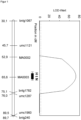
- the QTL with the HTN1 resistance from the donor B37HTN1 and Pepitilla was localized using the SSR markers bnlg1067, umc1121, MA0002, MA0003, bnlg1782, umc1287, umc1960 and bnlg240 in the filial generations on chromosome 8 (bin 8.06) between the markers MA0002 (Table 4) and umc1287 (Table 5) in a region of 23.1 cM (see Figure 1 ).
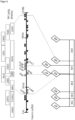
- the location of the genomic donor sequence section responsible for the identified linkage drag of the flowering time was clearly determined on a further, second interval of the donor on the chromosome fragment (Example 3B; Figure 3 ).
- a chromosome fragment is integrated which does not contain the second interval of the donor.
- the second interval originates, for example, from a recurrent parent which does not carry the linkage drag of the flowering time, or from an exogenously introduced homologous DNA fragment which does not carry the linkage drag, on a suitable donor vector for targeted homologous recombination.
- the second interval is located proximally and closely linked to the resistance locus HTN1 or to the first interval.
- the second interval is an interval between a marker in a first marker region (M1) which is defined by the markers SYN14136 and PZE-108076510, and a marker in a second marker region (M2), which is flanked by the markers SYN24931 and PZE-108077560.
- the flanking markers can be found in Table 4.
- the markers SYN14136, PZE-108076510, SYN24931 and PZE-108077560 are SNP markers for use in the KBioscience KASP system (www.lgcgenomics.com/genotyping/kaspgenotyping-reagents/kasp-overview/).
- markers M1 and M2 are clearly define the marker regions M1 and M2, on either side of the sequence section that carries the linkage drag of the flowering time in the donor B37HTN1 or Pepitilla.
- polymorphic markers they are also suitable for distinguishing between the Pepitilla donor allele and, for example, the allele of the recurrent parent. All information on the use of these markers as KASP markers can be found in Table 4.
- Suitable exemplary primer hybridization parameters for PCR are shown in Example 2. A person skilled in the art is also able to determine other suitable hybridization parameters.
- markers SYN14136, PZE-108076510, SYN24931 and PZE-108077560 listed here or self-developed markers in M1 and/or M2 it is easy for the person skilled in the art to determine whether the second interval of the donor described above is contained or not contained in a maize plant in whose genome a chromosome fragment with HTN1 resistance locus from the donor Pepitilla is integrated.
- a chromosomal interval from the donor which includes, for example, genomic sequences that represent linkage drag, can be removed from the integrated chromosome fragment by genetic/homologous recombination.
- the interval of the Pepitilla donor can be replaced by the corresponding interval of the recurrent parent genome or by an exogenously introduced homologous DNA fragment. Markers in general and the markers disclosed here in particular can be used to support selection.
- Detecting an allele can, for example, comprise (a) isolating at least one nucleic acid molecule from the genome of a plant or plant cell/corn plant or corn plant cell and (b) examining the isolated nucleic acid molecule with at least one marker, and optionally (c) sequencing the allele in one and/or more genotypes, (d) detecting one and/or more polymorphisms and/or (e) restriction with a restriction endonuclease that can generate different sized fragments on a marker allele.
- a preferred embodiment of the maize plant according to the invention is a maize plant as described above, wherein the chromosome fragment does not contain the second interval of the donor which is flanked a) by the markers SYN14136 and PZE-108077560, b) by the markers PZE-108076510 and PZE-108077560, c) by the markers SYN14136 and SYN24931 or d) by the markers PZE-108076510 and SYN24931.
- the maize plant according to the invention shows a different time of male and/or female flowering compared to the Pepitilla-converted line or -converted plant such as B37HTN1, which contains the interval 2 between a marker in a first marker region (M1) flanked by the markers SYN14136 and PZE-108076510 and a marker in a second marker region (M2) flanked by the markers SYN24931 and PZE-108077560, wherein different time means that the converted line or converted plant has a delay of at least 2 days, of at least 3 days, of at least 5 days or of at least 7 days.
- M1 first marker region flanked by the markers SYN14136 and PZE-108076510
- M2 second marker region flanked by the markers SYN24931 and PZE-108077560
- a further preferred embodiment of the maize plant according to the invention is a maize plant as described above, wherein the chromosome fragment further does not contain an interval of the donor (hereinafter referred to as the third interval or interval 3) between a marker in the second marker region M2 and a marker in a third marker region M3, which is flanked by the markers PZE-108093423 (Table 4) and PZE-108093748 (Table 4).
- the markers PZE-108093423 and PZE-108093748 are SNP markers for use in the KBioscience KASP system (www.lgcgenomics.com/genotyping/kaspgenotyping-reagents/kasp-overview/). They clearly define the marker region M3.
- polymorphic markers they are also suitable for distinguishing between the donor allele and, for example, the allele of the recurrent parent. All information on the use of these markers as KASP markers can be found in Table 4. Suitable exemplary primer hybridization parameters for the PCR are given in Example 2. A person skilled in the art is also able to determine other suitable hybridization parameters. Furthermore, it is routine work for a person skilled in the art with knowledge of the described marker region to develop other markers, in particular polymorphic markers, in M3 in addition to the markers mentioned.
- a further preferred embodiment of the maize plant according to the invention is a maize plant as described above, wherein the chromosome fragment does not contain a genetic section which comprises the second interval and the third interval of the donor and is flanked a) by the markers SYN14136 and PZE-108093423, b) by the markers PZE-108076510 and PZE-108093423, c) by the markers SYN14136 and PZE-108093748 or d) by the markers PZE-108076510 and PZE-108093748.
- the silage yield of a maize plant according to the invention without a fourth and/or fifth interval of the donor compared with a comparable maize plant with linkage drag of the silage yield can be more than 2%, 3%, 4%, 5%, 6%, 7%, 8%, 9%, 10%, 15% or 20% higher.
- the fourth interval is located proximally and closely linked to the resistance locus HTN1 or to the first interval.
- the fifth interval is located distally and closely linked to the resistance locus HTN1 or to the first interval.
- a particularly preferred embodiment of the maize plant according to the invention is a maize plant as described above, wherein the chromosome fragment further comprises i) the fourth interval of the donor between a marker in the third marker region M3 and a marker in a fourth marker region M4, which is flanked by the markers MA0004 and MA0005, or ii) a genetic section with the fourth interval between a marker in the third marker region M3 and a marker in a seventh marker region M7, which is flanked by the markers MA0005 and MA0021, and/or wherein the chromosome fragment further comprises i) the fifth interval of the donor between a marker in a fifth marker region M5, which is flanked by the markers MA0006 and PZE-108097482, and a marker in a sixth marker region M6, which is flanked by the markers PZE-108107671 and SYN4196, or ii) a genetic section with the fifth interval between a marker in an eighth Marker region M8, which is flanked by markers
- flanking markers can be found in Table 4.
- Markers MA0004, MA0005, MA0006, MA0013, MA0021, MA0022, PZE-108097482, PZE-108107671 and SYN4196 are SNP markers for use in the KBioscience KASP system (www.lgcgenomics.com/genotyping/kaspgenotyping-reagents/kasp-overview/). They clearly define the marker regions M4, M5, M6, M7 and M8, which together with M3 determine the sequence sections that carry the linkage drag of the silage yield in the donor B37HTN1 or Pepitilla. As polymorphic markers, they are also suitable for distinguishing between the donor allele and, for example, the allele of the recurrent parent.
- a further particularly preferred embodiment of the maize plant according to the invention is a maize plant as described above, wherein the chromosome fragment (i) does not contain a genetic section which comprises the second interval, the third interval and the fourth interval of the donor and is flanked a) by the markers SYN14136 and MA0004, b) by the markers PZE-108076510 and MA0004, c) by the markers SYN14136 and MA0005 or d) by the markers PZE-108076510 and MA0005, or (ii) does not contain a genetic section which comprises the second interval and the third interval of the donor and is flanked a) by the markers SYN14136 and PZE-108093423, b) by the markers PZE-108076510 and PZE-108093423, c) by the markers SYN14136 and PZE-108093748 or (d) by the markers PZE-108076510 and PZE-108093748, and does not contain the fifth interval of the donor, or (iii)
- a further particularly preferred embodiment of the maize plant according to the invention is a maize plant as described above, wherein the chromosome fragment (i) does not contain a genetic section which comprises the second interval, the third interval and the fourth interval of the donor and is flanked a) by the markers SYN14136 and MA0021 or b) by the markers PZE-108076510 and MA0021, or (ii) a genetic section which comprises the second interval, the third interval and the fourth interval of the donor and is flanked a) by the markers SYN14136 and MA0021 or b) by the markers PZE-108076510 and MA0021, and does not contain the fifth interval of the donor, or (iii) a genetic segment comprising the second interval, the third interval and the fourth interval of the donor and is flanked by a) the markers SYN14136 and MA0021 or b) the markers PZE-108076510 and MA0021, and a second genetic segment comprising the fifth interval of the donor and is flanked by
- the object underlying the present invention is alternatively achieved by a maize plant in whose genome a chromosome fragment from the donor Pepitilla is integrated, wherein the chromosome fragment comprises the first interval of the donor, which shows donor alleles according to the haplotype according to Table 2 and has the polynucleotide which confers resistance to Helminthosporium turcicum in the maize plant, and wherein the chromosome fragment does not contain i) the fourth interval of the donor between a marker in the third marker region, which is flanked by the markers PZE-108093423 and PZE-108093748, and a marker in the fourth marker region, which is flanked by the markers MA0004 and MA0005, or ii) a genetic section with the fourth interval between a marker in the third marker region M3 and a marker in the seventh marker region M7, which is flanked by the markers MA0005 and MA0021.
- a preferred embodiment of this maize plant according to the invention is a maize plant as described above, wherein the chromosome fragment i) does not contain the fourth interval of the donor which is flanked a) by the markers PZE-108093423 and MA0004, b) by the markers PZE-108093748 and MA0004, c) by the markers PZE-108093423 and MA0005 or d) by the markers PZE-108093748 and MA0005, or ii) does not contain a genetic section which comprises the fourth interval of the donor and is flanked a) by the markers PZE-108093423 and MA0021 or b) by the markers PZE-108093748 and MA0021.
- a further preferred embodiment of the maize plant according to the invention is a maize plant as described above, wherein the chromosome fragment further does not contain the third interval of the donor between a marker in the second marker region M2 and a marker in the third marker region M3.
- a further preferred embodiment of the maize plant according to the invention is a maize plant as described above, wherein the chromosome fragment does not contain a genetic section which comprises the third interval and the fourth interval of the donor and is flanked a) by the markers SYN24931 and MA0004, b) by the markers PZE-108077560 and MA0004, c) by the markers SYN24931 and MA0005, d) by the markers PZE-108077560 and MA0005, e) by the markers SYN24931 and MA0021 or f) by the markers PZE-108077560 and MA0021.
- a further preferred embodiment of the maize plant according to the invention is a maize plant as described above, wherein the chromosome fragment i) further does not contain the fifth interval of the donor between a marker in the fifth marker region M5 and a marker in the sixth marker region M6 or ii) a genetic section with the fifth interval between a marker in the eighth marker region M8 and a marker in the sixth marker region M6.
- a further particularly preferred embodiment of the maize plant according to the invention is a maize plant as described above, wherein the chromosome fragment i) contains a genetic section which comprises the third interval and the fourth interval of the donor and is flanked a) by the markers SYN24931 and MA0004, b) by the markers PZE-108077560 and MA0004, c) by the markers SYN24931 and MA0005 or d) by the markers PZE-108077560 and MA0005, and does not contain the fifth interval, or ii) a genetic segment comprising the third interval and the fourth interval of the donor and flanked by a) the markers SYN24931 and MA0004, b) the markers PZE-108077560 and MA0004, c) the markers SYN24931 and MA0005 or d) the markers PZE-108077560 and MA0005, and a second genetic segment comprising the fifth interval and flanked by a) the markers MA0022 and SYN4196, b
- a further particularly preferred embodiment of the maize plant according to the invention is a maize plant as described above, wherein the chromosome fragment i) contains a genetic section which comprises the third interval and the fourth interval of the donor and is flanked a) by the markers SYN24931 and MA00021 or b) by the markers PZE-108077560 and MA00021, and does not contain the fifth interval, or ii) a genetic section which comprises the third interval and the fourth interval of the donor and is flanked a) by the markers SYN24931 and MA00021 or b) by the markers PZE-108077560 and MA00021, and a second genetic section which comprises the fifth interval and is flanked a) by the markers MA0022 and PZE-108107671, b) by the markers MA0022 and SYN4196, c) by the markers MA0013 and PZE-108107671 or from the markers MA0013 and SYN4196.
- the object underlying the present invention is further alternatively achieved by a maize plant in whose genome a chromosome fragment from the donor Pepitilla is integrated, wherein the chromosome fragment comprises the first interval of the donor, which shows donor alleles according to the haplotype according to Table 2 and has the polynucleotide which confers resistance to Helminthosporium turcicum in the maize plant, and wherein the chromosome fragment i) the fifth interval of the donor between a marker in the fifth marker region, which is flanked by the markers MA0006 and PZE-108097482, and a marker in the sixth marker region, which is flanked by the markers PZE-108107671 and SYN4196, or ii) a genetic section with the fifth interval between a marker in the eighth marker region M8, which is flanked by the markers MA0022 and MA0013, and a marker in the sixth marker region M6, which is flanked by the markers PZE-108107671 and SYN4196.
- a further preferred embodiment of the maize plant according to the invention is a maize plant as described above, wherein the chromosome fragment further comprises the third Donor interval between a marker in the second marker region M2 and a marker in the third marker region M3.
- a further particularly preferred embodiment of the maize plants according to the invention is one of the maize plants described above, wherein the chromosome fragment is flanked a) by a marker in the second marker region M2 and a marker in the sixth marker region M6, b) by a marker in the third marker region M3 and a marker in the sixth marker region M6, c) by a marker in the fourth marker region M4 and a marker in the sixth marker region M6, d) by a marker in the seventh marker region M7 and a marker in the sixth marker region M6, e) by a marker in the marker region M1 and a marker in the marker region M5, f) by a marker in the second marker region M2 and a marker in the fifth marker region M5, g) by a marker in the third marker region M3 and a marker in the fifth marker region M5, h) by a marker in the fourth marker region M4 and a marker in the fifth marker region M5, i) by a marker in the seventh marker region M7 and a marker in the
- a further particularly preferred embodiment of the maize plants according to the invention is one of the maize plants described above, wherein the chromosome fragment is flanked a) by the markers SYN24931 and SYN4196, b) by the markers PZE-108077560 and SYN4196, c) by the markers SYN24931 and PZE-108107671, d) by the markers PZE-108077560 and PZE-108107671, e) by the markers PZE-108093423 and SYN4196, f) by the markers PZE-108093748 and SYN4196, g) by the markers PZE-108093423 and PZE-108107671, h) by the markers PZE-108093748 and PZE-108107671, i) by the markers MA0004 and SYN4196, j) by the markers MA0005 and SYN4196, k) by the markers MA0004 and PZE-108107671, I) by the markers MA000
- a further particularly preferred embodiment of the maize plants according to the invention is one of the maize plants described above, wherein the chromosome fragment a) between a marker in the second marker region M2 and a marker in the sixth marker region M6, b) between a marker in the third marker region M3 and a marker in the sixth marker region M6, c) between a marker in the fourth marker region M4 and a marker in the sixth marker region M6, d) between a marker in the seventh marker region M7 and a marker in the sixth marker region M6, e) between a marker in the first marker region M1 and a marker in the fifth marker region M5, f) between a marker in the second marker region M2 and a marker in the fifth marker region M5, g) between a marker in the third marker region M3 and a marker in the fifth marker region M5, h) between a marker in the fourth marker region M4 and a marker in the fifth marker region M5, i) between a marker in the seventh marker region M7 and a marker in the fifth marker
- the present invention further relates to a seed or a grain, a tissue, an organ, a part and a cell of the maize plants according to the invention described above.
- the seed or the grain is a seed or a grain in whose genome the chromosome fragment of the embodiments of the invention described above is integrated.
- the present invention relates to a method for identifying a H. turcicum resistant maize plant, in the genome of which a chromosome fragment from the donor Pepitilla is integrated, comprising the detection of at least two alleles in the genome of the plant, wherein at least one allele is located in a genomic section which is flanked by a marker in the first marker region M1, the second marker region M2, the third marker region M3, the fourth marker region M4 or the seventh marker region M7 and by the polynucleotide described above which confers resistance to H.
- the identified maize plant is a maize plant according to the invention.
- the invention further relates to a maize plant which has been identified using the above-mentioned method for identification.
- the present invention encompasses a method for increasing the yield of a H. turcicum resistant maize plant having a chromosome fragment from the donor Pepitilla integrated into its genome, the method comprising a step which effects the removal of the second interval of the donor, fourth interval of the donor or fifth interval of the donor, and wherein the chromosome fragment comprises the first interval of the donor described above, which displays donor alleles according to the haplotype of Table 2 and has a polynucleotide which confers resistance to Helminthosporium turcicum in the maize plant.
- the removal can be achieved by genetic recombination during a crossing process between two maize plants, wherein a parent maize plant carries the HTN1 resistance locus from Pepitilla.
- a parent maize plant carries the HTN1 resistance locus from Pepitilla.
- the known tools include, for example, (meganucleases (Silva et al., 2011), homing endonucleases (Chevalier 2002), zinc finger nucleases, TALE nucleases ( WO 2010/079430 ; WO 2011/072246 ) or CRISPR (Gaj et al., 2013).
- These are artificial nuclease fusion proteins that are able to specifically cut double-stranded nucleic acid molecules such as plant DNA and thus create double-strand breaks at desired positions in the genome.
- Suitable target sequences in the genome for the recognition domains of the above nucleases can be taken, for example, from the sequence information on the SNP markers (Table 4) or in their intervals.
- a specialist is also able to use other To identify sequences, preferably within or between the six marker regions described above, which are suitable as target sequences for the recognition domain of the nucleases.
- TALE nucleases TALENs
- ZFNs zinc finger nucleases
- the TALE or ZF recognition domain allows specific binding at any location in the genome. Knowing the sequence at the target area, the TALE or ZF recognition domain can be tailored so that it binds exclusively at the desired location in the genome.
- a double-strand break can be induced at a defined location in the genome, which enables targeted genome engineering (Tzfira et al., 2012; Li et al., 2011; Puchta and Hohn 2010).
- a double-strand break can be induced at a defined location in the genome, which enables targeted genome engineering (Tzfira et al., 2012; Li et al., 2011; Puchta and Hohn 2010).
- DSB double-strand break
- An induced double-strand break can, for example, stimulate homologous recombination between an endogenous target gene locus (e.g. one of the above marker regions) and an exogenously introduced homologous DNA fragment that does not carry linkage drag (e.g. on a suitable donor vector).
- This so-called gene replacement or genome editing can be carried out in vitro and does not require a step of crossing two plants.
- the plants to be modified must be transiently transformed with nucleic acids encoding the designed TALENs or ZFNs and with the exogenous DNA fragment.
- the DNA fragment can come from a plant of the same species and corresponds, for example, to the chromosomal section that is to be replaced, only without linkage drag.
- cells with modified genomes can be regenerated into plants and selected to determine whether the linkage drag has been successfully removed and the previously transiently transformed DNA elements can be regenerated during regenerative cell division. have been lost. Markers described above can also be used for this purpose. Methods for transformation and regeneration are known from the state of the art and are explained again below.
- TALENs and ZFNs can also be used transgenically in the process of meiosis, where they induce double-strand breaks at predetermined sites in the genome and thus increase the probability of recombination at these sites in the crossing over step. This can significantly promote the elimination of linkage drag.
- a person skilled in the art knows how to produce linkage-drag-free and TALENs or ZFNs-free plants from the haploid cells after meiosis has been completed.
- the present invention relates to a method for producing a maize plant according to the invention, which comprises the following steps: (A) providing a first maize plant, in the genome of which a chromosome fragment from the donor Pepitilla is integrated, wherein the chromosome fragment comprises a first interval of the donor, which shows donor alleles according to the haplotype according to Table 2 and has a polynucleotide which confers resistance to Helminthosporium turcicum in the maize plant, and wherein the chromosome fragment contains a second interval of the donor and/or the fourth interval of the donor and/or the fifth interval of the donor, (B) providing a second maize plant, (C) crossing the maize plant from (A) with the maize plant from (B) and (D) selecting a maize plant according to the invention, preferably using at least a marker described above.
- the present invention relates to a method for producing a maize plant according to the invention, which comprises the following steps: (A) Transiently transforming a maize plant cell with a first nucleotide sequence which encodes a first protein with endonuclease activity (e.g. a TALE or ZF endonuclease fusion protein) which is capable of inducing a double-strand break in the DNA in the genome of the maize plant cell between marker regions M2 and M4, and with a second nucleotide sequence which encodes a second protein with endonuclease activity (e.g.
- a first nucleotide sequence which encodes a first protein with endonuclease activity
- endonuclease activity e.g. a TALE or ZF endonuclease fusion protein
- a TALE or ZF endonuclease fusion protein which is capable of inducing a double-strand break in the DNA in the genome of the maize plant cell between marker regions M5 and M6,
- B Transiently introducing a donor vector into the first maize plant cell which carries a chromosome fragment from the donor Pepitilla, wherein the chromosome fragment comprises a first interval of the donor which donor alleles according to the haplotype shown in Table 2 and has a polynucleotide which confers resistance to Helminthosporium turcicum in the maize plant, and wherein the Chromosome fragment further comprises the chromosomal sections of the donor Pepitilla between the sites of the double-strand breaks from (A), so that a homologous recombination takes place between the genome of the first maize plant cell and the chromosome fragment of the donor vector, (C) regeneration of a maize plant from the maize plant cell, (D) identification of a maize plant according to the invention
- the present invention covers the markers described above as oligonucleotides, in particular primer oligonucleotides.
- the oligonucleotides are isolated oligonucleotides.
- An oligonucleotide comprises a nucleic acid molecule with a nucleotide sequence selected from one of SEQ ID NOs: 41-49, 53-100 and 229-250.
- the present invention relates to the use of an oligonucleotide which comprises a nucleic acid molecule with a nucleotide sequence selected from one of SEQ ID NOs: 17-250, for identifying a maize plant resistant to H. turcicum .
- the resistance originates from the donor Pepitilla and is HTN1.
- transgenic plant in particular a transgenic maize plant, which comprises a transgenic plant cell described below.
- the invention also relates to a part of this plant according to the invention, where a part can be a cell, a tissue, an organ or a combination of several cells, tissues or organs. A combination of several organs is, for example, a flower or a seed.
- the invention relates to a seed from the transgenic plant, where the seed comprises the polynucleotide according to the invention described further below as a transgene.
- a transgenic plant of the present invention in particular a plant of the species Zea mays, shows a higher resistance to H.
- a transgenic Ht-resistant plant according to the invention shows an increased resistance to H. turcicum of at least 1 rating, preferably of at least 2 rating points or at least 3 rating points and particularly preferably of at least 4 rating points (see rating scheme in Table 3).
- the invention further provides a method for producing a transgenic plant, which comprises a step of introducing the polynucleotide according to the invention or the vector of the present invention described below into a plant cell and optionally a step of selecting a transgenic plant cell. Furthermore, such a method for producing a transgenic plant is characterized by a subsequent step which includes the regeneration of the transgenic plant from the transgenic plant cell produced in the first step. Methods for regeneration are known to the person skilled in the art from the prior art.
- the present invention discloses the polynucleotide which encodes one or more resistance-conferring genes of the HTN1 locus from Pepitilla (Table 1) or selected from RLK1 and EXT1 (see Table 1) or gene alleles thereof.
- the gene or gene allele can cause a resistance phenotype with the HTN1-typical characteristics under conditions of infestation with H. turcicum .
- the polynucleotide is characterized in that it comprises a nucleic acid molecule (a) which has a nucleotide sequence according to SEQ ID NO: 1, 3, 5, 7, 9, 11, 13 or 15, (b) which has a nucleotide sequence with an identity of at least 80%, 85%, 90%, 91%, 92%, 93%, 94%, 95%, 96%, 97%, 98% or 99% to one of the nucleotide sequences according to SEQ ID NO: 1, 3, 5, 7, 9, 11, 13 and 15, preferably over the entire sequence length, (c) which hybridizes with the complementary strand of a nucleic acid molecule according to (a) or (b) under stringent conditions, (d) which is a polypeptide with an amino acid sequence according to SEQ ID NO: 2, 4, 6, 8, 10, 12, 14 or 16, or (e) which encodes a polypeptide having an amino acid sequence which is at least 80%, 85%, 90%, 91%, 92%, 93%, 94%, 95%,
- the polynucleotide is characterized in that it comprises a nucleic acid molecule (aa) which has a nucleotide sequence according to SEQ ID NO: 1 or 5, (bb) which has a nucleotide sequence with an identity of at least 80%, 85%, 90%, 91%, 92%, 93%, 94%, 95%, 96%, 97%, 98% or 99% to one of the nucleotide sequences according to SEQ ID NO: 1 or 5, preferably over the entire sequence length, (cc) which hybridizes with the complementary strand of a nucleic acid molecule according to (aa) or (bb) under stringent conditions, (dd) which encodes a polypeptide with an amino acid sequence according to SEQ ID NO: 2 or 6, or (ee) which encodes a polypeptide with an amino acid sequence which is at least 80%, 85%, 90%, 91%, 92%, 93%, 94%, 95%, 96%, 97%, 98% or
- the polynucleotide can be isolated and/or purified from its natural genetic environment or is in a substantially pure or homogeneous form.
- the polynucleotide is preferably DNA, and particularly preferably cDNA, ie the polynucleotide comprises the cDNA of one or more resistance-conferring genes (Table 1). However, it can also be present as RNA.
- a polynucleotide according to the invention encodes at least one polypeptide which is capable of conferring resistance to the pathogen Helminthosporium turcicum in a plant in which the polypeptide is expressed.
- polypeptide which is encoded by the polynucleotide according to the invention or parts thereof preferably confers resistance to the pathogen Helminthosporium turcicum, in particular in a plant of the genus Zea or in a plant of the species Zea mays .
- the present invention further relates to a polypeptide which is capable of conferring resistance to H. turcicum in a plant in which the polypeptide is expressed and which is encoded by the polynucleotide according to the invention or a part thereof.
- the polypeptide preferably has an amino acid sequence according to SEQ ID NO: 2, 4, 6, 8, 10, 12, 14 or 16 or particularly preferably an amino acid sequence according to SEQ ID NO: 2 or 6.
- the polypeptide can be an isolated polypeptide.
- the present invention relates to a vector which comprises the polynucleotide according to the invention.
- the vector can be a plasmid, a cosmid, a phage or an expression vector, a transformation vector, shuttle vector or cloning vector, it can be double- or single-stranded, linear or circular or can transform a prokaryotic or eukaryotic host either by integration into its genome or extrachromosomally.
- the polynucleotide according to the invention is operatively linked in an expression vector to one or more regulatory sequences which allow transcription and optionally expression in a prokaryotic or eukaryotic host cell.
- the polynucleotide is under the control of a suitable promoter or a terminator.
- suitable promoters can be promoters that are constitutively induced (e.g. 35S promoter from the "Cauliflower mosaic virus" (Odell et al. 1985), particularly suitable are promoters that are pathogen-inducible (e.g. PR1 promoter from parsley (Rushton et al., 1996).
- Particularly suitable pathogen-inducible promoters are synthetic or chimeric promoters that occur in nature do not occur, are composed of several elements and contain a minimal promoter and have at least one cis-regulatory element upstream of the minimal promoter, which serves as a binding site for specific transcription factors.
- Chimeric promoters are designed according to the desired requirements and are induced or repressed by different factors. Examples of such promoters can be found in WO 2000/29592 and WO 2007/147395
- a suitable terminator is, for example, the nos terminator (Depicker et al., 1982).
- the present invention also provides a method comprising introducing a described vector into a host cell.
- the vector can be introduced, for example, by conjugation, mobilization, biolistic transformation, Agrobacterium-mediated transformation, transfection, transduction, vacuum infiltration or electroporation.
- conjugation, mobilization, biolistic transformation, Agrobacterium-mediated transformation, transfection, transduction, vacuum infiltration or electroporation Such methods as well as methods for preparing described vectors are familiar to those skilled in the art (Sambrook et al. 2001).
- the present invention relates to a host cell which comprises the polynucleotide according to the invention or the vector of the present invention.
- a host cell in the sense of the invention can be a prokaryotic (e.g. bacterial) or eukaryotic cell (e.g. a plant cell or a yeast cell).
- the host cell is an Agrobacterium such as Agrobacterium tumefaciens or Agrobacterium rhizogenes or a plant cell which comprises the polynucleotide according to the invention or the vector of the present invention.
- the present invention relates to a transgenic plant cell which comprises the polynucleotide according to the invention as a transgene or the vector of the present invention.
- a transgenic plant cell is, for example, a plant cell which is transformed, preferably stably, with the polynucleotide according to the invention or with the vector of the present invention.
- the polynucleotide is transformed with one or more regulatory sequences which allow transcription and optionally expression in the plant cell.
- the overall construct of the polynucleotide according to the invention and the regulatory sequence(s) can then represent the transgene.
- regulatory sequences are, for example, a promoter or a terminator.
- a transgenic plant cell of the present invention in particular a cell of a plant of the species Zea mays, shows a higher resistance to H. turcicum than a corresponding non-transformed plant cell (the (isogenic) plant cell without the transgene).
- Transgenic Ht-resistant plant cells according to the invention show an increased resistance to H. turcicum of at least 1 rating, preferably of at least 2 rating grades or at least 3 rating grades and particularly preferably of at least 4 rating grades (see rating scheme in Table 3).
- the present invention also relates to a method for producing a transgenic plant cell of the present invention, which comprises a step of introducing the polynucleotide according to the invention or the vector of the present invention into a plant cell.
- the introduction can take place by transformation, preferably by stable transformation.
- suitable techniques for introduction such as biolistic transformation, Agrobacterium-mediated transformation or electroporation, are known to the person skilled in the art (Sambrook et al. 2001).
- the present invention also relates to a method for imparting or increasing resistance to H. turcicum in a plant, preferably a plant of the species Zea mays, which comprises a step of transforming a plant cell with the polynucleotide according to the invention or the vector of the present invention.
- this method leads to increased resistance to H. turcicum of at least 1 rating, preferably of at least 2 rating ratings or at least 3 rating ratings and particularly preferably of at least 4 rating ratings (see rating scheme in Table 3).
- the present invention also includes a method for modifying the resistance phenotype of a plant, in particular a maize plant, against the pathogen Helminthosporium turcicum, which comprises a step of mutating the resistance-mediating gene of the Pepitilla HTN1 locus or a gene allele thereof.
- the resistance-mediating gene of the Pepitilla HTN1 locus encodes a polypeptide according to SEQ ID NO: 2 or a homolog of a Polypeptide according to SEQ ID NO: 2, which causes a resistance phenotype with the HTN1-typical characteristics under infestation conditions with H. turcicum .
- the resistance-conferring gene of the HTN1 locus from Pepitilla or a gene allele thereof can be present transgenically or endogenously in the genome of the plant.
- Modification of the resistance phenotype can mean a change in the pathogen race specificity and/or a change in the resistance level measured as a rating based on phenotypic characteristics such as affected leaf area (see Table 3) or measured as AUDPC value (see Example 1 C).
- the resistance level after modification of the resistance phenotype is between the resistance level of a plant which expresses the non-mutated resistance-mediating gene of the HTN1 locus from Pepitilla and the resistance level of an isogenic plant which does not express the resistance-mediating gene of the HTN1 locus from Pepitilla; however, it may also be above the resistance level of a plant which expresses the non-mutated resistance-mediating gene of the HTN1 locus from Pepitilla.
- the resistance level is between the resistance level of a plant which expresses the polypeptide according to SEQ ID NO: 2 and the resistance level of an isogenic plant which does not express the polypeptide according to SEQ ID NO: 2; however, it may also be above the resistance level of a plant which expresses the polypeptide according to SEQ ID NO: 2.
- the term mutating can be understood here as a change in the genetic sequence (mutation) carried out by humans. Examples of this are that plants, plant cells or parts of plants are exposed to a high dose of chemical, radiological or other mutagens and then mutants are selected.
- mutating can also be carried out, for example, with the help of tilling, TALE nucleases, zinc finger nucleases or a CRISPR/Cas system or by fusion, insertion, deletion or substitutions in the DNA sequence or the amino acid sequence.
- the skilled person receives sufficient technical instructions from the known state of the art.
- mutating the resistance-mediating gene of the HTN1 locus from Pepitilla leads to at least one amino acid substitution, at least two amino acid substitutions, at least three amino acid substitutions, at least five or more amino acid substitutions. In case of multiple amino acid substitutions, these may also be present on different gene alleles of the resistance-mediating gene of the HTN1 locus from Pepitilla, ie the mutation can be heterozygous or homozygous.
- mutating the resistance-mediating gene of the HTN1 locus from Pepitilla leads to a point mutation in the nucleotide sequence according to SEQ ID NO: 1 at position 1365 with the base exchange of a G to an A or at position 1490 with the base exchange of a G to an A. Furthermore, this embodiment also relates to the mutating which leads to an amino acid exchange in the amino acid sequence according to SEQ ID NO: 2 at position 455 from M (methionine) to I (isoleucine) or at position 497 from G (glycine) to E (glutamic acid).
- the mutating of the resistance-mediating gene of the HTN1 locus from Pepitilla leads to a point mutation, which results in an amino acid exchange, in the nucleotide sequence according to SEQ ID NO: 1 between position 1365 and position 1490 or the embodiment relates to the mutating which leads to an amino acid exchange in the amino acid sequence according to SEQ ID NO: 2 between position 455 and position 497.
- the invention relates to a method for producing a plant, in particular a maize plant, with a modified resistance phenotype to the pathogen Helminthosporium turcicum, which comprises a step of mutating the resistance-mediating gene of the HTN1 locus from Pepitilla or a gene allele thereof in at least one cell of the plant or in at least one cell from which the plant is regenerated.
- the method can thus comprise a step of regenerating at least one plant from the at least one mutated cell and selecting the regenerated plants on the basis of the modified resistance phenotype to the pathogen Helminthosporium turcicum.
- the resistance-mediating gene of the HTN1 locus from Pepitilla encodes a polypeptide according to SEQ ID NO: 2 or a homolog of a polypeptide according to SEQ ID NO: 2, which causes a resistance phenotype with the HTN1-typical characteristics under infestation conditions with H. turcicum .
- the resistance-conferring gene of the HTN1 locus from Pepitilla or a gene allele thereof may be transgenic or endogenous in the genome of the plant.
- a modified resistance phenotype may mean a change in pathogen race specificity and/or a change in the resistance level measured as a score based on phenotypic characteristics such as affected leaf area (see Table 3) or measured as an AUDPC value (see Example 1 C).
- the resistance level of the modified resistance phenotype is between the resistance level of a plant that carries the non-mutated resistance-conferring gene of the HTN1 locus from Pepitilla expressed, and the resistance level of an isogenic plant which does not express the resistance-conferring gene of the HTN1 locus from Pepitilla; however, it may also be higher than the resistance level of a plant which expresses the non-mutated resistance-conferring gene of the HTN1 locus from Pepitilla.
- the resistance level is between the resistance level of a plant which expresses the polypeptide according to SEQ ID NO: 2 and the resistance level of an isogenic plant which does not express the polypeptide according to SEQ ID NO: 2; however, it may also be higher than the resistance level of a plant which expresses the polypeptide according to SEQ ID NO: 2.
- the term mutating can be understood here as a change in the genetic sequence (mutation) carried out by humans. Examples of this are exposing plants, plant cells or parts of plants to a high dose of chemical, radiological or other mutagens and then selecting for mutants.
- the mutation can also be carried out, for example, with the help of tilling, TALE nucleases, zinc finger nucleases or a CRISPR/Cas system or by fusion, insertion, deletion or substitutions in the DNA sequence or the amino acid sequence.
- the skilled person receives sufficient technical instructions from the known state of the art.
- mutating the resistance-mediating gene of the HTN1 locus from Pepitilla leads to at least one amino acid substitution, at least two amino acid substitutions, at least three amino acid substitutions, at least five or more amino acid substitutions. In the case of multiple amino acid substitutions, these can also be present on different gene alleles of the resistance-mediating gene of the HTN1 locus from Pepitilla, ie the mutation can be heterozygous or homozygous.
- the mutating of the resistance-mediating gene of the HTN1 locus from Pepitilla leads to a point mutation in the nucleotide sequence according to SEQ ID NO: 1 at position 1365 with the base exchange of a G to an A or at position 1490 with the base exchange of a G to an A.
- this embodiment also relates to the mutating which leads to an amino acid exchange in the amino acid sequence according to SEQ ID NO: 2 at position 455 from M (methionine) to I (isoleucine) or at position 497 from G (glycine) to E (glutamic acid).
- the mutating of the resistance-mediating gene of the HTN1 locus from Pepitilla leads to a point mutation which results in an amino acid exchange in which Nucleotide sequence according to SEQ ID NO: 1 between position 1365 and position 1490 or the embodiment relates to mutating which leads to an amino acid exchange in the amino acid sequence according to SEQ ID NO: 2 between position 455 and position 497.
- the invention also includes plants or a part thereof which can be produced by a process for producing a plant with a modified resistance phenotype to the pathogen Helminthosporium turcicum .
- the invention further encompasses a plant or a part thereof which has a mutation in the resistance-mediating gene of the HTN1 locus from Pepitilla or a gene allele thereof.
- the mutation leads to a modified resistance phenotype as described above.
- the resistance-mediating gene of the HTN1 locus from Pepitilla encodes a polypeptide according to SEQ ID NO: 2 or a homolog of a polypeptide according to SEQ ID NO: 2 which, under infestation conditions with H. turcicum, causes a resistance phenotype with the HTN1-typical characteristics.
- the resistance-mediating gene of the HTN1 locus from Pepitilla or a gene allele thereof can be present transgenically or endogenously in the genome of the plant.
- the mutation is a point mutation in the nucleotide sequence according to SEQ ID NO: 1 at position 1365 with the base exchange of a G to an A or at position 1490 with the base exchange of a G to an A.
- this embodiment also relates to a mutation which leads to an amino acid exchange in the amino acid sequence according to SEQ ID NO: 2 at position 455 from M (methionine) to I (isoleucine) or at position 497 from G (glycine) to E (glutamic acid).
- the mutation of the resistance-conferring gene of the HTN1 locus from Pepitilla is a point mutation which results in an amino acid exchange in the nucleotide sequence according to SEQ ID NO: 1 between position 1365 and position 1490 or the embodiment relates to a mutation which results in an amino acid exchange in the amino acid sequence according to SEQ ID NO: 2 between position 455 and position 497.
- allele refers to one of two or more nucleotide sequences at a particular locus in the genome. A first allele is found on one chromosome, a second on a second chromosome at the same position. If the two alleles differ, they are heterozygous; if they are the same, they are homozygous. Different alleles of a gene (gene alleles) differ in at least one SNP. Depending on the context of the description, an allele also means only a single SNP, which, for example, allows a distinction between the donor of HTN1 (Pepitilla) and the recurrent parent.
- chromosome fragment is a specific chromosomal DNA section of a particular chromosome that comprises at least one gene.
- An integrated chromosome fragment originates from a donor source.
- the sequential order of the genes within an integrated chromosome fragment can correspond to the order that is present in the original chromosome fragment of the donor source.
- the integrated chromosome fragment can thus be unchanged over its entire length compared to the corresponding chromosome fragment in the donor source.
- a chromosome fragment or a part thereof can represent a specific "haplotype", whereby the chromosome fragment then has certain SNPs by which the haplotype is also clearly specified and can be identified.
- distal and proximal refer to the position of a chromosomal interval or a genetic segment in relation to a specific reference location (for example a specific polynucleotide, another chromosomal interval or a gene) on an entire chromosome, where distal means that the interval or segment is located on the side of the reference location facing away from the chromosome centromere, and proximal means that the interval or segment is located on the side of the reference location facing towards the chromosome centromere.
- a specific reference location for example a specific polynucleotide, another chromosomal interval or a gene
- “Closely linked” or “closely linked” means two loci, two intervals, two genetic regions or two markers (marker loci) that are separated by less than 15 cM, less than 12 cM, less than 10 cM, less than 8 cM, less than 7 cM, less than 6 cM, less than 5 cM, less than 4 cM, less than 3 cM, less than 2 cM, less than 1 cM, less than 0.5 cM, less than 0.2 cM, less than 0.1 cM, as defined by the IBM2 neighbors 4 genetic map publicly available on the Maize GDB website.
- yield in the sense of the present invention refers to the productivity per unit area of a particular plant product with commercial value.
- the yield of maize is usually measured in metric tons of seed or grain per hectare (ha) per season or in metric tons of dry biomass per hectare (ha) per season.
- the yield may be the absolute fresh or dry mass, the relative fresh or Dry matter, silage yield (also called silage maize yield or total dry matter yield) or grain yield.
- Yield is influenced by genetic and environmental factors and is basically made up of numerous agronomic properties that represent characteristics of a plant based on genetic elements and contribute to the final yield over the course of the season.
- These individual agronomic properties include, for example, seed emergence, vegetative vitality, stress tolerance, disease resistance or tolerance, herbicide resistance, branching tendency, flowering time, seed set, seed density, stability and lodging tendency, threshing ability (even ripening), etc.
- genetic segment with a more precisely specified interval is to be understood as a genetic segment which includes or comprises the more precisely specified interval, i.e. is not limited to the more precisely specified interval.
- a genetic segment with the fifth interval between a marker in the eighth marker region M8, which is flanked by the markers MA0022 and MA0013, and a marker in the sixth marker region M6, which is flanked by the markers PZE-108107671 and SYN4196 means that the genetic segment comprises the fifth interval and the genetic segment is located between a marker in the eighth marker region M8, which is flanked by the markers MA0022 and MA0013, and a marker in the sixth marker region M6, which is flanked by the markers PZE-108107671 and SYN4196.
- Hybridization or “hybridization” is understood to mean a process in which a single-stranded nucleic acid molecule attaches to a largely complementary nucleic acid strand, i.e. forms base pairs with it.
- Standard methods for hybridization are described, for example, in Sambrook et al. 2001.
- the possibility of such an attachment depends on the stringency of the hybridization conditions.
- stringency refers to the hybridization conditions. High stringency is present when base pairing is difficult, low stringency when base pairing is easier.
- the stringency of the hybridization conditions depends, for example, on the salt concentration or ionic strength and the temperature. In general, the stringency can be increased by increasing the temperature and/or Reducing the salt content can increase the salt content.
- Stringency hybridization conditions are those conditions under which hybridization predominantly only takes place between homologous nucleic acid molecules.
- hybridization conditions refers not only to the conditions prevailing during the actual attachment of the nucleic acids, but also to the conditions prevailing during the subsequent washing steps.
- Stringent hybridization conditions are, for example, conditions under which predominantly only those nucleic acid molecules hybridize that have at least 70%, preferably at least 75%, at least 80%, at least 85%, at least 90% or at least 95% sequence identity.
- Stringent hybridization conditions are, for example: hybridization in 4 x SSC at 65 °C and subsequent multiple washing in 0.1 ⁇ SSC at 65 °C for a total of about 1 hour.
- the term "stringent hybridization conditions" as used here can also mean: hybridization at 68 °C in 0.25 M sodium phosphate, pH 7.2, 7% SDS, 1 mM EDTA and 1% BSA for 16 hours and subsequent washing twice with 2 x SSC and 0.1% SDS at 68 °C.
- Hybridization preferably takes place under stringent conditions.
- interval means a continuous linear section on a genomic DNA, which is present in a single chromosome in planta or on a chromosome fragment and which is usually defined by specifying two markers that represent the endpoints of the interval on the distal and proximal sides. The markers that define the interval at the end can themselves also be part of the interval. Furthermore, two different intervals can also overlap. In the description, an interval is specified by specifying "between marker A and marker B". A terminal marker of an interval can also be located in a defined marker region on one side of the interval. A marker region is then defined by specifying two flanking markers and represents a chromosomal section on which further markers can be located in addition to the flanking markers.
- Flanking markers determine the endpoints of a marker region and are themselves part of the marker region. If both terminal markers of an interval are markers in different marker regions on either side of an interval, an interval is specified in the description by stating "between a marker in a marker region X flanked by markers C and D and a marker in a marker region Y flanked by markers E and F".
- a marker region can extend over up to 500,000 base pairs (bp), preferably be between 100,000 and 400,000 bp in size or, more preferably, be between 140,000 and 315,000 bp in size.
- introgression means the transfer of at least one desired gene allele at a genetic locus from one genetic background to another.
- introgression of a desired gene allele at a specific locus can be transferred to an offspring by sexual crossing between two parents of the same species.
- the transfer of a gene allele can also occur by recombination between two donor genomes in a fused protoplast, with at least one donor protoplast carrying the desired gene allele in its genome.
- the offspring, which then comprise the desired gene allele can subsequently be repeatedly backcrossed with a line having an excellent genetic background and selected for the desired gene allele. The result is a fixation of the desired gene allele in a selected genetic background.
- isolated polypeptide is understood to mean a polypeptide that has been separated from its natural or original environment.
- synthetically produced polypeptide is understood to mean a polypeptide that has been separated from its natural or original environment.
- a "pathogen infection” is the earliest point in time at which a pathogen interacts with a plant host tissue.
- fungi such as ascomycetes or in oomycetes
- the outgrowth of hyphae or the formation of specific infection structures such as penetration hyphae and appressoria are among the earliest stages of infection.
- Infection by Helminthosporium turcicum can already be examined in detail using various staining techniques (e.g. trypan blue) ( Chung et al., BMC Plant Biology 10 (2010), 103 ; Walsh et al. (2008), Poster presentation P192, 50th Maize Genetics Conference in Washington DC ).
- Donor Pepitilla refers not only to the landrace Pepitilla itself but also to other maize genotypes in whose genome, particularly on chromosome 8 to 5 or 6, an introgression of the HTN1 resistance locus has been inserted, preferably from Pepitilla. Examples of these are W22Htn (e.g. Bar-Zur et al., 1998), H6314Htn (e.g. Bar-Zur et al., 1999), H6314Htn (e.g. Bar-Zur et al., 1999), H6315Htn (e.g.
- H6316Htn e.g. Bar-Zur et al., 1999
- H6317Htn e.g. Bar-Zur et al., 1999
- H6318Htn e.g. Bar-Zur et al., 1999
- H6319 ... al., 1998 B73 HtN (e.g. Shimoni et al., Journal of Phytopathology 131:4 (1991), 315-321 )
- B68 HtN and A632 HtN e.g.
- HTN1-typical traits include, for example, delayed onset of sporulation, reduced development of lesions, development of smaller lesions, reduced sporulation zones and/or no or only isolated chlorotic-necrotic lesions.
- locus is a position on a chromosome where one or more genes are located that cause or influence an agronomic trait.
- locus here means the HTN1 resistance locus, which confers resistance to the pathogen Helminthosporium turcicum or at least to one race of Helminthosporium turcicum .
- a "corn plant” is understood to mean a plant of the species Zea mays and its subspecies such as Zea mays ssp. mays, Zea mays ssp. mexicana or Zea mays ssp. parviglumis .
- a “marker” is a nucleotide sequence used as a reference or landmark.
- a marker for detecting a recombination event should be suitable for monitoring differences or polymorphisms within a plant population. For markers, these differences are found at the DNA level and are, for example, polynucleotide sequence differences such as SSRs (simple sequence repeats), RFLPs (restriction fragment length polymorphisms), FLPs (fragment length polymorphisms) or SNPs (single nucleotide polymorphisms).
- the markers can be derived from genomic or expressed nucleic acids such as spliced RNA, cDNA or ESTs and can also refer to nucleic acids used as probes or primer pairs and as such are suitable for amplifying a sequence fragment using PCR-based methods. Markers relating to genetic polymorphisms between parts of a population can be detected using established state-of-the-art methods ( An Introduction to Genetic Analysis. 7th Edition, Griffiths, Miller, Suzuki et al., 2000 ). These include, for example: DNA sequencing, PCR-based sequence-specific amplification, detection of RFLPs, detection of polynucleotide polymorphisms using allele-specific hybridization (ASH), detection of SSRs, SNPs or AFLPs.
- ASH allele-specific hybridization
- the term marker in the description can also mean a specific chromosome position in the genome of a species where a specific marker (e.g. SNP) can be found.
- a marker position can be used to monitor the presence of a linked locus, e.g. a linked locus that contributes to the expression of a particular phenotypic trait (e.g. HTN1 or linkage drag).
- the marker locus can also be used to monitor the segregation of alleles at a locus (QTL or single gene) that are genetically or physically closely linked to the marker position.
- “Operatively linked” means linked in a common nucleic acid molecule in such a way that the linked elements are positioned and oriented relative to each other such that transcription of the nucleic acid molecule can occur.
- DNA that is operatively linked to a promoter is under the transcriptional control of that promoter.
- Plant “organs” include, for example, leaves, stems, roots, vegetative buds, meristems, embryos, anthers, ovules or fruits.
- Plant “parts” include a combination of several organs, e.g. a flower or a seed, or a part of an organ, e.g. a cross-section of the stem.
- Plant “tissues” include, for example, callus tissue, storage tissue, meristematic tissue, leaf tissue, stem tissue, root tissue, plant tumor tissue or reproductive tissue.
- Plant “cells” include, for example, isolated cells with a cell wall or aggregates thereof or protoplasts.
- a "plant” in the sense of the invention can, unless otherwise stated, be any species from the dicotyledonous, monocotyledonous and gymnospermous plants. Plants are preferably monocotyledonous and are of interest in agriculture or horticulture or for the production of bioenergy (bioethanol, biogas, etc.). These include, for example, Gossypium sp., Zea mays, Brachypodium distachyon, Triticum sp., Hordeum vulgare, Oryza sativa, Sorghum sp., Musa sp., Saccharum officinarum, Secale cereale, Avena sp., lawn and forage grass.
- a plant according to the invention is preferably a plant of the genus Zea, in particular the species Zea mays, or Sorghum.
- regulatory sequence refers to a nucleotide sequence which influences the specificity and/or the expression level, for example by the regulatory sequence having a certain Such a regulatory sequence can be located upstream of the transcription initiation point of a minimal promoter, but also downstream of it, such as in a transcribed but not translated leader sequence or within an intron.
- resistance or “resistant” to a pathogen is to be understood as the resistance of a plant or plant cell to the harmful effects of the pathogen and ranges from a delay in the development of the disease to a complete suppression of the development of the disease.
- a plant/plant cell is resistant or a plant/plant cell has a resistance to the pathogen Helminthosporium turcicum (H. turcicum or Ht), i.e. thus to the leaf disease Northern Corn Leaf Blight (NCLB).
- the resistance is mediated by one or more proteins that are encoded by a gene or by genes (resistance-mediating genes) from the accession Pepitilla.
- the resistance can be complete or partial and can be pathogen race-specific or non-pathogen race-specific.
- the virulent races of Helminthosporium turcicum may include, for example, N, 1N, 2N, 23N or 123N, and the avirulent races may include, for example, 0, 1, 2, 3, 12, 23 or 123.
- Mediated resistance may be a newly acquired resistance or the enhancement of an already existing partial resistance.
- a “transgenic plant” refers to a plant in whose genome at least one polynucleotide, preferably a heterologous polynucleotide, is integrated.
- the polynucleotide is stably integrated, which means that the integrated polynucleotide is stably retained in the plant, is expressed and can also be stably inherited by the offspring.
- the stable introduction of a polynucleotide into the genome of a plant also includes integration into the genome of a plant of the previous parental generation, whereby the polynucleotide can be stably inherited.
- heterologous means that the introduced polynucleotide originates, for example, from a cell or organism with a different genetic background of the same species or another species, or is homologous to the prokaryotic or eukaryotic host cell, but is then located in a different genetic environment and thus differs from a corresponding polynucleotide that may be naturally present.
- a heterologous polynucleotide may be present in addition to a corresponding endogenous gene.
- a preferred embodiment relates to a maize plant according to the invention, wherein the chromosome fragment further does not contain an interval of the donor between a marker in the second marker region and a marker in the third marker region.
- a further preferred embodiment relates to a maize plant according to the invention, wherein the flowering time of the maize plant and/or the silage yield of the maize plant corresponds to that of a comparison maize plant in whose genome the chromosome fragment from the donor Pepitilla is not integrated.
- Another aspect of the present invention relates to a cell, tissue or part of the maize plant according to the invention.
- Yet another aspect relates to a grain or seed of a maize plant according to the invention.
- a further aspect of the present invention relates to a method for identifying a maize plant resistant to Helminthosporium turcicum , in the genome of which a chromosome fragment from the donor Pepitilla is integrated, comprising the detection of at least two alleles in the genome of the plant, wherein at least one allele is located in a genomic section which is flanked by a marker in the first marker region, the second marker region, the third marker region or the fourth marker region and by the polynucleotide which confers resistance to Helminthosporium turcicum in the maize plant, and wherein at least one allele is located in a genomic section which is flanked by the polynucleotide and by a marker in the sixth marker region or the fifth marker region.
- oligonucleotide comprising a nucleic acid molecule having a nucleotide sequence selected from any of SEQ ID NOs: 41-49, 53-100 or 229-250.
- Yet another aspect of the invention relates to the use of an oligonucleotide comprising a nucleic acid molecule having a nucleotide sequence selected from any of SEQ ID NOs: 17-250 for identifying a Helminthosporium turcicum resistant maize plant.
- Another aspect of the invention relates to a vector or a mobile genetic element comprising a polynucleotide according to the invention.
- transgenic plant cell comprising a polynucleotide according to the invention as a transgene or a vector or mobile genetic element according to the invention.
- Yet another aspect of the invention relates to a transgenic plant comprising a polynucleotide or transgene according to the invention or a vector or mobile genetic element according to the invention.
- Another aspect of the invention relates to a grain or seed of the transgenic plant according to the invention, wherein the grain or seed comprises a polynucleotide according to the invention as a transgene.
- Black arrows represent additional annotated genes that are not candidate genes for HTN resistance.
- At a location at least 20 individuals of each maize genotype to be tested were planted in a row. Inoculation was carried out naturally or artificially. Natural inoculation/infection was carried out by naturally occurring spores of H. turcicum. Artificial inoculation/infection was carried out using infected and ground leaf material, which was applied to the plants to be tested. The latter type of inoculation made it possible to simulate a comparable H. turcicum infestation in different test years and at different locations, regardless of the prevailing natural infestation conditions.
- As control genotypes a susceptible parent and a parent with HtN1 introgression from the donor B37HTN1 were cultivated according to the cross population examined. The HT resistance trait was assessed at at least three times during the growing season. The assessment scheme used throughout is shown in Table 3.
- the donor B37HTN1 as a source of HT resistance was crossed into various genetic backgrounds from elite lines with different degrees of susceptibility to H. turcicum and near-isogenic lines were developed which essentially only differ from the susceptible parent lines by the introgression from B37HTN1.
- lines were selected which showed an improvement in HT resistance by at least 2 to 3 rating points, preferably 3 to 4 rating points, by introducing the resistance-conferring introgression from B37HTN1.
- the present invention is described in more detail below using the two selected recurrent parents RP1 and RP3 as an example.
- the results of the phenotyping experiments mentioned are summarized in Table 5.
- the recurrent parent RP1 without introgression showed average scores of 7 to 9, which were improved by 3 to 4 scores by the introgression from B37HTN1.
- the recurrent parent RP3 showed scores between 4 and 6 without introgression and an improvement of 2 to 3 scores by the introgression.
- the recurrent parent RP4 showed a score of 6 without introgression and an improvement of 2-3 scores with introgression.
- Table 5 Phenotyping data on HT resistance from genotypes RP1, RP3, and RP4 with and without resistance-conferring introgression from B37HTN1 (scores were determined according to the scheme in Table 3).
- genotype Average grades (n 20) without introgression from B37HTN1 Improvement of HT resistance with introgression from B37HTN1 RP1 7 to 9 3 to 4 RP3 4 to 6 2 to 3 RP4 6 2 to 3
- time of female and male flowering in days after sowing was recorded for each genotype. The time of female flowering is determined by the appearance of stigmas, and the time of male flowering by the appearance of the panicle. The results are detailed in Example 3. B).
- yield data were determined for RP3, containing resistance-conferring introgression fragments of different lengths from B37HTN1 or Pepitilla, and for a comparative elite line.
- the lines RP3, RP3HTNA and RP3HTNK were pollinated with a tester (flint maize, interpool single cross) of the complementary gene pool (flint maize) to produce seed for test hybrids.
- a tester forlint maize, interpool single cross
- flint maize complementary gene pool
- the field trial was carried out in two repetitions in 4-row plots with a length of 6 m and a row spacing of 0.75 m.
- the crop density was 9 plants per m 2 in the first repetition and 11 plants per m 2 in the second repetition.
- the weight of each plot and the water content of the harvested crop were determined in order to calculate the silage maize yield (also known as silage yield or total dry matter yield) and the dry matter content (total dry matter content).
- genotypes of a susceptible parent and a near-isogenic parent (NIL) with resistance-conferring introgression from B37HTN1 served as controls. 14 days after sowing an artificial infection was carried out (see above). After a further 2 to 3 weeks, the first symptoms of the disease developed. From the time the first symptoms appeared, the scores for the HT resistance characteristic and the number of plants with symptoms were recorded every two days. The AUDPC ( area under disease progress curve ) was then determined from this. The infection frequency (in % / time x period) was used to classify the plants examined, with AUDPC from 0 - 100 corresponding to resistant, 101 - 450 heterozygous, and > 450 to susceptible.
- the target region around the HTN1 resistance locus on chromosome 8 (bin 8.06) was examined in more detail and finely mapped in numerous genotypes using new and/or optimized molecular markers.
- the molecular markers used for this purpose were developed on the basis of single nucleotide polymorphisms (SNPs) or already publicly available simple sequence repeat markers (SSRs): DNA from the genotypes for marker application was isolated either using the NucleoSpin 96 Plant II method according to the manufacturer's instructions (MACHEREY-NAGEL GmbH & Co. KG, Germany) or using the Klear Gene DNA Extraction 384 method (LGC Genomics GmbH, Germany).
- the primer sequences of the SSR markers were already known from the public database of the National Center for Biotechnology Information (NCBI) at http://www.ncbi.nlm.nih.gov/unists; the primer sequences of the markers bnlg1782, umc1960, bnlg240, umc1121, bnlg1067 and umc1287, which were used to investigate the target region, together with the modifications made, are summarized in Table 6.
- the PCR reaction mix of bnlg1782, umc1960, bn!g240, umc1121 and bnlg1067 comprised 10 ⁇ l and consisted of a single concentration of 4x Buffer B (Solis BioDyne, Estonia), 0.5 pmol of the forward primer, 0.5 pmol of the reverse primer, 10-30 ng DNA, 0.25 units HotFirepol TAQ polymerase (Solis BioDyne, Estonia).
- the reaction mix of umc1287 comprised 10 ⁇ l and consisted of a 1x concentration of 4x Buffer B (Solis BioDyne, Estonia), 0.5 pmol of the forward primer, 2.5 pmol of the reverse primer, 0.3 pmol of the additional primer M13, 10-30 ng DNA, 0.25 units HotFirepol TAQ polymerase (Solis BioDyne, Estonia).
- the PCR reaction was carried out with an initial denaturation time of 900 seconds at 94 °C, an amplification cycle of 25-40 cycles with 15 seconds at 94 °C, 30 seconds at 50-55 °C and 120 seconds at 72 °C, and a final step for 300 seconds at 72 °C.
- the PCR reaction was then incubated for 2 hours at 65 °C.
- the PCR products were separated on an ABI3730xl (Life Technologies TM , USA) according to the manufacturer's instructions for the separation of fragments of 50-400 bp.
- the HTN1 resistance locus from the donors B37HTN1 was crossed into elite lines as described in Example 1.A) and localized to chromosome 8 (bin 8.06) using the SSR and SNP markers from Example 2 (see Figure 1 ).
- NILs of the crosses RP1 ⁇ RP1HTN1 and RP3 ⁇ RP3HTN1 were phenotyped at two locations over several years with two repetitions under natural infection conditions according to the assessment scheme in Table 3.
- the NILs showed an average resistance response that was 4 rating points better than the original line.
- the development of the local lesions on the leaves was delayed by about 2 weeks compared to the susceptible genotype.
- QTL mapping was carried out with 528 F2 individuals (cross RP1 x RP1HTN1) using the 8 markers (from Figure 1 QTL mapping (markers are listed in Tables 4 and 6) was performed.
- the QTL region encompassing the HTN1 resistance locus was located on chromosome 8 between the markers MA0002 and umc1287 in a region of 23.1 cM.
- the donor B37HTN1 was crossed with KWS.elite, an elite maize line from KWS SAAT AG (Germany), and backcrossed with KWS.elite for five generations. In each backcross generation, molecular markers were used to select plants that were heterozygous for the HTN target region. A selected plant from the fifth backcross generation was then selfed further and molecular markers were used to identify homozygous plants for the HTN target region.
- Marker analyses enabled the localisation of the linkage drag, which is responsible for the delayed flowering time, in an area between two marker regions on the introgression from B37HTN1, between M1 and M2.
- the genotypes B37HTN1, KWS.elite and KWS.elite.B37HTN1 were analysed, for example, with the KASP markers SYN14136, PZE-108076510, SYN24931 and PZE-108077560 (see Figure 3 and Table 4).
- SYN14136 and PZE-108076510 were used for the specific detection of the marker region M1, SYN24931 and PZE-108077560 for the specific detection of the region M2.
- the marker region M1 is located 5' from the linkage drag locus and the marker region M2 is located 3' to it.
- the marker analysis showed that B37HTN1 and KWS.elite.B37HTN1, both with a two-day delayed flowering, have common alleles for the regions M1 and M2 as well as the interval between these regions, while KWS.elite with a normal flowering time showed other alleles for the regions M1 and M2 and the interval between them.
- the donor B37HTN1 was crossed with RP3 and continued backcrossing with RP3 for three generations. Molecular markers were used in each backcross generation. First, plants that were heterozygous for the HTN1 target region were selected and then these plants were screened with markers evenly distributed across the genome to select against the donor genome. Then a selected plant from the third backcross generation was continued to self and molecular markers were used to identify homozygous plants for the HTN1 target region.
- the donor B37HTN1 was also crossed with the recurrent parents RP3 and RP4 and a line RP3HTNA and RP4HTNA was generated through several steps of backcrossing.
- Phenotyping for HT resistance showed an improvement in the rating scores from 5 to 7 for the parent line RP3 to 1 to 3 for RP3HTNA and an improvement in the rating scores from 6 for the parent line RP4 to 2 to 3 for RP4HTNA.
- Phenotyping for flowering times showed comparable flowering times for RP3 and RP3HTNA and RP4 and RP4HTNA.
- the phenotyping of RP3 and RP3HTNA also included the recording of grain and silage yield. While grain yield was not significantly different between the genotypes, the silage yield trait showed a clear statistically verifiable reduction of at least 14 decitonnes per hectare (dt/ha) in RP3HTNA compared to RP3, or a reduction of more than 5%.
- RP1HTN1 was selected from the cross between B37HTN1 and the recurrent parent RP1, which no longer showed a flowering-time-delaying linkage drag, but also showed a silage yield reduction as observed for RP3HTNA.
- RP1HTN1 was further developed and an F2 population with 724 individuals from the cross RP1 x RP1HTN1 was created. The F3 generation was then selfed and selected F4 plants were genotyped and phenotyped. Genotyping was carried out using markers from Table 6 in the detected QTL region of 23.1 cM.
- Phenotyping was carried out at several locations in two repetitions (see Example 1). Recombinant plants were selected for the QTL region and correlated with the phenotypic data. The selection included plants that covered different areas of the target region, as well as heterozygous plants, with the aim of obtaining new recombinant plants. Two backcrosses with RP1 and selected individual plants were carried out each year, thus creating new recombinants. New recombinants were phenotyped in field and greenhouse experiments (see 1.) and genotyped for the development of new molecular markers according to 2.
- PZE-108093423 should contain the allele of the recurrent parent RP3 and PZE-108093748 the allele of the donor B37HTN1.
- the introgression of RP3HTNA is described by the markers PZE-108107671 and SYN4196 in another marker region M6 (see Figure 3 ).
- PZE-108107671 carries the allele of the donor B37HTN1 and SYN4196 the allele of the recurrent parent RP3.
- the introgression from RP3HTNA corresponds to the donor B37HTN1 between the marker regions M3 and M6, but outside this region to the recurrent parent, or to another line that does not carry the alleles in the region between M1 and M2 of the donor B37HTN1.
- This A version was introduced into various other genetic backgrounds and again subjected to yield tests, resistance phenotyping and flowering time determination. The results were comparable to those described for RP3HTNA. The flowering time was not shifted compared to the corresponding line without introgression and the line showed improved resistance to Helminthosporium turcicum compared to the initial line, although the silage yield was still reduced.
- the line RP3HTNA was used as donor. This was crossed with RP3 and selfed for six generations. In each selfing generation, molecular markers were used in the target area to reduce the donor fragment. Since all Regions of the genome outside the target region had already been selected in the RP3HTNA line on the RP3 genome, so only the area around the HTN target region was examined with markers. Homozygous plants for a reduced HTN target region were identified. In parallel, intensive marker development took place in the target area.
- a line RP3HTNK was identified that carries the B37HTN1 donor fragment from a marker region M4, flanked by the markers MA0004 and MA0005, where MA0004 describes the allele of the recurrent parent RP3 and MA0005 the allele of the donor B37HTN1 in RP3HTNK, to a marker region M5, flanked by the markers MA0006 and PZE-108097482, where MA0006 describes the allele of the donor B37HTN1 and PZE-108097482 the allele of the recurrent parent RP3.
- the introgression from RP3HTNK results in RP3HTNK having an improved HTN1 resistance of 3 to 4 points compared to RP3, the same flowering time as its parent line RP3 (no delay in flowering) and no significant reduction in silage yield (see Figure 2 ) more.
- linkage drag-free lines could also be created from the starting line RP1 by crossing, which showed the K version of the introgression.
- the K version has a haplotype from B37HTN1 or Pepitilla, which carries the donor alleles described in Table 4 at the physical positions related to B73 AGPv02 in bp.
- the haplotype description is described here for marker MA0008 as an example: If you use the marker MA0008 and determine the alleles for B37HTN1, RP3, RP3HTNA, RP3HTNK, the allele "T” is determined for B37HTN1, RP3HTNA, RP3HTNK and the allele "C” for RP3.
- This marker also distinguishes the suspected HTN1 resistance source PH99N ( WO 2011/163590 ), which also contains an allele "C” at this position, from the resistance source used here.
- chromosome fragment inserted and truncated by introgression was molecularly investigated.
- the resistance locus Htn1 from the accession Pepitilla was thus reduced to a distinct target region, a chromosomal interval of 700 kb, and sequenced in the genotype RP4HTN1.
- BAC clones from RP4HTN1 were isolated, sequenced and assembled into a sequence scaffold.
- the sequence scaffold was annotated and the annotated genes from this interval were assigned EST/cDNA sequence information. From a large number of annotated genes, the candidate genes were then identified by differential expression studies (see Table 1).
- a BAC bank was created from the genotype RP4HTN1.
- the BAC bank and the 3D matrix pools were created from leaf material and the 3D matrix pools were screened.
- the primers for screening the 3D matrix pools were selected based on the B73 AGPv01 sequence from 149957158 bp to 152977351 bp on chromosome 8 (www.maizesequence.org) and the program Primer 3 (http://simgene.com/Primer3; Rozen & Skaletsky, 2000).
- the parameters for primer selection were an average GC content of 50%, primer length of 20-25 bp, melting temperature between 70-90°C and amplicon length between 70-80 bp.
- the 3D pools were screened using RT-PCR using the primer pairs in Table 7. The values of the two parameters melting temperature and CP value are given for the BAC clones. 26 BAC clones were identified for the selected area. All BAC clones were isolated from the BAC bank and used as E. coli culture for DNA isolation and sequencing. Sequencing was carried out using a standard GS-FLX Titanium run (454 Life Sciences, USA). The sequence information obtained for the BAC clones 144N24, 119F13, 219G11, 86N21, 16B06, 84L18, 128D02, 25M23, 96H10, 19J24, 136A01, 75H06, 135F07 is summarized in Table 8.
- RNA from the second leaf was extracted from the tested maize plants, reverse transcribed into cDNA and expression measured by qPCR.
- the second leaf was harvested, frozen and the RNA was extracted, quantified and checked for quality and purity using the SV Total RNA Isolation System Kit (Z3100; Promega, D Weg, Switzerland) as described (Brunner et al., 2011; Risk et al., 2012).
- RNA was reverse transcribed using the iScript RT Supermix (170-8841; Bio-Rad, Cressier, Switzerland) in a reaction volume of 20 ⁇ l according to the manufacturer's instructions.
- RT minus To exclude possible contamination by genomic DNA (RT minus), a reaction of each sample was incubated in parallel without the addition of reverse transcriptase.
- RT-qPCR Quantitative real-time PCR
- the PCR product was heated in 0.5 °C steps from 65 °C to 95 °C.
- Amplification curves and melting curves were checked in the CFX Manager V 3.0 program (Bio-Rad, Switzerland) and the Cq values (quantification cycle) were exported to the qbasePLUS V 2.3 program (Biogazelle, Zwijnaarde, Belgium) to determine the relative expression.
- Primers for the candidate genes were determined using Primer-BLAST (http://www.ncbi.nlm.nih.gov/tools/primer-blast/) to exclude nonspecific amplification on already known transcripts as far as possible.
- the PCR products were separated using agarose gel electrophoresis and checked for a single band and its size. Amplicons were also sequenced according to Table 1 of RP1HtN and NILHtN. 1-3 reference genes (LUG, MEP, FPGS) were used to normalize the expression data (Manoli et al., 2012).
- F TGGTTGGTGTCGAAGCTGAG 130 130 60°C GH033
- R ATTTATCCCGGCCTTTGCAT HYD GH039 231
- Q 74 74 60°C GH040
- F TTGTGCAGCGGAGGGAA 91 85 63°C GH221 234
- F TATTGTTGGTGCTGTTGCCG 121 121 60°C GH139 238
- Tilling population screening and detection of mutants For the candidate genes (Table 1), a tilling population of 10,000 plants can be screened that carries the introgression from Pepitilla on chromosome 8 in the range of 151688552 - 153139596 bp compared to the B73 reference AGPv02 (www.maizesequence.org) (RP3HTN1) and shows resistance to Helminthosporium turcicum .
- the mutations can be either silent nucleotide exchanges, amino acid exchanges or stop codons and serve to demonstrate the function of the candidate gene.
- New recombinant plants were selected for the QTL region and correlated with the phenotypic data. The selection included plants that covered different areas of the target region. Recombinant plants were identified that showed an introgression of the donor B37HTN1 in the genetic background of RP1 between the markers MA0005 and MA0021 - marker region M7 and the markers MA0013 and MA0022 - marker region M8. In the Figure 4 It is shown that this area only contains the three genes RLK4, EXT1 and RLK1. These recombinant plants, which cover the region M7 - M8, show the resistant phenotype both in the field under artificial inoculation and in the greenhouse test.
- the tilling population of 10,000 plants carrying the introgression from Pepitilla on chromosome 8 in the region of 151688552 - 153139596 bp was screened compared to the B73 reference AGPv02 (http://www.genome.arizona.edu) and exhibits resistance to Helminthosporium turcicum .
- the identified mutants were selfed in the greenhouse and seeds of homozygous plants with wild-type allele and mutation allele per mutation event were harvested for phenotypic testing.
Landscapes
- Life Sciences & Earth Sciences (AREA)
- Health & Medical Sciences (AREA)
- Genetics & Genomics (AREA)
- Chemical & Material Sciences (AREA)
- Organic Chemistry (AREA)
- Engineering & Computer Science (AREA)
- Zoology (AREA)
- Biotechnology (AREA)
- Wood Science & Technology (AREA)
- Molecular Biology (AREA)
- Bioinformatics & Cheminformatics (AREA)
- General Engineering & Computer Science (AREA)
- Proteomics, Peptides & Aminoacids (AREA)
- General Health & Medical Sciences (AREA)
- Biophysics (AREA)
- Biochemistry (AREA)
- Biomedical Technology (AREA)
- Analytical Chemistry (AREA)
- Physics & Mathematics (AREA)
- Microbiology (AREA)
- Botany (AREA)
- Cell Biology (AREA)
- Plant Pathology (AREA)
- Gastroenterology & Hepatology (AREA)
- Medicinal Chemistry (AREA)
- Mycology (AREA)
- Immunology (AREA)
- Measuring Or Testing Involving Enzymes Or Micro-Organisms (AREA)
- Breeding Of Plants And Reproduction By Means Of Culturing (AREA)
- Micro-Organisms Or Cultivation Processes Thereof (AREA)
- Developmental Biology & Embryology (AREA)
- Environmental Sciences (AREA)
- Physiology (AREA)
- Acyclic And Carbocyclic Compounds In Medicinal Compositions (AREA)
Applications Claiming Priority (4)
| Application Number | Priority Date | Filing Date | Title |
|---|---|---|---|
| DE102013014637.2A DE102013014637A1 (de) | 2013-09-04 | 2013-09-04 | HELMlNTHOSPORlUM TURClCUM-RESlSTENTE PFLANZE |
| DE102014005823 | 2014-04-24 | ||
| PCT/EP2014/002386 WO2015032494A2 (fr) | 2013-09-04 | 2014-09-03 | Plante résistante à helminthosporium turcium |
| EP14761579.3A EP3041345B1 (fr) | 2013-09-04 | 2014-09-03 | Plante résistante à helminthosporium turcium |
Related Parent Applications (2)
| Application Number | Title | Priority Date | Filing Date |
|---|---|---|---|
| EP14761579.3A Division EP3041345B1 (fr) | 2013-09-04 | 2014-09-03 | Plante résistante à helminthosporium turcium |
| EP14761579.3A Division-Into EP3041345B1 (fr) | 2013-09-04 | 2014-09-03 | Plante résistante à helminthosporium turcium |
Publications (2)
| Publication Number | Publication Date |
|---|---|
| EP4353078A2 true EP4353078A2 (fr) | 2024-04-17 |
| EP4353078A3 EP4353078A3 (fr) | 2025-01-08 |
Family
ID=51494261
Family Applications (2)
| Application Number | Title | Priority Date | Filing Date |
|---|---|---|---|
| EP14761579.3A Active EP3041345B1 (fr) | 2013-09-04 | 2014-09-03 | Plante résistante à helminthosporium turcium |
| EP24159022.3A Pending EP4353078A3 (fr) | 2013-09-04 | 2014-09-03 | Plante résistante au helminthosporium turcicum |
Family Applications Before (1)
| Application Number | Title | Priority Date | Filing Date |
|---|---|---|---|
| EP14761579.3A Active EP3041345B1 (fr) | 2013-09-04 | 2014-09-03 | Plante résistante à helminthosporium turcium |
Country Status (16)
| Country | Link |
|---|---|
| US (2) | US10897862B2 (fr) |
| EP (2) | EP3041345B1 (fr) |
| CN (1) | CN105705005B (fr) |
| CA (2) | CA2923223C (fr) |
| CL (3) | CL2016000487A1 (fr) |
| DK (1) | DK3041345T3 (fr) |
| EA (1) | EA036362B1 (fr) |
| ES (1) | ES2987427T3 (fr) |
| HR (1) | HRP20240856T1 (fr) |
| HU (1) | HUE067785T2 (fr) |
| PH (2) | PH12016500424A1 (fr) |
| PL (1) | PL3041345T3 (fr) |
| PT (1) | PT3041345T (fr) |
| RS (1) | RS65649B1 (fr) |
| SI (1) | SI3041345T1 (fr) |
| WO (1) | WO2015032494A2 (fr) |
Families Citing this family (50)
| Publication number | Priority date | Publication date | Assignee | Title |
|---|---|---|---|---|
| BR112012032907A2 (pt) | 2010-06-25 | 2017-06-13 | Du Pont | métodos para selecionar e identificar uma planta de mais e planta de mais |
| US10323236B2 (en) | 2011-07-22 | 2019-06-18 | President And Fellows Of Harvard College | Evaluation and improvement of nuclease cleavage specificity |
| US9163284B2 (en) | 2013-08-09 | 2015-10-20 | President And Fellows Of Harvard College | Methods for identifying a target site of a Cas9 nuclease |
| US9359599B2 (en) | 2013-08-22 | 2016-06-07 | President And Fellows Of Harvard College | Engineered transcription activator-like effector (TALE) domains and uses thereof |
| CA2923223C (fr) * | 2013-09-04 | 2021-11-16 | Kws Saat Se | Vegetal resistant au helminthosporium turcicum |
| US9526784B2 (en) | 2013-09-06 | 2016-12-27 | President And Fellows Of Harvard College | Delivery system for functional nucleases |
| US9228207B2 (en) | 2013-09-06 | 2016-01-05 | President And Fellows Of Harvard College | Switchable gRNAs comprising aptamers |
| US9322037B2 (en) | 2013-09-06 | 2016-04-26 | President And Fellows Of Harvard College | Cas9-FokI fusion proteins and uses thereof |
| US20150165054A1 (en) | 2013-12-12 | 2015-06-18 | President And Fellows Of Harvard College | Methods for correcting caspase-9 point mutations |
| US10077453B2 (en) | 2014-07-30 | 2018-09-18 | President And Fellows Of Harvard College | CAS9 proteins including ligand-dependent inteins |
| IL310721B2 (en) | 2015-10-23 | 2025-11-01 | Harvard College | Nucleobase editors and uses thereof |
| CN110214183A (zh) | 2016-08-03 | 2019-09-06 | 哈佛大学的校长及成员们 | 腺苷核碱基编辑器及其用途 |
| WO2018031683A1 (fr) | 2016-08-09 | 2018-02-15 | President And Fellows Of Harvard College | Protéines de fusion cas9-recombinase programmables et utilisations associées |
| US11542509B2 (en) | 2016-08-24 | 2023-01-03 | President And Fellows Of Harvard College | Incorporation of unnatural amino acids into proteins using base editing |
| US12012605B2 (en) | 2016-10-13 | 2024-06-18 | Pioneer Hi-Bred International, Inc. | Generating northern leaf blight resistant maize |
| KR102622411B1 (ko) | 2016-10-14 | 2024-01-10 | 프레지던트 앤드 펠로우즈 오브 하바드 칼리지 | 핵염기 에디터의 aav 전달 |
| WO2018119359A1 (fr) | 2016-12-23 | 2018-06-28 | President And Fellows Of Harvard College | Édition du gène récepteur ccr5 pour protéger contre l'infection par le vih |
| EP3592853A1 (fr) | 2017-03-09 | 2020-01-15 | President and Fellows of Harvard College | Suppression de la douleur par édition de gène |
| US12390514B2 (en) | 2017-03-09 | 2025-08-19 | President And Fellows Of Harvard College | Cancer vaccine |
| US11542496B2 (en) | 2017-03-10 | 2023-01-03 | President And Fellows Of Harvard College | Cytosine to guanine base editor |
| KR20240116572A (ko) | 2017-03-23 | 2024-07-29 | 프레지던트 앤드 펠로우즈 오브 하바드 칼리지 | 핵산 프로그램가능한 dna 결합 단백질을 포함하는 핵염기 편집제 |
| US11560566B2 (en) | 2017-05-12 | 2023-01-24 | President And Fellows Of Harvard College | Aptazyme-embedded guide RNAs for use with CRISPR-Cas9 in genome editing and transcriptional activation |
| CN111801345A (zh) | 2017-07-28 | 2020-10-20 | 哈佛大学的校长及成员们 | 使用噬菌体辅助连续进化(pace)的进化碱基编辑器的方法和组合物 |
| EP3447134B1 (fr) * | 2017-08-22 | 2023-10-11 | KWS SAAT SE & Co. KGaA | Une résistance fongique accrue dans des plantes cultivées |
| EP3676376B1 (fr) | 2017-08-30 | 2025-01-15 | President and Fellows of Harvard College | Éditeurs de bases à haut rendement comprenant une gam |
| MX2020003789A (es) * | 2017-09-29 | 2020-08-03 | Seminis Vegetable Seeds Inc | Plantas de maiz con mayor resistencia a enfermedades. |
| KR20250107288A (ko) | 2017-10-16 | 2025-07-11 | 더 브로드 인스티튜트, 인코퍼레이티드 | 아데노신 염기 편집제의 용도 |
| US12406749B2 (en) | 2017-12-15 | 2025-09-02 | The Broad Institute, Inc. | Systems and methods for predicting repair outcomes in genetic engineering |
| US12157760B2 (en) | 2018-05-23 | 2024-12-03 | The Broad Institute, Inc. | Base editors and uses thereof |
| US12522807B2 (en) | 2018-07-09 | 2026-01-13 | The Broad Institute, Inc. | RNA programmable epigenetic RNA modifiers and uses thereof |
| WO2020092453A1 (fr) | 2018-10-29 | 2020-05-07 | The Broad Institute, Inc. | Éditeurs de nucléobases comprenant geocas9 et utilisations associées |
| CN109234449B (zh) * | 2018-11-29 | 2022-04-15 | 中国科学院遗传与发育生物学研究所农业资源研究中心 | 一种黑麦通用2rl染色体特异共显性kasp分子标记及其应用 |
| KR102897871B1 (ko) * | 2018-12-21 | 2025-12-10 | 세미니스 베저터블 시즈 인코포레이티드 | 개선된 내병성을 갖는 옥수수 식물 |
| US12351837B2 (en) | 2019-01-23 | 2025-07-08 | The Broad Institute, Inc. | Supernegatively charged proteins and uses thereof |
| WO2020191233A1 (fr) | 2019-03-19 | 2020-09-24 | The Broad Institute, Inc. | Procédés et compositions pour l'édition de séquences nucléotidiques |
| US12473543B2 (en) | 2019-04-17 | 2025-11-18 | The Broad Institute, Inc. | Adenine base editors with reduced off-target effects |
| US12435330B2 (en) | 2019-10-10 | 2025-10-07 | The Broad Institute, Inc. | Methods and compositions for prime editing RNA |
| EP3839073A1 (fr) * | 2019-12-20 | 2021-06-23 | KWS SAAT SE & Co. KGaA | Résistance améliorée du maïs à la maladie de la brûlure de la feuille du maïs par un qtl sur le chromosome 4 |
| IL297761A (en) | 2020-05-08 | 2022-12-01 | Broad Inst Inc | Methods and compositions for simultaneously editing two helices of a designated double-helix nucleotide sequence |
| UA130656C2 (uk) * | 2020-07-14 | 2026-04-08 | Квс Саат Се Енд Ко. Кгаа | Спосіб ідентифікації і відбору рослини кукурудзи, стійкої до гельмінтоспоріозної плямистості листя кукурудзи |
| EP4108076A1 (fr) | 2021-06-22 | 2022-12-28 | KWS SAAT SE & Co. KGaA | Résistance améliorée du maïs à la maladie de la brûlure de la feuille du maïs par un qtl sur le chromosome 4 |
| CN115058534B (zh) * | 2022-04-01 | 2025-10-24 | 河南农业大学 | 与玉米大斑病抗病位点紧密连锁的分子标记及其应用 |
| CN120958122A (zh) | 2023-02-03 | 2025-11-14 | 先正达农作物保护股份公司 | 除草剂抗性植物 |
| DE102023105888A1 (de) | 2023-03-09 | 2024-09-12 | KWS SAAT SE & Co. KGaA | Verfahren zur Identifizierung eines Kandidaten, nämlich eines Genlocus und/oder einer Sequenzvariante, der für mindestens ein (phänotypisches) Merkmal indikativ ist |
| AR132458A1 (es) | 2023-04-19 | 2025-07-02 | Syngenta Crop Protection Ag | Plantas resistentes a herbicidas |
| CN116254289B (zh) * | 2023-05-15 | 2023-07-07 | 华南师范大学 | 拟南芥abapt3蛋白或其相关的生物材料在提高植物抗病毒性能中的应用 |
| WO2025132866A1 (fr) | 2023-12-21 | 2025-06-26 | KWS SAAT SE & Co. KGaA | Plants de maïs présentant une résistance aux maladies améliorée |
| WO2025153582A1 (fr) | 2024-01-17 | 2025-07-24 | KWS SAAT SE & Co. KGaA | Plants de maïs présentant une résistance aux maladies améliorée |
| WO2026027723A1 (fr) | 2024-08-01 | 2026-02-05 | Syngenta Crop Protection Ag | Plantes résistantes aux herbicides |
| CN119842785B (zh) * | 2025-01-08 | 2025-11-18 | 河南农业大学 | 一种玉米中含WAK结构域蛋白编码基因ZmWAKL21在玉米抗真菌病害中的应用 |
Citations (5)
| Publication number | Priority date | Publication date | Assignee | Title |
|---|---|---|---|---|
| WO2000029592A3 (fr) | 1998-11-12 | 2000-11-16 | Max Planck Gesellschaft | Promoteurs chimeres capables de servir de mediateurs de l'expression genique dans des vegetaux en cas d'infection pathogene et procedes d'utilisation correspondants |
| WO2007147395A2 (fr) | 2006-06-22 | 2007-12-27 | Kws Saat Ag | Promoteur synthétique inductible par un pathogène |
| WO2010079430A1 (fr) | 2009-01-12 | 2010-07-15 | Ulla Bonas | Domaines modulaires de liaison à l'adn et procédés d'utilisation |
| WO2011072246A2 (fr) | 2009-12-10 | 2011-06-16 | Regents Of The University Of Minnesota | Modification de l'adn induite par l'effecteur tal |
| WO2011163590A1 (fr) | 2010-06-25 | 2011-12-29 | E. I. Du Pont De Nemours And Company | Compositions et procédés visant à renforcer la résistance du maïs à l'helminthosporiose du nord |
Family Cites Families (7)
| Publication number | Priority date | Publication date | Assignee | Title |
|---|---|---|---|---|
| ZA200607843B (en) * | 2004-02-23 | 2008-06-25 | Israel State | Engrafted plants resistant to viral diseases and methods of producing same |
| CA2644273A1 (fr) * | 2006-04-05 | 2008-03-27 | Metanomics Gmbh | Procede de production d'un produit chimique fin |
| US8604272B2 (en) * | 2006-09-28 | 2013-12-10 | Monsanto Technology Llc | Resistance to gray leaf spot in maize |
| US8367899B2 (en) * | 2007-12-31 | 2013-02-05 | E I Du Pont De Neumours And Company | Gray leaf spot tolerant maize and methods of production |
| WO2009091518A2 (fr) * | 2008-01-15 | 2009-07-23 | Monsanto Technology, Llc | Nouvelles molécules d'acide nucléique et de protéine de maïs isolées et procédés d'utilisation de ces molécules pour produire une plante transgénique présentant des caractéristiques agronomiques améliorées |
| CN103160503B (zh) * | 2013-02-28 | 2015-07-08 | 南通新禾生物技术有限公司 | 玉米种质抗大斑病qtl的snp分子标记及其应用 |
| CA2923223C (fr) * | 2013-09-04 | 2021-11-16 | Kws Saat Se | Vegetal resistant au helminthosporium turcicum |
-
2014
- 2014-09-03 CA CA2923223A patent/CA2923223C/fr active Active
- 2014-09-03 DK DK14761579.3T patent/DK3041345T3/da active
- 2014-09-03 RS RS20240713A patent/RS65649B1/sr unknown
- 2014-09-03 CN CN201480060889.0A patent/CN105705005B/zh active Active
- 2014-09-03 EA EA201690508A patent/EA036362B1/ru unknown
- 2014-09-03 HU HUE14761579A patent/HUE067785T2/hu unknown
- 2014-09-03 EP EP14761579.3A patent/EP3041345B1/fr active Active
- 2014-09-03 SI SI201432084T patent/SI3041345T1/sl unknown
- 2014-09-03 PL PL14761579.3T patent/PL3041345T3/pl unknown
- 2014-09-03 US US14/916,671 patent/US10897862B2/en active Active
- 2014-09-03 ES ES14761579T patent/ES2987427T3/es active Active
- 2014-09-03 HR HRP20240856TT patent/HRP20240856T1/hr unknown
- 2014-09-03 PT PT147615793T patent/PT3041345T/pt unknown
- 2014-09-03 EP EP24159022.3A patent/EP4353078A3/fr active Pending
- 2014-09-03 WO PCT/EP2014/002386 patent/WO2015032494A2/fr not_active Ceased
- 2014-09-03 CA CA3127948A patent/CA3127948C/fr active Active
-
2016
- 2016-03-03 CL CL2016000487A patent/CL2016000487A1/es unknown
- 2016-03-04 PH PH12016500424A patent/PH12016500424A1/en unknown
-
2018
- 2018-07-19 CL CL2018001958A patent/CL2018001958A1/es unknown
- 2018-07-19 CL CL2018001957A patent/CL2018001957A1/es unknown
-
2020
- 2020-11-13 PH PH12020551945A patent/PH12020551945A1/en unknown
- 2020-12-16 US US17/123,991 patent/US11845947B2/en active Active
Patent Citations (5)
| Publication number | Priority date | Publication date | Assignee | Title |
|---|---|---|---|---|
| WO2000029592A3 (fr) | 1998-11-12 | 2000-11-16 | Max Planck Gesellschaft | Promoteurs chimeres capables de servir de mediateurs de l'expression genique dans des vegetaux en cas d'infection pathogene et procedes d'utilisation correspondants |
| WO2007147395A2 (fr) | 2006-06-22 | 2007-12-27 | Kws Saat Ag | Promoteur synthétique inductible par un pathogène |
| WO2010079430A1 (fr) | 2009-01-12 | 2010-07-15 | Ulla Bonas | Domaines modulaires de liaison à l'adn et procédés d'utilisation |
| WO2011072246A2 (fr) | 2009-12-10 | 2011-06-16 | Regents Of The University Of Minnesota | Modification de l'adn induite par l'effecteur tal |
| WO2011163590A1 (fr) | 2010-06-25 | 2011-12-29 | E. I. Du Pont De Nemours And Company | Compositions et procédés visant à renforcer la résistance du maïs à l'helminthosporiose du nord |
Non-Patent Citations (49)
| Title |
|---|
| BAR-ZUR, ATADMOR, YJUVIK, JASHIMONI, MREUVENI, R: "Resistance to northern leaf blight in maize (Zea mays) conditioned by the HtN gene and the association with isoperoxidases", CANADIAN JOURNAL OF PLANT PATHOLOGY, vol. 20, no. 1, 1998, pages 28 - 34 |
| BRUNNER, S.HURNI, S.HERREN, G.KALININA, O.VON BURG, S.ZELLER, S.L.SCHMID, B.WINZELER, M.KELLER, B.: "Transgenic Pm3b wheat lines show resistance to powdery mildew in the field", PLANT BIOTECHNOLOGY JOURNAL, 2011 |
| CARSON, ML: "A new gene in maize conferring the chlorotic halo reaction to infection by Exserohilum turcicum", PLANT DISEASE, vol. 79, 1995, pages 717 - 720 |
| CHEVALIER, BSKORTEMME, TCHADSEY, MSBAKER, DMONNAT, RJSTODDARD, BL: "Design, activity, and structure of a highly specific artificial endonuclease", MOL. CELL, vol. 10, no. 4, 2002, pages 895 - 905, XP002248750, DOI: 10.1016/S1097-2765(02)00690-1 |
| CHUNG ET AL., BMC PLANT BIOLOGY, vol. 10, 2010, pages 103 |
| CHUNG, C-LJAMANN, TLONGFELLOW, JNELSON, R: "Characterization and finemapping of a resistance locus for northern leaf blight in maize bin 8.06", THEORETICAL AND APPLIED GENETICS, vol. 121, no. 2, 2010, pages 205 - 227, XP019836046 |
| CHUNG, C-LPOLAND, JWISSER, RKOLKMAN, JNELSON, R: "Analysis of qEt8.06, a Major QTL for Resistance to Northern Leaf Blight in Maize", POSTER, ANNUAL RESEARCH MEETING OF GENERATION CHALLENGE PROGRAMME, BANGKOK, THAILAND, 2008, XP055154340, Retrieved from the Internet <URL:http://www.plantpath.cornell.edu/labs/nelson_r/Docs/01_CLC_08GCP_12Sep08_2.pdf> |
| COATES, STWHITE DG: "Inheritance of resistance to gray leaf spot in crosses involving selected resistant inbred lines of corn", PHYTOPATHOLOGY, vol. 88, no. 9, 1998, pages 972 - 982 |
| DEPICKER ASTACHEL SDHAESE PZAMBRYSKI PGOODMAN HM: "Nopaline synthase: transcript mapping and DNA sequence", J MOL APPL GENET, vol. 1, no. 6, 1982, pages 561 - 73, XP009031592 |
| FERGUSON, LMCARSON ML: "Temporal Variation in Setosphaeria turcica Between 1974 and 1994 and Origin of Races 1, 23, and 23N in the United States", PHYTOPATHOLOGY, vol. 97, 2007, pages 1501 - 1511 |
| GAJ, TGERSBACH, CABARBAS III, CF: "ZFN, TALEN, and CRISPR/Cas-based methods for genome engineering", TRENDS IN BIOTECHNOLOGY, 2013 |
| GANAL MWDURSTEWITZ GPOLLEY ABERARD ABUCKLER ESCHARCOSSET ACLARKE JDGRANER E-M ET AL.: "A large maize (Zea mays L.) SNP genotyping array: Development and germplasm genotyping, and genetic mapping to compare with the B73 reference genome", PLOS ONE, vol. 6, 2011, pages e28334 |
| GEVERS, HO: "A new major gene for resistance to Helminthosporium turcicum leaf blight of maize", PLANT DIS REP, vol. 59, 1975, pages 296 - 300 |
| GIANASI, LDE CASTRO, HADA SILVA, HP: "Rages fisiologocas de Exserohilum turcicum identificadas em regiöes produtoras de milho no Brasil, Safra 93/94", SUMMA PHYTOPATHOL, vol. 22, 1996, pages 214 - 217 |
| GRIFFITHS, AJFMILLER, JHSUZUKI, DTLEWONTIN, RCGELBART, WM: "Bioinformatics Methods and Protocols: Methods in Molecular Biology", 2000, W. H. FREEMAN, article "Primer3 on the WWW for general users and for biologist programmers", pages: 365 - 386 |
| GUPTA, PKVARSHNEY, R: "Cereal Genomics II", 2013, SPRINGER SCIENCE+BUSINESS MEDIA |
| HANEKAMP H.KESSEL B.KOOPMANN B.VON THIEDEMANN A.: "Turcicum Blattdürre an Mais: Rassenbestimmung und regionales Auftreten von Exserohilum turcicum in Europa", PG KRANKHEITEN AN GETREIDE, VORTRAG; BLATTDÜRRE, 28 January 2013 (2013-01-28) |
| JORDAN, EGPERKINS, JMSCHALL, RAPEDERSEN, WL: "Occurrence of race 2 of Exserohilum turcicum on corn in the central and eastern United States", PLANT DISEASE, vol. 67, 1983, pages 1163 - 1165 |
| LI, T.HUANG, S.JIANG, W. Z.WRIGHT, D.SPALDING, M. H.WEEKS, D. P.YANG, B.: "TAL nucleases (TALNs): hybrid proteins composed of TAL effectors and Fokl DNA-cleavage domain", NUCLEIC ACIDS RESEARCH, vol. 39, no. 1, 2011, pages 359 - 372 |
| LIPPS, PEHITE, RE: "Exserohilum turcicum virulent on corn with the Ht resistance gene in Ohio", PLANT DISEASE, vol. 66, 1982, pages 397 - 398 |
| LIPPS, PEPRATT, RAHAKIZA, JJ: "Interaction of Ht and partial resistance to Exserohilum turcicum in maize", PLANT DISEASE, vol. 81, 1997, pages 277 - 282 |
| MANIATIS, TFRITSCH, EFSAMBROOK, J: "Molecular cloning", 1982, COLD SPRING HARBOR LABORATORY |
| MANOLI A.STURARO A.TREVISAN S.QUAGGIOTTI S.NONIS A.: "Evaluation of candidate reference genes for qPCR in maize", JOURNAL OF PLANT PHYSIOLOGY, vol. 169, 15 May 2012 (2012-05-15), pages 807 - 815 |
| MARGULIES, MEGHOLM, MALTMAN, WEATTIYA, SBADER, JSBEMBEN, LAVOLKMER, GA ET AL.: "Genome sequencing in microfabricated high-density picolitre reactors", NATURE, vol. 437, no. 7057, 2005, pages 376 - 380 |
| MIN, JCHUNYU, ZKHALID, HNAN, L.QUAN, SQING, MSUWEN , WFENG, L: "Pyramiding resistance genes to Northern Leaf Blight and Head Smut in maize", INT. J. AGRIC. BIOL., vol. 14, no. 3, 2012, pages 430 - 434 |
| MOGHADDAM, FPPATAKY, JK: "Reactions for isolates from mating of races 1 and 23N of Exserohilum turcicum", PLANT DISEASE, vol. 78, 1994, pages 767 - 771 |
| ODELL JTNAGY FCHUA N-H: "Identification of DNA sequences required for activity of the cauliflower mosaic virus 35S promoter", NATURE, vol. 313, 1985, pages 810 - 812, XP002915192, DOI: 10.1038/313810a0 |
| PATAKY, JKRAID, RNDU TOIT, LJSCHUENEMAN, TJ: "Disease severity and yield of sweet corn hybrids with resistance to Northern Leaf Blight", PLANT DISEASE, vol. 82, no. 1, 1998, pages 57 - 63 |
| PERKINS, JMPEDERSEN, WL: "Disease development and yield losses associated with northern leaf blight on corn", PLANT DISEASE, vol. 71, 1987, pages 940 - 943 |
| PRATT, RGORDON, S: "Breeding for resistance to maize foliar pathogens", PLANT BREED REV, vol. 27, 2006, pages 119 - 173 |
| PUCHTA, HHOHN, B: "Breaking news: Plants mutate right on target", PROCEEDINGS OF THE NATIONAL ACADEMY OF SCIENCES, vol. 107, no. 26, 2010, pages 11657 - 11658, XP055052428, DOI: 10.1073/pnas.1006364107 |
| RAYMUNDO, ADHOOKER, AL: "Measuring the relationship between northern corn leaf blight and yield losses", PLANT DISEASE, vol. 65, 1981, pages 325 - 327 |
| RAYMUNDO, ADHOOKER, ALPERKINS, JM: "Effect of Gene HtN on the Development of Northern Corn Leaf Blight Epidemics", PLANT DISEASE, vol. 65, no. 4, 1981, pages 327 - 329 |
| RISK, J.M.SELTER, L.L.KRATTINGER, S.G.VICCARS, L.A.RICHARDSON, T.M.BUESING, G.HERREN, G.LAGUDAH, E.S.KELLER, B.: "Functional variability of the Lr34 durable resistance gene in transgenic wheat", PLANT BIOTECHNOLOGY JOURNAL, vol. 10, 2012, pages 477 - 487 |
| RUSHTON, PJTORRES, JTPARNISKE, MWERNERT, PHAHLBROCK, KSOMSSICH, IE: "Interaction of elicitor-induced DNA-binding proteins with elicitor response elements in the promoters of parsley PR1 genes", EMBO J, vol. 15, no. 20, 1996, pages 5690 - 5700, XP002138284 |
| SAMBROOK JRUSSELL DW: "Molecular Cloning. A laboratory manual", 2001, COLD SPRING HARBOR LABORATORY PRESS |
| SANGER, FCOULSON, AR, J. MOLEC. BIOL., vol. 94, 1975, pages 414 - 418 |
| SHIMONI ET AL., JOURNAL OF PHYTOPATHOLOGY, vol. 131, no. 4, 1991, pages 315 - 321 |
| SHIMONI, MBAR-ZUR, AREUVENI, R: "The association of peroxidase activity and resistance of maize to Exserohilum turcicum", JOURNAL OFPHYTOPATHOLOGY, vol. 131, no. 4, 1991, pages 315 - 321 |
| SILVA, GPOIROT, LGALETTO, RSMITH, JMONTOYA, GDUCHATEAU, PPÄQUES, F: "Meganucleases and other tools for targeted genome engineering: perspectives and challenges for gene therapy", CURRENT GENE THERAPY, vol. 17, no. 1, 2011, pages 11, XP002706113, DOI: 10.2174/156652311794520111 |
| SIMCOX, KDBENNETZEN, JL: "The use of molecular markers to study Setospaeria turcica resistance in maize", PHYTOPATHOLOGY, vol. 83, 1993, pages 1326 - 1330 |
| STANKOVIC, SLEVIC, JIVANOVIC, D: "Genetic variability of maize pathogens in Serbia", GENETIKA, vol. 39, no. 2, 2007, pages 227 - 240 |
| THAKUR, RPLEONARD, KJLEATH, S: "Effects of temperature and light on virulence of Exserohilum turcicum on corn", PHYTOPATHOLOGY, vol. 79, 1989, pages 631 - 635 |
| TZFIRA, TWEINTHAL, DMARTON, IZEEVI, VZUKER, AVAINSTEIN, A: "Genome modifications in plant cells by custom-made restriction enzymes", PLANT BIOTECHNOLOGY JOURNAL, vol. 10, no. 4, 2012, pages 373 - 389, XP055086832, DOI: 10.1111/j.1467-7652.2011.00672.x |
| ULLSTRUP, AJMILES, SR: "The effects of some leaf blights on corn grain yield", PHYTOPATHOLOGY, vol. 47, 1957, pages 331 - 336 |
| WALSH ET AL.: "Posterpräsentation P192", 50TH MAIZE GENETICS CONFERENCE IN WASHINGTON D.C., 2008 |
| WALSH ET AL.: "Posterpräsentation P192", 50TH MAIZE GENETICS CONFERENCE IN WASHINGTON, 2008 |
| WELZ, HG: "Habilitationsschrift Institut für Pflanzenzüchtung, Saatgutforschung und Populationsgenetik", 1998, UNIVERSITÄT HOHENHEIM, article "Genetics and epidemiology of the pathosystem Zea mays / Setosphaeria turcica" |
| WELZ, HGGEIGER, HH: "Genes for resistance to northern corn leaf blight in diverse maize populations", PLANT BREEDING, vol. 119, 2000, pages 1 - 14, XP002745453, DOI: 10.1046/j.1439-0523.2000.00462.x |
Also Published As
| Publication number | Publication date |
|---|---|
| US20160201080A1 (en) | 2016-07-14 |
| ES2987427T3 (es) | 2024-11-14 |
| CA3127948A1 (fr) | 2015-03-12 |
| EP4353078A3 (fr) | 2025-01-08 |
| EA201690508A1 (ru) | 2016-11-30 |
| HRP20240856T1 (hr) | 2024-10-11 |
| RS65649B1 (sr) | 2024-07-31 |
| PH12020551945A1 (en) | 2021-08-16 |
| CN105705005B (zh) | 2019-11-29 |
| PT3041345T (pt) | 2024-07-02 |
| CA3127948C (fr) | 2024-07-02 |
| CA2923223C (fr) | 2021-11-16 |
| CL2018001958A1 (es) | 2018-08-31 |
| HUE067785T2 (hu) | 2024-11-28 |
| US10897862B2 (en) | 2021-01-26 |
| EA036362B1 (ru) | 2020-10-30 |
| PL3041345T3 (pl) | 2024-07-22 |
| CL2016000487A1 (es) | 2016-09-23 |
| CA2923223A1 (fr) | 2015-03-12 |
| CN105705005A (zh) | 2016-06-22 |
| WO2015032494A2 (fr) | 2015-03-12 |
| EP3041345B1 (fr) | 2024-05-01 |
| PH12016500424A1 (en) | 2016-05-23 |
| SI3041345T1 (sl) | 2024-08-30 |
| US11845947B2 (en) | 2023-12-19 |
| CL2018001957A1 (es) | 2018-08-31 |
| DK3041345T3 (en) | 2024-07-08 |
| EP3041345A2 (fr) | 2016-07-13 |
| WO2015032494A3 (fr) | 2015-04-30 |
| US20210137040A1 (en) | 2021-05-13 |
Similar Documents
| Publication | Publication Date | Title |
|---|---|---|
| EP3041345B1 (fr) | Plante résistante à helminthosporium turcium | |
| US11219174B2 (en) | Methods for producing corn plants with northern leaf blight resistance and compositions thereof | |
| EP3443103B1 (fr) | Stérilité mâle codée dans le noyau par mutation dans la cytochrome p450 oxydase | |
| EP3589737A1 (fr) | Haploïdisation dans le sorghum | |
| DE102013014637A1 (de) | HELMlNTHOSPORlUM TURClCUM-RESlSTENTE PFLANZE | |
| US20230135707A1 (en) | Methods for producing corn plants with downy mildew resistance and compositions thereof | |
| EP3380618B1 (fr) | Plante rustique | |
| DE102015004187A1 (de) | Männlich sterile Pflanze der Gattung Triticum | |
| DE102016015741A1 (de) | Kernkodierte männliche Sterilität durch Mutation in Cytochrom P450 Oxidase | |
| EP3393234B2 (fr) | Plante restauratrice | |
| DE112012001658T5 (de) | Entwicklung einer phytophthoraresistenten Kartoffel mit erhöhtem Ertrag | |
| DE102015017161A1 (de) | Restorer-Pflanze | |
| BR122022020300B1 (pt) | Processo para aumentar o rendimento de uma planta de milho resistente a helminthosporium turcicum | |
| BR112016004699B1 (pt) | Processo para identificar uma planta de milho resistente ao helminthosporium turcicum, oligonucleotídeo marcado como um marcador kasp, e uso de um oligonucleotídeo |
Legal Events
| Date | Code | Title | Description |
|---|---|---|---|
| PUAI | Public reference made under article 153(3) epc to a published international application that has entered the european phase |
Free format text: ORIGINAL CODE: 0009012 |
|
| STAA | Information on the status of an ep patent application or granted ep patent |
Free format text: STATUS: THE APPLICATION HAS BEEN PUBLISHED |
|
| AC | Divisional application: reference to earlier application |
Ref document number: 3041345 Country of ref document: EP Kind code of ref document: P |
|
| AK | Designated contracting states |
Kind code of ref document: A2 Designated state(s): AL AT BE BG CH CY CZ DE DK EE ES FI FR GB GR HR HU IE IS IT LI LT LU LV MC MK MT NL NO PL PT RO RS SE SI SK SM TR |
|
| REG | Reference to a national code |
Ref country code: DE Ref legal event code: R079 Free format text: PREVIOUS MAIN CLASS: A01H0005000000 Ipc: A01H0001040000 |
|
| RIC1 | Information provided on ipc code assigned before grant |
Ipc: A01H 5/00 20180101ALI20240620BHEP Ipc: C12N 15/82 20060101ALI20240620BHEP Ipc: C12Q 1/68 20180101ALI20240620BHEP Ipc: A01H 1/04 20060101AFI20240620BHEP |
|
| PUAL | Search report despatched |
Free format text: ORIGINAL CODE: 0009013 |
|
| AK | Designated contracting states |
Kind code of ref document: A3 Designated state(s): AL AT BE BG CH CY CZ DE DK EE ES FI FR GB GR HR HU IE IS IT LI LT LU LV MC MK MT NL NO PL PT RO RS SE SI SK SM TR |
|
| RIC1 | Information provided on ipc code assigned before grant |
Ipc: A01H 5/00 20180101ALI20241202BHEP Ipc: C12N 15/82 20060101ALI20241202BHEP Ipc: C12Q 1/68 20180101ALI20241202BHEP Ipc: A01H 1/04 20060101AFI20241202BHEP |
|
| STAA | Information on the status of an ep patent application or granted ep patent |
Free format text: STATUS: REQUEST FOR EXAMINATION WAS MADE |
|
| 17P | Request for examination filed |
Effective date: 20250708 |