EP4354343A1 - Procédé et dispositif de traitement de données - Google Patents
Procédé et dispositif de traitement de données Download PDFInfo
- Publication number
- EP4354343A1 EP4354343A1 EP22841056.9A EP22841056A EP4354343A1 EP 4354343 A1 EP4354343 A1 EP 4354343A1 EP 22841056 A EP22841056 A EP 22841056A EP 4354343 A1 EP4354343 A1 EP 4354343A1
- Authority
- EP
- European Patent Office
- Prior art keywords
- generator
- loss
- teacher
- output
- image
- Prior art date
- Legal status (The legal status is an assumption and is not a legal conclusion. Google has not performed a legal analysis and makes no representation as to the accuracy of the status listed.)
- Pending
Links
Images


Classifications
-
- G—PHYSICS
- G06—COMPUTING OR CALCULATING; COUNTING
- G06N—COMPUTING ARRANGEMENTS BASED ON SPECIFIC COMPUTATIONAL MODELS
- G06N3/00—Computing arrangements based on biological models
- G06N3/02—Neural networks
- G06N3/04—Architecture, e.g. interconnection topology
- G06N3/045—Combinations of networks
-
- G—PHYSICS
- G06—COMPUTING OR CALCULATING; COUNTING
- G06V—IMAGE OR VIDEO RECOGNITION OR UNDERSTANDING
- G06V10/00—Arrangements for image or video recognition or understanding
- G06V10/70—Arrangements for image or video recognition or understanding using pattern recognition or machine learning
- G06V10/82—Arrangements for image or video recognition or understanding using pattern recognition or machine learning using neural networks
-
- G—PHYSICS
- G06—COMPUTING OR CALCULATING; COUNTING
- G06F—ELECTRIC DIGITAL DATA PROCESSING
- G06F16/00—Information retrieval; Database structures therefor; File system structures therefor
- G06F16/50—Information retrieval; Database structures therefor; File system structures therefor of still image data
- G06F16/58—Retrieval characterised by using metadata, e.g. metadata not derived from the content or metadata generated manually
-
- G—PHYSICS
- G06—COMPUTING OR CALCULATING; COUNTING
- G06N—COMPUTING ARRANGEMENTS BASED ON SPECIFIC COMPUTATIONAL MODELS
- G06N3/00—Computing arrangements based on biological models
- G06N3/02—Neural networks
- G06N3/04—Architecture, e.g. interconnection topology
- G06N3/047—Probabilistic or stochastic networks
-
- G—PHYSICS
- G06—COMPUTING OR CALCULATING; COUNTING
- G06N—COMPUTING ARRANGEMENTS BASED ON SPECIFIC COMPUTATIONAL MODELS
- G06N3/00—Computing arrangements based on biological models
- G06N3/02—Neural networks
- G06N3/08—Learning methods
-
- G—PHYSICS
- G06—COMPUTING OR CALCULATING; COUNTING
- G06N—COMPUTING ARRANGEMENTS BASED ON SPECIFIC COMPUTATIONAL MODELS
- G06N3/00—Computing arrangements based on biological models
- G06N3/02—Neural networks
- G06N3/08—Learning methods
- G06N3/084—Backpropagation, e.g. using gradient descent
-
- G—PHYSICS
- G06—COMPUTING OR CALCULATING; COUNTING
- G06N—COMPUTING ARRANGEMENTS BASED ON SPECIFIC COMPUTATIONAL MODELS
- G06N3/00—Computing arrangements based on biological models
- G06N3/02—Neural networks
- G06N3/08—Learning methods
- G06N3/088—Non-supervised learning, e.g. competitive learning
-
- G—PHYSICS
- G06—COMPUTING OR CALCULATING; COUNTING
- G06V—IMAGE OR VIDEO RECOGNITION OR UNDERSTANDING
- G06V10/00—Arrangements for image or video recognition or understanding
- G06V10/70—Arrangements for image or video recognition or understanding using pattern recognition or machine learning
- G06V10/77—Processing image or video features in feature spaces; using data integration or data reduction, e.g. principal component analysis [PCA] or independent component analysis [ICA] or self-organising maps [SOM]; Blind source separation
- G06V10/7715—Feature extraction, e.g. by transforming the feature space, e.g. multi-dimensional scaling [MDS]; Mappings, e.g. subspace methods
Definitions
- the embodiments of the present disclosure relate to the field of computer and network communication and in particular, to a method and a device for data processing.
- model compression for deep learning networks is to formulate a model compression process for deep learning networks as a multi-stage task, which comprises multiple operations, such as, network structure search, distillation, pruning, quantization, etc.
- GANs Generative Adversarial Networks
- the embodiments of the present disclosure provide a method and device for data processing to improve the model compression efficiency of a generative adversarial network and enable processing of images through the generative adversarial network on a lightweight device.
- the embodiments of the present disclosure provide a method for data processing adapted to a generative adversarial network obtained by model distillation.
- the method for data processing comprises:
- the embodiments of the present disclosure provide a device for data processing adapted to a generative adversarial network obtained by model distillation.
- the device for data processing comprises:
- the embodiments of the present disclosure provide an electronic device comprising at least one processor and a memory;
- the embodiments of the present disclosure provide a computer-readable storage medium.
- the computer-readable storage medium stores computer-executable instructions which, when executed by a processor, carry out the method for data processing as described in the above first aspect and various possible designs of the first aspect.
- the embodiments of the present disclosure provide a computer program product.
- the computer program product comprises computer-executable instructions which, when executed by a processor, carry out the method for data processing as described in the above first aspect and various possible designs of the first aspect.
- the embodiments of the present disclosure provide a computer program.
- the computer program comprises computer-executable instructions which, when executed by a processor, carry out the method for data processing as described in the above first aspect and various possible designs of the first aspect.
- the generative adversarial network comprises a first generator, a second generator, and a discriminator
- a model scale of the first generator is smaller than a model scale of the second generator
- the first generator and the second generator in the generative adversarial network are alternately trained in a model distillation process, and during each training process, and the training of the first generator is guided by the optimized second generator.
- the image to be processed is processed with the first generator obtained by model distillation.
- the multi-stage model compression process is discarded, and only the model distillation stage is achieved for model compression, thereby reducing the complexity of model compression and improving the model compression efficiency;
- the online distillation approach of alternating training the first and second generators during the model distillation process enhances the model training effect of the first generator and improves the quality of the images processed by the first generator.
- the final first generator can adapt to lightweight devices with poor computing capability in terms of model scale, and the quality of the processed image can be ensured by the first generator.
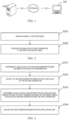
- FIG. 1 shows a schematic diagram of an application scenario provided by the embodiments of the present disclosure.
- the application scenario shown in Fig. 1 is a image processing scenario.
- the devices involved in the image processing scenario comprise a terminal 101 and a server 102, and the terminal 101 communicates with the server 102, for example, via a network.
- the server 102 is used for training a deep learning model and deploying the trained deep learning model to the terminal 101.
- the terminal 101 performs image processing with the deep learning model.
- the deep learning model is Generative Adversarial Networks (GANs).
- GANs Generative Adversarial Networks
- the server 102 deploys the trained generators in the generative adversarial network to the terminal.
- the terminal 101 is a lightweight device (e.g., a camera, a cell phone, a smart home appliance) with a weak computing capability, which is suitable for deploying deep learning models of a smaller scale. Therefore, how to obtain a smaller scale generator adapted to be deployed on lightweight devices and improve the image processing effect of the smaller scale generator is one of the problems to be solved at present.
- a lightweight device e.g., a camera, a cell phone, a smart home appliance
- Model compression is one of the ways to train deep learning models of a small model scale.
- current model compression approaches for generative adversarial networks still suffer from the following shortcomings:
- the embodiments of the present disclosure provide a method for data processing.
- a model compression approach suitable for generative adversarial networks is designed, in which one-step compression of generative adversarial networks is implemented by model distillation, which reduces the complexity of model compression and improves the efficiency of model compression.
- model distillation by the on-line distillation approach in which the generators of a small scale and the generators of a large scale are alternately trained, the training effect of the generators of the small scale is improved.
- the generators of a small scale is obtained that can be adapted to lightweight devices with a better quality of the processed images.
- the method for data processing provided by the embodiments of the present disclosure can be applied in terminals or servers.
- a terminal device real-time processing of images captured by the terminal can be realized.
- the processing of images sent by the terminal can be realized.
- the terminal device may be a personal digital assistant (PDA) device, a handheld device with a wireless communication function (e.g., a smartphone, a tablet, etc.), a computing device (e.g., a personal computer (PC)), a vehicle-mounted device, a wearable device (e.g., a smart watch, a smart band, etc.), and smart home appliances (e.g., a smart display device, etc.).
- PDA personal digital assistant
- a handheld device with a wireless communication function e.g., a smartphone, a tablet, etc.
- a computing device e.g., a personal computer (PC)
- a vehicle-mounted device e.g., a wearable device (e.g., a smart watch,
- Fig. 2 shows a flowchart of a method for data processing provided by the embodiments of the present disclosure.
- the image to be processed may be an image captured by the terminal in real time, or one or more frames obtained from a video captured by the terminal in real time.
- the image to be processed may be an image input or selected by a user.
- the user inputs or selects the image to be processed or detected on a display interface of the terminal.
- the server receives the image transmitted from the terminal that is input or selected by the user.
- the image to be processed may be an image played in real time on the terminal.
- the terminal obtains an image or a video frame that is being played.
- processing of the image played in real time on the terminal is implemented.
- the image to be processed may be an image in a database that is pre-stored in the terminal and/or the server.
- a database storing a plurality of images to be processed is pre-established in the terminal, and the image to be processed is obtained from the database when image processing is performed.
- the generative adversarial network comprises the first generator, a second generator and a discriminator.
- a model scale of the first generator is smaller than a model scale of the second generator.
- the second generator has a stronger image processing capability, and thus can extract more detailed features of the image, and process to obtain a higher quality image, and the image processing process requires more computing resources.
- the generative adversarial network is trained by utilizing the model distillation approach.
- the first generator and the second generator are alternately trained. That is, the first generator and the second generator are distilled online in order to use the optimized second generator to guide the optimization of the first generator, so that the first generator, which has a smaller model scale than the second generator, can approximate the second generator in terms of the quality of image processing.
- the training process of the generative adversarial network may be performed on the server. Considering that the computing capability of the terminal is weak, the first generator with a smaller model scale that is obtained by model distillation may be deployed at the terminal.
- the image to be processed is directly input into the first generator, or the image to be processed is processed by preprocessing operations, such as, clipping, denoising, enhancement, and so on, then input into the first generator to obtain the processed image outputted by the first generator.
- preprocessing operations such as, clipping, denoising, enhancement, and so on
- model compression of the generative adversarial network is implemented by means of online distillation of the first generator and the second generator, which improves the efficiency and effect of model compression, and obtains the first generator with a smaller model scale and higher quality of image processing, which is particularly suitable for deployment on lightweight devices for image processing, and improves the efficiency and quality of image processing on the lightweight devices.
- the training process of the generative adversarial network is performed separately from the process of applying the generative adversarial network to image processing, e.g., after the generative adversarial network is trained on the server, the trained student generator is deployed on the terminal, and image processing is performed with the student generator. Each time the server updates the generative adversarial network, the student generator may be redeployed on the terminal.
- Fig. 3 shows a first flow diagram of a training process of a generative adversarial network in the method for data processing provided by the embodiments of the present disclosure, i.e., a flow diagram of an alternately training process of the first generator and the second generator in the generative adversarial network.
- the alternately training process of the first generator and the second generator in the generative adversarial network comprises: S301: determining a loss value of the second generator based on sample data and the discriminator.
- the sample data comprises a sample image and a reference image corresponding to the sample image.
- the sample data comprises the sample image and the true depth map of the sample image;
- the sample image comprises the sample image and the true face marked image of the sample image. For example, a position of each face may be manually marked in the face marked image.
- the sample image is processed with the second generator to obtain a processed sample image output by the second generator, which is referred to as the output image of the second generator hereinafter for brevity of description.
- the true or false discrimination is performed between the reference image corresponding to the sample image and the output image of the second generator by the discriminator to determine an adversarial loss of the second generator.
- the second generator makes its own output image approximate the reference image corresponding to the sample image, and the discriminator tries to distinguish between the output image of the second generator and the reference image corresponding to the sample image, and the adversarial loss of the second generator reflects a loss value of the true or false discrimination between the reference image corresponding to the sample image and the output image of the second generator by the discriminator.
- the reference image corresponding to the sample image is input into the discriminator, and the output image of the second generator is input into the discriminator.
- the discriminator determines whether the reference image corresponding to the sample image and the output image of the second generator are from the sample data, respectively.
- an adversarial loss of a teacher generator is calculated based on the output of the discriminator when the reference image corresponding to the sample image is input into the discriminator, the output of the discriminator when the output image of the second generator is input into the discriminator, and a adversarial loss function.
- the output of the discriminator is 1 indicating that the input data of the discriminator is from the sample data
- the output of the discriminator is 0 indicating that the input data of the discriminator is not from the sample data
- the expectation outputted by the discriminator when the reference image corresponding to the sample image is input into the discriminator is determined
- the expectation of a difference obtained by subtracting the output of the second generator when the output image of the second generator is input into the discriminator from 1 is determined, and the two expectations are summed to obtain the adversarial loss of the second generator.
- L GAN (G T , D) denotes the adversarial loss function
- G T denotes the second generator
- D denotes the discriminator
- x denotes the sample image
- y denotes the reference image corresponding to the sample image
- G T (x) denotes the output image of the second generator after the sample image x is input into the second generator
- E ⁇ x,y ⁇ [ ] denotes the expectation function under the sample data ⁇ x,y ⁇
- E ⁇ x ⁇ [ ] denotes the expectation function under the sample data x.
- the loss value of the second generator is determined to be the adversarial loss of the second generator. That is, the adversarial loss obtained from the above calculation is directly used as the loss value of the second generator.
- the loss value of the second generator comprises a reconstruction loss of the second generator.
- S301 comprises: processing the sample image with the second generator to obtain an output image of the second generator; performing, with the discriminator, a true or false discrimination between the reference image corresponding to the sample image and the output image of the second generator to determine an adversarial loss of the second generator; and determining the loss value of the second generator based on a difference between the reference image corresponding to the sample image and the output image of the second generator.
- both the adversarial loss determined from the image discrimination by the discriminator and the reconstruction loss that reflects the difference between the reference image corresponding to the sample image and the output image of the second generator are taken into account, which improves the comprehensiveness and accuracy of the loss value of the second generator, and thereby improving the training effect of the second generator.
- the difference between the reference image corresponding to the sample image and the output image of the second generator is determined, and based on the difference, the reconstruction loss of the second generator is calculated.
- L recon G T ,D E x ,y y ⁇ G T x
- L recon (G T , D) denotes the reconstruction loss function of the second generator
- y - G T (x) denotes the difference between the reference image corresponding to the sample image and the output image of the second generator.
- the second generator may be adjusted based on an optimization objective function to complete a training of the second generator.
- the optimization objective function for example, is a function that maximizes the loss value or a function that minimizes the loss value
- an optimization algorithm utilized in the adjustment process of the second generator for example, is a gradient descent algorithm. There is no limitation on the optimization algorithm herein.
- the optimization objective function comprises maximizing the adversarial loss on the basis of the discriminator and minimizing that adversarial loss on the basis of the teacher generator.
- the optimization objective function comprises minimizing the reconstruction loss on the basis of the second generator, i.e., to minimize the reconstruction loss by adjusting the second generator, which causes the output image of the second generator to approximate the reference image corresponding to the sample image, and improves the image quality of the output image of the second generator.
- the sample image is processed with the adjusted second generator, and the sample image is processed with the first generator. Since the model scale of the second generator is larger than the model scale of the first generator, there are differences between the data obtained by processing the sample image with the adjusted second generator and the data obtained by processing the sample image with the first generator. The distillation loss between the adjusted second generator and the first generator is determined based on these differences.
- Embodiments of the distillation loss and a process for determining the distillation loss are provided below.
- the distillation loss between the adjusted second generator and the first generator comprises an output distillation loss between the adjusted second generator and the first generator.
- the network layer comprises an input layer, an intermediate layer, and an output layer.
- the output distillation loss is a distillation loss between the output layer of the second generator and the output layer of the first generator, which reflects the difference between the output image of the second generator and the output image of the first generator.
- a possible implementation of S303 comprises: processing the sample image with the first generator and the adjusted second generator respectively, to obtain an output image of the first generator and an output image of the second generator; determining the output distillation loss based on the difference between the output image of the first generator and the output image of the second generator.
- the difference between the output image of the first generator and the output image of the second generator may be obtained by comparing the output image of the first generator with the output image of the second generator. For example, individual pixels in the output image of the first generator are compared with pixels at corresponding positions in the output image of the second generator; for another example, the output image of the first generator is compared with the output image of the second generator in terms of image brightness, contrast, and the like.
- the optimization of the first generator is guided by the output distillation loss reflecting the difference between the output image of the first generator and the output image of the second generator, and with the optimization of the first generator, the output image of the first generator is gradually approximated to the output image of the adjusted second generator, which facilitates the improvement of the image quality of the image processed by the first generator.
- the output distillation loss comprises a structural similarity loss and/or a perceptual loss between the output image of the first generator and the output image of the second generator.
- the structural similarity loss is similar to the observation of images by a Human Visual System (HVS), which focuses on a local structural difference between the output image of the first generator and the output image of the second generator, including the differences in terms of image brightness, contrast, etc.
- HVS Human Visual System
- the perceptual loss focuses on a difference between the output image of the first generator and the output image of the second generator in terms of feature representation.
- the structural similarity loss between the output image of the second generator and the output image of the first generator may be determined based on a brightness and contrast of the output image of the second generator and a brightness and contrast of the output image of the first generator.
- the structural similarity loss is obtained by comparing the differences between the output image of the second generator and the output image of the first generator in terms of image brightness and contrast respectively; and/or the perceptual loss between the output image of the first generator and the output image of the second generator is determined by performing feature extraction on the output image of the first generator and the output image of the second generator with a feature extraction network, respectively.
- the perceptual loss is obtained by comparing the features extracted from the output image of the first generator with the features extracted from the output image of the second generator.
- the output distillation loss is determined based on the structural similarity loss and/or the perceptual loss. For example, the output distillation loss is determined to be the structural similarity loss, or the output distillation loss is determined to be the perceptual loss, or the output distillation loss is obtained by determining a weighted sum of the structural similarity loss and the perceptual loss.
- the differences between the output image of the first generator and the output image of the second generator are determined from the structural similarity loss and/or the perceptual loss in terms of one or more aspects, such as, human vision, feature representation and the like, which improves the comprehensiveness and accuracy of the output distillation loss, and improves the training effect of the first generator.
- the process of determining the structural similarity loss comprises: determining a brightness estimate of the output image of the second generator, a brightness estimate of the output image of the first generator, a contrast estimate of the output image of the second generator, a contrast estimate of the output image of the first generator, and a structural similarity estimate between the output image of the second generator and the output image of the first generator; determining the structural similarity loss between the output image of the first generator and the output image of the second generator based on these parameters.
- a pixel mean and a pixel standard deviation of the output image of the second generator are calculated, a pixel mean and a pixel standard deviation of the output image of the first generator are calculated, and a covariance between the pixels of the output image of the second generator and the pixels of the output image of the first generator is calculated.
- the brightness estimate and the contrast estimate of its output image are determined as the pixel mean and the pixel standard deviation of its output image, respectively.
- the brightness estimate and the contrast estimate of its output image are determined as the pixel mean and the pixel standard deviation of its output image, respectively.
- a structural similarity estimate between the output image of the second generator and the output image of the first generator is determined as the covariance between the pixels of the output image of the second generator and the pixels of the output image of the first generator.
- L SSIM p t ,p s 2 ⁇ t ⁇ s C 1 2 ⁇ ts + C 2 ⁇ t 2 ⁇ s 2 + C 1 ⁇ t 2 + ⁇ s 2 + C 2
- L SSIM (p t , p s ) denotes the structural similarity loss function
- p t and p s denote the output image of the second generator and the output image of the first generator respectively
- ⁇ t and ⁇ s denote the brightness estimate of the output image of the second generator and the brightness estimate of the output image of the first generator respectively
- ⁇ t 2 and ⁇ s 2 denote the contrast estimate of the output image of the second generator and the contrast estimate of the output image of the first generator respectively
- ⁇ ts denote the structural similarity estimate between the output image of the second generator and the output image of the first generator.
- the process of determining the perceptual loss comprises: inputting the output image of the first generator and the output image of the second generator into the feature extraction network respectively, to obtain a feature of the output image of the first generator and a feature of the output image of the second generator output by a predetermined network layer of the feature extraction network; and determining a feature reconstruction loss and/or a style reconstruction loss based on a difference between the feature of the output image of the first generator and the feature of the output image of the second generator.
- the perceptual loss comprises the feature reconstruction loss and/or the style reconstruction loss.
- the feature reconstruction loss is used to reflect the difference between a relatively underlying (or relatively concrete) feature representation of the output image of the first generator and a relatively underlying feature representation the output image of the second generator, for encouraging the output image of the first generator and the output image of the second generator to have similar feature representations;
- the style reconstruction loss is used to reflect the difference between a relatively abstract style feature (e.g., color, texture, pattern) of the output image of the first generator and a relatively abstract style feature of the output image of the second generator, for encouraging the output image of the first and the output image of the second generator to have similar style features.
- different abstract levels of features are extracted based on different network layers of the same feature extraction network: obtaining the feature of the output image of the first generator and the feature of the output image of the second generator extracted by a network layer for extracting an underlying feature, determining the feature reconstruction loss based on a difference between the feature of the output image of the first generator and the feature of the output image of the second generator; obtaining the feature of the output image of the first generator and the feature of the output image of the second generator extracted by a network layer for extracting an abstract feature; determining a style reconstruction loss based on a difference between the feature of the output image of the first generator and the feature of the output image of the second generator.
- the extraction of image features may be implemented with different feature extraction networks, wherein one feature extraction network is skilled in extracting underlying feature representations and the other feature extraction network is skilled in extracting abstract style features. Based on the features of the output image of the first generator and the features of the second generator extracted by the different feature extraction networks, the feature reconstruction loss and the style reconstruction loss are determined, respectively.
- the feature extraction network is a Visual Geometry Group (VGG) network.
- VGG Visual Geometry Group
- the VGG network is a deep convolutional neural network that may be used to extract the features of the output image of the first generator and the features of the second generator.
- features with different abstraction levels in the output image of the first generator and the output image of the second generator may be obtained from different network layers of the same VGG network or from different network layers of different VGG networks.
- L fea (p t ,p s ) denotes the feature loss function for calculating the feature reconstruction loss between the output image of the second generator and the output image p s of the first generator
- ⁇ j (p t ) denotes a feature activation value (i.e., feature) of the output image of the second generator extracted by the j-th layer of the VGG network ⁇
- ⁇ j (p s ) denotes a feature activation value of the output image of the first generator extracted by the j-th layer of the VGG network ⁇
- C j ⁇ H j ⁇ W j denotes the dimensionality of the feature activation value outputted from the j-th layer of the VGG network
- L style (p t , p s ) denotes the style loss function for calculating the style reconstruction loss between the output image of the second generator and the output image p s of the first generator
- G j ⁇ p t denotes a Gram matrix of a feature activation value of the output image of the second generator extracted by the j-th layer of the VGG network
- G j ⁇ p s denotes a Gram matrix of a feature activation value of the output image of the first generator extracted by the j-th layer of the VGG network ⁇ .
- the distillation loss is back-propagated, and the model parameters of the first generator are adjusted during the back-propagation process so that the learning generator is optimized in the direction of minimizing the distillation loss.
- the distillation loss comprises the output distillation loss.
- the output distillation loss is back-propagated, and the model parameters of the first generator are adjusted during the back-propagation process so that the learning generator is optimized in the direction of minimizing the output distillation loss.
- the concept of the output distillation loss and the process of determining the output distillation loss may refer to the description of the steps previously described, and thus will not be repeated herein.
- the online loss of the first generator with respect to the second generator further comprises a total variation loss of the output image of the first generator.
- the total variation loss of the output image of the first generator is used to reflect a spatial smoothness of the output image of the first generator, and by optimizing the first generator with the total variation loss, the spatial smoothness of the output image of the first generator can be enhanced and the image quality can be improved.
- a possible implementation of S304 comprises: determining a weighted sum of the distillation loss and the total variation loss to obtain an online loss of the first generator; and adjusting the first generator based on the online loss of the first generator.
- the weights corresponding to the distillation loss and the total variation loss respectively may be determined by a professional based on experience and an experimental process.
- the distillation loss comprises the output distillation loss
- the output distillation loss comprises a structural similarity loss and a perceptual loss between the output image of the first generator and the output image of the second generator
- the perceptual loss comprises the feature reconstruction loss and the style reconstruction loss between the output image of the first generator and the output image of the second generator
- L kd (p t , p s ) denotes the loss function of the first generator
- ⁇ ssim , ⁇ fea , ⁇ style , ⁇ tv denote a weight corresponding to the structural similarity loss L ssim
- the second generator and the first generator are distilled online, i.e., the second generator and the first generator are trained synchronously.
- the first generator is optimized with only the adjusted second generator in the current training count.
- the first generator is implemented to be trained in an environment with a discriminator, and at the same time, the first generator does not need to be tightly bound to the discriminator, so that the first generator can be trained more flexibly and obtain further compression; on the other hand, the optimization of the first generator does not need true labels, and the first generator only learns the outputs of the second generator that has a similar structure and a larger model scale, which effectively reduces the difficulty of the first generator to fit true labels.
- the first generator is a student generator
- the second generator is a teacher generator.
- the student generator and the teacher generator have a similar model structure, the model scale and complexity of the teacher generator are larger than the model scale and complexity of the student generator, and compared to the student generator, the teacher generator has a stronger learning capability and is able to better guide the training of the student generator during the distillation process.
- the teacher generator comprises a first teacher generator and a second teacher generator, wherein a model capacity of the first teacher generator is larger than a model capacity of the student generator, and a model depth of the second teacher generator is greater than a model depth of the student generator.
- two different teacher generators are provided for the student generator from two complementary dimensions, which can provide a complementary full range of distillation loss for the student generator model during the model distillation process as follows: the first teacher generator compensates the student generator in terms of model capacity (i.e., the model width, also referred to as the number of channels of the model) to capture more detailed image information that the student generator cannot capture; the second model generator compensates the student generator in terms of the model depth to achieve better image quality.
- the student generator is similar to the first teacher generator and the second teacher generator in terms of the overall model structure, which consists of a deep learning model that includes multiple network layers.
- the number of channels of the intermediate layer of the first teacher generator is a multiple of the number of channels of the intermediate layer of the student generator, wherein the multiple is greater than 1.
- the relationship between the first teacher generator and the student generator is succinctly established by the multiplicative relationship, which facilitates the calculation of the channel distillation loss in subsequent embodiments.
- the number of the network layers of the second teacher generator is more than the number of network layers of the student generator.
- one or more network layers are added before each up-sampled network layer and each down-sampled network layer of the student generator to obtain the second teacher generator.
- a Deep residual network (Resnet) is added before each up-sampled network layer and each down-sampled network layer of the student generator to obtain the second teacher generator.
- Resnet Deep residual network
- the loss value of the first teacher generator may be determined based on the sample data and the discriminator, the sample data comprising a sample image and a reference image of the sample image; the first teacher generator is adjusted based on the loss value of the first teacher generator; the loss value of the second teacher generator is determined based on the sample data and the discriminator; the second teacher generator is adjusted based on the loss value of the second teacher generator; the student generator is adjusted based on the sample image, the adjusted first teacher generator, and the adjusted second teacher generator.
- the adjustment of the first teacher generator and the adjustment of the second teacher generator may refer to the adjustment of the second generator in the preceding embodiments.
- it needs to determine the distillation loss between the first teacher generator and the student generator and the distillation loss between the second teacher generator and the student generator, and the student generator is adjusted based on the distillation loss between the first teacher generator and the student generator and the distillation loss between the second teacher generator and the student generator.
- the process of determining the distillation loss between the first teacher generator and the student generator, and the process of determining the distillation loss between the second teacher generator and the student generator may refer to the process of determining the distillation loss between the second generator and the first generator in the preceding embodiments, and will not be repeated herein.
- the discriminator comprises a first discriminator and a second discriminator, and a shared convolutional layer is between the first discriminator and the second discriminator.
- the first teacher generator utilizes the first discriminator
- the second teacher generator utilizes the second discriminator.
- FIG. 4 shows a second flow diagram of a training process of a generative adversarial network in the method for data processing provided by the embodiments of the present disclosure, i.e., a flow diagram of an alternately training process of the student generator, the first teacher generator and the second teacher generator in the generative adversarial network.
- the alternately training process of the student generator, the first teacher generator and the second teacher generator in the generative adversarial network comprises: S401. determining a loss value of the first teacher generator based on sample data and the first discriminator.
- S401 may refer to the description of determining the loss value of the second generator based on the sample image and the discriminator in the preceding embodiments, and will not be repeated herein.
- the loss value of the first teacher generator comprises an adversarial loss of the first teacher generator.
- L GAN W G T W D1 denotes the adversarial loss function of the first teacher generator
- G T W denotes the first teacher generator
- G T W x denotes the output image of the first teacher generator after the sample image x is input into the first teacher generator
- D 1 denotes the first discriminator.
- the loss value of the first teacher generator further comprises the reconstruction loss of the first teacher generator.
- S402 may refer to the description of adjusting the second generator based on the loss value of the second generator in the preceding embodiments, and will not be repeated herein.
- S403 may refer to the description of determining the loss value of the second generator based on the sample image and the discriminator in the preceding embodiments, and will not be repeated herein.
- the loss value of the second teacher generator comprises the adversarial loss of the second teacher generator.
- L GAN D G T D , D 2 denotes the adversarial loss function of the second teacher generator
- G T D denotes the first teacher generator
- G T D x denotes the output image of the second teacher generator after the sample image x is input into the second teacher generator
- D2 denotes the second discriminator.
- S404 may refer to the description of adjusting the second generator based on the loss value of the second generator in the preceding embodiments, and will not be repeated herein.
- the sample image is processed with the adjusted first teacher generator, the adjusted second teacher generator, and the student generator, respectively.
- the model capacity of the first teacher generator is larger than the model capacity of the student generator
- the model depth of the second teacher generator is larger than the model depth of the student generator.
- the distillation loss between the first teacher generator and the student generator comprises the output distillation loss between the first teacher generator and the student generator, i.e., a distillation loss between an output layer of the first teacher generator and an output layer of the student generator.
- the output distillation loss may comprise the structural similarity loss and/or the perceptual loss between the output image of the first teacher generator and the output image of the student generator.
- the perceptual loss may comprise the feature reconstruction loss and/or the style reconstruction loss between the output image of the first teacher generator and the output image of the student generator.
- the distillation loss between the second teacher generator and the student generator comprises the output distillation loss between the second teacher generator and the student generator, i.e., a distillation loss between an output layer of the second teacher generator and an output layer of the student generator.
- the output distillation loss may comprise the structural similarity loss and/or the perceptual loss between the output image of the second teacher generator and the output image of the student generator.
- the perceptual loss may comprise the feature reconstruction loss and/or the style reconstruction loss between the output image of the second teacher generator and the output image of the student generator.
- the relevant contents of the distillation loss between the first teacher generator, the second teacher generator and the student generator, respectively, may refer to the detailed description of the distillation loss between the second generator and the first generator in the preceding embodiments, and will not be repeated herein.
- the model depth of the first teacher generator is the same as the model depth of the student generator, and compared to the student generator, the model capacity of the first teacher generator is larger, that is, the number of channels in the convolutional layer is larger, and thus can capture details that the student generator cannot capture.
- the distillation loss between the teacher generator and the student generator only comprises the output distillation loss, i.e., only the information of the output layer of the teacher generator is distilled during the model distillation process, or only the difference between the output image of the teacher generator and the output image of the student generator is taken into account, while the information of the intermediate layer of the teacher generator is not taken into account.
- the information of the intermediate layer of the first teacher generator i.e., the information of the channel granularity, can be utilized as one of supervisory signals of the optimization process of the student generator, which further improves the training effect of the student generator.
- the distillation loss between the first teacher generator and the student generator comprises an output distillation loss and a channel distillation loss between the first teacher generator and the student generator, wherein the channel distillation loss is a distillation loss between an intermediate layer of the first teacher generator and an intermediate layer of the student generator, and reflects a difference between a feature of the sample image extracted by the intermediate layer of the first teacher generator and a feature of the sample image extracted by the intermediate layer of the student generator.
- the output distillation loss and the channel distillation loss as the supervisory information optimized by the student generator, multi-granularity model distillation can be realized and the model distillation effect can be improved.
- a possible implementation of S405 comprises: processing the sample image with the student generator, the adjusted first teacher generator, and the adjusted second teacher generator, respectively, to obtain the output image of the student generator and the output image of the first teacher generator, determining a first output distillation loss, the first output distillation loss being a distillation loss between the output layer of the first teacher generator and the output layer of the student generator; determining the channel distillation loss based on the feature map output by the intermediate layer of the student generator and the feature map output by the intermediate layer of the first teacher generator; determining the second output distillation loss based on the output image of the student generator and the output image of the second teacher generator, the second output distillation loss being the distillation loss between the output layer of the second teacher generator and the output layer of the student generator; and adjusting the student generator based on the first output distillation loss, the channel distillation loss, and the second output distillation loss.
- the feature map output by the intermediate layer of the student generator refers to the features of the sample image extracted by the intermediate layer of the student generator, comprising the feature mapping value output by each channel in the intermediate layer of the student generator.
- the feature map output by the intermediate layer of the first teacher generator refers to the features of the sample image extracted by the intermediate layer of the first teacher generator, comprising the feature mapping value output by each channel in the intermediate layer of the first teacher generator.
- the model depth of the student generator is the same as the model depth of the first teacher generator, for each of the intermediate layers, a difference between the feature map output by the intermediate layer of the student generator and the feature map output by the intermediate layer of the first teacher generator is determined. Based on the difference, the channel distillation loss is determined. After obtaining the first output distillation loss, the channel distillation loss, and the second output distillation loss, the student generator is adjusted based on the first output distillation loss, the channel distillation loss, and the second output distillation loss.
- the intermediate layer of the first teacher generator and the intermediate layer of the student generator are connected with a channel convolution layer, the channel convolution layer is used for establishing a mapping between a channel in the intermediate layer of the first teacher generator and a channel in the intermediate layer of the student generator.
- the channel convolution layer for each channel of the intermediate layer of the student generator, there exists a corresponding channel in the channels of the intermediate layer of the first teacher generator, and without changing the number of channels of the intermediate layer of the student generator, the extension of the number of channels of the intermediate layer of the student generator is realized via the channel convolution layer in the process of determining the channel distillation loss.
- a possible implementation of determining the channel distillation loss based on the feature map output by the intermediate layer of the student generator and the feature map output by the intermediate layer of the first teacher generator comprises: determining an attention weight of each channel in the intermediate layer of the student generator based on a feature map output by the channel in the intermediate layer of the student generator; determining an attention weight of each channel in the intermediate layer of the first teacher generator based on a feature map output by the channel in the intermediate layer of the first teacher generator; and determining, in the intermediate layer of the student generator and the intermediate layer of the first teacher generator, the channel distillation loss based on a difference between attention weights of channels mapped to each other.
- the attention weight of a channel is used to measure the importance of the channel.
- the attention weight of the channel may be calculated based on the pixels on the feature map output by the channel, e.g., a sum or average of all the pixels on the feature map output by the channel is determined to be the attention weight of the channel.
- the attention weight of the channel may be calculated based on the pixels on the feature map output by the channel.
- channels that map to each other are determined, the attention weights of the channels that map to each other are compared, and a difference between the attention weights of the channels that map to each other is determined, and thus the channel distillation loss is determined.
- the channel convolution layer is a 1*1 learnable convolution layer
- the channels of the intermediate layer of the student generator are mapped to the channels of a corresponding intermediate layer of the first teacher generator through the 1 * 1 learnable convolution layer, such that the number of channels of the intermediate layer of the student generator is dimension raised to the same number of channels of the corresponding intermediate layer of the student generator.
- the attention weight of the channel may be calculated based on each pixel on the feature map output by the channel and a size of the feature map output by the channel.
- each row of pixels on the feature map output by the channel may be summed to obtain a sum of pixels corresponding to each row; the sum of pixels corresponding to each row may be summed to obtain a total sum of pixels corresponding to the feature map; and the total sum of the pixels is averaged based on the size of the feature map to obtain an attention weight of the channel.
- w c denotes the attention weight of channel c
- H denotes a height of the feature map output by the channel C
- W denotes a width of the feature map output by the channel C
- u c (i, j) denotes the pixel at the position (i, j) on the feature map.
- the process of determining the attention weight of the channel in the intermediate layer of the first teacher generator may refer to in the relevant description of the student generator, and thus will not be repeated herein.
- a difference between the attention weights of each pair of channels mapped to each other is determined, and a channel distillation loss is determined based on the difference between the attention weights of the pair of channels mapped to each other, the number of samples of the feature maps in the intermediate layer of the student generator and in the intermediate layer of the first teacher generator, and the number of channels mapped by the feature maps. Accordingly, not only the attentional weights of each pair of channels mapped to each other, but also the number of channels in the intermediate layer and the number of feature maps sampled in the intermediate layers are considered, which improves the accuracy of the channel distillation loss.
- L cd G T W G S denotes the channel distillation loss function
- n denotes the number of samples of the feature map
- c denotes the number of channels mapped by the feature map
- w t w ij denotes the attention weight of the j-th channel mapped by the i-th feature map in the first teacher generator.
- the channel distillation loss is weighted based on a channel loss weighting factor, and a weighted result is obtained.
- the student generator is adjusted based on the weighted result, the first output distillation loss, and the second output distillation loss.
- an online loss of the student generator with respect to the first teacher generator, and an online loss of the student generator with respect to the second teacher generator may be determined based on the first output distillation loss and the second output distillation loss, respectively.
- a weighted sum of the online loss of the first teacher generator, the online loss of the student generator with respect to the second teacher generator, and the weighted results of the channel distillation loss with the channel loss weighting factor is determined in order to balance these loss values in a weighted manner to obtain a final loss value for the multi-granularity online distillation of the student generator. Based on this final loss value, the model parameters of the student generator are adjusted to achieve the optimization of the student generator.
- the online loss of the student generator with respect to the first teacher generator comprises: an output distillation loss between the student generator and the first teacher generator.
- the online loss of the student generator with respect to the first teacher generator comprises: an output distillation loss between the student generator and the first teacher generator and a total variance loss of the output image of the student generator.
- the online loss of the student generator with respect to the second teacher generator comprises: an output distillation loss between the student generator and the second teacher generator.
- the online loss of the student generator with respect to the second teacher generator comprises: an output distillation loss between the student generator and the second teacher generator and a total variance loss of the output image of the student generator. Details may refer to the online loss of the student generator with respect to the teacher generator in the preceding embodiments, and thus will not repeated herein.
- L G T W , G T D , G S denotes the objective loss function
- ⁇ CD denotes the channel loss weighting factor.
- L kd p t w , p s denotes the online loss function of the student generator with the first teacher generator
- L kd p t d , p s denotes the online loss function of the student generator with the second teacher generator.
- the generative adversarial network comprises two teacher generators, a student generator G S and two discriminators which are partially shared.
- the two teacher generators comprise a wider teacher generator G T W and a deeper teacher generator G T D , and the two discriminators share multiple convolutional layers in front of them.
- the number of channels in the intermediate layer of the wider teacher generator is ⁇ ⁇ c 1 , ⁇ ⁇ c 2 , ... , ⁇ ⁇ c k-1 , ⁇ ⁇ c k
- the number of channels in the intermediate layer of the student generator is c 1 , c 2 , ising, c k-1 , c k .
- the teacher generator is the first teacher generator in the above-mentioned embodiments; compared to the student generator, the deeper teacher generator is equivalent to inserting a plurality of Resnet modules before and after a sampling layer of the student generator, and the depth of the model is greater than the depth of the model of the student generator.
- the teacher generator is the second teacher generator in the above-mentioned embodiments.
- the intermediate layer of the wider teacher generator and the intermediate layer of the student generator are connected with a channel convolution layer (not shown in Fig. 5 ).
- the channel convolution layer is used to establish a mapping between the channels in the intermediate layer of the wider teacher generator and the channels in the intermediate layer of the student generator to facilitate the computation of the channel distillation loss between the wider teacher generator and the student generator.
- the sample image (the outline of the high heeled shoe in Fig. 5 ) is input into the wider teacher generator, the student generator, and the deeper teacher generator, respectively.
- the GAN loss of the wider teacher generator is determined based on the partially shared discriminator, the output image of the wider teacher generator, and the true label (i.e., the reference image in the above-mentioned embodiments), that is, the adversarial loss of the first teacher generator in the above-mentioned embodiments, which is used to adjust the wider teacher generator.
- the GAN loss of the deeper teacher generator is determined based on the partially shared discriminator, the output image of the deeper teacher generator, and the true label, that is, the adversarial loss of the second teacher generator in the above-mentioned embodiments, which is used to adjust the deeper teacher generator.
- the channel distillation loss is calculated.
- the output distillation loss between the wider teacher generator and the student generator and the output distillation loss between the deeper teacher generator and the student generator are calculated, respectively.
- the channel distillation loss and these two types of output distillation losses are used to adjust the student generator.
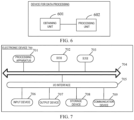
- Fig. 6 shows a structural block diagram of a device for data processing provided by the embodiments of the present disclosure, which corresponds to the method for data processing described in the above embodiments. For ease of description, only the parts related to the embodiments of the present disclosure are illustrated.
- the device for data processing comprises: an obtaining module 601 and a processing module 602.
- the obtaining module 601 is configured for obtaining an image to be processed;
- the processing module 602 is configured for processing the image with a first generator to obtain a processed image.
- the device for data processing is adapted to a generative adversarial network obtained by model distillation, and the generative adversarial network comprises the first generator, a second generator and a discriminator.
- the model distillation is a process of alternately training the first generator and the second generator, and a model scale of the first generator is smaller than a model scale of the second generator.
- a process of alternately training the first generator and the second generator in the generative adversarial network comprises:
- determining the loss value of the second generator based on the sample data and the discriminator comprises:
- a network layer comprises an input layer, an intermediate layer and an output layer, and determining the distillation loss between the adjusted second generator and the first generator based on the sample image, the adjusted second generator and the first generator comprises:
- determining the output distillation loss based on the difference between the output image of the first generator and the output image of the second generator comprises:
- the perceptual loss comprises a feature reconstruction loss and/or a style reconstruction loss
- determining the perceptual loss between the output image of the first generator and the output image of the second generator by performing feature extraction on the first generator and the output image of the second generator with the feature extraction network respectively comprises:
- adjusting the first generator based on the distillation loss comprises:
- adjusting the first generator based on the distillation loss and the total variation loss comprises:
- the first generator is a student generator
- the second generator is a teacher generator
- the teacher generator comprises a first teacher generator and a second teacher generator, a model capacity of the first teacher generator is greater than a model capacity of the student generator, and a model depth of the second teacher generator is greater than a model depth of the student generator.
- the discriminator comprises a first discriminator and a second discriminator
- a convolutional layer is shared between the first discriminator and the second discriminator
- a process of alternately training the first generator and the second generator in the generative adversarial network comprises:
- a network layer comprises an input layer, an intermediate layer and an output layer, and adjusting the student generator based on the sample image, the adjusted first teacher generator, and the adjusted second teacher generator comprises:
- the intermediate layer of the first teacher generator and the intermediate layer of the student generator are connected with a channel convolution layer
- the channel convolution layer is used for establishing a mapping between a channel in the intermediate layer of the first teacher generator and a channel in the intermediate layer of the student generator, and determining the channel distillation loss based on the feature map output by the intermediate layer of the student generator and the feature map output by the intermediate layer of the first teacher generator comprises:
- adjusting the student generator based on the first output distillation loss, the channel distillation loss, and the second output distillation loss comprises:
- the device provided in this embodiment may be used to carry out the technical solution of the above method embodiment, and its implementation principle and technical effect are similar, and thus this embodiment will not be repeated herein.
- the electronic device 700 may be a terminal device or a server.
- the terminal device may include, but are not limited to, a mobile terminal, such as, a mobile phone, a laptop, a digital broadcasting receiver, a Personal Digital Assistant (PDA), a Portable Android Device (PAD), a Portable Media Player (PMP), vehicle terminals (e.g., vehicle-mounted navigation terminal), as well as a fixed terminal, such as, a digital TV, a desktop computer, etc.
- PDA Personal Digital Assistant
- PAD Portable Android Device
- PMP Portable Media Player
- vehicle terminals e.g., vehicle-mounted navigation terminal
- a fixed terminal such as, a digital TV, a desktop computer, etc.
- the electronic device shown in Fig. 7 is only an example and should not limit to the function and scope of usage of the embodiments of the present disclosure.
- the electronic device 700 may include a processing apparatus (e.g., a central processing unit, a graphics processing unit, etc.) 701, which may perform various appropriate actions and processing according to a program stored in a read-only memory (ROM) 702 or loaded from a storage device 708 into a random access memory (RAM) 703.
- the RAM 703 also stores various programs and data required for the operations of the electronic device 700.
- the processing apparatus 701, the ROM 702, and the RAM 703 are connected to each other through the bus 704.
- An Input/Output (I/O) interface 705 is also connected to the bus 704.
- the following apparatuses may be connected to the I/O interface 705: an input device 706, including, for example, touch screen, touch pad, keyboard, mice, camera, microphone, accelerometer, gyroscope, etc.; an output device 707, including, for example, liquid crystal display (LCD), speaker, a vibrator, etc.; a storage device 708, including, for example, magnetic tape, hard disk, etc.; and a communication device 709.
- the communication device 709 may allow the electronic device 700 to perform wireless or wired communication with other devices to exchange data.
- Fig. 7 illustrates the electronic device 700 with various apparatuses, it should be understood that it is not required to implement or have all of the illustrated apparatuses. Alternatively, more or fewer apparatuses may be implemented or provided.
- an embodiment of the present disclosure includes a computer program product, which includes a computer program carried on a computer-readable medium, and the computer program includes a program code for executing the method shown in the flowchart.
- the computer program may be downloaded and installed from the network through the communication device 709, installed from the storage device 708, or installed from the ROM 702.
- the processing apparatus 701 the above functions defined in the embodiment of the present disclosure are executed.
- the computer-readable medium mentioned in the present disclosure may be a computer-readable signal medium, a computer-readable storage medium, or any combination of the two.
- the computer-readable storage medium may be, for example, but not limited to, an electrical, magnetic, optical, electromagnetic, infrared, or semiconductor system, apparatus, or device, or a combination of any of the above. More specific examples of the computer-readable storage medium may include but are not limited to electrical connections with one or more wires, portable computer disks, hard disks, random access memory (RAM), read-only memory (ROM), erasable programmable read-only memory (EPROM or flash memory), optical fiber, portable compact disc read-only memory (CD-ROM), optical storage devices, magnetic storage devices, or any suitable combination of the above.
- a computer-readable storage medium may be any tangible medium that contains or stores a program, which may be used by or in combination with an instruction execution system, apparatus, or device.
- the computer-readable signal medium may include data signals propagated in the baseband/or as part of the carrier, wherein a computer-readable program code is carried. The propagation of data signals may adopt various forms, including but not limited to electromagnetic signals, optical signals, or any suitable combination of the above.
- the computer-readable signal medium may also be any computer-readable medium other than a computer-readable storage medium.
- the computer-readable signal medium may send, propagate, or transmit programs for use by or in combination with instruction execution systems, apparatuses, or devices.
- the program code contained on the computer-readable medium may be transmitted by any suitable medium, including but not limited to wire, optical cable, RF (Radio Frequency), etc., or any suitable combination of the above.
- the computer-readable medium may be included in the electronic device, or it may exist alone without being assembled into the electronic device.
- the computer-readable medium carries one or more programs, and when one or more programs are executed by the electronic device, the electronic device is caused to execute the method shown in the embodiment.
- the computer program code used to perform the operations of the present disclosure may be written in one or more programming languages or a combination thereof.
- the programming languages include object-oriented programming languages - such as Java, Smalltalk, and C++, and also conventional procedural programming languages - such as "C" language or similar programming languages.
- the program code may be executed entirely on the user's computer, partly on the user's computer, executed as an independent software package, partly on the user's computer, partly executed on a remote computer, or entirely executed on the remote computer or server.
- the remote computer may be connected to the user's computer through any kind of network-including a Local Area Network (LAN) or a Wide Area Network (WAN) - or, it may be connected to an external computer (for example, using an Internet service provider to connect via the Internet).
- LAN Local Area Network
- WAN Wide Area Network
- each block in a flow diagram or block diagram may represent a module, program segment, or part of code that contains one or more executable instructions for implementing specified logical functions.
- the functions indicated in the blocks may also occur in a different order than those indicated in the accompanying drawings. For example, two consecutive blocks may actually be executed in parallel, and sometimes they may also be executed in the opposite order, depending on the function involved.
- each block in the block diagram and/or flow diagram, as well as the combination of blocks in the block diagram and/or flow diagram, may be implemented using dedicated hardware-based systems that perform specified functions or operations or may be implemented using a combination of dedicated hardware and computer instructions.
- a first obtaining unit may also be described as "a unit for obtaining at least two Internet Protocol addresses.”
- exemplary types of hardware logic components include: Field Programmable Gate Array (FPGA), Application Specific Integrated Circuit (ASIC), Application Specific Standard Product (ASSP), System on Chip (SOC), Complex Programmable Logical device (CPLD), and so on.
- FPGA Field Programmable Gate Array
- ASIC Application Specific Integrated Circuit
- ASSP Application Specific Standard Product
- SOC System on Chip
- CPLD Complex Programmable Logical device
- a machine-readable medium may be a tangible medium, which may contain or store a program for use by the instruction execution system, apparatus, or device, or for use in combination with the instruction execution system, apparatus, or device.
- the machine-readable medium may be a machine-readable signal medium or a machine-readable storage medium.
- the machine-readable medium may include, but is not limited to, electronic, magnetic, optical, electromagnetic, infrared, or semiconductor system, apparatus, or device, or any suitable combination of the foregoing.
- machine-readable storage media would include electrical connections based on one or more wires, portable computer disks, hard disks, random access memory (RAM), read-only memory (ROM), erasable programmable read-only memory (EPROM or flash memory), optical fiber, portable compact disk read-only memory (CD-ROM), optical storage device, magnetic storage device, or any suitable combination of the foregoing.
- RAM random access memory
- ROM read-only memory
- EPROM or flash memory erasable programmable read-only memory
- CD-ROM compact disk read-only memory
- magnetic storage device or any suitable combination of the foregoing.
- a method for data processing adapted to a generative adversarial network obtained by model distillation.
- the method for data processing comprises: obtaining an image to be processed; and processing the image with a first generator to obtain a processed image; wherein the generative adversarial network comprises the first generator, a second generator and a discriminator, the model distillation is a process of alternately training the first generator and the second generator, and a model scale of the first generator is smaller than a model scale of the second generator.
- a process of alternately training the first generator and the second generator in the generative adversarial network comprises: determining a loss value of the second generator based on sample data and the discriminator, the sample data comprising a sample image and a reference image corresponding to the sample image; adjusting the second generator based on the loss value of the second generator; determining a distillation loss between the adjusted second generator and the first generator based on the sample image, the adjusted second generator and the first generator; and adjusting the first generator based on the distillation loss.
- determining the loss value of the second generator based on the sample data and the discriminator comprises: processing the sample image with the second generator to obtain an output image of the second generator; performing, with the discriminator, a true or false discrimination between the reference image corresponding to the sample image and the output image of the second generator to determine an adversarial loss of the second generator; determining a reconstruction loss of the second generator based on a difference between the reference image corresponding to the sample image and the output image of the second generator; and determining the loss value of the second generator based on the adversarial loss and the reconstruction loss.
- a network layer comprises an input layer, an intermediate layer and an output layer, and determining the distillation loss between the adjusted second generator and the first generator based on the sample image, the adjusted second generator and the first generator comprises: processing the sample image with the first generator and the adjusted second generator respectively, to obtain an output image of the first generator and an output image of the second generator; and determining an output distillation loss based on a difference between the output image of the first generator and the output image of the second generator, the output distillation loss being a distillation loss between an output layer of the second generator and an output layer of the first generator.
- determining the output distillation loss based on the difference between the output image of the first generator and the output image of the second generator comprises: determining a structural similarity loss between the output image of the second generator and the output image of the first generator based on a brightness and contrast of the output image of the second generator and a brightness and contrast of the output image of the first generator; determining a perceptual loss between the output image of the first generator and the output image of the second generator by performing feature extraction on the output image of the first generator and the output image of the second generator with a feature extraction network, respectively; and determining the output distillation loss based on the structural similarity loss and the perceptual loss.
- the perceptual loss comprises a feature reconstruction loss and/or a style reconstruction loss
- determining the perceptual loss between the output image of the first generator and the output image of the second generator by performing feature extraction on the first generator and the output image of the second generator with the feature extraction network respectively comprises: inputting the output image of the first generator and the output image of the second generator into the feature extraction network respectively, to obtain a feature of the output image of the first generator and a feature of the output image of the second generator output by a predetermined network layer of the feature extraction network; and determining the feature reconstruction loss and/or the style reconstruction loss based on a difference between the feature of the output image of the first generator and the feature of the output image of the second generator.
- adjusting the first generator based on the distillation loss comprises: determining a total variation loss of an output image of the first generator; and adjusting the first generator based on the distillation loss and the total variation loss.
- adjusting the first generator based on the distillation loss and the total variation loss comprises: determining a weighted sum of the distillation loss and the total variation loss to obtain an online loss of the first generator; and adjusting the first generator based on the online loss of the first generator.
- the first generator is a student generator
- the second generator is a teacher generator
- the teacher generator comprises a first teacher generator and a second teacher generator, a model capacity of the first teacher generator is greater than a model capacity of the student generator, and a model depth of the second teacher generator is greater than a model depth of the student generator.
- the discriminator comprises a first discriminator and a second discriminator
- a convolutional layer is shared between the first discriminator and the second discriminator
- a process of alternately training the first generator and the second generator in the generative adversarial network comprises: determining a loss value of the first teacher generator based on sample data and the first discriminator, the sample data comprising a sample image and a reference image of the sample image; adjusting the first teacher generator based on the loss value of the first teacher generator; determining a loss value of the second teacher generator based on the sample data and the second discriminator; adjusting the second teacher generator based on the loss value of the second teacher generator; and adjusting the student generator based on the sample image, the adjusted first teacher generator, and the adjusted second teacher generator.
- a network layer comprises an input layer, an intermediate layer and an output layer
- adjusting the student generator based on the sample image, the adjusted first teacher generator, and the adjusted second teacher generator comprises: processing the sample image with the student generator, the adjusted first teacher generator, and the adjusted second teacher generator respectively, to obtain an output image of the student generator, an output image of the first teacher generator, and an output image of the second teacher generator; determining a first output distillation loss based on the output image of the student generator and the output image of the first teacher generator, the first output distillation loss being a distillation loss between an output layer of the first teacher generator and an output layer of the student generator; determining a channel distillation loss based on a feature map output by an intermediate layer of the student generator and a feature map output by an intermediate layer of the first teacher generator, the channel distillation loss being a distillation loss between the intermediate layer of the first teacher generator and the intermediate layer of the student generator; determining a second output distillation loss
- the intermediate layer of the first teacher generator and the intermediate layer of the student generator are connected with a channel convolution layer
- the channel convolution layer is used for establishing a mapping between a channel in the intermediate layer of the first teacher generator and a channel in the intermediate layer of the student generator
- determining the channel distillation loss based on the feature map output by the intermediate layer of the student generator and the feature map output by the intermediate layer of the first teacher generator comprises: determining an attention weight of each channel in the intermediate layer of the student generator based on a feature map output by the channel in the intermediate layer of the student generator; determining an attention weight of each channel in the intermediate layer of the first teacher generator based on a feature map output by the channel in the intermediate layer of the first teacher generator; and determining, in the intermediate layer of the student generator and the intermediate layer of the first teacher generator, the channel distillation loss based on a difference between attention weights of channels mapped to each other.
- adjusting the student generator based on the first output distillation loss, the channel distillation loss, and the second output distillation loss comprises: weighting the channel distillation loss based on a channel loss weighting factor to obtain a weighted result; and adjusting the student generator based on the weighted result, the first output distillation loss, and the second output distillation loss.
- a device for data processing adapted to a generative adversarial network obtained by model distillation.
- the device for data processing comprises: an obtaining module configured for obtaining an image to be processed; and a processing module configured for processing the image with a first generator to obtain a processed image; wherein the generative adversarial network comprises the first generator, a second generator and a discriminator, the model distillation is a process of alternately training the first generator and the second generator, and a model scale of the first generator is smaller than a model scale of the second generator.
- a process of alternately training the first generator and the second generator in the generative adversarial network comprises: determining a loss value of the second generator based on sample data and the discriminator, the sample data comprising a sample image and a reference image corresponding to the sample image; adjusting the second generator based on the loss value of the second generator; determining a distillation loss between the adjusted second generator and the first generator based on the sample image, the adjusted second generator and the first generator; and adjusting the first generator based on the distillation loss.
- determining the loss value of the second generator based on the sample data and the discriminator comprises: processing the sample image with the second generator to obtain an output image of the second generator; performing, with the discriminator, a true or false discrimination between the reference image corresponding to the sample image and the output image of the second generator to determine an adversarial loss of the second generator; determining a reconstruction loss of the second generator based on a difference between the reference image corresponding to the sample image and the output image of the second generator; and determining the loss value of the second generator based on the adversarial loss and the reconstruction loss.
- a network layer comprises an input layer, an intermediate layer and an output layer, and determining the distillation loss between the adjusted second generator and the first generator based on the sample image, the adjusted second generator and the first generator comprises: processing the sample image with the first generator and the adjusted second generator respectively, to obtain an output image of the first generator and an output image of the second generator; and determining an output distillation loss based on a difference between the output image of the first generator and the output image of the second generator, the output distillation loss being a distillation loss between an output layer of the second generator and an output layer of the first generator.
- determining the output distillation loss based on the difference between the output image of the first generator and the output image of the second generator comprises: determining a structural similarity loss between the output image of the second generator and the output image of the first generator based on a brightness and contrast of the output image of the second generator and a brightness and contrast of the output image of the first generator; determining a perceptual loss between the output image of the first generator and the output image of the second generator by performing feature extraction on the output image of the first generator and the output image of the second generator with a feature extraction network, respectively; and determining the output distillation loss based on the structural similarity loss and the perceptual loss.
- the perceptual loss comprises a feature reconstruction loss and/or a style reconstruction loss
- determining the perceptual loss between the output image of the first generator and the output image of the second generator by performing feature extraction on the first generator and the output image of the second generator with the feature extraction network respectively comprises: inputting the output image of the first generator and the output image of the second generator into the feature extraction network respectively, to obtain a feature of the output image of the first generator and a feature of the output image of the second generator output by a predetermined network layer of the feature extraction network; and determining the feature reconstruction loss and/or the style reconstruction loss based on a difference between the feature of the output image of the first generator and the feature of the output image of the second generator.
- adjusting the first generator based on the distillation loss comprises: determining a total variation loss of an output image of the first generator; and adjusting the first generator based on the distillation loss and the total variation loss.
- adjusting the first generator based on the distillation loss and the total variation loss comprises: determining a weighted sum of the distillation loss and the total variation loss to obtain an online loss of the first generator; and adjusting the first generator based on the online loss of the first generator.
- the first generator is a student generator
- the second generator is a teacher generator
- the teacher generator comprises a first teacher generator and a second teacher generator, a model capacity of the first teacher generator is greater than a model capacity of the student generator, and a model depth of the second teacher generator is greater than a model depth of the student generator.
- the discriminator comprises a first discriminator and a second discriminator
- a convolutional layer is shared between the first discriminator and the second discriminator
- a process of alternately training the first generator and the second generator in the generative adversarial network comprises: determining a loss value of the first teacher generator based on sample data and the first discriminator, the sample data comprising a sample image and a reference image of the sample image; adjusting the first teacher generator based on the loss value of the first teacher generator; determining a loss value of the second teacher generator based on the sample data and the second discriminator; adjusting the second teacher generator based on the loss value of the second teacher generator; and adjusting the student generator based on the sample image, the adjusted first teacher generator, and the adjusted second teacher generator.
- a network layer comprises an input layer, an intermediate layer and an output layer
- adjusting the student generator based on the sample image, the adjusted first teacher generator, and the adjusted second teacher generator comprises: processing the sample image with the student generator, the adjusted first teacher generator, and the adjusted second teacher generator respectively, to obtain an output image of the student generator, an output image of the first teacher generator, and an output image of the second teacher generator; determining a first output distillation loss based on the output image of the student generator and the output image of the first teacher generator, the first output distillation loss being a distillation loss between an output layer of the first teacher generator and an output layer of the student generator; determining a channel distillation loss based on a feature map output by an intermediate layer of the student generator and a feature map output by an intermediate layer of the first teacher generator, the channel distillation loss being a distillation loss between the intermediate layer of the first teacher generator and the intermediate layer of the student generator; determining a second output distillation loss
- the intermediate layer of the first teacher generator and the intermediate layer of the student generator are connected with a channel convolution layer
- the channel convolution layer is used for establishing a mapping between a channel in the intermediate layer of the first teacher generator and a channel in the intermediate layer of the student generator
- determining the channel distillation loss based on the feature map output by the intermediate layer of the student generator and the feature map output by the intermediate layer of the first teacher generator comprises: determining an attention weight of each channel in the intermediate layer of the student generator based on a feature map output by the channel in the intermediate layer of the student generator; determining an attention weight of each channel in the intermediate layer of the first teacher generator based on a feature map output by the channel in the intermediate layer of the first teacher generator; and determining, in the intermediate layer of the student generator and the intermediate layer of the first teacher generator, the channel distillation loss based on a difference between attention weights of channels mapped to each other.
- adjusting the student generator based on the first output distillation loss, the channel distillation loss, and the second output distillation loss comprises: weighting the channel distillation loss based on a channel loss weighting factor to obtain a weighted result; and adjusting the student generator based on the weighted result, the first output distillation loss, and the second output distillation loss.
- an electronic device comprising: at least one processor and a memory;
- a computer-readable storage medium stores computer-executable instructions which, when executed by a processor, carry out the method for data processing as described in the above first aspect and various possible designs of the first aspect.
- a computer program product comprising computer-executable instructions which, when executed by a processor, carry out the method for data processing as described in the above first aspect and various possible designs of the first aspect.
- the embodiments of the present disclosure provide a computer program comprising computer-executable instructions which, when executed by a processor, carry out the method for data processing as described in the above first aspect and various possible designs of the first aspect.
Landscapes
- Engineering & Computer Science (AREA)
- Theoretical Computer Science (AREA)
- Physics & Mathematics (AREA)
- Evolutionary Computation (AREA)
- General Physics & Mathematics (AREA)
- Artificial Intelligence (AREA)
- Computing Systems (AREA)
- General Health & Medical Sciences (AREA)
- Health & Medical Sciences (AREA)
- Software Systems (AREA)
- Data Mining & Analysis (AREA)
- General Engineering & Computer Science (AREA)
- Computational Linguistics (AREA)
- Mathematical Physics (AREA)
- Molecular Biology (AREA)
- Biophysics (AREA)
- Biomedical Technology (AREA)
- Life Sciences & Earth Sciences (AREA)
- Computer Vision & Pattern Recognition (AREA)
- Databases & Information Systems (AREA)
- Medical Informatics (AREA)
- Multimedia (AREA)
- Library & Information Science (AREA)
- Probability & Statistics with Applications (AREA)
- Image Analysis (AREA)
- Image Processing (AREA)
Applications Claiming Priority (2)
| Application Number | Priority Date | Filing Date | Title |
|---|---|---|---|
| CN202110802048.4A CN113449851A (zh) | 2021-07-15 | 2021-07-15 | 数据处理方法及设备 |
| PCT/CN2022/094556 WO2023284416A1 (fr) | 2021-07-15 | 2022-05-23 | Procédé et dispositif de traitement de données |
Publications (2)
| Publication Number | Publication Date |
|---|---|
| EP4354343A1 true EP4354343A1 (fr) | 2024-04-17 |
| EP4354343A4 EP4354343A4 (fr) | 2024-10-23 |
Family
ID=77816289
Family Applications (1)
| Application Number | Title | Priority Date | Filing Date |
|---|---|---|---|
| EP22841056.9A Pending EP4354343A4 (fr) | 2021-07-15 | 2022-05-23 | Procédé et dispositif de traitement de données |
Country Status (4)
| Country | Link |
|---|---|
| US (1) | US20240320966A1 (fr) |
| EP (1) | EP4354343A4 (fr) |
| CN (1) | CN113449851A (fr) |
| WO (1) | WO2023284416A1 (fr) |
Families Citing this family (17)
| Publication number | Priority date | Publication date | Assignee | Title |
|---|---|---|---|---|
| CN113449851A (zh) * | 2021-07-15 | 2021-09-28 | 北京字跳网络技术有限公司 | 数据处理方法及设备 |
| CN114092678A (zh) * | 2021-11-29 | 2022-02-25 | 北京字节跳动网络技术有限公司 | 图像处理方法、装置、电子设备及存储介质 |
| CN116797782A (zh) * | 2022-03-09 | 2023-09-22 | 北京字跳网络技术有限公司 | 一种图像的语义分割方法、装置、电子设备及存储介质 |
| CN116797466B (zh) * | 2022-03-14 | 2024-11-26 | 腾讯科技(深圳)有限公司 | 一种图像处理方法、装置、设备及可读存储介质 |
| CN116842997A (zh) * | 2022-03-21 | 2023-10-03 | 北京字跳网络技术有限公司 | 图像生成器生成方法、图像生成方法、装置及电子设备 |
| US20230334902A1 (en) * | 2022-04-19 | 2023-10-19 | Vinai Artificial Intelligence Application And Research Joint Stock Company | Method and system for training a machine learning model for face recognition |
| CN115223203B (zh) * | 2022-07-19 | 2025-08-19 | 安徽大学 | 一种夜间行人重识别方法、装置、设备及存储介质 |
| CN115936980B (zh) * | 2022-07-22 | 2023-10-20 | 北京字跳网络技术有限公司 | 一种图像处理方法、装置、电子设备及存储介质 |
| US12249132B2 (en) * | 2022-07-27 | 2025-03-11 | Adobe Inc. | Adapting generative neural networks using a cross domain translation network |
| CN115359322A (zh) * | 2022-09-01 | 2022-11-18 | 浙江啄云智能科技有限公司 | 一种目标检测模型训练方法、装置、设备和存储介质 |
| CN116962753A (zh) * | 2022-10-27 | 2023-10-27 | 中国移动通信有限公司研究院 | 视频传输方法、装置、电子设备及可读存储介质 |
| US20240290332A1 (en) * | 2023-02-28 | 2024-08-29 | Qualcomm Incorporated | Knowledge distillation from non-streaming to streaming encoder |
| CN116188863B (zh) * | 2023-03-03 | 2025-07-22 | 山东大学 | 一种基于知识蒸馏的图像翻译模型压缩方法 |
| CN116362324A (zh) * | 2023-03-14 | 2023-06-30 | 深圳万兴软件有限公司 | 一种用于生成对抗网络的蒸馏方法、装置、设备及介质 |
| CN118172636B (zh) * | 2024-05-15 | 2024-07-23 | 乐麦信息技术(杭州)有限公司 | 批量自适应调节图像文字及非图像样式的方法及系统 |
| CN118864551B (zh) * | 2024-07-02 | 2025-04-29 | 深智透医疗科技发展(上海)有限责任公司 | 基于多对比度互补的磁共振图像优化和生成的深度学习方法 |
| CN120852595B (zh) * | 2025-09-22 | 2025-11-21 | 南京邮电大学 | 一种基于Mamba网络和对抗蒸馏的图像生成方法 |
Family Cites Families (21)
| Publication number | Priority date | Publication date | Assignee | Title |
|---|---|---|---|---|
| CN106170800A (zh) * | 2014-09-12 | 2016-11-30 | 微软技术许可有限责任公司 | 经由输出分布来学习学生dnn |
| KR102492318B1 (ko) * | 2015-09-18 | 2023-01-26 | 삼성전자주식회사 | 모델 학습 방법 및 장치, 및 데이터 인식 방법 |
| JP6883787B2 (ja) * | 2017-09-06 | 2021-06-09 | パナソニックIpマネジメント株式会社 | 学習装置、学習方法、学習プログラム、推定装置、推定方法、及び推定プログラム |
| US11069030B2 (en) * | 2018-03-22 | 2021-07-20 | Adobe, Inc. | Aesthetics-guided image enhancement |
| US11610435B2 (en) * | 2018-11-14 | 2023-03-21 | Nvidia Corporation | Generative adversarial neural network assisted video compression and broadcast |
| CN110458765B (zh) * | 2019-01-25 | 2022-12-02 | 西安电子科技大学 | 基于感知保持卷积网络的图像质量增强方法 |
| EP3742346A3 (fr) * | 2019-05-23 | 2021-06-16 | HTC Corporation | Procédé de formation d'un réseau antagoniste génératif (gan), procédé de génération d'images en utilisant un gan et support d'enregistrement lisible par ordinateur |
| CN110717857A (zh) * | 2019-09-29 | 2020-01-21 | 中国科学院长春光学精密机械与物理研究所 | 超分辨率图像重构方法和装置 |
| CN110769619B (zh) * | 2019-10-31 | 2020-10-30 | 厦门弘信电子科技集团股份有限公司 | 一种台阶多层板的制作方法 |
| US11321587B2 (en) * | 2020-01-30 | 2022-05-03 | Ford Global Technologies, Llc | Domain generation via learned partial domain translations |
| CN111967573A (zh) * | 2020-07-15 | 2020-11-20 | 中国科学院深圳先进技术研究院 | 数据处理方法、装置、设备及计算机可读存储介质 |
| CN111709408B (zh) * | 2020-08-18 | 2020-11-20 | 腾讯科技(深圳)有限公司 | 图像真伪检测方法和装置 |
| CN112052948B (zh) * | 2020-08-19 | 2023-11-14 | 腾讯科技(深圳)有限公司 | 一种网络模型压缩方法、装置、存储介质和电子设备 |
| CN112258381B (zh) * | 2020-09-29 | 2024-02-09 | 北京达佳互联信息技术有限公司 | 模型训练方法、图像处理方法、装置、设备及存储介质 |
| CN112465111B (zh) * | 2020-11-17 | 2024-06-21 | 大连理工大学 | 一种基于知识蒸馏和对抗训练的三维体素图像分割方法 |
| CN112686275B (zh) * | 2021-01-04 | 2022-09-20 | 上海交通大学 | 融合知识蒸馏的生成回放框架式的持续型图像识别系统和方法 |
| CN113065635B (zh) * | 2021-02-27 | 2025-02-14 | 华为技术有限公司 | 一种模型的训练方法、图像增强方法及设备 |
| CN113095475B (zh) * | 2021-03-02 | 2025-03-18 | 华为技术有限公司 | 一种神经网络的训练方法、图像处理方法以及相关设备 |
| CN113112020B (zh) * | 2021-03-25 | 2022-06-28 | 厦门大学 | 一种基于生成网络与知识蒸馏的模型网络提取和压缩方法 |
| CN115374899A (zh) * | 2021-05-19 | 2022-11-22 | 富泰华工业(深圳)有限公司 | 生成对抗网络优化方法及电子设备 |
| CN113449851A (zh) * | 2021-07-15 | 2021-09-28 | 北京字跳网络技术有限公司 | 数据处理方法及设备 |
-
2021
- 2021-07-15 CN CN202110802048.4A patent/CN113449851A/zh active Pending
-
2022
- 2022-05-23 US US18/579,178 patent/US20240320966A1/en active Pending
- 2022-05-23 EP EP22841056.9A patent/EP4354343A4/fr active Pending
- 2022-05-23 WO PCT/CN2022/094556 patent/WO2023284416A1/fr not_active Ceased
Also Published As
| Publication number | Publication date |
|---|---|
| CN113449851A (zh) | 2021-09-28 |
| EP4354343A4 (fr) | 2024-10-23 |
| US20240320966A1 (en) | 2024-09-26 |
| WO2023284416A1 (fr) | 2023-01-19 |
Similar Documents
| Publication | Publication Date | Title |
|---|---|---|
| EP4354343A1 (fr) | Procédé et dispositif de traitement de données | |
| CN109993150B (zh) | 用于识别年龄的方法和装置 | |
| WO2020155907A1 (fr) | Procédé et appareil pour la génération d'un modèle de conversion au style cartoon | |
| US12335328B2 (en) | Internet calling method and apparatus, computer device, and storage medium | |
| CN109740018B (zh) | 用于生成视频标签模型的方法和装置 | |
| CN113555032B (zh) | 多说话人场景识别及网络训练方法、装置 | |
| CN109872276A (zh) | 用于生成图像超分辨率模型的方法和装置 | |
| CN110021052A (zh) | 用于生成眼底图像生成模型的方法和装置 | |
| CN116894996B (zh) | 视觉问答模型的训练、视觉问答任务处理方法及装置 | |
| CN110046571B (zh) | 用于识别年龄的方法和装置 | |
| CN109961141A (zh) | 用于生成量化神经网络的方法和装置 | |
| CN113515994A (zh) | 视频特征提取方法、装置、设备以及存储介质 | |
| CN118071428A (zh) | 用于多模态监测数据的智能处理系统及方法 | |
| EP4266308A1 (fr) | Procédé et appareil d'extraction de voix et dispositif électronique | |
| CN111312223A (zh) | 语音分割模型的训练方法、装置和电子设备 | |
| CN111984803A (zh) | 多媒体资源处理方法、装置、计算机设备及存储介质 | |
| US20240220685A1 (en) | Method for training binding affinity detection model and binding affinity detection method | |
| US20250292059A1 (en) | Data processing method and apparatus, device, and medium | |
| EP4447006A1 (fr) | Procédé et appareil de reconnaissance de police, support lisible et dispositif électronique | |
| US20250005827A1 (en) | Image generation method, apparatus and device, and storage medium | |
| CN117095006A (zh) | 图像美学评估方法、装置、电子设备及存储介质 | |
| JP7548482B2 (ja) | 音声通話の制御方法、装置、コンピュータプログラム及び電子機器 | |
| US20230281956A1 (en) | Method for generating objective function, apparatus, electronic device and computer readable medium | |
| CN110135517B (zh) | 用于获取车辆相似度的方法及装置 | |
| EP4435724A2 (fr) | Procédé et dispositif de génération de vidéo |
Legal Events
| Date | Code | Title | Description |
|---|---|---|---|
| STAA | Information on the status of an ep patent application or granted ep patent |
Free format text: STATUS: THE INTERNATIONAL PUBLICATION HAS BEEN MADE |
|
| PUAI | Public reference made under article 153(3) epc to a published international application that has entered the european phase |
Free format text: ORIGINAL CODE: 0009012 |
|
| STAA | Information on the status of an ep patent application or granted ep patent |
Free format text: STATUS: REQUEST FOR EXAMINATION WAS MADE |
|
| 17P | Request for examination filed |
Effective date: 20240112 |
|
| AK | Designated contracting states |
Kind code of ref document: A1 Designated state(s): AL AT BE BG CH CY CZ DE DK EE ES FI FR GB GR HR HU IE IS IT LI LT LU LV MC MK MT NL NO PL PT RO RS SE SI SK SM TR |
|
| REG | Reference to a national code |
Ref country code: DE Ref legal event code: R079 Free format text: PREVIOUS MAIN CLASS: G06N0003040000 Ipc: G06F0016580000 |
|
| A4 | Supplementary search report drawn up and despatched |
Effective date: 20240919 |
|
| DAV | Request for validation of the european patent (deleted) | ||
| DAX | Request for extension of the european patent (deleted) | ||
| RIC1 | Information provided on ipc code assigned before grant |
Ipc: G06N 3/08 20230101ALI20240913BHEP Ipc: G06N 3/04 20230101ALI20240913BHEP Ipc: G06F 16/58 20190101AFI20240913BHEP |
|
| STAA | Information on the status of an ep patent application or granted ep patent |
Free format text: STATUS: EXAMINATION IS IN PROGRESS |
|
| 17Q | First examination report despatched |
Effective date: 20250618 |