EP4354687A1 - Procédé et dispositif pour générer un schéma de puissance - Google Patents
Procédé et dispositif pour générer un schéma de puissance Download PDFInfo
- Publication number
- EP4354687A1 EP4354687A1 EP22890165.8A EP22890165A EP4354687A1 EP 4354687 A1 EP4354687 A1 EP 4354687A1 EP 22890165 A EP22890165 A EP 22890165A EP 4354687 A1 EP4354687 A1 EP 4354687A1
- Authority
- EP
- European Patent Office
- Prior art keywords
- pattern
- charge
- discharge
- power
- value
- Prior art date
- Legal status (The legal status is an assumption and is not a legal conclusion. Google has not performed a legal analysis and makes no representation as to the accuracy of the status listed.)
- Pending
Links
Images



Classifications
-
- H—ELECTRICITY
- H02—GENERATION; CONVERSION OR DISTRIBUTION OF ELECTRIC POWER
- H02J—ELECTRIC POWER NETWORKS; CIRCUIT ARRANGEMENTS OR SYSTEMS FOR SUPPLYING OR DISTRIBUTING ELECTRIC POWER; SYSTEMS FOR STORING ELECTRIC ENERGY
- H02J3/00—Circuit arrangements for AC mains or AC distribution networks
- H02J3/28—Arrangements for balancing of the load in networks by storage of energy
- H02J3/32—Arrangements for balancing of the load in networks by storage of energy using batteries or super capacitors with converting means
-
- H—ELECTRICITY
- H02—GENERATION; CONVERSION OR DISTRIBUTION OF ELECTRIC POWER
- H02J—ELECTRIC POWER NETWORKS; CIRCUIT ARRANGEMENTS OR SYSTEMS FOR SUPPLYING OR DISTRIBUTING ELECTRIC POWER; SYSTEMS FOR STORING ELECTRIC ENERGY
- H02J3/00—Circuit arrangements for AC mains or AC distribution networks
- H02J3/28—Arrangements for balancing of the load in networks by storage of energy
-
- H—ELECTRICITY
- H02—GENERATION; CONVERSION OR DISTRIBUTION OF ELECTRIC POWER
- H02J—ELECTRIC POWER NETWORKS; CIRCUIT ARRANGEMENTS OR SYSTEMS FOR SUPPLYING OR DISTRIBUTING ELECTRIC POWER; SYSTEMS FOR STORING ELECTRIC ENERGY
- H02J7/00—Circuit arrangements for charging or discharging batteries or for supplying loads from batteries
- H02J7/80—Circuit arrangements for charging or discharging batteries or for supplying loads from batteries including monitoring or indicating arrangements
- H02J7/82—Control of state of charge [SOC]
-
- H—ELECTRICITY
- H02—GENERATION; CONVERSION OR DISTRIBUTION OF ELECTRIC POWER
- H02J—ELECTRIC POWER NETWORKS; CIRCUIT ARRANGEMENTS OR SYSTEMS FOR SUPPLYING OR DISTRIBUTING ELECTRIC POWER; SYSTEMS FOR STORING ELECTRIC ENERGY
- H02J7/00—Circuit arrangements for charging or discharging batteries or for supplying loads from batteries
- H02J7/90—Regulation of charging or discharging current or voltage
- H02J7/92—Regulation of charging or discharging current or voltage with prioritisation of loads or sources
-
- H—ELECTRICITY
- H02—GENERATION; CONVERSION OR DISTRIBUTION OF ELECTRIC POWER
- H02J—ELECTRIC POWER NETWORKS; CIRCUIT ARRANGEMENTS OR SYSTEMS FOR SUPPLYING OR DISTRIBUTING ELECTRIC POWER; SYSTEMS FOR STORING ELECTRIC ENERGY
- H02J7/00—Circuit arrangements for charging or discharging batteries or for supplying loads from batteries
- H02J7/90—Regulation of charging or discharging current or voltage
- H02J7/933—Regulation of charging or discharging current or voltage the cycle being controlled or terminated in response to electric parameters
Definitions
- Embodiments disclosed herein relate to a power pattern generation method and apparatus.
- Renewable energy refers to energy using renewable fuels, including sunlight, water, precipitation, biological organisms, etc., rather than fossil fuels such as coal, oil, nuclear power, natural gas, etc.
- Types of renewable energy include solar energy, bio-energy, wind power, hydropower, hydrogen energy, and so forth.
- An energy storage system which links a renewable energy generation system represented by solar power with an electric power storage system, is a system that stores renewable energy or surplus power of a power system in a battery capable of charging and discharging power and supplies a power to a load when necessary.
- ESS energy storage system
- a renewable energy generation system-linked energy storage system charges a battery with renewable energy or system power, and supplies the power to the load through any one of renewable energy, a system, and a battery when the power supply to the load is required.
- the domestic standard power is supplied with an alternating current of 60 Hz.
- the ESS charges and/or discharges the power thereof to maintain the frequency of the power system changing in real time as 60 Hz.
- the designing is carried out without considering a power charge pattern and a power discharge pattern of the ESS, or the designing is performed assuming random power charge pattern and power discharge pattern.
- a power pattern generation method of an energy storage system (ESS) includes generating a charge/discharge pattern of the ESS based on a normal distribution in consideration of a maximum c-rate and a time step of a unit charge/discharge operation, classifying the charge/discharge pattern into a charge pattern and a discharge pattern, extracting a power value from the charge pattern or the discharge pattern based on a random first value for generating a virtual charge/discharge pattern of the ESS, and generating a power pattern based on the power value.
- the power pattern generation method of the ESS may further include adjusting some of charge values of the charge pattern or discharge values of the discharge pattern in a range that satisfies an equivalent cycle of the ESS.
- the power pattern generation method of the ESS may further include calculating a charge/discharge amount based on the power value and generating state of charge (SoC) information based on the charge/discharge amount.
- SoC state of charge
- the power pattern generation method of the ESS may further include generating a first charge pattern and a second charge pattern based on the charge pattern and generating a first discharge pattern and a second discharge pattern based on the discharge pattern, in which the extracting of the power value includes extracting the power value from any one of the first charge pattern, the second charge pattern, the first discharge pattern, and the second discharge pattern, based on the first value and a random second value for generating the virtual charge/discharge pattern of the ESS.
- the power pattern generation method of the ESS may further include generating a first group and a second group in consideration of proportions of positive values and negative values, in which the second value is selected from the first group or the second group.
- the power pattern generation method of the ESS may further include, when a depth of discharge obtained from the SoC information is equal to or greater than a reference value, extracting the power value based on the first value and the second value, generating the power pattern based on the power value, calculating the charge/discharge amount based on the power value, and repeating the generating of the SoC information based on the charge/discharge amount.
- the power pattern generation method of the ESS may further include, when the depth of discharge obtained from the SoC information is equal to or greater than the reference value and the repeating is performed over a reference iteration count, adjusting the proportions of the positive values and the negative values included in the first group and the second group.
- a power pattern generation apparatus of an energy storage system (ESS) includes a memory configured to store at least one command, a processor configured to execute the at least one command stored in the memory, and an output unit configured to output a result of the execution of the processor, in which the processor is further configured to generate a charge/discharge pattern of an energy storage system (ESS) based on a normal distribution in consideration of a maximum c-rate and a time step of a unit charge/discharge operation, classify the charge/discharge pattern into a charge pattern and a discharge pattern, extract a power value from the charge pattern or the discharge pattern based on a random first value for generate a virtual charge/discharge pattern of the ESS, and generate a power pattern based on the power value.
- ESS energy storage system
- the processor of the power pattern generation apparatus of the ESS may be further configured to adjust some of charge values of the charge pattern or discharge values of the discharge pattern in a range that satisfies an equivalent cycle of the ESS.
- the processor of the power pattern generation apparatus of the ESS may be further configured to calculate a charge/discharge amount based on the power value and generate state of charge (SoC) information based on the charge/discharge amount.
- SoC state of charge
- the processor of the power pattern generation apparatus of the ESS may be further configured to generate a first charge pattern and a second charge pattern based on the charge pattern and generating a first discharge pattern and a second discharge pattern based on the discharge pattern, in which the extraction of the power value by the processor includes extracting the power value from any one of the first charge pattern, the second charge pattern, the first discharge pattern, and the second discharge pattern, based on the first value and a random second value for generating the virtual charge/discharge pattern of the ESS.
- the processor of the power pattern generation apparatus of the ESS may be further configured to generate a first group and a second group in consideration of proportions of positive values and negative values, and the second value may be selected from the first group or the second group.
- the processor of the power pattern generation apparatus of the ESS may be further configured to, when a depth of discharge obtained from the SoC information is equal to or greater than a reference value, extract the power value based on the first value and the second value, generating the power pattern based on the power value, calculating the charge/discharge amount based on the power value, and repeating the generating of the SoC information based on the charge/discharge amount.
- the processor of the power pattern generation apparatus of the ESS may be further configured to, when the depth of discharge obtained from the SoC information is equal to or greater than the reference value and the repeating is performed over a reference iteration count, adjust the proportions of the positive values and the negative values included in the first group and the second group.
- a power pattern generation method of an energy storage system (ESS) may generate a power charge pattern and a power discharge pattern in a range required by a user.
- the designing may be performed by relatively accurately estimating the lifespan of the ESS.
- each of such phrases as “A or B,” “at least one of A and B,” “at least one of A or B,” “A, B, or C,” “at least one of A, B, and C,” and “at least one of A, B, or C,” may include any one of, or all possible combinations of the items enumerated together in a corresponding one of the phrases.
- Such terms as “1 st “, “2 nd ,” “first”, “second”, “A”, “B”, “(a)”, or “(b)” may be used to simply distinguish a corresponding component from another, and does not limit the components in other aspect (e.g., importance or order), unless mentioned otherwise.
- a method may be included and provided in a computer program product.
- the computer program product may be traded as a product between a seller and a buyer.
- the computer program product may be distributed in the form of a machine-readable storage medium (e.g., compact disc read only memory (CD-ROM)), or be distributed (e.g., downloaded or uploaded) online via an application store, or between two user devices directly. If distributed online, at least part of the computer program product may be temporarily generated or at least temporarily stored in the machine-readable storage medium, such as memory of the manufacturer's server, a server of the application store, or a relay server.
- CD-ROM compact disc read only memory
- each component e.g., a module or a program of the above-described components may include a single entity or multiple entities, and some of the multiple entities may be separately disposed in different components. According to various embodiments, one or more of the above-described components may be omitted, or one or more other components may be added. Alternatively or additionally, a plurality of components (e.g., modules or programs) may be integrated into a single component. In such a case, according to various embodiments, the integrated component may still perform one or more functions of each of the plurality of components in the same or similar manner as they are performed by a corresponding one of the plurality of components before the integration.
- operations performed by the module, the program, or another component may be carried out sequentially, in parallel, repeatedly, or heuristically, or one or more of the operations may be executed in a different order or omitted, or one or more other operations may be added.
- FIG. 1 is a block diagram showing a power generation system, an energy storage system (ESS), a power pattern generation apparatus, and a user, according to an embodiment disclosed herein.
- ESS energy storage system
- FIG. 1 is a block diagram showing a power generation system, an energy storage system (ESS), a power pattern generation apparatus, and a user, according to an embodiment disclosed herein.
- a power generation system 10 may generate a power.
- the power generation system 10 may generate a power based on renewable energy, but may not be limited thereto.
- the ESS 20 may operate in conjunction with the power generation system 10. According to an embodiment, the ESS 20 may discharge a stored power when a power less than a predetermined threshold is generated from the power generation system 10. According to another embodiment, when a power greater than or equal to the predetermined threshold is generated from the power generation system 10, the ESS 20 may charge the generated power greater than or equal to the threshold in the ESS 20.
- a power pattern generation apparatus 100 may generate a virtual power pattern of the ESS 20.
- a power pattern may include a power charge pattern and a power discharge pattern.
- the power pattern generation apparatus 100 may generate virtual power charge pattern and power discharge pattern of the ESS 20, which are similar with actual power charge pattern and power discharge pattern of the ESS 20.
- the virtual power pattern generated by the power pattern generation apparatus 100 may be used to estimate the lifespan of the ESS 20.
- the power pattern generation apparatus 100 may include an input unit 110, a memory 120, a processor 130, and an output unit 140.
- a user 30 may input a factor value required for the power pattern generation apparatus 100 to generate a power pattern to the input unit 110 of the power pattern generation apparatus 100.
- the user 30 may input factor values of a system energy (unit: [Wh]), a maximum C-rate (Max C-rate), an equivalent cycle, a time step (unit: [s]) of a unit charge/discharge operation, a reference value of a depth of discharge (DoD) (unit: [%]), and/or a reference iteration count of the ESS 20 to the input unit 110 of the power pattern generation apparatus 100.
- the system energy factor value may mean energy stored in the ESS 20.
- the maximum C-rate factor value may mean a maximum power charged or discharged in the ESS 20.
- the equivalent cycle factor value may mean a ratio of the system energy to energy used in the ESS 20. For example, when total energy used is 150 Wh for energy of 100 Wh of the ESS 20, the equivalent cycle factor value may be calculated as 1.5.
- the time step factor value of the unit charge/discharge operation may mean a time required for the ESS 20 to charge or discharge a power once.
- the reference value of the DoD may mean a DoD of the ESS 20 required by the user 30.
- the reference iteration count factor value may mean the number of times the power pattern generation method is iterated in the same or similar condition so as to generate a power pattern of the ESS 20 in a range input to the power pattern generation apparatus 100 from the user 30.
- the memory 120 may store a factor value input to the ESS 20.
- the memory 120 of the power pattern generation apparatus 100 may store at least one commands for generating virtual power charge pattern and power discharge pattern of the ESS 20.
- the processor 130 may execute one or more commands stored in the memory 120 by using the factor value stored in the memory 120.
- the processor 130 may mean a dedicated processor (e.g., an embedded processor) for performing each operation or a generic-purpose processor (such as a CPU or an application processor) that may perform corresponding operations by executing one or more software program stored in a memory device.
- the output unit 140 may output the virtual power charge pattern and power discharge pattern of the ESS 20 generated according to an embodiment disclosed herein.
- FIG. 2 is a flowchart showing a power pattern generation method according to an embodiment disclosed herein.
- an operating method of a power pattern generation apparatus may include operation S100 of generating a charge/discharge pattern of the ESS 20 based on a normal distribution in consideration of a maximum C-rate and a time step of a unit charge/discharge operation, operation S 110 of classifying the charge/discharge pattern into a charge pattern of the power and a discharge pattern of the power, operation S 120 of extracting any one of a charge value or a discharge value as a power value, and operation S 130 of generating a power pattern based on the power value.
- the processor 130 may generate the charge/discharge pattern of the ESS 20.
- the charge/discharge pattern of the ESS 20 may include a discrete value.
- the processor 130 may generate the charge/discharge pattern based on a normal distribution.
- the processor 130 may generate the charge/discharge pattern by using a normal distribution random number generation function of a python program.
- the processor 130 may generate the charge/discharge pattern based on a normal distribution having a mean of 0. Values constituting the charge/discharge pattern (that is, a y-axis value on the normal distribution) each may mean the amount of a charge power or a discharge power of the ESS 20.
- the processor 130 may multiply the maximum C-rate input from the user 30 to each value of the generated charge/discharge pattern.
- the processor 130 may classify the charge/discharge pattern based on the normal distribution generated in operation S100 into a power charge pattern and a power discharge pattern.
- the processor 130 may classify the charge/discharge pattern based on the normal distribution into the power charge pattern and the power discharge pattern by bisecting the normal distribution with respect to an x-axis on the normal distribution.
- the processor 130 may classify, out of the charge/discharge pattern, a pattern at x ⁇ 0 on the normal distribution as the charge pattern and a pattern at x ⁇ 0 on the normal distribution as the discharge pattern.
- a value classified as the charge pattern by the processor 130 may mean a power value stored in the ESS 20, and a value classified as the discharge pattern by the processor 130 may mean a power value discharged from the ESS 20.
- the processor 130 may convert the value classified as the discharge pattern into a negative value.
- the processor 130 may extract a power value for generating a virtual charge/discharge pattern of the ESS.
- the processor 130 may select any one of a charge value of the charge pattern or a discharge value of the discharge pattern and extract the same as the power value.
- the processor 130 may extract the power value based on a first value for generating the virtual charge/discharge pattern.
- the processor 130 may generate the virtual power pattern of the ESS 20 based on the extracted power value.
- the processor 130 may repeat operation S 120 of extracting any one of the charge value or the discharge value and arrange the power value extracted in operation S 120 in order.
- the power value arranged in order may be the virtual power pattern of the ESS 20.
- the processor 130 may remove a previously extracted power value from the charge pattern or the discharge pattern.
- the processor 130 may prevent the same power value as a charge value previously extracted from the charge pattern or a discharge value previously extracted from the discharge pattern from being extracted, by removing the previously extracted power value from the charge pattern or the discharge pattern.
- the processor 130 may generate the virtual power pattern that alternately performs the charge operation and the discharge operation of the power at random, through operations S120 and S 130.
- the virtual power pattern of the ESS 20 generated according to an embodiment disclosed herein may be output through the output unit 140.
- FIG. 3 is a flowchart showing in detail a power pattern generation method according to an embodiment disclosed herein.
- an operating method of a power pattern generation apparatus may include operation S200 of generating a charge/discharge pattern of the ESS 20 based on a normal distribution in consideration of a maximum C-rate and a time step of a unit charge/discharge operation, operation S210 of classifying the charge/discharge pattern into a charge pattern of a power and a discharge pattern of a power, operation S220 of controlling some of charge values of the charge pattern or some of discharge values of the discharge pattern in a range that satisfies an equivalent cycle of the ESS 20, operation S230 of generating a first charge pattern and a second charge pattern based on the charge pattern and generating a first discharge pattern and a second discharge pattern based on the discharge pattern, operation S240 of generating a first group and a second group by considering proportions of positive values and negative values, operation S250 of extracting a power value from any one of the first charge pattern, the second charge pattern, the first discharge pattern, and the second discharge pattern
- Operation S200 may be substantially the same as operation S 100 of FIG. 2 .
- Operation S210 may be substantially the same as operation S110 of FIG. 2 .
- the processor 130 may adjust some of charge values of the charge pattern and/or some of discharge values of the discharge pattern. According to an embodiment, the processor 130 may perform adjustment to reduce some of the charge values of the charge pattern and/or some of the discharge values of the discharge pattern. According to the current embodiment, the power pattern generation apparatus 100 may prevent a power pattern for excessively charging or discharging a power from being generated, by performing adjustment to reduce some of the charge values and/or some of the discharge values in operation S220.
- the processor 130 may adjust some of the charge values of the charge pattern and/or some of the discharge values of the discharge pattern within a limit that satisfies a range of an equivalent cycle input from the user 30.
- the range of the equivalent cycle input from the user 30 may mean a range in which an equivalent cycle of charge and/or an equivalent cycle of discharge each exceeds an equivalent cycle factor value input from the user 30.
- the processor 130 may determine whether the equivalent cycle of charge and/or the equivalent cycle of discharge satisfies the range of the equivalent cycle input from the user 30. A method of calculating, by the processor 130, the equivalent cycle of charge and/or the equivalent cycle of discharge according to an embodiment disclosed herein will be described in detail.
- the processor 130 may calculate charge energy and/or discharge energy.
- the processor 130 may perform calculation to convert a charge value included in the charge pattern into charge energy and perform calculation to convert a discharge value included in the discharge pattern into discharge energy.
- the processor 130 may refer to Equation 2 to calculate the charge energy and/or the discharge energy.
- Charge Energy or Discharge Energy Wh Charge Value or Discharge Value W ⁇ Time Step of Unit Charge / Discharge Operation s 3,600 s
- the processor 130 may calculate the equivalent cycle of charge and/or the equivalent cycle of discharge.
- the processor 130 may calculate the equivalent cycle of charge based on the charge energy and calculate the equivalent cycle of discharge based on the discharge energy.
- the processor 130 may refer to Equation 3 below to calculate the equivalent cycle of charge and/or the equivalent cycle of discharge.
- Equivalent Cycle of Discharge Equivalent Cycle of Discharge + Discharge Energy ⁇ System Energy
- the processor 130 may classify some of the charge values included in the charge pattern as a first charge pattern and the other charge values as a second charge pattern.
- the processor 130 may set a criterion for classifying the charge pattern into the first charge pattern and the second charge pattern and a criterion for classifying the discharge pattern as the first discharge pattern and the second discharge pattern to be the same as each other.
- the processor 130 may classify the charge values such that the number of charge values included in the first charge pattern and the number of charge values included in the second charge pattern are equal to each other, in operation S220. For example, the processor 130 may divide the charge pattern into two patterns to classify one pattern as the first charge pattern and classify the other pattern as the second charge pattern.
- the processor 130 may perform operation S230 simultaneously with operation S210 or S220 or after operation S220.
- the processor 130 may extract the charge value of the first charge pattern, the charge value of the second charge pattern, the discharge value of the first discharge pattern, or the discharge value of the second discharge pattern, classified in operation S230, at random.
- the processor 130 may generate a virtual power pattern that is similar to an actual power pattern of the ESS 20 by extracting the divided charge pattern and discharge pattern at random in operation S230.
- a detailed method of extracting, by the processor 130, the divided charge pattern and discharge pattern at random in operation S230 may refer to a description of operation S250.
- the processor 130 may generate a first group and a second group in consideration of proportions of positive values and negative values.
- the processor 130 may generate the first group and the second group including positive values and negative values in equal proportions.
- the processor 130 may generate the first group and the second group to be the same as ⁇ -1000, -999, -998, ..., 998, 999, 1000 ⁇ .
- the proportions of the positive values and the negative values included in the first group and the second group generated by the processor 130 are not necessarily fixed to be the same as each other.
- the processor 130 may adjust the proportions of the positive values and the negative values included in the first group and/or the second group.
- the processor 130 may perform operation S240 simultaneously with or after operation S200, S210, S220, or S230.
- Operation S250 may be substantially the same as operation S120 of FIG. 2 .
- the processor 130 may extract a power value for generating a virtual charge/discharge pattern of the ESS 20.
- the processor 130 may extract any one of the charge value of the first charge pattern, the charge value of the second charge pattern, the discharge value of the first discharge pattern, and the discharge value of the second discharge pattern as a power value.
- the processor 130 may extract the power value based on a first value and a second value for generating the virtual charge/discharge pattern.
- the processor 130 may select the second value based on the first value.
- the processor 130 may perform operation S250 after operation S230 or S240 or simultaneously with operation S240.
- the processor 130 may extract the power value from the first charge pattern when the first value is 1 and the second value is 0 or a positive value, from the first discharge pattern (or the second discharge pattern) when the first value is 1 and the second value is a negative value, from the second charge pattern when the first value is 2 and the second value is 0 or a positive value, and from the second discharge pattern (or the first discharge pattern) when the first value is 2 and the second value is a negative value.
- Operation S260 may be substantially the same as operation S130 of FIG. 2 .
- the processor 130 may repeat operation S250 of extracting any one of the charge value or the discharge value and arrange the power value extracted in operation S250 in order.
- the power value arranged in order may be the virtual power pattern of the ESS 20.
- the processor 130 may remove a previously extracted power from the first charge pattern, the second charge pattern, the first discharge pattern, or the second discharge pattern.
- the processor 130 may prevent the same power value as the previously extracted charge value or discharge value from being extracted, by removing the previously extracted power value from the first charge pattern, the second charge pattern, the first discharge pattern, or the second discharge pattern.
- the processor 130 may calculate the amount of charge/discharge by referring to [Equation 4] for the power value extracted in operation S250.
- the processor 130 may perform operation S270 after or simultaneously with operation S250 or S260.
- Charge / Discharge Amount Power Value ⁇ Time Step of Unit Charge / Discharge Operation 3,600 ⁇ System Energy ⁇ 100
- the processor 130 may generate remaining capacity (a state of charge (SoC), unit: [%]) information by referring [Equation 5] for the amount of charge/discharge calculated in operation S270.
- the processor 130 may preset an initial remaining capacity of the ESS 20 to a particular value. For example, the processor 130 may set the initial remaining capacity of the ESS 20 to 50%.
- the processor 130 may perform operation S280 after or simultaneously with operation S270.
- State of Charge SoC Existing SoC + Charge / Discharge Amount
- the processor 130 may generate a virtual remaining capacity graph of the ESS 20 based on the remaining capacity information.
- the power pattern generation apparatus 100 may output the virtual remaining capacity information of the ESS 20, generated according to an embodiment of the present document through the output unit 140.
- FIG. 4 is a flowchart showing a power pattern generation method according to an embodiment disclosed herein.
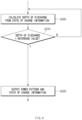
- a method of generating, by the power pattern generation apparatus 100, a power pattern of the ESS 20 may include operation S300 of calculating, by the processor 130, a DoD from the remaining capacity information, operation S310 of determining whether the calculated DoD value is less than a reference value of the DoD required by the user 30, and/or operation S320 of outputting the power pattern and the remaining capacity information.
- the processor 130 may calculate a DoD from the remaining capacity information.
- the processor 130 may perform operation S300 after or simultaneously with operation S280 of FIG. 3 .
- the processor 130 may determine whether the DoD of the generated power pattern satisfies a range required by the user 30.
- the processor 130 may determine whether the DoD calculated in operation S300 is less than the reference value of the DoD, input from the user 30.
- the processor 130 may determine that the DoD of the generated power pattern does not satisfy the range required by the user 30.
- the processor 130 may re-generate the power pattern when determining that the DoD of the generated power pattern does not satisfy the range required by the user 30.
- the processor 130 may repeat operation S 120 or S250 of extracting the power value, operation S130 or S260 of generating the power pattern based on the power value, operation S270 of calculating the amount of charge/discharge based on the power value, and operation S280 of generating the remaining capacity information based on the amount of charge/discharge.
- the processor 130 performs operation S120 or S250 of extracting the power value based on the random first value and/or second value, such that a DoD of a power pattern re-generated in the same condition may satisfy the range required by the user 30.
- the output unit 140 may output the power pattern and the remaining capacity information, generated by the processor 130.
- the output unit 140 may perform operation S320 when determining that the DoD of the generated power pattern satisfies the range required by the user 30 in operation S310.
- FIG. 5 is a flowchart showing a power pattern generation method according to an embodiment disclosed herein.
- a method of generating, by the power pattern generation apparatus 100, a power pattern of the ESS 20 may include operation S400 of calculating, by the processor 130, a DoD from the remaining capacity information, operation S410 of determining whether the calculated DoD value is less than the reference value of the DoD required by the user 30, operation S420 of determining whether an iteration count of generation of the power pattern exceeds a reference iteration count required by the user 30, operation S430 of adjusting the proportions of the positive values and the negative values included in the first group and the second group, and/or operation S440 of outputting the power pattern and the remaining capacity information.
- Operation S400 may be substantially the same as operation S300 of FIG. 4 .
- Operation S410 may be substantially the same as operation S310 of FIG. 4 .
- the processor 130 may count the number of times generation of the power pattern is iterated.
- the processor 130 may determine whether the iteration count satisfies the range required by the user 30.
- the processor 130 may determine whether the iteration count exceeds the reference iteration count input from the user 30. When the iteration count is less than or equal to the reference iteration count, the processor 130 may determine that the iteration count does not satisfy the range required by the user 30.
- the processor 130 may repeat operation S120 or S250 of extracting the power value, operation S130 or S260 of generating the power pattern based on the power value, operation S270 of calculating the amount of charge/discharge based on the power value, and operation S280 of generating the remaining capacity information based on the amount of charge/discharge, in a condition that is the same as or similar to the existing condition.
- the similar condition may mean a case where another condition is changed without adjusting, by the processor 130, the proportions of the positive values and the negative values included in the first group and the second group.
- the processor 130 may adjust the proportions of the positive values and the negative values included in the first group and the second group.
- the processor 130 may perform operation S430 when determining that the iteration count of generation of the power pattern satisfies the range required by the user 30 in operation S420.
- the processor 130 may differently adjust the proportions of the positive values and the negative values included in the first group and the second group.
- the processor 130 may adjust the first group to increase the proportion of the positive values included in the first group and adjust the second group to increase the proportion of the negative values included in the second group.
- the processor 130 may increase all numbers included in the first group by 1 and reduce all numbers included in the second group by 1.
- the processor 130 may adjust the first group to ⁇ -999, -998, -997, ..., 999, 1000, 1001 ⁇ and adjust the second group to ⁇ -1001, -1000, -999, ..., 997, 998, 999 ⁇ in operation S430.
- the processor 130 may repeat operation S120 or S250 of extracting the power value, operation S130 or S260 of generating the power pattern based on the power value, operation S270 of calculating the amount of charge/discharge based on the power value, and operation S280 of generating the remaining capacity information based on the amount of charge/discharge.
- the processor 130 may extract the power value based on the first group and the second group in which the proportions of the positive values and the negative values are adjusted, such that the re-generated power pattern may change the proportions of the power charge pattern and the power discharge pattern constituting the power pattern per unit time.
- Operation S440 may be substantially the same as operation S320 of FIG. 4 .
Landscapes
- Engineering & Computer Science (AREA)
- Power Engineering (AREA)
- Charge And Discharge Circuits For Batteries Or The Like (AREA)
- Supply And Distribution Of Alternating Current (AREA)
Applications Claiming Priority (2)
| Application Number | Priority Date | Filing Date | Title |
|---|---|---|---|
| KR1020210150947A KR102837051B1 (ko) | 2021-11-04 | 2021-11-04 | 전력 패턴 생성 방법 및 장치 |
| PCT/KR2022/013855 WO2023080429A1 (fr) | 2021-11-04 | 2022-09-16 | Procédé et dispositif pour générer un schéma de puissance |
Publications (2)
| Publication Number | Publication Date |
|---|---|
| EP4354687A1 true EP4354687A1 (fr) | 2024-04-17 |
| EP4354687A4 EP4354687A4 (fr) | 2024-12-11 |
Family
ID=86241213
Family Applications (1)
| Application Number | Title | Priority Date | Filing Date |
|---|---|---|---|
| EP22890165.8A Pending EP4354687A4 (fr) | 2021-11-04 | 2022-09-16 | Procédé et dispositif pour générer un schéma de puissance |
Country Status (6)
| Country | Link |
|---|---|
| US (1) | US20250088000A1 (fr) |
| EP (1) | EP4354687A4 (fr) |
| JP (1) | JP7753522B2 (fr) |
| KR (1) | KR102837051B1 (fr) |
| CN (1) | CN117652068A (fr) |
| WO (1) | WO2023080429A1 (fr) |
Family Cites Families (11)
| Publication number | Priority date | Publication date | Assignee | Title |
|---|---|---|---|---|
| EP1716610B1 (fr) * | 2004-02-06 | 2011-08-24 | A 123 Systems, Inc. | Pile secondaire au lithium de haute capacite et a vitesse de charge et de decharge elevee |
| JP5042369B2 (ja) * | 2009-09-10 | 2012-10-03 | 株式会社日立エンジニアリング・アンド・サービス | 発電システムの電力貯蔵装置およびその電力貯蔵装置の運用方法 |
| JP5467010B2 (ja) * | 2010-07-22 | 2014-04-09 | ニチコン株式会社 | 学習型蓄電池マネジメントシステム |
| JP5739788B2 (ja) * | 2011-11-15 | 2015-06-24 | 株式会社東芝 | 充放電計画立案システムおよび充放電計画立案方法 |
| JP6448225B2 (ja) * | 2014-06-17 | 2019-01-09 | 三星エスディアイ株式会社Samsung SDI Co., Ltd. | 電力アシストユニットおよび電力アシストシステム |
| JP6386308B2 (ja) * | 2014-09-03 | 2018-09-05 | 三星エスディアイ株式会社Samsung SDI Co., Ltd. | 電力補助システム |
| US10535999B2 (en) | 2015-02-25 | 2020-01-14 | Kyocera Corporation | Power control system, power control apparatus, and power control method |
| JP6764368B2 (ja) * | 2017-03-31 | 2020-09-30 | 日本碍子株式会社 | 電力貯蔵装置の運転可否を判定する装置 |
| EP3748799A4 (fr) | 2018-01-30 | 2021-10-27 | Kyocera Corporation | Serveur de gestion de puissance et procédé de gestion de puissance |
| US20190369166A1 (en) * | 2018-05-31 | 2019-12-05 | Nec Laboratories America, Inc. | Extending battery life in behind the meter battery energy storage systems |
| JP6835140B2 (ja) * | 2019-05-30 | 2021-02-24 | 株式会社Gsユアサ | 生成装置、予測システム、生成方法及びコンピュータプログラム |
-
2021
- 2021-11-04 KR KR1020210150947A patent/KR102837051B1/ko active Active
-
2022
- 2022-09-16 CN CN202280050601.6A patent/CN117652068A/zh active Pending
- 2022-09-16 EP EP22890165.8A patent/EP4354687A4/fr active Pending
- 2022-09-16 JP JP2024515896A patent/JP7753522B2/ja active Active
- 2022-09-16 US US18/290,582 patent/US20250088000A1/en active Pending
- 2022-09-16 WO PCT/KR2022/013855 patent/WO2023080429A1/fr not_active Ceased
Also Published As
| Publication number | Publication date |
|---|---|
| CN117652068A (zh) | 2024-03-05 |
| JP7753522B2 (ja) | 2025-10-14 |
| WO2023080429A1 (fr) | 2023-05-11 |
| US20250088000A1 (en) | 2025-03-13 |
| KR102837051B1 (ko) | 2025-07-23 |
| JP2024537653A (ja) | 2024-10-16 |
| KR20230065095A (ko) | 2023-05-11 |
| EP4354687A4 (fr) | 2024-12-11 |
Similar Documents
| Publication | Publication Date | Title |
|---|---|---|
| Reniers et al. | Improving optimal control of grid-connected lithium-ion batteries through more accurate battery and degradation modelling | |
| Cremer et al. | From optimization-based machine learning to interpretable security rules for operation | |
| Sukumar et al. | Mix-mode energy management strategy and battery sizing for economic operation of grid-tied microgrid | |
| Narayan et al. | Risk-averse stochastic programming approach for microgrid planning under uncertainty | |
| Fang et al. | Optimal pulse-modulated lithium-ion battery charging: Algorithms and simulation | |
| CN113410900B (zh) | 基于自适应差分鲸鱼优化的微电网hess优化配置方法及系统 | |
| Eryilmaz | Reliability analysis of multi-state system with three-state components and its application to wind energy | |
| Werner et al. | An evolution strategy for short-term operation planning of hydrothermal power systems | |
| JP7636011B2 (ja) | バッテリー寿命予測装置及び方法 | |
| Sun et al. | A new design of fuzzy logic control for SMES and battery hybrid storage system | |
| Petricca et al. | Automated generation of battery aging models from datasheets | |
| Bauer et al. | Power flow in heterogeneous battery systems | |
| EP4354687A1 (fr) | Procédé et dispositif pour générer un schéma de puissance | |
| CN117897626A (zh) | 电池容量估计装置、充电计划生成装置、放电计划生成装置以及电池容量估计方法 | |
| Dizqah et al. | Acausal Modeling and Simulation of the Standalone Solar Power Systems as Hybrid DAEs. | |
| CN115241899B (zh) | 储能电池调度计划优化方法、系统、计算机设备及介质 | |
| CN104794343A (zh) | 一种电池储能系统成本全寿命周期内的折旧方法 | |
| Swernath et al. | A real time adaptive charging approach for cycle life extension of Li ion cells | |
| Nagode et al. | Mechanistic modelling of cyclic voltage-capacity response for lithium-ion batteries | |
| Kliche et al. | Modeling and simulation of an isolated mini-grid including battery operation strategies under uncertainty using chance constraints: N. Kliche et al. | |
| Donadee et al. | Estimating the rate of battery degradation under a stationary Markov operating policy | |
| Mandal et al. | Optimal design of a hybrid power system using a new improved particle swarm optimization technique | |
| CN120165479B (zh) | 一种延长光伏储能循环寿命的稳定调节方法 | |
| EP4644929A1 (fr) | Appareil de sélection d'élément de batterie à basse tension et procédé de fonctionnement associé | |
| EP4521131A1 (fr) | Dispositif de traitement d'informations, procédé de traitement d'informations, support lisible par ordinateur et système de traitement d'informations |
Legal Events
| Date | Code | Title | Description |
|---|---|---|---|
| STAA | Information on the status of an ep patent application or granted ep patent |
Free format text: STATUS: THE INTERNATIONAL PUBLICATION HAS BEEN MADE |
|
| PUAI | Public reference made under article 153(3) epc to a published international application that has entered the european phase |
Free format text: ORIGINAL CODE: 0009012 |
|
| STAA | Information on the status of an ep patent application or granted ep patent |
Free format text: STATUS: REQUEST FOR EXAMINATION WAS MADE |
|
| 17P | Request for examination filed |
Effective date: 20240110 |
|
| AK | Designated contracting states |
Kind code of ref document: A1 Designated state(s): AL AT BE BG CH CY CZ DE DK EE ES FI FR GB GR HR HU IE IS IT LI LT LU LV MC MK MT NL NO PL PT RO RS SE SI SK SM TR |
|
| A4 | Supplementary search report drawn up and despatched |
Effective date: 20241111 |
|
| RIC1 | Information provided on ipc code assigned before grant |
Ipc: H02J 7/00 20060101ALI20241105BHEP Ipc: H02J 3/32 20060101AFI20241105BHEP |
|
| DAV | Request for validation of the european patent (deleted) | ||
| DAX | Request for extension of the european patent (deleted) | ||
| STAA | Information on the status of an ep patent application or granted ep patent |
Free format text: STATUS: EXAMINATION IS IN PROGRESS |
|
| 17Q | First examination report despatched |
Effective date: 20250718 |